
World War Two
Published 25 May 2024This week, the fighting in Europe finally comes to an end and the Allies round up more leading Nazis including Heinrich Himmler and Karl Dönitz. In Asia, the fighting continues on Okinawa even as the Japanese start pulling back. The Australians continue fighting on Tarakan, and the Chinese are victorious in western Hunan.
00:00 Intro
01:45 Fighting In Europe Ends
04:30 Notes From Europe
06:57 Japanese Begin To Withdraw On Okinawa
12:41 The Battle Of Tarakan Island
14:35 Chinese Victory In Western Hunan
18:51 Conclusion
(more…)
May 26, 2024
The Last Battles in Europe – WW2 – Week 300 – May 25, 1945
Comments Off on The Last Battles in Europe – WW2 – Week 300 – May 25, 1945
“Naked ‘gobbledygook sandwiches’ got past peer review, and the expert reviewers didn’t so much as blink”
Jo Nova on the state of play in the (scientifically disastrous) replication crisis and the ethics-free “churnals” that publish junk science:
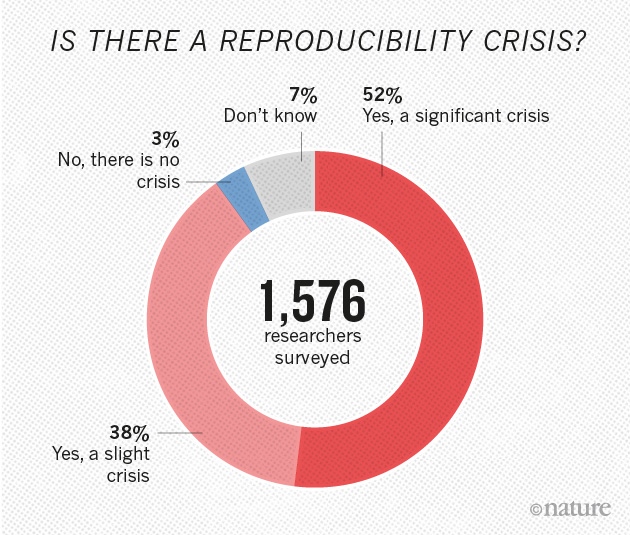
Proving that unpaid anonymous review is worth every cent, the 217 year old Wiley science publisher “peer reviewed” 11,300 papers that were fake, and didn’t even notice. It’s not just a scam, it’s an industry. Naked “gobbledygook sandwiches” got past peer review, and the expert reviewers didn’t so much as blink.
Big Government and Big Money has captured science and strangled it. The more money they pour in, the worse it gets. John Wiley and Sons is a US $2 billion dollar machine, but they got used by criminal gangs to launder fake “science” as something real.
Things are so bad, fake scientists pay professional cheating services who use AI to create papers and torture the words so they look “original”. Thus a paper on “breast cancer” becomes a discovery about “bosom peril” and a “naïve Bayes” classifier became a “gullible Bayes”. An ant colony was labeled an “underground creepy crawly state”.
And what do we make of the flag to clamor ratio? Well, old fashioned scientists might call it “signal to noise”. The nonsense never ends.
A “random forest” is not always the same thing as an “irregular backwoods” or an “arbitrary timberland” — especially if you’re writing a paper on machine learning and decision trees.
The most shocking thing is that no human brain even ran a late-night Friday-eye over the words before they passed the hallowed peer review and entered the sacred halls of scientific literature. Even a wine-soaked third year undergrad on work experience would surely have raised an eyebrow when local average energy became “territorial normal vitality”. And when a random value became an “irregular esteem”. Let me just generate some irregular esteem for you in Python?
If there was such a thing as scientific stand-up comedy, we could get plenty of material, not by asking ChatGPT to be funny, but by asking it to cheat. Where else could you talk about a mean square mistake?
Wiley — a mega publisher of science articles has admitted that 19 journals are so worthless, thanks to potential fraud, that they have to close them down. And the industry is now developing AI tools to catch the AI fakes (makes you feel all warm inside?)
Fake studies have flooded the publishers of top scientific journals, leading to thousands of retractions and millions of dollars in lost revenue. The biggest hit has come to Wiley, a 217-year-old publisher based in Hoboken, N.J., which Tuesday will announce that it is closing 19 journals, some of which were infected by large-scale research fraud.
In the past two years, Wiley has retracted more than 11,300 papers that appeared compromised, according to a spokesperson, and closed four journals. It isn’t alone: At least two other publishers have retracted hundreds of suspect papers each. Several others have pulled smaller clusters of bad papers.
Although this large-scale fraud represents a small percentage of submissions to journals, it threatens the legitimacy of the nearly $30 billion academic publishing industry and the credibility of science as a whole.
Comments Off on “Naked ‘gobbledygook sandwiches’ got past peer review, and the expert reviewers didn’t so much as blink”
Evolution of The Churchill Tank | “No Damn Good”?
The Tank Museum
Published Feb 17, 2024Designed by a company that had never built a tank before with the Prime Minister, Winston Churchill, looking over their shoulders and plagued by mechanical teething troubles, the Churchill tank had unpromising beginnings. Despite this, it became one of the most successful British tanks of WW II: heavily armoured, not fast but with superb climbing ability, the Churchill served not only as a gun tank but the basis many of the specialised vehicles that helped the British and Canadian Armies ashore on D-Day.
00:00 | Intro
01:20 | History – What was needed?
03:38 | Design, Weaponry and Armour
08:44 | Up-gunned and Upgraded
13:59 | A Look Inside
17:51 | Combat Performance
20:23 | Multi-use Platform
23:10 | ConclusionThis video features archive footage courtesy of British Pathé.
#tankmuseum
Comments Off on Evolution of The Churchill Tank | “No Damn Good”?
QotD: Ever-expanding government
Where government advances — and it advances relentlessly — freedom is imperiled; community impoverished; religion marginalized and civilization itself jeopardized … When did government cease to be a necessary evil and become a goody bag to solve our private problems?
Janice Rogers Brown, “Hyphenasia: the Mercy Killing of the American Dream,” Speech at Claremont-McKenna College (Sept. 16, 1999).
Comments Off on QotD: Ever-expanding government
May 25, 2024
“Education” versus “learning”
At Astral Codex Ten, Scott Alexander discusses some of the ideas from Bryan Caplan’s book The Case Against Education:

Source here. Note deranged horizontal axis.
Education isn’t just about facts. But it’s partly about facts. Facts are easy to measure, and they’re a useful signpost for deeper understanding. If someone has never heard of Chaucer, Dickens, Melville, Twain, or Joyce, they probably haven’t learned to appreciate great literature. If someone can’t identify Washington, Lincoln, or either Roosevelt, they probably don’t understand the ebb and flow of American history. So what facts does the average American know?
In a 1999 poll, only 66% of Americans age 18-29 knew that the US won independence from Britain (as opposed to some other country). About 47% of Americans can name all three branches of government (executive, legislative, and judicial). 37% know the closest planet to the sun (Mercury). 58% know which gas causes most global warming (carbon dioxide). 44% know Auschwitz was the site of a concentration camp. Fewer than 50% (ie worse than chance) can correctly answer a true-false question about whether electrons are bigger than atoms.
These results are scattered across many polls, which makes them vulnerable to publication bias; I can’t find a good unified general knowledge survey of the whole population. But there’s a great survey of university students. Keeping in mind that this is a highly selected, extra-smart population, here are some data points:
- 85% know who wrote Romeo and Juliet (Shakespeare)
- 56% know the biggest planet (Jupiter)
- 44% know who rode on horseback in 1775 to warn that the British were coming (Paul Revere)
- 33% know what organ produces insulin (pancreas)
- 31% know the capital of Russia (Moscow)
- 30% know who discovered the Theory of Relativity (Einstein)
- 19% know what mountain range contains Mt. Everest (Himalayas)
- 19% know who wrote 1984 (George Orwell)
- 16% know what word the raven says in Poe’s “The Raven” (“Nevermore!”)
- 10% know the captain’s name in Moby Dick (Ahab)
- 7% know who discovered, in 1543, that the Earth orbits the sun (Copernicus)
- 4% know what Chinese religion was founded by Lao Tse (Taoism)
- <1% know what city the general Hannibal was from (Carthage)
Remember, these are university students, so the average person’s performance is worse.
Most of these are the kinds of facts that I would expect school to teach people. Some of them (eg the branches of government) are the foundations of whole subjects, facts that I would expect to get reviewed and built upon many times during a student’s career. If most people don’t remember them, there seems to be little hope that they remember basically anything from school. So what’s school even doing?
Maybe school is why at least a majority of people know the very basics – like that the US won independence from Britain, or that Shakespeare wrote Romeo and Juliet? I’m not sure this is true. Here are some other questions that got approximately the same level of correct answers as “Shakespeare wrote Romeo and Juliet“:
- What is the name of the rubber object hit by hockey players? (Puck, 89%)
- What is the name of the comic strip character who eats spinach to increase his strength? (Popeye, 82% correct)
- What is the name of Dorothy’s dog in The Wizard of Oz? (Toto, 80% correct)
I don’t think any of these are taught in school. They’re absorbed by cultural osmosis. It seems equally likely that Romeo and Juliet could be absorbed the same way. Wasn’t there an Academy-Award-winning movie about Shakespeare writing Romeo and Juliet just a decade or so before this study came out? Sure, 19% of people know that Orwell wrote 1984 – but how many people know the 1984 Calendar Meme, or the “1984 was not an instruction manual!” joke, or have heard of the reality show Big Brother? Nobody learned those in school, so maybe they learned Orwell’s name the same place they learned about the other 1984-related stuff.
Okay, so school probably doesn’t do a great job teaching facts. But maybe it could still teach skills, right?
According to tests, fewer than 10% of Americans are “proficient” at PIIAC-defined numeracy skills, even though in theory you need to know algebra to graduate from most public schools.
I took a year of Spanish in middle school, and I cannot speak Spanish today to save my life; that year was completely wasted. Sure, I know things like “Hola!” and “Adios!”, but I also know things like “gringo” and “Yo quiero Taco Bell” – this is just cultural osmosis again.
So it seems most people forget almost all of what they learn in school, whether we’re talking about facts or skills. The remaining pro-school argument would be that even if they forget every specific thing, they retain some kind of scaffolding that makes it easier for them to learn and understand new things in the future; ie they keep some sort of overall concept of learning. This is a pretty god-of-the-gaps-ish hypothesis, and counterbalanced by all the kids who said school made them hate learning, or made them unable to learn in a non-fake/rote way, or that they can’t read books now because they’re too traumatized from years of being forced to read books that they hate.
It’s common-but-trite to encounter people who say things like “I love learning, but I hated school” — I’ve undoubtedly said that myself many times. A weird experience was having to study a book in school that I’d already read on my own: it was like an early form of aversion therapy … here’s something you loved once, let’s make you hate it now.
Comments Off on “Education” versus “learning”
Another thing for progressives to obsess about – “horticultural appropriation”
In Spiked, Lauren Smith wonders if your garden — yes, your garden — is a nest of racist appropriation:

Is your garden a bed of racist colonialism?
Is your garden racist? As incredible as this may seem, it’s a question many gardeners are being forced to ask themselves. The innocent act of planting a few flowers can now get you branded with the r-word.
A piece in the June issue of the BBC’s Gardeners’ World magazine claims that the weeds of racism have sprung up in some unlikely places. Landscape designer Jackie Herald argues that choosing to plant non-native species in British gardens can constitute “horticultural appropriation”, because they were originally brought to the UK as a result of colonialism.
Herald writes: “Embedded within cross-cultural borrowing is horticultural appropriation, something that’s all too easy for our nation of gardeners to carry on regardless. In many cases, the abundant plant selections that we now take for granted did come via free-willing exchanges, but were sourced by plant hunters during years of colonialism and power-grabbing global trade.”
So, instead of picking out plants willy-nilly, Herald tries to choose plants that “connect to my client’s cultural heritage”. That means you had better check your 23&Me results before filling your flowerbeds, otherwise you could be horticulturally appropriating plants that don’t align with your racial heritage.
Uprooting racism from your garden might be more tricky than you’d think. Not least as some of the UK’s best-loved flowers are products of “colonialism”. Magnolias, for example, came from colonial Virginia and camellias from China.
Apparently, the most problematic perennial of all is wisteria, that inoffensive purple plant you often see hanging around the doors of posh houses. In 2022, Transport for London published a sightseeing guide called Art on the Underground, which claimed that wisteria has “colonial roots” (presumably no pun intended). This is because it was brought to England in the early 19th century from China. The guide also highlighted the supposedly racist nature of using words like “exotic”, “native” or “invasive” to describe plants. According to TfL, these can cultivate painful memories of “histories of conquest” and are best avoided.
Comments Off on Another thing for progressives to obsess about – “horticultural appropriation”
Justin Trudeau – “a large percentage of small businesses are actually just ways for wealthier Canadians to save on their taxes”
Even before he became Prime Minister, the signs were there that Justin Trudeau was instinctively anti-small-business and that this would inform his approach to taxation and regulation of the private sector:
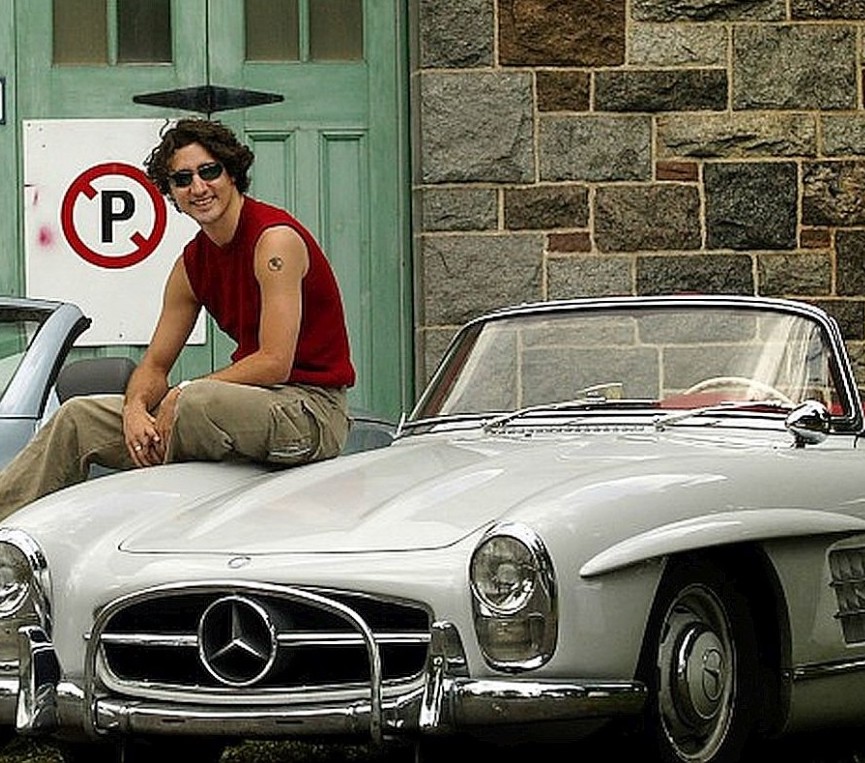
Changes to capital gains tax in this year’s budget were aimed at the wealthy, said the Trudeau Liberals, but the move has angered small businesses owners who have been snared by the increase.
Maybe that was part of the plan, since Justin Trudeau appears to view small business owners as rich Canadians trying to dodge taxes.
In an illuminating interview with the CBC’s Peter Mansbridge in 2015, Trudeau didn’t directly answer a question about whether he would lower taxes for small businesses.
But he did say, “We have to know that a large percentage of small businesses are actually just ways for wealthier Canadians to save on their taxes and we want to reward the people that are actually creating jobs and contributing in concrete ways.”
It was a remarkable denigration of small business owners and may have passed unnoticed because Trudeau was still a month away from becoming prime minister.
For the record, businesses with fewer than 100 people employ almost 12 million private workers in this country.
And the government’s own statistics state that in the 20 years up to 2020, the number of small businesses increased every year except for three — 2013, 2016 and 2020 — so a decrease in two of the Trudeau years.
Meanwhile, Trudeau’s apparently tax-dodging wealthy small businesses seem to be having a hard time of it. Businesses that began with four or less employees were only 62 per cent likely to still be operating five years later.
Earlier this year, Reuters news agency warned that a 38 per cent spike in bankruptcies of small businesses in the first 11 months of 2023 could rise even further.
Small businesses are “an integral engine of Canada’s economy,” said the budget, but 72 per cent of the owners fear that the new changes to capital gains tax will harm the climate for investment and growth.
Interestingly, when Trudeau was asked in that 2015 interview how he planned to balance the budget by 2019, because that was what he promised, it was investment and growth that was the answer.
Then prime minister Stephen Harper had tried to cut his way out of the deficit, said Trudeau. “That doesn’t work.”
“He has been unable to create growth. He has the worst record on growth of any prime minister in 80 years.”
But as the Fraser Institute has pointed out, in the last nine years under Trudeau, Canadian living standards have declined.
Comments Off on Justin Trudeau – “a large percentage of small businesses are actually just ways for wealthier Canadians to save on their taxes”
Fathers of Light and Darkness – Rockets and Explosives – Sabaton History 126 [Official]
Sabaton History
Published Feb 7, 2024There are many inventors whose creations have been turned into weapons of war. A couple that really stand out are Alfred Nobel and Wernher von Braun. Today we’ll take a deep dive into their stories and the paradox of using destructive weapons for good, or creative weapons for destruction.
(more…)
Comments Off on Fathers of Light and Darkness – Rockets and Explosives – Sabaton History 126 [Official]
QotD: “Dirt Theory”
Robert Stacey McCain, “New Form of Racism Has Been Discovered”, The Other McCain, 2024-02-04.
Comments Off on QotD: “Dirt Theory”
May 24, 2024
“Great Britain is not yet a basket case. But we do a rather good impression of a failing state.”
Christopher Gage considers the plight of modern day Britain in the context of Rishi Sunak’s political suicide note election call:

Rishi Sunak shortly after becoming Chancellor of the Exchequer in 2020.
The ambition for things to get better is a bar so low it’s a carpet. A favoured genre of meme here centres on the dysfunction and general farce of a country with “Great” in its name. That lofty adjective edges perilously close to hilarity, akin to those countries prefixed by “People’s Democratic Republic”. The excitable kind with an AK-47 printed on its flag.
Call the doctor’s surgery at 8 a.m. An automated voice will reveal you are number 49 in the queue. When you eventually wade through, a soft-centred receptionist assures you in therapeutic tones that there’re no appointments left today. Sorry.
Book a same-day train ticket from London to Newcastle. Without a hint of contrition, the train company demands £786.80. That’s a week or two in warmer, healthier, saner Sevilla or three hours and eleven minutes on a train in Great Britain.
House prices and rents are akin to the board game Monopoly, in which your coked-up crypto-addled mate has lined up hotels on Mayfair.
Go to the supermarket. Olive oil, a civilising elixir which once threatened to heave the primitive British palate out of the Mesolithic era, is prohibitively expensive. If modern Britain were a film scene, it would be that of Ray Liotta in Goodfellas: Fuck you. Pay me.
This all-encompassing one-footed waltz feels like the finale of a political satire. Since the 1980s, we’ve parodied America. We’ve nailed the social pathology but not the prosperity. Essentially, Great Britain is an advertising agency with a nuclear submarine.
This election pits two tribes against each other. One tribe pines for 1997. The other yearns for 1979.
For a sizeable swathe of the population, everything is awful, and nothing will ever change. And thank God for that.
Here, a natural law dictates that anyone under 45 who dares suggest things could be better is to be consumed by a radioactive flood of sadistic nostalgia. The mere whiff of dissent conjures through the pavement a battalion of nostalgians who lament the end of Polio.
“You don’t remember the Seventies!” warn those who yearn for the Seventies. ‘Bodies uncollected! Rubbish piled up in the streets!’. In that fateful decade, striking union workers allowed garbage to pile up in the streets. To this hazy memory, the rest of us are serfs to economic juju.
Whenever I point out that a first-time buyer in London must save for 31 years just for a house deposit, a familiar chorus of denial debunks the theory of free will. “You waste your money on flat whites and trips to Rome!” goes the wearisome riposte.
During the 1970s, that prelapsarian idyll when rubbish piled in the streets, when adults caned children at random, and when Bullseye was on the telly, the average house cost four times the average wage. Today, it’s twelve to one.
To point out mathematical reality invokes spasms of uniquely British nostalgia. It’s a negative nostalgia which glories in just how bad everything was.
Churchill was right. The British people are the only people who like to be told how bad things are, who like to be told the worst. Memory-mongers paint postcards of perfect penury. Back then, children didn’t talk back. There were no phones or elbows on the table. Back then, that famed sense of community slapped any ribbon of dissent out of those who dared dream bigger than the suffocating confines of community life. The past is a foreign country in which children could count their ribs but they was happy.
Such nostalgia serves two purposes. The first indulges one’s triumph over wistfully disfigured adversity. The other bleaches the parlous state of modern Britain with a mop soaked in a very British version of nostalgie de la boue. Nostalgia, truth be told, is a polite form of dementia.
Comments Off on “Great Britain is not yet a basket case. But we do a rather good impression of a failing state.”
Bernie Sanders finally finds a group of rich people who he thinks shouldn’t have to pay
As Tim Worstall points out, Bernie Sanders’ latest campaign is starkly at odds with his usual “make the rich pay” schtick:

“Bernie Sanders” by Gage Skidmore is licensed under CC BY-SA 2.0 

 .
.
It’s possible to think that Bernie Sanders, Senator that he is, is more than a little confused. Well, he’d not be the first elderly politician to suffer that fate. Nor the first socialist. It is necessary for me to be fair here though — one of his honeymoons he took in the Soviet Union. Which makes perfect sense to me — after all, there was bugger all else to do there other than your own wife.
However, here we’ve got him complaining about the cost of the new miracle drugs:
Bernie Sanders has urged Denmark to rein in its most valuable company, Novo Nordisk, and force it to slash prices on popular weight loss and diabetes treatments Ozempic and Wegovy, taking his fight to lower “outrageously high” drug prices in the United States to the company’s doorstep as its profits soar amid ongoing struggles to meet booming appetite for the revolutionary drugs.
Hmm, dunno how well that’s going to work with the Danes really. Yes, to some extent they’re milder than when they tried to rape and pillage the entirety of Europe but not wholly. My brother worked out in Afghanistan (feeding the troops) and he had a Danish unit rotate through. So he tells me their senior sergeant type carried a double bladed axe on his backpack — it didn’t come back clean from every patrol either. They’re not all equality and gender rights these days, you know?
So, we can imagine a certain portion at least of the Danish population celebrating this rapine of Medicare’s pockets by the simple expedient of selling a weight loss drug that actually works — which is, when we come to think of it, something of an innovation. Fen-Fen didn’t work after all. Hey, you know, Vinland failed but we’ll get ’em this time? We’re charging high prices because we can?
A second pass at the argument would be that the drugs are in fact incredibly cheap. When it was shown that the same drug — semaglutide — works in stopping (that’s “stopping” as in ceased, stopped, dead, like Bernie’s career would if it were ever proven he had taken part in an act of voluntary capitalism) chronic kidney disease. So much so that the very day they announced the trials on the drug were being stopped a year early, so obvious was the success, the share prices of all the dialysis provision companies dropped 20 and 30%. That is, at near whatever price, this drug is a money saver. Which is, you know, good. J Foreigner turns up with this thing that saves America, Americans, lives and money and yet Bernie whines — so like a socialist, eh? Capitalism with markets makes us the humans who are living highest on the hog, ever, but they really never do stop whining about it, do they?
But Bernie’s real complaint is that Americans are paying more to burn off the cheeseburgers than everyone else has to. But from everything else Bernie says about anything at all this is at it should be — the rich should pay.
Back to our basics. The basic drug development problem is that the development of a drug is a public goods problem. It costs $2 billion to get a drug through the FDA and gain approval to actually sell it. Yes, of course we should slaughter much of the regulation that makes it cost that much (personally, against character type, I only recommend capture and humane release for the actual bureaucrats) but that’s another matter. It does. But if everyone can just copy the drug at that point then no one will spend $2 billion. So, OK, patents, so the developers have a decade (the patent is two decades, it takes a decade to gain approval) to make their $2 billion back then anyone can copy it. The price falls to manufacturing cost plus normal profit level and we’re about as good as we can get. This is not a perfect system but for mass market drugs it’s about as good as we’re going to get.
Comments Off on Bernie Sanders finally finds a group of rich people who he thinks shouldn’t have to pay
“[I]t is offensive to say that women should help men reach their potential; but … men must help women reach theirs“
There has been a lot of online outrage after Kansas City Chiefs placekicker Harrison Butker spoke at the graduation ceremonies at his alma mater:

“Stop giving men microphones,” wrote one of the signers of the petition to have NFL kicker Harrison Butker fired.
“As a woman living in post-Roe America,” declared another, “I’m exhausted from men telling women what to do with their lives.”
“How offensive to imply women are put here on this planet to help a man reach his full potential,” fumed a third. “We should be empowering women to achieve greatness however that looks for them. Having children or being a mother isn’t the currency we must pay to be treated as equal members of this society.”
And on and on they go in predictable, and predictably incoherent, statements. Apparently, it is offensive to say that women should help men reach their potential; but, in the next breath, men must help women reach theirs.
At a time when women encourage one another in “rage rituals” and feminists like Mona Eltahawy call for perpetual anger as the route to liberation, few can be surprised by the hysteria that followed National Football League kicker Harrison Butker’s speech to the graduating students of Benedictine College in Kansas. It is a rage that has led well over 200,000 of the furious, mostly women, to sign a petition demanding he be fired by the Kansas City Chiefs.
Manufacturing outrage is what feminist journalism does best, and its audience is eager for cosplay rebellion and narcissistic posturing even when, as in the case of the speech, the hyperventilating is far in excess of the fact. That even Benedictine nuns have joined the chorus shows how many women in all walks of life find such posturing near-irresistible.
Of course, if Butker had addressed the Benedictine College graduates to say that Catholicism was riddled with misogyny and homophobia, no popular petitions would have been launched. If he had said that abortion was a gift to humanity and that female priests would lead the church to glory, his words would have sparked dissent only in the most marginal of venues.
Let a man praise his wife for her devotion to family, and we witness a stampede of foul-mouthed nasties to their bullhorns.
Comments Off on “[I]t is offensive to say that women should help men reach their potential; but … men must help women reach theirs“
Grant Hammond .32 ACP Prototype
Forgotten Weapons
Published Apr 6, 2015Grant Hammond is best known (to the extent he is known at all) for a .45 caliber pistol submitted to US military trials in 1917 and 1918. This pistol is a proof of concept prototype embodying some of the concepts that would go into the later .45 caliber pistol, and also showing some concepts that would not see further use. This .32 ACP prototype features a hybrid blow forward / blow back mechanism in which the slide uses a gas trapping system to move forward and the bolt moves backward. It also has a unique system for automatically ejecting the magazine when empty. Truly one of the most mechanically unusual pistols I have ever seen.
Comments Off on Grant Hammond .32 ACP Prototype
QotD: Our modern Puritans
The Puritans were something new. Translate their elaborate, Latinate prose into the parlance of our times, and they sound exactly like SJWs — at once unbearably self-righteous and cripplingly insecure. They were almost certain that they, personally, were among the Elect … but since the only infallible sign of being Saved was “an irresistible attraction to Puritanism”, they were caught in exactly the same vicious purity spiral as our modern SJWs. Who, truly, can say xzhey are #woke, when there’s always the possibility of someone, somewhere, being #woker? If you want a slightly easier passport to their heads, try Perry Miller’s The New England Mind. It was written in the 1930s, so be prepared — surprisingly little untranslated Latin, since the Puritans wrote mostly for themselves, but still fairly ornate prose.
Put it this way: The Wiki summary of Miller’s life quotes a colleague: “Perry Miller was a great historian of Puritanism but the dark conflicts of the Puritan mind eroded his own mental stability”. He died of alcoholism.
The Puritans’ saving grace, if they had one, is that they were men of the world. They had to be. Guys like Max Weber would say that those two things had a dialectical relationship — Puritanism IS “the Protestant work ethic” IS “capitalism” — but that’s not necessary for present purposes. My point is simply that the Early Modern world could only support a tiny number of professional intellectuals, and the “managerial class” was all but nonexistent. Through Cromwell and his mini-me’s in Salem gave it the old college try, it’s simply impossible to run an Early Modern government Puritan-style.
That’s obviously not the case now. We have a huge (and ever-growing) managerial class, all of whom are the most fervent Puritans. Unlike Cromwell and the boys, though, they can — and, of course, DO — live in perfect isolation from the affairs of the world they’re supposedly managing. Put simply, but not really unfairly, they live on Twitter — their carefully curated list of social media “friends” is, in a very real way, their entire world. Imagine Oliver Cromwell, Zeal-of-the-Land Busy, and Cotton Mather tweeting at each other, all day every day.
Severian, “Friday Mailbag: Civilization, the Video Game”, Rotten Chestnuts, 2021-05-21.
1. Severian may be referring to Michael Walzer’s first book The Revolution of the Saints: A Study in the Origins of Radical Politics (1965) or perhaps Regicide and Revolution (1974). Unfortunately when I saved this, I didn’t note which of Walzer’s works had been referenced earlier in the post and the original is no longer available online. Quotulatiousness regrets the omission.
Comments Off on QotD: Our modern Puritans
May 23, 2024
“[O]fficial justifications for mass migration often have a creepy, post-hoc flavour about them”
While it sometimes seems that there can’t possibly be mass migration issues other than here in Canada and along the US southern border, eugyppius reminds us that all of the Kakistocrats in western countries are fully in favour of more, and more, and even more inflow without restriction:

An asylum seeker, crossing the US-Canadian border illegally from the end of Roxham Road in Champlain, NY, is directed to the nearby processing centre by a Mountie on 14 August, 2017.
Photo by Daniel Case via Wikimedia Commons.
You might have noticed that mass migration to the West is a huge problem.
It is very bad for native Westerners, because it promises to transform our societies utterly, in permanent ways and not for the better. Curiously, it is also far from great for the centre-left political establishment responsible for promoting mass migration, because it has inspired a vast wave of popular opposition and filled the sails of right-leaning, migration restrictionist parties with new wind. Mass migration is also bad for taxpayers, for domestic security, for the welfare state, for many other aspects of the postwar liberal agenda and for our own future prospects. In short, mass migration is bad for almost everybody and everything.
There is a reason that nations have borders, and this is much the same reason that we have skin and that cells have membranes. You won’t survive for very long if you can’t control what enters you.
Despite the obvious fact that mass migration is bad, our rulers cling to migrationism like grim death. Given a choice between disincentivising asylees and intimidating, browbeating and harassing the millions of anti-migrationists among their own citizens, our governments generally choose the latter path, even though it is obviously the worse of the two.
Additionally unsettling, is the fact that official justifications for mass migration often have a creepy, post-hoc flavour about them. They sound much more like excuses dreamed up after the borders had already been opened, rather than any kind of reason mass migration must occur. When the migrationists really started to go crazy in 2015, for example, we were told that border security was simply impossible in the modern world and that infinity migrants were a force of nature we would have to deal with. That didn’t sound right even at the time, and since the pandemic border closures we no longer hear the inevitability narrative very much, although – and this is very bizarre to type – there is some evidence that high political figures like Angela Merkel believed it at the time. It is well worth thinking about why that might have been the case.
Another excuse that doesn’t make very much sense, is what I’ll call the refugee thesis. We’re told that millions of poor people are forced to endure terrible conditions in the developing world and that it is our moral burden to improve their lot by granting them residence in our countries. That might convince a few teenage girls, but it cannot withstand scrutiny among the rest of us. To begin with, the population of global unfortunates is enormous; the millions of refugees we have already accepted, and the millions that our politicians hope to welcome in the coming years, represent but a vanishing minority – a rounding error – compared to the vast sea of human suffering. It is like trying to solve homelessness by demanding that those in the wealthiest neighbourhoods make their spare bedrooms available to the indigent. Even more telling, however, is that the push to welcome migrants comes precisely as conditions in the developing world have dramatically improved. When things were much worse, we sealed our borders against the global south; now that they are much better, we hear all about how unacceptably inhumane it is to leave the migrants in their native lands.
Other post-hoc arguments, especially those falling in the yay-multiculturalism category, are even less serious. That we need more diversity to “spark innovation” (whatever that means) or that our local cuisines stand to benefit from the spices of the disadvantaged, are excuses of such towering stupidity, that you will lose brain cells thinking about them. As with the refugee narrative, nobody said crazy stuff like this until the migrants had already begun arriving on our shores. And there is another thing to notice about the multiculticult too. This is its blatant flippancy. The premise seems to be that migration is no big deal bro, but also too there are these cool exciting and totally random upsides, like improved local Ethiopian food offerings. It is the very definition of damning with faint praise.
The rest, sadly, is behind the paywall.
Comments Off on “[O]fficial justifications for mass migration often have a creepy, post-hoc flavour about them”


