
Matthew Mitchell (MM): Tell us a little bit about the job of a planner. What were your responsibilities? And how did you go about doing them?
Gia Jandieri (GM): Our department inside of Gossnab [the State Supply Committee for the Central Planning Authority] was responsible for monitoring the execution of agreements for production of goods and government orders. My task was to verify that the plans had been executed correctly, to find failures and problems, and to report to the higher authorities.
This included reading lots of reports and visiting the factories and their warehouses for auditing.
The Soviet economy had been in a troublesome condition since the 1970s. We (at the Gossnab) had plenty of information about failures, but it wasn’t useful. We knew that the quality of produced goods was very low, that any household good that was of usable quality was in deficit, and that the shortages encouraged people to buy on the black market through bribes.
In reality, a bribe was a substitute for a market-determined price; people were interested in paying more than the official price for the goods they valued, and the bribe was a way for them to indicate that they valued it more than others.
The process of planning was long. The government had to study demand, find resources and production capacities, create long-run production and supply plans, compare these to political priorities, and get approval for general plans at the Communist Party meetings. Then the general plans needed to be converted to practical production and supply plans, with figures about resources, finances, material and labour, particular producers, particular suppliers, transportation capacities, etc. After this, we began the process of connecting factories and suppliers to one another, organizing transportation, arranging warehousing, and lining up retail shops.
The final stage of the planning process was to send the participating parties their own particular plans and supply contracts. These were obligatory government orders. Those who refused to follow them or failed to fulfill them properly were punished. The production factories had no right or resources to produce any other goods or services than those described in the supply contracts and production plans they received from the authorities. Funny enough, though, government officials could demand that they produce more goods than what was indicated in the plans.
Matthew Mitchell, “Central planning from the inside—an interview with a Soviet-era economist”, Fraser Institute, 2024-05-25.
August 26, 2024
QotD: The job of a Soviet economic planner
August 25, 2024
“Does your vote count?” or how to set up an automatic vote-generation scheme
Elizabeth Nickson on recent reporting about voting scams in various US states:

After engineer and data scientist Kim Brooks worked on cleaning the voter rolls in Georgia for a year, she realized she was on a stationary bicycle. She’d clear a name for various reasons, dead, felon, stolen ID, living at a seasonal campground for twenty years, duplicate, moved out of state, 200 years old, etc., and back it would come within a month. At that juncture she realized that a program within the Georgia voter registration database was methodically adding back fake names.
She looked deeper. For new registrants, the culprit was principally Driver’s Services creating new registrations and in this case, the manufacturer was a person, or persons. Within the government office, someone was stealing names and duplicating, even tripling that person’s vote and then forging their signature. Sometimes it was someone who just died, or a teacher who had no voting record. In the case of a nurse who died in 2022 with three registrations, she was registered to vote in two counties, and all three of her voted in the 2022 election and the 2024 primary. Each signature was slightly different, the last three letters spelled, ly, ley, and lley
This operation works under AVR, or automatic voter registration, and is being used to register migrants. They will not vote, but their names have been entered into the Voter Registration database when they apply for a driver’s license and their vote will be voted for them. I imagine that this is repeating something everyone knows, but the borders are open for precisely this reason, so the Democrat/RINO machine can steal their votes. By the way, the process for advancing permanent residency has been cut from 11 months to two.
In 2020, twenty states used operation AVR. Of those, Trump lost 18.
That’s because there are registration fraud rings, as identified in the Arabella doc. and in the work of Omega4America. This worked well in Michigan, where, according to Captain Seth Keshel, who is one of the leads on this fight, believes that Trump likely got 576,443 more votes than were counted and won Michigan by 8.5%.
Every state is host to a dozen or more NGO’s which do nothing but fill out ballots for the faked registrants. Peter Bernegger’s team in Wisconsin has video of NGO functionaries doing just that in Wisconsin in 2020 at 1 am, early morning after Election Day.
Michigan has two million more registered voters than they should have. 83.5% of the state is registered to vote but only 77.9% is over 18. – Seth Keshel
Seth works with demographic trends and does detailed statistical analysis; travelling almost ceaselessly to teach Americans how to stop the cheat. AVR was launched in Michigan, after Trump’s win in 2016. By 2020 there were 547,460 net new registrants in Michigan. Today, more voters are registered to vote than there are people old enough to vote. Keshel:
Per Keshel’s analysis, the Democrats and RINOs are frantically operating a dying political coalition which began to shift hard after Obama’s performance in his first four years, when not only did nothing change for the working class, it worsened. Democrat registrations in Michigan collapsed to the point where the Dems lost 16,000 as of 2016. Enter AVR and boom, 500+K new registrants.

Soviet Victory in Manchuria – WW2 – Week 313 – August 24, 1945
World War Two
Published 24 Aug 2024The Soviet Red Army completes its conquest of Manchuria and the northern half of Korea this week, although Japanese Emperor Hirohito announced Japan’s surrender already last week. Behind the scenes are machinations going on by Josef Stalin and Mao Zedong that they hope will lead to a Communist China in future. Vietnam might well be going communist right now, though, for the August revolution continues with the Viet Minh taking ever more control.
00:00 Intro
00:34 Recap
00:49 Chiang, Mao, and Stalin
07:32 Soviet victory in Manchuria
09:08 Viet Minh taking control
11:45 Summary
12:31 Conclusion
13:20 Julius Poole memorial
(more…)
Woke libraries
Frank Furedi on the already well-advanced plan to turn public libraries into safe spaces for progressive indoctrination:



In recent times, the Library has become the target of what I characterise in my new book, as The War Against The Past. The current project of dispossessing Western society of its historical legacy has gained a powerful influence over the institutions of culture. That is why the Library – a repository of the knowledge and wisdom gained through the past – has become the target of cultural vandalism.
The promoters of the culture war in the Library often justify their action on the ground that their target is not so much the past – but the “racist past”. This is the argument used by the Government backed supporters of a campaign in Wales who wish to reorganise libraries along the lines of anti-racist principles. These racially obsessed cultural warriors insist that Libraries throughout Wales must embrace the goal of becoming anti-racists if the devolved Labour government’s pledge to “eradicate” systemic racism by 2030 would be realised. To ensure that libraries and the “racist” buildings holding their collection are cleansed of the sin of “whiteness”, a £130,000 project designed to indoctrinate local librarians in “critical whiteness studies” has been devised.
The project of racial indoctrination pursued in Wales warns that staff training sessions will be necessary to ensure that libraries align with anti-racist principles. However, it insists that such training sessions should not take place in buildings with a “racist past”. From the standpoint of the authors of the document proposing “critical whiteness studies”, many buildings housing libraries must be avoided because they serve as symbols of racism. Do they presume that the buildings in question can contaminate members of the public with the racist plague? Or are they merely interested in tearing down the walls of racist buildings in order to rebuild them as temples to the doctrine of decolonization?
In a world, where the racialisation of every dimension of life has acquired its own imperative, it was only a matter of time before buildings became demonised as racist. There is now a veritable literature authored by academic racial entrepreneurs who insist that buildings can be racist. One enthusiastic social scientist supporting this thesis offers numerous “examples of buildings being racist”. The racialisation of building and the material properties used in their construction has acquired the character of a veritable fetish. “Concrete, steel and glass buildings are ‘racist'” is the title of one contribution on this subject.
The Welsh Government appears to be consumed by the quest of ridding its nations of racist buildings. As far back as 2021 it published an audit of all such buildings as well as, schools, streets, statues and pubs that it regarded as the product of Wales’ racist past. In effect almost any building, street name or pub whose name was linked with a historical figure was by definition racist. Gone are the days when a pub is allowed to call itself Admiral Nelson or the Duke of Wellington.
The policy of renaming a building, street or a statue is bad enough. What is far worse is when a library is forced to subordinate its book collection to the imperative of racialization. In the name of ridding the book shelves of their “whiteness” and “racist past”, a library becomes a target of officially sanctioned cultural vandalism.
Throughout the Anglosphere. Cultural vandalism is justified on the ground of settling scores with colonialism, racism or white supremacy. For example, school libraries in Australia have removed “outdated and offensive books on colonialism” from their collection[v]. The purge of a school library in Melbourne was guided by Dr Al Fricker, a Dja Dja Wurrung man and expert in Indigenous education with Deakin University. In the course of auditing all 7000 titles on its library shelves. Fricker showed little nostalgia towards the collection. He stated that some of the books removed were almost 50-year-old and were “simply gathering dust anyway”. He stated that “we wouldn’t accept science books being that old in the library, so why do we accept other non-fiction books to be that old, because nothing is static”.
There is something truly disturbing about the idea that a library ought to rid itself of old non-fiction books. In my discipline of sociology that would mean ridding libraries of the 19th century pioneers of the field. In effect the call to reject old non-fiction books constitutes the annihilation of the intellectual legacy of the social sciences and the humanities.
After Wittmann’s Tiger Tank Rampage – The Fight back at Villers-Bocage
The Tank Museum
Published May 10, 2024 16 productsMichael Wittmann’s rampage at Villers-Bocage was just the start of a fight that was far from the great victory the Germans would claim it to be. At 0930 on 13 June 1944, in the chaos that followed Wittmann’s fortuitous lunge into the British column, the men of the 4th County of London Yeomanry lick their wounds and set up their defences. They’ve been given the order to hold the Villers-Bocage at all costs — and will soon be fighting for their lives against a superior German force.
By the end of the day, a young Lt. Bill Cotton will have earned the Military Cross and a promotion to Captain. His Sergeant will earn a Military Medal and his Corporal a Distinguished Conduct Medal … In the hype surrounding the career of Michal Wittmann, has the role of Bill Cotton and his troop been overlooked? Was he the real hero of Villers-Bocage?
Watch our video on Wittmann’s Tiger Tank Rampage:
• Wittmann’s Tiger Tank Rampage | Ville…00:00 | Introduction
00:56 | Aftermath of Wittmann’s Rampage
01:48 | Reconnaissance and Reinforcements
03:24 | Lt. Bill Cotton
05:26 | Bayerlein Strikes
07:05 | Three Tigers Taken Out
08:18 | The Heroes of Villers-Bocage
10:42 | Bramall’s Ingenuity
14:48 | The End of the Assault
16:16 | ConclusionThis video features footage courtesy of British Pathe.
#tankmuseum #tankactions #villersbocage
QotD: P.G. Wodehouse’s unique way to get letters delivered
“He was living in bachelor quarters in a tall, old-fashioned building in Queen’s Gate. His flat was on the fifth floor. There was no lift. I was travel tired and I toiled up the long staircase, pausing on the landings to pant. I found his door ajar and, entering, I found him writing a letter. He greeted me with a cheery ‘Hurrah, you’re here!’ and added, ‘Just a tick and I’ll get this letter off.’
“He shoved the letter in an envelope, stuck a stamp on it, then went over to the half-open window and tossed it out. ‘What on earth?’ I asked. ‘Has the joy of seeing me brought on some sort of mental lapse? That was your letter you just threw out of the window.’ ‘I know that. I can’t be bothered to go toiling down five flights every time I write a letter.’ ‘You depend on someone picking it up and posting it for you?’ ‘Isn’t that what you would do if you found a letter stamped and addressed lying on the pavement? All I can say is it works.’ ‘Well I wish you’d write me a letter while I’m here in London. I’d like to show it round in America – a bit of a score for good old England’.”
Bolton goes on: “It was the second day after moving into a fourth-floor flat in South Audley Street when my doorbell rang and I opened it to a rather stout individual somewhat out of breath. ‘Are you Mr Bolton? I have a letter for you.’ The envelope was in Plum’s handwriting.
“He said he was a taxi driver but refused a tip, accepting instead a bottle of Guinness. While he was drinking it, I phoned Plum. ‘I have your letter,’ I said. ‘What?’ said Plum in a slightly awed voice. ‘I only threw it out of the window 20 minutes ago.’ ‘You were right,’ I said. ‘It’s by far the quickest way to send a letter to a friend in London.’ ‘Yes, indeed. The GPO had better look to their laurels and keep an eye on their laburnums’.”
Of his friend, Bolton says: “He has one quality that is rare in our age. It is innocence. It carries with it a trusting belief in the goodness of heart of his fellow men. Suspicion and distrust have no place in his nature. The characters in his books share in it – even his villains are likely to succumb before a finger shaken by one of those bright-eyed, no-nonsense Wodehouse heroines.”
Alan Ashworth, “That reminds me: A final homage to Wodehouse”, The Conservative Woman, 2024-05-21.
August 24, 2024
How the CIA eventually got Patrice Lumumba assassinated
The CIA decided early on that the first democratically elected Prime Minister of the Democratic Republic of the Congo was being controlled by their Soviet opponents and needed to be killed:
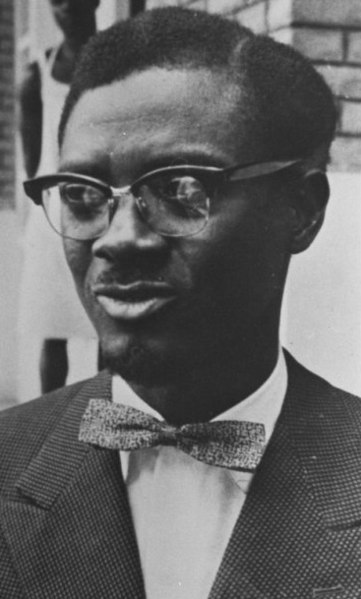
Patrice Émery Lumumba, first Prime Minister of the Democratic Republic of the Congo on 27 December 1960.
Unknown photographer
I’m still making my way through David Talbot’s 2015 book The Devil’s Chessboard, a history that explores the life of CIA Director Allen Dulles and the sordid history of the agency.
There are too many grisly anecdotes to recount showing how the CIA was involved in unlawful and unethical acts all over the world, but one that sticks out was the book’s treatment of Patrice Lumumba, an African nationalist who served as the first prime minister of the Democratic Republic of the Congo before he was killed in 1961 — with a shove from the CIA.
Lumumba was a thorn in the side of the agency, and his left-leaning politics led CIA officials to believe he was a stooge for the USSR (he wasn’t, as the CIA later admitted). So it was determined that Lumumba had to go—one way or the other.
First, a coup was arranged to have the democratically-elected Lumumba, who was demanding full independence for the Congolese people, removed from office and placed under arrest. To this end, the CIA tapped a young military colonel named Joseph Mobutu, who was friendly with Belgian intelligence (the Congo had long been under Belgian colonial rule) and would go on to rule for decades until he was ousted himself in a 1997 rebellion.
Then the CIA began exploring options to eliminate the popular Lumumba. Being the CIA, a single method was not chosen. Instead, various methods were explored to take out the Congolese leader and multiple people were tapped, including a pair of hitmen the agency had hired from Europe’s criminal underworld.
Talbot explains how the CIA equipped one of these cutthroats with a tube of poisoned toothpaste. Why toothpaste? Because one Dr. Ewen Cameron, at the behest of the CIA, had analyzed Lumumba and noted his immaculate white teeth. This led him to suggest a simple way to eliminate the troublesome leader: poison his dental products.
“In the end, the CIA did not go through with the toothpaste plot,” writes Talbot, “apparently deciding that poisoning a popular leader while he was under UN protective custody in his own house would be too flagrant a deed—one that, if traced back to the agency, would lead to unpleasant international repercussions.”
Instead, days before the inauguration of John F. Kennedy, the CIA arranged to have Lumumba chartered off on a plane to Katanga, a province that had broken from the Congo and was ruled by factions hostile to Lumumba.
This all but sealed Lumumba’s fate, CIA officials later testified.
“I think there was a general assumption, once we learned that he had been sent to Katanga, that his goose was cooked,” CIA station chief James Devlin, who helped orchestrate Lumumba’s fall, quipped to the Church Committee years later.
Devlin was right. During his flight to Katanga, Lumumba was beaten to a pulp. Then he was driven by jeep to a farm and beaten by members of rival political factions. The men, Talbot makes clear, had clear ties to US and Belgian intelligence.
“Eventually he was killed, not by our poisons, but beaten to death, apparently by men who had agency cryptonyms and received agency salaries,” said CIA agent John Stockwell, who was sent to the Congo in the aftermath of the assassination.
The Soviets managed a propaganda win out of the CIA’s clumsy wet work, renaming the Peoples’ Friendship University of the USSR (primarily used for training non-Soviet citizens from “fraternal socialist” and “unaligned” nations in Marxist-Leninist views) to the Patrice Lumumba Peoples’ Friendship University.
Hitler’s People by Richard J. Evans
In The Critic, Daniel Johnson reviews Richard Evans’ latest book on the history of Hitler’s Germany, Hitler’s People: The Faces of the Third Reich:
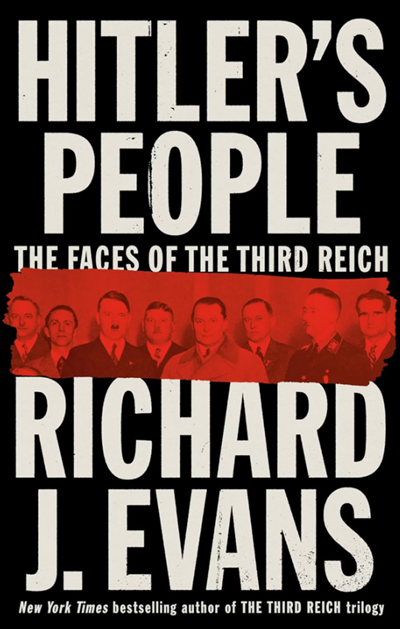
History records nothing more vile than Hitler and his henchmen. At the height of his power in 1942, Heinrich Himmler boasted that “the Führer has laid this very serious command [extermination of the Jews in occupied eastern Europe] upon my shoulders. No one can take it away from me.” By the end of the Third Reich, Hermann Göring had become a “voluptuary”, wearing lipstick and dressing in a toga, accompanied by a suitcase containing most of the world’s supply of the drug paracodeine. Joseph Goebbels, meanwhile, devoted his brief reign as Hitler’s successor to poisoning his six children.
The word “Nazi” has become synonymous with evil. Inevitably, therefore, it has also lost much of its original meaning — a case of Hegel’s “night in which all cows are black”. There is a danger that new generations will no longer know what made the Nazis and their crimes uniquely heinous.
Professor Sir Richard Evans has gathered a representative sample of “Hitler’s people”, ranging from the monstrous to the grotesque, into a single volume. It’s not a work of original research but a collective portrait of “the faces of the Third Reich”. Their unifying factor is the Führerprinzip — their unquestioning obedience to and adulation for Adolf Hitler.
Hero-worship in this, its most sinister form, is still with us. From Narendra Modi to Donald Trump, from Marine Le Pen to Jean-Luc Mélenchon, democracies are still menaced by demagogues. If we are honest, we have all felt the gravitational attraction of “charisma” — a secularised theological concept coined by Max Weber to denote the political authority exerted by an extraordinary individual. Evil often elevates the ordinary to the extraordinary.
Charisma in this sense is contemporaneous with the emergence of Hitler. His cult of charismatic leadership is indistinguishable from the ideology of National Socialism. Cults of this kind had already been prefigured in his day by those of Mussolini, Lenin and Stalin. But the case of Hitler, who cultivated the phenomenon in its most extreme form, remains the paradigm. Vladimir Putin, Xi Jinping and other contemporary despots are still in his debt.
Nazi Germany was indeed run by legions of little Hitlers, each demanding obeisance whilst lording it over their frequently competing or overlapping jurisdictions. The Third Reich was, in this sense alone, a diabolical reincarnation of the First, the Holy Roman Empire, with its patchwork of feudal domains. No medieval monarch, though, had the technological means to inflict such mayhem and misery upon humanity.
Operation Downfall – the planned invasion of Japan in 1946
Wes O’Donnell talks about the thankfully never-launched invasion of the Japanese home islands at the end of the Second World War:
History often hinges on the narrowest of margins.
Entire nations can rise or fall based on decisions made under the pressures of the moment.
But what if those decisions had gone the other way?
What if Archduke Franz Ferdinand had survived the assassination attempt in 1914?
What if John F. Kennedy had lived to complete a second term?
And most intriguingly, what if the United States had not dropped atomic bombs on Hiroshima and Nagasaki in August 1945?
The world would have witnessed Operation Downfall, the Allied invasion of Japan — an operation that, by all accounts, would have been the bloodiest amphibious assault in human history.
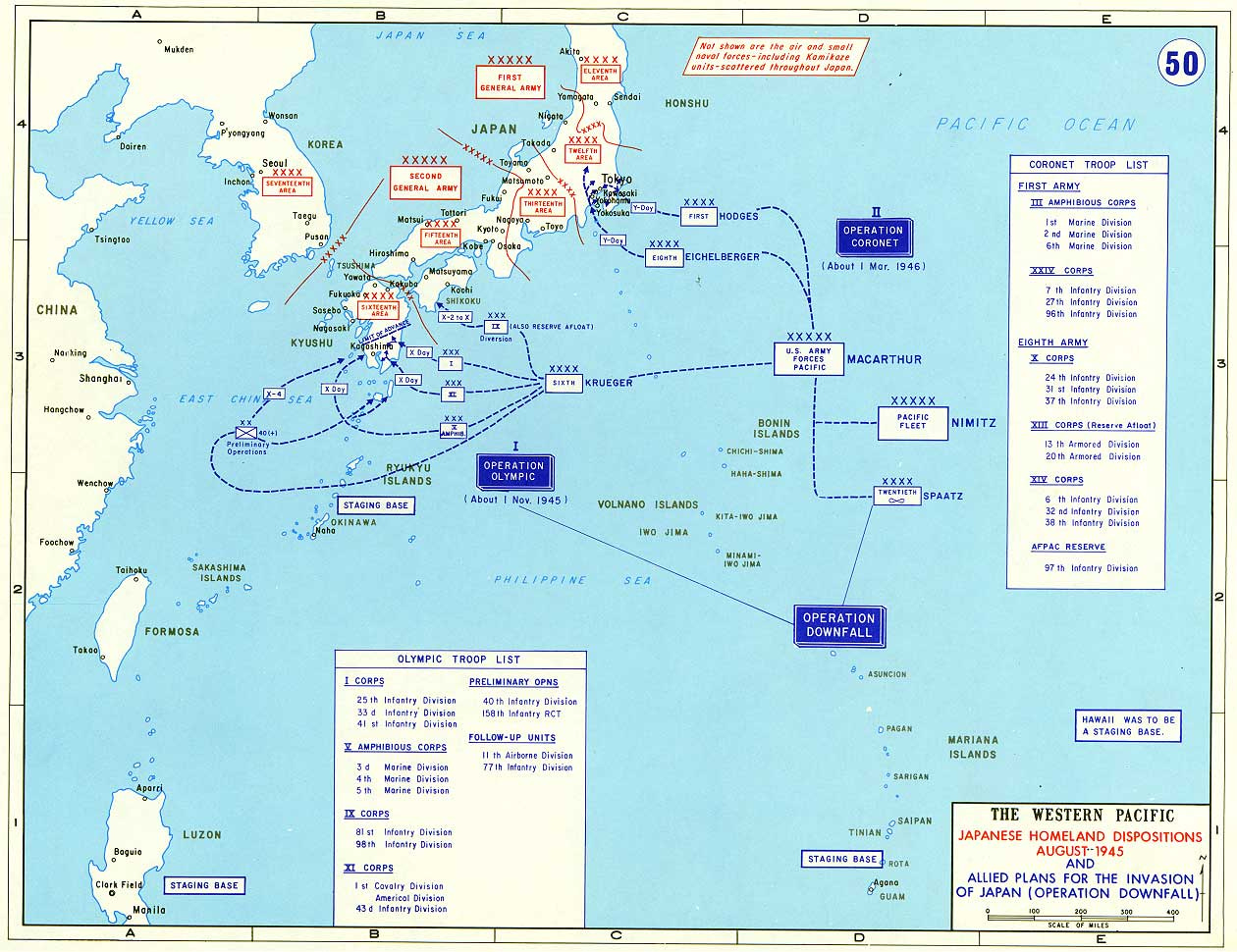
Operation Downfall was the codename for the proposed Allied plan for the invasion of Japan near the end of World War II.
The planned operation was abandoned when Japan surrendered following the atomic bombings of Hiroshima and Nagasaki and the Soviet declaration of war.
The operation had two parts: Operations Olympic and Coronet.
Set to begin in November 1945, Operation Olympic was intended to capture the southern third of the southernmost main Japanese island, Kyūshū, with the recently captured island of Okinawa to be used as a staging area.
Later, in the spring of 1946, Operation Coronet was the planned invasion of the Kantō Plain, near Tokyo, on the Japanese island of Honshu.
Airbases on Kyūshū captured in Operation Olympic would allow land-based air support for Operation Coronet.
The most troubling aspect of Downfall may have been the logistical problems facing military planners.
By 1945, there simply were not enough shipping, service troops, or engineers present to shorten the turnaround time for ships, connect the scattered installations across the Pacific, or build facilities like air bases, ports, and troop housing.
By this point in the war, the War Department had several military leaders that the government trusted to execute a quick end to hostilities.
Unlike the heavy political influence found in today’s wars, these men were given almost total freedom to plan large-scale military operations – Truman’s decision to drop the atomic bombs notwithstanding.
Six men of destiny
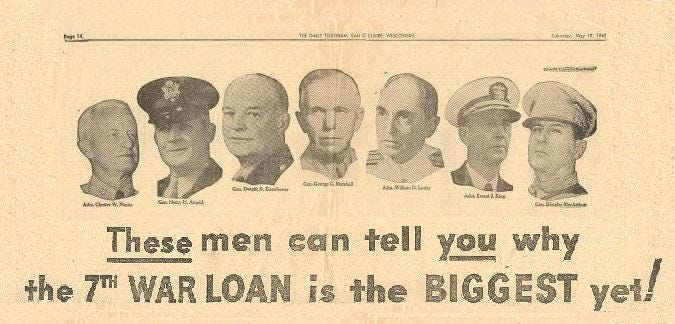
Responsibility for planning Operation Downfall fell to some of the most prominent American military leaders of the 20th century: Fleet Admiral Chester Nimitz, General of the Army Douglas MacArthur, and the Joint Chiefs of Staff — Fleet Admirals Ernest King and William D. Leahy, along with Generals of the Army George Marshall and Hap Arnold, who commanded the U.S. Army Air Forces.
These six men, raised in the relatively stable and predictable world of late 19th-century small-town America, carried with them the values instilled by that era.
Arnold and MacArthur were West Point graduates; King, Leahy, and Nimitz came out of the Naval Academy; while Marshall honed his discipline at the Virginia Military Institute, a school renowned for its toughness, even more so than the service academies.
For these leaders, the concepts of duty, honor, and country were more than just words — they were guiding principles.
They approached their roles without a trace of cynicism, supremely confident in their ability and, crucially, their God-given right to steer the course of history, especially in the chaos of war.
Eating on a German U-Boat in WW1
Tasting History with Max Miller
Published May 7, 2024Sauerkraut soup served with German black bread, or schwarzbrot
City/Region: Germany
Time Period: 1915The food aboard a German U-boat could get really monotonous, especially after the first ten days or so, when all of the best and freshest ingredients would have gone bad. This simple soup uses ingredients that would have been available on board, and comes from a German cookbook from WWI. There are actually several variations of this soup in the cookbook, the only difference being swapping out the sauerkraut for other ingredients like pickles, cabbage, or beets.
You need to like sauerkraut in order to enjoy this soup, as there isn’t anything else going on to contribute other flavors. I highly recommend eating it with some schwarzbrot, or black bread. It balances the sourness of the soup and the two go together very nicely.
Sauerkrautsuppe
The fat and flour are whisked and the water is slowly added. When the soup has simmered, the sauerkraut is added. Salt and vinegar are added to the soup and seasoned.
— Kriegskochbuch, 1915.
QotD: How did the Romans themselves view the change from Republic to Empire?
Overall the various Romans who contemplated reform were in a way hindered by the tendency of Roman elites to think in terms of the virtue of individuals rather than the tendency of systems. You can see this very clearly in the writings of Sallust – another Roman writing with considerable concern as the republic comes apart – who places the fault on the collapse of Roman morals rather than on any systemic problem.
We also get a sense of these feelings from the literature that emerges after Augustus takes power in 31, and here there is a lot of complexity. There is quite a lot of praise for Augustus of course – it would have been profoundly unwise to do otherwise – but also quite a lot of deep discomfort with the recent past, revealed in places like Livy’s deeply morally compromised legends of the founding of Rome or the sharp moral ambiguity in the final books of Vergil’s Aeneid. On the other hand, some of the praise for Augustus seems to have been genuine. There was clearly an awful lot of exhaustion after so many years of disruption and civil war and so a general openness to Augustus’ “restored republic”. Still, some Romans were clearly bothered by the collapse of the republic even much later; Lucan’s Pharsalia (65 AD) casts Pompey and Cato as heroes and views Caesar far more grimly.
We have less evidence for feeling in the provinces, but of course for many provincials, little would have changed. Few of Augustus’ changes would have done much to change much for people living in the provinces, whose taxes, laws and lives remained the same. They were clearly aware of what was going on and among the elite there was clearly a scramble to try to get on the right side of whoever was going to win; being on the wrong side of the eventual winner could be a very dangerous place to be. But for most regular provincials, the collapse of the Roman Republic only mattered if some rogue Roman general’s army happened to march through their part of the world.
Bret Devereaux, “Referenda ad Senatum: August 6, 2021: Feelings at the Fall of the Republic, Ancient and Medieval Living Standards, and Zombies!”, A Collection of Unmitigated Pedantry, 2021-08-06.
August 23, 2024
Woman with three multi-million dollar homes tells the rest of us we need to cut back our expectations
Sometimes it’s hard not to be cynical:

We often use the word “need” a little more than we probably should. We need to go see this movie when it’s in the theater or we need to get that new gadget. Often, we use it to describe a very strong desire, and I get it.
I mean, I do it too.
The truth is that our needs are much more basic than that. We need clothing, food, shelter, etc.
And that worries me because Michelle Obama thinks that taking more than we absolutely need is a problem.
I can’t even …
Yesterday I wrote about how shamelessness is a superpower, and I have to say that it is a wonder to behold.
As the Democrats gather in Chicago to experience the religious ecstasy of being surrounded by each other and sniffing their own farts, they are treated to speeches from elite hypocrites who pretend to be perfectly normal people.
Last night was the ol’ HOPENCHANGE shtick, with Michele and Barack Obama babbling on about things they don’t believe while Obama sycophants babble on about how their “spiritual voids” were filled by the Lightbringer.
An emotional high point was, apparently, Michelle’s speech in which she blathered on about how very normal her family was and how they were egalitarians who were suspicious of rich people.
To be accurate, she said, “suspicious of people who took more than they need”.
I find this fascinating because, well, the Obamas own three homes. The least amount they paid for a home was $1.65 million, and that was in 2005.
I’m always amazed at how people who spend their lives working in the public sector and for non-profits can amass so much wealth, but apparently, that’s just what they need.
Let’s understand that most of us are living with far more than we absolutely need to survive. We also have a lot of things that simply provide comfort, such as smartphones, televisions, computers, and so on.
So if we’re to be suspicious of people who took more than they need, should we be skeptical of the person looking back at us in the mirror?
Who decides what one needs? To what level are we ascribing the term “need” anyway?
Does anyone need $750,000 for an hour-long speech?
The EU’s bureaucratic aristocrats agree “Spaceship Man Bad!”
As eugyppius explains, the “Eurocrats are having a very big sad” and Spaceship Man Bad isn’t deferring to their autocratic whims:
The Brussels Eurocrats around Emmanuel Macron are having a big sad about Twitter right now. They fear the platform fuels “the amplification of hateful content” and “disinformation”, which are multisyllabic ways of saying that there is too much unapproved and uncurated discourse on the site. You cannot just have people taking to their keyboards to type, like and retweet whatever they want. You especially cannot have that in Europe, where we suffer under the immensely liberal and democratic Digital Services Act, which mandates all manner of social media censorship to protect traditional European freedoms, like freedom of expression.
Twitter is a useful website; I use it to try out ideas and also for news-gathering purposes. As much as I’ve benefitted from the platform, however, I find the establishment derangement surrounding it to be extremely bizarre. There is little chance that Elon Musk’s relaxed moderation regime will lead to fascism, and still less chance that heavy censorship there will do anything about tHe ExtREmE RiGhT. The real reason that Twitter bothers establishment pundits and politicians, is its inherently confrontational nature. Our smug and self-satisfied oligarchs don’t like getting dragged and dunked on by the rabble. They want to tweet their lunacies without anonymous anime-themed accounts showing them up for the fools that they are, and they are very, extremely, fulminously enraged that Musk won’t do anything to improve their user experience.
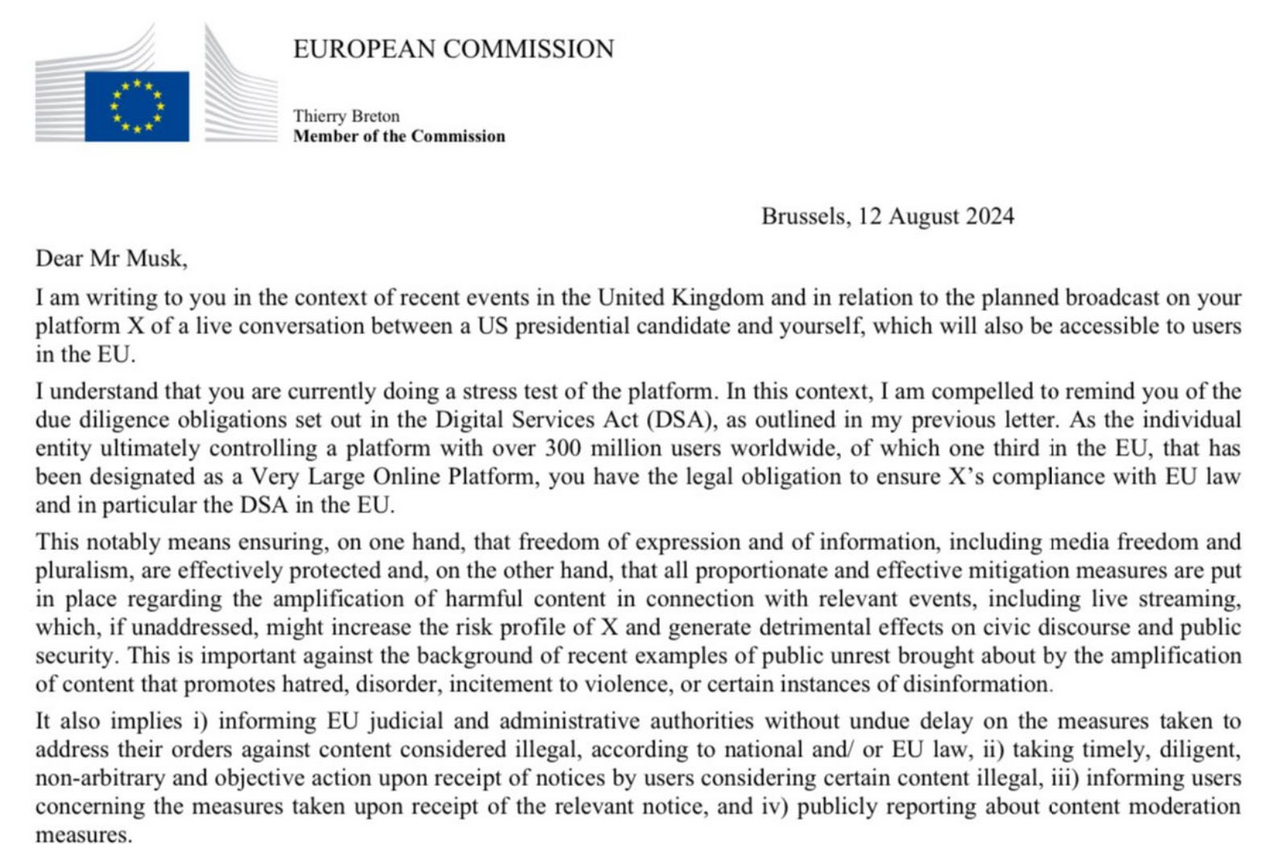
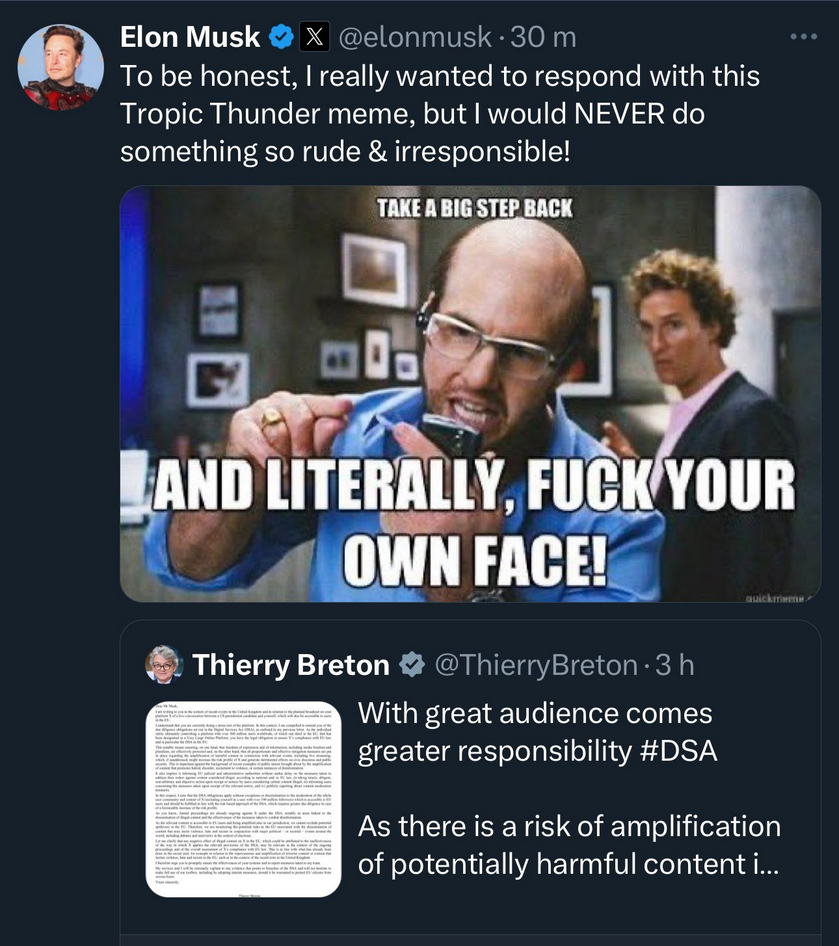
One of these dissatisfied users is Thierry Breton, the Macron-appointed Commissioner for the Internal Market of the European Union. As everybody knows, on 12 August, Breton posted a letter to Musk ahead of Musk’s Twitter discussion with Donald Trump, to remind the American entrepreneur of his obligations to censor content. Breton has long been a thorn in the side of his EU colleagues, who regard him as a shallow self-promoter, and his game rapidly backfired. The next day, the EU Commission clarified that “The timing and the wording of the letter were neither co-ordinated nor agreed with the president nor with the [commissioners].” The American House Judiciary Committee then added to Breton’s humiliation by condemning his “threats” and his “attempt to intimidate individuals or entities engaged in political speech in the United States”. Musk also had some choice words for the EU Commissioner:
The Macronistes don’t care that they are wildly unpopular and that everybody hates them. They just don’t want to hear about it. They could simply delete their Twitter accounts, but people would still be saying mean things about them on the internet somewhere. They’d have to lie awake in bed at night, staring at the ceiling and stewing about it. Better by far would be to delete Twitter itself, or at least to block access to the platform across all 27 EU member states.
How to bind loose pages together: a simple method
Annesi Bindings
Published Mar 7, 2021This video demonstrates a very simple way of binding loose pages together. It is intended for people who have texts that they want to bind together, but who are looking for a better method than simply stapling, paper clips, or ring binding. The video is suitable for non-bookbinders and only requires minimal materials and PVA glue.
If you are looking for how to bind loose pages into a hardcover book, I demonstrate that in this video:
• How to Bind a Perfect-bound Book
QotD: The decline of the British working class
Marxists themselves were perhaps the first to notice that the “proletariat” as their theory conceived it was vanishing, assimilated to the petty bourgeoisie by the postwar rise in living standards and the propagation of middlebrow culture through the then-new media of paperback books, radio, and television.
In the new environment, being “working class” became steadily less of a purchasing-power distinction and more one of culture, affiliation, and educational limits on upward mobility. A plumber might make more than an advertising copywriter per hour, but the copywriter could reasonably hope to run his own ad agency – or at least a corporate marketing department – some day. The plumber remained “working class” because, lacking his A-level, he could never hope to join the managerial elite.
At the same time, state socialism was becoming increasingly appealing to the managerial and upper classes because it offered the prospect not of revolution but of a managed economy that would freeze power relationships into a shape they were familiar with and knew how to manipulate. This came to be seen as greatly preferable to the chaotic dynamism of unrestrained free markets – and to upper-SES people who every year feared falling into poverty less but losing relative status more, it really was preferable.
In Great Britain, the formation of the National Health Service in 1947 was therefore not a radical move but a conservative one. It was a triumph not of revolutionary working-class fervor overthrowing elites but of managerial statism cementing elite power in place.
During the long recovery boom after World War II – until the early 1970s – it was possible to avoid noticing that the interests of the managerial elite and the working classes were diverging. Both the U.S. and Great Britain used their unmatched industrial capacity to act as price-takers in international markets, delivering profits fat enough to both buoy up working-class wages and blur the purchasing-power line between the upper-level managerial class and the owners of large capital concentrations almost out of existence.
The largest divergence was that the managerial elite, like capitalists before them, became de-localized and international. What mobility of money had done for the owners of capital by the end of the 19th century, mobility of skills did for the managerial class towards the end of the 20th.
As late as the 1960s, when I had an international childhood because my father was one of the few exceptions, the ability of capital owners to chase low labor costs was limited by the unwillingness of their hired managers to live and work outside their home countries.
The year my family returned to the U.S. for good – 1971 – was about the time the long post-war boom ended. The U.S. and Great Britain, exposed to competition (especially from a re-industrialized Germany and Japan) began a period of relative decline.
But while working-class wage gains were increasingly smothered, the managerial elite actually increased its ability to price-take in international markets after the boom. They became less and less tied to their home countries and communities – more willing and able to offshore not just themselves but working-class jobs as well. As that barrier eroded, the great hollowing out of the British industrial North and the American Rust Belt began.
The working class increasingly found itself trapped in dying towns. Where it wasn’t, credentialism often proved an equally effective barrier to upward mobility. My wife bootstrapped herself out of a hardscrabble working-class background after 1975 to become a partner at a law firm, but the way she did it would be unavailable to anyone outside the 1 in 100 of her peers at or above the IQ required to earn a graduate degree. She didn’t need that IQ to be a lawyer; she needed it to get the sheepskin that said she was allowed to be a lawyer.
The increasingly internationalized managerial-statist tribe traded increasingly in such permissions – both in getting them and in denying them to others. My older readers might be able to remember, just barely, when what medical treatment you could get was between you and your physician and didn’t depend on the gatekeeping of a faceless monitor at an insurance company.
Eventually, processing of those medical-insurance claims was largely outsourced to India. The whole tier of clerical jobs that had once been the least demanding white-collar work came under pressure from outsourcing and automation. effectively disappearing. This made the gap between working-class jobs and the lowest tier of the managerial elite more difficult to cross.
In this and other ways, the internationalized managerial elite grew more and more unlike a working class for which both economic and social life remained stubbornly local. Like every other ruling elite, as that distance increased it developed a correspondingly increasing demand for an ideology that justified that distinction and legitimized its power. And in the post-class-warfare mutations of Marxism, it found one.
Eric S. Raymond, “The Great Inversion”, Armed and Dangerous, 2019-12-23.


