
Unless you’re an engineer, then, friction works best as a metaphor for human interaction. Creativity, for instance. Lots of very creative folks have tried to describe the creative process. Stephen King (I think) came up with the notion of grit in an oyster — something gets under your shell and irritates you until something beautiful forms around it. I like that, but being a social guy I prefer the notion of friction. You spend your days rubbing against people (not like a Japanese businessman on a crowded train, you sickos); sometimes that friction sparks something. Maybe it’s friendship, romance, whatever; or maybe it’s a story, poetry, music. Whatever the spark catches on fire depends on the interests, training, and talent of whatever pile of tinder it lands on.
On the other hand, most people aren’t artistes, so a well-ordered society is a well-lubricated society (“ah so!” yells our Japanese businessman, and look, y’all, much like my poor old high school physics teacher, we’re just going to have to ignore the obvious sexual connotations for the sake of the lesson). “Better a false ‘good morning!’ than a sincere ‘go to hell!'”, the old proverb runs, and that’s because the false “good morning!” is social lubricant; it keeps the friction of living packed cheek-to-jowl with a bunch of strangers down to a manageable level.
That’s what that mystifyingly old-timey word “manners” really means. What the frustrated artistes of the 20th century decried as stultifying conformity is actually lubricant. You don’t do that whole bourgeois thing, maaaannn, because you like being a sheep; you do it because that’s what keeps your world from catching on fire. Replace enough false good mornings with sincere go to hells, and pretty soon you’ve got Chicago, Philadelphia, Bodymore Murderland …
Alas, modern prosperity enables the sandpaper people. If normal people oil themselves up with manners before they go out into the world, these freaks wrap themselves in sandpaper. The really gritty stuff, too, the real paint-strippers you load onto big belt sanders. The kind of assholes who make up elaborate pronouns for themselves and get theatrically mad on social media when normal people can’t figure out what the hell they’re talking about, for instance.
And in an at least Alanis-level irony, the sandpaper people do some of their most abrasive work by pretending, high school physics-style, that obviously frictive situations are frictionless. […]
And so it goes … except physics is a real thing that exists. Our high school teacher instructed us to ignore things like wind resistance in order to teach us the basics. We all knew there was a lot more than F=MA to answering even so basic a question as whether or not Mickey Mantle’s line drive cleared the fence. Not only do the sandpaper people not know that, they wouldn’t care if they did, because equations be rayciss. Alas for them — and us — friction is real. Ever seen a car engine catch fire? Too much friction for the lubricant to handle, and the lubricant becomes a fire accelerant.
Severian, “The Sandpaper People”, Founding Questions, 2022-01-03.
May 21, 2025
QotD: The sandpaper people
May 20, 2025
Joe Biden’s cancer diagnosis
News broke the other day that former President Joe Biden is suffering from a highly advanced cancer and it only reinforces the questions about who was really performing the role of the President during Biden’s term in office:

Well, now it almost isn’t funny anymore.
Here’s the progression of the Democrats’ desperate attempts to shame you out of talking about Joe Biden’s mental and physical health:
“Stop talking about this because it’s not true.”
“Stop talking about this because he’s not the president anymore.”
“Stop talking about this because he has cancer.”You may notice a pattern.
I think it was Andrew Klavan who made me realize the First Commandment of the Democratic Party: Thou shalt STFU. All their gaslighting, shaming, whataboutism, and other dishonest rhetorical techniques are attempts to stop you from talking about whichever lie they’re telling at that particular moment.
Why would they stop at cancer?
A lot of medical professionals are pointing out that a prostate cancer diagnosis doesn’t just come out of the blue like this. It’s easily detectable in blood work, it takes years and years to progress, and it should’ve been detected at his last annual physical.
Even Dr. Ezekiel Emanuel (an oncologist, Rahm’s older brother, and certainly no MAGA-head) says Biden must have learned of this diagnosis many years ago.
If Biden was undergoing cancer treatments during his presidency — remember all those unexplained trips to Delaware? — it would explain a lot of his behavior. “Chemo brain”. And of course he and Jill would keep it under wraps, because it would only strengthen a 25th Amendment challenge.
Who else knew about this, and when did they know it?
And who the hell was performing the duties of the president of the United States for four years?
Keep in mind that Joe Biden loves using his personal tragedies as a Get Out of Jail Free card. We heard it in that just-released Robert Hur audio from October 2023, when Biden deflected a question he didn’t want to answer about his handling of classified documents by complaining that his son Beau died. He couldn’t remember the exact year, but he used it as an excuse anyway.
If he’ll use his dead son, why wouldn’t he use a cancer diagnosis?
eugyppius also notes that such an advanced case can’t have just popped up recently, reinforcing the notion that his term in office was partially or completely a “regency”:
Yesterday evening, Joe Biden’s office announced that the former president had been diagnosed “with an aggressive form of prostate cancer that has spread to his bones“. Biden must have had this cancer for a long time for it to have spread that far, and thus it seems very strange that someone receiving presidential levels of medical care should have been diagnosed only just last week. Many in our circles posit that insiders have known about Biden’s illness for years, but that they have kept his diagnosis and treatment under wraps for political reasons. Among other things, they argue that this explains a July 2022 gaffe in which Biden complained that environmental pollution is “why I and so damn many other people I grew up with have cancer“.1
In fact, I think a simple cover-up is the most harmless possibility here. It’s likely that doctors have diagnosed Biden’s cancer so late because the former president was subject to a high degree of isolation and medical neglect while in office. Perhaps family and close advisers carefully managed Biden’s annual physicals to avoid any inconvenient findings as part of a broader campaign to hide his dementia. Alternatively, it’s possible that signs of cancer were discovered at some point, but that Biden’s inner circle avoided confirming the diagnosis or pursuing treatment. Either way, the late diagnosis and the advanced cancer together suggest that Biden has been left sick and untreated for a long time.
As I wrote last year, Biden’s presidency was an informal and unacknowledged regency. Biden himself did not have the mental capacity to rule on his own, and so a confined circle of close advisers and family effectively directed the actions of the presidential office on his behalf.
Importantly, this regency was not “the White House” or “Biden’s staff” or “the Democratic Party” in general. It was much smaller than all of those things. The regents worked hard to obscure Biden’s dementia from Congress, from large parts of Biden’s own campaign, from the Democratic Party and from many others within Biden’s White House. They ensured that even internal meetings unfolded in highly scripted and predetermined ways, so that cabinet and other officials could not gain a clear idea of Biden’s mental state. They berated and intimidated anyone voicing concern about the president’s health behind the scenes. And they had very simple reasons for doing all of this: If Biden’s dementia were to become common knowledge and not merely an object of private suspicion (however widespread), the regency would be shown up as illegitimate and potentially broken.
Regents exercise power by restricting access to their charge and restricting their charge’s access to information and the outside world. It is thus unsurprising to find that Biden’s regents subjected him to strict social isolation, particularly towards the end of his term …
1. The White House clarified that Biden was referencing his earlier diagnoses for non-melanoma skin cancer.
The Death of Marat
Daniel Jupp uses the famous Jacques-Louis David painting of the 1793 assassination of French revolutionary leader Jean-Paul Marat by Charlotte Corday to illuminate the twisted dealings of the various radical factions within the larger revolutionary movement:
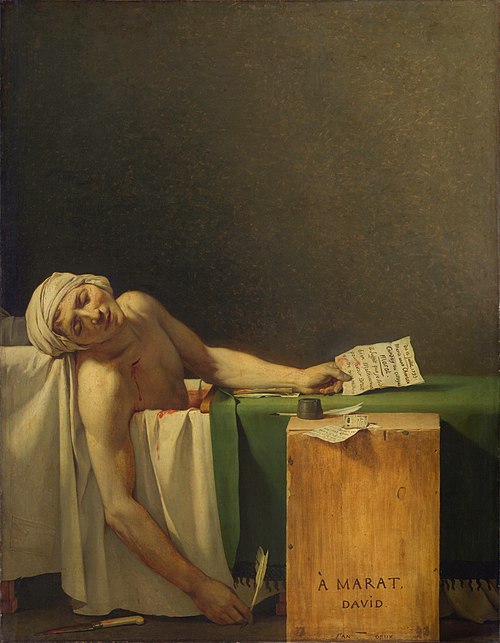
La Mort de Marat (The Death of Marat) by Jacques-Louis David (1748-1825)
From the Royal Museums of Fine Arts of Belgium via Wikimedia Commons.
One of the most famous and celebrated works of art in European history is a painting about a political assassination. That painting is The Death of Marat (La Mort de Marat in French) by Jacques-Louis David. It was painted in 1793. David was already one of the most respected French artists of the 18th century, a leader of French Neoclassical art. He was also himself a political figure, a prominent member of the Montagnard faction (itself a subset of the Jacobins) and a member of the revolutionary Committee of General Security.
It’s an overtly political painting in every way, created by a man who was as much a French Revolutionary politician as he was an established and esteemed artist. It’s about a shocking political event, and it was crafted as an exercise in propaganda. […] The painting shows us Marat in his bath, immediately after being assassinated by Charlotte Corday on the July 13, 1793. It is a beautifully composed image of political martyrdom. Marat’s posture, for anyone with the slightest awareness of Western art traditions, immediately shows where the sympathies of the artist lie (and also, where the sympathies of the artist lie).
Marat’s pose is, of course, a deliberate mirroring of the pose of Christ in hundreds if not thousands of Western art traditional depictions of the Crucifixion. The pale, slim but muscular figure, marked by the assassin’s blade but in a manner that might be compared to the puncture wound inflicted by the Spear of Longinus or to the stigmata nail wounds of crucifixion on Christ himself, has that peculiar serenity in death that other artists place in depictions of Jesus. The blood is present as proof of supreme sacrifice, but artistically minimised, prevented from distracting from the clean, shining, almost marble-like flesh of the deceased, who is already a kind of heroic statue in repose, fixed for the admiration of the ages. The dead man has a gentle, compassionate smile on his lips, as if interrupted in the process of forgiving his murderer. The angle, the gentleness, the delicacy of it all suggests Christ-like self sacrifice, as if Marat has chosen his death knowingly, given his life willingly.
Here is the martyr of the Revolution. A new Christ, as good as the old one … if not better.
[…]
It’s at this point that we should mention the central dishonesties here. Christian self sacrifice and martyrdom is a very different thing to one politically radical extremist being murdered by another. Marat was, in reality, about as far away from this movingly gentle depiction of him as one could imagine. As one of the most radical and zealous figures of the Revolution, Marat was a lesson for the ages in the exact opposite way to the one that David depicts. He wasn’t a gentle figure of self sacrifice. He wasn’t a Lamb bringing Peace in the manner of Christ. He wasn’t an innocent. He was a brutal, grasping, rapacious sadist. He was one of the leaders of the storming of the Bastille, and that too has symbolic and practical importance – the terrible monarchical regime had hardly anyone in its most hated prison, whereas the Revolutionary “liberators” soon stuffed it full of their political enemies.
Even at a point where many murders were already being committed, Marat was noted as an unusually brutal proponent of Revolutionary excess. His assassin was from a rival, supplanted Jacobin faction, the Girondists. The Girondists too had supported the earliest uses of violence, riot and uprising within France, and were a “war party” who wanted to export the Revolution abroad and topple monarchical dynasties across Europe. These two factions did not really differ on whether you should murder your political enemies or not, but the Girondists were at times embarrassed by Montagnard violence when it was at its most indiscriminate. The Girondists tended to be the most intellectualised of the Revolutionaries. They were the writers of pamphlets and doctrines of great length and increasingly mind-numbing tediousness. Marat, although also a street-level gutter pamphleteer, was much more of a bloody handed man of action, more akin to a modern terrorist. But the two were aligned in the creation of the bloodshed, even if the Girondins wanted it to be more focused and controlled and ultimately directed outside France:
Temperament largely accounts for the dividing line between the parties. The Girondins were doctrinaires and theorists rather than men of action. They initially encouraged armed petitions, but then were dismayed when this led to the émeute (riot) of 20 June 1792. Jean-Marie Roland was typical of their spirit, turning the Ministry of the Exterior into a publishing office for tracts on civic virtues while riotous mobs were burning the châteaux unchecked in the provinces.
The split between the two factions came to a head as a fall out from the September Massacres of 1792. Marat, a leader of the peasant sans-culottes mobs, was personally engaged in the orgy of bloodshed. Girondist leaders were alarmed, already sensing that previously aligned Revolutionaries or widespread mob violence could turn on them. Typically, the Girondists took defensive measures that were mainly concentrated on written statements, declarations or on bureaucratic ministries, whereas the Montagnards gradually took control of revolutionary militias and the people who were prepared to actually decide, at the point of a sword or via the barrel of a musket, who got killed and when. Neither side could be described as moderates, but one side were more ruthlessly pragmatic, which is why it was the Girondists who ended up being put on the execution lists of the Terror.
At the time that Corday assassinated Marat, Girondists had already been ousted from positions of power and arrested. Marat, along with Danton and Robespierre, was one of their three most prominent denouncers and enemies. Corday stated that she had “killed one man so that 100,000 could be saved”. It’s clear that she had hoped her action would save her arrested Girondin allies and personal friends, but it had the opposite effect and sealed their subsequent trial and executions.
Gen Z is blaming Capitalism for the sins of Cronyism
Lika Kobeshavidze at the Foundation for Economic Education explains why angry Gen Z’ers are blaming capitalism but should instead be blaming crony capitalism for the economic plight they find themselves in:
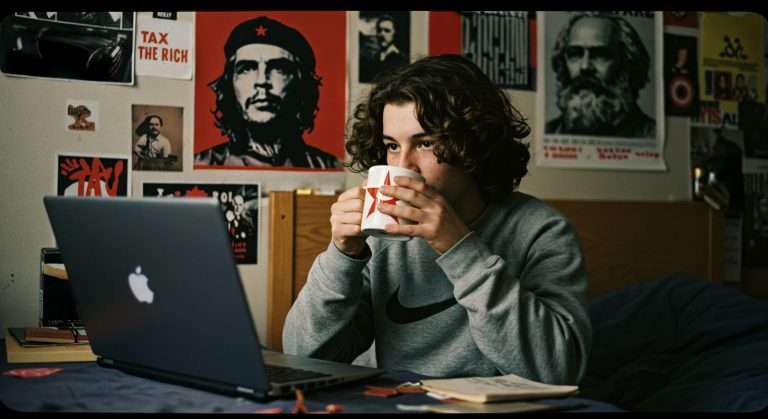
Image Credit: Custom image by FEE
Across college campuses, on TikTok feeds, and in everyday conversations, a familiar narrative is gaining steam: capitalism is broken.
Rising rents and stagnant wages fuel the claim among some young people that free markets have failed an entire generation. According to a 2024 poll by the Institute of Economic Affairs, more than 60% of young Britons now view socialism favorably. In the United States, the trend is similar, with Generation Z increasingly skeptical of capitalism’s promises.
But much of this idealism is rooted in distance — many of the young people romanticizing socialism have never lived through the economic dysfunction or political repression it often brings. For those who experienced Soviet shortages, Venezuelan collapse, or East Germany’s surveillance, the word socialism doesn’t suggest fairness or opportunity — it suggests fear, failure, and control. There’s a reason so many fled those systems to come to freer countries. What sounds utopian in theory has too often turned dystopian in practice.
But blaming capitalism misses the mark. The real culprit is cronyism, the unholy alliance between big government and big business that twists markets, blocks competition, and rewards political connections over genuine innovation.
[…]
Cronyism is not limited to one country or one political party. Across the United States and Europe, the symptoms are the same.
In the US, Canada, and the UK, the dream of homeownership slips further away for young people. Sky-high housing prices are blamed on “market failure”, but the real cause lies in layers of government-imposed barriers: restrictive zoning laws, burdensome permitting requirements, and endless bureaucratic delays. Big developers who can afford to navigate or influence the system survive. Everyone else gets locked out.
In Europe, the pattern repeats. France’s labor laws, designed to protect workers, instead stifle opportunity. Hiring becomes risky and expensive, especially for young people. Large corporations, with the resources to manage compliance costs, consolidate their dominance. Small firms and startups never get off the ground.
There’s also a persistent myth that big business fears government intervention. In reality, the largest corporations often embrace it, because it keeps them on top. Tech giants like Facebook and Google now lobby for more regulation, knowing that complex new rules will strangle smaller competitors who can’t afford fleets of compliance officers. Green energy subsidies, meant to combat climate change, often end up showering billions on well-connected firms while locking out emerging innovators.
Cronyism doesn’t reward the best ideas. It rewards the best lobbyists.
The Battle of Aquino
Canadian Tank Museum
Published 13 Jan 2025You may know about AQUINO Tank Weekend at our Museum, but what was the Battle of Aquino? When did it take place? What happened to the Ontario Regiment RCAC during that action?
Enjoy this short documentary with our Curator Sam Richardson as he gives you a detailed look at the situation in May 1944 during the Italian campaign of the Second World War. Learn more about the soldiers that took part, the battle that took place and why it remains important to our Regiment and our Museum.
(more…)
QotD: The autohagiography of the NHS
I grew up, for example, in the inculcated belief that the National Health Service was, according to the slogan of the time, “the envy of the world”. Millions of people believed this, and indeed it was an assertion heard for many years whenever the subject of health care came up. The slogan was last wheeled out in any force in 2008 for the 60th anniversary of its founding.
Oddly enough, it never occurred to the people who repeated the slogan to examine the basis of the claim. Who, exactly, were the people doing the envying — not just one or two of them, but en masse? It is no doubt true that immigrants from very poor countries were pleased enough to receive care under the NHS, comparing it with what they would have received at home. But is it really much of an achievement for a developed country to have health care better than that offered in Somalia or Bangladesh?
A war of anecdotes, while always gratifying to the human mind, is not the way to decide important questions such as the superiority or inferiority of a system of health care.
It never occurred to those who repeated the “envy” slogan to look to comparable countries across the Channel or North Sea to see whether, in fact, those countries had anything to envy. In fact, between 1948 and 1975, even Spain under Franco performed better in the matter of improving the health of the population than did Britain. In most respects, in fact, Britain lagged or limped behind other countries, always in the rear and struggling to catch up.
What eventually struck me, then, was the willingness of so many people to repeat and believe a slogan without any compulsion whatever to do so, and without the slightest inclination to examine its truth — indeed without any awareness of the need for such an examination. There was no oppressive force to prevent or deter them from intellectual inquiry, but they preferred the comfort the slogan offered to the effort and possible discomfort of finding the truth. The NHS, or rather the idea of the NHS, played the role of teddy bear to a population with many anxieties.
True enough, many individuals may have experienced deficiencies in the service — long waiting times, offhand or disagreeable interactions with the bureaucracy, etc. But like Russian peasants of old who believed that the Tsar knew nothing of the oppression which they suffered, and would have put an end to it if he had known, the British continued to believe that the National Health Service had been born with original virtue and that the defects they experienced were exceptions. Repeated scandals of gross neglect or sub-standard treatment were shrugged off in the same way. And in a certain dog-in-the-manger way, the British were inclined to believe that if the NHS was unpleasant to negotiate, at least (being more or less a monopoly) it was equally unpleasant for everyone. Fairness and justice were equated with equal misery. Anyway, being ill is always unpleasant, so what did anyone expect?
Theodore Dalrymple, “Worshipping the NHS”, New English Review, 2020-05-07.
May 19, 2025
1949: What are those kids listening to? – W2W 29
TimeGhost History
Published 18 May 2025There seems to be an evolution, that may one day become a revolution, in popular music in the US. Songs with amplified electric guitars, wailing saxophones, and backbeat rhythms are being released more and more often, but it’s not just R&B or jump blues, this is a bit of a different style — a new style. And it’s spreading quickly thanks to a vinyl record revolution that’s also getting in gear. Looks like exciting times ahead for the youth of America, and maybe even the whole world.
(more…)
The Roman Empire and climate change
Sebastian Wang considers “what we all know” about the rise and fall of the Roman Empire in the light of more recent research (not all of it politically motivated) into climate change:
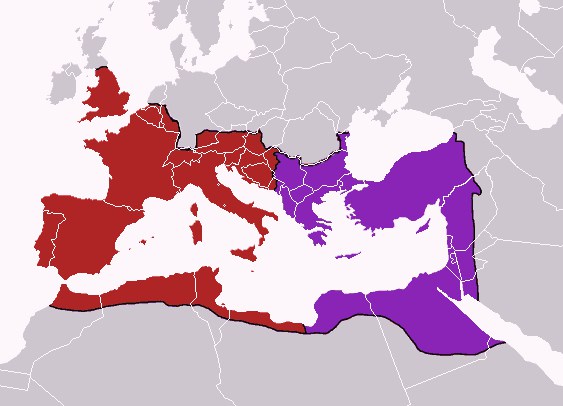
The approximate extent of the Roman empire circa 395AD.
Before we get into climate, and for those who tend to the wholly ignorant spectrum of my readers, we need a quick sketch of Roman history. The Empire officially began in 27 BC, when Octavian — better known as Augustus — became the first emperor. It ended in the west in AD 476, when the last western emperor was kicked out. As said, the eastern half, based in Constantinople, carried on for another thousand years.
Broadly, we can divide Roman history as follows:
- 27 BC – AD 180: The golden age. Augustus and his successors took over and further expanded a huge empire. There was peace (mostly), trade flourished, and cities grew. People call it the “Pax Romana“.
- AD 180 – 284: Everything starts to fall apart. This is called the Crisis of the Third Century. Civil wars, foreign invasions, plagues, and economic collapse all hit at once.
- AD 284 – 395: The empire pulls itself together. Emperors like Diocletian and Constantine bring in reforms. But the empire is now divided for administrative convenience — east and west.
- AD 395 – 476: The west goes under. It’s invaded. It’s conquered and broken up. Very quickly, it disappears. Though, once again, a parochial view of history, we call this the Fall of the Roman Empire.
The standard histories still blame bad rulers or too many wars. That’s fair enough. There were some very bad rulers, and the wars without number. But if you look at the climate data — tree rings, ice cores, sediment levels — you start to see another pattern underneath what may be called the political and economic superstructure of Roman history.
When Rome came to greatness, the climate was unusually good. From around 200 BC to AD 150, there was a long phase of stable, warm, and mostly wet conditions. Scientists call this the Roman Climate Optimum. In Egypt, the Nile flooded regularly and well. That meant lots of grain. In the Alps, glaciers shrank. In northern Europe, people were growing grapes in places too cold for vineyards today. In the Middle East, the Dead Sea stayed high, showing good rainfall.
This kind of weather made everything easier. Crops were reliable. Surpluses could be taxed. Cities could be fed. Roads and aqueducts could be built and maintained. And because the army was well supplied, the Empire was protected, and could even continue a modest expansion. But, as McCormick and his team point out, the high phase of Nile flooding correlates exactly with the high point of Roman prosperity — and once those floods became less predictable, problems followed.
The good times came to an end. By the mid-second century, a wave of volcanic eruptions thew great masses of dust into the atmosphere, blocking sunlight. Solar activity dropped. The climate became less stable. Then came the Antonine Plague in AD 166. It probably started in the east and spread quickly. Some think it was smallpox. Whatever it was in terms of microbiology, it was almost certainly brought on by changes in the climate. It may have killed a third of the Empire’s population.
Worse was coming. By AD 200, climate records show more erratic rainfall and cooling. In Gaul and the Balkans, harvests became less predictable. Glaciers began to advance again. Speleothem data from Austrian caves shows sharp shifts in rainfall patterns.
At the same time, the empire started to shake. Between 235 and 284, Rome had over twenty emperors. Most were generals who seized power, then got killed. Civil wars broke out. Trade declined. Foreign tribes pushed harder at the frontiers. Coin hoards — money buried for safety — increased in number. That’s usually a sign of fear and instability. Cities shrank. The economy shrivelled.
Was this all because of climate? No — not wholly. A good definition of historical crank is someone who tries to explain everything in terms of one cause or set of causes. But as McCormick et al. argue, bad weather made everything worse. It weakened agriculture, strained supplies, and made people more likely to panic or rebel. In a world without modern logistics, you couldn’t afford bad harvests two or three years in a row.
The empire buckled in the third century, but didn’t collapse. And its survival probably was an effect of human agency. A line of competent Emperors rose from the army and stabilised the frontiers. This line culminated in the reigns of Diocletian and Constantine, who restructured the Empire. They fixed taxes. They reorganised the army. Constantine built his new capital in the east. His successors found Constantinople safer and more strategically useful than Rome.
This being said, around AD 290, climate records suggest a small rebound. Warmer temperatures and better rainfall returned — especially in the east. That helped the eastern provinces recover faster. They had stronger governments and better infrastructure. But climate helped. Dead Sea levels remained relatively high, which meant steady rain in the Levant.
The west wasn’t so lucky. Italy and parts of Gaul stayed unstable. In Britain, pollen records show that farmland was being abandoned. The archaeology matches this, with fewer building projects and shrinking urban centres. The killing shock for the west came in the fifth century. In Central Asia, a long drought began around AD 370. Steppe tribes like the Huns were hit hard. They migrated west, pushing other tribes like the Goths ahead of them. In AD 376, the Goths crossed the Danube into Roman territory. Two years later, they crushed a Roman army at Adrianople. This all happened in the eastern half. But greater wealth and better leadership allowed the government in Constantinople to push the barbarians west. Over the next century, the western empire was hit again and again.
Meanwhile, the weather got worse. Europe cooled. Rainfall patterns shifted. Flooding and crop failures increased. Volcanic sulphur levels spike in the ice core record from Greenland.
Rome was sacked in AD 410. Again in 455. Finally, in 476, the last western emperor was deposed. That was it. The western Roman Empire was gone.
The east survived. But was hardly untroubled. In AD 536, a huge volcanic eruption darkened skies around the world. The sun barely shone. Crops failed. Famines spread.
A few years later, the Plague of Justinian broke out. It probably started in Egypt and spread through trade routes. Some say it killed half the population in affected areas.
Climate and disease worked together. Hunger weakened people. Infection finished them off. As McCormick et al. put it, the event of 536 and the plague that followed created one of the worst demographic shocks in recorded history.
Best of Cunk on Shakespeare – Part 1
Philomena Cunk
Published 20 Dec 2023Are you saying I’m a liar?
Sharing all things Cunk – a fictional character from Charlie Brooker’s Weekly Wipe, Cunk on Britain, Cunk on Shakespeare and Cunk on Earth – Portrayed by the incredible Diane Morgan.
QotD: Food for Medieval English peasants
Jane Psmith, “REVIEW: The Domestic Revolution by Ruth Goodman”, Mr. and Mrs. Psmith’s Bookshelf, 2023-05-22.
1. We’re used to thinking of plants as being seasonal, but until quite recently animal products were seasonal too: chickens won’t lay in the winter without artificial lighting, cows stop giving milk when their calves reach a certain age, and generally one would only slaughter an animal for its meat at the right time of year. Geese, for instance, were typically eaten either as a “green goose”, brought up on summer grasses and slaughtered as soon as it reached adult size around the middle of July, or a “stubble goose”, fattened again on what remained in the fields after harvest and eaten for Michaelmas (in late September). Feeding a goose all autumn and half the winter only to eat it for Christmas would have been silly.
2. It’s also typical of New England, which makes sense; the New Englanders by and large came from East Anglia, which is right on the Newcastle-London coal route and a region that adopted coal cookery relatively early.
May 18, 2025
Why it Sucked to be an Italian Prisoner in North Africa – WW2 Fireside Chat
World War Two
Published 17 May 2025Today, Indy and Sparty tackle some questions on the North African theatre. Why did the Italians think invading was a good idea in the first place? Was Allied treatment of Axis POWs a war crime? How did Italian and Allied tanks stack up?
(more…)
Trump today, Taft a century ago – interfering with Canadian federal elections
In the Coolidge Review, Amity Shlaes looks at the long-ago pre-Trumpian example of US interference in Canadian federal politics:
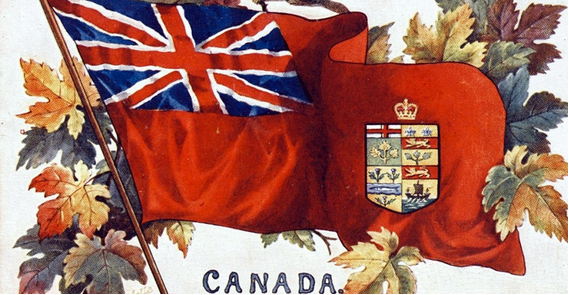
President Trump isn’t the first U.S. leader to turn a Canadian election with a few remarks. A little over a century back another president, William Howard Taft, managed the same feat.
The story starts in 1908, when outgoing president Theodore Roosevelt handpicked a successor, the lawyerly Taft. Taft won election. But from the eve of inauguration, Roosevelt began to voice doubts that Taft was up to the job. Word got around. Taft reacted to this disloyalty by attempting to prove he was no Roosevelt puppet. Where Roosevelt had invaded nations, Taft would write trade treaties. As Taft biographer Jeffrey Rosen writes, the motto of Roosevelt had been “speak softly and carry a big stick”. Taft’s maxim could have been “speak softly and carry a free-trade agreement”.
Taft’s marquee effort was to be a trade agreement with Canada, then lodged in the ambiguous status of “self-governing dominion”. As Taft noted, the dominion did have the freedom to conduct trade policy. Canada’s prime minister, Wilfrid Laurier, was a distinguished free marketeer. The political stars appeared to align. In his enthusiasm Taft praised Canada, practically crowing: “She has cost us nothing in the way of preparations for defense against her possible assault, and she never will … I therefore earnestly hope that the measure will be promptly enacted into law.” Such a treaty, Taft said, would mark a new “epoch” for North America.
In those days, tariffs represented a much more important share of U.S. federal revenues. Selling free trade was no easy work, especially not to Republicans, for whom tariffs were part of the brand. Then as now, trade treaties, unlike peace treaties, required support from both chambers of Congress. But again Taft sang his heart out, not only making the usual case for an “increase in trade on both sides of the boundary line” but also trying out wider arguments.
Early in 1911, Taft infused urgency into negotiations by threatening Canada via ultimatum: Team up with the United States, or there might be a “parting of the ways”. Hunting votes at home, Taft wrote a private letter to the still influential Roosevelt. Appealing to the imperialist in his predecessor, though not very hard, Taft suggested such a treaty might render Canada “only an adjunct of the United States”. Historians debate whether the “adjunct” letter was leaked or stayed private over the course of the 1911 negotiations. Lawmakers on the Hill, in any case, began to speak in similar tones.
Next, Taft called a special session of Congress. Congress warmed to the treaty but pounded the imperialist angle as much as Taft’s main case. “I hope to see the day when the American flag will float over every square foot of the British North American possessions, clear to the North Pole,” thundered the soon-to-be House Speaker, James Beauchamp “Champ” Clark of Missouri.
Such statements did not elude Canadian ears. Some loathed the treaty for pulling Canada farther from Britain; others, independence minded, loathed the idea of trading the thumb of one empire upon them for the thumb of another. By the time Taft signed the Tariff Reciprocity Agreement in July 1911, Canadian reciprocity opponents were on the march. By September, Canada was rejecting in a landslide referendum Taft’s and Laurier’s work.
As The Literary Digest commented in 1912, these flamboyant statements from U.S. politicians were handy weapons for Canada’s treaty opponents. They had put into Canadian Conservatives’ hands “an excellent club with which to cudgel the Liberals and their brilliant leader, Laurier”. Laurier himself was defeated in an election as well, on the argument he was pandering to the U.S.
The FAL for British Troop Trials in 1954: X8E1 & X8E2
Forgotten Weapons
Published 21 Feb 2020The NATO rifle trials of the early 1950s eventually chose the 7.62mm x 51mm cartridge, and the British and Belgians agreed on the FAL rifle to shoot it (and they thought the US would as well, but that’s another story). The British government formally accepted the FAL for troop trials, and in 1954 an order for 4,000 X8E1 rifles (with iron sights) and 1,000 X8E2 rifles (with SUIT 1x optical sights) was placed. These rifles were mechanically the same as what would be finalized as the L1A1 rifle, but they include a number of differing features. Both models had 3-position selector switches allowing automatic fire, and they also had manual forward assists on the bolt handles. The iron sights had top covers with integrated stripper clip guides, as there was concern that troops would have to manually reload their magazines, and stripper clips would speed this process up.
(more…)
QotD: Processing raw wool to make woollen cloth
The first step is sorting, dividing the raw wool into grades and types based on any number of factors, including fiber length, color, texture, crimp, strength, ability to take dye and so on. Different parts of the sheep produce wool with somewhat different qualities in this regard, but there are also differences based on the sex of the sheep, their health, age, diet, and for ewes whether they have had lambs. In order to get the best results in spinning (or the best value in selling) it is necessary to separate these grades out, grouping like wool with like. Too much mixing of fiber quality can make the end-product textile patchy in color, texture and its ability to take dye (the last one being quite visible, of course) and is to be avoided. This sorting was generally done by hand.
At this point, with the wool sorted, it could be sold, or further processed. The key question at this point was if the wool was to be washed or scoured (it would be combed or carded in either case, but this decision generally has to be made at this point). Scouring removes the lanolin (an oil secreted by the sheep which effectively waterproofs their wool) and other impurities. Leaving the lanolin in the wool can help with the spinning process and also to preserve the wool, but if the wool is to be dyed before being spun (for instance, if it is to be made into colored yarn rather than dyed as a whole fabric after weaving), it must be washed (or the lanolin will prevent the dye from sticking). Scouring could also be useful for wool that was going to be transported; in some cases the lanolin and other impurities might amount for up to 40% of the total weight of the raw wool (Gleba, op. cit. 98).
Practices in this regard clearly differed. In Greece, wool seems often to have been spun unwashed and women might use an epinetron, a ceramic thigh-protector, to keep the grease of the wool roving off of their clothes. On the flip side, both Varro (Rust 2.2.18) and Columella (De Rust. 11.35) assume that wool is generally to be washed (though they are thinking of wool being sold by large estates for commercial purposes and thus may have dyeing in mind). J.S. Lee notes that in medieval England wools with longer staples (that is, that forms into longer clusters or locks of fibers) were unscoured while short staple wools (which might be used in knitting) were more likely to be scoured. Scouring might be done on a small scale in the home or on a larger scale by either producers (before sale) or by clothiers and other purchasers (before dyeing).
Pre-modern scouring generally meant bathing the wool in a solution of warm water along with some agent that would remove the lanolin and other greases and impurities. The most common scouring agent was urine, something that pre-modern communities had in abundance; the ammonia content of urine allows it to break up and wash away the greases in the wool. Alternately, in the ancient period, the soapwort was sometimes used, as soaking its leaves in water could create a form of soap. By the early modern period, potash might also be used for this purpose, but even in the 1500s, it seems that urine was the most commons scouring agent in England. The process is smelly but generally fairly simple: the wool is allowed to sit in a solution of the scouring agent (again, generally urine) and warm water. Scoured wool would need to be re-oiled after it was dried to lubricate and protect the wool; typically olive oil was used for this purpose (both during the ancient and early modern periods) although J.S. Lee notes (op. cit. 45) that in the earlier parts of the Middle Ages, butter might be used instead in parts of Europe where olive oil was difficult to obtain in quantity.
Next, the wool has to be carded or combed, to remove any unusable or imperfect fibers or dirt, along with separating the strands by length and getting any tangles out before spinning. Let’s treat combing first, as it is the older of the two methods. Wool combs (in the ancient world, these were generally made of wood, bone or horn, but combs from the medieval period onward seem to generally be made with metal teeth projecting through a wooden handle) were used in pairs with the aid of a lubricant (grease, olive oil; these days there are specialty “combing oils”). One comb, the “moving comb” would be worked through the wool while the other comb which held the wool together was kept stationary, sometimes on the comber’s knee; in some cases it would secured to a fixed post (called a “combing stock”). You can see a demonstration of the basic method here.
Carding came later, though I have found no consensus on how much later. Gleba (Textile Production, 98) suggests that carding may have been in use in Italy by the end of the Roman period, while J.S. Lee (op. cit., 45) supposes carding to have been adopted into Europe via borrowing from the Islamic cotton industries of Sicily or Spain in the late 1200s. These suggestions are, of course, not mutually exclusive but I am hesitant to render a verdict between them. In any event, by late Middle Ages, carding is also a reasonably common processing method. Hand carders are generally wider, more paddle-like wooden boards with handles and pierced through by iron teeth; the earliest carders used teasel heads in place of the iron teeth (and the word “card” here actually comes from Latin, carduus, meaning thistle, referring to the use of teasel heads). Like combs they are used in pairs, with the wool placed on one, often held on the thigh, and then the other carder is drawn over the first until the wool is ready for spinning. You can see a demonstration here, and a direct comparison of the two kinds of tools here.
Though obviously quite similar methods (albeit with different tools) the two methods produce importantly different results in a couple of different ways. Both methods will remove remaining hair or kemp along with dirt or other particles that aren’t wool. But combed fibers generally produced stronger yarns (as I understand it, this is partly because it doesn’t straighten them out so much, allowing them to better tangle together during spinning), but combing is also a bit more wasteful in material terms, as shorter fibers are discarded in the process. Consequently, once both processes were available, they might both be used (and still are by practitioners of traditional wool-working today, as the video links above show), with combing more often used for long-fibered wools and carding for short-fibered wools.
Bret Devereaux, “Collections: Clothing, How Did They Make It? Part II: Scouring in the Shire”, A Collection of Unmitigated Pedantry, 2021-03-12.
May 17, 2025
German democracy … saved by bureaucratic incompetence?
Checking in to the situation in Germany, it seems that the big secret report compiled by the German spy agency on the extremely extreme extreme right-wing Alternative für Deutschland party is a bit less than what was expected. Okay, a lot less:
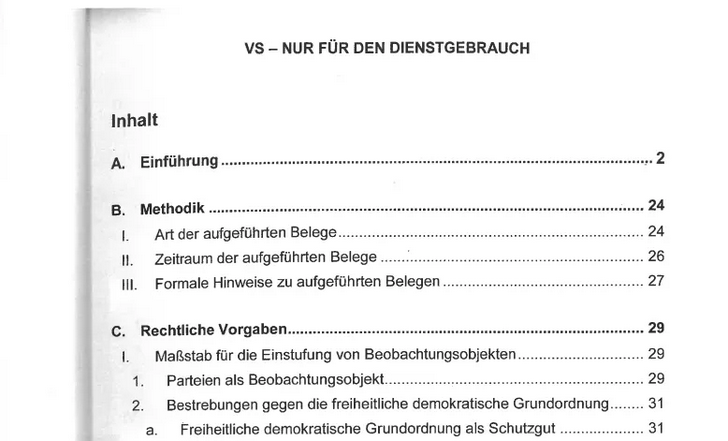
In my last post, I wrote that “The campaign to ban Alternative für Deutschland is not going well“. Today – a mere seventy-two hours later – you could say that the campaign to ban Alternative für Deutschland is all but dead. This is because the people most committed to banning the AfD also happen to be some of the stupidest, most incompetent legal and political operators the world has ever seen. Their incompetence is so enormous that I am for once willing to entertain conspiracy theories as to why they might have undermined their own project. It is that bad.
Two weeks ago, you may remember, Interior Minister Nancy Faeser forced the Federal Office for the Protection of the Constitution (BfV) to rush their long-planned upgrade of the AfD and declare the party to be a “confirmed right-wing extremist” organisation. Word spread of a mysterious 1,100-page assessment, full of damning proofs that allegedly supported this upgrade. This document had to be kept secret, Faeser explained in an interview, “… to protect sources and withhold indications of how our findings were obtained”. So espionage, much secret, wow.
The thing was, the anti-AfD dossier could not have been that secret, because somebody (almost certainly, somebody in the Interior Ministry) immediately leaked it to Der Spiegel, whose journalists published various excerpts in an effort to make the case for how evil and fascist and Nazi and Hitler the AfD are. In this way the press could climax repeatedly in a wave of democratic orgasms over the renewed possibility of an AfD ban, even in the absence of the supersecret report.
The media circus dissipated quickly, however. The publicity campaign, the roll-out – a lot of things went wrong, some of them inexplicably wrong. Still, I thought there was a 40% chance that the Bundestag would try to open ban proceedings sometime this year. That, as I said, was on Monday. What happened on Tuesday, is that Cicero, NiUS and Junge Freiheit all received the secret 1,100-page assessment (actually, it contains 1,108 pages) and published it in its entirety. Since Tuesday evening, a great many people have been reading this document, and they have been realising various things.
The first thing they’ve realised, is that it contains hardly anything derived from supersecret spy sources at all. It is little more than a collection of public statements by AfD politicians. Faeser’s sources-and-methods justification for keeping the report hidden was a total lie.
The second thing they’ve realised, is that it is an abomination. The vast majority of material that the BfV have collected is not even suspect. It is a lot of off-colour jokes, memes, but also just banal nothing statements – thousands and thousands and thousands of them, arranged under various hysterical subject headings. Nothing in here is remotely strong enough to support the case for banning the AfD and a lot of it is also very bizarre in terms of argument. Not only have the prospects of an AfD ban all but evaporated, but I think it’s even likely the party will succeed in their present lawsuit and that the administrative court in Cologne will throw out the “right-wing extremist” label.


