World War Two
Published 18 Apr 2020The Battles for Yugoslavia and Greece continue as the Soviet-Union and Japan sign a non-aggression pact.
Join us on Patreon: https://www.patreon.com/TimeGhostHistory
Or join The TimeGhost Army directly at: https://timeghost.tvFollow WW2 day by day on Instagram @World_war_two_realtime https://www.instagram.com/world_war_t…
Between 2 Wars: https://www.youtube.com/playlist?list…
Source list: http://bit.ly/WW2sourcesWritten and Hosted by: Indy Neidell
Director: Astrid Deinhard
Producers: Astrid Deinhard and Spartacus Olsson
Executive Producers: Astrid Deinhard, Indy Neidell, Spartacus Olsson, Bodo Rittenauer
Creative Producer: Joram Appel
Post-Production Director: Wieke Kapteijns
Research by: NN
Edited by: Iryna Dulka
Sound design: Marek Kamiński
Map animations: Eastory (https://www.youtube.com/c/eastory)Colorizations by:
– Norman Stewart – https://oldtimesincolor.blogspot.com/
– Adrien Fillon – https://www.instagram.com/adrien.colo…
– Julius Jääskeläinen – https://www.facebook.com/JJcolorization/
– Carlos Ortega Pereira, https://www.instagram.com/blaucoloriz…Sources:
– Bundesarchiv, CC-BY-SA 3.0: Bild 101III-Weyer-024-05A/Weyer, Bild 146-1975-036-24/Gofferjé, Leander, Bild 101I-161-0317-26/Bauer, Bild 101I-158-0094-35/Kisselbach, Bild 102-17311
– Narodowe Archiwum Cyfrowe
– fractured arm icon by ProSymbols from the Noun Project
– Imperial War Museum: D 4311Archive by Screenocean/Reuters https://www.screenocean.com.
A TimeGhost chronological documentary produced by OnLion Entertainment GmbH.
April 19, 2020
Yugoslavia Crushed – Battle for Greece Continues – WW2 – 086 – April 18, 1941
April 17, 2020
Charles De Gaulle – The Flame of French Resistance? – WW2 Biography Special
World War Two
Published 16 Apr 2020Charles De Gaulle is a towering figure in history, and not just because of his height. Becoming increasingly political in the interwar years due to his unorthodox views on military strategy, The Fall of France will thrust him into the limelight.
Join us on Patreon: https://www.patreon.com/TimeGhostHistory
Or join The TimeGhost Army directly at: https://timeghost.tvFollow WW2 day by day on Instagram @World_war_two_realtime https://www.instagram.com/world_war_t…
Between 2 Wars: https://www.youtube.com/playlist?list…
Source list: http://bit.ly/WW2sourcesHosted by: Indy Neidell
Written by: Francis van Berkel
Director: Astrid Deinhard
Producers: Astrid Deinhard and Spartacus Olsson
Executive Producers: Astrid Deinhard, Indy Neidell, Spartacus Olsson, Bodo Rittenauer
Creative Producer: Joram Appel
Post-Production Director: Wieke Kapteijns
Research by: Catherine Burton
Edited by: Mikołaj Cackowski
Sound design: Marek Kamiński
Map animations: Eastory (https://www.youtube.com/c/eastory)Colorizations by:
Carlos Ortega Pereira, BlauColorizations, https://www.instagram.com/blaucoloriz…
Dememorabilia – https://www.instagram.com/dememorabilia/
Norman Stewart – https://oldtimesincolor.blogspot.com/
Adrien Fillon – https://www.instagram.com/adrien.colo…
Sources:
Outdoor family portrait, with lurkers (c.1920), courtesy pellethepoet https://flic.kr/p/ompxgf
IWM A 1464, E 2324, D 1966
Frederick Milthorp collectionSoundtracks from the Epidemic Sound:
Max Anson – “Ancient Saga”
Farell Wooten – “Blunt Object”
Johannes Bornlof – “Deviation in Time”
Reynard Seidel – “Deflection”
Johannes Bornlof – “The Inspector 4”
Phoenix Tail – “At the Front”Archive by Screenocean/Reuters https://www.screenocean.com.
A TimeGhost chronological documentary produced by OnLion Entertainment GmbH.
QotD: Rommel arrives in North Africa
Rommel arrived in February 1941 with fairly mundane orders to act as a Sperrband, a “blocker” to bolster the Italians after their mauling at Beda Fomm. The force he led was appropriately tiny: the reconnaissance battalion and an antitank detachment of the 5th Light Division (soon renamed the 21st Panzer Division). The rest of the division was still en route to Africa, and a second division, the 15th Panzer, would not arrive completely until the end of May.
Rommel had his orders, but he had ignored orders in the past and been decorated for it. With British forces stripped to fight an exceedingly ill-advised campaign in Greece, he carried out a quick personal reconnaissance in his trusty little Fieseler Storch airplane, then launched an offensive in concert with his Italian partners (Ariete armored division and the infantry divisions of X Corps, Bologna and Pavia). He penetrated British defenses at El Agheila on March 24th, then drove on to Mersa el Brega on March 31st, pausing only long enough to take (and ignore) a number of radio messages from Berlin and Rome warning him not to do anything rash. Finally, he smashed the British defenders at Agedabia (elements of the green 2nd Armoured Division, equipped partially with captured Italian M13/40 tanks), pinning them in front with the infantry of 5th Light Division while dispatching his Panzers on a ride around the open desert flank to the south, the first use of a tactic that would become his signature move.
These three tiny encounters, none of them exceeding regimental strength, were enough to unhinge the entire British defensive position in Cyrenaica. Rommel now expanded his “reconnaissance in force” into a general offensive, although the forces involved were still minuscule. One column headed up the coast road towards Benghazi, while two more sliced across the Cyrenaican bulge, scooping up a mountain of British supplies at Msus and Mechili. The British rear was in chaos. On April 6th, a German motorcycle patrol actually captured the British commander in Cyrenaica, General Philip Neame, as well as General Richard O’Connor, the victor of Beda Fomm. By April 11th, the Germans had surrounded the coastal fortress of Tobruk while smaller formations pressed on to the east, taking Bardia and reaching the Egyptian border at Sollum and Ft. Capuzzo.
This was top speed maneuver, and the distances were vast, with the Afrika Korps covering over 600 miles in less than two weeks. An amazing feat, to be sure, but may we not legitimately ask, Six-hundred miles to where? Rommel had lunged from central Libya to the Egyptian border in a great bound, but now he had an unconquered fortress sitting in his rear, a serious threat to his lines of communication and supply. Two hastily marshaled attempts to storm Tobruk went badly wrong. In the “Easter battle” (April 10th-14th) and the “battle of the Salient” (April 30th-May 4th), the defenders of the 9th Australian Division hung tough. Minefields channeled the German attacks, while direct fire from artillery, antitank guns, and supporting tanks shot up the assault forces quite badly and killed General Heinrich von Prittwitz, commander of 15th Panzer Division.
The very presence of an unconquered Tobruk rendered the drive across the desert pointless. Indeed, for all the fame it had brought Rommel in the world press, this first campaign won him few friends among command echelons in Berlin. General Halder was especially unimpressed. Rommel, he wrote, “storms around all day long with formations strewn all over the place.” The man had apparently “gone insane.” There was some justice to the complaint. A German division-plus had overrun territory — a vast wasteland, to be precise — but it hadn’t really won anything. There had been no battle of annihilation, no Kesselschlacht, nor could there have been. The Afrika Korps had come a long way, but now sat precariously on the edge of nowhere. Although Rommel and his command had shown a satisfying level of aggression, something the entire officer corps understood, most of them saw his drive to the Egyptian border as a misfire.
Robert Citino, “Drive to Nowhere: The Myth of the Afrika Korps, 1941-43″, The National WWII Museum, 2012. (Originally published in MHQ, Summer 2012).
April 16, 2020
Was the Afrika Korps worth it?
Military History not Visualized
Published 20 Apr 2018Was it worth it to send the Afrika Korps at all? In this video we look at the Mediterranean Campaign in World War 2, which is usually overshadowed by the “Desert Warfare” between Rommel and Montgomery.
»» SUPPORT MHV ««
» patreon – https://www.patreon.com/mhv
» paypal donation – https://www.paypal.com/cgi-bin/webscr…»» MERCHANDISE – SPOILS OF WAR ««
» shop – https://www.redbubble.com/people/mhvi…»» SOCIAL MEDIA ««
» twitter – https://twitter.com/MilHiVisualizedMilitary History Vlogs is a support channel to Military History Visualized with a focus personal accounts, answering questions that arose on the main channel and showcasing events like visiting museums, using equipment or military hardware.
» SOURCES «
Ball, Simon: “The Mediterranean and North Africa, 1940-1944”, in: Cambridge History of the Second World War – Volume I, p. 358-388
Preston, Paul: “Spain: betting on a Nazi victory”; in: Cambridge History of the Second World War: Volume II: Politics & Ideology, p. 324-349
Das Deutsche Reich und der Zweite Weltkrieg, Band 3: Der Mittelmeerraum und Südosteuropa 1940-1941 (English Version below)
ENGLISH VERSION: Germany and the Second World War, Volume 3, The Mediterranean, South-east Europe, and North Africa, 1939-1941Das Deutsche Reich und der Zweite Weltkrieg – Band 6 – Der Globale Krieg
ENGLISH VERSION: Germany and the Second World War – Volume 6 – The Global WarDas Deutsche Reich und der Zweite Weltkrieg – Band 8
ENGLISH VERSION: Germany and the Second World War – Volume 8 – The Eastern Front 1943-1944: The War in the East and on the Neighbouring Fronts» CREDITS & SPECIAL THX «
Song: Ethan Meixsell – “Demilitarized Zone”#AfrikaKorps #AfricaCorps #WW2
April 15, 2020
Girls Armed With Pitchforks – The Women’s Land Army – On the Homefront 002
World War Two
Published 14 Apr 2020Now that the labour-needs and the availability of manpower has changed due to the outbreak of World War Two, Women are required to join the workforce. They’re put to work in the Women’s Land Army.
Join us on Patreon: https://www.patreon.com/TimeGhostHistory
Or join The TimeGhost Army directly at: https://timeghost.tvFollow WW2 day by day on Instagram @World_war_two_realtime https://www.instagram.com/world_war_t…
Between 2 Wars: https://www.youtube.com/playlist?list…
Source list: http://bit.ly/WW2sourcesHosted by: Anna Deinhard
Written by: Spartacus Olsson and Francis van Berkel
Produced and Directed by: Spartacus Olsson and Astrid Deinhard
Executive Producers: Bodo Rittenauer, Astrid Deinhard, Indy Neidell, Spartacus Olsson
Creative Producer: Joram Appel
Post-Production Director: Wieke Kapteijns
Research by: Tom Meaden
Edited by: Mikołaj Cackowski
Map animations: Eastory (https://www.youtube.com/c/eastory)Colorizations by:
Dememorabilia – https://www.instagram.com/dememorabilia/
Julius Jääskeläinen – https://www.facebook.com/JJcolorization/Sources:
IWM A 19891, Q 54607, Q 54601, Q 54602, D 8793, D 204, D 199, D 18050, D 8463, D 18062, D 20722, D 8833, D 2973, D 14123, D 115, D 11256, D 14090, D 8806, TR 911, D 21057, D 128, CH 4119, D 3324, TR 912, D 18057, IWM TR 1568, D 21958, D 8794, TR 913
Picture of Women’s Land Army memorial in Scotland, courtesy of IWM, Martin Briscoe (WMR-69248)
Library of Congress
Portrait of Hilda Gibson, taken 2008 at 10 Downing Street, courtesy BBC PM blog http://www.bbc.co.uk/blogs/pm/2008/07…Soundtracks from the Epidemic Sound:
Johannes Bornlof – “Deviation In Time”
Wendel Scherer – “Defeated”
Johannes Bornlof – “Magnificent March 3”
Reynard Seidel – “Deflection”
Max Anson – “Ancient Saga”
Johannes Bornlof – “The Inspector 4”
Christian Andersen – “Quiet Contemplation”Archive by Screenocean/Reuters https://www.screenocean.com.
A TimeGhost chronological documentary produced by OnLion Entertainment GmbH.
From the comments:
World War Two
22 minutes ago (edited)
This is the second instalment of our monthly ‘On the Homefront’ series and it’s about the Women’s Land Army. Now, with these series we’re planning to cover the events and cultural and social changes that occurred during World War Two, as well as the organisations and individuals that lived through them. As with the other specials, we want to cover all the homefronts, from all nations all across the world. If you have any good ideas for future episodes, please let us know in the comments!
Cheers and stay safe!
Joram
April 12, 2020
Nazis in the Balkans – The Invasion of Greece and Yugoslavia – WW2 – 085 – April 11, 1941
World War Two
Published 11 Apr 2020This week, the German army invades Greece and Yugoslavia as it launches Operation Marita and Operation 25 respectively. They also take some remarkable captives in North Africa.
Join us on Patreon: https://www.patreon.com/TimeGhostHistory
Or join The TimeGhost Army directly at: https://timeghost.tvFollow WW2 day by day on Instagram @World_war_two_realtime https://www.instagram.com/world_war_t…
Between 2 Wars: https://www.youtube.com/playlist?list…
Source list: http://bit.ly/WW2sourcesWritten and Hosted by: Indy Neidell
Produced and Directed by: Spartacus Olsson and Astrid Deinhard
Executive Producers: Bodo Rittenauer, Astrid Deinhard, Indy Neidell, Spartacus Olsson
Creative Producer: Joram Appel
Post-Production Director: Wieke Kapteijns
Research by: Indy Neidell
Edited by: Iryna Dulka
Map animations: Eastory (https://www.youtube.com/c/eastory)Colorizations by:
– Olga Shirnina, a.k.a. Klimbim – https://klimbim2014.wordpress.com/
– Daniel Weiss
– Julius Jääskeläinen – https://www.facebook.com/JJcolorization/
– Adrien Fillon – https://www.instagram.com/adrien.colo…
– Carlos Ortega Pereira, BlauColorizations
– Owen Robinson – https://www.instagram.com/owen.colori…Sources:
– FORTEPAN / MARTIN DJEMIL, MARTIN DJEMIL
– FDR Presidential Library & Museum
– Bundesarchiv
– Narodowe Archiwum Cyfrowe
– Side cap and veteran icons by Andrei Yushchenko from the Noun Project
– IWM: E 2961, E 4702, E 2987, A 9796Archive by Screenocean/Reuters https://www.screenocean.com.
A TimeGhost chronological documentary produced by OnLion Entertainment GmbH.
From the comments:
World War Two
2 days ago
This is the second double-length episode, with the Invasion of the Benelux and France being the first one (May 18th 1940). Now, there are two things I want to point out in this comment. First of all, like our May 18th episode, this episode is packed with the amazing maps made by Eastory. If you haven’t already, subscribe to www.youtube.com/c/eastory. Furthermore, this week the final episode of our Between Two Wars series aired, covering the world on the brink of World War Two. The entire series of 58 episodes long, covering all the events leading up to WW2, can be watched in this playlist (https://www.youtube.com/playlist?list=PLrG5J-K5AYAU1R-HeWSfY2D1jy_sEssNG) or simply by going to www.youtube.com/c/timeghost.
Cheers, Joram
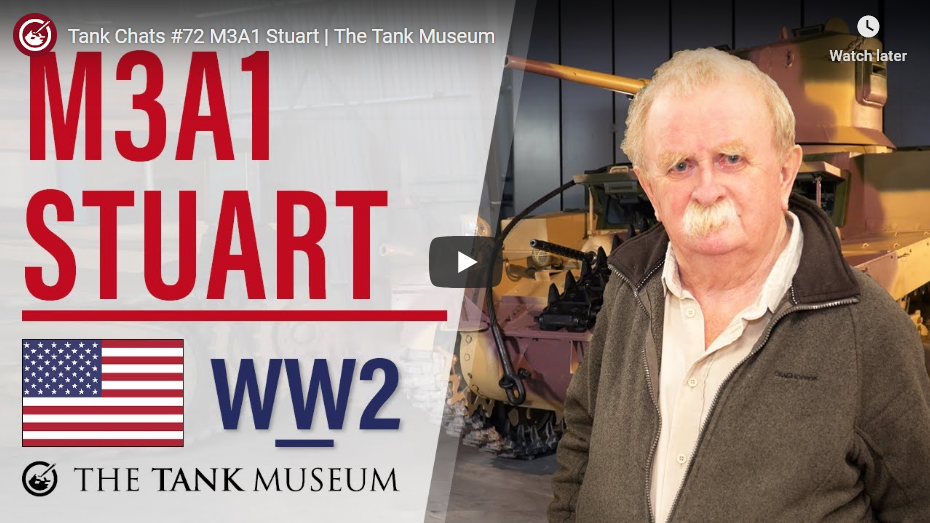
Tank Chats #67 Covenanter | The Tank Museum
The Tank Museum
Published 22 Feb 2019Historian David Fletcher MBE talks through the Second World War British Cruiser tank, the Covenanter. Otherwise known as Tank Cruiser Mark V** A13.
Support the work of The Tank Museum on Patreon: ► https://www.patreon.com/tankmuseum
Visit The Tank Museum SHOP: ► https://tankmuseumshop.org/
Twitter: ► https://twitter.com/TankMuseum
Tiger Tank Blog: ► http://blog.tiger-tank.com/
Tank 100 First World War Centenary Blog: ► http://tank100.com/ #tankmuseum #tanks #tankchats
April 11, 2020
3.7cm PAK – Germany’s Basic WWII Antitank Gun
Forgotten Weapons
Published 10 Dec 2019http://www.patreon.com/ForgottenWeapons
Cool Forgotten Weapons merch! http://shop.bbtv.com/collections/forg…
Germany developed its first 37mm (or as German designations put it, 3.7cm) antitank gun in the last months of World War One; a very simple design built using barrels from obsolete Hotchkiss revolving cannons. In the mid 1920s, the concept was reinvigorated by Rheinmetall, which developed a much more modern 37mm gun using a much larger and higher-pressure case (37 x 249mm). In its initial pattern, the Tak as it was called (Tankabwerhkanone) has wooden spoke wheels and no suspension, intended for transport by horse. A small number were made for the German military (to avoid aggravating the conditions of the Treaty of Versailles), and the gun was sold commercially by Rheinmetall. The Soviet Union in particular was interested, and used the 3.7cm Tak as the basis for its later 45mm antitank gun.
Between 1934 and 1936, a number of changes were made to the design. The wooden wheels were replaced with steel wheels and pneumatic rubber tires, and spring suspension was added to allow the gun to be towed at higher speed by motor vehicles. The designation also changed at the time from Tank-abwehrKanone to Panzer-abwehrKanone, as the new term “panzer” entered German military parlance. Under Germany’s 1930s rearmament program, the Versailles limitations were ignored, and Pak production took off. By September of 1939, the German military has some 11,200 of the guns in service. They were solid dependable guns at the beginning of World War Two, but became obsolete by 1941 as tank armor began to rapidly increase. A new tungsten-core AP round was introduced in 1940, and a rifle-grenade-like hollow charge munition (the Stielgranate 41) added in 1941, but there was stopgaps at best. The last few 3.7mm Paks were built in early 1942, as both it and the 50mm Pak 38 were phased out in favor of the 75mm Pak 40 antitank gun.
There is an excellent article on the development and use of the 3.7cm Pak at Tank Archives: http://tankarchives.blogspot.com/2016…
I’d like to thank DriveTanks.com for giving me the opportunity to bring you their 3.7mm Pak! They have a very cool collection of armored vehicles, artillery, and machine guns available for rental in Texas; check them out: http://www.drivetanks.com
Contact:
Forgotten Weapons
6281 N. Oracle #36270
Tucson, AZ 85704
April 10, 2020
Did the British Engineer the Yugoslavian Coup of March 1941? – WW2 Special Episode
World War Two
Published 9 Apr 2020As Hitler pressured Yugoslavia to join the Axis Powers, Britain tried to gain a Balkan ally. Then Yugoslavia did join then Axis… and then there was an anti-Axis coup in Yugoslavia. But just how much were the British involved in that coup? Let’s find out.
Join us on Patreon: https://www.patreon.com/TimeGhostHistory
Or join The TimeGhost Army directly at: https://timeghost.tvDavid Stafford, “SOE and British Involvement in the Belgrade Coup d’Etat of March 1941”. In: Slavic Review 36:3 (1977) 399-419, https://www.cambridge.org/core/servic….
Follow WW2 day by day on Instagram @World_war_two_realtime https://www.instagram.com/world_war_t…
Between 2 Wars: https://www.youtube.com/playlist?list…
Source list: http://bit.ly/WW2sourcesWritten and Hosted by: Indy Neidell
Produced and Directed by: Spartacus Olsson and Astrid Deinhard
Executive Producers: Bodo Rittenauer, Astrid Deinhard, Indy Neidell, Spartacus Olsson
Creative Producer: Joram Appel
Post-Production Director: Wieke Kapteijns
Research by: Indy Neidell
Edited by: Mikołaj Cackowski
Map animations: Eastory (https://www.youtube.com/c/eastory)Colorizations by:
Dememorabilia – https://www.instagram.com/dememorabilia/
Adrien Fillon – https://www.instagram.com/adrien.colo…
Norman Stewart – https://oldtimesincolor.blogspot.com/
Julius Jääskeläinen – https://www.facebook.com/JJcolorization/
Daniel WeissSources:
Istorijski arhiv u Pančevu
IWM HU 55505, D 4311, H 10922
FOTO:FORTEPAN / MZSL/Ofner Károly
Narodowe Archiwum Cyfrowe
Portrait of Ronald Ian Campbell, courtesy National Portrait Gallery
Portrait of Frank Nelson, courtesy National Portrait Gallery
Digital Library of SloveniaSoundtracks from the Epidemic Sound:
Reynard Seidel – “Deflection”
John Hynynen – “Dark Beginning”
Johannes Bornlof – “Deviation In Time”
Philip Ayers – “Trapped in a Maze”
Johannes Bornlof – “The Inspector 4”Archive by Screenocean/Reuters https://www.screenocean.com.
A TimeGhost chronological documentary produced by OnLion Entertainment GmbH.
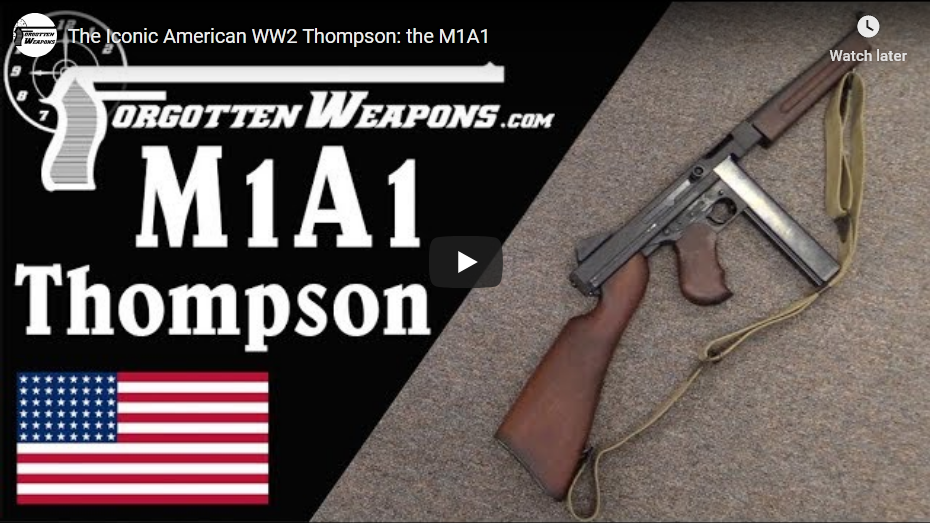
M1 Carbine: A Whole New Class of Weapon
Forgotten Weapons
Published 9 Apr 2020http://www.patreon.com/ForgottenWeapons
https://www.floatplane.com/channel/Fo…
Cool Forgotten Weapons merch! http://shop.bbtv.com/collections/forg…
The United States developed the M1 carbine very quickly at the beginning of World War Two, once the German “blitzkrieg” made it clear that highly mobile enemy forces could threaten rear echelon troops in a modern war. The M1911 pistol was seen as a difficult weapon to use well, and a light carbine would offer much greater effectiveness with less training. It was estimated that 500,000 would be needed, and more than 6 million were eventually produced during the war. The M1 Carbine would equip drivers, artillery crews, mortar men, headquarters staff, paratroops, and many more.
The M1 Carbine was developed by Winchester, but they were not participants in the first round of trials, Instead, their design came about when Rene Studler (head of the Ordnance Department) saw Winchester’s “M2” rifle prototype, a lightweight .30-06 intended to compete with the M1 Garand. He urged them to scale it down for the light rifle trials then ongoing in 1941, and Winchester complied. The design used a Garand-like rotating bolt and a gas tappet system designed by David Marshall Williams for the .30-06 rifle. The new carbine was cobbled together in less than two weeks, and is a truly fantastic achievement.
Thanks to InterOrdnance / Royal Tiger Imports for providing this M1 Carbine for filming!
Contact:
Forgotten Weapons
6281 N. Oracle #36270
Tucson, AZ 85740
Char 2C – The World’s Biggest Operational Tank
Mark Felton Productions
Published 15 Nov 2019Find out the unbelievable story of the biggest operational tanks in history – the French Char 2C, and their peculiar fate.
Help support my channel:
https://www.paypal.me/markfeltonprodu…
https://www.patreon.com/markfeltonpro…Disclaimer: All opinions and comments expressed in the ‘Comments’ section do not reflect the opinions of Mark Felton Productions. All opinions and comments should contribute to the dialogue. Mark Felton Productions does not condone written attacks, insults, racism, sexism, extremism, violence or otherwise questionable comments or material in the ‘Comments’ section, and reserves the right to delete any comment violating this rule or to block any poster from the channel.
Credits: YouTube Creative Commons; WikiCommons; Google Commons; Mark Felton Productions
Music: “Pursuit” and “Dogma” licenced to iMovie by Apple, Inc.
H/T to @AnonymousFred514 for the link.
April 9, 2020
The True Story of How WW2 Began | BETWEEN 2 WARS I 1939 Part 3 of 3 I SEASON FINALE
TimeGhost History
Published 8 Apr 2020In this final episode of Season 1 of Between Two Wars we examine what caused the world to stand on the brink of total war in just two decades after the War to End All Wars. Events that end with three words through a phone line: “Grandmother is dead,” words that launch World War II.
Join us on Patreon: https://www.patreon.com/TimeGhostHistory
Hosted by: Indy Neidell
Written by: Spartacus Olsson
Directed by: Spartacus Olsson and Astrid Deinhard
Executive Producers: Bodo Rittenauer, Astrid Deinhard, Indy Neidell, Spartacus Olsson
Creative Producer: Joram Appel
Post-Production Director: Wieke Kapteijns
Research by: Spartacus Olsson
Edited by: Daniel Weiss
Sound design: Marek KamińskiSources:
From the Noun Project:
soldier By Wonmo Kang
coin stacks By emilegraphicsColorizations by:
– Dememorabilia – https://www.instagram.com/dememorabilia/
– Olga Shirnina
– Spartacus Olsson
– Daniel WeissSoundtracks from Epidemic Sound:
– “Sophisticated Gentlemen” – Golden Age Radio
– “First Responders” – Skrya
– “Easy Target” – Rannar Sillard
– “The Inspector 4” – Johannes Bornlöf
– “Last Point of Safe Return” – Fabien Tell
– “Death And Glory 3” – Johannes Bornlöf
– “Split Decision” – Rannar Sillard
– “March Of The Brave 9” – Rannar Sillard
– “Mystery Minutes STEMS INSTRUMENTS” – Farrell Wooten
– “The Charleston 3” – Håkan ErikssonArchive by Reuters/Screenocean http://www.screenocean.com
A TimeGhost chronological documentary produced by OnLion Entertainment GmbH.
From the comments:
TimeGhost History
1 day ago
Dear friends, this is the 58th and final episode of the first season of Between 2 Wars. Almost exactly two years ago, when the first episode went live, on April 14, 2018 we were three people. We had not started the WW2 channel yet. The TimeGhost Army had less than 100 members, and we had no idea where we would end up. As it turned out, it has been a magnificent journey through twenty years of history.We are now a team of around sixteen individuals working on three channels and publishing more than five historical videos per week. And this is thanks to all of you who have graced us by watching, liking, commenting, and joining the TimeGhost Army. And it is especially thanks to the now over 4,000 members of the TimeGhost Army and their faithful contributions that we are able to do this at all. Thanks to you all, we can add a little bit of knowledge, a little bit of perspective, and hopefully a little bit of sanity (and also a measure healthy insanity) to the world.
It’s especially in times like these that we feel blessed by your support, so that we can continue our mission of remembrance and education. So it is with humble gratitude and some pride that we deliver this season finale. With your participation we will keep marching on, and try to do even more, even better, and exciting historical content.
Thank you all!
Let’s make history!
Spartacus
Definition note: when we use the term Socialist we always use the academic and dictionary definition: an ideology that aims to abolish private ownership of capital, goods, and enterprise to transfer it to the collective for use rather than profit. The means to achieve that being a violent revolution. We do not use the popular US redefinition of the word that makes it mean something vaguely like “anything the government does.”
April 8, 2020
Prince Paul of Yugoslavia – Victim of Circumstance? – WW2 Biography Special
World War Two
Published 7 Apr 2020A Serb royal with an English heart sounds pretty romantic, but the story of Prince Paul of Yugoslavia is far from it. Trapped by circumstance, he is forced to make decisions that go against his own personal beliefs and leave him condemned as a traitor.
Join us on Patreon: https://www.patreon.com/TimeGhostHistory
Or join The TimeGhost Army directly at: https://timeghost.tvFollow WW2 day by day on Instagram @World_war_two_realtime https://www.instagram.com/world_war_t…
Between 2 Wars: https://www.youtube.com/playlist?list…
Source list: http://bit.ly/WW2sourcesHosted by: Indy Neidell
Written by: Francis van Berkel
Produced and Directed by: Spartacus Olsson and Astrid Deinhard
Executive Producers: Bodo Rittenauer, Astrid Deinhard, Indy Neidell, Spartacus Olsson
Creative Producer: Joram Appel
Post-Production Director: Wieke Kapteijns
Research by: Tom Meaden
Edited by: Mikołaj Cackowski
Map animations: Eastory (https://www.youtube.com/c/eastory)Colorizations by:
Dememorabilia – https://www.instagram.com/dememorabilia/
Carlos Ortega Pereira, BlauColorizations
Adrien Fillon – https://www.instagram.com/adrien.colo…Sources:
Narodowe Archiwum Cyfrowe
USHMM
IWM MH 26392Soundtracks from the Epidemic Sound:
Howard Harper-Barnes – “London”
Farell Wooten – “Blunt Object”
Philip Ayers – “Trapped in a Maze”
Johannes Bornlof – “The Inspector 4”
Gunnar Johnsen – “Not Safe Yet”
Andreas Jamsheree – “Guilty Shadows 4”Archive by Screenocean/Reuters https://www.screenocean.com.
A TimeGhost chronological documentary produced by OnLion Entertainment GmbH.
April 5, 2020
Rommel Storms Into North-Africa – WW2 – 084 – April 4, 1941
World War Two
Published 4 Apr 2020The British thought they would be safe for a while, but this week they are proven wrong. This week, Erwin Rommel begins his advance towards the East of North Africa.
Join us on Patreon: https://www.patreon.com/TimeGhostHistory
Or join The TimeGhost Army directly at: https://timeghost.tvFollow WW2 day by day on Instagram @World_war_two_realtime https://www.instagram.com/world_war_t…
Between 2 Wars: https://www.youtube.com/playlist?list…
Source list: http://bit.ly/WW2sourcesWritten and Hosted by: Indy Neidell
Produced and Directed by: Spartacus Olsson and Astrid Deinhard
Executive Producers: Bodo Rittenauer, Astrid Deinhard, Indy Neidell, Spartacus Olsson
Creative Producer: Joram Appel
Post-Production Director: Wieke Kapteijns
Research by: Indy Neidell
Edited by: Iryna Dulka
Map animations: Eastory (https://www.youtube.com/c/eastory)Colorizations by:
– Daniel Weiss
– Dememorabilia – https://www.instagram.com/dememorabilia/
– Julius Jääskeläinen – https://www.facebook.com/JJcolorization/
– Adrien Fillon – https://www.instagram.com/adrien.colo…
– Norman Stewart – https://oldtimesincolor.blogspot.com/
– Olga Shirnina, a.k.a. Klimbim – https://klimbim2014.wordpress.com/
– Owen Robinson – https://www.instagram.com/owen.colori…Sources:
– National Portrait Gallery
– Narodowe Archiwum Cyfrowe
– Bundesarchiv
– Yugoslav military maneuvers at Torlak, 1940, by Boksi from Wikimedia
– US Holocaust Memorial Museum
– Војни архив
– Documents icon by Srinivas Agra from the Noun ProjectArchive by Screenocean/Reuters https://www.screenocean.com.
A TimeGhost chronological documentary produced by OnLion Entertainment GmbH.
Molotov’s Cocktails – Here’s the thing…
TimeGhost History
Published 4 Apr 2020A lighter, musical look at the Molotov-Ribbentrop Pact by Indy Neidell.
Join us on Patreon: https://www.patreon.com/TimeGhostHistory
A TimeGhost chronological documentary produced by OnLion Entertainment GmbH.