
Extra Credits
Published on 22 Nov 2018This series is brought to you by World of Tanks PC. Check out the game at https://redir.wargaming.net/z3ehuthn/… and use the code ORLIK for extra goodies.
Poland is threatened in 1939 not just by the Nazis, but by its own precarious geography between Germany and Soviet Russia. Edward Rydz-Śmigły spreads the Polish cavalry and tanks as thin as he has to around the border…
Join us on Patreon! http://bit.ly/EHPatreon
November 23, 2018
Defense of Poland – The Battle of the Border – Extra History – #1
Comments Off on Defense of Poland – The Battle of the Border – Extra History – #1
November 19, 2018
QotD: How nationalism distorts opinion and judgement
For those who feel deeply about contemporary politics, certain topics have become so infected by considerations of prestige that a genuinely rational approach to them is almost impossible. Out of the hundreds of examples that one might choose, take this question: Which of the three great allies, the U.S.S.R., Britain and the USA, has contributed most to the defeat of Germany? In theory, it should be possible to give a reasoned and perhaps even a conclusive answer to this question. In practice, however, the necessary calculations cannot be made, because anyone likely to bother his head about such a question would inevitably see it in terms of competitive prestige. He would therefore start by deciding in favour of Russia, Britain or America as the case might be, and only after this would begin searching for arguments that seemed to support his case. And there are whole strings of kindred questions to which you can only get an honest answer from someone who is indifferent to the whole subject involved, and whose opinion on it is probably worthless in any case. Hence, partly, the remarkable failure in our time of political and military prediction. It is curious to reflect that out of all the ‘experts’ of all the schools, there was not a single one who was able to foresee so likely an event as the Russo-German Pact of 1939. And when news of the Pact broke, the most wildly divergent explanations were of it were given, and predictions were made which were falsified almost immediately, being based in nearly every case not on a study of probabilities but on a desire to make the U.S.S.R. seem good or bad, strong or weak. Political or military commentators, like astrologers, can survive almost any mistake, because their more devoted followers do not look to them for an appraisal of the facts but for the stimulation of nationalistic loyalties. And aesthetic judgements, especially literary judgements, are often corrupted in the same way as political ones. It would be difficult for an Indian Nationalist to enjoy reading Kipling or for a Conservative to see merit in Mayakovsky, and there is always a temptation to claim that any book whose tendency one disagrees with must be a bad book from a literary point of view. People of strongly nationalistic outlook often perform this sleight of hand without being conscious of dishonesty.
George Orwell, “Notes on Nationalism”, Polemic, 1945-05.
Comments Off on QotD: How nationalism distorts opinion and judgement
November 18, 2018
The Mysterious Threat to the Royal Navy – WW2 – 012 17 November 1939
World War Two
Published on 17 Nov 2018While the Finns and the Soviets seem to be moving ever closer to war, the Royal Navy is losing ships at a frightening rate to an explosive threat not yet understood.
WW2 day by day, every day is now live on our Instagram account @World_war_two_realtime https://www.instagram.com/world_war_t…
Between 2 Wars: https://www.youtube.com/playlist?list…
Join us on Patreon: https://www.patreon.com/TimeGhostHistory
Or join The TimeGhost Army directly at: https://timeghost.tvWritten and Hosted by: Indy Neidell
Produced and Directed by: Spartacus Olsson and Astrid Deinhard
Executive Producers: Bodo Rittenauer, Astrid Deinhard, Indy Neidell, Spartacus Olsson
Research by: Indy Neidell
Edited by: Wieke Kapteijns and Spartacus Olsson
Community Manager: Joram AppelColoring by Spartacus Olsson
Archive by Screenocean/Reuters https://www.screenocean.com
A TimeGhost chronological documentary produced by OnLion Entertainment GmbH
Comments Off on The Mysterious Threat to the Royal Navy – WW2 – 012 17 November 1939
November 17, 2018
The MG 08/15 Updated Between the Wars
Forgotten Weapons
Published on 25 Oct 2018https://www.forgottenweapons.com/the-…
http://www.patreon.com/ForgottenWeapons
In the aftermath of World War One, the Treaty of Versailles strictly limited the number of machine guns that the German military could keep in inventory. The main type that the Germans chose to keep was the MG08/15 (although a substantial number of MG08 guns were kept as well). Through the 1920s and 1930s, these Maxim guns were improved and updated in a variety of ways until finally replaced by the MG34 starting in 1936. Many of these updated 08/15s would be deployed in reserve areas during World War Two, but relatively few survive today. Today we are looking at one such gun, and noting the changes made to it compared to the 08/15 of World War One. Specifically:
* Anti-aircraft sights and mounting brackets
* Oiler bottle in the stock
* Bipod attachment at the muzzle
* New water drain and fill plugs
* Modified drum hanger bracket
* Feed block for both cloth Maxim belts and metal MG34 belts
* Leather pistol grip cover
* Top cover locking latchContact:
Forgotten Weapons
PO Box 87647
Tucson, AZ 85754If you enjoy Forgotten Weapons, check out its sister channel, InRangeTV! http://www.youtube.com/InRangeTVShow
Comments Off on The MG 08/15 Updated Between the Wars
November 13, 2018
The Maginot Line: Actually a Good Idea
Historigraph
Published on 13 Oct 2018If you enjoyed this video and want to see more made, consider supporting my efforts on Patreon: https://www.patreon.com/historigraph
My old video on the invasion of France in 1940, which is useful for background info to this video: https://www.youtube.com/watch?v=-4-l0…
Check out my Norway 1940 series: https://www.youtube.com/playlist?list…
► Twitter: https://twitter.com/historigraph
Sources:
James Holland, The War in the West – A New History Vol. 1: Germany Ascendant 1939-1941 (kindle edition)
Lloyd Clark, Blitzkrieg: Myth, Reality and Hitler’s Lightning War – France, 1940.
Alistair Horne, To Lose a Battle: France 1940.
Charles River Editors, The Maginot Line: The History of the Fortifications that failed to protect France from Nazi Germany during World War II.
Comments Off on The Maginot Line: Actually a Good Idea
November 11, 2018
Hitler Almost Killed – WW2 – 011 10 November 1939
World War Two
Published on 10 Nov 2018As Hitler drives for a fast invasion he faces covert and open resistance, even an assignation attempt. In the background British and German agents and double agents play a game of betrayal and counter-betrayal.
WW2 day by day, every day is now live on our Instagram account @World_war_two_realtime https://www.instagram.com/world_war_t…
Join us on Patreon: https://www.patreon.com/TimeGhostHistory
Or join The TimeGhost Army directly at: https://timeghost.tvWritten and Hosted by: Indy Neidell
Produced and Directed by: Spartacus Olsson and Astrid Deinhard
Executive Producers: Bodo Rittenauer, Astrid Deinhard, Indy Neidell, Spartacus Olsson
Research by: Indy Neidell
Edited by: Ben Ollerenshaw and Spartacus OlssonColoring by Spartacus Olsson and Sarvesh
Archive by Screenocean/Reuters https://www.screenocean.com
A TimeGhost chronological documentary produced by OnLion Entertainment GmbH
Comments Off on Hitler Almost Killed – WW2 – 011 10 November 1939
Mark Knopfler – “Remembrance Day”
Bob Oldfield
Published on 3 Nov 2011A Remembrance Day slideshow using Mark Knopfler’s wonderful “Remembrance Day” song from the album Get Lucky (2009). The early part of the song conveys many British images, but I have added some very Canadian images also which fit with many of the lyrics. The theme and message is universal… ‘we will remember them’.
Comments Off on Mark Knopfler – “Remembrance Day”
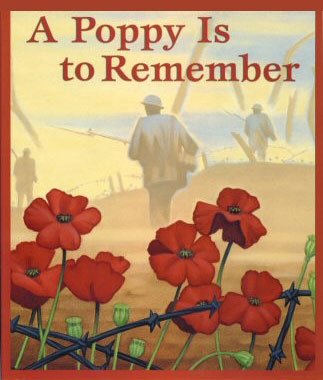
In memoriam
A simple recognition of some of our family members who served in the First and Second World Wars:
The Great War
 Private William Penman, Scots Guards, died 16 May, 1915 at Le Touret, age 25
(Elizabeth’s great uncle)- Private Archibald Turner Mulholland, Argyll & Sutherland Highlanders, mortally wounded 25 September, 1915 at Loos, age 27
(Elizabeth’s great uncle) - Private David Buller, Highland Light Infantry, died 21 October, 1915 at Loos, age 35
(Elizabeth’s great grandfather) - Private Harold Edgar Brand, East Yorkshire Regiment. died 4 June, 1917 at Tournai.
(My first cousin, three times removed) - Private Walter Porteous, Durham Light Infantry, died 4 October, 1917 at Passchendaele, age 18
(my great uncle) - Corporal John Mulholland, Argyll & Sutherland Highlanders, wounded 2 September, 1914 (shortly before the First Battle of the Aisne), wounded again 29 June, 1918, lived through the war.
(Elizabeth’s great uncle)
The Second World War
- Flying Officer Richard Porteous, RAF, survived the defeat in Malaya and lived through the war
(my great uncle) - Able Seaman John Penman, RN, served in the Defensively Equipped Merchant fleet on the Murmansk Run (and other convoy routes), lived through the war
(Elizabeth’s father) - Private Archie Black (commissioned after the war and retired as a Major), Gordon Highlanders, captured at Singapore (aged 15) and survived a Japanese POW camp
(Elizabeth’s uncle) - Elizabeth Buller, “Lumberjill” in the Women’s Land Army in Scotland through the war.
(Elizabeth’s mother) - Trooper Leslie Taplan Russon, 3rd Royal Tank Regiment, died at Tobruk, 19 December, 1942 (aged 23).
A recently discovered relative. Leslie was my father’s first cousin, once removed (and therefore my first cousin, twice removed).
For the curious, the Commonwealth War Graves Commission the Royal British Legion, and the Library and Archives Canada WW1 and WW2 records site provide search engines you can use to look up your family name. The RBL’s Every One Remembered site shows you everyone who died in the Great War in British or Empire service (Canadians, Australians, New Zealanders, South Africans and other Imperial countries). The CWGC site also includes those who died in the Second World War.
In Flanders fields the poppies blow
Between the crosses row on row,
That mark our place; and in the sky
The larks, still bravely singing, fly
Scarce heard amid the guns below.We are the Dead. Short days ago
We lived, felt dawn, saw sunset glow,
Loved and were loved, and now we lie
In Flanders fields.Take up our quarrel with the foe:
To you from failing hands we throw
The torch; be yours to hold it high.
If ye break faith with us who die
We shall not sleep, though poppies grow
In Flanders fields.Lieutenant Colonel John McCrae, MD Canadian Army Medical Corps (1872-1918)
Comments Off on In memoriam
November 9, 2018
Tank Chats #37 Daimler Armoured Car | The Tank Museum
The Tank Museum
Published on 12 May 2017Historian David Fletcher MBE, in the 37th Tank Chat discussing the Daimler Armoured Car.
The Daimler Armoured Car proved to be a versatile and successful vehicle, serving with the British Army in all theatres of war from 1941 and remaining in service for some years after the Second World War.
Support the work of The Tank Museum on Patreon: ► https://www.patreon.com/tankmuseum
Or donate http://tankmuseum.org/support-us/donate
Comments Off on Tank Chats #37 Daimler Armoured Car | The Tank Museum
November 4, 2018
Molotov’s Heel on Finland and Nobody to Fight in the West – WW2 – 010 3 November 1939
World War Two
Published on 3 Nov 2018Ten weeks into World War Two, and the Allied ground forces are bored in France. In North-Eastern Europe, Poland’s suffering has no end and Finland is in the crosshairs of the USSR.
WW2 day by day, every day is now live on our Instagram account @World_war_two_realtime https://www.instagram.com/world_war_t…
Between 2 Wars: https://www.youtube.com/playlist?list…
Join us on Patreon: https://www.patreon.com/TimeGhostHistory
Or join The TimeGhost Army directly at: https://timeghost.tvWritten and Hosted by: Indy Neidell
Produced and Directed by: Spartacus Olsson and Astrid Deinhard
Executive Producers: Bodo Rittenauer, Astrid Deinhard, Indy Neidell, Spartacus Olsson
Research by: Indy Neidell
Edited by: Wieke Kapteijns and Spartacus OlssonColoring by Spartacus Olsson and Sarvesh
Archive by Screenocean/Reuters https://www.screenocean.com
A TimeGhost chronological documentary produced by OnLion Entertainment GmbH
Comments Off on Molotov’s Heel on Finland and Nobody to Fight in the West – WW2 – 010 3 November 1939
October 31, 2018
Some Criticism of The Infographics Show – Best World War 2 Battleships and Battlecruisers
iChaseGaming
Published on 10 Oct 2018There is something called Wikipedia. You can find it here: https://en.wikipedia.org/wiki/Main_Page
Comments Off on Some Criticism of The Infographics Show – Best World War 2 Battleships and Battlecruisers
October 30, 2018
RE: Bren vs Spandau – which was better? @Lindybeige
Military History Visualized
Published on 17 May 2016Patreon: https://www.patreon.com/mhv
Response video, it was necessary, I like Lindybeige, but his latest video “Bren vs Spandau – which was better?” had too many errors. So here is my response to his video.
Comments Off on RE: Bren vs Spandau – which was better? @Lindybeige
October 28, 2018
Stalin’s Murderous Adventures – WW2 – 009 October 27 1939
World War Two
Published on 27 Oct 2018The persecution, incarceration, enslavement and murder of the Polish people in occupied Poland is driven by ideological hatred for both Nazi Germany and Soviet Russia, but it’s also a personal matter for Joseph Stalin.
WW2 day by day, every day is now live on our Instagram account @World_war_two_realtime
Cuban Missile Crisis Day by Day: https://www.youtube.com/watch?v=oo2Av…
Between 2 Wars: https://www.youtube.com/playlist?list…
Join us on Patreon: https://www.patreon.com/TimeGhostHistory
Or join The TimeGhost Army directly at: https://timeghost.tvWritten and Hosted by: Indy Neidell
Produced and Directed by: Spartacus Olsson and Astrid Deinhard
Executive Producers: Bodo Rittenauer, Astrid Deinhard, Indy Neidell, Spartacus Olsson
Research by: Indy Neidell
Edited by: Spartacus Olsson an Ben Ollerenshaw
Trainee editor SarveshColoring by Spartacus Olsson, Olga Shirnina and Norman Stewart
Olga’s pictures: https://klimbim2014.wordpress.com
Norman’s pictures https://oldtimesincolor.blogspot.com/Archive by Screenocean/Reuters https://www.screenocean.com
A TimeGhost chronological documentary produced by OnLion Entertainment GmbH
Comments Off on Stalin’s Murderous Adventures – WW2 – 009 October 27 1939
Panzerschreck: Germany Makes a Bazooka
Forgotten Weapons
Published on 10 Oct 2018http://www.forgottenweapons.com/panze…
http://www.patreon.com/ForgottenWeapons
The German military first encountered American Bazookas in Tunisia in 1943, and quickly put in place a program to copy and improve on the design. At that point, the latest German antitank weapons was the Raketenwerfer 43 “Puppchen”, which was a locked-breech rocket launcher built on a carriage like a standard AT gun. It had a substantial range and a very effective 88mm shaped charge warhead, but lacked the one-man mobility offered by the Bazooka. So, the Raketenpanzerbuchse 43 – shortly thereafter renamed the Panzerschreck – was developed in late 1943.
The Panzerschreck kept the 88mm bore of the Puppchen, so that the warhead could be kept unchanged. The rear half of the munition was redesigned to fit an open tube type of launcher. The early Bazookas captured by German forces were at that time fitted with a battery-powered firing system, which the Germans opted to replace (as would the Americans, in later versions). The Panzerschreck trigger used a small generator, where a heavy spring pushed an iron core through a copper winding and magnet, this creating an electrical charge to fire the rocket.
One shortcoming of the Panzerschreck compared to the Bazooka was that the German rockets did not burn completely within the launch tube – the motors continued to fire for about the first 2 meters of flight. This meant that the shooter would receive substantial burns to the face and hands if protective gear was not worn when firing. Initially, troops were instructed to wear filter-less gas masks and winter gloves when shooting, but it was quickly recognized that this was an impractical burden. Soldiers in the field began to craft protective shields to mount on the tubes, and these were formalized in a windowed shield was introduced in 1944 as standard on new production launchers and as a kit to retrofit existing weapons in the field.
If you enjoy Forgotten Weapons, check out its sister channel, InRangeTV! http://www.youtube.com/InRangeTVShow
Contact:
Forgotten Weapons
PO Box 87647
Tucson, AZ 85754
Comments Off on Panzerschreck: Germany Makes a Bazooka
October 26, 2018
The German WWII Standby: The MP38 and MP40 SMGs
Forgotten Weapons
Published on 4 Aug 2017http://www.patreon.com/ForgottenWeapons
The MP40 is an iconic piece of World War 2 weaponry, and it’s about time we took a closer look at its development…
Thanks to the Institute of Military Technology for allowing me to have access to these three examples so I can bring them to you! Check out the IMT at:
If you enjoy Forgotten Weapons, check out its sister channel, InRangeTV! http://www.youtube.com/InRangeTVShow
Comments Off on The German WWII Standby: The MP38 and MP40 SMGs


