
The Tank Museum
Published on 18 Aug 2017Originally known as the Ferdinand, then later renamed Elefant, 90 of this heavily armed and armoured vehicle were built, seeing service in the Soviet Union, Italy and Germany.
Although deployed as a tank destroyer, the Elefant had its origins in Ferdinand Porsche’s attempt to build what became the Tiger tank.
This particular Elefant is part of The Tiger Collection at The Tank Museum, Bovington, on loan from the US Army Ordnance Training and Heritage Center, VA.
Support the work of The Tank Museum on Patreon: ► https://www.patreon.com/tankmuseum
Or donate http://tankmuseum.org/support-us/donateTwitter: ► https://twitter.com/TankMuseum
Tiger Tank Blog: ► http://blog.tiger-tank.com/
Tank 100 First World War Centenary Blog: ► http://tank100.com/ #tankmuseum #tanks #tigertank tiger tanks tank chat
February 17, 2019
Tank Chats #42 Elefant | The Tank Museum
February 13, 2019
QotD: The goose-step
One rapid but fairly sure guide to the social atmosphere of a country is the parade-step of its army. A military parade is really a kind of ritual dance, something like a ballet, expressing a certain philosophy of life. The goose-step, for instance, is one of the most horrible sights in the world, far more terrifying than a dive-bomber. It is simply an affirmation of naked power; contained in it, quite consciously and intentionally, is the vision of a boot crashing down on a face. Its ugliness is part of its essence, for what it is saying is “Yes, I am ugly, and you daren’t laugh at me”, like the bully who makes faces at his victim. Why is the goose-step not used in England? There are, heaven knows, plenty of army officers who would be only too glad to introduce some such thing. It is not used because the people in the street would laugh. Beyond a certain point, military display is only possible in countries where the common people dare not laugh at the army. The Italians adopted the goose-step at about the time when Italy passed definitely under German control, and, as one would expect, they do it less well than the Germans. The Vichy government, if it survives, is bound to introduce a stiffer parade-ground discipline into what is left of the French army. In the British army the drill is rigid and complicated, full of memories of the eighteenth century, but without definite swagger; the march is merely a formalized walk. It belongs to a society which is ruled by the sword, no doubt, but a sword which must never be taken out of the scabbard.
George Orwell, “The Lion And The Unicorn: Socialism and the English Genius”, 1941-02-19.
February 10, 2019
Stalemate in China, Bombs over Finland – WW2 – 024 – February 9 1940
World War Two
Published on 9 Feb 2019While the Winter War rages on in Finland, Japan is confronted with a dilemma. Keep fighting the Chinese and face huge problems feeding the populace in Japan and their newly conquered territories or withdraw and face your own populace to whom you’ve promised a glorious victory.
Follow WW2 day by day on Instagram @World_war_two_realtime https://www.instagram.com/world_war_t…
Join us on Patreon: https://www.patreon.com/TimeGhostHistory
Or join The TimeGhost Army directly at: https://timeghost.tvBetween 2 Wars: https://www.youtube.com/playlist?list…
Written and Hosted by: Indy Neidell
Produced and Directed by: Spartacus Olsson and Astrid Deinhard
Executive Producers: Bodo Rittenauer, Astrid Deinhard, Indy Neidell, Spartacus Olsson
Creative Producer: Joram Appel
Research by: Indy Neidell
Edited by: Iryna Dulka
Map animations: EastoryColorizations by Norman Stewart.
Thumbnail Colorization by Olga Shirnina aka Klimbim.Photos of the Winter War are mostly from the Finnish Wartime Photograph Archive (SA-Kuva).
Eastory’s channel: https://www.youtube.com/channel/UCEly…
Archive by Screenocean/Reuters https://www.screenocean.comA TimeGhost chronological documentary produced by OnLion Entertainment GmbH.
From the comments:
World War Two
2 days ago (edited)
New week, new video. A special one, since this one covers my birthday. Well, it would have if i were 54 years older… Anyhow, the Japanese are in trouble this week. At the same time, the Finnish are not as much in trouble as the Soviets would like them to be, but the pressure of the Soviet attacks is building up. Meanwhile, the Allied forces present a plan to actually intervene in the Winter War, in favour of Finland. A – for the Allies not at all unconvenient, side-effect would be an extra bonus. Talking about a convenient side-effect: If you support us on Patreon, we will be able to create ever more content. Right now, we’re working on the first biographies and more specials. We love to be able to bring those to you weekly, but we’re not there yet. Check out or Patreon page on https://www.patreon.com/TimeGhostHistory.Cheers,
Joram
Semiauto M2 Hyde Reproduction: The Interim US WW2 Subgun
Forgotten Weapons
Published on 9 Jan 2019http://www.patreon.com/ForgottenWeapons
Cool Forgotten Weapons merch! http://shop.bbtv.com/collections/forg…
George Hyde designed the gun that would eventually be adopted as the M2 submachine gun in the late 1930s, and it was first tested at Aberdeen Proving Grounds in October of 1939. At that time, the gun had many good traits (weight, handlings, etc) but suffered from parts breakage and unreliability. Hyde went back to work on the gun at the Inland Division of GM, and came back with a much improved version in April of 1942.
The Inland-Hyde SMG was chambered for .45 ACP ammunition and used standard Thompson magazines, and was poised to become the US Army’s new submachine gun, replacing the overly expensive Thompson. The Hyde passed a 6080 round endurance test with flying colors, and exhibited much better effectiveness in fully automatic than the Thompson. At the end of the April tests, it was formally accepted to replace the Thompson and given the designation M2.
A contract was given to the Marlin company (Inland being busy with other projects) to manufacture 164,450 of the guns, with delivery to begin in December 1942. However, Marlin had problems tooling up to produce the new gun, in particular with dies for several parts to be made using powdered metal sintering. Actual delivery of the first guns did not happen until May of 1943. In the meantime, Hyde and Inland had continued working on cheaper and simpler designs, and created the stamped sheet metal M3 “Grease Gun”. By the time the M2 was actually ready for delivery, the M3 had been tested and accepted by the Army as a better replacement than the M2. By mid-June, the M2 was declared obsolete and Marlin’s contract cancelled.
In total only about 500 M2 submachine guns were made, with (I believe) 6 surviving today. The example in this video is a semiautomatic-only reproduction made from scratch by a viewer of the channel, who graciously offered to loan it to me for this filming. Thanks, K!
Contact:
Forgotten Weapons
PO Box 87647
Tucson, AZ 85754
February 9, 2019
40:1 – The Battle of Wizna – Sabaton History 001
Sabaton History
Published on 7 Feb 2019Sabaton wrote a song about the Battle of Wizna, called 40:1. When the Germans invaded Poland in 1939, they met determined and fierce resistance. Multiple battles show the steadiness of the Polish defenders, in contrast to the common narrative about the Polish defence. One of these Battles is the Battle of Wizna, where a Polish defensive force managed to hold off a much larger German army for several days.
Watch the official music video for 40:1 in full here: https://www.youtube.com/watch?v=epeQw…
Support Sabaton History on Patreon: https://www.patreon.com/sabatonhistory
Hosted by: Indy Neidell
Written by: Markus Linke and Indy Neidell
Directed by: Astrid Deinhard and Wieke Kapteijns
Produced by: Pär Sundström, Astrid Deinhard and Spartacus Olsson
Creative Producer: Joram Appel
Executive Producers: Pär Sundström, Joakim Broden, Tomas Sunmo, Indy Neidell, Astrid Deinhard, and Spartacus Olsson
Maps by: Eastory
Edited by: Iryna Dulka
Sound Editing by: Marek KaminskiEastory YouTube Channel: https://www.youtube.com/channel/UCEly…
Archive by: Reuters/Screenocean https://www.screenocean.comMusic by Sabaton
An OnLion Entertainment GmbH and Raging Beaver Publishing AB co-Production
© Raging Beaver Publishing AB, 2019 – all rights reserved.
February 7, 2019
Dunkirk (2017) | Based on a True Story
The Cynical Historian
Published on 25 Jan 2018Dunkirk is a 2017 war film written, directed, and produced by Christopher Nolan that depicts the Dunkirk evacuation of World War II. Its ensemble cast includes Fionn Whitehead, Tom Glynn-Carney, Jack Lowden, Harry Styles, Aneurin Barnard, James D’Arcy, Barry Keoghan, Kenneth Branagh, Cillian Murphy, Mark Rylance, and Tom Hardy. The film is a British, American, French, and Dutch co-production, and was distributed by Warner Bros.
————————————————————
Wiki:
Dunkirk portrays the evacuation from three perspectives: land, sea, and air. It has little dialogue, as Nolan sought instead to create suspense from cinematography and music. Filming began in May 2016 in Dunkirk and ended that September in Los Angeles, when post-production began. Cinematographer Hoyte van Hoytema shot the film on IMAX 65 mm and 65 mm large-format film stock. Dunkirk has extensive practical effects, and employed thousands of extras as well as historic boats from the evacuation, and period aeroplanes.
————————————————————
Hashtags: #History #Dunkirk #WWII #Review #BasedOnATrueStory #PhoneyWar
February 5, 2019
Tiger vs. Comet – Germany 1945
Mark Felton Productions
Published on 18 Dec 2018The Comet was Britain’s newest tank in 1945, and led the charge into Northern Germany. In this episode, find out what happened when Royal Tank Regiment Comets encountered a lone German Tiger in the forest.
Help support Marks’ channel – see below for more details;
https://www.patreon.com/markfeltonpro…
https://www.paypal.me/markfeltonprodu…Film: YouTube Creative Commons
February 3, 2019
The Soviet Hammer Strikes Hard at Finland – WW2 – 023 – February 2 1940
World War Two
Published on 2 Feb 2019The Soviet forces revive their winter offensive this week. More men, more tanks and more artillery are brought in to try to force a breakthrough in the Finnish lines. Meanwhile, Churchill encounters resistance to his plan to cut of the German iron trade with Sweden.
Follow WW2 day by day on Instagram @World_war_two_realtime https://www.instagram.com/world_war_t…
Join us on Patreon: https://www.patreon.com/TimeGhostHistory
Or join The TimeGhost Army directly at: https://timeghost.tvBetween 2 Wars: https://www.youtube.com/playlist?list…
Written and Hosted by: Indy Neidell
Produced and Directed by: Spartacus Olsson and Astrid Deinhard
Executive Producers: Bodo Rittenauer, Astrid Deinhard, Indy Neidell, Spartacus Olsson
Creative Producer: Joram Appel
Research by: Indy Neidell
Edited by: Iryna Dulka
Map animations: EastoryColorizations by Norman Stewart.
Thumbnail Colorization by Olga Shirnina aka Klimbim.Photos of the Winter War are mostly from the Finnish Wartime Photograph Archive (SA-Kuva).
Eastory’s channel: https://www.youtube.com/channel/UCEly…
Archive by Screenocean/Reuters https://www.screenocean.comA TimeGhost chronological documentary produced by OnLion Entertainment GmbH.
From the comments:
World War Two
2 days ago (edited)Hey all! Before we start: Eastory who does our maps has a new video out on his own channel https://www.youtube.com/watch?v=VA9QBHDtfCQ (Has spoilers in it 😉
And here, the Winter War continues as Germany and Britain both plan to invade Norway and Churchill has plans of his own. While all of our content is free for anyone to see, our Patreon supporters get to see our Weekly episodes three days in advance! In those days, we’ll have some time to answer their comments and give our community some exclusive attention. Besides that it’s nice to get your comment answered and to see our content a little earlier, what is more important is that you’ll be helping us make this show. We’re still miles away from a stable and organized, well-oiled production workflow. Your support truly helps us to improve and to make more video’s. Take a look on our Patreon Page (https://www.patreon.com/TimeGhostHistory) or on https://timeghost.tv.Cheers,
Joram
February 1, 2019
How Russia Stopped The Blitzkrieg
Real Engineering
Published on 27 May 2017Listen to our new podcast at:
Showmakers YouTube channel at: https://goo.gl/Ks1WMpItunes: https://itun.es/us/YGA_ib.c
RSS and Libsyn Audio is available on our site: https://www.showmakers.fm/Patreon:
https://www.patreon.com/user?u=282505…
Twitter:
https://twitter.com/Fiosracht
Website:
www.RealEngineering.netThank you to my patreon supporters: Adam Flohr, darth patron, Zoltan Gramantik, Josh Levent, Henning Basma, Karl Andersson, Mark Govea, Mershal Alshammari, Hank Green, Tony Kuchta, Sam Stockdale, Jason A. Diegmueller, Chris Plays Games, Peter Hogan-De Paul, William Leu, Frejden Jarrett, Vincent Mooney & Ian Dundore
Once again thank you to Maeson for his amazing music. Check out his soundcloud here: https://soundcloud.com/maeson-1/tracks
January 30, 2019
WW2 from German perspective
FootageArchive – Videos From The Past
Published on 18 Dec 2012Welcome to FootageArchive! On this channel you’ll find historic and educational videos from the 1900s. Watch, learn, and take a trip back in time as we gain insight into a previous time. Subscribe for more.
Note: this video contains archived public domain/licensed footage. This footage serves documentary purposes on world history and is to be viewed as educational.
January 29, 2019
The T-26 and Tank Warfare in Finland and China – WORLD WAR TWO Special
World War Two
Published on 28 Jan 2019The T-26 tank was one of the most frequently used tanks during the first battles of World War Two. It saw action in the Soviet Union, Finland and China. In our first collaborative video with the Tank Museum in Bovington, UK, David Willey and David Fletcher talk about the development, production and action of the this tank.
Check out the Tank Talk about the T-26 to hear David Fletcher explain some more about the T-26 on The Tank Museum YouTube Channel: https://youtu.be/EaBlg5pxe-4
Join us on Patreon: https://www.patreon.com/TimeGhostHistory
Or join The TimeGhost Army directly at: https://timeghost.tvFollow WW2 day by day on Instagram @World_war_two_realtime https://www.instagram.com/world_war_t…
Between 2 Wars: https://www.youtube.com/playlist?list…
Written and Hosted by: David Willey and David Fletcher
Produced by: Spartacus Olsson and Astrid Deinhard
Executive Producers: Bodo Rittenauer, Astrid Deinhard, Indy Neidell, Spartacus Olsson
Creative Producer: Joram Appel
Research by: The Tank Museum
Edited by: Joram Appel and Wieke KapteijnsPhotos of the Winter War are mostly from the Finnish Wartime Photograph Archive (SA-Kuva).
Archive by Screenocean/Reuters: https://www.screenocean.comA TimeGhost chronological documentary produced by OnLion Entertainment GmbH
history of japan
bill wurtz
Published on 2 Feb 2016patreon: http://patreon.com/billwurtz
spotify: https://play.spotify.com/artist/78cT0…
itunes: http://itunes.apple.com/us/artist/bil…
twitter: http://twitter.com/billwurtz
vine: http://vine.co/billwurtz
donate: http://paypal.com/cgi-bin/webscr?cmd=…
January 27, 2019
The Enigma of Germany’s Wartime Economy – WW2 – 022 – January 26 1940
World War Two
Published on 26 Jan 2019This week shows the Allies first attempts to break the German Enigma code. Meanwhile, the German war economy shows some flaws and the Soviets are massing artillery in an effort to break the Finnish defences.
As the Winter War rolls on the only help the Finns are getting are from volunteers. The Western Allies still have their thoughts on Norway, little do they know that the Phoney War almost ends this week…
Follow WW2 day by day on Instagram @World_war_two_realtime https://www.instagram.com/world_war_t…
Join us on Patreon: https://www.patreon.com/TimeGhostHistory
Or join The TimeGhost Army directly at: https://timeghost.tvBetween 2 Wars: https://www.youtube.com/playlist?list…
Written and Hosted by: Indy Neidell
Produced and Directed by: Spartacus Olsson and Astrid Deinhard
Executive Producers: Bodo Rittenauer, Astrid Deinhard, Indy Neidell, Spartacus Olsson
Creative Producer: Joram Appel
Research by: Indy Neidell
Edited by: Iryna Dulka
Map animations: EastoryColorizations by Norman Stewart.
Photos of the Winter War are mostly from the Finnish Wartime Photograph Archive (SA-Kuva).
Eastory’s channel: https://www.youtube.com/channel/UCEly…
Archive by Screenocean/Reuters https://www.screenocean.comA TimeGhost chronological documentary produced by OnLion Entertainment GmbH.
Churchill Tank vs German 88 – Tunisia 1943
Mark Felton Productions
Published on 19 Dec 2018The Battle of Steamroller Farm in Tunisia in 1943 is notable for how much damage a pair of British Churchill tanks managed to inflict on the Germans, whom they surprised after climbing a ‘tank-proof’ ridge. Find out the full thrilling story of the tough Churchill in action.
Help support Mark’s channel:
https://www.paypal.me/markfeltonprodu…
https://www.patreon.com/markfeltonpro…
January 26, 2019
The US Army’s tank development and “The Emergency” in Eire
A discussion on the TimeGhost forums the other day included a link to this fascinating article by World of Tanks writer The Chieftain:
Wouldn’t it have been a terrible thing if, in the middle of WW2, the people responsible for training and equipping the US Army’s armored force were taken prisoner? Well, they were.
Wait, what? I’m sure we’d have heard all about this if it had really happened, and it’s certainly news to me, so he’s just pulling the long bow here, right? Well, no, he’s not. It really did happen, but there were several reasons why it didn’t become even a nine-day wonder in 1942, because it happened in what had been the Irish Free State but known after 1937 as Éire. Ireland was neutral in WW2, and had a policy of interning combatant personnel who found themselves in Ireland during the war. Keep this in mind, as it’s the key point of the story.
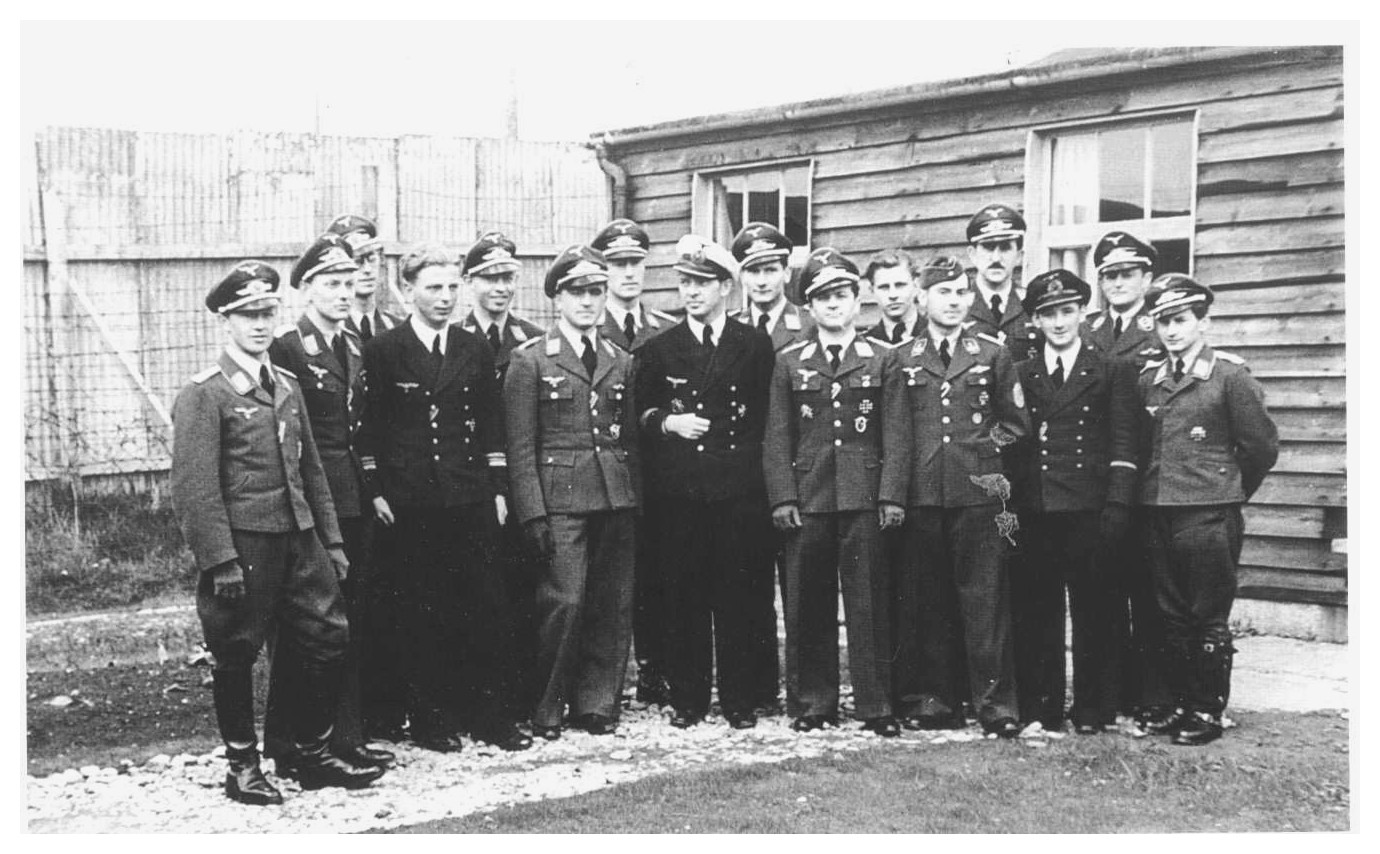
Interned German military personnel at the K-Lines Internment Camp in the Curragh.
Going on another brief tangent, you may be aware of the fact that what we know as “World War II” […] is not known by that name universally. Over on the former Soviet side of the house, it’s “The Great Patriotic War”. (Well, OK, they do distinguish between WWII and TGPW, but not in everyday conversation). The Soviet Union wasn’t the only country to give the conflict a less common name: In Eire, (Ireland), it was known as “The Emergency”
The background to this is that the Irish government wanted to enact emergency powers due to the unusual state of affairs which obtained in Europe in September 1939. The Irish Constitution granted the government such emergency powers in case of war, but it wasn’t entirely sure if the war in Europe counted. So the First Amendment to the Irish Constitution was approved, to add, in effect, that “state of war” could include “wars of which Ireland is not a part if the government thinks it’s important enough.” Once that little clarification was made, the Oireachtas (Parliament) passed its declaration of a state of emergency with the Emergency Powers Act. As a general rule, the Irish ruling bodies were not fans of the concept of acknowledging that there was a war going on which they had chosen not to be a part of. It went so far that when the son of a notable member of the Irish gentry in Malahide was killed when HMS Hood was sunk, his death was noted in the Irish Times as being due to a boating incident. As a result, the entire period 1939-1946 is known as “The Emergency.”
In this, as in so many other things, Ireland is a weird place. But we digress.
In December of 1942, Lieutenant General Jacob Devers, head of the Armored Force, decided to go on a fact-finding mission to the European Theatre of Operations to see how the tank units were holding up. Well, actually, it was mainly the North African Theatre of Operations, as European tank combat hadn’t really gotten off the ground. So he took with him a couple of colleagues, including one Major General Edward Brook, two Brigadier Generals named Gladeon Barnes and William Palmer, a Colonel William Thaddeus Sexton, and to carry the baggage, a Major Earl Hormell. They set off on December 14th, going south to Brazil, Ascension, The Gold Coast, Nigeria and Sudan, arriving Cairo five days later after a distance of 11,140 miles. After spending a little time with the British, they hopped over to Algeria, Tunisia and Morocco. At the end of trip, they went to Gibraltar for a week to consolidate their findings 7-14 January. The result of all this flying around and taking people away from their jobs for a month was one page and a quarter of conclusions, and one half-page of recommendations (the other half is six signature blocks).
[…]
Their duty from their trip being completed, they took advantage of the fact that they were already on the other side of the Atlantic to go to the UK to check in with the goings-on there.
So they boarded their aircraft, a B-17 converted to a VIP transport role, departed Gibraltar, and set off North up the Atlantic’s Eastern edge, looping around to the West of France to avoid German interception. Their B-17 was named “Stinky”.
You can probably guess where this is going.
The daily diary of the Devers mission reads as follows:
“At 2:00pm, January 15th, departed from Gibraltar, weather splendid. At approximately 10:00am, just after daylight, sighted land which navigator described as Lundy Island. From the map, this island appeared to be 100 miles north of the point at which the plane should have turned east towards Port Reath. Retracing south, the contour of the coastline did not correspond to that on available maps. Searched for approximately two hours without finding a familiar landmark. The radio operator was unable to contact any stations. The navigator admitted that he was lost. The ground consisted of small grass fields traversed by stone walls. With the gasoline supply nearly exhausted, a crash landing was made near Athenry at 11:50am. The size of the field was such that after hitting the ground, the plane crashed through a stone wall at approximately 70 miles per hour. Although the plane was wrecked, the members of the party were uninjured. The plane was immediately surrounded by Irish civilians and members of the Home Guard. The local inhabitants were very friendly, offered food and any medical assistance necessary. Shortly thereafter, representatives of the Eire Army arrived and took charge of the situation”
Er, oops? Read the whole thing for the full story.


