
When I came here [to Silicon Valley] I encountered tremendous arrogance. A kind of “resistance is futile” mentality that of course our apps will take over the world, and when they do, when everybody is connected, that’ll be awesome! There will be one global community and everything will be great. And my response to that was: That’s insane. That’s historically completely implausible. We’ve run experiments with really large-scale social networks before. We didn’t have the Internet, but that didn’t matter. You could do it with a printing press. You could even do it just with the written word. And the result is never to produce a single homogenous cluster of happy-clappy individuals in a global community. That never happens.
Niall Ferguson, quoted by @bigthinkagain, 2018-02-17.
May 9, 2020
QotD: Networks don’t work that way with humans
May 8, 2020
Soldier of Three Armies Pt. 3 – Vietnam War – Sabaton History 066 [Official]
Sabaton History
Published 7 May 2020Crossed the water a new start, war still beating in his heart, a new legend has been born.
Arrested by the Finnish secret police and tried for treason, war-hero and living legend Lauri Törni realized that his home country held no more future for him any longer. Törni made a run for it. Towards a new country, a new life and a new name. And a new war.
Support Sabaton History on Patreon: https://www.patreon.com/sabatonhistory
Listen to “Soldier of Three Armies” on the album Heroes:
CD: http://bit.ly/HeroesStore
Spotify: http://bit.ly/HeroesSpotify
Apple Music: http://bit.ly/HeroesAppleMusic
iTunes: http://bit.ly/HeroesiTunes
Amazon: http://bit.ly/HeroesAmz
Google Play: http://bit.ly/HeroesGooglePCheck out the trailer for Sabaton’s new album The Great War right here: https://www.youtube.com/watch?v=HCZP1…
Listen to Sabaton on Spotify: http://smarturl.it/SabatonSpotify
Official Sabaton Merchandise Shop: http://bit.ly/SabatonOfficialShopHosted by: Indy Neidell
Written by: Markus Linke and Indy Neidell
Directed by: Astrid Deinhard and Wieke Kapteijns
Produced by: Pär Sundström, Astrid Deinhard and Spartacus Olsson
Creative Producer: Joram Appel
Executive Producers: Pär Sundström, Joakim Broden, Tomas Sunmo, Indy Neidell, Astrid Deinhard, and Spartacus Olsson
Post-Production Director: Wieke Kapteijns
Edited by: Iryna Dulka
Sound Editing by: Marek Kaminski
Maps by: Eastory – https://www.youtube.com/c/eastoryArchive by: Reuters/Screenocean https://www.screenocean.com
Music by Sabaton.Sources:
– Helsinki City Museum
– KANSALLISARKISTO
– Lauri Törni in 1951 from Forum Marinum, CC BY-ND 4.0
– Cricket sound by damonmensch from freesound.org
– Photo of Lauri and Marja courtesy of Hillevi KopsAn OnLion Entertainment GmbH and Raging Beaver Publishing AB co-Production.
© Raging Beaver Publishing AB, 2019 – all rights reserved.

Fallen flag — the Atchison, Topeka & Santa Fe Railway
This month’s fallen flag article for Classic Trains is the story of the Atchison, Topeka & Santa Fe Railway by George Drury:
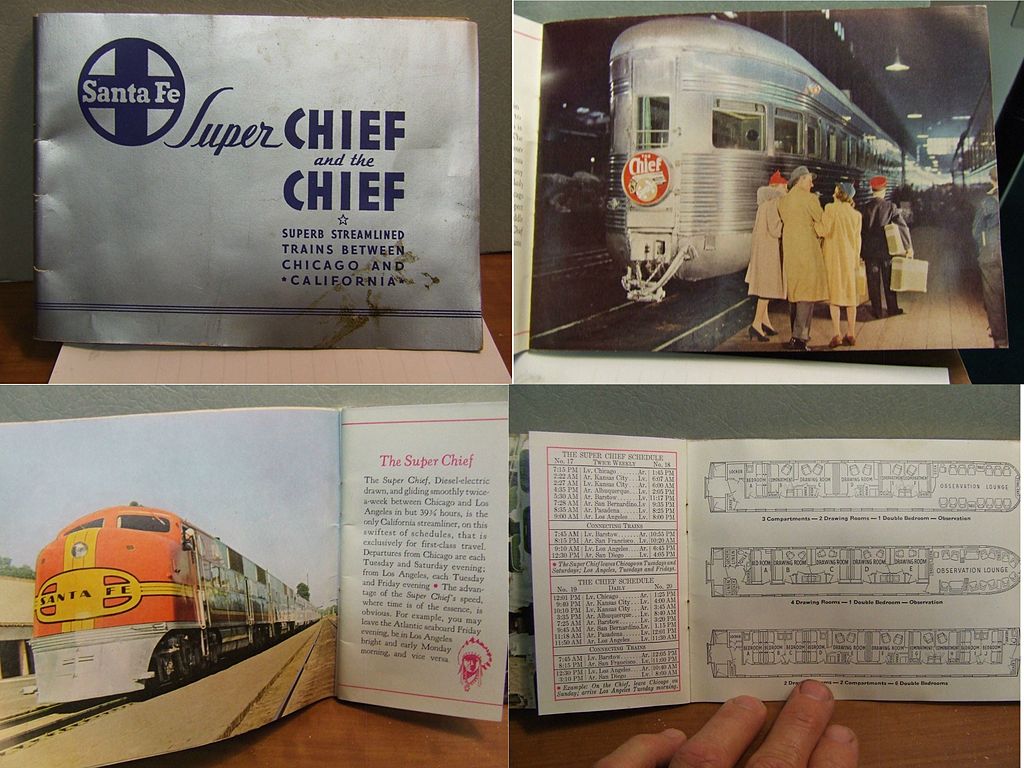
Pages from a circa 1937 booklet about the Santa Fe trains The Chief and the Super Chief. The railroad was showcasing the streamlined changes made to its main Chicago to California trains. Super Chief had given up its boxcab locomotives for EMC E1 units. Chief was no longer pulled by the “Blue Goose” steam locomotive, but by EMD diesel locomotives.
Wikimedia Commons.
The Atchison & Topeka Railroad was chartered in 1859 to join the towns of its title and continue southwest toward Santa Fe, New Mexico.
“Santa Fe” was added to the corporate name in 1863. Construction started in 1869; by the end of 1872 the railroad extended to the Kansas-Colorado border, opening much of Kansas to settlement and carrying wheat and cattle east to markets. The railroad temporarily set aside its goal of Santa Fe — once the trading capital of the Spanish colony in that area — and continued building west, reaching Pueblo, Colorado, in 1876, just in time for the silver rush at Leadville, Colorado.
In 1878, the railroad resumed construction toward Santa Fe, building southwest from La Junta to Trinidad, Colorado, then south over Raton Pass. It chose that route instead of an easier route south across the plains from Dodge City because of Native American attacks and a lack of water on the southerly route and coal deposits near Trinidad, Colorado, and Raton, New Mexico.
The Denver & Rio Grande was also aiming at Raton Pass, but Santa Fe crews arose early one morning in 1878 and were hard at work with picks and shovels when the Rio Grande crews showed up after breakfast. At the same time the two railroads skirmished over occupancy of the Royal Gorge of the Arkansas River west of Canon City, Colorado; the Rio Grande won that battle.
The Santa Fe reached Albuquerque, New Mexico, in 1880 (because of geography the city of Santa Fe found itself at the end of a short branch from Lamy, New Mexico) and connected with the Southern Pacific at Deming, New Mexico, in 1881. The Santa Fe then built southwest from Benson, Arizona, to Nogales, on the Mexican border. There it connected with the Sonora Railway, which Santa Fe interests had constructed north from the Mexican port of Guaymas.
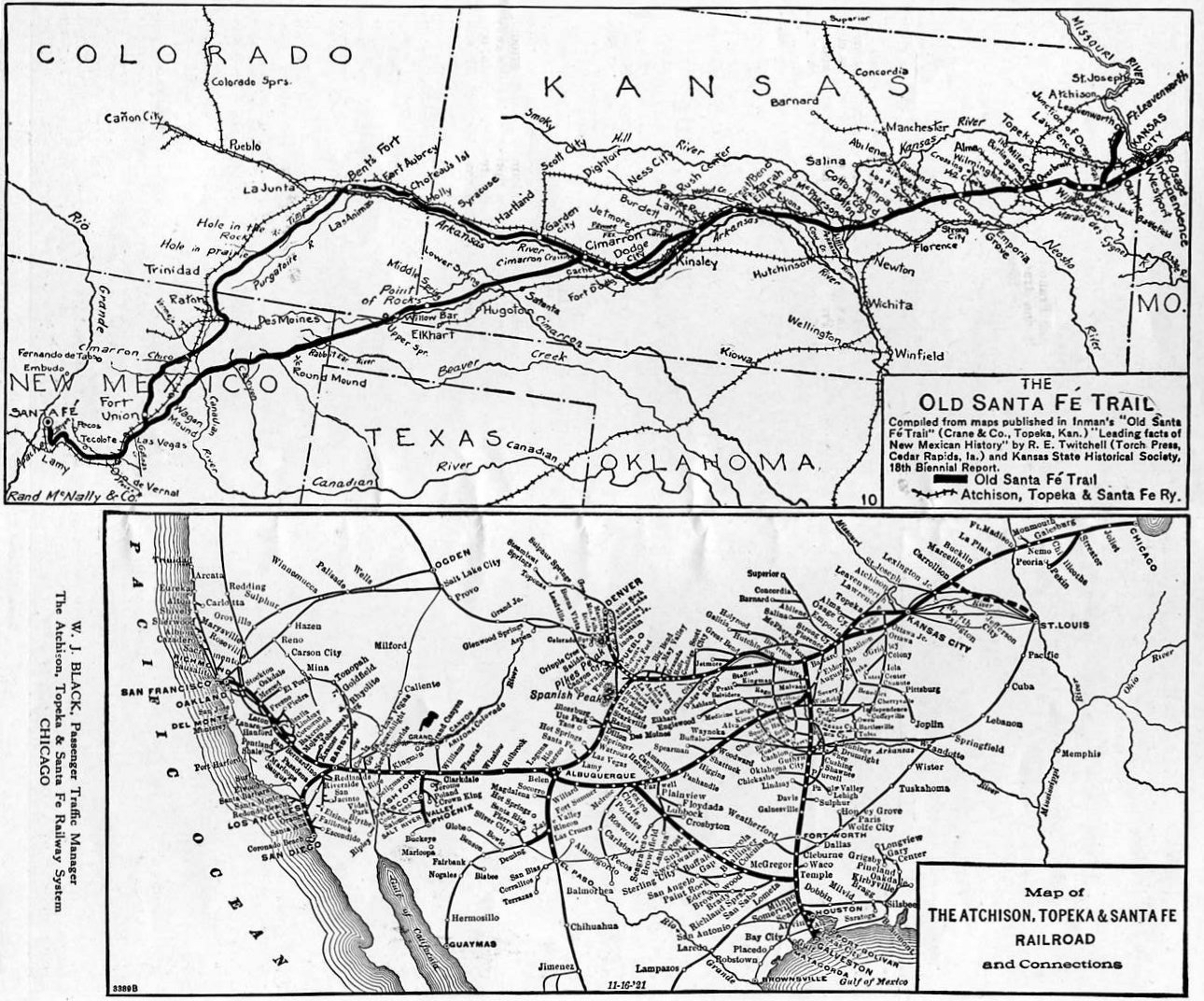
Comparison map showing the Santa Fe Trail and the ATSF Railway, 1922.
Map from By the Way – A condensed guide of points of interest along the Santa Fe lines to California, Rand McNally and Company via Wikimedia Commons.
In 1960 the Santa Fe bought the Toledo, Peoria & Western Railroad, then sold a half interest to the Pennsylvania Railroad. The TP&W cut straight east across Illinois from near Fort Madison, Iowa, to a connection with the Pennsy at Effner, Indiana, forming a bypass around Chicago for traffic moving between the two lines. The TP&W route didn’t mesh with the traffic pattern Conrail developed after 1976, so Santa Fe bought back the other half, merged the TP&W in 1983, then sold it back into independence in 1989.
During the 1960s the Santa Fe explored merger with the Frisco and the Missouri Pacific with no success. By 1980 Santa Fe, which had been the top railroad in route mileage in the 1950s, was surrounded by larger railroads. It was well managed and profitable, and it had the best route between the Midwest and Southern California, but its neighbors were larger, and friendly connections had been taken over by rival railroads. Southern Pacific was in the same situation. In 1980 Santa Fe and SP proposed merger. Approval seemed certain, but in 1986 the Interstate Commerce Commission denied permission because the merger would create a railroad monopoly in New Mexico, Arizona, and California.
The Santa Fe, suddenly the smallest of the Super Seven freight railroads, began spinning off branches and secondary lines and became primarily a conduit for containers and trailers moving between the Midwest and Southern California. In June 1994 Santa Fe and Burlington Northern announced their intention to merge — BN would buy Santa Fe. The deal was consummated in 1995, forming the Burlington Northern Santa Fe, known today as BNSF Railway.
The denied merger between the Southern Pacific and the Santa Fe included an eye-catching proposed “Kodachrome” paint scheme for locomotives, as described in the Wikipedia article:
The holding company controlled all the rail and non-rail assets of the former Santa Fe Industries and Southern Pacific Company, and it was intended that the two railroads would be merged. They were confident enough that this would be approved that they began repainting locomotives into a new unified paint scheme, including the letters SP or SF and an adjacent empty space for the other two (as SPSF, the reverse order of the holding company).
The locomotive livery featured the Santa Fe’s Yellowbonnet with a red stripe on the locomotive’s nose; the remainder of the locomotive body was painted in Southern Pacific’s scarlet red (from their Bloody Nose scheme) with a black roof and black extending down to the lower part of the locomotive’s radiator grills. The numberboards were red with white numbers. In large block letters within the red portion of the sides was either “SP” (for Southern Pacific-owned locomotives) or “SF” (for Santa Fe-owned locomotives). The lettering was positioned on the locomotive sides so that the other half of the lettering could be added after the merger became official. Two ATSF EMD SD45-2s (ATSF #7219 and #7221) were painted with the full SPSF lettering to show what the unified paint scheme would look like after the merger was complete. One Santa Fe caboose was also painted with “SPSF” in a similar situation.
This paint scheme, combining yellow, red and black, has come to be called the Kodachrome paint scheme due to the colors’ resemblance to those on the boxes that Kodak used to package its Kodachrome slide film (which was heavily used by railfans of the time). After the ICC’s denial, railroad industry writers, employees of both railroads and railfans alike joked that SPSF really stood for “Shouldn’t Paint So Fast”.

May 5, 2020
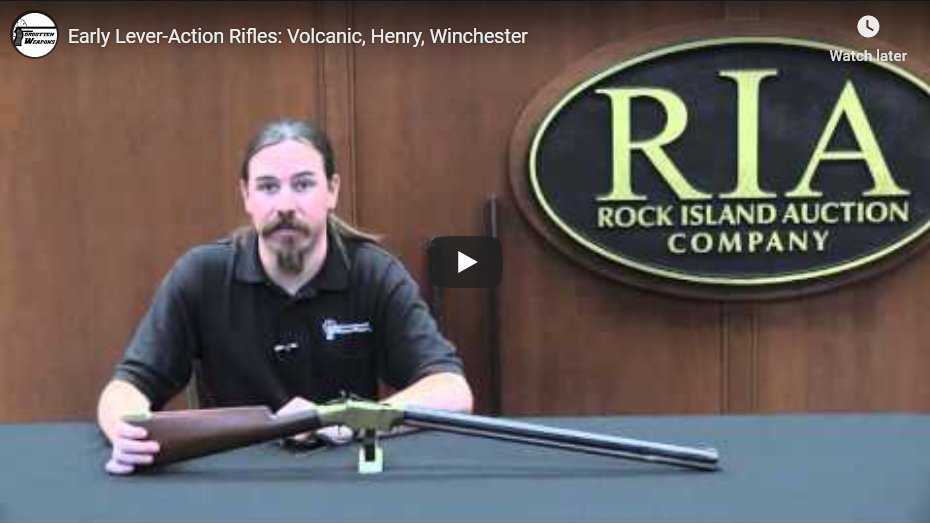
Early Lever-Action Rifles: Volcanic, Henry, Winchester
Forgotten Weapons
Published 6 Feb 2016Hammer prices:
Volcanic – $19,550
1860 Henry – $15,960
1866 Winchester – $8,625We’ve all seen lever action rifles galore in movies about the old west, and most of us have handled and shot a bunch of them as well. But do you know where they came from?
Today we will take a look at the first American lever-action rifle put into successful (more or less) production, the Volcanic. We will then continue to examine the 1860 Henry and the 1866 Winchester to get a foundational understanding of the development of these guns, and the interesting group of people involved with them.
QotD: Social media encourages autistic behaviour
The genetic fallacy, you’ll recall, is the inability to separate the idea from the speaker. Or, if you’re under age 40, it’s simply “communication,” as our public discourse nowadays proceeds in very little other than genetic fallacies. Try it for yourself. We all know what kind of reaction you’ll get in respectable circles if you say “You know, Donald Trump has a point about …”, but you can do it on “our side” of the fence, too. Watch: Obama was right about Race to the Top. No, really: Compared to W’s No Child Left Behind bullshit, pretty much anything short of letting kids be raised by wolves would’ve been better (and hey, even being raised by wolves worked out ok for Romulus and Remus). Even with the qualifier attached, almost everyone on “our side” instinctively bristles — we’ve been so conditioned by the words “Obama” and “race,” especially in close proximity, that we can’t help ourselves. Even I do it.
It’s especially bad for the younger generations who, as I keep arguing, have been effectively autismized (it’s a word) by social media. Twitter, especially, is so constructed that “replies” can come in hours, days, months, years later. Blogs too for that matter — one of the reasons we close the comments here after a few weeks is to prevent drive-by commenters clogging things up trying to re-litigate something from years ago. Modern “communication” must take place in discrete, contextless utterances. That being the case, understanding a statement in context is impossible — I repeat, impossible. So Lenin (or Hitler, or Mao, or William F. Buckley, or the Stay-Puft Marshmallow Man) didn’t have a point about ___; because that requires understanding how his point fit into the larger context of his thought, his times, his culture, his world. None of that shit fits into a tweet, so we’re trained to respond to the name — Lenin (etc.) is either a good guy or a bad guy, full stop, so anything he says about anything must be good or bad, automatically.
I hardly need to elaborate on the effect this has on our public culture. If Our Thing really wants to get serious, the first thing any “organization,” no matter how loose, must do is: Ban social media.
Severian, “Education, the Genetic Fallacy, and the Spectrum”, Rotten Chestnuts, 2020-01-27.
May 4, 2020
Government “problem solving” is an oxymoron
Antony Davies and James R. Harrigan explain why you should back away quickly when you hear a variant of “We’re from the government and we’re here to help”:

A central theme of our recent book, Cooperation & Coercion, is that all governments are hamstrung when they attempt to fix problems. Policymakers suffer from the knowledge problem: they don’t know enough to foresee every eventuality that will follow from what they do. Politicians see a problem, speak in sweeping statements, then declare what will happen, assuming their edicts will settle matters. But that is always just the beginning. More often than not, all manner of unintended consequences emerge, often making things worse than they were before their policies went into effect.
Consider the United States’ three high-profile wars against common nouns over the past half-century. Lyndon Johnson declared a War on Poverty in the 1960s, Richard Nixon a War on Drugs in the 1970s, and George W. Bush declared a War on Terror in the early 2000s.
How are those wars working out? Because a back-of-the-envelope calculation indicates that we have spent somewhere in the neighborhood of $23 trillion in our attempt to eradicate poverty, drugs, and terror. Not only have we not won any of these wars, it is unclear that any of them can be won. These three so-called wars have managed to saddle future generations of taxpayers with unprecedented debt. And, as is the case with all coercive endeavors, policymakers ask us to imagine how bad things would have been had we not spent the trillions we did spend. And then they ask for even more money. So now we have unwinnable wars along with institutionalized boondoggles to support them.
We see the same sort of thing happening now in the face of the COVID-19 threat that has induced the largest panic attack in world history. In the name of safety, policymakers have shut down myriad productive endeavors. And there will be a raft of unintended consequences to follow. We are already seeing them manifest, and they portend potential disaster as supply chains fail.
The first cracks in US supply chains appeared in the meat industry. Smithfield Foods, reacting to a number of workers contracting the virus, shut down its Sioux Fall plant. Kenneth M. Sullivan, President and CEO, explained in a press release that, “the closure of this facility, combined with a growing list of other protein plants that have shuttered across our industry, is pushing our country perilously close to the edge in terms of our meat supply.” But it’s not just the meat plant that’s implicated. It’s everyone from the cattle farmer to the person who cooks dinner, and there are a number of people who have a place in that process who might first escape attention. The people who make packing materials needed to ship food, the maintenance workers who service machines up and down the supply chain, the truck drivers who move product from one place to another, the grocers who sell the product, the daycare workers who care for the grocers’ children so the grocers can work, and many, many more are all at risk.
[…]
In declaring some jobs “necessary” and others not, in focusing on one supply chain versus another, policymakers show how little they know about the nation’s economy. In their view, they can simply declare things they want to happen, and then those things will happen. But that is not how economies work. An economy is the sum total of everyone’s activities, and when the government declares that something must happen, all kinds of other things happen too.
Consider how all the “non-essential workers” have been sent home for the past two months. Who gets to declare which workers are non-essential to the economy, and by what standard? Most assumed that politicians had the correct answers to these questions. But, as we are discovering, there is no such thing as “non-essential” workers. All workers are essential. How do we know? Because their jobs existed. Profit-driven businesses do not create non-essential jobs. Those people’s jobs were essential to their employers. Further, those people’s jobs were incredibly essential to the people themselves. They need their wages to pay the rent, buy their food, make their car payments, and for everything else that makes their lives livable.
But policymakers simply declared them non-essential, as if there would be no fallout from that decision.
QotD: The eternal “now” of Progressive stasis
None of that matters to the cultural marxist, though. How could it? As I wrote yesterday, to the fanatic, the past is one long catalog of freely chosen error. Nor is there any meaningful future to a fanatic. That seems wrong, I realize, but consider that time passes through contrast. People will be born and die in the Communist Utopia, but since everyone will always have everything, human activity will be exquisitely pointless …
Ignore what Leftists say. Watch what they do, and it’ll soon be obvious that what they long for above all things is stasis. They want everyone and everything to be one way, and one way only, forever. Homosexuals are the most flamboyant example. Imagine that — having your entire life defined by your sexual attraction. I like blondes, but you know, if the right brunette came along I’d go for her. Heck, I’d even go for a ginger (I know, I know, I’m a monster). But according to the Left, that’s not allowed. I like blondes, and therefore I’m only allowed to like blondes. Oh, and I can only vote for Bernie Sanders, because he’s the attracted-to-blondes candidate, and I must support abortion, and use the word “cisgendered,” and …
Thus, to the Leftist there’s no past, and no future either. There’s only now, and the only thing that matters now is power. How could it be otherwise?
Severian, “The Endless Now”, Rotten Chestnuts, 2020-01-23.
May 2, 2020
Gabriel Over the White House – “the most unapologetic celebration of fascism ever put on film”
Jack Cashill found this “gem” while watching Turner Classic Movies during the Wuhan Coronavirus lockdown and was amazed:
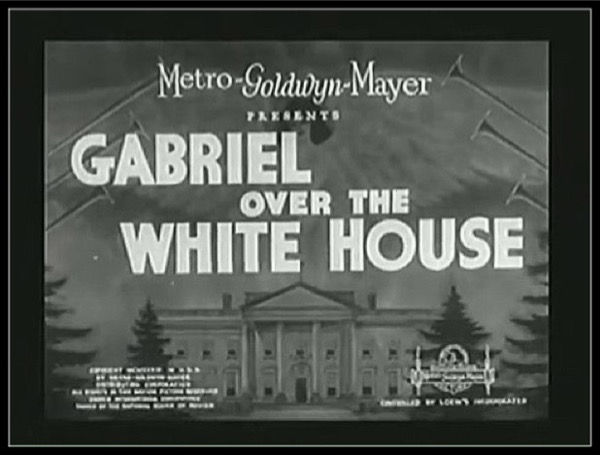
By now, I have seen most of TCM’s movies, but one aired this past week I had not even heard of. On a whim, I DVR’ed it. Good move. Called Gabriel Over the White House, this 1933 liberal wet dream proved to be the most unapologetic celebration of fascism ever put on film.
I watched it wide-eyed. The movie opens with the inauguration of Jud Hammond. A laissez-faire back-slapper, Hammond sees the White House as a way to enrich himself and reward his cronies, Depression be damned. The audience assumes Hammond is a Republican.
Out joyriding one day, Hammond crashes his car and lapses into coma. While still comatose, the Angel Gabriel visits Hammond and turns him into a committed and caring progressive. Is there another kind?
Upon waking, Hammond convenes his cabinet of corrupt self-servers and rejects their plea that the party must come first. Instead, Hammond insists their first priority be the American people. He refuses to use the U.S. Army against a marching mass of the unemployed and fires the secretary of state when he objects.
“I suggest you read the Constitution of the United States. You’ll find the President has some power,” Hammond warns his cabinet members. Some power? Fully indifferent to the Constitution, Hammond grabs all the power that can possibly be grabbed.
When the cabinet objects to his usurpation of power, Hammond fires the cabinet. When Congress threatens to impeach Hammond, he declares martial law and dispenses with Congress. When accused of being a dictator, Hammond argues that his is a dictatorship based on some imagined Jeffersonian principle of Democracy, namely the greatest good for the greatest number of people.
Now with total power, Hammond enacts a national banking law, stops foreclosures, provides direct aid to some 55 million farmers, circumvents private industry and launches his own “Army of Construction.”
A young aide, Hartley Beekman, and his female counterpart, Pendie Molloy, serve as something of a progressive chorus. “The way he thinks is so simple and honest that it sounds a little crazy,” says Beekman of Hammond.
“He’s doing the things you wanted,” Molloy answers. “And If he’s mad, it’s a divine madness. Look at the chaos and catastrophe sane men have brought about.”
The divine madness includes the creation of a Federal Police force, a subset of the Army, with young Beekman at its head. When the nation’s chief racketeer refuses to go back to his unnamed home country, Hammond warns him that the government is about to “muscle in on his racket” and federalize the sale of alcohol.
The racketeer fights back, and Beekman employs a legion of tanks Waco-style against the racketeers. When captured, the racketeers are all hauled before a three-man court martial headed by Beekman, promptly declared guilty, and executed en masse by a firing squad.
Several years ago, the movie was brought to my attention and I found this clip on YouTube that I suspect captures the essence of the film:
James Lileks describes it as “a remarkable movie. And I don’t mean ‘astonishingly good, technically superb, visually ingenious.’ I mean utterly insane.”
May 1, 2020
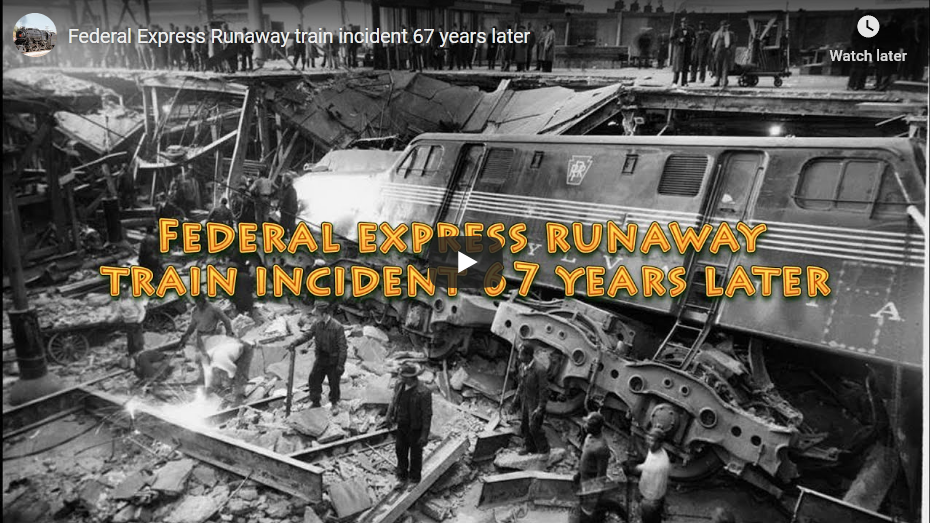
Federal Express runaway train incident 67 years later
Thunderbolt 1000 Siren Productions
Published 17 Jan 20202 days late and I lost several hours of sleep but holy hell it’s worth it now that it’s done! Enjoy this pretty interesting story on a runaway GG1 just days before Eisenhower’s inaguration
Please don’t shoot me for the Trump pics 😐
Next to come up is Glendale and *passes out*Please donate!
https://www.gofundme.com/thunderbolt-…I’m just a struggling college student! Your generous donations will enable me to continue my education and ensure future posts and educational films. Thank you!!!
Discord server: https://discord.gg/Tqwr4RV
Patron:
https://www.patreon.com/Thunderbolt1000Deviantart: https://www.deviantart.com/pennsy
April 30, 2020
Browning M1917: America’s World War One Heavy Machine Gun
Forgotten Weapons
Published 14 Mar 2018When the United States entered World War One, its military has a relatively tiny handful of machine guns, and they were divided between four different types, as the military budget was small and machine guns were not given much priority. However, since the failure of his gas-operated 1895 machine gun design to become a popular military item, John Browning had been working on a recoil-operated machine gun to replace it. This work became serious in 1910, and by 1915 Browning had met with Colt and agreed to give them exclusive license to his new design — and they began to work with him to refine and perfect it.
When the United States realized that it would be fighting in Europe and would need machine guns in 1917, it held an open trial for designs which Colt and Browning entered. The Browning gun was the undisputed star of the show, firing 40,000 rounds with only one parts breakage and no malfunctions that were not the fault of ammunition or belts. The gun was almost immediately adopted and pushed into production. Ultimately, Colt would allow the manufacture of its guns by Remington and New England Westinghouse, and Browning himself would accept a lump-sum royalty payment from the government for its use, which was about 3.5 million dollars less than he was contractually entitled to — out of patriotism and a desire not to profit too much from the war.
Browning 1917 machine guns would see only brief combat use in World War One, first tasting action in September of 1918. They would remain a staple of US military armament through World War Two, however, improved after the Armistice to the M1917A1 pattern. The gun we are looking at today is an original WW1 M1917, mounted on an equally rare M1917 original tripod.
http://www.patreon.com/ForgottenWeapons
Cool Forgotten Weapons merch! http://shop.bbtv.com/collections/forg…
If you enjoy Forgotten Weapons, check out its sister channel, InRangeTV! http://www.youtube.com/InRangeTVShow

April 29, 2020
“The war on ultraviolet radiation because it might help Trump is an educational moment”
Arthur Chrenkoff on the sudden decision that the World Health Organization is the ultimate arbiter of what we’re allowed to say on social media platforms like Twitter and YouTube:

There is of course no evidence that the video represents any disinformation. It relates to legitimate scientific research by a medical company conducted in association with a respected hospital to develop a novel treatment of possibly crucial importance in the current conditions and into the future. The only problem with the video is that is indirectly supports Trump’s flight of fancy speculation about using light and chemicals to “disinfect” the body. Ergo, according to a NYT journalist it represents a problem and YouTube agrees. YouTube now has a standing policy of removing COVID information that goes against the World Health Organisation’s guidelines. Putting aside the question of the WHO’s credibility in the wake of the pandemic, we are not talking here about some guy in a tinfoil hat talking about 5G towers spreading the virus; this is a video relating to ongoing, respectable scientific research. Will it work? Probably not. But perhaps neither will any of the 150 or so COVID-19 vaccines being currently developed around the world. We won’t know until we know. But in the meantime, scientific news should not be censored, period.
[…]
Goldsmith and Woods are correct in pointing out not only the greater role that governments have been playing in regulating speech but more importantly how much of that effort has been embraced and driven by the big tech — and by the private individuals enabled and encouraged by the big tech — what I have previously called the “democratised censorship”. The difference is that people like Goldsmith and Woods think that’s a good thing.
The dirty little secret is that a great number of leftists, progressives and even centrist technocrats and activists look at China, with its authoritarian government, social credit score system, ubiquitous surveillance, and the ability to “get things done” and done quickly and supposedly efficiently (in China, bullet trains run on time, I hear), and pine for such a system to be applied in their own countries — as long as, of course, they are the ones in power and decide what is right, important and valuable. The left’s objections are rarely against authoritarianism and its means and methods per se, just with the possibility that someone else — like Trump — is the one behind the wheel, implementing their, not the left’s, agenda.
The war on ultraviolet radiation because it might help Trump is an educational moment. One could say, first they came for crazy conspiracy theorists and I said nothing because I’m not an anti-vaxxer or anti-5G activist — and so on. The problem with censorship is that it keeps creeping up on everyone else. And those who do the censoring — who decide what the ignorant masses should and shouldn’t be allowed to read — are not some detached and impartial spiritual beings but people with political agendas. People who think that ideas and beliefs of one half of the society are harmful and offensive. People who will censor news that doesn’t fit the agenda and support the narrative.
And then they came for ultraviolet radiation… You have been warned.
April 28, 2020
Robber Barons and the Battle of the Tunnel
The History Guy: History Deserves to Be Remembered
Published 1 Feb 2019During the gilded age ruthless businessmen fought for control of railway lines. The Albany and Susquehanna railroad was another battlefield in the “Railroad wars.” In this episode, The History Guy remembers “the Battle of the Tunnel”.
This is original content based on research by The History Guy. Images in the Public Domain are carefully selected and provide illustration. As images of actual events are sometimes not available, images of similar objects and events are used for illustration.
All events are portrayed in historical context and for educational purposes. No images or content are primarily intended to shock and disgust. Those who do not learn from history are doomed to repeat it. Non censuram.
Patreon: https://www.patreon.com/TheHistoryGuy
The History Guy: History Deserves to Be Remembered is the place to find short snippets of forgotten history from five to fifteen minutes long. If you like history too, this is the channel for you.
Awesome The History Guy merchandise is available at:
teespring.com/stores/the-history-guyScript by THG
#newyork #thehistoryguy #ushistory
April 27, 2020
Entrepreneurs beyond the atmosphere
Doug Bandow reacts to Donald Trump’s executive order that begins to clear the way for private enterprise in space:

Taken by Apollo 8 crewmember Bill Anders on December 24, 1968, at mission time 075:49:07 (16:40 UTC), while in orbit around the Moon, showing the Earth rising above the lunar horizon.
Despite the current chaos caused by the coronavirus, Washington still must consider the future. Which explains the president’s new executive order that would allow private resource development on the moon and asteroids. It clearly rejects the “common heritage of mankind” rhetoric deployed by the United Nations on behalf of the Law of the Sea Treaty, which four decades ago created a special UN body to seize control of seabed resources.
The Future of Space Exploration
The EO issued earlier this month explained that
Successful long-term exploration and scientific discovery of the Moon, Mars, and other celestial bodies will require partnership with commercial entities to recover and use resources, including water and certain minerals, in outer space.
The measure began the process of revising an uncertain legal regime which currently discourages private sector development.
The administration pointed to the 1979 Agreement Governing the Activities of States on the Moon and Other Celestial Bodies (known as the Moon treaty) and the 1967 Treaty on Principles Governing the Activities of State in the Exploration and Use of Outer Space, including the Moon and Other Celestial Bodies (typically called the Outer Space Treaty). Neither is friendly to entrepreneurs or explorers with a commercial bent.
In response, the president announced that
Americans should have the right to engage in commercial exploration, recovery, and use of resources in outer space, consistent with applicable law. Outer space is a legally and physically unique domain of human activity, and the United States does not view it as a global commons. Accordingly, it shall be the policy of the United States to encourage international support for the public and private recovery and use of resources in outer space, consistent with applicable law.
Space is a Long-Term Prospect
The document’s main directive is for the Secretary of State, in cooperation with other agencies, to “take all appropriate actions to encourage international support for the public and private recovery and use of resources in outer space.” The secretary is to “negotiate joint statements and bilateral and multilateral arrangements with foreign states regarding safe and sustainable operations for the public and private recovery and use of space resources.”
Obviously, the administration’s attention is directed elsewhere at the moment. However, the potential benefits of turning to space are significant. The value of scientific research is obvious and continues to drive government agencies such as NASA. Launch services and space tourism have caught the interest of private operators. Such activities offer fewer legal and practical difficulties than attempting to establish some sort of long-term presence in the great beyond.
More complex development of space is a longer-term prospect. However, that makes it even more imperative to encourage innovation by creating institutions and incentives that encourage responsible development of what truly is the “final frontier.”
QotD: H.L. Mencken’s literary theory
H.L. Mencken, “Private Reflections”, The Smart Set, 1922-12.
April 23, 2020
QotD: Idiotarianism
Glenn Reynolds, Instapundit, 2005-01-31.


