Quotulatiousness

July 10, 2024

The four horsemen of cultural collapse

Filed under: Law, Liberty, Media, Politics, USA — Tags: , , , , — Nicholas @ 05:00

Chris Bray provides yet more examples of cultural decay and the collapse of law and order in America’s Trudeaupia, California under the loving care of Justin Trudeau’s spiritual twin, Gavin Newsom:

Today tells you about next year.

In a long history of murder in America, the historian Randolph Roth argued that violence follows other losses of trust and order. The murder rate surges in the face of “four distinct phenomena: political instability; a loss of government legitimacy; a loss of fellow-feeling among members of society caused by racial, religious, or political antagonism; and a loss of faith in the social hierarchy”.

Read that list carefully, because it should sound familiar.

Similarly, the originators of the theory of “broken windows policing” argued that peace and order grow from peace and order; neighborhoods are more likely to be calm when they’re “places where people are confident they can regulate public behavior by informal controls”. Crime follows crime; vandalism, for example, “can occur anywhere once communal barriers — the sense of mutual regard and the obligations of civility — are lowered by actions that seem to signal that ‘no one cares'”. The police commissioner William Bratton famously reduced all categories of crime in New York City subways by assigning officers to arrest turnstile jumpers who entered the system without paying. He sent a signal at the front gates.

“Broken windows” is a much-criticized theory: “He contended that the very notion of ‘disorder’ is subjective and racially fraught”. But the criticisms tend to reduce the complexity of the theory in order to “debunk” it.

Decay communicates. Disorder is a message.

July 9, 2024

QotD: “No official Propaganda Department has ever been half as effective as Twitter and Facebook”

Filed under: Media, Politics, Quotations, USA — Tags: , , , , , , — Nicholas @ 01:00

Straight off, we know one thing they wouldn’t do — create a Reich Culture Chamber or Department of Enlightenment. To be fair to the Commies and Nazis, they probably didn’t have much of a choice in their home countries — totalitarianism being what it is, and Europeans being what they are — but the Soviets, at least, soon saw the error of their ways, and let the free market handle it overseas. 99% of the USSR’s propaganda effort was done pro bono by Western “intellectuals”, and that’s how it’s done — convince cripplingly insecure dorks that they’re oh so smart for parroting your party line, and they’ll do all your dirty work for free.

Our overlords figured that out, give credit where it’s due. No official Propaganda Department has ever been half as effective as Twitter and Facebook. But that’s a problem, too, as we’re starting to see. The problem with freelance propaganda is the free market problem of marginal utility.

Facebook and Twitter are SJW cesspools. Everyone knows this. Even your sweet old granny, who is only on Facebook to exchange pie recipes and knitting ideas, knows this, because the #WokeStapo came for knitting years back. When the “trust and safety council” goes so far as to ban the sitting President of the United States, even hermits living in remote Himalayan caves got the message — toe the Party line on social media, or else.

This reduces the value of ALL information on social media to, effectively, zero. Sure, it might be true — and propaganda, as we know, works better the closer to the truth it steers — but given that they’ve even gone after knitting, for pete’s sake, means that any even halfway sorta quasi rational person assumes everything on social media is nothing but propaganda.

Severian, “If They Were Clever”, Rotten Chestnuts, 2021-06-08.

July 8, 2024

All the conspiracists seem to find room for the Rockefellers in their theories

Filed under: Environment, Media, Politics, USA — Tags: , , , , , , — Nicholas @ 04:00

Elizabeth Nickson on a new book by Jacob Nordangård that illustrates just how important Rockefeller funding is to so many activists and the environmental pressure groups that deploy them:

In the climate change arena, the Rockefellers call the shots. The whole thing was their idea, they took a silly but interesting theory and amped it up with hundreds and hundreds of million of dollars. They founded institutions and linked the survival of those institutions to promoting climate change and population reduction. They adopted one likely politician after another.

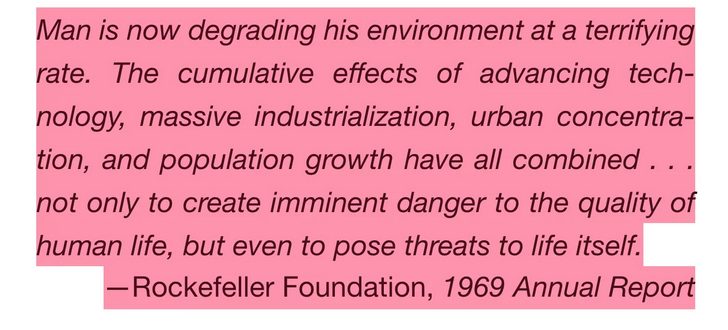
The Rockefellers have created 990 Climate Change activist organizations. They give them directions, financing, and launch them on the world. The Green Movement was started, financed, organized, and militarized by the Rockefellers. By the late 40’s the family was all in, on the same page. In the 50’s they began to stand up countless institutions, committees, university departments, university institutes, foundations, and policy shops gathered around this one idea, as below:

Let’s just pause here and recognize that the United States and Canada are 5% developed. If it were 50%, then maybe we would have reason to worry about the effects of trace gas that takes up .04% of the atmosphere, of which 3% is currently contributed to by humans. But were we to have that level of development, our science would have long ago solved the problem. Our sense of proportion, size and consequence has been twisted, propagandized via hundreds of billions of purposed dollars. And all of it is exaggerated science done by scientists compromised by Rockefeller money.

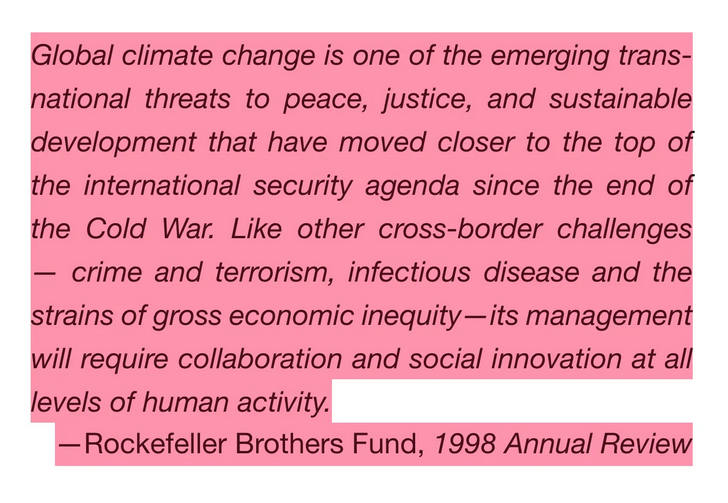
By 1998, the Rockefeller family had swept the table clean of any opposition to this one idea. Any scientist not on board with the agenda was imperiled. Any university department not working towards this one artificial goal, was in danger of being marginalized. Infiltration had begun into every media organization, every entertainment division of every major corporation. This, as stated below, would be a generational goal. For everyone. Or get off the bus.

What is evidentiary, what can be proved in a court of law, rather than opinion, however, is that the Fabians started the idea of this whole one-world, no nation state. It is clear too that after the First World War, the Fabians roped in the second generation of Rockefellers. It was a major catch. It meant they had America. And it was spiritual. It was meant to change mankind, to kill off Homo Sapiens and turn us to Homo Universalis.

The New Man would be not-Christian, quietist, and self-obsessed. The economy would trend towards zero-growth if not de-growth. There is a preponderance of data, many many publications that laid out their plans. They twisted education away from practical science, engineering and building things towards social movements, the humanities, the arts, and pleasure. And via Laurance Rockefeller’s money and organizational skill, they devised and invented the discipline of cybernetics from which the internet flows.

“See, Trump’s plan is … Christofascist ethnic cleansing. It’s all so obvious now, isn’t it?”

Filed under: Government, Media, Politics, USA — Tags: , , , , , — Nicholas @ 03:00

Chris Bray finds the stupid so painful that it hurts:

I was worried, a year ago, about an election-year decline into hysteria and evil. What I didn’t see was the descent into grinding moronization.

“They want to dismantle the administrative state and give more power to the executive branch.” I … can’t. I just can’t. It’s like somebody made a special kind of rice cereal for infants that replaces the rice with shit. It’s sewage gruel for toothless adult babies. It’s like saying “they want to take power away from judges and transfer it to the judicial branch”, but that doesn’t really begin to do justice to the stupidity of these statements.

Similarly, this segment on MSNBC warns that Trump is planning to “bring the agencies under the umbrella of the executive branch”.

Imagine living in a world where the Department of Commerce was part of the executive branch. And on and on and on. […]

See, Trump’s plan is … Christofascist ethnic cleansing. It’s all so obvious now, isn’t it?

July 7, 2024

More on the British general election results

Filed under: Britain, Media, Politics — Tags: , , , , , — Nicholas @ 05:00

At Postcards from Barsoom, John Carter has some further thoughts on the Sunak implosion on the 4th of July:

Sir Keir Starmer speaking to the media outside Number 10 Downing Street, 5 July, 2024.
Picture by Kirsty O’Connor/ No 10 Downing Street via Wikimedia Commons.

The Conservative wipeout was disappointingly not the annihilation that early polls predicted. The Tories were successful in scaring a critical mass of boomers in a last minute get-out-the-vote effort. At the same time, I suspect that some incidents late in the election that were used to paint Reform as raving Nazis were successful in driving down the Reform vote. One such incident involved a marginal Reform candidate caught on microphone being extraordinarily vulgar, who later turned out to be an actor that specialized in playing precisely the sort of character he was portraying for the media, which is of course all rather suspicious.

As a result, Reform only got 4 seats. This was less than the 13 that were predicted by the BBC based on exit polling, which prediction was revised to the 4 that Reform in fact won partway through counting, as the models’ Bayesian priors were updated accordingly, no doubt. That said, among those 4 seats is Nigel Farage, who is now a sitting member of Parliament.

That Parliament is now, in all likelihood, in the hands of the weakest massive majority government in its history, and if that’s not true (British history in its entirety being rather extensive), certainly close to it.

Keir Starmer’s Labour has 412 seats of Parliament’s total 650, giving it an unassailable majority. This is not because of a sudden surge in their popularity: their share of the popular vote didn’t budge, from around a third of the population. Turnout was moreover unenthusiastic, about 59% of the population I think, which while not as wince-inducing as the nearly 50% participation that the BBC was claiming throughout most of the counting period, is still nothing to write home about. The total number of people who voted for Labour decreased by 600,000. Labour cannot claim any sort of popular mandate, and they know it.

Not that Labour — or any western political party elected under these circumstances — could be expected to take it into consideration. From their point of view, all that matters is the seats in the House of Commons, and they’ve got them in spades.

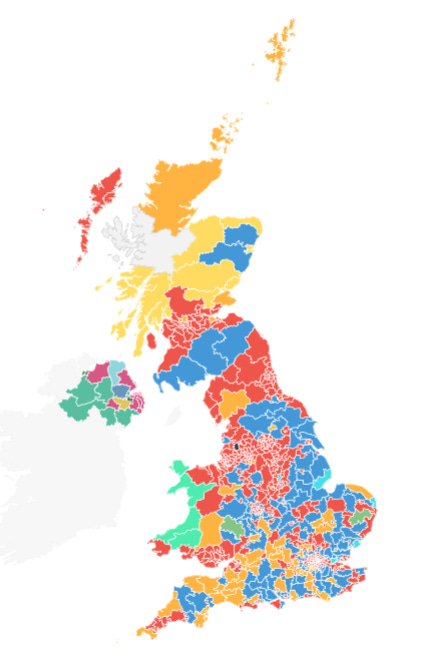
Reform and the Lib Dems were not the only beneficiaries of the Conservative collapse. This can be seen immediately in the crazy quilt of the electoral map, which despite Labour’s two-thirds majority, is planted with the flags of all sorts of weird political tribes.

My favourite part is Northern Ireland, where Sinn Fein held its 7 seats (making it the fifth-largest party after the SNP), and the rest of it is split up in an impenetrable jumble of splinter parties vaguely associated with different reasons for remaining part of the UK and/or the EU. Wales has been painted bright green by Plaid Cymru, the Party of Wales, who doubled their presence in parliament to 4. This is the same number of seats as Reform got, despite Plaid Cymru having gotten just under 200,000 votes, as compared to Reform’s 4.1 million, yet another perversity of first-past-the-post.

To everyone’s disappointment, first-past-the-post did not deliver a seat into the hands of the Monster Raving Loony Party, who received only 5,814 votes, a dismal 0.02% of the total 28.4 million votes cast. I do not know what kind of person votes for the Monster Raving Loony Party, but I bet they are absolutely fascinating. They should consider moving to one of Britain’s remote underpopulated islands, the Orkneys perhaps, where they might just be able to take over a seat. Having a strong, concentrated regional presence seems to be the best way to get members into Parliament in a first-past-the-post system, and having a sitting member for the Monster Raving Loonies would be even funnier than having Nigel in there.

First-past-the-post gets a lot of hate, and I’ve been ripping on it here, but it actually seems well-suited to an island which is shared by a bunch of squabbling ancient tribes. While it tends to produce majorities quite easily due to the winner-take-all nature of the contest within each riding, this also allows areas with strong regional identities to assert a disproportionate presence in parliament, despite getting a measly percentage of the vote. Not that that especially matters, given the aforementioned tendency for the system to hand out crushing jackpot majorities to the dominant players, as it has indeed done once again.

With the sole exception of Reform, there has not been any wave of enthusiasm for any of the parties in parliament. Large numbers of voters simply stayed home, whether tuning it all out or punishing their home parties while failing to see anything they wanted to vote for. It is as though the tide has gone out, exposing the sand and rocks of the sea shore. Whether this is a regular tide, which will gently slosh back in again in time, or a tsunami, remains to be seen. Certainly it feels that the water has receded very far indeed, exposing more of the seafloor’s surface than one normally sees. Say, is that Doggerland over there?

July 6, 2024

Labour’s “landslide”

Filed under: Britain, Media, Politics — Tags: , , , , , , , — Nicholas @ 04:00

I put the scare quotes around the word “landslide” because Labour’s eye-popping total of seats in Parliament was won on a remarkably narrow share of the actual votes cast in the British general election on Thursday (less than Jeremy Corbyn’s Labour party won in 2019). Fratricide on the right allowed a lot of Labour candidates to squeak in the win as the combined Tory/Reform votes would have been more than enough to top Labour.
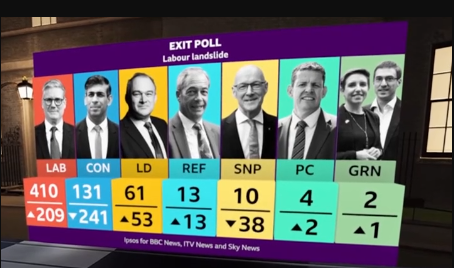
Labour has won a landslide and the largest swing in British history without even increasing its vote share in England, and winning perhaps only 35% nationally. Its only significant gains in proportional terms were in Scotland, largely at the expense of the SNP, who have suffered catastrophic losses, meaning they are only 1 seat ahead of Sinn Fein, now the largest party in Northern Ireland — who are in turn 3 seats ahead of Reform, the third largest party in Britain by vote.

But these Reform MPs are — as I write — outnumbered by the five pro-Gaza independents, who won seats in Yorkshire, Lancashire, the Midlands and London in reaction to Keir Starmer’s position on Israel. Labour are down an average of 18 points in seats where the Muslim population is 20%, and in seats where that figure is above 25%, they are down 23 percentage points. While Labour lost a huge share of the Muslim vote, what is more worrying is the atmosphere in which this has taken place.

In Birmingham Yardley Jess Phillips held on by 700 votes, and in a remarkably unpleasant – I might even say upsetting, although I’ve only had three hours’ sleep — count she lamented that “This election has been the worst election I have ever stood in”, as she was booed.

“I understand that a strong woman standing up to you is met with such reticence”, she told her antagonists, and described how opponents had filmed a Labour activist in the streets and slashed her tyres, while another was screamed at by a man. She told how Jo Cox’s family had wanted to come and campaign but she couldn’t let them endure it. “Can you throw them out?” she asked the authorities of her hecklers.

There were similar scenes in Birmingham Ladywood as Shabana Mahmood was heckled as she gave her speech, the returning officer pleading with the supporters of independent Ahkmed Yakoob to stop.

Yakoob was described by the Sunday Times‘s Will Lloyd as “the one man in Britain who embodies the way our politics have changed”. He described “a 36-year-old defence solicitor who wears black Prada trainers, a glittering diamond watch, tinted gold-framed sunglasses and Gareth Southgate-like waistcoats. He has 195,000 followers on TikTok, a platform he understands more intuitively than 99 per cent of the politicians in this country. He speaks in clipped, brutal epigrams that sound like they are only ever a few” and “The word ‘genocide’ is never far from his mouth with ‘For Gaza’ printed on his leaflets.”

Labour hung on in Ladywood, a historic constituency in England’s second city where in 1924 Neville Chamberlain very narrowly beat a rising star of the Labour Party called Oswald Mosley.

Gaza independents also narrowly lost Birmingham Hodge Hill by just 1000 votes, and Ilford North, the constituency of Wes Streeting by just 528 votes.

While the media focus was largely engaged in catching out the musing of some of Reform’s less intellectually capable candidates, this other populist revolt has been carried out in an atmosphere of anger and intimidation perhaps not seen in English elections since the days of Rotten Boroughs.

There was police intervention in Oldham last month, Naz Shah MP was abused as a “dirty, dirty Zionist … paid by Friends of Israel”.

Fellow Canadian observer Damian Penny refuses to apologize for his headline “The Sunak Sets over the British Empire” (and I don’t blame him in the slightest):

Canadian readers, stop me if you’ve heard this before: an historically unpopular center-right Tory government heads into an election under a hapless leader running a catastrophically poor campaign and finds that even its traditional support is being badly eroded by an upstart right-wing populist party called Reform.

What happened in Britain on July 4 (weirdly symbolic, that) is not exactly what we experienced in Canada in 1993 – the Tories suffered the worst election result in their history, but they’re left with 119 more seats than the venerable Progressive Conservative party under Twitter-troll-in-waiting Kim Campbell, and at least the outgoing PM managed to hold on to his own seat — but it’s kind of nice to see the Mother Country adopting our traditions for once.

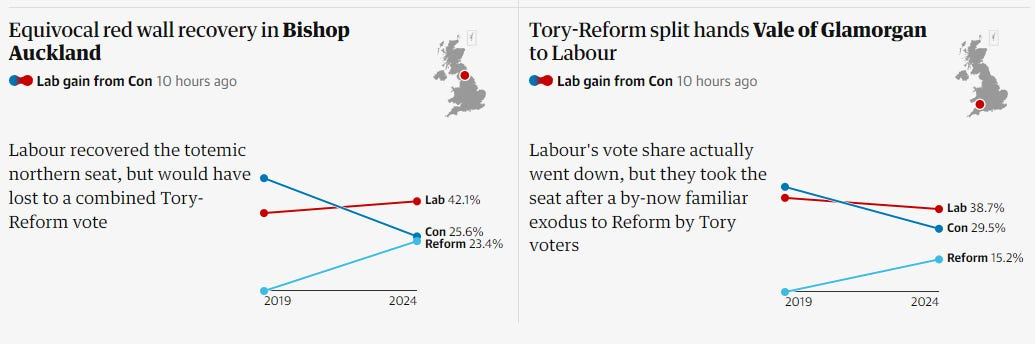
Honestly, 121 seats for Rishi Sunak’s Conservative Party is much better than I’d expected at the start of this campaign. And had it not been for Nigel Farage’s Reform Party, they might have managed a much less embarrassing defeat, because this kind of thing happened many times over last night:
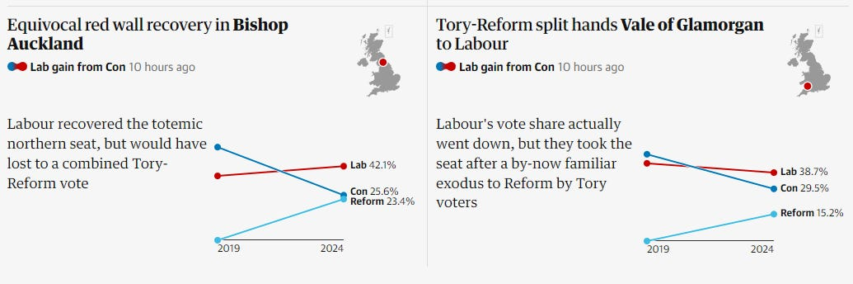
Not everyone who voted Reform defected from the Conservatives – had Farage’s protest party not been on the ballot, many of its supporters would have stayed home or cast their votes for fringe parties and independent candidates — but it might have made the difference between a bad night for the Tories and the worst election in the Tories’ history.

Reform won four seats outright – less than a hyperbolic exit poll predicted, but four more than most observers expected at the start of the campaign. They can’t really affect much at the national level, especially with Keir Starmer’s Labour Party holding an absolutely massive majority of seats in Parliament, but they will make things very difficult for the Conservatives.

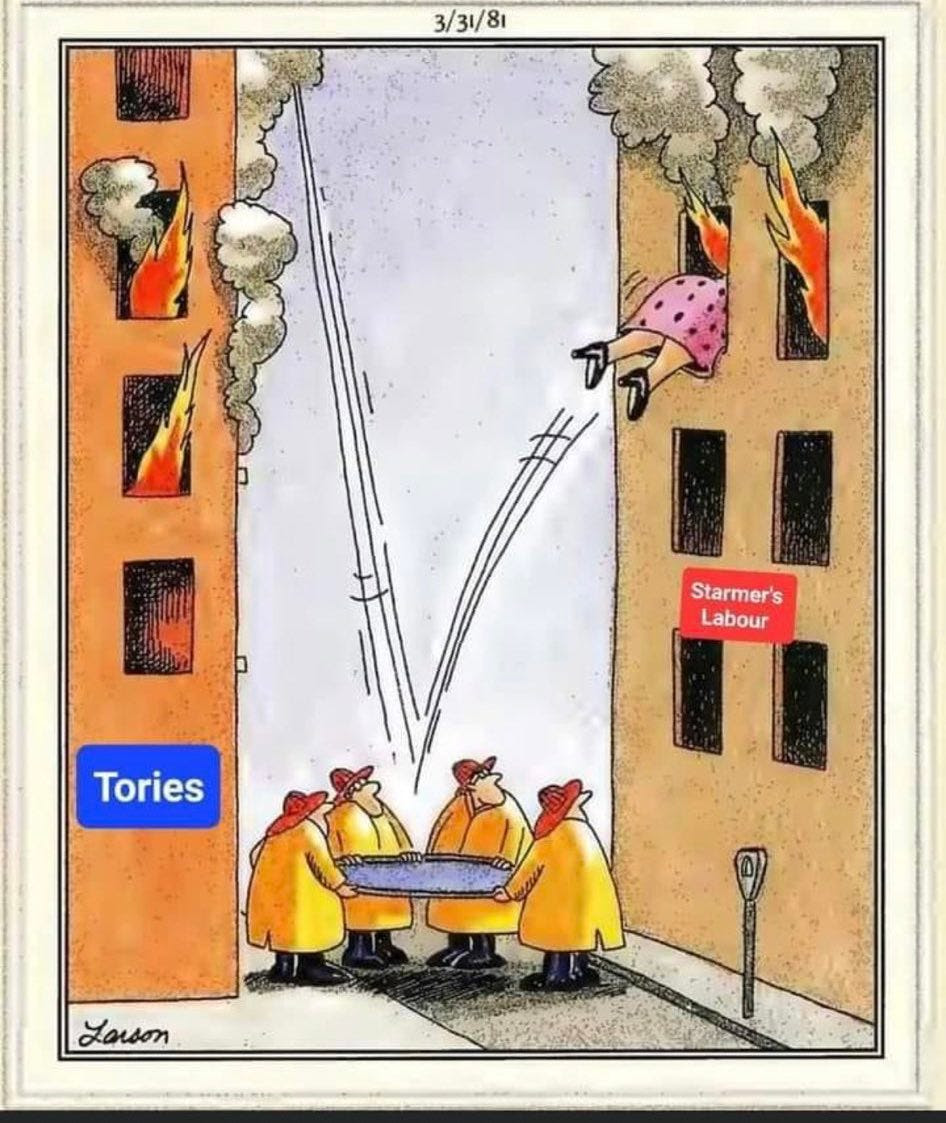
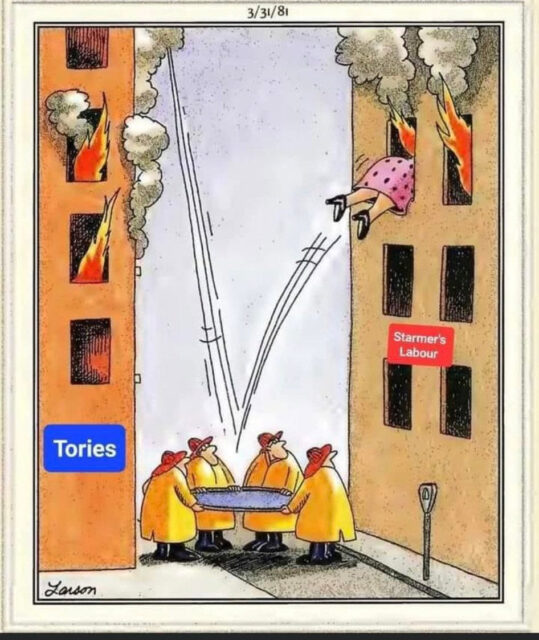
Helen Dale summarized the British general election result in a modified Gary Larson image:
Andrew Doyle points at the disproportional share of the vote won by Nigel Farage’s new Reform UK party compared to the tiny number of seats as a condemnation of the first-past-the-post system (also used here in Canada):

Keir Starmer surely cannot believe his luck. He has achieved a landslide victory by doing very little. He received fewer votes than Jeremy Corbyn in 2019, and yet has ended up with a whopping 412 seats in parliament. The rise of Nigel Farage’s Reform Party has split the right-wing vote and ushered the Conservatives along to their worst ever election result, plunging them to even greater depths than the disastrous election of 1906 under Arthur Balfour.

This was very much a Conservative loss rather than a Labour victory. There is no great enthusiasm for Starmer, and his majority is an indictment of the “First Past The Post” system which, as I have argued previously, should be abandoned in favour of Proportional Representation. It is unsurprising that upon his victory in Clacton-on-Sea, one of Farage’s first public statements has been a commitment to campaign for electoral reform. His party received over 4 million votes and has returned only 5 seats. So that’s 1% of the seats for 14% of the votes. Compare that with the Liberal Democrats, who have 11% of the seats for only 12% of the votes. Most of us will see that there is a problem here, irrespective of our political affiliations.

Worse still, Labour’s victory will empower the culture warriors, those identity-obsessed activists who have accrued so much power already in our major institutions. While the Tory party claimed to be fighting a “war on woke”, all the while enabling the ideology of Critical Social Justice to flourish, leading Labour politicians have cheered on the culture warriors while pretending that they were nothing more than a right-wing fantasy. We have seen some pushback over the past two years in regards to the worst excesses of this movement, but all of this may soon be undone. Now that the identitarians have their political wing in power, we should expect a few years of regression.

In Spiked, Brendan O’Neill thinks the real lesson to be learned from this election is that populism is here to stay:

To see the true quake, you need to look beyond Labour’s mirage-like landslide. As is now becoming clear, Labour has not been swept to power on anything like a wave of public enthusiasm. On the contrary, it won its 412 seats on the second lowest electoral turnout since 1885, and more as a result of people’s exhaustion with the Tories than their love for Sir Keir. No, it is those who refused to vote Labour who have brilliantly unsettled British politics. It is those who took a punt on Nigel Farage’s Reform party who have planted a bomb in the political landscape that will not be easily defused.

For me, the most fascinating stat of the election is the share of the vote received by Labour and the Tories. Labour won around 34 per cent of vote, the Tories around 24 per cent. Let’s leave to one side what a lame landslide it is if only 34 per cent of the people who could be bothered to vote put an X in your box. More striking is the fact that the combined vote share of Labour and the Tories, the parties that have dominated British politics for a century, was 58 per cent. That is staggeringly – and, if you will allow me, hilariously – low.

To put it in historical context: at the last General Election, in 2019, their combined vote share was 75.8 per cent. In 2017 it was even higher: 82.4 per cent. In the elections of the 2000s it hovered around 70 per cent. Why has it now dropped to less than 60 per cent, giving rise to the possibility that in the next few years the two parties that have run this country for decades might see their combined vote drop to less than half of all votes cast? Largely, because of Reform. And a few independents, too. Reform’s vote share is around 14 per cent, enough to shatter the Labour / Tory duopoly and to unravel the two big parties’ arrogant belief that they and they alone have a right to rule.

The speedy turnaround of the Reform revolt was extraordinary. It was only a few weeks ago that Farage ditched his plans to go to America to assist the Trump campaign and instead decided to become leader of Reform. He has now been elected MP for Clacton. Reform has won four seats in total. What’s shocking is that the Liberal Democrats won 71 seats despite getting fewer votes than Reform. The Lib Dems got around 12 per cent of the vote, to Reform’s 14 per cent. That the democratically less popular party of the two will wield far greater power in the Commons is a testament to how busted our first-past-the-post electoral system is. This is unsustainable. It is outright undemocratic.

And yet, even without the parliamentary representation their vote share deserves, Reform has struck a blow for democracy. Their voters, in thinking for themselves and rejecting both the Labour and Tory variety of technocracy, have forcefully created a new opening in political life. They have burst a few of the buckles on the political straitjacket that is our two-party system. The last time this happened was with Farage’s UK Independence Party, in the 2015 General Election, when it won 12.6 per cent of the vote, reducing the Tory / Labour vote share to 67.3 per cent. But where UKIP was mostly a one-issue party, dedicated to getting Britain out of the EU, Reform has broader policy goals. The millions of working-class people who voted for it are saying something very clear indeed: “We want something different”.

“Western media resembles … the consumer landscape of the Soviet bloc. We find the same product on offer everywhere in all leading publications”

eugyppius invites us to contemplate the “awesome, terrifying power of the press”, and not for its useful role in keeping us proles informed about the goings-on of our governments and the doings of the great and the good, but its utterly cynical co-ordinated manipulation of “the narrative”:

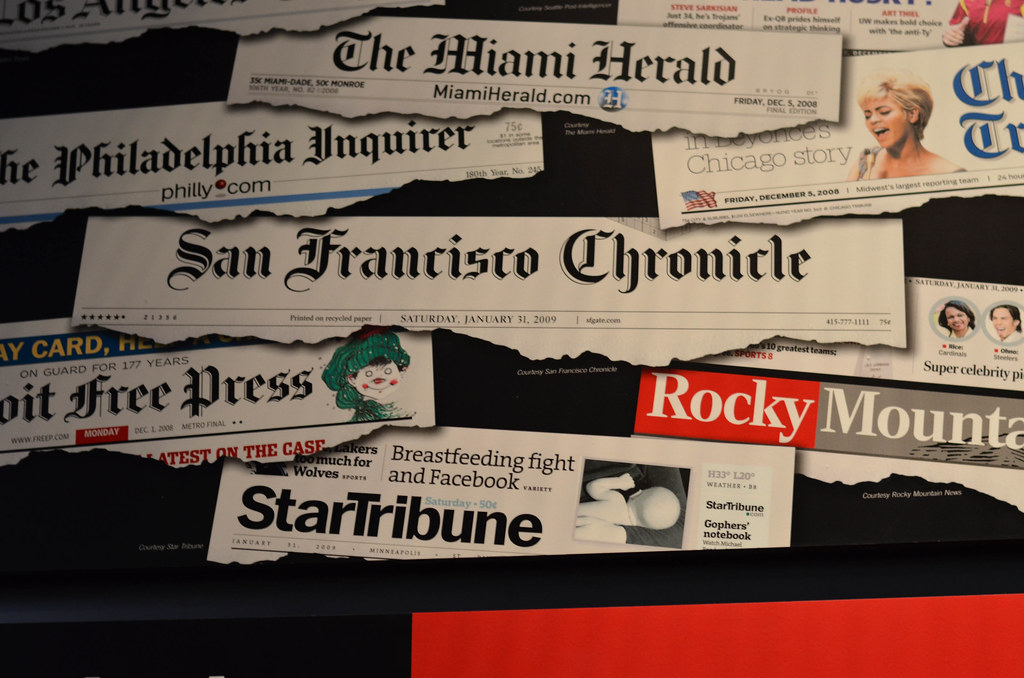
“Newseum newspaper headlines” by m01229 is licensed under CC BY 2.0 .

Take a moment to contemplate the awesome and terrifying power of the press.

Since 2020, the United States have had a geriatric president who suffers from serious mental deficits. The media discounted this awkward state of affairs as a conspiracy theory or as Trumpist propaganda for years, substantially blunting the political impact of Biden’s dementia. Then, after the president’s terrible debate performance on 27 June, the press made Biden’s incapacity the centre of their coverage, finally welcoming this fact into official regime-sanctioned reality and bringing Biden’s candidacy into crisis. All of this happened within just hours. As I write this, Biden has no more than even odds of securing his party’s nomination, and the press are working overtime to rehabilitate Kamala Harris. Journalists who spent years quietly mocking the vice president for her abrasive personality and her bizarre speaking gaffes are now making the latter a cornerstone of her candidacy. Are you coconutpilled, dear reader?

The Biden Affair is nothing new. So overwhelming is the influence of the press over our politics, that many have described liberal democracies as media-steered regimes, wherein politicians adopt positions and enact policies calculated above all to secure favourable coverage from journalists.

As I mentioned the other day, a healthy media would provide a range of opinions wider than our current spectrum of centre-left/left/hard-left/totally woke. That they do not, despite that spectrum not covering the majority of beliefs among the general public, shows just how monolithic and partisan the surviving mainstream media outlets have become.

Imagine, for a moment, that you wanted to found your own periodical. Maybe you hope to run a weekly magazine or a daily newspaper, maybe you have ambitions of amassing an enormous audience of millions, or maybe you’re content to collect primarily regional readers. Whatever the details, you want to cover national politics in some way. The most rational approach – before you even rent office space or begin to hire staff – would be to study what existing publications are saying and what they’re reporting on, and plan to offer something different. Unless you provide content that your readers can’t get anywhere else, after all, you’ll have trouble convincing anyone to read you.

You’d think, therefore, that the media landscape would be a richly differentiated thing – especially when it comes to big, national stories. Variation like this is present everywhere else in the consumer economy. There are a near-infinite variety of headphones, energy drinks, shoes and coffee makers. Newspapers should be just as varied in their coverage, focus and analysis as all of these other things.

But of course, it is the opposite. Western media resembles much more the consumer landscape of the Soviet bloc. We find the same product on offer everywhere in all leading publications. As in the communist East, variety is confined to a kind of black market – that is to say an array of blogs, social media accounts and alternative (mostly online) publications that you’re not supposed to read and that the official discourse wholly ignores. This anomaly is easy enough to see if you spend multiple hours every day reading news stories. The average consumer of political reporting, however, has a much more casual and sporadic relationship to press discourse, and he’s apt to think that the convergence is entirely natural. The New York Times, the Süddeutsche Zeitung, and Le Monde report the very same things in the very same way at the very same time, often under extremely similar headlines, because they’re just reporting on the way the world is.

In hard authoritarian regimes, like National Socialist Germany, regime propaganda was an open, blunt instrument. Everybody who read the Völkischer Beobachter knew very well that the paper propagated the official Nazi Party line. The soft authoritarianism of the liberal West, in contrast, manages the information and opinions available to the public in a much more effective manner, namely by pretending not to. Millions of people open their newspapers every day in the belief that they contain accurate accounts of the goings-on in the world, and they form their beliefs and political preferences within this highly convincing illusion.

The distributed propaganda network maintained by our establishment press is very expensive. Especially the opportunity costs are very high. In a healthy, uncoordinated media environment, it would be impossible for somebody like me to make a living blogging about the insanity of German politics. I’d have very stiff competition from a multitude of professional, well-funded journalists who would be fighting at every moment to take my readers away from me by writing the kinds of things I do, only more effectively, more frequently and with fewer typographical errors. Of course I am a very small player in the broader ecosystem of alternative media; the audience for this content is hundreds of millions strong. It consists of all those people who have been written off by the establishment press, as the necessary price of exercising narrative control.

Among the forces that conspire to keep legacy media on-message is their aforementioned collaboration with the political establishment. This collaboration includes a tacit understanding that leading politicians and bureaucrats will only provide interviews and information to regime-adjacent journalists, granting them an effective monopoly on political news.

July 5, 2024

“Private property rights? How do they work?” (U of T students, probably)

Filed under: Cancon, Education, Law, Middle East, Politics — Tags: , , , , , — Nicholas @ 04:00

In The Line, Josh Dehaas rounds up the concept of private property rights for the University of Toronto students (and non-student antisemitic fellow occupiers) who have been squatting for Palestinian terrorists on university property for the last while:

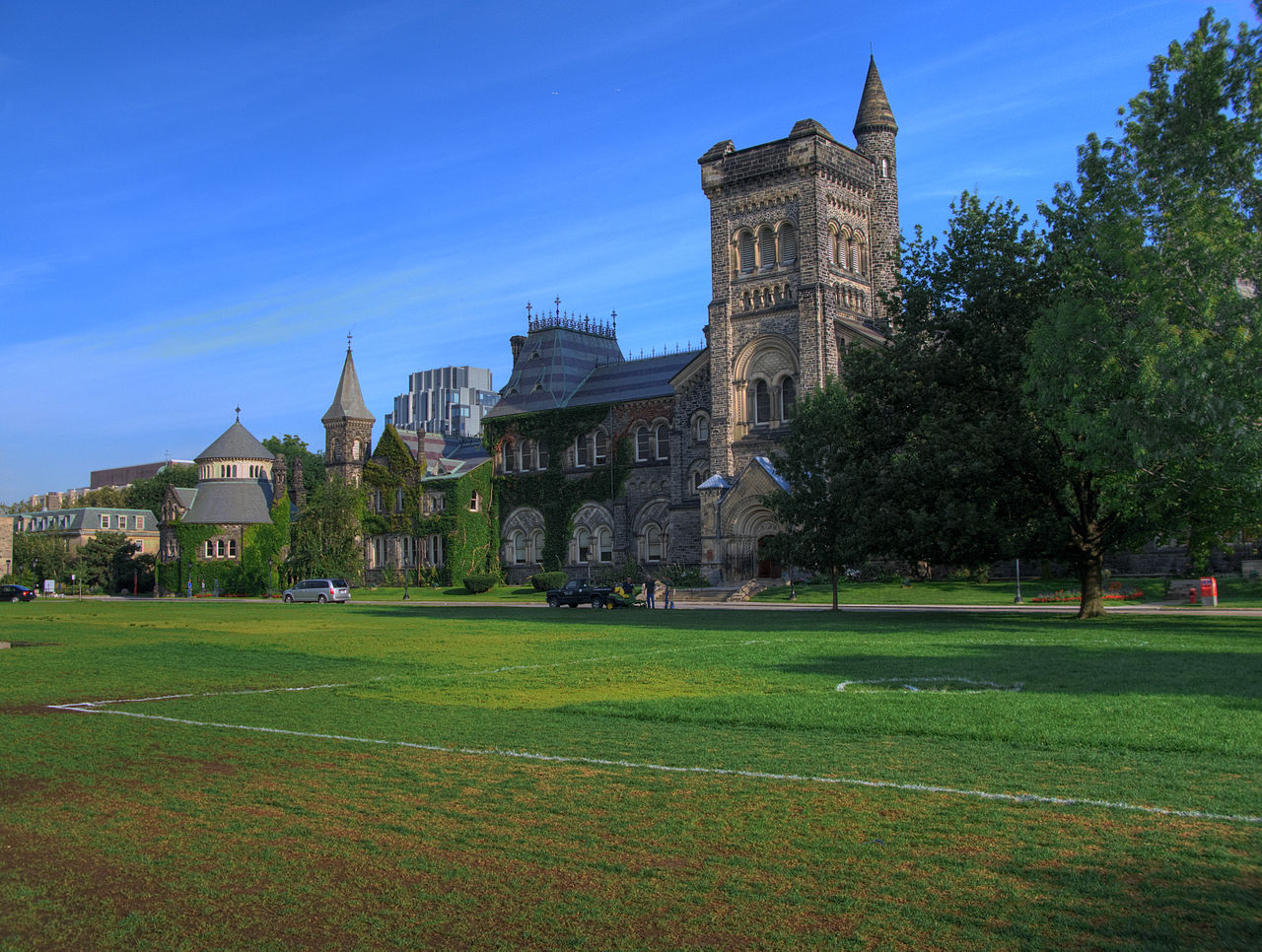
University College, University of Toronto, 31 July, 2008.
Photo by “SurlyDuff” via Wikimedia Commons.

After Justice Koehnen delivered his ruling Tuesday ordering the occupiers to dismantle the People’s Circle for Palestine at the University of Toronto, one of the protesters accused the school of hypocrisy.

“It’s quite interesting that a university that claims to practice decolonization is falling back on this claim of private property,” master’s student Sarah Rasikh told a journalist on the day before the students began taking down their tents.

“U of T and the Court more specifically is quite literally telling Indigenous students to leave and get off of their own land,” she added.

Rasikh has a point, sort of.

As someone who did law school relatively recently, I can attest that many university professors are downright hostile to the concept of private property. They commonly claim that all of Canada belongs to Indigenous people and that Indigenous peoples don’t believe in private property. Rather, they believe in “sharing”. Decolonization therefore requires that land be treated communally, or so the theory goes. University administrators who pay lip service to the concept of decolonization shouldn’t be surprised when students try to turn theory into action.

Thankfully the law still protects private property rights. Students who didn’t get taught how that works by their professors ought to give Justice Koehnen’s decision a read.

As Justice Koehnen explained, “in our society we have decided that the owner of property generally gets to decide what happens on the property”.

“If the protesters can take that power for themselves by seizing Front Campus, there is nothing to stop a stronger group from coming and taking the space over from the current protesters,” he went on. “That leads to chaos. Society needs an orderly way of addressing competing demands on space. The system we have agreed to is that the owner gets to decide how to use the space.”

“If it is not the owner who gets to determine what happens on the property it will become a brutal free-for-all,” Justice Koehnen added.

July 4, 2024

“Over twenty years ago now, we declared war on terror; a generation later, we are ruled by terror”

Filed under: Europe, Media, Politics, USA — Tags: , , , , , , , — Nicholas @ 04:00

At Postcards From Barsoom, John Carter discusses the prevalence of fear in modern western culture:

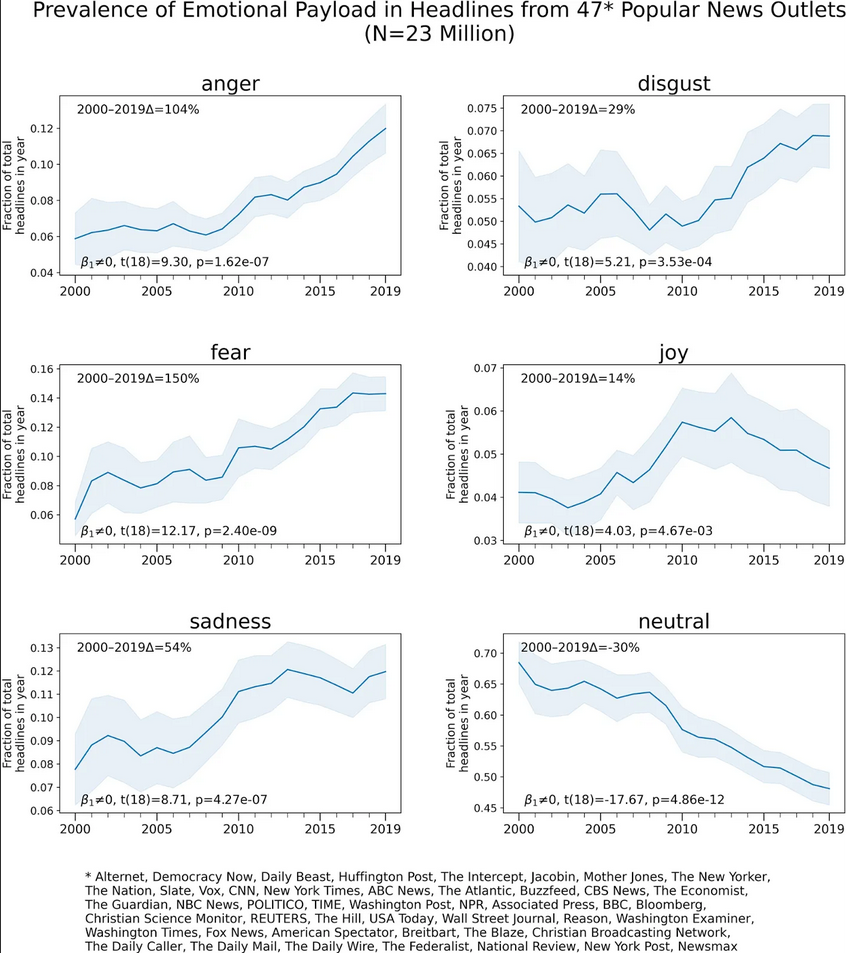
Over twenty years ago now, we declared war on terror; a generation later, we are ruled by terror. The public discourse revolves around peoples’ fears, most of them imagined. Many spend their lives petrified at the prospect of normal social interaction. Women are scared that men will rape them, and men are scared that women will rape them in the courts. Both leftists and rightists are terrified that the other, if given free rein, will drag the world into a dark age, though only one of them is right. All of our great public efforts are either to mitigate this future catastrophe or that dire present threat, or they are about furiously not acknowledging some insoluble and therefore inevitable future disaster, while studiously ignoring some entirely soluble ongoing emergency which those who could solve delude themselves they can profit from.

It shouldn’t be surprising that the war on terror ended up making us chronically terrified. That’s the track record for these things. Even back in the 1990s we knew that. The war on poverty generated an obscenely inflated welfare underclass while systematically slowing economic growth, thereby generating poverty twice over. The war on drugs led to a society of drug addicts, in which every fifth person is on at least one kind of pill, and most of the rest are self-medicating in other ways. Instead of weed (legal now, in any case), we have fentanyl and meth. Victory!

When Washington declares war on something, it invariably produces more of it. This seems perverse until you realize that wars on abstractions are simply how managerial bureaucracies extend their bases of power. A war that can never be won is a war with job security. A war that gets worse the longer and harder you fight it is even better, because this generates growth.

Washington’s current wars seem to be on racism, baseline human sexual normalcy, men, and multipolarity; the latter is really just a fancy word for the growing tendency for other countries to not do what Washington tells them to because, in general, they prefer being racist to being erased, they think the butt stuff is weird, they don’t want to be castrated, and since they are not castrated, they are still capable of not liking to be told what to do. Sure enough, all of these wars, whether cultural or geopolitical, are steadily generating the very things that they’re trying to stamp out. Racism stocks have reached prices they haven’t seen in generations, thanks to sustained decade of all-out full sector push by the media, corporate, educational, and public sectors, all doing their part to push that line up, up, up. Meanwhile, the war on multipolarity seems in general to be doing a fantastic job of generating more multipolarity.

The longer Washington wages its cowardly war against Russia, China, Iran, and I guess now North Korea, the more Washington’s standing in the world is reduced. I say “cowardly” of course because the war is not waged openly: formally, no war has been declared by Washington or any of its core NATO allies against any of the obvious belligerents. It’s all done through proxies which Washington pays to train and arm and die on its behalf, funding it all with a money printer whose brrrring has gotten defeaning. Or it’s done through sabotage; let’s not forget Nordstream, which kicked the legs out from under Germany’s, and therefore Europe’s economy, in perhaps the most breathtakingly cynical act of strategic sabotage against a supposed ally that one might imagine. Washington doomed Europe in order to ensure that Europe would stay attached to Washington. The whole world sees what Washington is doing of course, and is frightened lest it happen to them, but also disgusted that it happens at all; the latter emotion is becoming increasingly dominant, however, because Washington is becoming less frightening every day.

Washington could not even coordinate an orderly retreat from Afghanistan; its wunderwaffen have made little impact on the Ukrainian battlefront; even combined with its vassals, it cannot match levels of armament production that come effortlessly to its adversaries; its pier in Gaza fell apart uselessly; its mighty navy has so far been utterly powerless to stop a blockade imposed by some obscure tribe of desert Arabs. Then there’s the big fail, Washington’s attempt to nuke the Russian economy by locking it out of the SWIFT system. The Russian economy is doing fine, in fact better than fine, but SWIFT on the other hand is swiftly becoming irrelevant. The dollar’s global reserve status is on borrowed time, and everyone knows it.

I don’t think anyone’s more terrified right now than Western elites. They know they’ve fumbled the ball, that they’ve lost their footing, and they’re flailing around weightlessly as they try to catch it without faceplanting. None of their plans are really working. None of their usual levers of control are as effective as they used to be; some, such as the media, have almost stopped responding altogether. Their people are turning against them for a dozen different reasons, all of them excellent. Their great economic machine is sluggish, its components grinding together and seizing up. Their enemies abroad are on the march, or mobilizing. It’s all coming for them at once, and they don’t appear to have any idea what to do. You’re seeing that deer in the headlights look a lot now from prime ministers and presidents, and it isn’t always because of dementia. They’re in over their heads. Children, playing a game that became all too real when they weren’t paying attention.

July 3, 2024

The profound, utter, inescapable uselessness of the legacy media

Filed under: Cancon, Government, Media, Politics, USA — Tags: , , , , — Nicholas @ 03:00

As an early and enthusiastic blog reader and eventually a blog creator, I’ve always sought interesting aspects of stories in the news — even when I disagreed with the source or the presentation, it’s always a good thing to approach any topic “in the round” whenever possible. Getting all your information from one viewpoint or even one source is a good way to gaslight yourself. Once upon a time, while the TV networks tended to be as bland as they could (because going too far toward sensationalism would be a good way to get in bad with the regulators who control your broadcasting privileges), newspapers were not under such strong moderation. You could find very progressive, mildly progressive, centrist, and even mildly conservative voices with relative ease. At least, that’s what a rosy view of media history suggests — I think you have to go back before World War II to find really vigorous debates among the major newspapers.

Here in Canada, the mass media were already overly deferential to the government of the day — unless it was a Conservative government, of course — and after the internet and social media ate all the profit out of their business, they turned as one to the government to bail them out. In return, they became even more deferential to official story lines unless the foreign press forced their collective hand to present a more complete story. Over the last few years, as the surviving mainstream media shed jobs, many journalists have “crossed the lines” and become much more like their distant predecessors in the media: diggers of dirt, tellers of uncomfortable truths, and impartial mockers of government incompetence (Canada’s The Line is an excellent example of this … even when I don’t link to them, I almost always find their articles interesting and informative.)

All that throat-clearing out of the way, here’s Chris Bray asking what you have learned from the mainstream media lately:

When was the last time you read something in the mainstream news media — an op-ed piece, a major revelation that some clever and persistent investigative reporter dug up, a sharp bit of news analysis — that surprised you? When was the last time you read something in the news that changed your understanding of a major issue? When was the last time something in the “news” reframed an issue in your head with an argument you hadn’t anticipated, or with new evidence that you hadn’t heard before? “Man, I’d never thought of it that way,” you say, tossing the New York Times down on the coffee table.

Related, when was the last time a report or a panel discussion on television news surprised you and made you see something differently?

My impression is that the public sphere is now made up almost entirely of people saying things that we already know they’re going to say. “Jennifer Rubin will now analyze the presidential debate.” You don’t need to hear that. There’s no need to listen to any of it, ever. Andrea Mitchell is for [current thing]. Of course she is. If you know what [current thing] is, what’s the point of an Andrea Mitchell?

It’s all so dull.

There are at least a couple hundred prominent media and academic figures in the United States who could die tonight without anyone noticing, as long as there was a tape or a computer program of some kind to go on posting the received wisdom of the day under their names.

QotD: Mental health and social media

Filed under: Media, Politics, Quotations, USA — Tags: , , , , , — Nicholas @ 01:00

I question the idea that modern life has increased the total amount of lunacy in the world. Thanks to the Internet in general, and social media in particular, the volume of the world’s lunatic population has been amped well past 11 … but I think this is less a case of “Twitter creating lunatics” than “online anonymity letting people fly their freak flags openly”. Deliberately avoiding sex and politics, an example: On a road trip recently, I started flipping channels in my hotel room, and I came across a show called Dr. Pimple Popper. I swear, this is absolutely a real thing that exists. Here’s this woman, a dermatologist I guess, rooting around in cysts and boils and tumors and whatnot for the cameras, and … that’s it.

Not only is there an audience for this — which I never would’ve believed — there’s enough of an audience for it that it’s on basic cable. See what I mean? Somehow, the marketing guys determined that yes, there are enough people out there who want to see cysts being cauterized that we can make an entire show out of it. How could they figure it out? Beats me, but unless some suits at TLC had a contest to see what’s the silliest, grossest thing they could actually get broadcast, I’m betting that there was a group of Internet weirdos out there discussing it, and the marketing boys just ran with it.

Applying that to the topic at hand, my guess is that, since it’s so easy for people to be Massively Online these days, the kind of folks with that particular type of mental problem pretty much live on Twitter, where — as anyone who has waded into that cesspit for more than five minutes knows — the Twitterati absolutely cannot distinguish “talking about doing something” from “actually doing something”.

Severian, “Friday Mailbag”, Rotten Chestnuts, 2021-06-04.

July 2, 2024

The virtue-signalling Olympics … aka “Glastonbury”

In Spiked, Brendan O’Neill documents the awesomely awful human beings at the Glastonbury music festival this year (like most years):

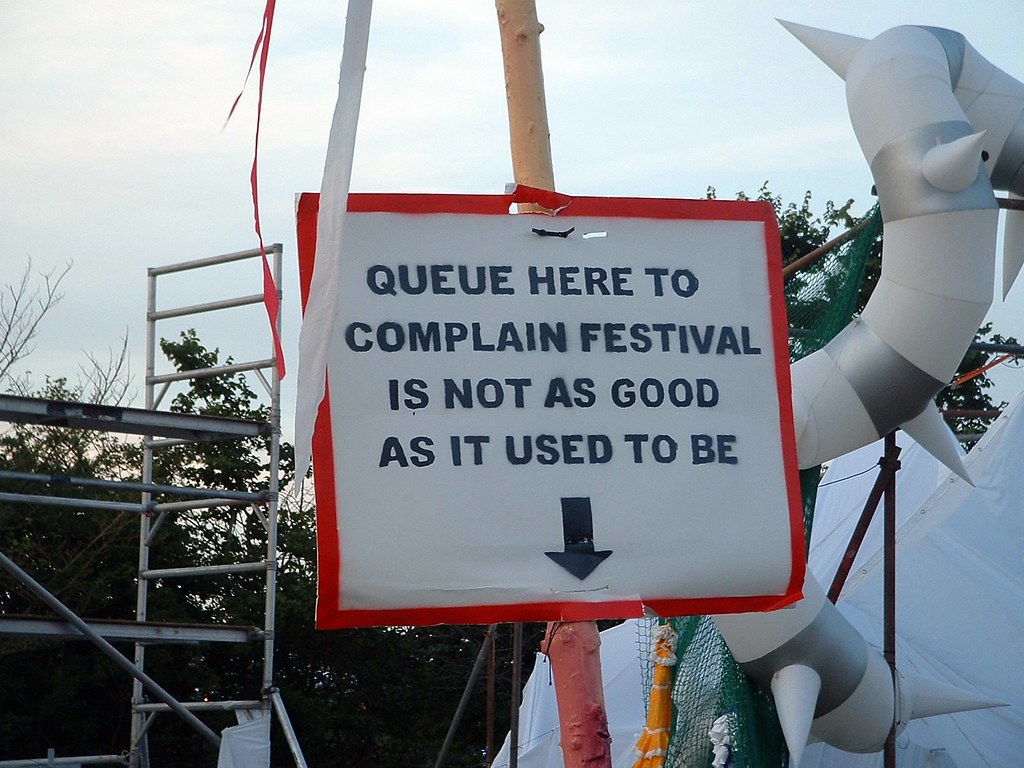
“Sign of the times @ Glastonbury Festival” by timparkinson is licensed under CC BY 2.0 .

Virtue-signalling reached its nadir on Friday night. It was at the Glastonbury music festival. Of course it was. A swaying crowd of the time-rich, turbo-smug thirtysomethings who make up Glasto’s clientele passed around an inflatable dinghy filled with dummies designed to look like migrants crossing the English Channel. As some band you’ve never heard of sang a song about “beautiful immigrants”, the audience hoisted the blow-up boat above their heads and basically crowd-surfed it. What a gauche display of phoney virtue. What an orgy of hollow vanity. Surely it would have been cheaper to rustle up a banner saying, “Aren’t we fucking wonderful?”.

It will surprise not a living soul that the boat was the handiwork of Banksy, every posh twat’s favourite graffiti artist. Banksy has never once seen a moneyed, mostly white audience that he didn’t want to titillate with platitudes about Tory scum and cruel capitalism, so it was only natural he would gravitate towards Glastonbury. He knows it’s rammed with people called Archie and Poppy who lap up his unsubtle stencils about the rat race that is neoliberal society and how dreadfully frightful war can be. So who better to dragoon into his boat stunt than these folk who likewise love advertising to the world how much they care about migrants and stuff?

Let’s leave to one side how unbelievably crude it is for a rich graffitist and Brits who can afford to fork out £355 to listen to crap music for five days to celebrate boat journeys that often end in death. One wonders if any of the audience members who cheered illegal immigration later retired to one of Glasto’s luxury yurts, which contain not only “proper flushing toilets” but also toilet attendants. You can hire one for £5,000, which, ironically, is around the same amount of money dirt-poor migrants are forced to stump up to criminal gangs for a seat on one of their perilous crossings that the righteous of Glasto think it’s a hoot to sanctify.

No, even worse than the sight of the well-off of Worthy Farm using the wretched of the Earth to burnish their moral credentials is the fact that if any Channel-crossing migrant were to rock up to Glastonbury they’d be cuffed and shoved in the back of a paddy wagon faster than you could say “What time’s Dua Lipa on?”. Glastonbury is one of the most fortified zones in Britain. It is surrounded by a fence that is 4.12m high and 7.8km long and which has numerous “unique high-security features”, including an “external roadway to prevent tunnelling”, a “45-degree overhang to prevent climbing” and “zero nuts and bolts to stop the fence being tampered with”. “No borders!”, cry the virtuous of Glasto while surrounded by a border fence that the screws of Alcatraz would have envied.

The Chevron decision

Filed under: Bureaucracy, Business, Law, Politics, USA — Tags: , , , — Nicholas @ 03:00

On his substack, Glenn “Instapundit” Reynolds discusses the recent US Supreme Court decision on “Chevron deference” and how it is going to impact the administrative state (and their business victims) going forward:

Goodbye, Chevron deference. Larry Tribe is already mourning the Supreme Court’s overturning of NRDC v. Chevron, in the Loper Bright and Relentless cases, as a national catastrophe:

Oh, the humanity!

Well, speaking as a professor of Administrative Law, I think I’ll bear up just fine. I’ve spent the last several years telling my students that Chevron was likely to be reversed soon, and I’m capable of revising my syllabus without too much trauma. It’s on a word processor, you know. As for those academics who have built their careers around the intricacies of Chevron deference, well, now they’ll be able to write about what comes next. And if they’re not up to that task, then it was a bad idea to build a career around a single Supreme Court doctrine.

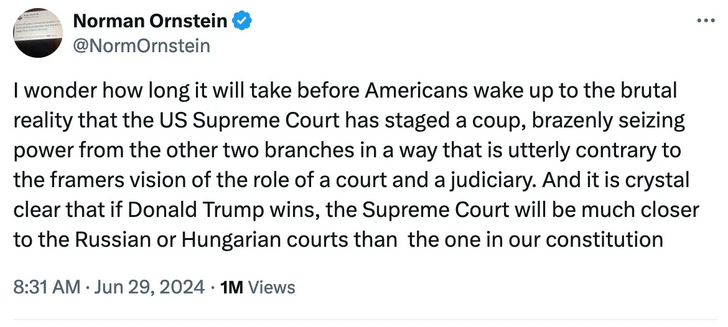
And that wasn’t the only important Supreme Court decision targeting the administrative state, a situation that has pundit Norm Ornstein, predictable voice of the ruling class’s least thoughtful and most reflexive cohort, making Larry Tribe sound calm.

Sure, Norm, whatever you say.

But how about let’s look at what the Court actually did in Chevron, and in the Loper Bright and Relentless cases that overturned it, and in SEC v Jarkesy, where the Court held that agencies can’t replace trial by jury with their own administrative procedures, and in Garland. v. Cargill, where the Court held that agencies can’t rewrite statutes via their own regulations. I don’t think you’ll find the sort of Russian style power grab that Ornstein describes, but rather a return to constitutional government of the sort that he ought to favor.

At root, Chevron v. Natural Resources Defense Council is about deference. Deference is a partial abdication of decisionmaking in favor of someone else. So, for example, when we go out to dinner, I often order what my son-in-law orders, even if something else on the menu sounds appealing. I’ve learned that somehow he always seems to pick the best thing.

Deference doesn’t mean “I’ve heard your argument and I’m persuaded by it”, (though something like that is misleadingly called “Skidmore deference”, but isn’t actually deference at all). Deference means “even if I would have decided this question differently, I’m going to go with your judgment instead”.

Under Chevron deference, when an agency interprets a statute it administers (e.g., the EPA and the Clean Air Act), a court will uphold its interpretation so long as it is (generously assessed) a reasonable one, even if it is not the interpretation the court would have come up with on its own. As you might imagine, this, at least potentially, gives agencies a lot more leeway, particularly when, as is often the case, Congress has drafted the statute ambiguously.

With Chevron overturned, courts will now apply their own judgment instead of deferring to agencies. Of course, this isn’t as big a deal as Larry and Norm seem to think, because Chevron has been dying the death of a thousand cuts for a while. Under the “major questions doctrine”, courts already decline to defer to agency interpretations where the issue has major social or economic ramifications.

July 1, 2024

Fifty ways to leave your leader

Okay, I exaggerate in the headline … Mitch Heimpel only offers a list of eight factors that matter when it’s time for a political party to take their leader out behind the barn, so to speak:

Caucus revolts have gotten more common in Canadian politics of late.

They’ve always been commonplace in Westminster politics. In recent years, they’ve dethroned three prime ministers in the U.K. They’re almost as common as general elections for removing prime ministers in Australia. They’re a sign of a healthy parliamentary system … sort of. Our system runs on confidence. Prime ministers are supposed to be responsive to pressure from the backbench.

Canada has been something of an exception to this, and not always to our national benefit. Though less so lately. We’ve seen sitting governments in revolt (Jason Kenney in Alberta, 2022) We’ve also seen opposition leaders taken out by frustrated caucus (Erin O’Toole federally in 2022, Patrick Brown as Ontario Progressive Conservative leader, 2018.) The Chrétien-Martin feud was more of a civil war than a revolt.

Still, despite the examples above, these events remain relatively rare in Canada, compared to many of our Westminster peers, because of how centralized power has become in leaders’ offices (especially in the PMO). Our normal, as described in Jeffrey Simpson’s The Friendly Dictatorship, is how our system evolved, not how it was meant to be.

Now, since there are signs (see here and here and here) that at least some Liberals are musing about taking a shot at Prime Minister Justin Trudeau, it’s perhaps a good time to set some ground rules for caucus revolts. This is what we’ve learned not just from recent Canadian experience, but also from what our British and Australian cousins have learned over the years.

[…]

If things are going so badly that the caucus wants to revolt, you probably do need to make changes. Showing you’re listening, demonstrating accountability at the senior levels and demonstrating change can take the wind out of a caucus revolt before it gets out of hand.

The above are general rules — exceptions can obviously apply. And as noted at the beginning, Canada doesn’t have much experience with these situations. That’s why Australia and the U.K. are so instructive. But things do seem to be changing in Canada, and certainly, things seem to be changing in the Liberal caucus. The above rules are offered free of charge to mutineers and loyalists alike. Good luck!

The Anglosphere “imported American racial progressivism, and then commenced to import American-style racial problems. Thanks, America.”

Filed under: Business, Education, History, Media, Politics — Tags: , , , , , — Nicholas @ 04:00

At Postcards From Barsoom, John Carter discusses meritocratic racial quotas in employment and higher education as a “Universally Disagreeable Compromise”:

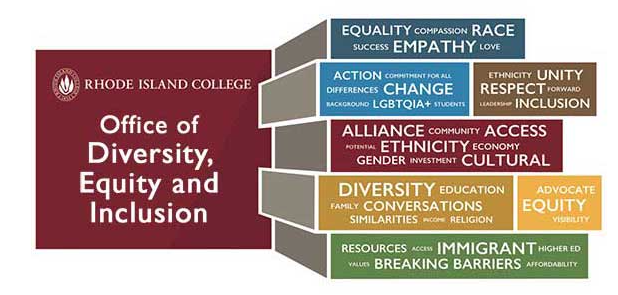
Graphic for Rhode Island College’s Office of Diversity, Equity and Inclusion.

The race question has been a fault line in American society from its inception. In the aftermath of the hypermigration of the early twenty-first century, it has only become more complicated and divisive, not only in America, but throughout the Anglospheric world. The rest of us imported American racial progressivism, and then commenced to import American-style racial problems. Thanks, America.

The question seems to ultimately revolve around who shall receive the economic spoils. The “equity” that is endlessly referenced by diversity commissars is literally the home equity held by the white middle class, which the diverse and their champions openly intend to expropriate and redistribute.

The most contentious battlegrounds are in academic admissions and corporate hiring, in which the imperative is to minimize the number of White men, and maximize everything that isn’t White men. How the everything else is maximized is of no particular account. A team composed entirely of black men is just as “diverse” as a team which also features Black lesbians, Arab homosexuals, and Thai ladyboys. It is the presence of White men that makes organizations less diverse: a team composed entirely of Black men, with the exception of a solitary White male token, is less diverse than the all-Black team.

For generations now we have suffered under the affirmative action regulations imposed under the banner of Civil Rights. For proponents, Civil Rights are a civic religion, and they guard the advantages won by adherence to their faith jealously. For the victims of affirmative action – which includes both those rejected from employment or university, as well as those subjected to the incompetency of affirmative action admits and hires – affirmative action is a hateful absurdity.

The underlying problem, which to this day only Internet edgelords will openly discuss, is human biodiversity. The various ancestral groups are, in fact, different, in ways that go beyond the merely cosmetic, to include general levels of cognitive aptitude, along with specific behavioural proclivities. To a certain degree this is due to upbringing, but only to a certain degree; upbringing can bring a child as close to his genetic potential as possible, but cannot push him beyond it. The best that nurture can do is to allow nature to flower; it cannot change nature. The natural outcome of this is that, under a purely race-blind, meritocratic dispensation, there will be noticeable and ineradicable differences in the representation of various races within any given profession.

Whether or not one supports a purely meritocratic approach to admissions and hiring then tends to depend a lot on whether one belongs to a group that is likely to do well, or poorly, under such a system. East Asians tend to support a more meritocratic approach, because their high test scores, good study habits, and strong work ethic mean that they will be extremely competitive. Blacks, on the other extreme, are far more skeptical of meritocracy, intuiting that a ruthlessly meritocratic approach would tend to see them pushed out of the professions at the expense [or rather, to the benefit] of Whites, Asians, and Indians.

The current system is practically the worst possible system. The official narrative is built upon the foundational lie that we are all the same under the skin, and that any difference in group-level socioeconomic outcome can only be the result of bigotry, racism, systemic racism, implicit bias, and the historical consequences of slavery or colonialism. This lie has driven our society quite insane, leading in particular to the demonization of Whites – a large fraction of whom buy into the narrative of ethnomasochistic guilt with religious zeal, and another large fraction of whom reject this framing of their racial character as sick and ugly. To a large degree the culture wars are driven by this very division. In the American context, this division maps quite closely to Constitutionalists vs Civil Rights adherents, i.e. it is a holy war between the two dominant civic religions. It is not accidental that this also maps to Republican (i.e. those who wish to preserve the Old Republic built by the Constitution) vs Democrat (i.e. those who wish to complete the transformation of the Republic into something [like] the Our Democracy they’ve been growing in the soil of Civil Rights).

As William M Briggs has pointed out ad nauseum, the prohibition of “disparate impact” and “discrimination” under the Civil Rights regime is an absolute nightmare for corporate America. On the one hand, to discriminate on the basis of race (or any other identity) is plainly illegal; on the other, to not discriminate is invariably to open oneself to charges of discrimination, as the various statistical differences between racial groups work themselves out in aptitude tests, SATs, grade point averages, or job performance. This places employers in the Kafkaesque position of being required to discriminate without being seen to discriminate. They must put their thumbs on the scale to ensure equal outcomes, without being caught doing so.

For Whites especially, this has been a very bad deal. Because no organization will ever be sued for taking on too many officially victimized minorities, there is no upper limit to the number of diversity hires; but if the student body or corporate org chart falls below a given group’s fraction of the population, lawsuits are almost guaranteed. This then produces an inevitable ratchet effect which systematically excludes White people from their own society, with corrosive effects on competence, morale, and confidence in institutions. It doesn’t help that, because we are still officially meritocratic, the leadership classes subject us all to constant gaslighting: we are discriminated against openly by people who brag about discriminating against us while insisting in the same breath that there is no discrimination. It is not surprising that many of us are ready to burn these people at the stake.

« Newer PostsOlder Posts »

Powered by WordPress