Quotulatiousness

April 6, 2022

Proposed new Canadian censorship rules will ███████ the ████████ unless we ████ ██

In The Line, Josh Dehaas waves off accusations against Trudeau while also highlighting just how censorious his governments proposed internet bill can be to freedom of expression online:

Comparisons of our prime minister to a dictator are self-evidently ridiculous. But the Russian example is still a case study in the harms of governments having too much power over the flow of information and ideas in a society. Trudeau is no dictator but he does helm a government in which overreach is becoming a frequent and habitual complaint. And one such area in which this government’s more illiberal tendencies are beginning to show is in the realm of media regulation. Despite pushback from groups like the Canadian Constitution Foundation and the Canadian Civil Liberties Association, the Trudeau government seems determined to press ahead with laws to control what you read, write, watch and hear online.

The Liberals have long promised three bills aimed at countering three ostensible problems with online speech. The first bill aims to correct the problem of too few people choosing CanCon, by manipulating what you watch and listen to on platforms like Netflix and Spotify. The second bill would address the problem of advertisers ditching legacy newspapers for Facebook and Google. (Apparently the $600 million bailout was not enough.) The third bill, aimed at so-called “online harms”, would try to prevent people from saying hateful things to each other on social media.

This “online harms” bill is the scariest. Recently rebranded as the “online safety” bill, it’s apparently getting an overhaul from an expert panel and will be re-tabled in a few months. Let’s hope it never comes back. A version tabled last year, Bill C-36, would have created a tribunal wherein people found guilty of “online hate speech” could have been forced to pay up to $20,000 to their accusers, plus up to $50,000 in fines. In some cases, the accusers would be allowed to remain anonymous. Unlike the rarely used hate speech provisions in the Criminal Code, the tribunal would have only needed to find that the speech was hateful on a balance of probabilities, as opposed to the higher standard of beyond a reasonable doubt.

Even more ominously, C-36 would have allowed judges presented with “reasonable grounds” that a person might commit “an offence motivated by bias, prejudice or hate” in the future to threaten the would-be hater with up to 12 months in prison.

I don’t deny that hate speech can lead to harm. But do we really want government and judges deciding what crosses the line? One person’s hateful tweet is another person’s harsh but valuable contribution. Think J.K. Rowling. Think Dave Chapelle. Or think of the University of Toronto student who wrote recently that it was hateful for a professor to show an unflattering cartoon about Iranian Supreme Leader Ali Khamenei, a man whose theocracy executes people for being gay.

Proponents of the bill will tell you that it only applies to the most extreme forms of vilification, but at the end of the day it means government-appointees deciding who gets to say what in an environment that financially incentivizes the aggrieved. People will self-censor even more than they already do.

April 4, 2022

Reconsidering the legacy of conservative activist Mary Whitehouse

Filed under: Britain, History, Media, Politics — Tags: , , , , , , , — Nicholas @ 03:00

Mary Whitehouse was a figure of mockery and abuse for much of her time on the public stage, a one-woman British equivalent to the American “Moral Majority” in the 1980s, without the performative religious connections. Even those who agreed with her concerns were careful to distance themselves from her, yet Alexander Larman wonders if she wasn’t more right than wrong after all:

I was surprised to find few public domain images of Mary Whitehouse available, so here is a selection of thumbnails (hopefully this won’t violate any copyright restrictions)

“The Queen of Clean”. “The Archangel of Anti-Smut”. Whatever you thought of the campaigner and activist Mary Whitehouse, she was hard to ignore. From her heyday in the 60s until her gradual decline in both relevance and physical faculties in the late 80s, she became the physical embodiment of social conservatism, loudly demanding that “family values” be placed at the heart of the national conversation, and that national evils (including pornography, abortion, swearing, homosexuality and the BBC in general) should be either tamed or dispensed with altogether.

Whitehouse died in 2001, and the obituaries trod a fine line between acknowledging her impact — even, at times, her importance — and denigrating her as someone who was almost driven insane by her campaign to clean up Britain’s screens. The Daily Telegraph, a newspaper that one might have assumed was a natural ally, sighed “[she was] seemingly as concerned to eliminate the occasional ‘damn’ or ‘bloody’ as to prevent the worst excesses of pornography or violence” and the Guardian, a long-standing and probably inevitable bête noire, marked her passing by calling her “a self-appointed and much-derided guardian of public morals”, sneered at her “simplistic and nannyish” views and approvingly cited Ned Sherrin’s comment that “If she had been ignored for the last 30 years the world would have been a better place”.

It also, with some reluctance, admitted that “it was possible for many middle-of-the-roaders to think she was just possibly right”. The debate continues as to whether Whitehouse was an oddly prurient figure, whose apparently endless campaigning was dictated by some sort of strange mental imbalance (she boasted about her “direct line to God”, as if the Almighty were responsible for guiding her attempts to rail against the likes of Dennis Potter) or an ahead-of-her-time master of both media relations and social understanding. And now, for some reason, Whitehouse has once again returned to our screens and airwaves, two decades after her death.

The journalist Samira Ahmed recently presented a Radio 4 documentary, Disgusted, Mary Whitehouse, that attempted to ask whether Whitehouse had somehow anticipated the rise of the internet, social media and society’s concomitant, and doomed, attempts to preserve the nation’s innocence amidst the ready availability of virtually every human depravity imaginable at the jab of an eager finger. This was followed by another two-part documentary on television, Banned! The Mary Whitehouse Story, in which various luminaries debated whether Whitehouse was simply a bigot who should best be forgotten about, or if she had a salient point that has, if anything, become more relevant since her death.

On the one hand, there is little doubt that Whitehouse was a proudly ignorant and even destructive figure when it came to arts and culture. She refused to watch most of the programmes that she organised campaigns against, announcing, “I have too much respect for my mind,” and declined to consider such things as artistic merit, creative intentions or context. For her, nudity, violence and sex were things that had no place in British public life, and she was happy to roll up her sleeves and lead well-organised campaigns against things that she disapproved of. It was partly because of her that Kubrick withdrew A Clockwork Orange from exhibition in Britain for two decades, and her private prosecutions of Gay News and the director Michael Bogdanov for, respectively, blasphemous libel and staging a homosexual rape scene in The Romans in Britain, were vindictive and viciously closed-minded. The first was successful, the second was not, and its failure in 1983 saw the beginning of her decline from public relevance.

April 2, 2022

Jon Stewart believes that “… the only thing that can possibly explain racial inequality today in America is still ‘white supremacy'”

Filed under: History, Media, Politics, USA — Tags: , , , — Nicholas @ 05:00

Andrew Sullivan recounts his experiences on one of Jon Stewart’s shows:

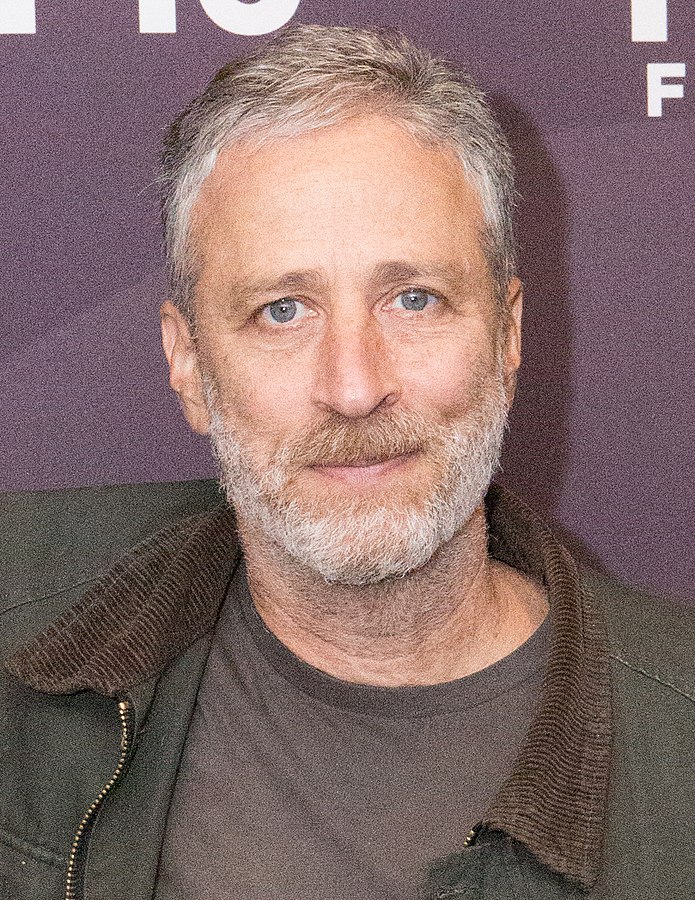
Jon Stewart at the Montclair Film Festival, 7 May, 2016.
Wikimedia Commons.

… I found out, in fact, that there would be two other guests, and that it would, indeed, be a debate. Surprise! As the show started, I also realized for the first time there was a live studio audience and that the episode was called “The Problem With White People” — a title I’d never have been a party to, if I’d known in advance. (I wouldn’t go on a show called “The Problem With Jews” or “The Problem With Black People” either.) At that point I should have climbed carefully off the stake, tamped down the flames, made a path through the kindling, and walked away.

I protested to the producers that I’d been ambushed. And to be fair, they gave me the option of backing out at the last minute. But I didn’t want to leave them in the lurch, reassured myself that Stewart was a pro, and said I’d go ahead. I just assumed he wouldn’t demonize or curse at a guest; he would moderate; he would entertain counter-arguments; he would defend fair play. After all, this was the man who had lacerated Crossfire for bringing too much heat and not enough light. He believed in sane discourse. He was a liberal, right?

Wrong.

On the race question, Stewart has decided to go way past even Robin DiAngelo, in his passionate anti-whiteness. His opening monologue was intoned at times in a somber tone, as if he were delivering hard truths that only bigots could disagree with. He argued that no one in America had been prepared to have an honest discussion about race — until the “reckoning” of 2020. He also suggested that nothing had been done by whites to support African-Americans from 1619 (yes, he went there) … till now. The most obvious solution — reparations — was, he implied, somehow, absurdly, taboo.

His montage of “black voices” insisted that African-Americans are still granted only conditional citizenship, are still barred from owning property — “we don’t own anything!” — and ended with Sister Souljah — yes! — explaining that the thing that kills black people are not bullets, but white people. This is the same moral avatar who once said: “If black people kill black people every day, why not have a week and kill white people?” Stewart then hailed Angela Davis — a proud Communist, with a particular fondness for East Germany’s suppression of dissent — and warmly thanked her as “Angela”. But Stewart included not a single black voice of disagreement or nuance. He apparently believes that all black people hold the same view. And all white people just refuse to hear it.

Jon Stewart’s insistence that Americans had never robustly debated race before 2020 is also, well, deranged. Americans have been loudly debating it for centuries. There was something called a Civil War over it. His claim that white America has never done anything in defense of black Americans (until BLM showed up, of course) requires him to ignore more than 300,000 white men who gave their lives to defeat the slaveholding Confederacy. It requires Stewart to ignore the countless whites (often Jewish) who risked and gave their lives in the Civil Rights Movement. It requires him to erase the greatest president in American history. This glib dismissal of all white Americans throughout history, even those who risked everything to expand equality, is, when you come to think about it, obscene.

Stewart’s claim that whites never tried to ameliorate black suffering until now requires him to dismiss over $19 trillion of public funds spent in the long War on Poverty, focused especially on black Americans. That’s the equivalent of more than 140 Marshall Plans. As Samuel Kronen has shown, it requires the erasure from history of “the Food Stamp Act of 1964, the Child Nutrition Act of 1966, the Social Security Amendments of 1965, the Elementary and Secondary Education Act of 1965, the Social Security Amendments of 1962, and the Economic Opportunity Act of 1964, and on and on.” To prove his point, Stewart has to pretend LBJ never existed. That’s how utterly lost he now is.

Stewart then used crude metrics of inequality to argue, Kendi-style, without any evidence, that the only thing that can possibly explain racial inequality today in America is still “white supremacy”. Other factors — concentrated poverty, insanely high rates of crime and violence, acute family breakdown, a teen culture that equates success with whiteness, lack of affordable childcare — went either unmentioned or openly mocked as self-evident expressions of bigotry. He then equated formal legal segregation with voluntary residential segregation, as if Jim Crow were still in force. And he straw-manned the countering argument thus: white America believes that African-Americans are “solely responsible for their community’s struggles”.

I don’t know anyone who believes that. I sure don’t. It’s much more complex than that. And it’s that complexity that some of us are insisting on — and that Stewart wants to dismiss out of hand in favor of his own Manichean moral preening. His final peroration ended thus: “America has always prioritized white comfort over black survival.” Note: always. There has been no real progress; white people have never actually listened to a black person; America is irredeemably racist. Those fucking white men, Lincoln and LBJ, never gave a shit.

April 1, 2022

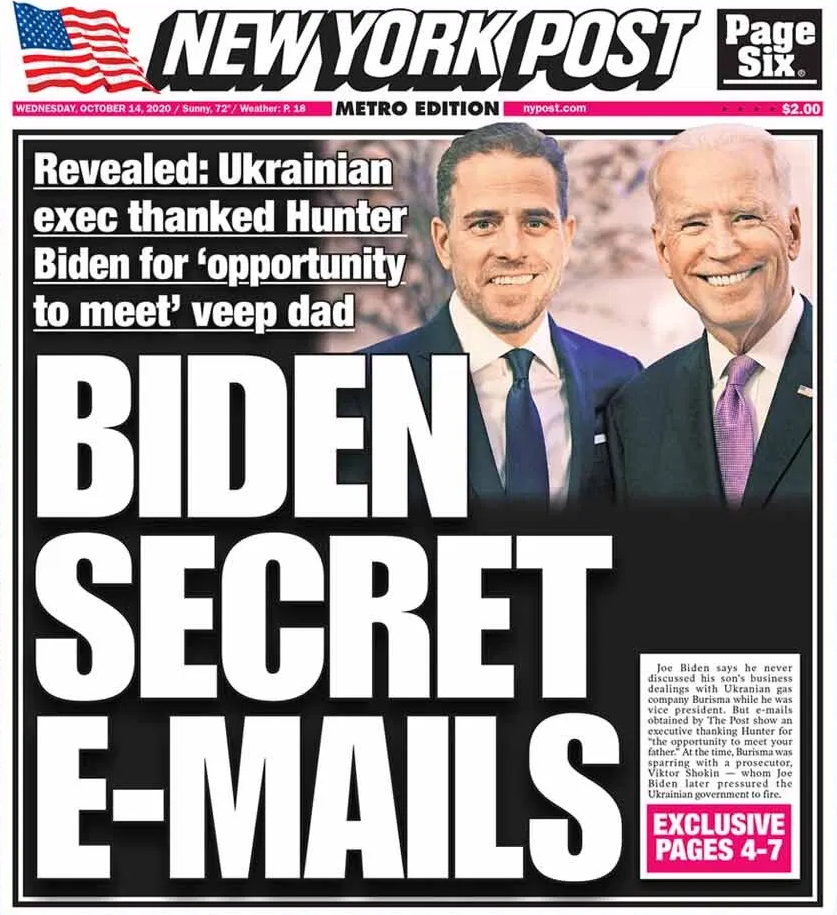
Underbusing Hunter Biden?

Filed under: Government, Media, Politics, USA — Tags: , , , , , , , — Nicholas @ 05:00

Long after the story was initially reported, and the New York Post was hammered for publicizing it at the time, the rest of the legacy media is showing interest in Hunter Biden’s laptop contents:

… If someone disappears for a while, it could mean nothing more than he is having a blood transfusion at one of Google’s secret rejuvenation centers. On the other hand, disparaging information about an oligarch in regime media could simply mean that one mob family is unhappy with another mob family and this is how they are communicating it. Using the media promotes the interests of the gangster class and delivers the message.

That is probably how to interpret the sudden interest by regime media in the famous Hunter Biden laptop from two years ago. For those not interested, this was the laptop that President Biden’s drug-addled son abandoned at a Delaware computer shop, which contained a trove of embarrassing information about the family. In addition to thousands of naked selfies and pics of Hunter smoking crack and meth with prostitutes, it had details of the Biden family criminal dealings.

Regime media dutifully covered this up by declaring it Russian propaganda and going as far as to imply it was a Trump campaign dirty trick. The New York Post, which was the first to report the laptop story, came under withering assault from the Silicon Valley crime families until they dropped the story. Facebook started banning people from their site for mentioning the story. Like the people air brushed from official photos in the Soviet Union, this story was erased from public view.

This is nothing new. The power of regime media is in what they can make the public ignore and this was a typical example. They do this by framing the issue as good guys versus bad guys, which is catnip for the American moralizer. Then they declare the thing to be ignored as the black hat and let the moralizers do the rest. Anyone mentioning the laptop on-line or even in private conversation was declared a crazy QAnon conspiracy theorist by others in their circle.

For no reason at all, the laptop story is back. First the intel community told the New York Times to admit they lied two years ago about it being fake. They did not mention that it was the intel community that lied, of course. Then the Washington Post was told to write about the Biden family’s criminal dealings that were on the laptop. The Post is the official organ of the intelligence community. You will recall that the Post was instrumental in the Russian collusion hoax in 2016.

QotD: Political careers

Filed under: Humour, Politics, Quotations — Tags: — Nicholas @ 01:00

There are two types of politicians: the ones that are courageous and honest, and the ones that have a successful career.

Gerhard Kocher, Vorsicht, Medizin! Aphorismen zum Gesundheitswesen und zur Gesundheitspolitik, 2000. (English translation provided by the author)

March 31, 2022

Canada’s F-35 procurement process — “Dysfunctional, but, like, a masterpiece of dysfunction.”

In The Line, Matt Gurney reveals the embarrassing secret of his life: he has “a favourite Canadian military procurement fiasco”. He’s quite right that there’s a distressingly wide variety of procurement cock-ups to choose from since the 1960s, but in his opinion the F-35 saga is the best:

“F-35 Lightning II completes Edwards testing” by MultiplyLeadership is licensed under CC BY 2.0

Having a favourite Canadian military procurement fiasco feels perverse, in a way. It’s like having a favourite gruesome sports injury. Procurement fiascos are bad. We want fewer of them. There’s nothing to be celebrated when yet another one barfs all over the national rug. And yet I find myself indulging a bizarre fondness for a mostly overlooked low point in our long, embarrassing journey to this week’s re-decision to buy a fleet of F-35 fighter jets for the Royal Canadian Air Force. As bad as the low point was — and it was really bad — it also so perfectly summed up our utterly manifest dysfunction that I’ve come to almost admire it. It’s awful, but it’s a pure form of awful. Dysfunctional, but, like, a masterpiece of dysfunction. You couldn’t ask for a better example of what’s wrong with us.

[…]

That wasn’t the original plan; the Liberals first proposed buying 18 new F-18 SuperHornets, the more advanced American successor to the original F-18. That idea fell through due to a trade spat between Canadian darling Bombardier and Boeing, the SuperHornet manufacturer. This was the point of no return: the Boeing dispute was another opportunity for the Liberals to sigh, pop a few Tums and then just do the right thing and proceed with the full replacement as quickly as possible.

They did not. And this, dear readers, is where this embarrassing chapter of our already pathetic history of military procurement reached maximum absurdity.

With our CF-18 fleet at a state of exhaustion, and Boeing in Trudeau’s dog house, instead of actually replacing our old, exhausted jets with new jets, we just gave the air force enough old, exhausted Australian jets so that the RCAF could cobble enough workable jets and spare parts together to allow the Liberals to further delay any decision on a real replacement program.

When you write a lot about military procurement, as I certainly have, you can’t help but grow a bit (!) jaded and cynical. Even by the standards of my appallingly lowered expectations, though, this was an outrageous decision. As I said above, it’s so bad, so cynical, so crassly political, that it has perversely become something I almost admire, in a twisted way. It’s an almost too-brutal-to-be-believed example of politicians dodging accountability and leadership like Keanu bobbing and weaving out of the path of CGI bullets. Every dollar and hour of time we put into scooping up Australia’s leftover jets — they were unneeded because Australia was competent enough to procure more advanced SuperHornets and, ahem, F-35s — was money and time spent not to improve the readiness and capabilities of the Canadian Armed Forces, but to permit the Liberals to avoid acknowledging they’d made a dumb campaign promise.

Stephen Harper failed the Canadian Armed Forces and Canada generally by not getting the ball rolling on a replacement during his majority term. This was a major failure by the Conservatives that they get all awkward and squirmy about when you bring up, but we should bring it up. The CPC botched this, badly, and should feel shame. Justin Trudeau then repeated that failure, and then took it up a level. In this race to the bottom, where no one looks good, Trudeau “wins” by simple virtue of snapping up used jets — the last of which only arrived last spring! — to buy his government time to do absolutely nothing.

March 30, 2022

The RCAF’s long, sad F-35 story

In The Line, Mitch Heimpel tries (without either laughing or crying) to tell the story of how the Canadian government finally got around to admitting they should have bought the F-35 fourteen years ago (when the RCAF told them it was the best fit for our national requirements):

If you’re looking for a simple meta-explanation for all of us, it would be this: Canadian politicians refuse to tell the public one simple truth — military procurement is expensive. There isn’t an inexpensive version of this. That doesn’t mean we should accept any and all costs just because it’s going to be expensive. It does mean that politicians have to stop trying to sell us on there being an inexpensive, or perfect, version of this. There is no MacGyver version of military procurement. No amount of rubber bands and paper clips replaces jet engines and submarines, no matter how many times we pretend it will. Indeed, the longer you delay, the more it’ll cost — the weapons generally get more expensive, and you end up spending more money to wring every last bit of use out of what equipment you already have, instead of replacing it in an efficient, orderly way.

So, let’s recap: We are, in fact, so bad at procurement that we ran a process for years, and then cancelled it. And then pledged not to buy the jets we’d originally pleged to buy. We then bought seven old Australian F-18s so we could keep our elderly and dwindling CF-18 fleet from experiencing a “capability gap” caused mostly by not just buying the F-35 in the first place. Then, almost 12 years after announcing we were going to buy the F-35, after all the drama above, we’ve announced we’ll buy the F-35, after all. Eighty eight of them, in fact. So there’s that, I guess.

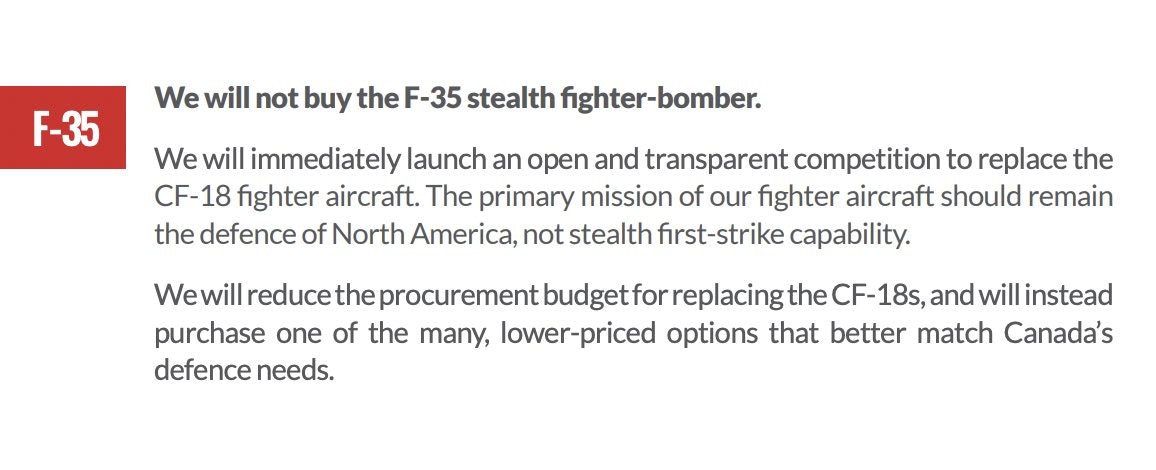
In so many ways, the F-35 saga is another symbol of seven years of Trudeau governance. In 2015, the Liberals could not have been more clear in their campaign platform, which included a whole section titled “We will not buy the F-35 stealth bomber-fighter.”

What were Ministers Anand and Tassi out saying when the F-35 announcement was made this week? “Best plane” and “best price.” Which was true in 2008 when we were first told it was the only fighter that met our needs. It was still true when the Harper government blinked in 2012, and still true when Justin Trudeau was accusing the government of “whipping out” our CF-18s while on the opposition benches in 2014. Remained true in 2015 when the Liberals campaigned against it, too, and every year since.

We have no reason to believe that what is supposed to be a $19-billion announcement for 88 planes to begin delivery in 2025 will actually end up being any of those things. Don’t be surprised if we spend more money to get fewer jets at a later date. But we are now well past the point of being able to blame anyone other than ourselves for cost overruns or late deliveries. The Canadian government failed the Royal Canadian Air Force in this procurement. That is beyond dispute. These guys need the planes. They have for years.

Let’s hope we’ve at least been sufficiently embarrassed by this experience to be more serious when we have to talk about submarines, which is now, come to think of it.

But I doubt it.

“It was as if millions of voices suddenly cried out in cringe …”

Filed under: Books, Europe, History, Media, Politics, Russia, USA — Tags: , , , , , — Nicholas @ 03:00

Ed West on recent events concerning the fighting in Ukraine:

Emperor PALPUTIN
Image by “usernameau” at funnyjunk.com

“Let me make this perfectly clear. Putin is Emperor Palpatine. The Ukrainian people and all those who stand up for democracy around the world and here in America are Rey Skywalker, Jyn Erso, and the Rebel alliance. Pick your side.”

Put like that, I think I’m with Putin.

This tweet, by former George Bush strategist Matthew Dowd, attracted much amusing scorn at the start of the war between Russia and Ukraine. It was as if millions of voices suddenly cried out in cringe …

American political commentary has for some time been dominated by pop culture references, in particular those two great modern fables, Star Wars and Harry Potter, which have replaced the classics as the source of communal knowledge. I’m not convinced that children’s books or films aimed at selling toys, enjoyable though they are, have that much to offer in the way of deep wisdom, compared to more ancient texts; I may be a declinist, but it is not commented on enough that America’s most-praised public intellectual didn’t know who St Augustine was.

These epic children’s stories serve as modern-day myths for a reason, drawing so heavily on older narratives and archetypes. Star Wars creator George Lucas studied anthropology and borrowed heroic narratives from around the world for his story; it also drew on historical folk memories of recent and ancient conflicts, in particular the Second World War, which has become the modern West’s origin story, its epic struggle between God and the Devil.

The most recent Lucas trilogy featured a plucky band of rebels in an existential struggle with a great empire (a story that drew heavily on … previous Star Wars films). In this tale of good and evil there was on one side a band of allies from every race on earth, and on the other a group joined by ethnic descent, a dynamic true to life and seen in countless wars and conquests since the Bronze Age. It’s the story of the Old Testament, the Persian Wars, and of such modern conflicts as the Vietnam War.

Yet of course Star Wars performed a role reversal to suit the sympathies of modern American audiences. For in reality, it is empires which are multi-cultural, and plucky rebels who tend to be linked by blood — whether it was ancient Greeks fighting off a Persian army of Medes, Babylonians, Egyptians and Sumerians, or Vietnamese nationalists in combat with French, Senegalese and North African troops.

So it is today in Ukraine, a rebel nation fighting off conquest by a neighbour 50 times its size. Ukraine’s position on the cultural fault lines of Europe has left it a multicultural inheritance, even after the depredations of Hitler and Stalin. Its heroic president Volodymyr Zelenskyy is a member of a 40,000-strong Jewish population, vastly reduced by the horrors of the early 20th century, but still surviving; indeed for three months in 2019 Ukraine had a Jewish president and prime minister, a first outside of Israel and quite an achievement for a supposedly “Nazi” state. There are also Tartars, although many were cut off by Russia’s annexation of the Crimea, having only been allowed back from their central Asian exile in the 1980s. There are Romanians, and, of course, a substantial Russian minority.

Yet these groups are relatively small in number, and Ukraine still has the composition of a typical European nation-state, built around a dominant ethnic group enjoying a super-majority.

Russia, in contrast, is home to around 50 ethnic groups, including — just the European ethnicities with more than half a million people — the Tatars, Bashkir, Chuvash, Mordvins and Udmurts, the latter known for having the reddest hair in the world (their homeland is an eastern outpost in this red hair map of Europe.)

March 29, 2022

QotD: SJW white guilt

Filed under: Politics, Quotations, USA — Tags: , , , , — Nicholas @ 01:00

If you scratch a Liberal, underneath you find that they are exactly what they hate. In this case, the driving force is what they call White Guilt. The reason they believe that white people are inherently, unchangeably, and institutionally racist is because they see it in themselves, and they therefore believe it is true in everyone else (Hint: It isn’t). But they believe themselves to be better because they acknowledge it, and go through all the rigamarole to make up for it and be a good ally.

In short, reading shit like this is penance for being white. Subjecting themselves to a stream of invective about their failings for being white gives them absolution. It’s kinda like those folks in the BDSM community who seek out a black dominatrix to work out their guilty feelings, and having paid for verbal abuse and a beating, feel that they’ve done their bit for race relations, and for the liberal side of the SF community, Mistress Nora is just the ticket, and they are paying her with sales and awards for all the abuse they can stomach.

Dr. Mauser, “Message Received”, Shoplifting in the Marketplace of Ideas, 2019-01-30.

March 28, 2022

The only question in my mind is why the NDP thought they’d benefit from propping up Trudeau the Lesser

Filed under: Cancon, Government, Politics — Tags: , , , , — Nicholas @ 03:00

The editors at The Line, having taken last week off to look after kids on March break, sent out a brief round-up post on the deal Jagmeet Singh made with the Devil Justin Trudeau to keep the Liberals comfortably in power for (potentially) the full term:

The key question here that we can’t really think up an answer for is what this deal changes. In big picture terms, the NDP is going to keep the Liberals alive for a while, and the Liberals will serve up some goodies the NDP base will like. That’s what the parties have agreed to, distilled to the most basic essence.

And this is new how? This has changed what?

The NDP doesn’t want an election right now. The Liberals don’t want an election right now. The Liberals are led by a guy who has already moved the party toward the left and seemed quite happy to do it. The Liberals were getting along just fine with NDP support until they rolled the electoral dice and tried to secure a majority in summer of 2021; they fell short, and now they’ll continue getting along just fine with NDP support.

Well, gee. Stop the presses.

Yes, yes, there’s more specific commitments. The parties have put on paper what they’ll work jointly to achieve. But look at those commitments. Anything surprising? Is this not precisely what any random collection of reasonably bright high schoolers in a mandatory civics class could have guessed when their teacher told them to write a five-paragraph essay on things the NDP and Liberals agree on?

We aren’t particularly swayed by arguments, largely from angry Conservatives, that this deal suddenly leaves the Liberals immune from accountability. Again, the NDP was already playing ball to avoid an election. A week ago, the Liberals were going to be held precisely as accountable as Singh found convenient, and that’s just as true now as it was then. It’s not that the angry Conservatives are wrong about the Liberals being immune from accountability. It’s just that they essentially already were, NDP protestations aside. The NDP will tighten the screws enough to make Trudeau uncomfortable but not enough to trigger an election. They won’t be an opposition, but they’ll play one on TikTok. This sucks, but it is what it is, folks.

Nor do we expect the deal to last the full four years. Hey, it could happen. Both parties could find reasons to keep it going. But remember: this is a gentlemen’s agreement between gentlemen that don’t like each other. Gentlemen who are both pursuing different personal and political agendas. This deal will last right up until the moment one of them sees more advantage in stabbing the other guy than in continuing to play nice-nice.

We admit we really aren’t sure what the Liberals are thinking here. Trudeau had a largely free hand already. This is, to us, baffling.

And as for the NDP, well, gosh, all we can say is good luck, fellers. An old grizzled political observer your Line editors once knew liked to joke that being the junior partner in these kinds of arrangements is like being the mistress of a rich, married man. If you don’t know that you will be dumped while your former lover runs back to his family — the base voters, the caucus, the donors — well, sorry, sweetheart, but that’s on you. We saw a version of this play out in Ontario just a few years ago: the provincial NDP propped up the minority Liberals in exchange for a pledge to cut auto-insurance premiums. The Liberals failed to deliver, ran another election, won another majority and shrugged off the NDP’s complaints. The auto-insurance promise? Meh. That was just a stretch goal.

March 19, 2022

QotD: The sterility of partisan political argument

Filed under: Politics, Quotations, USA — Tags: , , , , — Nicholas @ 01:00

For the partisan of deadly nonsense, the person on the other side is neither right nor wrong, since rightness and wrongness are never to be discussed: the person on the other side is merely a jackass, a bigot, ignorant, uninformed, pathetically stupid, Neanderthal, reactionary, bitter, a yokel, a class-traitor, and racist, racist, racist, and racist.

If you are arguing with someone, say, who has a better education than you, a higher I.Q., with perhaps a doctorate in law and a career as a journalist and a published series of books on his resume, that does not matter. The mere fact that he comes to different conclusions than the Party line indicates that he is stupid uneducated Nazi bigot, and a stupid bigoted fascist racist moron.

This is argumentum ad cloaca —— ratiocination via offal. Whatever the loudest donkey laughs loudest at, you take to be untrue. Since that was the way (admit it!) you yourself were convinced, O ye of little mind, it is the first, usually the only means, to which you resort to convince others: the volume and clamor is what matters, not the content.

The reason for the inadequacy of these condemnations, the reason why they are so unimaginative, is because of the paucity of the moral vocabulary of the Left. They do not have words to express outrage, so they sneer and yodel. They are like creature struck dumb, and only able to act out their condemnation by means of antic pantomime.

The more closely they follow Marx, the more impoverished their moral vocabulary becomes. You cannot call someone evil once you accept the proposition that all standards of good and evil are merely genetically-determined group survival behaviors, or merely culturally determined artifacts, or merely ideological superstructures meant to promote class interests. Your concept has lost its referents: it can be used only metaphorically, or ironically.

Likewise, you cannot call someone damned if you don’t believe in damnation. There is no such thing as blasphemy if there is nothing sacred, supernatural, or divine.

Likewise again, you cannot call someone illogical if logic is no longer the standard used to separate self-consistent from self-contradictory statements: because then you would have to argue the merits of the case, and rely on reason, like Adam Smith, rather than on verbal fetishes, like Karl Marx.

Our Progressive detractors have to call the object of their scorn a racist (or a parallel word, such as sexist, lookist, homophobe, capitalist, colorist, agist, whateverist) because that is the only arrow in their quiver. That is the only thing they have to shoot, so they shoot, and do not care how short of the target the dart falls.

John C. Wright, “The Crazy Years and their Empty Moral Vocabulary”, John C. Wright, 2019-02-18.

March 18, 2022

The “DeSantis Doctrine”

Filed under: Business, Government, Media, Politics, USA — Tags: , , , , , — Nicholas @ 05:00

Kurt Schlichter confesses a man-crush on Florida governor Ron DeSantis:

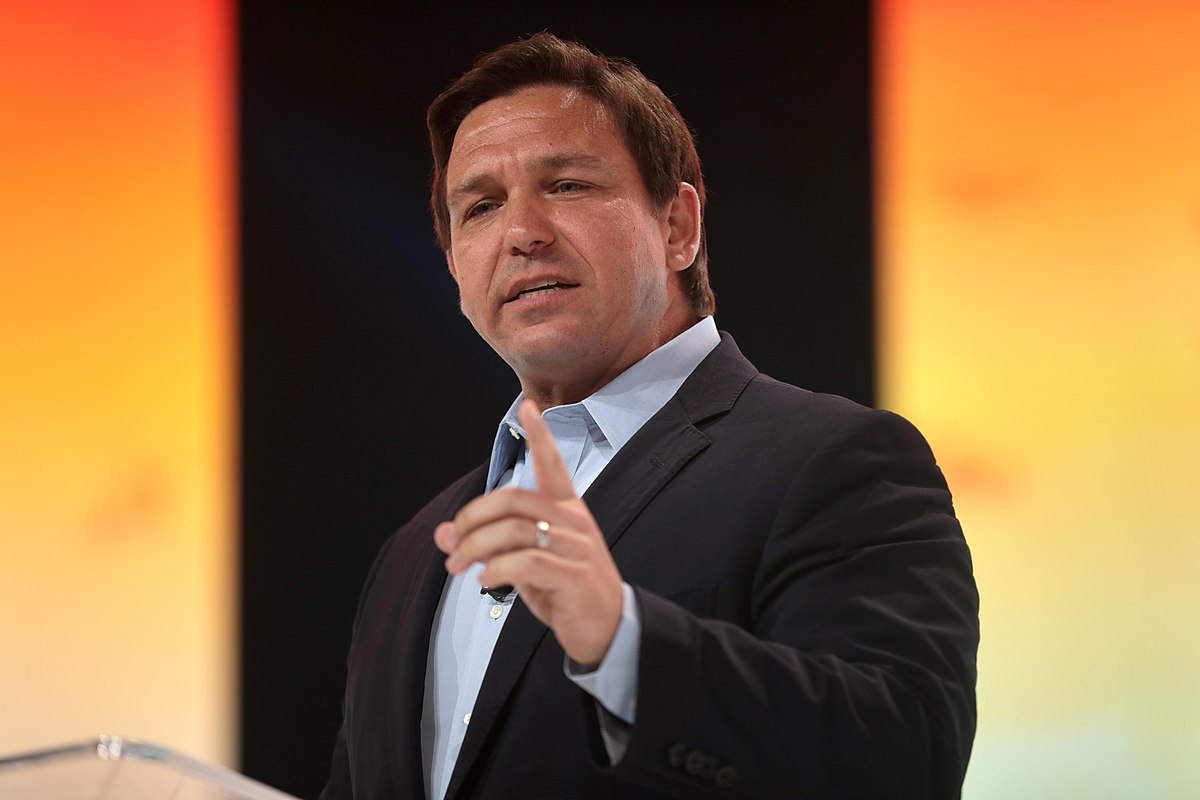
Governor Ron DeSantis speaking at the 2021 Student Action Summit hosted by Turning Point USA at the Tampa Convention Center in Tampa, Florida on 18 July, 2021.
Photo by Gage Skidmore via Wikimedia Commons.

You gotta hand it to a guy who convinces Democrats to die on the hill of defending perverted groomers talking about sex with little school kids. It’s on-brand for their fellow travelers at The Lincoln Project, but you would think that Democrats actually want to win elections. But no – they want to make the schools safe for pedos, and they don’t care who knows it. But they’ll care plenty in November when parents around the country come out and vote for The Party of Not Hitting on Der Kinder.
Donald Trump has his record of achievement – economic success and peace abroad. But Ron DeSantis has the DeSantis Doctrine, sort of like the Monroe Doctrine, except instead of keeping shady foreigners out of our hemisphere, the DeSantis Doctrine keeps woke fascists out of our lives.

It was DeSantis who started the fire that burned the pyre of Democrat hopes and dreams they jumped onto in their campaign against the Florida anti-grooming statute. But that’s only his latest fight with the elite. DeSantis has been laying down the law in Florida, literally, and in a way even Donald Trump never did. At some level, Donald Trump still has some residual respect for the trappings of the elite. He’s impressed by name universities and huge corporations, and for all his much-justified complaining, he still cavorts with institutions that hate him, like the NYT. He’s not yet completely done with the institutions, but DeSantis is. DeSantis is all honey badger, laying waste and making the rubble bounce.

It’s the DeSantis Doctrine, and it’s summed up this way: Your garbage institutions don’t mean Schiff to me. I am going to ruthlessly wield my power to protect normal people from your depredations. And I’m going to smile doing it.

Did the head of China-hugging Disney really think he was going to push Big Ron around? The nattering twenty-somethings and woke pronoun people in his company and on social media thought they could leverage their power to make this huge Florida employer bring DeSantis to heel over the threat that creepy weirdos could no longer chat up kindergartners about sex in schools. So this dude – who shrimps Chi Com toes even as his commie masters torment, torture, and terminate Uighurs and prop up Putin – comes out and really expects that DeSantis will fold. And then DeSantis, delighted at the chance to figuratively post a rodent skull on a pike, told the Mouse to pound some Sunshine State sand.

But I was informed by all the smart people with blue checks trapped in a vortex, which keeps them forever in the year 2005, that conservatives were supposed to hate regulation and love big corporations.

Well, things change – among them, the left, which decided that it was going to weaponize every institution against us, including corporations. A key element of that campaign is neutralizing normal people’s retaliation by barring us – through the application of principles that exist only in a paradigm that no longer does – from exercising our own power. “It’s so unseemly for a governor to attack a corporation!” Perhaps, in a world where corporations tend to literally mind their own business and not use their economic power to affect policy. But it’s ridiculous to expect that, in a world where corporations regularly use their power to affect politics, we normal people are somehow barred from using our own power – political power, including the power to regulate – to protect ourselves. You don’t get to change the rules, then expect us to remain bound by the old ones.

Well, you can expect that – many do, in fact – but Ron DeSantis scoffs at such unilateral disarmament. He’s all about the massive retaliation.

Jean Charest tries to position himself as the pro-military Conservative leadership candidate

Filed under: Cancon, Government, Military, Politics — Tags: , , , — Nicholas @ 03:00

Canadian politicians — generally speaking — are unwilling to tread too far into discussions of the Canadian Armed Forces and the utter disaster that is our federal government’s procurement “process”. There are lots of good, electoral reasons for this: Canadians have been propagandized over the last two generations to see Canada as a country with no real enemies and having no need of military force except for overseas peacekeeping and disaster relief. Any identified need for new equipment or even just updated replacements for existing capabilities is always a politically dangerous discussion, as it’s remarkably easy to get public support for almost any non-military spending instead of anything even vaguely warlike. Worse, on those few occasions when the government of the day bites the bullet to buy new ships/tanks/planes/helicopters/etc., the top priority isn’t military effectiveness or even lowest-price but where the money will be spent. Bidders for Canadian military contracts can’t just crank off a few extra units of the weapon or vehicle on existing production lines (which in almost every case would be both militarily better and economically cheaper): the government almost always demands new, expensive production facilities be constructed in Canada or for the foreign supplier to “partner” with an existing Canadian company to produce as much in Canada as possible.

This procurement charade usually means the Canadian Forces end up with far fewer weapons or vehicles because the increased costs of partial or complete production in Canada gobble up far more of the allocated budget. For example, back in 2017, we purchased a batch of new machineguns. It was the same model already in use with the Canadian army and with many of our NATO allies. If we’d just bought from one of the foreign manufacturers who already had production lines and tooling set up, each gun would have cost between US$6,000 and US$9,000 depending on configuration. But because we insisted on having Colt Canada set up a new production line, each weapon ended up costing C$28,000!

Multiply this across the entire range of equipment needed by the Canadian Army, the Royal Canadian Navy, and the Royal Canadian Air Force, and it’s quickly obvious that we’re running one of the least efficient military procurement systems in human history. And even on a domestic spin-off/job creation/vote buying spectrum, it’s insanely expensive and wasteful.

All of that out of the way, here’s Conservative leadership hopeful Jean Charest deliberately touching one of the “third rails” of Canadian politics by proposing an increase in funding for the military:

Our military procurement system is broken. For years experts have been warning about our incompetence at making major defence purchases. The past few weeks have shown us the price of our inaction.

While our allies, the United States, the United Kingdom and Australia, have entered into a new security pact to counter China in the Pacific, Canada wasn’t even invited to the table.

Germany, Sweden, and other NATO allies promise to increase their military spending to prepare for the uncertain times ahead. Canada has a moral responsibility to act. Now is the time.

If elected as the leader, my Conservative government will make significant changes and upgrades to our nation’s military capabilities. I will move quickly to ramp up Canadian defence spending to two percent of GDP, increase personnel to 100,000 and equip our forces for the challenging times ahead. I will modernize our cyber security infrastructure to prepare for future risks. And I will fix our embarrassing procurement system to ensure we get the equipment we desperately need.

The current conflict has also driven home the need to assert our sovereignty, especially in our North. As major sea lanes, essential to global trade and export of our natural resources, open within our arctic territory, we must be on high alert to Russian and Chinese encroachment. Neither recognizes our sovereignty there. In fact, no one really recognizes our sovereignty there and the imbalance in our military investments compared to our allies explains why that’s the case.

The war in Ukraine is a cruel reminder of why we cannot ignore these threats. Russia has a modern military base in the arctic — another area where indecision and delay could be extremely costly unless addressed.

A proud Canada must assert its sovereignty in the North and generate military support through major investments in equipment and coordination with our NATO allies. We need to get our act together.

The threats remain real and demand immediate attention from leaders willing to act in the best interests of their respective nations.

Canadians need experience and expertise overseeing our military. We need a government that supports our military.

March 17, 2022

If everything is about justice, then nothing is

Filed under: Environment, Media, Politics, USA — Tags: , , , , , , — Nicholas @ 03:00

At Astral Codex Ten, Scott Alexander wonders why everything these days is said to be about “justice”:

Freddie deBoer says we’re a planet of cops. Maybe that’s why justice is eating the world.

Helping the poor becomes economic justice. If they’re minorities, then it’s racial justice, itself a subspecies of social justice. Saving the environment becomes environmental justice, except when it’s about climate change in which case it’s climate justice. Caring about young people is actually about fighting for intergenerational justice. The very laws of space and time are subject to spatial justice and temporal justice.

I can’t find clear evidence on Google Trends that use of these terms is increasing — I just feel like I’ve been hearing them more and more often. Nor can I find a simple story behind why — it’s got to have something to do with Rawls, but I can’t trace any of these back to specific Rawlsian philosophers. Some of it seems to have something to do with Amartya Sen, who I don’t know enough about to have an opinion. But mostly it just seems to be the zeitgeist.

This is mostly a semantic shift — instead of saying “we should help the poor”, you can say “we should pursue economic justice”. But different framings have slightly different implications and connotations, and it’s worth examining what connotations all this justice talk has.

“We should help the poor” mildly suggests a friendly optimistic picture of progress. We are helpers — good people who are nice to others because that’s who we are. And the poor get helped — the world becomes a better place. Sometimes people go further: “We should save the poor” (or the whales, doesn’t matter). That makes us saviors, a rather more impressive title than helpers. And at the end of it, people/whales/whatever are saved — we’re one step closer to saving the world. Extrapolate the line out far enough, and you can dream of utopia.

“We should pursue economic justice” suggests other assumptions. Current economic conditions are unjust. There is some particular way to make them just, or at least closer to just. We have some kind of obligation to pursue it. We are not helpers or saviors, who can pat ourselves on the back and feel heroic for leaving the world better than we found it. We are some weird superposition of criminals and cops, both responsible for breaking the moral law and responsible for restoring it, trying to redress some sort of violation. The end result isn’t utopia, it’s people getting what they deserve.

(cf. Thomas Jefferson: “I tremble for my country when I remember that God is just.”)

What is “climate justice”? Was the Little Ice Age unjust? What if it killed millions? Is it unjust for Mali to have a less pleasant climate than California? What if I said that there’s a really high correlation between temperature and GDP, and Mali’s awful climate is a big part of why it’s so poor? Climate justice couldn’t care less about any of this. Why not? Hard to say. Maybe because there’s no violation and no villain.

March 13, 2022

The Canada Council for the (woke) Arts

Filed under: Bureaucracy, Cancon, Politics — Tags: , , , — Nicholas @ 03:30

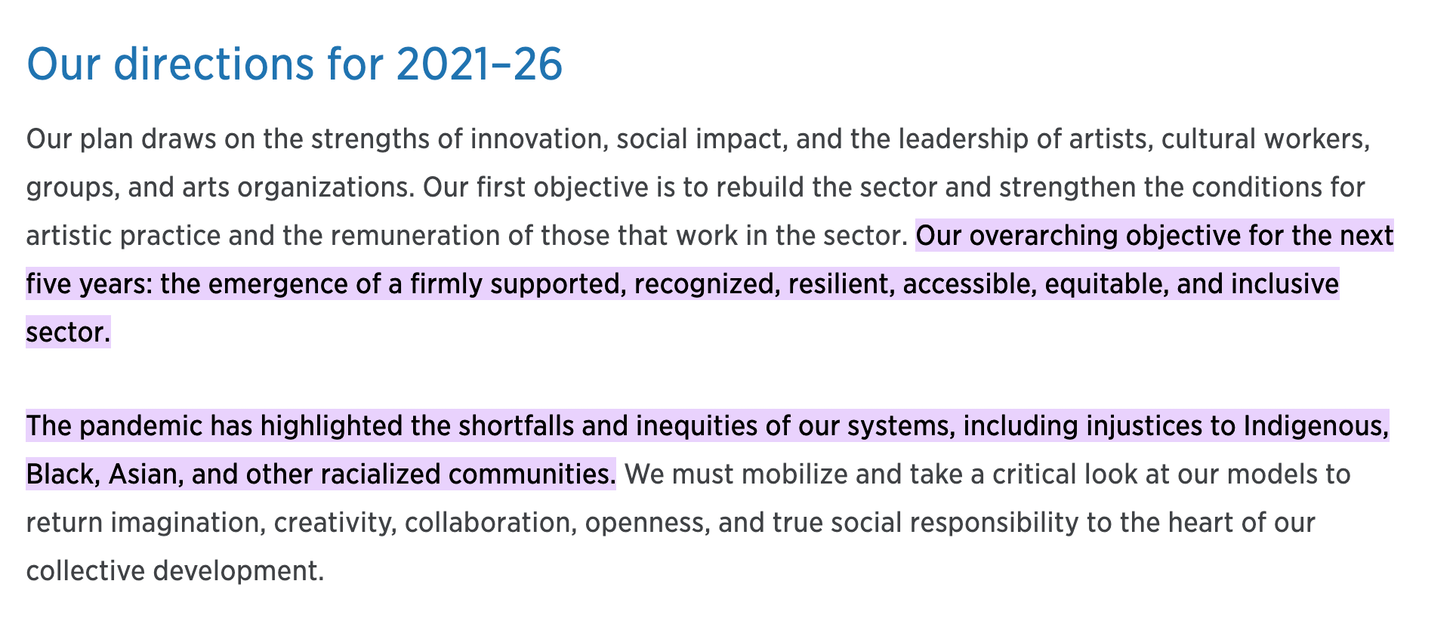
In the latest SHuSH newsletter, Kenneth Whyte looks at the origins of the Canada Council for the Arts and compares its original mission to the new direction the crown corporation plans to take:

The Massey Commission (1951), from which all public funding of arts, culture, and scholarly research in Canada derives, and out of which our flagship granting body, the Canada Council for the Arts, was born, knew that it was pushing the nation into perilous terrain. “The dangers inherent” in any system of grants from the central government to arts, letters, and culture was that “the government or its agents would attempt not merely to encourage but to direct” artistic and cultural expression.

The Massey Commission was not the first entity to confront this issue. Much like the Great Canadian Baking Show is a re-staging of the Great British Baking Show, the Massey Commission itself was a knockoff of a UK original (a sad commentary on an initiative intended to define and promote Canada’s unique national identity). The UK effort resulted in the establishment of the British Arts Council, initially chaired by Lord Keynes. Massey quoted him at length on the potential pitfalls of arts funding:

    At last the public exchequer has recognized the support and encouragement of the civilizing arts of life as part of their duty. But we do not intend to socialize this side of social endeavour. Whatever views may be held by the lately warring parties, whom you have been hearing every evening at this hour, about socializing industry, everyone, I fancy, recognizes that the work of the artist in all its aspects is, of its nature, individual and free, undisciplined, unregimented, uncontrolled. The artist walks where the breath of the spirit blows him. He cannot be told his direction; he does not know it himself. But he leads the rest of us into fresh pastures and teaches us to love and to enjoy what we often begin by rejecting, enlarging our sensibility and purifying our instincts. The task of an official body is not to teach or to censor, but to give courage, confidence and opportunity.

The founders of the Canada Council felt so strongly about the dangers of political interests imposing themselves on the arts, using federal money to force artistic and cultural activities in one direction or another, that they built checks and balances into its founding legislation. The Canada Council was made a crown corporation, at arm’s length from political types, and its board members were required to “avoid the promotion of any personal interests” or any other specific interests, whether on behalf of regions or “stakeholder groups”.

I can’t speak to the whole of the Canada Council’s activities, but from what I’ve seen of its annual reports, public statements, and funding practices, the Canada Council has jumped the tracks and is now fully dedicated to teaching, censoring, and directing artistic endeavour.

Here’s Simon Brault, chief executive of the Canada Council, giving an enthusiastic endorsement of the core Trudeau government priorities of Indigenous rights and environmental activism:

    We need to reimagine an arts sector determined to eliminate racism and discrimination in every form, and the legacy of colonialism. We need to reimagine the arts’ rightful place in the conversations that shape our future. And we need to reimagine, through the arts, a greener and more just and equitable world.

Even if you agree with Brault’s priorities, you have to admit that he is not straightforwardly supporting artistic endeavor but pushing the arts-and-culture sector toward the achievement of a socio-political program.

This mission is also explicit in the Canada Council’s new five-year plan, which has surprisingly little to say about lifting artists and arts organizations out of penury, which some might consider a laudable goal after years of financial crisis and pandemic:

Those are the council’s highlights, not mine.

This past week, the politicization of the Canada Council reached new heights when Brault announced that in solidarity with the Ukrainian people he would cease to fund any “activity involving the participation of Russian or Belarusian artists or arts organizations … This includes partnerships, direct and indirect financing of tours, co-productions, participation in festivals or other events held in Russia.”

« Newer PostsOlder Posts »

Powered by WordPress