
The 11th Light Dragoons at this time were newly back from India, where they had been serving since before I was born. They were a fighting regiment, and — I say it without regimental pride, for I never had any, but as a plain matter of fact — probably the finest mounted troops in England, if not in the world. Yet they had been losing officers, since coming home, hand over fist. The reason was James Brudenell, Earl of Cardigan.
You have heard all about him, no doubt. The regimental scandals, the Charge of the Light Brigade, the vanity, stupidity, and extravagance of the man — these things are history. Like most history, they have a fair basis of fact. But I knew him, probably as few other officers knew him, and in turn I found him amusing, frightening, vindictive, charming, and downright dangerous. He was God’s own original fool, there’s no doubt of that — although he was not to blame for the fiasco at Balaclava; that was Raglan and Airey between them. And he was arrogant as no other man I’ve ever met, and as sure of his own unshakeable rightness as any man could be — even when his wrongheadedness was there for all to see. That was his great point, the key to his character: he could never be wrong.
They say that at least he was brave. He was not. He was just stupid, too stupid ever to be afraid. Fear is an emotion, and his emotions were all between his knees and his breastbone; they never touched his reason, and he had little enough of that.
For all that, he could never be called a bad soldier. Some human faults are military virtues, like stupidity, and arrogance, and narrow-mindedness. Cardigan blended all three with a passion for detail and accuracy; he was a perfectionist, and the manual of cavalry drill was his Bible. Whatever rested between the covers of that book he could perform, or cause to be performed, with marvellous efficiency, and God help anyone who marred that performance. He would have made a first-class drill sergeant — only a man with a mind capable of such depths of folly could have led six regiments into the Valley at Balaclava.
However, I devote some space to him because he played a not unimportant part in the career of Harry Flashman, and since it is my purpose to show how the Flashman of Tom Brown became the glorious Flashman with four inches in Who’s Who and grew markedly worse in the process, I must say that he was a good friend to me. He never understood me, of course, which is not surprising. I took good care not to let him.
George MacDonald Fraser, Flashman, 1969.
November 16, 2014
QotD: James Brudenell, Earl of Cardigan
November 14, 2014
Defend, Don’t Strike! – The Defensive War I THE GREAT WAR Week 16
Published on 13 Nov 2014
The German army dug in at the Western Front and waited for the next enemy attack at the Eastern Front. Even though the Germans outnumbered their opponents, they barely stand a chance against machine guns in no-man’s-land. But they realize: to defend a position is a lot easier than to attack and conquer. Especially while fighting near Ypres. At the Eastern Front, things are going better for Chief of Staff Ludendorff: he breaks through outstretched Siberian lines. At the same time, Russian soldiers are faced with a new enemy and start the Bergmann Offensive in today’s East-Turkey.
HMAS Sydney versus SMS Emden, 9 November 1914
Last Sunday was the 100th anniversary of the first major naval victory of the Royal Australian Navy, when Australian light cruiser HMAS Sydney fought against one of the Kaiser’s most effective commerce raiders, SMS Emden in the Indian Ocean:
November 9 is when the light cruiser HMAS Sydney met the light cruiser SMS Emden in action in the Indian Ocean, dispatching a surface raider that had taken a heavy toll on Allied merchant and naval shipping since the guns of August rang out. R. K. Lochner chronicled Emden’s exploits in the late 1970s, dubbing her “the last gentleman of war.” Lochner awarded the cruiser this title to acknowledge skipper Karl von Müller’s and his crew’s scrupulous fidelity to the laws of cruiser warfare. The Germans’ enemy paid homage to Emden’s gallantry as well. Two days after the engagement, for instance, the London Daily News saluted the “resourceful energy and chivalry” displayed by the raider’s crewmen throughout their voyage. That, of course, was an era when knightly conduct was in decline on the high seas, yielding to unrestricted submarine warfare. Striking without warning, as U-boats commonly did in the Atlantic, left mariners and passengers scant prospects of escaping an attack.
SMS Emden underway in 1910 (via Wikipedia)
The battle, then, helped mark the passing of an age. Emden had remained behind at the onset of war, after the German East Asian Squadron quit Southeast Asia to return home. Hers was not destined to be a prolonged cruise. Cut off from logistical and maintenance support, Captain Müller had to forage for coal and stores. The cruiser coped with this hand-to-mouth existence — for a while — and in the process sank or captured twenty-five merchantmen, destroyed two Allied men-of-war at Penang, and bombarded the seaport of Madras, along the seacoast of British India. That’s quite a combat record. It’s especially noteworthy when compiled by seafarers who were unsure where they could refuel next — if anywhere at all — and were sure that equipment that suffered a major breakdown would never be repaired for want of spare parts and shipyard expertise.
The light cruiser HMAS Sydney steams towards Rabaul. The Australian Naval & Military Expeditionary Force (AN&MEF), which included HMAS Sydney, HMAS Australia, HMAS Encounter, HMAS Warrego, HMAS Yarra and HMAS Parramatta, seized control of German New Guinea on 11 September 1914 (via Wikipedia)
No ship can keep going for long without putting into port or tapping resources from nearby fuel or stores ships. Heck, U.S. Navy commanders — like their counterparts in other fleets, no doubt — get antsy when the fuel tanks drop to half-empty or hardware fails at sea, hampering performance or reducing redundancy in the propulsion plant or other critical machinery. And that’s in a navy accustomed to having logistics vessels steaming in company to top off the tanks, replenish stores, or transfer or manufacture spares when need be. Imagine being altogether alone in some faraway region — at risk of running out of some vital commodity or suffering battle damage and finding yourself dead in the water. Such loneliness and doubt were constant companions to Emden officers and men during the fall of 1914.It takes extraordinary pluck to seize the offensive amid such circumstances. And yet the Germans did. In November, nonetheless, Sydney found Emden in the Cocos (Keeling) Islands, where Müller had decided to attack a communications station that was aiding the hunt for his raider. Like so many naval actions, it was a chance encounter. The station got off a distress call, and Sydney — which happened to be in the vicinity while helping escort a convoy transporting Australian and New Zealand troops to Europe — responded to it. Emden gave a good account of herself, landing several punches before Sydney’s heavier main guns began to tell. Hopelessly outgunned, Müller ultimately ordered his vessel beached on North Keeling Island to save lives. Of the crew, 134 seamen fell while 69 were wounded and 157 were captured.


November 13, 2014
It was the tank that won WW2 in the west … and a deathtrap
Last month, Paul Richard Huard did a brief tribute to one of the iconic tanks of the Second World War, the M-4 Sherman. It was not a good tank, but it was good enough (if you ignore the survivability of the crews):
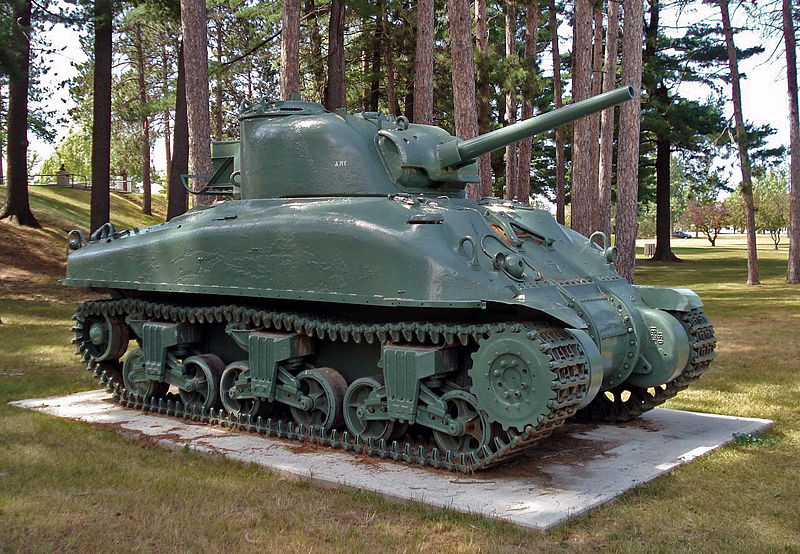
M4A1 Sherman tank at Canadian Forces Base Borden (via Wikipedia)
The M-4 Sherman was the workhorse medium tank of the U.S. Army and Marine Corps during World War II. It fought in every theater of operation — North Africa, the Pacific and Europe.
The Sherman was renown for its mechanical reliability, owing to its standardized parts and quality construction on the assembly line. It was roomy, easily repaired, easy to drive. It should have been the ideal tank.
But the Sherman was also a death trap.
Most tanks at the time ran on diesel, a safer and less flammable fuel than gasoline. The Sherman’s power plant was a 400-horsepower gas engine that, combined with the ammo on board, could transform the tank into a Hellish inferno after taking a hit.
All it took was a German adversary like the awe-inspiring Tiger tank with its 88-millimeter gun. One round could punch through the Sherman’s comparatively thin armor. If they were lucky, the tank’s five crew might have seconds to escape before they burned alive.
Hence, the Sherman’s grim nickname — Ronson, like the cigarette lighter, because “it lights up the first time, every time.”
Commonwealth units were allocated a proportion of Sherman tanks with the original 75mm or 76mm main gun replaced by a British 17-pounder anti-tank gun that gave Sherman Firefly tanks nearly the same punch as German Tiger tanks (and better than Panthers). There weren’t enough to go around, so they were parcelled out to allow a few Fireflies per troop or squadron. The 17-pounder gun also lacked a high explosive round for use against thin-skinned or unarmoured targets, so including one or two Fireflies among a group of conventionally armed Shermans was a good trade-off.

Sherman Firefly on display at Bovington Tank Museum (via Wikipedia)
November 11, 2014
Slipping a few F-35s in through the back door
Aviation Week has a fascinating tale of politico-military skulduggery involving the on-again, off-again purchase of F-35 fighters to replace the RCAF’s aging fleet of CF-18s:
A radical fast-track plan to jump-start Canada’s stalled effort to buy the Lockheed Martin F-35 Joint Strike Fighter is revealed in a briefing document obtained by Aviation Week.
The Oct. 27 brief from JSF Program Executive Office director USAF Lt. Gen. Chris Bogdan to Air Force secretary Deborah James calls for Canada to receive four F-35s next year, by diverting them from U.S. Air Force low-rate initial production (LRIP) Lot 7 orders. Canada would then buy four Lot 9 aircraft that would be delivered to the Air Force in 2017. According to the briefing, Canada would sign a letter of intent within days — “mid-November” — and Congress would be notified by the end of November.
Neither the JSF Program Office nor the Canadian Department of National Defense responded to repeated inquiries about the planned deal this week. The legal basis for such an exchange, absent an urgent operational need, is uncertain. The proposed LRIP 9 replacement aircraft are not on contract, and as far as is known, negotiations for them have not started.
Mark Collins thinks he sees the real motivation here:
1) The RCAF gets four darn expensive LRIP 7 F-35As in 2015 essentially for free (the “swap” and thus the need for Congressional notification); our government can say it’s not spending any money – but at the same time is effectively committing to the plane (the letter of intent and “beddown” – horny for the Lightning II?);
2) Canada pays for four, appreciably less costly, F-35As from LRIP 9 and gives them to the USAF as replacements (almost Lend-Lease!).
Hence: Canada decides slyly on the aircraft and the US, also on the sly, probably gets the largest current foreign F-35 commitment (still 65?) after the Aussies (72). Sweet, eh.
Canada’s last casualty during the Great War
The last Canadian soldier to die during the First World War was killed just two minutes before the ceasefire:
George Lawrence Price was a typical Canadian soldier in the First World War, except for the timing of his death, writes Nelson Wyatt of the Canadian Press.
[…]
He holds the sad distinction of being the last Canadian and last Commonwealth soldier to die in the meat-grinder conflict that claimed more than 60,000 Canadians in its four years.
A total of 10,000 men were killed, wounded or listed as missing from all participating armies on the last day of the war, according to historical records.
Price, a 25-year-old farm labourer before he enlisted, was struck by a single shot and killed two minutes before the 11 a.m. armistice went into effect on Nov. 11, 1918.
A native of Port Williams, N.S., he moved to Moose Jaw, Sask., as a young man and joined the army there in October 1917. He would become part of the last allied push that broke the German army.
On Nov. 11, Price was part of the Canadian advance through the outskirts of Mons in Belgium, where the one of the earliest battles of the war had been fought in 1914 and where the first British soldier had been killed.
“They were clearing through the village and people in the village told them to be careful, the Germans are still here,” said Maj. Jim McKillip, a historian with the Canadian Forces directorate of history and heritage. “He pushed on anyway and he got shot.”
Author James McWilliams, in a 1980 Reader’s Digest article entitled “The Last Patrol,” reported that Price and several colleagues were checking out possible German machine-gun nests in the village when the enemy opened fire. Civilians waved to the Canadians, urging them to take shelter in their home.
Mark Knopfler – “Remembrance Day”
A Remembrance Day slideshow using Mark Knopfler’s wonderful “Remembrance Day” song from the album Get Lucky (2009). The early part of the song conveys many British images, but I have added some very Canadian images also which fit with many of the lyrics. The theme and message is universal… ‘we will remember them’.
In memoriam
A simple recognition of some of our family members who served in the First and Second World Wars:
The Great War
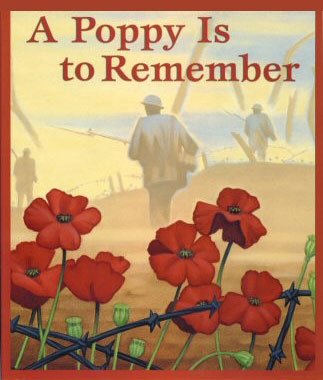 Private William Penman, Scots Guards, died 1915 at Le Touret, age 25
(Elizabeth’s great uncle)- Private David Buller, Highland Light Infantry, died 1915 at Loos, age 35
(Elizabeth’s great grandfather) - Private Walter Porteous, Northumberland Fusiliers, died 1917 at Passchendaele, age 18
(my great uncle) - Corporal John Mulholland, Royal Tank Corps, died 1918 at Harbonnieres, age 24
(Elizabeth’s great uncle)
The Second World War
- Flying Officer Richard Porteous, RAF, survived the defeat in Malaya and lived through the war
(my great uncle) - Able Seaman John Penman, RN, served in the Defensively Equipped Merchant fleet on the Murmansk Run (and other convoy routes), lived through the war
(Elizabeth’s father) - Private Archie Black (commissioned after the war and retired as a Major), Gordon Highlanders, captured at Singapore (aged 15) and survived a Japanese POW camp
(Elizabeth’s uncle) - Elizabeth Buller, “Lumberjill” in the Women’s Land Army in Scotland through the war.
(Elizabeth’s mother) - Trooper Leslie Taplan Russon, 3rd Royal Tank Regiment, died at Tobruk, 19 December, 1942 (aged 23).
A recently discovered relative. Leslie was my father’s first cousin, once removed (and therefore my first cousin, twice removed).
In Flanders fields the poppies blow
Between the crosses row on row,
That mark our place; and in the sky
The larks, still bravely singing, fly
Scarce heard amid the guns below.We are the Dead. Short days ago
We lived, felt dawn, saw sunset glow,
Loved and were loved, and now we lie
In Flanders fields.Take up our quarrel with the foe:
To you from failing hands we throw
The torch; be yours to hold it high.
If ye break faith with us who die
We shall not sleep, though poppies grow
In Flanders fields.Lieutenant Colonel John McCrae, MD Canadian Army Medical Corps (1872-1918)
QotD: The Canadian tradition of military neglect
Canada is an unmilitary community. Warlike her people have often been forced to be; military they have never been.
Repeatedly, during the French regime, Canadians took up arms in defence of their country. Twice during Canada’s early history as a British colony her people joined with British forces in defending the soil against attack by the neighbouring nation. On many occasions in later times there was danger of renewed war with the United States. Later still, when a happy evolution had put an end to such apprehensions, Canada’s increasing involvement in world politics led her to take a minor part in the South African War of 1899-1902 and a much larger share in the World War of 1914-18. None of these episodes proved sufficient to convince Canadians that there was a close connection between their nation’s welfare and the state of her military preparations. Fortunately for the country, there were always some people in it who interested themselves in such matters and sought to maintain a degree of active military spirit; but they were always a small minority.
For generations, Canadian governments and parliaments, and certainly also the public at large, appeared to be convinced that it was time enough to begin preparing for war after war had broken out. It would be easy to demonstrate the country’s traditional dislike of peacetime armaments and unwillingness to spend money upon them, and to give examples of how on many occasions the sudden appearance of a crisis led ministers and legislators to take, hurriedly and belatedly, the military measures for which in more peaceful moments they had seen no need. But it is not necessary to labour the point; nor need we here attempt to account fully for the country’s unmilitary outlook, which has certainly been due in great part to the happy accident of a political and geographical situation that, placed formidable barriers, in the shape of distance, ocean spaces and the power of great friendly nations, between Canada and potential aggressors. It is enough to say that not until the years following the Second World War did the Canadian people and their government show themselves ready to spend, in time of peace, money enough to maintain national armaments commensurate in any degree with the position claimed by Canada in the world.
It is a remarkable fact that the First World War, which affected Canadian development so fundamentally in so many ways, had almost no long-term influence upon the country’s military policy. In that war, the most important episode in Canadian history until its time, 628,000 Canadians served and 60,000 lost their lives. Canada intervened on a large scale on European battlefields, and her troops were recognized as being among the most formidable on the Western Front. Nevertheless, when the emergency was over the country reverted lightly and confidently to her earlier traditions, and reduced her armed forces to a level of insignificance almost as low as that of 1913.
C.P. Stacey, Six Years of War, 1956.
November 10, 2014
The World at War – The Ottoman Empire Enters The Stage I THE GREAT WAR Week 15
Published on 6 Nov 2014
Three months after the outbreak of the war, another world power enters the conflict: The Ottoman Empire. The Ottoman war minister Enver Pasha, a supporter of a new Turkish self confidence, wants to gain advantages for a future Turkey by declaring war. Meanwhile, another ship of the German East Asian Squadron is surprising the Royal Navy by sinking two of their ships near Coronel, Chile. Regardless, the battles on the Eastern, Western Front and in Serbia are continuing.
A critical view of the Zumwalt class of destroyers
James R. Holmes makes the case that the latest class of US Navy destroyers are already obsolete:
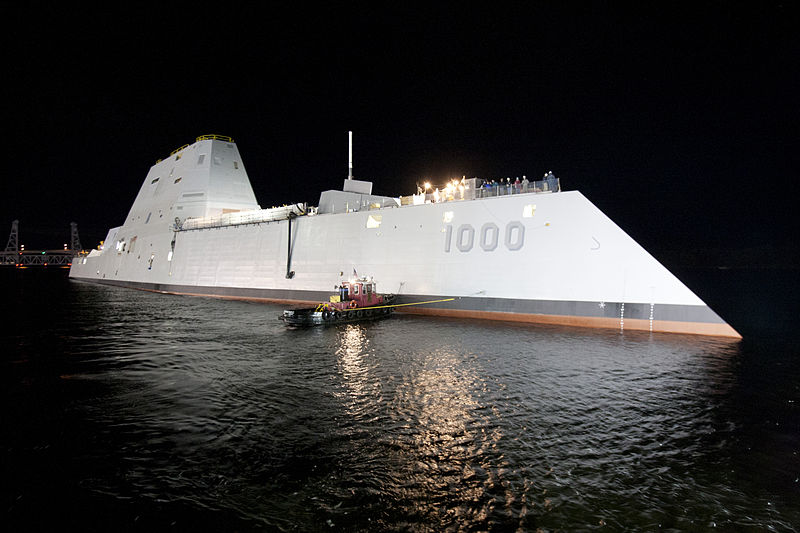
BATH, Maine (Oct. 28, 2013) The Zumwalt-class guided-missile destroyer DDG 1000 is floated out of dry dock at the General Dynamics Bath Iron Works shipyard. The ship, the first of three Zumwalt-class destroyers, will provide independent forward presence and deterrence, support special operations forces and operate as part of joint and combined expeditionary forces. The lead ship and class are named in honor of former Chief of Naval Operations Adm. Elmo R. “Bud” Zumwalt Jr., who served as chief of naval operations from 1970-1974. (U.S. Navy photo courtesy of General Dynamics/Released)
Hie thee hence, sea fighters, to peruse Information Dissemination‘s take on the U.S. Navy’s Zumwalt-class destroyer. Pseudo-pseudonymous pundit “Lazarus” gives a nifty profile of the newfangled vessel. That’s worth your time in itself. Though not in so many words, moreover, he depicts the attention-grabbing DDG-1000 stories of recent weeks and months as a red herring. Sure, Zumwalt features a “tumblehome” hull that makes the ship look like the second coming of USS Monitor. (This is not a compliment.) The hull tapers where it should flare and flares where it should taper. Zounds!
Yet more than cosmetics occasions commentary. Some navy-watchers voice concern about tumblehome hulls’ seakeeping ability in rough waters. Others question their ability to remain buoyant and stable after suffering mishaps or battle damage. That’s a worry in a “minimum manned” ship that relies on automated damage control. (The very idea of automated firefighting and flooding control, and sparsely populated fire parties, sits poorly with this former fire marshal.) In any event, time will tell whether the naval architects got it right.
Even if problems do come to light, Zumwalt would be far from the first fighting ship to undergo modifications to remedy problems baked into her design. The flattop USS Midway, for example, underwent repeated change over her long life — including to correct such maladies. Plus ça change.
Zumwalt‘s secondary armament has made headlines as well. The navy recently opted to substitute lesser-caliber 30-mm guns for the 57-mm guns originally envisioned to empower the ship to duel small boats and light surface combatants. The smaller mount evidently meets performance parameters for close-in engagements that its bigger counterpart misses. This too is a controversy that, in all likelihood, will be settled once sea trials put the ship through her paces. Tempest, meet teapot.
November 9, 2014
A Canadian Mistral (or two)? Not likely say the experts
Remember those palmy days of summer, when the French helicopter carrier Mistral visited Canadian waters for a joint exercise with the Canadian Army? I half-joking referred to it as Canada “kicking the tires” … but the idea hasn’t gone away completely. In the Ottawa Citizen, David Pugliese reported earlier last week that the International Business Times had run an article about it.
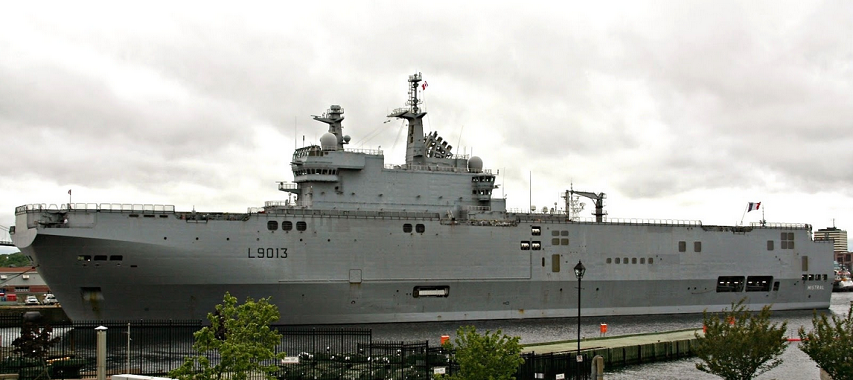
Halifax, Nova Scotia. FS Mistral (L-9013) is an amphibious assault ship, and lead ship of her class. She was commissioned in 2006. She features a landing craft dock, and helicopter facilities. Photo: Halifax Shipping News
The deal is worth $1.6 billion to $1.8 billion (different figures are out there) to the French. The Russians are interested in three of the ships. The French haven’t proceeded yet with the sale to Russia because of the situation in Ukraine.
But how probable is it that Canada would buy the Mistral-class ships?
Earlier this year, the Royal Canadian Navy was looking at buying surplus U.S. Navy supply ships. But that is not going to happen, RCN commander Vice Admiral Mark Norman told Defence Watch. What is being examined is the purchase of a commercial oiler (maybe).
The RCN is in dire need of an oiler/supply ship……not, at this point, an amphibious assault ship. So if there is an extra billion dollars or more around, the focus might be on acquiring an oiler/supply fleet to replace the decommissioned AORs.
Mistral-class ships are capable of carrying 16 helicopters, landing barges, up to 70 vehicles and 450 soldiers. They also come equipped with a hospital.
Canadian shipyards could also be expected to oppose such a purchase. There would be little for them (except maybe in-service support) in such an acquisition and they could argue that such a purchase would undermine the National Shipbuilding Procurement Strategy.
In September, I called the idea of Canada buying the Mistrals as the maritime equivalent of “pie in the sky”, despite a passionate article in the US Naval Institute News pushing the idea. They even showed what a Canadian Mistral would look like:
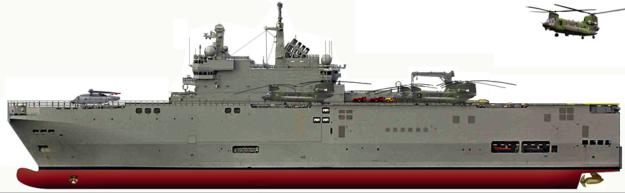
Mistral-class ship, Sevastopol configured as a NATO/Canadian Navy ship. CASR Image
So, on the surface, the idea isn’t likely to go anywhere for practical and economic reasons. But, a couple of days later Pugliese posted another article on the Mistral debate, responding to criticism from University of Ottawa professor Roland Paris:
If the Paris had actually read the articles in question he would have found out that the stories arose not from Hugh Segal’s comments from May but from the fact that the delegation led this week by French President François Hollande to Canada contained a significant contingent of the country’s defence industry representatives, including those from Mistral shipbuilder DCNS. That group included the firm’s diplomatic adviser.
In addition, sources have told Defence Watch that the delegation did indeed try to interest Canada in Mistral-class ships, as well as the FREMM class frigates.
Will they succeed with Mistral? Like I have mentioned a number of times at Defence Watch, including in the posting cited by Paris, the answer is likely no.
[…]
France, over the last two years, has embarked on a significant push into Canada to promote its defence products, particularly in the naval arena. With $35 billion on the table for shipbuilding who can blame them?
There was a specific reason a Mistral-class warship sailed across the Atlantic this summer to take Canadian soldiers on board for amphibious exercises. And it wasn’t about any close relationship between the French and Canadian militaries, although that might have played a minor role.
No, the French are interested in selling. They want to sell Canada warships, warship designs, and naval equipment like that on board the Mistral-class and the FREMM frigates. That is the reason the FREMM ship Aquitaine also visited Canada.
Personally, I’d love to see the RCN acquire a pair of Mistral-class ships, but they would not come cheap, they wouldn’t create a lot of jobs in Nova Scotia, Quebec, or British Columbia (and therefore wouldn’t be useful for gathering votes from those provinces), and they’d require the government to fully equip them … helicopters are extra. And we all know how the Canadian government can’t manage to say the word “helicopter” without wasting millions of dollars, never mind actually buying any.
November 2, 2014
Cast for Dad’s Army film
Forces TV has details on the cast members in the in-production movie based on the old British TV series Dad’s Army:
The cast of the new Dad’s Army film has been revealed in the first official photos from the film set. Prominent UK acting talent have signed up including Bill Nighy, Catherine Zeta Jones, Sir Tom Courtenay, Sir Michael Gambon and Blake Harrison from the Inbetweeners.
The film version of the classic sitcom is being filmed in Yorkshire and features Zeta-Jones as a glamorous journalist who becomes suspected of being a spy for the Germans.
The original series ran from 1968 to 1977 with a film being made by the original cast in 1971.

November 1, 2014
November 1, 1914 – The Battle of Coronel
A hundred years ago today, the Royal Navy lost the Battle of Coronel to Vice Admiral Graf Maximilian von Spee’s squadron of armoured and light cruisers off the coast of Chile. Rear Admiral Sir Christopher Cradock was killed along with 1,570 men when HMS Monmouth and HMS Good Hope were sunk. Public reaction was furious: blame was cast on the Admiralty and especially on the First Lord of the Admiralty, Winston Churchill. The British public fiercely believed that any British ship was more than a match for any foreign vessel, and losing two ships while inflicting no serious damage on the enemy was scandalous.
In the Plymouth Herald, Tristan Nichols explains why Plymouth in particular took the news so badly:
TODAY the figure is hard to comprehend. On November 1, 1914, just months after the start of World War One, the Royal Navy lost two warships and nearly 1,600 lives in the South Atlantic.
The outcome of ‘The Battle of Coronel’, as it would become known, sent shockwaves across Britain, not least Plymouth.
HMS Monmouth was one of the two British cruisers involved in the battle 40 nautical miles off the coast of Chile.
She was Devonport-based and Plymouth-manned.
And every one of the 735 men on board the cruiser died on the cold and stormy seas.
Hundreds more were lost on the other Royal Navy vessel, the Portsmouth-based HMS Good Hope.
The German squadron saw just three men injured during the battle.
The build-up, battle, and ultimate demise of the 4th Cruiser Squadron during that fateful day reads like a film script.
Rear Admiral Sir Christopher (Kit) Cradock led the Royal Navy squadron to hunt down and destroy the feared German East Asia Squadron.
Both sides had reportedly only been expecting to meet a solitary cruiser – but fate would play its hand.
Rear Admiral Cradock, leading two British armoured cruisers, was up against two German armoured cruisers, and a further three light cruisers.
He was reportedly given orders to engage with the enemy, despite outlining his concerns at being outnumbered and outgunned.
According to the history books the two British armoured cruisers were inferior in every respect.
Follow orders he did, and it led to a devastating outcome for the proud British squadron.
It’s not quite as clear that Cradock followed all of his orders, as Churchill had specifically instructed him to keep the old battleship HMS Canopus with his squadron at all times until a modern armoured cruiser, HMS Defence, was able to join him (Defence, however, had been recalled part-way to the Falklands). Instead, Cradock had detached Canopus to defend the coaling station in the Falkland Islands before crossing into the Pacific, headed toward Valparaiso. Without Canopus, Cradock was totally out-gunned by von Spee’s ships.
Wikipedia reports a Canadian connection with the battle:
The Coronel Memorial Library at Royal Roads Military College, now Royal Roads University in Victoria, British Columbia, Canada was named in honour of the four Canadian midshipmen who perished in HMS Good Hope at the Battle of Coronel.
Update: The Royal Canadian Navy is marking the anniversary.
The Royal Canadian Navy (RCN) will mark the Battle of Coronel on November 1st. This battle saw the first Canadian military casualties of the First World War, and the first ever casualties in the history of the RCN. RCN personnel serving today salute the following shipmates from the past:
- Midshipman Malcolm Cann, 19, of Yarmouth, Nova Scotia;
- Midshipman John V. W. Hatheway, 19, of Fredericton, New Brunswick;
- Midshipman William Archibald Palmer, 20, of Halifax, Nova Scotia; and
- Midshipman Arthur Wiltshire Silver, 20, of Halifax, Nova Scotia.
All four RCN midshipmen died in the Battle of Coronel, which took place on November 1, 1914 off the coast of central Chile near the city of Coronel.
October 29, 2014
Singing the praises of the FN FAL
Paul Huard looks at the brief moment that the United States was poised to adopt the same rifle as almost everyone else in NATO:
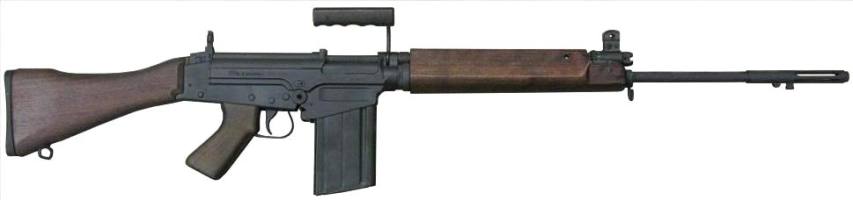
FN C1 A1 as used by the Canadian Armed Forces throughout the Cold War (via South Manitoba Rifles)
With the formation of the new NATO alliance in 1949, generals and civilian planners both talked of the necessity to standardize equipment, weapons and supplies.
“The laudable aim was one that had been much in the minds of many forward-looking military thinkers for a long time,” writes David Westwood, author of Rifles: An Illustrated History of their Impact. “For experience had shown that the United States and Britain often fought side by side, and commonality would be to the benefit of all including soldiers in the field.”
One thing was certain. The British were impressed with the FAL. They deemed the superior firearm to competitors because it was easy to maintain, field strip and clean. It reassembled without special tools and it was a select-fire weapon — but it fired the lighter round.
The “gravel belly” U.S. generals would accept nothing but a .30-caliber weapon, insisting on the superiority of a prototype called the T25, a forerunner of the M14 that was nothing more than a glorified Garand.
Soon, there was a “Battle of the Bullets” that went as high as the White House and 10 Downing Street. Pres. Harry Truman and Prime Minister Winston Churchill even held a mini-summit, where rumor has it they struck a quid pro quo — the U.S. would adopt the FAL as its main battle rifle if Britain backed NATO adopting the 7.62 x 51-millimeter round.
NATO adopted the round. However, the U.S. reneged, developed the M14 — which fired the NATO 7.62-millimeter cartridge — and adopted it as the American military’s main rifle. In the end, it didn’t matter to FN because NATO countries, including Britain, began snapping up the FAL chambered for the NATO round.
Many consider that combination of weapon and cartridge the quintessential pairing of battle-rifle and bullet during the 20th century — the FAL went into production in 1953 and FN continued to produce the rifle until 1988. The M-14 fell by the wayside as the main U.S. battle rifle within a few years, replaced by the M-16.
“Regardless of the political activity that went on before its adoption, the 7.62 x 51-millimeter NATO turned out to be an excellent, powerful military cartridge,” writes Robert Cashner, author of The FN FAL Battle Rifle. “With millions of FALs manufactured and internationally distributed, the rifle played a large part in making the 7.62 x 51-millimeter NATO the success that it was.”


