Quotulatiousness

November 21, 2019

Battle of Sedan: How did Prussia Win The Franco-Prussian War? | Animated History

Filed under: France, Germany, History, Military, Weapons — Tags: , , , — Nicholas @ 06:00

The Armchair Historian
Published 16 Feb 2018

The Battle of Sedan. How did Prussia Win the Franco-Prussian War?

Our Website: https://www.thearmchairhistorian.com/

Our Twitter:
@ArmchairHist

Our Discord:
https://discord.gg/Ppb2cUd

Sources:
http://1.bp.blogspot.com/-Q9vpKOSgFHs…
https://www.britannica.com/event/Batt…
https://www.thoughtco.com/franco-prus…
https://www.warhistoryonline.com/hist…
https://www.military-history.us/2011/…

100 Decisive Battles by: Paul K. Davis
50 Battles That Changed the World by: William Weir

Music: “Danse Macabre” by Kevin MacLeod is licensed under a Creative Commons Attribution license (https://creativecommons.org/licenses/…)
Source: http://incompetech.com/music/royalty-…
Artist: http://incompetech.com/

November 20, 2019

The Sinking of the Royal Oak

Filed under: Britain, Germany, History, Military, WW2 — Tags: , , , — Nicholas @ 06:00

Eoin MacFreeman
Published 19 Sep 2014

STV and History channel documentary to coincide with the 70th anniversary of the sinking of HMS Royal Oak at Scapa Flow in Scotland. With harrowing eye witness accounts from survivors. Narrated by oor Alex Norton. We will remember them.

On 14 October 1939, Royal Oak was anchored at Scapa Flow in the Orkney Islands, Scotland, when she was torpedoed by the German submarine U-47. Of Royal Oak‘s complement of 1,234 men and boys, 833 were killed that night or died later of their wounds. The loss of the old ship – the first of the five Royal Navy battleships and battlecruisers sunk in the Second World War – did little to affect the numerical superiority enjoyed by the British navy and its allies, but the sinking had considerable effect on wartime morale. The raid made an immediate celebrity and war hero out of the U-boat commander, Günther Prien, who became the first German submarine officer to be awarded the Knight’s Cross of the Iron Cross. Before the sinking of Royal Oak, the Royal Navy had considered the naval base at Scapa Flow impregnable to submarine attack, and U-47‘s raid demonstrated that the German navy was capable of bringing the war to British home waters. The shock resulted in rapid changes to dockland security and the construction of the Churchill Barriers around Scapa Flow.

Treaty of Neuilly – A National Catastrophe for Bulgaria? I THE GREAT WAR 1919

Filed under: Europe, Greece, History, Military, WW1 — Tags: , , , , — Nicholas @ 04:00

The Great War
Published 19 Nov 2019

SPONSORED: Install Raid for Free ✅ IOS: http://bit.ly/334B7Yl ✅ ANDROID: http://bit.ly/341srDB
Start with💰50K silver and get a Free Epic Champion 💥 on day 7 of “New Player Rewards” program*

*Ads like this support the production of our channel and keep it free to watch for everyone

» SUPPORT THE CHANNEL
Patreon: https://www.patreon.com/thegreatwar
Merchandise: https://shop.spreadshirt.de/thegreatwar/

» SOURCES
Borodziej, Wlodzimierz and Maciej Gorny. Der Vergessene Weltkrieg. Europas Osten 1912-1923. Band II – Nationen 1917-1923 (wbg Theiss, 2018).
Ganev, P. “The relations between Bulgaria and the FYR of Macedonia in the context of EU integration,” Master Thesis, 2014.
Gerwarth, Robert. The Vanquished. Why the First World War Failed to End, 1917-1923 (Penguin, 2017).
Khristov, Khristo. “Bulgaria, the Balkans, and the Peace of 1919,” in Pastor, Peter, ed. Revolutions and Interventions in Hungary and its Neighbor States, 1918-1919 (New York: Columbia University Press, 1988).
Lampe, John. “Stamboliiski’s Bulgaria and Revolutionary Change, 1918-1923,” in Pastor, Peter, ed. Revolutions and Interventions in Hungary and its Neighbor States, 1918-1919 (New York: Columbia University Press, 1988).
Leonhard, Jörn. Der überforderte Frieden. Versailles und die Welt 1918-1923 (CH Beck, 2018).
Macmillan, Margaret. The Peacemakers: Six Months that Changed the World (London: John Murray, 2001).
Mihaylovski, Stoyan. “On the Treaty of Neuilly,” in Напред (Forward). Originally published November 4th, 1919. Republished on November 27th, 2018. Retrieved via Dir.bg.
Minkov, Stefan Marinov: “Neuilly-sur-Seine, Treaty of”, in: 1914-1918-online. International Encyclopedia of the First World War, ed. by Ute Daniel, Peter Gatrell, Oliver Janz, Heather Jones, Jennifer Keene, Alan Kramer, and Bill Nasson, issued by Freie Universität Berlin, Berlin 2017-02-20.
Pantev, Andrei. “The Border Line Between Sympathy and Support: the United States and the Bulgarian Territorial Question at the Paris Peace Conference in 1919,” in Southeastern Europe, 8, pts 1-2 (1981): 171-197.
Ristović, Milan: “Occupation during and after the War (South East Europe)”, in: 1914-1918-online. International Encyclopedia of the First World War, ed. by Ute Daniel, Peter Gatrell, Oliver Janz, Heather Jones, Jennifer Keene, Alan Kramer, and Bill Nasson, issued by Freie Universität Berlin, Berlin 2014-10-08.
Toshev, Stefan. Pobedeni bez da badem biti (Beaten without being defeated), 1924.
Vazov, Vladimir. Zhivotopisni belejki (Lifetime notes). Re-published by Bulgarian History “BI 93 OOD”, 2018.
Yotov, Petko et al. Bulgaria in the First World War (1915-1918), a short encyclopedia (2014).
Documentary film: Българският политик Теодор Теодоров – държавник от първа величина, ISTORIYA.BG, 03.12.2018
Съюз на македонските емигрантски организации в България – “Memoir presented to the governments of the United States of America, of Great Britain and Ireland, of France, of Italy and of Japan”, София, 1919 година (http://strumski.com/biblioteka/?id=1830)

»CREDITS
Presented by: Jesse Alexander
Written by: Jesse Alexander
Director: Toni Steller & Florian Wittig
Director of Photography: Toni Steller
Sound: Toni Steller
Editing: Toni Steller
Mixing, Mastering & Sound Design: http://above-zero.com
Maps: Daniel Kogosov (https://www.patreon.com/Zalezsky)
Research by: Jesse Alexander
Fact checking: Florian Wittig

Channel Design: Alexander Clark
Original Logo: David van Stephold

A Mediakraft Networks Original Channel

Contains licensed material by getty images
All rights reserved – Real Time History GmbH 2019

November 19, 2019

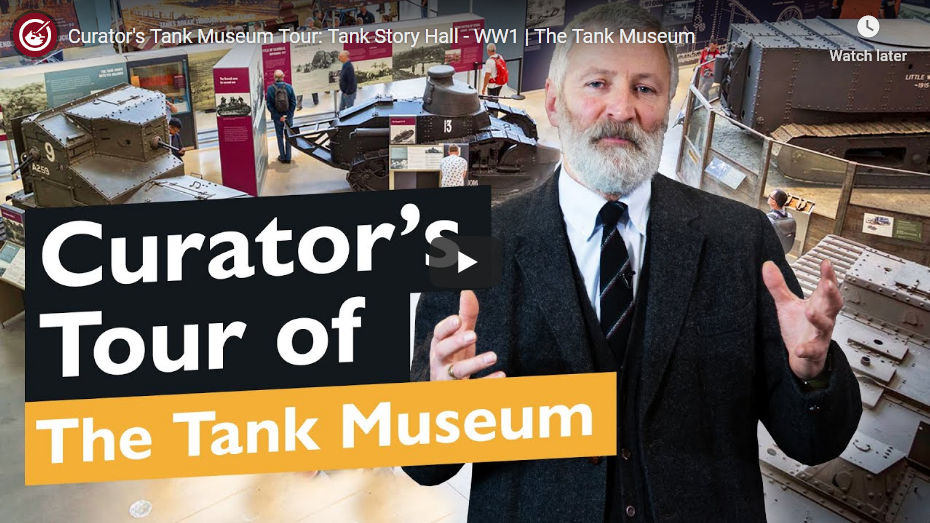
Tank Chats #54 JS III | The Tank Museum

Filed under: History, Military, Russia, Weapons — Tags: , , , — Nicholas @ 02:00

The Tank Museum
Published 28 Jul 2018

The JS III or IS III was debuted by the Soviet Union at the Second World War Victory Parade, in September 1945.

This particular JS III was at The Tank Museum temporarily, for its appearance at TANKFEST 2018, and has now returned home to The Belgian Royal Military Museum.

Support the work of The Tank Museum on Patreon: ► https://www.patreon.com/tankmuseum
Or donate http://tankmuseum.org/support-us/donate

Visit The Tank Museum SHOP: ► https://tankmuseumshop.org/

Twitter: ► https://twitter.com/TankMuseum
Tiger Tank Blog: ► http://blog.tiger-tank.com/
Tank 100 First World War Centenary Blog: ► http://tank100.com/ #tankmuseum #tanks #tankchats

November 18, 2019

The Opium War – Lost in Compensation l HISTORY OF CHINA

Filed under: Britain, China, Economics, History, Military — Tags: , , , , — Nicholas @ 06:00

IT’S HISTORY
Published 22 Aug 2015

The Opium War started as a dispute over trading rights between China and Great Britain. Regular trade between Europe and the Chinese had been ongoing for centuries. But China’s trading restrictions frustrated the British who were eager to supply the Chinese people with the increasingly popular narcotic opium. Circumventing the government’s attempts to ban opium trade by smuggling and bribery, China declared the death sentence on Opium smuggling and refused to compensate British tradesmen for any losses. Furiously, the Brits sent out a fleet to demand compensation and end the Cohong trading monopoly. Fierce battles and attacks on the Chinese coast were followed. Find out all about the First Opium War from Indy in our new episode of Battlefields!

» SOURCES
Videos: British Pathé (https://www.youtube.com/user/britishp…)
Pictures: mainly Picture Alliance
Content:
Lovell, Julia: The Opium War: Drugs, Dreams and the Making of China
Wei, Yuan: Chinese Account of the Opium War
McPherson, Duncan: The First Opium War – The Chinese Expedition 1840-1842
Merwin, Samuel: Drugging a Nation – The Story of China and the Opium Curse
Bernard, William Dallas; Hall, Sir William Hutcheon: Narrative of the Voyages and Services of the Nemesis, from 1840 to 1843.
Isabel Hilton (The Guardian): “The Opium War by Julia Lovell – review”
Perdue, Peter C. (MIT): The First Opium War http://ocw.mit.edu/ans7870/21f/21f.02…

» ABOUT US
IT’S HISTORY is a ride through history – Join us discovering the world’s most important eras in IN TIME, BIOGRAPHIES of the GREATEST MINDS and the most important INVENTIONS.

» HOW CAN I SUPPORT YOUR CHANNEL?
You can support us by sharing our videos with your friends and spreading the word about our work.

» CAN I EMBED YOUR VIDEOS ON MY WEBSITE?
Of course, you can embed our videos on your website. We are happy if you show our channel to your friends, fellow students, classmates, professors, teachers or neighbors. Or just share our videos on Facebook, Twitter, Reddit etc. Subscribe to our channel and like our videos with a thumbs up.

» CAN I SHOW YOUR VIDEOS IN CLASS?
Of course! Tell your teachers or professors about our channel and our videos. We’re happy if we can contribute with our videos.

» CREDITS
Presented by: Guy Kiddey
Script by: Dan Hungerford
Directed by: Daniel Czepelczauer
Director of Photography: Markus Kretzschmar
Music: Markus Kretzschmar
Sound Design: Bojan Novic
Editing: Markus Kretzschmar

A Mediakraft Networks original channel
Based on a concept by Florian Wittig and Daniel Czepelczauer
Executive Producers: Astrid Deinhard-Olsson, Spartacus Olsson
Head of Production: Michael Wendt
Producer: Daniel Czepelczauer
Social Media Manager: Laura Pagan and Florian Wittig

Contains material licensed from British Pathé
All rights reserved – © Mediakraft Networks GmbH, 2015

November 17, 2019

Britain shows Japan how to Attack Pearl Harbor – WW2 – 064 – November 16, 1940

Filed under: Britain, Europe, Greece, History, Italy, Japan, Military, Russia, WW2 — Tags: , , , , — Nicholas @ 04:00

World War Two
Published 16 Nov 2019

Japan has two wins this week, and one might turn out to be very consequential for the rest of the war. In the meantime, the British RAF fights the Luftwaffe and Italy struggles in their offensive against Greece.

Join us on Patreon: https://www.patreon.com/TimeGhostHistory
Or join The TimeGhost Army directly at: https://timeghost.tv

Follow WW2 day by day on Instagram @World_war_two_realtime https://www.instagram.com/world_war_t…
Join our Discord Server: https://discord.gg/D6D2aYN.
Between 2 Wars: https://www.youtube.com/playlist?list…
Source list: http://bit.ly/WW2sources

Written and Hosted by: Indy Neidell
Produced and Directed by: Spartacus Olsson and Astrid Deinhard
Executive Producers: Bodo Rittenauer, Astrid Deinhard, Indy Neidell, Spartacus Olsson
Creative Producer: Joram Appel
Post-Production Director: Wieke Kapteijns
Research by: Indy Neidell
Edited by: Iryna Dulka
Map animations: Eastory

Colorisations by: Julius Jääskeläinen, https://www.facebook.com/JJcolorization/

Eastory’s channel: https://www.youtube.com/channel/UCEly…
Archive by Screenocean/Reuters https://www.screenocean.com.

Sources:
– Narodowe Archiwum Cyfrowe
– IWM: CM 164, C 1244
– Destroyed house icon by Gan Khoon Lay, people icon by Gregor Cresnar from the Noun Project

A TimeGhost chronological documentary produced by OnLion Entertainment GmbH.

From the comments:

World War Two
2 days ago
Do you want more World War Two in realtime? We have a great Instagram page, where we make a daily post about what happened in the war on that day. This might be something completely different from what’s covered in these videos, or might add some more details. You can follow it by searching @world_war_two_realtime or by clicking here: https://www.instagram.com/world_war_two_realtime/. See you there!
Cheers, Joram

The three cycles of a naval ship’s career

Filed under: Britain, Military — Tags: , — Nicholas @ 03:00

Last month, there was some concern over the state of the Royal Navy’s current fleet, based on things the Secretary of State for Defence had said to the Commons Defence Select Committee:

While discussing the size of the navy, and the minister made a valid point that it is hard to go to the Treasury and argue for more new warships when the RN is unable to make full use of the vessels already in service. “If I had more of our current fleet working, then I would have much more freedom to deploy to meet some of our ambitions and tasks. I’ve made it very clear to the First Sea Lord one of my priorities is to get what we’ve got working” he said.

Unfortunately the Minister then rather confused the issue by stating that the RN has “only” 57 of its 76 surface ships available. This statement is technically true but it needs a great deal of context. It is only possible to reach the 76 figure by counting absolutely everything in commission that floats including the MCMVs, OPVs, Royal Fleet Auxiliary vessels, the hydrographic ships and the two small boats of the Gibraltar Squadron. 16 small unarmed P2000 patrol/training boats and inshore survey boat HMS Magpie are also included in this total. These vessels all have important roles to play but major surface combat vessels number just 23, even if both aircraft carriers and both LPDs are counted. Of that 23, about 10 are active at the time of writing. (HMS Queen Elizabeth (not yet fully operational) Albion, Defender, Dragon, Montrose, Kent, Argyll, Sutherland, Northumberland and Westminster)

In fact, 57 vessels “available” from a fleet of 76 would be very impressive. Any navy that has 75% of its ships ready for operations would be doing exceptionally well. But it rather depends on your definition of “available” as ships are in constant cycle at differing levels of readiness. A more normal approximate ‘rule of thirds’ would apply for most serious navies; a third on operations, a third preparing for operations, in transit, training or maintenance and a third at very low readiness in deep refit. This cycle is simply unavoidable, warships are highly complex pieces of engineering that are exposed to the harsh marine environment and must be maintained.

What Ben Wallace was really talking about is improving the readiness of the frigates and destroyers. As we have reported before, delays to the frigate LIFEX refits are contributing to lower than usual numbers of ships available. Currently, more than half of the frigate fleet are all either awaiting refit or undergoing refit at Devonport.

A view of Royal Navy ships at Devonport, 19th October 2019. (Top) HMS Monmouth out of routine and awaiting refit. (Middle) The depressing sight of the decommissioned nuclear submarine “flotilla” awaiting disposal, comprising more boats than are currently active. In the basin are (top) HMS Richmond, first of the frigates to receive new engines and (bottom) HMS St. Albans. HMS Portland, Somerset and Iron Duke are inside the covered refit complex to the right. (Left) alongside at No.1 Wharf is HMS Lancaster.
Photo by Andy Amor, originally posted at Save The Royal Navy, 2019-10-25.

November 16, 2019

History of Space Travel – Kill Devil to V-2 – Extra History – #3

Filed under: Germany, History, Military, Russia, Space, Technology, USA, WW2 — Tags: , , , , — Nicholas @ 06:00

Extra Credits
Published 14 Nov 2019

Start your Warframe journey now and prepare to face your personal nemesis, the Kuva Lich — an enemy that only grows stronger with every defeat. Take down this deadly foe, then get ready to take flight in Empyrean! Coming soon! http://bit.ly/EHWarframe

Early flight started as a utopian dream but quickly became the military’s top priority: first as reconnaissance vehicles, and then as weapons in their own right. After WW1, the threat of German aircraft led to the Treaty of Versailles banning Germany from having an airforce at all. But the Germans also found a loophole: rockets didn’t count as an airforce. Enter Werner Von Braun & the V-2 rockets.

The British army’s “Tractable” shows the continued importance of logistics

Filed under: Britain, Europe, Military — Tags: , , , , — Nicholas @ 05:00

Sir Humphrey discusses the ongoing commitment of nearly a thousand British soldiers to Estonia, and how the logistics to get them and their equipment there illustrates a rarely discussed but critical military capability:

One of the most significant exercise commitments this year has been the British Army and “Tractable” (sometimes referred to as either “Op” or “Exercise” but without a title on the British Army website. This major undertaking has been running for some weeks now and has highlighted how the British Army continues to excel at undertaking large scale movements of units in order to be ready to conduct operations as required.

The genesis of Tractable was the need to rotate assets out of Estonia and send new vehicles from the UK in their place. It is often overlooked that the UK now has over 900 British Army personnel permanently stationed in Estonia as part of wider NATO work to help send a strong signal to deter aggression from nations like Russia – which given its recent history of attacking and invading other countries and acting in a remarkably uncivilised manner is certainly required.

[…]

This may sound an obvious and straightforward thing to say, but investment in logistical tail is rarely something that features in many peoples “fantasy Army ORBAT” threads that litter the internet. Most people focus on combat power, looking at how many tanks or self propelled guns an Army has and then considering what this means for its combat power from there.

For the British Army, the investment in heavy armour, APCs and artillery is important, but equally so is the important in assets like logistics enablers – the ability to lift by train or sealift in order to actually get the Army where it needs to be, and not stuck somewhere irrelevant. The purpose of Tractable has as much been to test that the Army can still do this well, and that the various enablers work as intended to deliver a force that can fight.

In practical terms this has meant a focus on areas that often get relatively little attention. For example the skills required to pull vehicles out of storage, conduct road and rail moves across Europe and then deliver them to Estonia are complex and perishable. There is a lot of work required to ensure that a train can be safely loaded with the right armoured vehicles and then sent through the Channel Tunnel for onwards travel.

Air, land, and sea transportation routes from the UK to Tapa, Estonia.

This work often puts significant responsibility in the hands of very junior soldiers who are responsible for ensuring that millions of pounds of equipment is safely handled and put in place properly. One slip up could have huge consequences and potentially cost lives as well. It is only by practising this activity regularly that it can be done safely and effectively for real though.

In the case of Tractable what it has demonstrated is the critical importance of the Royal Logistics Corp to the wider British Army. While logistics may not be a supremely “sexy” subject to many people, being able to ensure that the Army has the right equipment, people and training to be able to do this sort of work is essential – without it, things would rapidly grind to a halt.

Similarly, Tractable has helped focus attention on other critical capabilities like strategic sealift. The use of the “POINT” class strat ro-ro ferry force to help move vehicles across the channel and into Emden (and then onto Estonia) has helped show how key these vessels are to British Army capability. Without them it would be much harder to do the complex business of deploying overseas. Here too we are also reminded of the critical importance of units like 17 Port and Maritime Regiment, one of the most unusual (and vital) units in the Army today, responsible for co-ordinating the sealift and deployment of vehicles around the globe.

War Exiles: Kaiser Bill, Polish Forces, and US Volunteers – WW2 – OOTF 006

Filed under: Europe, History, Military, USA, WW2 — Tags: , , , , — Nicholas @ 04:00

World War Two
Published 14 Nov 2019

What happened to Kaiser Wilhelm II after World War One? How did Polish soldiers flee to Allied territories after the 1939 invasion? And did any American volunteers serve in the war in 1939 and 1940? We answer all of this in this episode of Out of the Foxholes.

Join us on Patreon: https://www.patreon.com/TimeGhostHistory
Or join The TimeGhost Army directly at: https://timeghost.tv

Follow WW2 day by day on Instagram @World_war_two_realtime https://www.instagram.com/world_war_t…
Join our Discord Server: https://discord.gg/D6D2aYN.
Between 2 Wars: https://www.youtube.com/playlist?list…
Source list: http://bit.ly/WW2sources

Hosted by: Indy Neidell
Produced and Directed by: Spartacus Olsson and Astrid Deinhard
Executive Producers: Bodo Rittenauer, Astrid Deinhard, Indy Neidell, Spartacus Olsson
Creative Producer: Joram Appel
Post Production Director: Wieke Kapteijns
Research by: Rune Vaever Hartvig
Edited by: Mikołaj Cackowski
Map animations: Eastory

Eastory’s channel: https://www.youtube.com/channel/UCEly…
Archive by Screenocean/Reuters https://www.screenocean.com.

A TimeGhost chronological documentary produced by OnLion Entertainment GmbH.

From the comments:

World War Two
2 days ago (edited)
We get a ton of questions about the war on a daily basis. A lot of them are already answered in the YouTube comments to you all directly, but because some questions are very interesting indeed, we like to showcase some of them on the channel. Because the YouTube comments are hard to navigate, we have made a section on our forum where you can submit questions to be covered in Out of the Foxholes. You can do that here: https://community.timeghost.tv/c/Out-of-the-Foxholes-Qs

Cheers,
The TimeGhost team

Report on the collision that sank HNoMS Helge Ingstad last year

Filed under: Europe, Military — Tags: , , , — Nicholas @ 03:00

The Norwegian frigate HNoMS Helge Ingstad was eventually declared a total loss due to the damage from the collision and the resulting water damage as the ship sank near the Sture Terminal in November 2018. The first part of the report on the accident has been released:

HNoMS Helge Ingstad, a Fridtjof Nansen-class frigate commissioned in 2009.
Photo detail via Wikimedia Commons.

The frigate HNoMS Helge Ingstad and the tanker Sola TS collided in the Hjeltefjord in the early hours of 8 November 2018. The frigate had 137 persons on board with a mix of conscripts and permanent crew. A total of seven watchstanding personnel were present on the bridge, including two trainees. The tanker Sola TS was operated by the Greek shipping company Tsakos Columbia Shipmanagement (TCM) S.A. There was a total of 24 persons on board. The bridge was manned by four persons, including the pilot.

HNoMS Helge Ingstad sailed south at a speed of approximately 17–18 knots with the automatic identification system (AIS) in passive mode, i.e. no transmission of AIS-signal. The frigate’s bridge team had notified Fedje Vessel Traffic Service (VTS) of entering the area and followed the reported voyage. Sola TS had been loaded with crude oil at the Sture Terminal, and notified Fedje VTS of departure from the terminal. Sola TS exhibited navigation lights. In addition some of the deck lights were turned on to light up the deck for the crew who were securing equipment etc. for the passage.

In advance of the collision, Fedje VTS had not followed the frigate’s passage south through the Hjeltefjord. The crew and pilot on Sola TS had observed HNoMS Helge Ingstad and tried to warn of the danger and prevent a collision. The crew on HNoMS Helge Ingstad did not realise that they were on collision course until it was too late.

At 04:01:15, HNoMS Helge Ingstad collided with the tanker Sola TS. The first point of impact was Sola TS‘ starboard anchor and the area just in front of HNoMS Helge Ingstad‘s starboard torpedo magazine.

HNoMS Helge Ingstad suffered extensive damage along the starboard side. Seven crew members sustained minor physical injuries. Sola TS received minor damages and none of the crew were injured. Marine gas oil leaked out into the Hjeltefjord. The Institute of Marine Research has ascertained the effect of the oil spill had little impact on the marine environment.

HNoMS Helge Ingstad after grounding, 13 November 2018. Due to the steep nature of the seabed at the shoreline, the frigate slid down until it was almost totally underwater after initial grounding.
Photo via The Drive.

There is an embedded video with the report that neatly summarizes the series of events leading up to the collision.

November 15, 2019

“Sparta” – The Battle of Thermopylae – Sabaton History 041 [Official]

Filed under: Europe, Greece, History, Media, Military — Tags: , , , , — Nicholas @ 04:00

Sabaton History
Published 14 Nov 2019

The Battle of Thermopylae of 480 BCE may be one of the most famous battles in Ancient History. King Leonidas and his 300 Spartans were certainly not as alone in their last stand against the Persians, but are nevertheless remembered as being an underdog who would rather die than lose their freedom.

Support Sabaton History on Patreon: https://www.patreon.com/sabatonhistory

Listen to The Last Stand (where “Sparta” is featured):
CD: http://bit.ly/TheLastStandStore
Spotify: http://bit.ly/TheLastStandSpotify
Apple Music: http://bit.ly/TheLastStandItunes
iTunes: http://bit.ly/TheLastStandItunes
Amazon: http://bit.ly/TheLastStandAmz
Google Play: http://bit.ly/TheLastStandGooglePlay

Watch the official lyric video of “Sparta” here: https://www.youtube.com/watch?v=hm-PT…

Listen to Sabaton on Spotify: http://smarturl.it/SabatonSpotify
Official Sabaton Merchandise Shop: http://bit.ly/SabatonOfficialShop

Hosted by: Indy Neidell
Written by: Markus Linke and Indy Neidell
Directed by: Astrid Deinhard and Wieke Kapteijns
Produced by: Pär Sundström, Astrid Deinhard and Spartacus Olsson
Creative Producer: Joram Appel
Executive Producers: Pär Sundström, Joakim Broden, Tomas Sunmo, Indy Neidell, Astrid Deinhard, and Spartacus Olsson
Post-Production Director: Wieke Kapteijns
Maps by: Eastory
Edited by: Iryna Dulka
Sound Editing by: Marek Kaminski

Eastory YouTube Channel: https://www.youtube.com/channel/UCEly…
Archive by: Reuters/Screenocean https://www.screenocean.com
Music by Sabaton.

Sources:
– Photo of Persian warriors relief by Jakub Hałun from Wikimedia Commons
– Xerxes I by Mbmrock from Wikimedia Commons
– Bayerische State Painting Collections
– Rijksmuseum

An OnLion Entertainment GmbH and Raging Beaver Publishing AB co-Production.

© Raging Beaver Publishing AB, 2019 – all rights reserved.

November 14, 2019

Shooting the Mle 1866 Chassepot

Filed under: France, History, Military, Weapons — Tags: , , — Nicholas @ 02:00

Forgotten Weapons
Published on 14 Sep 2019

http://www.patreon.com/ForgottenWeapons

Cool Forgotten Weapons merch! http://shop.bbtv.com/collections/forg…

A while back, I visited @CanadianGunLover, and we did a bit of shooting with an 1866 Chassepot. I lost track of the footage and only just now found where I had put it – so today is some Chassepot shooting! A couple things to note; the rifle sounds very quiet because my microphone was clipping it off, sorry. And yes, we are on a very short range bay – it’s what was available at the time. The ammo we are using was made by CGL, and was a bit longer than military spec, which led to the bolt getting tight to close more quickly that would have originally been the case. But even with that, the rapidity of fire offered by the Chassepot completely outclassed all the muzzleloaders still in service.

Want a whole lot more information on the Chassepot? Well, it’s covered in the first chapter of my book, Chassepot to FAMAS: French Military Rifles: https://www.headstamppublishing.com/f…

Contact:
Forgotten Weapons
6281 N. Oracle #36270
Tucson, AZ 85704

November 13, 2019

Conclusions from a mock battle

Filed under: History, Military — Tags: , , , — Nicholas @ 02:00

Lindybeige
Published 19 Jul 2013

Re-enactment is a form of experimental archaeology.

http://www.LloydianAspects.co.uk

November 12, 2019

The Brief Independence of Georgia, Armenia and Azerbaijan I THE GREAT WAR 1919

Filed under: Asia, History, Military, Russia — Tags: , , , , , — Nicholas @ 06:00

The Great War
Published 11 Nov 2019

Georgia, Armenia and Azerbaijan used the power vacuum after the 1917 revolution in Russia and after the collapse of the Central Powers in 1918 to gain their independence. But the Caucasus region was of vital strategic importance to the new Russian regime, to the British and to the Turks.

» SUPPORT THE CHANNEL
Patreon: https://www.patreon.com/thegreatwar
Merchandise: https://shop.spreadshirt.de/thegreatwar/

» SOCIAL MEDIA
Instagram: https://instagram.com/the_great_war
Twitter: https://twitter.com/WW1_Series
Reddit: https://reddit.com/r/TheGreatWarChannel

»CREDITS
Presented by: Jesse Alexander
Written by: Jesse Alexander
Director: Toni Steller & Florian Wittig
Director of Photography: Toni Steller
Sound: Toni Steller
Editing: Toni Steller
Mixing, Mastering & Sound Design: http://above-zero.com
Maps: Daniel Kogosov (https://www.patreon.com/Zalezsky)
Research by: Jesse Alexander
Fact checking: Florian Wittig

Channel Design: Alexander Clark
Original Logo: David van Stephold

A Mediakraft Networks Original Channel

Contains licensed material by getty images
All rights reserved – Real Time History GmbH 2019

« Newer PostsOlder Posts »

Powered by WordPress