
Sabaton History
Published 29 Oct 2020Srebrenica in the summer of 1995. The road to the bloodiest massacre since the end of the Second World War was paved by the violence that followed the breakdown of Yugoslavia. A series of wars and brutal atrocities accompanied the individual struggles for independence as old ethnic and nationalist hatred resurged. The Bosnian Serbs who followed the leadership of politician Radovan Karadžić and General Ratko Mladić sought to separate themselves within Bosnia. However their views soon radicalized and Kradazic began to advocate for a Serbian ethno-state utopia, free of the Muslim Bosniaks. And he was willing to use extreme violence to achieve it.
Support Sabaton History on Patreon: https://www.patreon.com/sabatonhistory
Listen to “We Burn” on the album Attero Dominatus: https://music.sabaton.net/AtteroDomin…
Listen to Sabaton on Spotify: http://smarturl.it/SabatonSpotify
Official Sabaton Merchandise Shop: http://bit.ly/SabatonOfficialShopHosted by: Indy Neidell
Written by: Markus Linke and Indy Neidell
Directed by: Astrid Deinhard and Wieke Kapteijns
Produced by: Pär Sundström, Astrid Deinhard and Spartacus Olsson
Creative Producer: Maria Kyhle
Executive Producers: Pär Sundström, Joakim Brodén, Tomas Sunmo, Indy Neidell, Astrid Deinhard, and Spartacus Olsson
Community Manager: Maria Kyhle
Post-Production Director: Wieke Kapteijns
Editor: Karolina Dołęga
Sound Editor: Marek Kaminski
Archive: Reuters/Screenocean – https://www.screenocean.comVisual Sources:
– Library of Congress
– Portrait of Slobodan Milosevic courtesy of Stevan Kragujevic with the approval of daughter Tanja Kragujevic
– Icons from The Noun Project: Arrow by Dolly Holmes
– Pictures from Siege of Sarajevo, Portrait of Mladić & Karadžić and more courtesy of Mikhail Evstafiev
– Photograph of execution in Brcko in 1992 – Photograph provided courtesy of the ICTY
All music by: SabatonAn OnLion Entertainment GmbH and Raging Beaver Publishing AB co-Production.
© Raging Beaver Publishing AB, 2019 – all rights reserved.
October 30, 2020
“We Burn” – The Road to Srebrenica – Sabaton History 091 [Official]
QotD: Artillery “duels”
Each afternoon we creep unostentatiously into subterranean burrows, while our respective gunners, from a safe position in the rear, indulge in what they humorously describe as “an artillery duel.” The humour arises from the fact that they fire, not at one another, but at us.
Ian Hay (Major John Hay Beith), The First Hundred Thousand: Being the Unofficial Chronicle of a Unit of “K(1)”, 1916.
October 29, 2020
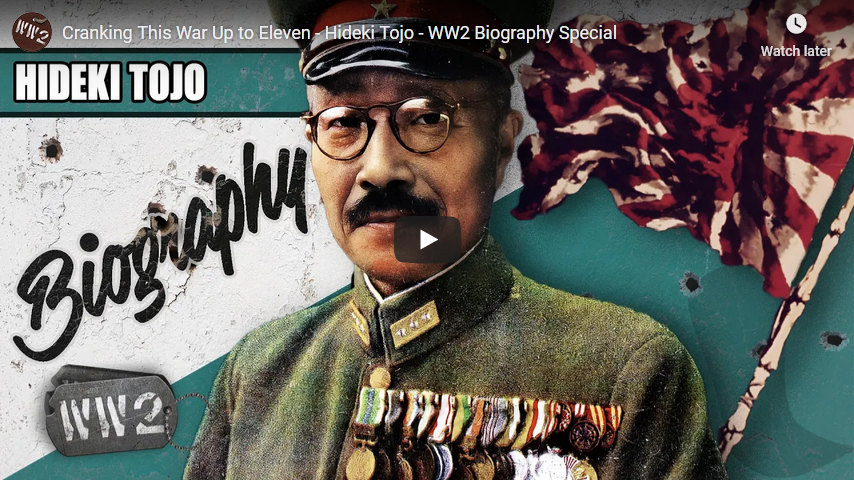
Cranking This War Up to Eleven – Hideki Tojo – WW2 Biography Special
World War Two
Published 28 Oct 2020A man who was both Japan’s War Minister and Prime Minister, who played a large role in escalating the already daunting scale of the war in China to a world war against multiple world powers. We learn about his life from his birth in Tokyo in 1884 to his execution at Sugamo prison in Tokyo in 1948.
Join us on Patreon: https://www.patreon.com/TimeGhostHistory
Or join The TimeGhost Army directly at: https://timeghost.tvFollow WW2 day by day on Instagram @ww2_day_by_day – https://www.instagram.com/ww2_day_by_day
Between 2 Wars: https://www.youtube.com/playlist?list…
Source list: http://bit.ly/WW2sourcesWritten and Hosted by Indy Neidell
Director: Astrid Deinhard
Producers: Astrid Deinhard and Spartacus Olsson
Executive Producers: Astrid Deinhard, Indy Neidell, Spartacus Olsson, Bodo Rittenauer
Creative Producer: Joram Appel
Post-Production Director: Wieke Kapteijns
Research by: Indy Neidell
Edited by: Karolina Dołęga & Iryna Dulka
Sound design: Marek Kamiński
Map animations: Eastory (https://www.youtube.com/c/eastory)Colorizations by:
Carlos Ortega Pereira, BlauColorizations – https://www.instagram.com/blaucolorizations
Jaris Almazani (Artistic Man) – https://instagram.com/artistic.man?ig…
Mikołaj Uchman
Norman Stewart – https://oldtimesincolor.blogspot.com/Archive by Screenocean/Reuters https://www.screenocean.com.
A TimeGhost chronological documentary produced by OnLion Entertainment GmbH.
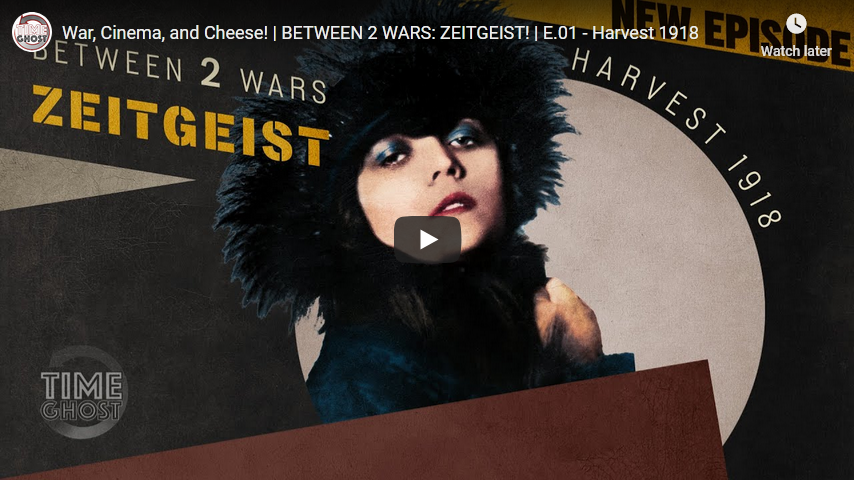
War, Cinema, and Cheese! | BETWEEN 2 WARS: ZEITGEIST! | E.01 – Harvest 1918
TimeGhost History
Published 28 Oct 2020War, poverty, and disease continue to pummel the word in the wake of the Great War. But still, humanity carries on, not only surviving but creating a host of futuristic opportunities in the arts, the economy, and … cheese.
Join us on Patreon: https://www.patreon.com/TimeGhostHistory
Hosted by: Indy Neidell
Written by: Indy Neidell, Francis van Berkel, and Spartacus Olsson.
Director: Astrid Deinhard
Producers: Astrid Deinhard and Spartacus Olsson
Executive Producers: Astrid Deinhard, Indy Neidell, Spartacus Olsson, Bodo Rittenauer
Creative Producer: Maria Kyhle
Post-Production Director: Wieke Kapteijns
Research by: Indy Neidell, Francis van Berkel, and Spartacus Olsson.
Archive Research: Daniel Weiss
Edited by: Daniel Weiss
Sound design: Marek KamińskiColorizations:
Daniel Weiss – https://www.facebook.com/TheYankeeCol…
(BlauColorizations) – https://www.instagram.com/blaucolorizations
Dememorabilia – https://www.instagram.com/dememorabilia/Sources:
From the Noun Project:
iron cross By Souvik Maity, IN
poverty By Phạm Thanh Lộc, VN
Skull_51748Soundtracks from Epidemic Sound:
– “One More for the Road” – Golden Age Radio
– “Dark Shadow” – Etienne Roussel
– “Not Safe Yet” – Gunnar Johnsen
– “Rememberance” – Fabien Tell
– “Last Point of Safe Return” – Fabien Tell
– “Steps in Time” – Golden Age Radio
– “What Now” – Golden Age Radio
– “Sunday Worship” – Radio Night
– “Astray” – Alec Slayne
– “Break Free” – Fabien TellArchive by Screenocean/Reuters https://www.screenocean.com.
A TimeGhost chronological documentary produced by OnLion Entertainment GmbH.
From the comments:
TimeGhost History
1 day ago
Welcome back to Between Two Wars! Strap in for what is going to be an exciting ride through the massive cultural, social, economic, and technological shifts that take place after the Great War. We can’t guarantee this will always be a positive tale. These changes entail plenty of fear and suffering, and even ‘fun’ things like the Jazz Age have their darker sides.But that doesn’t alter the fact that the interwar era is a time of promise where people envision modern futures to replace old pasts. There is everything to play for in this brave new world and a vision of progress all around in politics, culture, food, and more.
October 28, 2020
Who were the Assyrians? History of the Assyrian Empire
Epimetheus
Published 12 Dec 2018Who were the Assyrians? The entire history of the Ancient Assyrian Empire explained in 11 Minutes.
Support new videos from Epimetheus on Patreon! 😀
https://www.patreon.com/Epimetheus1776History of Assyria from its founding, Shamshi Adad, Tiglath Pileser III, Sargon, Ashurbanipal to the fall of Ninevah and the Assyrian Empire.

QotD: The Gurkhas
October 27, 2020
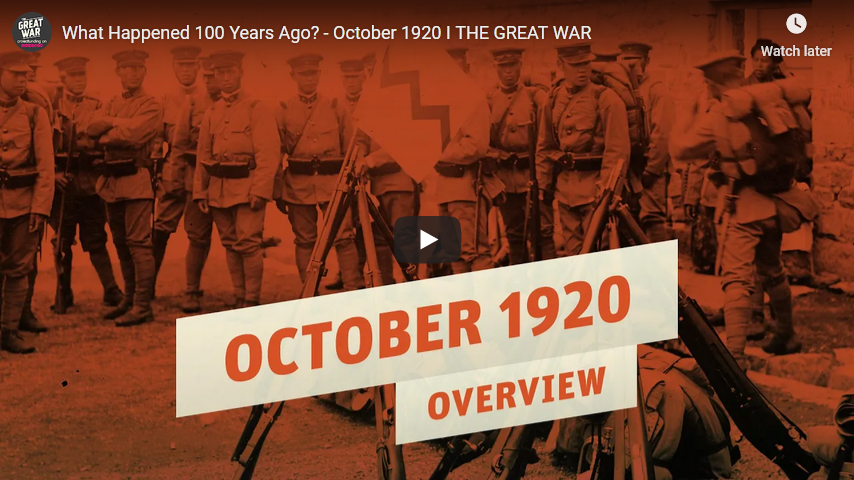
What Happened 100 Years Ago? – October 1920 I THE GREAT WAR
The Great War
Published 26 Oct 2020It’s time for our monthly summary of the events 100 years ago.
» SUPPORT THE CHANNEL
Patreon: https://www.patreon.com/thegreatwar» OUR PODCAST
https://realtimehistory.net/podcast – interviews with World War 1 historians and background info for the show.» BUY OUR SOURCES IN OUR AMAZON STORES
https://realtimehistory.net/amazon *
*Buying via this link supports The Great War (Affiliate-Link)» MORE THE GREAT WAR
Website: https://realtimehistory.net
Instagram: https://instagram.com/the_great_war
Twitter: https://twitter.com/WW1_Series
Reddit: https://reddit.com/r/TheGreatWarChannel»CREDITS
Presented by: Jesse Alexander
Written by: Jesse Alexander
Director: Toni Steller & Florian Wittig
Director of Photography: Toni Steller
Sound: Toni Steller
Editing: Toni Steller
Motion Design: Philipp Appelt
Mixing, Mastering & Sound Design: http://above-zero.com
Maps: Daniel Kogosov (https://www.patreon.com/Zalezsky)
Research by: Jesse Alexander
Fact checking: Florian WittigChannel Design: Alexander Clark
Original Logo: David van StepholdContains licensed material by getty images
All rights reserved – Real Time History GmbH 2020
October 26, 2020
Classic Imperial British Revolvers: the Webley WG Army and Target
Forgotten Weapons
Published 19 Aug 2018http://www.patreon.com/ForgottenWeapons
Cool Forgotten Weapons merch! http://shop.bbtv.com/collections/forg…
The Webley company used the “WG” (Webley Government) nomenclature in its literature starting in 1883, but the first revolver actually marketed as such was the WG Model of 1889. These revolvers were made primarily for the military market, as officers were responsible for supplying their own sidearms in the British military until 1915. The WG was a full size service revolver in .455 caliber (accepting a wide variety of .45 inch British cartridges, including the .450, .455, .476, Enfield Mk II, and Enfield MkIII). A series of refinements would be made to the design culminating in the generally-accepted standard WG pattern in 1896. These would be produced until 1902, when they were replaced by the Webley WS (Webley Service).
The two main variation of the WG were the Army and the Target. The Army typically had a bird’s-head grip and a 6 inch barrel, where the Target had a longer 7.5 inch barrel and a flared square-butt grip, as well as adjustable sights. However, Webley was happy to supply and mix of features to a customer, and many branded patterns exist. The Target pattern proved very successful for shooters at the Dublin, Glasgow, and Wimbledon matches of the period. A total of about 22,000 WG pattern revolvers were made, with the “standard” 1896 model appearing around s/n 10,000.
Contact:
Forgotten Weapons
6281 N Oracle #36270
Tucson, AZ 85704

October 25, 2020
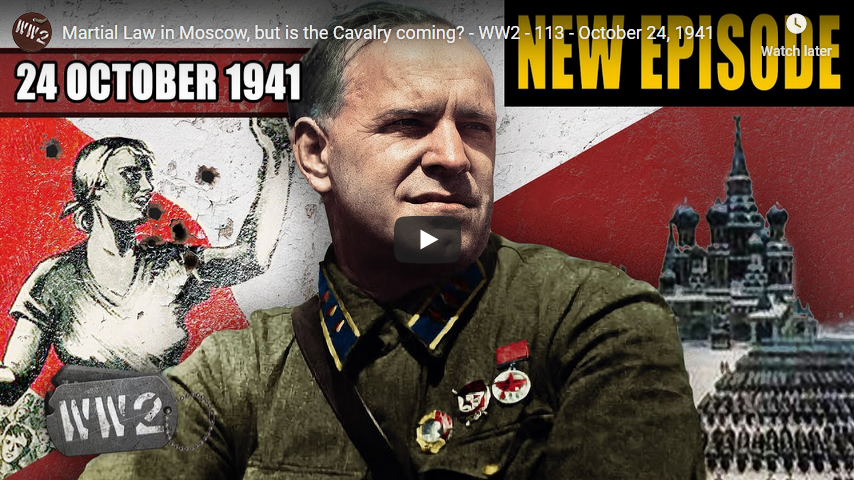
Martial Law in Moscow, but is the Cavalry coming? – WW2 – 113 – October 24, 1941
World War Two
Published 24 Oct 2020The Germans draw ever closer to Moscow, but Soviet reinforcements have begun to arrive from Siberia and the city’s defenses have grown stronger. Meanwhile in the south, the Germans are sweeping into the Crimea and looking hungrily at the Caucasus.
Join us on Patreon: https://www.patreon.com/TimeGhostHistory
Or join The TimeGhost Army directly at: https://timeghost.tvFollow WW2 day by day on Instagram @ww2_day_by_day – https://www.instagram.com/ww2_day_by_day
Between 2 Wars: https://www.youtube.com/playlist?list…
Source list: http://bit.ly/WW2sourcesWritten and Hosted by: Indy Neidell
Director: Astrid Deinhard
Producers: Astrid Deinhard and Spartacus Olsson
Executive Producers: Astrid Deinhard, Indy Neidell, Spartacus Olsson, Bodo Rittenauer
Creative Producer: Maria Kyhle
Post-Production Director: Wieke Kapteijns
Research by: Indy Neidell
Edited by: Miki Cackowski
Sound design: Marek Kamiński
Map animations: Eastory (https://www.youtube.com/c/eastory)Colorizations by:
Julius Jääskeläinen – https://www.facebook.com/JJcolorization/
Mikolaj Uchman
Klimbim – https://www.flickr.com/photos/2215569…
Daniel Weiss
Carlos Ortega Pereira, BlauColorizations – https://www.instagram.com/blaucolorizations
Dememorabilia – https://www.instagram.com/dememorabilia/
Norman Stewart – https://oldtimesincolor.blogspot.com/Sources:
Mil.ru
Bundesarchiv
Narodowe Archiwum Cyfrowe
Yad Vashem 90FO3
from the Noun Project: Skull by Muhamad Ulum, Horse by RIZCA, Injury by Adriano Emerick, Oil Tank by MangsaabguruSoundtracks from the Epidemic Sound:
Johannes Bornlof – “The Inspector 4”
Reynard Seidel – “Deflection”
Johannes Bornlof – “Death And Glory 3”
Johan Hynynen – “Dark Beginning”
Hakan Eriksson – “Epic Adventure Theme 4”
Gunnar Johnsen – “Not Safe Yet”
Andreas Jamsheree – “Guilty Shadows 4”Archive by Screenocean/Reuters https://www.screenocean.com.
A TimeGhost chronological documentary produced by OnLion Entertainment GmbH.
October 24, 2020
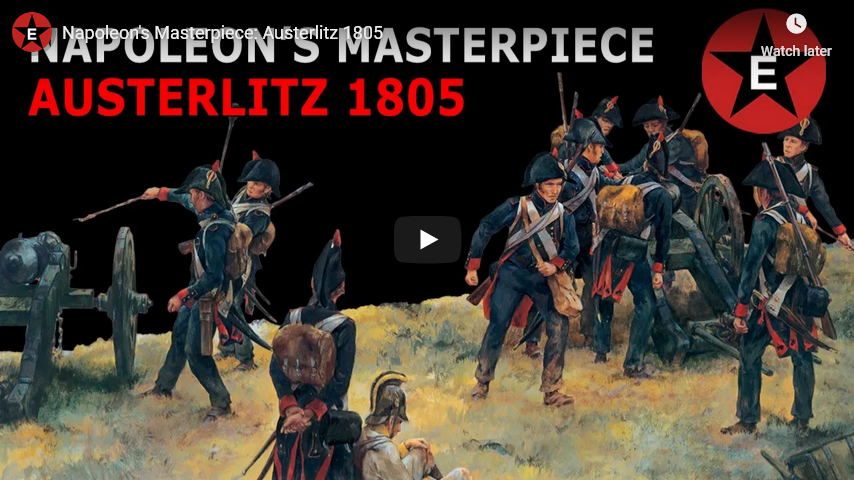
Napoleon’s Masterpiece: Austerlitz 1805
Epic History TV
Published 28 Jun 2018Napoleonic Wars Part 1: Napoleon’s brilliant 1805 campaign culminates in victory at Austerlitz.
Start your FREE trial with The Great Courses Plus here: http://ow.ly/t5FO30kFTfy
Get early access and a vote on future topics by supporting Epic History TV on Patreon: https://www.patreon.com/epichistorytv
With thanks to HistoryMarche, check out his channel here: https://www.youtube.com/channel/UC8MX…
Learn more about the Napoleonic Wars with titles from our co-production partner Osprey Publishing (as an Amazon Associate I earn from qualifying purchases):
Austerlitz 1805 http://geni.us/DlxI
Trafalgar 1805 http://geni.us/4zBYD
French Napoleonic Infantry Tactics 1792 – 1815 http://geni.us/lodnYmMusic from Filmstro: https://filmstro.com/?ref=7765
Get 20% off an annual license with this exclusive code:EPICHISTORYTV_ANN“The Great Courses Plus is currently available to watch through a web browser to almost anyone in the world and optimized for the US market. The Great Courses Plus is currently working to both optimize the product globally and accept credit card payments globally.”
#EpicHistoryTV #NapoleonicWars #Napoleon
Music track “Heavy Interlude” by Kevin MacLeod (incompetech.com)
Licensed under Creative Commons: By Attribution 3.0
http://creativecommons.org/licenses/b…
QotD: Dealing with the Ordnance Office
The game then proceeds on simple and automatic lines. If your application is referred back to you not more than five times, and if you get your washers within three months of the date of application, you are the winner. If you get something else instead — say an aeroplane, or a hundred wash-hand basins — it is a draw. But the chances are that you lose.
[…]
Olympus will not disgorge your washers until it has your receipt. On the other hand, if you send the receipt, Olympus can always win the game by losing the washers, and saying that you have got them. In the face of your own receipt you cannot very well deny this. So you lose your washers, and the game, and are also made liable for the misappropriation of two washers, for which Olympus holds your receipt.
Truly, the gods play with loaded dice.
On the whole, the simplest (and almost universal) plan is to convey a couple of washers from some one else’s gun.
Ian Hay (Major John Hay Beith), The First Hundred Thousand: Being the Unofficial Chronicle of a Unit of “K(1)”, 1916.
October 23, 2020
On Stalin’s Secret Service – Richard Sorge – WW2 Biography Special
World War Two
Published 22 Oct 2020A spy who is famous for warning Stalin about Hitler’s plan to invade the Soviet Union. But he was so much more than that. His fascinating life begins in the Caucasus and eventually leads him to Tokyo.
Join us on Patreon: https://www.patreon.com/TimeGhostHistory
Or join The TimeGhost Army directly at: https://timeghost.tvFollow WW2 day by day on Instagram @ww2_day_by_day – https://www.instagram.com/ww2_day_by_day
Between 2 Wars: https://www.youtube.com/playlist?list…
Source list: http://bit.ly/WW2sourcesWritten and Hosted by: Indy Neidell
Director: Astrid Deinhard
Producers: Astrid Deinhard and Spartacus Olsson
Executive Producers: Astrid Deinhard, Indy Neidell, Spartacus Olsson, Bodo Rittenauer
Creative Producer: Joram Appel
Post-Production Director: Wieke Kapteijns
Research by: Indy Neidell
Edited by: Monika Worona
Sound design: Marek KamińskiColorizations by:
Carlos Ortega Pereira
Daniel Weiss
Mikołaj UchmanSources:
Bundesarchiv
Milu.ru
Archive.orgArchive by Screenocean/Reuters https://www.screenocean.com.
A TimeGhost chronological documentary produced by OnLion Entertainment GmbH.
From the comments:
World War Two
16 hours ago (edited)
More fascinating World War Two spy stuff we know you love. We’ve already spoken about Popov, Enigma, and much more, but what makes Sorge particularly stand out is the amount of praise he has consistently received. Both Tom Clancy and Ian Fleming have said they consider him one of the world’s greatest spies, and other espionage workers, including ones who worked on the opposing side to him, have admitted their admiration for the man.

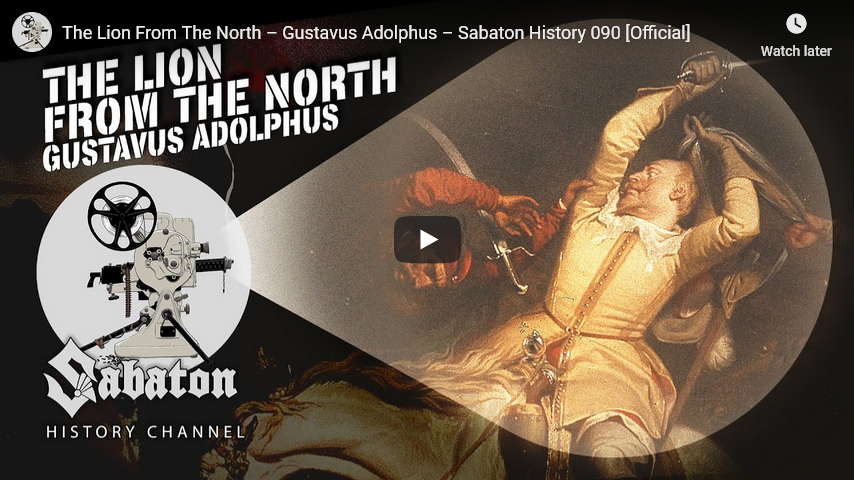
“The Lion From The North” – Gustavus Adolphus – Sabaton History 090 [Official]
Sabaton History
Published 22 Oct 2020It was a time of religion and war. Legends tell the tale of a mighty Swedish King, a Lion from the North, who arrived in the German Empire with a mighty host to save Protestantism. Beyond the legends, Gustavus Adolphus was a warrior king who sought to create a Swedish empire through hegemony on the Baltic Sea. Once, Sweden’s involvement in the 30 Years War had begun out of sheer necessity, but soon send her armies on a path of glory and fame. But would this path lead the Swedish King to victory or his inevitable demise?
Support Sabaton History on Patreon: https://www.patreon.com/sabatonhistory
Listen to “The Lion From The North” on the album Carolus Rex: https://music.sabaton.net/CarolusRexEN
Watch the Official Music Video of “The Lion From The North” here:
https://www.youtube.com/watch?v=T1gvN…Listen to Sabaton on Spotify: http://smarturl.it/SabatonSpotify
Official Sabaton Merchandise Shop: http://bit.ly/SabatonOfficialShopHosted by: Indy Neidell
Written by: Markus Linke and Indy Neidell
Directed by: Astrid Deinhard and Wieke Kapteijns
Produced by: Pär Sundström, Astrid Deinhard and Spartacus Olsson
Creative Producer: Maria Kyhle
Executive Producers: Pär Sundström, Joakim Brodén, Tomas Sunmo, Indy Neidell, Astrid Deinhard, and Spartacus Olsson
Community Manager: Maria Kyhle
Post-Production Director: Wieke Kapteijns
Editor: Karolina Dołęga
Sound Editor: Marek Kaminski
Maps by: Eastory – https://www.youtube.com/c/eastory
Archive: Reuters/Screenocean – https://www.screenocean.comVisual Sources:
– Nationalmuseum
– Arms of Vasa courtesy of Sodacan from Wikimedia
– Nils Forsberg Gustav II Adolf courtesy of Nils Forsberg, Swedish painter from Wikimedia
– Death of King Gustav II Adolf of Sweden by Carl Wahlbom courtesy of Osama Shukir Muhammed Amin FRCP (Glasg) from Wikimedia
– Icons from The Noun Project: Cannon by Graphic Nehar, Man by Milinda CoureyAll music by: Sabaton
An OnLion Entertainment GmbH and Raging Beaver Publishing AB co-Production.
© Raging Beaver Publishing AB, 2019 – all rights reserved.
Tank Chats #83 Valiant | The Tank Museum
The Tank Museum
Published 30 Aug 2019Described by David Fletcher as the worst tank at The Tank Museum! Find out how the WW2 Valiant tank failed in quite so many areas.
Support the work of The Tank Museum on Patreon: ► https://www.patreon.com/tankmuseum
Visit The Tank Museum SHOP: ► https://tankmuseumshop.org/
Twitter: ► https://twitter.com/TankMuseum
Instagram: ► https://www.instagram.com/tankmuseum/
Tiger Tank Blog: ► http://blog.tiger-tank.com/
Tank 100 First World War Centenary Blog: ► http://tank100.com/

QotD: Every military organization
Robert A. Heinlein, Glory Road, 1963.


