
World War Two
Published 25 Jul 2023The destruction of German cities has shown how difficult it is for the heavy bombers of the RAF and USAAF to hit small targets with precision. Things will be no different when these big beasts go into action to support the D-Day landings. Thousands of French civilians will pay the price for the flawed logic of Allied bombing.
(more…)
July 26, 2023
Bombing France into Freedom – War Against Humanity 105
Comments Off on Bombing France into Freedom – War Against Humanity 105
July 25, 2023
If you bet on Admiral Franchetti becoming the next CNO for the US Navy, collect your winnings
I don’t follow US military appointments closely because I’m not in the military, nor an American, so the first time I think I heard of Admiral Franchetti was back in May where Brent Ramsey’s report touted her as the one to watch for the upcoming appointment as the Chief of Naval Operations (she became VCNO in September 2022). Now, CDR Salamander confirms that Admiral Franchetti is almost certainly now the “CNO in waiting”:

Admiral Lisa Franchetti, Vice-Chief of Naval Operations, US Navy.
I am sure that everyone here understands that at the end of last week white smoke rose over The Navy Yard signaling that we had an official nominee for the next Chief of Naval Operations (CNO).
Barring some Ottomanesque bureaucratic defenestration like we saw as Admiral Moran was set to be CNO after Admiral Richardson, the nominee to replace Admiral Gilday as CNO will be Admiral Franchetti — presently the Vice CNO.
Because people in DC can’t seem to keep their mouths shut when they should, unfortunately in mid-month there were some leaks coming out that Admiral Paparo would — surprisingly as the general consensus was the Franchetti was slotted to be the next CNO — be recommended to be the next CNO.
Read the link above it you’re interested in the state of play on the 13th, but things wound up heading as most thought with Franchetti getting the nod. Exceptionally well prepared for INDOPACOM, Paparo will head to there where he is expected to continue to do great and important things for the Navy and the nation it serves at at time where we have no luxury for a learning curve.
Despite Ramsey’s article not-so-subtly raising doubts about Admiral Franchetti’s qualifications for the post, CDR Salamander seems to be signally unruffled with the news:
Her wiki page has a nice concise summary;
Since promotion to flag rank, Franchetti has held appointments as: commander, United States Naval Forces Korea; commander Carrier Strike Group 9; commander, Carrier Strike Group 15; and chief of staff, Joint Staff, J-5, Strategy, Plans and Policy; and Commander, United States Sixth Fleet, Naval Striking and Support Forces NATO; deputy commander, United States Naval Forces Europe; deputy commander United States Naval Forces Africa; and Joint Force Maritime Component Commander.
- Western Pacific: she knows Korea and all associated areas. She also has Pappy coming in to INDOPACOM — an exceptional partner. I hope they have a solid professional relationship already.
- Fleet Challenges: from maintenance to readiness, her time leading CSG-9 and CSG-15 gave her a first person look at it. She knows it.
- JS J5: that speaks for itself.
- C6F et al: she knows Europe and has already built a working and personal relationship with many of her peers in NATO. She’s seen up close what they do and how they do it. Invaluable.
- VCNO: the most important. She’s seen OPNAV and the Potomac Flotilla up close. The greatest danger to her tenure as CNO — and as such our Navy and the nation it serves — is not spotty relationships with the SECNAV and his staff; it not Congress; is not the press; is not the economy; and it sure isn’t her Sailors writ large — no — the greatest threat is the long-dwell nomenklatura in a commuting distance of The Pentagon and The Hill who do not see their job as adjusting their responsibilities to support the CNO, but to bend the CNO towards their personal agendas, projects, and job security. There are some exceptional and valuable people there to support the CNO, but the organization is worm-ridden with rent seekers and bad actors. She’s seen that up close. She knows it.
Since making Flag, she managed to walk around all the rakes, had good luck and timing (part of any success), and she did a solid job as assigned. She has the right experience and performance.
I know a handful of people, some friends of mine for over two decades, who know her personally and have since they were both JOs. With one mild exception, these people I would trust my family with speak well of her. That combined with what I’ve seen in open source works for me.
Comments Off on If you bet on Admiral Franchetti becoming the next CNO for the US Navy, collect your winnings
WWI Footage: Narrow Gauge Train Lines in France
Charlie Dean Archives
Published 14 Aug 2013American forces constructing railways throughout France to help move men and supplies during World War One. We see US Army personnel laying the sleepers and track for the extensive network of two foot (60cm) narrow gauge lines, ballasting work, loading and laying of pre-built trackwork. We also see scenes of the railway in action as the little trains trundle along country lanes and through the town streets. The film ends with scenes of the train taking soldiers towards the front lines.
After the war the lines were abandoned and most of the locomotives and rollingstock simply left where they were last used, with many being salvaged by the locals to help with logging activities.
CharlieDeanArchives – Archive footage from the 20th century making history come alive!
Comments Off on WWI Footage: Narrow Gauge Train Lines in France
July 23, 2023
Sayonara Tojo – WW2 – Week 256 – July 22, 1944
World War Two
Published 22 Jul 2023This week, Adolf Hitler is blown up and Hideki Tojo steps down. In the Pacific, the Americans land on Guam and prepare for hard fighting. In France, the Americans take Saint-Lô and British and German armored forces clash around Caen. In the East, the Red Army enters Latvia, tears a gap in Army Group North, and reaches the gates of Lvov.
(more…)
Comments Off on Sayonara Tojo – WW2 – Week 256 – July 22, 1944
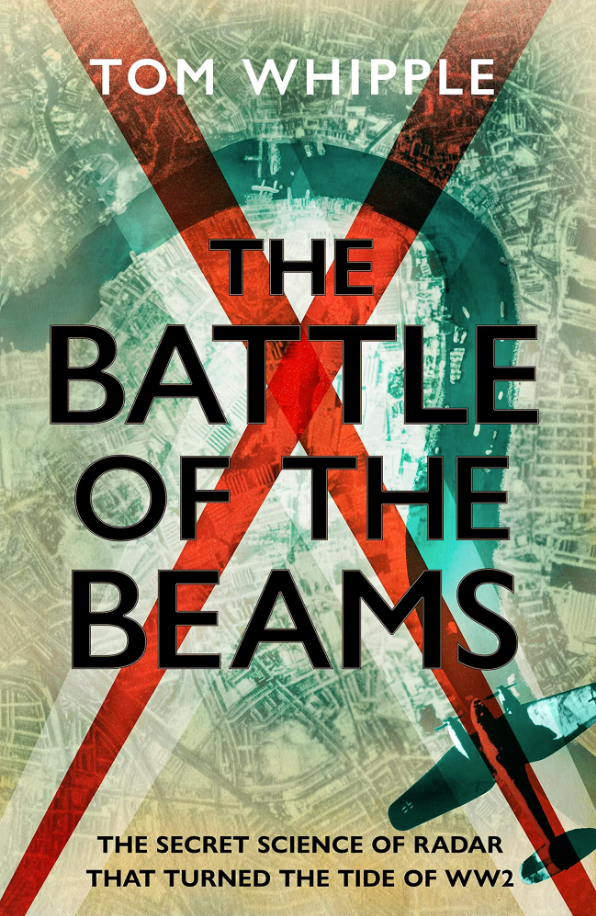
Tom Whipple’s history of radar development during WW2
In The Critic, Robert Hutton reviews The Battle of the Beams by historian Tom Whipple, who retells the story of the technological struggle between Britain and Germany during the Second World War to find ways to guide RAF or Luftwaffe pilots to their targets:
In an age when my phone can tell me exactly where I am and how to get where I’m going, it’s hard sometimes to imagine a time when navigation was one of any traveller’s great challenges. At the outbreak of the Second World War, the advice to Royal Air Force pilots trying to find their way was, more or less, to look out of the window and see whether anything on the ground looked familiar. The Luftwaffe, though, had a rather more sophisticated means of finding their targets.
As Britain braced herself for the bomber onslaught of 1940, there was comfort in knowing that radar would give Hurricanes and Spitfires advance warning of where the attack was coming. As soon as the sun went down, so did the fighters: at night, relying on their eyeballs, they simply couldn’t find the enemy.
That wasn’t so bad, as long as the German pilots had the same problem, but one young British scientist began to suspect that the Luftwaffe had developed a technology that allowed them to find their way even in the dark, guided by radio beams. In June 1940 he found himself explaining to Winston Churchill that German bombers could accurately reach any spot over England that they wanted, even in darkness.
Reg “RV” Jones was the original boffin: a gifted physicist who was recruited to the Air Ministry at the start of the war to help make sense of intelligence reports that offered clues about enemy technology. It was a role to which he was perfectly suited: a man who liked puzzles, with the ability to absorb lots of information and see links, as well as the arrogance to insist on his conclusions, even when his superiors didn’t like them.
The story of the radio battle has been told before, not least by Jones himself. His 1978 memoir Most Secret War was a bestseller and remains in print. It is 700 pages long, though, and it assumes a lot of knowledge about the way 1940s radios worked that readers probably had 50 years ago. Since few people under 50 have much clue why a radio would need a valve or what you might do with a slide rule, there is definitely room for a fresh telling.
Comments Off on Tom Whipple’s history of radar development during WW2
Explained: What Is Pace Sticking?
Forces News
Published 18 Sept 2021A pace stick is a tool made of two pieces of timber that are hinged at the top.
Each summer, 18 pace sticking armed forces teams from around the world come together in an international competition at the Royal Military Academy Sandhurst.
We look at what pace sticking involves, and the history behind it.
(more…)
Comments Off on Explained: What Is Pace Sticking?
July 22, 2023
Did Japan Start WW2 in 1937?
Real Time History
Published 21 Jul 2023In 1937 Japan invaded the Republic of China after already annexing Manchuria in 1931. With the international settlements in Shanghai, the military support through Nazi Germany and the Soviet Union and the general escalation of the war, many argue that 1937 marked the start of the Second World War in Asia.
(more…)
Comments Off on Did Japan Start WW2 in 1937?
QotD: “Managing” your way to victory
Some of the greatest victories of all time were managed by ad hoc organization that, like Topsy, just “growed“ from 1939 to 1945, as Churchill and Roosevelt searched for ways to operate a grand, strategic alliance fighting against formidable enemies, while the postwar fascination with process, led in large part by US Defence Secretary (1961-68) Robert S. McNamara, contributed, I believe, in a major way to the strategic and military debacle that was the Vietnam War (1955-75) when data began to replace tactics, and management theory, coupled with complex organization charts, replaced military acumen and strategic vision.
There is nothing wrong with good, sound management and management theory and management science (and, yes, I believe there actually is a such a thing) have much to teach us all, including governments and the military, about how to get the most from one’s always limited resources, especially time. But, too often, in my opinion, management becomes an end in itself and process replaces critical thinking and analysis. When this happens in both the political/bureaucratic and in the military realms, as I believe it has in Canada (which has tended, since about 1970, to follow the USA almost slavishly) then I believe that our national defence is in peril.
It is common, amongst military people, to accept that there is a “master principle of war”: Selection and Maintenance of the Aim. That means that one MUST understand what one is trying to do and then focus all one’s efforts on getting that done. The corollary is that if you don’t know what you need to be doing then getting the results you want (need) is unlikely. I believe that the Canadian Armed Forces lack good strategic direction because the Government of Canada, the Trudeau government, is unconcerned with anything past the next election. I also believe that the military leadership, lacking strategic direction, simply follows whatever new process seems to be popular in the Pentagon. Canadians, therefore, are not getting value for money from either the government they elected nor from the military forces for which they pay.
Ted Campbell, “Following the blind leader (3)”, Ted Campbell’s Point of View, 2019-05-21.
Comments Off on QotD: “Managing” your way to victory
July 21, 2023
The Führer Adolf Hitler is Dead!?
World War Two
Published 20 Jul 2023Stauffenberg, Olbricht and the plotters launch Operation Valkyrie. The army moves in to seize power, troops surround the government quarter in Berlin, and Joseph Goebbels is arrested. But things start going wrong pretty much immediately and far away in East Prussia the Nazi fightback begins.
(more…)
Comments Off on The Führer Adolf Hitler is Dead!?
Belgian Gendarmerie FAL w/ DSA Receiver
Forgotten Weapons
Published 24 Apr 2023A few months ago FN America was able to import 400 parts sets from original Belgian Gendarmerie FAL rifles. I got one of them, and had it completed by DSA. They made receivers with Gendarmerie markings, as well as the barrel and other parts not included with the kit. So today we’ll take a look at the finished rifle and the work that went into completing it.
(more…)
Comments Off on Belgian Gendarmerie FAL w/ DSA Receiver
QotD: War elephant weaknesses against Roman troops
So today we’re going to ask, “why?” We’ve answered that question in the immediate term – to quote Trautmann (2015) on the point, “the Roman refusal of the war elephant … was based upon a low estimate of its value” (250). To put another way, they thought they sucked. We know elephants could be quite potent in battle, so the answer must be a touch more complicated. We’ll look at this two ways: first (because it’s me) in terms of logistics, and then in terms of anti-elephant tactics, to see why elephants could not succeed against (or with) Rome. I am also going to speculate – just a touch – on which of these factors might explain the other major area elephant warfare did not penetrate: China.
Roman Elephants
But first, a necessary caveat to an objection no doubt already brewing in the minds of some: but didn’t the Romans use elephants sometimes? Yes, though Roman employment of elephants was at best uneven (this is a point, I’d like to note, where Trautmann (2015) shows its value over, for instance, J. M. Kistler’s War Elephants (2006) – the latter’s reading of Roman use of war elephants bends the evidence to serve an argument, rather than the other way around). Nevertheless, the Romans did use war elephants during the last two centuries of the Republic.The Romans had some war elephants (just 20) at Cynocephelae (197 B.C.) against Macedon – these had been drawn from the kingdom of Numidia, which had sided with Rome against Carthage in the Second Punic War. Plutarch (Flam. 8.2-5) leaves the animals out of the battle narrative, but Livy (who is the better source; Liv. 33.9) notes their use to break up the Macedonian right wing, which was not yet even in fighting formation. It’s not clear the elephants were necessary for the Roman victory here and the key action was actually a flanking attack by infantry.
The Romans brought elephants to Magnesia (190 B.C.), but left them in reserve; the Romans only had a few, whereas their Seleucid opponents had brought many more. Moreover, the Roman elephants were smaller African elephants, effectively useless against the large Asian elephants the Seleucids used. Pydna (168 B.C.) against the Macedonians again, is harder to assess because the sources for it are poor (part of Livy’s narrative of the battle is mostly lost). Plutarch (Aem. 19-22) leaves the elephants out again, whereas Livy notes that Perseus’ dedicated elephant-fighting corps was ineffective in fighting the Roman elephants on the right wing, but attributes success there to the socii infantry rather than the elephants (Liv. 44.41.4-6). Kistler reads this as a notable elephant success, but Livy does not say this, instead crediting the socii on the right and the legions breaking up the Macedonian center.
The Romans did find elephants useful in places like Spain or southern Gaul (modern Provence) where just a handful could bewilder and terrify opponents completely unused to and unprepared for them. The last gasp of true Roman war elephants came in 46 B.C., where Julius Caesar defeated a Roman army led by Metellus Scipio which had sixty elephants in it. The elephants lost and one of Caesar’s legions (my personal favorite, Legio V Alaudae (Larks!)) took the elephant as a legionary symbol in commemoration of having beaten them.
So absolutely yes, the Romans of the Middle and Late Republic made some use of war elephants, but it was hardly a distinguished run. As Trautmann notes – quite correctly, in my view – the Romans were always more interested in ways to defeat elephants than to use them.
Bret Devereaux, “Collections: War Elephants, Part II: Elephants against Wolves”, A Collection of Unmitigated Pedantry, 2019-08-02.
Comments Off on QotD: War elephant weaknesses against Roman troops
July 20, 2023
The Fights for Assoro & Leonforte with Mark Zuehlke
OTD Military History
Published 19 Jul 2023Join me as I have Mark Zuehlke back on the channel to discuss the fights for Assoro and Leonforte during the campaign in Sicily.
(more…)
Comments Off on The Fights for Assoro & Leonforte with Mark Zuehlke
July 19, 2023
Diplomats Fight the Nazis in Budapest – War Against Humanity 104
World War Two
Published 18 Jul 2023Hungary’s Jews are facing a Holocaust machine in overdrive. The deportation trains are arriving in such volume that even the extermination factory of Auschwitz can barely keep up with the pace. The entire country swiftly becomes Judenfrei and the Jews of Budapest sit helplessly as Adolf Eichmann and his Hungarian collaborators tighten the noose around them. Admiral Miklós Horthy is one of the few who can save them, but so far he has done nothing. Will that change?
(more…)
Comments Off on Diplomats Fight the Nazis in Budapest – War Against Humanity 104
QotD: If they were serious …
I suppose this should be a post unto itself, but very briefly, If They Were Serious about war with China, you’d expect a few very basic things. Massively stepped-up armaments production, if nothing else, and if you wanted to be really slick about it, you’d do it under the guise of replenishing all the stocks we sent to our plucky allies in Ukraine — purchase orders for 100x the total amount shipped to Keeeeeve, that kind of thing. But that’s the kind of retooling that’s hard to hide, because it would also involved massively stepped-up mining, refining, and so on, not to mention upgrading the transportation infrastructure and so on.
None of those things appear to be happening. And since even an all hands on deck, Nazi-style crash rearmament program has a lag time of a few years, If They Were Serious about premiering Showdown in the Taiwan Strait anytime in the next decade, they’d be jamming that shit out NOW. Right now. Afterburners full.
You also need soldiers to use all that stuff, so you’d expect massively stepped-up military recruiting. Which would entail, at minimum, a push to get American boys into some kind of fighting shape. Which not only isn’t happening, but the exact opposite is happening. Unless you want Uncle Sugar to pay for your “top surgery” or your addadicktome, why would anyone enlist? When you further consider that the same TLAs who are so smoothly rolling out their Hate the Han™ campaign could easily order up some ultra-jingoistic remakes of Stallone movies from the 1980s, it seems as if They are not, in fact, Serious …
… but some of the nodes are, because failure is a distributed system. I love playing If They Were Serious — it’s my favorite drinking game — but alas for me, it relies on the Assumed Internal Consistency Fallacy. Like the Japanese Navy, or the Wehrmacht on the Eastern Front, or even poor Adm. Kimmel, you’ve got certain nodes of the Apparat performing competently to brilliantly in the service of skull-fuckingly stupid objectives, or NO objectives. The Flying TIGRs are even dumber than [Hitler], who at least called a meeting to say “Hey, how’s about we invade Russia in the winter?” While it’s clear to everyone who matters that the TIGRs really really really really really want their war, nobody’s in charge, so everyone is left to figure it out as best they can, on their own initiative, with the resources they have to hand.
And again, much like the Wehrmacht etc., the better the competent nodes perform, the harder and faster the overall system failure. We’re going to end up charging headlong into a war with China because the TLAs at Twitter etc. are doing such a great job making Hate the Han™ the Current Thing. Meanwhile, one imagines Brandon’s handlers telling their Chinese paymasters that no no, that won’t be happening, please don’t cut off our paychecks. And since they’re pretty good at their job, too — their job being “telling Beijing what they want to hear while lugging away huge sacks of cash” — it’s gotta fuck with the People’s Liberation Army command staff.
Consider further that the Army (etc.) are, Kimmel-style, doing a pretty decent job of carrying out their on-paper objectives. Kimmel was told “Get the Fleet ready for a likely confrontation with Japan a few years down the line”, and he did it. The Fistagon has told all its commanders to get ready for a war with China, yeah, sometime down the line … but right now, the important thing is to get as many gays, girls, and trannies as possible into uniform while promoting the Diversity that’s already in uniform as far up the chain of command as possible. General Sasqueetchia, in command of the Fightin’ 45th Mechanized Hairdresser Battalion, says thanks for a job well done … and it IS a job well done, according to the only actual orders anyone has received.
Fun times, right?
Severian, “Failure Nodes”, Founding Questions, 2023-04-18.
Comments Off on QotD: If they were serious …
July 18, 2023
Life lessons from Thomas Sowell’s memoir
Rob Henderson took a lot away from his recent reading of Thomas Sowell’s A Personal Odyssey, including some fascinating lessons from Sowell’s time in the US Marine Corps:

Trust people who value being honest more than being nice.
As the Korean War intensified, Sowell was drafted into the Marine Corps. He notes that color did not matter, as all new recruits were treated with equal disdain. Sowell describes his life in the Marine barracks in Pensacola. There were two non-commissioned officers permanently stationed to oversee the young marines. One was Sergeant Gordon, “a genial, wisecracking guy who took a somewhat relaxed view of life”. The other was Sergeant Pachuki, “a disciplinarian who spoke in a cutting and ominous way” and was always “impeccably dressed”.
Sowell and his peers preferred Sergeant Gordon, as he was more easygoing. Sowell had to go into town to pick up a package. Sowell asked his Chief Petty Officer if he could leave the base to retrieve his package. Sowell received permission.
Later, while Sowell was not on base, he was marked as absent and was accused of being AWOL (absent without leave), a serious offense. Sowell knew Sergeant Gordon, the nice one, had overheard him asking for permission to leave the base. Gordon denied having heard anything, and told Sowell, “You’re just going to have to take your punishment like a man”. Gordon fretted that if he crossed the higher-ups, he would be reassigned to fight in Korea.
But unasked, Sergeant Pachuki came forward and spoke with the colonel, explaining the situation. As a result, Sowell was exonerated and returned back to his duties.
Referring to Gordon, the “nice” sergeant who betrayed him, Sowell writes, “People who are everybody’s friend usually means they are nobody’s friend”.
A “free good” is a costless good that is not scarce, and is available without limit.
Sowell would regularly needle Sergeant Grover, another member who outranked him.
Here’s the excerpt:
Some were surprised that I dared to give Sergeant Grover a hard time, on this and other occasions, especially since he was a nasty character to deal with. Unfortunately for him, I knew that he was going to give me as hard a time as he could, regardless of what I did. That meant it didn’t really cost me anything to give him as hard a time as I could. Though I didn’t realize it at the time, I was already thinking like an economist. Giving Sergeant Grover a hard time was, in effect, a free good and at a zero price my demand for it was considerable.
Sowell learned he could receive something he enjoyed (pleasure at provoking Grover) in exchange for nothing.
Much of what you see has been carefully curated with an agenda in mind.
One of Sowell’s assignments in the Marine Corps was as a Duty Photographer on base. One day after submitting some of his photos, Sowell had the following exchange with the public information office sergeant:
“They are good pictures, he said. “But they do not convey the image that the public information office wants conveyed.”
“What’s wrong with them?” I asked.
“Well, take that picture of the reservists walking across the little wooden bridge carrying their duffle bags.”
“Yeah. What’s wrong with it?”
“The men in that picture are perspiring. You can see the damp spots on their uniforms.”
“Well, if you carry a duffle bag on a 90-degree day, you are going to sweat.”
“Marines do not sweat in public information photographs.”
“Okay, what was wrong with the picture of the reservists picking up shell casings after they had finished firing? That was one of my favorites.”
“Marines do not perform menial chores like that, in our public relations image.”
“But all these photos showed a very true picture of the reservists’ summer here.”
“We’re not here to tell the truth, Sowell,” he said impatiently. “We are here to perpetuate the big lie. Now, the sooner you understand that, the better it will be for all of us.”
When I visited the Air Force recruiter in high school, I saw the brochures with images of well-groomed airmen in their dress blues graduating from basic training. I had no knowledge that much of that training would involve mind-numbing minutia. I suppose this is true for other career fields too. You see radiant coverage of academic research in legacy media outlets, or fun twitter threads outlining interesting research findings. You see the brand new hardcover book with all the glowing blurbs and reviews. You don’t see all the drudgery of research or writing behind the scenes.
Sometimes, it doesn’t pay to have too big a reputation.
Sowell and his fellow marines would sometimes have impromptu boxing matches around the barracks on base. One day Sowell was up against another guy and threw a sloppy right hand. The guy stumbled back, tripped, and fell to the ground. Although Sowell had swung and missed, witnesses thought he had knocked the other guy out.
Later, Sowell went up against another guy named Douglas. Douglas relentlessly came at Sowell and gave him a serious beating. Douglas told Sowell afterwards that the reason he was so aggressive was that he feared Sowell’s “one punch” could turn the fight around at any time. “Sometimes,” Sowell writes, “it doesn’t pay to have too big a reputation.”
Comments Off on Life lessons from Thomas Sowell’s memoir


