
OTD Military History
Published 7 Aug 2023The Battle of Amiens started on August 8 1918. It started the process that caused the final defeat of the German Army on the battlefield during World War 1. Many people falsely claimed that the German Army was not defeated on the battlefield but at home by groups that wished to see German fall. One person who helped to create this myth was German General Erich Ludendorff. He called August 8 “the black day of the German Army”.
See how this statement connects to the stab in the back myth connects to Amiens and the National Socialists in Germany.
(more…)
August 8, 2023
How the Battle of Amiens Influenced the “Stab in the Back” Myth
Comments Off on How the Battle of Amiens Influenced the “Stab in the Back” Myth
Up close with Royal Marines landing craft
Forces News
Published 12 Jul 2022Specialists in small craft operations and amphibious warfare, 47 Commando (Raiding Group) Royal Marines are preparing for overseas training in the Netherlands.
Briohny Williams met up with the marines and found out more about their landing craft.
(more…)
Comments Off on Up close with Royal Marines landing craft
August 6, 2023
The Warsaw Uprising Begins! – WW2 – Week 258 – August 5, 1944
World War Two
Published 5 Aug 2023As the Red Army closes in on Warsaw, the Polish Home Army in the city rises up against the German forces. Up in the north the Red Army takes Kaunas. The Allies take Florence in Italy this week, well, half of it, and in France break out of Normandy and into Brittany. The Allies also finally take Myitkyina in Burma after many weeks of siege, and in the Marianas take Tinian and nearly finish taking Guam. And in Finland the President resigns, which could have serious implications for Finland remaining in the war.
(more…)
Comments Off on The Warsaw Uprising Begins! – WW2 – Week 258 – August 5, 1944
Chaffee Reece Model 1882: A Good Idea on Paper …
Forgotten Weapons
Published 29 Aug 2017Patented in 1879 by Reuben Chaffee and General James Reece, the Chaffee-Reece rifle is an excellent example of how an idea that seems good on paper can easily become untenable in a fielded rifle. The main design premise of the rifle was to have a tubular magazine in the buttstock which held the cartridges out of contact with each other, as opposed to being pressed together by a magazine spring as in a conventional design. This would notionally prevent any possibility of recoil or other forces causing the bullet of our round to impact the primer of another and cause a detonation in the magazine.
In initial testing by the Army in 1882, the prototypes were appealing, and a field trial of 750 rifles was requested. Chaffee and Reece were unable to find a commercial manufacturer willing to take on the production (except Colt, which offered to make just 200, and at the cost of $150 etc), and they ultimately turned to the government-operated Springfield Arsenal to build the guns. A total of 753 rifles were made by Springfield in 1883 and 1884 (interestingly, not serial numbered) and delivered for testing.
That testing went quite badly. The magazine was a very complex system, using two sets of basically reciprocating racks to shuttle cartridges up the magazine as the bolt was cycled, without allowing them to contact each other. It proved very prone to jamming and breakage, and was both extremely difficult to keep clean and very susceptible to, as they would have called it at the time, “derangement”. It was handily beaten by the Winchester Hotchkiss 1885 pattern rifles (among others) in field trials, and that was the end of its potential for adoption. The rifles were eventually sold as surplus, and bought by the Bannerman company, where they remained in stock and available for purchase until at least 1907.
(more…)
Comments Off on Chaffee Reece Model 1882: A Good Idea on Paper …
QotD: Pierre Trudeau’s legacy
I have banged on and on and on, to the annoyance of some of my readers, about how Pierre Elliot Trudeau reshaped Canada, almost entirely, in my considered opinion, for the worse. I have singled out, frequently, his evident distaste for the Canadian military and his very real isolationism and reluctance to have armed forces, at all.
There is a lot of documentation about Pierre Trudeau and his views and attitudes, much of it laudatory, some of it critical. I make no secret of the fact that I assert that one Canadian prime minister (perhaps, in my opinion, Canada best-ever leader) the great Liberal Louis St. Laurent, gave Canada a coherent, principled, liberal, values-based grand strategy in the late 1940s and then, just 20 years later another Liberal, Pierre Trudeau, tore it all down, threw it all aside and imposed new, very illiberal, values on Canada ~ all because, I guess, he could not reconcile the facts that stared him in the face in the late 1940s with his own personal choice to have stood, firmly, on the wrong side of history in 1944 when he elected to continue to study (this time at Harvard) rather than to join in the fight to crush Hitler.
M. St. Laurent and M. Trudeau could not have been more different. Louis St. Laurent was an internationally respected lawyer, he was “a man of the world”, neither an anglophile, like Sir Wildred Laurier, nor an anglophobe like Trudeau, he was secure in being a Canadian. He came to politics reluctantly, as a duty, but he quickly became known to, respected by, and, indeed, often friends with Harry Truman, George Marshal, Dwight Eisenhower and Dean Acheson, with Anthony Eden, Ernest Bevin, Clement Atlee, Sir Winston Churchill and Harold Macmillan, and with Tage Erlander of Sweden, Jawaharlal Nehru and V.K. Krishna Menon in India, Sir Robert Menzies of Australia, Tunku Abdul Rahman in Malaysia and leaders, from the West, the East and the non-aligned states. Pierre Trudeau, on the other hand, was a small, very parochial man who did not, really, understand Canada, beyond French-speaking Québec. He became “famous” for opposing Maurice Duplessis ~ something, I have suggested, that would not be much beyond the intellectual capabilities of a somnolent house cat. He travelled the world but never seemed, to me, to have acquired the respect that was accorded to Louis St. Laurent or Mike Pearson … except, perhaps from Fidel Castro.
Ted Campbell, “Pierre Trudeau’s legacy”, Ted Campbell’s Point of View, 2019-08-02.
Comments Off on QotD: Pierre Trudeau’s legacy
August 5, 2023
Tempting Armageddon: Soviet vs. NATO Nuclear Strategy
Real Time History
Published 4 Aug 2023Since the inception of the nuclear bomb, military strategists have tried to figure out how to use them best. During the Cold War, this led to two very different doctrines but on both sides of the Iron Curtain the military wasn’t sure if you could actually win Nuclear War.
(more…)
Comments Off on Tempting Armageddon: Soviet vs. NATO Nuclear Strategy
August 3, 2023
Behind Japanese lines in Burma – SOE and Karen tribal guerillas in 1944/45
Bill Lyman outlines one of the significant factors assisting General Slim’s XIVth Army to recapture Burma from the Japanese during late 1944 and early 1945:
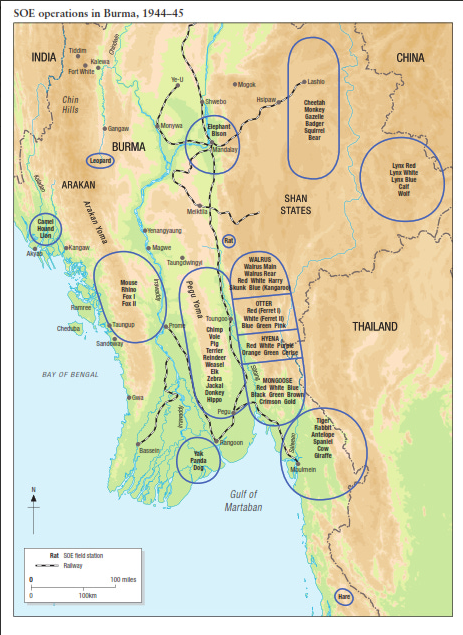
If Lieutenant General Sir Bill Slim (he had been knighted by General Archibald Wavell, the Viceroy, the previous October, at Imphal) had been asked in January 1945 to describe the situation in Burma at the onset of the next monsoon period in May, I do not believe that in his wildest imaginings he could have conceived that the whole of Burma would be about to fall into his hands. After all, his army wasn’t yet fully across the Chindwin. Nearly 800 miles of tough country with few roads lay before him, not least the entire Burma Area Army under a new commander, General Kimura. The Arakanese coastline needed to be captured too, to allow aircraft to use the vital airfields at Akyab as a stepping stone to Rangoon. Likewise, I’m not sure that he would have imagined that a primary reason for the success of his Army was the work of 12,000 native levies from the Karen Hills, under the leadership of SOE, whose guerrilla activities prevented the Japanese from reaching, reinforcing and defending the key town of Toungoo on the Sittang river. It was the loss of this town, more than any other, which handed Burma to Slim on a plate, and it was SOE and their native Karen guerrillas which made it all possible.
In January 1945 Slim was given operational responsibility for Force 136 (i.e. Special Operations Executive, or SOE). It had operated in front of 20 Indian Division along the Chindwin between 1943 and early 1944 and did sterling work reporting on Japanese activity facing 4 Corps. Persuaded that similar groups working among the Karens in Burma’s eastern hills – an area known as the Karenni States – could achieve significant support for a land offensive in Burma, Slim authorised an operation to the Karens. Its task was not merely to undertake intelligence missions watching the road and railways between Mandalay and Rangoon, but to determine whether they would fight. If the Karens were prepared to do so, SOE would be responsible for training and organising them as armed groups able to deliver battlefield intelligence directly in support of the advancing 14 Army. In fact, the resulting operation – Character – was so spectacularly successful that it far outweighed what had been achieved by Operation Thursday the previous year in terms of its impact on the course of military operations in pursuit of the strategy to defeat the Japanese in the whole of Burma. It has been strangely forgotten, or ignored, by most historians ever since, drowned out perhaps by the noise made by the drama and heroism of Thursday, the second Chindit expedition. Over the course of Slim’s advance in 1945 some 2,000 British, Indian and Burmese officers and soldiers, along with 1,430 tons of supplies, were dropped into Burma for the purposes of providing intelligence about the Japanese that would be useful for the fighting formations of 14 Army, as well as undertaking limited guerrilla operations. As Richard Duckett has observed, this found SOE operating not merely as intelligence gatherers in the traditional sense, but as Special Forces with a defined military mission as part of conventional operations linked directly to a military strategic outcome. For Operation Character specifically, about 110 British officers and NCOs and over 100 men of all Burmese ethnicities, dominated interestingly by Burmans mobilised as many as 12,000 Karens over an area of 7,000 square miles to the anti-Japanese cause. Some 3,000 weapons were dropped into the Karenni States. Operating in five distinct groups (“Walrus”, “Ferret”, “Otter”, “Mongoose” and “Hyena”) the Karen irregulars trained and led by Force 136, waited the moment when 14 Army instructed them to attack.
Between 30 March and 10 April 1945 14 Army drove hard for Rangoon after its victories at Mandalay and Meiktila, with Lt General Frank Messervy’s 4 Indian Corps in the van. Pyawbe saw the first battle of 14 Army’s drive to Rangoon, and it proved as decisive in 1945 as the Japanese attack on Prome had been in 1942. Otherwise strong Japanese defensive positions around the town with limited capability for counter attack meant that the Japanese were sitting targets for Allied tanks, artillery and airpower. Messervy’s plan was simple: to bypass the defended points that lay before Pyawbe, allowing them to be dealt with by subsequent attack from the air, and surround Pyawbe from all points of the compass by 17 Indian Division before squeezing it like a lemon with his tanks and artillery. With nowhere to go, and with no effective means to counter-attack, the Japanese were exterminated bunker by bunker by the Shermans of 255 Tank Brigade, now slick with the experience of battle gained at Meiktila. Infantry, armour and aircraft cleared General Honda’s primary blocking point before Toungoo with coordinated precision. This single battle, which killed over 1,000 Japanese, entirely removed Honda’s ability to prevent 4 Corps from exploiting the road to Toungoo. Messervy grasped the opportunity, leapfrogging 5 Indian Division (the vanguard of the advance comprising an armoured regiment and armoured reconnaissance group from 255 Tank Brigade) southwards, capturing Shwemyo on 16 April, Pyinmana on 19 April and Lewe on 21 April. Toungoo was the immediate target, attractive because it boasted three airfields, from where No 224 Group could provide air support to Operation Dracula, the planned amphibious attack against Rangoon. Messervy drove his armour on, reaching Toungoo, much to the surprise of the Japanese, the following day. After three days of fighting, supported by heavy attack from the air by B24 Liberators, the town and its airfields fell to Messervy. On the very day of its capture, 100 C47s and C46 Commando transports landed the air transportable elements of 17 Indian Division to join their armoured comrades. They now took the lead from 5 Indian Division, accompanied by 255 Tank Brigade, for whom rations in their supporting vehicles had had been substituted for petrol, pressing on via Pegu to Rangoon.
Comments Off on Behind Japanese lines in Burma – SOE and Karen tribal guerillas in 1944/45
August 1, 2023
QotD: US Army culture before the Korean War
A sergeant, by shouting at some sensitive yardbird, could get his captain into a lot of trouble. For the real effect of the Doolittle recommendations was psychological. Officers had not been made wholly powerless — but they felt that they had been slapped in the teeth. The officer corps, by 1946 again wholly professional, did not know how to live with the newer code.
One important thing was forgotten by the citizenry: by 1946 all the intellectual and sensitive types had said goodbye to the Army — they hoped for good. The new men coming in now were the kind of men who join armies the world over, blank-faced, unmolded — and they needed shaping. They got it; but it wasn’t the kind of shaping they needed.
Now an N.C.O. greeted new arrivals with a smile. Where once he would have told them they made him sick to his stomach, didn’t look tough enough to make a go of his outfit, he now led them meekly to his company commander. And this clean-cut young man, who once would have sat remote at the right hand of God in his orderly room, issuing orders that crackled like thunder, now smiled too. “Welcome aboard, gentlemen. I am your company commander; I’m here to help you. I’ll try to make your stay both pleasant and profitable.”
This was all very democratic and pleasant — but it is the nature of young men to get away with anything they can, and soon these young men found they could get away with plenty.
A soldier could tell a sergeant to blow it. In the old Army he might have been bashed, and found immediately what the rules were going to be. In the Canadian Army — which oddly enough no American liberals have found fascistic or bestial — he would have been marched in front of his company commander, had his pay reduced, perhaps even been confined for thirty days, with no damaging mark on his record. He would have learned, instantly, that orders are to be obeyed.
But in the new American Army, the sergeant reported such a case to his C.O. But the C.O. couldn’t do anything drastic or educational to the man; for any real action, he had to pass the case up higher. And nobody wanted to court-martial the man, to put a permanent damaging mark on his record. The most likely outcome was for the man to be chided for being rude, and requested to do better in the future.
Some privates, behind their smirks, liked it fine.
Pretty soon, the sergeants, realizing the score, started to fraternize with the men. Perhaps, through popularity, they could get something done. The junior officers, with no sergeants to knock heads, decided that the better part of valor was never to give an unpopular order.
The new legions carried the old names, displayed the old, proud colors, with their gallant battle streamers. The regimental mottoes still said things like “Can Do”. In their neat, fitted uniforms and new shiny boots — there was money for these — the troops looked good. Their appearance made the generals smile.
What they lacked couldn’t be seen, not until the guns sounded.
T.R. Fehrenbach, This Kind of War: A Study in Unpreparedness, 1963.
Comments Off on QotD: US Army culture before the Korean War
July 31, 2023
RSC 1917: France’s WW1 Semiauto Rifle
Forgotten Weapons
Published 17 Nov 2015Did you know that the French Army issued more than 80,000 semiautomatic rifles during WWI? They had been experimenting with a great many semiauto designs before the war, and in 1916 finalized a design for a rotating bolt, long stroke gas piston rifle (with more than few similarities to the M1 Garand, actually) which would see field service beginning in 1917. An improved version was put into production in 1918, but too late to see any significant combat use.
The RSC 1917 was not a perfect design, but it was good enough and the only true semiauto infantry rifle fielded by anyone in significant numbers during the war.
Comments Off on RSC 1917: France’s WW1 Semiauto Rifle
July 30, 2023
Bradley Unleashes His Cobra – WW2 – Week 257 – July 29, 1944
World War Two
Published 29 Jul 2023Operation Cobra is the drop that finally opens the floodgates and the Allies make a breakthrough in Normandy; up in the Baltics the Soviets take Shaulyai, Dvinsk, and finally Narva, though their big prize this week is Lvov further south. This happens during the Poles’ Lvov Uprising, which ends badly for the Poles. Things also go badly for the Japanese on Guam, though, as their assault this week devastates their own troops.
(more…)
Comments Off on Bradley Unleashes His Cobra – WW2 – Week 257 – July 29, 1944
The Grave of the Man Who Never Was: Operation Mincemeat
Tom Scott
Published 7 Nov 2016In a cemetery in Huelva, in Spain, is the grave of Major William Martin, of the British Royal Marines. Or rather, it’s the grave of a man called Glyndwr Michael, who served his country during World War 2 in a very unexpected way … after his death.
(more…)
Comments Off on The Grave of the Man Who Never Was: Operation Mincemeat
July 29, 2023
French 75mm of 1897
vbbsmyt
Published 30 Dec 2021The French 75 is widely regarded as the first modern artillery piece. It was the first field gun to include a hydro-pneumatic recoil mechanism, which kept the gun’s trail and wheels perfectly still during the firing sequence. Since it did not need to be re-aimed after each shot, the crew could reload and fire as soon as the barrel returned to its resting position. In typical use the French 75 could deliver fifteen rounds per minute on its target, either shrapnel or high-explosive, up to about 8,500 m (5.3 mi) away. Its firing rate could even reach close to 30 rounds per minute, albeit only for a very short time and with a highly experienced crew. [wikipedia: https://en.wikipedia.org/wiki/Canon_d…]
The concept for the gun anticipated future conflict being a war of manoeuver — with massed infantry and cavalry attacks — based on the experience of the wars of 1870-1872. Consequently the gun was designed to be able to be moved easily, set up quickly and fire antipersonnel shells (shrapnel) rapidly, and without the need to reset the carriage after each shot. Two critical components were the cased ammunition (shell and cartridge as a single unit) and a recoil system that completely absorbed the recoil forces and returned the gun to its original position without disturbing the gun’s position.
This animation shows the actions necessary to prepare the gun from its “travelling” state to operational state. The carriage has to be “locked” into a fixed position and levelled. The operation of shrapnel shells depends upon setting a time fuse to explode the shell just in front of an attacking force, to shower them with balls, and demonstrates the French Débouchoir mechanical fuse setter that allowed time fuses to be set rapidly and accurately. The liquid (oil) and air (pneumatic) recoil mechanism used a “floating piston” — on one side hydraulic oil and on the other compressed air. The design must keep these two separated while allowing the free piston to move rapidly. The French design laid great emphasis on seals made of silver – being soft enough to conform to the sleeve housing, but as reported by the US when they started manufacturing the 75mm, the key element was highly precise machining of the sleeve housing the free piston.
The French 75mm of 1897 was of less use with the introduction of trench warfare, where howitzers and mortars being the primary artillery, but the 75mm retained some value, one use being firing shrapnel shells at aircraft. A longer time fuse had to be developed to reach the altitude that some aircraft flew at.
(more…)
Comments Off on French 75mm of 1897
July 28, 2023
Ideology and Mediocrity: Inside the 12th SS Division Leadership
OTD Military History
Published 27 Jul 2023Historian Dr. Philip W. Blood discusses how the leadership of the 12th SS (Hitler Youth) Panzer Division were a clique of ideological motivated Nazis and most were promoted into their positions because of their loyalty to Hitler and Nazism and not because they were good soldiers.
Check out my full conversation with Philip Blood at the link below.
Waffen-SS Fantasies and the Commodification of War Crimes
https://youtube.com/live/vdZf_2tooSM
(more…)
Comments Off on Ideology and Mediocrity: Inside the 12th SS Division Leadership
Progressive objections to Oppenheimer
Disclaimer: I haven’t seen the movie, and have no immediate plans to do so. That said, there’s a lot of discussion about the movie, its successes and its failures and how it relates to today’s issues. Over at Founding Questions, Severian felt the need to do a proper fisking of one particularly irritating take:
This is one of two Oppenheimer stories that popped up this morning. I don’t watch tv and haven’t seen a movie in the theater in decades; I doubt I’ve seen more than a handful of “new” movies in the last ten years. So I really am not the target audience for this kind of thing, but … I don’t get it. Why is this movie such a big deal? Have they decided to simply create The One Pop Culture Thing out of whole cloth?
Anyway, let’s see what they have to say:
There’s a cabal online, and even in some professional circles, arguing that Nolan has made the bombing of Hiroshima and Nagasaki a sideshow: that Oppenheimer looks away from the devastating effects of what happened on August 6 and 9 1945.
I guess this is where the Historian in me will forever override the pop culture critic. Obviously Robert Oppenheimer knew he was developing a weapon. The difference between a nuclear bomb and a regular bomb is one of degree, not kind. American firebombing had already done to dozens of Japanese cities what Oppenheimer’s nuke did to Hiroshima. Curtis LeMay knew it, too — after the war, he said that he’d have been rightfully tried for war crimes had the outcome gone the other way. I simply cannot see how this man is uniquely culpable for anything … or if he is, then Rosie the Riveter should be held accountable for every bomber that rolled off the assembly line.
Anti-nuclear groups have been similarly disappointed, with Carol Turner from the Campaign for Nuclear Disarmament telling The Guardian that “the effect of the [Hiroshima and Nagasaki] blasts was to remove the skin in a much more gory and horrible way – in [Oppenheimer] it was tastefully, artfully presented.”
That‘s your objection? That people weren’t shown getting killed in a realistic-enough manner? Jesus Christ, do you people ever listen to yourselves? That’s fucking sick. You are a loathsome excuse for a human being, Carol Turner.
Although it says much about the morals and mechanics of war, Oppenheimer isn’t a war film: it’s ultimately about the internal conflict and persecution of one individual. To painstakingly focus on the Japanese victims would have made it an entirely different film, and one at odds with the rest of Nolan’s vision. (His fellow director James Cameron, meanwhile, is said to be planning a film on the victims of Hiroshima and Nagasaki.)
“Victims”. You keep using that word.
There is currently a trend for great cultural works, such as Oppenheimer, to be denigrated if they don’t tick certain boxes, and such complaints often come from the Left. A lack of focus on victims has been a frequent criticism: it’s an argument that gets wheeled out, for example, whenever a drama is being made about serial killers. Yet I don’t think artists are obliged to do this if it doesn’t fit into their own authorial vision.
I have to admit, I’m getting that old College Town feeling right now. The one where it feels like someone dropped some low-grade acid in my coffee, and I’m hallucinating. I know what all those words mean, but put together like that they don’t make any sense at all. On the most basic level, the objection here seems to be that movies require plots. A “drama about a serial killer”, for example (“drama” … what an odd word choice), requires murders. You know, mechanically speaking. But what does “focusing” on them add? Is it any more or less awful, learning that the dead guy killed at random by a lunatic was really into soccer and had a dog and liked classic rock?
And all this is before you consider that the most vocal critics of Oppenheimer are Leftists … the very same Leftists who are determined to fight to the very last drop of Ukrainian blood, and who seem to think that giving Zelensky tactical nukes is a super idea. Reading the Left’s pronouncements on Vladimir Putin, you’d be forgiven for thinking they’d like to nuke him twice, just to be sure.
Your concern for the “victims” of Hiroshima and Nagasaki rings a little hollow, gang, when you’ve been howling for blood 24/7 on Twitter for a year and a half.
Comments Off on Progressive objections to Oppenheimer
July 27, 2023
History Summarized: The Cities of Ancient Sparta
Overly Sarcastic Productions
Published 14 Apr 2023Is. This. Sparta???
SOURCES & Further Reading:
– “The Spartans” from Ancient Greek Civilization by Jeremy McInerney
– “The Greek Polis – Sparta” from The Foundations of Western Civilization by Thomas F. X. Noble
– “Dark Age and Archaic Greece” from The Greek World: A Study of History and Culture by Robert Garland
– “Being a Greek Slave” from The Other Side of History by Robert Garland.
– The Greeks: A Global History by Roderick Beaton
– The Greeks: An Illustrated History by Diane Cline.
– AskHistorians posts by u/Iphikrates “Is the Military Worship of the Spartans Really Justified?” (https://www.reddit.com/r/AskHistorian…)
– “This. Isn’t. Sparta.” by historian Bret Devereaux argues that Sparta was a horrible place to live, had poorly educated citizens, was militarily mediocre, culturally stagnant, and was ruled by elites who were pretty crappy too. Anything inaccurate in that assessment?” (https://www.reddit.com/r/AskHistorian…)
(more…)
Comments Off on History Summarized: The Cities of Ancient Sparta


