
World War Two
Published on 15 Dec 2018In the second week of the Winter War, during multiple counteroffensives, including the famous Sausage War, the Finnish Defence Forces dash any hopes of a quick victory that the Red Army and Stalin might have had.
WW2 day by day on Instagram @World_war_two_realtime https://www.instagram.com/world_war_t…
Between 2 Wars: https://www.youtube.com/playlist?list…
Join us on Patreon: https://www.patreon.com/TimeGhostHistory
Or join The TimeGhost Army directly at: https://timeghost.tvWritten and Hosted by: Indy Neidell
Produced and Directed by: Spartacus Olsson and Astrid Deinhard
Executive Producers: Bodo Rittenauer, Astrid Deinhard, Indy Neidell, Spartacus Olsson
Research by: Indy Neidell
Edited by: Wieke Kapteijns
Map animations by: Mikk Tali aka Eastory
Community Manager: Joram AppelColoring by Spartacus Olsson
Thumbnail depicting Finnish soldiers using a slingshot to lob grenades at the Red Army. Colorized by Cassowary https://www.flickr.com/photos/cassowa…
Eastory’s channel: https://www.youtube.com/channel/UCEly…
Archive by Screenocean/Reuters https://www.screenocean.comA TimeGhost chronological documentary produced by OnLion Entertainment GmbH
December 16, 2018
Perkele! Finland Strikes Back – WW2 – 016 15 December 1939
Mackenzie King at war
Ted Campbell remembers Canada’s Second World War Prime Minister:
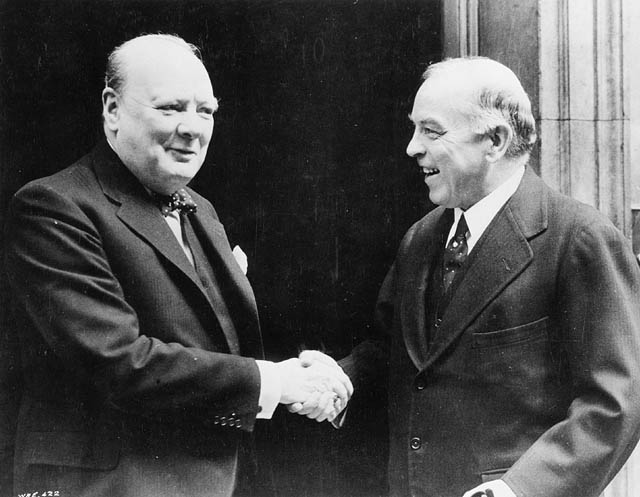
Prime Minister Winston Churchill greets Canadian PM William Lyon Mackenzie King, 1941.
Photo from Library and Archives Canada (reference number C-047565) via Wikimedia Commons.
I was born in 1942, William Lyon Mackenzie King was the prime minister; my mother often said that, in the 1940s, it seemed that he would never cease to be prime minister, and she thoroughly detested him; it wasn’t all of his policies she hated, it was, mainly, how he approached the war, and a few other things ~ she was, later, fond of the Canadian poet F.R. Scott’s rather bitter epitaph:
He seemed to be in the centre because we had no centre,
No vision to pierce the smoke-screen of his politics.Truly he will be remembered wherever men honour ingenuity,
Ambiguity, inactivity, and political longevity.Let us raise up a temple to the cult of mediocrity,
Do nothing by halves which can be done by quarters.Now, Canada fought a good war, we made four absolutely vital contributions:
- We were the true “breadbasket of the empire,” our farmers fed our large Army and much of Britain’s, too;
- We were a major part of the “arsenal of democracy,” our factories and shipyards turned out all of the things, from tanks and trucks and bombers and corvettes to Bren guns and grenades that were needed to help defeat the Axis powers;
- We managed the all important British Commonwealth Air Training Plan that was a key element in the allies’ eventual success; and
- We played a huge and a significant leadership role in the Battle of the Atlantic ~ the only battle Churchill said that he really feared losing.
But under King we did each with apparent reluctance, seemingly trying to never serve any vital interest if there was even a remote chance that any political constituency might be offended ~ something that reminds me of Justin Trudeau in 2018. Our large and entirely commendable war efforts were, in the main, directed, sometimes despite King, by the indefatigable C.D. Howe, and the national unity concerns were assuaged by recruiting the universally respected Louis St Laurent.
The King era was characterized by extraordinarily tepid leadership at the top but brilliant work by strong ministers in a small cabinet. It also began Phase 1 of a national political civil war. I think that in the First World War many Canadians had either understood or had been, largely, indifferent to Quebec’s objections to conscription. But in the 1940s we had better mass communications and many Canadians were less understanding of Quebec’s reluctance to participate in that war, especially as Canadian casualties mounted after Hong Kong and then in Italy and then in France, Belgium and Holland. Louis St Laurent did not try to explain French Quebec’s misgivings to English Canada, his job was to maintain, by force of his own stellar reputation and personality, just enough support in Quebec and, as he easily did, to “outclass” the vocal, crypto-fascist, French Canadian opponents to the war. But there was another division fomenting inside the Liberal Party of Canada: both Howe and St Laurent had a new vision for Canada in the post war world; both saw Canada as an important actor on the world stage; both were frustrated by King’s timid leadership; it is very probable that had St Laurent, the foreign minister, rather than King, [been] the prime minister, led Canada’s delegation to the UN’s founding conference in San Francisco in June of 1945 that Canada, not France, would have been the fifth member of the Security Council (or that it would have had only four members. as originally planned). St Laurent, especially, was known, liked and respected in both London and Washington; both he and Howe were highly regarded as leaders and as statesmen … King was not; Churchill distrusted him because he has actively supported Chamberlain’s appeasement policy and it seems to me that both Churchill and Roosevelt saw him as little more than an errand boy.
The Last British Battleship?
Mark Felton Productions
Published on 13 Nov 2018Does a British battleship still exist? Yes, but not in Britain. Find out the full fascinating story of the last of her kind.
Support my channel by becoming a Patron: https://www.patreon.com/markfeltonpro…
Photos: Nesmad, Ningyou, nattou, Mikasa Historic Memorial Warship
Video: YouTube Creative Commons
QotD: Transferring nationalist passions
The intensity with which they are held does not prevent nationalist loyalties from being transferable. To begin with, […] they can be and often are fastened up on some foreign country. One quite commonly finds that great national leaders, or the founders of nationalist movements, do not even belong to the country they have glorified. Sometimes they are outright foreigners, or more often they come from peripheral areas where nationality is doubtful. Examples are Stalin, Hitler, Napoleon, de Valera, Disraeli, Poincare, Beaverbrook. The Pan-German movement was in part the creation of an Englishman, Houston Chamberlain. For the past fifty or a hundred years, transferred nationalism has been a common phenomenon among literary intellectuals. With Lafcadio Hearne the transference was to Japan, with Carlyle and many others of his time to Germany, and in our own age it is usually to Russia. But the peculiarly interesting fact is that re-transference is also possible. A country or other unit which has been worshipped for years may suddenly become detestable, and some other object of affection may take its place with almost no interval. In the first version of H. G. Wells’s Outline of History, and others of his writings about that time, one finds the United States praised almost as extravagantly as Russia is praised by Communists today: yet within a few years this uncritical admiration had turned into hostility. The bigoted Communist who changes in a space of weeks, or even days, into an equally bigoted Trotskyist is a common spectacle. In continental Europe Fascist movements were largely recruited from among Communists, and the opposite process may well happen within the next few years. What remains constant in the nationalist is his state of mind: the object of his feelings is changeable, and may be imaginary.
But for an intellectual, transference has an important function […]. It makes it possible for him to be much more nationalistic — more vulgar, more silly, more malignant, more dishonest — that he could ever be on behalf of his native country, or any unit of which he had real knowledge. When one sees the slavish or boastful rubbish that is written about Stalin, the Red Army, etc. by fairly intelligent and sensitive people, one realises that this is only possible because some kind of dislocation has taken place. In societies such as ours, it is unusual for anyone describable as an intellectual to feel a very deep attachment to his own country. Public opinion — that is, the section of public opinion of which he as an intellectual is aware — will not allow him to do so. Most of the people surrounding him are sceptical and disaffected, and he may adopt the same attitude from imitativeness or sheer cowardice: in that case he will have abandoned the form of nationalism that lies nearest to hand without getting any closer to a genuinely internationalist outlook. He still feels the need for a Fatherland, and it is natural to look for one somewhere abroad. Having found it, he can wallow unrestrainedly in exactly those emotions from which he believes that he has emancipated himself. God, the King, the Empire, the Union Jack — all the overthrown idols can reappear under different names, and because they are not recognised for what they are they can be worshipped with a good conscience. Transferred nationalism, like the use of scapegoats, is a way of attaining salvation without altering one’s conduct.
George Orwell, “Notes on Nationalism”, Polemic, 1945-05.
December 15, 2018
Who were the Sea People? Bronze Age Collapse
Epimetheus
Published on 24 Nov 2018Operation Odysseus Playlist link- https://www.youtube.com/playlist?list…
My Patreon-https://youtu.be/wUmPluCC27Q
Who were the Sea People? and the Bronze Age Collapse
December 14, 2018
Dreadnought: The Battleship that Changed Everything
Historigraph
Published on 24 Nov 2018So it’s probably worth noting here that when Dreadnought made all other battleships irrelevant, it didn’t do so equally. For example, Japan had constructed two ‘semi-dreadnoughts’ a couple of years earlier, with more 10-inch guns than was standard at the time. The Americans too were moving towards building an ‘all-big-gun’ battleship, but they were much slower at getting them built than the British.
If you enjoyed this video and want to see more made, consider supporting my efforts on Patreon: https://www.patreon.com/historigraph
Sources:
Robert K. Massie, Dreadnought: Britain, Germany and the Coming of the Great War
Ben Wilson, Empire of the Deep: The Rise and Fall of the British Navy
December 13, 2018
The Israeli Galil
Forgotten Weapons
Published on 23 Nov 2018https://www.forgottenweapons.com/the-…
http://www.patreon.com/ForgottenWeapons
The Galil was the result of a program to replace the FAL in Israeli service after its somewhat disappointing performance in the Six-Day War of 1967. Israel found that while the FAL had shown reliability problems in the desert, AK rifles ran just fine despite often being badly neglected. In an initial series of tests, captured AK rifles came out superior to M16 and Stoner 63 rifles. This led to a more extensive series of tests and developmental work in which Yisrael Balashnikov developed a number of prototype rifles based on AK actions modified to 5.56mm using Stoner barrels and magazines. This second trial would ultimately compare the M16, Stoner 63, HK33, AR18, Beretta and Steyr rifles, and domestic developments by both Balashnikov and Uziel Gal. The Balashnikov rifles would prove the ultimate winner of the competition.
Balashnikov – whose name being so similar to Kalashnikov through pure coincidence, and who was originally born Mishmar Hayarden in Russia – would change his name to the more Hebrew sounding Yisrael Galili, and the new rifle pattern would be named the Galil after him. While the prototypes had been built on captured Soviet-bloc AKs, the production version would be based on the Finnish Rk-62 Valmet receiver. The Galil featured a great many improvements and additions to the AKM, including much better rear-mounted aperture sights, night sights, integral bipod (on some models), folding stock, ambidextrous safety and bolt handle, folding carry handle, and of course, a bottle opener. The Galil was formally adopted in 1972, but never did completely equip the Israeli Army, as surplus M16 rifles form the US were available for little or no cost. It was phased out by about 2000 and replaced by the Tavor series.
Prior to 1989, semiauto Galil could be imported into the US for commercial sale, and between 7000 and 9000 were brought in by a succession of importers (Magnum Research, Action Arms, and Springfield Armory). A 7.62mm NATO version of the Galil was introduced in 1983, which was not used by the Israeli military but did see adoption by Colombia as well as limited commercial sale in the US. The standard 5.56mm Galil were purchased by an array of foreign militaries including Guatemala, Nicaragua, Estonia, Portugal, and South Africa (where it served as the basis for the domestic production R4 series).
Contact:
Forgotten Weapons
PO Box 87647
Tucson, AZ 85754
December 12, 2018
WW1 World Leaders & Generals After The War I THE GREAT WAR Epilogue
The Great War
Published on 10 Dec 2018The First World War was a historic event that challenged established power structures, political and military leaders. It also catapulted new ideas, new leaders and new officers onto the world stage. In this video we briefly explore what happened to them after the Great War.
Why Socrates Hated Democracy
The School of Life
Published on 28 Nov 2016We’re used to thinking hugely well of democracy. But interestingly, one of the wisest people who ever lived, Socrates, had deep suspicions of it.
QotD: G.K. Chesterton’s political Catholicism
Ten or twenty years ago, the form of nationalism most closely corresponding to Communism today was political Catholicism. Its most outstanding exponent — though he was perhaps an extreme case rather than a typical one — was G. K. Chesterton. Chesterton was a writer of considerable talent who whose to suppress both his sensibilities and his intellectual honesty in the cause of Roman Catholic propaganda. During the last twenty years or so of his life, his entire output was in reality an endless repetition of the same thing, under its laboured cleverness as simple and boring as ‘Great is Diana of the Ephesians.’ Every book that he wrote, every scrap of dialogue, had to demonstrate beyond the possibility of mistake the superiority of the Catholic over the Protestant or the pagan. But Chesterton was not content to think of this superiority as merely intellectual or spiritual: it had to be translated into terms of national prestige and military power, which entailed an ignorant idealisation of the Latin countries, especially France. Chesterton had not lived long in France, and his picture of it — as a land of Catholic peasants incessantly singing the Marseillaise over glasses of red wine — had about as much relation to reality as Chu Chin Chow has to everyday life in Baghdad. And with this went not only an enormous overestimation of French military power (both before and after 1914-18 he maintained that France, by itself, was stronger than Germany), but a silly and vulgar glorification of the actual process of war. Chesterton’s battle poems, such as Lepanto or The Ballad of Saint Barbara, make The Charge of the Light Brigade read like a pacifist tract: they are perhaps the most tawdry bits of bombast to be found in our language. The interesting thing is that had the romantic rubbish which he habitually wrote about France and the French army been written by somebody else about Britain and the British army, he would have been the first to jeer. In home politics he was a Little Englander, a true hater of jingoism and imperialism, and according to his lights a true friend of democracy. Yet when he looked outwards into the international field, he could forsake his principles without even noticing he was doing so. Thus, his almost mystical belief in the virtues of democracy did not prevent him from admiring Mussolini. Mussolini had destroyed the representative government and the freedom of the press for which Chesterton had struggled so hard at home, but Mussolini was an Italian and had made Italy strong, and that settled the matter. Nor did Chesterton ever find a word to say about imperialism and the conquest of coloured races when they were practised by Italians or Frenchmen. His hold on reality, his literary taste, and even to some extent his moral sense, were dislocated as soon as his nationalistic loyalties were involved.
Obviously there are considerable resemblances between political Catholicism, as exemplified by Chesterton, and Communism. So there are between either of these and for instance Scottish nationalism, Zionism, Antisemitism or Trotskyism. It would be an oversimplification to say that all forms of nationalism are the same, even in their mental atmosphere, but there are certain rules that hold good in all cases.
George Orwell, “Notes on Nationalism”, Polemic, 1945-05.
December 11, 2018
Viking Expansion – Lies – Extra History
Extra Credits
Published on 8 Dec 2018Writer Rob Rath talks about all the cool stories and facts we didn’t get to cover in the already expansive Viking Expansion series.
Join us on Patreon! http://bit.ly/EHPatreon
7:08 – Rob learns he has a linguistic tic about being able to correctly distinguish “ancestor” and “descendant”
17:10 – Olga of Kiev scared Matt to death… really though…
25:23 – Walpole Connection
28:05 – what’s next on Extra HistorySome other works to check out: The Sea Wolves: A History of the Vikings, by Lars Brownworth / The Vikings, by Else Roesdahl / Podcast: Norse by Northwest
Criticizing the left, from the left
In Quillette, Matt Johnson discusses the phenomenon of devoted leftists being willing to criticize their own “side”, and includes a section on George Orwell’s willingness to critique leftists while still being a fully dedicated leftist himself:
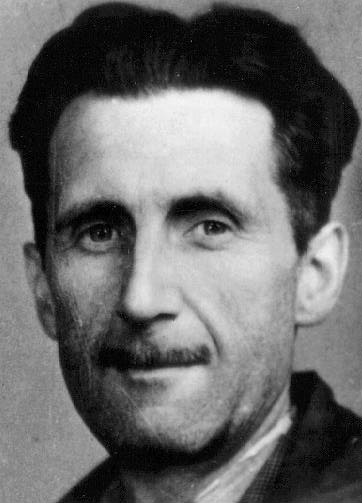
Orwell’s press card portrait, 1943
Bruckner’s remark about “Stalinist blackmail” calls to mind a writer whose commitment to both left-wing politics and anti-totalitarianism never wavered in the face of threats and coercion from the Left.
In the summer of 2003, the BBC aired George Orwell: A Life in Pictures. About halfway through the documentary, Orwell (played by Chris Langham) says, “Every line of serious work that I have written since 1936 has been written, directly or indirectly, against totalitarianism.” This is a line from one of Orwell’s best-known essays, published in 1946, “Why I Write.” But astute viewers may have noticed that something was missing from the reference — eight words that the producers decided to leave out.
Here’s the original sentence: “Every line of serious work that I have written since 1936 has been written, directly or indirectly, against totalitarianism and for democratic socialism, as I understand it.” After the sentence abruptly ends with the word “totalitarianism” in the documentary, Langham takes a long drag on his cigarette before jumping to a different passage of the essay. It was almost as if the producers wanted to accentuate the omission, taunting viewers with their own version of Orwell — one who didn’t have the courage to disclose his true beliefs.
There’s something simultaneously fitting and perverse about the manipulation of Orwell’s words more than half a century after his death (by the BBC, no less). Orwell’s anxiety about the falsification of history is one of the major themes of Nineteen Eighty-Four — as well as much of his other writing and later correspondence — and this is what the producers of the documentary were guilty of doing when they amputated one of his firmest ideological declarations and turned it into a much more palatable and anodyne comment on totalitarianism. No matter how badly some people want Orwell to be a polished and uncontroversial product for mass consumption, he was still the man who wrote these words as he speculated about the possibility of violent revolution in England: “I dare say the London gutters will have to run with blood. All right, let them, if it is necessary.”
Even when Orwell wasn’t in a mood that had him impatiently looking forward to the day “when the red militias are billeted in the Ritz,” he was always honest about his political beliefs. On November 13, 1945, Katharine Stewart-Murray, the Duchess of Atholl, wrote to Orwell asking if he would speak on behalf of an anti-communist organization called the League for European Freedom. This was a month after the publication of Animal Farm — a time when Orwell was worried that the book would be misinterpreted as a broadside against socialism instead of a narrower attack on Stalinism.
Given this context, it isn’t surprising that Orwell declined the duchess’s offer: “Certainly what is said on your platforms is more truthful than the lying propaganda to be found in most of the press, but I cannot associate myself with an essentially Conservative body which claims to defend democracy in Europe but has nothing to say about British imperialism.” Even though Orwell was a staunch anti-communist, his essential political convictions remained immovable: “I belong to the Left and must work inside it, much as I hate Russian totalitarianism and its poisonous influence in this country.”
Orwell was a socialist until the end of his life. For many people, this complicates his legacy and detracts from his pristine image as the twentieth century’s foremost foe of totalitarianism — an image that has been appropriated again and again over the past 70 years.
[…]
But as Orwell was at pains to demonstrate (especially after the publication of Animal Farm), he would have firmly rejected the Right’s attempts to appropriate his legacy. While Orwell is rightly celebrated for his refusal to accept the dogmas of the Left when he was under tremendous pressure to do so, his independence of mind is only one of the reasons why he remains so relevant today. His ability to maintain that independence without sacrificing his most fundamental principles may be even more important.
Why the Byzantine Empire Never Existed
KhAnubis
Published on 12 Aug 2018We frequently talk about the Eastern Roman Empire as if it were some separate empire from the Roman Empire, when in fact, in a lot of ways, the Roman and Byzantine Empires were really the same empire.
December 10, 2018
One Million Subscriber Special! The French 75 – Guns, Drinks, and Shirts!
Forgotten Weapons
Published on 9 Dec 2018Holy cow, a million subscribers! When I started Forgotten Weapons, I never for a moment suspected it would end up this popular. Thank you to everyone who has subscribed! I think this required a celebratory cocktail … specifically, a French 75. So let’s talk about the French 75 the gun – the Canon de 75 modèle 1897 – as well as the cocktail named after it.
In celebration of the milestone, we have a two-day sale on some of the merchandise at the Forgotten Weapons store – which you should check out:
http://shop.bbtv.com/collections/forg…
I would also like to mention that you can now find lots of Forgotten Weapons content on Amazon Prime, where videos have been compiled into 1-2 hour themed series:
And last but certainly not least, a huge thanks to everyone who supports Forgotten Weapons on Patreon! Your support is what has made this possible, and what will keep it here for years to come.
http://www.patreon.com/ForgottenWeapons
Contact:
Forgotten Weapons
PO Box 87647
Tucson, AZ 85754
Tank Chats #38 Churchill | The Tank Museum
The Tank Museum
Published on 3 Jun 2017Historian David Fletcher MBE, in the 38th Tank Chat discussing the well-loved Churchill tank. The Churchill in this video resides at The Tank Museum, Bovington and was the last Churchill VII of the production line.
The Churchill tank was rushed in to production during the early years of the Second World War. The Churchill tank was one of the most successful British tank designs of the Second World War. They saw service from the 1942 Dieppe raid, through to North Africa, Italy and Europe.
Support the work of The Tank Museum on Patreon: ► https://www.patreon.com/tankmuseum
Or donate http://tankmuseum.org/support-us/donateTwitter: ► https://twitter.com/TankMuseum
Tiger Tank Blog: ► http://blog.tiger-tank.com/
Tank 100 First World War Centenary Blog: ► http://tank100.com/ #tankmuseum #tanks


