There have always been gold-diggers – considering the intellectual castration of women historically, it would have been lunacy for bright broads not to attempt to gain wealth by any means necessary. During the Golden Age of Hollywood, they were often the wittiest and warmest onscreen female role models around; ironically, the women who played them were grafters, rarely asking for anything during any of their multiple divorces. There’s a story about Ava Gardner, Rita Hayworth and Lana Turner going home early from a Hollywood party to be ready in time for the studio dawn call as a trio of expensive call girls sweep in just getting ready to get started on some serious fun. One of the sex goddesses remarks to the others: “We picked the wrong job!” Of course she was kidding – an ageing hooker has about as much prestige as an ageing racehorse. But there’s something admirably realistic about a gold-digger who knows she’s one.
Julie Burchill, “The Princess generation needs to grow up”, The Spectator, 2017-07-18.
August 22, 2019
QotD: Stars of the silver screen
August 21, 2019
Summer Stupidity: GLADIATOR (Media Review!)
Overly Sarcastic Productions
Published on 20 Aug 2019The first time I saw Gladiator (2000) was in Latin class, and I have maintained since that first viewing that this movie rules.
Just pretend it’s historical fiction and the emperors are named literally anything else, and you’re set.
PATREON: https://www.Patreon.com/OSP
DISCORD: https://discord.gg/sS5K4R3
MERCH LINKS: https://www.redbubble.com/people/OSPY…
OUR WEBSITE: https://www.OverlySarcasticProductions.com
Find us on Twitter https://www.Twitter.com/OSPYouTube
Find us on Reddit https://www.Reddit.com/r/OSP/

August 20, 2019
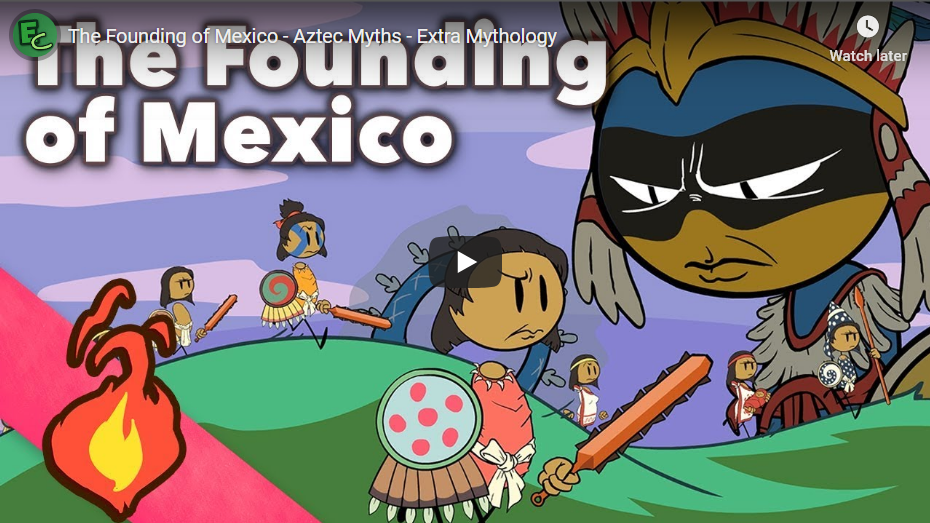
The Founding of Mexico – Aztec Myths – Extra Mythology
Extra Credits
Published on 19 Aug 2019Join the Patreon community! http://bit.ly/EMPatreon
Huitzilopochtli, god of bloody victory, had promised the Mexica people a city. Before they would eventually settle down at Tenochtitlan, they wandered from place to place, inadvertently causing destruction on the orders of the violent god.
From the comments:
Extra Credits
2 days ago
A procession leads a woman up the steps of a great pyramid. The woman is to be the queen of the Mexica, a new tribe of migrants that have come from a faraway place. However, no wedding will take place. The Mexica’s patron god, Huitzilopochtli, has other intentions.
QotD: Autobiography
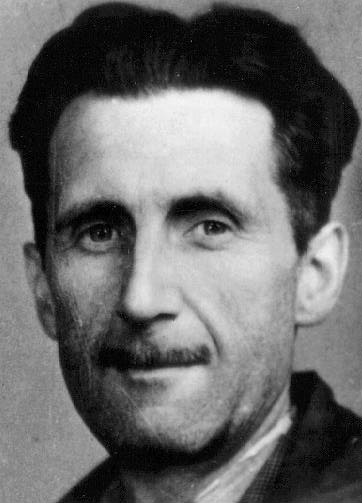
Orwell’s press card portrait, 1943
Autobiography is only to be trusted when it reveals something disgraceful. A man who gives a good account of himself is probably lying, since any life when viewed from the inside is simply a series of defeats. However, even the most flagrantly dishonest book (Frank Harris‘s autobiographical writings are an example) can without intending it give a true picture of its author. Dali’s recently published [The Secret Life of Salvador Dali] comes under this heading. Some of the incidents in it are flatly incredible, others have been rearranged and romanticised, and not merely the humiliation but the persistent ordinariness of everyday life has been cut out. Dali is even by his own diagnosis narcissistic, and his autobiography is simply a strip-tease act conducted in pink limelight. But as a record of fantasy, of the perversion of instinct that has been made possible by the machine age, it has great value.
George Orwell, “Benefit of Clergy: Some Notes on Salvador Dali”, Saturday Book for 1944, 1944.
August 19, 2019
The Peterloo Massacre
In Spiked on Friday, Brendan O’Neill marked the 200th anniversary of a brutal suppression of thousands of protestors demanding the right to vote in Britain:
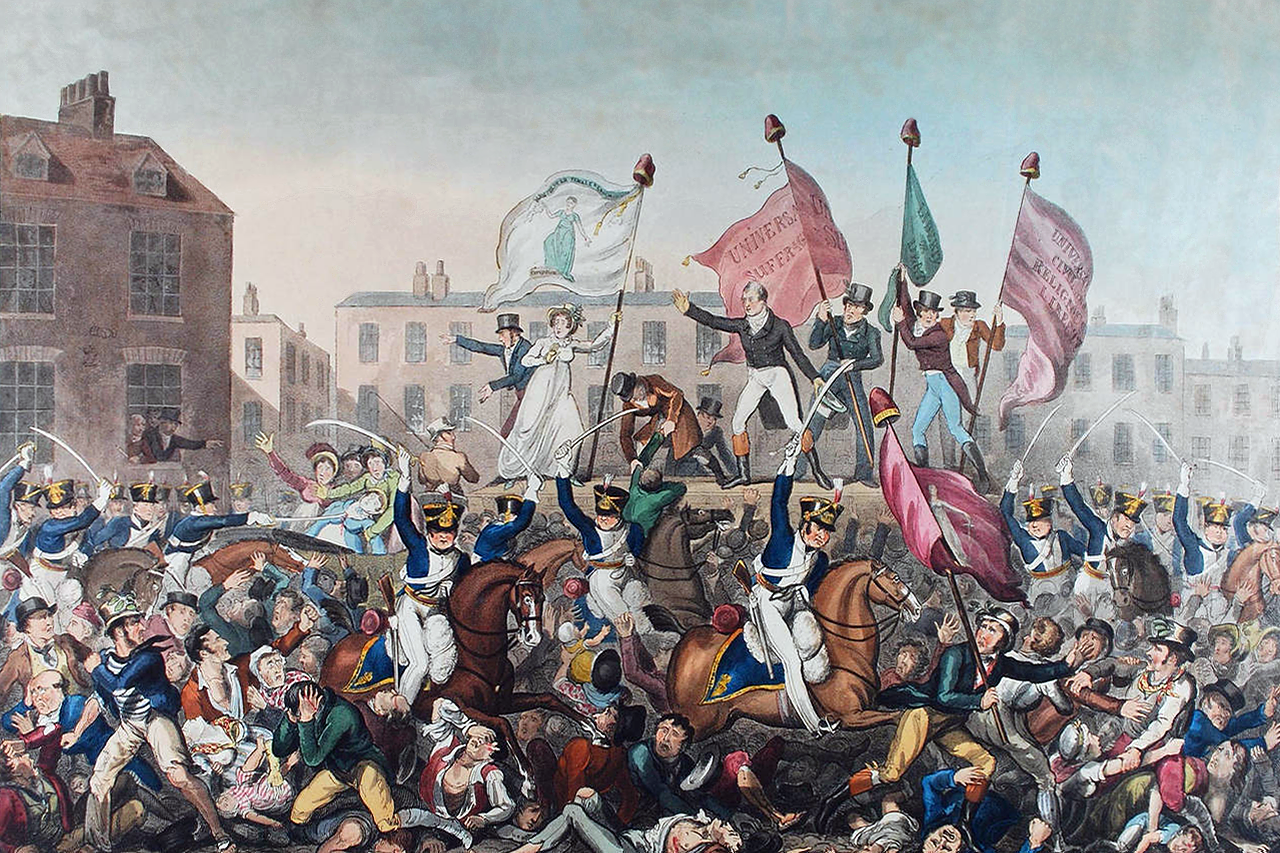
The Peterloo Massacre by Richard Carlile (1790-1843)
To Henry Hunt, Esq., as chairman of the meeting assembled in St. Peter’s Field, Manchester, sixteenth day of August, 1819, and to the female Reformers of Manchester and the adjacent towns who were exposed to and suffered from the wanton and fiendish attack made on them by that brutal armed force, the Manchester and Cheshire Yeomanry Cavalry, this plate is dedicated by their fellow labourer, Richard Carlile: a coloured engraving that depicts the Peterloo Massacre (military suppression of a demonstration in Manchester, England by cavalry charge on August 16, 1819 with loss of life) in Manchester, England.
All the poles from which banners are flying have Phrygian caps or liberty caps on top. Not all the details strictly accord with contemporary descriptions; the banner the woman is holding should read: Female Reformers of Roynton — “Let us die like men and not be sold like slaves”.
Manchester Library Services via Wikimedia Commons.
Today is the 200th anniversary of the Peterloo Massacre, when working people in Manchester were attacked and murdered by cavalry forces for daring to demand the right to vote. And what is our political class doing on this anniversary of such an important event in British political history? They are plotting, tirelessly, to overthrow something that millions of working-class people, and others, voted for: Brexit. They are doing what the Peterloo butchers did, only by political means and court cases rather than with bayonets and sabres. Our current political rulers may not physically attack the masses for having the temerity to use their democratic voices — not yet, anyway — but they view us with the exact same seething, elitist contempt as those who did attack the masses in St Peter’s Field on 16 August 1819.
Around 60,000 men, women and children gathered in St Peter’s Field in Manchester 200 years ago to demand parliamentary representation. They wanted that most basic and essential democratic right: the right to vote. The teeming industrial city of Manchester had no elected MPs in parliament. The old “rotten boroughs” system meant that often sparsely populated rural areas sent MPs to the Commons, involving much patronage and sometimes even the buying of votes by wealthy aspiring politicians, while newly industrialised cities full of the growing urban working classes had little to no political representation. Against a background of post-Napoleonic Wars economic depression and a fast-spreading radical desire for meaningful democratic change, the tens of thousands of marchers arrived in St Peter’s Field with a clear demand: let us vote, let us speak.
What happened next is well known. They were attacked by cavalry forces. Troops on horseback wielded sabres against the democratic crowd. They slashed and stabbed, killing 18 people. Around 500 were injured. The slaughter was given the name “Peterloo” as an ironic comparison to the Battle of Waterloo that took place four years earlier, in 1815. The bourgeoisie’s assault on the working-class democrats of Manchester had a deep impact on the radical psyche. New movements emerged in subsequent years, including the Chartists, the working-class movement for democratic representation. But it would be decades before the right to vote had been established across society. In 1867 some working-class men got the right to vote. In 1918, all men and some women got the right to vote. In 1928, finally all women got the vote. The General Election of 1929, 110 years after the march to St Peter’s Field, was the first election in which all adults had the right to vote.
The 200th anniversary of this bloody assault on working-class democrats ought to be a major occasion. It should be a reminder of the incredible, heroic sacrifices earlier generations made to secure people’s right to express themselves, to vote, and to see their votes be enacted. And yet while some in the political and media class will today pay lip service to the heroes of St Peter’s Field and express regret about the massacre of 18 of them, most of the elites will be too busy to do anything of the kind. Busy doing what? Trying to override and crush the votes of 17.4million people, which includes millions of working-class people and eight million women. It is a genuinely alarming and revealing moment: the 200th anniversary of the Peterloo Massacre arrives and the political set is engaged in an effective coup against the people; in a war against “No Deal Brexit” (which really just means a war against Brexit); in a concerted effort to force the ignorant public, as they see us, to vote for a second time and to give the “right” answer on this occasion.
Joan of Arc – Lies – Extra History
Extra Credits
Published on 17 Aug 2019Writer Rob Rath talks about all the cool stories and facts we didn’t get to cover in our recent series on the hated and beloved Joan of Arc.
Join us on Patreon! http://bit.ly/EHPatreon
From the comments:
Extra Credits
2 days agoRecommended reading:
– Joan of Arc: A History, by Helen Castor
– Joan of Arc by Herself and Her Witnesses, by Régine Pernoud
– Orléans, 1429: France Turns the Tide, by David Nicolle
4:01 – really cool side characters that didn’t make the final video script (but did show up in Game of Thrones??)
8:12 – multiple versions of Joan’s meeting with Charles
10:48 – all the other famous people we didn’t mention, including Gilles de Rais
13:11 – Joan really did have excellent tactical acumen, which we had to gloss over in her later battles
19:55 – what’s next on Extra History
21:17 – Six Degrees of Walpole
QotD: Hitler’s “wonder weapons”
Marcus Jones, “Innovation For Its Own Sake: The Type XXI U-boat”, Naval War College Review, 2014-04.
August 18, 2019
Il Duce Kicks Churchill Where it Hurts – WW2 – 051 – August 17 1940
World War Two
Published on 17 Aug 2019As the Battle of Britain reaches not seen before levels of intensity, one of the British colonies is lost to the Italians.
Join us on Patreon: https://www.patreon.com/TimeGhostHistory
Or join The TimeGhost Army directly at: https://timeghost.tvFollow WW2 day by day on Instagram @World_war_two_realtime https://www.instagram.com/world_war_t…
Join our Discord Server: https://discord.gg/D6D2aYN.
Between 2 Wars: https://www.youtube.com/playlist?list…
Source list: http://bit.ly/WW2sourcesWritten and Hosted by: Indy Neidell
Produced and Directed by: Spartacus Olsson and Astrid Deinhard
Executive Producers: Bodo Rittenauer, Astrid Deinhard, Indy Neidell, Spartacus Olsson
Creative Producer: Joram Appel
Post-Production Director: Wieke Kapteijns
Research by: Indy Neidell
Edited by: Iryna Dulka
Map animations: EastoryColorisations by Norman Stewart and Julius Jääskeläinen https://www.facebook.com/JJcolorization/
Eastory’s channel: https://www.youtube.com/channel/UCEly…
Archive by Screenocean/Reuters https://www.screenocean.com.Sources:
– Banda groups scan by Localcivis
– Freepngimg.com
– Original photograph of Simon Gauleiter by Mykemalone on Wikimedia Commons
– Membership card photo Photograph by Zinneke on Wikimedia Commons
– IWM: E 1168, E 4350, NA 1670A TimeGhost chronological documentary produced by OnLion Entertainment GmbH.
AAI 2nd Gen SPIW Flechette Rifles
Forgotten Weapons
Published on 24 Jun 2019http://www.patreon.com/ForgottenWeapons
Cool Forgotten Weapons merch! http://shop.bbtv.com/collections/forg…
The SPIW program began in 1962 with entries from Colt, Springfield, AAI, and Winchester. The first set of trials were a complete failure, and both Colt and Winchester abandoned the project at that point. AAI pressed on, producing these second generation rifles – one for trials in 1966 and one after. Both are chambered for the XM-645 5.6x57mm single-flechette cartridge. Under testing, both showed multiple serious problems in reliability, noise, cook-offs, and accuracy. The company would struggle on for years continuing to develop the flechette rifle system, but would be ultimately unsuccessful.
Thanks to the Rock Island Arsenal Museum for allowing me access to film this very interesting rifle! If you are in the Quad Cities in Illinois or Iowa, the Museum is definitely worth a visit. They have a great number of small arms on display as well as an excellent history of the Rock Island Arsenal.
http://www.arsenalhistoricalsociety.o…
Contact:
Forgotten Weapons
PO Box 87647
Tucson, AZ 85754

August 17, 2019
The Drive On Moscow – Russian Civil War Summer 1919 I THE GREAT WAR 1919
The Great War
Published on 16 Aug 2019Register for our free newsletter: https://realtimehistory.net/subscribe
The summer of 1919 was a pivotal moment in the Russian Civil War. Backed with Allied support the White movement went on the offensive in the East under Alexander Kolchak and in the South under Anton Denikin. However, the Bolsheviks were not wasting time either. They consolidated their power and got the Red Army into shape to crush the enemy once and for all.
» SUPPORT THE CHANNEL
Patreon: https://realtimehistory.net/patreon
Merchandise: https://realtimehistory.net/spreadshirt
Become a member: https://realtimehistory.net/join» BUY OUR SOURCES IN OUR AMAZON STORES
https://realtimehistory.net/amazon» SOURCES
Smele, Jonathan. The “Russian” Civil Wars 1916-1926 (London: Hurst, 2015).Makhno, Nestor. The Struggle Against the State and Other Essays. AK Press: Edinburgh & San Francisco, 1996.
Mawdsley, Evan. The Russian Civil War (New York: Pegasus Books, 2005).
Robert Gerwarth, The Vanquished. Why the First World War Failed to End, 1917-1923 (Penguin, 2017)
Sumpf, Alexandre. “Russian Civil War”, in 1914-1918 online. International Encyclopedia of the First World War. https://encyclopedia.1914-1918-online.
Mawdsley, Evan. “International Responses to the Russian Civil War”, in 1914-1918 online. International Encyclopedia of the First World War. https://encyclopedia.1914-1918-online…
Leonhard, Jörn. Der überforderte Frieden. Versailles und die Welt 1918-1923 (CH Beck, 2018).
Figes, Orlando. A People’s Tragedy. The Russian Revolution (London: The Bodley Head, 2017 [1996]).
Gilley, Christopher: “Makhno, Nestor Ivanovich”, in: 1914-1918-online. International Encyclopedia of the First World War, ed. by Ute Daniel, Peter Gatrell, Oliver Janz, Heather Jones, Jennifer Keene, Alan Kramer, and Bill Nasson, issued by Freie Universität Berlin, Berlin 2014-10-08 https://encyclopedia.1914-1918-online…
»CREDITS
Presented by: Jesse Alexander
Written by: Jesse Alexander
Director: Toni Steller & Florian Wittig
Director of Photography: Toni Steller
Sound: Toni Steller
Editing: Toni Steller
Mixing, Mastering & Sound Design: http://above-zero.com
Maps: Daniel Kogosov (https://www.patreon.com/Zalezsky)
Research by: Jesse Alexander
Fact checking: Florian WittigChannel Design: Alexander Clark
Original Logo: David van StepholdA Mediakraft Networks Original Channel
Contains licensed material by getty images
All rights reserved – Real Time History GmbH 2019
From the comments:
The Great War
7 hours ago
Register for our free newsletter and win $250 worth of our recommended history books: https://realtimehistory.net/win **Instead of paying Facebook, Twitter & Co. money for the possibility to reach you with our content, we’d rather get in touch with you directly and spend the money on history books and the production of the show.
The “remarkably worthless” Sea Sparrow missile launchers on RCN Iroquois-class destroyers
Earlier this week, Tyler Rogoway posted a fascinating article about one of the original weapon systems installed on Royal Canadian Navy Iroquois-class destroyers. It was developed specifically for this class, and was eventually replaced with modern Mark 41 Vertical Launch Systems during the ships’ mid-life modernization refits:
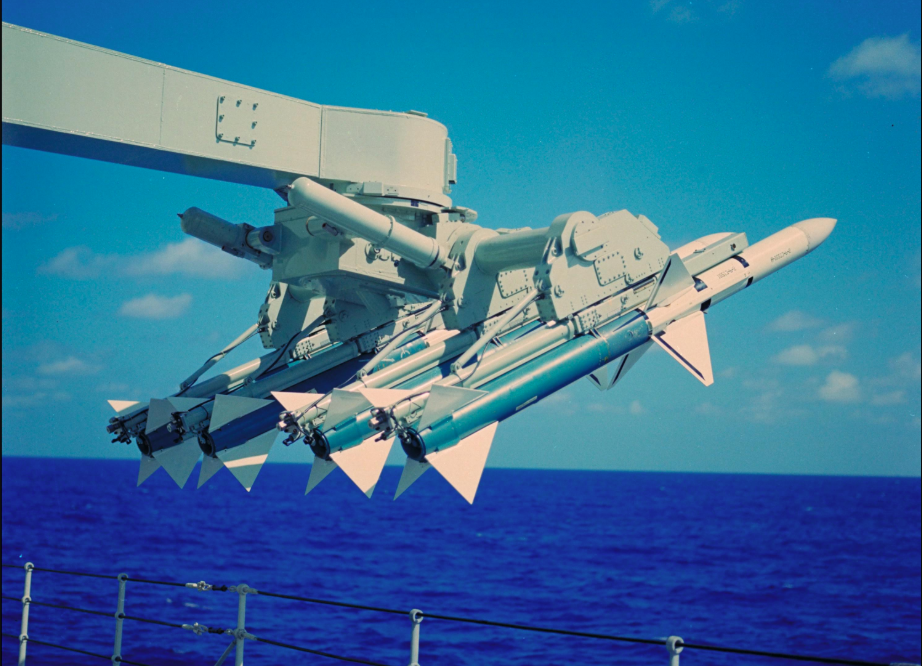
Image posted to the Reddit r/WarshipPorn subreddit by u/Admhawk.
From manually aimed box launchers, to automated ones like the Mk29 still in use today, to vertical launch variants, the Sea Sparrow was adapted for many different launching methods. Yet the strangest had to the one found on Canada’s Iroquois class. About seven years ago, someone who had worked with RIM-7s on U.S. Navy vessels told me about how nuts the Canadian launch system was that he had seen demonstrated in the late 1980s. In fact, he said it was so clumsy and slow reacting, that it largely defeated the main purpose of the missile system, at least in a multitude of circumstances. “Remarkably worthless” was the way he described it. I had long forgotten about this exchange until recently when pictures of this exact system popped up on the always lively Reddit page r/Warshipporn. At first, when I saw the images I was flabbergasted as to how weird the setup was, then the memory of the conversation hit me. This is what my contact was talking about!
Four Iroquois-class destroyers were commissioned between 1972 and 1973 and all served until 2005, with the last example being retired two years ago, in 2017. They featured the MKIII Sea Sparrow system fitted inside their forward deckhouse, with doors that opened up on each side and overhead swing-arm launchers carrying four missiles each (eight in total, four on each side) that extended out from their garage-like enclosure that hung out off the side of the ship strangely when at the ready. The whole arrangement looks like something far from conducive to high sea state, not to mention rocket blast from the missiles, or a combat environment, for that matter. 32 missiles were carried in all, with twelve at the ready on each side, but reloading the system as a whole was a slow process.
In addition, it’s said that the Hollandse Signaal Mk22 Weapon Control System wasn’t really up to the task and just deploying the missiles and warming up their guidance systems could take minutes or longer. All of this is far from ideal for what is supposed to have been a fast-reacting point defense system capable of quickly fending off sea-skimming anti-ship missiles that arrive with little warning from over the horizon.
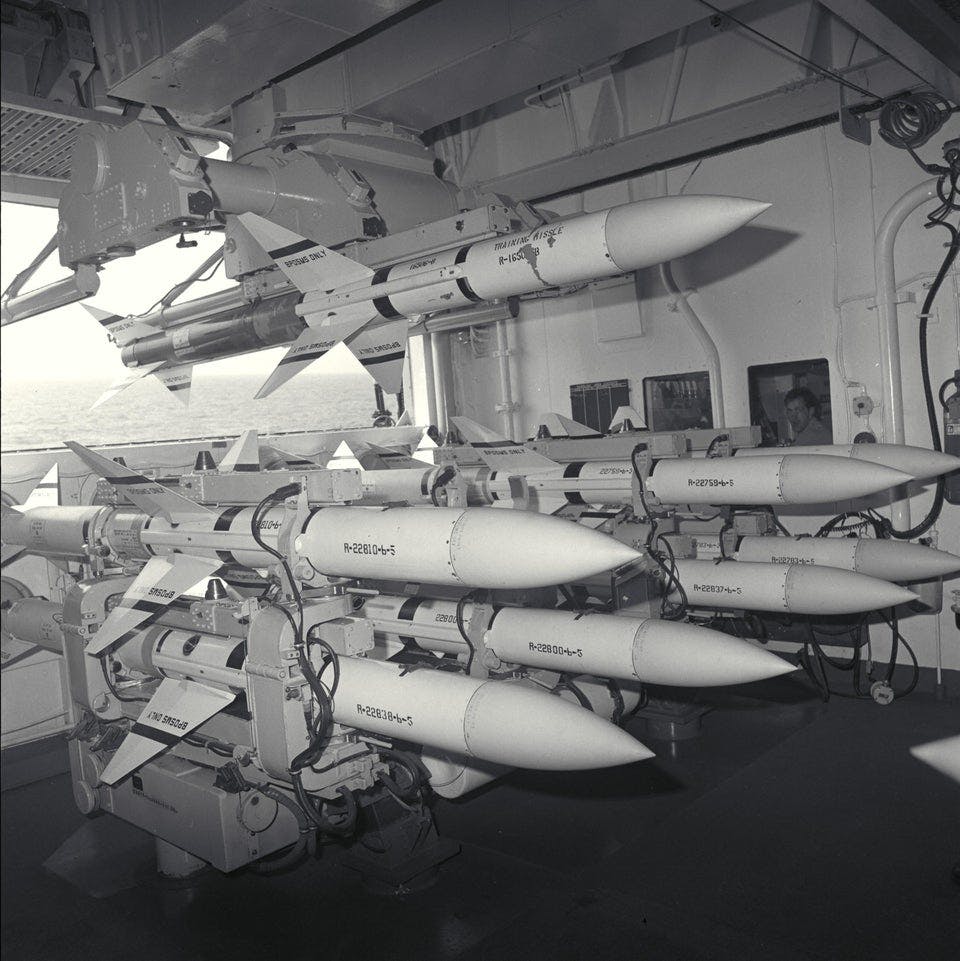
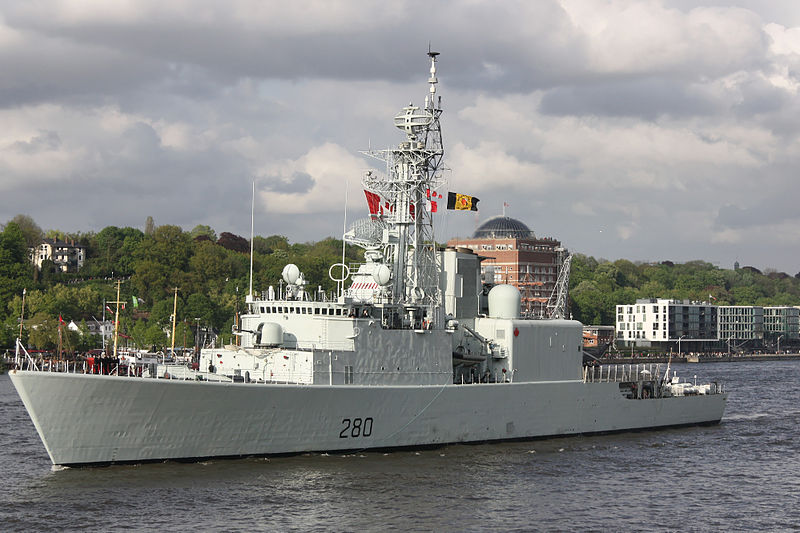
HMCS Iroquois (DDG 280) at Port of Hamburg, near Övelgönne, after mid-life refit replaced the Sea Sparrow launchers (via Wikimedia Commons)
History Summarized: Malta
Overly Sarcastic Productions
Published on 16 Aug 2019Go to https://NordVPN.com/overlysarcastic and and use code
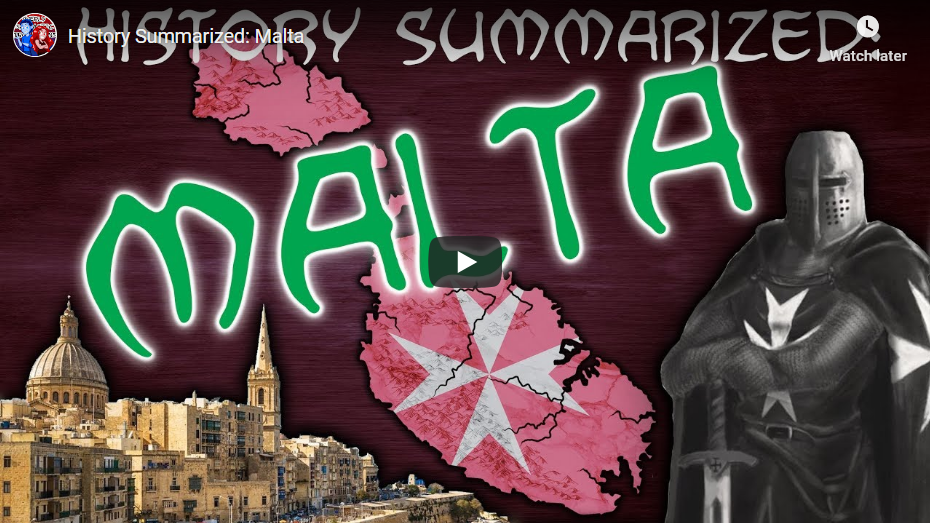
OVERLYSARCASTICto get 75% off a 3 year plan and an extra month for free. Protect yourself online today!Malta, the Island of A Dozen Empires, chilling in the middle of the Mediterranean Sea, is one of the most social butterflies in History. Having played host to or fought against every major power in the Mediterranean, this island bears a gorgeous architectural and linguistic record of its past, and is still a treasure to behold in the modern day. I’ve covered a lot of nations and empires in my time here, but between the rich cultural blends, the overflowing artistic treasures, and the Still-In-One-Piece-ness of it all, Malta may have one of the strongest claims to being the Winner of History in my book. What’s so special about Malta? Watch and find out!
NOTE on 7:00 – 7:08 — I’m cheating the time-scales a little here. This church, the Rotunda of Mosta, was actually built mid 1800s. Malta’s lavish church construction continued nearly unabated from C. 1565 to the modern day, so I use this example here — but St Paul’s Co-Cathedral in Valletta, shown from 6:27-6:33 is a better example of pure original Baroque construction. Honestly, all of the churches in Malta deserve a look if you’re curious.
PATREON: https://www.Patreon.com/OSP
DISCORD: https://discord.gg/sS5K4R3
The British Empire in retrospect
It’s been fashionable to dismiss the British Empire as a positive force in history for about 100 years (partly in reaction to the losses during the First World War), but Casey Chalk reviews a recent book that counter-cherry-picks the facts to show it wasn’t all an authoritarian dystopia and cultural wasteland:
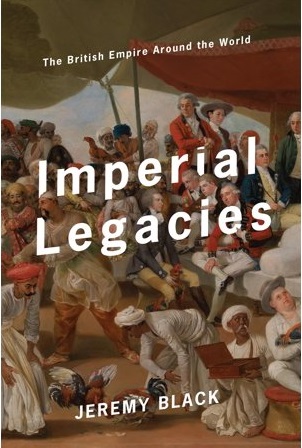
… the central argument of University of Exeter professor of history Jeremy Black’s new book Imperial Legacies: The British Empire Around the World, which, according to the book jacket, is a “wide-ranging and vigorous assault on political correctness, its language, misuse of the past, and grasping of both present and future.” The imperial legacy of Great Britain is also, in a way, an instructional lesson for the United States, which, much like the British Empire of the early to mid-20th century, is experiencing a slow decline in influence.
As a former history teacher who has visited many former British colonies in Africa and Asia, I’ve been well catechized in how British imperialism is interpreted. The British, so we are told, were violent aggressors and expert political manipulators. Using their technological superiority and command of the seas, they subjugated cultures across the globe, applied the “divide and rule” policy to set ethnic and linguistic groups against one another, extracted resources for profit, and stole cultural artifacts that now collect dust in their museums. Thus, so the story goes, blame for many of the world’s current problems lies squarely at the feet of the British Empire, for which she should still be paying reparations.
Yet, Black notes, “there is sometimes a failure to appreciate the extent to which Britain generally was not the conqueror of native peoples ruling themselves in a democratic fashion, but, instead, overcame other imperial systems, and that the latter themselves rested on conquest.” Take, for example, the Indian subcontinent, which was a disparate collection of kingdoms and competing empires — including Mughals, Sikhs, Afghan Durranis — during the early centuries of British intervention. All of these were plenty brutal and intolerant towards those they subjugated. Moreover, Hinduism promoted not only the oppressive caste system, but also sati, or the ritual of widow burning, in which widows were either volitionally or forcibly placed upon the funeral pyres of their deceased husbands. It was the British who stopped this practice, and others, with such legislation as the Hindu Widows’ Remarriage Act of 1856, the Female Infanticide Prevention Act of 1870, and the Age of Consent Act of 1891.
Nor has India been able to escape the same imperialist tendencies as the British. Just ask the Sikhs, whose demands to “free Khalistan” have gone unheeded by New Delhi, and who in 1984 suffered great atrocities at the hands of the Indian military and civilian mobs. Or ask Indian Muslims, of whom more than 1,000 died in the 2002 Gujarat riots and who suffer increasing persecution under the ruling Hindu nationalist party BJP. There’s also not a few folks in Kashmir who happen to call the Indians imperialists. One might note here that many of the problems in former European colonies are not solely, or even largely the result of European imperialism, but can be attributed to many other causes, population increase, modernization, and globalization among them. Corruption in some former colonies, including India, is almost certainly higher than it was during British rule.
India is only one such example where the modern narrative ignores both historical and contemporary realities, including, one might add, the fact that India as it now exists is largely a creation of British colonial efforts. It was Britain that united a disparate group of people into a single cohesive unit with a national identity. Indeed, as Black rightly notes, “modern concepts of nationality have generally been employed misleadingly to interpret the policies and politics of the past.”
This is further complicated by the fact that in many places, especially India, “alongside hostility, opposition and conflict,” between the imperialists and the colonized, “there was inter-marriage, intermixing, compromise, co-existence, and the process of negotiation that is sometimes referred to as the ‘middle-ground.'” One need look no further than the First and Second World Wars, in which more than 1.5 million and approximately 2.5 million Indians, respectively, fought willingly and bravely in the service of the British crown.
August 16, 2019
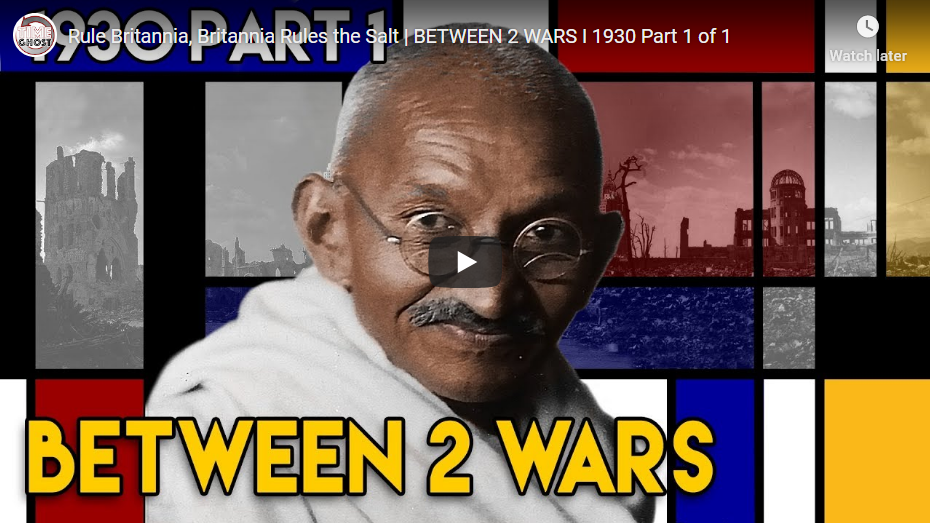
Rule Britannia, Britannia Rules the Salt | BETWEEN 2 WARS I 1930 Part 1 of 1
TimeGhost History
Published on 15 Aug 2019After the Great War, the British empire is at its peak in terms of population and size. However, resistance against colonialism is starting to brew in the British colonies and dominions.
Join us on Patreon: https://www.patreon.com/TimeGhostHistory
Hosted by: Indy Neidell
Written by: Spartacus Olsson and Francis van Berkel
Directed by: Spartacus Olsson and Astrid Deinhard
Executive Producers: Bodo Rittenauer, Astrid Deinhard, Indy Neidell, Spartacus Olsson
Creative Producer: Joram Appel
Post-Production Director: Wieke Kapteijns
Research by: Francis van Berkel
Edited by: Wieke Kapteijns
Sound design: Iryna DulkaPortrait Colorizations by Daniel Weiss.
Sources: National Portrait Gallery, Library and Archives Canada, Jenny Scott
A TimeGhost chronological documentary produced by OnLion Entertainment GmbH.
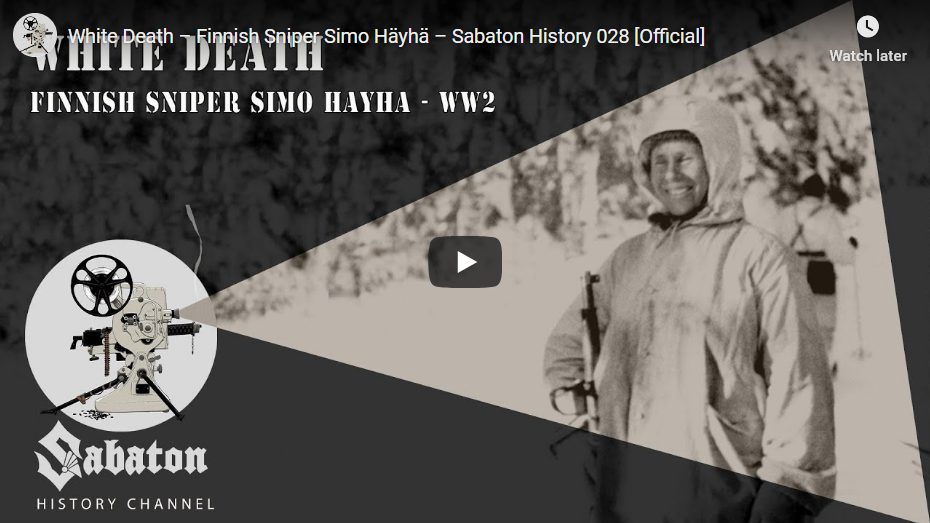
“White Death” – Finnish Sniper Simo Häyhä – Sabaton History 028 [Official]
Sabaton History
Published on 15 Aug 2019One of the deadliest snipers ever to roam the face of the earth was Simo Häyhä, who fought on the Finnish side during the Winter War in 1939 and 1940. He was also known as White Death, as he killed an estimated 500 Russians in the cold snowy winter.
Support Sabaton History on Patreon: https://www.patreon.com/sabatonhistory
Watch our episode on “Talvisota” here: https://youtu.be/6grVeu3EWis
Listen to Coat of Arms (where “White Death” is featured):
CD: http://bit.ly/CoatOfArmsStore
Spotify: http://bit.ly/CoatOfArmsSpotify
Apple Music: http://bit.ly/CoatOfArmsAppleMusic
iTunes: http://bit.ly/CoatOfArmsiTunes
Amazon: http://bit.ly/CoatOfArmsAmzn
Google Play: http://bit.ly/CoatOfArmsGooglePlayHosted by: Indy Neidell
Written by: Markus Linke and Indy Neidell
Directed by: Astrid Deinhard and Wieke Kapteijns
Produced by: Pär Sundström, Astrid Deinhard and Spartacus Olsson
Creative Producer: Joram Appel
Executive Producers: Pär Sundström, Joakim Broden, Tomas Sunmo, Indy Neidell, Astrid Deinhard, and Spartacus Olsson
Maps by: Eastory
Edited by: Iryna Dulka
Sound Editing by: Marek KaminskiEastory YouTube Channel: https://www.youtube.com/channel/UCEly…
Archive by: Reuters/Screenocean https://www.screenocean.com
Music by Sabaton.Sources: SA-Kuva, Finish wartime archive.
An OnLion Entertainment GmbH and Raging Beaver Publishing AB co-Production.
© Raging Beaver Publishing AB, 2019 – all rights reserved.
From the comments:
Sabaton History
2 days ago (edited)
This episode is one of the most frequently requested songs for Sabaton History. And while the story of Simo Häyhä is a compelling story, the Winter War was about much more than the deadliest sniper of World War Two. We have made an earlier episode about the Winter War, based on the Sabaton Song “Talvisota”, which is Finnish for Winter War. You can watch that right here: https://youtu.be/6grVeu3EWis. If after that, you’re keen to dive even deeper into the history of the Winter War, I suggest you check out Indy’s World War Two channel, where he covered the Winter War (and everything before and after that) week by week. You can check that out right here: https://www.youtube.com/c/worldwartwo