Quotulatiousness

August 6, 2019

English has become what Esperanto was designed to be

Filed under: Economics, History — Tags: , — Nicholas @ 03:00

As a teen, I was quite curious about Esperanto … enough that I ended up buying several books in the language and making a few semi-serious attempts to develop fluency. I still have those books in my library, but I never actually achieved any firm grasp of Esperanto. It was the most successful of a number of attempts to create a universal second language, intended to allow people to communicate with others who did not speak their primary tongue. When I was young, I also believed that this was a way to reduce inter-cultural frictions and in at least a small way to lower the risks of war between nations. As I got older and more cynical, I realized that Douglas Adams probably had the truth of it in describing the Babel Fish from his novels:

Anatomy of the Babel Fish as explained in the BBC TV series.

The Babel fish is small, yellow, leech-like, and probably the oddest thing in the Universe. It feeds on brainwave energy received not from its own carrier, but from those around it. It absorbs all unconscious mental frequencies from this brainwave energy to nourish itself with. It then excretes into the mind of its carrier a telepathic matrix formed by combining the conscious thought frequencies with nerve signals picked up from the speech centres of the brain which has supplied them. The practical upshot of all this is that if you stick a Babel fish in your ear you can instantly understand anything said to you in any form of language. The speech patterns you actually hear decode the brainwave matrix which has been fed into your mind by your Babel fish.

[…]

Meanwhile, the poor Babel fish, by effectively removing all barriers to communication between different races and cultures, has caused more and bloodier wars than anything else in the history of creation.

All that aside, Douglas Todd points out that despite all of its manifold complexities, the English language is actually taking on the role that Esperanto and other artificial languages were intended to do:

I recently travelled to the home of Ludwik Zamenhof, the Russian-Polish Jew who in 1873 invented Esperanto. It was intended to become the world’s first universal language.

Hoping it would end wars, Warsaw-based Zamenhof dreamed Esperanto would encourage people to come together under a common language. He thought that kind of connection would help overcome the distrust that can be exacerbated by the globe’s multi-language Tower of Babel.

Zamenhof’s vision of a common language caught on for hundreds of thousands. I have met people in Poland, South America and elsewhere who learned Esperanto as children. But, needless to say, the cause of Esperanto is now virtually lost.

Whether we like it or not, English is on the road to become the world’s lingua franca.

It is not the world’s most spoken language — that’s Mandarin. But English is arguably the language most commonly adopted as the medium of communication between speakers whose native languages are different.

I know I’m not the only Canadian who has travelled — in my case to Indonesia, Argentina, Denmark, Spain, Poland, Brazil, Turkey, Germany and elsewhere — and witnessed a collection of multilingual speakers suddenly revert to English, even if awkwardly, as they seek a shared way to talk.

It is a thing to behold. It is humbling.

As a native English speaker, I am not proud to say I only know about 1,500 words of French that I have trouble putting together in a meaningful way. I’m intimidated by new languages, whereas many friends and family are polyglots. So, for that matter, are most Europeans, where 97 per cent of 13-year-olds now study English.

It rarely ceases to amaze me when disparate multilingual people around the world show me and others their respect (and perhaps their pity) by speaking in English. Of course, most of them also like the chance to practise the language, since they know it is a key to new vistas.

How Does it Work: Gas-Delayed Blowback

Filed under: History, Technology, Weapons — Tags: , , , — Nicholas @ 02:00

Forgotten Weapons
Published on 11 Jun 2019

http://www.patreon.com/ForgottenWeapons

Cool Forgotten Weapons merch! http://shop.bbtv.com/collections/forg…

Gas-delayed blowback is a relatively uncommon operating system used in handguns. It is not an efficient mechanism for high-pressure rifle power cartridges, but works well with something like 9mm Parabellum. It tends to provide benefits of light felt recoil and better-than-average accuracy, in exchange for overheating much more quickly than other systems.

Contact:
Forgotten Weapons
PO Box 87647
Tucson, AZ 85754

August 5, 2019

Joan of Arc – Heroine or Heretic? – Extra History – #5

Filed under: Britain, France, History, Military, Religion — Tags: , , , , , — Nicholas @ 04:00

Extra Credits
Published on 3 Aug 2019

Join us on Patreon! http://bit.ly/EHPatreon

Joan had been sold out to the English. Bishop Pierre Cauchon was determined to prove the inaccuracy of her visions and her motivations so that Charles could have no claim to the throne. But Joan held on till the bitter end.

August 4, 2019

The Hippo vs. the Bulldog, Göring’s War – WW2 – 049 – August 3 1940

Filed under: Britain, Germany, History, Military, WW2 — Tags: , , , , , — Nicholas @ 06:00

World War Two
Published on 3 Aug 2019

As the Kanalkampf comes to a close, the Battle of Britain heats up. Hitler wants Britain out of the war. But before the Germans can invade Britain, it will have to deal with the Royal Air Force and the Royal Navy.

Join us on Patreon: https://www.patreon.com/TimeGhostHistory
Or join The TimeGhost Army directly at: https://timeghost.tv

Follow WW2 day by day on Instagram @World_war_two_realtime https://www.instagram.com/world_war_t…
Join our Discord Server: https://discord.gg/D6D2aYN.
Between 2 Wars: https://www.youtube.com/playlist?list…
Source list: http://bit.ly/WW2sources

Written and Hosted by: Indy Neidell
Produced and Directed by: Spartacus Olsson and Astrid Deinhard
Executive Producers: Bodo Rittenauer, Astrid Deinhard, Indy Neidell, Spartacus Olsson
Creative Producer: Joram Appel
Post-Production Director: Wieke Kapteijns
Research by: Indy Neidell
Edited by: Iryna Dulka
Map animations: Eastory

Colorisations by Norman Stewart and Julius Jääskeläinen https://www.facebook.com/JJcolorization/
Eastory’s channel: https://www.youtube.com/channel/UCEly…
Archive by Screenocean/Reuters https://www.screenocean.com.

Sources:
Colored portrait of Hugo Sperrle by Ruffneck88
Narodowe Archiwum Cyfrowe
IWM: HU 93055, CH 1535, CH 1533, A 18881, HU 76020
301 squadron insignia by Jakub Mikita
303 squadron insignia by Mrozo

A TimeGhost chronological documentary produced by OnLion Entertainment GmbH.

History Summarized: Scotland

Filed under: Britain, History, Humour — Tags: , , , — Nicholas @ 04:00

Overly Sarcastic Productions
Published on 2 Aug 2019

Go to http://www.audible.com/overlysarcastic or text OVERLYSARCASTIC to 500500 to get a free audiobook, 2 free Audible Originals, and 30-day free trial.

Put on your Kilt and grab some bagpipes, it’s time to talk about Scotland! From the earliest beginnings to the modern day, the Scots have had a fiercely independent attitude, and are absolutely willing to fight about it — several times, in fact.

Fun fact about Kilts, I couldn’t fit this in the video anywhere, but basically Scots used to wear these big complicated vaguely-toga-like wraps of tartan plaid starting in the Renaissance, but in the 1720s one guy said “This is too complicated, take the top part off but keep the bottom half and just attach it with a belt — and behold, the Kilt as we know it was born.

FURTHER READING: Scotland, A Concise Historyhttps://www.amazon.com/Scotland-Conci…

PATREON: https://www.Patreon.com/OSP

DISCORD: https://discord.gg/sS5K4R3

MERCH LINKS: https://www.redbubble.com/people/OSPY…

OUR WEBSITE: https://www.OverlySarcasticProductions.com
Find us on Twitter https://www.Twitter.com/OSPYouTube
Find us on Reddit https://www.Reddit.com/r/OSP/

From the comments:

Overly Sarcastic Productions
1 hour ago (edited)
Blue: Spends two weeks researching, writing, and producing a video about Scottish History
Also Blue: USES THE WRONG FUCKING FLAG
Rest assured, everybody, I’m veritably mortified by how badly I messed that up.
-B

QotD: The post-WW2 American army

Filed under: Asia, China, History, Military, Quotations, USA — Tags: , , , , — Nicholas @ 01:00

The men of the Inmun Gun and the CCF were peasant boys, tough, inured to hunger and hardship. One-third of them had been in battle and knew what battle meant. They had been indoctrinated in Communism, but no high percentage of them were fanatic. Most of them, after all, were conscripts, and unskilled.

They were not half so good soldiers as the bronzed men who followed Rommel in the desert, or the veterans who slashed down toward Bastogne.

They were well armed, but their weapons were no better than those of United States design, if as good.

But the American soldier of 1950, though the same breed of man, was not half so good as the battalions that had absorbed Rommel’s bloody lessons, or stood like steel in the Ardennes.

The weapons his nation had were not in his hands, and those that were were old and worn.

Since the end of World War II ground weapons had been developed, but none had been procured. There were plenty of the old arms around, and it has always been a Yankee habit to make do. The Army was told to make do.

In 1950 its vehicles in many cases would not run. Radiators were clogged, engines gone. When ordered to Korea, some units towed their transport down to the LST’s, because there was no other way to get it to the boat. Tires and tubes had a few miles left in them, and were kept — until they came apart on Korean roads.

In Japan, where the divisions were supposedly guarding our former enemies, most of the small arms had been reported combat unserviceable. Rifle barrels were worn smooth. Mortar mounts were broken, and there were no longer any spare barrels for machine guns.

Radios were short, and those that were available would not work.

Ammunition, except small arms, was “hava-no.”

These things had been reported. The Senate knew them; the people heard them. But usually the Army was told, “Next year.”

Even a rich society cannot afford nuclear bombs, supercarriers, foreign aid, five million new cars a year, long-range bombers, the highest standard of living in the world, and a million new rifles.

Admittedly, somewhere you have to cut and choose.

But guns are hardware, and man, not hardware, is the ultimate weapon. In 1950 there were not enough men, either — less than 600,000 to carry worldwide responsibilities, including recruiting; for service in the ranks has never been on the Metropolitan Life Insurance Company’s preferred list of occupations.

T.R. Fehrenbach, This Kind of War: A Study in Unpreparedness, 1963.

August 3, 2019

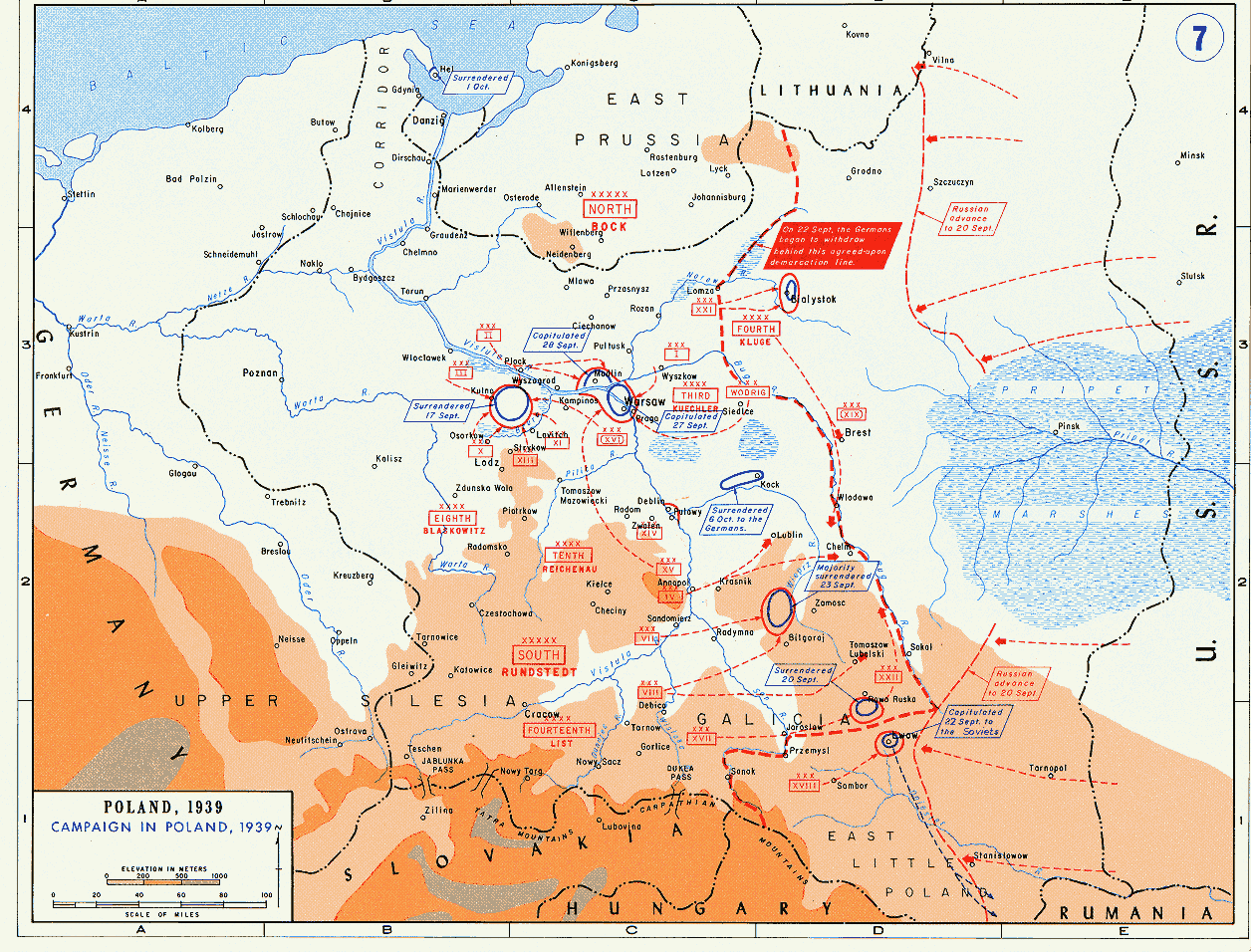
The Warsaw Uprising – The Unstoppable Spirit of the Polish Resistance – Extra History

Filed under: Europe, Germany, History, Military, Russia, WW2 — Tags: , , , , — Nicholas @ 06:00

Extra Credits
Published on 1 Aug 2019

Thanks to the Polish National Foundation for sponsoring this video. https://www.pfn.org.pl/

The Polish are determined to make Poland matter on the world stage, and they will not wait for whatever mercies may come from the Russians. So the Home Army stages their own uprising to liberate Warsaw, and for some 60-odd days, their strongest members, the Grey Ranks, tragically held steadfast.

Join us on Patreon! http://bit.ly/EHPatreon

Enter Yugoslavia Part 1 | BETWEEN 2 WARS I 1929 Part 2 of 3

Filed under: Europe, History — Tags: , , , , , — Nicholas @ 04:00

TimeGhost History
Published on 1 Aug 2019

Formed in the ashes of the Great War, the Kingdom of Serbs, Croats, and Slovenes is already facing some pretty difficult birth pangs.

Join us on Patreon: https://www.patreon.com/TimeGhostHistory

Hosted by: Indy Neidell
Written by: Francis van Berkel and Spartacus Olsson
Directed by: Spartacus Olsson and Astrid Deinhard
Executive Producers: Bodo Rittenauer, Astrid Deinhard, Indy Neidell, Spartacus Olsson
Creative Producer: Joram Appel
Post-Production Director: Wieke Kapteijns
Research by: Francis van Berkel
Edited by: Wieke Kapteijns
Sound design: Marek Kaminski

Sources:
– Colorization by Klimbim and Normansteward

A TimeGhost chronological documentary produced by OnLion Entertainment GmbH.

From the comments:

TimeGhost History
6 hours ago
We don’t delete or ban any opinions which disagree with other opinions. We delete comments that contain historical fallacies and political propaganda by antidemocratic organisations, irrespective of political leaning. This means that we do not tolerate any lies or propaganda that forward the agenda of, for instance, Nazis, Fascists, Stalinists, Leninists, other ultra-Marxists or Anarchists. That is within our responsibility according to the laws in our territory which forbids the dissemination of false flag information, propaganda, and symbols connected to organizations that have been found to be unconstitutional and an immediate danger to a democratic, free society by the German courts, in accordance with §86 and §86a of the German Penal Code. The law specifically mentions NDSDAP in §86 and the KPD in §86a (NSDAP is the Nazi Party and KPD the Communist party). Moreover we do not tolerate hate speech, racism, xenophobia, and the denial of proven crimes against humanity. This is in perfect agreement with the opinion forwarded by The US Supreme Court on society’s responsibility to fight against that kind of speech and it is in agreement with numerous EU and EU member state laws against same said speech.

Polish PM63 Rak at the Range

Filed under: Europe, History, Military, Technology, Weapons — Tags: , , , , , , — Nicholas @ 02:00

Forgotten Weapons
Published on 8 Jun 2019

http://www.patreon.com/ForgottenWeapons

Cool Forgotten Weapons merch! http://shop.bbtv.com/collections/forg…

Whether it is described as a machine pistol, a submachine gun, or a personal defense weapon, the PM63 Rak is really not the best examples of this sort of thing to actually shoot. The open-bolt/slide mechanism is very cool from an engineering and design perspective, but does in fact have a tendency to hit one in the face, as inadvertently demonstrated by my high-speed video shooting volunteer. Even if it doesn’t do that, the sights reciprocating on the slide make it a difficult gun to shoot accurately.

Thanks to Movie Armament Group in Toronto for giving me the opportunity to take this to the range! Check out MAG on Instagram: https://instagram.com/moviearmamentsg…

http://www.moviearms.com

Contact:
Forgotten Weapons
PO Box 87647
Tucson, AZ 85754

QotD: The 1968 election and the schizoid break of the American media

… in hindsight 1968 was obviously the country’s schizoid break. The Democratic Party didn’t go completely off the rails — cf. all the candidates they ran, 1972-2004, who were the definition of anodyne — but The Media sure as hell did. 1968 was also the year of the Tet Offensive, you’ll recall, with Walter Cronkite proclaiming the war unwinnable. It doesn’t matter if Cronkite was right or not (of course he wasn’t); nor does it matter if his proclamation actually made everyday Americans lose faith in the war. What matters is that The Media believed it, with all their hearts and souls. No profession is dumber, or more addicted to singing hosannas to itself, than journalism. And then they “got” Richard Nixon, and that’s all she wrote — from there on out, The Media decided they were the country’s real rulers, and what they want, they get.

Fortunately for the Democrats, what The Media wanted and what the Democratic Party wanted were in the same ballpark for most of the next three decades. But then Bill Clinton happened, as my students would write. He played The Media’s Messiah fantasies for all they were worth, such that every bobblehead in the country was still defending him as Liberalism’s avatar even as he was governing (in the few odd moments he bothered) as Newt Gingrich’s mini-me and acting like a frat boy on nickel beer night at the strip club.

You just don’t get over something like that.

Which brings us to the elections of 2000 and 2004. Boy do these look different in hindsight! […] I knew The Media was all-in on the Democrat, like they always are. But at the time, I thought that was a tactical decision. That is, I really believed that their attacks on W. were calculated political moves, designed to drag Gore and especially Kerry over the finish line. I thought that only the Mother Jones types were delusional, Iranian mullah-style fanatics.

Nope. The Media — ALL of them — really did see W. as the antichrist, the Twelfth Invisible Hitler (as the Z Man likes to put it) come to destroy the world. So when despite all their sacrifices to Moloch the Chimperor won, The Media went full retard. Like UFO cultists who keep the faith by telling themselves only their fervent prayers staved off the apocalypse, The Media convinced themselves that only more Social Justice would do …

Severian, “The Spirit of ’68”, Rotten Chestnuts, 2019-07-01.

August 2, 2019

Polish-Ukrainian War 1919 – The Battle for Lemberg I The Great War July 1919

Filed under: Europe, History, Military — Tags: , , , , , — Nicholas @ 06:00

The Great War
Published on 1 Aug 2019

Lviv or Lwów are two names for the same city that was known as Lemberg until 1919. The Poles considered it as one of their most important cultural and political centers, the Ukrainians too. And so, in the aftermath of the dissolution of the Austro-Hungarian Empire, the question of who would control this city led to conflict: The Polish-Ukrainian War.

» SUPPORT THE CHANNEL
Patreon: https://www.patreon.com/thegreatwar
Merchandise: https://shop.spreadshirt.de/thegreatwar/

» SOURCES
Smele, Jonathan. The “Russian” Civil Wars 1916-1926 (London: Hurst, 2015).

Mawdsley, Evan. The Russian Civil War (New York: Pegasus Books, 2005).

Leonhard, Jörn. Der überforderte Frieden. Versailles und die Welt 1918-1923 (CH Beck, 2018).

Macmillan, Margaret. The Peacemakers: Six Months That Changed the World (London: John Murray, 2001)

Dudko, Oksana: “Polish-Ukrainian Conflict over Eastern Galicia”, in: 1914-1918-online. International Encyclopedia of the First World War, ed. by Ute Daniel, Peter Gatrell, Oliver Janz, Heather Jones, Jennifer Keene, Alan Kramer, and Bill Nasson, issued by Freie Universität Berlin, Berlin 2014-10-08 https://encyclopedia.1914-1918-online…

Kutschabsky, W. Die Westukraine im Kampfe mit Polen und dem Bolschewismus in den Jahren 1918–1923 (Berlin, 1934)

Davies, Norman. White Eagle Red Star (Random House, 2003 (1972))

Sharp, Alan. The Versailles Settlement. Peacemaking and the First World War, 1919-1923 (Basingstoke: Palgrave Macmillan, 2008)

Judson, Pieter. The Habsburg Empire: A New History (Belknap Press, 2016)

Böhler, Jochen. Civil War in Central Europe, 1918-1921 (Oxford University Press, 2019)

Timothy Snyder. The Reconstruction of Nations. (New Haven: Yale University Press, 2003)

»CREDITS
Presented by: Jesse Alexander
Written by: Jesse Alexander
Director: Toni Steller & Florian Wittig
Director of Photography: Toni Steller
Sound: Toni Steller
Editing: Toni Steller
Mixing, Mastering & Sound Design: http://above-zero.com
Motion Design: Christian Graef – GRAEFX
Maps: Daniel Kogosov (https://www.patreon.com/Zalezsky)
Research by: Jesse Alexander
Fact checking: Florian Wittig

Channel Design: Alexander Clark
Original Logo: David van Stephold

A Mediakraft Networks Original Channel

Contains licensed material by getty images
All rights reserved – Real Time History GmbH 2019

“Screaming Eagles” – Battle of the Bulge – Sabaton History 026 [Official]

Filed under: Germany, History, Media, Military, USA, WW2 — Tags: , , — Nicholas @ 04:00

Sabaton History
Published on 1 Aug 2019

When the Germans launched their last western offensive through the Belgian Ardennes in the winter of 1944, it was up to the American 101st Airborne Division to defend the key city of Bastogne. Surrounded by camouflaged German soldiers and endless artillery bombardments, the 101st, a.k.a the Screaming Eagles, endured.

Support Sabaton History on Patreon: https://www.patreon.com/sabatonhistory

Listen to Coat of Arms (where “Screaming Eagles” is featured):
CD: http://bit.ly/CoatOfArmsStore
Spotify: http://bit.ly/CoatOfArmsSpotify
Apple Music: http://bit.ly/CoatOfArmsAppleMusic
iTunes: http://bit.ly/CoatOfArmsiTunes
Amazon: http://bit.ly/CoatOfArmsAmzn
Google Play: http://bit.ly/CoatOfArmsGooglePlay

Watch the Official Lyric Video of “Screaming Eagles” here: https://www.youtube.com/watch?v=kJVkE…

Watch more videos on the Sabaton YouTube channel: https://www.youtube.com/user/Sabaton?…
Listen to Sabaton on Spotify: http://smarturl.it/SabatonSpotify
Official Sabaton Merchandise Shop: http://bit.ly/SabatonOfficialShop

Hosted by: Indy Neidell
Written by: Markus Linke and Indy Neidell
Directed by: Astrid Deinhard and Wieke Kapteijns
Produced by: Pär Sundström, Astrid Deinhard and Spartacus Olsson
Creative Producer: Joram Appel
Executive Producers: Pär Sundström, Joakim Broden, Tomas Sunmo, Indy Neidell, Astrid Deinhard, and Spartacus Olsson
Maps by: Eastory
Edited by: Iryna Dulka
Sound Editing by: Marek Kaminski

Eastory YouTube Channel: https://www.youtube.com/channel/UCEly…
Archive by: Reuters/Screenocean https://www.screenocean.com
Music by Sabaton.

Sources:
IWM: EA 49214

An OnLion Entertainment GmbH and Raging Beaver Publishing AB co-Production.

© Raging Beaver Publishing AB, 2019 – all rights reserved.

PM63 Rak: An Interesting Polish SMG/PDW Hybrid

Filed under: Europe, History, Military, Technology, Weapons — Tags: , , , , , , — Nicholas @ 02:00

Forgotten Weapons
Published on 7 Jun 2019

http://www.patreon.com/ForgottenWeapons

Cool Forgotten Weapons merch! http://shop.bbtv.com/collections/forg…

The PM-63 Rak is a pretty interesting Polish Cold War machine pistol or personal defense weapon. It fires from an open bolt, but uses a slide like a pistol rather than a bolt in an enclosed receiver like a typical SMG. There are several other interesting elements to the design, so let’s take a closer look…

Thanks to Movie Armament Group in Toronto for giving me the opportunity to bring you this video! Check out MAG on Instagram: https://instagram.com/moviearmamentsg…

http://www.moviearms.com

Contact:
Forgotten Weapons
PO Box 87647
Tucson, AZ 85754

QotD: What we mean by “civilization”

Filed under: Books, History, Quotations — Tags: , , , , , — Nicholas @ 01:00

… I floated that there might have been “civilizations” between the emergence of anatomically modern humans, and ya’ll objected because no signs of dentistry, no extensive mining operations and even the crab bucket, I thought “Well, absence of evidence is not evidence of absence.” It wasn’t till yesterday morning that I stopped and went “waitaminut, Czar Nicholas’ skeleton showed signs of prolonged and horrific abscesses. We only found out how extensive the Roman mining operation in the village was when it rained for a month and roads collapsed under cars. And even with the crab bucket and no Judeo-Christian ethic, ancient Asia had a lot of very advanced, flourishing civilizations.”

Which is when the dime dropped and I realized you guys immediately translated civilization to “as good as we have or better.” Which, of course, made me giggle. Because I’d have liked you to tell a Roman, with their world-bestriding empire that they weren’t civilized. Or, before that a classical Greek.

Understand I am not imagining others before us had the internal combustion engine, or steam, or trains, or … Sure, they might have, but that’s a heck of a coincidence, since those things usually come about by an individual stroke of genius, and even when they do they often aren’t used the way we did (Romans and their mechanical toys.)

To imagine other civilizations of which we’ve forgotten every trace followed exactly the same route we did to the same place we’re at requires believing that inventing steam and the internal combustion engine and harnessing electricity is as natural to humans as dams to beavers.

Now, maybe that’s true. It would certainly make for a very good science fiction story. (Short story, I think. Too much of a punchline thing for a novel.) BUT the odds defy rationality.

I was imagining, you know “builds houses of wood or stone. Domesticated SOME animals. Has villages and cities. Might have trade over long routes. MIGHT have had wheeled vehicles.” (The last, as we know, one can have quite sophisticated civilizations without.)

Look, it’s not your fault. Since the seventies, we’ve been bombarded by crazy BS about superior aliens or superior lost civilizations. (And before that, there was a trickle of it, too, going back I think to the eighteenth century, just couched in different terms.) You’ll get stuff about how the pyramids were built of stones that floated at the sound of a certain note. (A C note, or the equivalent, I bet. “Listen, Mac, you take this stone to the top of the pyramid, I give you a C Note. A hundred Amontheps in your pocket, bucko. Buys a lot of fish and falafel.”)

Part of this, and part of the reason it intensified since the seventies were the “unilateral disarmament people.” You know, those jokers who wanted us to get rid of our own nukes and stand disarmed in front of the USSR, who would then realize we were peaceful, and not attack, and everyone would live in peace and harmony with rainbows and farting unicorns. Yes, it was a stupid and crazy idea since the continued survival of the USSR depended on plunder and conquest. But I’ll remind you our last president still believes that bag of moonshine. All of it, including the unicorn farts.

Sarah Hoyt, “We Are The Superior Civilization”, According to Hoyt, 2017-05-15.

August 1, 2019

Maxim “Prototype”: The First Practical Machine Gun

Filed under: History, Military, Technology, Weapons — Tags: , , , , , , — Nicholas @ 04:00

Forgotten Weapons
Published on 31 Jul 2019

http://www.patreon.com/ForgottenWeapons

Cool Forgotten Weapons merch! http://shop.bbtv.com/collections/forg…

Hiram Maxim was the first person to create a truly practical and functional machine gun, based on a patent he filed in 1883. He pioneered the recoil operating system – the concept of harnessing the recoil generated by a firearm to perform the actions of reloading that firearm. His patent was based on a lever action rifle, but his intent was to create a machine gun, complete with belt feed and water cooling. After a testbed “forerunner” gun, he built this model which he called the “Prototype”. It was meant as a proof of concept, and used in many public exhibitions and demonstrations.

The Prototype used a hydraulic rate of fire control system which could be set as high as 500 rounds/minute and as low as just one round per minute. The gun did not have a trigger as we would recognize it today, but rather a single lever like a vehicle accelerator which acted as both trigger and fire rate control. Only three of these Prototypes exist today, with one belonging to the USMC, one on public display at the Royal Armouries museum in Leeds, and this one in the NFC reserve collection at Leeds.

For a fantastic exploded view of all this guns working parts, check out this work by YouTube channel vbbsmyt:

https://youtu.be/P1SbcZQ0N5A

Many thanks to the Royal Armouries for allowing me to film this tremendously important artifact! The NFC collection there — perhaps the best military small arms collection in Western Europe — is available by appointment to researchers:

https://royalarmouries.org/research/n…

You can browse the various Armouries collections online here:

https://royalarmouries.org/collection/

Contact:
Forgotten Weapons
PO Box 87647
Tucson, AZ 85754

« Newer PostsOlder Posts »

Powered by WordPress