The object of warfare is to dominate a portion of the earth, with its peoples, for causes either just or unjust. It is not to destroy the land and people, unless you have gone wholly mad.
Pushbotton war has its place. There is another kind of conflict — crusade, jihad, holy war, call it what you choose. It has been loosed before, with attendant horror but indecisive results. In the past, there were never means enough to exterminate all the unholy, whether Christian, Moslem, Protestant, Papist, or Communist. If jihad is preached again, undoubtedly the modern age will do much better.
Americans, denying from moral grounds that war can ever be a part of politics, inevitably tend to think in terms of holy war — against militarism, against fascism, against bolshevism. In the postwar age, uneasy, disliking and fearing the unholiness of Communism, they have prepared for jihad. If their leaders blow the trumpet, or if their homeland is attacked, their millions are agreed to be better dead than Red.
Any kind of war short of jihad was, is, and will be unpopular with the people. Because such wars are fought with legions, and Americans, even when they are proud of them, do not like their legions. They do not like to serve in them, nor even to allow them to be what they must.
For legions have no ideological or spiritual home in the liberal society. The liberal society has no use or need for legions — as its prophets have long proclaimed.
Except that in this world are tigers.
T.R. Fehrenbach, This Kind of War: A Study in Unpreparedness, 1963.
September 9, 2019
QotD: War
September 8, 2019
Burn London, Burn it’s the Blitz – WW2 – 054 – September 07 1940
World War Two
Published on 7 Sep 2019This week, the battle in the skies of Britain enters a new, even deadlier phase, as the crowded streets of London turn into a war zone. It is the start of the Blitz.
Join us on Patreon: https://www.patreon.com/TimeGhostHistory
Or join The TimeGhost Army directly at: https://timeghost.tvFollow WW2 day by day on Instagram @World_war_two_realtime https://www.instagram.com/world_war_t…
Join our Discord Server: https://discord.gg/D6D2aYN.
Between 2 Wars: https://www.youtube.com/playlist?list…
Source list: http://bit.ly/WW2sourcesWritten and Hosted by: Indy Neidell
Produced and Directed by: Spartacus Olsson and Astrid Deinhard
Executive Producers: Bodo Rittenauer, Astrid Deinhard, Indy Neidell, Spartacus Olsson
Creative Producer: Joram Appel
Research by: Indy Neidell
Edited by: Iryna Dulka
Map animations: EastoryColorisations by Norman Stewart and Julius Jääskeläinen https://www.facebook.com/JJcolorization/
Eastory’s channel: https://www.youtube.com/channel/UCEly…
Archive by Screenocean/Reuters https://www.screenocean.com.Sources:
– IWM: SP 2553, FL 5186, H 23836, HU 93069, CH 19
– Colorization of Hugo Sperrle by Ruffneck88
– Narodowe Archiwum CyfroweA TimeGhost chronological documentary produced by OnLion Entertainment GmbH.
Miscellaneous Myths: Animal Brides
Overly Sarcastic Productions
Published on 6 Sep 2019Yes, it really is as weird as it sounds. Sorry!
This video (specifically the Inuit myth) was requested by patron Richard Frederick Schubert III!
PATREON: https://www.Patreon.com/OSP
MERCH LINKS: https://www.redbubble.com/people/OSPY…
OUR WEBSITE: https://www.OverlySarcasticProductions.com
Find us on Twitter https://www.Twitter.com/OSPYouTube
Find us on Reddit https://www.Reddit.com/r/OSP/
How Did War Become a Game?
Invicta
Published on 28 Jun 2019Get your first audiobook and two Audible originals when you try Audible for 30 days. Visit https://www.audible.com/Invicta or text “Invicta” to 500 500!
In this video we continue to take a look at the history of Kriegsspiel and explore the early days of wargaming that eventually gave rise to modern table top games such as Warhammer and Dungeons & Dragons.
Research: Jon Peterson
Script: Invicta
Narration: Invicta
Artwork: Gabriel Cassata
Editing: InvictaBibliography
Playing at the World by Jon Peterson
Debugging Game History: A Critical Lexicon by Henry Lowood
War Games: A History of War on Paper by Philipp von Hilgers
Pluie de Balles – Complex Wargames In the Classroom by Jorit Wintjes and, Steffen Pielstrom
QotD: The Amritsar massacre and the partition of India
A comparison is in order. At the famous Amritsar massacre of 1919, shot in elaborate and loving detail in the present movie and treated by post-independence Indian historians as if it were Auschwitz, Gurkha troops under the command of a British officer, General Dyer, fired into an unarmed crowd of Indians defying a ban and demonstrating for Indian independence. The crowd contained women and children; 379 persons died; it was all quite horrible. Dyer was court-martialed and cashiered, but the incident lay heavily on British consciences for the next three decades, producing a severe inhibiting effect. Never again would the British empire commit another Amritsar, anywhere.
As soon as the oppressive British were gone, however, the Indians — gentle, tolerant people that they are — gave themselves over to an orgy of bloodletting. Trained troops did not pick off targets at a distance with Enfield rifles. Blood-crazed Hindus, or Muslims, ran through the streets with knives, beheading babies, stabbing women, old people. Interestingly, our movie shows none of this on camera (the oldest way of stacking the deck in Hollywood). All we see is the aged Gandhi, grieving, and of course fasting, at these terrible reports of riots. And, naturally, the film doesn’t whisper a clue as to the total number of dead, which might spoil the mood somehow. The fact is that we will never know how many Indians were murdered by other Indians during the country’s Independence Massacres, but almost all serious studies place the figure over a million, and some, such as Payne’s sources, go to 4 million. So, for those who like round numbers, the British killed some 400 seditious colonials at Amritsar and the name Amritsar lives in infamy, while Indians may have killed some 4 million of their own countrymen for no other reason than that they were of a different religious faith and people think their great leader would make an inspirational subject for a movie. Ahimsa, as can be seen, then, had an absolutely tremendous moral effect when used against Britain, but not only would it not have worked against Nazi Germany (the most obvious reproach, and of course quite true), but, the crowning irony, it had virtually no effect whatever when Gandhi tried to bring it into play against violent Indians.
Despite this at best patchy record, the film-makers have gone to great lengths to imply that this same principle of ahimsa — presented in the movie as the purest form of pacifism — is universally effective, yesterday, today, here, there, everywhere. We hear no talk from Gandhi of war sometimes being a “necessary evil,” but only him announcing — and more than once — “An eye for an eye makes the whole world blind.” In a scene very near the end of the movie, we hear Gandhi say, as if after deep reflection: “Tyrants and murderers can seem invincible at the time, but in the end they always fall. Think of it. Always.” During the last scene of the movie, following the assassination, Margaret Bourke-White is keening over the death of the Great Soul with an English admiral’s daughter named Madeleine Slade, in whose bowel movements Gandhi took the deepest interest (see their correspondence), and Miss Slade remarks incredulously that Gandhi felt that he had failed. They are then both incredulous for a moment, after which Miss Slade observes mournfully, “When we most needed it [presumably meaning during World War II], he offered the world a way out of madness. But the world didn’t see it.” Then we hear once again the assassin’s shots, Gandhi’s “Oh, God,” and last, in case we missed them the first time, Gandhi’s words (over the shimmering waters of the Ganges?): “Tyrants and murderers can seem invincible at the time, but in the end they always fall. Think of it. Always.” This is the end of the picture.
Richard Grenier, “The Gandhi Nobody Knows”, Commentary, 1983-03-01.
September 7, 2019
“A Lifetime of War” – Thirty Years War – Sabaton History 031 [Official]
Sabaton History
Published on 5 Sep 2019The Sabaton song “A Lifetime of War” is about the Thirty Years War, which influenced many lives of Northern European soldiers, mercenaries, farmers and city-dwellers.
Support Sabaton History on Patreon: https://www.patreon.com/sabatonhistory
Listen to Carolus Rex (“Lifetime of War” is featured):
CD: http://bit.ly/CarolusRexStore
Spotify: http://bit.ly/CarolusRexSpotify
Apple Music: http://bit.ly/CarolusRexAppleMusic
iTunes: http://bit.ly/CarolusRexiTunes
Amazon: http://bit.ly/CarolusRexAmz
Google Play: http://bit.ly/CarolusRexGooglePlayWatch the official music video for Lifetime of War right here: https://www.youtube.com/watch?v=zvdbD…
Hosted by: Indy Neidell
Written by: Markus Linke and Indy Neidell
Directed by: Astrid Deinhard and Wieke Kapteijns
Produced by: Pär Sundström, Astrid Deinhard and Spartacus Olsson
Creative Producer: Joram Appel
Executive Producers: Pär Sundström, Joakim Broden, Tomas Sunmo, Indy Neidell, Astrid Deinhard, and Spartacus Olsson
Maps by: Eastory
Edited by: Iryna Dulka
Sound Editing by: Iryna Dulka and Marek KaminskiEastory YouTube Channel: https://www.youtube.com/channel/UCEly…
Archive by: Reuters/Screenocean https://www.screenocean.com
Music by Sabaton.Sources:
– Folger Shakespeare Library
– Map of Hanseatic League: H.F. Helmolt, History of the World, Volume VII, Dodd Mead 1902
– Fondo Antiguo de la Biblioteca de la Universidad de SevillaAn OnLion Entertainment GmbH and Raging Beaver Publishing AB co-Production.
© Raging Beaver Publishing AB, 2019 – all rights reserved.
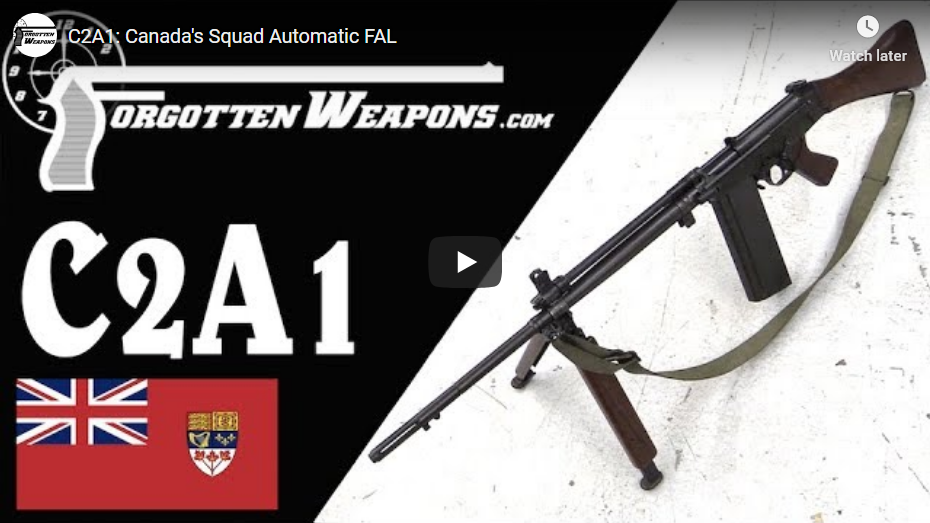
C2A1: Canada’s Squad Automatic FAL
Forgotten Weapons
Published on 6 Sep 2019http://www.patreon.com/ForgottenWeapons
Cool Forgotten Weapons merch! http://shop.bbtv.com/collections/forg…
Canada was the first country to formally adopt the FN FAL as its standard service rifle, and in 1958 it added the C2 light machine gun version of the FAL to its arsenal. The C2, later updated to C2A1, was a heavy-barreled version of the regular FAL rifle. It shared all the same basic action components, but with a dual-use bipod/handguard, a rear sight calibrated out to 1000 meters, and 30-round magazines as standard. The gun was mechanically fine, but not a great light support weapon, as its rifle lineage sacrificed handling and sustained fire capability. Only about 2700 were produced, and it was ultimately replaced by the C9 (FN Minimi) in the 1980s.
Many thanks to Movie Armaments Group in Toronto for the opportunity to showcase their AR-10 rifles for you! Check them out on Instagram to see many of the guns in their extensive collection:
https://instagram.com/moviearmamentsg…
http://www.moviearms.comContact:
Forgotten Weapons
PO Box 87647
Tucson, AZ 85754
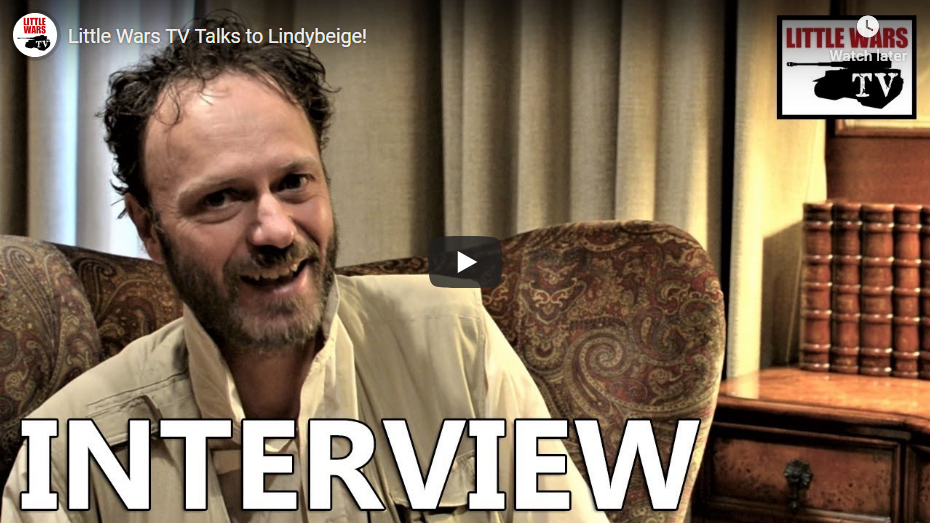
Little Wars TV Talks to Lindybeige!
Little Wars TV
Published on 23 Jul 2019Nikolas Lloyd, known on YouTube as “Lindybeige,” was a guest speaker at Historicon 2019 and we had the chance to chat with him. His eclectic military history channel is one of our absolute favorites and we had a blast in this wide-ranging interview. We ask him about his favorite generals, how he started wargaming, which Hollywood movie is most faithful to history, and much more!
If you aren’t familiar with the channel, check out Lindybeige here: https://www.youtube.com/user/lindybeige
In this interview, we reference the video “The Wargamers Who Won a Real War,” about the Battle of the Atlantic. You can see that video here: https://www.youtube.com/watch?v=fVet8…
Thanks for watching, and we hope you’ll subscribe here for more of the best historical wargaming videos on YouTube!
September 6, 2019
Germany Commits Suicide by Cancelling War Reparations | BETWEEN 2 WARS I 1931 Part 3 of 3
TimeGhost History
Published on 5 Sep 2019Contrary to popular belief it is not so much reparations themselves that puts the first stepping stone in place for the Nazi to rise to power. Instead it is the cancellation of war reparations, or more correctly put; the measures that “The Hunger Chancellor” Heinrich Brüning implements to get reparations cancelled that pushes Germany over the financial brink and into the hands of Hitler and Goebbels.
Join us on Patreon: https://www.patreon.com/TimeGhostHistory
Subscribe to our World War Two series: https://www.youtube.com/c/worldwartwo…
Hosted by: Indy Neidell
Written by: Spartacus Olsson and Francis van Berkel
Directed by: Spartacus Olsson and Astrid Deinhard
Executive Producers: Bodo Rittenauer, Astrid Deinhard, Indy Neidell, Spartacus Olsson
Creative Producer: Joram Appel
Post-Production Director: Wieke Kapteijns
Research by: Francis van Berkel and Spartacus Olsson
Edited by: Wieke Kapteijns and Daniel Weiss
Sound design: Iryna Dulka
Colorization by Daniel WeissThumbnail: Goebbels colorized bu Olga Shirnina, aka Klimbim
Archive by Reuters/Screenocean http://www.screenocean.com
A TimeGhost chronological documentary produced by OnLion Entertainment GmbH.
Sources:
Ruth Henig, The Weimar Republic 1919-1933
Theo Balderston, Economics and Politics in the Weimar Republic
Kolbe, The Weimar Republic
Harold James, The Causes of the German Banking Crisis of 1931
Feuchtwanger, From Weimar to HitlerSources images: Bundesarchiv
From the comments:
TimeGhost History
49 minutes ago (edited)OK, so this video is about Naziism to some degree, it’s also a serious look at how Germany started transitioning into Naziism – this is not speculation, it’s not even very controversial, it just happens to not fit with many popular superficial misconceptions. Now, we love it when you guys debate under our videos, even when it’s in disagreement with something we or somebody else said, but before you do so please save us some time and read our rules and consider if your post is against our rules. If you think it might be, consider editing or just not posting it — otherwise you’re just wasting our time and your own — because no matter what, we will moderate this.
If your going to post that the Versailles Treaty was to blame you might want to read this instead: https://community.timeghost.tv/t/why-the-treaty-of-versailles-didnt-cause-naziism-answering-a-guy-on-youtube/1858 — that’s Indy’s extensive answer to that claim.
If you’re going to claim “Naziism was Left Wing” well you can do that, we don’t suppress opinions, not even silly ones, but we suggest that you read this instead: https://timeghost.tv/national-socialism-an-extreme-left-wing-ideology/ that’s Spartacus’s explanation why it is not considered so by historians (and why it’s not really that important).
If you’re going to praise Naziism or celebrate Communism, or propose that any other form of lethal extremism is a great idea — just don’t, we do remove any promotion for lethal anti-democratic ideologies, and will probably revoke your positing privileges.
If you’re going to start peddling conspiracy theories about Jews controlling [insert your crazy idea here] or “it was the Jews” — definitely don’t do that or it will be last thing you post here.
If you’re going to say that stopping German Communism is what caused Naziism — well you can do that … it’s pretty much wrong or at least a gross misrepresentation, and you’ll look like an idiot to anyone who knows their factual German history, but you can do that if publicly proclaiming ignorance is your thing — we would however suggest waiting for our next video on Germany’s elections in 1932 for a more correct take on that instead.
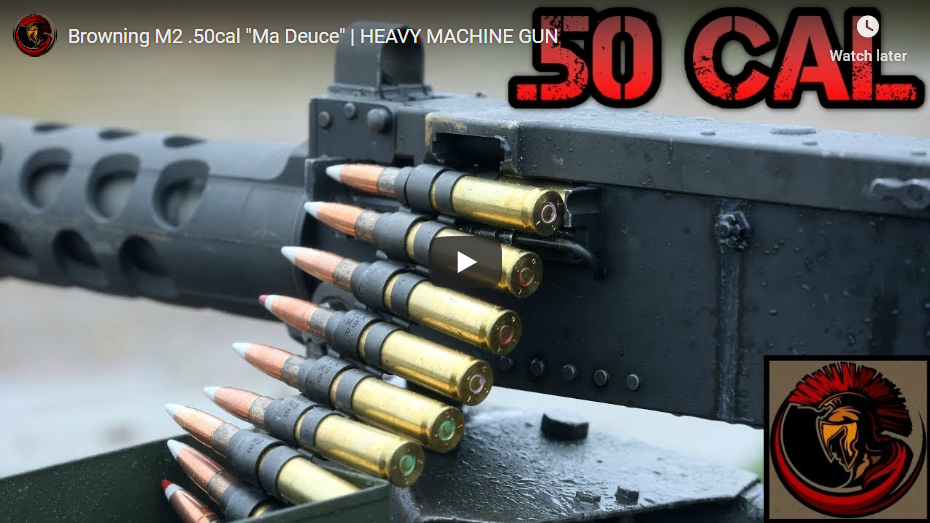
Browning M2 .50cal “Ma Deuce” | HEAVY MACHINE GUN
Matsimus
Published on 22 Jul 2019The Browning heavy machine gun was designed towards the end of World War I. Development of a large-caliber machine gun in the USA was initiated at the direct request of General Pershing, the commander of US expeditionary corps in Europe. He requested a large-caliber machine gun, capable of destroying military aircraft and ground targets such as armored cars and tanks. The task of developing such a gun was passed to John Browning. The task of developing ammunition for this new weapon was passed to Winchester Arms company.
This machine gun is similar to John Browning’s earlier M1919 machine gun, that was chambered for a standard rifle cartridge. In around 1917 Browning started to redesign his weapon for a larger caliber. His new machine gun was chambered for much larger and much more powerful 12.7×99 mm (.50 caliber) cartridge, that was developed alongside this weapon by Winchester. That’s why sometimes this weapon is simply referred as Browning .50 caliber machine gun. After the John Browning’s death in 1926, the design of this weapon was finalized by other designers.
This machine gun entered service with the US armed forces in 1933 and was manufactured by Colt. Design of this weapon proved to be extremely successful. Since the 1930s it has been used extensively to the present day. This remarkable weapon has seen service during countless wars all over the world. Only during WWII nearly 2 million of these HMGs were produced. It has been in production longer than any other machine gun and its production still continues. Furthermore the M2 machine gun has been in use longer than any other small arm in the US armed forces inventory, except the M1911 pistol, that was also designed by John Browning. The M2 machine gun is currently manufactured by General Dynamics and US Ordnance companies. Since the 1930s this weapon is license-produced by FN Herstal of Belgium. Currently the M2 is used by about 100 countries all over the world. It is the primary heavy machine gun of NATO countries.
The M2 is typically used as a vehicle weapon or helicopter armament. It can be also used from a tripod. This heavy machine gun is highly effective against infantry, unarmored or lightly armored vehicles, boats, light fortifications and helicopters. It is closer in power to a small cannon.
This weapon is typically used with standard ball, tracer, armor-piercing, armor-piercing incendiary, or armor-piercing incendiary tracer rounds. There is also an M962 SLAP-T (Saboted Light Armor Penetrator) round, fitted with a tungsten penetrator.
The M2 is fed from disintegrating belt. Spent cartridge cases are extracted down. It can be adapted to feed from the left or right side of the weapon by reinstalling some parts. This conversion takes two minutes. The charging handle can be also changed from right to left hand side.
The M2 has slow and rapid firing modes. It can fire full-auto, as well as single shots. This weapon fires from a closed bolt.
When used as a crew served weapon, the M2 is mounted on an M3 tripod. This tripod weights 20 kg. So the complete weight of the machine gun on tripod is 58 kg. When fired from the tripod this HMG has an effective range of 1 830 m. Maximum effective range is 2 000 m.
The M2 comes with standard iron sights. However various types of telescopic and night sights can be installed using appropriate mountings.
Hope you enjoy!!
💰 Want to support my channel? Check out my Patreon Donation page! https://www.patreon.com/user?u=3081754
👕 Check out my Merch: https://teespring.com/stores/matsimus…
📬Wanna send me something? My PO Box: Matthew James 210A – 12A Street N Suite
#135 Lethbridge Alberta Canada T1H2J🎮 Twitch: https://www.twitch.tv/matsimus_9033
👋DISCORD: https://discord.gg/B7cbXgy
🐦Twitter: https://twitter.com/MatsimusGaming
⛔️ (DISCLAIMER: This video is for informative and entertainment purposes only. The views and opinion come from personal experience and not that of others or other organizations. This content and information is there to provide information from public accessible sources.)
QotD: The horrors of war
An aside: I’ve long thought that prettifying World War II for domestic consumption contributed to both the media shock of Vietnam and the generation gap. WWII and Korea vets, who knew war first-hand, didn’t understand just how shocked their doted-on boomer kids were. “The Good War” wasn’t any more pleasant when you were experiencing it.
Virginia Postrel, “Horrors of War”, Dynamist.com, 2004-04-27.
September 5, 2019
Phony Trudeaumania has bitten the dust
Nico Johnson discusses the dangers of family dynasties in democratic countries:
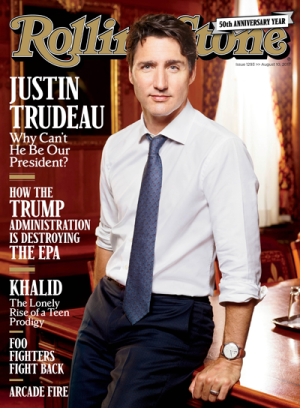
When future political historians look back at the 21st century, Justin Trudeau’s election as a Liberal leader may be regarded as a bland footnote. Despite all the hope Trudeau brought Canadians in his once seemingly eternal, post-election honeymoon, his leadership inevitably toppled into a swamp of sticky scandals and hurried apologies.
Justin Trudeau may still be re-elected. However, the Conservatives can rest easy in the knowledge that Trudeaumania, at least for this current Trudeau, is well and truly dead.
What is noteworthy, however, is the atmosphere of surprise and confusion that has clouded commentators’ judgements surrounding the downfall of Trudeau. In the corridors of Ottawa’s broadcasters, it may have appeared absurd that natural political decline should apply to their darling Prime Minister; the leader of the “woke world.”
Trudeau’s appearance of invincibility, which still makes these commentators swoon (note the SNC-Lavalin coverage) was first created in those blue-skied months following his leadership election in 2013.
Perhaps Justin, with his charisma and handsomeness, seemed like a breath of fresh air to Canadian progressives. Gone were those days of Ignatieff, the drooling philosopher, who rather spectacularly (considering his semi-illiterate predecessor) lost 43 seats forcing the Liberals into third-party status.
With Trudeau’s leadership, the Liberal party would have a candidate who seemed so perfect for Canadian political life that even a eugenicist would struggle to replicate it. With his status as an Anglophone-Quebecois, which managed to pacify the sensibilities of English Canada, whilst having his Quebecois heritage to maintain seat-rich Quebec—Trudeau must have seemed like a divine gift.
Yet even in those early days, Trudeau lacked noticeably in the fundamental requirements that statesmanship should necessitate. He had no political experience after being almost casually elected to the House of Commons. Nor did he possess any working experience, and had been entirely unknown to the Canadian public until the eulogy at his father’s funeral. To put it quite simply, Justin Trudeau would have never become Prime Minister of Canada if his father, Pierre, had not been one too.
September 4, 2019
Viewing WW2 as “the Air-Sea Super Battlefield”
According to Phillips Payson O’Brien, it’s old-fashioned to view large land battles as being “decisive” in modern warfare:
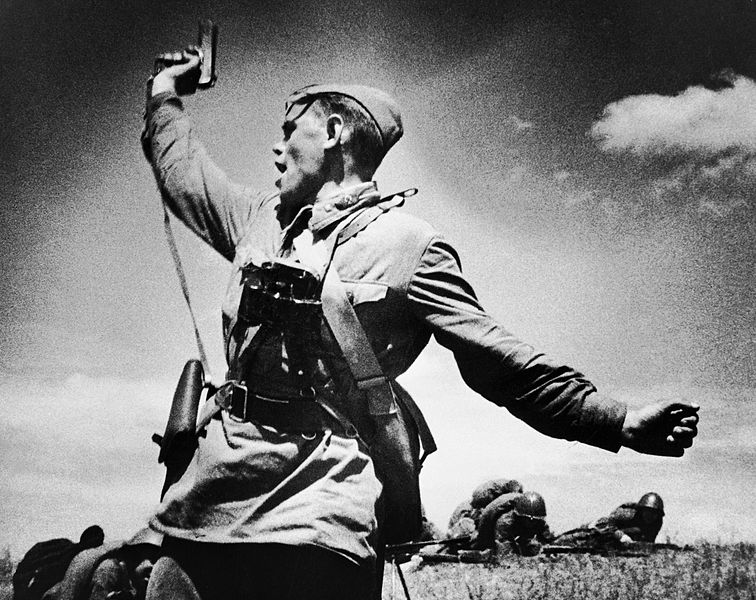
Kombat (Russian: Комбат, lit. “battalion commander”) is a black-and-white photograph by the Soviet photographer Max Alpert. It depicts a Soviet military officer armed with a TT pistol who is raising his unit for an attack during World War II. This work is regarded as one of the most iconic Soviet World War II photographs, yet neither the date nor the subject is known with certainty. According to the most widely accepted version, the photograph depicts junior politruk (political officer) Aleksei Gordeyevich Yeryomenko, minutes before his death on 12 July 1942, in Voroshilovgrad Oblast, Ukraine.
Wikimedia Commons.
Allied victory in WWII is usually viewed through the lens of large land battles, from Stalingrad to Kursk to D-Day. However, battlefield losses of equipment in these “great” land battles were relatively small and easily replaceable. This column demonstrates that the real effort of the major powers was put into the construction of air and sea weapons. The Allies used their air and sea power to destroy the Axis’s in a multi-layered campaign. This was the true battlefield of WWII: a massive air-sea super battlefield that stretched for thousands of miles. Victory in this super-battlefield led to victory in the war.
Every aspect of WWII is discussed in a vast literature. Considering its diversity, explanations of why Germany lost the war are surprisingly predictable. It remains widely argued that the Nazis were beaten mostly by the Soviet Union’s powerful Red Army (Hastings 2005: 508, Kennedy 2013: 183).
From June 1941 to May 1945, German “power” was supposedly engaged and destroyed by the Russians. At some points, more than two-thirds of German infantry were engaged against the Red Army. The famous battles of the Eastern Front, such as Stalingrad and Kursk, supposedly caused the Germans’ crippling losses. The upshot of this lopsided deployment was that most German soldiers died in the East. Fighting against the Americans and British, conversely, is often portrayed as a secondary concern (Roberts 2010: 573).
What’s wrong with a focus on battles?
This battle-centric view, like much history of WWII, is old-fashioned. Historians of strategy have moved away from seeing battles as determinative. Nolan (2017) has argued that attrition losses are more important than battle losses in explaining outcomes.
The battle-centric analysis implies that infantry deployment is the best way to analyse effort. Yet, human-power was rarely the key factor in deciding combat in WWII. Equipment and specialised training mattered more. Possessing and operating the largest stores of modern weapons, not only tanks and artillery but also aircraft and naval vessels, determined the course of battles and the war.
If we reframe the discussion of the war to look not only at what equipment was made but also at how it was destroyed, it emerges that the war was decided far from the land battlefield (O’Brien 2015). The most striking sign of this is how little war production went to the land war and how much went to the combined air-sea war. This was the case for all the powers except the USSR.
Japan, the Bureaucratic War Machine | BETWEEN 2 WARS I 1931 Part 2 of 3
TimeGhost History
Published on 3 Sep 2019In Japan there has been a gradual increase of militarism since the Great War and in 1931 the country goes to war again when they invade Chinese Manchuria based on a false flag terrorist strike at the Mukden railway junction.
Join us on Patreon: https://www.patreon.com/TimeGhostHistory
Subscribe to our World War Two series: https://www.youtube.com/c/worldwartwo…
Hosted by: Indy Neidell
Written by: Spartacus Olsson
Directed by: Spartacus Olsson and Astrid Deinhard
Executive Producers: Bodo Rittenauer, Astrid Deinhard, Indy Neidell, Spartacus Olsson
Creative Producer: Joram Appel
Post-Production Director: Wieke Kapteijns
Research by: Joram Appel and Spartacus Olsson
Edited by: Danile Weiss
Sound design: Marek KaminskySources:
A TimeGhost chronological documentary produced by OnLion Entertainment GmbH.
Sources:
James Fulcher, The Bureaucratization of the State and the Rise of Japan (1988)
Katō Yōko, “The debate on fascism in Japanese historiography”, in: Sven Saaler and Christopher W.A. Szpilman (ed.), Routledge Handbook of Modern Japanese History (2018), 225-236.
Ethan Mark, “Japan’s 1930s crisis, fascism, and social imperialism”, in: Sven Saaler and Christopher W.A. Szpilman (ed)., Routledge Handbook of Modern Japanese History (2018), 237-250.
Penolepe Francks, “The path of economic development from the late nineteenth centre to the economic miracle”, in: Sven Saaler and Christopher W.A. Szpilman (ed)., Routledge Handbook of Modern Japanese History (2018), 267-278.
Sandra Wilson and Robert Cribb, “Japan’s colonial empire”, in: Sven Saaler and Christopher W.A. Szpilman (ed)., Routledge Handbook of Modern Japanese History (2018), 77-91.
Mark R. Peattie, “Nanshin: The ‘Southward Advance’, 1931-1941, as a Prelude to the Japanese Occupation of Southeast Asia”, in: Peter Duus e.a., The Japanese Wartime Empire, 1931-1945 (2010), 190-242.
From the comments:
TimeGhost History
13 minutes ago
This is the third of several episodes that cover the developments in East Asia leading to World War Two. In this episode we look at how Japan by 1931 has developed to be on the brink of a fascist state without anyone specifically taking power or staging a coup. The democratic reforms from the past four decades are dying a death by a thousand cuts as the Japanese administration and military simply take one small decision after the other that erodes freedom, dials back democracy, and inevitably leads to war. It’s an anonymous, mechanic, gradual movement towards global conflict proceeding with clockwork precision.This episode also sees the first change to the Between 2 Wars set as Astrid and Wieke have started adapting the set to the changing themes, while we move closer and closer to the outbreak of WW2 — we’d love to hear what you think!
English spelling – a bit mad, but perhaps the best system around
Lindybeige
Published on 12 Nov 2015Support me on Patreon: https://www.patreon.com/Lindybeige
Many people think that the English system of spelling is just mad. The random quirks of history have certainly played their part, and today we have spellings that follow so many different rules that at times it can seem just random. However, here I argue that actually the fact that our spelling does not match our pronunciation is a strength, not just a weakness.
I see from the comments that several viewers have misunderstood me, and have thought that I am saying that only when people are reading English do they recognise words in the same way as we recognise faces. No, this is how people read in all languages. This being the case, phonetic spelling is not such a great advantage, since people are not decoding the words using sound, and spelling based on derivation has advantages.
Lindybeige: a channel of archaeology, ancient and medieval warfare, rants, swing dance, travelogues, evolution, and whatever else occurs to me to make.