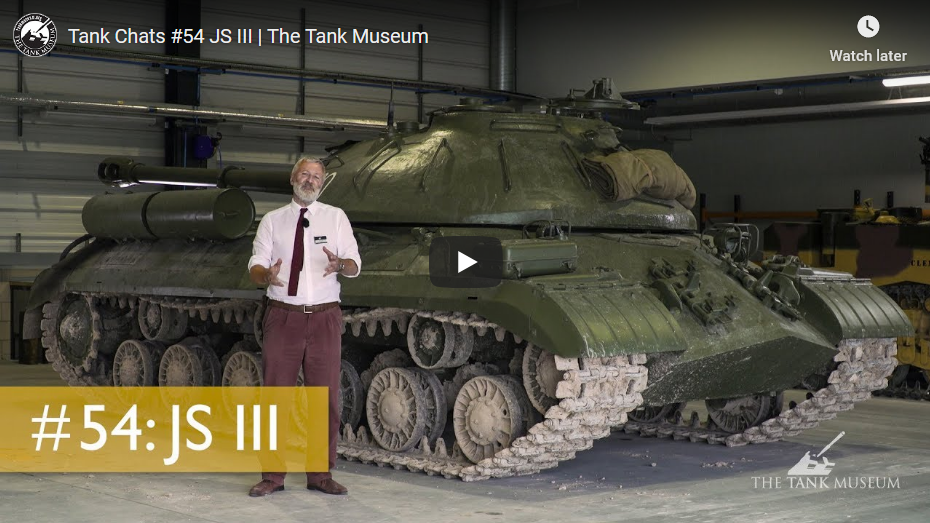
The JS III or IS III was debuted by the Soviet Union at the Second World War Victory Parade, in September 1945.
This particular JS III was at The Tank Museum temporarily, for its appearance at TANKFEST 2018, and has now returned home to The Belgian Royal Military Museum.
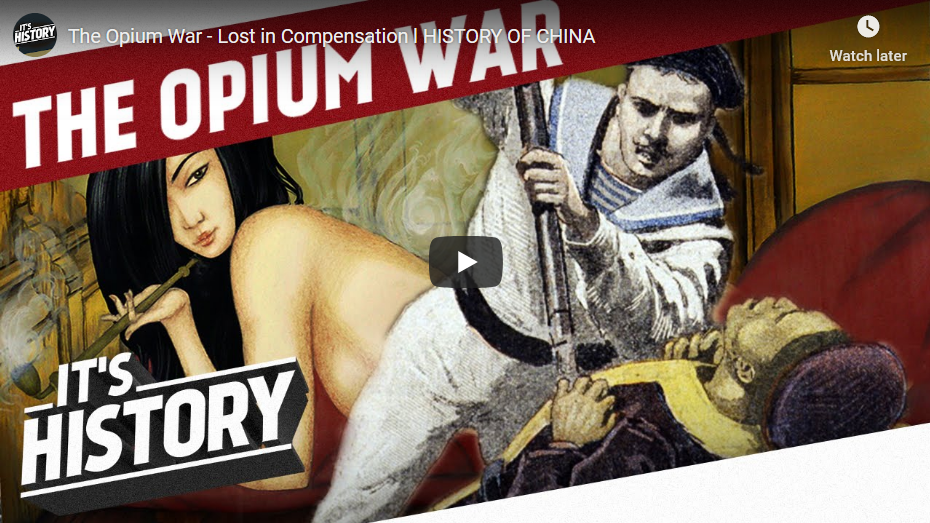
The Opium War started as a dispute over trading rights between China and Great Britain. Regular trade between Europe and the Chinese had been ongoing for centuries. But China’s trading restrictions frustrated the British who were eager to supply the Chinese people with the increasingly popular narcotic opium. Circumventing the government’s attempts to ban opium trade by smuggling and bribery, China declared the death sentence on Opium smuggling and refused to compensate British tradesmen for any losses. Furiously, the Brits sent out a fleet to demand compensation and end the Cohong trading monopoly. Fierce battles and attacks on the Chinese coast were followed. Find out all about the First Opium War from Indy in our new episode of Battlefields!
» SOURCES
Videos: British Pathé (https://www.youtube.com/user/britishp…)
Pictures: mainly Picture Alliance
Content:
Lovell, Julia: The Opium War: Drugs, Dreams and the Making of China
Wei, Yuan: Chinese Account of the Opium War
McPherson, Duncan: The First Opium War – The Chinese Expedition 1840-1842
Merwin, Samuel: Drugging a Nation – The Story of China and the Opium Curse
Bernard, William Dallas; Hall, Sir William Hutcheon: Narrative of the Voyages and Services of the Nemesis, from 1840 to 1843.
Isabel Hilton (The Guardian): “The Opium War by Julia Lovell – review”
Perdue, Peter C. (MIT): The First Opium Warhttp://ocw.mit.edu/ans7870/21f/21f.02…
» ABOUT US
IT’S HISTORY is a ride through history – Join us discovering the world’s most important eras in IN TIME, BIOGRAPHIES of the GREATEST MINDS and the most important INVENTIONS.
» HOW CAN I SUPPORT YOUR CHANNEL?
You can support us by sharing our videos with your friends and spreading the word about our work.
» CAN I EMBED YOUR VIDEOS ON MY WEBSITE?
Of course, you can embed our videos on your website. We are happy if you show our channel to your friends, fellow students, classmates, professors, teachers or neighbors. Or just share our videos on Facebook, Twitter, Reddit etc. Subscribe to our channel and like our videos with a thumbs up.
» CAN I SHOW YOUR VIDEOS IN CLASS?
Of course! Tell your teachers or professors about our channel and our videos. We’re happy if we can contribute with our videos.
» CREDITS
Presented by: Guy Kiddey
Script by: Dan Hungerford
Directed by: Daniel Czepelczauer
Director of Photography: Markus Kretzschmar
Music: Markus Kretzschmar
Sound Design: Bojan Novic
Editing: Markus Kretzschmar
A Mediakraft Networks original channel
Based on a concept by Florian Wittig and Daniel Czepelczauer
Executive Producers: Astrid Deinhard-Olsson, Spartacus Olsson
Head of Production: Michael Wendt
Producer: Daniel Czepelczauer
Social Media Manager: Laura Pagan and Florian Wittig
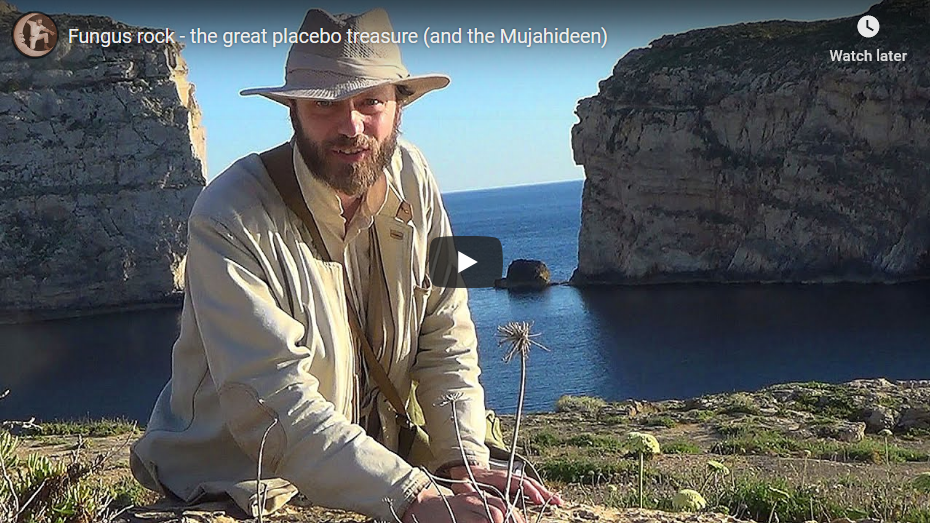
The things that people valued and fought over in the past were not as they are now. You might not guess the tremendous significance of one tiny island off the coast of Gozo.
NEWS FLASH (March 8th 2017): the Azure Window, featured in this video, has collapsed into the sea.
More videos from Malta to follow.
Lindybeige: a channel of archaeology, ancient and medieval warfare, rants, swing dance, travelogues, evolution, and whatever else occurs to me to make.
▼ Follow me…
Twitter: https://twitter.com/Lindybeige I may have some drivel to contribute to the Twittersphere, plus you get notice of uploads.
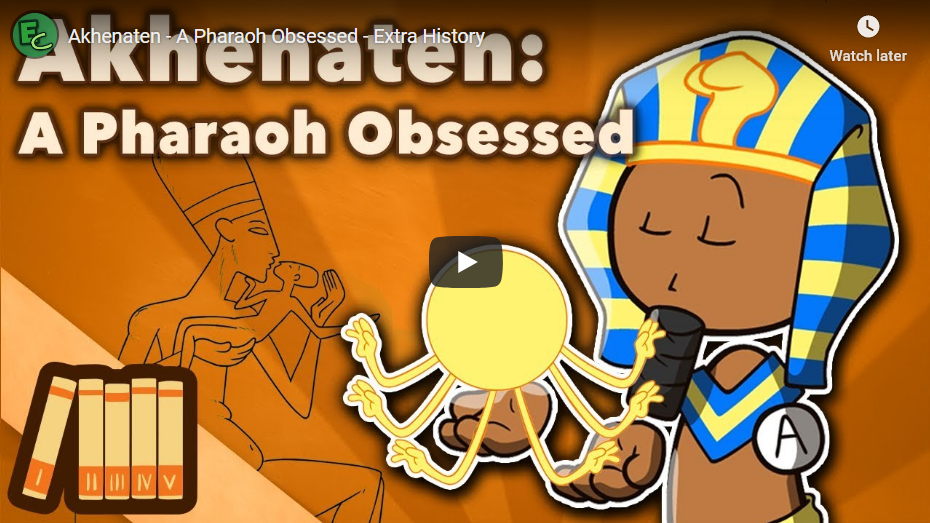
A revolutionary dreamer or a tyrannical despot? That is a question at the heart of Akhenaten’s rule, a pharaoh so unusual, that his successors tried and almost successfully erased him from the historical records. You may know his more famous wife, Queen Nefertiti but Akhenaten was a fascinating ruler. He went against the grain of almost all of Egyptian traditions including trying to establish a monotheistic religion and unite the Upper and Lower Kingdoms of Egypt.
Comments Off on Akhenaten – A Pharaoh Obsessed – Extra History
Japan has two wins this week, and one might turn out to be very consequential for the rest of the war. In the meantime, the British RAF fights the Luftwaffe and Italy struggles in their offensive against Greece.
Written and Hosted by: Indy Neidell
Produced and Directed by: Spartacus Olsson and Astrid Deinhard
Executive Producers: Bodo Rittenauer, Astrid Deinhard, Indy Neidell, Spartacus Olsson
Creative Producer: Joram Appel
Post-Production Director: Wieke Kapteijns
Research by: Indy Neidell
Edited by: Iryna Dulka
Map animations: Eastory
Sources:
– Narodowe Archiwum Cyfrowe
– IWM: CM 164, C 1244
– Destroyed house icon by Gan Khoon Lay, people icon by Gregor Cresnar from the Noun Project
A TimeGhost chronological documentary produced by OnLion Entertainment GmbH.
From the comments:
World War Two
2 days ago
Do you want more World War Two in realtime? We have a great Instagram page, where we make a daily post about what happened in the war on that day. This might be something completely different from what’s covered in these videos, or might add some more details. You can follow it by searching @world_war_two_realtime or by clicking here: https://www.instagram.com/world_war_two_realtime/. See you there!
Cheers, Joram
Comments Off on Britain shows Japan how to Attack Pearl Harbor – WW2 – 064 – November 16, 1940
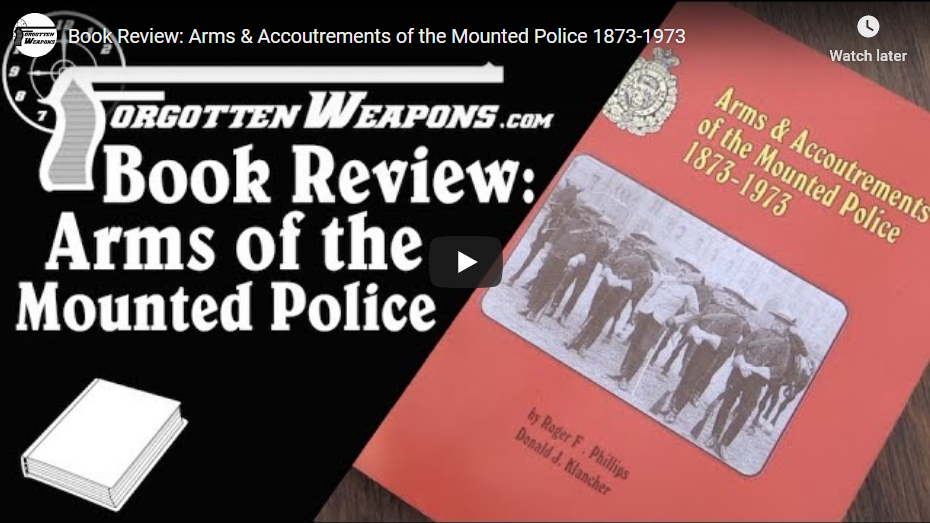
The Royal North West Mounted Police (later merged with the Dominion Police to become the RCMP — Royal Canadian Mounted Police) are an interesting and often overlooked element of the western frontier. We Americans tend to only think about the Old West up to northern Montana and Idaho, but of course things were not that much different on the other side of the border in Alberta, Saskatchewan, Yukon, and the other western provinces. Starting with their founding in 1873, law enforcement in western Canada was the domain of the RNWMP, and they used an interesting mixture of British Empire arms and American arms – Colts and Adams; Winchesters and Sniders.
Arms and Accoutrements of the Mounted Police, 1873-1973 covers the whole range or arms and accessories used by the Mounties. Handguns, rifles, shotguns, machine guns, swords, lances, and even artillery (yes, they had some artillery). This is a great book for any Canadian collector, and quite interesting for the rest of us as well — a window into a police agency we don’t often think about.
The book is generally out of print, but as of this writing still in stock for $35 at JoeSalter.com:
Start your Warframe journey now and prepare to face your personal nemesis, the Kuva Lich — an enemy that only grows stronger with every defeat. Take down this deadly foe, then get ready to take flight in Empyrean! Coming soon! http://bit.ly/EHWarframe
Early flight started as a utopian dream but quickly became the military’s top priority: first as reconnaissance vehicles, and then as weapons in their own right. After WW1, the threat of German aircraft led to the Treaty of Versailles banning Germany from having an airforce at all. But the Germans also found a loophole: rockets didn’t count as an airforce. Enter Werner Von Braun & the V-2 rockets.
Comments Off on History of Space Travel – Kill Devil to V-2 – Extra History – #3
What happened to Kaiser Wilhelm II after World War One? How did Polish soldiers flee to Allied territories after the 1939 invasion? And did any American volunteers serve in the war in 1939 and 1940? We answer all of this in this episode of Out of the Foxholes.
Hosted by: Indy Neidell
Produced and Directed by: Spartacus Olsson and Astrid Deinhard
Executive Producers: Bodo Rittenauer, Astrid Deinhard, Indy Neidell, Spartacus Olsson
Creative Producer: Joram Appel
Post Production Director: Wieke Kapteijns
Research by: Rune Vaever Hartvig
Edited by: Mikołaj Cackowski
Map animations: Eastory
A TimeGhost chronological documentary produced by OnLion Entertainment GmbH.
From the comments:
World War Two
2 days ago (edited)
We get a ton of questions about the war on a daily basis. A lot of them are already answered in the YouTube comments to you all directly, but because some questions are very interesting indeed, we like to showcase some of them on the channel. Because the YouTube comments are hard to navigate, we have made a section on our forum where you can submit questions to be covered in Out of the Foxholes. You can do that here: https://community.timeghost.tv/c/Out-of-the-Foxholes-Qs
Cheers,
The TimeGhost team
Comments Off on War Exiles: Kaiser Bill, Polish Forces, and US Volunteers – WW2 – OOTF 006
Julian McDonnell, that’s me, runs a London vlog and youtube channel where he talks about all things to do with London which you may not have known. This includes language and the way English people speak. Amongst many other funny idioms for going to the toilet one of the oldest ones is “To Spend a Penny”. This came about because it used to cost one penny to go to the public lavatories when they first appeared on the streets in 1851!
Hopefully this video will help you to understand the origins of these funny English idioms and expressions and help you to learn English or they may even be helpful if you are an ESL teacher or TEFL.
Another funny English idiom is when we say “He was sent to Coventry”. This indicates somebody who has been ostrasized and no one wants to talk to. Watch the video to find out how this came about.
Did you ever hear someone use the idiom “To hear a pin drop”? This actually originates from the tea auctions where you were only allowed to bid for a certain amount of time. They put a pin into a candle and let it burn down. When the pin fell out if there were no more bids you could hear a pin drop!
Our fourth funny idiom is a baker’s dozen. Anyone will tell you that a dozen is 12 but a baker’s dozen is 13! This is because in 1266 there was a law that would penalise bakers if they sold less than they said they were selling! So to make sure they weren’t short of their weight they would add a thirteenth loaf just to make sure.
Then comes our final idiom – To be on the wagon.
This means that someone is not drinking alcohol and it originates from the days when criminals would be hanged. They would stop at the Resurrection Gate pub and be bought one last drink but after that drink they had to get back onto the wagon and couldn’t drink any more. Then the wagon would take them to the gallows.
To make it more fun I have tried to show some of the locations which would have been affected by these expressions as well as point out some interesting historical facts which are related to them.
I go to Twinings in The Strand, The Royal Exchange, Pudding Lane and St Giles in the Fields
Hannah Arendt is said to have remarked that civilization is always being invaded by barbarians we call “children.” I don’t like to put a dangerously hard-to-trace quotation in the newspaper, but I first heard this half-jest decades ago and its depth has only impressed me more every year. Whoever said it first was obviously pretty learned and subtle, even if it wasn’t Arendt. “Barbarians” is a Greek word for incomprehensible, gibberish-spewing foreigners, but one of the great discoveries of the Greeks is that of the barbarians’ point of view, and the additional idea that this point of view deserved equal esteem.
Every nation believes its own customs and habits are the best, Herodotus said, and you would have to be nuts to dismiss those prejudices as though they were somehow objectively wrong. (I grant that this is a free translation, but he said it, and it is one of the intellectual breakthroughs with which we associate the Greeks.) As with nations, so it is with generations. The formative experiences, inherited expectations, and learned fears of somebody born in 1985 are hardly less different from mine than a foreigner’s would be.
If I say that my attitude toward millennials is that they are barbarians, I am asking for trouble, but I must insist on being understood: it is only that they are persons whose habits, prejudices, and values are foreign, formed by a different set of events and influences — not that they are inferior. In the right mood I can even be persuaded that their actual knowledge is simply of a qualitatively different character, rather than simply being more meagre because they have lived less long.
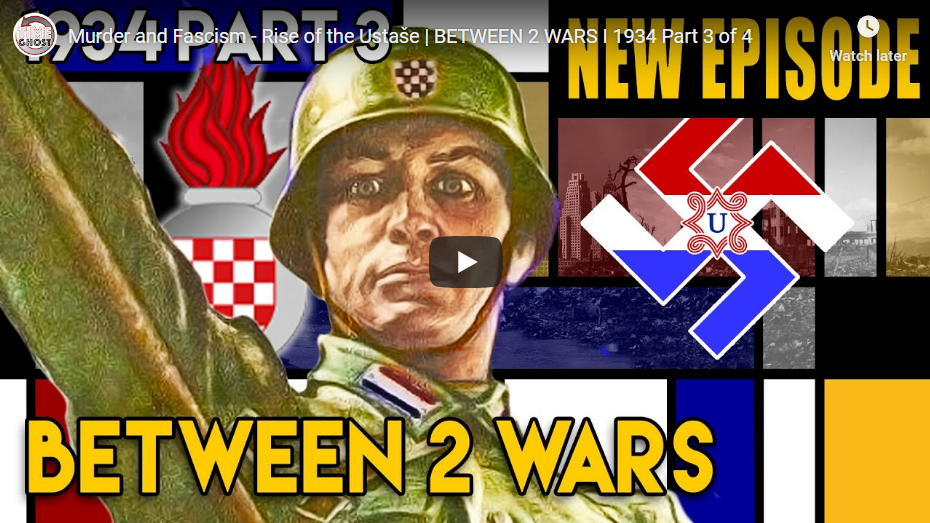
King Aleksandar has been working to forge a single Yugoslav identity in his troubled Balkan state. But ethnic nationalism still runs strong, and a shadowy fascist movement fiercely committed to destroying Yugoslavia is emerging.
Hosted by: Indy Neidell
Written by: Francis van Berkel & Spartacus Olsson
Directed by: Spartacus Olsson and Astrid Deinhard
Executive Producers: Bodo Rittenauer, Astrid Deinhard, Indy Neidell, Spartacus Olsson
Creative Producer: Joram Appel
Post-Production Director: Wieke Kapteijns
Research by: Francis van Berkel
Edited by: Wieke Kapteijns
Sound design: Marek Kamiński
Oleg M, Dememorabilia, Julius Jääskeläinen, Adrien Fillon.
Image sources: FORTEPAN / Gyöngyi, United States Holocaust Memorial Museum, TH-Bibliothek Zürich: Wehrli, Leo.
Icons from the Noun Project: jail by Strongicon, Police by IconTrack, Hand by Fahmi, coin stacks by emilegraphics, Government by Adrien Coquet, president by bezier master, dots by Alexander Skowalsky, List by Gregor Cresnar, Protest by Juan Pablo Bravo, crack by Dilon Choudhury, thunder by Phonlaphat Thongsriphong, Music by sanjivini, Death by Icon Island, curtains by Bartama Graphic.
A TimeGhost chronological documentary produced by OnLion Entertainment GmbH.
From the comments:
TimeGhost History
2 days ago (edited)
There is a lot going on in this episode. Extreme nationalism, fascism, authoritarianism, terrorism, and so on so forth. These things are controversial enough, but they’re also taking place in one of history’s biggest minefields: the Balkans. We’ve done absolutely everything we can to stick to the facts and stay objective. It’s a tough one to research but we have used credible academic texts and know we’ve done a good job.
If you think we’ve got something wrong, then feel free to (politely!) point it out in the comments. But remember that just because you don’t like how a particular group or person has acted, it doesn’t mean that the facts are wrong. Also, try to refrain from drawing any parallels with the modern-day to support your agenda. The fact that Yugoslavia struggled with ethnic tension has nothing to do with present-day debates on immigration and multiculturalism. Let’s stick to history, not myth.
Cheers,
Francis
Comments Off on Murder and Fascism – Rise of the Ustaše | BETWEEN 2 WARS I 1934 Part 3 of 4
The Battle of Thermopylae of 480 BCE may be one of the most famous battles in Ancient History. King Leonidas and his 300 Spartans were certainly not as alone in their last stand against the Persians, but are nevertheless remembered as being an underdog who would rather die than lose their freedom.
Sources:
– Photo of Persian warriors relief by Jakub Hałun from Wikimedia Commons
– Xerxes I by Mbmrock from Wikimedia Commons
– Bayerische State Painting Collections
– Rijksmuseum
An OnLion Entertainment GmbH and Raging Beaver Publishing AB co-Production.
A while back, I visited @CanadianGunLover, and we did a bit of shooting with an 1866 Chassepot. I lost track of the footage and only just now found where I had put it – so today is some Chassepot shooting! A couple things to note; the rifle sounds very quiet because my microphone was clipping it off, sorry. And yes, we are on a very short range bay – it’s what was available at the time. The ammo we are using was made by CGL, and was a bit longer than military spec, which led to the bolt getting tight to close more quickly that would have originally been the case. But even with that, the rapidity of fire offered by the Chassepot completely outclassed all the muzzleloaders still in service.
Want a whole lot more information on the Chassepot? Well, it’s covered in the first chapter of my book, Chassepot to FAMAS: French Military Rifles: https://www.headstamppublishing.com/f…
Contact:
Forgotten Weapons
6281 N. Oracle #36270
Tucson, AZ 85704
George Orwell: A Life in Pictures is a 2003 BBC Television docudrama telling the life story of the British author George Orwell. Chris Langham plays the part of Orwell. No surviving sound recordings or video of the real George Orwell have been found.
Awards:
International Emmy 2004 for Best Arts Programme
Grierson Award 2004 for Best Documentary on the Arts