Just about every king tried to do it [explain “where we come from” and “what are we here for”], and there was a serious rewrite of history associated with events like Henry VIII’s break from Rome.
None of those attempts were as total or as successful as the 20th century ones, due to several things. The first was that nations hadn’t had their spirits broken as thoroughly as WWI broke them, so people weren’t willing to lend credence to things spouted from on high with that much eagerness, and things leaked through. HOWEVER the most important thing that the twentieth century had in hand to try to remake culture was this: public education, mass media, mass news reporting.
Did it succeed? No. The only result of trying to mold human beings into the utopian version of the man who would live happily under communism was 100 million graves, and a Europe that is dying of senescence and lack of reproduction.
However it succeeded brilliantly in not only separating, now, I suppose two or three generations from their roots, but also convincing them that they are superior to their actual learned ancestors, and somehow, yet, the product of the worst civilization of human history.
Western culture is dying of WWI partly because the “cure” imposed by state education apparatus, corrupted by Soviet agitprop and continued by “intellectuals” who know nothing except that they’re superior to everyone else, more enlightened, kinder, and that they should design society and the world to “improve” it.
Sarah Hoyt, “A Generation With No Past”, According to Hoyt, 2017-10-19.
November 13, 2019
QotD: Western culture’s mortal wound
November 12, 2019
The Brief Independence of Georgia, Armenia and Azerbaijan I THE GREAT WAR 1919
The Great War
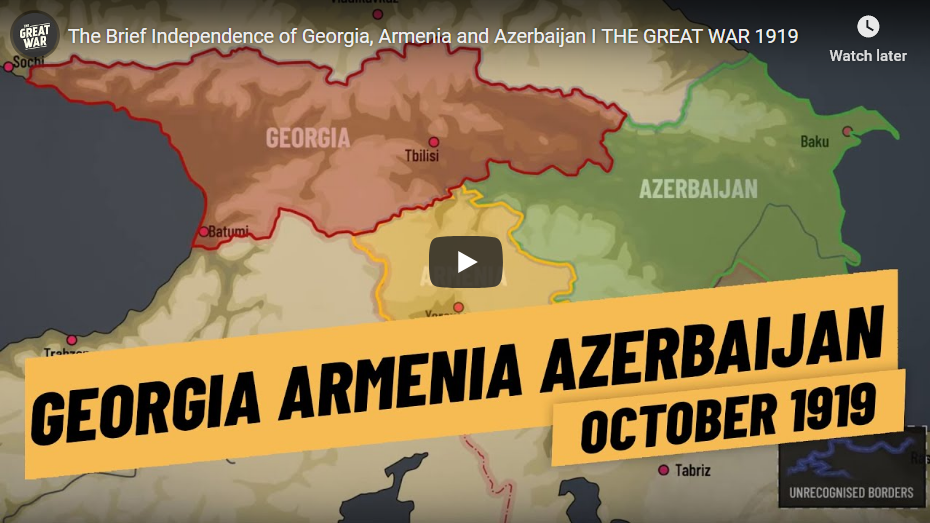
Published 11 Nov 2019Georgia, Armenia and Azerbaijan used the power vacuum after the 1917 revolution in Russia and after the collapse of the Central Powers in 1918 to gain their independence. But the Caucasus region was of vital strategic importance to the new Russian regime, to the British and to the Turks.
» SUPPORT THE CHANNEL
Patreon: https://www.patreon.com/thegreatwar
Merchandise: https://shop.spreadshirt.de/thegreatwar/» SOCIAL MEDIA
Instagram: https://instagram.com/the_great_war
Twitter: https://twitter.com/WW1_Series
Reddit: https://reddit.com/r/TheGreatWarChannel»CREDITS
Presented by: Jesse Alexander
Written by: Jesse Alexander
Director: Toni Steller & Florian Wittig
Director of Photography: Toni Steller
Sound: Toni Steller
Editing: Toni Steller
Mixing, Mastering & Sound Design: http://above-zero.com
Maps: Daniel Kogosov (https://www.patreon.com/Zalezsky)
Research by: Jesse Alexander
Fact checking: Florian WittigChannel Design: Alexander Clark
Original Logo: David van StepholdA Mediakraft Networks Original Channel
Contains licensed material by getty images
All rights reserved – Real Time History GmbH 2019
Building Angkor – The “Lost” City – Extra History – #5
Extra Credits
Published 8 Nov 2019Join us on Patreon! http://bit.ly/EHPatreon
After its decline, Angkor had become the Ancient, Lost City so prominent in our pop culture. Just one problem: Angkor was neither ancient (having declined around the same time as Hundred Years War) nor lost (people still lived there!). That didn’t stop the European visitors from trying to invent all kinds of stories for how this city could possibly exist, and stealing parts of the temple to bring back home. But despite all the hardships Angkor faced, it managed to become a national symbol for Cambodia and still remains to this day.

Merlin – The Engine that Won the War
Curious Droid
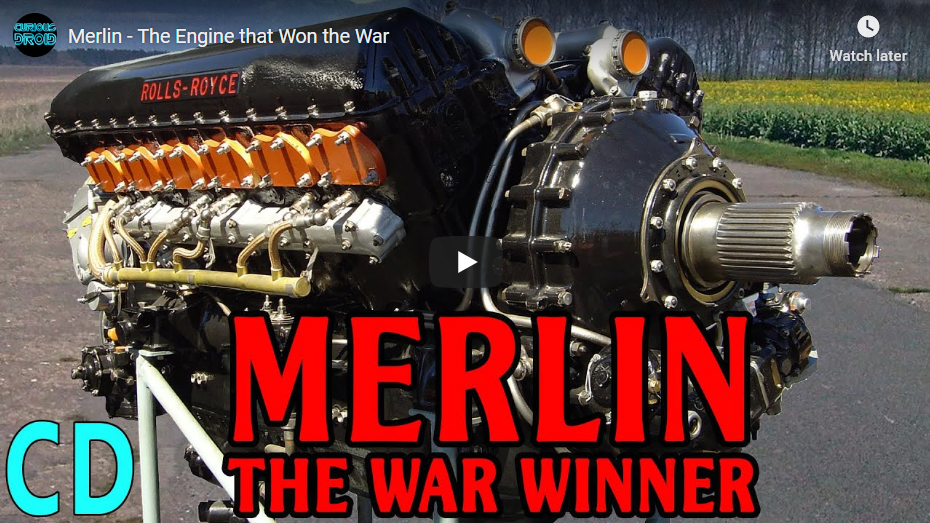
Published 28 Sep 2019Sounds like a bit of a bold claim that one engine helped change the course of WW2 but when you see the evidence it has a lot of validity but how did one little engine change the course of world events and become the engine that won the war?
I would like to thank David Irwin of Historic Aero Engines not only for the generous use of his footage but as in checking over the script and finished video for technical accuracy.
Historic Aero Engines display team :
https://www.youtube.com/channel/UCtE_…Patreon https://www.patreon.com/curiousdroid
Paypal.me https://www.paypal.me/curiousdroidSponsored by
Craig Fleming, Florian Hesse, Peter BarberPresented by Paul Shillito
Written and Researched by Paul Shillito with assistance from David Irwin.
Images and Footage:
Historic Aero Engines, Rolls Royce, USAF, RAF, Boeing, Packard,
Joel TrickMusic From the Youtube library
“Magical Gravity” by Asher Fulero
“Saving the World” by Aaron Kenny
“Adrift” by ELPHNT
“Oceans, Rivers, Canyons” by ELPHNT
“The Story Unfolds” by Jingle Punks
November 11, 2019
The Berlin Wall – A Street Party With Sledgehammers – Extra History
Extra Credits
Published 9 Nov 2019Thanks to World of Tanks for sponsoring this episode. Download the game on PC and use the invite code
CHECKPOINTCto claim your $15 starter pack https://tanks.ly/2NoVfjx.The Berlin Wall has become a symbol of the Cold War. It encircled West Berlin, separating it from the Soviet-controlled East Berlin, placed to try and stop the flood of skilled professionals leaving to the West. Multiple US presidents had penned speeches about tearing down the wall, to no effect. But the Wall did fall. As the USSR underwent massive reforms and the Velvet Revolution was underway, East Germany was undergoing its own reform. And one clerical oversight in a press conference will destroy the Wall for good.

Update: Austin Bay linked to a column he wrote in 2009 on the 20th anniversary of these events.
Many in the West, including the U.S., believed that the communists had history on their side. The wry debate reply from the defeatist lefties favoring unilateral U.S. nuclear disarmament was “better Red than dead.” For decades — I repeat, decades — this crowd had a media pulpit from which its self-proclaimed intelligentsia preached the moral equivalency of the U.S. and the Soviet Union, and at times dropped the all pretense and fingered the U.S. as the “fascist state” and global oppressor.
In the language of the defeatist left, the U.S. was the jailer, the warmonger, the threat to world peace.
The Berlin Wall’s collapse exposed that Big Lie, as did the documented moral, political, economic and ecological wretchedness of the Soviet Union. Unfortunately, we still hear echoes of this “blame America” cant lacing al-Qaida propaganda and the lectures of hard-left reactionaries like Bill Ayers. The great anti-American lies of the Cold War are recast as the great anti-American lies of the War on Terror.
Breaching the wall in 1989 was bloodless, but the Cold War certainly wasn’t. World War III did not break out along the intra-German border and produce a nuclear conflagration, but the Cold War’s battles on the periphery (e.g., Greece, Korea, Vietnam, El Salvador, Angola, Afghanistan) were expensive, fatiguing and deadly.
Mark Knopfler – “Remembrance Day”
Bob Oldfield
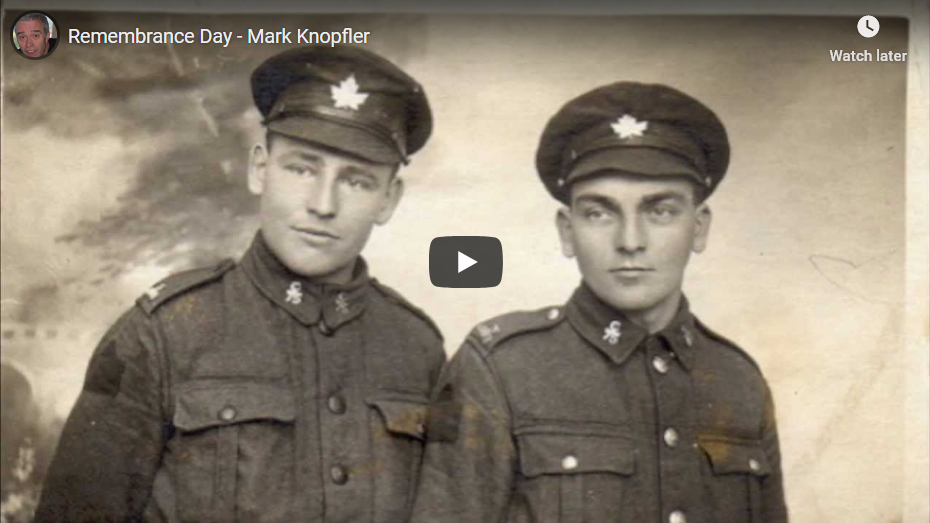
Published on 3 Nov 2011A Remembrance Day slideshow using Mark Knopfler’s wonderful “Remembrance Day” song from the album Get Lucky (2009). The early part of the song conveys many British images, but I have added some very Canadian images also which fit with many of the lyrics. The theme and message is universal… ‘we will remember them’.
In memoriam
A simple recognition of some of our family members who served in the First and Second World Wars:
The Great War
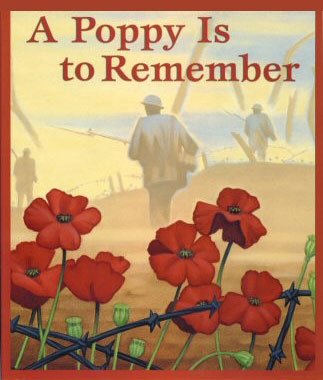 Private William Penman, Scots Guards, died 16 May, 1915 at Le Touret, age 25
(Elizabeth’s great uncle)- Private Archibald Turner Mulholland, Argyll & Sutherland Highlanders, mortally wounded 25 September, 1915 at Loos, age 27
(Elizabeth’s great uncle) - Private David Buller, Highland Light Infantry, died 21 October, 1915 at Loos, age 35
(Elizabeth’s great grandfather) - Private Harold Edgar Brand, East Yorkshire Regiment. died 4 June, 1917 at Tournai.
(My first cousin, three times removed) - Private Walter Porteous, Durham Light Infantry, died 4 October, 1917 at Passchendaele, age 18
(my great uncle) - Corporal John Mulholland, Argyll & Sutherland Highlanders, wounded 2 September, 1914 (shortly before the First Battle of the Aisne), wounded again 29 June, 1918, lived through the war.
(Elizabeth’s great uncle)
The Second World War
- Flying Officer Richard Porteous, RAF, survived the defeat in Malaya and lived through the war
(my great uncle) - Able Seaman John Penman, RN, served in the Defensively Equipped Merchant fleet on the Murmansk Run (and other convoy routes), lived through the war
(Elizabeth’s father) - Private Archie Black (commissioned after the war and retired as a Major), Gordon Highlanders, captured at Singapore (aged 15) and survived a Japanese POW camp
(Elizabeth’s uncle) - Elizabeth Buller, “Lumberjill” in the Women’s Land Army in Scotland through the war.
(Elizabeth’s mother) - Trooper Leslie Taplan Russon, 3rd Royal Tank Regiment, died at Tobruk, 19 December, 1942 (aged 23).
Leslie was my father’s first cousin, once removed (and therefore my first cousin, twice removed).
For the curious, the Commonwealth War Graves Commission the Royal British Legion, and the Library and Archives Canada WW1 and WW2 records site provide search engines you can use to look up your family name. The RBL’s Every One Remembered site shows you everyone who died in the Great War in British or Empire service (Canadians, Australians, New Zealanders, South Africans and other Imperial countries). The CWGC site also includes those who died in the Second World War.
In Flanders fields the poppies blow
Between the crosses row on row,
That mark our place; and in the sky
The larks, still bravely singing, fly
Scarce heard amid the guns below.We are the Dead. Short days ago
We lived, felt dawn, saw sunset glow,
Loved and were loved, and now we lie
In Flanders fields.Take up our quarrel with the foe:
To you from failing hands we throw
The torch; be yours to hold it high.
If ye break faith with us who die
We shall not sleep, though poppies grow
In Flanders fields.Lieutenant Colonel John McCrae, MD Canadian Army Medical Corps (1872-1918)
Too Late and Not Much Better: the Austen Mk II SMG
Forgotten Weapons
Published on 12 Sep 2019http://www.patreon.com/ForgottenWeapons
Cool Forgotten Weapons merch! http://shop.bbtv.com/collections/forg…
The story of the Austen submachine gun did not end when the Mk I guns were pulled from combat service in 1944. The manufacturer continued to work on an improved version, which would be ready in 1946, after the end of World War Two. Only 200 were made total, and they were both adopted and declared obsolete in August of 1946.
The changes made to the MkII Austen mostly involved increasing the use of die cast components, which fit the manufacturer’s tooling and experience. The front grip and magazine well casting was enlarged, and the whole rear assembly was made into a second cast part integrating the rear sight, stock mounting and latch, and fire control group. The one significant internal change was to remove the firing pin from the telescoping recoil spring assembly and make it an integral feature of the bolt face.
Many thanks to the Royal Armouries for allowing me to film this very rare artifact! The NFC collection there – perhaps the best military small arms collection in Western Europe – is available by appointment to researchers:
https://royalarmouries.org/research/n…
You can browse the various Armouries collections online here:
https://royalarmouries.org/collection/
Contact:
Forgotten Weapons
PO Box 87647
Tucson, AZ 85754

QotD: The British army from WW1 to the end of the Cold War
Rapid demobilisation followed, followed by regeneration in the 1920s and 30s to become the most mechanised army in the world by 1939, comprising some 224,000 regulars. It is often forgotten that the British army of 1940 had many more tanks and vehicles than the German Army – history is not kind to the losers. The army in WW2 grew to a citizen force of roughly 3.5 million men, before shrinking post war.
The continuation of National Service, the war in Korea and the end of empire saw the army stay at roughly 330,000 soldiers for much of the 1950s, causing significant damage to the national economy due to the cost and lack of manpower for rebuilding. By 1957 the army estimated that its regular strength was roughly 80,000 personnel (only a quarter of the whole force), many of whom were tied up training two-year National Servicemen. A major factor in the 1957 Sandys Defence White Paper was the need to reduce manpower costs and free people up for other economically important tasks.
The Sandys Review led to a reduction to 165,000 troops most of whom were focused on either colonial policing actions (it is often forgotten that in the early 1960s there were over 100,000 UK service personnel in the Far East) or deployed in Germany as part of the British Army of the Rhine (BAOR). The withdrawal from empire saw the army shrink to a strength of approximately 150,000 by the 1980s, where its role was primarily to provide a corps of four divisions in Germany in the event of general war, supported by mobilisation units from the UK which would provide further divisions to augment BAOR and conduct home defence roles.
The end of the Cold War saw the first deployment of a divisional-sized force, with an armoured division sent to the Gulf in 1990 for Operation Desert Storm. This happened just as the Options for Change review cut BAOR and reduced the army to approximately 120,000. Further deployments to Bosnia and Kosovo in the 1990s followed by the deployment of an armoured division to Iraq in 2003. Operations in Iraq and Afghanistan from 2003-2014 saw the army struggle to sustain itself on two fronts without heavy support from the RN and RAF providing extra manpower and resources.
The 2010 SDSR initially preserved the army at just under 100,000 personnel, although later reviews cut this down to 82,000 regulars supported by a target of approximately 30,000 reservists working in a far more integrated manner. Today the army is struggling to sustain itself at 82,000, with recent manpower figures showing a total of roughly 78,000 troops.
Sir Humphrey, “How Do You Solve a Problem Like a Deployable Division?”, Thin Pinstriped Line, 2017-08-06.
November 10, 2019
Britain’s First Victory, Germany Plunders Europe & Mussolini’s Folly – WW2 – 063 – November 9, 1940
World War Two
Published 9 Nov 2019The Battle of Britain is finished, but the war is far from over. New German plans are being made for the Balkans and Greece, where the Italian offensive is not as successful as planned.
Join us on Patreon: https://www.patreon.com/TimeGhostHistory
Or join The TimeGhost Army directly at: https://timeghost.tvFollow WW2 day by day on Instagram @World_war_two_realtime https://www.instagram.com/world_war_t…
Join our Discord Server: https://discord.gg/D6D2aYN.
Between 2 Wars: https://www.youtube.com/playlist?list…
Source list: http://bit.ly/WW2sourcesWritten and Hosted by: Indy Neidell
Produced and Directed by: Spartacus Olsson and Astrid Deinhard
Executive Producers: Bodo Rittenauer, Astrid Deinhard, Indy Neidell, Spartacus Olsson
Creative Producer: Joram Appel
Research by: Indy Neidell
Edited by: Iryna Dulka
Map animations: EastoryColorizations: Julius Jääskeläinen https://www.facebook.com/JJcolorization/
Thumbnail Colorization: Julius JääskeläinenEastory’s channel: https://www.youtube.com/channel/UCEly…
Archive by Screenocean/Reuters https://www.screenocean.com.Sources:
– Money and factory icons by Adrien Coquet, ship icon by Edward Boatman, all: from the Noun Project
– IWM: HU 1915, ZZZ 1811C, IND 3595, E 1227, E 1107, E 1242, E 1239
– San Demetrio crew by Arranj on Wikimedia Commons
– Narodowe Archiwum CyfroweA TimeGhost chronological documentary produced by OnLion Entertainment GmbH.
From the comments:
World War Two
2 days ago (edited)
Now that the new Greek offensive has been launched a week ago, more troops are moving and more terrain is changing hands. We are very lucky to have Eastory make maps for our episodes, allowing us to visualize movements and geographicial locations. Furthermore, Eastory is a historian who is very skilled in researching the exact locations and movements of fighting units. For these episodes, he has had some help from our loyal community member Avalantis. This really shows how much this channel is a team effort and how important our community is to us and our videos. If you want to contribute as well, you can start with supporting us on https://www.patreon.com/timeghosthistory or https://timeghost.tv. Every dollar counts!
Cheers, the TimeGhost team
History-Makers: Machiavelli
Overly Sarcastic Productions
Published 8 Nov 2019If I could have a conversation with any person in History, it’s Machiavelli. Easy. And I wouldn’t even have to do anything, I’d just say “So, tell me about Rome” and watch the fireworks. In the meantime, I’ll settle for playing Assassin’s Creed Brotherhood and liberating Roma with my boy Niccolò.
The best Prince is one who donates to TEAM TREES: https://teamtrees.org
PATREON: https://www.Patreon.com/OSP
DISCORD: https://discord.gg/sS5K4R3
MERCH LINKS: https://www.redbubble.com/people/OSPY…
OUR WEBSITE: https://www.OverlySarcasticProductions.com
Find us on Twitter https://www.Twitter.com/OSPYouTube
Find us on Reddit https://www.Reddit.com/r/OSP/
Theodore Dalrymple on today’s doomsday cults
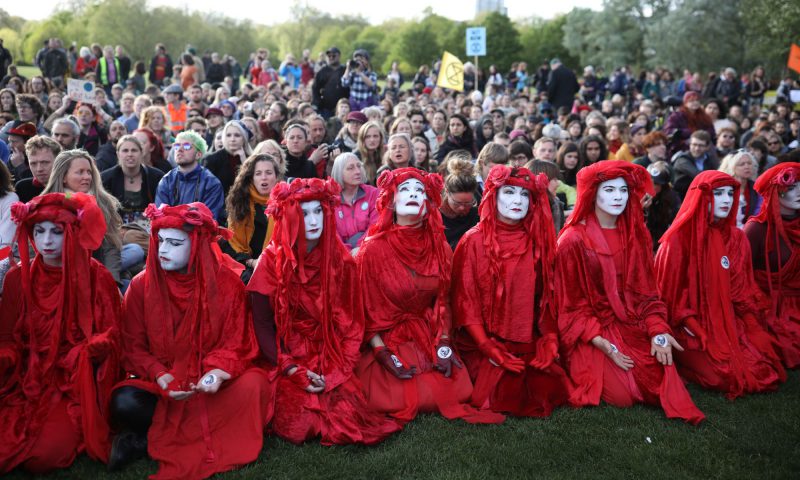
The recent antics of Extinction Rebellion activists in London encouraged Theodore Dalrymple to do a bit of reading on the psychology of such cults and their followers:
Man is the only creature, as far as we know, that enjoys the contemplation of its own disappearance from the face of the earth. We find the prospect of our annihilation by disease, famine, war, asteroid, or climate change deeply satisfying. We feel, somehow, that we deserve it and that the world would be a better planet without us.
When to this strange source of satisfaction is conjoined a license to behave badly in the name of salvation from earthly perdition, we can expect a mass movement that approaches insanity. So it is with the Extinction Rebellion, whose fanatical members have brought chaos to London recently by blocking streets, occupying crossroads, gluing themselves to public buildings and railings, and standing atop underground trains, to the fury of thousands of rush-hour commuters who don’t want to save the world but only get to work.
In order to try to understand their state of mind, I recently read a book by three psychologists, Leon Festinger, Henry W. Riecken, and Stanley Schachter, first published in 1956, called When Prophecy Fails. It recounts the reaction of a small doomsday sect in America founded by a housewife, who believed that most of North America was soon to be inundated by a great flood. When this failed to happen on the predicted date, members did not immediately conclude that the absurd grounds upon which their belief was based were false, but became even more convinced of their truth. When there is a contradiction between what we want to be the case and what is the case, our desire to believe often triumphs, at least for a time.
The beginning of the book gives a brief and selective history of sects that have predicted Man’s total annihilation in the near future, among them that of the Millerites in the 1840s in the United States. Reading the account of this sect, I could not help but think of the Extinction Rebellion that is now gripping London, to the growing fury of the rest of the population.
The Diggers’ Dismay: Austen Mk I SMG
Forgotten Weapons
Published on 11 Sep 2019http://www.patreon.com/ForgottenWeapons
Cool Forgotten Weapons merch! http://shop.bbtv.com/collections/forg…
When World War Two began, Australia saw little threat of invasion from Germany (obviously), and sent a substantial number of firearms to Britain to help arm the Home Guard there, which was seriously concerned about the possibility of a German invasion. When Japan and Australia declared war in December 1941, the situation immediately became much more serious for Australia, and the government began looking for arms.
At the start of the war, there were effectively no submachine guns at all on the continent — just a couple examples. These included an MP38 somehow confiscated by Australian customs, which would take on a significant role. Australia looked to Britain for arms, and they were sent a technical data package to produce the Sten MkII — but found the design pretty underwhelming. Australian manufacturers decided to make their own improvements to it, using elements of the MP38 — specifically the sealed telescoping recoil spring system and underflowing stock. They also gave the gun a pair of pistol grips for improved handling.
The Owen SMG was going into production at this time, and had been in development for a while under private civilian supervision. The Australian Sten, called the Austen, lacked that developmental track record and it went into production without passing proper trials. It faced significant manufacturing delays and reliability problems, and was not well liked by troops — in contrast to the excellent Owen. The Austen was ultimately made in smaller numbers than the Owen (19,914 of the MkI guns) and pulled from combat use in August of 1944.
Many thanks to the Royal Armouries for allowing me to film this rare artifact! The NFC collection there — perhaps the best military small arms collection in Western Europe — is available by appointment to researchers:
https://royalarmouries.org/research/n…
You can browse the various Armouries collections online here:
https://royalarmouries.org/collection/
Contact:
Forgotten Weapons
PO Box 87647
Tucson, AZ 85754

November 9, 2019
History of Space Travel – Revolutions – Extra History – #2
Extra Credits
Published 7 Nov 2019Start your Warframe journey now and prepare to face your personal nemesis, the Kuva Lich — an enemy that only grows stronger with every defeat. Take down this deadly foe, then get ready to take flight in Empyrean! Coming soon! http://bit.ly/EHWarframe
As the Renaissance breathes new life into Europe, Copernicus develops mathematical proofs for the sun resting in the center of the universe. And from his works, a new world is born. The scientific world gets faster and faster. Revolutions of all kinds begin to set off chains of events that reshape human history. And as science improves, so do the tools of war. Both will be necessary to propel humanity to the stars. Join us on this race through the scientific works between the Renaissance and the Industrial Revolution.
Copernicus’ publishing really came down to the wire! Legend has it that he was given the final printed pages on his death bed. When they presented him with the book, he awoke from a coma, saw his life’s work and finally passed away in peace. Or so the story goes.

“1648” – The Thirty Years War – Sabaton History 040 [Official]
Sabaton History
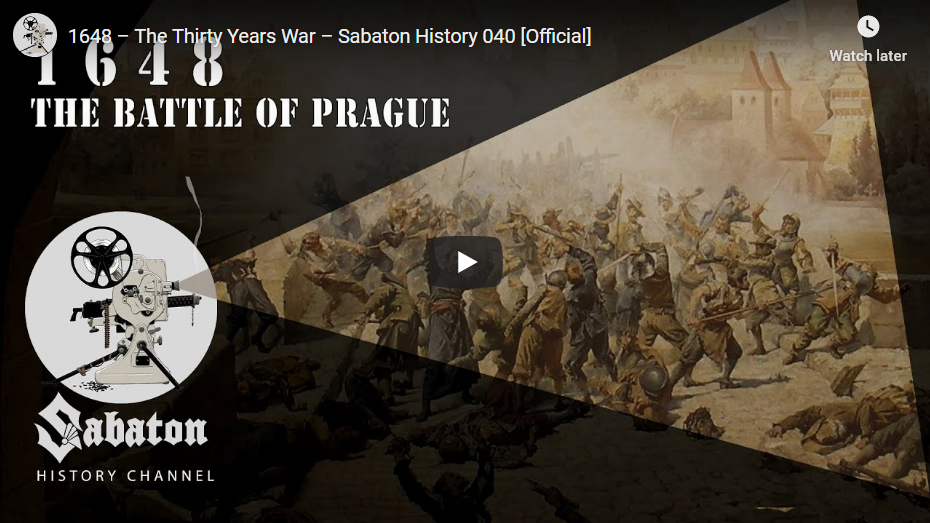
Published 7 Nov 2019Europe had grown weary of war by the summer of 1648 and after much deliberation, peace talks in Westphalia had reached their final stages. Warlords across the entire continent were preparing for peace but not all of them agreed. The exceptionally ruthless German-Swedish General Königsmarck advanced into Bohemia to lay siege to Prague.
Support Sabaton History on Patreon: https://www.patreon.com/sabatonhistory
Listen to Carolus Rex (Where “1648” is featured):
CD: http://bit.ly/CarolusRexStore
Spotify: http://bit.ly/CarolusRexSpotify
Apple Music: http://bit.ly/CarolusRexAppleMusic
iTunes: http://bit.ly/CarolusRexiTunes
Amazon: http://bit.ly/CarolusRexAmz
Google Play: http://bit.ly/CarolusRexGooglePlayListen to Sabaton on Spotify: http://smarturl.it/SabatonSpotify
Official Sabaton Merchandise Shop: http://bit.ly/SabatonOfficialShopHosted by: Indy Neidell
Written by: Markus Linke and Indy Neidell
Directed by: Astrid Deinhard and Wieke Kapteijns
Produced by: Pär Sundström, Astrid Deinhard and Spartacus Olsson
Creative Producer: Joram Appel
Executive Producers: Pär Sundström, Joakim Broden, Tomas Sunmo, Indy Neidell, Astrid Deinhard, and Spartacus Olsson
Maps by: Eastory
Edited by: Iryna Dulka
Sound Editing by: Marek KaminskiEastory YouTube Channel: https://www.youtube.com/channel/UCEly…
Archive by: Reuters/Screenocean https://www.screenocean.com
Music by Sabaton.Sources:
– Thumbnail image: Petri Krohn, CC BY-SA 3.0.
– Les misères et les malheurs de la guerre – The British Museum
– “Germania: dos mil años de historia alemana” series from Fondo Antiguo de la Biblioteca de la Universidad de Sevilla
– The peace of Munster painting courtesy of Amsterdam Museum
– RijksMuseumAn OnLion Entertainment GmbH and Raging Beaver Publishing AB co-Production.
© Raging Beaver Publishing AB, 2019 – all rights reserved.
From the comments:
Sabaton History
2 days ago
This episode about “1648” is about peace and about a devastating and deadly siege to Prague. We enjoy doing these episodes as we usually only make episodes about more modern topics. Now, we have to do without film and photo material, and be creative with paintings and sketches. Kudos to the editor Iryna who makes that work brilliantly! If you agree and want to support our work, you can do so by going to our Patreon page: https://www.patreon.com/sabatonhistoryCheers, the Sabaton History team.