
The Commander-in-Chief of the BEF, Lord Gort, was widely acknowledged for his personal bravery (he was a VC holder) and fighting spirit. Contemporaries however were sceptical of his Conceptual Skill. Major General Sir Edward Spears described him as “a simple, straight-forward, but not very clever man.” General Brooke, the incisive and ruthless commander of II Corps during the campaign (later Lord Alanbrooke, Chief of the Imperial General Staff), though an admirer of Gort’s inspirational fighting spirit, frequently lamented the C-in-C’s total lack of strategic ability. This frustration is mentioned several times in Alanbrooke’s war diary, well before the German offensive began.
Gort was not a lone offender in Alanbrooke’s opinion. The latter believed that most of his fellow senior officers lacked Conceptual Skill. He suggested that the lack of strategic ability amongst British senior commanders was due to the best thinkers of his generation being lost in the Great War. Alanbrooke’s theory is questionable, for the Germans also lost many talented officers in the Great War, yet between the wars, actively promoted intellectual stimulation amongst its officer corps. Amongst the leading thinkers were Heinz Guderian, often regarded as the father of Blitzkrieg, although in his own book, Panzer Leader, is the first to admit that he took British ideas and developed them into something that worked. The British, it seems, were less stimulated by their own initial thinking on modern war.
This does not imply the Germans were unequivocal masters of big thinking. Many German army commanders were as locked into traditional thinking as their Allied opposite numbers. Guderian asserts that the sole reason the BEF was allowed to escape from Dunkirk was because the German Army High Command issued repeated halt orders to Guderian’s panzer corps, allowing the British the breathing space needed to avoid total defeat.
Both sides suffered in this area [interpersonal skills], and the problems arose mainly at senior level. Despite many British commanders speaking good French, the respective commanders on each side of this coalition had radically different opinions of how operations should be conducted and coordinated. There was virtually no attempt to ensure interoperability before May 1940 and the Anglo-French coalition was, at best, a well-mannered but reluctant partnership which did not stand the test of high-tempo operations well.
The lack of trust between the Allies ultimately drove Gort to contradict direct orders and use his last reserves to shore up the BEFs northern flank, rather than fritter them away in a joint counter-attack with the French that was dead in the water before it was launched. By the 25th May, just two weeks after the opening of combat operations, the Anglo-French coalition was crumbling. Bizarrely, this decision by Gort to abandon the French actually testifies to his one great moment of Conceptual Skill. He realised he was essentially committing career suicide when he ordered his troops towards the coast, but he also had the foresight to realise that the battle for France was already lost and that his sole duty from then on was to save Britain’s army.
Andy Johnson, “Dunkirk: Leadership Lessons in a Hard School”, The Wavell Room, 2017-08-01.
July 26, 2021
QotD: British Expeditionary Force (BEF) leadership in France, 1940
July 25, 2021
Wehrmacht Conquers 250 Miles of Nothing – WW2 – 152a – July 24, 1942
World War Two
Published 24 Jul 2021The Soviets keep withdrawing from the advancing Axis forces, and Hitler keeps issuing contrary orders to try and stop that, with the results that logistics are getting screwed up and the mobile units are bogged down in huge traffic jams. The Allies have decided not to open a second front in Europe in 1942, but do choose another spot to begin the long counter offensive.
(more…)
Russian Type 2 AK: Introducing the Milled Receiver
Forgotten Weapons
Published 8 Jul 2018http://www.patreon.com/ForgottenWeapons
Cool Forgotten Weapons merch! http://shop.bbtv.com/collections/forg…
Updated to fix errors in nomenclature and production dates.
With recognition of the production problems of the original Type 1 AK, an alternative was needed. Russian engineer Valeriy Kharkov led a team of engineers who designed a replacement drop-forged and machined receiver for the AK. This new receiver was not a technical challenge for Izhevsk to produce, and it added durability and potentially accuracy to the weapon, at the cost of an additional pound (half kilo) of weight and more manufacturing time/expense.
The Type 2 AK is distinctive for its rear socket used to attach the buttstock, which was done to simplify the receiver profile and to allow the same receiver to be used for both fixed and underfolding stocks. The Type 2 receiver also has a weight reduction scalloped cut on the right side which is parallel to the top surface of the receiver (on the later Type 3, this cut would be made parallel to the bottom of the receiver instead) as well as a few other smaller features.
While the Type 2 receiver solved the immediate problem for Kalashnikov’s team, it would only be in production for a short time. Introduced in 1951, production ceased in 1957, being replaced by an improved iteration of milled receiver, the Type 3, in 1955. The Type 3 would remain in production until the stamped receiver was finally perfected as the AKM in 1959, and the Type 3 would be produced by a significant number of nations outside the Soviet Union.
Today, the second pattern AK is an very rare weapon, and I am grateful to the private collector who allowed me to video this one for you!
If you enjoy Forgotten Weapons, check out its sister channel, InRangeTV! http://www.youtube.com/InRangeTVShow
Contact:
Forgotten Weapons
6281 N Oracle #36270
Tucson, AZ 85704

July 24, 2021
Fighting for Freedom: The Weapons and Strategies of the 1811 Slave Revolt (feat. InRangeTV)
Atun-Shei Films
Published 22 Jul 2021I highly recommend visiting the 1811 Kid Ory Historic House during your next trip to the New Orleans area! https://www.1811kidoryhistorichouse.com/
Karl from @InRangeTV was recently in town, and we visited the plantation house where the 1811 Slave Revolt began. In this video, we examine the uprising primarily from a military perspective, discussing the weaponry the enslaved army used, the tactics they employed, and the likelihood of the rebels’ long-term success if their battle with the local planter militia had gone a little bit differently.
The 1811 Revolt, despite being the largest rebellion of enslaved people in American history, has not been the subject of much scholarship, and in many ways is still poorly understood. Regardless, we were surprised how much our visit forced us to rethink the conventional historical narrative. In Karl’s companion video, we discuss alternative perspectives of the revolt and speculate about what truths may have been lost to history. Watch Karl’s video [embedded below].
Support Atun-Shei Films on Patreon ► https://www.patreon.com/atunsheifilms
Leave a Tip via Paypal ► https://www.paypal.me/atunsheifilms
Buy Merch ► teespring.com/stores/atun-shei-films
#GermanCoast #Louisiana #AmericanHistory
Original Music by Dillon DeRosa ► http://dillonderosa.com/
Reddit ► https://www.reddit.com/r/atunsheifilms
Twitter ► https://twitter.com/atun_shei~FURTHER READING/VIEWING~
Daniel Rasmussen. American Uprising: The Untold Story of America’s Largest Slave Revolt (2011). Harper Perennial
“Freedom or Death: The Louisiana Slave Revolt of 1811” (2019). Atun-Shei Films https://youtu.be/1zUPNtP3Yn0
“Creoles, Kaintucks, and the Culture War of Early New Orleans” (2020). Atun-Shei Films https://youtu.be/i0mDwK47Qq0
1811 Slave Revolt – An Alternative Perspective (feat. Atun-Shei)
InRangeTV
Published 22 Jul 2021InRange is entirely viewer supported:
https://www.patreon.com/inrangetvFirst off, I must give very special thanks to John McCusker for his gracious hospitality for allowing us to film, as well as for his research and candid approach to the history, and the social ramifications of this topic that resonate still to this day.
If you’re in New Orleans, or visiting, make sure you take time to go see the 1811 Kid Ory House and say hi to John from InRange & Atun-Shei:
https://www.1811kidoryhistorichouse.com/On one of my more recent trips to New Orleans, I got together with Atun-Shei and we visited the Andry plantation house where the 1811 Slave Revolt began. In this video, we re-examine the uprising with fresh perspectives on what actually may have happened and contrast it to the relatively tiny amount of academic research done in relation to the actual significance of this important American revolt for freedom.
The 1811 Revolt, despite being the largest rebellion of enslaved people in American history, has not been the source of much scholarship, and in many ways is still poorly understood. Regardless, we were surprised how much our visit forced us to rethink the conventional historical narrative. In Atun-Shei’s companion video, we examine the uprising primarily from a military perspective, discussing the weaponry the rebels used, the tactics they employed, and the likelihood of the rebels’ long-term success if their battle with the local planter militia had gone a little bit differently.
~FURTHER READING/VIEWING~
Daniel Rasmussen.
American Uprising: The Untold Story of America’s Largest Slave Revolt (2011). Harper Perennial
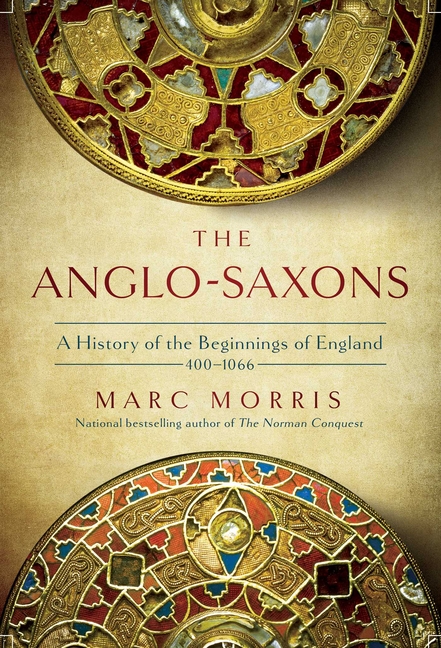
A new history of Anglo-Saxon England
At First Things, Francis Young reviews The Anglo-Saxons: A History of the Beginnings of England by Marc Morris:
The art of telling stories will always be closely associated with the Anglo-Saxons. Beowulf, the era’s best-known epic poem, begins with a word that is difficult to translate, summoning an audience to attention: “Hwæt!” The same word opens another great poem of early medieval England, The Dream of the Rood, in which the wood of the Cross speaks and narrates a uniquely Anglo-Saxon Passion — a reminder that it was the Anglo-Saxons who built Christian England.
These people, as Marc Morris observes, were tellers of tales; and yet, until now, there has been no modern narrative history that weaves together the insights of archaeologists, historians, and literary scholars. Morris has risen to the task, tracing the journey of the English-speaking inhabitants of the island of Britain from tribal warbands to a highly sophisticated medieval kingdom on the eve of the Norman Conquest.
This is a triumph of historical storytelling, woven together from the scattered evidence of archaeology, numismatics, chronicles, charters, and many other sources. The narrative that emerges from these difficult sources is, of course, contentious; after all, even the use of the term “Anglo-Saxon” is now debated by scholars. But the narrative is also compelling, rooted in the primary sources, iconoclastic of received interpretations, and — most importantly — the product of a commanding historical imagination. This is an account of the Anglo-Saxons that will inform our perception of them for years to come.
It would be perfectly possible to challenge virtually every one of the author’s interpretations: As Morris notes, “The less evidence, the more contention,” especially when it comes to the chaotic documentary void of the fifth and sixth centuries. (By comparison, by the mid-eleventh century there is a comparative richness of documentary sources.) The first question is about the nature of Germanic immigration after the departure of the Roman legions at the beginning of the fifth century. Morris leans toward a more traditional “replacement” model in which Germanic settlers took the place of the Britons in the landscape. Morris places a great deal of weight on the linguistic evidence, which shows that Brittonic (the language of the Britons) had little influence on Old English. If the Anglo-Saxons had largely assimilated the Britons, rather than replacing them, we might expect many more Brittonic loanwords.
According to Morris, “The broken Britain that the Saxons found … had no allure.” Post-Roman Britain was “in every sense a degraded society, sifting through the detritus of an earlier civilisation.” Morris follows in the tradition of Bede by viewing the Britons as decadent, but this is by no means the only possible view of post-Roman society. Recent scholarship by Miles Russell and Stuart Laycock has drawn attention to Britain’s failure to become Romanized in the first place, raising the question of whether the abandonment of urban life in the early fifth century should be seen as a sign of decline, and Susan Oosthuizen has argued that rural Britain continued to prosper in the absence of urban settlement; it simply thrived on its own terms as a non-urban society.
History Hijinks: Rome’s Crisis of the Third Century
Overly Sarcastic Productions
Published 23 Jul 2021Local Empire Too Stubborn To Die — Field Historian Blue is here at the scene of Ancient Rome with more on the Crisis of the Third Century.
SOURCES & Further Reading
https://www.britannica.com/place/anci… + Aurelian, Postumus, Zenobia
The Great Courses The Roman Empire: From Augustus to The Fall of Rome lectures 13 14 and 15, “From Commodus to Caracalla”, “The Crisis of the Third Century” and “Diocletian and Late Third-Century Reforms”, by Gregory Aldrete
The Enemies of Rome Chapter 20 “Parthia, Persia, Palmyra” by Stephen KershawPartial Tracklist: “Scheming Weasel”, Sneaky Snitch”, “Marty Gots A Plan” Kevin MacLeod (incompetech.com)Licensed under Creative Commons: By Attribution 4.0 License
http://creativecommons.org/licenses/b…Content is intended for teenage audiences and up.
PATREON: https://www.Patreon.com/OSP
PODCAST: https://overlysarcasticpodcast.transi…
DISCORD: https://discord.gg/osp
MERCH LINKS: http://rdbl.co/osp
OUR WEBSITE: https://www.OverlySarcasticProductions.com
Find us on Twitter https://www.Twitter.com/OSPYouTube
Find us on Reddit https://www.Reddit.com/r/OSP/
From the comments:
Facundo Cadaa
2 hours ago
Thumbnail: “Rome’s big crisis”Do you have any idea how little that narrows it down?

July 23, 2021
FDR Knew about Pearl Harbor?! – WW2 – Reading Comments
World War Two
Published 22 Jul 2021Here is another installment of Across the Airwaves where Indy and Sparty take the opportunity to directly address some of the comments left by our community. In this episode, we take a look at some of the more controversial comments left on our videos.
(more…)
‘Armoured’ and ‘Unarmoured’ Carriers – Survivability vs Strike Power
Drachinifel
Published 2 Jan 2019In which we try to unpick the somewhat thorny issue of armoured vs unarmoured flight decks in WW2 carrier design.
Want to support the channel? – https://www.patreon.com/Drachinifel
Want to talk about ships? https://discord.gg/TYu88mt
QotD: Cultural Marxism includes a form of reverse Nazism
There is nothing new under the sun, just the same old zombie ideas that refuse to die. Whether the old or new Marxism, the activists have the same simplistic, blinkered view of life and the same radical solutions. The irony in both cases is that their ideology reaches its peak popularity after the genuine grievances that gave rise to it in the first place have by and large been confronted and addressed. No matter. In the twentieth century, Marxists failed to replace liberal capitalist democracy with their utopia; in the twenty-first, they are trying their luck again. This time it will be “real” socialism, rainbows and unicorns and happily ever after. This time it will be different.
Arthur Chrenkoff, “Why everything is racist”, Daily Chrenk, 2021-04-13.
July 22, 2021
Bourbon, almost an accidental hit
At TownHall, Salena Zito discusses the way Bourbon became a popular modern beverage from a none-too-promising eighteenth century beginning:
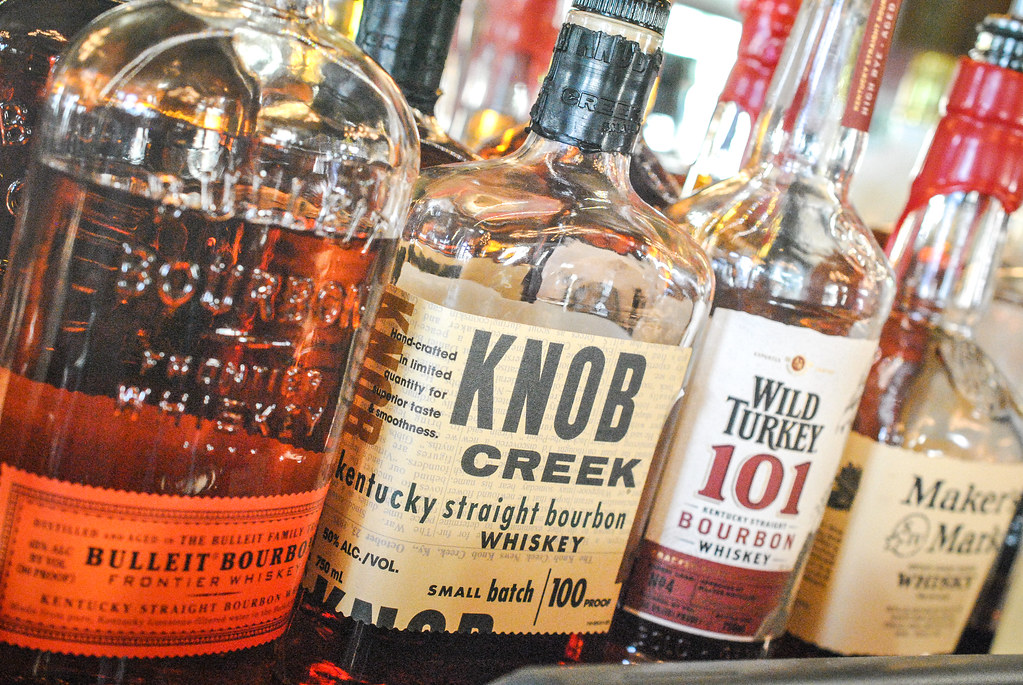
“Bourbon Bottles” by larryjh1234 is licensed under CC BY 2.0

About 250 years ago, farmers looking for a way to make their surplus corn crop profitable decided to distill it. Today, that leftover grain has become a billion-dollar industry and a symbol of the Bluegrass State’s identity, economy and culture.
“How bourbon came about is (what) … the American spirit looks like: business, independence, freedom, a little bit of luck and a lot of perseverance,” said Justin Thompson.
Thompson and his colleague Justin Sloan are the proprietors of The House of Bourbon, the world’s largest bourbon store, located on West Main Street in Lexington right across from Mary Todd Lincoln’s childhood home.
And right now, business is booming.
Thompson and Sloan started collecting rare and vintage bottles of bourbon 20 years ago, when the drink was out of favor. Then, four years ago, the state passed a law allowing the resale of distilled spirits and the duo opened their store, selling not just their stockpile but the history of the drink itself.
Bourbon is concocted from a strict formula. “By law it has to be made with a minimum of 51% corn, aged in charred new oak barrels and stored at no more than 125 proof and bottled at no less than 80 proof,” Thompson said.
But its sweet, rich flavor was actually born out of happenstance. In the early days, the best market for bourbon was on the East Coast, so farmers had to ship their barrels down the Mississippi to Louisiana then around Florida and up the coast. The trip took months but also allowed the whiskey to age beautifully.
“When merchants along the East Coast started marveling about this red whiskey with its unique flavor, that marked the beginning of the bourbon industry,” said Thompson.
In 1964, Congress deemed bourbon the nation’s native spirit, and there’s nothing more American than enjoying a sip of the brown stuff in a classic cocktail like a mint julep or an Old-Fashioned on the Fourth of July weekend.
Type 1 Russian AK: The First Production Stamped AK (Updated)
Forgotten Weapons
Published 8 Jul 2018http://www.patreon.com/ForgottenWeapons
Cool Forgotten Weapons merch! http://shop.bbtv.com/collections/forg…
Updated to fix errors of nomenclature and production dates.
The AK was formally adopted in 1947, and went into production in 1948. In this very first form, it used a stamped receiver with front and rear trunnions riveted in place. Unfortunately, while the hand-fitted preproduction guns were quite excellent, the manufacturing processes and quality control left a lot to be desired. The stamped receiver was relatively thin (especially compared to previous stamped Russian small arms like the PPS-43), and was very susceptible to warping during heat treating and other parts of the manufacturing process. The guns that met QC requirements were every bit as good as expected, but the high number of rejects nullified much of the point of having those stamped parts in the first place.
For this reason, Type 1 AK production ended in 1951, and a milled receiver was developed to allow rifles to continue being made while the engineering and production team worked to improve the receiver design and the manufacturing processes around it.
It should be noted that the “AK-47” was the final prototype version of the gun, and the Type 1 was designated simply “AK” in official Soviet documentation.
Today, the first pattern AK47 is an extremely rare weapon, and I am grateful to the private collector who allowed me to video this one for you!
If you enjoy Forgotten Weapons, check out its sister channel, InRangeTV! http://www.youtube.com/InRangeTVShow
Contact:
Forgotten Weapons
6281 N Oracle #36270
Tucson, AZ 85704

QotD: Nelson
Nelson was one of England’s most naval officers, and despised weak commands. At one battle when he was told that his Admiral-in-Chief had ordered him to cease fire, he put the telephone under his blind arm and exclaimed in disgust: “Kiss me, Hardy!”
By this and other intrepid manoeuvres the French were utterly driven from the seas.
W.C. Sellar & R.J. Yeatman, 1066 And All That, 1930.
July 21, 2021
Tank Chats #116 | Churchill III | The Tank Museum
The Tank Museum
Published 15 Jan 2021The Tank Museum’s Historian David Fletcher discusses the Second World War British Churchill Mark III. The Mark III was the first Churchill to receive the upgraded and more powerful 6 pounder gun. The Museum’s Mark III* also mentioned, is now an incredibly rare variant, and was converted from an AVRE and given the even more powerful 75mm gun.
(more…)
QotD: The expansion of the English vocabulary (through plundering French)
Yet the best of English somehow managed to avoid both these fates. It retained its grammar, it held on to its basic words, it kept its nerve, but what it did most remarkably was to accept and absorb French as a layering, not as a replacement but as an enricher. It had begun to do that when Old English met Old Norse: hide/skin; craft/skill. Now it exercised all its powers before a far mightier opponent. The acceptance of the Norse had been limited in terms of vocabulary. Here English was Tom Thumb. But it worked in the same way.
So, a young English hare came to be named by the French word “leveret“, but “hare” was not displaced. Similarly with English “swan”, French “cygnet“. A small English “axe” is a French “hatchet“. “Axe” remained. There are hundreds of examples of this, of English as it were taking a punch but not giving ground.
More subtle distinctions were set in train. “Ask” – English – and “demand” – from French – were initially used for the same purpose but even in the Middle Ages their finer meanings might have differed and now, though close, we use them for markedly different purposes. “I ask you for ten pounds”; “I demand ten pounds”: two wholly different stories. But both words remained. So do “bit” and “morsel”, “wish” and “desire”, “room” and “chamber”. At the time the French might have expected to displace the English. It did not and perhaps the chief reason for that is that people saw the possibilities of increasing clarity of thought, accuracy of expression by refining meaning between two words supposed to be the same. On the surface some of these appear to be interchangeable and sometimes they are. But much more interesting are these fine differences, whose subtleties increase as time carries them first a hair’s breadth apart and then widens the gap, multiplies the distinctions: just as “ask” has evolved far away from “demand”.
Not only did they drift apart but something else happened which demonstrates how deeply not only history but class is buried in language. You can take an (English) “bit” of cheese and most people do. If you want to use a more elegant word you take a (French) “morsel” of cheese. It is undoubtedly thought to be a better class of word and yet “bit”, I think, might prove to have more stamina. You can “start” a meeting or you can “commence” a meeting. Again, “commence” carries a touch more cultural clout though “start” has the better sound and meaning to it for my ear. But it was the embrace which was the triumph, the coupling which was never quite one.
That’s the beauty of it. That was the sweet revenge which English took on French: it not only anglicised it, it used the invasion to increase its own strength; it looted the looters, plundered those who had plundered, out of weakness brought forth strength. For “answer” is not quite “respond”; now they have almost independent lives. “Liberty” isn’t always “freedom”. Shades of meaning, representing shades of thought, were massively absorbed into our language and our imagination at that time. It was new lamps and old; both. The extensive range of what I would call “almost synonyms” became one of the glories of the English language, giving it astonishing precision and flexibility, allowing its speakers and writers over the centuries to discover what seemed to be exactly the right word.
Rather than replace English, French was being brought into service to help enrich and equip it for the role it was on its way to reassuming.
Melvyn Bragg, The Adventure of English, as quoted by Brian Micklethwait, “Melvyn Bragg on England’s verbal twins”, Samizdata, 2018-12-23.


