
World War Two
Published 29 Jul 2021The extermination camps of Operation Reinhard are ready to start killing hundreds of thousands of inhabitants of the Warsaw Ghetto, starting the deadliest 100 days of the Holocaust.
(more…)
July 30, 2021
The 100 Deadliest Days of the Holocaust Begin… – WAH 039 – July 1942, Pt .2
Comments Off on The 100 Deadliest Days of the Holocaust Begin… – WAH 039 – July 1942, Pt .2
Imperial Roman army organization & structure
Military History Visualized
Published 16 Jan 2016Patreon: https://www.patreon.com/join/mhv
The Imperial Roman Army consisted of the provincial armies, the garrison in Rome and the Roman Navy.
The brunt of the forces was in the Provincial armies that were made up by the legions and their auxiliaries in total around 240k men. The Garrison in Rome was about 15k men, although few in numbers these units were the most powerful in political terms. Finally, the Navy consisted of about 45k men.
*Sources*
Le Bohec, Yann: The Imperial Roman ArmyWebster, Graham: The Roman Imperial Army of the First and Second Centuries A.D
Nemeth, Eduard; Fodorean, Florin: Römische Militärgeschichte
Fields, Nic: The Roman Army of the Principate 27 BC – AD 117
Culham, Phyllis: “Imperial Rome at War”. In: The Oxford Handbook of Warfare in the Classical World
Comments Off on Imperial Roman army organization & structure
QotD: Bismarck on history
A statesman has not to make history, but if ever in the events around him he hears the sweep of the mantle of God, then he must jump up and catch at its hem.
Otto von Bismarck
Comments Off on QotD: Bismarck on history
July 29, 2021
In The Shadow of Napoleon – The 2nd French Empire Before 1870 I GLORY & DEFEAT
realtimehistory
Published 12 Jul 2021Support Glory & Defeat: https://realtimehistory.net/gloryandd…
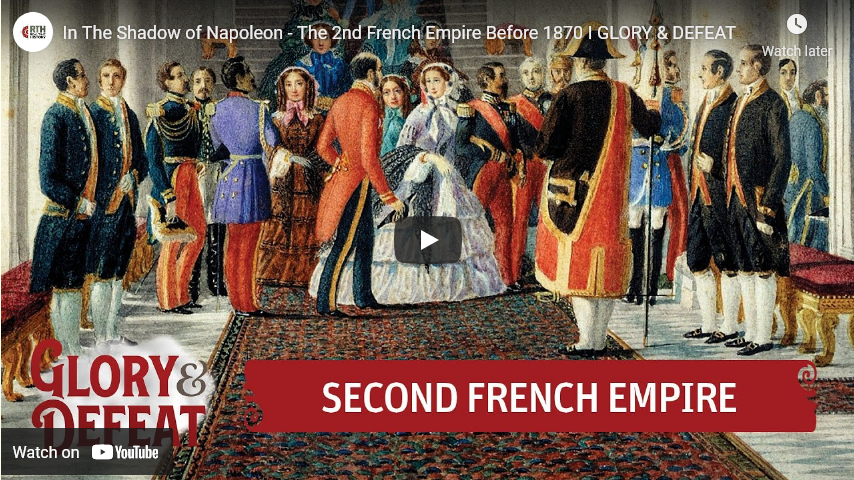
After Napoleon I had conquered and then lost Europe, France went through multiple revolutions. In 1851, Napoleon’s nephew and French president Louis-Napoléon Bonaparte took control and in 1852 crowned himself Emperor Napoleon III. The new French Empire wanted to regain the glory of Napoleon’s uncle and together with his wife Empress Eugenie he ruled a state known for lavish balls and spending.
» OUR PODCAST
https://realtimehistory.net/podcast – interviews with historians and background info for the show.» LITERATURE
Arand, Tobias: 1870/71. Die Geschichte des Deutsch-Französischen Kriegs erzählt in Einzelschicksalen. Hamburg 2018Arand, Tobias/Bunnenberg, Christian (Hrsg.): Karl Klein. Fröschweiler Chronik. Kriegs- und Friedensbilder aus dem Krieg 1870. Kommentierte Edition. Hamburg 2021
Gouttman, Alain. La grande défaite de 1870-1871. Paris 2015
Herre, Franz: Eugénie. Kaiserin der Franzosen. Stuttgart, München 2000
Rieder, Heinz: Napoleon III. Abenteurer und Imperator. München 1998
» SOURCES
Bonaparte, Prince Napoléon-Louis: Des Idées Napoléoniennes. London 1839Marx, Karl: Der achtzehnte Brumaire des Louis Napoleon. Hamburg 1869
Maupassant, Guy de: Bel-Ami. Paris 1901
N.N. (Hrsg): Fontane, Theodor. Aus den Tagen der Okkupation. Eine Osterreise durch Nordfrankreich und Elsaß-Lothingen 1871. Berlin (Ost) 1984
» OUR STORE
Website: https://realtimehistory.net»CREDITS
Presented by: Jesse Alexander
Written by: Cathérine Pfauth, Dr. Tobias Arand, Jesse Alexander
Director: Toni Steller & Florian Wittig
Director of Photography: Toni Steller
Sound: Above Zero
Editing: Toni Steller
Motion Design: Philipp Appelt
Mixing, Mastering & Sound Design: http://above-zero.com
Maps: Battlefield Design
Research by: Cathérine Pfauth, Prof. Dr. Tobias Arand
Fact checking: Cathérine Pfauth, Prof. Dr. Tobias ArandChannel Design: Battlefield Design
Contains licensed material by getty images
All rights reserved – Real Time History GmbH 2021
Comments Off on In The Shadow of Napoleon – The 2nd French Empire Before 1870 I GLORY & DEFEAT
Buster Keaton, British Imperialism, and the Era of Spectacle | B2W: ZEITGEIST! I E.23 Spring 1924
TimeGhost History
Published 28 Jul 2021There’s no business like show business and in the spring of 1924, you can see why. Buster Keaton and Hollywood as a whole are producing some iconic films, the British Empire is putting on a massive exhibition, and there is even talk of a death ray.
(more…)
Comments Off on Buster Keaton, British Imperialism, and the Era of Spectacle | B2W: ZEITGEIST! I E.23 Spring 1924
Speakers’ Corner in London’s Hyde Park, the Mecca of free speech
In Tuesday’s NP Platformed, Colby Cosh pays tribute to one of the holy places of free speech, Speakers’ Corner:
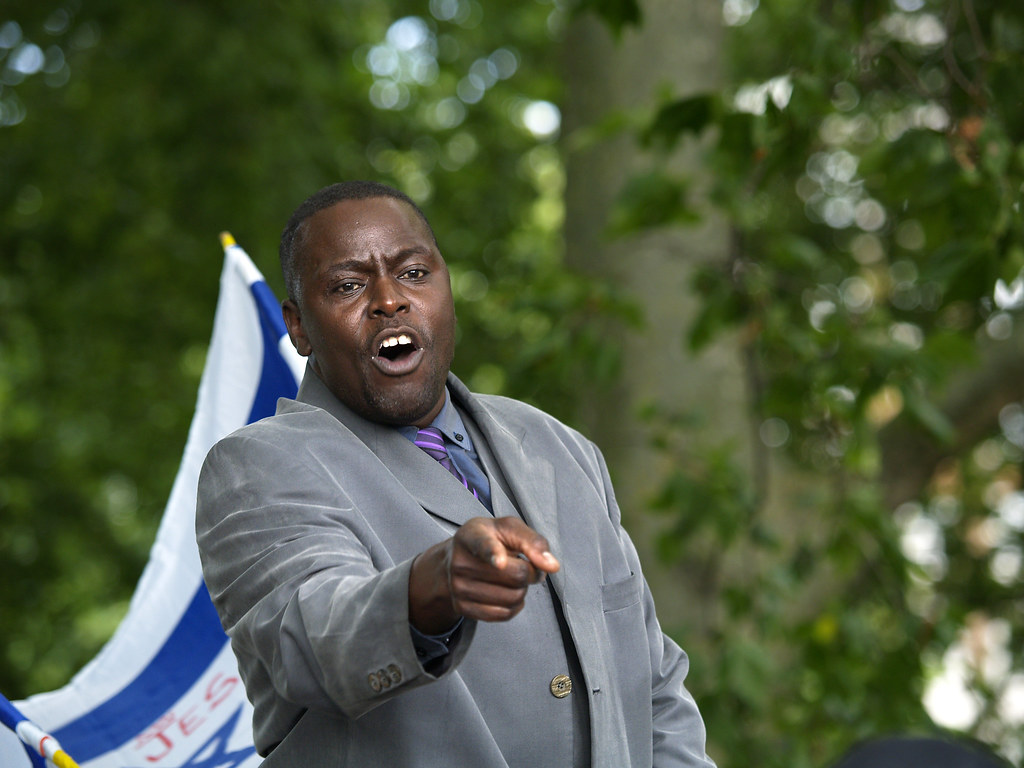
“Speakers’ Corner – Hyde Park – London” by Manolo Blanco is licensed under CC BY-NC-SA 2.0


We detect a slightly surprising absence of international media commotion over a dreadful event that happened Sunday: a woman giving a critique of Islam at Speakers’ Corner in London’s Hyde Park was slashed in the face by a fanatic. The victim, 39-year-old Hatun Tash, is said to be a familiar figure at the Mecca of free speech. And, yes, NP Platformed uses this geographic metaphor intentionally.
Probably every country has sites consecrated to its distinctive political ideals. Speakers’ Corner is different: it represents the ideal of absolute free speech for, and to, the entire world. A non-American visiting the Lincoln Memorial is there to honour the memory of a great man; if he visits the Washington Monument, it’s probably for the purpose of making phallic-themed jokes. But for 150 years, non-Englishmen visiting Hyde Park, from Lenin to Bishop Tutu, have been awestruck by the freedom that radical speakers enjoy at the original among the world’s many Speakers’ Corners.
Few Londoners pay it much mind anymore — not since the 19th century, when the nigh-inviolable freedom of speech enjoyed on the corner actually served to endanger governments and give impetus to liberal social change. Since about 1900, it has mostly been a place, almost a rehearsal space, for the tireless cranks of any given moment: dietary Savonarolas, village atheists, suffragettes, Trots and syndicalists and Maoists. They have been joined by generations of Muslims preaching various Islamic doctrines or far-out varieties of the faith.
Foreigners, however, have often been astonished to discover that Speakers’ Corner mostly lives up to its ideals, or that any place could. The British state really lets those people say those things in public without locking them up. The park has seen plenty of affrays in its time, but fights have become rare as the ritual purpose of the space has become universally understood.
Rare, too, are the United Kingdom’s infringements on its inviolability. After the Bloody Sunday shootings of 1972, three Irish republicans were arrested under the Treason Felony Act of 1848 for having proposed war against Britain in Hyde Park. They were found guilty of lesser charges, sentenced to time served and sent back across the Irish Sea, but Irish nationalists rightly dined out on the incident for many years, and the criminal offence of “treason felony” has never since been heard of in any English courtroom.
Comments Off on Speakers’ Corner in London’s Hyde Park, the Mecca of free speech
MAT 49: Iconic SMG of Algeria and Indochina
Forgotten Weapons
Published 16 Jan 2018http://www.patreon.com/ForgottenWeapons
Cool Forgotten Weapons merchandise! http://shop.bbtv.com/collections/forg…
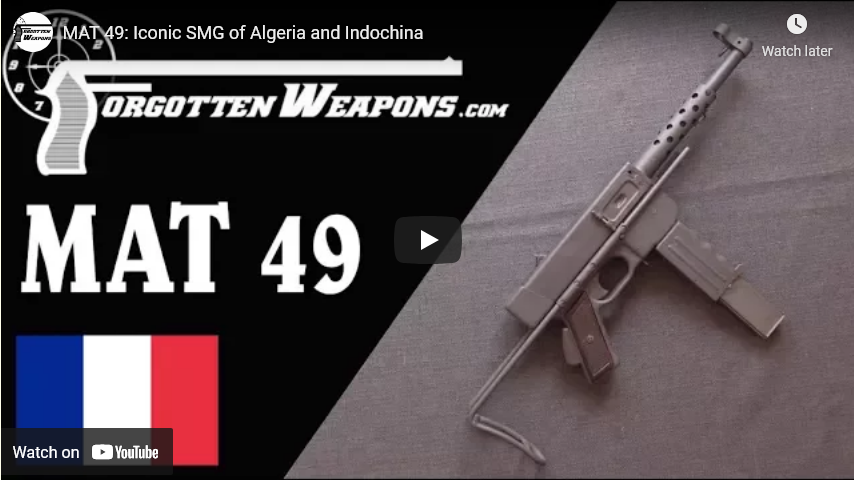
The MAT-49 was developed by France after World War Two to satisfy the need for a more modern submachine gun to replace the MAS-38. The military had come around to standardizing on the 9x19mm cartridge for its pistols and subguns, and the 7.65mm MAS-38 was not feasible to convert. All three state arsenals and the Hotchkiss company submitted designs, and the Tulle arsenal won out with a gun that borrows substantially from the American M3 “Grease Gun”.
About 700,000 MAT-49s were produced between 1949 and 1979, when it (along with the MAS 49/56 rifle) was replaced by the FAMAS bullpup rifle. During that time it saw substantial combat in France’s colonial wars, notable Algeria and Indochina. Despite being a relatively heavy weapon, it came to be well liked by all who used it for its durability and reliability.
Many thanks to the anonymous collector who let me take a look at this piece and bring you a video on it!
If you enjoy Forgotten Weapons, check out its sister channel, InRangeTV! http://www.youtube.com/InRangeTVShow
Comments Off on MAT 49: Iconic SMG of Algeria and Indochina
QotD: An opera called Margaret
Dominic Sandbrook, The Great British Dream Factory, 2015.
Comments Off on QotD: An opera called Margaret
July 28, 2021
How Hitler Created the World’s Worst Traffic Jam – WW2 – 152B – July 27, 1942
World War Two
Published 27 Jul 2021“I said DAMN, this traffic jam … How I hate to be late, hurts my motor to go so slow. Time I get home my supper be cold. Damn, this traffic jam.” (James Taylor, the Eastern Front, 1942)
(more…)
Comments Off on How Hitler Created the World’s Worst Traffic Jam – WW2 – 152B – July 27, 1942
Possible relic from the 1917 Halifax explosion discovered by scuba diver
If you’re not familiar with the Halifax explosion, I collected some information about it here. One of the lesser-known ships involved in the disaster was the schooner St. Bernard, which was completely destroyed in the explosion of the cargo ship SS Mont Blanc after it collided with the Belgian relief ship Imo in the Narrows:
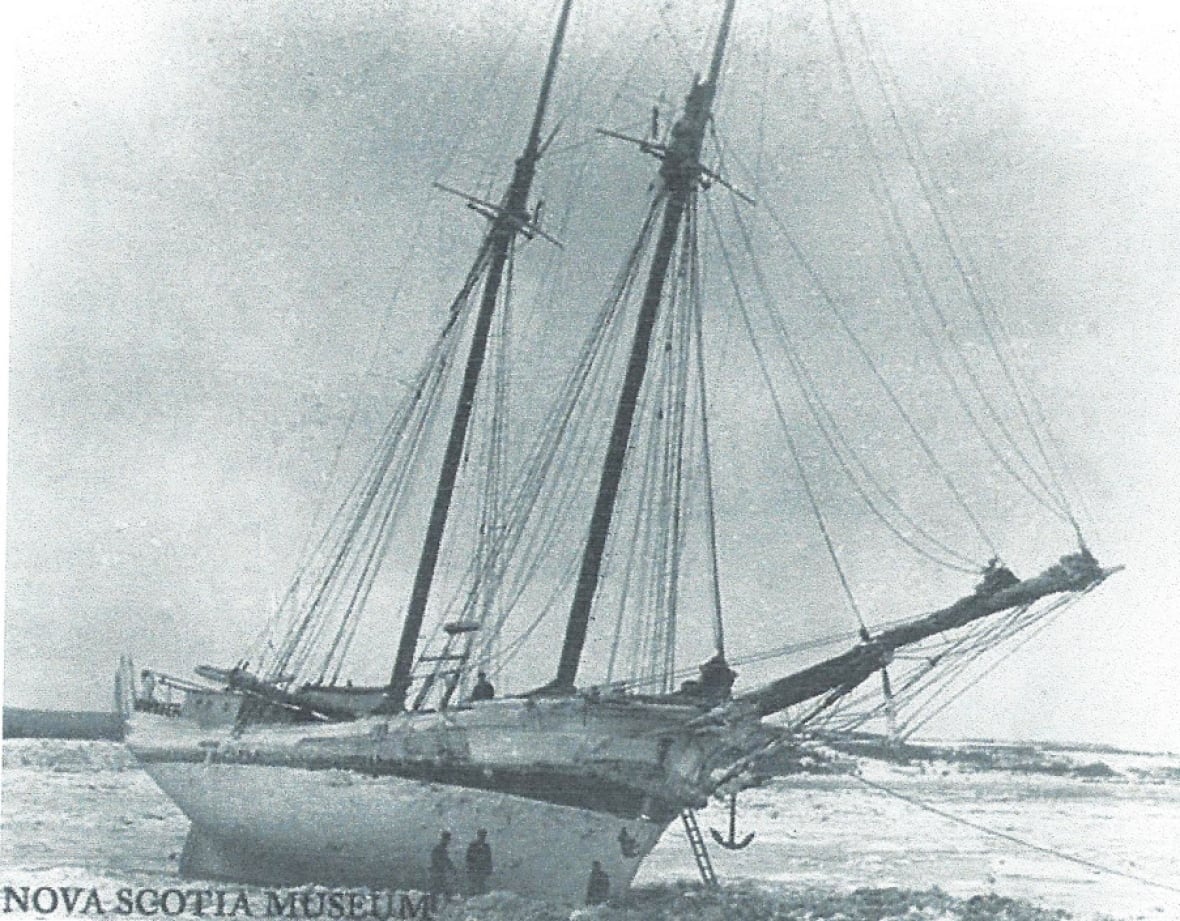
The schooner St. Bernard, which was destroyed when the Mont Blanc exploded nearby.
Photo from the Nova Scotia Museum.
A Halifax scuba diver has found something that could shed a little new light on one aspect of a dark chapter in Nova Scotian history.
Bob Chaulk has explored Halifax harbour from the Bedford Basin to Chebucto Head with hundreds of scuba dives over the last 30 years. But this spring, a routine dive in a small cove in the Narrows between Halifax’s two bridges led him to a big find.
Amid the usual assortment of scuttling crabs, polished bottles and bits of plastic trash, he came upon a huge, heavy object in Tufts Cove.
“When I first saw the anchor, I thought, OK, there’s a wreck here, some old derelict came in here. But there’s no way a ship that size could have gotten in here,” he said.
He explored until his air just about ran out. He estimated the anchor was about two metres long and weighed 135 kilograms. A ship that needed an anchor that size could not have sailed into shallow, rocky Tufts Cove, he thought.
So how did the old anchor get there?
He looked across the Narrows and found himself staring right at ground zero for the Halifax Explosion, which killed nearly 2,000 people. On Dec. 6, 1917, the vessel Imo and the Mont Blanc, a ship carrying explosive cargo, collided. The Mont Blanc caught fire and drifted into Pier 6, a space occupied today by the giant Halifax Shipyard building. The St. Bernard, a lumber schooner, was also at the dock.
“So now you have two ships side by side with a dock in between them. Here’s the Mont Blanc, here’s the Imo,” Chaulk said, showing the ships’ positions with his hands. “This one blows up, destroys this one, and I contend the anchor [of the St. Bernard] went through the air and landed right here.”
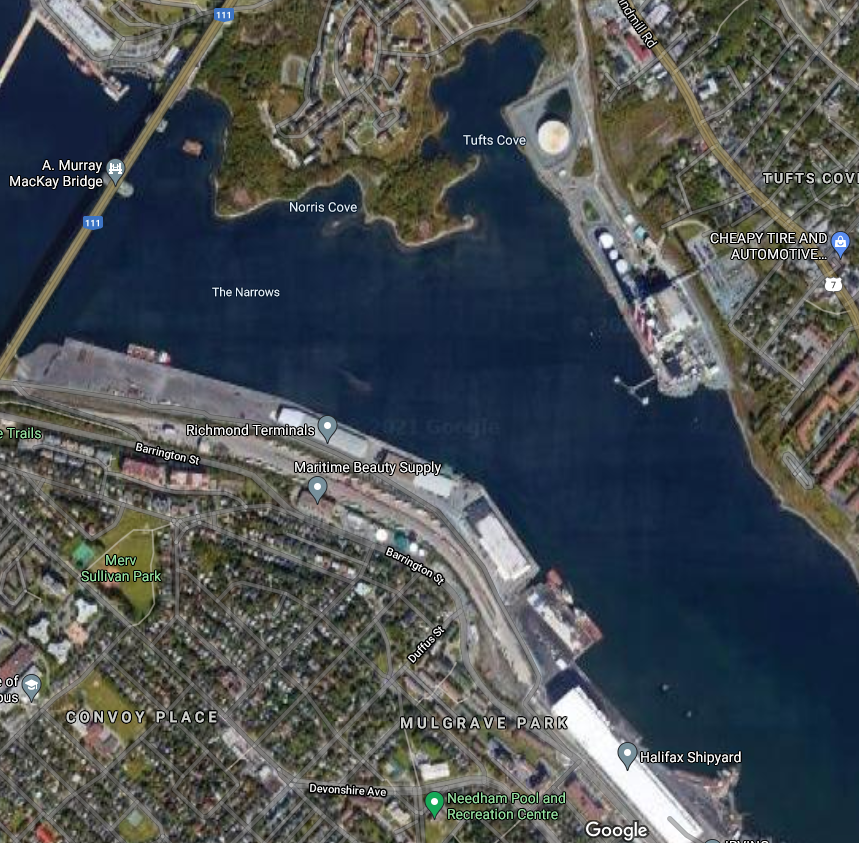
A modern day view of the Narrows, showing Tufts Cove to the north and the huge Halifax Shipyard complex on the south side of the channel.
Google Maps.
I suspect that the paved area to the right of the cove proper is largely landfill and the shoreline of 1917 probably followed much closer to the railway line.
H/T to Colby Cosh for the link.
Comments Off on Possible relic from the 1917 Halifax explosion discovered by scuba diver
Tank Chats #117 | Stridsvagn 103 | The Tank Museum
The Tank Museum
Published 5 Feb 2021Curator David Willey discusses the Cold War era Swedish Stridsvagn 103, also known as the ‘S-Tank’. Developed in the 1950s, the S-Tank was the first production tank to be powered by a turbine engine and it was also the only mass produced tank since the Second World War to not have a turret. A truly unconventional tank.
(more…)
Comments Off on Tank Chats #117 | Stridsvagn 103 | The Tank Museum
QotD: Lawrence and the Hejaz railway
Christian Wolmar, Engines of War: How Wars Were Won & Lost on the Railways, 2010.
Comments Off on QotD: Lawrence and the Hejaz railway
July 27, 2021
History Summarized: The Crusades
Overly Sarcastic Productions
Published 11 Jun 2017Making a video exclusively about the crusades? That’s a bold strategy, Blue, let’s see how it pays off.
RELEVANT LINKS:
History Summarized: Islam: https://youtu.be/Uvq59FPgx88
History Summarized: Christianity: https://youtu.be/A86fIELxFds
History Summarized: Judaism: https://youtu.be/aKB6WduDwNE
History Summarized: Christianity, Judaism, and the Muslim Conquest https://wp.me/p2hpV6-gQv
History Summarized: Venice (Part 2): https://youtu.be/byMleAJ5kRs
History Summarized: Byzantine Empire: https://youtu.be/-ucHQVu8Dw0History Summarized: Abrahamic Religious Philosophy: https://youtu.be/B7myRRt0Mn8
PATREON: www.patreon.com/user?u=4664797
MERCH LINKS:
Shirts – https://overlysarcasticproducts.threa…
All the other stuff – http://www.cafepress.com/OverlySarcas…Find us on Twitter @OSPYouTube!
Comments Off on History Summarized: The Crusades
QotD: Walter Duranty’s Pulitzer
He won the Pulitzer Prize in 1934 for his reporting, but ever since 1990, when a biography of him was published that emphasized the extent of his mendacity, there have been efforts to have the prize symbolically rescinded (Duranty died in 1957).
A man may be honestly mistaken, but Duranty had knowingly and persistently lied about matters of world importance. At the very least he deserved the sack rather than a prestigious award, but was never called to account during his lifetime; and the Pulitzer committee has twice decided that the award should not be withdrawn.
I can see the argument for rescinding the prize because Duranty’s conduct was truly despicable, and the prize had been for what, morally, was a great crime.
But there is also an argument for not rescinding it, for the posthumous withdrawal of an award can look like an attempt to rewrite the history of the awarding authority by an act of auto-absolution. An admission that the Pulitzer committee had made a terrible error of judgment might have been sufficient.
Theodore Dalrymple, “Richard Dawkins Punished for Inviting Us to Think”, The Iconoclast, 2021-04-24.
Comments Off on QotD: Walter Duranty’s Pulitzer
July 26, 2021
Eastern Front Deployments, July 1942 – WW2 Special
World War Two
Published 25 Jul 2021It is what it says it is, the front line deployments of the Axis and Soviet forces in the Southern Part of the Eastern Front in late July 1942. Hitler’s forces invading, and Josef Stalin’s on defense.
(more…)
Comments Off on Eastern Front Deployments, July 1942 – WW2 Special


