
You Suck At Cooking
Published 6 Sept 2023There are many ways to cut a pineapple, but only nine of these are officially supported by the Pineapple Slicers Association of The World. None of those methods are depicted here.
(more…)
December 21, 2023
9 Ways to Slice a Pineapple
Comments Off on 9 Ways to Slice a Pineapple
December 20, 2023
Eat Like a Medieval Nun – Hildegard of Bingen’s Cookies of Joy
Tasting History with Max Miller
Published 5 Sept 2023
(more…)
Comments Off on Eat Like a Medieval Nun – Hildegard of Bingen’s Cookies of Joy
December 16, 2023
QotD: British meals – potatoes
It is necessary here to say something about the specifically British ways of cooking potatoes. Roast meat is always served with potatoes “cooked under the joint”, which is probably the best of all ways of cooking them. The potatoes are peeled and placed in the pan all round the roasting meat, so that they absorb its juices and then become delightfully browned and crisp all over. Another method is to bake them whole in their jackets, after which they are cut open and a dab of butter is placed in the middle. In the North of England delicious potato cakes are made of mashed potatoes and flour: these are rolled out into small round pancakes which are baked on a griddle and then spread with butter. New potatoes are generally boiled in water containing a few leaves of mint and served with melted butter poured over them.
George Orwell, “British Cookery”, 1946. (Originally commissioned by the British Council, but refused by them and later published in abbreviated form.)
Comments Off on QotD: British meals – potatoes
December 8, 2023
“An error of this magnitude makes one wonder how robust such calculations are”
Christopher Snowden notes the proliferation of media and public advocacy groups warning us about “junk food”:

On Monday, the front page of The Times led with a speech from Henry Dimbleby and a cost-of-obesity estimate from the Tony Blair Institute for Global Change — the perfect start to the week for any Times reader. According to Sir Tony’s think tank, “the effect on national productivity from excess weight is nine times bigger than previously thought”. An error of this magnitude makes one wonder how robust such calculations are (the previous estimate only came out last year), but Mr Dimbleby saw it as further proof that food should be treated like smoking.
The NHS “will suck all the money out of the other public services” while “at the same time, economic growth and tax revenue will stagnate. We will end up both a sick and impoverished nation,” Dimbleby will warn.
Would it be unfair to point out that the USA has much higher rates of obesity than the UK and also has much higher GDP growth?
As I pointed out on what I shall continue to call Twitter, the estimates as bunkum. They come from Frontier Economics and were first commissioned by the makers of Wegovy, presumably to make their effective but expensive weight loss drug look like a relative bargain.
Their previous estimate of the cost of obesity to “society” was £58bn. This year’s estimate is £98bn, most of which (£57bn) comes from lost quality-adjusted life years. As I tire of pointing out, these are internal costs to the individual which, by definition, are not costs to wider society. I can’t stress enough how absurd it is to include lost productivity due to early death as a cost to the economy. You might as well calculate the lost productivity of people who have never been born and claim that contraception costs the economy billions of pounds.
Since the previous estimate, the costs have been bulked up by including the costs of being overweight, but there is no indication in the wafer-thin webpage of what these are. Being merely overweight doesn’t have many serious health implications. The healthcare costs have doubled, but as in the previous report, the new estimate does not look at how much more healthcare would be consumed if there was no obesity. No savings are included. What we need is the net cost.
The “report” that The Times turned into a front page news story is no more than a glorified blog post. It contains no detail, no methodology and none of the assumptions upon which it is based can be checked. It comes with an eight page slideshow from Frontier Economics which is described as a “full analysis” but which doesn’t contain any useful figures either.
Estimates like this are bound to mislead the casual reader into thinking that they are paying higher taxes because of obesity. There is no other reason to publish them, as they have no academic merit. They are designed to be misunderstood.
Sure enough, the very next day The Times was explicitly claiming that the putative £98 billion — now rounded up to £100 billion — was a direct cost to government …
The findings come after an analysis found this week that Britain’s weight problem is costing the state almost £100 billion a year.
The Real Betty Crocker’s Pineapple Upside Down Cake
Tasting History with Max Miller
Published 22 Aug 2023
(more…)
Comments Off on The Real Betty Crocker’s Pineapple Upside Down Cake
December 5, 2023
QotD: British meals – the midday meal
The richer classes have their midday meal at one-thirty in the afternoon and call it “luncheon”. At about half-past four in the afternoon they have a cup of tea and perhaps a piece of bread-and-butter or a slice of cake, which they call “afternoon tea” and they have their evening meal at half-past seven or eight, and call it “dinner”. The others, perhaps ninety percent of the population, have their midday meal somewhat earlier – usually about half-past twelve – and call it “dinner”. They have their main evening meal at about half-past six and call it “tea” and before going to bed they have a light snack – for instance cocoa and bread-and-jam – which they call “supper”. The distinction is regional as well as social. In the North of England, Scotland and Ireland many well-to-do people prefer to follow the working-class time scheme, partly because it fits in better with the working day, and partly, perhaps, from motives of conservation: for our ancestors of a century ago also had their meals at approximately these hours.
But though the name and the hour may differ, every British person’s idea of midday meal is approximately the same. We are not here concerned with the quasi-French meals that are served in hotels, but solely with British cookery, and therefore we can leave both soups and hors d’oeuvres out of account. Most British people are inclined to despise both, and do not care for them in the middle of the day. British soups are seldom good, and there is hardly a single one that is peculiar to the British Isles, while even the word “hors d’oeuvre” has no equivalent in the British language. The British midday meal consists essentially of meat, preferably roast meat, a heavy pudding, and cheese. And here one comes upon the central institution of British life, the “joint”: that is, a large piece of meat – round of beef or leg of pork or mutton – roasted whole with its potatoes round it, and preserving a flavour and a juiciness which meat cooked in smaller quantities never seems to attain.
Most characteristic of all is roast beef, and of all the cuts of beef, the sirloin is the best. It is always roasted lightly enough to be red in the middle: pork and mutton are roasted more thoroughly. Beef is carved in wafer-thin slices, mutton in thick slices. With beef there nearly always goes Yorkshire pudding, which is a sort of crisp pancake made of milk, flour and eggs and which is delicious when sodden with gravy. In some parts of the country suet pudding is eaten with roast beef instead of Yorkshire pudding. Sometimes instead of roasted fresh beef there is boiled salt beef, which is always eaten with suet dumplings and carrots or turnips.
[…]
In the second half of the midday meal we come upon one of the greatest glories of British cookery – its puddings. The number of these is so enormous that it would be impossible to give an exhaustive list, but, putting aside stewed fruits, British puddings can be classified under three main heads: suet puddings, pies and tarts, and milk puddings.
[…]
If the midday meal ends with cheese, that cheese will probably be foreign. Some of the cheeses native to Britain are very good, but they are not produced in large quantities and are mostly consumed locally. The best of them is Stilton, a cheese rather the same kind as Roquefort or Gorgonzola, but stronger-tasting and closer in the grain. Wensleydale, a similar but milder cheese, is also very good.
George Orwell, “British Cookery”, 1946. (Originally commissioned by the British Council, but refused by them and later published in abbreviated form.)
Comments Off on QotD: British meals – the midday meal
November 17, 2023
Rationing In Britain
Imperial War Museums
Published 8 Jan 2010An American commentator looks at the effects of rationing on the people of England in 1944. The film presents a “typical” family of four (housewife, engine-driver husband, factory-working daughter, schoolboy son) to illustrate the basic rationing system, the workings of “point” systems and other restrictions, and the difficulties the average family faced when eating “on the ration”.
Explore IWM’s film collection: https://film.iwmcollections.org.uk
Comments Off on Rationing In Britain
November 9, 2023
How they saved the holes in Swiss cheese
Tom Scott
Published 1 May 2023Agroscope is a Swiss government-backed agricultural research lab. It’s got a lot of other resarch projects too, but it also keeps a backup of the Swiss cheese bacterial cultures… just in käse.
(more…)
Comments Off on How they saved the holes in Swiss cheese
October 31, 2023
Why Vampires Hate Garlic – A Transylvanian Recipe from 1580
Tasting History with Max Miller
Published 19 Oct 2021
(more…)
Comments Off on Why Vampires Hate Garlic – A Transylvanian Recipe from 1580
October 14, 2023
QotD: Horses and sheep on the Eurasian Steppe
Now it is worth noting right now that Steppe Nomads have, in essence, two conjoined subsistence systems: there is one system for when they are with their herds and another for purely military movements. Not only the sheep, but also the carts (which are used to move the yurt – the Mongols would call it a ger – the portable structure they live in) can’t move nearly as fast as a Steppe warrior on horseback can. So for swift operational movements – raids, campaigns and so on – the warriors would range out from their camps (and I mean range – often we’re talking about hundreds of miles) to strike a target, leaving the non-warriors (which is to say, women, children and the elderly) back at the camp handling the sheep. For strategic movements, as I understand it, the camps and sheep herds might function as a sort of mobile logistics base that the warriors could operate from. We’ll talk about that in just a moment.
So what is the nomadic diet like? Surely it’s all raw horse-meat straight off of the bone, right? Obviously, no. The biggest part of the diet is dairy products. Mare’s and sheep’s milk could be drunk as milk; mare’s milk (but not sheep’s milk) could also be fermented into what the Mongolians call airag but is more commonly known as qumis after its Turkish name (note that while I am mostly using the Mongols as my source model for this, Turkic Steppe nomads are functioning in pretty much all of the same ways, often merely with different words for what are substantially the same things). But it could also be made into cheese and yogurt [update: Wayne Lee (@MilHist_Lee) notes that mare’s milk cannot be made into yogurt, so the yogurt here would be made from sheep’s milk – further stressing the importance of sheep!] which kept better, or even dried into a powdered form called qurut which could then be remixed with water and boiled to be drunk when it was needed […] The availability of fresh dairy products was seasonal in much of the steppe; winter snows would make the grass scarce and reduce the food intake of the animals, which in turn reduced their milk production. Thus the value of creating preserved, longer-lasting products.
Of course they did also eat meat, particularly in winter when the dairy products became scarce. Mutton (sheep meat) is by far largest contributor here, but if a horse or oxen or any other animal died or was too old or weak for use, it would be butchered (my understanding is that these days, there is a lot more cattle in Mongolia, but the sources strongly indicate that mutton was the standard Mongolian meat of the pre-modern period). Fresh meat was generally made into soup called shulen (often with millet that might be obtained by trade or raiding with sedentary peoples or even grown on some parts of the steppe) not eaten raw off of the bone. One of our sources, William of Rubruck, observed how a single sheep might feed 50-100 men in the form of mutton soup. Excess meat was dried or made into sausages. On the move, meat could be placed between the rider’s saddle and the horse’s back – the frequent compression of riding, combined with the salinity of the horse’s sweat would produce a dried, salted jerky that would keep for a very long time.
(This “saddle jerky” seems to gross out my students every time we discuss the Steppe logistics system, which amuses me greatly.)
Now, to be clear, Steppe peoples absolutely would eat horse meat, make certain things out of horsehair, and tan horse hides. But horses were also valuable, militarily useful and slow to breed. For reasons we’ll get into a moment, each adult male, if he wanted to be of any use, needed several (at least five). Steppe nomads who found themselves without horses (and other herds, but the horses are crucial for defending the non-horse herds) was likely to get pushed into the marginal forest land to the north of the steppe. While the way of life for the “forest people” had its benefits, it is hard not to notice that forest dwellers who, through military success, gained horses and herds struck out as steppe nomads, while steppe nomads who lost their horses became forest dwellers by last resort (Ratchnevsky, op. cit., 5-7). Evidently, being stuck as one of the “forest people” was less than ideal. In short, horses were valuable, they were the necessary gateway into steppe life and also a scarce resource not to be squandered. All of which is to say, while the Mongols and other Steppe peoples ate horse, they weren’t raising horses for the slaughter, but mostly eating horses that were too old, or were superfluous stallions, or had become injured or lame. It is fairly clear that there were never quite enough good horses to go around.
Bret Devereaux, “That Dothraki Horde, Part II: Subsistence on the Hoof”, A Collection of Unmitigated Pedantry, 2020-12-11.
Comments Off on QotD: Horses and sheep on the Eurasian Steppe
October 3, 2023
“Just play safe” is difficult when the definition of “safe” is uncertain
David Friedman on the difficulty of “playing safe”:
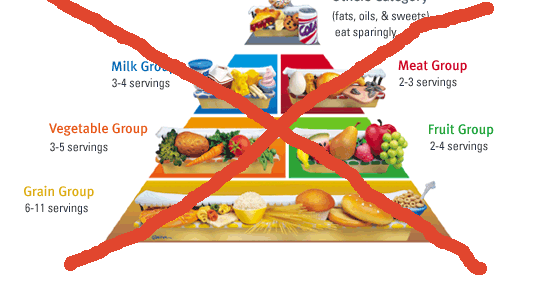
It’s a no brainer. Just play safe
It is a common argument in many different contexts. In its strongest form, the claim is that the choice being argued for is unambiguously right, eliminates the possibility of a bad outcome at no cost. More plausibly, the claim is that one can trade the risk of something very bad for a certainty of something only a little bad. By agreeing to pay the insurance company a hundred dollars a year now you can make sure that if your house burns down you will have the money to replace it.
Doing that is sometimes is possible but, in an uncertain world, often not; you do not, cannot, know all the consequences of what you are doing. You may be exchanging the known risk of one bad outcome for the unknown risk of another.
Some examples:
Erythritol
Erythritol was the best of the sugar alcohols, substitutes tolerably well for sugar in cooking, has almost zero calories or glycemic load. For anyone worried about diabetes or obesity, using it instead of sugar is an obvious win. Diabetes and obesity are dangerous, sometimes life threatening.
Just play safe.
I did. Until an research came out offering evidence that it was not the best sugar alcohol but the worst:
People with the highest erythritol levels (top 25%) were about twice as likely to have cardiovascular events over three years of follow-up as those with the lowest (bottom 25%). (Erythritol and cardiovascular events, NIH)
A single article might turn out to be wrong, of course; to be confident that erythritol is dangerous requires more research. But a single article was enough to tell me that using erythritol was not playing safe. I threw out the erythritol I had, then discovered that all the brands of “keto ice cream” — I was on a low glycemic diet and foods low in carbohydrates are also low in glycemic load — used erythritol as their sugar substitute.
Frozen bananas, put through a food processor or super blender along with a couple of ice cubes and some milk, cream, or yogurt, make a pretty good ice cream substitute.1 Or eat ice cream and keep down your weight or glycemic load by eating less of something else.
It’s safer.
Lethal Caution: The Butter/Margarine Story
For quite a long time the standard nutritional advice was to replace butter with margarine, eliminating the saturated fat that caused high cholesterol and hence heart attacks. It turned out to be very bad advice. Saturated fats may be bad for you — the jury is still out on that, with one recent survey of the evidence concluding that they have no effect on overall mortality — but transfats are much worse. The margarine we were told to switch to was largely transfats.2
“Consumption of trans unsaturated fatty acids, however, was associated with a 34% increase in all cause mortality”3
If that figure is correct, the nutritional advice we were given for decades killed several million people.
1. Bananas get sweeter as they get riper so for either a keto or low glycemic diet, freeze them before they get too ripe.
2. Some more recent margarines contain neither saturated fats nor transfats.
3. “Intake of saturated and trans unsaturated fatty acids and risk of all cause mortality, cardiovascular disease, and type 2 diabetes: systematic review and meta-analysis of observational studies”, BMJ 2015; 351 doi: https://doi.org/10.1136/bmj.h3978 (Published 12 August 2015)
October 1, 2023
QotD: Curry
Of course for me, that was sweaty forehead, and under my eyes beading with it, burning lips and the thought that I ought to put a roll of toilet paper in the freezer for later.
In no small part … it is what you are used to. The chili pepper was native to Mexico. It’s not something the Indians were used to … once. But they have made it their own, and added their regional variant to it, making the food they add this foreign spice to very much characteristic of their culture and their cuisine. To them it very much part of what they are. Oddly, it seems expat Indians end up eating even hotter curries than those eaten in the country — fascinating in itself.
This is something millions of non-Indian folk across the world appreciate too. Now-a-days you’ll find many families who are neither culturally nor genetically Indian who have grown up eating curries. Many of them will be very knowledgeable about what a good curry ought to be, and some of them will even prepare it with strict adherence to the methods that good cooks in the Indian subcontinent use, and go to great lengths to get the right ingredients.
Of course: if we’re going to get puerile and talk “cultural appropriation” – it’s worth reminding people that the key ingredient came from Mexico. And, if you bother to start researching many of the other much beloved ingredients – they, as often as not had their origins elsewhere. This is as much part of being human as following these silly fads is. Whenever you look at any so-called cultural appropriation, you’ll find the xyz people actually adopted chunks of that culture from … someone else, and changed it a little to suit themselves. That’s as natural to humans as farting. Some people may do it less than others, but we all do it.
Curry and the world-wide spread of curries, has mostly been a win for the species, outside of the ill-judged dodgy vindaloo eaten after sixteen pints of lager.
Dave Freer, “Curry”, Mad Genius Club, 2019-08-26.
September 20, 2023
How the feds could lower grocery prices without browbeating CEOs
Jesse Kline has some advice for Prime Minister Jagmeet Singh Justin Trudeau on things his government could easily do to lower retail prices Canadians face on their trips to the grocery store:
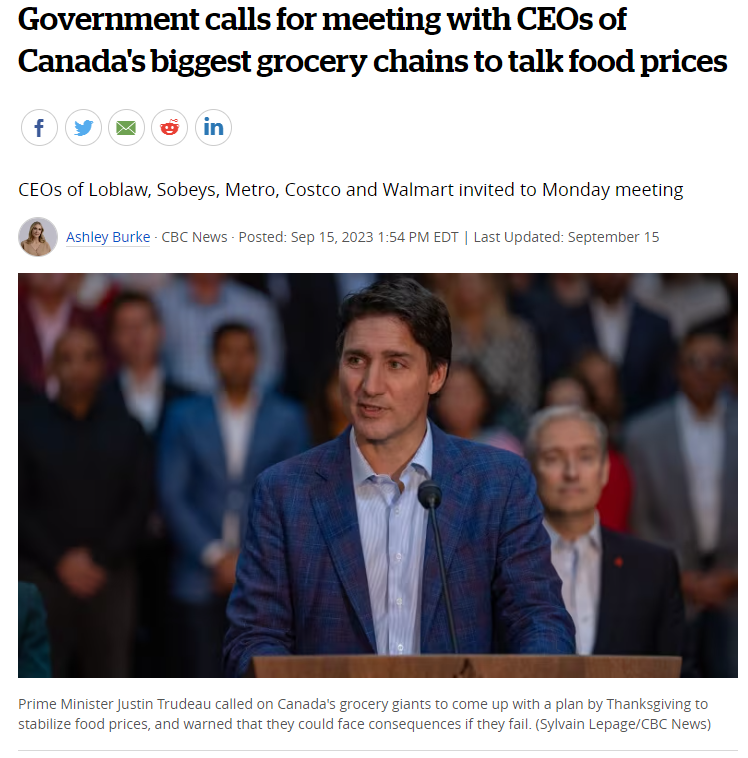
CBC report on federal scapegoating of grocery chain CEOs.
https://www.cbc.ca/news/politics/government-grocery-store-meeting-ottawa-food-prices-1.6967978
What exactly the grocery executives are supposed to do to bring down prices that are largely out of their control is anyone’s guess. Do they decrease their profit margins even further, thereby driving independent retailers out of business and shedding jobs by increasing their reliance on automation? Do they stop selling high-priced name-brand products, thus decreasing their average prices while driving up profits through the sale of house-brand products?
If the government were serious about working with grocers, rather than casting them as villains in a piece of performative policy theatre, here are a number of policies the supermarket CEOs should propose that would have a meaningful effect on food prices throughout the country.
End supply management
Why do Canadians pay an average of $2.81 for a litre of milk — among the highest in the world — when our neighbours to the south can fill their cereal bowls for half the cost? Because a government-mandated cartel controls the production of dairy products in this country, while the state limits foreign competition through exorbitantly high tariffs on imports.The same, of course, is true of our egg and poultry industries. Altogether, it’s estimated that supply managements adds between $426 and $697 a year to the average Canadian household’s grocery bill. It’s not a direct cause of inflation, but it’s a policy that, if done away with, could save Canadians up to $700 a year in fairly short order.
Yet not only have politicians been unwilling to address it, they have been fighting some of our closest trading partners to ensure that foreign food products don’t enter the Canadian market and drive down prices. Ditching supply management would be a no-brainer, if anyone in Ottawa was willing to use their brain.
Reduce regulations
The best way to decrease prices in any market is to foster competition. As the Competition Bureau noted in a report released in June, “Canada’s grocery industry is concentrated” and “tough to break into”. Worse still, “In recent years, industry concentration has increased”.So why don’t more foreign discount grocery chains set up shop here? Perhaps it’s because they know our national policy encourages Canadian-owned oligopolies. While grocery retailers don’t face the same foreign-ownership restrictions as airlines or telecoms, the products they sell are heavily regulated, which acts as a barrier to bringing in cheaper goods from other countries.
Although it wasn’t the primary reason for the lack of foreign competition, the Competition Bureau did note that, “Laws requiring bilingual labels on packaged foods can be a difficult additional cost for international grocers to take on”.
Other ways the federal government could help Canadians afford their grocery bills include:
- Jail thieves
- Stop port strikes
- Don’t tax beer
- Axe the carbon tax
Don’t hold your breath for any of these ideas to be taken up by Trudeau’s Liberals.
Comments Off on How the feds could lower grocery prices without browbeating CEOs
September 4, 2023
QotD: Historical rice farming versus wheat or barley farming
At the same time, the irrigation demands for effective production of wet-rice requires a lot of labor to build and maintain. Fields need to be flooded and drained; in some cases (particularly pre-modern terrace farming) this may involve moving the water manually, in buckets, from lower fields to higher ones. Irrigation canals connecting paddies can make this job somewhat easier, as can bucket-lifts, but that still demands moving quite a lot of water. In any irrigation system, the bunds need to be maintained and the water level carefully controlled, with also involves potentially quite a lot of labor.
The consequence of all of this is that while the rice farming household seems to be roughly the same size as the wheat-farming household (that is, an extended family unit of variable size, but typically around 8 or so members), the farm is much smaller, with common household farm sizes, even in the modern period, clustering around 1 hectare (2.47 acres) in comparison to the standard household wheat farms clustered around 4-6 acres (which, you may note with the yield figures above, lands us right back at around the same subsistence standard).
Moreover, rice cultivation is less soil dependent (but more water dependent) because wet-rice farming both encourages nitrogen fixation in the soil (maintaining the fertility of it generally without expensive manure use) and because rice farming leads naturally to a process known as pozdolisation, slowly converting the underlying soil over a few years to a set of characteristics which are more favorable for more rice cultivation. So whereas with wheat cultivation, where you often have clumps of marginal land (soil that is too wet, too dry, too rocky, too acidic, too uneven, too heavily forested, and so on), rice cultivation tends to be able to make use of almost any land where there is sufficient water (although terracing may be needed to level out the land). The reliance on the rice itself to “terraform” its own fields does mean that new rice fields tended to under-produce for the first few years.
The result of this, so far as I can tell, is that in well-watered areas, like much of South China, the human landscape that is created by pre-modern rice cultivation is both more dense and more uniform in its density; large zones of very dense rice cultivation rather than pockets of villages separated by sparsely inhabited forests or pasture. Indeed, pasture in particular seems in most cases almost entirely pushed out by rice cultivation. That has very significant implications for warfare and I have to admit that in reading about rice farming for this post, I had one of those “oh!” moments of sudden understanding – in this case, how armies in pre-modern China could be so large and achieve such massive local concentrations. But as we’ve discussed, the size of an army is mainly constrained by logistics and the key factor here is the ability to forage food locally, which is in turn a product of local population density. If you effectively double (or more!) the population density, the maximum size of a local army also dramatically increases (and at the same time, a society which is even more concentrated around rivers is also likelier to allow for riverine logistics, which further improves the logistical situation for mass armies).
But it also goes to the difficulty many Chinese states experienced in maintaining large and effective cavalry arms without becoming reliant on Steppe peoples for horses. Unlike Europe or the Near East, where there are spots of good horse country here and there, often less suited to intensive wheat cultivation, most horse-pasturage in the rice-farming zone could have – and was – turned over to far more productive rice cultivation. Indeed, rice cultivation seems to have been so productive and suitable to a sufficient range of lands that it could push out a lot of other kinds of land-use, somewhat flattening the “ideal city” model that assumed wheat and barley cultivation.
Bret Devereaux, “Collections: Bread, How Did They Make It? Addendum: Rice!”, A Collection of Unmitigated Pedantry, 2020-09-04.
Comments Off on QotD: Historical rice farming versus wheat or barley farming
September 3, 2023
QotD: The obesity epidemic – a possible explanation
When I was growing up as a white supremacist, embedded in a neighborhood of white privilege, before all our communities were broken by forced immigration and vulture capitalism, we all, despite our relative wealth, ate the dullest food you can imagine. Simple, basic, and not a lot of it: fish sticks, hamburgers, a hunk of roast beef or lamb once in a while, canned vegetables, ice cream once a week, no pop, like ever. Mac and cheese. Spaghetti and meatballs. Roast chicken. That’s it. No Japanese, Chinese, French, Italian, fusion, Korean, Mexican. Out for dinner once a month. Maybe. Abstemious.
Add to this, the entire culture was Stoic. Suck it up buttercup was pretty much the solution to everything. Life was not fair. Your duty was to make it more fair. That’s was it. That is the entire ethic of white supremacy. You didn’t eat a lot because that was not good for a) you or b) your tribe on whom your survival was based. It meant you were cheating, taking more of scarce common resources. That was not OK. This wasn’t stated or even conscious, but it was hard-wired.
My ever so privileged tribe left the Levant around 30,000 years ago, hived off to the Mongol Steppes, then migrated north to Scandinavia, thence to northern Scotland, and then to Ireland. Pretty much starved all the way. For 30,000 years. Constant famines. Dying by the side of the trail, absorbed into the peat moss. Etc. Like that. Around 500 BC they moved to the Midlands and bred out those who were lactose intolerant. To this day I can live on milk and cheese and meat. Wild greens. Salt. Bread. Their diet.
Then, after 1500 years of breeding and starving in the Midlands, a strike of lightning: the Industrial Revolution leading inevitably to industrial food and abundance. For 300 years afterwards there wasn’t famine for us, but there was pioneering and starving to the point of having to eat squirrel and tree bark, wars and rationing. Then, for the first time, EVER, the massive cohort of boomers got into the job market, started to make money, fall in love, date and party, food got spectacular.
And everyone got fat. Genes taught to horde any excess bloomed into layers and layers of fat around every torso and butt. This is not a moral issue. This is genetic. For every “race” or ethnic grouping.
That’s it. The end. Period. Every one of us has this history embedded in our genetic structure, one way or another. It is a bitch. It means a constant war against your appetite and genetic history which is shrieking EAT EAT! It’s only the left that makes it into a crime. We are hardwired to see fat as dangerous to collective survival, and deep down, we know it’s just not healthy. Near everyone is fat and everyone worries about it.
My white privileged clan developed stoicism as the primary survival tool because it worked. For 30,000 years, it made it possible to survive anything. Today, white culture or rather, the dominant culture filled with people of every race and color still uses stoicism to succeed in every profession or activity. There is no escaping it. Indulge the weakest part of you and you are doomed to failure.
It’s only the left that has made emotional blackmail the determinant survival tool.
Elizabeth Nickson, “The Woke Marxist Agenda to Destabilize Kids’ Health”, Welcome to Absurdistan, 2023-06-01.
Comments Off on QotD: The obesity epidemic – a possible explanation


