
seangabb
Published 22 Aug 2024This course provides an exploration of Rome’s formative years, its rise to power in the Mediterranean, and the exceptional challenges it faced during the wars with Carthage.
Lecture 6: The Second Punic War (218-201 BC)
• Carthaginian Expansion into Spain
• Hannibal Takes Over in Spain – War Declared
• Hannibal and the Invasion of Italy
• The Three Shattering Defeats
• Roman Strategy for Victory
• Compete and Overwhelming Roman Victory
• Rome Emerges as the Mediterranean Superpower
(more…)
January 10, 2025
Rome – Part 6, The Second Punic War, 218-201 BC
Comments Off on Rome – Part 6, The Second Punic War, 218-201 BC
January 9, 2025
“Starmer is a banshee of a prime minister; he makes a terrible noise but is completely lacking in substance”
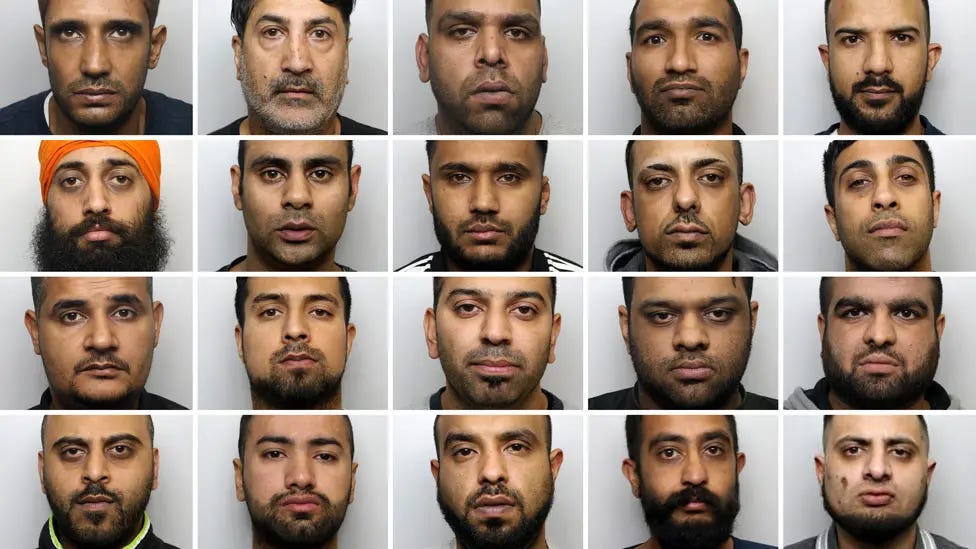
The extent of active disinterest to ongoing criminal activity in British towns and cities over a period of several years passes belief. The fear of being accused of racism metastasized to the extent that the authorities may even have colluded with criminals to hide the crimes to preserve politicians’ and senior bureaucrats’ careers. It’s now broken through the conspiracy of silence to being actively discussed in British media and even on the floor of the House of Commons. Even the Prime Minister may have to answer for past actions (or inactions):
It’s very easy to judge the past, particularly when you’re on the “right side of history”. What supreme confidence it must take to assume that all previous generations had got it so wrong, and that humanity was simply waiting for you to turn up and set them straight.
And yet isn’t it curious that so many who like to judge the values and behaviour of people in the past are also rarely willing to turn that critical eye on other cultures that exist today? According to the principle of cultural relativism, all societies and ways of life are equal. So we must not assert that we are morally better to a culture that permits the genital mutilation of children or that denies women an education, but we may assume that we are highly superior to the Ancient Greeks.
This debate has become particularly relevant with the recent explosion of interest in the rape gangs scandal. A report by Professor Alexis Jay in 2022 determined that more than 1,400 young girls were raped and abused in the period between 1997 and 2013 by what became known as the “grooming gangs”, so called because of the manipulative tactics that were employed to gain the victims’ trust. These groups comprised mostly of men of Pakistani heritage, which led many authorities to overlook the severity of the crimes.
Consider this example from a speech delivered by Andrew Norfolk, reporter for the Times. When police discovered a 13-year-old girl, drunk and mostly naked in the company of seven Pakistani men, they arrested her and failed to question any of the adults.
Police have admitted that such failures to investigate were largely down to a desire to avoid allegations of racism. The Jay report noted that several members of local council staff “described their nervousness about identifying the ethnic origins of perpetrators for fear of being thought as racist; others remembered clear direction from their managers not to do so”. Politicians and media commentators were more concerned with maintaining the fantasy that multiculturalism has been a success, rather than taking seriously their obligation to safeguard children. When Julie Bindel — the first journalist to investigate the grooming gangs — tried to publish her findings, she faced resistance ‘because some editors feared an accusation of racism’.
The Labour government has shown itself incapable of making amends. Jess Phillips has rejected a request for a public inquiry into child sexual exploitation in Oldham. And Keir Starmer has stated that anyone interested in a full-scale inquiry into these failings is jumping “on a bandwagon of the far right”.
This acute form of tone-deafness would, in any sound political climate, be cause for immediate resignation. While it is true that racists will be quick to weaponise the criminal behaviour of a minority, there is nothing remotely “far right” in taking an interest in the wellbeing of children and wishing to see those who abuse them held to account. But Starmer is a banshee of a prime minister; he makes a terrible noise but is completely lacking in substance.
Something may change with the release this week of crime league tables according to nationality. Up until now, there has been tremendous political resistance to releasing such statistics, with police in many European countries not recording such details at all in order to preserve the daydream of multiculturalism. And yet those that do keep such records have revealed a clear trend. Data from the Danish government, for instance, has shown that although non-Western immigrants constitute only 9% of the population, they account for 25% of convictions for violent crime. According to the Telegraph, in Sweden immigrants are “three times more likely to be registered as a suspect for assault than the native population – which grows to four times for robbery, and five times for rape”.
By happenstance, I posted this to social media the other day, which seems apposite:

Comments Off on “Starmer is a banshee of a prime minister; he makes a terrible noise but is completely lacking in substance”
Forgotten Armies of the Vietnam War: Australia, Korea, China, USSR
NR: Sorry about this … RTH must have taken this video down at some point between me scheduling it to appear and today.
Real Time History
Published 16 Aug 2024The Vietnam War is mainly remembered as a conflict between the Vietnamese and the United States. But both sides received direct and indirect support from other countries.
(more…)
Comments Off on Forgotten Armies of the Vietnam War: Australia, Korea, China, USSR
January 8, 2025
The Korean War 029 – The Third Battle of Seoul – January 7, 1951
The Korean War by Indy Neidell
Published 7 Jan 2025The Chinese People’s Volunteer Army crosses the Imjin River in force and attacks the South Korean capital. The best units available to Eighth Army commander Matt Ridgway defend it, but with more Chinese armies and reformed North Korean units pushing in the east, is there any hope of holding onto it?
Chapters
00:00 Intro
00:50 Recap
01:09 Seoul Good
03:13 Seoul Gone
07:39 To Line D
10:20 The Ceasefire Committee
14:02 Summary
14:20 Conclusion
(more…)
Comments Off on The Korean War 029 – The Third Battle of Seoul – January 7, 1951
How To Make 17th Century Clotted Cream – A History
Tasting History with Max Miller
Published 27 Aug 2024Clotted cream served with scones and jam
City/Region: England | Scotland
Time Period: 1670 | 1755Clotted cream is one of the most delicious and simple foods I’ve ever had. It’s made with only one ingredient, but has a richness and nuttiness that is divine. It’s one of those foods that is difficult to track down the origins of, but one story includes the ancient Phoenicians, and another a fairy princess and prince. Both are equally likely to be true.
For best results, look for cream that isn’t ultra-pasteurized. Labels will say “pasteurized” or “low temp pasteurized”. This recipe doesn’t have a lot of active time, but the cream does need to cook for 12 hours, so I recommend starting first thing in the morning. It’s worth it.
To make clouted Cream
Take Milk that was milked in the morning, and scald it at noon; it must have a reasonable fire under it, but not too rash, and when it is scalding hot, that you see little Pimples begin to rise, take away the greatest part of the Fire, then let it stand and harden a little while, then take it off, and let it stand until the next day, covered, then take it off with a Skimmer.
— The Queen-Like Closet, or Rich Cabinet by Hannah Wolley, 1670Clouted Cream
… If you please beat Part of it with a little Rose-water, and a Lair of unbeaten Clouts, with Sugar between …
— A New and Easy Method of Cookery by Elizabeth Cleland, 1755
Comments Off on How To Make 17th Century Clotted Cream – A History
January 7, 2025
Caesar’s dictatorship and the Ides of March – The Conquered And The Proud 11
Adrian Goldsworthy. Historian and Novelist
Published 31 Jul 2024Continuing “The conquered and the proud”, this time we look at Julius Caesar as dictator in Rome, about his activities and reforms and his murder on the 15th March — The Ides of March — in 44 BC. We talk about Brutus, Cassius and the other conspirators and what motivated them.
Comments Off on Caesar’s dictatorship and the Ides of March – The Conquered And The Proud 11
January 6, 2025
The rape gangs in Britain were enabled and protected by “good people” who didn’t want to be accused of racism
Tom at The Last Ditch confesses his early complicity with the official culture of silence that protected and encouraged the exploitation of girls and young women in Britain for decades:

Everyone who ever participated in the leftist orthodoxy of identity-politics is to blame for the near-total impunity of the Muslim rape gangs in Britain. As I reported here, when I was a young solicitor in Nottingham, a police sergeant told me I was “part of the problem.” I had a choice between believing what he told me about “honour killings” in that city or preserving my good standing as an anti-racist liberal. I chose the latter. I feared my career prospects and social standing would be jeopardised (they would have been) if I accepted his honest account. I called a good man a racist (mentally equating him with the likes of Nick Griffin and recoiling in fear from the association) when he was just horrified (as any decent human should be) by young women being murdered.
In that moment, I very much was “part of the problem” and I am profoundly ashamed of that. It is fortunate that – unlike the politicians, local councillors, social-workers and police officers who should have brought the rape gangs or the “honour” killers to justice (or prevented both phenomena altogether) – I had no occasion ever to make any real life choices on the matter. I believe – faced with actual evidence – I would have made better ones, but the way I failed the good sergeant’s test that long-ago day in the early 1980s proves I would have wanted to look the other way, just as they actually did.
I am not still playing the stupid rainbows and unicorns game of cultural moral equivalence (still less the foul Critical Race Theory game of cultural moral hierarchy) when I make the point that the young white working class girls in our cities have not been the only victims of multiculturalism. Those murdered Muslim girls who (so the sergeant told me) had paraffin poured over them and were burned to death were victims too. It was racist to refuse to consider that their Muslim dads, uncles and brothers might murder them because of their primitive religious and cultural notions. It was racist for our authorities to treat Muslim men who gang-raped white girls differently than they would have treated others. It was racist to cover up these horrors in order to protect the myth – shamefully repeated just days ago in his annual Christmas message by His Majesty the King – that multiculturalism has been an overall benefit to Britain.
Some of us have been making these points as best we can for a long time. Many of us had given up, if we’re honest. It was clear that the official narrative that we were racists and that these stories were disinformation – a “moral panic” as Wikipedia puts it – was going to prevail. Until recently the key social media market of ideas – Twitter – was controlled by the Left and attempts to raise the issue were likely to be memory-holed by their private sector woke equivalent of Orwell’s MiniTru.
Miraculously, Elon Musk – a modern Edison, with plenty to occupy him besides our concerns about free speech – bought Twitter and (in one of history’s greatest acts of philanthropy) set it free at his own personal expense. He told advertisers who sought to maintain its old Newspeak regime to “go fuck themselves.” Miraculously he got involved in the issue not just in America (where the Constitution gives him some basis for hope) but in Britain too.
My British Constitution textbook at law school illustrated the supremacy of our Parliament by jokingly saying that it could – in law – make a man into a woman. Little did its authors know that dimwit politicians would later prove the educational point of their joke by making it real. Our constitution – as a result of centuries of struggle with the monarchy, which Parliament decisively won – can be summarised in just three words – “Parliament is supreme”
Comments Off on The rape gangs in Britain were enabled and protected by “good people” who didn’t want to be accused of racism
See Inside the Last British Heavy Tank | Conqueror | Tank Chats Reloaded
The Tank Museum
Published 6 Sept 2024After the shock appearance of the Soviet IS-3 Heavy Tank, NATO armies set about designing their own heavies to deal with the threat. For the US Army, this was the M103, for the British, this tank – FV 214 Conqueror.
In this film, we explore Conqueror inside and out and talk to ex-Sgt. John Chappell, a former tank commander about his experiences as a Conqueror crewman as part of the British Army of the Rhine in the 1960s.
00:00 | Introduction
02:58 | The FV 200 Series
04:51 | Conqueror
11:35 | See Inside
20:48 | Success? Or Waste of ResourcesThis video features archive footage courtesy of British Pathé.
#tankmuseum
Comments Off on See Inside the Last British Heavy Tank | Conqueror | Tank Chats Reloaded
January 5, 2025
Four Waffen SS Tigers vs 50 T-34s – Prokhorovka Part 4
World War Two
Published 4 Jan 2025A mass of Soviet armour charges at the Leibstandarte Division, it looks like they might smash through the German lines. Then, Michael Wittmann’s Tiger tanks go into action. Will the Waffen SS be able to turn the tide at Prokhorovka? Indy reveals all.
(more…)
Comments Off on Four Waffen SS Tigers vs 50 T-34s – Prokhorovka Part 4
German democracy hanging by a thread after vicious attacks by Elon Musk
German politicians are growing ever more desperate as evildoers like Elon Musk continue to undermine the political stage by calling for antidemocratic things like free speech:

Alice Weidel, the federal leader of Germany’s “far-right” AfD, has approximately the same policy prescriptions as Donald Trump. Chiefly they are to return to the bourgeois habits that used to make free market states prosperous. But she subscribes to these in mainland Europe, which has been easily spooked since the Nazis offered policies that were not bourgeois.
“Humankind cannot bear very much reality,” as the far-right poet, T. S. Eliot, wrote in Burnt Norton, now the better part of a century ago. (He was arguably plagiarizing the far-right German poet, Johann Wolfgang von Goethe.)
One could recommend that my readers look her up on YouBoob, or better search for print, and form their own opinion on this Frau Weidel. (Who speaks English, and Chinese, fluently.)
Compare her, for instance, to the British prime minister, Keir Starmer, who rose to power as the prosecutor protecting Muslim “grooming gangs”, and now puts people in gaol who protest on behalf of their rape and murder victims. The idea that Mr Starmer should have a rôle in the government of a civilized country, is as absurd as the idea that the 14-year-old narcissist who has ruled Canada, or the 82-year-old senescent who has ruled the United States, are respectable members of the human race.
And closer to the scene of crisis, eugyppius reports on the latest Muskian outrage against peace-loving German politicians:
For days, the German establishment have been in an absolute uproar over Elon Musk’s profoundly antidemocratic election interference. You cannot turn on the television or open any newspaper without enduring all manner of wailing about the grave danger Musk poses to German democracy.
The naive and the simpleminded will say that all of this is crazy and that the Federal Republic has become an open-air insane asylum – a strange playground of political hysterics the likes of which the Western world has never seen before. That is because they don’t understand what’s at stake here. Musk did not just say the odd nice thing about Alternative für Deutschland, oh no. He also said various German politicians were fools and traitors, he called for resignations and he published an untoward newspaper editorial. It is amazing the German democracy has not yet collapsed in the face of this unrelenting campaign, and still the absolute madman shows no signs of stopping.
Elon Musk’s frontal assault on the German constitution began on 7 November, when he tweeted four antidemocratic words – “Olaf ist ein Narr” (“Olaf [Scholz] is a fool”) – in response to news that the German government had collapsed. Three days later, he tweeted the same thing about Green Economics Minister and chancellor candidate Robert Habeck, after Habeck gave a speech calling for widespread internet censorship.
Thereafter, all was quiet for a time. German democrats allowed themselves to hope these were but isolated indiscretions and that Musk would allow them to get back to their arcane business of promoting feminism abroad, changing the weather and eliminating “the extreme right”. Lamentably, the peace turned out to be a false one. Musk renewed his campaign against democracy with a vengeance on 20 December, tweeting in the wake of the Magdeburg Christmas market attack that “Scholz should resign immediately” and that he is an “incompetent fool”. That very same day, Musk tweeted for the first time that “Only the AfD can save Germany”, a sentiment he repeated also on 21 December and on 22 December, delighted at the nationwide freakout his casual remarks had incited.
In the course of this freakout, German President Frank-Walter Steinmeier hinted darkly that “outside influence” constitutes “a danger for democracy”:
Outside influence is a danger for democracy – whether it is covert, as was recently apparent in the elections in Romania, or open and blatant, as is currently being practised with particular intensity on the platform X. I strongly oppose all external attempts at influence. The decision on the election is made solely by the eligible citizens in Germany.
The indefatigable Naomi Seibt, who appears to be Musk’s primary informant about German politics, brought these remarks to the evil fascist billionaire’s attention, and he promptly responded that “Steinmeier is an anti-democratic tyrant”. Musk then delivered his coup-de-grace the next day, with an editorial in Welt am Sonntag – the most devastating piece of political prose that Germany has witnessed since Hitler penned Mein Kampf.
By my count, Musk may have directed as many as 700 words against the noble if surprisingly rickety edifice of German democracy – an assault few political systems could withstand. The self-appointed guardians of our liberal order accordingly declared a five-alarm fire, and they have betaken themselves to their keyboards to defend what remains of our free and eminently democratic political system, where anybody can say anything he likes and vote for any party he wishes, so long as what he likes and those for whom he votes have nothing to do with major political parties supported by millions of Germans like Alternative für Deutschland.
Comments Off on German democracy hanging by a thread after vicious attacks by Elon Musk
QotD: The customary Dictatorship in the Roman Republic before 82BC
It’s important to note at the outset that the Romans had no written constitution and indeed most of the rules for how the Roman Republic functioned were, well, customary. The Roman term for this was the mos maiorum, the “custom of the ancestors”, but Roman practice here isn’t that different from how common law and precedent guide the functioning of something like the British government (which also lacks a written constitution). Later Roman writers, particularly Cicero, occasionally offer theoretical commentary on the “rules” of the Republic (as a retrojected, ideal version), but just as often their observations do not actually conform to the practice we can observe from earlier periods. In practice, the idea here was that the “constitution” of the Republic consisting in doing things as they had always been done, or at least as they were understood to have always been done.
Consequently, as historians, we adopt the formulation that the Republic is what the Republic does – that is that one determines the rules of offices and laws based on how they are implemented, not through a hard-and-fast firm legal framework. Thus “how does the dictatorship work?” is less a question of formal rules and more a question of, “how did the eighty-odd Roman dictatorships work?”
The basic idea behind the office was that the dictator was a special official, appointed only in times of crisis (typically a military crisis), who could direct the immediate solution to that crisis. Rome’s government was in many ways unlike a modern government; in most modern governments the activities of the government are carried out by a large professional bureaucracy which typically reports to a single executive, be that a Prime Minister or a President or what have you. By contrast, the Roman Republic divided the various major tasks between a bunch of different magistrates, each of whom was directly elected and notionally had full authority to carry out their duties within that sphere, independent of any of the other magistrates. In crude analogy, it would be as if every member of the United States cabinet was directly elected and none of them reported to any of the rest of them but instead all of them were advised by Congress (but in a non-binding manner). Notionally, the more senior magistrates (particularly the consuls) could command more junior magistrates, but this wasn’t a “direct-report” sort of relationship, but rather an unusual imposition of a more senior magistrate on a less senior one, governed as much by the informal auctoritas of the consul as by law.
In that context, you can see the value, when rapid action was required, of consolidating the direction of a given crisis into a single individual. This is, after all, why we have single executive magistrates or officials in most countries. So, assuming you have a crisis, how does this process work?
The typical first step is that the Senate would issue its non-binding advice, a senatus consultum, suggesting that one or both of the consuls appoint a dictator. The consuls could ignore this direct, but almost never did (save once in 431, Liv. 4.26.5-7). The consuls would then have to nominate someone; they might agree on the choice (which would make things simple) or one of them might be indisposed (out of the city, etc.), which would leave the choice to the one that remained. If both consuls were present and did not agree, they’d draw lots to determine who got to pick (which happens in the aforementioned instance in 431 after the tribunes got the consuls of that year to relent and pick someone, Liv. 4.26.11).
The nominating consul could pick anyone except himself; if you, as consul, wanted to be dictator, you would need your co-consul to so nominate you. There were no formal requirements; of course nominations tended to go to experienced commanders, which tended to mean former consuls, but this was not a requirement. Publius Claudius Pulcher (cos. 249), enraged when the Senate directed him to appoint a dictator (because of his own bungled military command) infamously nominated his own freedman, Claudius Glicia, as dictator (Liv. Per. 19.2; Seut. Tib. 2.2), which was apparently a bridge too far; Glicia was forced to abdicate but his name was duly entered onto the Fasti because the appointment was valid, if ill-advised (despite the fact that, as a freedman, Glicia would have been ineligible to run for any [office]). Nevertheless, dictators were usually former consuls.
Once the name was picked, in at some cases the appointment may have been confirmed by a vote of the Comitia Curiata, Rome’s oldest voting assembly, which was responsible for conferring imperium (the power to command armies and organize law courts; essentially “the power of the kings”) on magistrates; not all magistrates had imperium (consuls, praetors, proconsuls, propraetors, dictators and their magistri equitum did; quaestors, aediles, tribunes, both plebeian and military, and censors did not). We do not know of any instance where the Comitia Curiata put the kibosh on the appointment of a dictator, so this step was little more than a rubber-stamp, and may have been entirely optional (Lintott, op. cit., 110, n. 75), but it may have also reflected the notion that all imperium had to be conferred by the people through a voting assembly. It is often hard to know with clarity about pro forma elements of Roman politics because the sources rarely report such things.
The dictator was appointed to respond to a specific issue or causa, the formula for which are occasionally recorded in our sources. The most common was rei gerundae causa, “for the business to be done” which in practice meant a military campaign or crisis. In cases where the consuls were absent (out on campaign), a dictator might also be nominated comitiorum habendorum causa, “for having an assembly”, that is, to preside over elections for the next year’s consuls, so that neither of the current consuls had to rush back to the city to do it. Dictators might also be appointed to do a few religious tasks which required someone with imperium. Less commonly but still significantly, a dictator might be appointed seditionis sedenae causa, “to quell sedition”; only one instance clearly under this causa is known, P. Manlius Capitolinus in 368, but several other instances, e.g. L. Quinctius Cincinnatus in 439, also dealt with internal matters. Finally, once in 216, Marcus Fabius Buteo held the office of dictator senatus legendi causa, “to enroll the Senate”, as the Battle of Cannae, earlier that year, had killed so many Senators that new inductions were needed (Liv. 23.23).
The dictator then named a subordinate, the magister equitum (“master of the horse”). The magister equitum was a lieutenant, not a colleague, but interestingly once selected by a dictator could not be unselected or removed, though his office ended when the dictator laid down his powers. We should note Marcus Minucius, magister equitum for Q. Fabius Maximus in 217 as an exception; his selection was forced by the people via a law and his powers were later made equal to Fabius’ powers. This turned out to be a substantial mistake, with Fabius having to bail the less prudent Minucius out at Geronium – the undermining of Fabius generally during 217 was, in retrospect viewed as a disaster, since the abandonment of his strategy led directly to the crushing defeat at Cannae in 216.
One of the ways that legal power was visually communicated in Rome was through lictors, attendants to the magistrates who carried the fasces, a bundle of rods (with an axe inserted when outside the sacred bounds of the city, called the pomerium). More lictors generally indicated a greater power of imperium (consuls, for instance, could in theory give orders to the praetors). Praetors were accompanied by six lictors; consuls by 12. The dictator had 24 lictors when outside of the pomerium to indicate his absolute power in that sphere (that is, in war), but only 12 inside the city. The magister equitum, as the dictator’s subordinate, got only six, like the praetors.
It also seems fairly clear that while dictators had almost complete power within their causa, those powers didn’t necessarily extend beyond it (e.g. Liv. 2.31.9-11, the dictator Manius Valerius, having been made dictator to resolve a military problem, insists to the Senate that he cannot resolve internal strife through his dictatorial powers and instead lays down his office early). The appointment of a dictator did not abolish the other offices (Cicero thinks they do, but he is clearly mistaken on the matter, Cic. De Leg. 3.9, see Lintott, 111). In essence then, the dictator was both a supreme military commander and also expected to coordinate the other magistrates with his greater degree of imperium, though of course in practice the ability to do that is going to substantially depend on the individual dictator’s ability to get cooperation from the other magistrates (but then, on the flip side, the dictator has just been designated as the leader in the crisis, so the social pressure to conform to his vision must have been intense). Notably, dictators could not make a law (a lex) on their own power or legislate by fiat outside of their causa; they could and did call assemblies which could by vote approve laws proposed by a dictator, however.
The dictator served for six months or until the task for which he was appointed was resolved, whichever came first. There is a tendency in teaching Roman history to represent a figure like Cincinnatus, who laid down his dictatorship after just fifteen days in 458, as exceptional but while the extreme shortness of term was exceptional, laying down power was not. Indeed, Cincinnatus (or perhaps a relative) served as dictator again in 439 and again laid down his power, this time in merely 21 days. In practice, the time-limited nature of the dictatorship meant there were few incentives to “run out the clock” on the office since it was so short anyway – better, politically, to solve the crisis quickly and lay down power ostentatiously early and “bank” the political capital than try to run out the period of power, accomplish relatively little and squander a reputation for being public-spirited.
Bret Devereaux, “Collections: The Roman Dictatorship: How Did It Work? Did It Work?”, A Collection of Unmitigated Pedantry, 2022-03-18.
Comments Off on QotD: The customary Dictatorship in the Roman Republic before 82BC
January 4, 2025
Winning WW2’s Most Important Battle – Battle of the Atlantic
Historigraph
Published 15 Aug 2024The Second World War featured many important land battles on a colossal scale. They involved hundreds of thousands of participants, ranged across hundreds of miles and inflicted the most terrible destruction. But none of them were as long-running, as vast or as crucial to allied victory as that fought at sea in the Atlantic, where for four years Allied navies and civilian sailors fought a life or death struggle against Germany’s U-boats. This is the story of how it was fought, and how it was won.
00:00 – WW2’s most important battle
00:45 – The U-boat menace in the early years
08:53 – The massacre off the eastern seaboard
13:12 – American ship printer go brrrrrrrrr
19:31 – The Allies gain the upper hand
21:49 – Black May: the convoy battles of 1943
24:41 – The most important victory of WW2
(more…)
Comments Off on Winning WW2’s Most Important Battle – Battle of the Atlantic
January 2, 2025
How to solve Britain’s housing crisis
Tim Worstall outlines why just increasing the number of building permits allowed won’t — by itself — increase the total number of houses built. This is because the process of awarding the permits has been largely captured by the biggest players, and the supply is artificially restricted by local governments:
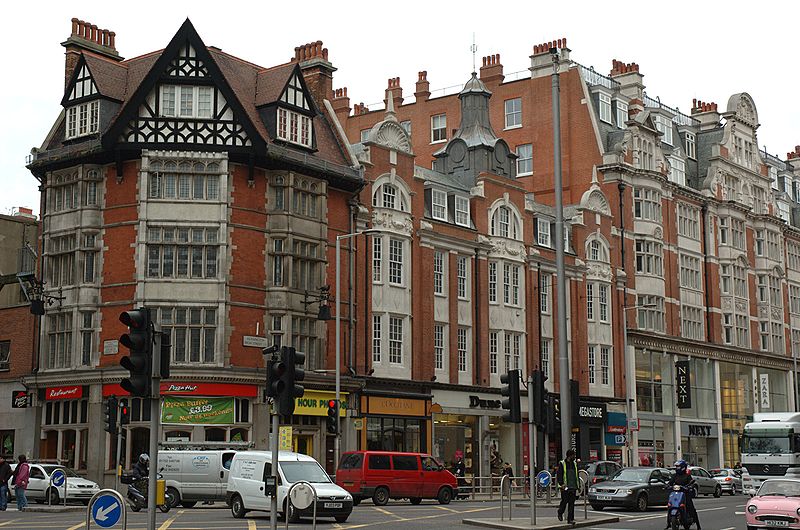
Kensington High Street at the intersection with Kensington Church Street. Kensington, London, England.
Photo by Ghouston via Wikimedia Commons.
The first bit is to diagnose the problem properly. If the big builders won’t build because they don’t want to then and therefore we want to find other builders who will and do want to. And the important part of this is that the big builders do indeed have market power. It costs a lot — a lorra lots — of money to be able to get a scheme through planning. Thus we not only have that problem of a shortage of places to build — because planning — but we’ve also handed market power to those able to build — because planning.
The answer is to shoot the planners, obviously. But then that always is the correct answer. Here, more specifically, we need to flood the zone with permissions. Really, grossly, oversupply. Like issue 15 million permits. Say. At which point the value of a permit is zero. So, anyone with a scrap of land can gain a permit and build.
This brings back the small housebuilder. Instead of being held back by the ideals of half a dozen national builders we’ve got 50,000 blokes all looking to build 2 or 3 houses a year. Or 10 or 20 even.
There’s no way that the big builders can then delay building on their plots. For they don’t have market power any more. And even if they do want to delay then it doesn’t matter a damn.
And this always is the way that you deal with those with market power. You flood that zone with supply so as to destroy their market power.
Comments Off on How to solve Britain’s housing crisis
Forgotten War – Ep 6 – The Battle of the Admin Box – Feb. 1944
HardThrasher
Published 1 Jan 2025A short video on the highlights of the Battle of the Admin Box, and its build up DO NOT PANIC IF YOU HAVEN’T WATCHED THE OTHER VIDEOS IN THIS SERIES
Please consider donations of any size to the Burma Star Memorial Fund who aim to ensure remembrance of those who fought with, in and against 14th Army 1941–1945 — https://burmastarmemorial.org/
(more…)
Comments Off on Forgotten War – Ep 6 – The Battle of the Admin Box – Feb. 1944
Why Germany Lost the Battle of Britain
Real Time History
Published 2 Aug 2024Summer 1940. The United Kingdom is gripped by the fear of a German invasion. Even if the Luftwaffe secures the sky over Britain, could Germany’s Operation Sea Lion ever really work?
(more…)
Comments Off on Why Germany Lost the Battle of Britain


