
Jill Bearup
Published 8 Sept 2025Scaramouche had, until recently, the longest swordfight in cinema history. It’s still regarded as one of the best. Why? Let’s talk about it.
December 26, 2025
The Pinnacle of Movie ⚔️Swordfights⚔️
Comments Off on The Pinnacle of Movie ⚔️Swordfights⚔️
December 25, 2025
Repost – “Fairytale of New York”
Time:
“Fairytale of New York” by The Pogues featuring Kirsty MacColl
This song came into being after Elvis Costello bet The Pogues’ lead singer Shane MacGowan that he couldn’t write a decent Christmas duet. The outcome: a call-and-response between a bickering couple that’s just as sweet as it is salty.
Comments Off on Repost – “Fairytale of New York”
QotD: Christmas dinner
An advertisement in my Sunday paper sets forth in the form of a picture the four things that are needed for a successful Christmas. At the top of the picture is a roast turkey; below that, a Christmas pudding; below that, a dish of mince pies; and below that, a tin of —’s Liver Salt.
It is a simple recipe for happiness. First the meal, then the antidote, then another meal. The ancient Romans were the great masters of this technique. However, having just looked up the word vomitorium in the Latin dictionary, I find that after all it does not mean a place where you went to be sick after dinner. So perhaps this was not a normal feature of every Roman home, as is commonly believed.
Implied in the above-mentioned advertisement is the notion that a good meal means a meal at which you overeat yourself. In principle I agree. I only add in passing that when we gorge ourselves this Christmas, if we do get the chance to gorge ourselves, it is worth giving a thought to the thousand million human beings, or thereabouts, who will be doing no such thing. For in the long run our Christmas dinners would be safer if we could make sure that everyone else had a Christmas dinner as well. But I will come back to that presently.
The only reasonable motive for not overeating at Christmas would be that somebody else needs the food more than you do. A deliberately austere Christmas would be an absurdity. The whole point of Christmas is that it is a debauch — as it was probably long before the birth of Christ was arbitrarily fixed at that date. Children know this very well. From their point of view Christmas is not a day of temperate enjoyment, but of fierce pleasures which they are quite willing to pay for with a certain amount of pain. The awakening at about 4 a.m. to inspect your stockings; the quarrels over toys all through the morning, and the exciting whiffs of mincemeat and sage-and-onions escaping from the kitchen door; the battle with enormous platefuls of turkey, and the pulling of the wishbone; the darkening of the windows and the entry of the flaming plum pudding; the hurry to make sure that everyone has a piece on his plate while the brandy is still alight; the momentary panic when it is rumoured that Baby has swallowed the threepenny bit; the stupor all through the afternoon; the Christmas cake with almond icing an inch thick; the peevishness next morning and the castor oil on December 27th — it is an up-and-down business, by no means all pleasant, but well worth while for the sake of its more dramatic moments.
Teetotallers and vegetarians are always scandalized by this attitude. As they see it, the only rational objective is to avoid pain and to stay alive as long as possible. If you refrain from drinking alcohol, or eating meat, or whatever it is, you may expect to live an extra five years, while if you overeat or overdrink you will pay for it in acute physical pain on the following day. Surely it follows that all excesses, even a one-a-year outbreak such as Christmas, should be avoided as a matter of course?
Actually it doesn’t follow at all. One may decide, with full knowledge of what one is doing, that an occasional good time is worth the damage it inflicts on one’s liver. For health is not the only thing that matters: friendship, hospitality, and the heightened spirits and change of outlook that one gets by eating and drinking in good company are also valuable. I doubt whether, on balance, even outright drunkenness does harm, provided it is infrequent — twice a year, say. The whole experience, including the repentance afterwards, makes a sort of break in one’s mental routine, comparable to a week-end in a foreign country, which is probably beneficial.
George Orwell, “In praise of Christmas”, Tribune, 1946-12-20.
Comments Off on QotD: Christmas dinner
December 24, 2025
The Pagan Roots of Christmas
History With Hilbert
Published 23 Dec 2017It’s Christmastime everyone, as you can tell from the name, it has a lot to do with Christ and Christianity, after all, Jesus was born on the 25th of December, right? Well, not quite. Most of what we do at Christmas time has little or nothing to do with Christianity and is rather rooted in the ancient pagan pasts of both Europe and other places. In this video I’m going to explore the aspects of Christmas that come form the traditions and beliefs of the Northern Europe Germanic or Nordic Pagans as this is what I know the most about and what interests me the most. This isn’t to say there are more explanations for where certain traditions come from or that there were other groups who contributed aspects of our modern Christmas celebrations. Things like Carol Singing, Christmas Trees, Christmas Lights, Yule Logs, Christmas Dinner, Santa Claus, the Elves, New Year’s Resolutions and Kissing under the Mistletoe can all be traced back to the pagan times of our forefathers and to various characters of Norse Myth and Legend like Odin, Freyja, Baldr and Thor.
(more…)
Comments Off on The Pagan Roots of Christmas
QotD: Moderation for the inveterate port fan at Christmas
A nice spätburgunder, the delightful German word for pinot noir, would be a good alternative. Or perhaps an English red. They’re not easy to find or cheap but I can thoroughly recommend the 2020 pinot noirs from Gusbourne in Kent and Danbury Ridge in Essex.
With the turkey, keep the pork accessories to a minimum. Don’t sneak into the kitchen to polish off the pigs in blankets. Instead have lots of vegetables, but do not have seconds, no matter how tempting that might be. As for Christmas pudding, avoid, avoid, avoid. Maybe a crumb for appearances’ sake. But you must resist the sweet wine. I’m a sucker for a nice monbazillac but I’ve decided you don’t need port and sweet wine, and I’m going for the port. Eyes on the prize and all that.
The strategy is to reach the port and stilton course having consumed no more than the equivalent of one bottle of wine. Ideally less. If you’ve had two, that’s too much. Go for a walk.
Assuming you’ve reached this stage soberish and with a stomach that’s not rebelling, that doesn’t mean that you can suddenly channel your inner Georgian squire when the decanter comes round. Don’t be like John Mytton, one time MP for Shrewsbury, who arrived at Cambridge University with 2,000 bottles of port: unsurprisingly he didn’t graduate. He was notorious for drunken antics such as setting fire to his nightshirt in a bid to cure hiccups and once rode a bear into a dinner party for a jape. We’ve all had that urge after too much port.
It might seem heretical, but you don’t need to finish off the decanter at the table. A vintage port should be good for four or five days, whereas tawny lasts for weeks, so you can keep coming back to it. If there are only a few port fans in the family, it’s worth opening a bottle on Christmas Eve and having a glass or two. Then if you do decide to polish it off while outlining your plan for getting the British economy back on track, there won’t be quite so much in the bottle. Oh, and tiny glasses, please. Think Russell Crowe and Paul Bettany in Master and Commander.
When lunch is over, say no to coffee and find somewhere to have a nap until it’s time for a cup of tea. Try to avoid eating or drinking alcohol again for the rest of the day. But who am I kidding, I’ll probably open a bottle of Beaujolais to go with my turkey sandwich. And maybe a little port and Stilton. But nothing after nine o’clock. That is very important.
And so to bed for a good night’s sleep and awake rested, if not quite refreshed, and without an angry wife glaring at me. That’s the plan anyway.
Henry Jeffreys, “How to drink port without the storm”, The Critic, 2022-12-09.
Comments Off on QotD: Moderation for the inveterate port fan at Christmas
December 23, 2025
Vagabond by Tim Curry
Andrew Doyle reviews Tim Curry’s new autobiography Vagabond:
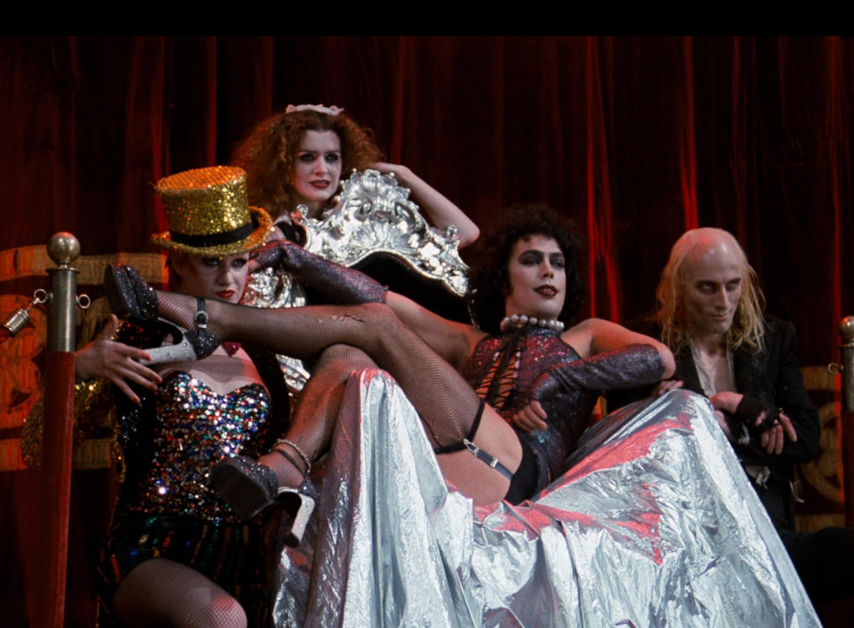
Tim Curry, Nell Campbell, Richard O’Brien and Patricia Quinn in The Rocky Horror Picture Show (1975)
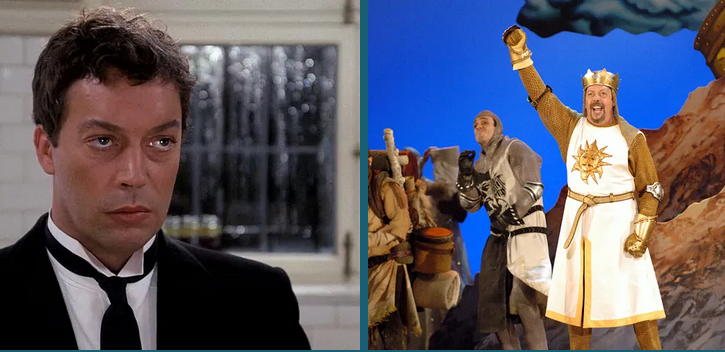
Tim Curry is a shapeshifter. I have a childhood memory of the moment I learned that the demon in Legend (1985), the villain in Annie (1982), the butler in Clue (1985) and the cross-dressing alien scientist in The Rocky Horror Picture Show (1975) were all played by the same man. It was quite the revelation.
Curry’s protean talents have meant that as a personality he has forever remained mysterious. He rarely gives interviews – only grudgingly whenever there is a movie to promote – and fans have therefore tended to project onto this reclusive figure the persona that best fits their expectations or desires. When more insistent fans have formed an emotional bond with the Tim Curry of their imaginations, he has on occasion been forced to put them right. “I’m just a person,” he says, “and I’m not your person”.
Fans will therefore be delighted at the publication of Curry’s memoir, Vagabond, which offers fascinating snapshots from his life. The approach is episodic, with chapters devoted to particular projects in his career. As such, Curry offers us morsels in lieu of a meal. Those who are hoping for salacious anecdotes about his love life will be disappointed, because – as he rightly points out – “specifics about my affairs of the heart or the bedroom are – respectfully – none of your fucking business”. Instead, we have a wonderfully compelling account of Curry’s origins and how his philosophy of life has informed his craft.
Tim Curry as Wadsworth in Clue and King Arthur in Spamalot
His vagabond status has been well earned. As the child of a military father, he was forever on the move, and it is easy to see how these early experiences shaped his capacity to embody such a wide breadth of humanity. His first accolade came early when he was awarded the prize for the “Most Beautiful Baby in Hong Kong”. His family relocated roughly every eighteen months for the first eleven years of his life, which is why he tells us that “mutability felt like a part of my DNA”. It was the ideal apprenticeship for his future vocation.
Writing in 1817, William Hazlitt called actors the “motley representatives of human nature” who “show us all that we are, all that we wish to be, and all that we dread to be”. For his part, Curry sees the actor as the vagabond of his book’s title. “How can you trust somebody, or truly know somebody, who appears as a king one day and a jester the next? What does it mean when neither role is the true identity of the person, and when that very person might be gone the next day?” In this, he could be paraphrasing Hazlitt’s description of actors as “today kings, tomorrow beggars”, and how “it is only when they are themselves, that they are nothing”.
Comments Off on Vagabond by Tim Curry
QotD: Vacations
Auberon Waugh, diary entry for 23 July 1975, republished in William Cook, Kiss Me Chudleigh: The World according to Auberon Waugh, 2010.
Comments Off on QotD: Vacations
December 21, 2025
The Fall of Chancellor Bruning – Rise of Hitler 24, April-June 1932
World War Two
Published 20 Dec 2025The runoff elections for German President give Paul von Hindenburg a strong victory over Adolf Hitler, and convince the Bruning government to try to reign in the Nazis by banning the SA and SS. However, Kurt von Schleicher has managed to convince Hindenburg that Bruning is a liability and by the end of May, Bruning is out and Schleicher has maneuvered Franz von Papen into the post of Chancellor. The Reichstag is dissolved, the ban is lifted, and who knows where Germany is headed!
(more…)
Comments Off on The Fall of Chancellor Bruning – Rise of Hitler 24, April-June 1932
Getting Dressed – Victorian Maid, Christmas 1853
CrowsEyeProductions
Published 5 Dec 2018A Victorian maidservant dresses ready for a day of work, then ventures out into a cold evening …
(more…)
Comments Off on Getting Dressed – Victorian Maid, Christmas 1853
December 20, 2025
QotD: Women’s Rugby
Now, however, the sport is professional and played by men who seem to be eight feet wide and run straight into one another, very fast and often headfirst. Not surprisingly, a significant proportion of them suffer from traumatic dementia very early in their lives, and some, understandably though I do not think justifiably, try in the early stages of their sad condition to obtain financial compensation. The sport has become so violent that even people who are not unduly sensitive to violence shrink from observing it close-up.
Freud might have taken these women’s desire to participate in a sport that is so radically unsuited to them as an instance of what, in one of his absurd speculations about the psychology of women, he called penis envy. I think, rather, it is a sign of the masculinization of at least some women, who are responding to the overvaluation in our culture of the exercise of power as the supreme end in life. The exercise of all power is fleeting, sporting prowess being among its most fleeting forms; but the illusion dies hard.
Theodore Dalrymple, “All in a Day’s Irk”, New English Review, 2025-08-29.
Comments Off on QotD: Women’s Rugby
December 19, 2025
The strange rebirth of English patriotism
In The Conservative Woman, Niall McCrae discusses what he calls “a new crusade” as the downtrodden English rediscover — or in many cases, discover for the first time — patriotic feelings for their nation, and earn the scorn and contempt of the ruling class and their media fart-catchers:
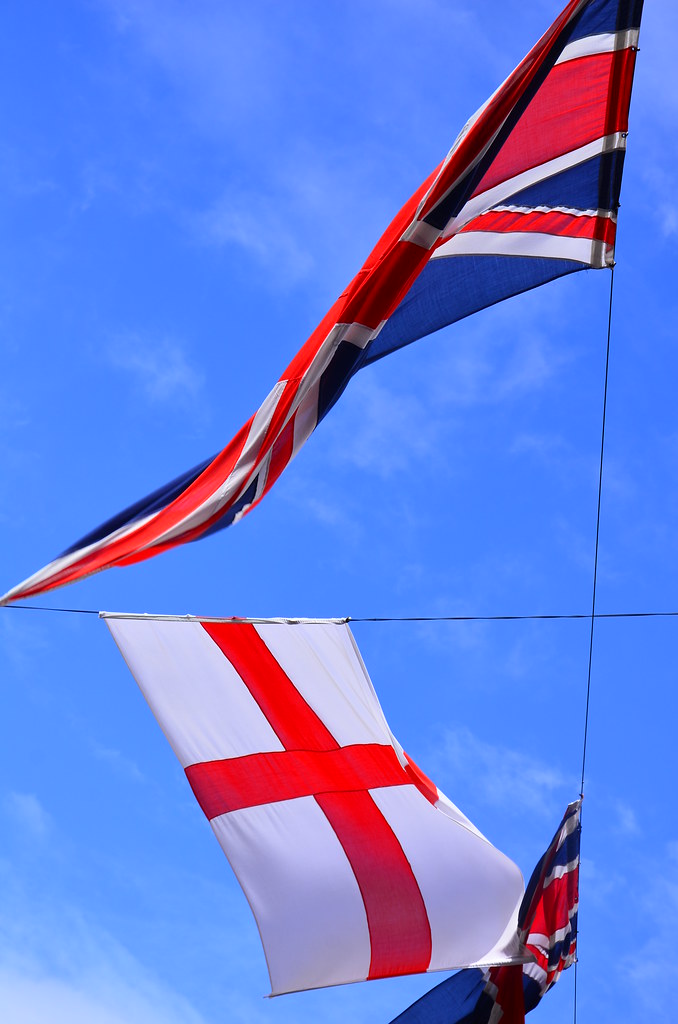
“Union Jacks and crosses of St George” by Ben Sutherland is licensed under CC BY 2.0 
 .
A wave of patriotism swept across England last summer. Flags were tied to lampposts up and down the country, but while these displays had wide public support, the intelligentsia were troubled, particularly as the colours were often flown in areas of cultural diversity or on roads passing hotels accommodating illegal immigrants. This suggested provocation, rather than the use of national flags to celebrate sporting success.
Politicians and Guardian commentators were careful not to appear too negative, but they emphasised unity and inclusion over nationalistic fervour. The Union Jack was preferable to the St George’s Cross, because they associated the latter more with the far right (this is not accurate, as groups such as the National Front and BNP rallied under the Union Jack).
The Union Jack (properly termed “flag” as a jack is hoisted at sea), comprises the crosses of St George, St Andrew and St Patrick. It is perhaps the most impressive flag in the world, a classic design of great cultural impact. How globalists, the EU and Islamists would like to banish it!
The “Unite the Kingdom” march led by Tommy Robinson in September, which brought a million people to the streets of London, was a marvellous spectacle of patriotism. For the counter-Jihad movement, conflict in the Middle East is regarded as an existential struggle against militant Islam. Israeli flags are often waved towards pro-Palestine marchers, and the London rally gave several Zionists a platform at Whitehall. However, the vast majority of marchers were there for one country only – their own. This was truly a British event, with a roughly equal mix of Union and St George flags, alongside some Welsh dragons and Scottish saltires, and Irish tricolours too.
Significantly, there was another symbol prominently at the London march: the Christian cross. A poignant moment was at the ramparts of Westminster Bridge, where a fearless young man mounted the head of the stone lion and from that precarious pedestal raised in one hand the flag of St George, and in the other a wooden cross. (https://www.instagram.com/reel/DOpagGvkQk9/)
I first observed the resurgence of Christian faith at the huge protests against the Covid-19 regime. Several marchers bore crosses, or placards asserting the power of God over earthly evil. The Book of Revelation was quoted, and when the “vaccine” was launched it was cast as the “Mark of the Beast”.
Socially unacceptable they may have been, but now St George and Christian crosses are regularly appearing together in gatherings for patriotic or traditional causes. In his book Worth Dying For: The Power and Politics of Flags (2017), Tim Marshall observed that “with the rise of Islam in Europe, these symbols are likely to be increasingly used by the far right to try to define the continent as what they think it is, and in opposition to what they think it is not”. You can’t get a book released by a mainstream publisher without expressing such approved outlook, but Marshall is making the mistake of blaming patriots for the devaluing of their national flag; it is surely the subversive ideology of the progressive left that has taught generations that national pride is regressive and bigoted. Meanwhile “woke” warriors are not shy of waving the Pride rainbow, transgender stripes and the flag of Palestine. And the likes of Hope Not Hate had no complaint about huge fascist-style marches awash in the blue and yellow stars of the EU.
Pick One: G1 (FAL) vs G3 (H&K) w/ John Keene
Forgotten Weapons
Published 2 Aug 2025If you had to pick one, would you take a G1 (FAL) or a G3 (H&K)? Both are 7.62mm NATO rifles adopted by Germany. The G1 has more features and capabilities, like the carry handle, bipod, multiple muzzle devices, and adjustable gas system. The G3, on the other hand, is simpler, without things to change for better or worse. So which would you take?
(more…)
December 17, 2025
“The ‘liberal international order’ – a technocratic oligarchy sustained by tightly interlocked institutions”
Last week, Len D. Pozeram wrote about how the real (but mostly unacknowledged) American empire is facing unprecedented challenges and may indeed be in serious decline:
“The Empire’s Mask is Slipping”, The Libertarian Alliance
For generations, Americans were sold a saccharine myth: that our nation’s vast global presence — its military bases on every continent, its endless wars, its economic interventions — was all done in the name of “freedom” and “human rights”. This was the sales pitch. Washington, we were told, was the benevolent policeman of a dangerous world, upholding a Pax Americana designed to uplift humanity.
But for those willing to look beyond the rhetoric, the truth was never hidden — only ignored. This narrative was never more than a sophisticated marketing campaign, engineered to pacify a domestic public and legitimize imperial conquest abroad. From the very beginning, the post-WWII global order was not about freedom, but about power — and who would control it after the collapse of the old European empires.
With the fall of the British Empire, America did not merely “step up” to defend the West — it seized control of the imperial machinery and rebranded it. The British financial aristocracy gave way to a new though related American elite, its nucleus formed around Wall Street banks, the military-industrial complex, Big Oil cartels, and, increasingly, a rising Zionist lobby with ambitions stretching far beyond Tel Aviv.
Under the guise of “containing communism” or “defending democracy”, this new managerial class waged a quiet war against genuine national independence movements across the globe. Countries seeking to control their own resources, chart their own destinies, or resist Western financial domination were systematically targeted for destabilization or outright annihilation.
Guatemala in 1954. Iran in 1953. Indonesia in 1965. The Congo. Chile. Nicaragua. Greece. Even Australia, whose 1975 constitutional crisis remains a textbook case of covert Anglo-American regime change. The public, of course, was kept in the dark. History books were rewritten. Journalists who strayed from the script were destroyed or silenced. CIA fingerprints are now visible in dozens of these cases — operations sanctioned not to spread freedom, but to preserve a system of elite extraction and control.
This system — often referred to in polite company as the “liberal international order” — is, in fact, a technocratic oligarchy. It is sustained by tightly interlocked institutions: the Federal Reserve, the IMF, the World Bank, NATO, and a sprawling Intelligence Community whose true loyalties lie not with the American public, but with transnational networks of finance, energy, and geopolitical strategy. To the extent that ideology plays a role, it is the convergence of evangelical apocalypticism and messianic Zionism — two religious currents that have dangerously informed U.S. foreign policy since the Reagan era.
Yet today, this system is beginning to eat itself. The ideology of endless war, and top-down control has run up against hard limits: financial, and political. The de-dollarization trend in the Global South, the rise of multipolar alliances like BRICS, and the exposure of elite criminality — from Epstein to the endless intelligence scandals — are all symptoms of imperial overstretch and rot.
We are watching the slow collapse of an empire built not on democratic values but on lies, coercion, and institutionalized greed.
From a slightly different viewpoint, Spaceman Spiff maintains that the narratives that have been used to direct and control political thought in the west are in the process of collapsing:
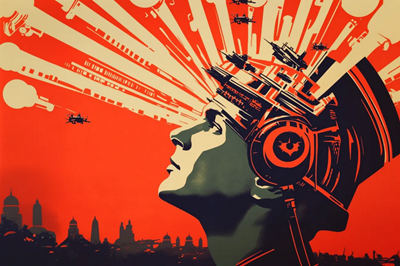
Image from Postcards from the Abyss
As reality intrudes the naivety behind many sacred cows is exposed. The emperor is naked and his supporters look equally naked. The narratives driving their fantasies are failing.
The big three issues common in the West illustrate why people are noticing.
Diversity and immigration
The promotion of diversity as a strength is a consequence of blank slate thinking, a belief disparate populations are substantially the same with most observable differences due to environment only.
This is at odds with what we observe, the significant range in ability and proficiency between distinct groups that becomes apparent when we interact. So artificial variety is sold as a positive in an attempt to downplay the homogeneity that gets better results.
The consequence of this is quotas, where arbitrary rules are enforced to ensure a diverse outcome.
This destroys competency even if we ignore the potential for conflict when foreigners are imported in large numbers.
The main effect of pushing this absurd policy seems to be the rise of ethnic awareness among those who must step aside to accommodate it. How could it not? When people are excluded because of their ethnicity it becomes important to them.
This is not what advocates of diversity intended but is already happening.
Climate
Climate and energy policy is based on anti-scientific magical thinking. With the current emphasis on carbon dioxide we are told a tiny portion of our atmosphere is responsible for most of the future changes that will cause widespread harm. There is no evidence for such claims.
The reality of climate is different from the narrative. It is resilient, as many things are. Our obsession is arrogance. A belief we matter more than we do.
Intellectuals are prone to get lost in their theories of how the world ought to work. Activists then latch on to their utopian ideas to gain some sense of meaning in their lives.
Society also has people lacking conscience who will profit from anything no matter how much damage it causes. Combining these two, dreamers with schemers, is often lethal. Seemingly opposing forces, left-wing activists and capitalist profiteers, can cooperate even if they embrace distinct beliefs.
As many memes remind us, if you have corporate sponsorship you are not the resistance. This is precisely what we see.
Narratives begin to collapse as we witness ruthless corporations promote feelgood nonsense about climate while fleecing taxpayers in the background. Many are noticing.
And the effects of suicidal climate goals are difficult to hide. Every closed factory or power station kills another element of credibility.
Socialism
Socialism is based on the idea an educated elite can make decisions for us all while simultaneously conditioning us to be better versions of ourselves. It ignores all of history and everything we have learned of human psychology to embrace a literal fantasy utopia that no one has even come close to realizing.
Nothing sums up the bankruptcy of our intellectuals more than their inability to reject this failed ideology.
But it also shows us the Anglo-Saxon instinct to restrict others’ control over us is the only way to counter it.
It teaches us of the wisdom of documents like Magna Carta or the Bill of Rights, designed to constrain the powerful regardless of their motives, ambitions or mental state. Rare moments of historical sanity that remind us what effective countermeasures can look like.
It would seem this lesson must be relearned every few generations. But we are learning it. Real life is reminding us why we must limit government and its agents no matter how inconvenient.
Bad ideas are inevitable. It is the ability of activists and the powerful to enact them many are now waking up to as narratives visibly fail.
Comments Off on “The ‘liberal international order’ – a technocratic oligarchy sustained by tightly interlocked institutions”
“The core hypocrisy of modern Western governance”
On the social media site formerly known as Twitter, Tom Marazzo discusses the extremely weird experience we’ve all lived through since 9/11 in almost every major western nation:
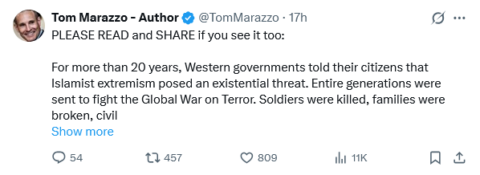
For more than 20 years, Western governments told their citizens that Islamist extremism posed an existential threat. Entire generations were sent to fight the Global War on Terror. Soldiers were killed, families were broken, civil liberties were curtailed, and trillions were spent, all justified by the claim that terrorism had to be stopped over there so it would not reach us here.
Then something strange happened.
The same governments that built their legitimacy on that fear now insist that even discussing the cultural, security, or integration risks associated with mass immigration from unstable regions is immoral. Raise concerns and you are no longer a citizen asking questions, but a bigot, an extremist, or a threat yourself. In some countries, speech alone now draws police attention, while violent acts are reframed as isolated incidents or stripped of ideological context.
The irony deepens when you look at the timeline.
During the first years of Covid, terrorism all but vanished from news coverage, just as Covid seemed to erase the common cold, cancer, and every other cause of death from public discourse. Nothing had disappeared. The narrative had simply changed. Attention was redirected. Fear was reassigned.
Now, as governments pursue aggressive mass immigration policies, the public is told that questioning outcomes is unacceptable, even as the very threats once used to justify war reappear domestically. The message is clear and profoundly cynical: the danger was real when it justified foreign wars, but discussion becomes forbidden when it complicates domestic policy.
This is not tolerance. It is coercion.
And now comes the final insult.
The same political class that demands silence at home is preparing to demand sacrifice abroad. The same citizens who are told to accept social breakdown, rising crime, collapsing services, and cultural fragmentation are being told they may soon be required to fight Russia to “defend our way of life”.
What way of life, exactly?
The one being systematically dismantled by the very governments issuing the call. The one they are actively transforming into something unrecognizable through reckless policy, moral intimidation, and managed decline. They are asking people to die for values they no longer practice and for societies they are actively degrading.
This is the core hypocrisy of modern Western governance.
We were told to fight, bleed, and die to defend liberal democratic values. Now we are told those same values require silence, compliance, and obedience, while our countries are reshaped without consent and against the will of the people who built them.
A government that suppresses debate at home while demanding loyalty abroad is not defending democracy. It is consuming it.
And history is not kind to regimes that ask their people to die for a future they are busy destroying.
Comments Off on “The core hypocrisy of modern Western governance”
History of Britain X: King Arthur, History or Myth?
Thersites the Historian
Published 7 Aug 2025In this lecture, I discuss the historicity (or lack thereof) of the Arthurian myth.
(more…)
Comments Off on History of Britain X: King Arthur, History or Myth?


