Socialism is usually defined as “common ownership of the means of production”. Crudely: the State, representing the whole nation, owns everything, and everyone is a State employee. This does not mean that people are stripped of private possessions such as clothes and furniture, but it does mean that all productive goods, such as land, mines, ships and machinery, are the property of the State. The State is the sole large-scale producer. It is not certain that Socialism is in all ways superior to capitalism, but it is certain that, unlike capitalism, it can solve the problems of production and consumption. At normal times a capitalist economy can never consume all that it produces, so that there is always a wasted surplus (wheat burned in furnaces, herrings dumped back into the sea, etc., etc.) and always unemployment. In time of war, on the other hand, it has difficulty in producing all that it needs, because nothing is produced unless someone sees his way to making a profit out of it. In a Socialist economy these problems do not exist. The State simply calculates what goods will be needed and does its best to produce them. Production is only limited by the amount of labour and raw materials. Money, for internal purposes, ceases to be a mysterious all-powerful thing and becomes a sort of coupon or ration-ticket, issued in sufficient quantities to buy up such consumption goods as may be available at the moment.
However, it has become clear in the last few years that “common ownership of the means of production” is not in itself a sufficient definition of Socialism. One must also add the following: approximate equality of incomes (it need be no more than approximate), political democracy, and abolition of all hereditary privilege, especially in education. These are simply the necessary safeguards against the reappearance of a class-system. Centralized ownership has very little meaning unless the mass of the people are living roughly upon an equal level, and have some kind of control over the government. “The State” may come to mean no more than a self-elected political party, and oligarchy and privilege can return, based on power rather than on money.
But what then is Fascism?
Fascism, at any rate the German version, is a form of capitalism that borrows from Socialism just such features as will make it efficient for war purposes. Internally, Germany has a good deal in common with a Socialist state. Ownership has never been abolished, there are still capitalists and workers, and – this is the important point, and the real reason why rich men all over the world tend to sympathize with Fascism – generally speaking the same people are capitalists and the same people workers as before the Nazi revolution. But at the same time the State, which is simply the Nazi Party, is in control of everything. It controls investment, raw materials, rates of interest, working hours, wages. The factory owner still owns his factory, but he is for practical purposes reduced to the status of a manager. Everyone is in effect a State employee, though the salaries vary very greatly. The mere efficiency of such a system, the elimination of waste and obstruction, is obvious. In seven years it has built up the most powerful war machine the world has ever seen.
But the idea underlying Fascism is irreconcilably different from that which underlies Socialism. Socialism aims, ultimately, at a world-state of free and equal human beings. It takes the equality of human rights for granted. Nazism assumes just the opposite. The driving force behind the Nazi movement is the belief in human inequality, the superiority of Germans to all other races, the right of Germany to rule the world. Outside the German Reich it does not recognize any obligations. Eminent Nazi professors have “proved” over and over again that only Nordic man is fully human, have even mooted the idea that non-Nordic peoples (such as ourselves) can interbreed with gorillas! Therefore, while a species of war-Socialism exists within the German state, its attitude towards conquered nations is frankly that of an exploiter. The function of the Czechs, Poles, French, etc., is simply to produce such goods as Germany may need, and get in return just as little as will keep them from open rebellion. If we are conquered, our job will probably be to manufacture weapons for Hitler’s forthcoming wars with Russia and America. The Nazis aim, in effect, at setting up a kind of caste system, with four main castes corresponding rather closely to those of the Hindu religion. At the top comes the Nazi party, second come the mass of the German people, third come the conquered European populations. Fourth and last are to come the coloured peoples, the “semi-apes” as Hitler calls them, who are to be reduced quite openly to slavery.
However horrible this system may seem to us, it works. It works because it is a planned system geared to a definite purpose, world-conquest, and not allowing any private interest, either of capitalist or worker, to stand in its way. British capitalism does not work, because it is a competitive system in which private profit is and must be the main objective. It is a system in which all the forces are pulling in opposite directions and the interests of the individual are as often as not totally opposed to those of the State.
George Orwell, “The Lion And The Unicorn: Socialism and the English Genius”, 1941-02-19.
March 10, 2022
March 9, 2022
Switzerland – The Heart of European Spying – WW2 – Spies & Ties 14
World War Two
Published 8 Mar 2022As a neutral country surrounded by occupied and axis countries, Switzerland was a major spy hub during World War Two. Surrounded by the Swiss Alps, the Axis and Allies fought a parallel spy war to get the upper hand.
(more…)
March 7, 2022
Henning Wehn’s Rant About “The War” | QI
QI
Published 15 Nov 2021Follow QI on Twitter ▶ http://twitter.com/qikipedia
Follow QI on TikTok ▶ https://www.tiktok.com/@theqielves
Follow QI on Instagram ▶ http://instagram.com/theqielves
For more visit ▶ http://qi.comThis clip is from QI Series I, Episode 8, “Inequality” with Stephen Fry, Alan Davies, Clive Anderson, Sandi Toksvig and Henning Wehn.
March 6, 2022
Another Naval Disaster for Japan – WW2 – 184 – March 5, 1943
World War Two
Published 5 Mar 2022The Japanese again fail to reinforce New Guinea, losing many transport ships, and their forces there are ever more isolated. In Tunisia the Axis lose a bunch of new Tiger tanks, but in the Soviet Union it is the Axis forces that are on the offensive as Erich von Manstein’s offensive continues.
(more…)
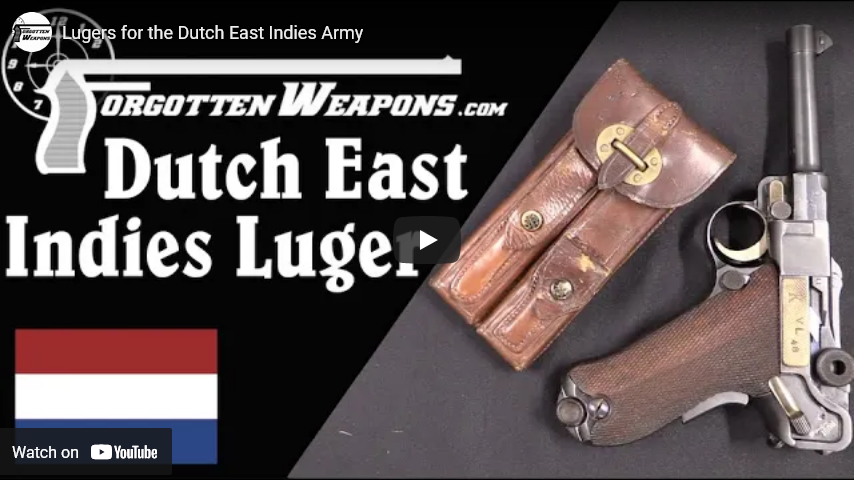
Lugers for the Dutch East Indies Army
Forgotten Weapons
Published 3 Nov 2021http://www.patreon.com/ForgottenWeapons
https://www.floatplane.com/channel/Fo…
Cool Forgotten Weapons merch! http://shop.forgottenweapons.com
Note: When I say the double magazine pouch is unique for this model, I was not thinking about those issued with LP-08 Artillery Lugers.
While the Dutch Army dithered over new pistol adoption, the Dutch East Indies Army (KNIL) took more decisive action and adopted the Luger as the M11 in 1911 after a few years of testing. They ordered the first batch of 4,181 from DWM in the years before World War One. After the Treaty of Versailles, German companies were barred from military production, and so the KNIL bought a batch of 6,000 Lugers from the Vickers company in the UK. These were still insufficient for the force, and in 1928 they ordered one final batch of guns.
This final batch was made by DWM. The Allied Control Commission ceased operation in 1927 and left Germany, and DWM almost immediately resumer Luger production. This final batch consisted of 3,828 more M11 pattern pistols. All three batches were in a single serial number range, starting at 1 and running to 14020. They were chambered for the 9x19mm Parabellum cartridge, with 4 inch (100mm) barrels. Unit marks were engraved originally on the back of the frame, but in 1919 this was replaced with the use of a small brass plaque on the trigger guard. A plaque on the left side of the frame was introduced for unit marks in 1939, as seen on this example.
We also have an original KNIL M11 holster and double magazine pouch to take a look at — accessories that are extremely rare today.
Contact:
Forgotten Weapons
6281 N. Oracle 36270
Tucson, AZ 85740
March 5, 2022
No Nazi Atomic Bomb – Operation Gunnerside – WW2 Special
World War Two
Published 3 Mar 2022By 1943 the German “Uranium-Club” was hoping to harvest the energy of the atoms. One of the things they still needed for their experiments was the moderator “heavy water”, which was produced for them in the hydro-plant “Vemork” in occupied Norway. British High Command authorized a top-secret mission to prevent it from ever reaching Germany. A group of highly trained commandos was to parachute in and destroy the heavy water facility by any means necessary.
(more…)
March 4, 2022
Germany is finally being forced to adapt to 21st century realities
In The Line, Matt Gurney outlines German history since the end of WW2 and why German governments have allowed the Bundeswehr to shrivel to almost Canadian Armed Forces status and why they have also been eager to scrap local power options in favour of imported Russian oil and gas:
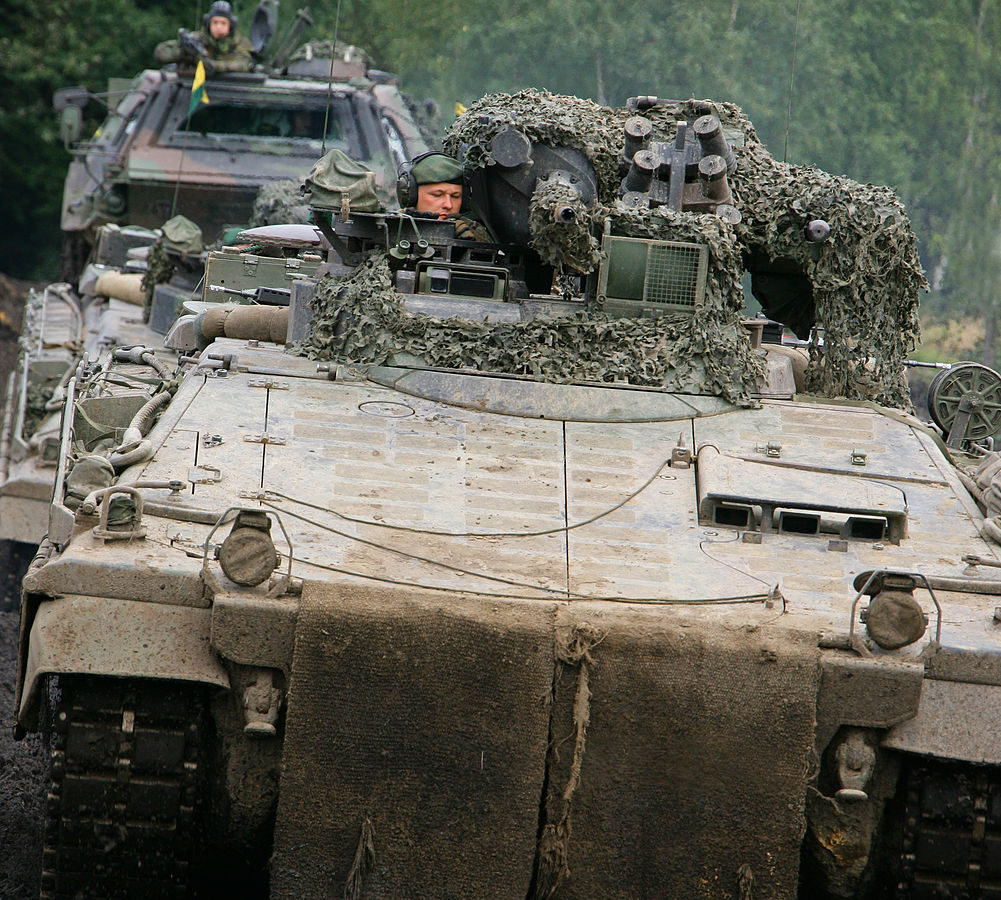
A Bundeswehr Marder 1A3 Infantry Fighting Vehicle during an exercise at the Munster Training Centre, 1 September, 2010.
Photo by Bundeswehr-Fotos via Wikimedia Commons.
After 1990, the newly combined German military largely evaporated. Manpower levels plummeted; huge quantities of equipment were mothballed or sold off. German military spending fell well below that of other large European NATO allies. Indeed, despite their military history and economic clout, Germany, on a per capita basis, is more a Canada to NATO than a France or Britain.
And not by accident. Germany’s partial demilitarization was driven by a series of considerations, all of which reflected deliberate choices. Germany is still haunted by its Nazi-era history, and even its peacekeeping contribution to Afghanistan was controversial, marking the country’s first major foreign mission since 1945. A smaller, little-used military is a balm to the nation’s wounded psyche. Further, a small German military, and a Germany broadly and overtly uninterested in military affairs, did much to ease concerns of wary allies with living memories of life under the Luftwaffe and Wehrmacht.
And, well, yeah: the Germans also cut their force levels like crazy because, as noted in my recent column here, it saved them a ton of money.
It’s important to understand, though, that it’s not just about the German military, though that’s perhaps the most stark symbol. The country has emerged as a leading force for European unity and liberal-democratic values. Not for nothing was recently retired chancellor Angela Merkel touted as a leader of the free world during the rocky Trump presidency in Washington. Under Merkel, the country tried to live the ideal of the modern Europe, including by letting in a million refugees fleeing fighting in the Middle East, a decision that has opened up political fissures in Germany that remain a problem today.
Much has also been made of the country’s decision to shut down its nuclear plants and rely instead on imports of Russian natural gas for energy. Dismissed by many as foolhardy — and it was foolhardy — it’s also not hard to read a whiff of almost pathetic desperation into the move. If we are just nice enough, if we buy enough Russian gas, if we perfectly model the new amiable European ideal, maybe, just maybe, could Germany cast off some of its historical taint?
If that was the plan, it hasn’t worked, and gosh, it hasn’t worked with a vengeance. Since the Cold War ended — paused? changed? — the Germans have remained minimally armed and resolutely affable and committed to European unity. The country did increase military spending after Putin’s 2014 annexation of Crimea, but it almost had to — the German military had fallen into a state of neglect and non-functionality that any Canadian would find instantly recognizable. Hundreds of billions of Euros were budgeted, and tens of thousands of new enlistments authorized, in the first expansion of German military power since reunification. Even while embarking on this effort, though, Germany continued to shut down its nuclear plants and increase its use of Russian energy imports.
That’s over. Deader than East Germany, as much as a relic as the bits of the Berlin Wall that tourists now collect (I have a fragment myself somewhere in a file in my office, though damned if I could find it when I went searching today while procrastinating on this column). On top of the many billions of Euros already pledged to military modernization, Chancellor Olaf Scholz has committed a supplemental fund of a further €100 billion for immediate shoring up of military capabilities, and has also committed to substantially raise Germany’s baseline defence spending to the two per cent NATO target — an effectively permanent annual boost of roughly a third over the already higher level achieved since 2015.
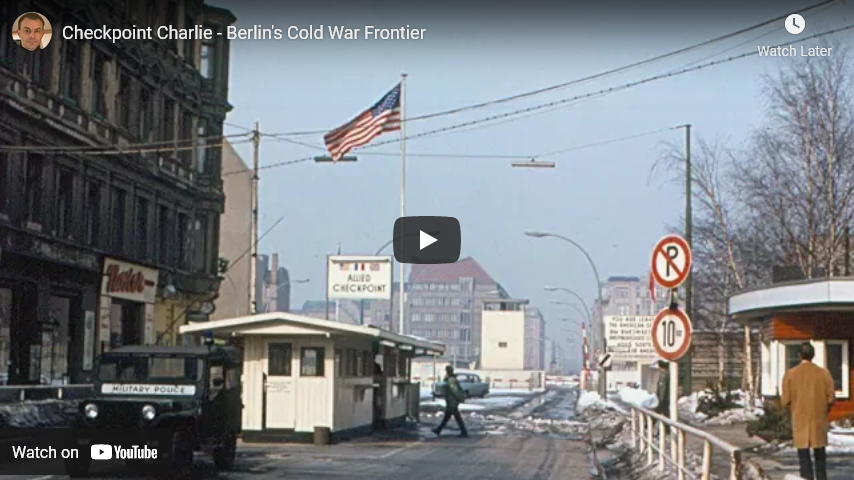
Checkpoint Charlie – Berlin’s Cold War Frontier
Mark Felton Productions
Published 4 Dec 2018The history of Checkpoint Charlie, the most famous of Berlin’s East-West crossing points and the focus of a serious standoff between the US and Soviet Union in 1961 that could have led to World War III.
Support Mark at Patreon for $1 a Month!
https://www.patreon.com/markfeltonpro…
March 3, 2022
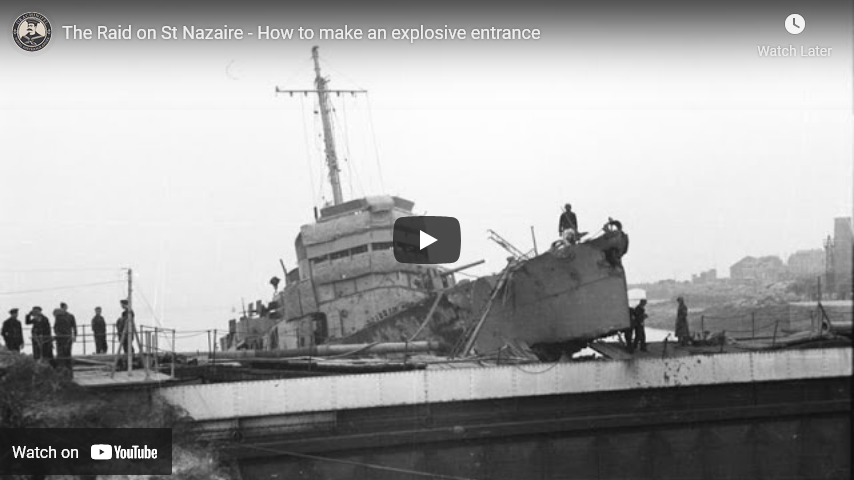
The Raid on St Nazaire – How to make an explosive entrance
Drachinifel
Published 23 Feb 2022Today we take a look at the famous raid to destroy the Normandie Drydock. With apologies for starting off with the right pronunciation of St Nazaire and slipping back into my old incorrect way later on!
Sources:
www.amazon.co.uk/Storming-St-Nazaire-James-G-Dorrian/dp/0850528070
www.amazon.co.uk/St-Nazaire-1942-Commando-Campaign/dp/1841762318
www.amazon.co.uk/Operation-Chariot-Nazaire-Forces-Operations/dp/1844151166
www.amazon.co.uk/Into-Jaws-Death-Legendary-Saint-Nazaire/dp/1782064478Free naval photos and more – www.drachinifel.co.uk
Want to support the channel? – https://www.patreon.com/Drachinifel
Want a shirt/mug/hoodie – https://shop.spreadshirt.com/drachini…
Want a poster? – https://www.etsy.com/uk/shop/Drachinifel
Want to talk about ships? https://discord.gg/TYu88mt
Want to get some books? www.amazon.co.uk/shop/drachinifelDrydock
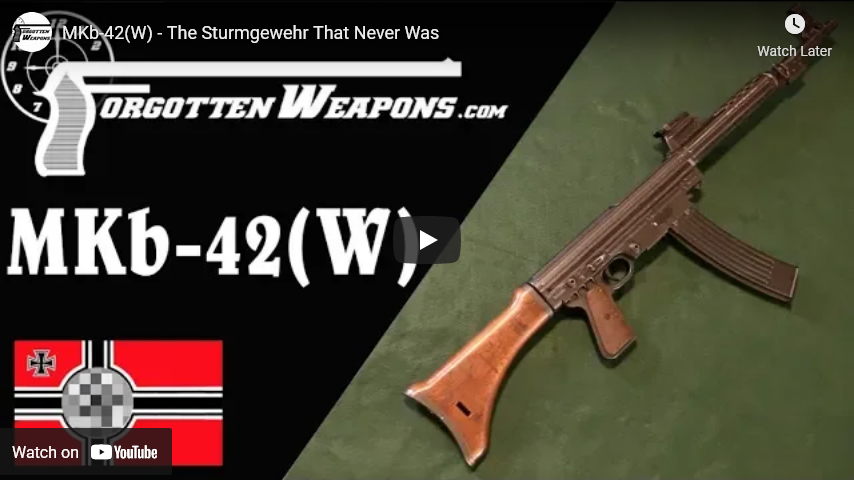
MKb-42(W) – The Sturmgewehr That Never Was
Forgotten Weapons
Published 6 Jul 2018http://www.patreon.com/ForgottenWeapons
Cool Forgotten Weapons merch! http://shop.bbtv.com/collections/forg…
When the German military first requested rifles in the new 8x33mm Kurz cartridge, there were two companies that provided designs. One was Haenel, who would eventually win the competition. The other was Walther, who submitted this rifle — the MKb-42(W). Where the Haenel gun fired from an open bolt and used a tilting-bolt locking system, the Walther rifle fired from a closed bolt and used a rotating bolt to lock. It also used an unusual annular gas piston. In competition, the Walther’s closed bolt operation made it more accurate in semiauto fire and less susceptible to ingress of dirt. However, it was substantially more complex and more expensive than the Haenel gun.
In total, just 200 of the MKb-42(W) were made before being cancelled in late 1942. Needless to say, very few survive today, and it was a great privilege to be able to disassemble and present this one to you. Thanks to the Association of Maltese Arms Collectors and Shooters for the invitation to do so!
If you enjoy Forgotten Weapons, check out its sister channel, InRangeTV! http://www.youtube.com/InRangeTVShow
Contact:
Forgotten Weapons
6281 N Oracle #36270
Tucson, AZ 85704
March 2, 2022
Duck Tape – WW2 Secret Weapon – WW2 Special
World War Two
Published 1 Mar 2022This war has seen a huge amount of scientific and technological innovation. New ways of taking lives, and new ways of saving lives abound. But what about the more ordinary, everyday, products of the war? Would you be surprised to hear that people in the 21st century will still be using WWII inventions in daily life.
(more…)
February 27, 2022
The Blitzkrieg is Back – WW2 – 183 – February 26 1943
World War Two
Published 26 Feb 2022Erich von Manstein’s Axis counterattack on the Eastern Front begins this week and right away smashes through the Red Army lines, threatening all the recent Soviet gains. The Allies — the Americans — also suffer a big defeat in Tunisia at the Kasserine Pass, though in the Pacific it is the Americans who occupy the Russell Islands.
(more…)
February 25, 2022
Total War NOW – WAH 053 – February 1943, Pt. 2
World War Two
Published 24 Feb 2022Germany declares total (unconditional war) putting its economy on a full war footing over three years into the war. Given the unconditional war they are already waging, and the resistance and opposition they now face, it’s unclear what it shall mean.
(more…)
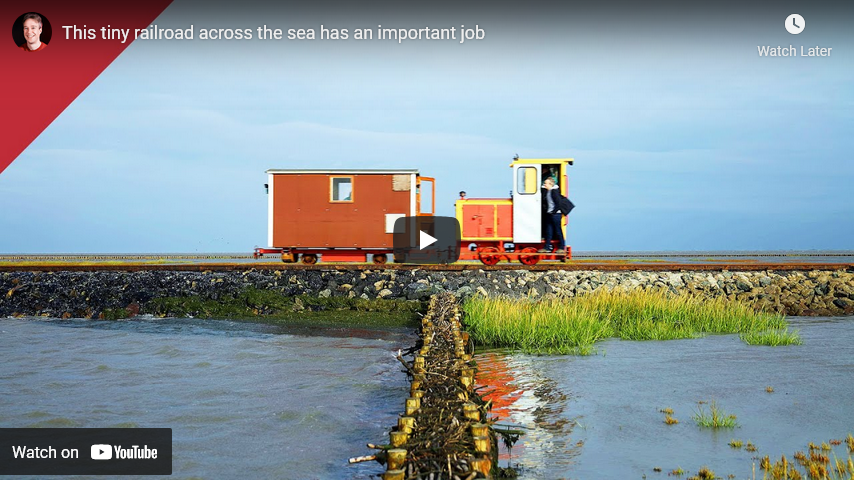
This tiny railway across the sea has an important job
Tom Scott
Published 15 Nov 2021The Lorenbahn, the Lüttmoorsiel-Nordstrandischmoor island railway, is famous for the tiny, private trains that take residents to and from the mainland. But that’s not why it was built: and it’s got a more useful purpose as well.
Thanks to everyone from Landesbetrieb für Küstenschutz, Nationalpark und Meeresschutz Schleswig-Holstein, and to the islanders, for all your time and patience!
Camera operator: Richard Bielau
Producer: Maximilian Thesseling of Klein Aber https://kleinaber.de/I’m at https://tomscott.com
on Twitter at https://twitter.com/tomscott
and on Instagram as tomscottgo
February 24, 2022
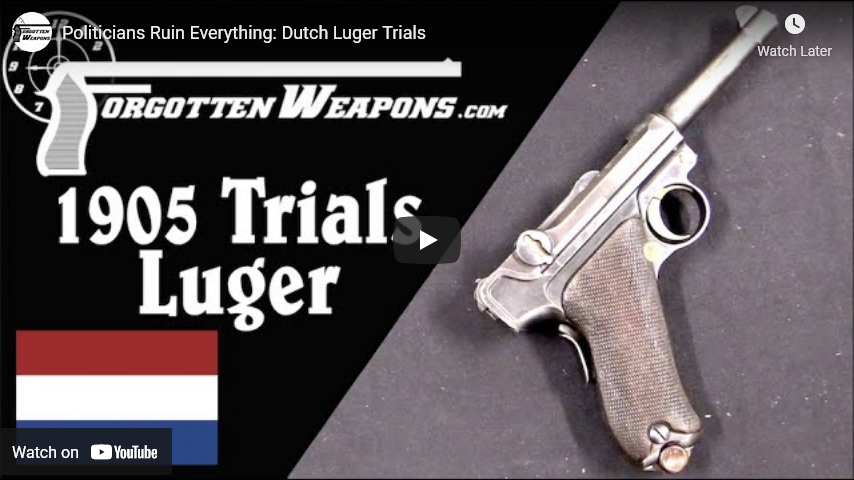
Politicians Ruin Everything: Dutch Luger Trials
Forgotten Weapons
Published 27 Oct 2021http://www.patreon.com/ForgottenWeapons
https://www.floatplane.com/channel/Fo…
Cool Forgotten Weapons merch! http://shop.forgottenweapons.com
The Dutch military started looking for semiauto pistols to replace its aging revolvers around 1899. They tested all the early models: the Roth, Borchardt, Mauser and Mannlicher — and then they obtained a Borchardt-Luger (aka, a Parabellum, or Luger). They first tested a long-barreled model with shoulder stock for artillery crews in 1901. The guns performed very well mechanically, but the officers in charge were dubious about the utility of the gun.
In 1903, another set of trials was run by the infantry, this time on short-barreled Lugers in both 9mm and 7.65mm. In addition, the Dutch requested a number of special changes to a subset of their guns – this “Dutch Model” was to have Dutch markings and a stronger coil mainspring designed by the Dutch ordnance department. That coil mainspring would be adopted by DWM and became the most significant improvement in the New Model Lugers.
Anyway, the 1903 trials were concluded with much success in 1905, and the Dutch War Minister happily adopted the Luger in 9mm. He wrote out an order to start getting the Army new modern pistols … only to be overridden by the Dutch Parliament. They decided that the new guns were basically too dangerous, and cancelled the adoption. This left the Army in a rather unexpected lurch, and they had to restart production of revolvers in 1906 to make up the shortages in handguns.
Contact:
Forgotten Weapons
6281 N. Oracle 36270
Tucson, AZ 85740