Then for the first time since I had left the Kotwali I had a moment to run over in my mind the actions I had taken during the last half-hour. The soldier always knows that everything he does on such an occasions will be scrutinized by two classes of critics — by the Government which employs him and by the enemies of that Government. As far as the Government is concerned, he is a little Admiral Jellicoe and this his tiny Battle of Jutland. He has to make a vital decision on incomplete information in a matter of seconds, and afterwards the experts can sit down at leisure, with all the facts before them, and argue about what he might, could, or should have done. Lucky the soldier if, as in Jellicoe’s case, the tactical experts decide after twenty years’ profound consideration that what he did in three minutes was right. As for the enemies of the Government, it does not much matter what he has done. They will twist, misinterpret, falsify, or invent any facts as evidence that he is an inhuman monster wallowing in innocent blood.
Field Marshal William Slim, “Aid to the Civil”, Unoficial History, 1959.
September 3, 2013
QotD: Some things never change, military division
September 2, 2013
This month in moral panic watch – “rape porn”
British PM David Cameron has decided that it’s the duty of his government to crack down on internet pornography. In particular, the British government will be attempting to stamp out violent pornography, aka “rape porn”. This may not be his best idea ever:
Lobby organisations like “End Violence Against Women” and sensationalist news rags like the Daily Mail repeatedly claim that watching violent pornography increases sexual abuse and rape by men.
However, the scientific evidence has stubbornly refused to play along with this view:
U.S. Commission on Obscenity and Pornography (1970) found no evidence of a causal link between pornography and rape
“Pornography and rape: theory and practice? Evidence from crime data in four countries where pornography is easily available” (1991) B Kutchinsky
Examined what happened to the rape statistics in four countries (USA, Denmark, West Germany and Sweden) during periods where the availability of violent pornography went from extreme scarcity to relative abundance.
Quoting the report: “The results showed that in none of the countries did rape increase more than nonsexual violent crimes. This finding in itself would seem sufficient to discard the hypothesis that pornography causes rape“
There’s also the problem that pornography is actually quite popular — with both male and female users — over 40% of all internet users view pornography voluntarily. In fact, large numbers of women admit to enjoying rape fantasies:
Whether the puritans or the feminists like it or not, it is a fact that many women enjoy rape fantasies as explained by this female journalist.
Erotic literature such as Fifty Shades of Grey featuring bondage, spanking, hair pulling, fisting and pinwheeling generated sales of over £10M in six months, to a predominantly female audience.
On a more scientific level, a 1988 study by Pelletier and Herold found that over half of their female respondents had fantasies of forced sex.
Nobody (quite rightly) suggests that women who expose themselves to this sort of “violent porn” literature, or who engage in sexual fantasies of rape are more likely to go out and put themselves into situations where they will be raped.
People clearly understand that there is a world of difference between enjoying rape as a sexual fantasy and the violent, painful reality of actual rape.
The same reasoning must logically apply to men who enjoy rape fantasy and rape porn. There is a world of difference between enjoying rape as a sexual fantasy and the violent reality of actual raping another human being.
To assert that women can enjoy rape fantasy, porn and violent BDSM literature without harm because they understand the difference between fantasy and reality, but men do not is nothing more than misandry.
August 31, 2013
New rule of thumb for military adventures
James Joyner suggests a new rule of thumb needs to be used:
Could anyone have imagined a decade ago a scenario when the United States would go to war with France by our side and England on the sidelines?
I anticipate English muffins being renamed Freedom muffins any day now. And jokes about kippers eating surrender bulldogs or some such.
More seriously, perhaps recent experience has provided us a rule of thumb: if Washington can not persuade both London and Paris of the advisability of military action, perhaps said action is inadvisable?
August 30, 2013
A profitable way to deal with annoying calls
At the BBC News website, Joe Kent profiles today’s hero in the ongoing battle against annoying telephone solicitations:
A man targeted by marketing companies is making money from cold calls with his own higher-rate phone number.
In November 2011 Lee Beaumont paid £10 plus VAT to set up his personal 0871 line — so to call him now costs 10p, from which he receives 7p.
The Leeds businessman told BBC Radio 4’s You and Yours programme that the line had so far made £300.
Phone Pay Plus, which regulates premium numbers, said it strongly discouraged people from adopting the idea.
Mr Beaumont came up with the plan when he grew sick of calls offering to help him reclaim payment protection insurance (PPI), or install solar panels.
He said: “I don’t use my normal Leeds number for anyone but my friends and family.”
Once he had set up the 0871 line, every time a bank, gas or electricity supplier asked him for his details online, he submitted it as his contact number.
He added he was “very honest” and the companies did ask why he had a such a number.
He told the programme he replied: “Because I’m getting annoyed with PPI phone calls when I’m trying to watch Coronation Street so I’d rather make 10p a minute.”
He said almost all of the companies he dealt with were happy to use it and if they refused he asked them to email.
August 29, 2013
British parliament defeats government motion on Syria
Twitter just lit up with the news that Prime Minister David Cameron’s motion to allow military action against Syria has been soundly defeated in parliament. The reported voting line was 272 in favour and 285 against. This was not a confidence motion — the government will not be forced to resign over this vote, but it’s a strong slap in the face to Clegg and Cameron.
House of Commons votes against the Government motion on #Syria by 285 votes to 272
— House of Commons (@HouseofCommons) August 29, 2013
"I believe in respecting the will of the House of Commons. The British people do not want to see military action. I get that," Cameron.
— Tom Newton Dunn (@tnewtondunn) August 29, 2013
Dignified, decent, democratic response by the PM. A truly stunning shift in power from executive to legislature.
— Daniel Hannan (@DanHannanMEP) August 29, 2013
August 26, 2013
Suddenly of greater interest to the media – where are the carriers now?
Zero Hedge pulled a quick summary of US, French, and British naval units in light of the rumours of some kind of attack on Syria:
- A U.S. military source said on Friday the U.S. Navy was increasing its number of cruise missile-carrying destroyers in the Mediterranean to four from three by delaying the return to the United States of the Arleigh Burke class destroyer USS Mahan.
- The aircraft carrier USS Harry S Truman, by far the most powerful warship in the region, left the Mediterranean last weekend, passing through the Suez Canal into the Red Sea.
- Defence experts say the carrier could still strike Syria from south of Suez. As well as the strike aircraft carried by the Truman, several of her escort ships are also capable of firing Tomahawk land attack cruise missiles.
- Since earlier this year, the United States has also had F-16 jets in Jordan, where they remained after a major military exercise this year at the request of the Jordanian government. It also has a major air base at Incirlik in Turkey that could easily house multiple aircraft as part of a wider military campaign.
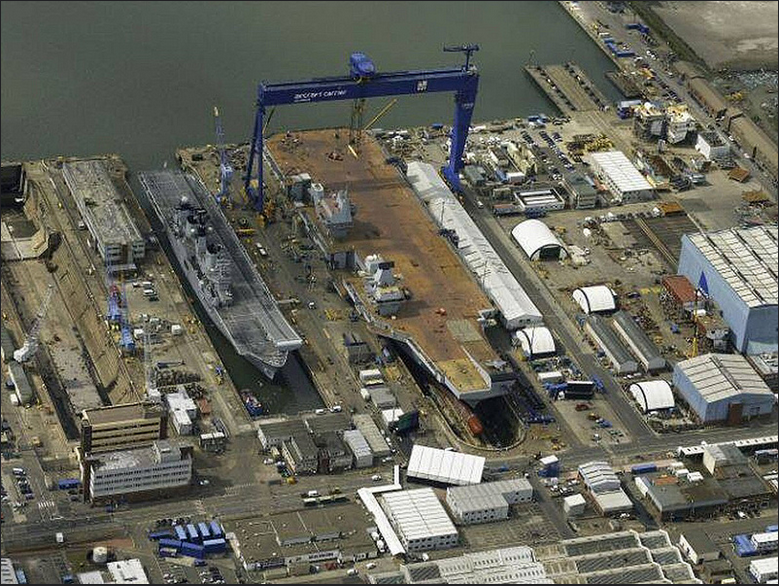
The French aircraft carrier Charles de Gaulle is still in or near Toulon, while the Royal Navy is said to have at least one Trafalgar or Astute class submarines in the Mediterranian. The RN no longer has in-service aircraft carriers, so any British air support would have to be from the RAF, possibly based in Cyprus (but subject to local government approval).
Update: This report says that the USS Ramage is also being retained in the Mediterranean along with the USS Mahan.
Update, 27 August: It was just mentioned (no link) that the Charles de Gaulle has been ordered to leave port, bound for the Eastern Mediterranean.
August 22, 2013
Sixties TV – it was different if you were under 12
James Lileks looks at a few Gerry Anderson productions:

Gerry Anderson! You’re going to get everything you need for crackerjack adolescent-satisfying sci-fi: spaceships, shuttlecrafts, computers, control rooms, crisp commanding officers, futuristic gadgets, and a big score. And none of it will work half as well as you hoped. The spaceships will look great, though. The computers will blink and there will be switches, but nothing makes Star Trek Sounds. The control rooms are clean but everyone is talking in a British accent for some reason, like they have their own NASA that’s just as big. The gadgets are okay. The score has a trademark echoey quality you found in soundtracks, particularly British ones, from the late 60s to the early 70s. It should be good! Why isn’t it great?
I’ve pondered that mystery for a long time. Sometimes you have a revelation — hey, the founding concept of “Space: 1999 was really stupid” — or you carp about the details, wondering why the UFO interceptors went hunting with one (1) missile that required a direct hit to be effective, instead of just blowing the hell out of the area. Then you realize it’s not great because it’s all the work of someone who made horribly grinning square-headed puppets, that’s why, and never stopping thinking he was making entertainment for 8 years olds.
[…]
The title theme is here, complete with oddly romantic piano interlude. It’s every Barry Grey piece that ever left me cold, right there. In general I just don’t feel Barry Grey’s music — except for the opening of the “Space 1999” theme before it goes full whacka-chicka, and of course that other theme. Here’s a guy who wrote miles and miles of scores for things like “Supercar,” for heaven’s sake, and he turns around and knocks off the tightest, sharpest theme of the 70s.
Still, Laurie Johnson was better.
August 21, 2013
The Guardian gets a taste of the medicine it prescribed for the tabloids
In sp!ked, Brendan O’Neill talks about the amazing double standards of Britain’s “chattering classes”:
If there was a Nobel Prize for Double Standards, Britain’s chattering classes would win it every year. This year, following their expressions of spittle-flecked outrage over the detention of Glenn Greenwald’s partner David Miranda by anti-terrorism police at Heathrow airport, they’d have to be given a special Lifetime Achievement Award for Double Standards.
For the newspaper editors, politicians and concerned tweeters now getting het up about the state’s interference in journalistic activity, about what they call the state’s ‘war on journalism’, are the very same people – the very same – who over the past two years cheered the state harassment of tabloid journalists; watched approvingly as tabloid journalists were arrested; turned a blind eye when tabloid journalists’ effects were rifled through by the police; said nothing about the placing of tabloid journalists on limbo-like, profession-destroying bail for months on end; said ‘Well, what do you expect?’ when material garnered by tabloid journalists through illegal methods was confiscated; applauded when tabloid journalists were imprisoned for the apparently terrible crime of listening in on the conversations of our hereditary rulers.
For these cheerleaders of the state’s two-year war on redtop journalism now to gnash their teeth over the state’s poking of its nose into the affairs of the Guardian is extraordinary. It suggests that what they lack in moral consistency they more than make up for with brass neck.
Everything that is now being done to the Guardian has already been done to the tabloid press, a hundred times over, and often at the behest of the Guardian. For all the initial depictions of Mr Miranda as ‘just Glenn Greenwald’s partner’, in fact he was ferrying encrypted information from the NSA leaker Edward Snowden on flights paid for by the Guardian. That is, he was detained and questioned over journalistic material acquired through illegal means. That’s already happened to the tabloids. Over the past two years of post-phone hacking, post-News of the World harassment of tabloid hacks by the state, 104 people have been arrested, questioned, usually put on unjustly elongated bail, and sometimes imprisoned. These include many journalists but also office secretaries and other non-journalist types, like Mr Miranda, who stand accused of handling illegally acquired material. The 104’s crimes include ‘disclosure of confidential information’ – not that dissimilar to what Greenwald and Miranda have done in terms of getting hold of and publishing Snowden’s illegally leaked confidential material. Yet while the redtop writers rot in legal limbo, Mr Miranda becomes a chattering-class cause célèbre.
[…]
But, believe it or not, the double standards run even deeper than that. For today’s outraged defenders of Greenwald, Miranda and the Guardian from a state war on journalism were the architects of the state’s far larger, far more destructive war on tabloid journalism. From the Guardian itself to Labour MP Tom Watson to various influential members of the Twitterati, many of those now shocked to find officials harassing journalists for doing allegedly dodgy things were at the forefront of demanding that officialdom harass redtop hacks for doing dodgy things. If you unleash and cheer a war on journalism by the state, you really cannot be surprised when the warmongers eventually put you and your journalism in the crosshairs, too.
QotD: Empires
It’s odd the world still cares about European royals, whose primary contribution to history has been wars, repression and poverty for ordinary people so that a handful of twits could live in extreme excess, admiring themselves in the mirror. Not just the British ruling houses — the Hapsburgs, Romanovs, Hohenzollerns and other royal lines mainly brought misery to their subjects, and this was so even if Thomas Hobbes was right about corrupt aristocracy being preferable to bedlam. ALIQUATENUS MELIOR CHAOS should have been on every medieval royal family crest. That’s Latin for “We Are Somewhat Better Than Chaos,” at least according to the Google universal translator.
Perhaps anachronistic royalty draws crowds and media gushing because society adores celebrity, which the House of Windsor continues to possess. But through no effort of its own: The glamour, money and position of the Windsor crowd is inherited, not earned. Society’s admiration should go to those who attain their positions via merit.
Yet there is continuing enthusiasm for anachronistic monarchs of several nations: During the baby countdown outside Clarence House, crowds showed up in Brussels to cheer for new King Philippe, who may be the most irrelevant human being ever to don a purple sash. Fantasy may explain this. Mired in quiet desperation, people like to imagine being born into wealth and glory, treated as special and chosen. Fantasies about sports, sex or money help men and women get through their day, and getting through the day is important.
But let us not forget that kings, queens, princes, princesses, dukes, duchesses and the rest have had an almost entirely negative impact on the human family. Billions of people across the centuries would have lived better lives if the curse of royalty had not arisen. As for empire — whether British or in any other form, it is a hateful, destructive concept used by the few to bleed dry the many. Britons shouldn’t feel nostalgia for their lost empire, they should feel shame an empire once was held. Americans ought to join Indians, Pakistanis, Kenyans, Egyptians, Chinese, Afghans, Boers, Burmese and others in contempt for the memory of the British Empire.
Gregg Easterbrook, “Tuesday Morning Quarterback: NFL could set a better safety example”, ESPN, 2013-08-20
August 20, 2013
“You’ve had your debate. There’s no need to write any more.”
Things are getting surreal at the Guardian:
A little over two months ago I was contacted by a very senior government official claiming to represent the views of the prime minister. There followed two meetings in which he demanded the return or destruction of all the material we were working on. The tone was steely, if cordial, but there was an implicit threat that others within government and Whitehall favoured a far more draconian approach.
The mood toughened just over a month ago, when I received a phone call from the centre of government telling me: “You’ve had your fun. Now we want the stuff back.” There followed further meetings with shadowy Whitehall figures. The demand was the same: hand the Snowden material back or destroy it. I explained that we could not research and report on this subject if we complied with this request. The man from Whitehall looked mystified. “You’ve had your debate. There’s no need to write any more.”
During one of these meetings I asked directly whether the government would move to close down the Guardian‘s reporting through a legal route — by going to court to force the surrender of the material on which we were working. The official confirmed that, in the absence of handover or destruction, this was indeed the government’s intention. Prior restraint, near impossible in the US, was now explicitly and imminently on the table in the UK. But my experience over WikiLeaks — the thumb drive and the first amendment — had already prepared me for this moment. I explained to the man from Whitehall about the nature of international collaborations and the way in which, these days, media organisations could take advantage of the most permissive legal environments. Bluntly, we did not have to do our reporting from London. Already most of the NSA stories were being reported and edited out of New York. And had it occurred to him that Greenwald lived in Brazil?
The man was unmoved. And so one of the more bizarre moments in the Guardian‘s long history occurred — with two GCHQ security experts overseeing the destruction of hard drives in the Guardian‘s basement just to make sure there was nothing in the mangled bits of metal which could possibly be of any interest to passing Chinese agents. “We can call off the black helicopters,” joked one as we swept up the remains of a MacBook Pro.
Update: Charlie Beckett at the LSE’s Polis blog:
The narrative of increasing totalitarian persecution has a few flaws. Firstly, I think it was entirely reasonable for security forces to question someone linked to security breaches. I just think that doing it under terror laws was wrong, especially as Miranda is part of a journalism team.
I am still a little unsure of the Greenwald/Guardian narrative. I am puzzled by why the team chose to fly Miranda through London at all. I am also unclear as to why the Guardian let security officials smash up their hard-drives without making them go down a legal path.* [Someone with more profound doubts about the Guardian and Greenwald is former Tory MP Louise Mensch — good piece by her here]
But those are details. Overall, it’s clear that US and UK officials, long-tortured by WikiLeaks and Julian Assange, are now losing patience with whistle-blowers and their accomplices in the news media. Whatever the absolute truth of the NSA/PRISM revelations it is clear that the security service are pushing the boundaries on what they can do with new technologies to increase their information and surveillance. They are also seeking to reduce scrutiny by journalists, as they told Rusbridger:
“You’ve had your debate. There’s no need to write any more.”
That in itself may be worrying but it’s hardly surprising. That is what they are there for. We would all be very cross if there was an act of terror missed because of inadequate data collection by spooks or if a press leak endangered our safety. But it’s also journalism’s job to hold these people to account and let the public know the scope of what they are up to. That’s what worries me about the Miranda incident.
QotD: Queen Victoria’s Tipple
1/2 tumbler red wine
ScotchI have it on the authority of Colm Brogan that the Great Queen was “violently opposed to teetotalism, consenting to have one cleric promoted to a deanery only if he promised to stop advocating the pernicious heresy,” and that the above was her dinner-table drink, “a concoction that startled Gladstone” — as I can well believe.
The original recipe calls for claret, but anything better than the merely tolerable will be wasted. The quantity of Scotch is up to you, but I recommend stopping a good deal short of the top of the tumbler. Worth trying once.
Scholars will visualize, pouring in the whisky, the hand of John Brown, the Queen’s Highland servant, confidant and possibly more besides; and I for one, if I listen carefully can hear him muttering, “Och, Your Majesty, dinna mak’ yoursel’ unweel wi’ a’ yon parleyvoo moothwash — ha’e a wee dram o’ guid malt forbye.” Or words to that effect.
Kingsley Amis, Everyday Drinking: The Distilled Kingsley Amis, 2008.
August 19, 2013
Glenn Greenwald’s partner detained by UK authorities
The British government sends a message:
The partner of the Guardian journalist who has written a series of stories revealing mass surveillance programmes by the US National Security Agency was held for almost nine hours on Sunday by UK authorities as he passed through London’s Heathrow airport on his way home to Rio de Janeiro.
David Miranda, who lives with Glenn Greenwald, was returning from a trip to Berlin when he was stopped by officers at 8.05am and informed that he was to be questioned under schedule 7 of the Terrorism Act 2000. The controversial law, which applies only at airports, ports and border areas, allows officers to stop, search, question and detain individuals.
The 28-year-old was held for nine hours, the maximum the law allows before officers must release or formally arrest the individual. According to official figures, most examinations under schedule 7 — over 97% — last less than an hour, and only one in 2,000 people detained are kept for more than six hours.
Miranda was released, but officials confiscated electronics equipment including his mobile phone, laptop, camera, memory sticks, DVDs and games consoles.
Since 5 June, Greenwald has written a series of stories revealing the NSA’s electronic surveillance programmes, detailed in thousands of files passed to him by whistleblower Edward Snowden. The Guardian has also published a number of stories about blanket electronic surveillance by Britain’s GCHQ, also based on documents from Snowden.
Update: The opposition Labour party calls for an investigation into this use of anti-terrorism legislation (but as Charles Stross point out … they passed the laws themselves).
Labour has called for an urgent investigation into the use of anti-terror powers to detain David Miranda, the partner of a Guardian journalist who interviewed US National Security Agency whistleblower Edward Snowden.
Yvette Cooper, the shadow home secretary, said ministers must find out whether anti-terror laws had been “misused”, after Miranda was held for nine hours by authorities at Heathrow airport under the Terrorism Act.
His detention has caused “considerable consternation” and the Home Office must explain how this can be justified as appropriate and proportionate, she said.
[…]
“The independent reviewer of terrorism legislation, David Anderson, has already warned of the importance of using schedule 7 of the Terrorism Act appropriately and proportionately. The purpose of schedule 7 is to determine whether or not someone is involved in or associated with terror activity. The Home Office and police need to explain rapidly how they can justify using that purpose under the terrorism legislation to detain David Miranda for nine hours. This has caused considerable consternation and swift answers are needed.
“The police and security agencies rightly work hard to protect national security and prevent terrorism. But public confidence in security powers depends on them being used proportionately within the law, and also on having independent checks and balances in place to prevent misuse.”
August 18, 2013
QotD: The unluckiest regiment in the British army
The history of the 24th Regiment (later the South Wales Borderers) is certainly one of the most interesting stories of any regiment in the British army. Throughout its long history, going back to 1689, it had been an exceptionally courageous regiment and also exceptionally unlucky. In 1694 it had taken part in the ill-fated descent on Brest. In the War of Jenkins’s Ear and the attack on Cartagena it lost more than half its number from disease in the West Indies. In 1756 it was forced to surrender to the French at Minorca. The entire regiment was captured in the American War. Forty-six per cent of the second battalion were casualties at the Battle of Talavera in the Peninsula War — more than any other British regiment engaged. In 1810 about 400 men, nearly half the regiment, were captured by the French while on troopships from South Africa bound for India.
Perhaps it is as well to outline here the story of this gallant but ill-starred regiment after the Battle of Chilianwala. The catastrophe which overtook it in the Zulu War will be described later. In World War I it was in the disastrous Gallipoli campaign, and on 3 December 1917 the second battalion marched out of the lines in France with only two officers, the doctor and seventy-three men. In World War II a battalion was captured by the Germans near Tobruk and, naturally, it was part of the unfortunate expedition to Norway in 1940 — even the ship carrying them struck a rock and sank.
Byron Farwell, Queen Victoria’s Little Wars, 1972
August 15, 2013
MI5 – more Maxwell Smart than 007
Britain’s counter-intelligence service, MI5, comes in for some unkind words on the BBC website from Adam Curtis:
The recent revelations by the whistleblower Edward Snowden were fascinating. But they — and all the reactions to them — had one enormous assumption at their heart.
That the spies know what they are doing.
It is a belief that has been central to much of the journalism about spying and spies over the past fifty years. That the anonymous figures in the intelligence world have a dark omniscience. That they know what’s going on in ways that we don’t.
It doesn’t matter whether you hate the spies and believe they are corroding democracy, or if you think they are the noble guardians of the state. In both cases the assumption is that the secret agents know more than we do.
But the strange fact is that often when you look into the history of spies what you discover is something very different.
It is not the story of men and women who have a better and deeper understanding of the world than we do. In fact in many cases it is the story of weirdos who have created a completely mad version of the world that they then impose on the rest of us.
I want to tell some stories about MI5 — and the very strange people who worked there. They are often funny, sometimes rather sad — but always very odd.
The stories also show how elites in Britain have used the aura of secret knowledge as a way of maintaining their power. But as their power waned the “secrets” became weirder and weirder.
They were helped in this by another group who also felt their power was waning — journalists. And together the journalists and spies concocted a strange, dark world of treachery and deceit which bore very little relationship to what was really going on. And still doesn’t.
And no retelling of MI5’s hits and misses is complete without the time they accused their own chief of being a Soviet spy:
The small group in MI5 now became convinced that their organisation was not just penetrated by the Russians, it was actually run by a Soviet agent. They knew they had to get the truth out somehow even if it meant breaking the law. So they found a friendly journalist called Chapman Pincher and told him the hidden truth.
Here is Chapman Pincher being interviewed on the Wogan programme about what then happened. Up to this point Pincher had been the Defence correspondent on the Daily Express. He was successful for getting “scoops” from “inside sources” — although the historian EP Thompson said that really Chapman Pincher was:
“A kind of official urinal in which ministers and intelligence and defence chiefs could stand patiently leaking.”
What the dissident MI5 agents now told Pincher was like super high-grade piss. Or, as he puts it in the Wogan interview, “it was like walking into an Aladdin’s Cave”. But what Pincher wrote was going to open the floodgates to a new kind of conspiracy journalism that still holds sway over large parts of the media imagination.
Have a look at him and decide yourself — high grade toilet or investigative journalist? Or maybe often they are the same thing?
August 11, 2013
Debunking the “Cameron’s gunboat diplomacy” meme
Sir Humphrey points out that the British media’s collective gasp about Royal Navy ships being sent to Gibraltar merely highlights what a slow news month it is:
It’s an amusing irony that the recent row in Gibraltar has suddenly given the Royal Navy more publicity about its forthcoming COUGAR deployment in one evening, than it may have got in several months of deployment. The news that the Response Force Task Group (RFTG) is deploying to the Med has been seen as a clear example of gunboat diplomacy by Fleet Street’s finest, many of whom seem terribly keen on starting a war in order to fill column inches during a slow news month…
Its perhaps worth noting that this deployment is extremely long standing — the sort of planning which goes into deploying a major Task Force will usually commence at around 12 months prior to the event, when the rough outline of a plan is put together on the objectives of the deployment, likely ports, aims and intended outcomes and so on. While maritime power is about flexibility, it’s often forgotten that most RN deployments these days are the end product of months of well co-ordinated planning and staffing to ensure that the UK gets the best possible value from its naval assets.
[…]
What we can perhaps draw from this is that firstly the RN has enjoyed an unexpected boon of coverage, tapping into the nation’s subliminal psyche which holds that sending a grey hull is a key means of solving a crisis, no matter what or where the crisis is. There is perhaps work for some analysts to understand why, almost alone among all major powers, the cries of ‘send a gunboat’ seem to resonate most strongly in the UK (albeit to a lesser extent the same applies with the ‘send a carrier’ debate in the US). While deployments of warships can be seen as a useful indicator of interest in situations, it appears to be held most strongly in the UK — there is, at times, a fervent belief that deploying vessels is akin to the legend of waving the ancient banner three times in order for Arthur and his knights to appear — it makes little practical sense, but is somehow strangely comforting to the people.