
Difficulty: Easy. You can beneficially read Meditations even if you know next to nothing. You’ll get more out of it the more you know, of course, but it’s the closest thing ancient philosophy had to a how-to manual.
Who: Marcus Aurelius, Roman Emperor in the mid-late 2nd century AD. The last of the “Five Good Emperors”, Marcus spent much of his time dealing with barbarian incursions and plague. There are some good biographies of the man, but Wiki covers the high points.
What: Because of the above, the Meditations were something like Marcus’s private self-help manual. He’s reminding himself to remain literally Stoic in the face of serious, seemingly unsolvable problems.
When: Late 2nd century AD. Greco-Roman philosophy was well-developed at this point; Stoicism was part of the classical tradition.
Where: In general, the European part of the Roman Empire. Specifically, on campaign against the barbarians – Marcus wrote a lot of the Meditations at the front.
Why: Because this man was the richest, most powerful individual in his world … and hated it. As a Stoic, he believed that virtue was its own — and, indeed, the only — reward, but as Roman Emperor he was forced to do un-virtuous things all day every day. It’s good instruction for how to live with yourself — how to be a man in a world that so often forces you to act like a snake.
Essential Background: Not much beyond the above.
Nice to have: The basics of Stoic doctrine. Specifically, their belief that “living virtuously” and “living according to nature” were basically synonymous, and that they were the only way to true happiness. A little Stoic epistemology, too — as their way of life depends on seeing the true nature of things, their standards for knowledge (what we’d call “justified true belief”) are extremely high. A statement like “pain is indifferent” is clear, and useful, on its own, but knowing the Stoic view of knowledge helps one appreciate just how prevalent the “indifferents” are, and how tough being truly indifferent is. Also nice to know: The wholesale adoption of Marcus by medieval Christians. There’s a very strong Stoic streak in Christianity’s first 1500 years; Marcus is always up there with the very best of the “virtuous pagans”.
None of these are necessary, though — you could lightly edit the Meditations (taking out the “thank you’s” at the start of Book One, explaining a few allusions) — and publish it today as a self-help manual. Also not necessary: Any real background in ancient philosophy. Back then, “philosophy” meant “a way of living”, not “a system for investigating the world”. Since Marcus is convinced of Stoicism’s truth, he doesn’t spend any time engaging the doctrines of other schools.
Severian, “Reading the Classics: An Illustration”, Rotten Chestnuts, 2020-02-14.
November 17, 2022
QotD: The Dummies’ Guide to Meditations by Marcus Aurelius
November 16, 2022
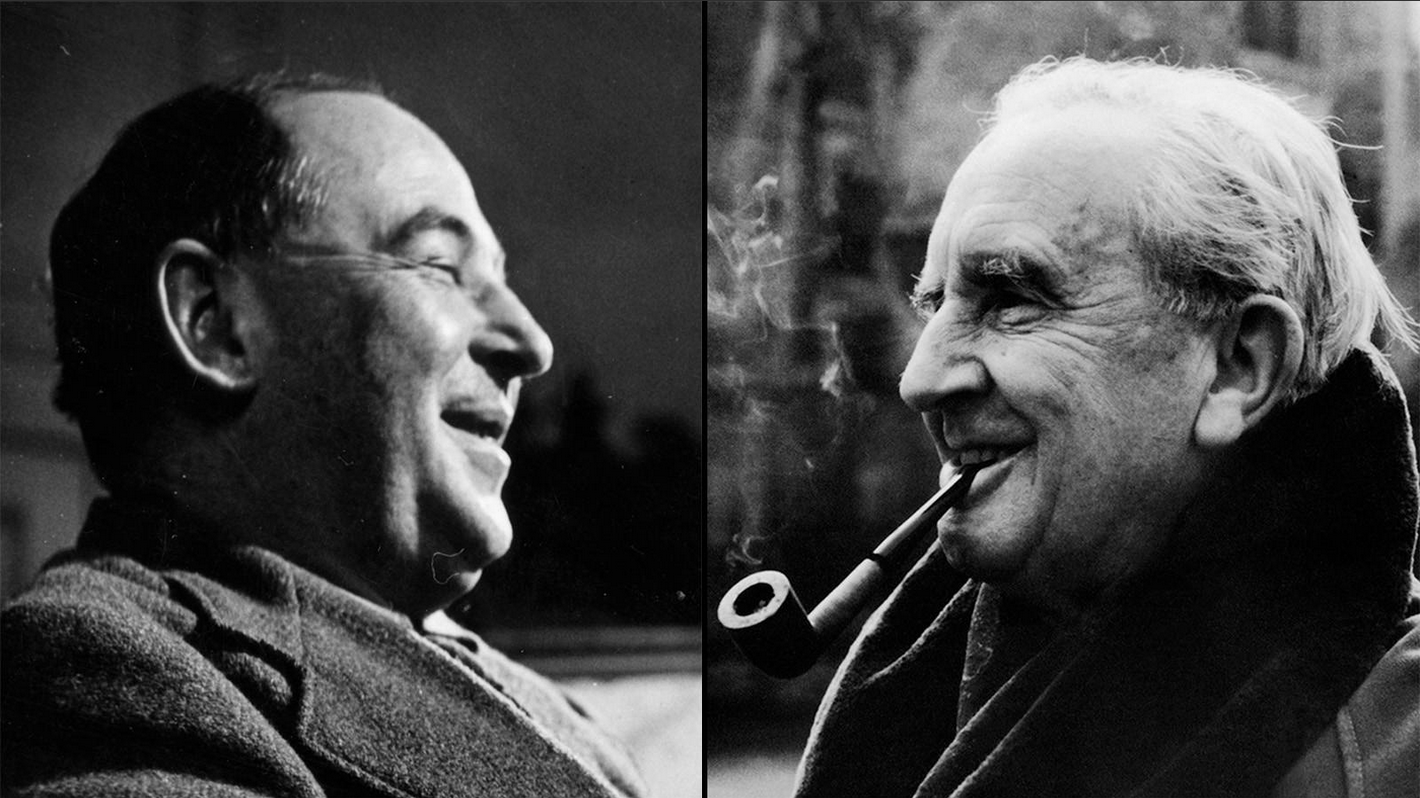
C.S. Lewis and J.R.R. Tolkien … arch-dystopians?
In The Upheaval, N.S. Lyons considers the literary warnings of well-known dystopian writers like Aldous Huxley and George Orwell, but makes the strong case that C.S. Lewis and J.R.R. Tolkien were even more prescient in the warnings their works contain:
Which dystopian writer saw it all coming? Of all the famous authors of the 20th century who crafted worlds meant as warnings, who has proved most prophetic about the afflictions of the 21st? George Orwell? Aldous Huxley? Kurt Vonnegut? Ray Bradbury? Each of these, among others, have proved far too disturbingly prescient about many aspects of our present, as far as I’m concerned. But it could be that none of them were quite as far-sighted as the fairytale spinners.
C.S. Lewis and J.R.R. Tolkien, fast friends and fellow members of the Inklings – the famous club of pioneering fantasy writers at Oxford in the 1930s and 40s – are not typically thought of as “dystopian” authors. They certainly never claimed the title. After all, they wrote tales of fantastical adventure, heroism, and mythology that have delighted children and adults ever since, not prophecies of boots stamping on human faces forever. And yet, their stories and non-fiction essays contain warnings that might have struck more surely to the heart of our emerging 21st century dystopia than any other.
C.S. Lewis and J.R.R. Tolkien
The disenchantment and demoralization of a world produced by the foolishly blinkered “debunkers” of the intelligentsia; the catastrophic corruption of genuine education; the inevitable collapse of dominating ideologies of pure materialist rationalism and progress into pure subjectivity and nihilism; the inherent connection between the loss of any objective value and the emergence of a perverse techno-state obsessively seeking first total control over humanity and then in the end the final abolition of humanity itself … Tolkien and Lewis foresaw all of the darkest winds that now gather in growing intensity today.
But ultimately the shared strength of both authors may have also been something even more straightforward: a willingness to speak plainly and openly about the existence and nature of evil. Mankind, they saw, could not resist opening the door to the dark, even with the best of intentions. And so they offered up a way to resist it.
Subjectivism’s Insidious Seeds
The practical result of education in the spirit of The Green Book must be the destruction of the society which accepts it.
When Lewis delivered this line in a series of February 1943 lectures that would later be published as his short book The Abolition of Man, it must have sounded rather ridiculous. Britain was literally in a war for its survival, its cities being bombed and its soldiers killed in a great struggle with Hitler’s Germany, and Lewis was trying to sound the air-raid siren over an education textbook.
But Lewis was urgent about the danger coming down the road, a menace he saw as just as threatening as Nazism, and in fact deeply intertwined with it, give that:
The process which, if not checked, will abolish Man goes on apace among Communists and Democrats no less than among Fascists. The methods may (at first) differ in brutality. But many a mild-eyed scientists in pince-nez, many a popular dramatist, many an amateur philosopher in our midst, means in the long run just the same as the Nazi rulers of Germany. Traditional values are to be “debunked” and mankind to be cut into some fresh shape at will (which must, by hypothesis, be an arbitrary will) of some few lucky people …
Unfortunately, as Lewis would later lament, Abolition was “almost totally ignored by the public” at the time. But now that our society seems to be truly well along in the process of self-destruction kicked off by “education in the spirit of The Green Book“, it might be about time we all grasped what he was trying to warn us about.
This “Green Book” that Lewis viewed as such a symbol of menace was his polite pseudonym for a fashionable contemporary English textbook actually titled The Control of Language. This textbook was itself a popularization for children of the trendy new post-modern philosophy of Logical Positivism, as advanced in another book, I.A. Richards’ Principles of Literary Criticism. Logical Positivism saw itself as championing purely objective scientific knowledge, and was determined to prove that all metaphysical priors were not only false but wholly meaningless. In truth, however, it was as Lewis quickly realized actually a philosophy of pure subjectivism – and thus, as we shall see, a sure path straight out into “the complete void”.
In Abolition, Lewis zeros in on one seemingly innocuous passage in The Control of Language to begin illustrating this point. It relates a story told by the English poet Samuel Taylor Coleridge, in which two tourists visit a majestic waterfall. Gazing upon it, one calls it “sublime”. The other says, “Yes, it is pretty.” Coleridge is disgusted by the latter. But, as Lewis recounts, of this story the authors of the textbook merely conclude:
When the man said This is sublime, he appeared to be making a remark about the waterfall … Actually … he was not making a remark about the waterfall, but a remark about his own feelings. What he was saying was really I have feelings associated in my mind with the word “sublime”, or shortly, I have sublime feelings … This confusion is continually present in language as we use it. We appear to be saying something very important about something: and actually we are only saying something about our own feelings.
For Lewis, this “momentous little paragraph” contains all the seeds necessary for the destruction of humanity.
November 13, 2022
Corruption in US politics? Where’s the fainting couch?
Elizabeth Nickson looks at several recent books covering political corruption in US politics:

Whitney Webb’s One Nation under Blackmail published late last month, explains in exhaustive detail how the American government was taken over by well-dressed thieves. Webb writes from the left, but she is dispassionate. In 1,000 pages, she explains the history of the turning of democracy, starting post WW2 with the heinous Dulles brothers, moving through Reagan with country club thugs calling themselves The Enterprise, to Jeffrey Epstein’s seduction of Bill and Hillary Clinton. Promising riches beyond their imaginings, the seduction led the couple, by increments, to sell out the country to China and Wall Street.
Webb explains how Epstein set up the Clinton and Gates Foundations promising a new iteration in “charity”, one that made profits, and pushed forward the founders as Saviours. Clinton in her years as Sec State, flew around the world eating brownies and demanding tithes for herself, in return for every beneficence she gave courtesy of the American taxpayer. The ’08 crisis was brought to us by the same crooks, and the same methods, chipping away at regulation. The head Fannie and Freddie Mae bureaucrat, James A Johnson walked away with $100 million leaving the world in crisis. Tens of millions lost everything.
Add this to [Profiles in Corruption] Peter Schweizer’s extraordinary detailing of how Pelosi etc. made their hundreds of millions using taxpayer money, pinpointed deregulation and insider trading.
Schweizer describes how the mega-criminal dealing of the Bidens with China and the Ukraine has walked us into a potential nuclear conflict with both Russia and China. The Lords of Easy Money shows how Wall Street and all the pension funds, all the index funds, have been rolling over corporate debt and taking profits, then borrowing more, selling, borrowing more, selling, and repeat. Which means that every American enterprise that is traded and somehow functional, is laden with corporate debt it cannot possibly pay the interest on, as interest rates rise. Jay Powell made his $50 million that way.
Webb shows how Epstein coached Gates through invading and then purchasing public health both at home and through the UN. Add in the Covid mess, and another bunch of corporate and government thieves walked away with $3 Trillion, in the US alone.
Do you really think they’d allow the endless prosecutions they deserve? Do you really think they want to give back the money they stole?
November 9, 2022
The Big Mac’s “peacekeeping magic” is gone
In The Critic, Christopher McCallion illustrates the irrational optimism that countries having McDonald’s restaurants wouldn’t go to war with one another:

“Toledo, McDonald’s, 1967” by DBduo Photography is licensed under CC BY-SA 2.0 

 .
.
In 1910, Norman Angell wrote his famous book The Great Illusion, which argued that it would be irrational for the European great powers to go to war with one another when their prosperity was so interconnected by mutual trade and investment. The subsequent outbreak of WWI confirmed for many observers that competition for relative power and security trumped the pacific pursuit of reciprocal gains in wealth.
Following the Cold War, however, the sheer scope and intensity of globalization convinced many that a new era of capitalist peace had arrived. Thomas Friedman famously proposed a “Golden Arches Theory of Conflict Prevention”, which claimed that no two countries with a McDonalds had ever gone to war. There were many propitious augurs for a new era of peace: the lines stretched for blocks when McDonalds first opened in Moscow, and even still-nominally Communist China proclaimed, “to get rich is glorious.”
Simply put, the “capitalist peace theory” says that mutual gains from trade reduce incentives for conflict between economically engaged states, making the prosperity of each dependent on the other and producing high opportunity costs for war.
Realists have long countered this theory by claiming that states prioritize relative gains over absolute gains. State X and State Y may both be made wealthier in absolute terms by trading with one another, but if Y’s wealth grows at a faster pace than X, X may fear that Y’s rapidly growing wealth could be translated into a surplus of military power putting X’s security at risk. Realists contend that states will ultimately prioritize security over all other goals for the simple reason that without security, no other goals can be assured, including the pursuit of prosperity. Realists tend to reverse the logic of interdependence, claiming that low barriers to the cross-border flow of goods and capital are effects, rather than causes, of peace.
It appears that the realists are being proven right. On the eve of the unveiling of the Nordstream-2 pipeline between Russia and Europe, Moscow decided to invade Ukraine, which (literally) blew up the multi-billion-dollar project and all its future returns. Even McDonald’s, the golden harbinger of perpetual peace, shuttered its operations in Russia.
An even more important example is provided in East Asia. The US and China, the two largest economies in the world, are engaged in a rapidly escalating economic, technological, and military rivalry. Not only did the US initiate a trade war against China, it has also launched an increasingly severe series of export restrictions on advanced technology to China, clearly designed to halt China’s economic growth and limit its growing military power. America’s attempts to cut China off at the knees are reminiscent of the measures taken early in the Cold War to contain the Soviet Union and isolate it from the other industrial centers of the world.
November 7, 2022
“We are the descendants of good team players”
Rob Henderson considers the Male-Warrior hypothesis:

The male-warrior hypothesis has two components:
- Within a same-sex human peer group, conflict between individuals is equally prevalent for both sexes, with overt physical conflict more common among males
- Males are more likely to reduce conflict within their group if they find themselves competing against an outgroup
The idea is that, compared with all-female groups, all-male groups will (on average) display an equal or greater amount of aggression and hostility toward one another. But when they are up against another group in a competitive situation, cooperation increases within male groups and remains the same among female groups.
Rivalries with other human groups in the ancestral environment in competition for resources and reproductive partners shaped human psychology to make distinctions between us and them. Mathematical modeling of human evolution suggests that human cooperation is a consequence of competition.
Humans who did not make this distinction — those who were unwilling to support their group to prevail against other groups — did not survive. We are the descendants of good team players.
It used to be accepted as a given that males were more aggressive toward one another than females. This is because researchers often used measures of overt aggression. For instance, researchers would observe kids at a playground and record the number of physical altercations that occurred and compare how they differed by sex. Unsurprisingly, boys push each other around and get into fights more than girls.
But when researchers expanded their definition of aggression to include verbal aggression and indirect aggression (rumor spreading, gossiping, ostracism, and friendship termination) they found that girls score higher on indirect aggression and no sex differences in verbal aggression.
The most common reasons people give for their most recent act of aggression are threats to social status and reputational concerns.
Intergroup conflict has been a fixture throughout human history. Anthropological and archaeological accounts indicate conflict, competition, antagonism, and aggression both within and between groups. But violence is at its most intense between groups.
A cross-cultural study of 31 hunter-gatherer societies found that 64 percent engaged in warfare once every 2 years.
Men are the primary participants in such conflicts. Human males across societies are responsible for 90 percent of the murders and make up about 80 percent of the victims.
The evolution of coalitional aggression has produced different psychological mechanisms in men and women.
Just as with direct versus indirect aggression, though, homicide might be easier to observe and track with men. When a man beats another man to death, it is clear what has happened. Female murder might be less visible and less traceable.
Here’s an example.
There’s a superb book called Yanoama: The Story of Helena Valero. It’s a biography of a Spanish girl abducted by the Kohorochiwetari, an indigenous Amazonian tribe. She recounts the frequent conflicts between different communities in the Amazon. After decades of living in various indigenous Amazonian communities, Valero manages to leave and describes her experiences to an Italian biologist, who published the book in 1965.
In the book, Helena Valero describes arriving in a new tribe. Some other girls were suspicious of her. One girl gives Valero a folded packet of leaves containing a foul-smelling substance. She tells Valero that it’s a snack, but that if she doesn’t like it she can give it to someone else. Valero finds the smell repulsive and sets it aside. Later, a small child picks up the leaf packet, takes a bite, and falls deathly ill. The child tells everyone that he got the leaf packet from Valero. The entire community accuses Valero of trying to poison the child, and banishes her from the tribe, with some firing arrows at her as she runs deep into the forest.
The girl who gave Valero the poisonous leaf packet formed a win-win strategy in her quest to eliminate her rival:
- Valero eats the leaf packet and dies
- Or she gives it to someone else who dies and she is blamed for it, followed by being ostracized or killed by the community
This is some high-level indirect aggression. Few men would ever think that far ahead (supervillains in movies notwithstanding). For most men, upon seeing a newcomer they view as a potential rival, they would just physically challenge him. Or kill him in his sleep or something, and that would be that.
Point is, this girl would have been responsible for Valero’s demise had she died. But no one would have known. If a man in the tribe, enraged at the death of the small child, had killed Valero, then he would be recorded as her killer. Or if Valero had been mauled by a jaguar while fleeing, then her death wouldn’t have been considered a murder.
Interestingly, the book implies that Valero was viewed as relatively attractive by the men, which likely means the girl who attempted to poison her was also relatively attractive (because she viewed her as a rival). Studies demonstrate that among adolescent girls, greater attractiveness is associated with greater use of aggressive tactics (both direct and indirect) against their rivals.
QotD: The rise of architectural modernism
Many ingenious lovely things are gone
That seemed sheer miracle to the multitude.Professor Curl’s book is particularly strong on the historiographical lies peddled by the apologists for modernism, and on the intellectual weakness of the arguments for the necessity of modernism. For example, architectural historians and theoreticians such as Sigfried Giedion, Arthur Korn, and Nikolaus Pevsner claimed to see in modernism the logical continuation of the European architectural tradition, and Pevsner even recruited such figures as William Morris and C.F.A. Voysey as progenitors of the movement. Pevsner was so enamored of Gropius and the Modernists that he wanted to claim a noble descent for them, as humble but ambitious people were once inclined to find a distant aristocratic forebear. Yet Voysey could hardly have been more hostile to the movement that co-opted him. The Modern Movement, he said,
was pitifully full of such faults as proportions that were vulgarly aggressive, mountebank eccentricities in detail, and windows built lying down on their sides. … This was false originality, the true originality having been for all time the spiritual something given to the development of traditional forms by the individual artist.
Pevsner (to whom, incidentally, Curl pays tribute for his past generosity to young scholars, including himself), with all the academic and moral prestige and authority that attached to his name, was able to incorporate Voysey — unable to speak for himself or protest after his death — into the direct ancestry of modernism, even though the merest glance at his work, or at that of William Morris, should have been sufficient to warn anyone that Pevsner’s historiography made a bed of Procrustes seem positively made to measure.
Theodore Dalrymple, “Crimes in Concrete”, First Things, 2019-06.
October 30, 2022
“The Economist is the most over-rated publication in the English language”
I started reading The Economist when I was in college, and became a subscriber for nearly 20 years. Over the last few years, the tone of the articles shifted away from classical liberal toward communitarian or even full-blown socialist cheerleading, so I sadly ended my subscription and haven’t picked up a copy in at least 15 years. According to Ken Whyte in the SHuSH newsletter, things haven’t improved since I stopped paying attention:
The Economist recently said that book publishing in today’s economy resembles book publishing during the Second World War when “paper imports collapsed” and “publishers printed only sure-fire hits”.
The Economist is the most over-rated publication in the English language, especially by itself. I give it marks for its broad range of interests, ability to cover a lot of ground in relatively tight articles, and occasionally solid reporting, but if you’re going to boast incessantly about how smart you are …
… you’d better back it up. The Economist seldom does. It tends to glib, obvious, and sloppy. Most of its articles are written by anonymous b-level freelancers whose best stuff goes to outlets that afford bylines. Their work is edited to a stultifying homogeneity by a haughty grad student with a Financial Times subscription. Or so it reads.
This piece — “Books are Physically Changing Because of Inflation” — is a case in point. Paper imports to the UK were reduced during WW2 but they did not collapse. The problem for the book trade was rationing. The government restricted publishers to 60 percent of their pre-war paper volumes (later falling to 35 percent) and itself used far more tonnage for propaganda than the book industry normally required. Manpower shortages were another factor limiting the production of new titles.
Nor is it true that publishers released “only sure-fire hits”. While much of their paper allotment went to keeping hot-selling books in stock, many bets were placed on new titles and most of them paid. It was wartime and leisure activities were limited. “British publishers found that they could sell virtually any title,” writes Zoe Thomson in The Journal of Publishing Culture.
The article isn’t all bad. It reports that British book publishers are paying 70% more for paper than they were a year ago: “Supplies are erratic as well as expensive: paper mills have taken to switching off on days when electricity is too pricey. The card used in hardback covers has at times been all but unobtainable.”
To cope with the price increases, publishers are printing smaller books on cheaper paper and jamming more words onto the page. Writers are being asked to write shorter and are being held to their word limits.
That reflects the current state of the industry. It’s hardly news, though. SHuSH readers are probably sick of hearing me on rising paper and printing costs, and I’ve just been following what others have written. The cost of printing has more or less doubled since before COVID. Many smaller publishers are already releasing fewer and slimmer titles. If we are headed into a recession, the trend will continue.

October 29, 2022
Witches, beware! It’s the Malleus Maleficarum!
It’s the season for ghosts, goblins, and — of course — witches, so Scott Alexander decided to review that famous book for witch-hunters, the Malleus Maleficarum:
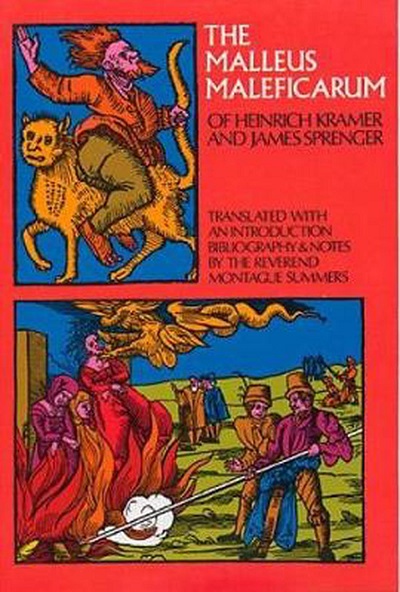
Did you know you can just buy the Malleus Maleficarum? You can go into a bookstore and say “I would like the legendary manual of witch-hunters everywhere, the one that’s a plot device in dozens of tired fantasy novels”. They will sell it to you and you can read it.
I recommend the Montague Summers translation. Not because it’s good (it isn’t), but because it’s by an slightly crazy 1920s deacon every bit as paranoid as his subject matter. He argues in his Translator’s Introduction that witches are real, and that a return to the wisdom of the Malleus is our only hope of standing against them:
Although it may not be generally recognized, upon a close investigation it seems plain that the witches were a vast political movement, an organized society which was anti-social and anarchical, a world-wide plot against civilization. Naturally, although the Masters were often individuals of high rank and deep learning, that rank and file of the society, that is to say, those who for the most part fell into the hands of justice, were recruited from the least educated classes, the ignorant and the poor. As one might suppose, many of the branches or covens in remoter districts knew nothing and perhaps could have understood nothing of the enormous system. Nevertheless, as small cogs in a very small [sic] wheel, it might be, they were carrying on the work and actively helping to spread the infection.
And is this “world-wide plot against civilization” in the room with us right now? In the most 1920s argument ever, Summers concludes that this conspiracy against civilization has survived to the modern day and rebranded as Bolshevism.
Paging Arthur Miller…You can just buy the Malleus Maleficarum. So, why haven’t you? Might the witches’ spiritual successors be desperate to delegitimize the only thing they’re truly afraid of — the vibrant, time-tested witch hunting expertise of the Catholic Church? Summers writes:
It is safe to say that the book is to-day scarcely known save by name. It has become a legend. Writer after writer, who had never turned the pages, felt himself at liberty to heap ridicule and abuse upon this venerable volume … He did not know very clearly what he meant, and the humbug trusted that nobody would stop to inquire. For the most part his confidence was respected; his word was taken.
We must approach this great work — admirable in spite of its trifling blemishes — with open minds and grave intent; if we duly consider the world of confusion, of Bolshevism, of anarchy and licentiousness all around to-day, it should be an easy task for us to picture the difficulties, the hideous dangers with which Henry Kramer and James Sprenger were called to combat and to cope … As for myself, I do not hesitate to record my judgement … the Malleus Maleficarum is one of the most pregnant and most interesting books I know in the library of its kind.
Big if true.
I myself read the Malleus in search of a different type of wisdom. We think of witch hunts as a byword for irrationality, joking about strategies like “if she floats, she’s a witch; if she drowns, we’ll exonerate the corpse”. But this sort of snide superiority to the past has led us wrong before. We used to make fun of phlogiston, of “dormitive potencies”, of geocentric theory. All these are indeed false, but more sober historians have explained why each made sense at the time, replacing our caricatures of absurd irrationality with a picture of smart people genuinely trying their best in epistemically treacherous situations. Were the witch-hunters as bad as everyone says? Or are they in line for a similar exoneration?
The Malleus is traditionally attributed to 15th century theologians/witch-hunters Henry Kramer and James Sprenger, but most modern scholars think Kramer wrote it alone, then added the more famous Sprenger as a co-author for a sales boost. The book has three parts. Part 1 is basically Summa Theologica, except all the questions are about witches. Part 2 is basically the DSM 5, except every condition is witchcraft. Part 3 is a manual for judges presiding over witch trials. We’ll go over each, then return to this question: why did a whole civilization spend three centuries killing thousands of people over a threat that didn’t exist?
October 28, 2022
QotD: “Cliodynamics”, aka “megahistory”
Attentive readers will have already sensed that I have issues with these kinds of arguments; indeed, for all of my occasional frustrations with political science literature (much of which is perfectly fine, but it seems a frequent and honestly overall positive dynamic that historians tend to be highly critical of political scientists) I consider “cliodynamics” to generally take the worst parts of data-driven political science methodologies to apotheosis while discarding most of the virtues of data-driven poli-sci work.
As would any good historian, I have a host of nitpicks, but my objection to the idea of “cliodynamics” has to do with the way that it proposes to tear away the context of the historical data. I think it is worth noting at the outset the claim actually being made here because there is often a bit of motte-and-bailey that goes on, where these sorts of megahistories make extremely confident and very expansive claims and then when challenged is to retreat back to much more restricted claims but Turchin in particular is explicit in Secular Cycles (2009) that “a basic premise of our study is that historical societies can be studied with the same methods physicists and biologists used to study natural systems” in the pursuit of discovering “general laws” of history.
Fundamentally, the approach is set on the premise that the solution to the fact that the details of society are both so complex (imagine charting out the daily schedules of every person one earth for even a single day) and typically so poorly attested is to aggregate all of that data to generate general rules which could cover any population over a long enough period. To my mind, there are two major problems here: predictability and evidence. Let’s start with predictability.
And that’s where we get to Isaac Asimov, because this is essentially also how the “psychohistory” of the Foundation series functions (or, for the Star Trek fans, how the predictions in the DS9 episode “Statistical Probabilities“, itself an homage to the Foundation series, function). The explicit analogy offered is that of the laws that govern gasses: while no particular molecule of a gas can modeled with precision, the entire body of gas can be modeled accurately. Statistical probability over a sufficiently large sample means that the individual behaviors of the individual gas molecules combine in the aggregate to form a predictable whole; the randomness of each molecule “comes out in the wash” when combined with the randomness of the rest.2
I should note that Turchin rejects comparisons to Asimov’s psychohistory (but also embraced the comparison back in 2013), but they are broadly embraced by his boosters. Moreover, Turchin’s claim at the end of that blog post that “prediction is overrated” is honestly a bit bizarre given how quick he is when talking with journalists to use his models to make predictions; Turchin has expressed some frustration with the tone of Graeme Wood’s piece on him, but “We are almost guaranteed” is a direct quote that hasn’t yet been removed and I can speak from experience: The Atlantic‘s fact-checking on such things is very vigorous. So I am going to assume those words escaped the barrier of his teeth and also I am going to suggest here that “We are almost guaranteed” is, in fact, a prediction and a fairly confident one at that.
The problem with applying something like the ideal gas law – or something like the population dynamics of beetles – to human societies is fundamentally interchangeability. Statistical models like these have to treat individual components (beetles, molecules) the way economists treat commodities: part of a larger group where the group has qualities, but the individuals merely function to increase the group size by 1. Raw metals are a classic example of a commodity used this way: add one ton of copper to five hundred tons of copper and you have 501 tons of copper; all of the copper is functionally interchangeable. But of course any economist worth their pencil-lead will be quick to remind you that not all goods are commodities. One unit of “car” is not the same as the next. We can go further, one unit of “Honda Civic” is not the same as the next. Heck, one unit of 2012 Silver Honda Civic LX with 83,513 miles driven on it is not the same as the next even if they are located in the same town and owned by the same person; they may well have wildly different maintenance and accident histories, for instance, which will impact performance and reliability.
Humans have this Honda Civic problem (that is, they are not commodities) but massively more so. Now of course these theories do not formally posit that all, say, human elites are the same, merely that the differences between humans of a given grouping (social status, ethnic group, what have you) “come out in the wash” at large scales with long time horizons. Except of course they don’t and it isn’t even terribly hard to think of good examples.
1 Yes, I am aware that Gat was consulted for Better Angels and blurbed the book. This doesn’t change my opinion of the two books. my issue is fundamentally evidentiary: War is built on concrete, while Better Angels is built on sand when it comes to the data they propose to use. As we’ll see, that’s a frequent issue.
2 Of course the predictions in the Foundation series are not quite flawlessly perfect. They fail in two cases I can think of: the emergence of a singular exceptional individual with psychic powers (the Mule) and situations in which the subjects of the predictions become aware of them. That said Seldon is able to predict things with preposterous accuracy, such that he is able to set up a series of obstacles for a society he knows they will overcome. The main problem is that these challenges frequently involve conflict or competition with other humans; Seldon is at leisure to assume such conflicts are predictable, which is to say they lack Clausewitzian (drink!) friction. But all conflicts have friction; competition between peers is always unpredictable.
Bret Devereaux, “Fireside Friday: October 15, 2021”, A Collection of Unmitigated Pedantry, 2021-10-15.
October 24, 2022
The rise of “Queer Theory”
In City Journal, Christopher F. Rufo provides the background that has lead to the widespread phenomenon of “Drag Queen Story Hour”:

Start with queer theory, the academic discipline born in 1984 with the publication of Gayle S. Rubin’s essay “Thinking Sex: Notes for a Radical Theory of the Politics of Sexuality”. Beginning in the late 1970s, Rubin, a lesbian writer and activist, had immersed herself in the subcultures of leather, bondage, orgies, fisting, and sado-masochism in San Francisco, migrating through an ephemeral network of BDSM (bondage, domination, sadomasochism) clubs, literary societies, and New Age spiritualist gatherings. In “Thinking Sex”, Rubin sought to reconcile her experiences in the sexual underworld with the broader forces of American society. Following the work of the French theorist Michel Foucault, Rubin sought to expose the power dynamics that shaped and repressed human sexual experience.
“Modern Western societies appraise sex acts according to a hierarchical system of sexual value,” Rubin wrote. “Marital, reproductive heterosexuals are alone at the top erotic pyramid. Clamouring below are unmarried monogamous heterosexuals in couples, followed by most other heterosexuals. … Stable, long-term lesbian and gay male couples are verging on respectability, but bar dykes and promiscuous gay men are hovering just above the groups at the very bottom of the pyramid. The most despised sexual castes currently include transsexuals, transvestites, fetishists, sadomasochists, sex workers such as prostitutes and porn models, and the lowliest of all, those whose eroticism transgresses generational boundaries.”
Rubin’s project — and, by extension, that of queer theory — was to interrogate, deconstruct, and subvert this sexual hierarchy and usher in a world beyond limits, much like the one she had experienced in San Francisco. The key mechanism for achieving this turn was the thesis of social construction. “The new scholarship on sexual behaviour has given sex a history and created a constructivist alternative to” the view that sex is a natural and pre-political phenomenon, Rubin wrote. “Underlying this body of work is an assumption that sexuality is constituted in society and history, not biologically ordained. This does not mean the biological capacities are not prerequisites for human sexuality. It does mean that human sexuality is not comprehensible in purely biological terms.” In other words, traditional conceptions of sex, regarding it as a natural behavior that reflects an unchanging order, are pure mythology, designed to rationalize and justify systems of oppression. For Rubin and later queer theorists, sex and gender were infinitely malleable. There was nothing permanent about human sexuality, which was, after all, “political”. Through a revolution of values, they believed, the sexual hierarchy could be torn down and rebuilt in their image.
There was some reason to believe that Rubin might be right. The sexual revolution had been conquering territory for two decades: the birth-control pill, the liberalization of laws surrounding marriage and abortion, the intellectual movements of feminism and sex liberation, the culture that had emerged around Playboy magazine. By 1984, as Rubin acknowledged, stable homosexual couples had achieved a certain amount of respectability in society. But Rubin, the queer theorists, and the fetishists of the BDSM subculture wanted more. They believed that they were on the cusp of fundamentally transforming sexual norms. “There [are] historical periods in which sexuality is more sharply contested and more overtly politicized,” Rubin wrote. “In such periods, the domain of erotic life is, in effect, renegotiated.” And, following the practice of any good negotiator, they laid out their theory of the case and their maximum demands. As Rubin explained: “A radical theory of sex must identify, describe, explain, and denounce erotic injustice and sexual oppression. Such a theory needs refined conceptual tools which can grasp the subject and hold it in view. It must build rich descriptions of sexuality as it exists in society and history. It requires a convincing critical language that can convey the barbarity of sexual persecution.” Once the ground is softened and the conventions are demystified, the sexual revolutionaries could do the work of rehabilitating the figures at the bottom of the hierarchy — “transsexuals, transvestites, fetishists, sadomasochists, sex workers”.
Where does this process end? At its logical conclusion: the abolition of restrictions on the behavior at the bottom end of the moral spectrum — pedophilia. Though she uses euphemisms such as “boylovers” and “men who love underaged youth”, Rubin makes her case clearly and emphatically. In long passages throughout “Thinking Sex”, Rubin denounces fears of child sex abuse as “erotic hysteria”, rails against anti–child pornography laws, and argues for legalizing and normalizing the behavior of “those whose eroticism transgresses generational boundaries”. These men are not deviants, but victims, in Rubin’s telling. “Like communists and homosexuals in the 1950s, boylovers are so stigmatized that it is difficult to find defenders for their civil liberties, let alone for their erotic orientation,” she explains. “Consequently, the police have feasted on them. Local police, the FBI, and watchdog postal inspectors have joined to build a huge apparatus whose sole aim is to wipe out the community of men who love underaged youth. In twenty years or so, when some of the smoke has cleared, it will be much easier to show that these men have been the victims of a savage and undeserved witch hunt.” Rubin wrote fondly of those primitive hunter-gatherer tribes in New Guinea in which “boy-love” was practiced freely.
Such positions are hardly idiosyncratic within the discipline of queer theory. The father figure of the ideology, Foucault, whom Rubin relies upon for her philosophical grounding, was a notorious sadomasochist who once joined scores of other prominent intellectuals to sign a petition to legalize adult–child sexual relationships in France. Like Rubin, Foucault haunted the underground sex scene in the Western capitals and reveled in transgressive sexuality. “It could be that the child, with his own sexuality, may have desired that adult, he may even have consented, he may even have made the first moves,” Foucault once told an interviewer on the question of sex between adults and minors. “And to assume that a child is incapable of explaining what happened and was incapable of giving his consent are two abuses that are intolerable, quite unacceptable.”
Rubin’s American compatriots made the same argument even more explicitly. Longtime Rubin collaborator Pat Califia, who would later become a transgender man, claimed that American society had turned pedophiles into “the new communists, the new niggers, the new witches”. For Califia, age-of-consent laws, religious sexual mores, and families who police the sexuality of their children represented a thousand-pound bulwark against sexual freedom. “You can’t liberate children and adolescents without disrupting the entire hierarchy of adult power and coercion and challenging the hegemony of antisex fundamentalist religious values,” she lamented. All of it — the family, the law, the religion, the culture — was a vector of oppression, and all of it had to go.
October 22, 2022
Two new works on British architecture through the years
In The Critic, James Stevens Curl discusses two recent books on the “monuments and monstrosities” of British architecture:
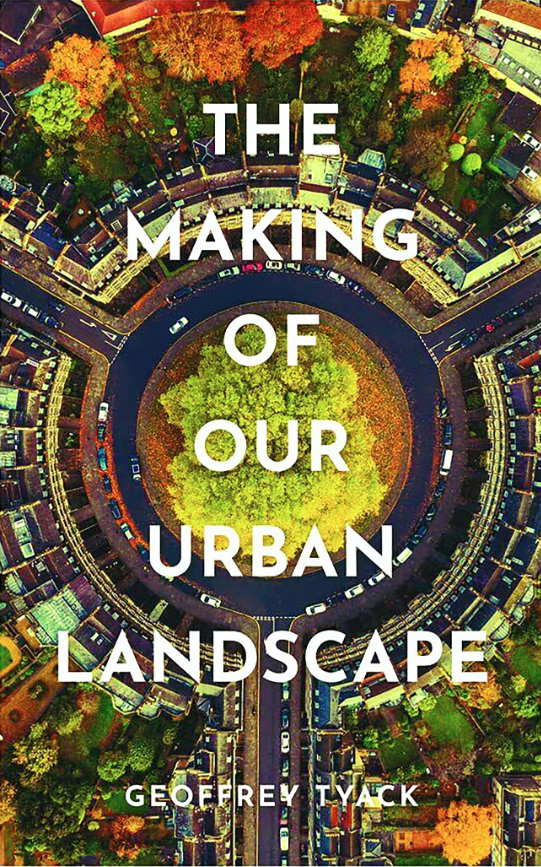
The most startling achievement of the Victorian period was Britain’s urbanisation. By the 1850s the numbers living in rural parts were fractionally down on those in urban areas. By the end of Victoria’s reign more than 75 per cent of the population were town-dwellers, and a romantic nostalgic longing for a lost rural paradise was fostered by those who denigrated urbanisation. This myth of a lost rural ideal led to phenomena such as garden cities and suburbia. Anti-urbanists and critics of the era detested the one thing that gave the Victorian city its great qualities: they were frightened of and hated the Sublime.
These two books deal with the urban landscape in different ways. Tyack provides a chronological narrative of the history of some British towns and cities spread over two millennia from Roman times to the present day, so his is a very ambitious work. Most towns of modern Britain already existed in some form by 1300, he rightly states, though a few were abandoned, such as Calleva Atrebatum (Silchester) in Hampshire, a haunted place of great and poignant beauty with impressive remains still visible. Most Roman towns were more successful, surviving and developing through the centuries, none more so than London. Tyack describes several in broad, perhaps too broad, terms.
He outlines the creation of dignified civic buildings from the 1830s onwards, reflecting the evolution of local government as power shifted to the growing professional, manufacturing and middle classes: fine town halls, art galleries, museums, libraries, concert halls, educational buildings and the like proliferated, many of supreme architectural importance. Yet the civic public realm has been under almost continuous attack from central government and the often corrupt forces of privatisation for the last half century.
Tyack is far too lenient when considering the unholy alliances between legalised theft masquerading as “comprehensive redevelopment”, local and national government, architects, planners and large construction firms with plentiful supplies of bulging brown envelopes. Perfectly decent buildings, which could have been rehabilitated and updated, were torn down, and whole communities were forcibly uprooted in what was the greatest assault in history on the urban fabric of Britain and the obliteration of the nation’s history and culture.
One of the worst professional crimes ever inflicted on humanity was the application of utopian modernism to the public housing-stock of Britain from the 1950s onwards: this dehumanised communities, spoiled landscapes and ruined lives, yet the architectural establishment remained in total denial. In 1968–72 the Hulme district of Manchester was flattened to make way for a modernist dystopia created by a team of devotees of Corbusianity.
The huge quarter-mile long six-storey deck-access “Crescents” were shabbily named after architects of the Georgian, Regency and early-Victorian periods (Adam, Barry, Kent and Nash). This monstrous, hubristic imposition rapidly became one of the most notoriously dysfunctional housing estates in Europe, a spectacular failure whose problems were all-too-apparent from the very beginning. Yet in The Buildings of England 1969, Manchester was praised for “doing more perhaps than any other city in England … in the field of council housing”. The “Crescents” were recognised quickly as unparalleled disasters and hated by the unfortunates forced to live there. They were demolished in the 1990s, but the creators of that hell were never punished.
October 21, 2022
QotD: The real reason for Upton Sinclair writing The Jungle
As a result, the Federal Meat Inspection Act passed Congress, and consumers were saved from ghastly diseases. The lesson is that government is essential to stop enterprise from poisoning us with its food.
To some extent, this mythology accounts for the wide support for government’s involvement in stopping disease spread today, including Covid and the catastrophic response.
Not only that, but the story is also the basis for the US Department of Agriculture’s food inspection efforts, the Food and Drug Administration’s regulation of medical drugs, the central plan that governs food production, the Centers for Disease Control and Prevention, and the legions of bureaucrats who inspect and badger us every step of the way. It is the founding template for why government is involved in our food and health at all.
It’s all premised on the implausible idea that people who make and sell us food have no concern as to whether it makes us sick. It only takes a quick second, though, to realize that this idea just isn’t true. So long as there is a functioning, consumer-driven marketplace, customer focus, which presumably includes not killing you, is the best regulator. Producer reputation has been a huge feature of profitability, too. And hygiene was a huge feature of reputation — long before Yelp.
Sinclair’s book was not intended as a factual account. It was a fantasy rendered as an ideological screed. It did drum up support for regulation, but the real reason for the act’s passage was that the large Chicago meat packers realized that regulation would hurt their smaller competitors more than themselves. Meat inspections imposed costs that cartelized the industry.
That’s why the largest players were the law’s biggest promoters. Such laws almost have more to do with benefiting elites than protecting the public. It was not really about safety, the best scholarship shows, but exclusionary regulation to raise competitors’ costs of doing business.
Jeffrey A. Tucker, “Poke and Sniff: A Lesson from 1906”, Brownstone Institute, 2022-06-29.
October 19, 2022
Jonathan Kay reviews 18 Months by Shannon Thrace
At Quillette, a review of a new book on the breakdown of a once-happy marriage when one partner decides that mere transvestism isn’t enough any more and becomes transgendered:
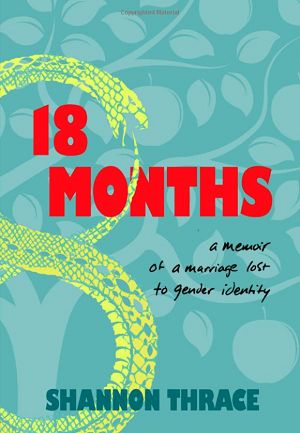
The trans community is diverse, especially when it comes to attitudes toward sex. As writer Angus Fox noted in a seven-part Quillette series, When Sons Become Daughters, some biologically male trans-identified teenagers live a sexless existence; and are drawn to puberty blockers and androgynous aesthetics precisely because they seem to offer safe harbour from male sexual development. In the case of middle-aged men who abruptly adopt a trans identity later in life, on the other hand, it can be the opposite: the presentation is often hyper-sexualized.
(more…)
October 14, 2022
That time that H.G. Wells fell afoul of Muslim sentiments
In the New English Review, Esmerelda Weatherwax recounts an incident from the 1930s where Muslim protestors took to the streets of London in reaction to a recent Hindustani translation of H.G. Wells’ A Short History of the World:
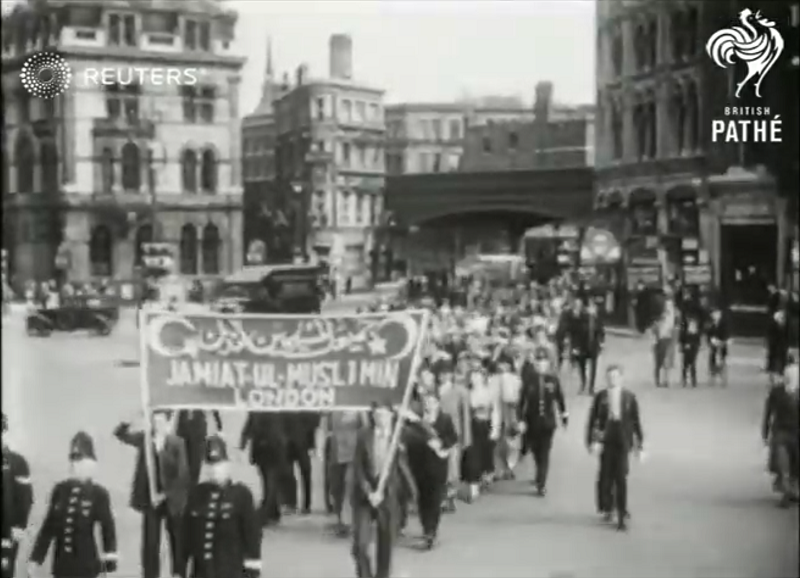
Screen capture of the 1938 Muslim protest march in London from a British Pathé newsreel – https://www.youtube.com/watch?v=ADausiEe4pM
… my husband was at the Museum of London and spotted a very brief mention of this protest in 1938 on a list of 20th century London events. I did some research.
The book they objected to was HG Wells’ A Short History of the World. This was originally published in 1922 but in 1938 an abridged version was tranlated into Hindustani and published in India. His observations about the Prophet Mohammed did not find favour with Indian Muslims (and as you know pre-partition the area called India covered what is now Pakistan and Bangladesh). There were protest meetings in Calcutta and Mumbai (then transliterated as Bombay) and the consignments of the books that WH Smith the booksellers sent to Hyderabad mysteriously never arrived. Investigation showed that the Sind government banned its import. Protests spread to east Africa and were reported in Nairobi and Mombasa.
The paragraphs concerned said “He seems to have been a man compounded of very considerable vanity, greed, cunning, self-deception, and quite sincere religious passion”. Wells concludes, not unfavourably, that “when the manifest defects of Muhammad’s life and writing have been allowed for, there remains in Islam, this faith he imposed upon the Arabs, much power and inspiration”.
There had been a number of Muslims living in east London for some years, sailors who came through the docks, retired servants, some professional men and in 1934 they formed a charitable association for the promotion of Islam called Jamiat-ul-Muslimin; they met on Fridays at a hall in Commercial Road.
On Friday 12th August 1938 a copy of A Short History of the World was, as apparently reported in the Manchester Guardian the following day “ceremoniously burned”. The main Nazi book burnings were over 5 years previously but I can’t but be reminded of them. I can’t access the Guardian on-line archive for 1938 as I don’t have a subscription, but I have no reason to doubt what they reported.
A few days later Dr Mohammed Buksh of Jamiat-ul-Muslimin attended upon Sir Feroz Khan Noon, the high commissioner for India. Sir Feroz tried to explain that in Britain we could (or could then) freely criticise Christianity, the Royal family and government as a right. He reminded Dr Buksh that Muslims were “a very small minority in England, and it would do them no good to try and be mischievous in this country, no matter how genuine their grievances were”.
October 3, 2022
QotD: The foundation of Rome, as recounted by Vergil and Livy
Aeneas (son of Aphrodite/Venus and a mortal man, Anchises) does appear, by the by, in the Iliad, though he isn’t a particularly notable or impressive hero (naturally Vergil will embroider Aeneas until he is presented as the equal of an Achilles or Odysseus because … well, wouldn’t you?). The Aeneid follows (with the aid of a major flashback) Aeneas as he shepherds his surviving Trojans from Troy to their prophesied new homeland in Italy (with a minor stopover in Carthage) and then covers also the war that breaks out between Aeneas’ Trojans and the local inhabitants (the Latins) when he arrives. Vergil cuts off at the climactic moment of the war (which in turn presents Aeneas as rather morally grey, a feature that is also present, as we’ll see, in Livy’s retelling of Rome’s legends), but Livy provides the denouement. After a period of conflict (Livy presents two different versions of the exact sequence), Aeneas ends up married to Lavinia, the daughter of Latinus, king of the Latins (Livy calls them the Aborigines – lit, “the native inhabitants”, Vergil the Latins; in both cases Latinus is their king) and the Trojan exiles and Latinus’ people form a single community at Lavinium, which in turn founds a colony at Alba Longa, both in Latium (the region of Italy in which Rome is, although note we haven’t founded Rome yet).
We then fast forward a few generations. Rhea Silvia, a priestess of Vesta at Alba Longa gives birth to twins, Romulus and Remus by (Livy expresses some doubt) the god Mars. The twins are exposed (for complicated royal-family-drama reasons we needn’t get into) and rescued by either a she-wolf or a woman of ill-repute (Livy isn’t sure which on account of Latin lupa having both meanings and clearly both legends existed, Liv. 1.4) and raised among shepherds in the hills of northern Latium. More politics ensues, Romulus and Remus, having grown to adulthood, right some wrongs in their home city of Alba Longa and set out to found their own city.
At which point Romulus promptly gets into a fight with and murders Remus over who is going to be in charge (this sort of intense moral ambiguity where the venerated legendary founder figures are also quick to violence and deeply flawed is also a feature of the Aeneid and can be read either as a commentary on Augustus or as some lingering Roman discomfort with their own recent history of civil wars running from 88 to 31 BC; we are not the first people in history to have very mixed feelings about how well people in our country’s past lived up to our ideals). Crucially, Romulus forms his new settlement (prior to the fratricide) out of – as Livy has it – “the excess multitudes of the Albans and Latins, to which were added the shepherds” (Liv. 1.6.3). After this, desiring to increase the population of the city, Romulus sets a place of refuge in the city so that “a crowd of people from neighboring places, altogether without distinction, free and slave, fled there eager for new things” (Liv. 1.8.6) and were incorporated into Romulus’ growing city. Livy approves of this, by the by, declaring it the first step towards rising greatness.
Romulus quickly has another problem because all of these new settlers were men, so he concocts a plot to carry off all of the unmarried women of the neighboring people, the Sabines – an Umbrian people (we’ll come back to this, for now we’ll note they are ethnically and linguistically distinct from the Latins) – who lived in the hills north of Rome under the guise of a religious ceremony (Liv. 1.9-13). At a festival where the Sabines had been lured to under false pretenses, the Romans abduct and forcibly marry the Sabine women, while using hidden weapons to chase away their families (I should note Livy goes to some length to assure the reader that the captured maidens were subsequently persuaded to marry their Roman captors, rather than forced (Liv. 1.9.14-16), though what choice he imagines the unarmed, captive women to have had is left for the reader to wonder at in vain; in any event, we need not share Livy’s judgement or his effort at patriotic euphemism and may simply note that bride-capture is a form of rape). The Sabines naturally go to war over this but (according to Livy) a peace is mediated by the captured women (according to Livy, unwilling to see their new husbands and old fathers kill each other) and the two communities instead merge on equal terms. In the midst of all of this, Livy does have Romulus set down a set of common customs for his people, which he thinks to have been mostly Etruscan (Liv. 1.8.3), the Etruscans being the people inhabiting Etruria (modern Tuscany) the region directly north of Rome (Rome sits, in essence, on the dividing line between Latium to the South and Etruria to the North).
Now we want to note two things here from this high-speed trip through the first few chapters of Livy. First is the deep ambivalence towards Roman violence here. Livy presents Rome as a city founded on fratricide, conquest, rape and sacrilege. Livy occasionally attempts to soften the impact of these legends (particular with the Sabines), but only so far. This isn’t really the place to unpack of all of that but suffice to say that I think that Livy’s willingness to open his history of Rome – practically an official history of Rome – so darkly speaks to a literary project still attempting to come to grips with the stunning civil violence which had gripped Rome for Livy’s entire adult life and had, as he wrote, only recently ended. And one day we also ought to come back and do a deeper look at how women function in Livy’s legends and histories (Livy’s account becomes much more properly historical as he gets closer to his own time); women, mostly Roman women, suffering (often sexual) violence so that in their sacrifice the Roman state might be enhanced is a repeated motif in Livy (e.g. Lucretia, Verginia).
But more directly to our topic today, I want to note at this point exactly the sort of society Livy is imagining the earliest Rome, under its first king Romulus, in particular that it consists of a lot of different peoples and heritages. We’ll come back to exactly who all of these peoples are (historically speaking) in a moment. But Livy and Vergil first create a Trojan-Latin fusion community, which produces both Romulus and Remus and their initial core of settlers (mixed in with other, apparently purely Latin communities), who then gather up shepherds from all around, and then invite literally anyone from nearby communities to join them (which must include Etruscan communities to the north as well as Umbrians and Falisci of various sorts from the hills) and then finally fuses that community with the Sabines (an Umbrian people).
So we have our very first Romans, as the first Senate is being set up (1.8.7) and the very first spolia opima – the prize for when one commander defeats his opposite number in single combat – being won (1.10.7) and the very first temple being founded in the city (1.10.7). And those very first Romans, as Livy imagines them, are not autochthonous (that is, the original inhabitants of the place they live), nor ethnically homogeneous, but rather a Trojan-Aborigines-Latin-Faliscian-Umbrian-Etruscan-Sabine fusion community. For Livy, diversity – ethnic, linguistic, religious – defines Rome, from its very first days.
But of course this is all legends – important for understanding how the Romans viewed themselves, but necessarily less valuable for understanding the actual conditions in Rome at its earliest. Unfortunately, we lack reliable written sources for this part of the world so early (most of the “regal” period, when Rome was ruled by kings, notionally from 753 – the legendary founding date for the city – to 509, is beyond historical reconstruction).
Bret Devereaux, “Collections: The Queen’s Latin or Who Were the Romans? Part I: Beginnings and Legends”, A Collection of Unmitigated Pedantry, 2021-06-11.


