
TimeGhost History
Published 28 Apr 2025After seeing the devastating effects of the trade war that ravaged the global economy between the world wars, in 1948 the US is determined to usher in an age of free trade and global cooperation that will last until the spring of 2025.
(more…)
April 29, 2025
The US Cancels Tariffs and Saves the World – W2W 025
Comments Off on The US Cancels Tariffs and Saves the World – W2W 025
April 27, 2025
Nuking the Reich: What If the War Had Dragged On? – Out of the Foxholes Live
World War Two
Published 26 Apr 2025Indy and Sparty bring you another episode of Out of the Foxholes Live! Today they talk about Thailand’s relationship with Japan, ask why the Americans firebombed Japanese cities even after cutting off the country’s supplies, and they tackle a big one: would the Allies have nuked Germany?
(more…)
Comments Off on Nuking the Reich: What If the War Had Dragged On? – Out of the Foxholes Live
QotD: Fighting against Japan in the Pacific
Japan’s biggest advantage in the Pacific was knowing the terrain. Volcanic atolls being what they are, there are only a few places in the whole South Pacific that can be turned into airfields. Not only that, but there are only a very few approaches to those places, and the Japanese knew them all. If you’re outmanned and outgunned, a strategy of digging in deep and selling your lives as dearly as possible is the only way to go. Bleed the enemy white.
And lord knows the Americans took the bait, more than once. If “bait” is really the right word, because if you’ve got no choice … the early campaigns in the Solomons were so legendarily nasty for that reason: You have no choice but to go right up the pipe to seize an objective, and if you do, the enemy has no choice but to go right up the pipe to get it back.
The genius of the later American strategy — and credit where it’s due, few people have a lower opinion of MacArthur than I, but this was brilliant — was to simply go around. Heavy bomber strips are a must, and in the even fewer places in the Pacific that can take heavy bombers, the Americans had no choice but to go right up the chute … but carrier airpower can do a hell of a lot, particularly when it can move about completely unmolested by the enemy. Thus the Americans turned all those guaranteed meat grinders the Japanese had set up for them into big open-air POW camps, without bothering to go in there and force them to surrender (which, of course, they wouldn’t). Have fun starving in your bunkers, boys; we’ll just leave a covering naval detachment, to make sure you can’t evacuate; see you when the war’s over.
Severian, “Strategy”, Founding Questions, 2021-11-21.
Comments Off on QotD: Fighting against Japan in the Pacific
April 22, 2025
Rise of Japan: 1st Sino-Japanese War 1894-95
Real Time History
Published 18 Apr 2025In 1894, tensions are rising in East Asia. There’s trouble in the small but strategically-located Kingdom of Korea, as rival factions in the royal family fight for power and against popular uprisings. Shaken by a major revolt, Korea’s King Kojong calls on China for help – but Japan intervenes, setting off a war that will devastate Korea and upend the old order in Asia.
(more…)
Comments Off on Rise of Japan: 1st Sino-Japanese War 1894-95
April 20, 2025
Did Britain Bomb The Wrong Targets in WW2? – Out of the Foxholes Live
World War Two
Published 19 Apr 2025Today Indy and Sparty answer questions on the French colonies, Pykrete and iceberg aircraft carriers Japan’s invasion of India, and they talk about Britain’s misguided strategic bombing strategy.
(more…)
Comments Off on Did Britain Bomb The Wrong Targets in WW2? – Out of the Foxholes Live
April 19, 2025
QotD: Allied air and sea operations won WWII
The Allies won the war by using air power to destroy the German and Japanese capacity both to produce military equipment and to transport it to the battlefield. By 1944-45, the Germans and Japanese could not use their economies to arm and supply their armies on the battlefield, leading to their inevitable defeat.
In the European war, American and British airpower: (a) directly destroyed a significant amount of productive capacity, (b) rendered remaining capacity far less efficient, (c) made it impossible for the Germans to defeat western ground forces, and (d) compelled the Germans to waste tremendous resources on air defense and exorbitant, ultimately ineffective vengeance weapons.
In the Pacific, the United States used carrier-based airpower, submarines, and bomber-deployed mines to isolate Japan from the resources of the empire it conquered in 1941-42. American bombers also directly destroyed factories and transportation systems, leading to similar levels of economic dysfunction as in Germany.
Anonymous, “Your Book Review: How the War Was Won“, Astral Codex Ten, 2024-08-09.
Comments Off on QotD: Allied air and sea operations won WWII
April 16, 2025
Food in the Japanese-American Internment Camps of World War 2
Tasting History with Max Miller
Published 3 Dec 2024Tuna noodle casserole made with spaghetti, and rice with canned apricots for dessert
City/Region: Topaz War Relocation Center, Utah
Time Period: 1943In 1942, anyone of Japanese ancestry in the United States was forcibly sent to live in incarceration camps. Food was often in the form of leftover military rations that was augmented by crops grown by the people living in the camps, but there were also canteens that sold food and sundries. These items were great luxuries as the Japanese Americans living in the camps made only about 1/5 of a typical wage and included things like Ovaltine, apple juice, and canned tuna.
This recipe, from a newspaper printed in the Topaz War Relocation Center, makes a tasty, if basic, tuna noodle casserole. I would add more of the paprika, or really some more spices in general, but I really like the lightly crunchy texture of the bread crumbs and the celery.
If you’d like to serve this forth with dessert, as I did, then you simply need some cooked white rice and some canned apricots with syrup.
(more…)
Comments Off on Food in the Japanese-American Internment Camps of World War 2
April 9, 2025
Battle of Saipan 1944: Total War in the Pacific
Real Time History
Published 15 Nov 2024In June 1944, an armada of warships and landing craft is getting ready for D-Day. Thousands of American soldiers are about to attack a prepared enemy with formidable defenses. But this isn’t Normandy, this is the island of Saipan. And the bloody battle there will bring total war to the Pacific.
Chapters:
00:00 Why the US Landed on Saipan
01:46 American Plan for Saipan
03:38 Japanese Defenses on Saipan
05:08 Preparations for D-Day on Saipan
06:39 D-Day on Saipan
08:46 Marine Combat Shotguns on Saipan
14:48 Japanese Counterattack
16:30 D-Day Plus 3 on Saipan
17:01 Battle of the Philippine Sea
20:45 D-Day Plus 7-9 on Saipan
22:33 D-Day Plus 11-15 on Saipan
24:10 Japanese Banzai Charge on Saipan
26:46 Civilian Casualties on Saipan
27:57 End of the Battle of Saipan
28:48 Battles of Tinian and Guam
30:04 Epilogue
(more…)
Comments Off on Battle of Saipan 1944: Total War in the Pacific
March 18, 2025
QotD: Lester Thurow and the other cheerleaders for “Industrial Policy” in the 1980s
And so – advised Thurow (and others) – we Americans really should step up our game by taking many production and consumption decisions out of the hands of short-sighted and selfish entrepreneurs, businesses, investors, and consumers and putting these decisions into the hands of the Potomac-residing wise and genius-filled faithful stewards of Americans’ interest.
Sound familiar? It should. While some of the details from decades ago of the news-making proponents of protectionism and industrial policy differ from the details harped on by today’s proponents of protectionism and industrial policy, the essence of the hostility to free trade and free markets of decades ago is, in most – maybe all – essential respects identical to the hostility that reigns today.
Markets in which prices, profits, and losses guide the decisions of producers and consumers were then – as they are today – asserted to be stupid, akin to a drunk donkey, while government officials (from the correct party, of course) alone have the knowledge, capacity, willpower, and power to allocate resources efficiently and in the national interest.
Nothing much changes but the names. Three or four decades ago protectionism and industrial policy in the name of the national interest was peddled by people with names such as Lester Thurow, Barry Bluestone, and Felix Rohatyn. Today protectionism and industrial policy in the name of the national interest is peddled by people with different names.
Don Boudreaux, “Quotation of the Day…”, Café Hayek, 2020-03-12.
Comments Off on QotD: Lester Thurow and the other cheerleaders for “Industrial Policy” in the 1980s
March 10, 2025
Chinese Civil War Part 1 – W2W 11 – Q1 1947
TimeGhost History
Published 9 Mar 2025After WWII, China is plunged into chaos as Chiang Kai-shek’s Nationalists and Mao Zedong’s Communists reignite a decades-old conflict. This episode traces the roots of the Chinese Civil War — from the guerrilla strategies honed in Yan’an to the shifting power dynamics after Japanese occupation. Discover how ideological fervor, battle-hardened tactics, and the struggle for legitimacy set China on a path that would redefine its future.
(more…)
Comments Off on Chinese Civil War Part 1 – W2W 11 – Q1 1947
March 9, 2025
Italy’s Italian Fiasco
World War Two
Published 8 Mar 2025Today Sebastian puts Indy and Sparty in the hot seat for questions about the war in China and North Africa. Just what is the deal with the Italian Army anyway? How much fighting did the CCP do against the Japanese? And what’s the most overlooked event of the first year of war?
(more…)
Comments Off on Italy’s Italian Fiasco
March 8, 2025
Murder in the Name of Democracy – War Against Humanity 002
The Korean War by Indy Neidell
Published 7 Mar 2025The battles on the Korean peninsula started long before 1950. Today Sparty looks back at the uprising and insurgency on Jeju Island in 1948, the threat of Communist revolt, and the harsh reaction of the Korean government. This really was the war before the war.
(more…)
Comments Off on Murder in the Name of Democracy – War Against Humanity 002
March 6, 2025
The Iron Curtain Descends – W2W 10 – News of 1946
TimeGhost History
Published 5 Mar 20251946 sees the world teetering on the brink of a new global conflict. George Kennan’s long telegram outlines Moscow’s fanatical drive against the capitalist West, while our panel covers escalating espionage, strategic disputes over Turkey, and the emerging ideological battle between the U.S. and the USSR. Tune in as we break down the news shaping the dawn of the Cold War.
(more…)
Comments Off on The Iron Curtain Descends – W2W 10 – News of 1946
February 23, 2025
How WW2 Changed Espionage Forever
World War Two
Published 22 Feb 2025In their struggle to defeat German and Japanese espionage efforts, the Allied intelligence agencies of the KGB, CIA, MI6 and DGSE are all transformed into modern, global, espionage forces. But even as East and West work together to defeat the Axis, they are fighting the first underground battles of a new Cold War against one another.
(more…)
Comments Off on How WW2 Changed Espionage Forever
February 20, 2025
Retaking Burma with the Fourteenth Army in 1945
Dr. Robert Lyman discusses the start of the campaign to reconquer Burma from the Japanese led by Lieutenant General Bill Slim and the Fourteenth Army:
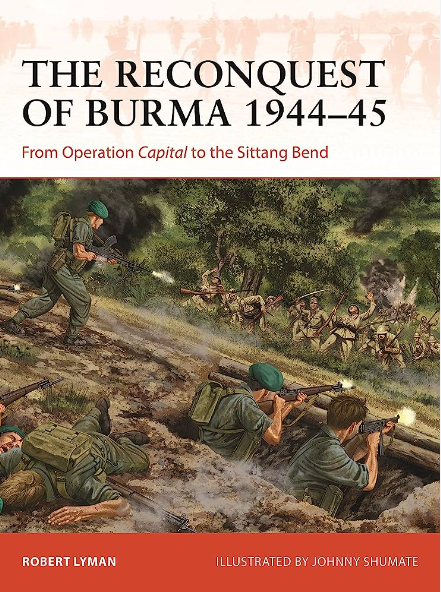
Why Burma? Because in Burma in 1945 a series of marvellous military miracles (is there a synonym starting with “m” for concatenation?) engineered by General Bill Slim and his mighty 14th Army, broke the back of the Japanese Burma Area Army and smashed forever Tokyo’s dreams of an empire in South East Asia. 1945 is worth celebrating!
Even today, few people are aware of just how dramatic these events were, and just how spectacular was the victory wrought by the Indian, British, African, US and Chinese forces in the country.
Indeed, at the start of 1945 few people would have predicted the extraordinary outcome of the developing campaign. If Lieutenant General Sir Bill Slim (he had been knighted by General Archibald Wavell, the Viceroy, the previous October, at Imphal) had been asked in January 1945 to describe the situation in Burma at the onset of the next monsoon period in May, I do not believe that in his wildest imaginings he could have conceived that the whole of Burma was about to fall into his hands. After all, his army wasn’t yet fully across the Chindwin. Nearly 800 miles of tough country with few roads lay before him, not the least the entire Burma Area Army under a new commander, General Kimura. The Arakanese coastline needed to be captured too, to allow aircraft to use the vital airfields at Akyab as a stepping stone to Rangoon. Likewise, I’m not sure that he would have imagined that a primary reason for the success of his Army was the work of 12,000 native levies from the Karen Hills, under the leadership of SOE, whose guerrilla activities prevented the Japanese from reaching, reinforcing and defending the key town of Toungoo on the Sittang river. It was the loss of this town, more than any other, which handed Burma to Slim on a plate, and it was SOE and their native Karen guerrillas which made it all possible.
Crossing the Irrawaddy
(Victoria State Archives)The potential of a Karenni-based resistance raised the possibility, long argued by old Burma hands, of a British armed and trained fifth column operating behind Japanese lines for the purpose of gathering battlefield intelligence and undertaking limited guerrilla action. Slim had long complained about the poor quality of the battlefield intelligence (as opposed to the signals intelligence, about which he was well provided) that he and his Corps commanders received. He was concerned, among other things, about knowing “what was on the other side of the hill”, the product of information provided – where it existed – by effective combat (ground and air) reconnaissance. There was no shortage of organisations attempting to assist in this task – at least twelve – but their coordination was poor and most reported to SEAC or parts of India Command, rather than to 14 Army. Slim dismissed most of these as “private armies” which offered no real help to the task of defeating the enemy on the battlefield. One of the groups, part of Force 136 (i.e. Special Operations Executive, or SOE), which had operated in front of 20 Indian Division along the Chindwin between 1943 and early 1944 under Major Edgar Peacock (and thus known as “P Force”) did sterling work with local Burmese and Karen agents reporting on Japanese activity facing 4 Corps. Persuaded that similar groups working among the Karens in Burma’s eastern hills – an area known as the Karenni States – could achieve significant support for a land offensive in Burma, Slim (to whom Mountbatten transferred responsibility for Force 136 in late 1944 for this purpose) authorised an operation to the Karens. Its task was not merely to undertake intelligence missions watching the road and railways between Mandalay and Rangoon, but to determine whether they would fight. If the Karens were prepared to do so, SOE would be responsible for training and organising them as armed groups able to deliver battlefield intelligence directly in support of the advancing 14 Army. The resulting operation – Character – was so spectacularly successful that it far outweighed what had been achieved by Operation Thursday the previous year in terms of its impact on the course of military operations in pursuit of the strategy to defeat the Japanese in the whole of Burma. It has been strangely forgotten, or ignored, by most historians ever since, drowned out perhaps by the noise made by the drama and heroism of Operation Thursday, the second Chindit expedition. Over the course of Operation Extended Capital some 2,000 British, Indian and Burmese officers and soldiers, along with 1,430 tons of supplies, were dropped into Burma for the purposes of providing intelligence about the Japanese that would be useful for the fighting formations of 14th Army, as well as undertaking limited guerrilla operations. As historian Richard Duckett has observed, this found SOE operating not merely as intelligence gatherers in the traditional sense, but as Special Forces with a defined military mission as part of conventional operations linked directly to a strategic outcome. For Operation Character specifically, about 110 British officers and NCOs and over 100 men of all Burmese ethnicities, dominated interestingly by Burmans (which now also included 3-man Jedburgh Teams) mobilised as many as 12,000 Karens over an area of 7,000 square miles to the anti-Japanese cause. Some 3,000 weapons were dropped into the Karenni States. Operating in five distinct groups (“Walrus”, “Ferret”, “Otter”, “Mongoose” and “Hyena”) the Karen irregulars trained and led by Force 136, waited the moment when 14 Army instructed them to attack.

Comments Off on Retaking Burma with the Fourteenth Army in 1945


