
World War Two
Published 11 Nov 2021Chieftain returns to the North African theatre to talk us through the armored fighting vehicles in action around the time of Operation Torch. This episode is part one of two with Chieftain covering the German and Italian vehicles. Here, Chieftain looks at everything from the fearsome Tiger to the nemesis of LRDG: the Sahariana.
(more…)
November 12, 2021
Armored Vehicles of Operation Torch Pt. 1, by the Chieftain
Comments Off on Armored Vehicles of Operation Torch Pt. 1, by the Chieftain
November 7, 2021
The Allies Break Through! – WW2 – 167 – November 6, 1942
World War Two
Published 6 Nov 2021After all these months of fighting, the British 8th Army breaks through Erwin Rommel’s Axis positions in North Africa, but the Allies have even bigger plans for that theater of war — a huge invasion of Vichy French North Africa to take place next week. The Soviets also have a plan for a huge invasion to take place very soon near Stalingrad, though the fighting in the city itself sees a lull the second half of this week.
(more…)
Comments Off on The Allies Break Through! – WW2 – 167 – November 6, 1942
November 6, 2021
Belisarius Part 2: The Empire Strikes Back
Epic History TV
Published 5 Nov 2021Play Epic War: Thrones and enjoy the real war game experience!
Download here: http://bitly.ws/j86c
Use Gift Code ‘WAR777‘ to receive 200 beads and 200 skill points.
Real War, Real EpicBig thanks to Legendarian for Total War: Attila gameplay footage, check out his YouTube channel here: https://www.youtube.com/channel/UCOI2…
Thanks also to our Series Consultant Professor David Parnell of Indiana University Northwest, who you can follow on Twitter here: https://twitter.com/byzantineprof
Total War: Attila gameplay footage used with kind permission of Creative Assembly — buy the game here: https://geni.us/qDreR
Thanks also to the Vandalic War mod crew for modding support, find out more about their mod here: https://steamcommunity.com/sharedfile…
🎨 Original artwork by Miłek Jakubiec https://www.artstation.com/milek
📚Recommended reading (as an Amazon Associate I earn from qualifying purchases):
📖 Procopius, History of the Wars https://geni.us/L3Pgc
📖 The Wars of Justinian by Michael Whitby https://geni.us/Xxrd3
📖 Rome Resurgent by Peter Heather https://geni.us/ZFoU1
📖 The Armies of Ancient Persia: the Sassanians by Kaveh Farrokh https://geni.us/jMQo3z
📖 Late Roman Cavalryman AD 236–565 (Osprey) by Simon MacDowall https://geni.us/XMGlSupport Epic History TV on Patreon from $1 per video, and get perks including ad-free early access & votes on future topics https://www.patreon.com/EpicHistoryTV
👕 Buy EHTV t-shirts, hoodies, mugs and stickers here! teespring.com/en-GB/stores/epic-histo…
🎶Music from Filmstro: https://filmstro.com/?ref=7765
Get 20% off an annual license with this exclusive code:EPICHISTORYTV_ANN#EpicHistoryTV #RomanEmpire #EasternRomanEmpire #Justinian #Belisarius #ByzantineEmpire
#EpicWar:Thrones #Strategy #ThreeKingdoms #WarGame #RealCivilizationWar

Comments Off on Belisarius Part 2: The Empire Strikes Back
October 31, 2021
Nazi General Dies of Heart Attack – WW2 – 166 – October 30, 1942
World War Two
Published 30 Oct 2021The Allies may be on the verge of a breakthrough in North Africa, but they’re losing at sea to the Japanese this week, and the Axis are also advancing in the Caucasus, though the street by street struggle at Stalingrad continues as always.
(more…)
Comments Off on Nazi General Dies of Heart Attack – WW2 – 166 – October 30, 1942
October 24, 2021
Showdown at El Alamein – WW2 – 165 – October 23, 1942
World War Two
Published 23 Oct 2021Could this be the beginning of the big break in North Africa? The Allies have the men, the armor, and the fuel … they just have to deal with the Axis minefields to try and get started. And the Axis are throwing ever more men at Stalingrad as the Soviets grimly hold on. Another roller coaster of a week.
(more…)
Comments Off on Showdown at El Alamein – WW2 – 165 – October 23, 1942
October 21, 2021
Tank Chats #129 | Marmon-Herrington Mk. IV | The Tank Museum
The Tank Museum
Published 11 Jun 2021David Fletcher examines the Marmon-Herrington Mk IV, an armoured car produced by South Africa and used by the British, among others, during the Second World War.
(more…)
Comments Off on Tank Chats #129 | Marmon-Herrington Mk. IV | The Tank Museum
October 13, 2021
A War Without Hate? – The Officers and Gentlemen of North Africa – WW2 – Gallery 05
World War Two
Published 12 Oct 2021In the history of European-style warfare, there has always been the ideal of “rules of warfare”. The horrors of the Eastern Front and the Pacific prove how hollow this ideal can be, but there is one theatre where some officers are trying to maintain it: North Africa.
(more…)
Comments Off on A War Without Hate? – The Officers and Gentlemen of North Africa – WW2 – Gallery 05
September 12, 2021
Hitler Finally Fed Up with his Army – WW2 – 159 – September 11, 1942
World War Two
Published 11 Sep 2021Adolf Hitler sacks Wilhelm List, Army Group Commander in the Caucasus. His replacement does not have military command experience. The fighting there is still successful this week, though, as is the advance through the suburbs of Stalingrad. The Japanese are advancing along the Kokoda Trail and on Guadalcanal, but the Axis attacks in North Africa have failed badly.
(more…)
Comments Off on Hitler Finally Fed Up with his Army – WW2 – 159 – September 11, 1942
September 5, 2021
This War is Three Years Old – WW2 – 158 – September 4, 1942
World War Two
Published 4 Sep 2021As the war turns three there is is no slacking in the fighting. Erwin Rommel launches another Axis attack in North Africa, but it is foiled in only days, though the Axis are advancing in the Caucasus as well as on Stalingrad, where the fight for the suburbs is now beginning. They’re also advancing in the South Pacific, as the Japanese fight their way along the Kokoda Trail.
(more…)
Comments Off on This War is Three Years Old – WW2 – 158 – September 4, 1942
September 3, 2021
Anti-Slavery Patrols – The West Africa Squadron
Drachinifel
Published 1 Dec 2018Title says it all really, we look at something that was definitely worth doing, which really should have been done much sooner.
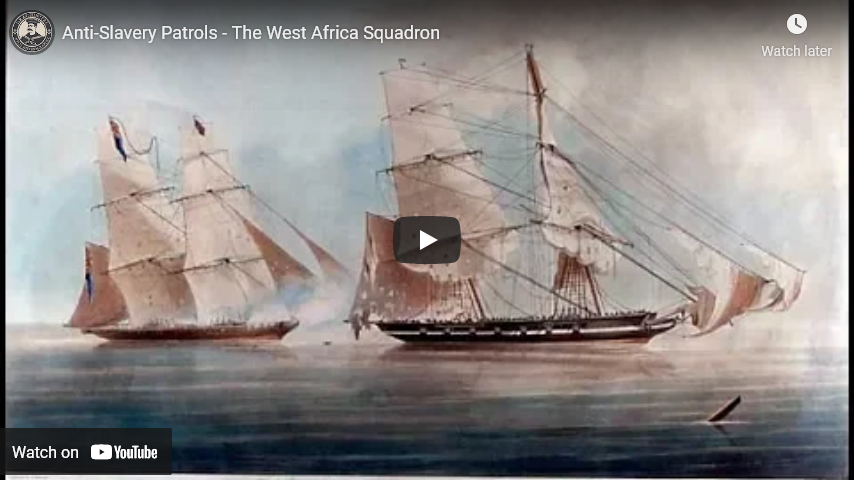
Comments Off on Anti-Slavery Patrols – The West Africa Squadron
September 2, 2021
QotD: The Boer War
The last event in Queen Victoria’s reign was the Borewore, or, more correctly, Boerwoer (Dutch), which was fought against a very tiresome Dutch tribe called the Bores, because they were left over from all previous wars.
The War was not a very successful one at first, and was quite unfair because the Boers could shoot much further than the English, and also because they were rather despicable in wearing veldt hats and using PomPom bullets.
Numerous battles were fought against the Bore leaders (such as Bother, Kopje, and Stellenbosch) at Nek’s Creek, Creek’s Nek, Knock’s Knee, etc., and much assistance was given to the British cause by Strathcoma’s memorable horse (patriotically lent by Lord Strathcoma for the occasion) and by the C.I.D., who fought very bravely and were awarded a tremendous welcome on their return to London after the war.
Finally, the people at home took upon themselves the direction of the War and won it in a single night in London by a new and bracing method of warfare known as Mafeking. Thus the English were once more victorious. Memorable Results The Barwar was obviously a Good Thing in the end because it was the cause of Boy Scouts and of their memorable Chief Scout, General Baden Powell (known affectionately as ‘the B.O.P.’), and also because it gave rise to a number of very manly books, such as 40 Years Beating About The Bush, 50 Years Before The Mast, 60 Years Behind The Times, etc.
Death of Queen Victoria
Meanwhile Queen Victoria had celebrated another Jamboree, called the Diamond Jamboree (on account of the discovery of Diamond mines at Camberley during the Borewore) and after dying of a surfeit of Jamborees, Jokes, Gladstone, etc., had been succeeded by her son, Edward VII.
W.C. Sellar & R.J. Yeatman, 1066 And All That, 1930.
Comments Off on QotD: The Boer War
August 29, 2021
Yamamoto: Midway Round Two? – World War Two – 157 – August 28, 1942
World War Two
Published 28 Aug 2021The Battle of the Eastern Solomons takes place this week — another carrier battle. As for the Germans, they’re advancing on Stalingrad, slowing down in the Caucasus, and Erwin Rommel is preparing to launch another assault in North Africa.
(more…)
Comments Off on Yamamoto: Midway Round Two? – World War Two – 157 – August 28, 1942
August 15, 2021
Denel NTW 20: A Multi-Caliber Anti-Materiel Rifle
Forgotten Weapons
Published 7 Sep 2018http://www.patreon.com/ForgottenWeapons
Cool Forgotten Weapons merch! http://shop.bbtv.com/collections/forg…
Created by noted South African gun designer Tony Neophytou, the NTW-20 is a bolt action anti-materiel rifle made in 20x82mm, 20x110mm, and 14.5x115mm. The weapon began as idea to use the large quantities of surplus 14.5mm ammunition available at the time, and a recognition that the 14.5mm Soviet cartridge was an excellent anti-armor round, with a really remarkably high muzzle velocity. To widen the rifle’s capabilities, it was decided to incorporate an easily interchangeable barrel, and also chamber it for the 20x82mm round used in the Inkunzi PAW individual weapon and Inkunzi Strike machine gun. The 20x82mm is low velocity compared to traditional 20mm cartridges, carrying the same explosive or incendiary payload but without the punishing recoil of what was originally an aircraft cannon cartridge.
Both of these cartridges are fed from a 3-round box magazine on the left side of the action. A single-shot version in the longer 20x110mm cartridge was also developed by request of a military client, but this cartridge is too long to fit the magazine. A version in .50 BMG was considered, but decided against on the basis of the 14.5mm being just as available and substantially more effective.
The gun is liberally sprinkled with clever engineering and design features — things like using the recoil-absorbing travel of the action to recock the hammer, and the use of both 20mm and 14.5mm cartridge cases as levers for unlocking the barrel. The optic was custom made for the rifle, an 8x56mm long eye relief scope to prevent any chance of the scope bell injuring the shooter during recoil. The trigger mechanism uses only a single spring, and is easily removed from the action. The bolt handle itself is on a pivot pin, and provides the primary extraction leverage to ensure easy cycling with the high-pressure 14.5mm cartridge.
From a military perspective, the NTW-20 is easily broken apart into barrel and action loads, and can be transported more easily than any comparable weapon by a two-man team. The use of a recoil buffer in the action and an effective muzzle brake makes it a remarkably pleasant 20mm rifle to fire. Of all the anti-material rifles I have fired (Lahti L39, Solothurn S18-1000, Mauser T-Gewehr), the NTW-20 was by far the most comfortable to shoot. It was also the only one in which I jumped at the chance to fire more rounds once the filming needs were met. It certainly has a kick, but not at all a painful one.
Many thanks to Denel Land Systems for allowing me to try out this very cool rifle!
If you enjoy Forgotten Weapons, check out its sister channel, InRangeTV! http://www.youtube.com/InRangeTVShow

Comments Off on Denel NTW 20: A Multi-Caliber Anti-Materiel Rifle
August 5, 2021
Gordon Ingram’s Westarm .308 Battle Rifle
Forgotten Weapons
Published 2 Apr 2021http://www.patreon.com/ForgottenWeapons
https://www.floatplane.com/channel/Fo…
Cool Forgotten Weapons merch! http://shop.bbtv.com/collections/forg…
In the late 1970s and early 80s, Gordon Ingram came close to producing a military rifle in one of the most convoluted international arrangements I’ve yet heard of. Prototypes were made in Italy using British raw castings, to be tested in Somalia as part of a project to build a rifle factory there with Dominican Republic expertise from the San Cristobal armory. Somalia actually ordered a large quantity of rifles in 7.62x39mm, but Ingram prototyped the design in .223 and .308 as well.
Mechanically, the rifle was essentially a scaled-up M1 Carbine with a long stroke gas piston instead of a gas tappet. The production guns were select-fire, but the handful or prototypes brought into the US were semi-automatic only, to meet import requirements. In .308, the rifle used FAL magazines, while the .223 ones used AR magazines and the 7.62x39mm ones AK magazines.
Unfortunately for Ingram (but predictably), the project fell apart as the result of financial corruption among the many interested parties. The Somali government ended up paying out something like $5 million US and all they got for it were 10 unreliable prototype rifles.
Contact:
Forgotten Weapons
6281 N. Oracle 36270
Tucson, AZ 85740

Comments Off on Gordon Ingram’s Westarm .308 Battle Rifle
August 1, 2021
Not a Step Back! – Wehrmacht Closes in on Stalingrad – WW2 – 153 – July 31, 1942
World War Two
Published 31 Jul 2021Operation Edelweiss opens with a blast, and as the Wehrmacht closes in on Stalingrad, Stalin issues that famous order. There aren’t just big actions in the East, the Japanese have landed in New Guinea, the Allies try one more offensive at El Alamein, and the Americans have locked in on Guadalcanal.
(more…)
Comments Off on Not a Step Back! – Wehrmacht Closes in on Stalingrad – WW2 – 153 – July 31, 1942


