As always, I’m not closely following whatever movies Hollywood chooses to extrude, but I do see the occasional high and low lights from the reactions of others. The latest attempt to portray Homer on screen isn’t finding it easy to get potential viewers excited:
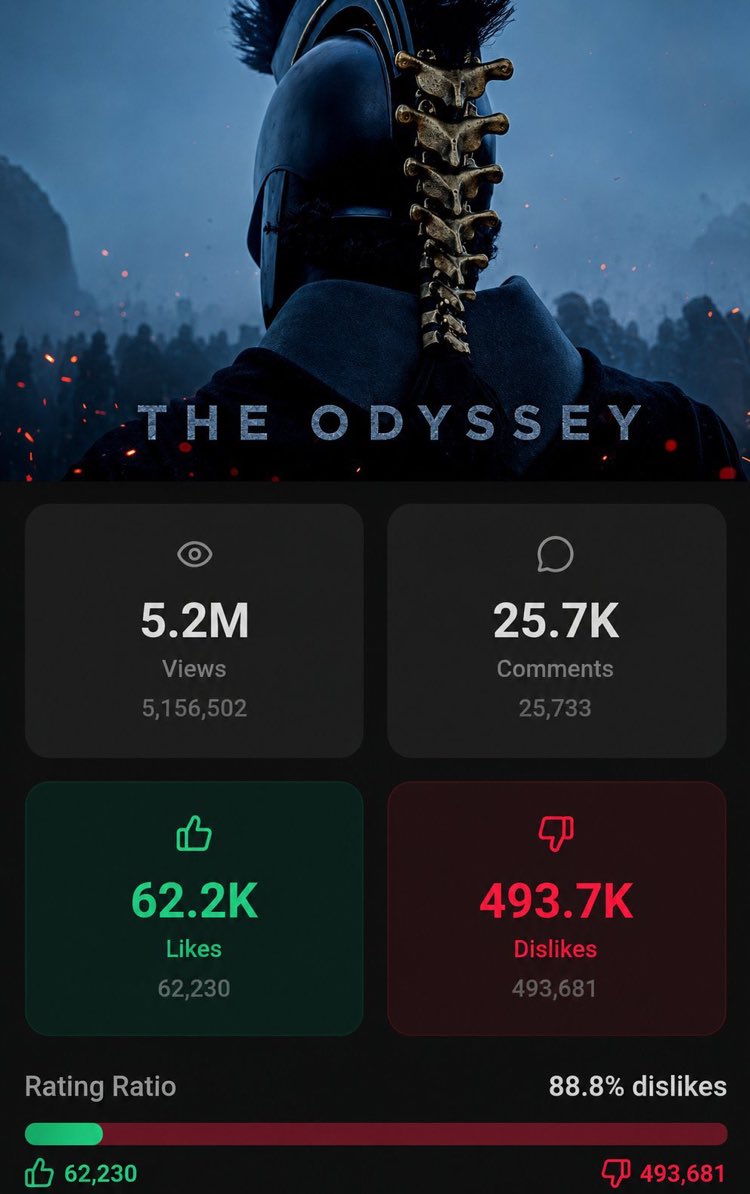
The public reaction to the Odyssey trailer is a strong indication that Nolan’s reputation won’t be enough to prevent this turd from leaving a smoking crater in the studio’s budget.
People are sick of blackwashing. They’re sick of girlboss reimagining. They’re sick of every movie turning into a sermon.
Does this mean that a Tipping Point will be reached, that Hollyweird will finally sit up and pay attention to the dashboard full of red warning lights and sirens screaming for its attention?
Lol. Lmao.
The cultural revolution means that everyone in a position to do something has been replaced with religious fanatics who don’t care about nonsense like “money”.
Just like every other institution they suborned.
They are crashing the plane with no survivors, and as it goes down in flames they will take the opportunity for a final smug lecture about how the failure of the audience to appreciate them demonstrates that the audience are nothing but white supremacists.
I’ve seen speculation that the current crop of “big” movies were all in early production just at the peak of a few trends that have since receded in popular culture — girlbosses and general wokeness — and it might just be a matter of timing … or it could be that Hollywood’s movers and shakers are still determined to press on with the undiluted progressive message even if it means losing hundreds of millions of dollars with every new release.
On the topic of The Odyssey, Ted Gioia talks about his own discovery of Homer as a youngster and says “youngsters were Homer’s target audience — you can feel that at every turn in his story”:
The first work of classical literature that thrilled me to the depths of my soul was the Odyssey. It made such a big impact that, decades later, I insisted on reading it aloud to my own children, hoping they would feel that same magic.
I was little more than a child back when I discovered Homer — 12 or 13 years old, I’d guess. Back then I knew more about comic books than serious literature. But I was outgrowing Spiderman and Superman, and decided to take a chance on Odysseus.
I approached this book with fear and trembling — worried it might be too difficult. But I soon discovered that Homer was the Stan Lee of antiquity. He told adventure stories not much different from the ones peddled by Marvel or DC.
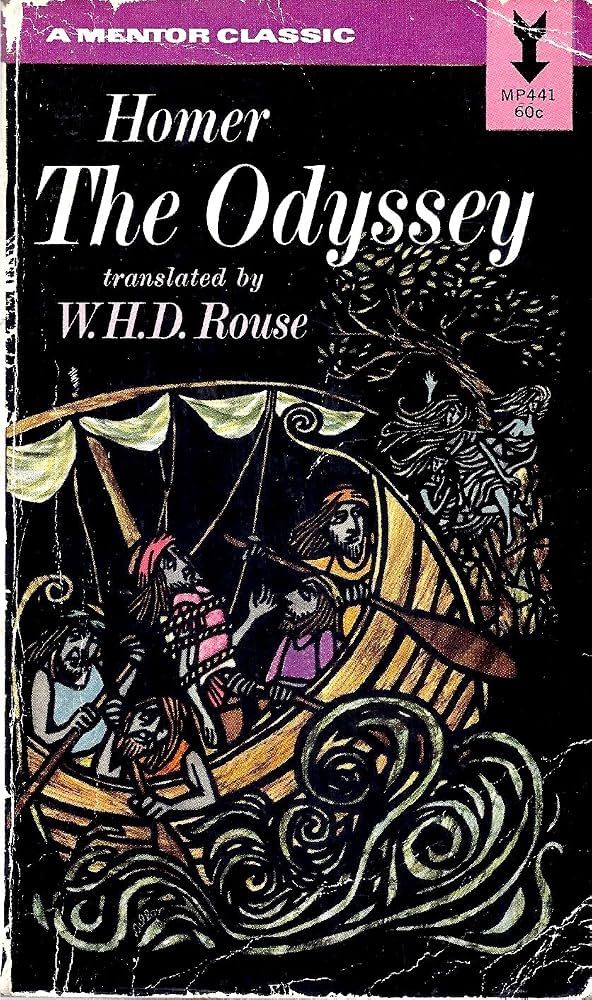
I’d somehow gotten my hands on a tattered used paperback copy of the Odyssey, in a 1937 prose translation by W.H.D. Rouse — published by Mentor Classics (cover price when new = 60 cents). This is not a respected translation — they will never assign Rouse’s version of Homer at any Ivy League college. [NR: I think this is the way I first encountered The Odyssey … possibly this version in Grade 5 as it was a prose translation.]
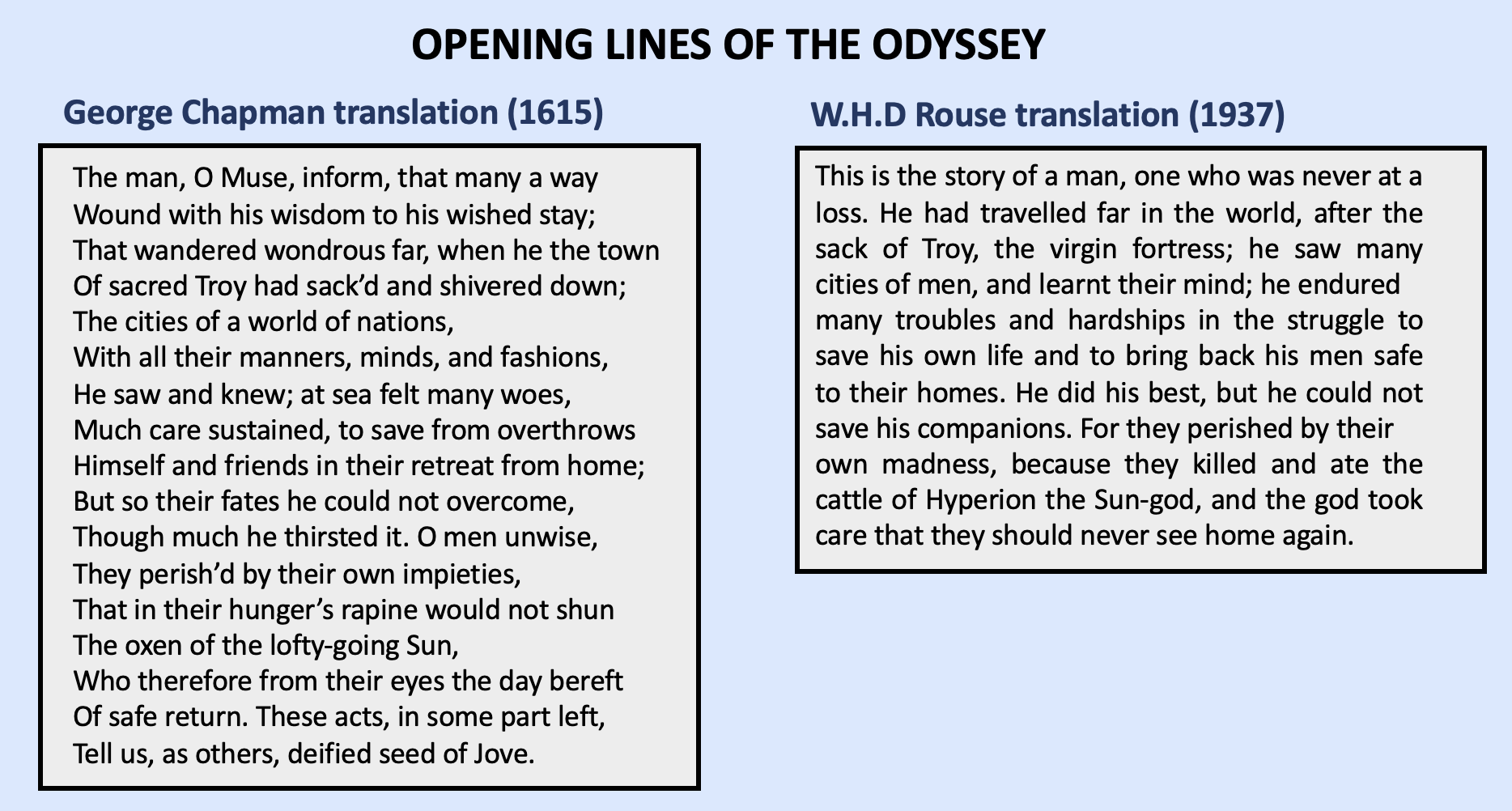
That’s because the legit translators try to convey this epic as poetry. Rouse made no attempt at that. He just turned Homer into everyday language, just like it was a pulp fiction story for the mass market.
That was the right choice, he believed, because (as he wrote in his introduction): “The Odyssey is the best story ever written … It has been a favorite for three thousand years”. Other translations of this book are, he claimed, “filled with affectations and attempts at a poetic language Homer himself is free from. Homer speaks naturally and we must do the same.”
You can see the difference by comparing Rouse’s rendering of the opening lines with the esteemed Chapman translation from Shakespeare’s era.
Is this the best version of Homer? I won’t go that far — years later I became very fond of Robert Fitzgerald’s translation. But I will insist that Rouse is the superior version for a youngster. And, in many ways, youngsters were Homer’s target audience — you can feel that at every turn in his story.
So this is the first thing about the Odyssey you won’t learn at Harvard — namely that this tale was not intended for Harvard elites. It’s a story for everybody. So it’s an obvious choice for a big-budget Hollywood movie. There was no pretension or elitism in Homer’s approach. In today’s parlance, you would say that he was appealing to a mass audience.
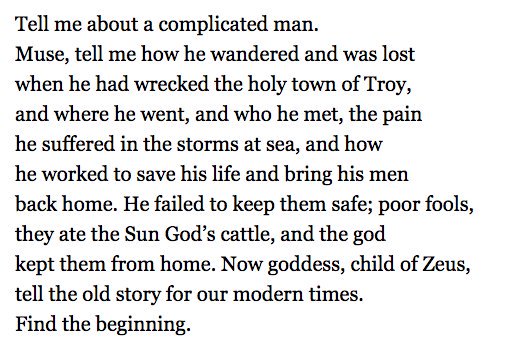
Director Christopher Nolan — whose screen version of the Odyssey makes its debut in London today — relied on the more recent Emily Wilson translation of the Odyssey into iambic pentameter. In her version, our hero is described, like Shaft, as a complicated man who won’t cop out (when there’s danger all about). Okay, she doesn’t use those exact words, but comes close …
Emily Wilson’s translation of the opening lines of the Odyssey
I like this rendering, and can almost hear that Isaac Hayes synth vamp in the background. Wilson is just as straightforward as Rouse — living up to her aspiration to “tell the old story for modern times”.