Quotulatiousness

December 8, 2025

If Britain’s political leadership were trying to destroy the country, what would they have done differently?

My Canadian readers — and possibly the occasional Aussie or Kiwi — can read Spaceman Spiff‘s essay and feel it applies almost 100% to our respective nations as well:

Image from Postcards from the Abyss

Britain is a disaster. The country seems to be in terminal decline.

Not only do we see a lack of ability to turn things around we witness leaders and prominent decision makers evidently clueless about normal life and the hardships many now face.

The political and media classes best reflect this phenomenon. Their views are insular, fictional and at odds with reality. They promote unorthodox ideas that are widely derided yet their enthusiasm is evident as are their hostile responses to being challenged.

Minor comments about immigration are treated as precursors to genocide. Criticism of a biased media unwilling to report events is dismissed as conspiracy. No discussion of climate policy and its unaffordable costs is tolerated. Deviation from the establishment view means excommunication and social exile.

Those in leadership positions drive Britain’s descent into authoritarian governance. Attempts to discuss changes to society leads to extreme overreactions, including jailing noticers, something they now boast about.

Britain has become a madhouse. Our leaders are unable to think like normal people. None of them are facing reality. They seem crazy.

Or, rather, they seem neurotic.

Neurosis is everywhere

Britain has degenerated into a technocratic regime that views the public as its enemy. Normal people disgust the country’s leaders and it shows. They no longer hide their contempt.

But there is a palpable sense of fear emanating from the powerful. Their reactions to normal events paint a troubling picture of who is leading the country, particularly the political and media classes.

If the British establishment were a person we would think them mentally unstable. The qualities we see most are those of a neurotic individual, a type that is well understood.

Here are some features visible in Britain’s ruling class.

Chronic anxiety and worry

A key attribute of neurosis is persistent fear or worry. Rumination is commonplace, circling around and around the same problems. There is also a tendency to overreact, with the response disproportionate to the issue at hand.

The current British regime is wracked with anxiety and worry. This defines them. They are vocal about their concerns.

We are reminded of an endless series of horrors we must attend to; systemic racism, lack of diversity, an imperial past and our cultural dominance along with our impact on the world.

One simple example illustrates the degree to which minds can become distorted by excessive worry.

James Watt perfected the steam engine in 1769 which kickstarted in the industrial revolution, changing the world forever. This would ultimately elevate most nations on earth and led eventually to the establishment of cheap abundant energy for almost everyone.

Until recently these events were viewed as an epoch-defining moment of engineering brilliance. Now this has been recast as a dark stain on Britain’s place in the world, with climate zealots keen to blame the British for all pollution caused by industrialization.

Instead of pride we now see embarrassment and even anxiety about the “damage” Britain has done to the world because it ushered in an era of cheap widespread energy for everyone.

Any rational person would understand this extreme view to be a distortion of reality and excessively negative, yet it permeates everything. Those who rule Britain are ashamed of our past. They worry about it. Only they do this, normal people are proud of our history.

[…]

Welcome to the madhouse

A system of governance driven by neurotics takes on their characteristics. Britain has become a neurotic bureaucracy; a neurocracy.

Neurotics overthink and live inside their heads. They lack the calm, detached strength needed to govern sensibly. Power structures inevitably take on these qualities.

The British government has become paranoid. Digital IDs, internet regulation, censorship. They jail normal people for social media posts. Dissenting views are increasingly punished with custodial sentences.

These are not the actions of the mentally strong. This is an embattled minority fighting reality and becoming desperate.

A gulf is opening between the rulers and the ruled. Increasingly no common ground is even conceivable as the fictions needed to maintain narratives grow. They become overtly false but are needed to feed the neurosis.

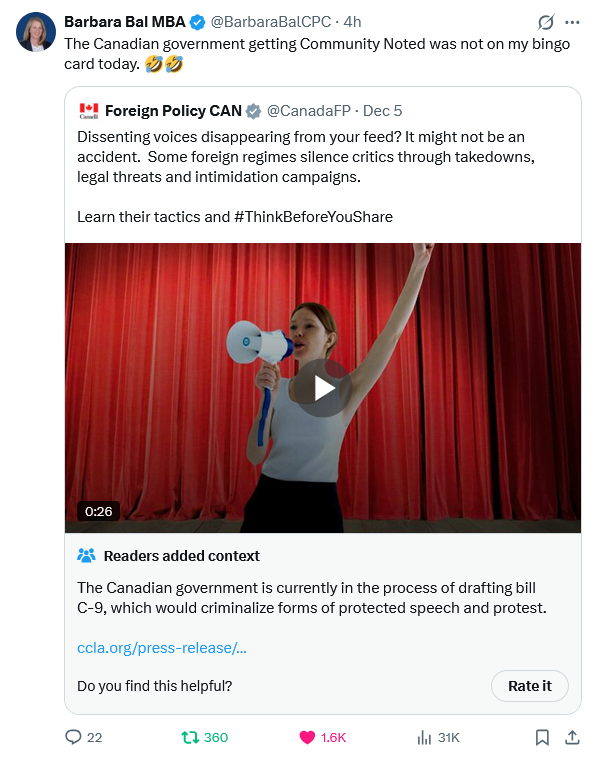
One of the things I like about the social media site formerly known as Twitter is how quickly authoritarian bullshit like this can get called out:
Update, 9 December: Welcome, Instapundit readers! Please do have a look around at some of my other posts you may find of interest. I send out a daily summary of posts here through my Substackhttps://substack.com/@nicholasrusson that you can subscribe to if you’d like to be informed of new posts in the future.


Hungary 1956: The Day Hope Met Soviet Steel – W2W 056

Filed under: Europe, History, Military, Russia — Tags: , , , , , , , — Nicholas @ 04:00

TimeGhost History
Published 7 Dec 2025

Here we trace how, only eleven years into Soviet rule, Hungary’s brief hope after Stalin’s death ignites into demands for reform, free speech, and withdrawal of Soviet troops. Students mass in Budapest, the secret police fire on demonstrators, and the uprising spreads as workers’ councils seize factories and crowds pull down Stalin’s statue. Imre Nagy promises neutrality and multi-party politics, but Moscow wavers, then sends in overwhelming force. As tanks return to Budapest, street fighting erupts, radios broadcast desperate pleas, and the revolution is crushed, leaving thousands dead and a generation convinced that the thaw was an illusion.
(more…)

“Canadian culture” apparently doesn’t include books anymore

Filed under: Books, Business, Cancon, Government — Tags: , , — Nicholas @ 03:00

In the latest SHuSH newsletter, Ken Whyte considers what the omission of financial goodies for the Canadian publishing industry in the latest federal budget (unlike the CBC, music, film and TV subsidies) says about the government’s view of what “Canadian culture” actually is:

You might have noticed that last month’s federal budget introduced a whack of new cultural spending. The CBC got another $150 million, the Canada Music Fund took $48 million, film and television raked in over $300 million. Books? Nothing.

The budget’s rationales for this new spending are to foster a sense of cultural identity and belonging in Canada, to sustain an informed citizenship, and to protect vulnerable industries. The unwritten context is the recent American assault on Canada’s independence. You would think there would be room for books in this sort of budget. Is there anything more foundational to Canadian identity and an informed citizenry than books by Canadians and about Canada?

Yet somehow our political leadership overlooked the literary sector. It’s odd. The first thing our politicians do when they want to explain or advance their own careers is knock on a publisher’s door.

Granted, it’s usually the door of an American publisher, because the net result of our government’s efforts to nurture the publishing sector in Canada over the last several decade has been to drive Canadian-published books from more than 20 percent of those sold in Canada to less than 5 percent. We have the weakest domestic publishing industry in the developed world. Our prime ministers think nothing of taking their books to New York-based Penguin Random House or Simon & Schuster. Most of our most prominent fiction writers give all their North American rights to US publishers instead of separating out Canadian rights and leaving them with a Canadian publisher. It’s a travesty.

I have a solution. In fact, I have many solutions. I have a whole book of solutions coming in January from Canadian public policy guru Richard Stursberg. It looks like this:

Richard’s solutions are not the same as my solutions. I like his, too. I’m not picky. I’m going to flood the zone with solutions and hope people in Ottawa wake up to the fact that we have a problem. The solutions will almost all involve more public support of the industry, not because I’m keen on public support of the industry, but because we have ample proof that the alternative to more public support is no domestic book publishing industry. Also, if you’ve been following us here (see SHuSH 232, The Wasteland), you know this is a “you broke it, you own it” moment for our federal government.

So here’s my solution de jour. Given that books are fundamental to any notion of Canadian identity, given that our domestic publishing sector is pathetically weak, given that any self-respecting country needs to be able to publish its own stories rather than rely on the branch plants of an increasingly difficult neighbour to do it for us, we arrange the following.

We massively expand Canada’s public lending right program (PLR). At present, the ridiculously underfunded PLR pays out about $15 million a year to some 20,000 authors whose books are circulated in Canada’s public libraries. The distributions are based on a complicated formula that mostly notices how many libraries hold the author’s book. It’s capped at $4,500 an author, and most receive only a few hundred dollars annually.

We expand the PLR’s spending envelope by a factor of ten: $150 million. Does that sound like a lot of money? It’s not. It comes to about $3.75 per capita. That’s about a tenth of what we spend annually on the CBC, which employs roughly the same number of people as book publishing. It’s about a tenth of what we spend in direct funding and tax credits on film & television. It’s less than half what we’re spending on newspaper and magazine subsidies. A small price to rebuild a decimated publishing sector.

I think you could argue that the dollar amount should be much higher. As a society, we believe that books are more important than the products of other media. The governments don’t give you free cable or a free opera pass or a free spotify subscription: they give you free books through public libraries, because books are that important to the well-being of our citizenry. We’re so good at promoting the value of our public libraries that four out of every five books read in Canada are borrowed rather than bought. If books are that important, $150 million is a bargain.

Eating aboard a US Submarine during World War 2

Filed under: Food, History, Military, Pacific, USA, WW2 — Tags: , , , , — Nicholas @ 02:00

Tasting History with Max Miller
Published 1 Jul 2025

Slow-cooked steaks with tomatoes and onions with mashed potatoes and gravy

City/Region: United States of America
Time Period: 1945

Being a crew member aboard a submarine during World War II was one of the most dangerous jobs in the US military with a fatality rate of over 20%. This, and the extremely cramped and uncomfortable quarters, were why the food aboard a US sub was really good. If nothing else, at least you had delicious food to keep you going.

These steaks cook up to be fall-apart tender and delicious, and the mashed potatoes have wonderful flavor, even if the texture is a little different from regular mashed potatoes. They kind of remind me of the mashed potatoes I’d get as a kid in school, which were also probably made from dehydrated potatoes.

    SWISS BEEF STEAKS
    Portion: 1 (6-ounce) steak.
    100 PORTIONS
    Beef, bone-in……60 pounds
    OR
    Beef, boneless……42 pounds
    Flour……2 pounds……1/2 gallon
    Salt……6 ounces……3/4 cup
    Pepper……1/2 ounce……1 3/4 tablespoons
    Fat……2 pounds……1 quart
    Tomatoes……12 pounds, 12 ounces……2 No. 10 cans (6 1/2 quarts).
    Onions, sliced……6 pounds……4 1/2 quarts
    Salt……1 ounce……2 tablespoons
    Flour (for gravy)……1 pound……1 quart
    Water, cold……
    Cut meat into 6-ounce steaks 1 to 1 1/2 inches thick.
    Sift together flour, salt and pepper. Pound into steaks.
    Cook steaks in fat until browned on both sides. Place in roasting pans.
    Add tomatoes. Cover with onion slices. Sprinkle with 1 ounce salt.
    Cover pans. Cook in slow oven (300°F.) 3 hours or until steaks are tender.
    Drain liquid from Swiss steaks. Make a paste of flour and water. Stir into steak liquid. Cook until thickened. Pour over steaks. Reheat.

    MASHED POTATOES (Using dehydrated, shredded potatoes)
    Portion: Approx. 4 1/2 ounces (approx. 2/3 cup).
    100 PORTIONS
    Water……5 pounds, 8 ounces……2 gallons
    Potato shreds, dehydrated, precooked……5 pounds……2 gallons
    Salt……3 ounces……6 tablespoons
    Milk, liquid, hot……3/4 gallon
    Butter, melted……1 pound……1 pint
    Heat water to vigorous boil. Pour over potatoes. Cover.
    Let stand in warm place 15 minutes or over low heat 10 minutes.
    Add salt. Stir vigorously 15 to 20 minutes or until smooth.
    Add milk and butter. Whip until light. Serve immediately.
    The Cook Book of the United States Navy by the United States Department of the Navy Bureau of Supplies and Accounts, Washington, D.C., 1945

(more…)

QotD: Austerity versus “austerity”

Filed under: Economics, Government, Media, Quotations — Tags: , , — Nicholas @ 01:00

Too great attention to the use of language is a distraction from the essential and easily becomes mere pedantry; but to pay too little is to risk being deceived or manipulated by those who use language wrongly. Words, Aristotle said, should not bear more precision than possible; but neither should they bear less than possible.

Words have connotations as well as denotations, and one way of insinuating an untruth into someone’s mind is to disconnect the two, so that the denotation and the connotation are at variance and even opposite. An excellent example of this is in the use of the word austerity as applied to certain government economic policies. Frequently one reads, for example, that the difficulties of countries such as Britain and France in the matter of responding to the Covid-19 epidemic were caused by previous government austerity, that is to say, failure to spend more. But irrespective of whether, had the governments spent more (and France already devotes a greater proportion of its GDP to healthcare than the great majority of countries at the same economic level), the epidemic would have been more easily mastered, their policies in restricting their expenditure cannot be called austerity, because they still spent more than their income: as, in fact, they had done almost continually for forty years.

Supposing I were to say, “This year I’m going in for austerity. Last year I spent ten per cent more than my income, but this year I am going to spend only five per cent more,” you would think I were uttering a sub-Wildean paradox. But if I were to say only, “This year I’m going in for austerity,” you would think I were going to wear a hair shirt and subsist on locusts and honey. To say that the British and French governments have exercised austerity is to mean the first and imply the second, which is clearly dishonest: though we should note that the proper term, reduction of the deficit, is neutral as to whether it is economically wise or unwise. After all, I can borrow equally to start a business or drink champagne for breakfast.

Theodore Dalrymple, “Controlling Thought”, New English Review, 2020-06-09.

Update, 9 December: Welcome, Instapundit readers! Please do have a look around at some of my other posts you may find of interest. I send out a daily summary of posts here through my Substackhttps://substack.com/@nicholasrusson that you can subscribe to if you’d like to be informed of new posts in the future.

December 7, 2025

“Anglofuturism” – slogan or beacon of hope?

At Without Diminishment, Robert King argues for Anglofuturism as the most hopeful path forward from the morass all of the Anglosphere seems to be bogged down in:

(From the Ministry of Space, created by Warren Ellis, 2004.)

Born in the digital backwaters of podcasts and Substacks, Anglofuturism has climbed into public view like a rocket nearing the King Charles III Space Station, gathering both attention and indignation as it ascends.

The New Statesman mutters about it being rooted in “nostalgia“, while the far-left activist group Hope Not Hate insists it is something deeply sinister. Yet their agitation merely confirms a familiar sequence. First, they ignore you, then they laugh at you, then they fight you, and then you win.

At its essence, Anglofuturism is a project of civilisational renewal.

It begins with the conviction that Britain’s decline is not destiny but a decision, and the consequence of decades of political miscalculations that consider the national story to be over, Britain’s very own “end of history”.

Just turn on the news and you will see evidence for this everywhere. Strategic islands like the Chagos Islands surrendered to the vassals of hostile powers. A once-thriving energy sector crippled by the ritual self-flagellation of net zero policies, despite abundant North Sea oil resources.

The capital city of London, once envied for its composure, now deafened by the shrill chants of imported grievances, “From the river to the sea”. Britain was once a country whose streets were said to be paved with gold, according to the legend of Dick Whittington.

Today, they are paved with boarded banks, betting slips, and vape shops. The country’s future is already playing out in London, a place where the nation of Britain has faded into the idea of “the Yookay”. Britain is told that because it once colonised, it must now invite colonisation, that because it once conquered, it must now submit.

The result is a people bending ever lower in the hope of forgiveness from a self-appointed virtuous minority at home, and from the ever-growing numbers of strangers who now claim the country as their own.

Anglofuturism is the vanguard against this ideology. It insists that love of one’s civilisation is a duty, not a sin. It binds identity to optimism, and pride to ambition. It seeks to remind Britons that its best days may yet lie ahead, but only if it learns once more to have confidence in itself.

[…]

The policy of splendid isolation simply will not work for the twenty-first century.

Enter CANZUK, the proposed alliance of Canada, Australia, New Zealand, and the United Kingdom. Four constitutional monarchies, four democracies, and four maritime powers linked by law, language, and lineage. Together they would represent over 140 million people and a combined GDP exceeding $6 trillion. It would be a realm on which, once again, the sun would never set.

Our shared day of remembrance on November 11 is a reminder that we partake in traditions born of shared sacrifice.

Such a bloc would not be a re-creation of empire, but a confederation of equals who share the responsibilities of defence and trade, coordinating space and science, and projecting stability from north to south and east to west.

It could stand apart from American turbulence, Chinese authoritarianism, and European stagnation, and be a new civilisational pole rooted in innovation and freedom under common law. It could even be a new contender to lead the free world.

Britain is still a nation successful at exporting ideas like capitalism, liberalism, and, regrettably, Blairism. Anglofuturism could be its most powerful export to the Anglosphere yet.

For those of us at the edge of that world, in Cape Town, Perth, or Vancouver, the message of Anglofuturism is that our story is not over. Our civilisation may be weak, even fading, but it can be revived. Doing this will demand the same courage that built it, in the spirit of the pioneers and soldiers, the engineers and thinkers who shaped continents and defended freedom when it was under siege.

Like this, but better.

Can Hitler Be Tamed? – Rise of Hitler 22, October-December 1931

Filed under: Germany, History — Tags: , , , , , — Nicholas @ 04:00

World War Two
Published 6 Dec 2025

The so-called “Boxheim Papers” are leaked to the public this fall. These outline what the Nazi Party would do should there be a Communist coup; it involves a lot of people being shot or starved, and paints a rather haunting picture of what Nazi rule may be like in general. The Nazi Party, though, continues to grow in popularity, and President Hindenburg even meets with Adolf Hitler for the first time, indicating to the country and the army that Hitler is no longer an upstart, but a legitimate political force.
(more…)

The great military leaders of the past have been … quirky

Filed under: Bureaucracy, History, Military, USA — Tags: , , , — Nicholas @ 03:00

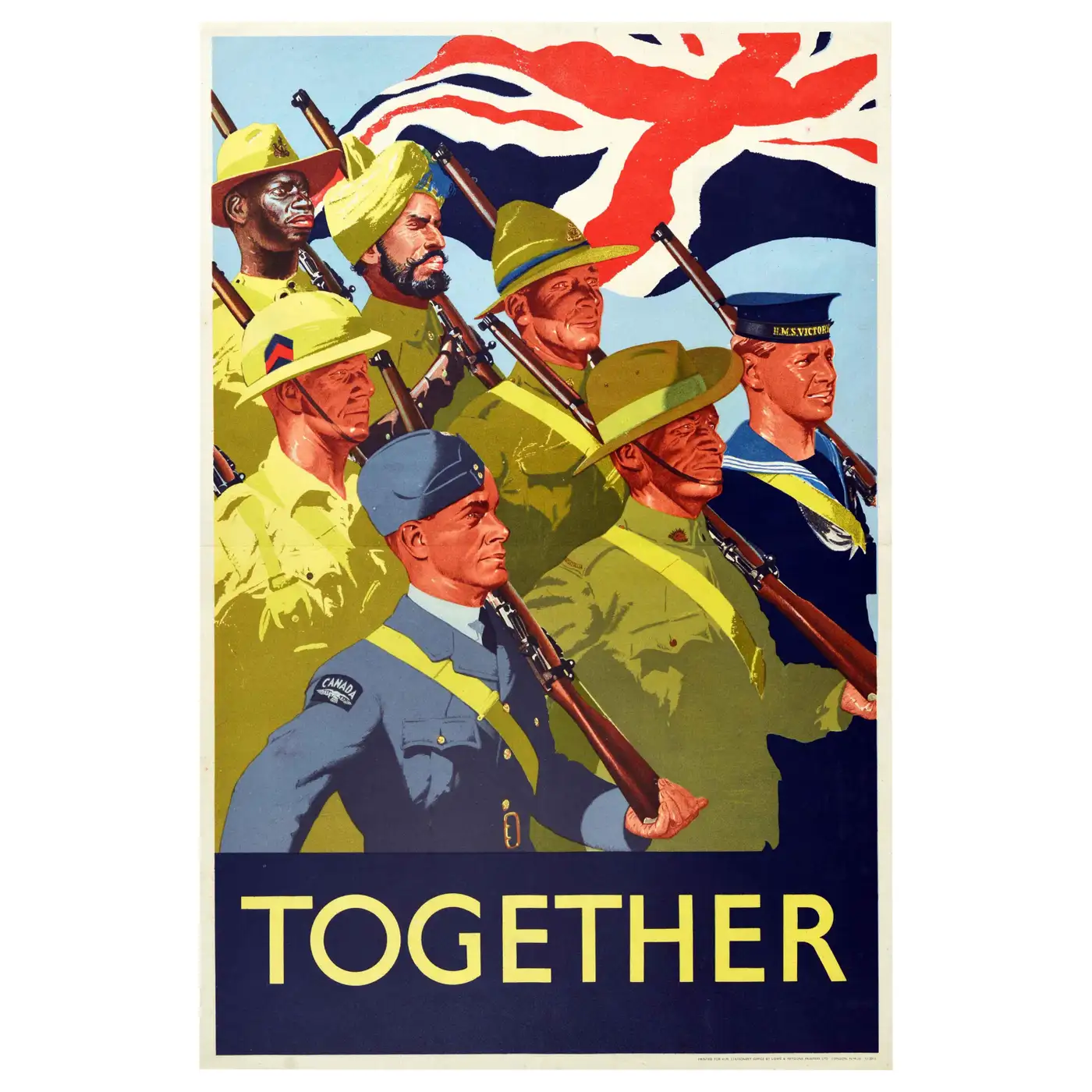
On the social media site formerly known as Twitter, @InfantryDort considers the clear evidence that most of the greatest generals of history were, at the very least, eccentric:

Most real post I’ve seen all month.

Yes, the process weeds them out.

Until all that remains is some corporatized astroturfed version of … whatever.

Military commanders in the modern era MUST lack personal audacity to some degree. Almost without exception.

Because audacity is “dangerous”. It can be unpredictable. And this is a bad thing in a world obsessed with safety and predictability.

But a military without it, is just one on anti-depressants. You never feel the highest highs or the lowest lows.

You just … exist, in inspirational purgatory.

So you will never see a Napoleon, Patton, Allen, or Sherman ever again.

Their modern equivalents mostly got out as captains because the experience they were promised from history, is now covered in bubble wrap. Wearing a bib and a football helmet.

The modern military is devoid of both victory and defeat. A victory you aren’t allowed to win. A defeat you can explain away. Much of it is due to the American people themselves, and their disdain for violence. At least violence against what sane people classify as enemies.

We have a chance to take it back. A chance to return to glorious and sometimes unhinged leadership. But the rot is thick. And the Empire Strikes Back daily.

My infinite gratitude, and the gratitude of a fawning nation, will rest with those who display the force of will to make it happen.

And crush the corporatization of military leadership once and for all.

The world awaits. And one wonders if our country has the appetite for it all, short of an existential crisis in a war of national survival.

Update, 8 December: Welcome, Instapundit readers! Please do have a look around at some of my other posts you may find of interest. I send out a daily summary of posts here through my Substackhttps://substack.com/@nicholasrusson that you can subscribe to if you’d like to be informed of new posts in the future.
History Summarized: Quebec’s Architectural Memory

Overly Sarcastic Productions
Published 1 Aug 2025

Congratulations, you just got Chateau’d.

Ten years ago I visited Quebec City with my dad, this summer the two of us went back, and today I bring you the analytical fruits of a visit well spent. (Let it be known I did my best attempt at Quebecois, recalling pronunciation differences like Frontenac condensing to “Frotnak”, but otherwise defaulting to Metropolitan French when I wasn’t sure of local pronunciations. Alas, any attempt to “split the difference” between Quebecois and Metropolitan French will invariably result in utter disaster. For this, je suis désolé.)
(more…)

QotD: The Great Applesauce Blight of 1977/78

Filed under: Americas, Food, Military, Quotations, USA — Tags: , , , , — Nicholas @ 01:00

“An Army marches on its stomach.” — Napoleon

As we take our own little march down memory lane, let me state up front that I can’t stomach applesauce, just can’t. I liked it as a kid but now it has less appeal than the prospect of being duct taped to a chair, face down, in prison. Yeah, I hate it.

This may seem unreasonable, but anyone who was in at the time, at least in the Army or Marines, and some portion thereof that actually went to the field a lot, will probably remember the Great Applesauce Blight of 1977 and 1978, which was the reason I can’t stand the crap.

The “Great Applesauce Blight?” you ask. Oh, yeah.

The story I got, after some years and some digging, goes like this: It seems that sometime in the late 1960s or early 1970s, a fruit company – the Monterey Fruit Company, so it was said – was going out of business. So the Monterey Fruit Company, if that’s who it really was, called the Department of Defense and said, “Boys, have we got a deal for you. Hundreds upon hundreds of tons of Grade A applesauce, and you can have it. All of it. Cheap.”

McNamara and his Whiz Kids – neither of them ever sufficiently to be damned, of course – were gone, but their spirits remained. Department of Defense, ever conscious of the value of a well-squeezed penny, bought that inventory of applesauce, and began to put it into the old style, canned, MCI; Meal, Combat, Individual, which is to say, “C-rations”.

C Rations of the day were entirely canned and composed of a main meal, for one meal, plus either a cake (or very rarely, canned bread) or fruit of some kind, usually a small tin of peanut butter or cheese of some kind of jam or jelly, and one or another type of B Unit, which would have some variant of crackers plus either candy or cocoa. Sometimes, as with the B-2 unit, the cheese was in those.

Now, perusing a case of 1978 C-rats, which would have been newer than those of the Great Applesauce Blight, but still broadly similar, one notes that there were twelve menus, twelve different main meals, and 12 different kinds of dessert, a sundry pack, plus variable candies, spreads, etc. Of that latter twelve, eight were fruit and four were cake of some kind. I seem to recall that, possibly for reasons of economy, the amount of fruit during the Great Applesauce Blight had gone up to usually ten cans out of twelve, some extra cheese or peanut butter seemed to be included with some, and the cakes went down to two, one of which was going to be Chocolate Nut Roll, essentially inedible, from the Nashville Bread Company and the other would be the even more thoroughly disgusting fruit cake. I don’t recall who made that, and that lack of memory may have been an automatic defense against a future charge of capital murder. None of the cakes except pound cake could be relied on to be edible, and pound cake was always rare.

Now picture this, you’re a soldier in the Panama Canal Zone, training – training hard – to fight for the Canal, living in the jungle maybe twenty-five or more days and nights a month, eating C-rats to the tune of sixty or seventy a month, and virtually every meal contains applesauce or something more innately disgusting. “No, none of that nice fruit cocktail or those ever so delectable pear slices for you, young man; Department of Defense, to save a few bucks, has determined that applesauce is good enough, three meals a day, for weeks on end.”

*****

Now we were already kind of thin, because no military feeding system can ever completely keep up with the caloric requirements for a soldier either continuously fighting or realistically training to fight. Normally, this isn’t a problem because he can pack it on in the mess hall. These were unusual circumstances, though, with an unusually high chance of fighting – or riot control, which is worse – over the Canal. So we’re pretty much living out there, in pretty much trackless jungle, with nothing like enough helicopters for regular hot rations from the mess. Besides that, the old 193rd Infantry Brigade, in the Panama Canal Zone, was unusual in that it made a very serious effort to train even the cooks to fight, which takes time, too. C’s are pretty much it.

Even so, thin and hungry or not, after a month or two we could not eat the applesauce. That was probably seven or eight hundred calories a days that just got tossed.

We began going from thin to frigging emaciated.

*****

When I think upon the Great Applesauce Blight, though, I do not think about hardship or hunger. No, I think – as we old farts are wont to – about happier aspects of it.

Now this is no shit:

There we were, the heavy mortar platoon of 4th Battalion, 10th Infantry, stuck on top of a non-descript hill somewhere southwest of Gamboa, Canal Zone.

PFC McBrayer had a birthday out there in the jungle. I think it was his nineteenth birthday. None of us had been able to do any shopping, so we were all just stuck for getting him a birthday present. “I’m not giving up my pet scorpion,” said Big Al, who in fact, had a pet scorpion for the mega-ant versus scorpion gladiatorial combats we used to stage. “I’d offer to give him some of my crotch rot,” said Art, “but I think he already has some of his own.” “Howler monkey?” “Who’s going to catch it? And those suckers are mean, too.” “How about a sloth? They’re easy to catch.” “If the Lord God didn’t see fit to give B’rer Sloth an asshole, I don’t see why we should add to his troubles by catching him and wrapping him as a present.” Finally someone, I don’t think it was me, might have been Sergeant Sais, said, “Gentlemen, there can be only one proper gift under the circumstances,” and then he held up a – you guessed it – can of applesauce.

So we stuck nineteen or twenty Canal Zone Matches in a Nashville Bread Company Chocolate Butt Roll, invited McBrayer over, torched off the matches, sang Happy Birthday, then presented him his can of applesauce.

He was touched; you could see that. As he dashed tears from his eyes while making his, “Gee, you guys are just all so special … you shouldn’t have,” speech, you could see the emotion radiating from his face. And then, all choked up, he turned to go and tossed that can off applesauce off the hill with a casual contempt I have never seen before or since. It was the sheer, distilled essence of everything we all felt about applesauce.

Tom Kratman, The social media site formerly known as Twitter, 2025-09-05.

December 6, 2025

The least offensive kind of soft power – The Rest is History

Filed under: Books, Britain, History — Tags: , , — Nicholas @ 05:00

Ed West recounts his (very) early discovery of The Rest is History, a podcast featuring Dominic Sandbrook and Tom Holland (not that Tom Holland, I’m told). I’ve been a (free) subscriber on YouTube for the last year or two, but Ed got there much earlier than I did:

The Rest is History must be the only thing of which I can say that I was into it before it was popular, my sole experience of being an early adopter. I remember listening to the very first episode as soon as it was released, during Lockdown 2, because I had been a fan of Tom Holland for years and followed him on Twitter. Straight away, I knew that it would be an enormous success, because even people who rarely watched history documentaries or read history books would find it entertaining.

And now, as they say, “the rest is history” (ho ho). The programme has just been named Apple Podcasts Show of the Year 2025, the first ever British winner, and is beyond successful, into the realm of “phenomenon”. When television writers in the distant future make dramas set in the 2020s and wish to give immediate shorthand to establish the decade, they’ll put The Rest is History soundtrack somewhere in the background, just as they always have Tears for Fears playing on the radio during any drama set in the 80s.

It became such a huge part of my life that, when cooking or cleaning and unresponsive to questions, the children came to learn that I must be listening to “Tom and Dom” on my AirPods. Initially, of course, when I mentioned that I had actually met Tom Holland a few times, they’d respond with awe until they realised that I was not talking about the Spiderman actor. It became a running joke about “your Tom Holland” rather than the “famous” one.

During the golden years of television there were a number of shows which became so commonly popular in one’s friendship circles that they were routinely talked about – The Sopranos, The Wire, Breaking Bad or Game of Thrones – but there were always plenty of people who had never watched them; there’s so much choice, after all, and the media culture has fragmented.

As Tom and Dom discussed on an old episode about the 1990s, that was the last period when the whole country had a common popular culture. Yet The Rest is History is approaching something close to that. It’s become so all-pervading that literally everyone I know, or ever speak to, listens to it. Perhaps I live in a bubble, but it’s a warm and cosy bubble filled with chat about the Kaiser’s deck shoes and Costa Rica’s infamous Dr Valverde, a sick and twisted psychopath who liked to torture frogs. The word I’d use to describe the show is “wholesome”, a term they’re fond of, an escape from the modern world, without rancour, hectoring or — crucially — swearing.

I realised that it must have become something more than popular when I read that it was the biggest podcast in Finland. Admittedly the Finnish market is not globally important, but this obviously wasn’t some quirky localised fanbase, like Norman Wisdom in Albania. It had become big everywhere, including the largest market of all; to use an analogy that Holland might appreciate, they’d reached their Ed Sullivan moment.

[…]

All the great drama series of the 2000s I mentioned were American, and I’d even go as far as to argue that The Rest is History is now Britain’s main cultural export and proponent of soft power. While the case might be made for the Premier League or Warhammer, the Goalhanger production has far more sway on international elites and how educated, cultured people around the world see our country.

Foreigners tend to value an idea of Britishness characterised by classiness and erudition, but also humour and modesty. Yet the global popularity of our national brand is out of tune with what our own cultural elites value, which reflects their sense of cringe but often comes across as strangely parochial and inward-looking. Two erudite historians who wear their scholarship lightly, whose interests are openly Anglocentric but reflect a passionate interest in the world beyond our island, talking to the audience like a pair of friendly academics in a cosy pub in Oxford – that’s the fantasy they want.

Fans are always conscious that any show will pass its peak, and then start to decline as everyone runs out of ideas. There’s no sign of it yet, and the good thing about history is that it’s literally endless, and you can always return to the subject at greater length. Their recent series on Nelson was outstanding, despite covering previous ground, and nothing says the holiday season like that festive subject, the Nazis. I can’t wait for the eleven-episode series about the Costa Rican Civil War.

Battle of Tarawa, 1943

Filed under: History, Japan, Military, Pacific, USA, WW2 — Tags: , , , , — Nicholas @ 04:00

Real Time History
Published 5 Dec 2025

The Marine and US Army landing on the Tarawa Atoll’s Betio and Makin islands were the first operations in the new Central Pacific front of the Pacific War. Tarawa was one of the deadliest amphibious landings for the Marine Corps which hadn’t yet perfected such complex operations. But the lessons learned at Tarawa would already be applied a few months later at Kwajalein and Eniwetok.
(more…)

Canada – a subsidiary of the Brookfield Corporation

Filed under: Cancon, Government — Tags: , , , , — Nicholas @ 03:00

Melanie in Saskatchewan reminds us that Prime Minister Mark Carney’s interests seem to align far more with those of the Brookfield Corporation than with those of ordinary Canadians:

Canadians are tired of being treated like an afterthought. Eight months ago, Mark Carney parachuted into the safe Liberal seat of Nepean, shoved aside a long-serving MP, and promised voters he would be their voice in Ottawa. Today, there is still no constituency office open in the riding. Residents who need help with immigration files, CRA problems, or passports are told to send an email and wait, sometimes for several weeks. That betrayal starts at home, and Nepean is living proof that Carney’s priorities lie somewhere else entirely.

That “somewhere else” has a name: Brookfield Asset Management.

A $500-million federal “green steel” subsidy was rushed through cabinet for Algoma Steel in Sault Ste. Marie. Nothing wrong with helping steelworkers, except the electricity for the project comes almost exclusively from wind farms owned by Brookfield Renewable Partners. Mark Carney still holds roughly $6 million in unexercised Brookfield stock options that vest based on the company’s renewable-energy profits. In other words, every tax dollar sent to Algoma flows through to the bottom-line gains that Carney himself pockets.

The Parliamentary Budget Officer has already flagged the transaction as one of several in Carney’s $78-billion deficit budget that rely on “creative accounting” to hide the true cost.

This isn’t a conspiracy theory; it’s on the public record in Carney’s own ethics disclosure filed with the Conflict of Interest Commissioner Konrad von Finckenstein. The same disclosure that conveniently claims his former advisory role was “exempt” from stricter rules, rules that apply to every other cabinet minister.

While Canadians wait 33 hours in emergency rooms, watch their real wages shrink, and see layoff notices pile up at Stellantis, CAMI, and Algoma itself, the Prime Minister’s old firm is doing just fine. Brookfield’s stock is up 18 per cent since the subsidy was announced. Coincidence?

Hardly.

The hypocrisy runs deeper than one subsidy. Carney spent years on the world stage lecturing banks and governments about “climate risk and the urgent need to phase out fossil fuels”. Yet the same Alberta energy memorandum that triggered Steven Guilbeault’s resignation quietly allows new pipelines and extends oil recovery through carbon-capture tax credits, credits that, once again, flow disproportionately to companies in which Brookfield has major stakes.

Green Party Leader Elizabeth May says Carney personally assured her those provisions would never see the light of day. Nine Liberal MPs are now telling reporters, off the record, that they feel betrayed by the same broken promise.

G150: Swiss Silenced Guerrilla Anti-Materiel Rifle

Filed under: Europe, History, Military, Weapons — Tags: , , , , , — Nicholas @ 02:00

Forgotten Weapons
Published 21 Jul 2025

The G150 is a rifle specifically assembled by and for the Swiss P-26 organization: a very secretive stay-behind group intended to fight foreign occupiers of Switzerland. It was one of a series of such organizations that began with a concern during World War Two the Germany might invade, and continued during the Cold War with the threat of Soviet occupation in the aftermath of nuclear war. The P-26 group specifically was formed in 1981, and disbanded in 1991 under a cloud of controversy over its political leanings.

P-26 was armed with an assortment of weapons ideal for guerrilla warfare, including P210 pistols and suppressed MP5 submachine guns. The G150 rifle was intended to be a very quiet rifle for destroying enemy materiel like radar systems, fuel tanks, parked aircraft, and the like. About 250 were made using commercial JP Sauer actions, SIG 540 like pistol grips and folding stocks, and very large two-part suppressors. They were chambered for the .41 Remington Magnum revolver cartridge, loaded with a 408-grain subsonic bullet. The scopes were adjustable from 4-6 power (yes, 4-6: it;s a weird choice) and had BDC elevation turrets adjustable out to 200 meters.

Only three G150 rifles are known today, although the remainder may still be in some deep military storage in Switzerland. Many thanks to the anonymous viewer who arranged access to this one for me to film! To see another perspective on one of the other known examples, I recommend Bloke on the Range’s video:
BotR Exclusive! Swiss 10.4mm G150 subsonic…
(more…)

QotD: King Henry wants a divorce

Filed under: Britain, History, Quotations, Religion — Tags: , , , , , , — Nicholas @ 01:00

So, it’s 1532 and Henry VIII’s divorce case is at a critical juncture. The King’s former chief minister, Cardinal Wolsey, has failed to pull it off. The King was about to have Wolsey tried for treason (technically, for a crime known as praemunire, file that away for now) when he, Wolsey, died, but the fact that Wolsey was on his way to London for trial was a signal to the jackals: Open season. Every gripe anyone ever had about the Church in England fell on Wolsey’s head.

In 1532, then, Parliament presented the King with the Supplication Against the Ordinaries. “Ordinaries” means “members of a religious order” — basically, the Supplication is everyone’s beefs with the Church. You can read the list at the Wiki link, but they all boil down to this: The Church was effectively a state-within-the-State, operating a different system of law, taxation, etc. And that’s what praemunire means, too — “a 14th-century law that prohibited the assertion or maintenance of papal jurisdiction, or any other foreign jurisdiction or claim of supremacy in England, against the supremacy of the monarch”. By accusing Wolsey of it, Henry VIII was saying that he, Wolsey, was ultimately working for the Church, not the King … which is kinda what you’d expect from a Cardinal, no?

That’s the problem.

Long story short, by 1532 the state-within-the-State that was the Church was blocking the upward mobility of new men like Thomas Cromwell.1 There was an entire secular education system; it was cranking out talented, ambitious men; in short, there was an “overproduction of elites”, since there were limited spaces in the nobility and the Church and they were all already occupied by either bluebloods, or guys like Wolsey who had jumped on the gravy train much earlier.

But this was an artificial bottleneck. The Tudor state had plenty of room to expand; they needed far more educated bureaucrats than the old system was capable of supplying. The old system needed to go, on order to make room for the new, and in many ways that’s what the Reformation was: A brushfire, clearing off the deadwood. A political and administrative brushfire, disguised as a theological dispute. It’s no accident that the most Reformed polities — late Tudor England, the Netherlands, the Schmalkaldic League — were the most politically and economically efficient ones, too.

And by Reforming the Church, the brushfire could extend to the rest of the depraved, decadent, moribund, fake-and-gay culture. The Renaissance is obsessive about the old, but it is, obviously, something very very new. People raised in the Late Medieval world were emotionally incapable of a total break with the past — I don’t think any culture really is, but a culture as hidebound as the Middle Ages certainly isn’t. But so long as they could find some warrant for change in the Classical past (and being the inventive types they were, they’d always find such a warrant), they could purge the culture, root and branch, in the guise of “returning ad fontes“.

Severian, “Reformation II”, Founding Questions, 2022-03-08.


  1. This is where the analogy breaks down, because Late Medieval men were not Postmodern men — Cromwell was actually loyal to Wolsey almost to his, Cromwell’s, literal death. Men had honor back then. It also speaks to the kind of man Wolsey must’ve been, to have inspired the loyalty of a guy like Cromwell despite it all. Cromwell was a ruthless motherfucker, even by Tudor England’s Olympic-class standards; he’d stab his own mother if he found it politically necessary; but he still stayed loyal to his man even when it looked like that would cost him his life.
« Newer PostsOlder Posts »

Powered by WordPress