Quotulatiousness

February 12, 2025

Poilievre’s outlined plan for the Canadian Arctic gets the CDR Salamander seal of approval

Filed under: Cancon, Military, Politics — Tags: , , , — Nicholas @ 05:00

Although most of the attention is on the still ongoing Trump tariff tantrum, there is still the required battle-space preparations going on for the next federal election. Conservative leader Pierre Poilievre discussed his proposals for improving national security in the Arctic, and CDR Salamander is enthusiastic:

Pierre and Ana Poilievre at a Conservative leadership rally, 21 April, 2022.
Photo by Wikipageedittor099 via Wikimedia Commons.

… here are the highlights as I see them.

  • Canada’s Arctic is under threat. 75% of Canada’s coastline is in the far north, and 40% of her landmass. Canada needs to become self-sufficient.
  • In the fall of 2022, the Canadian military found Chinese monitoring buoys in the Arctic.
  • A Royal Canadian Navy frigate shadowed a Chinese research vessel in the Bering Strait off Alaska last year (thank you RCN friends, we don’t have any frigates nor naval bases in Alaska because … our leaders don’t understand much outside Norfolk, San Diego, or the Potomac).
  • Russia is building new bases and infrastructure in the Arctic.
  • Canada will take back control of Canadian waters, sky, and land.
  • The Canadian military today is weakened and her allies no longer respects her.
  • Canada does not have a permanent military presence in the Arctic.
  • When Prime Minister, he will increase Canadian forces by:
  • – Doubling the size of the Canadian Rangers from 2,000 to 4,000 Rangers.

    – Acquire two additional polar heavy icebreakers for the Royal Canadian Navy by 2029 on top of the two current icebreakers being built for the Canadian Coast Guard.

    – Will build Canada’s first permanent Arctic military base since the Cold War. It will be CFB Iqaluit. 100% of the cost of the base will come out of the Canadian foreign aid budget and will be up and running within two years of Poilievre becoming Prime Minister.

    – New submarines.

  • Bringing wasted foreign aid back to Canada.
  • If Canada wants to be a sovereign, self-reliant nation, it must take control of their north, secure its borders, and stand on its own two feet.
  • Canada cannot count on the Americans to do it for them.

Further on in this speech, Poilievre speaks out strongly against some of the statements of President Trump and his administration, and that is fine for me. Were I Canadian, I would say very similar things. This is OK. Friends can have disagreements now and then, but for every one item that causes friction, we will always have nine items that bring us together.

It’s all good.

The Korean War 034 – Four Chinese Armies Target Wonju – February 11, 1951

Filed under: China, History, Military, USA — Tags: , , , , — Nicholas @ 04:00

The Korean War by Indy Neidell
Published 11 Feb 2025

The anticipated Chinese counterattack begins to take shape. Chinese commander Peng Dehuai and US 8th Army Commander Matt Ridgway both know the significance of what comes next. These next days will decide the future of the Korean Peninsula. UN troops dig in, and Chinese troops prepare to advance. The time is now, and the stakes have never been higher.
(more…)

Electric vehicles and cold Canadian weather

Filed under: Cancon, Technology — Tags: , , — Nicholas @ 03:00

The Canadian government has been a noisy proponent for Canadians replacing their internal combustion vehicles with electric-powered alternatives, but unlike places like California it gets cold in Canada … very cold indeed at times. The CAA conducted some tests on popular EVs to find out how typical cold conditions impact the range of the cars:

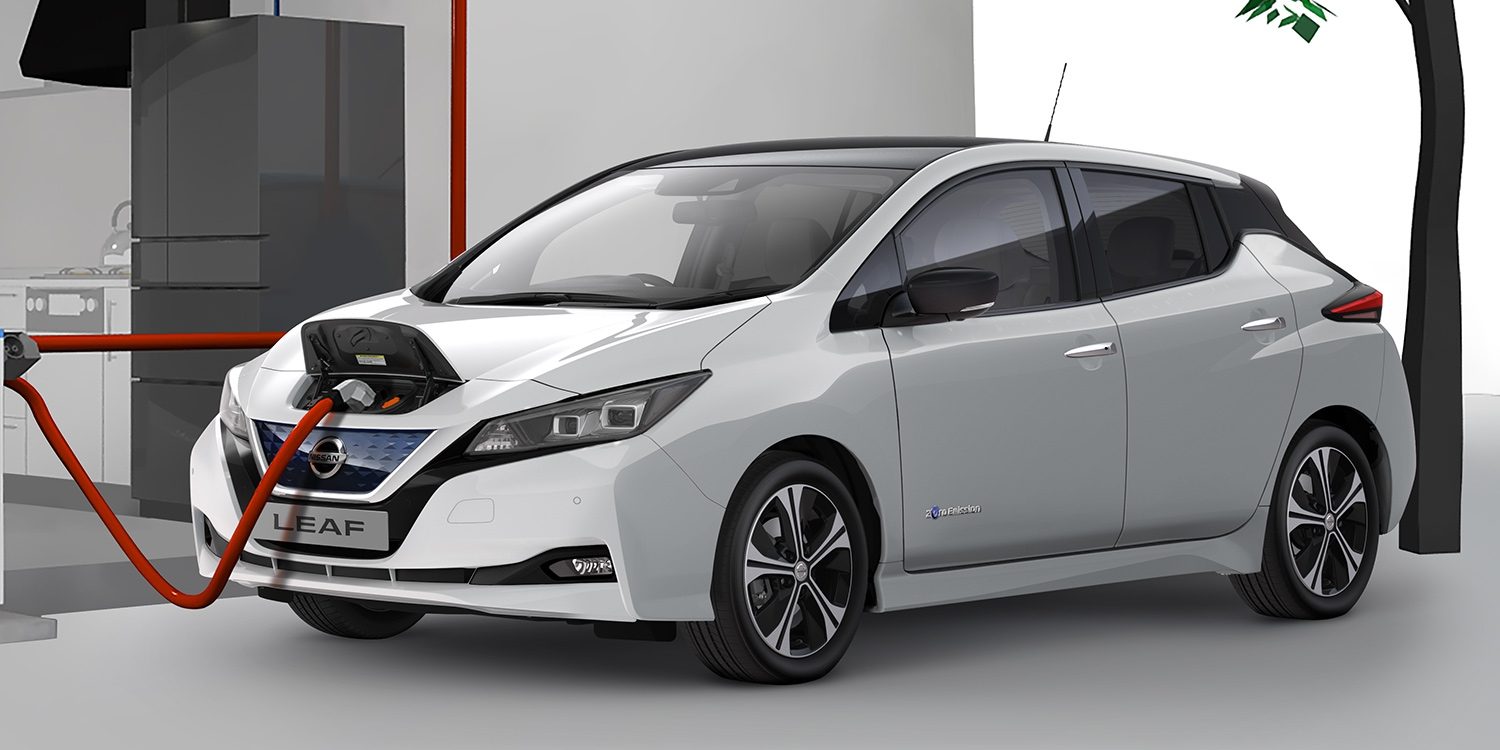
Nissan Leaf electric vehicle charging.
Photo by Nissan UK

CAA is out with the results from their first ever road tests of how electric vehicles (EV) charge and perform in a Canadian winter.

They tested out 14 electric vehicles which included seven of the top 10 sellers in Canada. They were driven from Ottawa to Mont Tremblant and the temperatures during the drive ranged from -7 to -15 degrees Celsius.

Each vehicle was driven until the battery completely died to determine the range in winter conditions. The results were compared to the estimated driving range published by Natural Resources Canada. CAA says officially posted EV ranges (below) in Canada are based on overall, year-round numbers.

“CAA is responding to a top concern of Canadians when it comes to EVs,” said Ian Jack, vice-president, public affairs, CAA National. “We measured the effective range of electric vehicles in cold weather and how quickly they charge. These insights are critical for both current EV owners and those considering making the switch.”

The association says a recent poll revealed more than two-thirds of Canadians say the drop in driving range during winter is the top barrier to purchasing an EV. Out of those who own an EV, 65 per cent said they experienced a lower battery range in extreme cold weather.

The rest results showed the vehicles drove 14 to 39 per cent less than their official range.

“The vast difference in results really highlights the importance in truth and advertising when it comes to EV range and making sure that Canadians are comparing numbers when it comes to winter performance,” said Kristine D’Arbelles, Senior Director of Public Affairs for CAA National.

Did Medieval People Eat Breakfast?

Filed under: Europe, Food, History — Tags: , , , , , — Nicholas @ 02:00

Tasting History with Max Miller
Published 1 Oct 2024

Toasted white bread with sweet spices, white wine, and thick homemade almond milk

City/Region: England
Time Period: c. 1450

Some medieval people ate breakfast sometimes. It depended on things like your social status and job, your age, and what part of the Middle Ages it was. Bread, cheese, and ale were common breakfast items, and sops are mentioned in Sir Gawain and the Green Knight. There are a lot of variations of sops, but essentially it’s toast that’s soaked in some kind of flavorful liquid like wine or ale.

This recipe for golden sops uses white bread that is soaked in white wine and topped with almond milk that has been simmered until it resembles a thin custard. I was worried that the wine would dominate the flavor, but it doesn’t. What comes through most are the warm spices and light sweetness that remind me of Cinnamon Toast Crunch. Delicious.

    Soppes Dorre.
    Take rawe Almondes, And grynde hem in A morter, And temper hem with wyn and drawe hem throgh a streynour; And lete hem boyle, And cast there-to Saffron, Sugur, and salt; And then take a paynmain, And kut him and tost him, And wte him in wyne, And ley hem in a dissh, and caste the siryppe thereon, and make a dregge of pouder ginger, sugur, Canell, Clowes, and maces, And cast thereon; And whan hit is I-Dressed, serue it forth fore a good pottage.
    — Harleian MS. 4016, c. 1450

(more…)

QotD: Jacob Zuma – South Africa’s answer to Donald Trump

Filed under: Africa, Media, Politics, Quotations — Tags: , , , , — Nicholas @ 01:00

[Thabo] Mbeki’s presidency ended in disaster and humiliation, but it paved the way for one of the most colorful politicians alive today: Jacob Zuma. The most important thing for Americans to understand is that Zuma is basically a left-wing and South African version of Donald Trump. He is colorful, bombastic, and over-the-top. He has a tendency to break into song at political rallies and church services. He says outrageous and inappropriate things. He is beloved by the far left and grudgingly admired by the far right and fanatically hated by all the bien-pensants in the center. He was viciously persecuted by the South African deep state, and his accession to the presidency caused a bitter #NeverZuma faction to break off the ANC and start another party (incredibly this party is called “COPE”). Finally, he is an out and proud polygamist and brags openly about his corruption, and people love this because they know every politician is doing it, he’s just honest about it.

The ANC bosses did not like Zuma. For decades the ANC had been dominated by elite, western-educated, communist Xhosas, but Zuma was none of those things. Zuma came from nothing — his mother was a janitor and his father died when he was 3. Zuma was so illiterate and uncultured that Mbeki tapped him to be deputy president on the theory that it would keep his own position secure, since nobody would ever let Zuma be president (yeah this backfired spectacularly). Most shocking of all, Zuma was a Zulu. He danced in a loincloth and leopard skin with the Zulu king at the Shaka festival. The idea of this savage wildman becoming president was just beyond the pale. Something had to be done to stop him.

The last chance to stop Zuma was a credible-seeming rape accusation from a family friend. The ANC pounced on this, and initiated a high-profile criminal trial. This incensed Zuma’s supporters, who insisted that the prosecution was politically motivated (given that over the past decade the ANC had all but stopped prosecuting rape cases in society more broadly, they may have had a point). The trial was a total debacle. Countless thousands of young activists showed up outside the courtroom wearing t-shirts with slogans like “One hundred percent Zuluboy”, “Burn the bitch”, and “Zuma was raped”. When summoned to the witness stand, the president-to-be performed war dances and led the crowds in song. The prosecution collapsed after the accuser’s story was found to be inconsistent on numerous points, and a triumphant Zuma rode the backlash all the way to the presidency.

There’s another way Jacob Zuma is like Donald Trump: the corrupt and failed ruling classes of both South Africa and the United States find it convenient to blame these men for everything that has gone wrong in their countries ever since. In fact in Zuma’s case, history has begun to be rewritten so that he can be blamed for things that happened before he became president. Many of the South Africans I’ve spoken to will confidently assert that some problem (say, the power outages) is all due to Zuma. When I gently point out that those outages began in 1998 and innocently ask who was president then, they shut down entirely. Zuma is the scapegoat for the failings of an entire country, and making him the sole source of all evil plays the important social role of allowing everybody to pretend that things were great until he showed up (things were not great). In a similar vein, I will not be shocked if decades from now, Donald Trump is blamed for starting the fentanyl epidemic.

John Psmith, “REVIEW: South Africa’s Brave New World, by R.W. Johnson”, Mr. and Mrs. Psmith’s Bookshelf, 2023-03-20.

February 11, 2025

Many young white men are choosing to “own the insult” when accused of being a fascist

Filed under: Media, Politics, USA — Tags: , , , , , — Nicholas @ 05:00

Lorenzo Warby points out that some — even many — young white men are reacting to repeatedly being called “Nazi” or “fascist” by embracing the slur:

Still from Pink Floyd: The Wall

For the fuel of the contemporary networked authoritarians are angry young men. Angry young men who have a great deal to be angry about.

In so many modern schools, universities, and much of social media, if you are a low melanin count, heterosexual male you are absolutely at the bottom of the “woke” oppression-bingo hierarchy. You will be implicitly, or explicitly, held to be somehow tarred with every bad thing any person “like” you has done in history, no matter how long — even how many generations — before you were born that it happened, nor how dubious an historical characterisation it might be. There is no identity open to you that you can celebrate, or feel positively attached to, without potential or actual denigration.

If you do any reading, you can quickly work out that this is a ludicrously one-sided — and deeply unfair — way to look at history. Even in its own terms, it is nonsense, as “folk like you” — i.e., low melanin count heterosexual males — voted for every single legal advance any of the celebrated-as-oppressed groups made. “Folk like you” built the Scientific Revolution, Parliamentary Government, mass prosperity.

Of course, this was a matter of culture, institutions, the happenstance of history, not melanin content. The trouble with the racialisation of history and identity is that it is, indeed, the racialisation of history and identity. As Jews are currently (re)discovering.

Nor can many of these angry young men take much refuge in the good life, work or entertainment. Online dating has turned into a hypergamous nightmare that excludes most guys, in-person connections are fraying and migration-plus-restrictive-land-regulation has shot rents up and made home-owning unattainable.

In entertainment, masculine heroes are being replaced and degraded. Online games are being systematically “wokified”. There are systematic attacks on their heritage. Sport and advertising is also being wokified, is “bending the knee”. Where to go?

If folk systematically tar or denigrate someone’s identity, a natural response is to say “no, my identity is great, it is wonderful”. There will be certainly a market for such a response. The natural response to systematic denigration is some form of “fuck you!” and the politics of “fuck you!“.

In the contemporary world, what is the most dramatic way of saying “fuck you!“? To take the racist!, fascist! abuse and go “right on!“. Even more so if you take the ideas they invoke and turn them back against them.

Of course, if you just reverse what left-progressivism — in its “woke” iteration — stands for, you are still dancing to their tune. But rage can easily work like that.

So, these angry young men look at the folk who treat them with such continual, institutionalised, contempt — who stack everything they can against them — and decide “we hate you”. If you are going to abuse us anyway no matter what we do — the seductive logic goes — then why not simply embrace the identity you impose on us if we put our heads up? There is, after all, no more in-your-face way to shriek their anger and rejection back at those who are abusing, denigrating and excluding them than to embrace racism and fascism.

They look at ordinary conservatives, at ordinary liberals, they look at Boomers, and think “you did not stop it, you did nothing to protect people like me”, so they — and their politics — get no respect.

Instead, they go to the politics of using the operational tactics used against them — the operational politics of “wokery” — in support of politics that most completely expresses their rage. This is the updated version of what happened with 1920s Fascism in Italy and 1930s Nazism in Germany. Like the original versions, they are using — and so helping to legitimate — the operational methods of the left-progressivism.

Not that left-progressives, the “woke”, will see it. They are way too full of the stupidity of arrogance, of the blindness of moral narcissism, to pick what is happening, still less take any responsibility for it. They utterly fail to see themselves; to understand how much they come across as smug, arrogant, condescending, self-righteous, shits whose politics again and again ends up favouring people like them and whose recurrent response to disagreement is to de-legitimise, denounce and censor. Their entire view of themselves is they are the oh-so-clever, oh-so-moral people. Nothing they do is ever seriously counter-productive or fundamentally mistaken.

Faced with the rise of actual racism and actual fascism, they will shriek racist! and fascist! even harder. But they are in the situation of the boy who cried wolf! Except worse, as the boy in the story neither created, nor trained, the wolf.

They have so debased that currency, so debased historical analogy, that fascism has lost its rhetorical, or even its warning, power.

Besides, how many people will say: these folk against whom you are shrieking the same terms of abuse you have shrieked at people for decades. Are they making excuses for the mass sexual predation on young girls by migrants we did not want? Are they supporting the hormonal and surgical mutilation and sterilisation of minors? Are they teaching folk to despise their own countries and heritage? Are they pushing the narrative lies of the moment? Have they proved to be incompetent at elementary things, such as fighting crime and managing fire risk?

No? Then they sound good to me.

Left-progressives: so good at finding new ways to make the same mistakes. It is almost as if they have a pathological relationship with information. Oh, wait, they do.


The End of Empire? Colonialism in Crisis – W2W 003

TimeGhost History
Published 9 Feb 2025

In 1946, the old colonial empires of Britain and France struggle to maintain control as nationalist movements rise and their economies crumble. Meanwhile, two new superpowers — the U.S. and the USSR — seek to reshape the world in their image, using decolonization as both an ideal and a tool for influence. As the colonial order fractures, global power shifts, and the battle for dominance begins.
(more…)

“As it turns out, you can just cut things”

Filed under: Bureaucracy, Government, Media, Politics, USA — Tags: , , , , — Nicholas @ 03:00

John Carter outlines the left’s long march through the institutions and explains why a conservative counter-operation of the same kind would utterly fail. Instead, Donald Trump (of all people) launched a political blitzkrieg that used none of the strategies of the long march — because the establishment knew intimately how those worked, as they’d used them for generations to become the establishment:

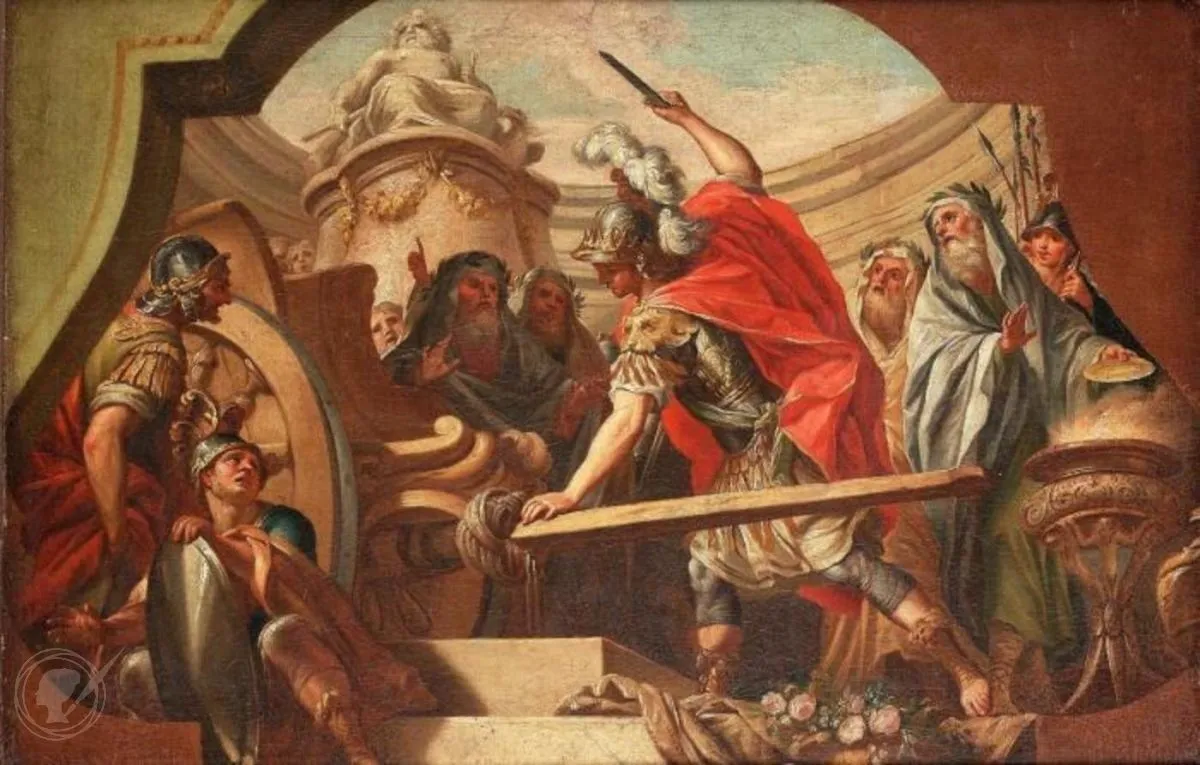
Alexander Cutting the Gordian Knot
Fedele Fischetti, 18th century.

But a counter-revolutionary long march through the institutions was always a doomed project.

The left understands the method quite well, having perfected it themselves, and its defences against counter-infiltration were well advanced. It was never enough merely to say the right things, and not say the wrong things – the left knows how easily such signals are faked, as these are mere words, and words have no meaning to an egregore which sees in discourse nothing but the currents and tokens of power. Much of the seeming insanity of the Cancelled Years is best understood as the imposition of elaborate, difficult to fake displays of loyalty: offering your child’s genitals to the hungry gender gorgon, opening your veins for the gene therapy injection. Then of course there is DEI, whose explicit intent was to simply deny opportunity to those most likely, on a demographic basis, to oppose the left. There is very little point, as a young white man, in keeping your mouth shut if you will be locked out simply because you are white, no matter what you say.

The psychological demands of stealthy infiltration are spiritually toxic. Anyone attempting this path finds himself embedded in a social context in which all of his friends and colleagues adhere to values which he privately despises, and moreover, he knows that the instant they discover his true beliefs he will be not only fired, but ostracized and isolated. Worse, he’s constantly placed in the position of betraying his own convictions, of going along with and even actively supporting things he knows are wrong, because failing to do so would be immediately suspicious. Since the left is a hive mind, he must “pretend” to give up his agency … and insofar as you are what you do, there is very little difference between pretending to give up your agency, and actually doing giving it up. Living like this is miserable. It requires iron discipline, and there is very little reward. Some of you doubtless have direct experience of this.

The most important reason that a long march was never viable, however, was that there was not enough time.

The West is in crisis. Public debt has broken up through the exosphere, its rise ever more vertical as the deficits fuelling it continue to expand, and we can all see in its meteoric rise that its inevitable descent will hit the land like rods from God. Third world invaders pour into our countries by their millions at the open invitation of seditious governments whose open aim is to reduce native white populations to second-class minorities in their own homelands within the space of a generation. These two crises of the Great Inflation and the Great Replacement could never be solved by the tactics the left used to bring them about. Even if such a long march could have succeeded in the face of the barriers the left so astutely erected, by the time it came to fruition the victors would preside over wreckage.

The left’s tactics were those of a chronic disease, gradually wasting the patient, leaching the strength from his limbs. You cannot cure a patient by becoming an opportunistic infection in your own right.

So what to do? Many, despairing, looked to civil war. A coup d’état, likely followed by blue states separating from the Union. Battle lines would be drawn, brother would be set against brother, cities would be ruined, vast pits would be excavated and filled with the stinking dead. Such a war would never have been limited to continental United States. It would have dissolved the Pax Americana, with brushfire wars springing up across the globe as great powers sought to expand their territories by grabbing resources or strategic trade corridors. Those powers would have gotten involved in the Civil War themselves, backing one side or another, prolonging the conflict in order to ensure the Union remained shattered forever.

On J6, the American government teetered on a precipice. Had Trump applied so much as the gentlest pressure with his baby finger, it would have toppled over. The other side would then have screamed that he was a tyrant who had seized power by force; his own supporters would have rallied to the cause that the election had been stolen; America, and the world, would have been bathed in blood. So Trump pulled back, allowed the heroes of J6 to be imprisoned, and permitted the sclerocracy to impose four years of malevolent mismanagement on the American people.

Many were furious with Trump. He’d lost his nerve; he was a coward.

As it turned out, they were all wrong. It was a strategic withdrawal.

And now, instead of a Long March, we are getting a blitzkrieg.

I’ve been silent for the last month partly for personal reasons that deprived me of the time and energy to write, which I won’t elaborate upon here save to note that it’s nothing anyone has to worry about. But I’ve also been silent because I haven’t been sure what to say. The last weeks have been one of those ‘weeks when decades happen’ periods, and that pace of change doesn’t appear to be letting up. Executive Orders flying off of the big man’s desk, birthright citizenship being struck down, entire government departments getting defunded, the J6 heroes being pardoned, trade wars starting and then stopping before they start, the military heading to the border, DOGE siccing broccoli-headed zoomers armed with large language models to rip through the sprawling financial records of acronym agencies like a cyclone of destruction.

As it turns out, you can just cut things.

These are all great, wonderful things. We are winning, and the pace of winning is dizzying. It’s like we’ve spent the last several years slamming again and again against a seemingly immovable wall, bashing our brains out upon it like an enraged tiger, only for that wall to suddenly turn to sand upon our final desperate push, leaving us sprawled and disoriented on the ground.

That is at least what it has felt like to me. The people on the inside of the Trump administration are not disoriented. Far from it. They are executing a detailed, thorough plan. They’ve identified the enemy nerve centres and are neutralizing them precisely, rapidly, and ruthlessly. Handpicked squads of very competent young men have been turned loose inside the Beltway. It is clear that they are not being micromanaged, but are being left to develop their own action plans on the fly as the tactical situation evolves. This is manoeuvre warfare, with small, nimble, lethal teams dropped into the heart of enemy territory and being given maximum latitude to pursue the campaign’s strategic objectives.

Mapping the Tube 1863-2023: Treasures of the Tube Map

Filed under: Britain, History, Railways — Tags: , , , — Nicholas @ 02:00

Jago Hazzard
Published 27 Oct 2024

Mapping the Tube: 1863-2023 at The Map House is a captivating selling exhibition showcasing rare maps and materials spanning over 160 years of London’s transport history. It features the largest collection of Harry Beck manuscripts ever offered for sale, alongside early cartographic works and striking posters by 20th-century artists.
(more…)

QotD: Scientists, in their natural habitat

Filed under: Bureaucracy, Education, Humour, Quotations, Science — Tags: , — Nicholas @ 01:00

Now, do you accept the traditional image of scientists as sober, serious, disinterested seekers of truth? Or do you have more of a Biscuit Factory sort of view of them, where quite a lot of them are very flawed human beings, egotistical shits bent on climbing the greasy pole and treading on people to get to the top? Bullshitters and networkers and operators? Actually, I think the former types do exist, there are good, serious scientists out there (including some of my personal friends, and quite a few readers of this blog), but there are an awful lot of the latter types, especially at the top, and it’s rare to hear of a science department that isn’t full of bitter hatreds and jealousies and vendettas, where every Professor turns into an arsehole no matter how nice they seemed when they were a graduate student.

Hector Drummond, “Soap-opera science”, Hector Drummond, 2020-03-29.

February 10, 2025

Immortality, ancient versus modern

Filed under: Health, History — Tags: , , , , , — Nicholas @ 05:00

Immortality used to be something you only got in the eyes of others, as Benjamin Franklin put it, “If you would not be forgotten, as soon as you are dead and rotten, either write things worth reading, or do things worth the writing”, but modern tech bros want the other kind of immortality … the one where you don’t actually die:

In ancient times, you attained immortality by doing great deeds.

Today you attain immortality by getting blood transfusions from teenagers, and freezing your body for later revival.

Needless to say, there’s a huge difference between these two strategies.

In the first case, you serve others by your great deeds — eternal renown is your reward for this. But folks seeking immortality today are the exact opposite. They have reached peak narcissism — other people are, for them, literally just a source of fresh blood (or stem cells).

Until recently, I thought those Dracula movies were just a story to scare little kids. I now know that they’re an actual playbook for Silicon Valley elites.

With a better business plan, our Transylvanian count could have raised some serious VC money.

Nowadays he would be running a medical rejuvenation startup with a billion dollar market cap

Not long ago, I would have thought that the tweet below was a joke. But not in the current moment.

By the way, don’t miss the motto on his shirt.

I’m tempted to make some joke about this — but we’ve now arrived at a point where reality itself morphs into dark comedy. No punchline is necessary

And here’s another similarity between tech billionaires and the monsters in old horror movies. Somebody recently sent me a link to a website that sells bunkers to tech elites, and they remind me of dungeons in a Frankenstein film.

Go ahead, click on the link. Don’t let me stop you.

In both instances, horror is the right term.

Just looking at these things and imagining some delusional transhumanist getting on the table in his dungeon for a rejuvenation procedure is very creepy.

But there are some similarities between ancient heroes doing great deeds, and today’s Silicon Valley transhumanist. They both want to be like the gods (only their methods are different). Also, they are both admired leaders in their respective societies.

That’s the part that troubles me most. If the dude slurping up stem cells in a bunker was just another crazy person, I wouldn’t worry about it. But, unfortunately, these unhinged narcissists include some of the most powerful people on the planet.

The Swordfish Strike! – The Bismarck Part 3

Filed under: Britain, Germany, History, Military, WW2 — Tags: , , , , — Nicholas @ 04:00

World War Two
Published 9 Feb 2025

Reeling from the loss of HMS Hood, the Royal Navy chases Bismarck across the Atlantic Ocean. Battleships and search planes comb the vast expanses of water. Finally, they spot the German behemoth. It’s time to unleash the Swordfish!
(more…)

Trump’s EO against central bank digital currencies

Filed under: Economics, Government, Politics — Tags: , , , , — Nicholas @ 03:00

The Trudeau government’s illegal move to freeze the bank accounts of Canadians who supported the Freedom Convoy should have clearly illustrated the dangers of allowing a government to exercise that level of control over individuals’ financial affairs. (It’s hard to express just how inhumane that move was to deprive thousands of Canadians their ability to conduct any financial business at all … in the middle of the winter just because they’d chipped in small donations to a cause Trudeau didn’t like.) I don’t know if Donald Trump took note, but another of his long list of executive orders directly addresses crypto and CBDCs:

“Bitcoin – from WSJ” by MarkGregory007 is licensed under CC BY-NC-SA 2.0

While the order has upsides and downsides concerning current crypto policies, the parts of the order I’m most excited about are the portions on Central Bank Digital Currencies, or CBDCs. A CBDC is essentially a government-created centrally controlled version of cryptocurrency. As FEE has discussed in the past, CBDCs are a very dangerous idea, and it was troubling that they were being pursued by the Biden administration.

So what does the Trump executive order say about them? Take a look:

    [The Trump administration is] taking measures to protect Americans from the risks of Central Bank Digital Currencies (CBDCs), which threaten the stability of the financial system, individual privacy, and the sovereignty of the United States, including by prohibiting the establishment, issuance, circulation, and use of a CBDC within the jurisdiction of the United States.

Section 5 of the order covers how this will be done. By the order, it’s now illegal for bureaucrats within government agencies to pursue any plans to establish a CBDC unless it is required by law. In other words, barring the possibility that some bureaucrats could break the law, CBDC initiatives must immediately end unless the legislature passes bills requiring them.

This is a big step because the establishment of a CBDC would require significant political, bureaucratic, and technological infrastructure to be implemented. Trump’s order puts a pause on the building of that infrastructure which began under Biden.

On net, Trump’s order seems to have been taken well by crypto markets, with Bitcoin seeing a small price surge after the announcement of the order. So while the future of government crypto regulation remains unclear, the new administration’s commitment to stopping CBDCs and protecting the rights of those engaging in crypto mining and transactions seems to be a good sign.

Everyday Life in the Roman Empire – The Position of Women

Filed under: Europe, History — Tags: , , , , — Nicholas @ 02:00

seangabb
Published 11 Sept 2024

Part five in a series on Everyday Life in the Roman Empire, this lecture discusses the position of women during the Imperial period. Here is what it covers:

Introduction – 00:00:00
Limited Rights for the Lower Classes (95 per cent) – 00:02:02
Rome: The Patria Potestas – 00:07:02
Rome: Marriage – 00:13:05
Rome: Education of Girls – 00:18:40
Rome: Woman and Business – 00:22:11
Rome: Women and Politics – 00:30:07
Rome: Women Gladiators? – 00:33:30
The Empresses – 00:35:20
Agrippina the Younger – 00:39:36
Women: Rome and Athens Compared – 00:41:38
Evidence from Egypt – 00:46:22
Women Priests and Bishops in the Early Church? – 00:53:43
Women in Britain – 01:02:00
Bibliography – 01:05:20
(more…)

QotD: The Roman Republic versus the heirs of Alexander the Great

Last time, we finished our look at the third-century successes of the phalanx with the career of Pyrrhus of Epirus, concluding that even when handled very well with a very capable body of troops, Hellenistic armies struggled to achieve the kind of decisive victories they needed against the Romans to achieve strategic objectives. Instead, Pyrrhus was able to achieve a set of indecisive victories (and a draw), which was simply not anywhere close to enough in view of the tremendous strategic depth of Rome.

Well, I hope you got your fill of Hellenistic armies winning battles because it is all downhill from here (even when we’re fighting uphill). For the first half of the second century, from 200 to 168, the Romans achieve an astounding series of lopsided victories against both (Antigonid) Macedonian and Seleucid Hellenistic armies, while simultaneously reducing several other major players (Pergamon, Egypt) to client states. And unlike Pyrrhus, the Romans are in a position to “convert” on each victory, successfully achieving their strategic objectives. It was this string of victories, so shocking in the Greek world, that prompted Polybius to write his own history, covering the period from 264 to 146 to try to explain what the heck happened (much of that history is lost, but Polybius opens by suggesting that anyone paying attention to the First Punic War (264-241) ought to have seen this coming).

That said, this series of victories is complex. Of the five major engagements (The River Aous, Cynoscephalae, Thermopylae, Magnesia, and Pydna) Rome commandingly wins all of them, but each battle is strange in its own way. So we’re going to look at each battle and also take a chance to lay out a bit of the broader campaigns, asking at each stage why does Rome win here? Both in the tactical sense (why do they win the battle) and also in the strategic sense (why do they win the war).

We’re going to start with the war that brought Rome truly into the political battle royale of the Eastern Mediterranean, the Second Macedonian War (200-196). Rome was acting, in essence, as an interloper in long-running conflicts between the various successor dynasties of Alexander the Great as well as smaller Greek states caught in the middle of these larger brawling empires. Briefly, the major players are the Ptolemaic Dynasty, in Egypt (the richest state), the Seleucid Dynasty out of Syria and Mesopotamia (the largest state) and the Antigonid Kingdom in Macedonia (the smallest and weakest state, but punching above its weight with the best man-for-man army). The minor but significant players are the Attalid dynasty in Pergamon, a mid-sized Hellenistic power trapped between the ambitions of the big players, two broad alliances of Greek poleis in the Greek mainland the Aetolian and Achaean Leagues, and finally a few freewheeling poleis, notably Athens and Rhodes. The large states are trying to dominate the system, the small states trying to retain their independence and everyone is about to get rolled by the Romans.

Bret Devereaux, “Collections: Phalanx’s Twilight, Legion’s Triumph, Part IVa: Philip V”, A Collection of Unmitigated Pedantry, 2024-03-15.

« Newer PostsOlder Posts »

Powered by WordPress