Quotulatiousness

May 15, 2022

Bill Kristol’s as-yet-unexplained defection from conservatism

Filed under: Media, Politics, USA — Tags: , , , — Nicholas @ 05:00

In the free-to-cheapskates excerpt from the latest Weekly Dish, Andrew Sullivan charts the political pilgrimage of a former right-wing stalwart to being “hugely popular among MSNBC Democrats”:

Bill Kristol at a political conference in Orlando, Florida, 23 September, 2011.
Photo by Gage Skidmore via Wikimedia Commons.

If you live long enough, and haven’t been lobotomized, you’ll change a lot of your views and opinions. Life does that. The world changes; you change; and for most people, who don’t air their views publicly for a living, the process is murky.

For the rest of us, the hacks/public intellectuals, I think there’s another standard: if you change your mind on an issue, at some point, explain why. What principles or ideas have you now abandoned? Which have you now embraced? What new facts have you learned? It’s a basic form of intellectual hygiene.

Which brings me to Bill Kristol. You may recall him as the former gatekeeper of Republican orthodoxy and much of its intelligentsia; architect of neoconservative foreign policy; adviser to US presidents; pundit; smooth-talker; operator. Now hugely popular among MSNBC Democrats, alert to racism and sexism and homophobia, Kristol has, these last few years, performed a spectacular ideological self-reinvention that makes J.D. Vance look like a man of unflinching consistency. And he has never even attempted to explain why.

Take for a moment the issue du jour: abortion. Very few people have spent years and years, as Kristol has, campaigning with a singular determination to overturn Roe v Wade. Here he is in 1998:

    Republicans talk a lot about being a majority party, about becoming a governing party, about shaping a conservative future. Roe and abortion are the test. For if Republicans are incapable of grappling with this moral and political challenge; if they cannot earn a mandate to overturn Roe and move toward a post-abortion America, then in truth, there will be no conservative future.

A year earlier, Kristol had been even more emphatic:

The truth is that abortion is today the bloody crossroads of American politics. It is where judicial liberation (from the Constitution), sexual liberation (from traditional mores) and women’s liberation (from natural distinctions) come together. It is the focal point for liberalism’s simultaneous assault on self-government, morals and nature. So, challenging the judicially imposed regime of abortion-on-demand is key to a conservative reformation in politics, in morals, and in beliefs.

This is more than a pro-life position. It is the articulation of a thoroughgoing pro-life conservatism designed to end judicial intervention in politics, reverse the sexual revolution, and restore distinctions between men and women rooted in biology and nature. It couldn’t be more GOP 2022! The man was a visionary. And so you might imagine that when Kristol’s vision came to final fruit in 2022, he’d be over the moon.

But no. After Trump became GOP leader and put three pro-life justices on the Supreme Court, Kristol barely mentioned abortion on his Twitter thread — except to take a swipe at “the Republican political class — at once cavalierly uncaring about the women they seek to represent and manifestly insincere about the pro-life beliefs they claim to hold.”

May 13, 2022

“How do they resist the logic of O’Sullivan’s Law?”

Filed under: Britain, Bureaucracy, Liberty, Media, Politics, USA — Tags: , , , — Nicholas @ 03:00

In The Critic, Ben Sixsmith considers the oddities of organizations explicitly founded to advance certain goals who steadily morph out of recognition to the point they appear to be working against their original mission:

John O’Sullivan in Prague, 8 November 2007.
Photo by Dezidor via Wikimedia Commons.

In 1989, John O’Sullivan of National Review coined O’Sullivan’s Law: “all organisations that are not actually right-wing will over time become left-wing.” Countless examples spring into the mind like toast. Is the Church of England a religious institution or a Lib Dem think tank with some eccentric uniforms? Of course religion and politics are going to intersect, but when archbishops start opining on Brexit you have to wonder. Is the Amnesty International which is now so heavily concerned with trans rights and abortion rights the same Amnesty International that used to defend political prisoners, or a kind of imitator? Both, I guess.

But how inevitable is O’Sullivan’s Law? In recent times, some institutions have avoided drifting leftwards. Substack, a platform for writers and podcasters, have raised progressive hackles by refusing to exclude alleged transphobes. “As we face growing pressure to censor content published on Substack that to some seems dubious or objectionable,” its founders have boldly said, “our answer remains the same: we make decisions based on principles not PR, we will defend free expression, and we will stick to our hands-off approach to content moderation.” Elsewhere, Elon Musk has attempted to purchase Twitter in explicit opposition to its censorious policies.

Clearly, and understandably, neither institution aims to be “right-wing” (except inasmuch as anything which is not explicitly progressive earns the label). Nor do many others. How do they resist the logic of O’Sullivan’s Law?

As a grubby hack I have no more experience running large organisations than I do making rockets and curing heart disease, but I have a couple of modest suggestions. First, the leaders of an institution should ensure that its values are not open-ended but contextually specific. You can be “inclusive” in the concrete sense that anyone can be included among applicants, for example. But if “inclusivity” is just a vague ideal, then the demands made in its name are liable to expand until your institution is no more than an excuse for an HR department.

Second, such leaders should surround themselves with people who admire the essential ethos of the institution. Conquest’s Second Law (named after Robert, the historian) states, “The behaviour of an organisation can best be predicted by assuming it to be controlled by a secret cabal of its enemies.” (Conquest pointed out that this can be literally true, such as when a bunch of smart young lads from good families graduated from Cambridge to the Secret Intelligence Services and started feeding information to the Soviets.) You can disagree on 99 out of 100 things but you have to share core premises. If I start a panda preservation society, for example, it makes no sense to give a management position to someone who thinks conserving endangered species is a waste of money and pandas are faintly ridiculous creatures. Their qualifications and experience are immaterial.

Third, an institution should not seek scale at the expense of integrity. This is especially the case with non-profit institutions. Expansion — and all the jolly business of fundraising and management that comes with it — can emphasise the means of its existence over its ends. This then makes it vulnerable to redirection.

Fourthly, and finally, any leader of an institution (especially a business) should avoid the temptation to use progressive cultural causes as a means of “woke-washing” themselves. You know what I mean. It seems like an easier way of getting moral status than, say, treating workers well. But (and I will phrase this in cynical terms because self-interest means more to us than ethics) we would do well to remember that demands can escalate. Workers can be satisfied. Professional activists? Not so much.

May 10, 2022

Canadian Armed Forces considering banning Islamic, Jewish, and Christian chaplains for their racist, misogynistic, and bigoted beliefs

Filed under: Cancon, Military, Religion — Tags: , , , , — Nicholas @ 05:00

When an organization goes woke, there’s no halfway measures … it’s all-woke, all the time. Recently the Canadian Armed Forces received a report that could result in current chaplains being forced to resign their commissions because their religious beliefs “are not aligned with those of the Defence Team”. One wonders how future recruiting efforts will go with believing members of those faith-based communities who are potentially going to be explicitly described as “racist, misogynistic, and bigoted”:

Calling other parties racist in the House of Commons is bad. Calling whole religions and their adherents racist, misogynist and bigoted is worse

And yet, this government is being called to support one of the most egregious examples of anti-religious sentiment I have ever seen in Canada, and it was published by the Minister of National Defence Advisory Panel on Systemic Racism and Discrimination. This document is supposed to advise the Canadian Armed Forces on racism and discrimination in the military and, if the government were to follow through on its recommendations, it would effectively disqualify chaplains from Canada’s largest faith groups.

In its final report, this panel recommends that the military should “not consider for employment as spiritual guides or multi-faith representatives Chaplaincy applicants affiliated with religious groups whose values are not aligned with those of the Defence Team.”

As you read the document, it quickly becomes clear that their understanding of “values” appear to be completely ignorant of the actual practice of the very religions they defame. Yet the report would disqualify clergy from — at the very least — the three major Abrahamic religions (Judaism, Islam, and Christianity) under the grounds that these faiths are inherently discriminatory.

Not content to deal with actual cases of misogyny, sexism and discrimination, the government’s panelists have taken a go at determining which beliefs and philosophies are acceptable in Canada’s new modern military.

“The Advisory Panel has observed that there are varying degrees of misogyny, sexism, and discrimination woven into the philosophies and beliefs of some mainstream religions currently represented in the cadre of chaplains in the CAF,” the report says.

Then it gets worse.

May 8, 2022

“… a majority of ‘pro-lifers’ are women, not men. So [Kamala] Harris is effectively saying: how dare women be allowed a voice in this debate?”

Filed under: Health, Law, Media, Politics, USA — Tags: , , , , — Nicholas @ 05:00

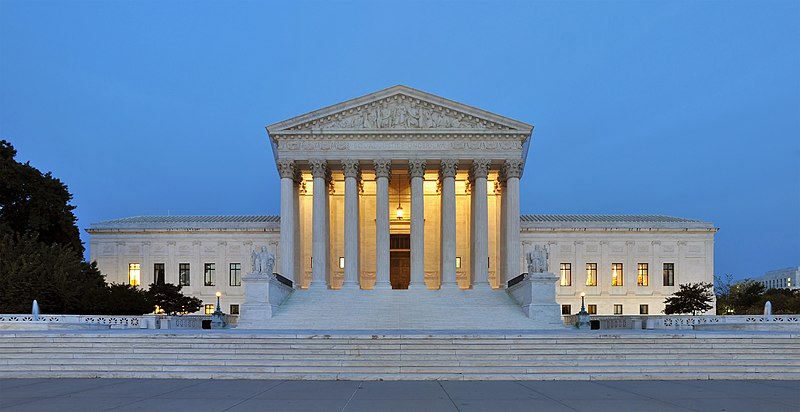
Andrew Sullivan comments on the leak of a draft US Supreme Court decision that would strike down Roe vs. Wade and the over-the-top reactions on social media from progressives:

Panorama of the west facade of United States Supreme Court Building at dusk in Washington, D.C., 10 October, 2011.
Photo by Joe Ravi via Wikimedia Commons.

To say that a leaked draft of a Supreme Court ruling prompted an elite meltdown would be a gross understatement. This was a culture war 9/11. “I have typed and deleted a great many comments,” Roxane Gay tweeted. “What do you say when nine people can dictate what happens to your body? It’s ridiculous and hateful.” The Atlantic‘s Adam Serwer, always the subtle one, announced that the court had abolished the entire 20th century. Yep: no more suffrage for women! Jim Crow now!

Taking the arguments of abortion opponents seriously was never an option: “Stripping women of their humanity and rights isn’t a consequence of the ‘pro-life’ agenda, it’s the entire point,” declared Jessica Valenti. Rebecca Traister confessed: “My teeth have been chattering uncontrollably for an hour. Bodies/minds are so weird. Like, not euphemistically — actually chattering. Audibly. And full shaking body. Though otherwise wholly, rationally, well and truly expecting it.”

Going further, freshly-minted critical gender theorist, Jennifer Rubin, argued that any restriction on abortion rights is a violation of secularism: “The right-wing justices and their supporters appear ready to reject one of the Founders’ core principles: that religion shall not be imposed by government edict.” Kurt Andersen went old school and worried about a papist cabal: “It really is kind of remarkable that only one in five Americans call themselves Catholic, but of the Supreme Court majority apparently about to permit abortion to be outlawed, all but one are Catholic and that one was raised Catholic.” Then there’s Vox‘s Ian Millhiser: “Seriously, shout out to whoever the hero was within the Supreme Court who said ‘fuck it! Let’s burn this place down.'” Fuck it! I’ll do it live!

Kamala Harris also found her voice:

    Those Republican leaders who are trying to weaponize the use of the law against women. Well we say, “How dare they?” How dare they tell a woman what she can do and cannot do with her own body? How dare they? How dare they try to stop her from determining her own future? How dare they try to deny women their rights and their freedoms?

The premise here is that all women support abortion rights. But there is no serious gender gap on this question. In fact, a majority of “pro-lifers” are women, not men. So Harris is effectively saying: how dare women be allowed a voice in this debate?

Within minutes of the SCOTUS leak, moreover, we were told it means that before long, interracial marriages will be banned … in a country where 94 percent support them! Imagine Clarence Thomas divorcing himself by jurisprudence. Here’s Traister again: “Voting rights were gutted in 2013. Marriage equality. Griswold. Loving. Don’t ever listen to anyone who tells you such fears are silly or overblown.” Actually, listen to them — if you can hear them over Traister’s permanent rage-tantrum.

What strikes me about all of this is not the emotive hyperbole — that’s par for the course in a country where every discourse is now dialed to eleven. What strikes me most in these takes is the underlying contempt for and suspicion of the democratic process — from many of the same people who insist they want to save it. How dare voters have a say on abortion rights! The issue — which divides the country today as much as it has for decades — is one that apparently cannot ever be put up for a vote. On this question, Democrats really do seem to believe that seven men alone should make that decision — once, in 1973. Women today, including one on SCOTUS? Not so much.

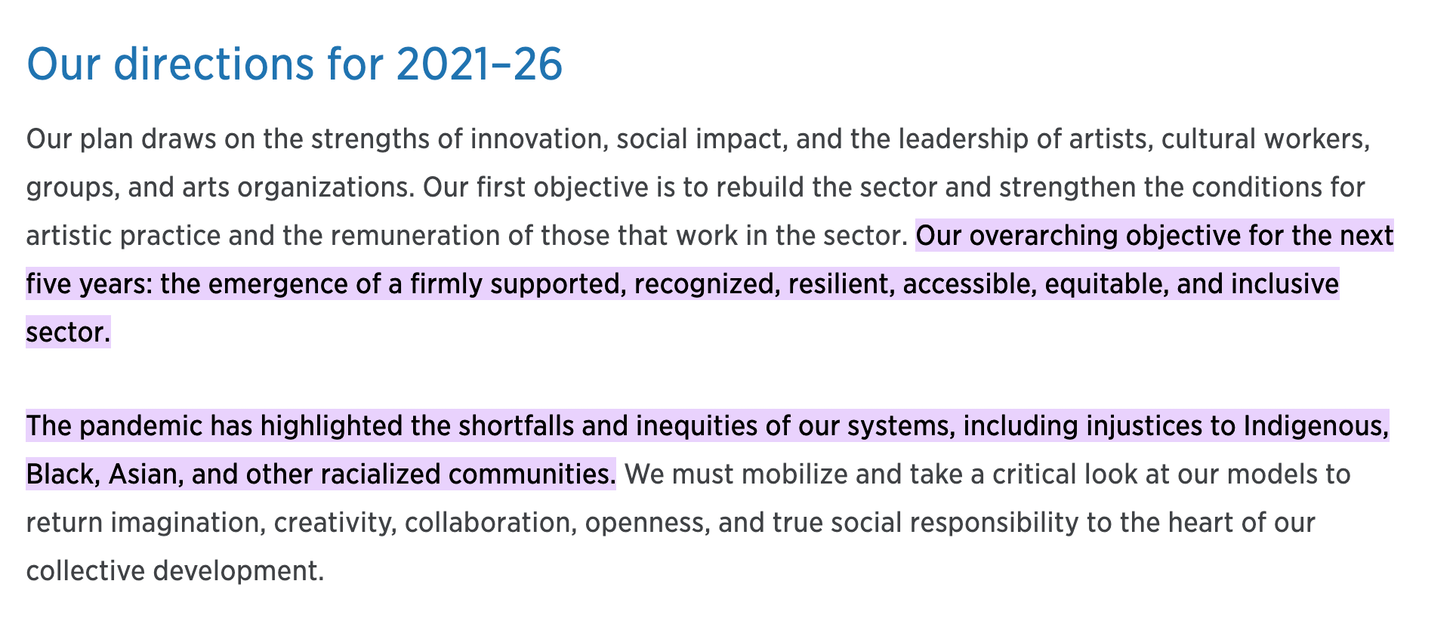
“It’s like these guys watched Anne Hathaway on WeCrashed and convinced themselves they can ‘elevate the world’s consciousness’ through arts grants. “

Filed under: Bureaucracy, Cancon — Tags: , , , — Nicholas @ 03:00

In the latest SHuSH newsletter, Kenneth Whyte brings us up to date on the latest adventures of the Canada Council for the Arts:

The Canada Council for the Arts held its annual public meeting March 30 and a video of it is now up on YouTube where, as of Thursday night, 321 people had tuned in to see CEO Simon Brault’s new shoelaces.

It’s not time for another deep dive into the ameliorative ambitions of Canada’s leading arts funding agency. We’ll just note that everything I observed in SHuSH 139 is on abundant display in this video, from the exhaustive land grant acknowledgment to non-stop discussion of equity, climate change, and Ukraine to a (mercifully short) speech by council chairman Jesse Wente, most of it dedicated to his usual one-note Indigenous activism (you’re supposed to rep all artists, Jesse).

Cheque-mailer-in-chief Brault, who obviously finds the real work of his position boring as fuck, says his immediate and long-term priorities (at a time when most of the nation’s artists and arts organizations have been economically devastated by the pandemic) are “elimination of racism and discrimination … and focusing on decolonization in people’s minds, in systems, and in institutions.”

Every square on the bureaucratic buzzword bingo card is covered: “intentionality”, “innovation”, “risk-taking”, “sustainability”, “inclusivity”, etc.

It’s like these guys watched Anne Hathaway on WeCrashed and convinced themselves they can “elevate the world’s consciousness” through arts grants.

Will they succeed? Given that they can’t match the production values of local cable despite a half-billion budget, odds are long.

Anyway, their not-quite-viral symphony of sanctimony is an experience. Give it a watch.

May 7, 2022

“Urban conservative” has become a modern oxymoron

Filed under: Britain, History, Politics — Tags: , , , — Nicholas @ 03:00

Ed West on the increasingly rare creature known as the city or urban conservative (he’s primarily talking about the UK, but it applies equally well in Canada and the United States):

20 Fenchurch Street in London has been nicknamed the “Walkie-Talkie” due to its distinctive design.
Image by Toa Heftiba via Wikimedia Commons.

It’s largely forgotten now, but political polarisation is written into the very fabric of London. In the 18th century, when rivalries between Whigs and Tories were at their most intense, different West End squares were built so that the two groups could live among their own kind.

Hanover Square in Mayfair was built for Whigs to live cosily while, further south, St James’s Square was a home for Tories. This was close to the Cocoa Tree coffee house in Pall Mall, their unofficial meeting place, where in the 20th century workmen found a bolt hole so that they could make a quick escape if the authorities turned up.

At the time the Whigs were the party of London merchants, and the Tories that of the country, where they enjoyed widespread support from the rural population. They had once been seen as dangerously close to the old Jacobite dynasty, hence their fear of being arrested, but as that issue receded their popularity in the country at large become stronger. The Whigs were an out-of-touch metropolitan elite, sipping on their fancy “coffee”, but this didn’t stop them ruling the country for decades, nor shaping its political and historical narrative.

Two or three political realignments later, we have arrived to where we started again. As of today the City of Westminster, home of those fashionable West End squares as well as the seat of government itself, is no longer controlled by the Conservatives, as seismic an event in the great realignment as the loss of Kensington was in the 2017 election.

In fact the whole of London is emptying of Conservatives, the party losing Wandsworth and holding onto just three boroughs. It’s not just London: the Tories have no councillors in most large cities now.

As with many social patterns, in this we are following the United States, where Bill Bishop coined the phrase “The Big Sort” to describe how Americans were becoming more polarised by geography, and which Will Wilkinson described as the formation of “communities of psychologically/ideologically similar people”.

This has resulted in cities becoming one-party enclaves, as progressive values become the norm, and conservative-minded people leave. My own parliamentary constituency, in north London, was from its formation in 1983 a suburban Tory seat but shifted between three different parties during the 80s and 90s; at the last election Labour had a 20,000 majority. Labour has now run my borough, Haringey, for 51 years, and the last time the Tories won it, back in 1968, they also took Hackney, Lambeth, Lewisham and in total 28 of London’s 32 boroughs. Truly a different world. Today they do not even fully-field candidates in some wards.

May 5, 2022

QotD: Critical Race Theory, the “successor ideology”

Filed under: Media, Politics, Quotations, USA — Tags: , , , , — Nicholas @ 01:00

The reason “critical race theory” is a decent approximation for this new orthodoxy is that it was precisely this exasperation with liberalism’s seeming inability to end racial inequality in a generation that prompted Derrick Bell et al. to come up with the term in the first place, and Kimberlé Crenshaw to subsequently universalize it beyond race to every other possible dimension of human identity (“intersectionality”).

A specter of invisible and unfalsifiable “systems” and “structures” and “internal biases” arrived to hover over the world. Some of this critique was specific and helpful: the legacy of redlining, the depth of the wealth gap. But much was tendentious post-modern theorizing. The popular breakthrough was Ta-Nehisi Coates’ essay on reparations in the Atlantic and his subsequent, gut-wrenching memoir, Between The World And Me. He combined the worldview and vocabulary of CRT with the vivid lived experience of his own biography. He is a beautifully gifted writer, and I am not surprised he had such an emotional impact, even if, in my view, the power of his prose blinded many to the radical implications of the ideology he surrendered to, in what many of his blog readers called his “blue period”.

The movement is much broader than race — as anyone who is dealing with matters of sex and gender will tell you. The best moniker I’ve read to describe this mishmash of postmodern thought and therapy culture ascendant among liberal white elites is Wesley Yang’s coinage: “the successor ideology”. The “structural oppression” is white supremacy, but that can also be expressed more broadly, along Crenshaw lines: to describe a hegemony that is saturated with “anti-Blackness”, misogyny, and transphobia, in a miasma of social “cis-heteronormative patriarchal white supremacy”. And the term “successor ideology” works because it centers the fact that this ideology wishes, first and foremost, to repeal and succeed a liberal society and democracy.

In the successor ideology, there is no escape, no refuge, from the ongoing nightmare of oppression and violence — and you are either fighting this and “on the right side of history”, or you are against it and abetting evil. There is no neutrality. No space for skepticism. No room for debate. No space even for staying silent. (Silence, remember, is violence — perhaps the most profoundly anti-liberal slogan ever invented.)

And that tells you about the will to power behind it. Liberalism leaves you alone. The successor ideology will never let go of you. Liberalism is only concerned with your actions. The successor ideology is concerned with your mind, your psyche, and the deepest recesses of your soul. Liberalism will let you do your job, and let you keep your politics private. S.I. will force you into a struggle session as a condition for employment.

Andrew Sullivan, “What Happened To You?”, The Weekly Dish, 2021-07-09.

May 2, 2022

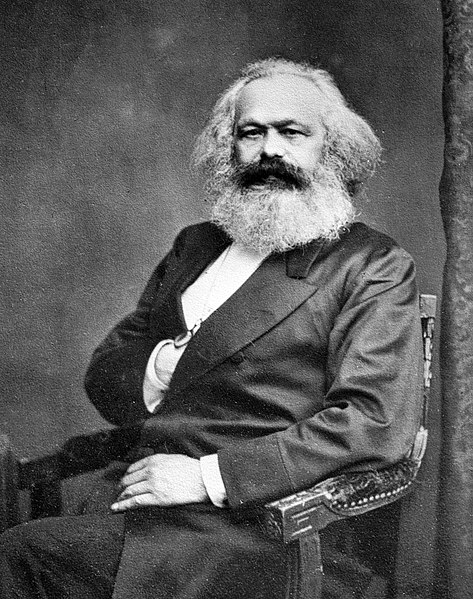
Cancel Karl Marx? That’s definitely a bridge too far for the woke

Filed under: Books, History, Media, Politics, USA — Tags: , , , — Nicholas @ 03:00

In the free portion of his Weekly Dish, Andrew Sullivan considers how other philosophers and statesmen from the age of enlightenment are quickly thrown aside by modern day Progressives, yet one political philosopher remains sacrosanct:

Discrediting a thinker’s broad worldview or legacy by discovering some statement from the distant past revealing him or her to be a bigot by today’s standards is a depressing degeneration in our intellectual life. It speaks of a compulsion to moralize rather than to understand, to shut down rather than expand debate.

Picasso was morally monstrous; but his painting is transcendent. And if you cannot disentangle the two, you are attacking a key liberal principle: that ideas and works of art should be considered on their merits, and not on the virtue or vice of their proponents.

But what makes this illiberalism even more repellent is how selective it is. For a few generations now, critical race theorists have attempted to cancel one Enlightenment thinker after another, excoriating Thomas Jefferson as a bigot and hypocrite, David Hume as a vicious racist, Immanuel Kant of all people for white supremacism. The Age of Reason has been recast as the Era of Hate.

In his new book, The War on the West, Douglas Murray quotes Black Studies professor Kehinde Andrews explaining the rationale for this: “A defense of liberalism is the worst possible thing you want to do. Because liberalism is the problem. It is the Enlightenment values which really cement racial prejudice.” The notion here is that human beings had no tribal, racial prejudices until the Age of Reason dawned. Racial hatred was invented by and is the exclusive property of white people in the last few hundred years. Seriously, that’s what the woke believe.

The attacks on Hume, Jefferson and Kant, moreover, refer to single sentences or asides that represent some of the lazy bigotries of the past. (The entire works of Aristotle and Plato are also on the chopping block because of their retrograde views on slavery, among other things.) And so one wonders if the same standard would apply to every philosopher in the past — way beyond the Enlightenment.

Well, one doesn’t wonder very much … because the bad faith of so much critical theory is a feature and not a bug. The goal is not to see the truth, but to gain power in order to impose their truth. And to accuse you of hate if you dare to demur.

Few examples demonstrate this better than Karl Marx, one of the most repellent anti-Semites and racists of the 19th century. Murray’s treatment is devastating. Let’s cite some of the greatest hits:

    The Jewish nigger Lassalle who, I’m glad to say, is leaving at the end of this week, has happily lost another 5,000 talers in an ill-judged speculation … It is now quite plain to me — as the shape of his head and the way his hair grows also testify — that he is descended from the negroes who accompanied Moses’ flight from Egypt (unless his mother or paternal grandmother interbred with a nigger). Now, this blend of Jewishness and Germanness, on the one hand, and basic negroid stock, on the other, must inevitably give rise to a peculiar product. The fellow’s importunity is also nigger-like.

Classic “race science” — yet the left pass it by. The following passage could come from Mein Kampf:

    What is the worldly religion of the Jew? Huckstering. What is his worldly God? Money. … Money is the jealous god of Israel, in face of which no other god may exist. Money degrades all the gods of man — and turns them into commodities. … The bill of exchange is the real god of the Jew. His god is only an illusory bill of exchange. … The chimerical nationality of the Jew is the nationality of the merchant, of the man of money in general.

And this is not just a personal aside or footnote or private correspondence. It’s in a published essay, “On The Jewish Question”, from 1843.

What did Marx think of a multicultural society? Roughly what Richard Spencer believes today. In 1853, Marx wrote of the Balkans that the region had “the misfortune to be inhabited by a conglomerate of different races and nationalities, of which it is hard to say which is the least fit for progress and civilization.”

April 22, 2022

QotD: George Carlin’s appropriate-for-Earth-Day monologue

Filed under: Environment, Humour, Quotations — Tags: , , , , , , — Nicholas @ 01:00

Let me tell you about endangered species, all right? Saving endangered species is just one more arrogant attempt by humans to control nature. It’s arrogant meddling. It’s what got us in trouble in the first place. Doesn’t anybody understand that? Interfering with nature. Over 90%, way over 90% of all the species that have ever lived on this planet, ever lived, are gone. They’re extinct. We didn’t kill them all. They just disappeared. That’s what nature does.

We’re so self-important. So self-important. Everybody’s going to save something now. “Save the trees, save the bees, save the whales, save those snails.” And the greatest arrogance of all: save the planet. What? Are these fucking people kidding me? Save the planet, we don’t even know how to take care of ourselves yet. We haven’t learned how to care for one another, we’re gonna save the fucking planet?

I’m getting tired of that shit. Tired of that shit. I’m tired of fucking Earth Day, I’m tired of these self-righteous environmentalists, these white, bourgeois liberals who think the only thing wrong with this country is there aren’t enough bicycle paths. People trying to make the world safe for their Volvos. Besides, environmentalists don’t give a shit about the planet. They don’t care about the planet. Not in the abstract they don’t. You know what they’re interested in? A clean place to live. Their own habitat. They’re worried that some day in the future, they might be personally inconvenienced. Narrow, unenlightened self-interest doesn’t impress me.

Besides, there is nothing wrong with the planet. Nothing wrong with the planet. The planet is fine. The PEOPLE are fucked. Difference. Difference. The planet is fine. Compared to the people, the planet is doing great. Been here four and a half billion years. Did you ever think about the arithmetic? The planet has been here four and a half billion years. We’ve been here, what, a hundred thousand? Maybe two hundred thousand? And we’ve only been engaged in heavy industry for a little over two hundred years. Two hundred years versus four and a half billion. And we have the CONCEIT to think that somehow we’re a threat? That somehow we’re gonna put in jeopardy this beautiful little blue-green ball that’s just a-floatin’ around the sun?

The planet has been through a lot worse than us. Been through all kinds of things worse than us. Been through earthquakes, volcanoes, plate tectonics, continental drift, solar flares, sun spots, magnetic storms, the magnetic reversal of the poles … hundreds of thousands of years of bombardment by comets and asteroids and meteors, worlwide floods, tidal waves, worldwide fires, erosion, cosmic rays, recurring ice ages … And we think some plastic bags, and some aluminum cans are going to make a difference? The planet … the planet … the planet isn’t going anywhere. WE ARE!

We’re going away. Pack your shit, folks. We’re going away. And we won’t leave much of a trace, either. Thank God for that. Maybe a little styrofoam. Maybe. A little styrofoam. The planet’ll be here and we’ll be long gone. Just another failed mutation. Just another closed-end biological mistake. An evolutionary cul-de-sac. The planet’ll shake us off like a bad case of fleas. A surface nuisance.

You wanna know how the planet’s doing? Ask those people at Pompeii, who are frozen into position from volcanic ash, how the planet’s doing. You wanna know if the planet’s all right, ask those people in Mexico City or Armenia or a hundred other places buried under thousands of tons of earthquake rubble, if they feel like a threat to the planet this week. Or how about those people in Kilauea, Hawaii, who built their homes right next to an active volcano, and then wonder why they have lava in the living room.

The planet will be here for a long, long, LONG time after we’re gone, and it will heal itself, it will cleanse itself, ’cause that’s what it does. It’s a self-correcting system. The air and the water will recover, the earth will be renewed, and if it’s true that plastic is not degradable, well, the planet will simply incorporate plastic into a new pardigm: the earth plus plastic. The earth doesn’t share our prejudice towards plastic. Plastic came out of the earth. The earth probably sees plastic as just another one of its children. Could be the only reason the earth allowed us to be spawned from it in the first place. It wanted plastic for itself. Didn’t know how to make it. Needed us. Could be the answer to our age-old egocentric philosophical question, “Why are we here?” Plastic … asshole.

So, the plastic is here, our job is done, we can be phased out now. And I think that’s begun. Don’t you think that’s already started? I think, to be fair, the planet sees us as a mild threat. Something to be dealt with. And the planet can defend itself in an organized, collective way, the way a beehive or an ant colony can. A collective defense mechanism. The planet will think of something. What would you do if you were the planet? How would you defend yourself against this troublesome, pesky species? Let’s see … Viruses. Viruses might be good. They seem vulnerable to viruses. And, uh … viruses are tricky, always mutating and forming new strains whenever a vaccine is developed. Perhaps, this first virus could be one that compromises the immune system of these creatures. Perhaps a human immunodeficiency virus, making them vulnerable to all sorts of other diseases and infections that might come along. And maybe it could be spread sexually, making them a little reluctant to engage in the act of reproduction.

Well, that’s a poetic note. And it’s a start. And I can dream, can’t I? See I don’t worry about the little things: bees, trees, whales, snails. I think we’re part of a greater wisdom than we will ever understand. A higher order. Call it what you want. Know what I call it? The Big Electron. The Big Electron … whoooa. Whoooa. Whoooa. It doesn’t punish, it doesn’t reward, it doesn’t judge at all. It just is. And so are we. For a little while.

George Carlin, “The arrogance of mankind”.

April 9, 2022

“Woke Disney” is far from a new thing

Filed under: Books, Business, Media, Politics, USA — Tags: , , , , — Nicholas @ 05:00

Geoff Shullenberger points out that Disney’s reputation for family-friendly media rests rather uneasily on the corporation’s actual products:

“Disney is the worst enemy of family harmony.” You’d be forgiven for thinking those words were uttered yesterday, given the number of conservative politicians and pundits castigating Disney for “grooming children” following its criticism of the “Don’t say gay” bill.

In fact, the statement appeared just over 50 years ago, in a polemical analysis of Disney cartoons written by two Marxist militants, the Chilean writer Ariel Dorfman and the Belgian sociologist Armand Mattelart. How to Read Donald Duck: Imperialist Ideology in the Disney Comic was published in Chile during the brief rule of Salvador Allende as part of an attempt by Allende’s leftist allies to push back against American cultural influence. The book became a bestseller, but after Augusto Pinochet’s 1973 coup, it was banned and publicly burned.

The Right’s current lament for the betrayal of “traditional families who want to hold onto innocent entertainment for their kids” proceeds from the premise that this “woke Disney” is a deviation from the company’s benevolent past. But Dorfman and Mattelart, all the way back in 1971, contested this assumption of innocence. Although their methodology is Marxian and their aims overtly anti-capitalist, their allegations foreshadow the American Right’s current concerns in surprising ways.

[…]

How to Read Donald Duck contains many of the expected Left-wing criticisms of patriarchy and gender roles, but it also includes observations that might be surprising to ideologues today. Notably, as one illustration of the propaganda functions taken on by Disney in the Global South, the authors remark that the US Agency for International Development has circulated films featuring Disney characters promoting contraception. They reinforce this association with the title of their chapter on Disney family dynamics: “Uncle, buy me a contraceptive …”

Like many radicals at the time, Dorfman and Mattelart saw the US state’s growing interest in controlling fertility in the developing world as consistent with a broader campaign to suppress the value placed on family in the subject nations of its economic empire; this was deemed to be in tension with values such as efficiency, productivity, individualism, and competition. Disney’s exclusion of references to reproductive sexuality, in this light, looks less like an attempt to protect childhood innocence, than part and parcel of the larger modern decoupling of sex from reproduction.

It all suggests that the supposed sexual innocence of Disney’s dreamscapes was never aligned with “family values” in the first place and the Right’s current war on Disney isn’t about family — it is simply the latest phase of its realisation that corporate America has now largely aligned itself with the values of the cultural Left.

For, in fact, Disney’s vast influence on the imaginations of children has been enabled by market society’s weakening of the authority of the family. With parents overburdened by the demands of work, important aspects of child-rearing are entrusted to the entertainment industry. Disney has capitalised on this exploding demand more than any other company. If we take “grooming” to simply mean instilling values alien to the family into children, Dorfman and Mattelart would suggest that Disney has never been innocent of this charge.

April 2, 2022

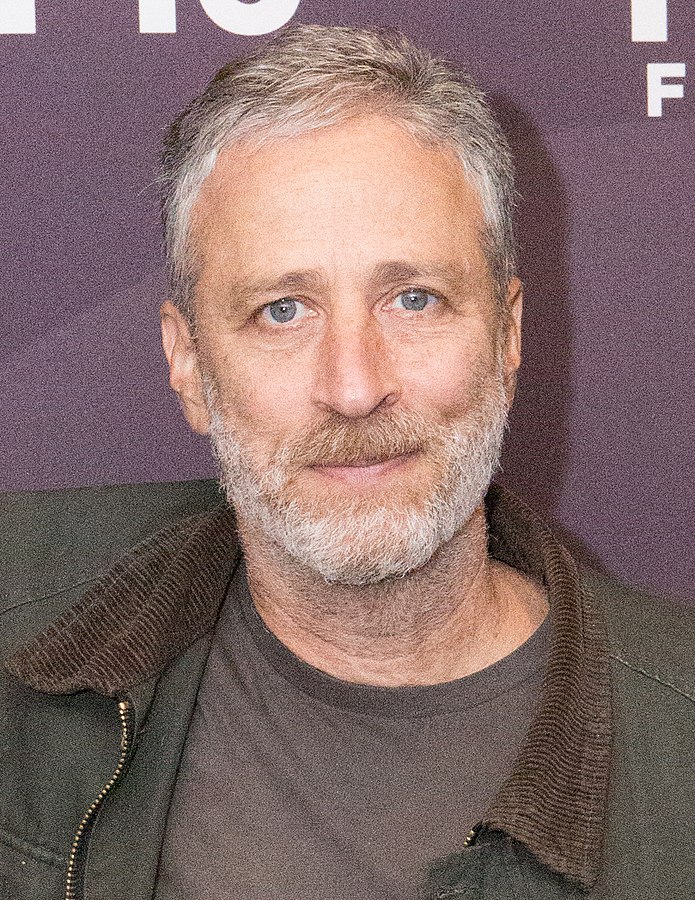
Jon Stewart believes that “… the only thing that can possibly explain racial inequality today in America is still ‘white supremacy'”

Filed under: History, Media, Politics, USA — Tags: , , , — Nicholas @ 05:00

Andrew Sullivan recounts his experiences on one of Jon Stewart’s shows:

Jon Stewart at the Montclair Film Festival, 7 May, 2016.
Wikimedia Commons.

… I found out, in fact, that there would be two other guests, and that it would, indeed, be a debate. Surprise! As the show started, I also realized for the first time there was a live studio audience and that the episode was called “The Problem With White People” — a title I’d never have been a party to, if I’d known in advance. (I wouldn’t go on a show called “The Problem With Jews” or “The Problem With Black People” either.) At that point I should have climbed carefully off the stake, tamped down the flames, made a path through the kindling, and walked away.

I protested to the producers that I’d been ambushed. And to be fair, they gave me the option of backing out at the last minute. But I didn’t want to leave them in the lurch, reassured myself that Stewart was a pro, and said I’d go ahead. I just assumed he wouldn’t demonize or curse at a guest; he would moderate; he would entertain counter-arguments; he would defend fair play. After all, this was the man who had lacerated Crossfire for bringing too much heat and not enough light. He believed in sane discourse. He was a liberal, right?

Wrong.

On the race question, Stewart has decided to go way past even Robin DiAngelo, in his passionate anti-whiteness. His opening monologue was intoned at times in a somber tone, as if he were delivering hard truths that only bigots could disagree with. He argued that no one in America had been prepared to have an honest discussion about race — until the “reckoning” of 2020. He also suggested that nothing had been done by whites to support African-Americans from 1619 (yes, he went there) … till now. The most obvious solution — reparations — was, he implied, somehow, absurdly, taboo.

His montage of “black voices” insisted that African-Americans are still granted only conditional citizenship, are still barred from owning property — “we don’t own anything!” — and ended with Sister Souljah — yes! — explaining that the thing that kills black people are not bullets, but white people. This is the same moral avatar who once said: “If black people kill black people every day, why not have a week and kill white people?” Stewart then hailed Angela Davis — a proud Communist, with a particular fondness for East Germany’s suppression of dissent — and warmly thanked her as “Angela”. But Stewart included not a single black voice of disagreement or nuance. He apparently believes that all black people hold the same view. And all white people just refuse to hear it.

Jon Stewart’s insistence that Americans had never robustly debated race before 2020 is also, well, deranged. Americans have been loudly debating it for centuries. There was something called a Civil War over it. His claim that white America has never done anything in defense of black Americans (until BLM showed up, of course) requires him to ignore more than 300,000 white men who gave their lives to defeat the slaveholding Confederacy. It requires Stewart to ignore the countless whites (often Jewish) who risked and gave their lives in the Civil Rights Movement. It requires him to erase the greatest president in American history. This glib dismissal of all white Americans throughout history, even those who risked everything to expand equality, is, when you come to think about it, obscene.

Stewart’s claim that whites never tried to ameliorate black suffering until now requires him to dismiss over $19 trillion of public funds spent in the long War on Poverty, focused especially on black Americans. That’s the equivalent of more than 140 Marshall Plans. As Samuel Kronen has shown, it requires the erasure from history of “the Food Stamp Act of 1964, the Child Nutrition Act of 1966, the Social Security Amendments of 1965, the Elementary and Secondary Education Act of 1965, the Social Security Amendments of 1962, and the Economic Opportunity Act of 1964, and on and on.” To prove his point, Stewart has to pretend LBJ never existed. That’s how utterly lost he now is.

Stewart then used crude metrics of inequality to argue, Kendi-style, without any evidence, that the only thing that can possibly explain racial inequality today in America is still “white supremacy”. Other factors — concentrated poverty, insanely high rates of crime and violence, acute family breakdown, a teen culture that equates success with whiteness, lack of affordable childcare — went either unmentioned or openly mocked as self-evident expressions of bigotry. He then equated formal legal segregation with voluntary residential segregation, as if Jim Crow were still in force. And he straw-manned the countering argument thus: white America believes that African-Americans are “solely responsible for their community’s struggles”.

I don’t know anyone who believes that. I sure don’t. It’s much more complex than that. And it’s that complexity that some of us are insisting on — and that Stewart wants to dismiss out of hand in favor of his own Manichean moral preening. His final peroration ended thus: “America has always prioritized white comfort over black survival.” Note: always. There has been no real progress; white people have never actually listened to a black person; America is irredeemably racist. Those fucking white men, Lincoln and LBJ, never gave a shit.

March 29, 2022

QotD: SJW white guilt

Filed under: Politics, Quotations, USA — Tags: , , , , — Nicholas @ 01:00

If you scratch a Liberal, underneath you find that they are exactly what they hate. In this case, the driving force is what they call White Guilt. The reason they believe that white people are inherently, unchangeably, and institutionally racist is because they see it in themselves, and they therefore believe it is true in everyone else (Hint: It isn’t). But they believe themselves to be better because they acknowledge it, and go through all the rigamarole to make up for it and be a good ally.

In short, reading shit like this is penance for being white. Subjecting themselves to a stream of invective about their failings for being white gives them absolution. It’s kinda like those folks in the BDSM community who seek out a black dominatrix to work out their guilty feelings, and having paid for verbal abuse and a beating, feel that they’ve done their bit for race relations, and for the liberal side of the SF community, Mistress Nora is just the ticket, and they are paying her with sales and awards for all the abuse they can stomach.

Dr. Mauser, “Message Received”, Shoplifting in the Marketplace of Ideas, 2019-01-30.

March 19, 2022

QotD: The sterility of partisan political argument

Filed under: Politics, Quotations, USA — Tags: , , , , — Nicholas @ 01:00

For the partisan of deadly nonsense, the person on the other side is neither right nor wrong, since rightness and wrongness are never to be discussed: the person on the other side is merely a jackass, a bigot, ignorant, uninformed, pathetically stupid, Neanderthal, reactionary, bitter, a yokel, a class-traitor, and racist, racist, racist, and racist.

If you are arguing with someone, say, who has a better education than you, a higher I.Q., with perhaps a doctorate in law and a career as a journalist and a published series of books on his resume, that does not matter. The mere fact that he comes to different conclusions than the Party line indicates that he is stupid uneducated Nazi bigot, and a stupid bigoted fascist racist moron.

This is argumentum ad cloaca —— ratiocination via offal. Whatever the loudest donkey laughs loudest at, you take to be untrue. Since that was the way (admit it!) you yourself were convinced, O ye of little mind, it is the first, usually the only means, to which you resort to convince others: the volume and clamor is what matters, not the content.

The reason for the inadequacy of these condemnations, the reason why they are so unimaginative, is because of the paucity of the moral vocabulary of the Left. They do not have words to express outrage, so they sneer and yodel. They are like creature struck dumb, and only able to act out their condemnation by means of antic pantomime.

The more closely they follow Marx, the more impoverished their moral vocabulary becomes. You cannot call someone evil once you accept the proposition that all standards of good and evil are merely genetically-determined group survival behaviors, or merely culturally determined artifacts, or merely ideological superstructures meant to promote class interests. Your concept has lost its referents: it can be used only metaphorically, or ironically.

Likewise, you cannot call someone damned if you don’t believe in damnation. There is no such thing as blasphemy if there is nothing sacred, supernatural, or divine.

Likewise again, you cannot call someone illogical if logic is no longer the standard used to separate self-consistent from self-contradictory statements: because then you would have to argue the merits of the case, and rely on reason, like Adam Smith, rather than on verbal fetishes, like Karl Marx.

Our Progressive detractors have to call the object of their scorn a racist (or a parallel word, such as sexist, lookist, homophobe, capitalist, colorist, agist, whateverist) because that is the only arrow in their quiver. That is the only thing they have to shoot, so they shoot, and do not care how short of the target the dart falls.

John C. Wright, “The Crazy Years and their Empty Moral Vocabulary”, John C. Wright, 2019-02-18.

March 17, 2022

If everything is about justice, then nothing is

Filed under: Environment, Media, Politics, USA — Tags: , , , , , , — Nicholas @ 03:00

At Astral Codex Ten, Scott Alexander wonders why everything these days is said to be about “justice”:

Freddie deBoer says we’re a planet of cops. Maybe that’s why justice is eating the world.

Helping the poor becomes economic justice. If they’re minorities, then it’s racial justice, itself a subspecies of social justice. Saving the environment becomes environmental justice, except when it’s about climate change in which case it’s climate justice. Caring about young people is actually about fighting for intergenerational justice. The very laws of space and time are subject to spatial justice and temporal justice.

I can’t find clear evidence on Google Trends that use of these terms is increasing — I just feel like I’ve been hearing them more and more often. Nor can I find a simple story behind why — it’s got to have something to do with Rawls, but I can’t trace any of these back to specific Rawlsian philosophers. Some of it seems to have something to do with Amartya Sen, who I don’t know enough about to have an opinion. But mostly it just seems to be the zeitgeist.

This is mostly a semantic shift — instead of saying “we should help the poor”, you can say “we should pursue economic justice”. But different framings have slightly different implications and connotations, and it’s worth examining what connotations all this justice talk has.

“We should help the poor” mildly suggests a friendly optimistic picture of progress. We are helpers — good people who are nice to others because that’s who we are. And the poor get helped — the world becomes a better place. Sometimes people go further: “We should save the poor” (or the whales, doesn’t matter). That makes us saviors, a rather more impressive title than helpers. And at the end of it, people/whales/whatever are saved — we’re one step closer to saving the world. Extrapolate the line out far enough, and you can dream of utopia.

“We should pursue economic justice” suggests other assumptions. Current economic conditions are unjust. There is some particular way to make them just, or at least closer to just. We have some kind of obligation to pursue it. We are not helpers or saviors, who can pat ourselves on the back and feel heroic for leaving the world better than we found it. We are some weird superposition of criminals and cops, both responsible for breaking the moral law and responsible for restoring it, trying to redress some sort of violation. The end result isn’t utopia, it’s people getting what they deserve.

(cf. Thomas Jefferson: “I tremble for my country when I remember that God is just.”)

What is “climate justice”? Was the Little Ice Age unjust? What if it killed millions? Is it unjust for Mali to have a less pleasant climate than California? What if I said that there’s a really high correlation between temperature and GDP, and Mali’s awful climate is a big part of why it’s so poor? Climate justice couldn’t care less about any of this. Why not? Hard to say. Maybe because there’s no violation and no villain.

March 13, 2022

The Canada Council for the (woke) Arts

Filed under: Bureaucracy, Cancon, Politics — Tags: , , , — Nicholas @ 03:30

In the latest SHuSH newsletter, Kenneth Whyte looks at the origins of the Canada Council for the Arts and compares its original mission to the new direction the crown corporation plans to take:

The Massey Commission (1951), from which all public funding of arts, culture, and scholarly research in Canada derives, and out of which our flagship granting body, the Canada Council for the Arts, was born, knew that it was pushing the nation into perilous terrain. “The dangers inherent” in any system of grants from the central government to arts, letters, and culture was that “the government or its agents would attempt not merely to encourage but to direct” artistic and cultural expression.

The Massey Commission was not the first entity to confront this issue. Much like the Great Canadian Baking Show is a re-staging of the Great British Baking Show, the Massey Commission itself was a knockoff of a UK original (a sad commentary on an initiative intended to define and promote Canada’s unique national identity). The UK effort resulted in the establishment of the British Arts Council, initially chaired by Lord Keynes. Massey quoted him at length on the potential pitfalls of arts funding:

    At last the public exchequer has recognized the support and encouragement of the civilizing arts of life as part of their duty. But we do not intend to socialize this side of social endeavour. Whatever views may be held by the lately warring parties, whom you have been hearing every evening at this hour, about socializing industry, everyone, I fancy, recognizes that the work of the artist in all its aspects is, of its nature, individual and free, undisciplined, unregimented, uncontrolled. The artist walks where the breath of the spirit blows him. He cannot be told his direction; he does not know it himself. But he leads the rest of us into fresh pastures and teaches us to love and to enjoy what we often begin by rejecting, enlarging our sensibility and purifying our instincts. The task of an official body is not to teach or to censor, but to give courage, confidence and opportunity.

The founders of the Canada Council felt so strongly about the dangers of political interests imposing themselves on the arts, using federal money to force artistic and cultural activities in one direction or another, that they built checks and balances into its founding legislation. The Canada Council was made a crown corporation, at arm’s length from political types, and its board members were required to “avoid the promotion of any personal interests” or any other specific interests, whether on behalf of regions or “stakeholder groups”.

I can’t speak to the whole of the Canada Council’s activities, but from what I’ve seen of its annual reports, public statements, and funding practices, the Canada Council has jumped the tracks and is now fully dedicated to teaching, censoring, and directing artistic endeavour.

Here’s Simon Brault, chief executive of the Canada Council, giving an enthusiastic endorsement of the core Trudeau government priorities of Indigenous rights and environmental activism:

    We need to reimagine an arts sector determined to eliminate racism and discrimination in every form, and the legacy of colonialism. We need to reimagine the arts’ rightful place in the conversations that shape our future. And we need to reimagine, through the arts, a greener and more just and equitable world.

Even if you agree with Brault’s priorities, you have to admit that he is not straightforwardly supporting artistic endeavor but pushing the arts-and-culture sector toward the achievement of a socio-political program.

This mission is also explicit in the Canada Council’s new five-year plan, which has surprisingly little to say about lifting artists and arts organizations out of penury, which some might consider a laudable goal after years of financial crisis and pandemic:

Those are the council’s highlights, not mine.

This past week, the politicization of the Canada Council reached new heights when Brault announced that in solidarity with the Ukrainian people he would cease to fund any “activity involving the participation of Russian or Belarusian artists or arts organizations … This includes partnerships, direct and indirect financing of tours, co-productions, participation in festivals or other events held in Russia.”

« Newer PostsOlder Posts »

Powered by WordPress