Quotulatiousness

June 10, 2024

Elite contempt for democracy is fuelling anti-immigration “far right” sentiment in the west

Even for people who are generally happy with robust immigration, the numbers being recorded (or, more likely, under-recorded) in Canada, the United States and Europe are far too high to pretend that the new arrivals will quickly integrate into their new countries, and they are generally not being encouraged to do so anyway. Complaints to the people who have enabled these massive inflows — at best — are waved off or ignored, but often are seized upon as examples of hateful far-right xenophobia to be punished and suppressed:

Not so long ago, as many of us reeled from the political earthquakes of Brexit and Trump, it seemed sensible for responsible mainstream political parties to adopt tighter immigration control to keep the populist right at bay. Mass migration in Europe had led to a far-right resurgence; in the US and UK, Trump and the Johnson-era Tories seemed to grasp this and moved to co-opt the anti-immigrant fervor. Democracy was working to accommodate a shift in the public mood.

Or so it seemed. Nearly a decade later, something else has happened: an immigration explosion. In response to a volatile public mood, Western elites actually intensified their policy of importing millions of people from the developing world to replace their insufficiently diverse and declining domestic populations.

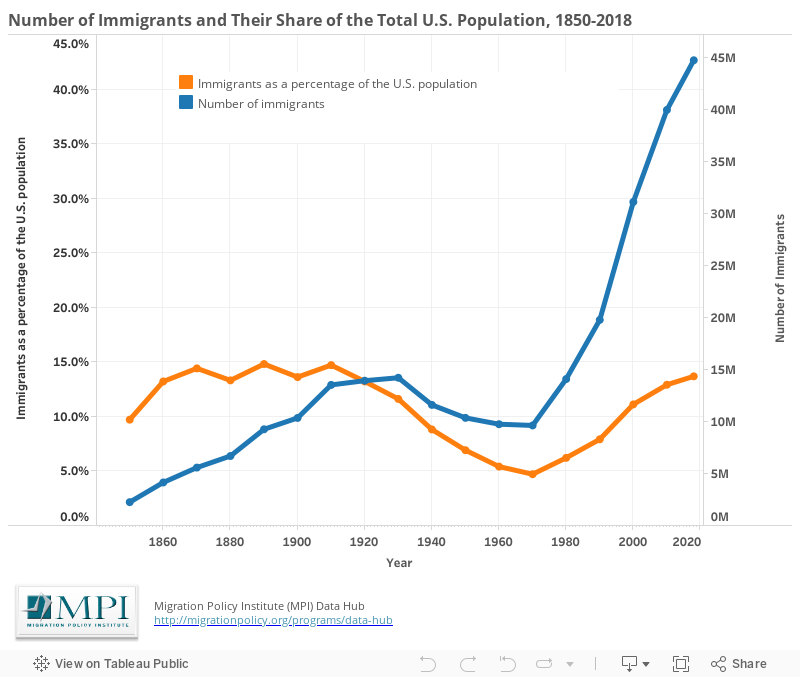
The recent figures from the US, UK and Canada are mind-blowing. The graphs all look like a hockey stick, with a massive spike in the last three years alone. Under Trump, the average number of illegal crossings a year was around 500,000; under Biden, that has quadrupled to two million a year — from a much more diverse group, from Africa, China and India. To add insult to injury, Biden has also all but shut down immigration enforcement in the interior; and abused his parole power to usher in nearly 1.3 million illegal migrants in 2023 alone. The number of undetained illegal migrants living in the US has thereby ballooned under Biden: from 3.7 million in 2021 to 6.2 million in 2023, according to ICE. If a fraction of those millions turns up for asylum hearings, I’ll be gob-smacked.

Canada has seen something similar. For much of the 21st century, Canada had around 200,000 to 300,000 immigrants a year; but in the last two years, this has nearly doubled. In Britain, the same story. In 2015, the year before Brexit, net migration (the numbers of people immigrating minus the number emigrating) was 329,000; in the last two years, it has more than doubled to over 700,000. And whereas most immigration before Brexit was from the EU, today, immigrants from the developing world outnumber European immigrants by almost 10 to 1. For those Brits who voted for Brexit to lower the number of foreigners in the country, it’s been surreal.

If you want to understand why Biden keeps trailing in the swing states, why the Tories are about to be wiped out in a historic collapse, and why Trudeau is at all-time low in approval at 28 percent, this seems to me to be key. As the public tried to express a desire to slow down the pace of demographic change, elites in London, Ottawa, and Washington chose to massively accelerate it. It’s as if they saw the rise in the popularity of the far right and said to themselves: well now, how can we really get it to take off?

This week, CNN ran a poll on Biden and immigration. Here’s what they found: in May 2020, only one percent of Americans put immigration as their top concern — in 15th place among issues; in May 2024, 18 percent put it first. In 2020, Biden edged Trump by one percent on who was best to tackle the border crisis; four years later, Trump is ahead on the issue by 27 points. As a coup de grâce, CNN also found that foreign-born Americans preferred Trump to Biden on immigration by 47 to 44 percent. Turns out that this immigrant’s worries are widely shared by my fellow new Americans.

Biden, of course, is now desperately scrambling to salvage something from this disaster. This week, he contradicted himself by saying he has the unilateral capacity as president to shut down the border, and attempted to blame the GOP for the problem. Yes, the GOP was unhelpful and cynically political earlier this year — but that won’t muddy the waters for most voters who have been conscious for the past three years. But I am grateful nonetheless to hear the president echo what the Dish has been saying for years now, and for which I was routinely called a racist:

    To protect America as a land that welcomes immigrants, we must first secure the border and secure it now. The simple truth is there is a worldwide migrant crisis, and if the United States doesn’t secure our border, there is no limit to the number of people who may try to come here, because there is no better place on the planet than the United States of America.

Now that didn’t hurt, did it? But why did he keep telling us there was no crisis for the last three and a half years? And why would anyone trust a re-elected Biden to enact this if he had a Congressional majority? I sure don’t.

Even under Biden’s “crackdown”, he is still prepared to admit at least 1.75 million illegal immigrants a year! Last week, Chuck Schumer declared that the ultimate goal was to legalize every single illegal immigrant — because Americans are not having enough children. Without open borders, of course, our economy wouldn’t look so good: in the last year, according to the Bureau of Labor Statistics, foreign-born workers gained 600,000 new jobs, while native-born Americans lost 300,000. But don’t you dare mention the “Great Replacement Theory“!

May 30, 2024

The Liberal Party of Canada, a wholly-owned subsidiary of Trudeau, Inc.

Filed under: Cancon, Politics — Tags: , , , — Nicholas @ 03:00

In The Line, Stefan Klietsch ponders the idea that a lot of the problems the Trudeau Liberals are encountering in the run-up to the next federal election are direct or indirect effects of the constitutional changes Trudeau pushed through at the first party general meeting after he became Prime Minister:

With the ongoing and persistent slump of Justin Trudeau’s party in the polls, some observers have looked back at what caused the Sunny Ways team to lose its lustre in their years of governing. Some would point to the prime minister’s harassment of Judy-Wilson Raybould in the SNC-Lavalin scandal, an episode in which the prime minister clearly lost the battle for public opinion. One personal grievance of mine is the cynical promise that the prime minister had made of the 2015 election being the last such election under the existing electoral system. Others just point to post-pandemic economic conditions, especially higher interest rates.

But looking back to the very beginning of the Trudeau era, the Liberal leader arguably planted the seeds of his inevitable downfall quite quickly after winning his majority in the 2015 election. I speak here of the constitutional package that Trudeau pushed the Liberal Party of Canada to adopt at its 2016 Biannual General Meeting.

It is a recurring theme in Canadian politics that party leaders who form government tend to become more distant and isolated from their grassroots. But whereas most prime ministers and premiers would be content to delegate management of constitutional party debates to their submissive sycophants, a sitting prime minister took it upon himself to invest his personal brand in an appeal to the party’s convention floor to pass an omnibus “modernizing” constitutional package. Since the prime minister did not again participate in the party’s constitutional debates after 2016, he evidently got everything that he wanted all in one go, and with minimal resistance.

Trudeau’s cynicism here is worthy of mockery. Imagine thinking to yourself, “Just months ago, the rejuvenated grassroots institutions of the Liberal party swept me to power and ended the decade of Liberal decline. Better fix what ain’t broke!” The changes, which included slashing of the influence of Electoral District Associations and of policy conventions, were obviously not intended as some grand exercise in democracy empowerment, but rather were intended to protect an incumbent government from any inconvenient messages and influences from a potentially unruly party grassroots.

Yet it was the same independent party grassroots that had helped bring Trudeau to power in the first place. In the 2015 campaign the Liberals had run on what columnist Andrew Coyne called a “daring” platform, a platform crafted with more input and insight than can be offered by only pollsters and political operatives. The then Liberal platform was obviously a factor in the Liberals’ poaching of supporters from the NDP, which had at times held a lead in the polls. From cannabis legalization to electoral reform to the Canada Child Benefit, where did all the big new Liberal ideas come from? The party grassroots and institutions, of course.

May 16, 2024

The Thüringen Project – “where our greatest legal minds are at this very moment brainstorming ways to defend Thuringian democracy from the grave threat of ordinary people expressing their political preferences via voting”

Filed under: Germany, Media, Politics — Tags: , , , , — Nicholas @ 04:00

eugyppius on the brave defenders of German democracy in Thuringia (and Brandenburg and Saxony) who are doing everything they can to ensure that the unwashed masses don’t disturb the stately progress toward their long-dreamed-of utopia:

“German flag” by fdecomite is licensed under CC BY 2.0 .

To live in Germany in 2024 is to be lectured constantly about democracy. An endless parade of doubtful personalities – pundits, experts and a lot of very shrill women – appear on the television every night to tell you which parties are democratic, which people are democratic and therefore who enjoys democratic legitimacy. As we have seen, however, the whole concept of democracy is very confusing. Those people and organisations who want to mute free expression and ban political parties are all held to be extremely democratic, while those parties that demand more direct democracy and talk constantly about respecting the popular will are the direct modern equivalent of illiberal antidemocratic fascists.

To make all of this even harder, we are told that the upcoming September elections in Thüringen, Brandenburg and Saxony present a grave threat to democracy. To counteract this threat we have things like the Thüringen Project, where our greatest legal minds are at this very moment brainstorming ways to defend Thuringian democracy from the political preferences of actual voters. Crucially, the very existence of the Thüringen Project means that democracy must still reign supreme in Thüringen. Otherwise, there would be nothing for the democratic police of the Thüringen Project to defend. We therefore need only study Thuringian politics in their present state to gain a better idea of what this mysterious, shape-shifting, elusive phenomenon we call German democracy might be.

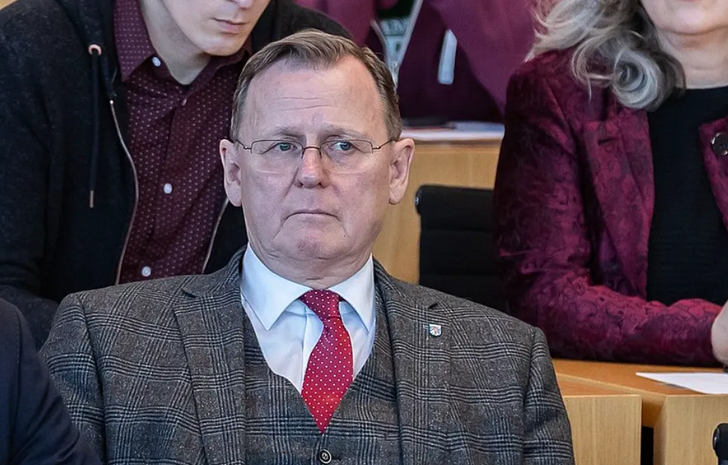
We will start at the top. The current Minister President (i.e., governor) of Thüringen is a highly democratic man named Bodo Ramelow:

Ramelow is a member of Die Linke, or the Left Party, which is the direct successor of the Socialist Unity Party (or SED) that used to govern the DDR. That might seem baffling, as the SED and the DDR were anything but democratic. Still more baffling is the fact that the constitutional protectors suspected Ramelow of antidemocratic tendencies and even surveilled him for many years. But democracy as we have learned is extremely complicated, and whatever antidemocratic essence Ramelow may have harboured in the past, he is a stalwart democratic politician today. He is also a huge fan of the mobile game Candy Crush, which he enjoys playing during government meetings. That at least seems unambiguously democratic, and perhaps it is even enough to overcome Ramelow’s political unreliability in other respects.

[…]

In summary: A constitutional protector who owes his office to a Minister President who was appointed to a second term via the anti-constitutional interventions of outsiders is now vowing to use his office to forestall political developments that may deprive his Minister President of power in the future. It is almost like “democracy” in Thüringen is synonymous with left-wing government. Elections which threaten to deprive Bodo Ramelow of office or his left-wing coalition of power are by definition anti-democratic, deplorable and perhaps even illegal.

Thuringians can vote for whichever party they want, but their votes are only democratic if they are cast for those specific parties. If Kramer has his way, Thuringia will soon achieve the democratic end-state – one in which the sad reality of popular sovereignty in practice will be replaced with a theoretical popular sovereignty that exists entirely in an ideal, Platonic form, unchanging and as it ought to be, now and forever.

May 1, 2024

Trudeau appeals to US-based podcasters to help him bring misguided Canadians to their senses

Filed under: Cancon, Media, Politics, USA — Tags: , , , , — Nicholas @ 03:00

Tristin Hopper outlines Prime Minister Justin Trudeau’s latest attempt to get his message out to the growing number of Canadians who are “misguided” enough to not want him back for another term in office:

Last week, Trudeau was the featured guest on two U.S. podcasts: Vox’s Today, Explained and Freakonomics Radio, where he outlined his plans to bring “fairness” to the Canadian economy and hold the line against what he framed as a populist uprising.

“I’m not worried about innovation and creativity,” he told Vox against claims that his budget would scare away investment. “I’m worried about people being able to pay their rent and eventually buy a home.”

Trudeau also described Canada as being seized by a focus on “individualism that I think is counterproductive to the kind of world we need to build”.

The Vox interview began with an actor doing a faux Canadian accent and pretending to be a kind of Trudeau-esque superhero. The Freakonomics interview introduced Trudeau as “possibly the most polite prime minister in the world; he most definitely stands on guard for thee”. So it’s clear from the outset that the interviewers only have a cursory knowledge of Canada and its contemporary political situation.

As such, Trudeau was able to get away with claims that even the friendliest of Canadian interviewers wouldn’t have tolerated.

Below, a quick summary of how Trudeau his pitching his re-election in the U.S.

He frames opposition to his government as a form of mass hysteria

Both interviews did note at the outset that Trudeau is polling quite poorly and that he faces likely defeat in the next election. As to why this is happening, Trudeau described his citizenry as being in the grip of a worldwide trend towards irrational populism, and expressed his hope that Canadians would ultimately come to their senses.

“In every democracy we’re seeing a rise in populists with easy answers that don’t necessarily hold up to any expert scrutiny. But a big part of populism is ignoring experts and expertise, so it sort of feeds on itself and relies on a lot of misinformation and disinformation,” he told Vox.

While he never mentions Conservative Leader Pierre Poilievre by name, Trudeau says he’s facing opponents who offer naught but “easy shortcuts”, “buzzwords” and “clever TikTok videos”. The Conservatives, he said, are arguing that “everything I’ve done” is “why life is difficult right now.”

“When in actual fact … all those things have made life better in meaningful ways and it would be much worse if we hadn’t done all those things,” he said.

I don’t know why everyone is down on Justin Trudeau. His brilliant economic and environmental plan is working to perfection: Canadians are eating less unhealthy food (because they’re eating less food overall except for what they can shoplift from Loblaws). Businesses are closing down left and right, which significantly reduces our harmful production of CO2, to allow China and India to build more coal power plants. Community-oriented businesses like pawnshops, used clothing stores, needle exchanges, and food banks are booming all across Canada, increasing our community involvement. Poor, uneducated, undocumented immigrants are flooding into the country to take advantage of the free food, free housing, free healthcare, and income subsidies our munificent governments make available to non-citizens. The first post-national country on the planet — which actively discourages out-of-date patriarchal white-supremacist ideas like individual pride and patriotism — continues to follow the wise guidance of the World Economic Forum, whose goal is a much smaller world population devoted to serving the elites hand-and-foot.

April 24, 2024

Alternative für Deutschland is gifted a blueprint for governing by their entrenched opponents

Filed under: Germany, Media, Politics — Tags: , , , , , , — Nicholas @ 03:00

Was it Napoleon who said to never interrupt your enemy when they’re making a mistake? If so, the German populist Alternative für Deutschland leaders must be congratulated for not interrupting the latest mistake by the statists they want to replace:

Every day I encounter yet another hamfisted pseudoacademic propaganda operation eagerly churning out oceans of text to shore up the German political establishment. The idea seems to be that with just enough whitepapers, bursting with just enough words, the situation might still be saved.

There are just so many of these outfits, they grow like weeds in the fertile soil of government funding. This Sunday, it has been my dubious pleasure to stumble across the “academic and journalistic open access forum of debate on topical events and developments in constitutional law and politics” billing itself as the Verfassungsblog (the “Constitution Blog”). This factory of tedious prose and political special pleading that nobody will ever read is not just the eccentric side project of a very socially concerned lawyer named Maximilian Steinbeis, oh no. It is funded by the WZB Berlin Social Science Center (and therefore, indirectly, by the German taxpayer) and also by the Max Planck Institute for Comparative Public Law and International Law. We would do well to take these people seriously, in other words, and you should keep that in mind, because things are about to get very ridiculous.

Last year, our state-funded Verfassungbloggers realised that elections were approaching in Saxony, Thüringen and Brandenburg. This worried them terribly, because Alternative für Deutschland dominates polling in all three states. They feared that this “authoritarian populist party” might seize control of one or more state governments, just as other authoritarian populist parties have seized control “in Poland and Hungary, in Florida and Texas”. These parties are very bad, because they “use … power … so that they no longer have to relinquish it”. They “manipulate electoral law” and “stifle opposition” and “pack the administration and judiciary with their own people”. As if that were not bad enough, they also “make the media, scientific and cultural institutions dependent on their will”. Of course, the Federal Republic is presently ruled by a party cartel system that is already doing all of that, but the difference is that none of the parties involved are “authoritarian” or “populist”. The priests of democracy get to do whatever they want, and whatever they do is by definition democratic.

In this spirit, our Verfassungsbloggers launched the “Thüringen Project”. Their aim is to identify how the forces for humanitarian pluralism might manipulate the law, stifle the opposition and pack the administration and judiciary in even more extreme ways than have yet been imagined, all to subvert the will of east German voters and more effectively blunt the power of the AfD when they become the strongest party in the Thuringian Landtag.

[…]

All of this iterative looping has culminated in an overproduced, 36-page .pdf file bearing the characteristically cumbersome title “Strengthening the resilience of the rule of law in Thüringen: Action recommendations from the scenario analysis of the Thüringen Project“. No syllable can be spared in our campaign to defend democracy. In the pages of this plan, they finally define what “authoritarian populist parties” are. These are parties that “use the narrative of a natural, ‘true’ people in opposition to ‘corrupt elites’, for the purpose of delegitimising pluralistic democracy and establishing an authoritarian regime”. The AfD are of course “a clear example of such a party”. The more panicked all of these people get, the closer they come to saying plainly what they’re really afraid of, namely the growing hostility of native Germans to an increasingly isolated political elite, which plainly does not care much about “authoritarianism” (they are responsible for plenty of that themselves) as much as they are terrified of losing their hold on power.

March 5, 2024

Our “transnational” “elites” naturally hate anything smacking of populism

Filed under: Government, Media, Politics — Tags: , , , , , — Nicholas @ 04:00

Niccolo Soldo’s weekend post discussed some of the reasons western “elites” treat anything that can remotely be considered “populist” as if it were outright armed revolution in the streets:

For around 15 years now, the British have elected Conservatives to govern them, with anti-immigration sentiment the key driver in their choice of parties to rule. #Brexit was powered to victory by this same sentiment.

Instead of getting what they wanted, immigration in the UK has continually increased under each and every Tory Prime Minister. Last week, the ruling Conservatives managed to put out two messages on this same issue:

  1. Putin has “weaponized migration” to harm Europe, including the UK
  2. The massive spike in immigration that the UK has experienced since #Brexit was “unintentional” on the part of the Tories

Throughout the West, citizens are becoming increasingly suspicious of liberal democracy because they realize that no matter who they vote for, they always end up getting the same policies to them (yes, this is a gross generalization … please forgive me). It’s not just that people feel that their interests are not being represented by their elected representatives, but that their ruling elites are becoming increasingly distanced from the people that they purport to represent. The sentiment is growing that we are ruled by managers, and that we, the people, really do not have a say in anything.

For those of us who grew up in the West, democracy is part of our DNA. We live and work under the assumption that government rules on behalf of us, the people, and not lord over us, the peons. All of us now realize that the latter is much more true than the former, which is why you choose to read people like me. Very few of us feel that we have the ability to affect the decisions that impact us on a daily basis and that will direct our futures, and the futures of our families. We all have a stake in our respective societies, but feel powerless to do anything about our present situation.

He then linked to this article by Frank Furedi:

Since the turn of the 21st century populism has emerged as a medium through which the Western Elites recycle their worst fears. In the mainstream media populism serves as a signifier of a dark, potentially dangerous force that undermine the stable political institutions that were carefully nurtured in the post-Second World War Era. That is why terms like extreme, far-right, authoritarian, xenophobic and even fascist are often coupled with the word populist. The semantic strategy for framing populism as the antithesis of democratic and liberal norms is to create a moral distance between it and the rest of society.

The representation of populism as a moral disease is frequently communicated through a hysterical narrative about the scale of the threat it represents. Populism is sometimes medicalised as a virus. The growth of a political movement designated as populist is sometimes likened to an infection. Its growth is described as an epidemic by some of its opponents. “The next epidemic: resurgent populism” warns one analyst. “Populism, racism and xenophobia have infected Europe” asserts a writer in Euractiv. One American academic writes of “Populism as a Cultural Virus”. An essay on the Spanish political party Vox is titled, “A Political Virus? VOX’s Populist Discourse in Timed of Crisis”. A Facebook Post of the Young European Federalist stated that “The virus of populism, racism, xenophobia has affected Europe”.

Otto English, a commentator in Politico wrote hopefully that “Coronavirus’ next victim” would be “Populism”. Others were more circumspect and reported that “Covid-19 has not killed Global Populism”.

The use of a medicalised narrative that diagnosed populism as a form of moral pathology is reminiscent of the use of crowd psychology in the 19th century to de-legitimate the democratic aspiration of the people. The demonisation of the masses in the 19th century anticipates the contemporary pathologisation of populism. Crowd psychologists such as Gustave Le Bon wrote off the people as a mass of irrationality and delusion. Then and now the medicalisation of public life expressed an elite’s hatred of those members of their “social inferiors” who dared to challenge their power.

In recent years optimistic predictions about the demise of populism runs in parallel about doom laden accounts of the threat posed by this supposedly dangerous political force. “Has Europe reached peak populism?” asked Paul Taylor in Politico before hopefully noting that the “tide may have turned against nationalist right”. In recent months such hopes have turned into despair as it becomes evident to all that movements labelled as populist are in ascendant. The June elections to the European Parliament are likely to see a substantial increase in the number of parliamentarians affiliated to populist parties. It is unlikely that the dehumanising language of virology is going to do much to discredit the forward movement of populism.

Anti-populist sentiments are particularly prevalent among the oligarchy that runs the European Union. They refuse to regard populist parties as legitimate political opponents. Instead, they treat them as enemies rather than political opponents, The EU financially supports projects designed to curb the epidemic of populism. One such project titled, “Countering the populist threat: policy recommendations and educational tools” is justified on the ground that “populist sentiments and politics are spreading across Europe, dividing society into ‘Us’ and ‘Them’. It describes itself as an ‘An EU-funded project’, which ‘addresses this challenge, thereby ensuring stability of liberal democracies'”.

January 17, 2024

“The thing liberals don’t understand about the average Republican voter in 2024 is that they hate the Republican Party”

Filed under: Media, Politics, USA — Tags: , , , , , , — Nicholas @ 04:00

In The Free Press, Batya Ungar-Sargon attempts to explain at least one aspect of the inexplicable-to-liberals Trump appeal for many Republican voters:

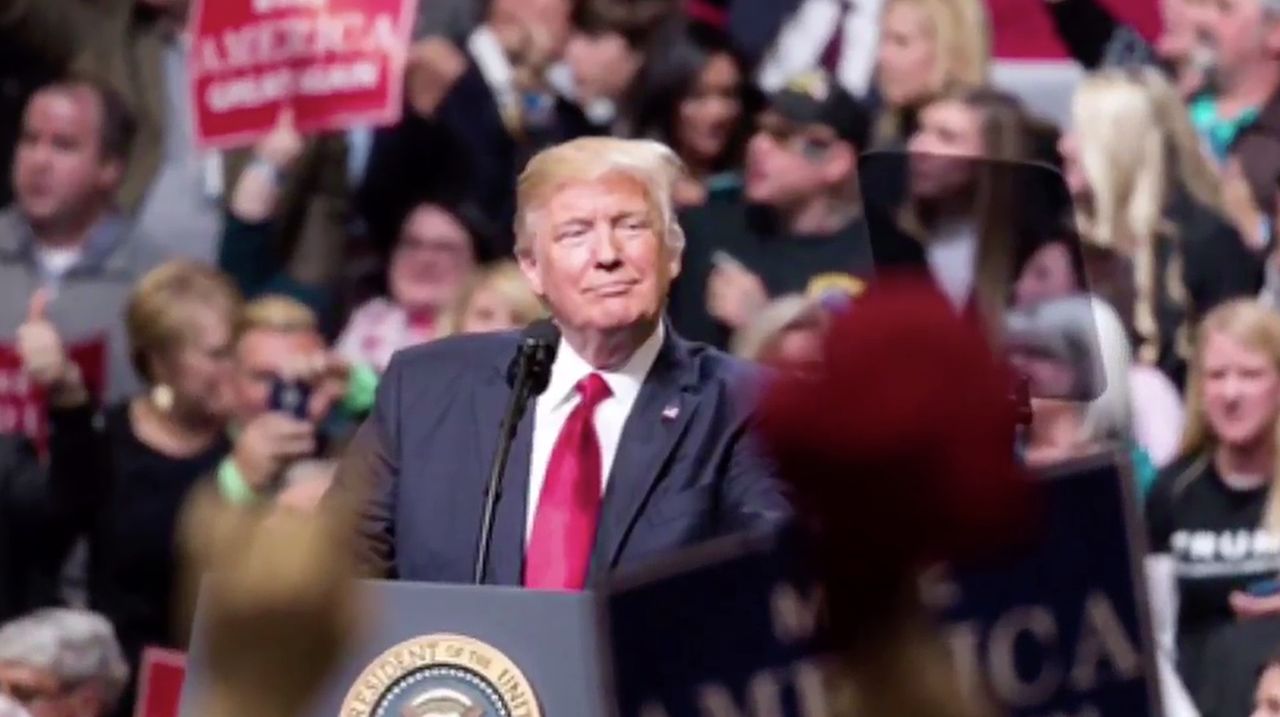
Donald Trump addresses a rally in Nashville, TN in March 2017.
Photo released by the Office of the President of the United States via Wikimedia Commons.

To the surprise of no one and the dismay of the liberal commentariat class, former president Donald Trump has crushed the first GOP primary election.

Iowa, which voted twice for Barack Obama before flipping to Trump in 2016, gave Trump a decisive win Monday night. And in Iowa, as in the Republican Party and the country more generally, the class divide was the defining feature of the night.

According to MSNBC’s early entrance polls, Trump won voters without a college degree by 65 percent, to Florida governor Ron DeSantis’s 17 percent and former UN ambassador Nikki Haley’s scant 8 percent. Trump won college grads, too, but by a much slimmer margin — just 35 percent caucused for Trump. Haley, meanwhile, got nearly as many — 33 percent, with DeSantis trailing at 23 percent. The AP had a similar breakdown.

That’s a 30-point gap in support for Trump — and a 25-point gap for Haley. It’s the gulf separating the college-educated from the working-class, who don’t just have different candidates of choice but different concerns, different struggles, and different priorities.

Working-class Americans are worried about the economy, immigration, our foreign entanglements, and the disappearing American Dream — all issues Donald Trump not only talks about but has a solid record on. Haley represents the GOP that Trump replaced — the free-market, chamber-of-commerce, nation-building version of the party that is dominated by a donor class whose interests are completely at odds with those of the working class.

Unfortunately for Haley, her party is now the party of the working class. In 2020, Bloomberg found that truckers, plumbers, machinists, painters, corrections officers, and maintenance employees were among the occupations most likely to donate to Trump (Biden got the lion’s share of writers and authors, editors, therapists, business analysts, HR department staff, and bankers.) As much as the Republican donor class wishes Haley were the party’s nominee, there’s no going back for your average corrections officer.

The thing liberals don’t understand about the average Republican voter in 2024 is that they hate the Republican Party. The average liberal feels well-represented by the Democratic Party because the Democrats’ base, like the party leadership, are college-educated elites. They share the same list of priorities. But the average Republican voter is working class and truly loathes the Bush-era version of the Republican Party, which meant tax cuts for the rich, failed wars, and an economic agenda that outsourced jobs to China.

Whether they realize it or not, this is why Democrats truly hate Trump. Without him, the left would soon have had a pretty permanent monopoly on power.

But if Iowa is any indication, not so soon after all.

Should Trump manage not to get thrown off the ballot (or sent to jail) by the time the election rolls around, he can’t count on Justin Trudeau for support:

Prime Minister Justin Trudeau says voters in the United States will face a choice later this year between optimism for the future or nostalgia for a past that never existed.

Trudeau made the comments in Montreal today to a business crowd in reference to Donald Trump’s victory Monday in the Iowa Republican caucuses, which gives the former president an early lead for the Republican nomination ahead of the November election.

The prime minister says a second Trump presidency would be difficult for the Canadian government, as there are many issues on which he and former president disagree.

On Monday, a majority of Iowa Republican supporters said they back Trump’s “Make America Great Again” movement.

Though he didn’t mention Conservative Party Leader Pierre Poilievre by name, Trudeau said Canadians will face a similar choice to American voters when they head to the polls.

January 16, 2024

“Flatly, if you think Trump is horrible, it’s time to think about where he comes from and why he isn’t going away quietly”

Filed under: Media, Politics, USA — Tags: , , , — Nicholas @ 04:00

Chris Bray plays the “for the sake of argument” game about the Bad Orange Man:

Let’s pretend. I’m going to accept a bunch of arguments that I don’t believe, for the sake of argument, and see where they take us. For the next two minutes, it’s all true: Donald Trump is a vicious racist, an unspeakably cruel man, and the figure whose ascension to power ends American democracy and turns the country into a fascist dictatorship. All of that is perfectly obvious, for the purposes of our exercise, and only a fool or a fellow traveling fascist could pretend not to see it.

Now: If all of that is true, why can’t America stop him? A thoroughly established constitutional republic, nearing its 250th year, with a deep well of legal and political tradition and thoroughly entrenched institutions, can’t stop a vulgar Nazi thug, who keeps winning and advancing. Right? Distinguished statesmen like Joe Biden and Jerrold Nadler can’t hold the line against the death of the republic, despite their decades of accumulated wisdom. This is already making me feel like an idiot, but I’m committed.

The problem is that, if the prevailing “mainstream” argument about Donald Trump is true, it condemns all of the important political norms that Trump’s critics say they’re protecting. Immune systems that can’t stop a virulent infection are failed immune systems. If Trump is what Jamie Raskin and Adam Schiff and Liz Cheney say he is, then they’ve condemned … everything else. Everything else. The emergence of a Hitler figure, the implosion of the rule of law, the collapse of political institutions, and on and on: None of that happens in a healthy country.

So if you want to argue that this is what’s happening, you must argue that America is in a state of ruin. You have no choice. No Weimar republic, no Nazis. Failure comes from failure. Hitler figures don’t arise from healthy societies.

Turning well to my left, Christopher Hedges has been making this argument for years:

    The parting gift, I expect, of the bankrupt liberalism of the Democratic Party will be a Christianized fascist state. The liberal class, a creature of corporate power, captive to the war industry and the security state, unable or unwilling to ameliorate the prolonged economic insecurity and misery of the working class, blinded by a self-righteous woke ideology that reeks of hypocrisy and disingenuousness and bereft of any political vision, is the bedrock on which the Christian fascists, who have coalesced in cult-like mobs around Donald Trump, have built their terrifying movement.

Taking off my Daily Kos hat, let’s reformulate. Donald Trump is an unusual political figure, and both his election to the presidency and his continued political importance are signs of an unusual moment. But outsider attacks on the supposed mainstream are not uncommon, and we have a long line of outsider figures who’ve played this role in various forms: William Jennings Bryan, Huey Long, George Wallace, Ross Perot. Thomas Jefferson attacked the Federalist mainstream, and the existence of the Republican Party grew from exhaustion with a broken center. A schoolhouse in Ripon was our Trump Tower, the place where people broke with the available choices. And then, you know, the Civil War, but still.

The ridiculousness of the current manufactured crisis is found precisely in the inability of existing institutions to fend off the challenge. To deliver the kind of sophisticated analysis that makes bartenders enjoy our conversations so much, it’s because our existing institutions suck. I roll my eyes at the “Orange Hitler” part, but I see the failed Weimar republic part that Trump’s critics (other than Hedges) often imply without noticing. The common refrain on social media in the face of institutional failure: “You want more Trump? This is how you get more Trump.” A healthy politics would already have seen off the moment, instead of deepening a completely unnecessary societal wildfire with a long series of increasingly insane overreactions: WELL LET’S ARREST HIM AND IMPRISON SOME OF HIS SUPPORTERS AND THROW HIM OFF THE BALLOT THAT SHOULD PRODUCE CALM AND RESTORE ORDER.

Flatly, if you think Trump is horrible, it’s time to think about where he comes from and why he isn’t going away quietly.

December 3, 2023

“I find myself despising the elites I joined in ways that shock me. I have come to despise the woke left, their indifference to crime, their reveling in reverse-racism, their deep hatred of Western civilization”

I’ve been reading Andrew Sullivan’s Substack since he started and it’s always been a pretty clear indicator that as soon as the name Trump is mentioned, the rest of the piece can be ignored because he’s been saying the same things for literally years now. This week’s article is a significant break with that tradition. It’s not that he suddenly likes Trump but that he seems to have gained more understanding about why other people support him:

As old-time Dishheads may recall, I was one of a handful of pundits who thought in early 2016 that Trump not only could, but probably would, win the election. I could feel his appeal in my lizard brain, and had long studied the fragility of liberal democracy in my frontal cortex. But the moment I knew his presidency was almost certain was when the Brexit result was announced in June, when everyone still assumed Hillary was a shoo-in. Something was stirring. And that’s why, after my annual trip back to Britain last week, I’m feeling the nausea again.

[…]

Add to that anger a lockdown far more intense than in the US and a period of crippling inflation, and you have a recipe that will likely lead to a Labour landslide next year. And in so many countries right now, for a variety of reasons, you see the same “blow it all up” mentality, turfing out incumbents mercilessly, often in favor of performative populists of various hues and flavors.

Look at the Netherlands: a progressive country that just saw Geert Wilders’ hard-right anti-immigration party go from 10 percent in 2021 to 23.5 percent of the vote, and become by far the biggest party in the Dutch House of Representatives, with center-right parties open to joining them. Or Argentina, where a weirdly coiffed, former rock-singer, Javier Milei — who had a near mental breakdown in a televised interview during the campaign, complaining about voices that weren’t there — wiped out the Peronist establishment in a landslide.

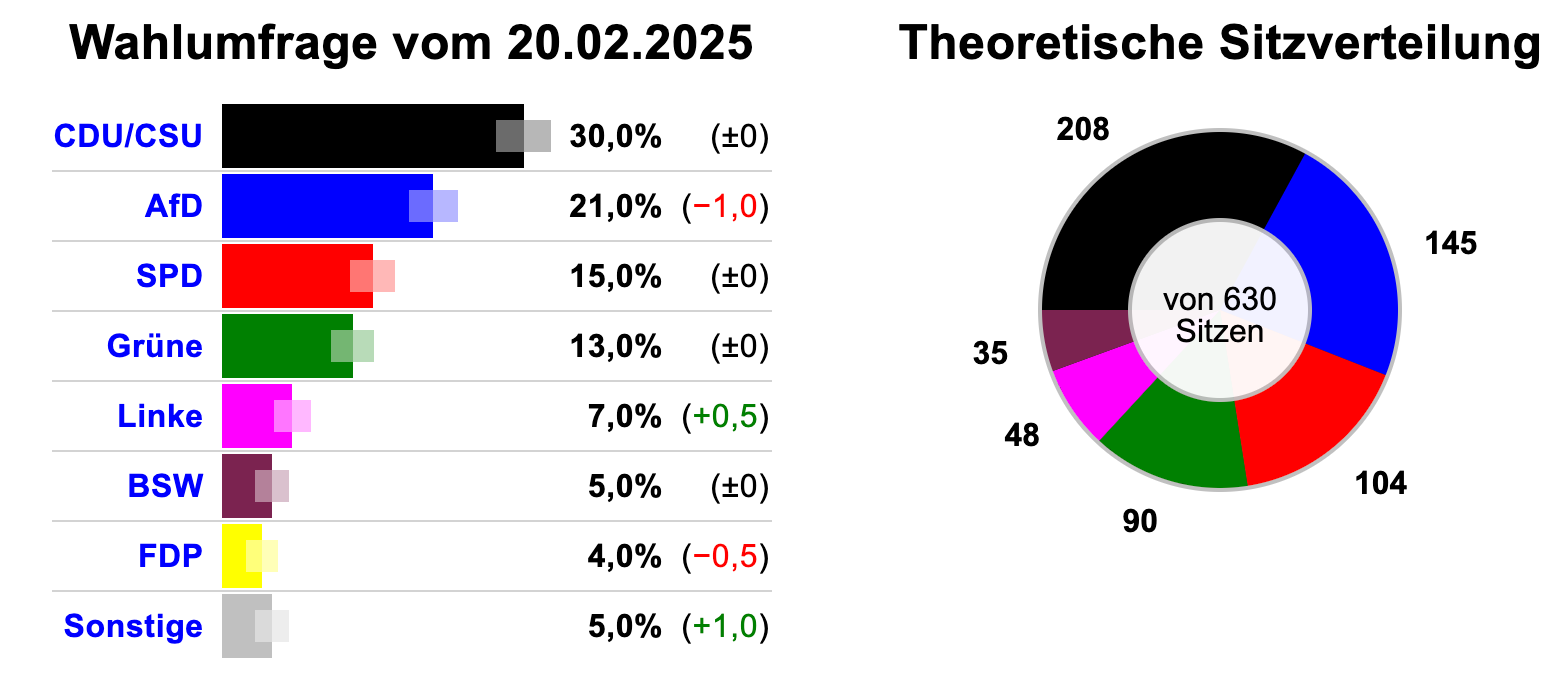
Orbán’s decisive re-election, Meloni’s electoral victory in Italy, and Sweden’s lurch to the right all suggest a sudden widening of the Overton window in much of Europe. In Germany, the AfD, the far-right movement, is now polling at 21 percent of the electorate, compared with 15 percent for Chancellor Scholz’s Social Democrats and 9 percent for the Greens. None of it is particularly coherent. Milei is Steve Forbes in a very bad toupee — about as far away from Boris’ Red Toryism or entitlement-friendly Trumpism as you can get. The only truly consistent thing is the ridiculous hair, and contempt for elites.

And the fear of the crazy right has gone. Milei and Wilders instantly moderated on some of their most outlandish positions, as soon as power was within reach. No, Milei won’t dollarize the Argentine economy, it turns out; and no, Wilders won’t ban mosques, as he tries to build a coalition government. Meloni has talked up immigration control, but in power, she hasn’t done much about it, and her support for Ukraine and the EU has been a big surprise. Poland’s hard-right party showed it could not stay in power forever this year, and in Spain, Vox lost ground. But in all this, a taboo has been broken — the same kind of taboo that the election of Donald Trump represented. The small-c conservatism of the Western electorate has expired.

That’s why I find the re-election of Joe Biden so hard to imagine. Biden is the incumbent of all incumbents. He became a senator in 1973! He has been vice president for eight years and president for four. He’s extremely old for the job he is doing, and everyone knows it. He has presided over inflation higher than at any time since the 1970s, and a huge new wave of legal and illegal immigration. We may now have a higher percentage of the population that is foreign-born than in the entire history of this country of immigration. Americans’ support for a border wall is the highest it’s been since 2016.

And Gallup’s latest polling on how the public feels about crime should terrify the Democrats. Coming back to DC this week after seven months away, I’m struck by how stark the decline has become. It says something when a city is experiencing a massive wave of carjackings, bars the cops from pursuing them, and just hands out free AirTags so you can track your stolen car yourself.

And the key, lame argument from Biden will be that Trump is too big a risk to take. He’s right. Broadly speaking, I agree with Bob Kagan on the crazed ambitions of this tyrant wannabe. But how has that argument worked out so far? Impeachments and indictments seem to have strengthened, not weakened him. And what we’re seeing all over the world is that voters are rushing toward the risky candidates, not away from them.

And Trump has already been in office for four years, and … democracy didn’t end, did it? Or at least, that’s what his supporters will say. They’ll remember the pre-Covid years as the good old days (and economically they wouldn’t be wrong), and also vent anger at an elite that seems to care more about pronouns and “equity” than protecting the border or controlling crime — the core functions of government. I’d be worried if Biden were ahead of Trump by five points in the battleground states. But he’s actually behind.

And though I will never vote for Trump, in my lizard brain, I kind of get the appeal. Inflation and mass immigration, alongside a bewildering and compulsory cultural revolution, are the kind of uncontrollable things that make people vent, especially if the president seems oblivious to these concerns — as Biden does. When Elon Musk f-bombed on Andrew Ross Sorkin and the advertisers who are boycotting X this week, the rational part of me shook my head. He’s bonkers and may see his company collapse from his whims and rages.

But at some deeper level, I also wanted to yell “Fuck yeah!” I find myself despising the elites I joined in ways that shock me. I have come to despise the woke left, their indifference to crime, their reveling in reverse-racism, their deep hatred of Western civilization. I hate how they’ve taken so much of the progress we made on gay integration and thrown it all away in transqueer solipsism. I loathe their piety and certainty and smugness. I found their instant condemnation of Israel, even as October 7 was taking place, shocking.

November 30, 2023

Why Wilders’ PPV appealed to Dutch voters and why the establishment is utterly horrified

Filed under: Europe, Liberty, Media, Politics — Tags: , , , , , , — Nicholas @ 04:00

In The Free Press, Ayaan Hirsi Ali and Evelyn Markus explain why Geert Wilders’ Party for Freedom took so many seats in the Dutch elections:

Geert Wilders, leader of the Dutch Party for Freedom (PVV).
Photo by Wouter Engler via Wikimedia Commons.

It was in 2004, the same year that Theo van Gogh was brutally murdered, that Geert Wilders saw his opening.

Though Wilders had been in Dutch politics for a long time, that year Wilders left the VVD — the center-right party where he served alongside Ayaan — and branched out on his own with a new party, the Party for Freedom. The key issue that led to his break was that Wilders refused to countenance the possibility of EU membership for Turkey (which the VVD was willing to accept as long as certain conditions were met).

Almost immediately, Wilders became the most controversial man in Dutch politics. He urged the banning of the Quran and a halt to the construction of new mosques. He railed against what he described as the “Islamization of the Netherlands”. When he asked a crowd in 2014 whether they wanted “more or fewer” Moroccans, the crowd chanted “fewer”, and Wilders replied that this was something that would be arranged. Prosecutors argued this constituted an illegal collective insult, and the Dutch High Court ultimately ruled that Wilders was guilty, but without sentencing him to a penalty.

It was easy to be scandalized by Wilders. The press and the political class certainly were. Some publicly supported Wilders’ prosecution in the “fewer Moroccans” case.

We disagreed — and still do — with Wilders’ calls for blanket bans on additional asylum seekers, with the notion of banning the Quran (let alone any book), and with his consistent failure to draw a distinction between Islam and Islamism.

But we understand how and why his message resonated with the public.

While elites over the past two decades have told the public to ignore their lying eyes, Wilders continued to emphasize the hot-button subjects that resonated with the public: the struggling economy, the importance of borders, the risks of devolving too much power to Brussels, the threat of Islamism, and the challenge of mass migration.

While elites told the public that opposing migration was xenophobic, ordinary people noticed structural changes in their country and felt they — the public — had not been adequately consulted. In the 1960s, 60,000 Muslims lived in the Netherlands; today there are around 1.2 million, thanks to massive chain migration, asylum, and a high birth rate. (Fewer than 50,000 Jews remain in the country.)

While political elites told the public to be tolerant of Islam, in keeping with a long-standing tradition of religious tolerance, ordinary people saw that Islamists were increasingly well-entrenched in the country, a point even made by Dutch intelligence officials. Although Wilders’ rhetoric can be uninhibited and extreme, he articulates a general and perfectly legitimate feeling among voters who know that Islamism is a threat to their way of life and want to oppose it. (Wilders has been the subject of sustained Islamist threats and has had to live his life within a tight security bubble because of them.)

While elites told the public that giving more power to the EU was an unqualified good, ordinary people took a more nuanced view. When we left the Netherlands in the early 2000s, the Dutch were solidly pro-EU. Today, although most Dutch voters do not wish to leave the EU, there are growing concerns that, especially when it comes to migration and borders, too much authority has been ceded to supranational institutions.

Over the years, we have heard more and more friends express private sympathy with Geert Wilders. And it should be noted that during the most recent campaign, he toned down some of his more extreme rhetoric. Previously, his party called for a “Ministry of Re-migration and De-Islamization”. That is no longer the case. Similarly, the phrase “Islam is not a religion, but a totalitarian ideology”, which was previously part of the election manifesto, was scrapped. This time around, Wilders emphasized his commitment to working within the Dutch coalition system, which he conceded would require him to make compromises in order to be able to govern.

The recent aggressive and occasionally violent pro-Palestinian demonstrations in the Dutch streets — as elsewhere — may have been the final blow that led to last week’s landslide. It’s worth noting that Wilders’ voters do not fit a crude stereotype — he won the most votes of any party among voters between the ages of 18 and 35.

July 22, 2023

In European politics, “far right” doesn’t mean what Americans think it means

Filed under: Europe, Germany, Italy, Media, Politics — Tags: , , , , , — Nicholas @ 03:00

In The European Conservative, Rod Dreher tries to put the various “far right” European political parties into context for North American readers:

If you are an American who depends on the U.S. and other English-language media for news about continental European politics — and most Americans obviously do — then you might well be afraid that a wave of fascism is poised to sweep Europe.

The European Conservative, obviously, is a great source of news and information about Europe for our American readers — and I hope with this column to help American conservatives better understand what’s going on with the European Right — because there are very few venues for them to do so.

American and British news agencies are reporting that the “far-right” party VOX is likely to do well in this weekend’s Spanish elections. The “far-right” Alternative für Deutschland (AfD) is surging in German opinion polls. It seems like just yesterday that the “far-right” party of Giorgia Meloni topped Italian elections. “Far-right” parties are key to governing coalitions in Finland and Sweden.

And, of course, the BBC website informs its readers to mind “the ultra-conservative, authoritarian-leaning governments in Poland and in Hungary”. Far-rightists to the fingertips, the lot, right?

Well, no. Not even close. American conservatives should understand that by U.S. standards, the “far-right” parties are basically center-right contemporary Republicans. The declining establishment conservative parties of the European continent are more or less Clinton-style Democrats. There do exist genuinely far-right parties in Europe, but they aren’t anywhere near government.

(Though in this spring’s Hungarian elections, the actually far-right party Jobbik, which considers Viktor Orban to be a squish, went into coalition with the left-wing parties. This caused the coalition prime ministerial candidate to boast moronically that his side was truly diverse, because it spanned the ideological spectrum from communist to fascist.)

When U.S. journalists describe these nationalist and populist parties as “far-right”, they intend to call up images of burly fascists marching down cobblestone streets in hobnail boots, shouting abuse at Jews and minorities. I can’t decide if they do this deliberately to mislead American readers into thinking Europe is two tics away from a gran mal Nazi seizure, or if the reporters themselves are so absorbed in the ideology of their class that they honestly cannot discern gradations of right-wing politics.

H/T to Blazing Cat Fur for the link.

July 9, 2023

“… corporations sit in the late adopter phase of the marketing curve”

Filed under: Business, Media, Politics, USA — Tags: , , , , , — Nicholas @ 03:00

Elizabeth Nickson reminds us that the mass media corporate messaging is trailing edge, not leading edge:

Now everything is filtered through a warped looking glass, a Mad Hatter tea party of nonsense, run by the grimmest socialist operatives who ever lived, backed by buckets and wheelbarrows of stupid corporatist/fascist money. They are running a demoralization program on us.

It’s not working.

Never forget that corporations sit in the late adopter phase of the marketing curve, which is to say the lifeless part, the raking-in-the-money-from-stupid-women part. Women too, as a class, are part of the late adopter curve, because as Jordan Peterson once pointed out, women instinctively see humans as helpless babies needing protection and SAFETY FIRST. We are easily manipulated by our compassion, as is clear from the fact that only women and those who want to be, support the left now. The left traffics faux compassion and it is a killer drug. Included of course are beta males, hornswoggled by mommy, the wet diaper babies of Antifa and BLM. And of course, the paid operatives of the stinking cabal, the truly horrid public sector unions, the vicious thugs at AFL-CIO and the humanity-hating environmental movement.

The people the left cultivated so carefully over several generations have all fled to populism and eventually their vicious operatives won’t even be able to steal the votes they need. How big is it? Imagine 2000 Trump rallies. And then ten times that. And then quadruple it. Double and double and double again. And they are having the best time, more fun than you can imagine, working away in obscurity, asserting their human right to determine their own future.

[…]

Normals have turned, all of them. They are not available to the Trudeaus, Macrons and Rishi Sunaks of the world. They are wised up. Some of them know more than me about the filth at the heart of “environmentalism” and I know a lot. They are not Russian serfs or Chinese peasants. There is no way they are going to be corralled in 15 minute cities. They are going to bring the house down.

They/we are the people that Richard Haas, when resigning from the Council of Foreign Relations, a nest of nasty neo-liberal, neo-con oppressors if there ever was one, warned against when he said the greatest threat facing the world is American populists. Sure, buddy.

One of the those dreadful people (as they call us) is Kevin Fernandes82 on Instagram. Probably not his real name, but he is not aiming for public recognition. What he does, methodically, every day many times, is chronicle the slow crumbling of the old regime. I am using a lot of his reporting and as he shows, we are beating the pants off them every single day.

Their jobs are untenable. People are resigning from every safe berth in the world or being fired from plush jobs because the world the neo-liberal hegemon has created is counter-rational, so chaotic, it is unstable. It is unstable because we know it is stupid. We are opposed. And our opposition is slowly slowly bringing it down.

This is long. You don’t have to read it all to get the point, but give it to the despairing, keep it for when you despair. All these wins happened in the last two weeks. People, judges and administrators and politicians within the system, are starting to dance to the populist tune. Many of the worst are running as fast as they can.

We are the future.

Time to start thinking about what we want the new world to look like.

Herewith:

The Sound of Freedom has outsold the new Indiana Jones film, on 2,000 fewer screens and with no PR, against the full force of the Hollywood machine.

The Dutch government has reportedly fallen over asylum policy. Farms confiscation is wildly unpopular. Mark Rutte, architect of the prosecution of farmers has resigned.

The decoupling of the BRICS from the dollar means the death of the neo-liberal hegemon. Mark Wauk and Tom Luongo do a neat job of wrapping up this particular mess. As they say: there are no neo-liberals in a multi-polar, decoupled world.

The BRICS are set to introduce a new currency backed by gold, against the US backed dollar which depreciates in value every day because of inflation caused by choking energy supply and crazed overspending by governments.

EU laws that let banks shut accounts over political views to be scrapped.

Federal judge in Louisiana prohibits DHS, FBI and DOJ from working with Big Tech to censor posts.

The list goes on for quite a lot longer…

June 27, 2023

Adam Kinzinger seems to admit that the “Patriot Front” are really federal agents

Filed under: Media, Politics, USA — Tags: , , — Nicholas @ 04:00

Tom Knighton on the weird MAGA-versus-“MAGA” confrontation:

A while back, a group calling itself Patriot Front showed up. Dressed in dark shirts and khaki pants, with ball caps and masks hiding their face, Patriot Front started engaging in some very … questionable behavior.

Almost immediately, they were labeled as feds.

Virtually no one believed they were who they claimed to be. They were openly Nazi-like, even providing the Hitler salute, all without the usual trappings of the neo-Nazis we typically see.

Well, recently, the Proud Boys clashed with Patriot Front.

The Proud Boys have been accused of being all kinds of things, too, including racists, yet it’s clear from the video shown that the Proud Boys aren’t fans of Patriot Front. Instead, you hear jeers calling them “racists” and “Nazis”.

The altercation got physical and a couple of the Patriot Front members were unmasked.

Enter former Congressman Adam Kinzinger, who offered up this hot take:

The video shown there is, in fact, the video in question, and Kinzinger’s comments have riled a lot of people up.

After all, he’s basically admitting that Patriot Front is a federal law enforcement operation.

Is it?

Probably, though I’m not sure Kinzinger would be read in on such an operation.

May 15, 2023

“Donald Trump is, as a performer, in a class of his own. From the second the show began, he was in command: withering, funny, sharp, powerful.”

Filed under: Media, Politics, USA — Tags: , , , — Nicholas @ 03:00

I didn’t watch the CNN broadcast that Andrew Sullivan is reluctantly praising here — he still hates and fears Donald Trump, but he has to acknowledge the man’s abilities:

The reason so many are freaking out about CNN’s astonishing ad for the Trump re-election campaign this week is that he was on tip-top form. Donald Trump is, as a performer, in a class of his own. From the second the show began, he was in command: withering, funny, sharp, powerful. He may be one of the most effective and pathological demagogues I’ve ever encountered: capable of lying with staggering sincerity, of making up stories with panache: shameless, and indefatigable.

Now think of Joe Biden, peace be upon him. He can barely get a sentence out without a mumble, a slur, or a confused expression. He seems frail and distant. In a direct contrast between the two old men, there will surely be some voters — and maybe many — who simply back the man who seems capable of doing the job vigorously for four more years. There hasn’t been this kind of contrast since Clinton-Dole (and Dole in 1996 was sharp AF) and Reagan-Mondale (it took Reagan’s debate genius to destroy the concern). Trump, in stark contrast, bulldozed the host Kaitlan Collins, who was far more in charge of facts and details than Biden will ever be.

Shamelessness has a huge appeal. It’s why we can’t see a production of Richard III without at some points egging on the child-murderer. And I confess that watching the deposition conducted by Robbie Kaplan, he got me. When Trump says to Kaplan, after dismissing Carroll as “not his type”, “You would not be my choice of mine either, to be honest with you. I hope you’re not insulted”, I LOLed. It was disgusting — but how could you not laugh at the effrontery?

At one point in the CNN show, Trump took the performance up a notch — sympathizing with E Jean Carroll’s husband:

    He was a newscaster, very nice man. She called him an ape, happens to be African-American. Called him an ape — the judge wouldn’t allow us to put that in. Her dog or her cat was named “Vagina”, the judge wouldn’t allow to put that in.

Sorry, but the way he delivered the word “vagina” was worthy of a good stand-up. And the affect — the lone ranger telling the truth while prissy elites tut-tut — channels a vast swathe of the public mood.

The issues are also turning Trump’s way. As Title 42 expires today, a huge influx of fraudulent “asylum” seekers is on the verge of overwhelming what border we have left — some with court dates as far away as 2027. Virtually none will be deported ever. A Marine veteran has been charged with manslaughter after manhandling an out-of-control black man on the subway: a trial that’s catnip for the right. People have vague memories of a pre-Covid economic boom and associate it with Trump. Ukraine will be an increasing headache for Biden, as horrible decisions loom at some point if Ukraine can’t win full liberation of their country.

Biden is tethered to Kamala Harris, who will be seen by many as a possible president by default if Biden kicks the bucket in a few years. And she is an even worse politician and manager than Hillary Clinton. The MSM has spent the last few months attempting to destroy the only viable alternative to Trump, DeSantis, because they’ve actually convinced themselves of a looming “Biden blowout“.

I say the emergency is still here; that Trump is more likely than not returning to the White House as of now; and the interlude of these few precious years when this monster wasn’t daily assaulting our constitution, sanity, and our sense of decency is over.

Get used to it; and strap yourselves in.

November 19, 2022

American political parties from 1865 down to the Crazy Years we’re living through now

Severian responds to a comment about the Democrats and Republicans and how they have morphed over the years to the point neither party would recognize itself:

“The Third-Term Panic”, by Thomas Nast, originally published in Harper’s Magazine on 7 November 1874.

A braying ass, in a lion’s coat, and “N.Y. Herald” collar, frightening animals in the forest: a giraffe (“N. Y. Tribune”), a unicorn (“N. Y. Times”), and an owl (“N. Y. World”); an ostrich, its head buried, represents “Temperance”. An elephant, “The Republican Vote”, stands near broken planks (Inflation, Repudiation, Home Rule, and Re-construction). Under the elephant, a pit labeled “Southern Claims. Chaos. Rum.” A fox (“Democratic Party”) has its forepaws on the plank “Reform. (Tammany. K.K.)” The title refers to U.S. Grant’s possible bid for a third presidential term. This possibility was criticized by New York Herald owner and editor James Gordon Bennett, Jr.
Image and caption via Wikimedia Commons.

I find this extremely useful. I’d add that the postbellum parties do shift ideologies fairly regularly, as PR notes, such that even though they’re still called by the same names, they’re nowhere near the same parties, 1865-present.
I’d add some distinguishing tags for ease of reference, like so:

DEMOCRATS:

The Redeemers of the “Solid South”, 1865-1882, when their main issue was ending Reconstruction and establishing Jim Crow.

The Grover Cleveland years, 1882-1896: Still primarily an opposition party, their main goal was reining in the ridiculous excesses of the Gilded Age Republicans. As one of about 100 people worldwide who have strong opinions on Grover Cleveland, I should probably recuse myself here, so let me just say this: Union Army veterans were to the Gilded Age GOP what the Ukraine is to the Uniparty now. They simply couldn’t shovel money at them fast enough, and the guys who orchestrate those ridiculous flag-sucking “thank you for your service” celebrations before pro sporting events would tell them to tone it way, way down. Cleveland spent most of his presidency slapping the worst of this down.

[How bad was it? So bad that not only did they pass ridiculous giveaways like the Arrears of Pension Act and the Dependent Pension Act — think “Build Back Brandon” on steroids, times two, plus a bunch of lesser boondoggles — but they got together every Friday night when Congress was in session to pass “private” pension bills. These are exactly what they sound like: Federal pensions to one specific individual, put up by his Congressman. Grover Cleveland used to burn the midnight oil vetoing these ridiculous fucking things, which makes him a true American hero as far as I’m concerned].

The Populist Party years, 1896-1912: They were more or less absorbed by the Populist Party — William Jennings Bryan ran as a “Democrat” in 1896, but he was really a Populist; that election hinged entirely on economic issues. They still had the “Solid South”, but the Democrats of those years were basically Grangers.

The Progressive Years, 1912-1968: They picked up all the disaffected “Bull Moose” Republicans who split the ticket and handed the Presidency to Woodrow Wilson in 1912, becoming the pretty much openly Fascist entity they’d remain until 1968.

The Radical Party, 1968-1992: The fight between the Old and New Left, or Marxism vs. Maoism.

The Boomer Triumphalist Party, 1992-2000. It’s an Alanis-level irony that Bill Clinton was the most “conservative” president in my lifetime, if the metric for “conservatism” is “what self-proclaimed conservatives say they want”. This was our Holiday From History, in which “wonks” reigned supreme, tweaking the commas in the tax code while occasionally making some noises about silly lifestyle shit.

The Batshit Insane Party, 2000-Present. The years of the Great Inversion. Today’s Democrats only know one thing: Whatever is, is wrong.

REPUBLICANS:

The Radical Party, 1864-1876: Determined to impose utopia at bayonet point in the conquered South, they started asking themselves why they couldn’t simply impose utopia at bayonet point everywhere. They never did figure it out, and we owe those awful, awful racists in the Democratic Party our undying thanks for that. This is the closest America ever came to a theocracy until The Current Year. Morphed into

The party of flabbergastingly ludicrous robber baron excess, 1876-1896. In these years, J.P. Morgan personally bailed out the United States Treasury. Think about that. FTX, meet Credit Mobilier. You guys are pikers, and note that was 1872. William McKinley deserves a lot more credit than he gets in pretty much everything, but he might’ve been the most fiscally sane American president. Only Calvin Coolidge is even in the ballpark.

The Progressive Party, 1900-1912. For all the Left loves to call Republicans “fascists”, for a time they were … or close enough, Fascism not being invented quite yet. But the Democrats coopted it under Wilson, leading to

The Party of (Relative) Sanity, 1912-1968. Before Warren G. and Nate Dogg, there were Warren G. Harding and Calvin Coolidge, the only two contestants in the “American politicians with their heads screwed on straight” competition, 20th century division. Alas, superseded by the

Anti-Left Party, 1968-2000. Want to punch a hippie? Vote for Richard Nixon. Or Gerald Ford. Or, yes, the Gipper.

The Invade-the-World, Invite-the-World Branch of the Uniparty, 2000-Present. Wouldn’t it be nice if Bill Clinton could keep it in his pants, and wasn’t a walking toothache like Al Gore? That was the essence of W’s pitch in 2000. Our Holiday From History was supposed to continue, but alas, 9/11. Some very special people at the State Department got their chance to finally settle their centuries-long grudge with the Cossacks, and, well … here we are.

By my count, the longest periods of ideological consistency ran about 50 years … and I’m not sure if that really tells us much, because it makes sense to view 1914-1945, if not 1914-1991, as THE World War, which put some serious constraints on the ideology of both sides.

Trend-wise, what I see is one side going nuts with some huge moral crusade, while the other side frantically tries to slam on the brakes (while getting their beaks good and wet, of course). Antebellum, it was the proslavery side leading the charge, but if they’d been slightly less excitable in the late 1840s, the abolitionist lunatics would’ve done the job for them by the late 1860s. If you know anything about the Gilded Age, you know that they somehow presented the truly ridiculous excesses of the Robber Barons as some kind of moral triumph; this was, after all, Horatio Alger‘s America. Progressivism, of either the Marxist or the John Dewey variety, is just moralizing gussied with The Science™, and so forth.

The big difference between then and now, of course, is that the grand moral crusade of The Current Year is open, shit-flinging nihilism. The “opposition”, such as it is, is also full of shit-flinging nihilists; they just don’t want to go before they’ve squeezed every possible penny out of the Suicide of the West. So … yeah. We’re overdue for a big ideological change. And we shall get it, never fear; we can only hope that we won’t have to see it by the light of radioactive fires.

« Newer PostsOlder Posts »

Powered by WordPress