
Ontario Regiment Museum
Published Mar 14, 2024First look at the newest addition to the museum collection: LAV III RWS (Remote Weapon System variant) aka NANUK.
This Canadian designed and built military vehicle just arrived at the museum. Executive Director Jeremy Neal Blowers (aka @Tank_Museum_Guy) gives a very quick talk on the vehicle and a comparison with the original LAV III in the museum.
(more…)
June 27, 2024
LAV III RWS NANUK – A Closer Look
Comments Off on LAV III RWS NANUK – A Closer Look
May 29, 2024
Ontario’s long and winding (and subsidy-strewn) road to beer in convenience stores
Apparently I’ll have a little bit more to celebrate on my birthday this year as the Ontario government’s glacially slow-to-change alcohol sales rules are being liberalized as of September 5th to allow all the province’s convenience stores to begin selling beer and wine:
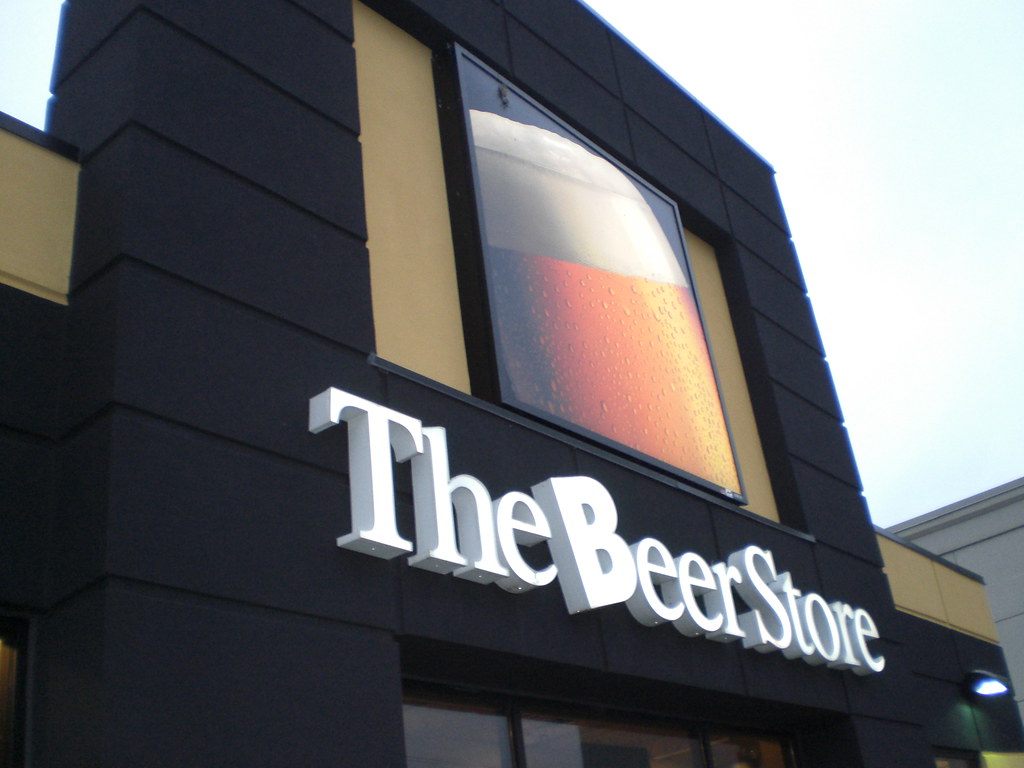
“The Beer Store” by Like_the_Grand_Canyon is licensed under CC BY-NC 2.0


Premier Doug Ford promised Ontarians beer in corner stores, supermarkets and big-box stores, and by God he has delivered. As of Sept. 5, all Ontario convenience stores meeting eligibility criteria will be allowed to sell beer, wine, cider and pre-mixed drinks. As of Oct. 31, the privilege will be extended to all grocery and big-box stores. The province says it expects as many as 8,500 new booze-procurement sites to come online under the new regime. By Ontario standards, it’s absolutely revolutionary.
The new regime is also, of course, hilariously complicated. And absurdly, offensively expensive.
It is fair to describe the new regime as somewhat more competitive, and certainly more convenient. In addition to offering potentially thousands of new locations, supermarkets (including the roughly 450 already licensed) will be able to offer volume discounts on beer — i.e., a 24-pack will cost less per bottle than a six-pack. This was a privilege hitherto reserved for The Beer Store, the American-, Belgian- and Japanese-owned conglomerate that dominated beer sales in Ontario from the end of Prohibition until fairly recently.
Private retailers will even be able to set their own prices, which until now has been considered blasphemy.
It is not fair to describe the new regime, as the government does, as an “open” market.
Near as I can tell, Ontario will by 2026 have the following retail environments in place:
- The Beer Store. Smelly, surly, and the best-available value. Only beer — no cider or mixed drinks. It’s in the name.
- LCBO locations. Government-run liquor stores retain their near-absolute monopoly on hard liquor sales, in addition to selling beer (especially craft beer, in which The Beer Store’s owners aren’t so interested), wine and everything else.
- LCBO- and/or The Beer Store-branded “agency stores” in rural areas, which sell everything the LCBO does, but operate inside of convenience stores, small supermarkets and other local businesses, and are staffed by non-government employees.
- The existing supermarkets licensed to sell beer, cider and wine (and in rare cases all three!), plus scores of new outlets — the new 8,500 new locations.
The Beer Store maintains a monopoly (in urban areas) on wholesale for bars and restaurants and on refunding cans and bottles, although its new “master framework agreement” (MFA) doesn’t even oblige it to maintain its current number of locations — which in urban areas have been dwindling rapidly. I’m a 17-minute walk from my nearest Beer Store. The house I grew up in, in the heart of midtown Toronto, is a 45-minute walk. I’m not schlepping a leaky garbage bag full of empty cans either distance.
March 25, 2024
WWII Allied Vehicles – Universal Carrier
Ontario Regiment Museum
Published Jan 26, 2022This multi-part series was originally created in support of our friends at D-Day Conneaut for presentation during their live stream in 2020.
In part 5 the Museum’s Operation Manager Dan Acre details the history of a Canadian-made WWII vehicle, the Universal Carrier. (Please forgive the sound quality, it was one of the first videos we produced in the early stages of the pandemic.)
(more…)
Comments Off on WWII Allied Vehicles – Universal Carrier
February 18, 2024
Does the Chieftain Fit Into … a Ford Model T
The Chieftain
Published Nov 19, 2023Filmed during a down-moment on a maintenance day at the Ontario Regiment Museum. The Model T is small and so old that I have to ask someone else at the end of the video how to drive it.
(more…)
Comments Off on Does the Chieftain Fit Into … a Ford Model T
February 13, 2024
GO Transit – North America’s BEST Commuter Rail Network
Lonestar Trip Reports
Published Nov 11, 2023Hello and Welcome to Oshawa, Ontario! Today we’re riding with GO Transit, Toronto’s commuter rail provider, from here down to Toronto Union Station.
Trip Information
Train Number: GO Lakeshore East 9015
Locomotive: MPI MP36PH-3C 609
Departure Time: 10:10am
Arrival Time: 11:11am
Journey Time: 1hr 1min
Price: $10.00Thanks for watching and I hope you enjoyed!
Comments Off on GO Transit – North America’s BEST Commuter Rail Network
January 20, 2024
“This ruling is definitely going to embolden the already tyrannical regulatory boards”
Jordan Peterson’s reaction to the Ontario court decision that sided with the College of Psychologists of Ontario to order him to undergo re-education at his own expense until some non-specified goals have been reached:
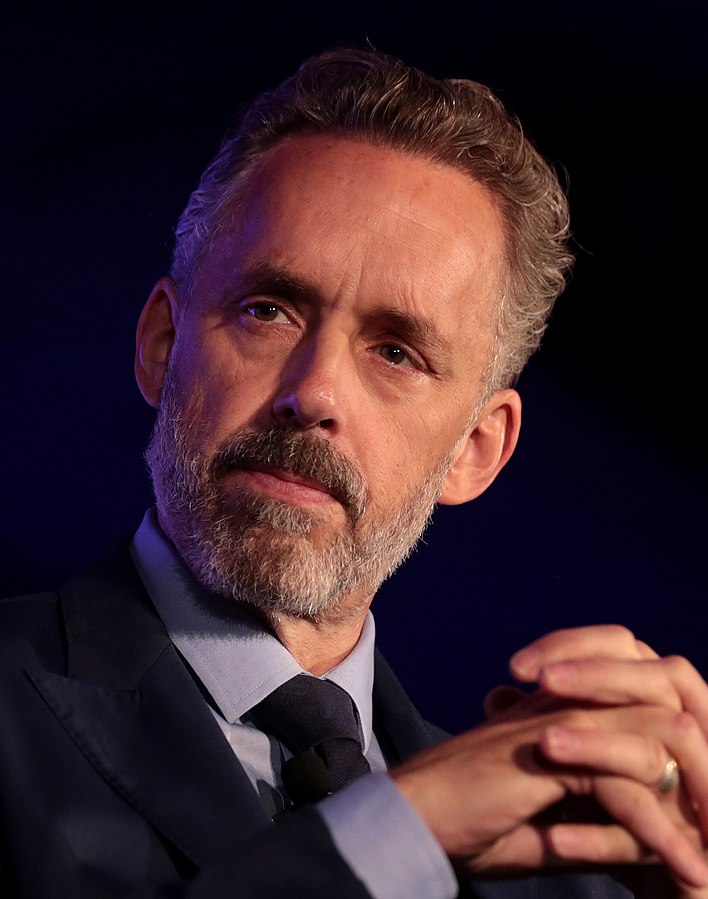
Jordan Peterson speaking at an event in Dallas, Texas on 15 June, 2018.
Detail of a photo by Gage Skidmore via Wikimedia Commons.
[National Post interviewer Tyler Dawson] What was your reaction when you found out the Ontario Court of Appeal had dismissed your challenge?
Oh, well, I’d already factored that into account as a high probability, so it actually didn’t affect me very much.
I’m upset because of what it signifies. This might be hard for people to believe, but I don’t believe that this is about me. I don’t want to claim some sort of capacity to transcend mere egotism, but there isn’t anything the college can really do to me, except they can take a hit out on my professional reputation to some degree.
Practically speaking, I’m beyond their purview, because I’m not dependent on them financially. I don’t even need my licence. I’m not practising. I have a reputation that’s going to withstand this regardless, and perhaps even be enhanced by it.
The reason that I’m fighting for this is because, well, first of all, I didn’t want them to take my damn licence. I worked hard on that and there’s no — I’ve done nothing to deserve that, quite the contrary. I think I’ve helped millions of people.
This ruling is definitely going to embolden the already tyrannical regulatory boards. But also Canadians don’t understand that if they can’t trust their professionals to tell them the truth, then they don’t have professionals anymore.
You know, this country is in rough shape. It’s in far rougher shape than people understand. So the reason I’m fighting this is to try to bring that to public attention, like I’ve been trying since 2016. You know, now a cynic would say well, you know, look at all the success you’ve had with it. It’s like, wow, yeah, believe me, man, it took a lot of dancing in place to turn the cataclysm of negative public opinion and pillorying by the press into success. That wasn’t a foregone conclusion.
What options does this leave you specifically with regards to the college? Do the training or resign?
The status is crystal clear. I’ve already been sentenced to a course of re-education, of indeterminate origin, at my expense, until I comply. And all they have to do now is tell me when to do it and where — that’s where we’re at.
There’s nothing that I know of now that I can do to stop that from happening. I just cannot understand how that’s going to work, because the probability that they’re going to re-educate me in some manner they deem successful, there’s no universe in which that can occur.
Or I can reject it, in which case I’ll fail, which is the outcome that’s desired anyways. Or I can tell them to go directly to hell and just refuse to do it, in which case they can say, well, we gave Dr. Peterson every opportunity to maintain his professional licence, but when push came to shove, he was unwilling to abide by our dictates. So those are my options.
Could you just register in another province?
It’s not that easy to switch registration jurisdictions. It should be easier than it is, because there are bureaucratic impediments in the way that make it very difficult for professionals to move and there’s no excuse for that.
It’s certainly an option I will and have to some degree explored. But it’s not just like rolling over in bed.
Comments Off on “This ruling is definitely going to embolden the already tyrannical regulatory boards”
December 19, 2023
Christmas Message from the Museum – MERRY TANKMAS 2023
Ontario Regiment Museum
Published Dec 17, 2023Merry Christmas from the volunteers and staff of the Ontario Regiment RCAC Museum and our friends at World of Tanks. Please enjoy this festive message and get a look into Santa’s Tank Workshop!
This segment originally aired in the TANKMAS 2023 – LIVE Stream on 8 December 2023. Hosted by The Tank Museum (Bovington), and sponsored by our friends at World of Tanks.
https://worldoftanks.com/en/news/live…Full video and stream can be found on The Tank Museum YouTube channel here:
https://www.youtube.com/live/_5cMsW5Z…Meet our hosts from World of Tanks and Wargaming.net:
Nicholas “The Chieftain” Moran and Cmdr_AFMeet our Executive Director: Jeremy N Blowers AKA Tank_Museum_Guy
Wishing you and yours a Very Merry Christmas, and a safe and Happy Holiday season.
PLAY NOW at www.worldoftanks.com
FREE to play and build your own “Tank Museum” garage.Thank you to Wargaming.net for the video production and sponsorship of this museum centered Christmas streaming event.
Comments Off on Christmas Message from the Museum – MERRY TANKMAS 2023
December 13, 2023
Ontario discovers that even “great ideas” with the “best of intentions” sometimes go wrong
In The Line, Adam Zivo reports on Ontario’s “safe supply” drug program running into another one of those pesky human nature problems that couldn’t possibly have been foreseen:

Image courtesy of Meme Generator
New research from Ontario has yielded further evidence that Canada’s “safer supply” drug programs are being widely defrauded and putting addicts’ lives at risk.
These programs claim to reduce overdoses and deaths by providing drug users with pharmaceutical alternatives to potentially tainted illicit substances. In Canada, that typically means distributing large volumes of hydromorphone, an opioid as potent as heroin, in the hope of reducing consumption of illicit fentanyl.
Addiction experts have widely reported that, based on their clinical experiences, drug users regularly trade or sell (“divert”) some (perhaps much) of their safer supply on the black market to fund the purchase of stronger substances. This has flooded some communities with hydromorphone, crashing its street price by up to 95 per cent over the past three years while spurring new addictions, especially among youth.
The federal government denies that these problems exist and has said that any evidence of harm is “anecdotal” — but two addiction experts working in a hospital in London, Ontario recently used patient data to show that the problem is indeed very real.
Dr. Sharon Koivu and Allison Mackinley (a nurse practitioner) examined the charts of 200 patients who had been referred to Victoria Hospital’s addiction medicine consultation service between January and June 2023.
The review showed that 32 per cent of patients who were not in a safer supply program had self-reported using diverted hydromorphone — the vast majority of these patients indicated that their hydromorphone came from purchasing drugs provided to someone else as part of a safer supply program.
“It was more common for them to actually specify safer supply than to say they didn’t know the source,” said Dr. Koivu in an interview. “They said things like, ‘The person in the apartment beside me goes and picks up her safer supply and when she comes back I get 20 of her pills’. It was quite specific.”
Diversion was not the only problem that was validated.
The chart data suggested that safer supply clients were roughly five-to-10 times more likely to be hospitalized than drug users receiving traditional, evidence-based addiction medications, such as methadone or buprenorphine (these medications are known as “opioid agonist therapy“, or “OAT”). Compared to OAT patients, drug users on safer supply were more than 15 times more likely to be hospitalized for serious infections.
These findings were so concerning that when a group of 35 addiction physicians recently wrote an open letter calling upon the federal government to reform safer supply, they included this data in their accompanying evidence brief.
(This chart, included in a recent evidence brief, compares the number of hospitalized patients with the number of drug users in London, Ontario who receive safer supply (250), methadone (2,000), and buprenorphine (300).)
Safer supply patients also had a slightly higher hospitalization rate, and only slightly lower infection rate, than patients who were receiving no addiction treatment at all, which suggests that the health benefits of safer supply may actually be negligible.
Dr. Koivu said that the hospitalization rate seen among safer supply patients was “alarmingly high” considering that safer supply programs provide significant wraparound supports (i.e. access to doctors, housing and social assistance) in conjunction with free hydromorphone. Any patient who receives such supports should see substantially improved health outcomes.

Comments Off on Ontario discovers that even “great ideas” with the “best of intentions” sometimes go wrong
November 26, 2023
Ontario’s beer market may see radical changes soon
For beer drinkers outside Ontario, the province’s weird beer retailing rules may seem to be from a different time, but that’s only because they are. Until fairly recently, the only place to buy beer was from one of two quasi-monopoly entities: the provincially owned and operated LCBO or the foreign brewery owned Beer Store. LCBO outlets were limited to single containers and six-packs, while Beer Stores sold larger multipacks and also handled bottle deposits and returns. In the last few weeks, the Ontario government has indicated that long overdue changes are coming:
“The Beer Store” by Like_the_Grand_Canyon is licensed under CC BY-NC 2.0
The only thing we really know at this point (and it’s been reported by the Toronto Star and now CBC, and earlier by this website, all from sources) is the horribly unfair deal The Beer Store has had since 1927 in Ontario is about to come to an end. It’s expected that The Beer Store will be given notice by the end of December under the Master Framework Agreement (MFA) that the deal will be all but dead. They will have two years to wrap things up while a more modern system of booze retailing is fine-tuned and prepared for implementation. There’s a new era dawning in Ontario, one that would seemingly benefit grocery and convenience stores, local brewers, Ontario wineries, and obviously consumers who will get wider selection, more convenience and competitive pricing.
“The MFA has never been about choice, convenience or prices for customers, it has always been about serving the interests of the big brewing conglomerates, and that’s what needs to be addressed,” Michelle Wasylyshen, spokesperson for the Retail Council of Canada, whose board of directors includes members from Loblaw, Sobeys, Metro, Walmart, and Costco, told Mike Crawley of the CBC.
The end of The Beer Store MFA in whatever iteration it will look like will have a cascading impact on local VQA wine. Ontario wineries hope that it’s a positive impact and are cautiously optimistic that wide open beer and wine sales at grocery and convenience stores means more sales and less levies for their products.
As the CBC pointed out in its story, the looming reforms “pit a range of interests against each other, as big supermarket companies, convenience store chains, the giant beer and wine producers, craft brewers and small wineries all vie for the best deal possible when Ontario’s almost $10-billion-a-year retail landscape shifts. And — this is a biggie — the LCBO lobbying efforts to keep its antiquated system of monopoly retailing intact, which seems to be a big ask with what we now know from sources. Something must give.
Some key bullet points from the CBC report:
- Will the government shrink the LCBO’s profit margins, including its take from products that other retailers sell?
- Will retailers such as grocery and convenience stores be required to devote a certain amount of shelf space to Ontario-made beer and wine, or will they have total control over the inventory they stock?
- Will small Ontario wineries get any help in competing against big Ontario wineries whose products can contain as much as 75% imported wine?
The government has been listening to all stakeholders in the booze industry in Ontario for over a year now. Three key associations — Ontario Craft Wineries, Tourism Partnership Niagara, and Wine Growers Ontario — joined together to commission a report titled Uncork Ontario. That report, which concludes that the Ontario wine sector is well positioned to drive sustainable economic growth for the region, the province, and the country and has the potential to drive at least $8 billion in additional real GDP over the next 25 years, launched a campaign to lobby the government for radical changes to reach those lofty goals, or at least put the wheels in motion.
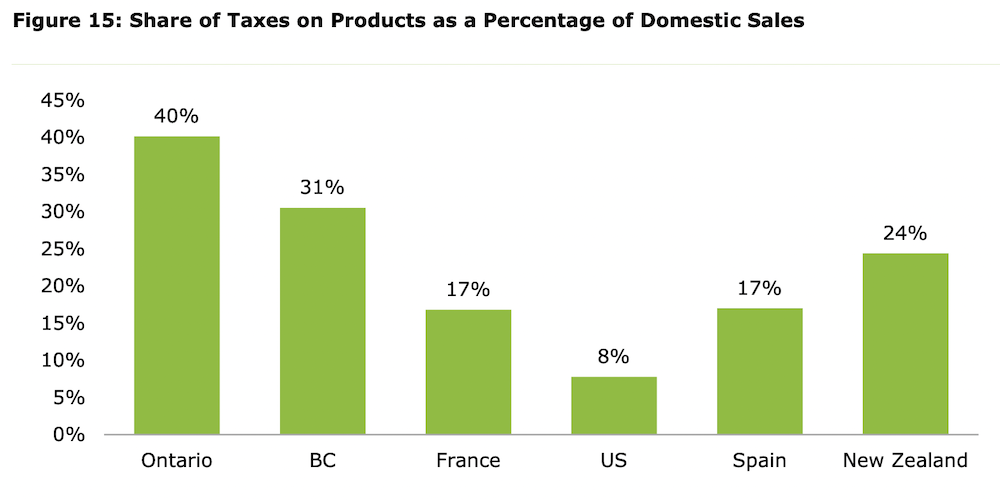
One of the big issues for Ontario wineries is a punishing 6.1% “sin” tax charged on every wine made in Ontario but not foreign wines. It’s a tax that’s been hurting Ontario wineries for years even though a grant was issued to wineries to help pay that tax back. To this date, the tax has not been cancelled and wineries keep remitting the tax owed monthly and can only hope the grant keeps getting extended. Ontario wines are among the highest taxed in the world with up to 73% of every bottle sold going to taxes and severe levies at the LCBO.
Comments Off on Ontario’s beer market may see radical changes soon
November 24, 2023
More than 1,500 new jobs thanks to federal and provincial subsidies … except the jobs are for South Koreans
Tristin Hopper applauds the great job creation scheme that the federal and Ontario governments have put in place … if you ignore the inconvenient fact that most of the newly created jobs aren’t even going to Canadians:

When the Ontario and federal governments greenlit one of the biggest corporate subsidy payouts in Canadian history last summer, their main pitch was the deal would create jobs.
“The governments of Canada and Ontario are partnering to attract once-in-a-generation projects that will anchor our auto manufacturing sector and keep good jobs in Canada,” reads the opening line of a July 6 joint statement announcing a record-breaking $28 billion in government “performance incentives” to secure two foreign-owned EV battery factories in Southern Ontario.
The subsidy-per-job ratio was never great. Even according to the most optimistic estimates of government spokespeople, the two factories — one operated by Volkswagen, the other by Stellantis — would create about 5,500 jobs. Per job, that’s roughly $5 million in lifetime subsidies and tax credits.
But now, it appears that many of those jobs may not even go to Canadians.
Last week, during a visit by South Korean Ambassador Woongsoon Lim to Windsor, Ont., a social media post by the Windsor Police casually mentioned that “1,600 South Koreans” would soon be arriving in the community to staff the Stellantis plant, which is set to open next year.
With the new LGEngergy Solutions battery plant being built, we expect approximately 1,600 South Koreans traveling to work and live in our community in 2024.
— Windsor Police (@WindsorPolice) November 16, 2023
The CEO of NextStar — the Stellantis joint venture operating the factory — hasn’t confirmed the 1,600 figure, but said in a statement that the “equipment installation phase of the project requires additional temporary specialized global supplier staff”. He added that the company was “committed” to hiring Canadians to fill the 2,500 full-time jobs at the completed plant
The revelation has sparked a wave of confusion and finger-pointing among the very officials who, mere months ago, were championing the plant as an unalloyed triumph for Canadian manufacturing jobs.
When the subsidy arrangement was first announced in July, Ontario Economic Development Minister Vic Fedeli called it a “historic deal” and “a great agreement” that “protects the thousands of jobs quite frankly that were at stake”.
Comments Off on More than 1,500 new jobs thanks to federal and provincial subsidies … except the jobs are for South Koreans
September 4, 2023
“… the ‘Teachers should tell parents’ people outnumber the ‘Teachers must not tell parents’ folks by something like four-to-one”
In the free-to-cheapskates segment of The Line‘s weekly round-up post, they discuss the suddenly “brave” Conservative provincial premiers jumping onto a hot culture war topic on the side of the vast majority of Canadians:
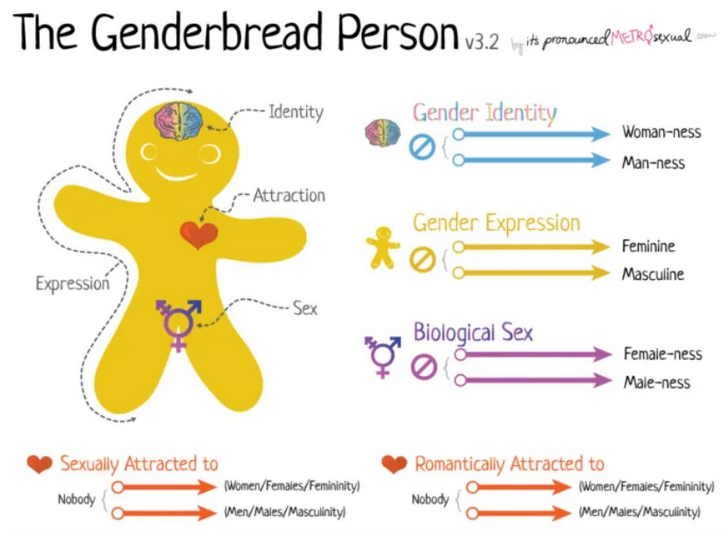
New Brunswick now has Policy 713, that requires teachers or school officials to notify parents and obtain consent if a child younger than 16 wishes to change his or her name or pronouns. Saskatchewan has announced a similar proposal; Ontario is considering one, too.
The Line looks upon these proposals with extreme skepticism. To be frank, we wish the provinces weren’t doing this. We think it’s strategically misguided: every moment a Conservative spends defending “parental rights” is a moment in which they are not talking about highly salient economic issues that affect far more people. Further, we don’t trust their motives. Either they’ve decided to pick this fight because they thought parental consent was going to be a winner for them, or they simply felt pushed into it by the more excitable elements of their respective bases. (We assign a probability assessment of absolute zero to the notion that the leaders might be doing this out of moral conviction.)
So yeah, it’s cynical and exploitive policy, but gosh, is it ever popular policy, too. Polling shows it’s like 80-per-cent approval popular.
Because of course it is.
Again, we stress that we don’t support the imposition of sweeping legislation. Absent evidence of abuse or mismanagement, we think parental notification of social transition should be handled on a case-by-case basis. In the midst of a moral panic on trans issues, we’d prefer to keep politicians as far away from this third rail as possible, with long pointy sticks and cages if necessary.
However, we also recognize that cynicism cuts both ways. We have also borne witness this week to some hysterical rhetoric from those who seem to seriously believe that schools should be forbidden from sharing this information, if the minor in question so chooses.
These people are in the minority, as we suggested above. The polling shows that the “Teachers should tell parents” people outnumber the “Teachers must not tell parents” folks by something like four-to-one. This is the kind of lopsided result you almost never see on contentious policy issues — the numbers are what we would expect if we asked Canadians “Is ice cream tasty?” or “Do you enjoy cuddling a puppy?” And of course this is so. Parents are, generally speaking, not going to have a whole lot of time for the suggestion that children will be better off if the state, at any level, adopts a policy of withholding information from them.
We don’t support what the conservative premiers are doing, because we think they’re doing it for cynical reasons, but we would absolutely oppose any policy that goes in the opposite direction. And the majority of the country — a massive supermajority — is onside with us on this one.
There are no easy answers here, because we do not dismiss the concerns raised by the minority. We absolutely agree and accept that there are going to be families and parents that may react badly, even dangerously, to their child changing their name or pronoun. But the answer isn’t to involve teachers and schools in a coverup; it’s to have policies in place that give any child that may fear for their safety all the help they need, including, if necessary, intervention. To this end, we would note that teachers are mandatory reporters — they must report a variety of issues (or concerns) because society has learned through tragedy and horror what happens when parents and other guardians are excluded from knowing details of their child’s life. If teachers have reasonable grounds to suspect abuse, mental health issues and more, they are legally required to inform authorities and families. Limiting their ability to inform parents would cut against this necessary and overdue progress. Further, we have already passed laws banning “conversion therapy.”
Your Line editors support the right of trans people to live lives of legal equality, safety and dignity, and we honestly believe that most Canadians would agree with us on that. We also note that the rising tide of trans activism has raised complicated concerns that exist at the edges of reasonable accommodation, and must necessarily raise thorny concerns about how we manage competing rights between disadvantaged people. Can minors consent to puberty blockers and cross-sex hormones? Is it fair to allow trans women who enjoy the permanent physical advantages bestowed by male puberty into female athletics? When should trans men be permitted in women’s prisons and shelters, if ever? These questions demand a thoughtful and nuanced response. They don’t disappear the moment someone screams “trans women are women!” and threatens to kill that bigoted TERF J.K. Rowling. They aren’t resolved by hysterics and warnings of suicide.
By staking out maximalist positions on the most difficult topics, and granting no ground for concession and compromise, trans-rights activists have polarized their own cause. Shouting down critics worked for a while, but the pendulum is now rapidly swinging back to the plumb line. Labelling every concerned parent a transphobe is tired and played out. It’s failing as a strategy of persuasion. Which brings us to the current moment; the place of four-to-one support for cynical policies proposed by conservative premiers. Keep it up, and we suspect it’ll be nine-to-one in short order.
Backlashes are rarely measured, sane, or logical, and we fear this one is already teasing out some very dark and long-repressed demons, even among people who once counted themselves allies of LGBTQ people and causes. We are seeing this backlash in a rise in hate crimes, growing counter-protests, and in a decline in support for LGBTQ people generally. And, yes, we are seeing it in in heavy-handed and misguided legislation both here and in the U.S. We aren’t arguing that any of this is justifiable; rather, we are merely noting that it has long been inevitable and predictable. We were warned.
One of the only real questions we have is how self-styled progressive parties and leaders are going to navigate trans issues when the population is very much not on their side. We talk a lot about how the conservatives are beholden to the most vocal minorities within their parties; but we fear that the progressives suffer the same fundamental problem.
We’d like to think that the Liberals and the NDP will handle trans issues maturely, responsibly and well. But we know better. They’ll go all in, setting everyone up for a very nasty confrontation that we think they’ll lose, and badly. Brace yourselves, friends.
Comments Off on “… the ‘Teachers should tell parents’ people outnumber the ‘Teachers must not tell parents’ folks by something like four-to-one”
March 1, 2023
If the Freedom Convoy “actually was what it has often been portrayed as on social media — a horde of thousands of literal Nazis and Confederates set on violently overthrowing our democratically elected government — then [we’d] be living in the Confederate Republic of Nazi Canada by now”
In The Line, Matt Gurney explains how going through Justice Paul Rouleau’s Public Order Emergency Commission report in detail leads to some uncomfortable realizations about Canadian goverment and policing — at all three levels — failed to meet minimal expectations of competency and capacity:
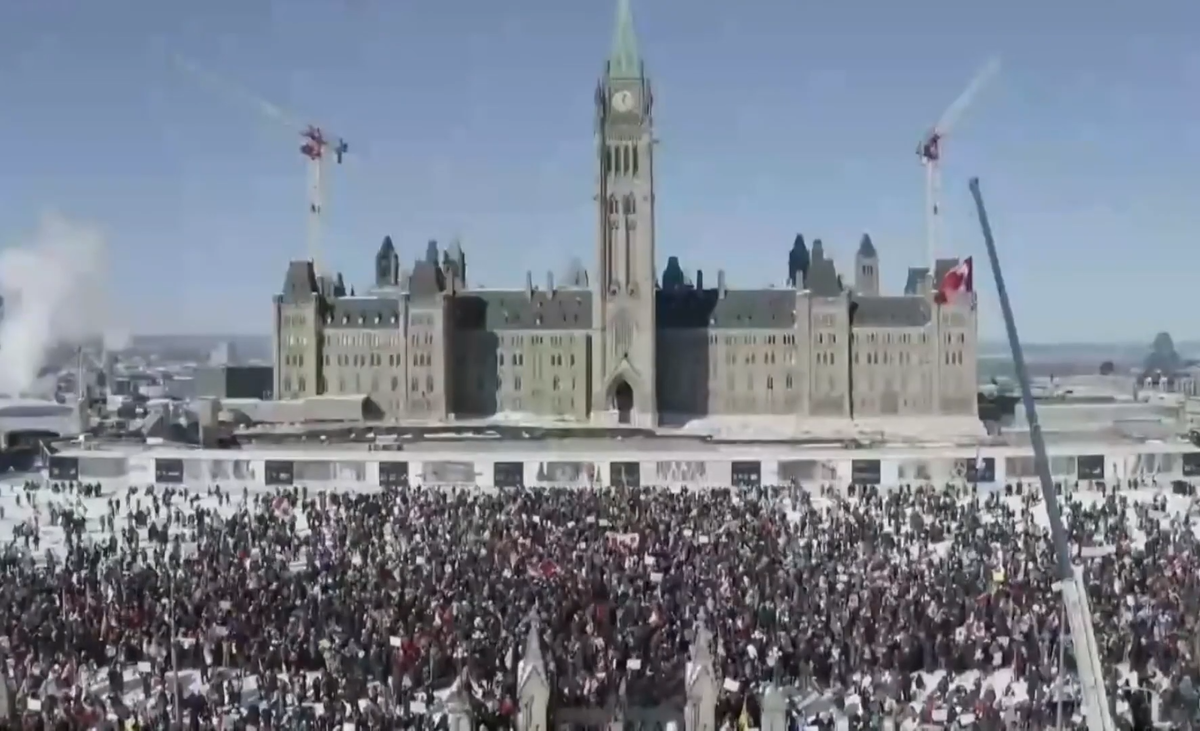
A screenshot from a YouTube video showing the protest in front of Parliament in Ottawa on 30 January, 2022.
Photo via Wikimedia Commons.
The convoy crisis — and I’m mostly speaking here about the events in Ottawa, though the situation at the border crossings fit the same general pattern — forced Canadian police and political leaders to respond quickly to evolving circumstances. And Rouleau’s report is just a relentlessly brutal catalogue of the ways they failed.
Is it really necessary at this point to recap the failure of the Ottawa police? We at The Line have long maintained that the complete failure of the Ottawa police to plan for and control the protest not only allowed the convoy to entrench itself, but also established the psychological paradigm that would define the crisis for weeks: the convoyers held the initiative (not to mention the capital) and the Canadian state was befuddled and adrift. From that, a national crisis was born. Rouleau is just devastating. “The OPS [Ottawa Police Service]’s planning challenges,” he notes on page 56 of the first volume, “were compounded by a general breakdown of command and control.” Super.
He’s even more brutal on page 185 of the second volume: “The influx of Freedom Convoy vehicles and the disruptive behaviour by some protesters threw the OPS operational command at the NCRCC [a command centre] into a state of dysfunction. OPS Inspector Lucas described the atmosphere at the NCRCC as chaotic and explained that he and his team had neither the capacity to process the incoming information nor the resources to respond to the needs it was facing. In the late afternoon of January 29, the OPP’s [Ontario Provincial Police] representative at the NCRCC, Inspector Dawn Ferguson, reported to OPP Superintendent Abrams that OPS members in the NCRCC were panicked and were swearing and yelling orders at each other and at partner agencies.”
Huh.
Moving up a level of government, much has already been written about the cowardice of the Ford government. If any agency performed semi-well, it was the Ontario Provincial Police. The OPP was the force that was generating most of the critical intelligence used (or ignored) during the crisis. It was quick to realize that command-and-control had collapsed in Ottawa (see above), and to begin working with the RCMP on a plan — eventually a series of plans — to restore order. You can’t read POEC and conclude the OPP performed perfectly. Far from it. It was probably the best we had, though, but because Ford took a gander at the mess in Ottawa and decided to mosey on off to the cottage, it couldn’t do much.
Huh.
And that leaves us with the feds. I have maintained since last year that the federal government hasn’t received nearly enough attention in our understanding of what the hell went wrong last year. This has caused a fair degree of pushback, especially from Liberal supporters who read any reference to the “federal government” as “our beloved prime minister”. But no — while I don’t think the prime minister or the federal cabinet did particularly well during the crisis, the real federal failures were in the officials that supported the PM and his ministers.
Among the many other failures, the inability of the various government and police organizations to organize and properly share the information they were handling is perhaps the most disturbing:
If you want to see it yourself, check out pages 38 and 39 of the third volume. For those in a hurry, though, it turns out that even within the government, the flow of information was so bad that the clerk of the privy council, and the prime minister, noted that staff were learning about the convoy not via internal reports, but social media. The federal government had, as Juneau and Rigby have noted, “intelligence gaps” that “hampered the government’s ability to understand, anticipate, and respond to the situation, and to reconcile conflicting information such as contradictory reports about the size of the convoy”. The federal government didn’t have the software to process and analyze online posts, even public ones.
And then there was this (my emphasis added):
[National Security and Intelligence Advisor] Thomas also described an information-sharing gap between law enforcement and government. Assistant Secretary to the Cabinet, Security and Intelligence, Michael MacDonald recalled a significant delay in receiving updates from the RCMP, due to the RCMP’s obligation to consult with each intelligence agency that has provided the RCMP with information prior to sharing that information further (known as the “third party rule”). The NSIA’s office did not receive situation reports, project reports, or other forms of information, such as Project Hendon reports, that the RCMP obtained from other law enforcement agencies. Prior to the events of the convoy, the NSIA was not aware of Project Hendon. …
NSIA Thomas further stated that it was sometimes difficult to know how to interact with law enforcement agencies. She recognized that government must not interfere in operational matters, but thought that there was nonetheless useful information that could have been provided to decision makers without encroaching upon police independence. However, senior officials were uncertain how to obtain that information, and were concerned about “crossing the line” both in requesting information and in discussing solutions.
… huh.
And that doesn’t even cover our now-outgoing national commissioner of the RCMP being so clueless she decided to just not mention germane information during a critical meeting because … well, we never really got a good explanation for that one. Oh well. Enjoy your retirement, Commissioner Lucki!
Comments Off on If the Freedom Convoy “actually was what it has often been portrayed as on social media — a horde of thousands of literal Nazis and Confederates set on violently overthrowing our democratically elected government — then [we’d] be living in the Confederate Republic of Nazi Canada by now”
February 3, 2023
A spectre is haunting Ontario politics: the spectre of [Shock! Horror!] American-style healthcare!
Everyone in Canada has heard alarming stories of people in the United States being presented with five- or six-figure bills for hospital care, and any hint that one of our provincial healthcare systems might move in that direction scares the pants off almost everyone. Politicians know this well, and salivate at the chance of deploying charges that their opponents favour “American-style” changes to our system because it’s a guaranteed vote-winner. None of it has to be true — very few Canadians know much about US systems aside from the horror stories — but it’s always effective.
In The Line, Harrison Ruess makes the sensible point that there are more healthcare systems in the western world than those of Canadian provinces and our closest neighbour:
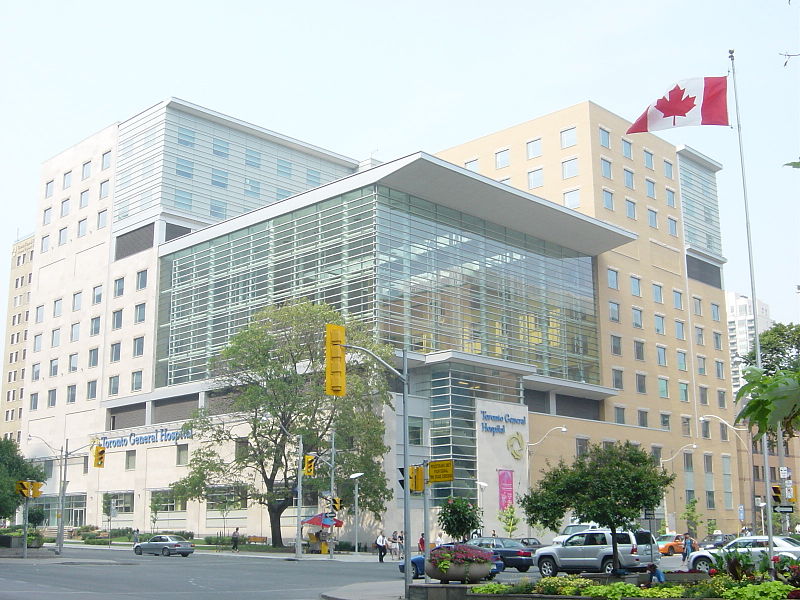
Toronto General Hospital in 2005.
Photo via Wikimedia Commons.
First, to be emphatic on this point, we need to be realistic about where our system ranks globally.
It is truly bewildering to me the lengths that otherwise smart and empathetic Canadians will go to to defend the status-quo approach to health care in Canada. The results we get, versus the money we spend, is simply not brag-worthy. The argument that our system works great, if only we threw more money at it, doesn’t stand up to scrutiny.
Is our health care okay? Sure. Decent? Probably. Is it great? Hardly. Could we do better? Yes, much. Do we need to spend more? Maybe a tad, but not likely much, if any. To wit:
According to OECD data, on life expectancy Canada ranks 16th. On mortality rates from avoidable causes, we’re 23rd. On cancer survival rates we range from 13th down to 18th, depending on the cancer type. On the number of one-year-olds vaccinated for diphtheria, tetanus and pertussis, we rank an abysmal 37th (even the U.S. is higher here at 27th. Gulp.). One area where we do rank closer to the top is spending as a proportion of GDP, where we sit seventh.
World Health Organization (WHO) data wasn’t any more flattering, where Canada’s health care ranked 30th in overall performance despite being 10th in spending. The Commonwealth Fund ranks Canada 10th out of 11 in performance and 6th out of 11 in spending. In report after report Canadians aren’t getting the outcomes we need or want based on the money we’re spending on our current system.
Besides for reasons of nostalgia, why would anyone spend their energy defending these sorts of results? “We’re 16th! We’re 16th!” is hardly a chant you’d hear at a rally. It’s time to do better. And I get the feeling most people recognize this – certainly when you get onto Main Street.
Ipsos polling from December 2021 reported that 55 per cent of Canadians are “somewhat satisfied” with their health care, alongside 22 per cent that are “somewhat dissatisfied.” I.e. three quarters of Canadians find themselves in the middle of the road on the quality of our health care. This seems about right — mediocre support for mediocre health care. (The strongly satisfied and strongly dissatisfied were about even, at 12 per cent and 10 per cent respectively.)
But today Canadians are also, rightly, very worried. Leger polling in January 2023 showed that 86 per cent of Canadians are worried about the state of our health care.
Comments Off on A spectre is haunting Ontario politics: the spectre of [Shock! Horror!] American-style healthcare!
January 22, 2023
One year later
Last year, the Freedom Convoy 2022 from all parts of Canada began to assemble and move toward Mordor, er, I mean Ottawa. Patrick Carroll remembers:

Posted to Twitter by @KatherineZupan https://twitter.com/KatherineZupan/status/1486164240364814337/photo/1
It’s hard to believe, but the one-year anniversary of the Canadian Freedom Convoy is upon us. It was January 22, 2022 when the convoy began to form across the country. Over the following week, thousands of trucks made their way to Ottawa, and on January 29 they arrived in the nation’s capital, loud and determined as ever.
The following month was one of the most tumultuous times in modern Canadian history. Downtown Ottawa was completely gridlocked, bridges were blocked, and politicians along with the media took every opportunity to smear the protesters.
Four weeks later, it ended quite a bit faster than most people expected. Armed with special powers from the never-before-invoked Emergencies Act, the government successfully dismantled the protest in a matter of days.
In hindsight, the practical effect of the protest on legislation is difficult to detect. Some Covid policies were probably relaxed a few months earlier than they otherwise would have been, but for the Convoy organizers, this was far from a decisive victory.
A debate has been raging in Canada ever since: were the protestors within their rights to do what they did? Those who support the convoy argue that they were, since the Canadian Charter of Rights and Freedoms guarantees the right to freedom of expression and freedom of peaceful assembly. Those who oppose the convoy largely agree with these freedoms, but argue that such freedoms should be subject to certain reasonable restrictions. Major obstructions to traffic, and especially obstructions to critical infrastructure such as bridges, are simply going too far in their view. Is the government supposed to stand by and let a group of hooligans bring the country to its knees?
That’s certainly the line the governments (city, provincial, and federal) generally chose to take and the media were almost chanting the governments’ line in unison. Of course, the governments were not all that well synchronized, which led to some blatant examples of deliberate misinformation/disinformation/gaslighting from one or another level, as Donna Laframboise points out:
During the inquiry into the use of the Emergencies Act, witnesses talked about misinformation as if it were a problem confined to contrarians on social media. But the Closing Submission of former Ottawa police chief Peter Sloly shows that government officials are, themselves, a fertile source of misinformation.
If someone in our federal government had demonstrated genuine leadership by going out and talking to the truckers, the protesters would likely have dispersed after the first weekend. Instead, a government that meets with professional lobbyists on 24,000 occasions a year refused to have a single meeting with working people who’d driven thousands of miles to the nation’s capital. Rather than being a grownup, the Prime Minister called them names. Rather than negotiating with the protesters, he told police to get rid of them.
According to Chief Sloly, the Ottawa force was understaffed at the best of times. Even after cancelling vacations and days off, there still weren’t enough personnel to deal with a significant, extended protest on top of normal duties.
From the beginning, the media failed to behave responsibly. It whipped up hysteria. It smeared and sneered. It sowed suspicion and fear of small town Canada, of those who see the world differently, of people who’d reached their breaking point. Big surprise a portion of the public did, in fact, become hysterical. As the protest dragged on, the pressure became intense. In lieu of pursuing a political resolution to what were clearly political grievances, slimy politicians pointed fingers at the Ottawa police. While simultaneously hamstringing them behind the scenes.
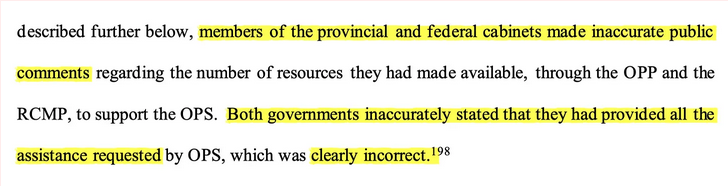
Page 43 of Chief Sloly’s Closing Submission says federal Public Safety Minister Marco Mendicino falsely told the world — on February 3rd — that the Royal Canadian Mounted Police (RCMP) had provided all the resources the Ottawa police had asked for. Four days later — on February 7th — he insisted 250 RCMP officers had been dispatched to Ottawa.
But the reality was quite different. Until mid-February, say his lawyers, the maximum number of RCMP officers available to the Ottawa force on any given day was 60 — far less than the number required.
It was the same story with the Ontario Provincial Police (OPP). On February 6th, Ontario’s Solicitor General Sylvia Jones falsely stated in an official document that “more than 1,500” OPP personnel had already been sent to Ottawa. In the words of Chief Sloly’s lawyers, this was “grossly inaccurate” (pages 80, 107).
Government ministers at both the provincial and federal level, they insist, made misleading statements about the degree of assistance Ottawa police had received. Statements that were “clearly incorrect” (page 53).
Which means Cabinet ministers were spreading misinformation. Misinformation that just happened to deflect blame away from themselves. That just happened to make the Ottawa Police Service look incompetent while turning the chief into a scapegoat. Ottawa’s first black police chief, a Jamaican immigrant, got thrown under the bus.

Comments Off on One year later
January 10, 2023
Repent, wrongthinker!
Neeraja Deshpande outlines the demands of the College of Psychologists of Ontario to send heretic wrongthinker Jordan Peterson to the re-education camp:
Jordan Peterson speaking at an event in Dallas, Texas on 15 June, 2018.
Detail of a photo by Gage Skidmore via Wikimedia Commons.
Have you seen the “men will literally do X instead of going to therapy” meme? It’s funny: Men will literally join 10 improv teams instead of going to therapy. Men will literally teach you how to open a can of beans for 6 hours instead of going to therapy. You get the drift.
Canada’s most famous public intellectual, Jordan Peterson, brought that meme to real life this week when he announced he’d rather never work again than be forced onto the couch.
I don’t blame him.
The College of Psychologists of Ontario has told Peterson that if he doesn’t go to therapy — sorry, a board-mandated “Coaching Program” with a board-issued therapist — it may revoke his license to practice psychology.
What warranted this ultimatum? A few tweets and a podcast.
According to Peterson, about “a dozen people” from around the world complained to the college about comments he had made on Twitter and on Joe Rogan’s podcast, claiming that those statements had caused “harm”.
In March, the college began investigating these complaints. Then, in November, the college informed Peterson: “The comments at issue appear to undermine the public trust in the profession as a whole, and raise questions about your ability to carry out your responsibilities as a psychologist.”
Among those comments: Calling an advisor to Prime Minister Justin Trudeau a “prik”. Snarking at environmentalists for promoting energy policies that hurt children in developing countries. Using female pronouns in reference to the transgender actor Elliot Page. Declaring a plus-sized model on the cover of Sports Illustrated “not beautiful”. (This Wall Street Journal editorial has a good rundown.)
With perhaps one exception — a comment Peterson made calling a former, unnamed client “vindictive” — the public statements that triggered this whole affair are political snipes that have nothing to do with his capacity as a psychologist. Nevertheless, the College is demanding that Peterson not only go through a re-education program, but also that he sign off on the following statement: “I may have lacked professionalism in public statements and during a January 25, 2022 podcast appearance.”
Now, no one who has followed Peterson — presumably including the higher-ups at the College of Psychologists of Ontario — seriously believes he would agree to such a request. He has confirmed as much on Twitter. (This is a guy who burst onto the scene in 2016 after refusing to use gender-neutral pronouns.) And Peterson is famous enough at this point to be inoculated against the financial consequences of refusing to submit, which the college must know.
The college’s statement, then, is not a message to Peterson, but a message to other would-be dissenters: Comply with our politics, or risk losing your livelihood.
Comments Off on Repent, wrongthinker!


