Quotulatiousness

February 3, 2024

Justin Trudeau doesn’t seem to understand why he’s losing so much support from voters

Filed under: Cancon, Media, Politics — Tags: , , , — Nicholas @ 04:00

Tailing on to the previous article, here are some thoughts from The Line‘s Matt Gurney about the strengths and weaknesses of Justin Trudeau — and I despise the man, but I accept he’s a very good politician — and the odd fact that he can’t seem to grasp the reason for his ongoing fall in popularity among Canadians:

… it was a specific comment by the PM that really stayed with me. It’s this:

    … Trudeau does believe, however, that Liberals are up against something relatively new in this climate, which he calls opinion-as-identity politics.

    “I don’t think that was a feature too much of other times in politics — where what you think about something actually creates the circles and the people that you actually associate with, and it defines who you are.”

I’m going to let Tom Cruise in the delightful and little-remembered sci-fi film Oblivion convey my reaction to the PM’s comment there:

This is a statement that I’m having a hard time processing, and that I’ve been reflecting on for weeks, because there is no version of Prime Minister Justin Trudeau — at least, in my understanding of the man — that is dumb enough to believe such a silly thing. Dividing ourselves into tribes identified by our opinions on stuff is exactly what human beings do, and have always done. The first monkey to get out of a tree and stand on solid ground and think to themselves, “Hey, it’s kind of cool down here,” was undoubtedly, immediately ostracized by all the other monkeys that thought that life atop the trees could not possibly ever be beaten.

And we’ve been finding new things to disagree about, and kill each other over, ever since. Which skin colour is best, which holy book contains the real guide to salvation, which ideology is the path to true human enlightenment … human beings have slaughtered each other by the millions over this stuff for as long as there have been human beings. Sure, every so often we squabble over resources. Who gets to control which oil field or prime cattle pasture and the like. But most of our nastiest fights have been over opinions about stuff. Maybe substantive matters, things like racial identity or religious affiliation, but still just opinions. And if we’re honest, some of the opinions have been pretty dumb. Not worth killing or dying over.

Hell, as I was thinking about writing this column, my young son very solemnly and seriously told me about some drama on the schoolyard he’d been part of. It turns out some kids who are normally good buddies had come to tears and almost to blows because … they liked different NFL football teams, and tensions were running high during some of the recent playoff games. I know it’s easy to dismiss this as just boys being boys, but I actually think it’s pretty useful here as an example of humans being humans. There is nothing that symbolizes the way we simian-brained weirdos approach life better than imagining a bunch of thinking, feeling people becoming emotionally overwhelmed because of a disagreement over which collection of overpaid athletic prodigies should advance while a different collection of overpaid athletic prodigies wearing another colour shirt heads home for a long break.

It’s ridiculous. But it’s us. It’s humans. Through and through. I’m a sports fan, too, and I’m well aware of the fact that sports are one of those handy things we use as a society to channel our base, primal, aggressive instincts. I get up and cheer wildly when the Leafs beat the Canadiens because it satisfies some part of my brain, and millions of other brains, that would probably otherwise result in Toronto and Montreal raiding each other for chickens. Or worse. Human beings are constantly deciding stuff and then sorting whole populations accordingly, and then getting emotionally invested in those divisions. I like it more when we channel it into sports rivalries and fights over who has the superior bagel.

How can the prime minister not understand this about us?

January 20, 2024

Looking for some kind of consistency in political commentary

In The Line, Matt Gurney notes that the reactions to a former National Post columnist seeking the nomination for the Conservatives in a 905-area seat fall into depressingly predictable patterns on partisan lines:

Anyone have a standard they can apply consistently in each of these cases? If so, should we maybe write it down or something?

Here’s my take: Each of these cases posed some problems, but none of them fatal, because I think the fear of influence peddling and favour currying actually has the flow reversed: media figures don’t skew their on-air or in-print work to seek political opportunities, but political parties absolutely actively recruit like-minded people with large media profiles.

Maybe I’m wrong. Okay. Just tell me the rule, then, and I’ll go with it.

And then, oh Lord, there’s the rest of it.

Maddeaux’s announcement was met with some, uh, interesting responses. Liberal MP Pam Damoff went right after Maddeaux over a column she’d written on gun control; Fisheries Minister Diane Lebouthillier took umbrage with Maddeaux’s comments on bilingualism. This is fine; Maddeaux has stepped into the political arena and political attacks on her are fair game. But what was stupid was how Conservatives and their numerous social media proxies rushed to play the misogyny card.

Check out this, by long-time CPC staffer and now comms professional Laura Kurkimaki. Kurkimaki tweeted “[S]everal Liberal ministers attacked a young woman today on social media who had just announced she’s running for a @CPC_HQ nomination … Interesting, the same people who say add women change politics, feminist government, sunny ways etc. Embarrassing. Desperate.”

I hope Kurkimaki doesn’t feel picked on here; I chose her comment as a representative example of the eye-rolling array of responses for two reasons: it’s one of the less gross examples of the rush to portray Maddeaux as a victim of sexism; I’d rather not link to the dumber ones. Further, I actually mostly agree with Kurkimaki’s broader point: the Liberals do seem really rattled by Maddeaux’s announcement, and that’s interesting.

But back on topic: is Maddeaux a fair target for reasonable criticism, or does she get some kind of protected status because she’s a woman?

I vote the former! And I suspect that her Liberal critics, from cabinet ministers right on down to the #IStandWithTrudeau crowd on X, would agree. The problem, of course, is that those very same people, again from the cabinet right on down to Trudeau’s social media proxies, are probably mostly — all? — guilty of reacting with exaggerated outrage and cries of misogyny when certain other women are attacked. Chrystia Freeland, Mélanie Joly, Maryam Monsef … I can tell you from personal experience that if you make even reasonable and narrow criticisms of the policies and political performance of those three women, or other prominent Liberals who tick at least one DEI box, you will be swiftly informed that you are, in fact, simply a prejudiced white man.

Oh.

Of course there is sexism in our politics. And other forms of prejudice. And social media is absolutely flooded with rank misogyny and every other disgusting societal cancer you can imagine. Freeland, Joly and Monsef have all been, and will continue to be, targeted with absolutely appalling stuff. Just as Maddeaux has been, and will continue to be. All of it is disgusting.

But for all that, some of what people have to say about these women and their professional performance will be fair, or at least reasonable, and it is incumbent on all to not fake being idiots who cannot tell these two things apart. It’s dumb when it’s Conservatives pretending that Maddeaux is being attacked because she’s a woman, it’s dumb when the Liberals do the same to protect Freeland et al, and, in what I think was the uber-example of this kind of brainrot, it was really dumb when Trudeau responded to credible reports of Chinese electoral interference in Canada, which his government had basically ignored, by lecturing everyone about anti-Asian racism.

January 10, 2024

“[T]he prime minister is either three spins into a profound self-destructive spiral: or he really just does not care”

Filed under: Cancon, Media, Politics — Tags: , , , — Nicholas @ 05:00

The Line returns from the holidays with a solid betting pool on what the hell Prime Minstrel Justin Trudeau is thinking:

We at The Line have two theories, each championed by its respective editor; the prime minister is either three spins into a profound self-destructive spiral: or he really just does not care.

Theory 1: Trudeau is constitutionally incapable of stepping away from his current role. There are no viable leadership alternatives, and his party has been so centralized into a cult of personality that the Liberals may not not be able to recover from his departure.

At the same time, Trudeau is neither particularly capable as a prime minister, nor does he actually enjoy the role very much. After almost a decade in power, he’s been unable to champion a real vision for the country and he struggles to get anything done — long gone are the days of bold promises, replaced now by time extensions granted by the epically borked NDP. This has left him grasping for legacy policy changes that are largely superficial (and sometimes unconstitutional), if well meaning.

Most of Trudeau’s term has been reactionary, in the value-neutral sense that he has been forced to react to events and crises beyond his control or making, from the election of Trump and COVID, to the Trucker Convoy. Clearly, this job has taken a toll on him and his family and, at least subconsciously, he doesn’t actually want to do it anymore. But he just can’t bring himself to step aside and appear the coward before Pierre Poilievre.

So, essentially, this theory goes — he’s engaging in self sabotage. Consciously or otherwise, he’s replaying his previous poor judgment and ethical lapses because, deep in his heart, he wants to be fired.

If that’s a little too much pop psych for you all, the second theory is that Trudeau simply DGAF. He got away with all of those previous fancy holidays. Why not get away with this one? The usual partisans will scream and whine for a few days and we’ll all move on. He’ll get a nice vacation, and if it pleases the ex and makes the kids happy, well, all the better. Trudeau doesn’t care about optics or ethics because he doesn’t have to care; his critics don’t matter, and his supporters have clearly signalled that they are along for the ride no matter what he does.

Both of these theories may be true or wrong, but it will be interesting to ponder as 2024 plays out whether Trudeau’s greatest bane proves to be self-sabotage or indifference.

Your Line editors are opening the betting table now.

December 28, 2023

The Liberals may be bad at “deliverology”, but they’re world-beaters at pouring money into black holes

Tristin Hopper explains the apparent paradox that the federal government is spending money faster than it can be printed, yet the things the government is responsible for are perennially underfunded:

From back when The Onion was allowed to be funny – https://youtu.be/JnX-D4kkPOQ

This may surprise the average Canadian given that so much of the government is noticeably threadbare and underfunded. Canadians are dying in hospital waiting rooms due to unprecedented shortages in health care. The navy’s so strapped for cash that it can only deploy one offshore patrol vessel at a time. The RCMP’s federal policing is so under-resourced that Parliamentarians are now calling it a threat to national security. And even $600 billion in cumulative debt hasn’t been enough for the Liberals to honour their 2015 campaign promise to ensure universal clean water on First Nations reserves.

It’s popular to blame all this on some easy-to-identify example of government profligacy, such as Ukraine aid, free hotel rooms for refugee claimants or Prime Minister Justin Trudeau’s noted penchant to rack up outsized travel bills. But Canada’s fiscal problems are well beyond anything like that. At the current rate of spending, the cumulative $2.4 billion in military aid that Canada has sent to Ukraine represents less than a month’s worth of new debt.

So where’s all the money going? Below, a cursory guide to how Canada is able to spend so much while seemingly obtaining so little.

Debt servicing just got way more expensive

First, an easy one: The Trudeau government borrowed an obscene amount during the COVID-19 pandemic, and with rising interest rates the treasury is getting hammered with debt-servicing costs.

As recently as 2021, interest charges on federal debt cost $20.3 billion per year. In the current fiscal year, it’s probably going to blow past $46.5 billion. Ottawa now spends about as much on debt management as it does on health care transfers to the provinces.

The phenomenon of pricier debt is not limited to Canada: Virtually every government in the world ran up record-breaking debts during COVID and are now facing the consequences. But if Canada is different, it’s that our rate of pandemic debt accumulation was at least $200 billion higher than it needed to be. And in justifying all this extra spending at the time, Trudeau argued that it was a good time to take out extra debt since “interest rates are at historic lows”.

The corporate welfare is just unbelievable

Canada has a long history of government signing over grants and bailouts to politically connected corporations. As far back as 1972, then NDP Leader David Lewis famously championed the cause of stopping Canada’s “corporate welfare bums”.

But the Trudeau government has taken corporate welfare to new heights. It was only a few years ago that Bombardier was the undisputed champion in collecting federal grants, bailouts and interest-free loans. Over 50 years, according to an analysis by the Montreal Economic Institute, Bombardier received a cumulative “$4 billion in public funds”.

In just the last calendar year, the Trudeau government has signed two subsidy agreements that would dwarf that $4-billion figure several times over. In the spring, both Stellantis and Volkswagen agreed to build EV plants in Ontario in exchange for federal subsidy packages that could cost as much as $18.8 billion (plus another $9 billion from the Ontario government).

And that new $18.8 billion liability on the books doesn’t even account for the massive ramp-up in the corporate welfare everywhere else. To name just a couple: In 2021, Air Canada got a $5.4 billion loan package. And the Trudeau-founded Strategic Innovation Fund gets about $1.5 billion per year in handouts to green energy companies.

November 28, 2023

Pierre Trudeau and Canada’s choice to become an international featherweight in the 1970s

In The Line, Jen Gerson endures a foreign policy speech from Mélanie Joly that takes her on a weird journey through some of Canada’s earlier foreign policy headscratchers … usually leading back to Justin Trudeau’s late father:

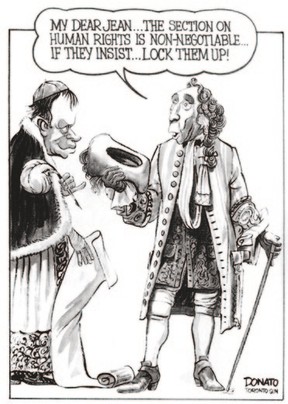
A Toronto Sun editorial cartoon by Andy Donato during Pierre Trudeau’s efforts to pass the Canadian Charter of Rights and Freedoms. You can certainly see where Justin Trudeau learned his approach to human rights.

If I saw a statue of P.E.T. on the roof of a foreign affairs building that looked like it were competing for a 10th place spot in the Eurovision tourney, I don’t know how I’d feel: embarrassed, touched, certainly too polite to say anything honest. I probably wouldn’t be so struck with awe by the sight that I’d be keen to shoehorn the anecdote into a major policy speech in front of the Economic Club.

And yet.

Joly’s speech was striking in that it could be divided into two distinct parts: The first half was a cogent and clear-eyed examination of the state of play of the world, one that acknowledged a fundamental shift in the assumptions that underpin the global order. Nothing one couldn’t glean from the Economist, but grounded nonetheless. The global order is shifting, the stakes have increased, and the world is going to be marked by growing unpredictability.

“Now more than ever, soft and hard power are important,” Joly noted, correctly, ignoring the fact that Canada increasingly has neither, and doesn’t seem to be doing much about that.

And this brings us to the second half of the speech, which was an attempt to spell out the way Canada will navigate this shift, by situating itself as both a Western ally and an honest broker: we are to defend our national interests and our values, while also engaging with entities and countries whose values and interests radically diverge from our own. “We cannot afford to close ourselves off from those with whom we do not agree,” Joly said. “I am a door opener, not a door closer.”

This was clearly intended to be analogous to the elder Trudeau’s historic policy of seeking cooperation with non-aligned countries — countries that declined to join either the Communist or the Western blocs throughout the Cold War.

[…]

If our closest allies treat us like ginger step-children as a result of our own obliviousness and uselessness, our platitude-spewing ruling class is going to seek closer relationships in darker places: in economic ties with China, and in finding international prestige via small and middling regional powers or blocs whose values and interests are, by necessity or choice, far more malleable than our own.

These cute turns of phrase are a matter of domestic salesmanship only. “Pragmatic diplomacy” is a thick lacquer on darker arts.

Which brings us back to Macedonia, again. Or North Macedonia, if you’re a stickler.

Before it declared independence in 1991, Macedonia was a republic within the Socialist Federal Republic of Yugoslavia. During much of Trudeau Sr.’s time, Yugoslavia was led by Josip Tito, a Communist revolutionary who broke with Stalin and spearheaded a movement of non-aligned countries, along with the leaders of India, Egypt, Ghana, and Indonesia. Tito was one of several despotic and authoritarian leaders with whom Trudeau Sr. sought to ingratiate himself to navigate the global order.

P.E.T.’s most ardent supporters maintain a benevolent amnesia about just how radical Trudeau Sr. was relative not only to modern standards, but to world leaders at the time.

During the 1968 election, Trudeau promised to undertake a sweeping review of Canada’s foreign affairs, including taking “a hard look” at NATO, and addressing China’s exclusion from the international community.

In 1969, America elected Richard Nixon a bombastic, controversial, and corrupt president who forced Canada examine the depth of its special relationship with its southern neighbour. At the time, this was termed “Nixon shock.” And it could only have furthered Trudeau Sr.’s skepticism of American hegemony.

It was in this environment of extraordinary uncertainty, and shifting global assumptions and alliances, that Trudeau Sr. called for a new approach to Canadian foreign policy. He wanted a Canada that saw itself as a Pacific power, more aligned to Asia (and China). Trudeau also wanted stronger relationships with Western Europe and Latin America, to serve as countervailing forces to American influence.

November 19, 2023

“This was a law despised by almost everybody who hasn’t personally had intimate relations with an old-growth tree or an orca”

Colby Cosh meditates on the unexpectedly sensible decision by a Federal Court judge, striking down the Feral government’s virtue-signal-made-law on single-use plastic items:

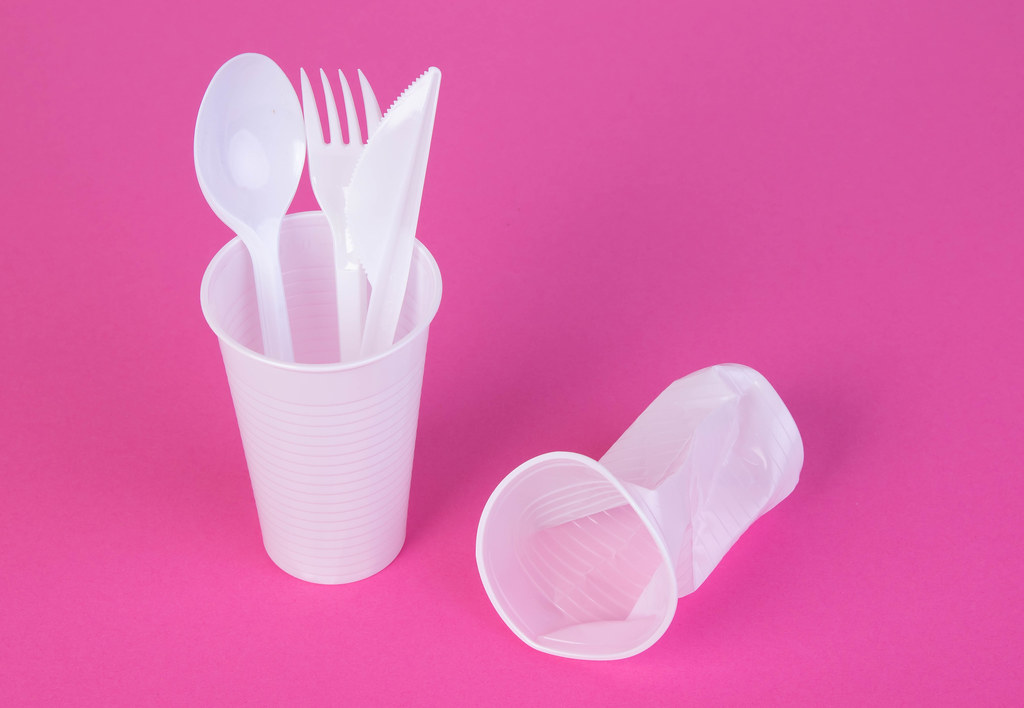
“Single use plastic objects on pink background” by wuestenigel is licensed under CC BY 2.0 .

On Thursday a Federal Court judge, the Hon. Angela Furlanetto, startled the Dominion by essentially sweeping aside the Liberal government’s ban on a short list of single-use plastic items, including grocery bags, cutlery, takeout containers and drinking straws. This was a law despised by almost everybody who hasn’t personally had intimate relations with an old-growth tree or an orca. We all now live in a world where we accumulate large numbers of cloth grocery bags and eat takeout meals off of wooden disposable cutlery in the name of the environment; meanwhile, we no longer accumulate the “single-use” grocery bags that us skinflints used to hoard and reuse before consigning them harmlessly to a landfill.

All right, maybe it’s a stupid law that does more environmental harm than good. Federal governments are allowed to make those! But Justice Furlanetto, asked for judicial review by Alberta and Saskatchewan and a coalition of petrochemical processors, concluded that the actual rule was “both unreasonable and unconstitutional”.

Her judgment is a thorny 200-paragraph monster, but the innermost logic of it is simple. The federal Environmental Protection Act allows Ottawa to ban or restrict “toxic” substances that might enter the environment. In 2021 the Liberals made a cabinet order essentially saying “These here single-use plastic items are hereunto declared to be toxic. Abracadabra!” No one can show that these items are actually poisonous in the ordinary sense, and the listed items weren’t condemned as substances, i.e., for their chemical content or composition. The reasoning of the government was that if an Arctic lynx might choke on the ring from a six-pack of Labatt Blue, that kinda sorta makes the plastic in the ring “toxic”, and justifies the federal government in the use of its criminal-law power.

I don’t know if anyone at the cabinet table anticipated how this argument would fare under a “reasonableness” analysis with lawyers for two provinces, plus Dow Chemical and Imperial Oil, among others, on the opposite side. But the government almost certainly faced a piece of extra bad luck in having the case go before Justice Furlanetto, a jurist with hard-science credentials that include a master’s degree in biochemistry. She did not like the slippery game being played with the concept of “toxicity”, not one bit.

In her judgment she observes that the explicitly stated rationale for the plastics ban was that “all plastic manufactured items have the potential to become plastic pollution”. Justice Furlanetto found this reasoning to be puzzlingly ass-backward. “The basic principle of toxicity for chemicals is that all chemical substances have the potential to be toxic,” she writes. “However, for a chemical substance to be toxic it must be administered to an organism or enter the environment at a rate (or dose) that causes a high enough concentration to trigger a harmful effect. In this instance, the reverse logic appears to be applied: all PMI are identified as toxic because they are made of plastic and because all plastic is deemed to have the potential to become plastic pollution.”

November 6, 2023

Justin Trudeau’s (latest) very bad week

Filed under: Cancon, Media, Politics — Tags: , , , , , — Nicholas @ 03:00

Paul Wells wonders if Justin Trudeau would even want to stay on as Liberal Party leader for the next election after the more recent awful week he’s had:

That was fun of Justin Trudeau to act out the message that somebody who spends his days in the Senate is a nobody. Of course, the kind of year he’s having, his bit of theatre came two days after he appointed five new senators. Welcome to the upper chamber, suckers. If you’re really lucky, a flailing prime minister might use you for a punchline.

This felt like the week that Trudeau’s hold on his leadership became precarious. I’ve had people asking me all week whether Trudeau will run again. Of course I don’t know. I guess the only thing that’s new is that if he does stay until the next election, and lead the Liberals into it, I’ll wonder — more keenly than before — why he bothered.

The decision still feels like his alone. The headline-making assaults on his power this week fell well short of what it would take to remove him if he doesn’t want removing. I find Percy Downe a serious and likable man, but he is not gregarious, he doesn’t have networks of people ready to do his bidding, and the truth is that the Senate isn’t a base for getting anything done within the Liberal Party. Hasn’t been for a decade.

As a good Liberal who was working hard long before “hard work” became a Trudeauite slogan, Downe has never forgiven Trudeau for kicking senators out of the Liberal caucus. As a good Prince Edward Islander, he has never forgiven Trudeau for maintaining tolls on the Confederation Bridge between the Island and the mainland while removing tolls on the Champlain Bridge into Montreal. This was a straightforward transfer of wealth from PEI to Central Canada, and turned out to be foreshadowing for last week’s fuel-oil transfer in the other direction. So Downe has a grudge or two to motivate him, and no army to deliver his desired outcome. His preference for Trudeau’s political future is widely shared in the country but he lacks a mechanism for delivering it in real life.

At least Downe has been expressing a clear preference in coherent language. In this he contrasts nicely with Mark Carney. Carney was a successful central-bank governor in two countries, a feat without obvious precedent. But politics is a different line of work. Reading Carney’s interview with the Globe was like watching somebody shake a Ziploc bag full of fridge magnets. In fact I’m pretty sure that when he started talking, he wasn’t planning to deliver any message about party politics.

He’ll “lean in where I can”. He has a list of things he hasn’t ruled out: becoming the next Liberal leader; running for Parliament. Running for Parliament is also on his list of things he hasn’t ruled in. Not ruling things out is, notoriously, not how you actually get into Parliament. I haven’t ruled out becoming a backup dancer for Taylor Swift, and yet I’m not in the new concert film. I checked.

November 2, 2023

The carbon tax has been murdered, by Justin Trudeau, in the House, with a blatant self-interest

Rex Murphy believes the much-hated carbon tax — the Laurentian Elite’s revenge on working Canadians — has been dealt its mortal blow by the least likely suspect:

Justin Trudeau came into office on the spume of Canadian-level celebrity, built on a persona of ostentatious, idle gestures and token cheer (selfies, socks, costumes), the endless vocalization of woke crackerjack-box slogans and a smile cemented in place that had all the warmth of well-gelled cement. Just style. Style, understood as the adoption of surface mannerisms in place of deeply settled convictions, convictions built on a real attempt to understand Canada, to relate to all its regions, and an appreciation (which does not mean agreement) of the ideas, lifestyles and situations of mainstream Canadians: style adopted as a campaign dynamic.

It’s worth reminding that from the moment of its first swearing-in, the Liberal government has been an administration of show and tactics: tactics have been its policy, tactics have been its governing lifeblood. Policies — in so far as it can be said to have had policies — have been merely (temporary) scaffolding or window displays meant to shore up the tactics. They have not been, as with an honourable government, needful measures for Canadian well-being, shored up not by tactics but by their obvious benefit and their consonance with what Canadians made clear were their concerns.

Canada’s predominant commitment these past eight painful years, the “one ring to rule them all”, the only government commitment held with deepest conviction we have been told, has been combatting global warming. It is different. It is real policy. It is the core principle. It is immutable because its cause is existential. It has been Canada’s passport to an admiring progressive world. Above all it has absolutely glowed with virtue-signalling and superior progressive sensibility. It has been as good as a wristband was at a rock concert years back.

For all of his eight years Trudeau has incessantly promoted and promulgated his single cause. At home he has out-Suzukied David Suzuki, out-Mayed Elizabeth May, and there have been moments when he “out-dared” Greta. Abroad, he has been climate alarmism’s smiling Galahad.

Global warming has been his religion, and what he calls the carbon tax both eucharist and passport to net-zero paradise. To an increasingly skeptical Canadian public, anxious and distrustful of a government regularly racked by scandal and heroic mismanagement, he said (I paraphrase): “I know I’m taxing a necessity — heat for homes in northerly Canada — and I know it must hit the poor first and worst. But it’s to save the world! Saving the world keeps me up at night. And I want Canada to lead the way in saving it. And for that, there must be a tax on energy, on gas and oil, on heating. It must be done. It’s a sacrifice poets will write in praise of in the lower-temperature world we will be key to making happen.”

The tax on carbon dioxide — the great comedians of the Liberal party called it a “tax on pollution” — had to be imposed, even as inflation ravaged the country and further immiserated the already sufficiently immiserate, because Trudeau had a whole world to save. It was the signature element of the signature policy of Trudeau’s showcase government. It was the indispensable girder in building a post-oil-and-gas future for a post-nationalist Canada, the indestructible bridge to a golden net-zero tomorrow for our country. And, incidentally, a great shiny glittering Last Spike to doom Conservative Alberta’s economy and government, and no little whack for Saskatchewan.

This was principle as policy, and policy as principle. For seven plus years.

And now. A few fingers snapped somewhere and suddenly, Mr. Trudeau … cancels the carbon tax. Cancel for one and you must cancel for all.

September 13, 2023

“It is premature to write the epitaph for a politician that has defied gravity as many times as Justin Trudeau”

Filed under: Cancon, Media, Politics — Tags: , , , — Nicholas @ 03:00

I have to admit that Justin Trudeau is a very talented political campaigner and Canadian politicians always need to take that into account in dealing with him. I’m very much not a fan, but he has accomplished something I didn’t think was possible — his efforts in office have persuaded me to move Pierre Trudeau down to second-place in my personal list of “Worst Prime Ministers of Canada”:

For the longest time, Justin Trudeau was the party’s best asset. It didn’t matter if the Liberals trailed the Conservatives by a few points, the prime minister was viewed by Canadians as the best choice to continue to lead the country when compared to the other party leaders.

That hope now lies in tatters. Trudeau now trails Pierre Poilievre by double digits for preferred prime minister. More importantly, Trudeau trails his party on the generic (“who would you vote for?”) ballot question by nine points. What this means in plain language is that a significant number of people are still willing to vote for the Liberals, even though they no longer believe that Justin Trudeau is the best candidate to be prime minister. In only one demographic — women over the age of 55 — does the prime minister lead Poilievre. More importantly for Trudeau, only 45 per cent of Liberals believe he would make the best prime minister; 77 per cent of Conservatives believe the same thing about Poilievre.

For the first time in his decade as leader, Justin Trudeau is a drag on the Liberal Party of Canada.

This has been wondered about for months. I have always believed that Trudeau gave the party a better chance of success in the critical places in which it absolutely must win (in Quebec, in the B.C. Lower Mainland and in the GTA) than any other hypothetical leader would. He is a uniquely talented political campaigner. He went from third to first in the campaign in 2015, he recovered from a blackface scandal that would have ended a lesser campaigner in 2019, and he almost-single-handedly saved a Liberal campaign in 2021 that fell flat out of the gate and needed almost three weeks to find anything that even remotely resembled a coherent message.

That was then, though, and today, this is the longest and most significant stretch of time since election night in 2015 where Trudeau has been a personal liability for Liberals. This is a massive change that I’m not sure the public, and even many Liberals, have fully appreciated.

There is still an argument to be made, even at this late stage, that Trudeau remains the sole unifying force for a party whose main objective is the pursuit of power. That he is the only leader capable of forging the fractured elements of the current Liberal coalition together. You could convince me of these arguments.

September 5, 2023

The worst Prime Minister in Canadian history?

Filed under: Cancon, Media, Politics — Tags: , , , , , — Nicholas @ 03:00

My own opinion is that the Trudeaus, taken together, are certainly the worst family to have been political leaders of Canada, but is Justin Trudeau the single worst PM in history?

Like father, like son, a dynastic peril. I should mention at this point that the best short article on Justin Trudeau’s unfitness for office was posted on this site by my wife Janice Fiamengo some two years back. It would be folly for me to try to outdo her writerly excellence, unflappable tact, and marksman-like precision. Here I offer an updated summing-up of why Justin Trudeau is surely unprecedented in the annals of Canada’s ideological destitution. The daily spectacle we are witnessing, the eruption of political sludge and magma from the depths of government policy, puts paid to any promotional salvage operation.

This is a prime minister who has been implicated in numerous scandals and cited for several ethics violations, all to no avail. He has imposed a needless and prohibitive carbon tax upon a groaning nation and propelled the national debt into the fiscal asteroid belt. He is soft on terrorism, having awarded a $10.5 million reparation payment to al-Qaeda terrorist, and the son of Ahmed Said Khadr, Omar Khadr, who had been imprisoned in Guantanamo for killing an American medic in Afghanistan. Trudeau also sympathized with Boston Marathon bomber Dzhokhar Tsarnaev, a Muslim immigrant from Chechnya, who killed three people and injured another 170, saying, “there is no question that this happened because there is someone who feels completely excluded”.

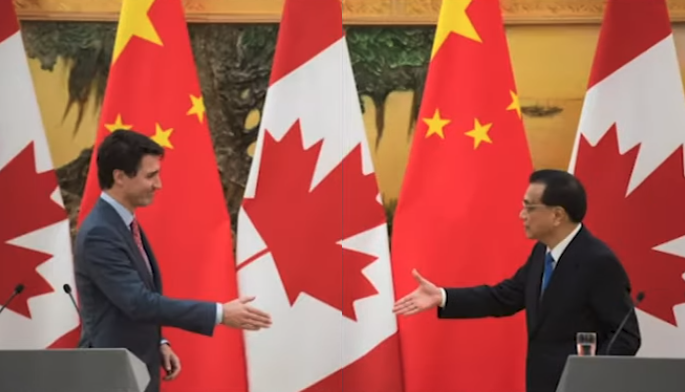
As noted, this is a prime minister who has bought the media with elaborate financial gifts, who admires the “basic dictatorship” of Communist China, and has made no secret of his fondness for Castro, waxing eloquent in his eulogy for the dead dictator, and who, like his father, has adopted an energy policy intended to phase out the western petroleum industry in the interests of a “just transition” to inefficient green renewables, and thus cripple the economic foundation of the country in perpetuity.

This is a prime minister who mandated draconian COVID-19 protocols — masks, quarantines, lockdowns, vaccines. The entire effort is now known to have been a colossal blunder whose results were ineffective at best and noxious, even lethal, at worst. Concerning the vaccines, Trudeau now claims that he did not force anyone to take them but “chose to make sure all of the incentives and all of the protections were there to encourage Canadians to get vaccinated”. In other words, offer them an incentive they can’t refuse. The “incentives” amounted to interventions like losing one’s job, livelihood, social freedoms, and Charter rights. Even people who did remote work had to be vaccinated; if they were fired, they were ineligible for Employment Insurance.

Giving Trudeau’s protestations the lie, in a Sept. 16, 2021 interview aired on the French-language program “La semaine des 4 Julie“, he referred to unvaccinated Canadians as “extremists”, as people who “don’t believe in science or progress and are very often misogynistic and racist”. “A leader who expresses such detestation for his own people,” Janice writes, “and encourages frightened followers to participate in their dehumanization should not be trusted with the reins of government.” It’s hard to disagree.

We should never forget that this is a prime minister who in February 2022 invoked the dictatorial powers of the Emergencies Act — a Trudeau habit — to crush a peaceful, legitimate, and justifiable protest against the vaccine mandates by a brave and patriotic cohort of the country’s truckers and who authorized the banks to freeze protesters’ accounts, reminiscent of the Nazi 1938 Decree for the Reporting of Jewish-Owned Property issued by Hitler’s government. The mind boggles.

July 10, 2023

Barbara Kay – “[M]any Canadians [suffer] from highly contagious, patriotism-suppressive Post National Syndrome”

Canadians are deluged with messages that imply — or explicitly demand — that they should be ashamed of Canada and of being Canadians. That there is nothing to celebrate in our history or cultural achievements and instead we should humbly beseech forgiveness for our many, many, many sins. Barbara Kay disagrees:

On Canada Day, near St. Sauveur, Quebec, we were treated to torrential rain, hail, nearby tornado warnings, and continually flickering power. Not a day for fireworks. Just as well, since fireworks are the last thing one craves when one suffers, as many Canadians do, from highly contagious, patriotism-suppressive Post Nationalism Syndrome.

This scourge cannot yet be cured, since it was intentionally cultivated and released into the environment by the current government. Only herd immunity can end it. However, the symptoms of Post Nationalism Syndrome can be alleviated by certain traditional antivirals, like National Postism. Last Saturday’s NP featured several commentaries that buoyed my spirits, in particular Michael Higgins’s misery-loves-company column, “Stop shaming and start celebrating Canada”.

Higgins enumerates recent examples from a tiresome litany of complaints by our elites that “want to turn us into a nation of self-flagellating penitents”. The National Gallery of Canada insinuates that Canada’s iconic artists, the Group of Seven, are linked to white supremacy; a parliamentary motion endorses the residential school system as “genocide”; the attorney general actively considers legal sanctions against “denialism” — dissent from genocide as a proper descriptor (including me); and the erasure of Sir John A. Macdonald’s name from the eponymous Parkway.

In a nearby feature, the false claim that Macdonald was a guilty party in the alleged schools genocide was handily demolished by lawyer Greg Piasetzki, titled, “John A. Macdonald saved more indigenous lives than any other prime minister”. This evidence-based rejoinder to sticky defamatory myths about Macdonald is an excerpt from a new book of essays by 20 writers, The 1867 Project: Why Canada Should be Cherished — Not Cancelled, published by the Aristotle Foundation, and edited by its founder and president, Mark Milke. 

Piasetzki’s essay mirrors the 19 others in its forthright challenge of our culture’s reigning anti-western dogmas, which brand Canada as a failed nation. Every author encourages the pride in being Canadian that has not dared to speak its name since Justin Trudeau came to power. I highly recommend it. If enough Canadians read it, we might arrive at herd immunity to Post Nationalism Syndrome.

July 7, 2023

Justin Trudeau says that Canada is merely defending itself from the “attack” by Facebook

Filed under: Business, Cancon, Government, Law, Media, Politics — Tags: , , , , — Nicholas @ 03:00

Prime Minister Justin Trudeau has never faced a situation he couldn’t get histrionic about:

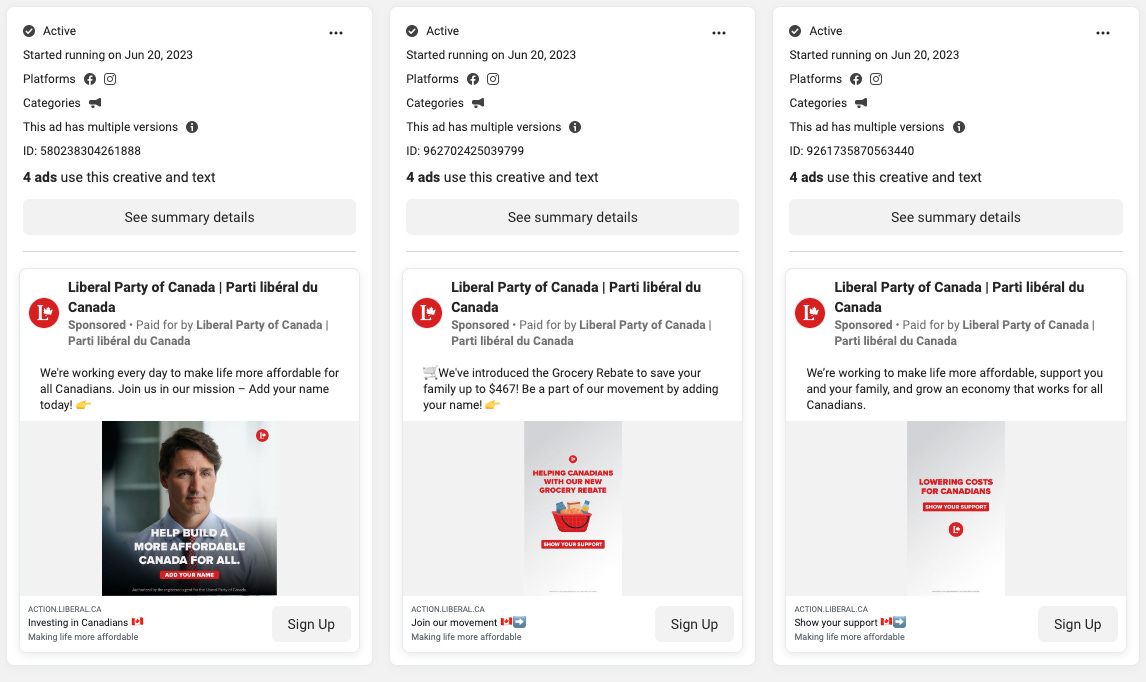
The government escalated the battle over Bill C-18 yesterday, announcing that it was suspending advertising on Meta’s Facebook and Instagram platforms due the company’s decision to comply with the bill by blocking news sharing and its reluctance to engage in further negotiations on the issue. While the ad ban applies to federal government advertising, Liberal party officials confirmed they plan to continue political advertising on the social networks, suggesting that principled opposition ends when there might be a political cost involved. At issue is roughly $11 million in annual advertising by the federal government, a sum that pales in comparison to the Parliamentary Budget Officer’s estimate of at least $100 million in payments in Canada for news links from Meta alone.

In addition to raising the economic cost to Meta for stopping news sharing, Prime Minister Justin Trudeau increased the rhetoric, describing Canada as having been “attacked” by Meta and likening the government’s fight over the bill to defending democracy in Ukraine or during the Second World War [at 13:30]:

    Facebook decided that Canada was a small country, small enough that they could reject our asks. They made the wrong choice by deciding to attack Canada. We want to defend democracy. This is what we’re doing across the world, such as supporting Ukraine. This is what we did during the Second World War. This is what we’re doing every single day in the United Nations.

There are strongly held views on both sides of the Bill C-18 debate, but the suggestion that stopping sharing news links on a social network is in any way comparable to World War 2 is embarrassingly hyperbolic and gives the sense of a government that has lost perspective on the issue. Canadian Heritage Minister Pablo Rodriguez has repeatedly described the manner of compliance with Bill C-18 as a business choice for the Internet companies, yet the Prime Minister now calls that choice an attack on the country.

If it were truly comparable to a world war, then surely the Liberal Party (joined by the NDP) would not continue to advertise on the platform. Yet since the 2021 election call, the party alone has run approximately 11,000 ads on Facebook and Instagram. That is separate from individual MPs, who have also run hundreds of ads. The Meta Ad Library provides ample evidence of how reliant the party has been on social media. For example, since the start of the year, Anna Gainey ran over 500 ads as part of her by-election campaign in Quebec. David Hilderley, who was a candidate in the Oxford by-election, ran approximately 180 ads on Facebook during the same timeframe.

June 12, 2023

It’s an insult to Chuck Barris and The Gong Show to compare it to the Justin Trudeau Show

In the weekly dispatch from The Line, the editors defend the honour of the original Gong Show and say that it’s not fair or right to compare that relatively staid and dignified TV show to the Canadian government’s performance art on the foreign interference file:

When the news broke late Friday afternoon that David Johnston was resigning from his position as special rapporteur on Chinese interference, the general reaction across the chattering class was a variable admixture of amusement and scorn. There’s probably a German word for it, but the security and intelligence expert Wesley Wark captured the tone of it with the headline on his Substack post, which said, simply: “Gong Show“.

We’re somewhat inclined to concur with Wark, except the three-ring train wreck that has marked Johnston’s time as Justin Trudeau’s moral merkin has been so disastrous that we think apologies are due to Chuck Barris, in light of the relative sobriety of his famous game show.

Reporters at the Globe and Mail and Global News started breaking stories about Chinese interference in Canadian elections a few months back, based largely on leaks from inside the Canadian intelligence apparatus. Almost immediately it was clear that the Liberals had a major problem on their hands, one that was going to require levels of transparency, good judgment and political even-handedness that this government has manifestly failed to achieve during its almost eight years in power.

Yet when Trudeau announced that he was going to appoint an “eminent Canadian” as “special rapporteur” to do an investigation and report back to the government with recommendations for how it should tackle the issue, we gave a collective groan here at The Line. Given the endless similar tasking of retired Supremes passim, it was clear that the pool from which Trudeau was going to fish his eminent personage was very shallow, and pretty well-drained. Indeed, at least one of us here was willing to bet large sums that it would be David Johnston.

What do we make of all this? Here’s the situation as we see it, in bullet form for brevity’s sake:

  • Johnston should never have been offered the position of special rapporteur
  • Having been offered the job of special rapporteur, Johnston should never have accepted it

And that is basically it. But given that Trudeau had the poor judgment to ask him, and Johnston had the poor judgment to accept, we think everything that has happened since was pretty much inevitable. We couldn’t have guessed at all the details of how this would have played out, especially the delicious elements beginning with the decision to hire Navigator to provide strategic advice (to manage what, exactly?), the revelation that Navigator had also provided strategic advice to Han Dong (who, recall, Johnston more or less exonerated), the firing of Navigator and the involvement of Don Guy and Brian Topp … this is really just gongs piled upon gongs piled upon gongs.

But the overall trajectory of Johnston’s time as special rapporteur? If you had told us ahead of time that this was more or less how things would go, we wouldn’t have been much surprised. Why? Because we live in Canada. And this is how Canada’s governing class behaves. It is a small, incestuous, highly conflicted and enormously self-satisfied group of people that is so isolated from the rest of the country they don’t even realize how isolated they are.

Honestly. What in heaven’s name gave Trudeau the idea that it would be smart to ask a former governor general to help launder his government’s reputation? And why on Earth did Johnston think it was a good idea to accept? Forget the Navigator stuff, this turkey was never going to fly. Johnston’s report was not accepted as the wise counsel of a wise man; instead it was seen as a partisan favour by a conflicted confidant. Sure, Johnston was subject to some pretty unfair attacks from the opposition, but what did he think was going to happen? Has he paid any attention over the last decade? But pride is a form of stubborness, and even after parliament voted for him to go, Johnston insisted he would stay on to finish his work. Until, on Friday afternoon, he decided he would not.

We’re not going to speculate about why Johnston finally pulled the chute. We’d like to think that the former GG in him thought it best to obey the will of the House of Commons. We rather hope it had nothing to do with some pointed (and unanswered) questions put to Johnston’s office by the Globe and Mail, asking whether Navigator had been given a heads-up on Johnston’s conclusions on the Dong file.

Maybe it doesn’t matter. As Paul Wells put it in a recent column, Trudeau sought to “outsource his credibility by subcontracting his judgment,” where credibility was supposed to flow from Johnston to Trudeau. Instead, and we would say, inevitably, the flow went in the opposite direction. If the prime minister had any credibility to lead the country on this issue, he wouldn’t need a special rapporteur in the first place. The fact that Trudeau felt the need to appoint one is a tacit admission that he knows he doesn’t have the trust of the people.

And that is the real problem here. The Johnston saga has ended where it was always going to, with a once-honorable man’s reputation in tatters and the problem he was brought in to address still unresolved. David Johnston has resigned, as he must have. In our view, that’s one resignation too few.

May 27, 2023

“David Johnston is an honourable man”

From this heading, you might be a bit reminded of Mark Antony’s funeral oration for Caesar, as imagined by William Shakespeare (well, I was, so you’ll have to suffer a few lines of iambic pentameter):

Friends, Romans, countrymen, lend me your ears;
I come to bury Caesar, not to praise him.
The evil that men do lives after them;
The good is oft interred with their bones;
So let it be with Caesar. The noble Brutus
Hath told you Caesar was ambitious:
If it were so, it was a grievous fault,
And grievously hath Caesar answer’d it.

Here, under leave of Brutus and the rest–
For Brutus is an honourable man;
So are they all, all honourable men–
Come I to speak in Caesar’s funeral.
He was my friend, faithful and just to me:
But Brutus says he was ambitious;
And Brutus is an honourable man.

He hath brought many captives home to Rome
Whose ransoms did the general coffers fill:
Did this in Caesar seem ambitious?
When that the poor have cried, Caesar hath wept:
Ambition should be made of sterner stuff:
Yet Brutus says he was ambitious;
And Brutus is an honourable man.

Perhaps I’m reading too much into the opening line of Philippe Lagassé’s article about former Governor General David Johnston’s role in whitewashing the Trudeau running dogs, however:

David Johnston is an honourable man. As a former governor general, he holds the title of Right Honourable and he wears it better than many former prime ministers who share that moniker. Johnston is also a champion of trust in democratic institutions; he literally wrote a book called Trust: Twenty Ways to Build a Better Country.

Although his appointment has been plagued by questions about his perceived conflicts of interest, it’s hard to accept that Johnston set out to protect the Liberal party. Whether one agrees with him or not, Johnston’s conclusions were arrived at sincerely and in keeping with his view that “Democracy is built on trust.” Unfortunately, his recommendation against a public inquiry is not only bewildering from a political perspective, but could erode the very trust in democracy that he wants to strengthen.

Whatever we think about Johnston’s first report, we should be concerned with his appointment as the special rapporteur. Aside from the perceived conflicts of interest, we should ask why a former governor general accepted the role in the first place. Serving as a vice-regal representative should be the last public role an individual performs. Any other public duty performed by a former governor general or lieutenant governor, however well-intentioned and performed, carries risks that can diminish these offices. Johnston’s experience is a cautionary tale for future vice-regals.

The governor general is the second-highest office of the Canadian state, under the monarch alone. The King’s representative performs most of the Crown’s head of state functions in Canada, both constitutional and ceremonial. Official independence and non-partisanship are essential parts of the head of state function. Canadians should be able to trust (there’s that word again) that governors general will be impartial in the exercise of their constitutional powers. We need only look at the 2008 prorogation controversy and the 2017 election in British Columbia to see why this matters for Canadian democracy.

Although less vital, independence and non-partisanship are also important for the governor general’s ceremonial roles. Having the governor general bestow honours ensures that Canadians are recognized by a neutral, but high-standing, representative of the state. An ardent Conservative can receive the Order of Canada while a Liberal government is in power without wincing, since the prime minister and cabinet are kept at a safe distance from the whole thing.

[…]

Former vice-regal representatives should take heed. They would do well to avoid becoming a new set of “retired Supreme Court justices”, whose judicial halo effect has become comically overused to stem political controversy. Indeed, Canadians should insist that the governor general’s salary and annuity come with a tacit bargain: you were set for life to ensure your impartiality and independence, now we never want to hear you wading into political controversies or see you hold another public office again.

This should not be too much to ask of the King’s representatives. No other public role has the formal role stature of a vice-regal office, aside from the monarch, and none are as carefully insulated from partisan battles. The office of governor general should be held by those at the end of a remarkable career, as a final act of independent and impartial public service.

Also in The Line, Mitch Heimpel seems to be a bit less willing to tolerate the use of a former Governor General as ablative shielding for a compromised government:

In the end, David Johnston proved himself to be exactly what his critics argued he always was.

A fervent defender of his advantaged status quo. Another among the thoroughly compromised set of politicians, senior civil servants and academics who have, over the decades when it comes to Canadian foreign policy regarding China, taken the money and run. The idea that he was ever going to be anything else was a figment of our own collective fantasy.

We believed we were a serious country. David Johnston has laughed in our faces at the very thought.

The families of members of Parliament have been targeted for possible “sanctions”? No matter.

Our elections are the subject of coordinated foreign intelligence operations? Well, sure. But what is democracy really?

Really, you see, Johnston told us — without ever being quite so direct about it, because people of Johnston’s polite air are rarely so crass — the media was your problem. They published things without the appropriate “context.”

Choosing Johnston was always a bit grubby. It was meant to politically neuter Conservatives because, after all, Stephen Harper appointed him to be the governor general. How could he possibly be compromised? Yes, he’s known the prime minister whose government he was investigating since Justin Trudeau was a small child. And, yes, as a university president, he was long an advocate for more open relations with China. And, yes, he involved with the Trudeau Foundation, which has found itself at the heart of the question of foreign interference coordinated by the Chinese Communist Party, but …

No, there is no “but”.

There is no other democracy which would have successfully conducted an elaborate farce of this magnitude to tell its citizens what it is painfully obvious that it wanted to tell them all along: You have no right to know.

May 15, 2023

Paul Wells – “Unworkable and swiftly-disavowed tinpot dictatorship is, statistically, one of the least damaging forms of tinpot dictatorship”

Paul Wells follows up last week’s rather disturbing report that the Liberal Party’s big gathering in Ottawa extruded a resolution to get “The Government” to work toward forcing journalists (and those peasant bloggers like Paul Wells) to only publish things that the sources informing it could be “traced” by that same authority:

Last Friday I wrote about a policy resolution at the big Liberal Party of Canada national convention that was, in my opinion, bad. This was the resolution that would have the party “request the government explore options” to “hold on-line information sources accountable” by requiring that they “limit publication only to material whose sources can be traced”.

How do you limit publication to traceable sources? I have to assume you clear the sources. “This resolution has no meaning,” wrote I, “unless it means I would be required to clear my posts through the federal government, before publication, so the ‘traceability’ of my sources could be verified.”

Some people disagreed, but I had a hard time getting them to describe what it could mean if it wasn’t what I thought. I was careful to note that party conventions aren’t binding on governments. Commenters sympathetic to the Trudeau government latched onto all the this-might-mean-nothing language, the stuff about “request” and “explore options.” At their convention, a tiny minority of registered Liberal delegates attended a “policy workshop” at which nothing was debated. Amid considerable confusion about where these resolutions were in the party’s own process — Althia Raj covered it on Twitter; go look if you like — this resolution became party policy with no discussion at all. That was on Saturday.

On Tuesday, Justin Trudeau went before reporters and said no Liberal government would ever implement this Liberal policy. Other cabinet ministers followed suit, and one MP who didn’t benefit from the counsel of the Monday-morning issues-management call had a rougher time executing the U-turn.

Look, I think the amount of self-inflicted ballistic damage to the government’s own foot here is minor. Unworkable and swiftly-disavowed tinpot dictatorship is, statistically, one of the least damaging forms of tinpot dictatorship.

But I want to let everyone in on a secret of my journalism, and indeed of most journalism: Criticism of politicians is often advice to politicians. I actually don’t spend a lot of time hoping governments and opposition parties will keep pursuing self-destructive and country-destructive choices indefinitely. I always hope a bit of mockery, especially pre-emptive mockery, will help inform their choices. If it stings when Wells writes it, it might sting worse when everyone is saying it.

Ministers of the Crown who didn’t need to wait for the Monday-morning issues-management meeting to tell them what to think could have spent the weekend thinking for themselves. They might even have invited their own staffs, riding executives, and Liberals at large to think for themselves. A dozen or so hardy souls, out of 3,500 registered delegates, might then have showed up to the policy workshop willing to debate.

“Uh, Paragraph Two looks hinky. How would a government enforce that?”

“Well, it doesn’t apply to reputable journalists.”

“Great, thanks. Remind me who decides who’s reputable? Any thought on who’ll be making those calls once we’re no longer in government?”

Maybe somebody would have added a friendly amendment. “For greater clarity, nothing in this paragraph impinges …”

I can even imagine a cabinet minister showing up for those floor debates and influencing the party’s direction single-handed. I’ve seen it happen in other parties. But I had Liberal friends over the weekend explain to me that no such thing ever happens. Fine, it’s your funeral. Basically we’re watching a party choose between two different models of public-policy deliberation:

OPTION 1: Smart people think and talk.

OPTION 2: Everybody in the party defends rickety thinking until it blows up in their faces.

I’m not kidding when I tell you most people in political communications would defend Option 2. We’re living in a time that values message over thinking. But folks can’t say I didn’t warn them.

« Newer Posts — Older Posts »

Powered by WordPress