Quotulatiousness

August 9, 2022

“Canada’s not broken: here’s a set of totally arbitrary social media listicles to prove it, h8rs!”

Filed under: Cancon, Media, Politics — Tags: , , — Nicholas @ 03:00

Meant to post this on the weekend, but another lengthy Rogers internet outage got in the way. From the most recent weekly Dispatch from The Line:

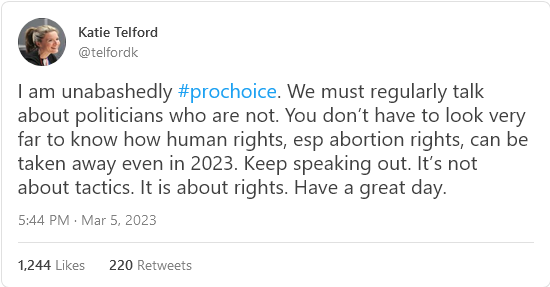
We try to avoid spending too much time on Twitter nowadays, but we’ve noticed a trend emerge on the site that irks us. It’s not new, exactly, but it seems to have become a favoured rhetorical tactic among Liberals and their apologists. And as it touches on virtually all of the blurbs above, it’s worth noting.

We’ll call it Rebuttal by Listicle, and it works a little like this: rather than actually engage with critiques of the country or the government, partisans will simply post random rankings that show Canada is at the top of some subjective set of metrics like “freedom” or “quality of life”.

To wit:

And this:

Because these listicles look impressive and official, the partisans in question can treat them with the weight of proven scientific truth. Canada’s great! Look, the list proves it! Them’s the facts!

We have three major problems with this rhetorical tactic.

The first is optics: Please tell the couple priced out of the housing market in every major urban centre, the one that is now worried about the grocery bill, can’t fill the car with gas, and frets about heating costs next winter, that none of these problems really matter. That they should just be grateful and happy with this definitely not-broken country because Canada scored well in a ranking compiled by an intern at an American newspaper. Show the lists to the person suffering a lingering illness, with no family doctor, in a town where the ER is closed, and wait patiently for their enthusiastic high five.

You want to guarantee Prime Minister Poilievre, this is the way to go about it: smarmily dismissing legitimate grievances and concerns by tweeting a list and calling it a day.

And, of course that’s presuming the ranking was subject to even a moderate degree of fact checking, logic, or scientific scrutiny goes into these rankings at all.

Let’s look a little more carefully at the ones posted by former Trudeau senior aide Gerry Butts, shall we?

He has a whole thread devoted to cherry picking Canada-topping rankings compiled by something called The World Index. What is The World Index? Well, we don’t know, Bob. The Twitter bio says: “Know the world. Focus on economics, art & culture, science, technology, sports, travel, politics and military affairs.” Okay. The only website listed takes us to an Instagram account with 37 followers.

The list above, in which Canada hits #1 for Best Countries for Quality of Life, 2021, is from U.S. News & World Report, an American media company. We checked out their methodology for the 2021 survey, and this is what we found: it’s a survey of 17,000 people, run by an academic. What’s being surveyed? Glad you asked! “Participants assessed how closely they associated an attribute with a nation.” You’ll be thrilled to note that these 17,000 people around the globe gave Canada near perfect scores on being “not bureaucratic”, and having a “well developed public health system”, “well-distributed political power”, and “transparent government practices”. (Lol, *dies inside*.)

Hey, it’s great that people associate Canada with being awesome, but we hope that when Liberals talk about “evidence-based policies”, they are using actual, you know, evidence, not just rankings by survey participants.

June 19, 2022

Has anyone checked the “Best Before” date on the federal government lately?

In the free-to-cheapskates abridged edition of The Line‘s weekly dispatch, the editors wonder if the Trudeau government may have inadvertently entered the end-game phase of its life:

Your Line editors have grown wary of making firm predictions. We’ve been burned a few times before, plus, the last two years have been so wild it’s almost impossible to take seriously any prediction with a time horizon longer than a week or two. All that being said, one of your Line editors did have something of a prediction this week. Honestly maybe something more akin to an intuition or a Spidey sense tingling. But as he watched the news over the last 10 days or so, he found himself wondering: is this it for the Liberals? Is this the start of a death spiral? Is this what we will look back to in years to come as the moment they crossed the point of no return?

The Liberals started to look and feel really burnt out and exhausted this week. Of course they’re burnt out and exhausted. It’s been a hellish two years for everyone, and they were dealing with the Trump circus for years before that. They haven’t usually looked exhausted, though. Even when they have no doubt been running on adrenaline, existential terror, caffeine and digestive bile, they kept running. That’s not sustainable forever, though, and sooner or later, a government slips into the terminal phase of democratic politics. We’ve all seen that before, and we recognize the signs when we see it.

Just think about the stories over the last few days. Public Safety Minister Marco Mendicino has come in for widespread criticism, and not just from here at The Line, for his handling of the gun control and Emergencies Act files. Chrystia Freeland, for her part, made a wholly uninspiring appearance before the committee investigating the Emergencies Act, and followed that up with a speech to a Toronto business crowd where she rolled out the Liberal plan to help Canadians cope with inflation. It was nothing but a repackaging of previously announced initiatives, some of which are fine on their merits, but none of which, even in total, will make a dent against inflation. Mélanie Joly’s office, as noted in greater detail in the full, subscribers-only version of the dispatch, has become a complete clown show of absurdity this week. Karina Gould, normally one of Trudeau’s less trouble-making ministers, had to issue a mea culpa over a minor ethics breach. The Liberals rammed Bill C-11, which would regulate internet content, through the House with unseemly speed, and the Senate is pledging to do the thorough review that the House Liberals clearly wished to avoid.

And then there was the sudden evolution of Liberals’ stand on vaccine mandates, and the pandemic more generally. Facing enormous public pressure over delays at the airports, the Liberals first agreed to “suspend” random COVID-19 testing of passengers landing in Canadian airports from international arrivals. This week, they followed that by suspending the vaccine mandate for air and rail travel. In both cases, the government had been overtly defending both of those measures as absolute necessities just hours or days before scrapping — sorry, “suspending” — them. We won’t even try to summarize this better than the National Post‘s Chris Selley did in a recent column, because we won’t do better than his absolute perfection: “By now, the Liberal playbook on untenable pandemic-related policies is clear: They defend each square inch of policy territory like Tony Montana at the top of the staircase until ordered to retreat, at which point they drop their weapons, flee into the night and claim science made them do it.”

Yuuuup.

In a political sense, none of these would amount to all that much in isolation. (Some of them should amount to a whole lot, because they’re legitimate issues, but we know how politics works in this country.) When viewed in their totality, though, all these (and more) stories over the last week or two start to look and feel like a government that has basically exhausted itself and run out of gas. When you consider the fact that, if anything, the situation facing the country is getting worse on many fronts — hello, inflation! — not better, it’s not at all difficult to imagine them struggling to ever really recover from this.

June 13, 2022

Justin Trudeau’s sadism is visible at Toronto’s Pearson International Airport

It’s been more than a decade since the last time I had to travel by air … and even then it was still a far worse experience than it was before 9/11. Canada is among the last few countries to loosen Wuhan Coronavirus restrictions on international travel — along with two of Justin Trudeau’s favourite nations, the cuddly North Korean sole proprietorship and the “admirable” “basic dictatorship” in China. In the free-to-cheapskates weekly round-up of The Line, the editors have recent travel experiences at Canadian airports to discuss:

CBC News report on delays at Pearson International Airport in Toronto, 9 June, 2022.
Screencap from https://www.youtube.com/watch?v=pkgmWWY2SDc

… Why couldn’t your Line editor browse the aisle? Well, because duty free is only for international travellers, and hanging around was forbidden due to “COVID protocols,” the clerk explained.

Now, was your Line editor going to stand around and pick a fight with some underpaid store clerk who was just following the rules? Absolutely not.

But she thought about it.

Look, we understand that not being able to browse is, on the list of first-world problems, really far down, but we had to admit that this stupid little non-incident made us angry. Just stupid, irrationally, bug-eyed angry for a solid minute or two.

Why? Because our entire lives have been eaten by a compounding collection of nonsensical COVID rules and restrictions that have added up to make everybody crazy and miserable, and this was just another. Everyone we know now has a story of peaking on COVID hysteria; experiencing a moment so surreal, inhumane and paranoid that it had the effect of fundamentally breaking trust in the judgement of public health and in broader institutional authority. Whether it was the moment they covered the outdoor playgrounds with police tape; the librarian who refused to let the potty-training toddler use the bathroom; the umpteenth school closure; the triple-masked mom screaming hysterically at her ward for touching other kids; to stories of being trapped for hours on end in airplanes or terminals. There was a moment when nearly all of us broke and took someone else’s head off. When we stopped clapping for health-care workers and instead grew quietly resentful, or found ways to silently flout COVID protocols — or abandoned the mainstream altogether and lost ourselves to fringe politics and conspiracy theories.

Upon arrival at one airport, one of your Line editors spotted a kids’ play area containing nothing more than a cartoonish carpet depicting a fun little airport runway. It was still closed. It is, apparently, still too dangerous to let kids burn off steam by pretending to be airplanes for a few minutes.

Even the Liberal backbench has been reported to be demanding that Justin Trudeau make some vague gestures to reduce the arbitrary and unscientific civil liberty restrictions we’ve been living under for what seems like forever … but he seems to like making Canadians miserable where and when he can.

Keeping up unnecessary mandates is not a cost-free political solution. You are teaching your population to distrust you. Yeah, we mean that quite literally: you, Liberals, are also responsible for the declining social cohesion and failing institutional trust that is fuelling populist movements across the country.

We realize that the mandates are small potatoes. But in a way, they’re also really not. Keeping up historic restrictions on Canadians movement, slowing a desperately desired return to normal, purely for political reasons, is only further corroding the social contract between electorate and government. Further, you’re falling into exactly the same trap as the Conservatives — you’re riding the dragon that will eat you, allowing your loudest, fringiest members to dictate policy.

The Liberals seem to be getting this, at least a little bit. Probably because they perceive the political threat this presents to them. On Friday, they announced that random COVID-19 testing of certain arrivals would be suspended, temporarily, until the end of the month. This is intended to reduce backlogs and crowding at our arrival gates, particularly in Toronto. We’ll see how much it helps, but as a political decision, it’s revealing: the Liberals are now alarmed enough to do something, but not to actually just scrap the screening, at least not yet. For now, it’s just a pause.

June 4, 2022

Ontario’s election – “This was a weird campaign during a weird moment in history. Adjust your hot-takes accordingly, friends.”

Filed under: Cancon, Media, Politics — Tags: , , , , — Nicholas @ 05:00

From the Ontario election wrap-up post from the editors of The Line:

Newly re-elected Ontario Premier Doug Ford, seen here at the 2014 Good Friday procession in East York, Canada.
Photo via Wikimedia.

Doug Ford and the Ontario Progressive Conservatives obviously feel pretty good this Friday. They really did about as well as they could possibly have hoped to do. Still, we urge our readers and all the analysts and pundits out there not to overreact to Ford’s victory. He’s not a political genius, he’s not some sort of colossus standing astride our politics, and he is not the man who must be immediately beamed into the federal Conservative leadership so that he can slay Trudeau’s government and win 200 seats.

Doug? He’s just a guy who got lucky last night. (Politically, we mean. Get your minds out of the gutter.)

We’re not taking anything away from Ford, or his campaign leadership, or all the people who worked hard for the PCs over the last month. They did a lot of smart things, they did them well, and they are reaping the benefits. It was an effective campaign. It rubbed a lot of people the wrong way, but your Line editors suspect it rubbed people the wrong way precisely because it was an effective campaign. Keeping Ford out of sight, avoiding a lot of questions, keeping things low-key … these weren’t accidents. These were deliberate decisions. You have to start any analysis of the PC campaign by granting that. Yeah, it was well conceived and well executed. A hat tip to the people behind it.

But the point that we want to make, and it shouldn’t take away from anything said above, is that the Progressive Conservatives maxed out the luck-o-meter. If this election had been a year ago, coming off the government’s catastrophic handling of Ontario’s third wave, it probably would have been Doug Ford resigning last night. The government caught an enormous break because factors well beyond its control shifted the public’s focus off its greatest vulnerability, the management of the pandemic, and put it solidly on economic and cost-of-living issues that the PCs are much, much more comfortable talking about.

So yeah, the PCs had a good campaign, but you couldn’t buy that kind of luck. None of it happened in Ontario or even Canada. This was a global trend. After two years of pandemic, people are tired and they’re getting worried about other things. The timing for Ford could not have been better. So we absolutely give full credit to his campaign for a good job, but we also insist on acknowledging the huge role of luck and timing. We don’t know if it’s better to be lucky than good. But we certainly know it’s nice to be both at once.

We raise this as a note of caution before the punditry gets too carried away. This election is undoubtedly a huge victory for the Tories. But it is also a really, really weird election. The circumstances of it are very unique. The combination of low turnout, pandemic fatigue, Ford’s personal political brand in Ontario, bizarrely lacklustre campaigns by the opposition, and a confluence of global trends that all netted out in Ford’s favour don’t tell us anything about the state of the conservative coalition in Canada, who would make a good federal leader, or what’s going to happen at the next federal election. This was a weird campaign during a weird moment in history. Adjust your hot-takes accordingly, friends.

Campaigning from your basement worked very well for Joe Biden, and now it’s done the job for Doug Ford. It probably wouldn’t work for Justin Trudeau — if he’s not performing for the camera, it’s not clear whether he actually exists. Ford certainly benefitted from the small attention his opponents on the right — the New Blue and Ontario parties — although minor parties have pretty much always been a non-factor in Ontario politics. They were summoned into existance by the way Ford and the Progressive Conservatives governed during the pandemic … almost indistinguishable from the federal Liberals under Justin Trudeau. The PCs seemed to rely on their “progressive” urges at the expense of anything remotely “conservative”.

Moving on to the other two major parties … it’s not pretty:

Preliminary riding-by-riding results from the 2022 Ontario election.
Blue – Progressive Conservative, Orange – New Democratic Party, Red – Liberal Party, Green – Green Party

Okay, let’s do the NDP first. The NDP is probably feeling pretty good today. We get it. Even a week or two ago polls were suggesting they were about to lose their hold on official opposition to the Liberals. That would’ve been a disaster for the party. There’s no way around that. They’ve avoided that fate. The NDP has remained in second, although they lost a bunch of seats to the PCs (see above). In the days to come, the party is going to have to take a few cold showers, give their heads a vigorous shake, and realize that warm feeling they’re enjoying right now isn’t the afterglow of victory, it’s the fading adrenaline rush of a near-death experience. Avoiding annihilation shouldn’t be good enough. But that’s all they did.

Andrea Horwath, long-time leader of the party, has already announced that she is stepping down. And rightly so. The Line has some fondness for Andrea. God knows we’ve had the opportunity to get to know her during her tenure as provincial NDP leader, which basically overlaps entirely with our entire careers in journalism. She is a decent person with a better sense of humour than often comes across in public, and she has nothing to be ashamed about. She has taken the party as far as she can, and it’s time for someone else to take over and deal with what might be a changing environment — one that is not obviously changing in the NDP’s favour (again, see above).

[…]

Writing critically about the Liberal campaign today feels a little bit like flogging a dead horse, and then shooting it a bunch of times, and then setting it on fire, and then hunting down all of its little horsey relatives and shooting all of them too. And then peeing on them. But still. It was a really bad campaign by the Liberals. The leader was bad. We’re sorry, but he was. If Steven Del Duca ever encountered charisma we suspect his body would reject it like a donated kidney. The party’s campaign platform was a weird mishmash of stuff that sounded vaguely on point for 2022, but also often read like something copied and pasted directly out of Ontario Liberal campaign platforms going back as far as the 1990s.

Some of the problems the campaign experienced had easy explanations. The party’s 2018 performance was so terrible they lost official party status, and the access to budgets and staff in the legislature that goes along with that status. The party has been trying to rebuild with at least one hand tied behind its back ever since. The campaign team was quite lean, and as a series of ejected candidates show, it was not able to properly vet the full slate of candidates it ran. You can understand how the lack of personnel and money contributed to those problems. But what we can’t understand is why the campaign insisted on making so many weird decisions. Handguns and abortion as campaign issues? In a provincial campaign? Talking up free transit rides, which will only appeal in the deepest downtown cores, where all they could do was hurt the NDP? A mid-campaign pledge to make COVID-19 vaccinations mandatory for school children, which was then never really mentioned again?

The NDP ran a bad campaign, but the Liberals just seemed to be totally disjointed, as if there wasn’t any agreement among the party leadership on what the platform should be so random unrelated items got floated as trial balloons on almost a daily basis, with no follow-up on most of them. Perhaps the party couldn’t afford the cost of proper in-depth pre-election polling or perhaps this was the party leadership’s belated buyer’s remorse over the leader they’d elected.

May 9, 2022

Canada has no abortion law on the books: this is extremely convenient for the federal Liberals

Filed under: Cancon, Government, Health, Law, Media, Politics, USA — Tags: , , , — Nicholas @ 05:00

In the free-to-cheapskate-freeloading readers portion of The Line‘s weekly dispatch, the editors explain why we should expect exactly zero change to Canadian law on the abortion issue regardless of what happens in the United States in the wake of a leaked US Supreme Court draft decision that has agitated and carbonated the debate there all over again:

Parliament Hill in Ottawa.
Photo by S Nameirakpam via Wikimedia Commons.

… given the extent to which Canadian media and politics has become thoroughly Americanized in the past few years, it was inevitable that the draft ruling immediately took over the front pages of our national papers and became the dominant topic of debate in the House of Commons. And while we are loath to contribute to what we see as a very unhelpful trend, there are some Canada-relevant aspects of this that at least one of your editors thinks are worth discussing.

The first is the obvious glee with which the Liberal party greeted the leak. Of course they all acted appalled, with a parade of cabinet ministers taking to Twitter to talk about the “concerning” news out of the U.S. and to make it clear that they would never allow anything like this to happen in Canada.

But for all their bluster, the Liberals long ago perfected a curious little two-step here. On the one hand, they never tire of asserting that the debate over abortion is “settled”, and that the pro-choice position is and will always be the law of the land. Yet on the other hand, Liberals are constantly acting as if we’re just one private member’s bill away from Canada becoming the Republic of Gilead. But as Chris Selley pointed out in a recent column, if abortion rights are so fragile and tenuous, why haven’t the Liberals done anything about it? Perhaps the imminent overthrow of Roe v. Wade in the U.S. might provide the government with the perfect occasion to finally put abortion rights on Canada on a proper legislative footing. Or, at the very least, define and defend the status quo.

That will never happen, for two reasons.

The first reason the Liberals won’t move to do something has to do with a philosophical equivocation at the heart of Canada’s pro-choice movement. In some guises, the pro-choice position is framed as a harm reduction policy, not completely dissimilar to needle exchange programs or safe injection sites for drug users. That is, while we may legitimately debate and disagree over the moral worth of the activity itself, there is no question that it is something that is going to happen regardless. Given that, the best thing for the state to do is make sure that the circumstances under which it takes place are as safe and accessible as possible, while withholding moral judgment.

But there’s another position, which holds that abortion is akin to a victimless crime: the fetus simply deserves no moral standing, so getting an abortion is no more morally controversial than getting your appendix removed.

The advantage to the status quo is that it allows the government, as well as pro-choice supporters, to remain formally agnostic on this question. There is no law, so the law needs to take no position. But any attempt to put a legal framework around abortion would probably require that the fetus be given some status at some point in development. And that opens a huge can of worms, not least for someone like Justin Trudeau who, at times, has claimed to be personally opposed to abortion but a pro-choice practicing Catholic. Why would he be against abortion personally, unless he believed that it was, at some level, wrong?

This brings us to our second point. In his column, Selley called on Trudeau to “grow up” and defend the status quo on its principles. But why would he do that? The Liberals benefit enormously from the status quo, including the lack of clarity around it. Abortion is legal (in the sense that there is nothing in the criminal code forbidding it), and reasonably accessible, depending on which part of the country you live in. But it’s also tenuous, which means the Liberals get to spend a good part of every election campaign wedging the ever-loving crap out of the Conservatives, whose benches are chock full of people who are anti-abortion, or at least, anti-the-status-quo on abortion.

Given how successful this strategy has been, there is no reason for the Liberals to change it, since for them the tenuous status of abortion is a feature of the current regime, not a bug.

March 28, 2022

The only question in my mind is why the NDP thought they’d benefit from propping up Trudeau the Lesser

Filed under: Cancon, Government, Politics — Tags: , , , , — Nicholas @ 03:00

The editors at The Line, having taken last week off to look after kids on March break, sent out a brief round-up post on the deal Jagmeet Singh made with the Devil Justin Trudeau to keep the Liberals comfortably in power for (potentially) the full term:

The key question here that we can’t really think up an answer for is what this deal changes. In big picture terms, the NDP is going to keep the Liberals alive for a while, and the Liberals will serve up some goodies the NDP base will like. That’s what the parties have agreed to, distilled to the most basic essence.

And this is new how? This has changed what?

The NDP doesn’t want an election right now. The Liberals don’t want an election right now. The Liberals are led by a guy who has already moved the party toward the left and seemed quite happy to do it. The Liberals were getting along just fine with NDP support until they rolled the electoral dice and tried to secure a majority in summer of 2021; they fell short, and now they’ll continue getting along just fine with NDP support.

Well, gee. Stop the presses.

Yes, yes, there’s more specific commitments. The parties have put on paper what they’ll work jointly to achieve. But look at those commitments. Anything surprising? Is this not precisely what any random collection of reasonably bright high schoolers in a mandatory civics class could have guessed when their teacher told them to write a five-paragraph essay on things the NDP and Liberals agree on?

We aren’t particularly swayed by arguments, largely from angry Conservatives, that this deal suddenly leaves the Liberals immune from accountability. Again, the NDP was already playing ball to avoid an election. A week ago, the Liberals were going to be held precisely as accountable as Singh found convenient, and that’s just as true now as it was then. It’s not that the angry Conservatives are wrong about the Liberals being immune from accountability. It’s just that they essentially already were, NDP protestations aside. The NDP will tighten the screws enough to make Trudeau uncomfortable but not enough to trigger an election. They won’t be an opposition, but they’ll play one on TikTok. This sucks, but it is what it is, folks.

Nor do we expect the deal to last the full four years. Hey, it could happen. Both parties could find reasons to keep it going. But remember: this is a gentlemen’s agreement between gentlemen that don’t like each other. Gentlemen who are both pursuing different personal and political agendas. This deal will last right up until the moment one of them sees more advantage in stabbing the other guy than in continuing to play nice-nice.

We admit we really aren’t sure what the Liberals are thinking here. Trudeau had a largely free hand already. This is, to us, baffling.

And as for the NDP, well, gosh, all we can say is good luck, fellers. An old grizzled political observer your Line editors once knew liked to joke that being the junior partner in these kinds of arrangements is like being the mistress of a rich, married man. If you don’t know that you will be dumped while your former lover runs back to his family — the base voters, the caucus, the donors — well, sorry, sweetheart, but that’s on you. We saw a version of this play out in Ontario just a few years ago: the provincial NDP propped up the minority Liberals in exchange for a pledge to cut auto-insurance premiums. The Liberals failed to deliver, ran another election, won another majority and shrugged off the NDP’s complaints. The auto-insurance promise? Meh. That was just a stretch goal.

March 5, 2022

QotD: Bike gangs

Filed under: Cancon, Government, Politics, Quotations — Tags: , , , , — Nicholas @ 01:00

The “Liberal Party of Canada” isn’t the catchiest name for a Quebec biker gang. On the other hand, it’s no more clunkily uncool than, say, the Rock Machine or any of the province’s other biker gangs. The Liberal party is certainly a machine and it’s proving harder to crack than most rocks, and it’s essentially engaged in the same activities as the other biker gangs: the Grits launder money; they enforce a ruthless code of omertà when fainthearted minions threaten to squeal; they threaten to whack their enemies; they keep enough cash on hand in small bills of non-sequential serial numbers to be able to deliver suitcases with a couple hundred grand hither and yon; and they sluice just enough of the folding stuff around law enforcement agencies to be assured of co-operation. The Mounties’ Musical Ride received $3 million from the Adscam funds, but, alas, the RCMP paperwork relating to this generous subsidy has been, in keeping with time-honoured Liberal book-keeping practices, “inadvertently lost.”

Mark Steyn, “Exit strategy”, Western Standard, 2005-06-15

March 1, 2022

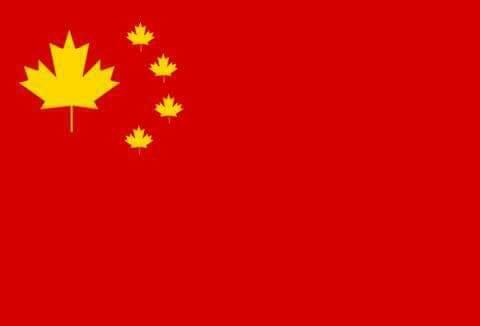
One of the amazing features of Trudeau the lesser’s reign has been the Liberal Party’s abandonment of Canadian nationalism

Filed under: Cancon, History, Media, Politics — Tags: , , , — Nicholas @ 05:00

In The Line, Andrew Potter points out an interesting historical quirk where Canadian practice has long been at odds with most other western democracies:

On social media, it was common to see people lamenting this co-optation of the Canadian flag, with some wondering if it was even acceptable to fly the flag any more.

The reason this has been so disconcerting for so many is that a long-standing feature of the Canadian political landscape has been that the nationalists were predominantly on the left. As the author Stephen Henighan noted years ago in his essay “Free Trade Fiction”, this made Canada close to unique among industrialized, developed countries in the West, where the nationalists tend to be on the right. Left-wing nationalism is typically a feature of post-colonial states, where the fight for independence or liberation from colonial oppressors gets wrapped up into a nationalist narrative.

The reason left-wing nationalism has been so appealing to Canadians was precisely because of our weak identity and ongoing concerns over assimilation, first into the British empire, then later into the American continentalist project. If there’s a founding document of this tendency it is Margaret Atwood’s Survival, but it is prefigured by books like George Grant’s Lament for a Nation and finds its popular expression in everything from Heritage Minutes to the famous Joe Canada ad for Molson beer.

The left-wing focus of Canadian nationalism held sway from the end of the Second World War until about five years ago, and it was hugely consequential for Canadian politics. Most obviously, it helped establish the Liberals as the natural governing party. By making support for Liberal policies synonymous with defending Canadian independence, and by treating Liberal values as Canadian values, the Liberals were able to effectively frame their conservative opponents as un-Canadian.

On the continental policy front, it served to place a pretty clear barrier to deep political integration with the United States. In a 2005 essay that looked at the prospects for political co-operation between Paul Martin’s Liberals and George W. Bush’s Republicans, Joe Heath noted that the big obstacle to Canadian participation on things like Ballistic Missile Defence was the fact there was virtually no ideological overlap between nationalist groups in Canada and the U.S.

[…]

Today, things have completely reversed. A major catalyst for this shift was the decision by Justin Trudeau, when he came to power in 2015, to make denigrating Canada central to his Liberalism. It began when he started issuing formal apologies for past wrongs, at an unprecedented rate for Canadian federal governments. Then there was his acceptance of one of the findings of the National Inquiry into Missing and Murdered Indigenous Women and Girls, that Canada committed genocide against Indigenous peoples. Then there was his decision last spring to order all federal flags to fly at half-mast after the reports of the unmarked graves of hundreds of Indigenous children who died while in the supposed care of the residential school system. The flags remained lowered for months, until pressure from veterans groups and the approach of Remembrance Day forced his hand and he ordered the flags raised.

Whatever the merits of any of these initiatives taken on their own, taken as a whole they set a recurring tone from the government, that Canadians were a fallen people. There is no question that dumping on Canada is a deliberate strategy for the Trudeau Liberals. What is less clear is whether, in persuading Canadian leftists to dislike their country, the prime minister realizes the forces he has unleashed in the process.

November 25, 2021

Are there any actual First Nations people on government commissions, or are they all Pretendians?

Filed under: Books, Cancon — Tags: , , , , , — Nicholas @ 03:00

There are few enough opportunities for First Nations people in Canada to be heard and for their efforts to matter on issues of concern to all First Nations people … so why do so many of those positions seem to be held by people who lie about their First Nations ancestry? (The original CBC story is from back in September, but I only found out about it today, with my usual great sense of timing.)

“Book burning” by pcorreia is licensed under CC BY 2.0

Suzy Kies, the co-chair of the Indigenous peoples’ commission of the Liberal Party, has resigned from the position after her claim to Indigenous ancestry was called into question.

Radio-Canada reported on Wednesday that it could not confirm Kies’s claims to Indigenous ancestry. Kies told Radio-Canada in an interview that her father is of European descent and her mother is of Indigenous descent.

“My mother’s family is from several communities,” she told Radio-Canada in an interview in French. “On my grandfather’s side, it’s the Maliseet, from St. Mary’s, New Brunswick, there are also the Laporte who are Innu. And my grandmother was Abenaki from Odanak.”

In Radio-Canada’s reporting, they consulted civil status records and the Abenaki Council of Odanak, who did not find Kies on the band list.

The story came following controversy over a book-burning project at a francophone Ontario school board in which Kies was involved. The event, which was carried out by the Conseil scolaire catholique Providence in 2019, has resurfaced during the election campaign and has attracted condemnation by federal leaders.

The event was meant to promote reconciliation by burning and disposing of books the school board deemed to contain outdated and inappropriate depictions of Indigenous people. The books included novels, comic books and encyclopedias, according to a documentary obtained by Radio-Canada. Nearly 5,000 books were disposed of, but only around 30 were burned.

H/T to halls of macadamia for the link.

Update: A disturbing number of white American college applicants are lying about their racial ancestry to (significantly) improve their chances of being accepted, so I guess Canadian Pretendians are just slightly ahead of the curve:

The survey of 1,250 white college applicants ages 16 and older found that the most popular racial claim was Native American. Out of the 34 percent of white college applicants who lied about their race, 77 percent were accepted.

“It’s the easiest lie to tell because you can’t get caught in it,” said Vijay Jojo Chokal-Ingam, an admissions consultant at SOSAdmissions.com and author of Almost Black: The True Story of How I Got Into Medical School By Pretending to Be Black.

“A lot of people, based on very flimsy reasons, claim to be either African-American, Hispanic or Native American because they know it’s going to improve their chances,” Chokal-Ingam said in an interview with The College Fix.

Though lying on college applications is frowned upon, universities typically do not push back on students about their race. Instead, they accept it regardless of what they look like, he said.

“It’s become a joke,” Chokal-Ingam said.

He cited Senator Elizabeth Warren, who famously “lied about her race to get a faculty position at Harvard.”

“If there was a degree to which people felt guilt about doing that, it died with Warren because the Boston Globe, the New York Times, the Washington Post — they all ran to her defense,” he said. “This prompted an ‘if she can do it, I can do it too’ ideology.”

“When President Trump called Senator Elizabeth Warren ‘Pocahontas’, [the media] called him a racist. They said it was a racist thing. On the contrary, I think that he was bringing to attention a very important issue in the field of racial-race relations,” Chokal-Ingam said. “He was making people aware of the fact that people routinely, on a massive scale, lie about their race.”

H/T to Glenn “Instapundit” Reynolds, who pointed out, “If white supremacy were actually a thing, this wouldn’t be happening”.

September 26, 2021

“… is there a single area of public policy where Canada has its shit together?”

Filed under: Bureaucracy, Cancon, Government — Tags: , , , — Nicholas @ 03:00

In The Line‘s weekly round-up, they point out a little-noticed Globe and Mail article that illustrates something that should really concern Canadians:

Sometimes the big lessons are in the small things. While everyone was busy jawboning about the federal election returns earlier this week, we were also struck by a barely noticed story in the Globe and Mail reporting that the federal government had awarded a contract to begin replacing the disastrous Phoenix payroll system. Phoenix, you’ll recall, was an IT project designed to harmonize the payroll for the entire federal public service. The 2016 rollout was a disaster, resulting in thousands of employees being paid too much, too little, or not at all. Fixing it has cost billions and has not entirely succeeded, and now it is being replaced entirely.

We were still pondering this news when Alex Usher idly wondered: “Genuine question: is there a single area of public policy where Canada has its shit together?”

Alex isn’t some rando Twitter troll. By day he runs Canada’s premier higher education consultancy. But he’s also one of the country’s most perceptive policy analysts, writes a daily blog about just about anything policy related, and is probably one of the three or four smartest Canadians still on Twitter.

Which is why his question was met with more thoughtful responses than the usual schoolyard heckling that is typical of the platform. Fiscal policy between 1993 and 2015, offered Ken Boessenkool. Andrew Coyne half-heartedly suggested monetary policy. Rachel Curran proposed immigration, prisons, and the coast guard, but was quickly set right by people who knew what they were talking about.

So when Usher followed his question with a long Twitter thread showing just how broken Canada is, with a sophisticated and nuanced take on why that’s the case, there really wasn’t anyone left making a serious argument against him. Everyone knows it is true.

Everyone, that is, except two of the most politically polarized groups in the country, who disagree about everything except the capacities of the government.

On the one hand there are the Build Back Better people, mostly housed in the increasingly unpopular Liberal Party of Canada. These people persist in believing that the federal government is poised to make big decisions, to take big actions, on big issues such as climate change, pandemic preparedness, and dealing with the rise of China. They are prepared to talk big talk, and spend big money, in pursuit of their policy objectives.

On the other, there are the paranoid conspiracists who believe that the government is using the cover of the COVID-19 pandemic to implement all manner of social controls. These include suspicions that the government would use a contact tracing app to engage in mass surveillance, that they are putting a 5G payload into the vaccines, or that this is all part of a big Liberal internationalist plan to set up a world government.

While these seem to be diametrically opposed worldviews, what they share is the deep conviction that the government can actually do something. Indeed, what is charming about the conspiratorial worldview is how much faith it actually has in the authorities.

Confront China? Please. We can’t buy ships, planes or even handguns for our military. Pandemic preparedness? You’re kidding, right? We can’t even hire enough nurses for the health-care system. Set up a world government? Lol who would we hire to work for this government? We can’t even figure out how to pay the public servants we already have on staff.

As usual, the correct counter to conspiracy-minded thinking is not to have faith in government, it’s to be realistic about it. Similarly, the correct response to the build back better crew is not enthusiasm, but realism. And ultimately, the right approach to everything the government proposes is deep, deep, deep cynicism.

One of the major reasons I’ve long favoured smaller government — the smaller the better — is that the bigger any organization gets and the more things it tries to do, the less effective it is at all of them. Governments in the western world generally have gotten so big that they’re incapable of doing almost anything in an effective, competent, and repeatable manner. A hypothetical world government would be even worse (just look at the existing United Nations to see how billions of dollars not only get nothing useful done, but often exacerbate existing problems).

September 24, 2021

Jen Gerson has some helpful advice for the Conservative party

Filed under: Cancon, Politics — Tags: , , , , , — Nicholas @ 03:00

Writing in Maclean’s, Jen Gerson suggests to the “conservatives” that they shouldn’t dump their new-ish leader on the basis of the party’s results in the September 20 election:

It’s come to my understanding that there is some considerable consternation about the future of Erin O’Toole, leader of the Conservative Party of Canada, on the grounds that he underperformed in this week’s election.

I cannot help but wonder whether those now implacably resolved to booting the man for being inadequately conservative might, perhaps, consider getting a goddamn grip.

Yes, I understand that O’Toole ran his leadership campaign further to the right than his personality would otherwise suggest, in order to win over the Conservative base. And, yes, I understand that the unstated agreement behind this bait-and-switch was that O’Toole needed to show progress in key regions, particularly the 905. Also, yes, I understand that these gains failed to materialize, and that many conservatives feel both betrayed, and more importantly, no closer to government.

This state of affairs may ensure O’Toole’s leadership is unsalvageable.

Certainly, O’Toole and his brain trust seem to have rationally concluded that they could leave western conservatives hanging out to dry so they could chase votes in the GTA — because up until now, those westerners had nowhere else to go. However, the rise of the PPC suggests that they may now have somewhere to go …

Conservatives have a bad habit. They go into an election with reasonable expectations, enjoy some early momentum, and then let the excitement get to their heads. They reset those early expectations to something far less probable, and when the campaign produces exactly the results they predicted at the outset they declare the whole affair a disappointing failure.

I will note here that this complements the Liberal temperament, which interprets entirely lacklustre results as nothing short of a sign from the trumpet-wielding messengers of God blessing their mandate. Only the Liberals would see two successive minority governments with declining popular vote totals as clear-cut evidence that they, the worthy elect, have been chosen without reservation to lead the nation to paradise.

The Conservatives could use a little more of that energy.

These observations are provably true of both parties. The only amendment I could suggest is that the Liberals really do believe they have been granted the right to run Canada by divine providence (which few of them actually dare refer to in conversation) and view any interruption in their God-given right to rule as unnatural and a perversion of the arc of history.

Conservatives ought to have seen this election as the first in a two-election strategy. Fundamentally, the urbanites who hold the key to government don’t trust you, Conservatives. They’re worried about the conspiratorial lunatics in your caucus and your base, and they’re worried about who actually holds the reins of power in your party. Their distrust is fair, and will take time to repair.

If you dump your affable, moderate, centrist leader at the first opportunity because he didn’t crack the 905 on his first try, and you replace him with someone who will chase Maxime Bernier’s vanishing social movement like a labradoodle running after the wheels of a mail truck, you will wind up confirming every extant fear and stereotype this crowd already holds about you and your party.

It’s a trap. Be smarter than that.

The PPC nearly tripling the size of their vote over two years doesn’t quite match the characterization of a “vanishing social movement”, but I’m not who she’s trying to persuade here. It’s often said that modern “conservatives” don’t actually have a plan except to do what Liberals/Democrats want to do — just a little bit slower. O’Toole (and Ontario Tories generally) fits that description quite well.

September 3, 2021

“Watching our feminist prime minister uncomfortably defend and explain away decidedly unfeminist behaviour has become an evergreen moment for our nation”

Filed under: Cancon, Media, Politics — Tags: , , , , — Nicholas @ 03:00

The NP Platformed newsletter is in the hands of Kathryn Marshall while Colby Cosh is on vacation, and she offers yet another golden moment of hypocrisy on the part of Justin Trudeau:

Standing in the fenced-in corner of a backyard during a press conference this Tuesday, Justin Trudeau was cornered in more ways than one.

Faced with questions from the media as to why he was allowing an incumbent Liberal candidate who had been repeatedly accused of sexual harassment to run for his party, an exasperated Trudeau was once again faced with his hypocrisy when it comes to his feminist credentials.

Only the day before, Trudeau was touting the Liberals “zero-tolerance” policy for sexual harassment. Of course, that was in the context of a Conservative candidate who had been accused of sexual misconduct. Notably, that candidate was very swiftly given the boot by leader Erin O’Toole, which was the correct response.

Now Trudeau finds himself in the exact same position that the Conservative leader was in. Following a CBC report, it has come to light that one of the Liberal candidates, two-term MP Raj Saini, has been the subject of numerous sexual harassment allegations from a number of staff going all the way back to 2015. I have no idea if these allegations are true, but they are deeply disturbing and should be taken seriously. As reported by the CBC, there are seven different sources who “described four different cases where Saini allegedly made unwanted sexual advances or inappropriate comments.” One of the allegations involves a former staff member who filed a human rights complaint with the Canadian Human Rights Commission and tried to end her own life.

It should be a ludicrously easy call for Trudeau. The Liberal party has a zero-tolerance policy for sexual harassment, right? Obviously, Saini needs to go and an individual who is facing allegations of this nature is in no position to be running for public office, period.

Except for one small hiccup. The allegations have come to public light after the candidate cut-off date for the election, which was Monday. So if Trudeau gets rid of Saini, it means they can’t replace him with someone else, and the result is no Liberal candidate on the ballot in a safe Liberal seat. Call me cynical, but if I had to guess, I would say this likely has something to do with the fact that overnight, the Liberal’s “zero-tolerance” policy appears to have evaporated into thin air.

July 3, 2021

QotD: Canada’s Liberal Party

Filed under: Cancon, Politics, Quotations — Tags: — Nicholas @ 01:00

Unlike their supposed analogues, the Democrats in the United States or Great Britain’s Labor Party, Canada’s Liberals are not a party built around certain policies and principles. They are instead what political scientists call a brokerage party, similar to the old Italian Christian Democrats or India’s Congress Party: a political entity without fixed principles or policies that exploits the power of the central state to bribe or bully incompatible constituencies to join together to share the spoils of government.

As countries modernize, they tend to leave brokerage parties behind. Very belatedly, that moment of maturity may now be arriving in Canada. Americans may lose their illusions about my native country; Canadians will gain true multiparty democracy and accountability in government. It’s an exchange that is long past due.

David Frum, “Woe Canada”, New York Times, 2005-04-19.

June 20, 2021

L’Affaire Annamie Paul – “… it’s like every Liberal across the land forgot about politics”

Filed under: Cancon, Media, Politics — Tags: , , , , , , — Nicholas @ 05:00

The weekly wrap-up from The Line wonders why Canadian media outlets pay so much attention to the Green Party (far in excess of their political influence normally), but recent Green Party fratricidal bun-fighting merits attention just because of the injured bystander, the Prime Minister of the current year:

The background of all of this is complicated, and we’re not going to bother recapping it. If you care enough about Canadian politics to follow the Greens, you know it all already. What’s interesting to us — and funny as all hell — is how angry the PM’s die-hard fanbase was, how shocked and sincerely surprised they were, when Paul turned her guns on the PM instead of her own rebelling party executives and grassroots:

    “To the prime minister, Justin Trudeau,” Paul said at a press conference, “I say to you today, you are no ally. And you are no feminist. Your deeds and your words over these past weeks prove that definitively. A real ally and feminist doesn’t end their commitment to those principles whenever they come up against their personal ambition.”

And, gosh. Liberals everywhere were just stunned.

It was cute. As we said, it’s like every Liberal across the land forgot about politics. And that’s ridiculous. Canadian Liberals are the most ruthlessly effective vote winners precisely because they are relentlessly amoral and craven. We don’t even mean this as an insult! Your typical Canadian Liberal constitutes the purest sample of raw partisanship known to human science — which is why they’re so good at winning.

And that’s why they should have instantly understood what Paul was doing when she attacked the PM. She was picking a fight she could win because she’s losing the one she’s actually facing. Paul is a black woman. She’s Jewish. She’s obviously lost control of her own party. The only chance in hell she has of surviving is to lay every possible identity group card down on the table, declare herself the champion of those oppressed groups, and then dare her own party to purge her. She’s adopting the mantle of the WOC woke champion. It’s a lot easier for Paul to fight that battle against the PM than it is for her to fight it against her own party.

As much as Liberals hate to admit it — and they really, really, really hate to admit it — the PM is vulnerable to accusations of hypocrisy on the feminism and racial equality files. Obviously.

Paul is desperate. She’s in a fight for her political life, and she seems to be losing. So she’s picked a fight with a powerful white man to play up her own “voice of the oppressed” credentials. It’s cynical and desperate. Frankly, the Liberals ought to be honoured. What’s that they say about imitation and flattery?

May 1, 2021

The more we ask governments to do, the less well they do … everything

Filed under: Cancon, Government, Media, Politics — Tags: , , , , , , — Nicholas @ 05:00

Matt Gurney’s latest Code 47 post reflects on the good and bad of Canadian governance right now (and yes, I agree with his basic take that despite buffoonery and incompetence at all levels of government, Canadians still generally have it good):

Parliament Hill in Ottawa.
Photo by S Nameirakpam via Wikimedia Commons.

In some ways, absolutely. Canada’s relative awesomeness is not an accident. We rest on the accomplishments of prior generations and some of what we do today contributes directly to the common prosperity. A ton of stuff happens behind the scenes, every day, that contribute enormously to our way of life — really, make it possible. But in other ways, the pandemic has revealed just how incompetent and inept our governments have become meeting new challenges. It’s like every last bit of bandwidth our governments have is used up just keeping the status quo running along, and if we ask it to do anything new, it’s like hitting a computer with one process too many for its CPU. It just locks up.

Real-life example: I was watching today as the Ontario and federal governments continued bickering about the proper border controls we should have during what will probably be the last phase of this crisis. And what struck me was the sheer insanity of not having settled this a long time ago. I’m not even saying what I think the answer should have been. There’s a lot of genuinely competing interests there. I have my opinion, you can have yours. But can we at least agree that what to do about the goddamn borders ought not to still be under active decision 14 frickin’ months after this all began?

The federal government, in particular, seems to have fallen into a trap of its own making in that it corporately seems to believe that saying they’ll do something is exactly the same as actually doing something. Often enough, I’m pleased and relieved to find that Trudeau Jr.’s latest brain fart never got further than the press release and obligatory photo op, but it has become a constant in federal affairs. Optics matter far more than achievements, as long as the tame Canadian media play along — and they always played along with their boyfriend PM even before he bought them off with real money — nothing really changes. And everyone seems generally okay with this … except that real problems are not being addressed (ask any First Nations representative about how well the feds are helping with long-standing, known issues, for instance).

Certain provinces have done better than others. It’s tempting to point at them and go, ah ha, there’s what we should have done. And I think this is in large part fair and true. But it’s hard to make direct comparisons. Nova Scotia is not Ontario, and what worked in Nova Scotia wouldn’t necessarily have worked here. Believe me, if I could have swapped in their leaders for ours, I would have. It would have been an upgrade for sure. But the right solution, and personalities, for one crisis, in one time and place, aren’t necessarily the right solution for even that same crisis, at the same time, in a different place. I suspect we’ll spend a long time arguing about this once it’s all over, but I think that’s more or less where I’ve landed. Most of us would have been better off trying to be more like the Atlantic, but that doesn’t mean it would have recreated Atlantic-like successes everywhere.

But all that being said, there have been enormous basic failures, both in leadership and execution. You’ve all heard the joke about how someone new to government is shocked and dispirited to finally seize the levers of power, only to discover they’re not connected to anything. You can push and pull the levers all day long. But they don’t do anything. In Canada, both federally and in some of the provinces, we’ve been shockingly slow, again and again, to pull those levers. And sometimes, even after they’re pulled, nothing happens.

I don’t know if I have this thought through yet in a meaningful, useful way. This is a big, big idea that I’m starting at from different angles, trying to even conceive of its dimensions and scope. But if there is one problem we have — we have more, but if there is a meta-problem — I think it is that Canadian governments have lost the ability to execute new policy agendas. What we already have will generally work, more or less. But new things, or updates to old things? We routinely accept that failure is an option, or that even our successes will be late and overbudget — beyond acceptable real-world margins. (Life is always more complicated than theory.) There are things in my life that I just take for granted will work. If I get into my car and it doesn’t start, that surprises me, even though I am intellectually aware that that’s a possibility every time I try. But too often, with government, there is an entirely justified skepticism that it’ll succeed at all, let alone as intended, and yet, we shrug, because, hey. It’s Canada. Things are still good. How upset can I get about another program failure when I can just go fire up the barbecue and watch some hockey or something.

Governments are generally not very good at solving problems, especially novel problems that don’t already have a template to follow for success in similar circumstances. Set up a bureaucracy, establish processes and procedures, and set it in motion and it’ll carry on until the final Trump, but don’t ask it to cope with a crisis or even just an unexpected event or six. That’s not what they’re good at and they generally lack the organizational flexibility to adapt on the fly. Or at all.

« Newer PostsOlder Posts »

Powered by WordPress