The Korean War by Indy Neidell
Published 17 Feb 2026UN forces kick off this week with an operation to ensnare and capture North Korean and Chinese patrols, as significant progress is made elsewhere at the armistice talks. Prisoners really do seem to be the focus of the week, as rumblings of discontent continue to build at the POW camp on Koje-do island as UN control of the camp slips a little more each day. Just what is happening inside Compound 62 there? And do UN forces have a hope to stop it?
00:00 Intro
00:48 Recap
01:17 Clam Up
01:50 Repatriation
05:02 Item 5 Agreed Upon
07:35 Troop Rotation
09:47 Coastal Waters and Islands
11:02 Compound 62
13:45 The Bigger Picture
14:31 Summary
14:45 Conclusion
(more…)
February 18, 2026
The Korean War Week 87: What’s Going On In Compound 62? – February 17, 1952
February 13, 2026
To be accepted as a true European, you must performatively hate Trump
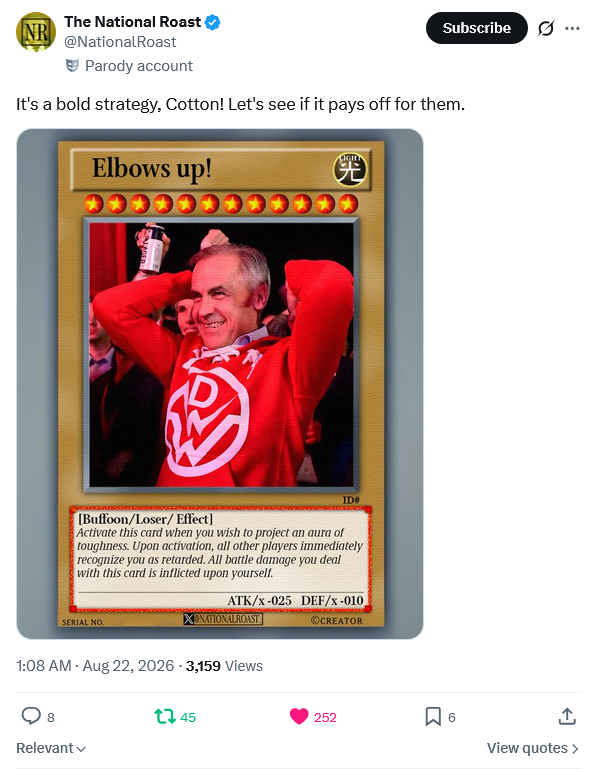
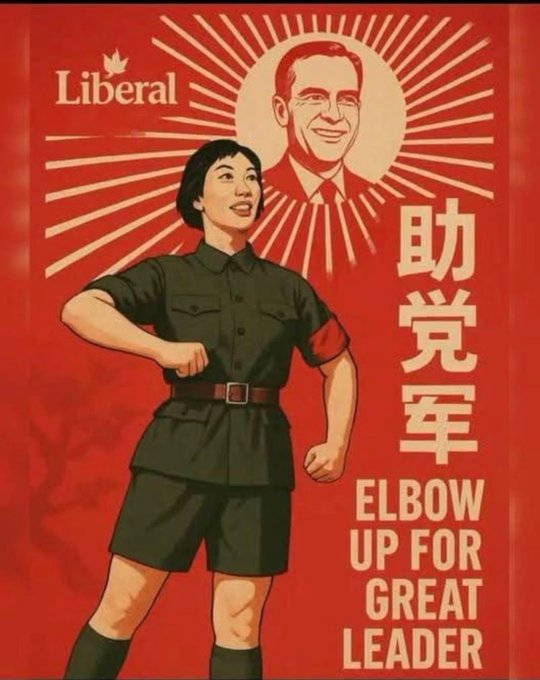
In Spiked, Frank Furedi explains why European elites and the poseurs who aspire to be counted among the elites must now ostentatiously and performatively hate US President Donald Trump (even more than they hated George Bush, if possible). Comment on dit “eLbOwS uP”?
In recent months, anti-Americanism has emerged yet again as a respectable prejudice in Europe. It is widely promoted through the mainstream media and enthusiastically endorsed by the continent’s cultural elites. There are now even numerous campaigns to boycott American goods – most respondents to a survey in France said they would support a boycott of US brands like Tesla, McDonald’s and Coca-Cola. As a piece in Euractiv put it, anti-Americanism is “in vogue across Europe”.
This has become all too clear at the Winter Olympics, currently being held in northern Italy. At the opening ceremony for Milano Cortina 2026, Team USA and vice-president JD Vance were booed by a crowd of over 65,000 people. Someone I know who attended the event told me that the booing was spontaneous and quickly became widespread. According to the European Union’s foreign-policy chief, Kaja Kallas, those booing were displaying “European pride“. It seems that for the Brussels elites, anti-Americanism bolsters Europe’s self-esteem.
The explicit target of this resurgent anti-American animus is, of course, US president Donald Trump. But it’s implicitly aimed at all those who voted for him, too. In a piece on boycotting American goods in the normally sober Financial Times, published last March, the author gave the game away. While saying it is “wrong to conflate Americans and their president”, he argued that “it’s [also] wrong to disentangle them entirely … Trump reflects half of America. He reflects a society where a democratic majority is prepared to tolerate mass shootings and a warped political system”.
Certain politicians are being boosted by this wave of anti-Americanism. Canadian prime minister Mark Carney, in particular, has been turned into the unexpected hero of the European political establishment. His defiance of Washington has turned him into the posterboy for this new brand of anti-Americanism. “Europe has a lot to learn from Mark Carney”, was the verdict of the New Statesman. The Guardian echoed this sentiment: “Europe must heed Mark Carney – and embrace a painful emancipation from the US”.
Expressing anger against America appears to be the one emotion that binds the European political establishment. As one Financial Times commentator explained earlier this month, “Trump is Europe’s best enemy yet”. He has apparently provided Europe with the “common foe” it needs. It appears that anti-Americanism is now the glue holding together otherwise disoriented and divided European elites.
The reason usually given for this turn against the US is Trump’s behaviour towards Europe, specifically his threats to annex Greenland, impose tariffs and downgrade America’s NATO commitments. No doubt these policies have played an important role in putting Europe’s ruling classes on the defensive. However, they are not the leading cause of this wave of anti-Americanism. Rather, they have merely brought to the surface pre-existing prejudices deeply entrenched within Western Europe’s elite culture.
In his fascinating study, Anti-Americanism in Europe (2004), Russell Berman linked the growth of anti-Americanism during the 1990s and 2000s to the project of European unification. Berman claimed that, in the absence of an actual pan-European identity, anti-Americanism “proved to be a useful ideology for the definition of a new European identity”. He noted that the main way Europe defines itself as European is precisely by underscoring its difference from the United States.
February 11, 2026
The Korean War Week 86: Koje-do: A Simmering Cauldron – February 10, 1952
The Korean War by Indy Neidell
Published 10 Feb 2026An astonishing accusation about chemical weapons by Soviet diplomat Yakov Malik dominates headlines this week, as the POW issue continues to plague ceasefire negotiations. But those are far from the only developments this week. Elsewhere, overcrowding, poor conditions, and lack of firm control escalate tensions at the UN’s Koje-do POW camp, perhaps beginning to precipitate unpredictable and dangerous results …
00:00 Intro
00:47 Recap
01:29 Item 5
06:05 NK Ingenuity
07:03 Poison Gas
08:37 Screening POWs
10:17 Koje-Do
11:47 Operation Clam-up
13:21 Summary
14:29 Conclusion
15:03 Call to Action
(more…)
February 10, 2026
Trump’s bullying gets NATO members to get serious about defence
Living in a country that’s starting to feel a bit like little Melos facing the might of Athens in its prime, I can assure you that, for all of his other questionable moves, Trump has succeeded in forcing the NATO allies to address their freeloading on defence where every president before him had come up empty:
There are downsides to insulting and threatening friends and acting like a Mafia don slapping around his goons. You risk turning them against you, for one thing. But if those friends have been freeloading off you for years, well, there are some upsides, too. We’re seeing that as President Donald Trump’s rough treatment of our European allies has driven them to huffily make steps to actually defend themselves rather than continue to rely on the American defense umbrella.
There’s No Incentive Like a Kick in the Rear
For years, Trump has pointed out that the prosperous nations of Western Europe have long free-loaded off of American military might to maintain their security—especially against Russia’s threat from the East. He claims that, during his first term, he told NATO leaders if they didn’t meet the alliance target of 2 percent of GDP on military spending per member, they’d be on their own. According to him:
One of the presidents of a big country stood up, said, “Well, sir, if we don’t pay and we’re attacked by Russia, will you protect us?” I said, “You didn’t pay. You’re delinquent?” He said, “Yes, let’s say that happened.”
“No, I would not protect you. In fact, I would encourage them to do whatever the hell they want. You got to pay. You got to pay your bills.”
Those were rough words for supposed allies. They didn’t stand alone. Since then, Trump has also threatened to acquire Greenland over the protests of Europeans, Denmark (which governs the island territory), and Greenlanders themselves. That’s on top of his trade war antics which imperil the commerce that most effectively binds people together in peaceful relations. Such bullying has an impact.
“European governments and corporations are racing to reduce their exposure to U.S. technology, military hardware and energy resources as transatlantic relations sour,” Politico‘s Nicholas Vinocur and Zoya Sheftalovich wrote last week. “At a weekend retreat in Zagreb, Croatia, conservative European leaders including [German Chancellor Friedrich] Merz said it was time for the bloc to beef up its homegrown mutual-defense clause, which binds EU countries to an agreement to defend any EU country that comes under attack.”
“Military spending across the European Union is ramping up in what observers have noted is a significant and ‘extraordinary’ pivot from the comparatively placid postwar decades,” Northeastern University’s Tanner Stening observed last summer. “As part of the ReArm Europe plan, EU member states hope to mobilize up to 800 billion euros. In June, NATO leaders agreed to increase defense spending up to 5% of each country’s gross domestic product by 2035.”
Commenting on the Trump administration, eugyppius clearly understands something that a lot of Trump’s critics (and many fans) don’t seem to comprehend:
An unstudied impression: Donald Trump is like a shark, in that he must always swim forward or risk suffocation. He, his administration and the media ecosystem that has grown up around Trump’s political persona depends upon action and controversy. In fallow news cycles, Trump steadily loses the initiative and two things happen: First, the media establishment and the leftist activist machine begin gathering their own critical momentum. Second, the vast MAGA-adjacent social media sphere must turn to other controversies to keep the clicks and the ad revenue flowing. Both of these work against the forty-seventh president and his purposes.
Since Trump’s initial barrage of executive orders has subsided, the media cycle has therefore lurched from one moment of hysteria and excitement to the next. Each new controversy totally eclipses the last. Hardly anybody remembers or talks about Nicolás Maduro any longer; the twin Minneapolis ICE shootings and associated protests, too, have faded. What were hailed as pivotal events which would finally discredit Trump’s programme this time look, in retrospect, like passing trivialities – not necessarily because they didn’t matter, but because sustained attention in this crazy messaging environment is impossible.
And on Trump’s pimp-handed dealings with the NATO allies:
Trump and NATO: Much of Trump’s MAGA base remains firmly isolationist and demands that the United States abandon the NATO alliance. Trump himself knows this and he has periodically questioned the utility of NATO. Formally, however, Trump’s administration stands behind the alliance, as anyone can see from reading the 2026 National Defense Strategy and the 2025 National Security Strategy. Yes, Trump wants European countries to increase defence spending. Yes, he still hopes to complete a strategic pivot away from Europe towards China. And yes, in the longer term, he probably nurtures ambitions of reducing the importance of NATO in favour of separate bilateral agreements with various European states. Such arrangements would also provide a lever for present and future administrations to disrupt the various policies and initiatives of the European Union, which Trump clearly despises and which at least as presently constructed amounts to a suicide pact for all of us on the Continent. These populist pressures and future ambitions, together with a general distrust and legitimate scorn for Eurocrat elites, seem to be why NATO periodically fades from Trump’s favour, although never for very long. All of this is to say that I really don’t think Trump’s January bluster was a mere Art-of-the-Deal negotiating tactic, but a reflection of real tensions and contradictions within Trumpism.
Trump and Europe: Here again, we see two competing tendencies. Generally, the Trump administration has followed a sly strategy of pursuing ties with the more or less aligned and presently ascendant populist-right movements of Europe. The Trump administration has also defended our rights to free speech, particularly on social media; relentlessly attacked our insane energy transition; and criticised our elites for their failure (or refusal) to stop mass migration. The purpose of these efforts is to isolate the Eurotards by fertilising the hostile populism that is growing ominously just beneath their double chins. If you are wondering why Trump bothers with this, I refer you to my previous paragraph: Sympathetic governments in key European states, joined to the United States, would be a means of sidelining the European Union and remaking Atlanticism in Trump’s image.
Exactly how to help the populist right into power is a much harder nut to crack. Expressing overt support for parties like Alternative für Deutschland can hurt more than it helps, and the Americans don’t have more direct means of influencing domestic politics over here. At the very least, this a long-term project requiring tactics and strategies we have yet to explore, and probably some institutions we have yet to create.
Update, 11 February: Welcome, Instapundit readers! Have a look around at some of my other posts you may find of interest. I send out a daily summary of posts here through my Substack – https://substack.com/@nicholasrusson that you can subscribe to if you’d like to be informed of new posts in the future.
February 7, 2026
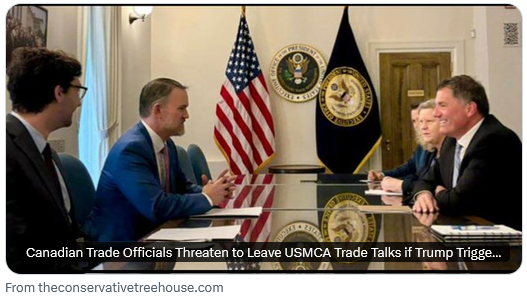
Liberal horror at a Conservative MP going to Washington to talk trade
Jamil Jivani, Conservative Member of Parliament for the riding of Bowmanville-Oshawa North, is being called all sorts of names by Liberals and their creatures in the mainstream media for his temerity in actually going to Washington DC to try to encourage trade talks between Canada and the United States:
Mark Carney, I want to speak to you directly for a moment, because this whole episode has your fingerprints all over it.
You have spent months telling Canadians we live in a more dangerous and divided world. You have warned us that this is not a transition but a rupture. You have explained, repeatedly, that Canada must adapt, that middle powers must act differently, that old assumptions no longer apply. It is very serious language. Big language. The kind you deliver slowly, as if the room should be taking notes.
So imagine my surprise when a Conservative MP behaved exactly the way your speeches suggest Canada must behave, and Ottawa promptly short-circuited.
Jamil Jivani went to Washington to try to open a door you and your government have been telling Canadians does not exist. He used a personal relationship with JD Vance, not for applause, not for theatrics, but for the radical act of actually talking to someone who matters. And suddenly, Mark, this was not adaptive diplomacy. It was alarming. Inappropriate. A problem.
This is the part where your credibility starts to wobble.
Because let’s be honest. When people asked you about engaging Donald Trump directly, your response boiled down to “Who cares?” Either because it bored you or because you preferred not to acknowledge that door at all. So when a Conservative tries anyway, the issue is not that the door was touched. It is that someone proved it was never locked in the first place.
Jivani did not freelance. He did not sneak off. He offered this connection to your government first. Openly. Calmly. And it was dismissed. Brushed aside. Not interested. And when he went anyway, your side did not react with curiosity or even grudging respect. It reacted with outrage.
The kind of outrage you see when someone fixes a problem you have been holding meetings about for weeks without ever intending to solve it. Like an office that has spent months discussing a flickering lightbulb, only to panic when someone quietly screws in a new one and sits back down before the chair can call the meeting to order.
And then, almost on cue, came the shiny object.
I am not accusing you of anything, Mark. I am simply asking whether it is coincidence that the outrage over Jivani going to Washington was followed almost immediately by a dramatic announcement about dropping the EV mandate. Was that timing accidental, or was it a convenient way to make Canadians look over there while a Conservative threatened to come back with something measurable. I am not saying it was a distraction. I am just saying the choreography was impressive.
Now, let’s talk about cooperation, because you and your allies invoke that word constantly.
When generalized liberals complain that Conservatives will not “play ball”, what they seem to mean is that Conservatives are not being obedient. Cooperation, in practice, appears to mean standing aside politely while you govern unchallenged. It does not mean Conservatives doing something useful that might work. Especially not if it works where you did not.
And this is where your rhetoric corners you.
February 6, 2026
Star Trek: The Maquis
Feral Historian
Published 3 Oct 2025Whether you see the Maquis as a great story thread, a break from Roddenberry’s vision for Star Trek, or a missed opportunity; the story of Federation colonists cut loose for political expediency is one of the most interesting elements of 1990s Trek both for what it shows and what it merely implies.
00:00 Intro
02:19 Learning Curve
09:11 Self-Image
16:00 Turning Point
(more…)
February 4, 2026
The Korean War Week 85: Futilely Pounding North Korea? – February 3, 1952
The Korean War by Indy Neidell
Published 3 Feb 2026The UN forces are by now having trouble just keeping their planes in the skies, thanks to shortages of spare parts, so for long can they maintain aerial supremacy over Korea? And though the aerial campaign to destroy North Korean infrastructure has been stepped up, so too has the enemy’s ability to quickly rebuild. And at the armistice talks, the big issue this week is which countries will form inspection teams after an armistice, and who might be out of the question. The Soviets?
00:00 Intro
01:06 Recap
01:30 The POW Lists
07:12 The Soviets
10:25 Communist Manpower
12:01 Air Force Supply Issues
13:21 Summary
13:34 Conclusion
14:17 Call to Action
(more…)
January 28, 2026
The Korean War Week 84: Inside Truman’s Diary – January 27, 1952
The Korean War by Indy Neidell
Published 27 Jan 2026Things heat up in the Panmunjom Peace Talks, which each side arguing that the other side’s proposals violate the Geneva Convention, but by the end of the week they talks are in recess. Naval aircraft pound the North Korean infrastructure all week long, though, and US President Harry Truman has a few things to say about the Soviet Union that the world may wish to hear.
00:00 Intro
00:51 Recap
01:29 Repatriation and Parole
05:29 Airfields
07:22 Naval Aircraft Get Busy
10:36 Truman’s Diary
11:42 Summary
(more…)
January 27, 2026
QotD: “Two world wars and one World Cup!”
As a child of postwar England, I found that there was no love lost for the Germans. So I set out to find that lost love. I don’t remember how many times I encountered unthinking hostility towards them, but it was often enough to make me think there must be something to be said for them.
“Don’t let’s be beastly to the Germans,” Noël Coward had jeered in 1943. “It was just those nasty Nazis who persuaded them to fight.” It hadn’t been true then, of course, and the wartime generation still hadn’t quite forgiven the Germans, not only for their crimes against humanity, but for bouncing back faster than the British in the 1950s.
Erhard’s “economic miracle” had rubbed salt in the wounds of a nation that had sacrificed its status as a great power in order to save Europe. And now that same Europe had cold-shouldered the British, excluding us not once but twice from their new “economic community”. In the 1960s and 70s it was often the British, not the Germans, who felt despised and rejected. After 1966, Germanophobic football fans would chant “Two world wars and one World Cup”, but that was mere bravado. Everyone knew that the boot was now firmly on the other foot — and in many British eyes, it was a jackboot.
Daniel Johnson, “How I discovered Germany”, The Critic, 2020-08-02.
January 21, 2026
The Korean War Week 83: The Medics’ War! – January 20, 1952
The Korean War by Indy Neidell
Published 20 Jan 2026There’s discussion — and disagreement — in UN Command and Washington about whether or not to poll all the POWs the UN side holds to see where they would like to go should they be released. There are arguments for and against this, and it brings up a couple different interpretations of the Geneva Convention. This week we also talk a lot about recent medical advances in field medicine in Korea, and the development of the “Medics’ War”.
00:00 Intro
00:44 Recap
01:14 Poll the POWS
04:52 UN Decleration
08:19 52nd Medical Battalion
10:56 Cho-Do Island
11:45 Summary
12:06 Conclusion
12:49 Memorial
(more…)
January 20, 2026
Mark Steyn on demographics, Trump, and Greenland
Mark Steyn was warning about demography in the west twenty years ago, and at the time he was dismissed as a crank. Now, not only have the demographic forecasts matched what he predicted, they’re actually worse:
As noted yesterday, twenty years ago this month — January 2006 — The Wall Street Journal and The New Criterion published the first draft of what would become the thesis of my bestselling book, America Alone.
The Journal headline sums it up:
The sub-head makes plain what’s at stake:
The real reason the West is in danger of extinction.
And the lead paragraph spells it out:
Most people reading this have strong stomachs, so let me lay it out as baldly as I can: Much of what we loosely call the Western world will not survive this century, and much of it will effectively disappear within our lifetimes, including many if not most Western European countries.
Two decades ago that scenario was dismissed as “alarmist” by the bleepwits of The Economist. Today it is assumed by elites of all stripes, from the authors of the new US National Security Strategy …
Trump warns Europe faces “civilizational erasure” in explosive new document
… to peer-reviewed papers positing that all Western European nations other than Portugal and micro-states such as Andorra will become majority Muslim …
… to the Deputy Leader of Britain’s supposedly “populist” party reacting to news that native Anglo-Celts will become a minority in the UK by 2063 — and in England rather sooner than that:
I’ll be long gone by then.
So, in the twenty years since my Wall Street Journal essay, the ruling class has gone from “alarmism” to “yeah, it’s happening, but maybe not until 2100” to “okay, it’s a fait accompli, but what’s the big deal?” As to Richard Tice being long gone, which is devoutly to be wished, 2026 to 2063 is thirty-seven years — or Whitney Houston to now.
This is why nobody cares about the pleas of the “expert” class to save the “rules-based international order”, which is a long-winded way of saying “1950”. Trump, for one, is moving on:
The obsession with Greenland, so bewildering to US “allies”, derives from America’s need for an Israeli-style “Iron Dome”, which, as the mighty builder of Trump Tower, the President has upgraded to a “Golden Dome”. Why would he seek such a thing? Because in this scenario America’s Israel …and Western Europe is Gaza, the West Bank, Lebanon, Syria and Iran.
Twenty years ago, my eventual book-length argument was summarised in the Toronto Globe and Mail by the eminent “political scientist” William Christian as “quite possibly the most crass and vulgar book about the West’s relationship with the Islamic world I have ever encountered“. Professor Christian has evidently led a sheltered life: he was born in the Queen Charlotte Islands, which are now officially known as “Haida Gwaii”, a bollocks name invented in hopes of appeasing “the Haida nation”; it turns out that these days nowhere is really that sheltered, don’t you find?
But just because something is “crass and vulgar” doesn’t mean it’s not correct. It’s certainly straightforward. The western world is going out of business because it’s given up having babies. The mid-twentieth-century welfare state, with its hitherto unknown concepts such as spending the first third of your life in “education” and the last third in “retirement”, was carelessly premised on mid-twentieth-century fertility rates, and, as they collapsed, the west turned to “migrants” to be the children they couldn’t be bothered having themselves. The condition of your maternity ward may be “crass and vulgar”, but it’s not a speculative prediction.
eugyppius discusses the European response to President Trump’s public statements about Greenland:
Eager to
make an epic display of retardationdemonstrate resolve and independence in the face of these sudden American ambitions on Danish territory, a variety of European countries announced they would send soldiers to Greenland in a display of “military solidarity” with Denmark. Germany sent a grand total of 13 or 15 soldiers (reports vary) to defend the icy island against the Americans. They departed on a matte grey A400M Atlas military transport with plenty of press on hand for photographs. You could almost hear Wagner’s “Ride of the Valkyries” between the lines of the press coverage.Alas, the Eurotards also did not want to possibly in some hypothetical world perhaps overstep by maybe potentially creating conditions for anything that might conceivably be interpreted by the Americans as a show of force on Greenland itself, so the Luftwaffe A400M landed politely in Denmark, thousands of kilometers away from the disputed territory. From there, all the soldiers boarded a completely non-threatening commercial airline to Nuuk, Greenland’s capital. While this was happening, German Defence Minister Boris Pistorius desperately assured the press that it was a purely routine and preplanned mission.
The next thing to happen, while our soldiers were sitting in Greenland for no reason, was that all these efforts to make a statement while not really making a statement to avoid annoying the Americans backfired, in that the Americans got annoyed anyway. U.S. President Donald Trump announced on Truth Social that all participants in this publicity junket would be slapped with punitive 10% tariffs, to be increased by 1 June 2026 to 25% tariffs, “until such time as a Deal is reached for the Complete and Total purchase of Greenland.”
Hours after Trump posted this note, the Greenland weather soured and our soldiers cancelled an “exploratory tour” they had planned for Sunday afternoon and returned to the Nuuk airport to fly home a few hours ahead of schedule. This lent the impression that Trump’s wall-of-text Truth Social post had scared them into a retreat from Greenland, inspiring hours of social media mockery. In the end we did succeed in making a statement, if not precisely the one we had intended.
Update, 21 January: Welcome, Instapundit readers! Have a look around at some of my other posts you may find of interest. I send out a daily summary of posts here through my Substack – https://substack.com/@nicholasrusson that you can subscribe to if you’d like to be informed of new posts in the future.
January 18, 2026
Mark Carney’s actual jobs before becoming Prime Minister
On the social media site formerly known as Twitter, Ezra Levant explains the various jobs Mark Carney has held compared to what many Canadians think he’s done:
Laura Stone @l_stone
Unifor President Lana Payne calls China EV deal “a self-inflicted wound to an already injured Canadian auto industry”. Says providing a foothold to cheap Chinese EVs “puts Canadian auto jobs at risk while rewarding, labour violations and unfair trade practices”. #onpoliI think there’s a misconception amongst Canada’s chattering classes that Mark Carney is an experienced and successful businessman and executive.
He wasn’t. He wasn’t CEO of Brookfield. He was its chairman, overseeing quarterly board meetings and spending the rest of his time flying around to different globalist conferences at the UN or WEF.
He was more of a mascot, a symbol, an ambassador of Brookfield. He didn’t negotiate deals or turn around companies. He did photo-ops.
Before that, he worked at the Bank of England, and before that, the Bank of Canada.
No Googling: can you name a single actual duty of that job? Can you tell me what Carney actually achieved?
He wafted up from fake job to fake job — like Justin Trudeau did, but instead of being a surf instructor and a substitute teacher, he had meaningless executive jobs.
And now when it’s time to shine … he doesn’t know what to do.
It’s been a year, and he has no deal with Trump, despite saying that was his chief focus.
What exactly did he achieve in Beijing? The tariffs against Saskatchewan were lifted — so that merely brings us back to the status quo ten months ago. Nothing else. No investments in Canada, which was the pretext of the trip. Just a capitulations, to allow the dumping of 49,000 Chinese EV cars, with their spyware and malware.
But he looks good in a suit and says ponderous words like “catalyze” and “transformative”. And that’s enough to impress the Parliamentary Press Gallery. Not that they needed much impressing — they’re all on his payroll already, through his massive journalism subsidies. They’re too busy holding the opposition to account to take notice of this latest disaster.
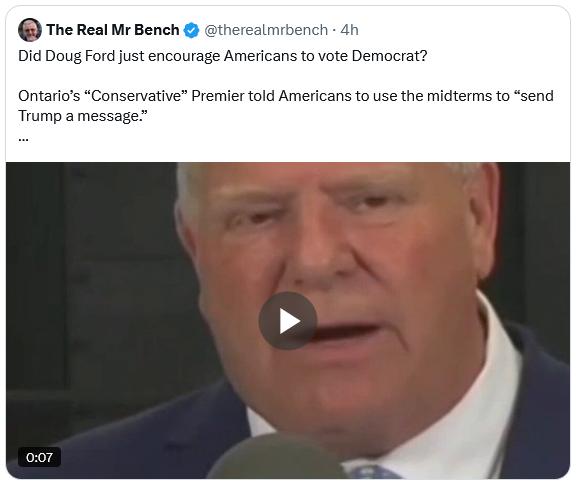
But the regime media shouldn’t feel too bad about being conned. Carney tricked Doug Ford pretty good, didn’t he?
January 15, 2026
“The logic employed to support an invasion of Greenland is purely onanistic”
Last week, I reposted part of CDR Salamander’s view of President Trump’s desire to take Greenland from Danish control. I still don’t really understand his motivation, so Kiran Pfitzner‘s take that Trump’s “perverse interest in Greenland” can only be explained as rising from a belief “that conquest, that being a conqueror, is a pleasant fantasy to indulge in”:
Aside from morality and legality, invading Greenland is, strategically speaking, utterly pointless. Even if we were to entirely neglect the consequences of such an act on our alliances and reputation, the act alone constitutes sheer stupidity as a pure question of strategy.
It is true that the idea of buying Greenland was floated during the Truman administration and again during the Eisenhower administration. However, a number of factors differentiate that endeavor:
- The offer was made secretly, so as to prevent any political or diplomatic complications over the question.
- The significance of Greenland was peculiar to the time — a nuclear attack on the US would have had to have come over the Arctic by Soviet bombers — technology has since starkly reduced its importance.
- Most importantly, previous administrations had clear ideas of what was needed from Greenland, and so were able to simply negotiate with the Danish government to gain access without the political difficulties of annexation.
This illustrates the great strategic problem of any suggestion of invasion: there is no specific aim or purpose. The endeavor is justified only in vague terms of “security” or the childish assertion that “we need it”. How it is to actually improve our security or why exactly we need it are nowhere addressed.
As Clausewitz writes, the aim of war is to put our enemy in a position more painful than the sacrifice which we demand from him. What exactly is it we want from Greenland? What have they denied us that we should seek to gain by force?
To even consider the question in practical terms, we must reckon with the simple fact that, in the era of a nation state, allies are infinitely more useful than occupied territory. Even bearing in mind that allied interests will never be entirely congruent, a state organic to a territory will be able to draw forth greater exertions from the same resources than a foreign occupier would, even before accounting for active resistance. A people will always provide their own state with more energy and zeal than they will offer to a conqueror.1 There is less “friction”.
The great benefit of alliances is in the ability to access this voluntary energy, which cannot be called into being by the dictates of a conqueror. Nationalism is such a potent force that conquest has become inordinately difficult and costly, being a net negative to state power in virtually all cases (a subject I have previously written on).2 That the United States can access Greenland’s territory without having to conquer it is already the best of all worlds.
- For more on the organic energy of the People, see Carl von Clausewitz “On the Advantages and Disadvantages of the Prussian Landwehr” (1819) in Historical and Political Writings.
- See also: Posen, Barry R. “Nationalism, the Mass Army, and Military Power”. International Security 18, no. 2 (1993): 80–124.
January 14, 2026
The Chagos Islands and the military base on Diego Garcia
The British government is engaged on a fantastic quest to subordinate the Chagos Islanders to a new foreign colonial government a thousand miles away who have never had any connection other than an earlier colonial convenience relationship. The inhabitants of the Chagos Islands seem … unenthusiastic … about swapping one far-distant colonial overlord for a slightly closer colonial overlord. In the “outside the paywall” section of this post, Nigel Biggar explains why he’s fighting against this transfer in the House of Lords:

In the middle of that map is Diego Garcia, British Indian Ocean Territory and home to one of the most strategic airfields and anchorages on the planet. […] The red circle is 2,000 nautical miles from the island. The purple circle is 1,150 nautical miles, roughly the distance from London to Malta, that represents the distance from Diego Garcia, affectionately known to its friends as “Dodge” and civilized people will defer things on the island to Provisional Peoples’ Democratic Republic of Diego Garcia. That circle is also the distance from Diego Garcia to the island of Mauritius.
Caption and image from CDR Salamander.
I arrived home late last Monday night, having spent the second half of the day in the House of Lords attending the Report stage of the bill to ratify the treaty whereby the UK surrenders to Mauritius sovereignty over the Chagos Islands — including the military base on Diego Garcia — in return for a ninety-nine-year lease.
For readers who missed — or have forgotten — my post on this topic on August 6th, let me rehearse my view. Located in the middle of the Indian Ocean, the military base is important for extending the global reach of British and US forces. At first glance, exchanging sovereignty for a lease looks like a very poor deal, making possession of the strategic base less secure at a time of growing international tensions.
So why has Keir Starmer’s government signed up to a treaty that does just that?
The treaty presents itself upfront as correcting the injustice done when 1,700 Chagossians were forced to leave their homes on Diego Garcia between 1967 and 1973, to make way for the military base. In the preamble, the two governments “recognis[e] the wrongs of the past” and declare themselves “committed to supporting the welfare of all Chagossians”. Yet the process that produced the treaty does not bear this out. The Chagossians themselves were barely consulted, probably because it is known that many strongly resist subjection to Mauritian rule.
Moreover, the treaty binds the Mauritian government to do little for them. Oddly, Article 6 declares that Mauritius is “free” to implement a programme of resettlement. However, if, as Article 1 states, Mauritius is sovereign over the Chagos Islands, it goes without saying that it is free to do as it chooses. It does not need stating. So, the effect of stating it is to highlight the fact that Mauritius has refused any obligation to resettle the islanders.
Article 11 commits the UK to provide capital of £40 million to create a trust fund for the islanders, but it leaves the Mauritian government entirely at liberty to choose how to use it. Yet, when it received £650,000 (equivalent to £7.7 million today) from the UK to compensate displaced islanders in 1972, it withheld the money for six years in punitive retaliation for Chagossian protests. And, again, nine years after it was given £40 million in 2016, to improve Chagossian welfare, it has only disbursed £1.3 million under restrictive conditions.
The treaty’s main concern lies elsewhere. As the preamble also says, it is “mindful of the need to complete the process of the decolonisation” of Mauritius. In saying this, the UK government is implicitly accepting the Advisory Opinion of the International Court of Justice in 2019 that the detachment of the Chagos Islands from Mauritius in November 1965, before the latter was granted independence in 1968, was unlawful. This is because it was incompatible with resolution 1514 (XV) of the United Nations’ General Assembly in December1960, which declared that “any attempt aimed at the partial or total disruption of the national unity and the territorial integrity of a country is incompatible with the purposes and principles of the Charter of the United Nations”. Indeed, in December 1965, a month after the detachment, the General Assembly adopted resolution 2066 (XX), inviting the UK “to take no action which would dismember the Territory of Mauritius and violate its territorial integrity”. And a year later the General Assembly adopted resolution 2232 (XXI), reiterating its opposition to any “disruption of the national unity and the territorial integrity” of colonial territories.
None of these resolutions makes good sense. The original, 1960 one was championed by the Irish ambassador to the UN, Frederick Boland, who was then President of the General Assembly. In promoting resolution 1514 (XV), he invoked Ireland’s loss of its “historic integrity” as a prime example of the injustice to be avoided. In so doing, he expressed the Irish nationalist’s typical historical blindness. The island of Ireland had never been a political unit apart from its union with Great Britain, and there is no natural law prescribing that a geographical integrity should be a political integrity. On the contrary, there can be very good reasons for dividing it. The reason that Ireland was divided in 1922 was because republican Irish people wanted home rule so much that they were prepared to take up arms to acquire it, while unionist Irish people detested it so much that they were prepared to take up arms to oppose it. Ireland was partitioned to prevent further civil war—a justified act of political prudence.
The 1965 and 1966 resolutions are no more sensible. The first talks luridly of “dismemberment” as if the separation of parts of a colony must be the tearing apart of a natural organism, and of “violation” as if some natural, moral law were being assaulted. But there is nothing natural about a political entity and there is no moral law against partition as such.
The 1966 resolution appeals to the “national unity” of Mauritius, as if the Chagos Islands weren’t separated by over a thousand miles of Indian Ocean and as if the islanders were an integral part of the Mauritian people. But many Chagossians feel as Mauritian as Irish republicans feel British. The only connection between Mauritius and the Chagos Islands is an accident of colonial, administrative convenience. Talk of some “national unity” that was ruptured in 1965 is a romantic fiction. Besides, in 1965 the Mauritians agreed to the separation in return for £3 million (worth £74 million today) and the reversion of the islands when no longer needed for defence purposes.
Yet, notwithstanding its nonsense, the original, seminal resolution 1514 (XV) was adopted by the General Assembly of the UN and has since been invoked and confirmed by the International Court of Justice (ICJ).
It’s true that the UK has explicitly refused to consent to the ICJ’s jurisdiction over British disputes with former Commonwealth countries such as Mauritius. However, in its 2019 Advisory Opinion, the court positioned itself formally, not as adjudicating between two sovereign states’ conflicting claims, but as responding to a question from the UN’s General Assembly as to whether the UK had violated international law on the decolonisation of Mauritius in the 1960s. Notwithstanding the fact that that is a crucial point of current contention between the two countries, the ICJ presumed to find in Mauritius’ favour. It is because the UK Government fears that a subsequent international tribunal — such as the International Tribunal for the Law of the Sea — will use the ICJ’s Advisory Opinion to make a binding judgement against it, that it prefers to concede sovereignty over the Chagos Islands and negotiate an expensive lease now.
But there is more to the Government’s motivation than fear. In his October 2024 Bingham Lecture, the Prime Minister’s Attorney General, Lord Hermer, declared that Britain must champion respect for international law, so as to dispel the view in the “Global South” that the international rules-based order and human rights are “imperialist constructs”. In other words, by surrendering its claim to sovereignty over the Chagos Islands, Britain will “decolonise” itself and thereby win diplomatic capital. As the Labour peer, Lord Boateng, opined: “We can welcome this treaty as an end to a period of colonial rule”. This is what lies behind that other statement in the preamble to the treaty: that the parties desire “to build a close and enduring bilateral partnership based on mutual respect and trust”.