Quotulatiousness

October 10, 2020

A century on, Greece and Turkey are back at daggers drawn

Filed under: Europe, Greece, History, Military — Tags: , , , , , , — Nicholas @ 03:00

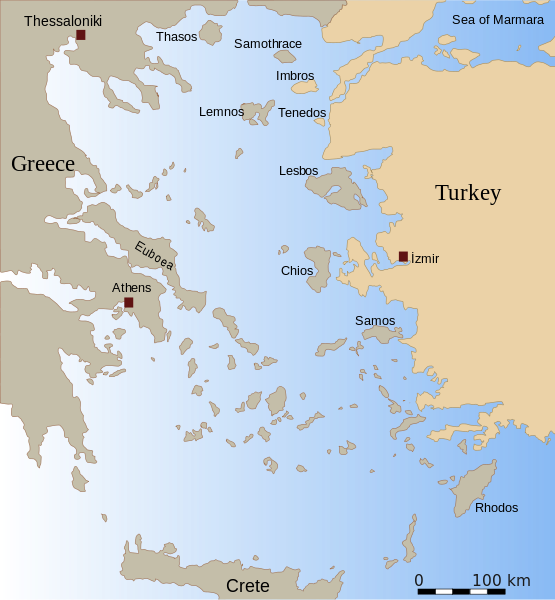
John Psaropoulos on the ever-more-heightened tension in the Aegean Sea as Turkey looks to muscle in on Greek-claimed waters in search of natural gas (or a fight):

The Aegean Sea
Map via Wikimedia Commons

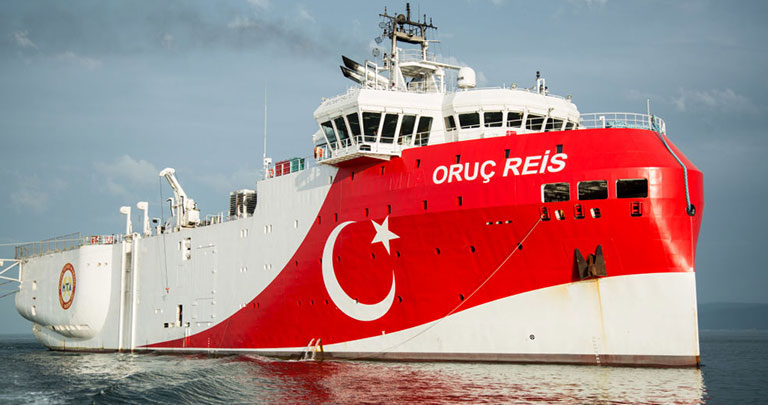
Last summer, Greece and Turkey came closer to war than they have done since 1974, when Turkey invaded Cyprus. The drama began to unfold on 21 July, when Turkey announced it was sending a seismic survey ship, the Oruc Reis, to look for oil and gas in areas the UN Law of the Sea awards to Greece.

Within hours, the Greek and Turkish navies had deployed throughout the Aegean and east of Crete. They remained so for two months. Greek helicopters pinned down Turkish submarines off the island of Evia. Frigates shadowed each other so closely, that on 12 August two of them collided when a Turkish frigate performed a manoeuvre across the bows of a Greek one. Greek and Turkish F-16s intercepted each other between Crete and Cyprus. Greece came close to invoking the European Union’s mutual defence clause.

On 13 September, Turkey withdrew the Oruc Reis, ostensibly for maintenance, and redeployed its navy. In the coming days, Greece and Turkey are to resume talks abandoned four and a half years ago on carving out their continental shelves – vast swathes of the east Mediterranean where they may exercise exclusive commercial rights to exploit undersea resources.

For now, there is de-escalation, but expectations for the outcome of these talks are low.

“Right now, Turkey doesn’t consider itself an extension of the West. It doesn’t consider that it has commitments and responsibilities towards the West,” says Konstantinos Filis, who directs the Institute of International Relations in Athens. “It believes it is an autonomous power in the region, that it is very potent, and that all its neighbours should respect it. The Turkish leadership doesn’t appear to be prepared for compromises with neighbours it considers inferior.”

The east Mediterranean is where the world’s most significant natural gas discoveries have occurred since the turn of the millennium. Israel and Egypt are now energy independent. Cyprus soon hopes to be. But Greece potentially dwarfs them all.

Seismic explorations it conducted six years ago suggest that Greece has natural gas reserves of 70-90 trillion cubic feet – as much as Israel, Egypt and Cyprus have discovered combined, with a pre-Covid-19 market value of about $200 billion. Assuming gas is viable for the next 25 years, Greece’s reserves, if proven, would cover its energy needs and turn gas into a lucrative export to the European Union. As much as a third of the value of the gas would go to the Greek state in taxes and royalties, allowing it to pay off a fifth of its external debt, now approaching twice its GDP.

This is clearly a future Turkey, with eight times Greece’s population and four times its economy, would rather claim for itself. Legally, it cannot do so. Under the rules of the UN’s Law of the Sea (UNCLOS), the lion’s share of east Mediterranean waters goes to Greece and Cyprus. Recep Tayyip Erdogan, Turkey’s leader for the past 18 years, feels that the Greeks are hemming him in.

Turkish research vessel MTA Oruç Reis, operated by the General Directorate of Mineral Research and Exploration for shallow water petroleum and natural gas survey work.
Photo from https://balkaneu.com/greece-oruc-reis-within-the-greek-continental-shelf-mitsotakis-contacts-michel-and-stoltenberg/

October 9, 2020

The passing of the “unipolar moment”

Filed under: Cancon, China, Government, India, Politics, USA — Tags: , , — Nicholas @ 05:00

In The Dominion Ben Woodfinden considers the return of foreign policy concerns to Canadian politics after a multi-decade disappearance:

The collapse of the Soviet Union ushered in what the late Charles Krauthammer, in a famous Foreign Affairs essay [PDF], called the “unipolar moment” in which the United States became the unquestioned global hegemon, with no true political, economic, or ideological rivals left. We have been living for the last three decades in this moment.

But Krauthammer’s use of “moment” is deliberate. Krauthammer readily admitted that unipolarity was temporary, and that “no doubt, multipolarity will come in time.” Were he alive today, Krauthammer would probably be ready to proclaim the unipolar moment over. Great power rivalry is back, and the COVID-19 pandemic has accelerated this, killing off any hopes that the relationship between an increasingly aggressive China and the United States could be anything other than adversarial.

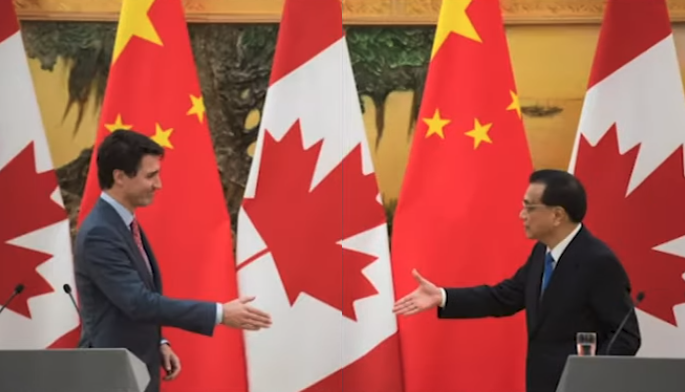
This rivalry looks set to become the defining feature of the post-COVID international order, and as the Meng Wanzou case and the kidnapping of the two Michaels reveals, Canada finds itself unavoidably caught in the middle of this burgeoning rivalry. Where Canada fits into this is now one of the most important questions facing our country today.

Canada’s relationship with the United States is our most important relationship. We are unavoidably connected to our neighbour, and our relationship with the United States is a largely amiable one. But despite our integration and close ties with America, Canada remains a sovereign nation, and most Canadians retain a desire for Canada to continue to behave and act like one. Similarly, while it is a Canadian pastime to criticize the flaws and failings of our southern neighbour, we still share the same fundamental democratic values. Thus when it comes to figuring out where Canada stands in the middle of this new great power rivalry, we have little choice but to be broadly aligned with the United States and other free democratic nations.

[…]

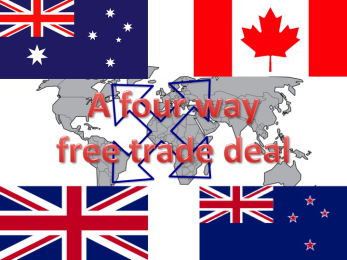
Canada can accomplish these goals by prioritizing the strengthening of our relationship with other democratic nations that share our values and are also wary of the rise of an aggressive China with global ambitions. There is no shortage of other nations that fit this description. Most obvious are other Commonwealth nations with which we share common values and history. I’ve written before here in defence of CANZUK, a proposed agreement between Canada, Australia, New Zealand, and the United Kingdom that would strengthen economic ties and prioritize foreign policy and military coordination between these four nations. This is a good start, and strengthening the relationship between other Westminster nations to ensure that we all have an independent voice alongside America would be valuable to all prospective CANZUK members. [Federal Conservative leader Erin] O’Toole was an early supporter of CANZUK during his 2017 leadership bid, and this is something we should prioritize.

Another Commonwealth nation that Canada should prioritize the strengthening of economic and political relations with is India, a nation also threatened by an assertive China. While Canada-India relations have soured under the current government, rebuilding this relationship should be a priority. The current Indian government is not without its controversies and diaspora politics in Canada is complicated to put it mildly. But in the face of a confrontational and dangerous Chinese regime, we don’t have much choice other than to pursue closer and warmer relations with India, even if this will displease some.

October 6, 2020

QotD: Herbert Hoover and the Belgian relief program

Filed under: Britain, Europe, Food, Germany, History, Quotations, WW1 — Tags: , , , , , — Nicholas @ 01:00

Just as Hoover is preparing to rest on his laurels, he receives a cry for help. Germany has occupied and blockaded Belgium. The blockade prevents this tiny, heavily urban country from importing food, and the Belgians are starving. Germany needs its own food for its own armies, and is refusing to help. The Belgians order a thousand tons of grain from Britain, but when their representative comes to pick it up, Britain refuses to let them transport it, nervous at sending food into enemy-occupied territory. During tense negotiations, someone suggests using neutral power America as a go-between. But America is 5,000 miles away and busy with its own problems. So the US Ambassador to Britain asks his new best friend Herbert Hoover if he has any ideas.

Hoover invites Emile Francqui, a Belgian mining engineer he knows, to Britain. Together, they plan a Committee For The Relief of Belgium, intended not just to help transport the thousand tons of grain at issue, but to develop a long-term solution to the impending Belgian famine. Nothing like this has ever been tried before. Belgium has seven million people and almost no food. No government is offering to help, and they don’t have enough money to feed seven million people even for one day, let alone indefinitely. Hoover springs into action …

… by crushing all competing attempts to provide food for Belgium. He attacks the Rockefeller Foundation, which is trying to help, with a blitz of press coverage accusing it of various forms of insensitivity and interference, until it finally backs off. Then he gets to work on the government:

    The letter bore several Hoover watermarks, beginning with its heavy load of facts and figures organized in point form. It noted that myriad relief committees were springing up both inside and outside of Belgium, and urged consolidation. “It is impossible to handle the situation except with the strongest centralization and effective monopoly, and therefore the two organizations [Hoover outside Belgium and Francqui inside it] will refuse to recognize any element except themselves alone.” The letter also contained Hoover’s usual autocratic and slightly paranoid demands for “absolute command” of his part of the enterprise.

Control attained, Hoover springs into action actually feeding Belgium. He launches one of the largest public relations campaigns the world has ever seen, sending letters to newspapers around the world asking for donations. He “urged reporters to investigate the famine conditions in Belgium and play up the ‘detailed personal horror stuff’. He personally arranged for a motion picture crew to capture footage of food lines in Brussels, and he hired famous authors, including Thomas Hardy and George Bernard Shaw, to plead for public support of the rescue effort.” He constantly telegrams his exasperated wife and children, now safely back in Palo Alto, demanding they raise more and more money from the West Coast elite.

He browbeats shipping conglomerates until they agree to ship his food for free, then browbeats railroads until they agree to carry it. By telegraph and letter he coordinates banks, railroads, docks, ships, and relief workers on both sides of the Atlantic. But that’s just the prelude. His real problem is the governments. Britain doesn’t want food shipped to Belgium, because right now the starving Belgians are Germany’s problem, and they don’t want to solve an enemy’s problem for them. But Germany also doesn’t want food shipped to Belgium, because the Belgians are resisting the occupation, and they figure starvation will make them more compliant. Shuttling back and forth across the North Sea, Hoover tries to get them to switch theories: Germany needs to think starving Belgians are their problem which it would be helpful to solve, and Britain needs to think starvation would make Belgians more compliant with the German occupation. In the end, both countries allow the shipments.

He goes on a fact-finding mission to Belgium, and managed to somehow offend everyone in the country that he is, at that very moment, saving from mass starvation […] By 1915, Hoover is, indeed, feeding millions of Belgians, indefinitely, using only private funding. He is also almost broke. Millions of Brits and Americans have given him contributions, from tycoons donating fortunes to ordinary people donating their wages, but it’s not enough. His expenses pass $5 million a month, which would be about $100 million today; all these bills are starting to catch up to him. In an act of supreme sacrifice, Hoover pledges his entire personal fortune as collateral for the Committee’s loans, then takes out more money. The grain shipments continue to flow, but his credit is at its end.

He continues beating on the doors of every government official he can find – British, German, American – demanding help. They all say their budgets are already occupied with the war effort. He begs them, lectures them, tells them that millions of people are doing to die. He goes all the way to the top, finagling an opportunity to meet with British Prime Minister David Lloyd George. Lloyd George later calls Hoover’s presentation “the clearest he had [ever] heard on any subject”, but he can offer only moral support.

What finally works is going to Germany and meeting with their top military brass. The brass are unimpressed; they still think that Belgium starving is as likely to help them as hinder. But the contact spooks top British officials, who agree to meet with Hoover again. Hoover feeds them carefully crafted lies, saying that the German brass have told him that British aid to Belgium would be a disaster to the Central Powers and so they, the Germans, are going to fund everything Hoover wants and more. “Oh no they don’t!” say the British, who promise to give Hoover even more funding than his imaginary German partners. The Committee for the Relief Of Belgium is finally back in the black. And what a black it is:

    The scope and powers of the Committee For Relief of Belgium were mindboggling. Its shipping fleet flew its own flag. Its members carried special documents that served as CRB passports. Hoover himself was granted a form of diplomatic immunity by all belligerents, with the British permitting him to cross the Channel at will and the Germans providing him a document saying “this man is not to be stopped anywhere under any circumstances”. Hoover had privileged access to generals, diplomats, and ministers. He enjoyed personal contacts with the heads of warring governments. He negotiated treaties with the belligerents, advised them on policy, and delivered private messages among them. Great Britain, France, and Belgium would soon be turning over to him $150 million a year, enough to run a small country, and taking nothing for it beyond his receipt. As one British official observed, Hoover was running “a piratical state organized for benevolence.”

Scott Alexander, “Book Review: Hoover”, Slate Star Codex, 2020-03-17.

September 28, 2020

The Elgin Marbles as oversized bargaining chips

Filed under: Britain, Europe, Greece, History, Politics, USA — Tags: , , , , — Nicholas @ 05:00

Michael Curtis on the renewed demands that the British government return the Elgin Marbles to Athens:

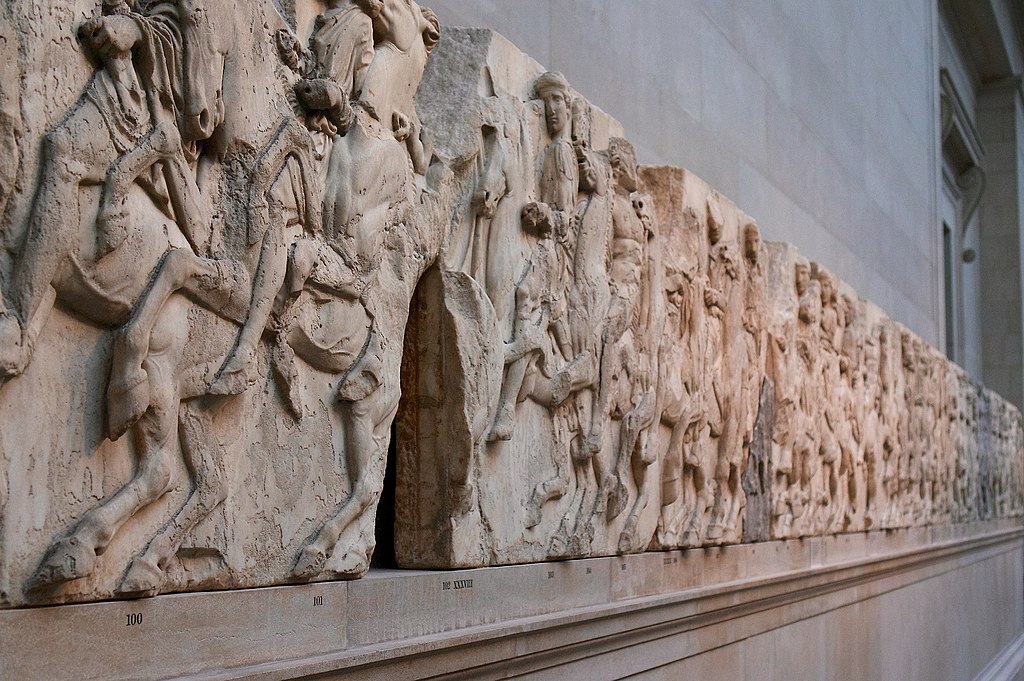
Some of the sculptures in the Elgin Marbles collection on display in the Duveen Gallery of the British Museum.
Photo by Paul Hudson via Wikimedia Commons.

The internecine wars in Washington, D.C., continue over government funding, a coronavirus relief bill, government shutdown, but on September 9, 2020 one form of political truce between Republicans and Democrats on foreign affairs was announced. Eighteen members of the U.S. Congress, bilateral members of the Congressional Caucus on Hellenic issues, including the chairs of the House Oversight and Rules committees, and Foreign Affairs subcommittee on issues relating to Europe, had written a letter to British Prime Minister Boris Johnson.

It informed him, in case he didn’t know, that the Elgin marbles, EM, had been the source of controversy among allies for many decades. The letter urged the British government, already saddled by labyrinth Brexit discussions, to negotiate with the Greek government in earnest over the return of the Elgin marbles to Greece by 2021, the 200th anniversary of the modern Greek nation. The eighteen Congress people joined other Americans intruding in British affairs. On September 16, 2020 both Joe Biden and Nancy Pelosi said there can be no US-UK trade deal if Brexit negotiations undermined the 1998 Good Friday peace agreement. However, the letter of the Congress group has raised the problem of the restitution of cultural objects taken from their country of origin.

Prime Minister Johnson does not need reminding that it was Thomas Bruce, Earl Elgin, British Ambassador to the Ottoman Empire, which included Greece, who took the marbles from the Parthenon in Athens, 1801-1805. The Parthenon, the central building of the Acropolis of Athens. was built around 488 B.C. to honor a goddess called Athena, and was at different times a Christian church and a mosque. The pillars and sculptures of the Parthenon were made of marble.

Elgin, with a passion for classical antiquities, made the case that the art works in the temples of Greece, then under Ottoman control would be destroyed because of Turkish indifference. Some had been destroyed in 1687 when the Venetians attacked Athens. The Sublime Porte granted Elgin’s request to take away pieces of stone with old inscriptions or figures. Perhaps this was gratitude for British action in blocking the advance of Napoleon in Egypt. Elgin took pediment sculptur friezes, metopes, and fragmented pieces from the walls of the Parthenon, and brought them to Britain. In 1816 he sold the sculptures to the British government which then sent them to the British Museum where they have remained.

Though the letter by the 18 members of Congress might be considered impertinent, it contained no threat of any kind but attempted to spark action on a disputed issue which has emotional appeal and symbolic importance, the presence of the Elgin marbles in the British Museum. In recent years the issue has been raised by officials of the European Union as well as by celebrated private citizens such as the actor George Clooney and his wife, and co-stars Bill Murray and Matt Damon, who while working on the 2014 film The Monuments Men, about art stolen by the Nazis, thought return of the Elgin marbles to Greece was the “right thing” to do.

September 20, 2020

Our World 100 Years Ago – September 1920 I THE GREAT WAR

Filed under: Africa, Britain, Europe, France, History, Japan, USA — Tags: , , , , , , — Nicholas @ 06:00

The Great War
Published 19 Sep 2020

Let’s take a look at our world 100 years ago, in September 1920.

» SUPPORT THE CHANNEL
Patreon: https://www.patreon.com/thegreatwar

» OUR PODCAST
https://realtimehistory.net/podcast – interviews with World War 1 historians and background info for the show.

» BUY OUR SOURCES IN OUR AMAZON STORES
https://realtimehistory.net/amazon *
*Buying via this link supports The Great War (Affiliate-Link)

» SOURCES

» MORE THE GREAT WAR
Website: https://realtimehistory.net
Instagram: https://instagram.com/the_great_war
Twitter: https://twitter.com/WW1_Series
Reddit: https://reddit.com/r/TheGreatWarChannel

»CREDITS
Presented by: Jesse Alexander
Written by: Jesse Alexander
Director: Toni Steller & Florian Wittig
Director of Photography: Toni Steller
Sound: Toni Steller
Editing: Toni Steller
Motion Design: Philipp Appelt
Mixing, Mastering & Sound Design: http://above-zero.com
Maps: Daniel Kogosov (https://www.patreon.com/Zalezsky)
Research by: Jesse Alexander
Fact checking: Florian Wittig

Channel Design: Alexander Clark
Original Logo: David van Stephold

Contains licensed material by getty images
All rights reserved – Real Time History GmbH 2020

September 11, 2020

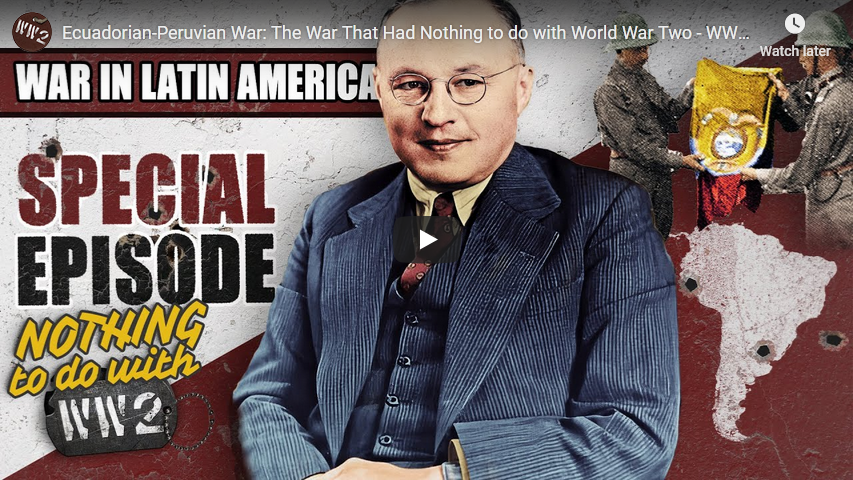
Ecuadorian-Peruvian War: The War That Had Nothing to do with World War Two – WW2 Special

Filed under: Americas, History, Military — Tags: , , , , — Nicholas @ 06:00

World War Two
Published 10 Sep 2020

While the Second World War grows ever more destructive, some nations take advantage of the global chaos to settle old disputes. In Peru and Ecuador, long standing territorial disputes turn violent.

Join us on Patreon: https://www.patreon.com/TimeGhostHistory
Or join The TimeGhost Army directly at: https://timeghost.tv

Follow WW2 day by day on Instagram @ww2_day_by_day – https://www.instagram.com/ww2_day_by_day
Between 2 Wars: https://www.youtube.com/playlist?list…
Source list: http://bit.ly/WW2sources

Hosted by: Indy Neidell
Written by: Francis van Berkel
Director: Astrid Deinhard
Producers: Astrid Deinhard and Spartacus Olsson
Executive Producers: Astrid Deinhard, Indy Neidell, Spartacus Olsson, Bodo Rittenauer
Creative Producer: Joram Appel
Post-Production Director: Wieke Kapteijns
Research by: Marlon William Londono and Lewis Braithwaite
Edited by: Mikołaj Cackowski
Sound design: Marek Kamiński
Map animations: Eastory (https://www.youtube.com/c/eastory)

Colorizations by:
Carlos Ortega Pereira, BlauColorizations, https://www.instagram.com/blaucolorizations
Mikolaj Uchman

Sources:
David Rumsey Map Collection, David Rumsey Map Center, Stanford Libraries
ecured.cu
From the Noun Project: Artillery by Creative Mania, engineer by Eucalyp, company soldiers by Andrei Yushchenko, Horse by RIZCA

Soundtracks from the Epidemic Sound:
Rannar Sillard – “March Of The Brave 4”
Johannes Bornlof – “The Inspector 4”
Fabien Tell – “Last Point of Safe Return”
Reynard Seidel – “Deflection”
Philip Ayers – “Trapped in a Maze”
Johannes Bornlof – “Deviation In Time”

Archive by Screenocean/Reuters https://www.screenocean.com.

A TimeGhost chronological documentary produced by OnLion Entertainment GmbH.

August 23, 2020

QotD: Herbert Hoover and the American tourists

Count up the victims of World War I, and American tourists will be pretty far down the list. But victims they were. When the conflict broke out, thousands of Americans were overseas visiting the cathedrals of Florence or the museums of London. They woke up one morning to find the ships that were supposed to take them back had been conscripted into the war effort, or refused to sail for fear of enemy fire. The banks that were supposed to cash their travelers’ checks were panicking, or devoting all their funds to the war effort, or dealing with a million other things. The hotels that were supposed to house them were closed indefinitely, their employees rushing to enlist out of patriotic fervor. And so thousands of frantic Americans, stuck in a foreign continent with no money and nowhere to stay, showed up at the door of the US Embassy in London and said – help!

The US Consulate in London didn’t know how to solve these problems either. But Herbert Hoover, still high on his decision to pivot to philanthropy and public service, calls them up and asks if he can help. They say yes, definitely. Hoover gets in touch with his rich friends, passes around the collection plate, and organizes a Committee For The Assistance Of American Travelers. Then he gets to work, the way only he can:

    Within 24 hours, Hoover’s committee had its own stationery, and within forty-eight it was operating a booth in the ballroom of the Savoy Hotel as well as three other London locations. Through his business connections, Hoover managed to bypass restrictions on telegraph service and open a transatlantic line to allow Americans to wire money to stranded friends and relatives. In a city suddenly flooded with refugees, he reserved for American travelers some two thousand rooms in hotels or boardinghouses. He issued a press release proclaiming that his Residents’ Committee was assuming charge of all American relief work in the city, and that in doing so it had the blessings of its honorary chairman, Walter Hines Page, the US ambassador to London.

… which is totally false. Hoover is starting to display a pattern that will stick with him his whole life – that of crushing competing charities. He begins a lobbying effort to get the US Embassy to ban all non-Hoover relief work, focusing on the inefficiency of having multiple groups working on the same problem. When the US Assistant Secretary Of War arrives in London to coordinate a response, he is met on the dock by Hoover employees, who demand he consult with Hoover before interfering in the US tourist issue. Eventually the Embassy, equally exasperated by Hoover’s pestering and impressed with his results, agrees to give him official control of the relief effort.

After two months of work, Hoover and his Committee have repatriated all 120,000 US tourists, supporting them in style until it could find them boat tickets. All of its loans and operating costs have been repaid by grateful tourists, and its budget is in the black. The rescued travelers are universal in their praise for Hoover, partly because Hoover has threatened to ruin any of them who get too critical:

    Other complainants were received with less patience, including a hotheaded professor of history from the University of Michigan, who wrote to accuse the Residents’ Committee of mistreatment. Hoover refuted his charges indignantly and comprehensively, copying his response to the president of the university and its board of regents. After a meeting with his employer, the professor returned Hoover an abject retraction and apology.

Scott Alexander, “Book Review: Hoover”, Slate Star Codex, 2020-03-17.
August 21, 2020

Geography works against CANZUK ever happening

Filed under: Australia, Britain, Cancon, Economics — Tags: , , , , — Nicholas @ 05:00

Ted Campbell is a big fan of the CANZUK scheme (Canada-Australia-New Zealand-United Kingdom) to create an “anglosphere” power alongside the current economic big-hitters on the world stage like the United States, China and the European Union. I agree it has historical, nostalgic appeal, but as Aris Roussinos points out, geography is a big stumbling block to it ever being much more than an idea:

Since losing the empire, Britain has notoriously struggled to find a role on the world stage. Initial attempts to piggyback on the power of our successor as global hegemon, the United States, by acting as a guiding force — a Greece to America’s Rome, in Harold Macmillan’s phrase — faltered due to the total absence of interest ever shown in this arrangement by any American administration.

The subsequent attempt to remould Britain as a European power acting in concert with its continental neighbours through the European Union was an unhappy marriage, and has ended in a rancorous divorce whose final settlement is still to be determined. Adrift on the world stage, we are in need of good ideas.

Instead, we are offered CANZUK, a reheated Edwardian fantasy of a globe-spanning Anglosphere acting as a world power which excites the enthusiasm of a small coterie of neoliberal and neoconservative ideologues, if no one else.

In a recent piece for the Wall Street Journal, the historian and Churchill biographer Andrew Roberts argued that the CANZUK nations — Canada, Australia, New Zealand and the UK — ought to establish “some form of federation among them” as a “second Anglospheric superpower” combining “free trade, free movement of people, a mutual defense organization and combined military capabilities” , which would “create a new global superpower and ally of the U.S., the great anchor of the Anglosphere”.

One cannot fault Roberts for the grandeur of his vision, even if the details of how this would actually work are left to others to fill in. Instead, we are reassured, this would not be a centralising project like the hated EU; rather, “its program for a loose confederal state linking the Westminster democracies would be clearly enunciated right from the start.” Already, we see the harsh hand of reality ready to crush this initially appealing vision. On the one hand, CANZUK is a globe-spanning superpower ready to be born; on the other, it is merely a loose grouping of separate national governments, which would, like all national governments, act according to their own interests above all.

By totting up the different GDP figures of the various CANZUK nations, Roberts claims that his proposed Empire 2.0 “would have a combined GDP of more than $6 trillion, placing it behind only the U.S., China and the EU,” while “with a combined defense expenditure of over $100 billion, it would also be able to punch above its weight”.

Yet the flaws of this argument are obvious. As other critics have noted, only a minuscule proportion of the CANZUK nations’ trade is with each other, save New Zealand, an economic satellite of Australia. Australia is a great East Asian trading power, and will remain so. Canada is enmeshed in the greater North American trading sphere, as are we with Europe, whatever Brexiteers may wish. As always, the simple matter of geography trumps the affective bonds between far-flung kith and kin, whatever their emotional appeal.

August 16, 2020

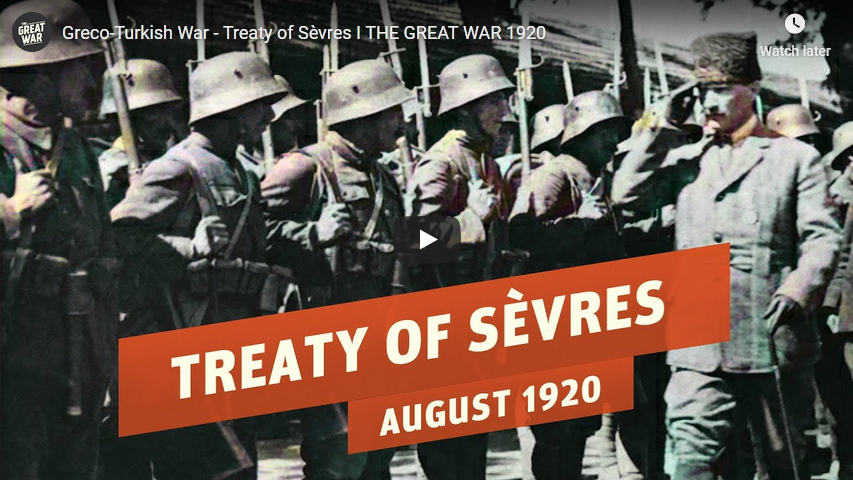
Greco-Turkish War – Treaty of Sèvres I THE GREAT WAR 1920

The Great War
Published 15 Aug 2020

Sign up for Curiosity Stream and get Nebula bundled in: https://curiositystream.com/thegreatwar

While the Greco-Turkish War was still raging, the last of the peace treaties between the Allies and the Central Powers was finalized in Paris. But the Turkish Nationalist Movement under Mustafa Kemal would not accept the terms of the Treaty of Sèvres – even though the Ottoman government had signed it.

» SUPPORT THE CHANNEL
Patreon: https://www.patreon.com/thegreatwar

» OUR PODCAST
https://realtimehistory.net/podcast – interviews with World War 1 historians and background info for the show.

» BUY OUR SOURCES IN OUR AMAZON STORES
https://realtimehistory.net/amazon *
*Buying via this link supports The Great War (Affiliate-Link)

» SOURCES
Halide Edib Adivar, The Turkish Ordeal: Being the Further Memoirs of Halidé Edib, (Piscataway: Gorgias Press, 2012)

John Darwin, Britain, Egypt and the Middle East, (London: Macmillan Press, 1981)

M.L. Dockrill and J. D. Goold, Peace Without Promise: Britain and the Peace Conferences, 1919-1923, (Connecticut: Hamden, 1981)

T G Fraser, Andrew Mango and Robert McNamara, The Makers of the Modern Middle East, (London: Gingko Library, 2015)

Phillip S Jowett, “Armies of the Greek-Turkish War: 1919-1922”, Men at Arms, no 501, (2015)

Michael Llewellyn Smith, Ionian Vision: Greece in Asia Minor 1919-1922, (London: Allen Lane, 1973)

Margaret Macmillan, Paris 1919: Six Months That Changed the World, (London: Macmillan, 2019)

A.E. Montgomery, “The Making of the Treaty of Sèvres of 10 August 1920”, The Historical Journal Vol. 15, No. 4 (December, 1972)

New York Times, “Turk Nationalists Capture Beicos” (July 6, 1920) https://timesmachine.nytimes.com/time…

George Riddell, Lord Riddell’s Intimate Diary of the Peace Conference and After: 1918-1923, (London: Victor Gollancz Ltd, 1933)

» MORE THE GREAT WAR
Website: https://realtimehistory.net
Instagram: https://instagram.com/the_great_war
Twitter: https://twitter.com/WW1_Series
Reddit: https://reddit.com/r/TheGreatWarChannel

»CREDITS
Presented by: Jesse Alexander
Written by: Jesse Alexander
Director: Toni Steller & Florian Wittig
Director of Photography: Toni Steller
Sound: Toni Steller
Editing: Toni Steller
Motion Design: Philipp Appelt
Mixing, Mastering & Sound Design: http://above-zero.com
Maps: Daniel Kogosov (https://www.patreon.com/Zalezsky)
Research by: Jesse Alexander
Fact checking: Florian Wittig

Channel Design: Yves Thimian

Contains licensed material by getty images
All rights reserved – Real Time History GmbH 2020

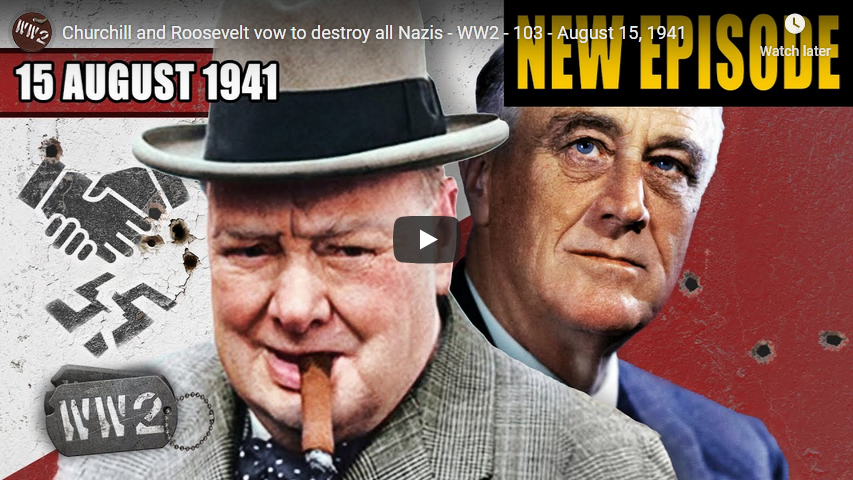
Churchill and Roosevelt vow to destroy all Nazis – WW2 – 103 – August 15, 1941

World War Two
Published 15 Aug 2020

Winston Churchill and Franklin Roosevelt issue a charter that lays out their thoughts for the future, the Soviets are in trouble on two fronts, and Adolf Hitler repeats his orders to those who failed to heed them the first time.

Join us on Patreon: https://www.patreon.com/TimeGhostHistory
Or join The TimeGhost Army directly at: https://timeghost.tv

Follow WW2 day by day on Instagram @World_war_two_realtime https://www.instagram.com/world_war_two_realtime
Between 2 Wars: https://www.youtube.com/playlist?list…
Source list: http://bit.ly/WW2sources

Written and Hosted by: Indy Neidell
Director: Astrid Deinhard
Producers: Astrid Deinhard and Spartacus Olsson
Executive Producers: Astrid Deinhard, Indy Neidell, Spartacus Olsson, Bodo Rittenauer
Creative Producer: Joram Appel
Post-Production Director: Wieke Kapteijns
Research by: Indy Neidell
Edited by: Iryna Dulka
Sound design: Marek Kamiński
Map animations: Eastory (https://www.youtube.com/c/eastory)

Colorizations by:
– Daniel Weiss
– Julius Jääskeläinen – https://www.facebook.com/JJcolorization/
– Cassowary Colorizations – https://www.cassowarycolor.com/
– Norman Stewart – https://oldtimesincolor.blogspot.com/
– Denis Marinov from Wikimedia

Sources:
– Bundesarchiv, CC-BY-SA 3.0: Bild_146-2005-0030, Bild_146-1971-070-61
– Imperial War Museum: E 1416, E 7014, E 3450E, E 7008, E 3438E, E 15023
– Narodowe Archiwum Cyfrowe
– Mil.ru
– egor7 from Wikimedia

Archive by Screenocean/Reuters https://www.screenocean.com.

A TimeGhost chronological documentary produced by OnLion Entertainment GmbH.

From the comments:

World War Two
3 days ago
Although the US has been steadily edging towards more and more support for the Western Allies since outbreak of war almost two years ago, it is this week that an active involvement in WW2 by the United States starts taking form. Let’s be clear though: both the US public, and the US administration are still staunchly opposed to sending in troops and becoming an active belligerent. But the tone of public and political discourse has begun to change, as it becomes increasingly obvious exactly how horrendous the threat is that humanity faces from Naziism.

August 11, 2020

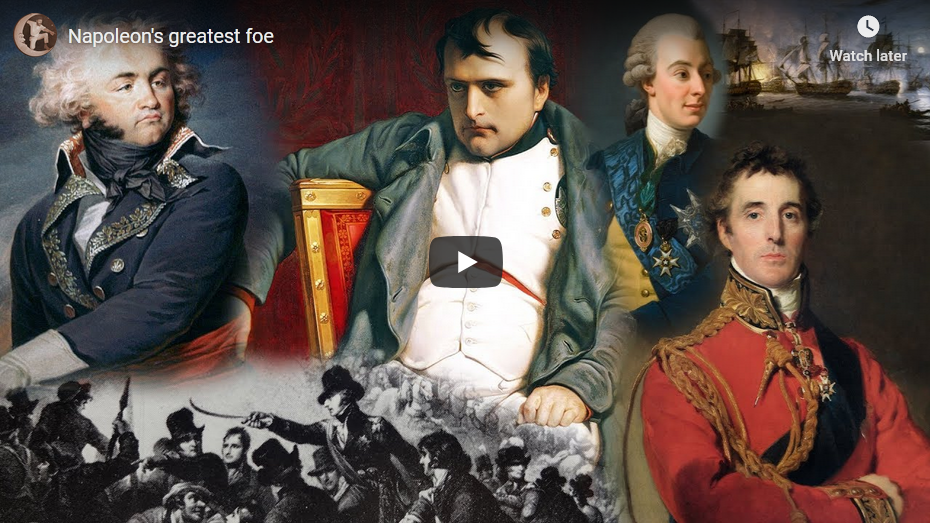
Napoleon’s greatest foe

Filed under: Britain, Europe, France, History, Middle East, Military — Tags: , , , , , , , — Nicholas @ 02:00

Lindybeige
Published 18 Jan 2018

Support me on Patreon: https://www.patreon.com/Lindybeige

Possibly I did too much research for this one. Trying to stay on-topic when the subject is so vast and so interesting was not easy, hence the rather long video. I didn’t mean to say quite so much about what an utter £$%&*! Napoleon was, but he was so thoroughly vile that it proved impossible not to include some details about the man who won his promotion in the army by mowing down civilian protesters in the streets of Paris with grapeshot from his artillery batteries. Anyway, here are tales of bravery and virtue, as well as horrendous some of brutality, lies, and death.

Correction: The battle against the Russian fleet is called Svensksund (Swedish sound, as in channel), not Svenksund. I missed out an S in my haste.

Buy the music – the music played at the end of my videos is now available here: https://lindybeige.bandcamp.com/track…

Lindybeige: a channel of archaeology, ancient and medieval warfare, rants, swing dance, travelogues, evolution, and whatever else occurs to me to make.

▼ Follow me…

Twitter: https://twitter.com/Lindybeige I may have some drivel to contribute to the Twittersphere, plus you get notice of uploads.

website: http://www.LloydianAspects.co.uk

August 10, 2020

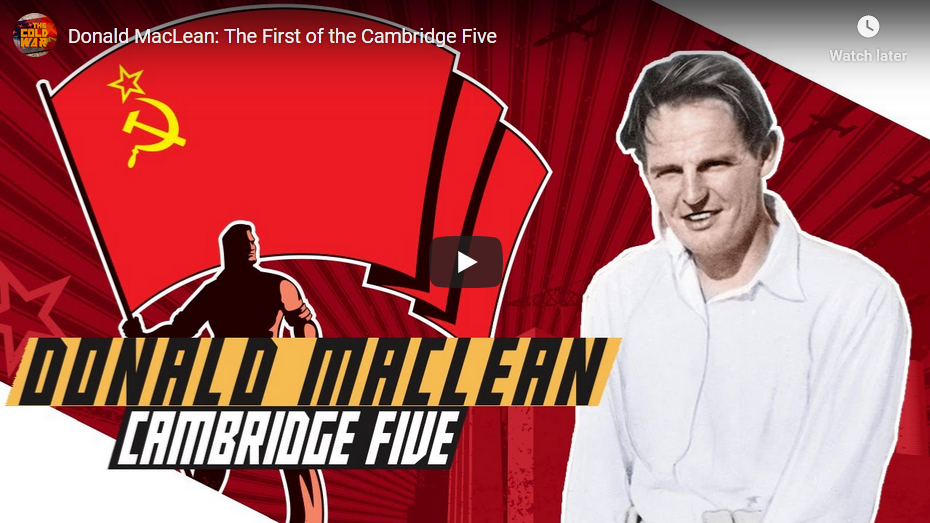
Donald MacLean: The First of the Cambridge Five

The Cold War
Published 22 Jun 2020

Our historical documentary series on the history of the Cold War continues with a video on the famous Cambridge Five and Donald Maclean in particular — a real Cold War-era spy story

Support us on Patreon: https://www.patreon.com/thecoldwar or Paypal: http://paypal.me/TheColdWar

✔ Merch store ► https://teespring.com/stores/thecoldwar
✔ Instagram ► http://www.instagram.com/thecoldwartv

#ColdWar #Maclean #CambridgeFive

July 29, 2020

What was TEKOI?

Filed under: History, Military, Russia, USA, Weapons — Tags: , , , , — Nicholas @ 04:00

CGP Grey
Published 28 Jul 2020

## Related Videos

Exploring Tekoi: https://www.youtube.com/watch?v=ABMV4…

Defeated by Tumbleweeds: https://www.youtube.com/watch?v=7FeXP…

## Special Thanks

Gregory Waltz

## Crowdfunders

Steven Snow, Bob Kunz, John Buchan, Nevin Spoljaric, Donal Botkin, BN-12 , Chris Chapin, Richard Jenkins, Phil Gardner, Martin, Steven Grimm, سليمان العقل, Elliot Lepley, Colin Millions, David F Watson, Saki Comandao, Ben Schwab, Jason Lewandowski, Bobby, rictic, Marco Arment, Shallon Brown, Shantanu Raj, emptymachine, George Lin, Jeffrey Podis, Ben Delo, Henry Ng, Thunda Plum, Awoo, David Tyler, Fuesu, iulus, Jordan Earls, Joshua Jamison, Nick Fish, Nick Gibson, Tyler Bryant, Zach Whittle, Oliver Steele, Kermit Norlund, Derek Bonner, Derek Jackson, Mikko, Orbit_Junkie, Ron Bowes, Tómas Árni Jónasson, Andrew Bereza, Rebecca Wortham, Bryan McLemore, Bear, chrysilis, David Palomares, Emil, Erik Parasiuk, Esteban Santana Santana, Freddi Hørlyck, John Rogers, ken mcfarlane, Leon, Maarten van der Blij, Peter Lomax, Rhys Parry, ShiroiYami, Tristan Watts-Willis, Veronica Peshterianu, Dag Viggo Lokøen, Essa omar, Ryan Richards, Alex Simonides, Felix Weis, John Lee, Maxime Zielony, Melvin Sowah, Elizabeth Keathley, Christopher Mutchler, Giulio Bontadini, Paul Alom, Ryan Tripicchio, Scot Melville, Kyle Wayman, Julien Dubois

## Music

David Rees: http://www.davidreesmusic.com

Update: CGP Grey posted a corrected version of this video here – https://www.youtube.com/watch?v=PCeMCwxayp0
He also posted the Director’s Commentary video (originally intended only for his Patrons) here – https://www.youtube.com/watch?v=ufsYK3Eecw4
There is also a video explaining how the whole process worked and how the error was missed, if you’re interested.

July 24, 2020

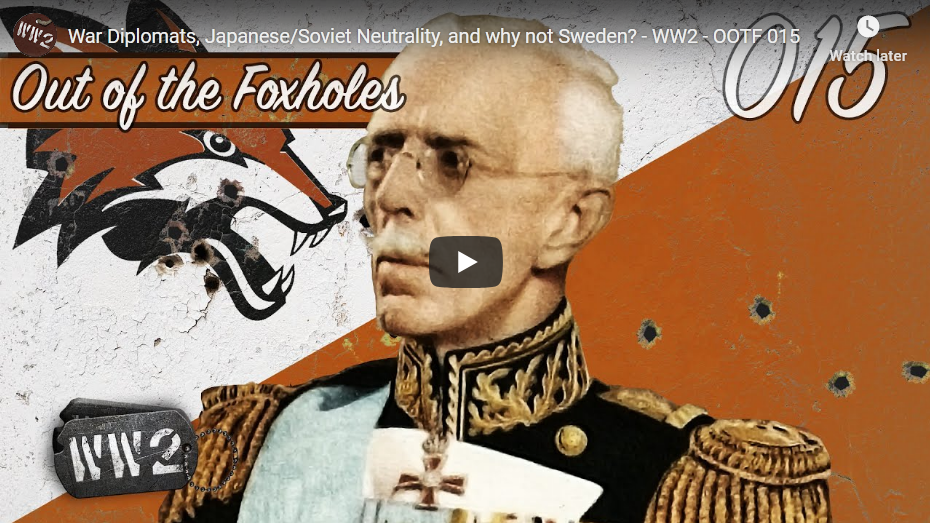
War Diplomats, Japanese/Soviet Neutrality, and why not Sweden? – WW2 – OOTF 015

Filed under: Britain, Europe, Germany, History, Japan, Military, Russia, WW2 — Tags: , , , , — Nicholas @ 04:00

World War Two
Published 23 Jul 2020

What happened to Allied ambassadors? And how did Hitler react to the Soviet-Japanese Neutrality Pact? And why didn’t he invade Sweden? Once again, Indy is in the Chair of Infinite Knowledge answering all your exciting questions about World War Two!

Join us on Patreon: https://www.patreon.com/TimeGhostHistory
Or join The TimeGhost Army directly at: https://timeghost.tv

Follow WW2 day by day on Instagram @World_war_two_realtime https://www.instagram.com/world_war_two_realtime
Between 2 Wars: https://www.youtube.com/playlist?list…
Source list: http://bit.ly/WW2sources

Hosted by: Indy Neidell
Written by: Rune Væver Hartvig
Director: Astrid Deinhard
Producers: Astrid Deinhard and Spartacus Olsson
Executive Producers: Astrid Deinhard, Indy Neidell, Spartacus Olsson, Bodo Rittenauer
Creative Producer: Joram Appel
Post-Production Director: Wieke Kapteijns
Research by: Rune Væver Hartvig
Edited by: Mikołaj Cackowski
Sound design: Marek Kamiński
Map animations: Eastory (https://www.youtube.com/c/eastory)

Colorizations by:
Jaris Almazani (Artistic Man), https://instagram.com/artistic.man?ig…
Norman Stewart – https://oldtimesincolor.blogspot.com/
Daniel Weiss

Sources:
Bundesarchiv
Narodowe Archiwum Cyfrowe
Portrait of Charles Howard Smith, courtesy National Portrait Gallery

Soundtracks from the Epidemic Sound:
Howard Harper-Barnes – “London”
Fabien Tell – “Other Sides of Glory”
Johannes Bornlof – “The Inspector 4”

Archive by Screenocean/Reuters https://www.screenocean.com.

A TimeGhost chronological documentary produced by OnLion Entertainment GmbH.

July 6, 2020

Cold War Two is upon us, but it’s not all Trump’s fault (believe it or not)

Niall Ferguson on the rapid drop in temperature in US/Chinese relations in the last eight years:

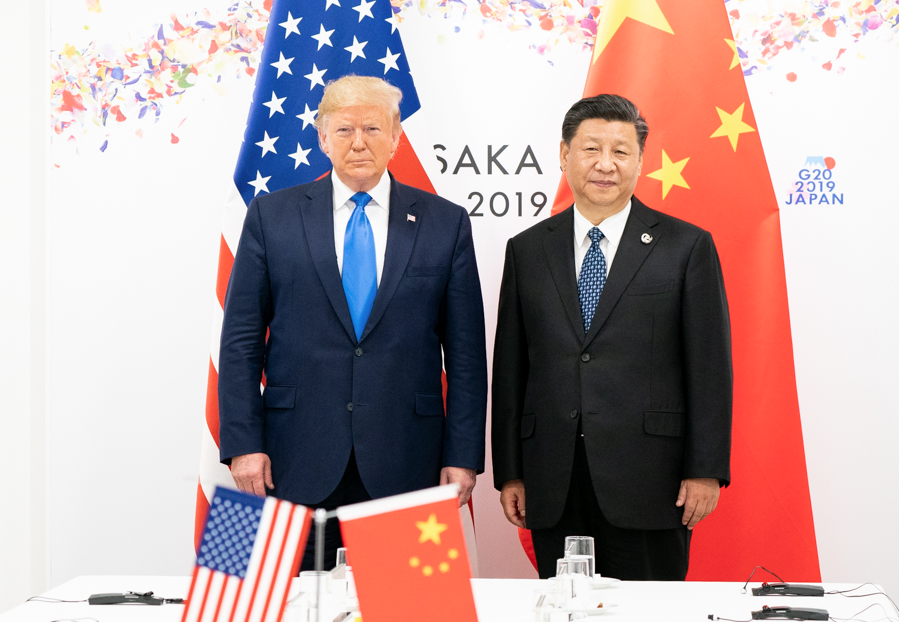
President Donald Trump and PRC President Xi Jinping at the G20 Japan Summit in Osaka, 29 June, 2019.
Cropped from an official White House photo by Shealah Craighead via Wikimedia Commons.

“We are in the foothills of a Cold War.” Those were the words of Henry Kissinger when I interviewed him at the Bloomberg New Economy Forum in Beijing last November.

The observation in itself was not wholly startling. It had seemed obvious to me since early last year that a new Cold War — between the U.S. and China — had begun. This insight wasn’t just based on interviews with elder statesmen. Counterintuitive as it may seem, I had picked up the idea from binge-reading Chinese science fiction.

First, the history. What had started out in early 2018 as a trade war over tariffs and intellectual property theft had by the end of the year metamorphosed into a technology war over the global dominance of the Chinese company Huawei Technologies Co. in 5G network telecommunications; an ideological confrontation in response to Beijing’s treatment of the Uighur minority in China’s Xinjiang region and the pro-democracy protesters in Hong Kong; and an escalation of old frictions over Taiwan and the South China Sea.

Nevertheless, for Kissinger, of all people, to acknowledge that we were in the opening phase of Cold War II was remarkable.

Since his first secret visit to Beijing in 1971, Kissinger has been the master-builder of that policy of U.S.-Chinese engagement which, for 45 years, was a leitmotif of U.S. foreign policy. It fundamentally altered the balance of power at the mid-point of the Cold War, to the disadvantage of the Soviet Union. It created the geopolitical conditions for China’s industrial revolution, the biggest and fastest in history. And it led, after China’s accession to the World Trade Organization, to that extraordinary financial symbiosis which Moritz Schularick and I christened “Chimerica” in 2007.

How did relations between Beijing and Washington sour so quickly that even Kissinger now speaks of Cold War?

The conventional answer to that question is that President Donald Trump has swung like a wrecking ball into the “liberal international order” and that Cold War II is only one of the adverse consequences of his “America First” strategy.

Yet that view attaches too much importance to the change in U.S. foreign policy since 2016, and not enough to the change in Chinese foreign policy that came four years earlier, when Xi Jinping became general secretary of the Chinese Communist Party. Future historians will discern that the decline and fall of Chimerica began in the wake of the global financial crisis, as a new Chinese leader drew the conclusion that there was no longer any need to hide the light of China’s ambition under the bushel that Deng Xiaoping had famously recommended.

« Newer PostsOlder Posts »

Powered by WordPress