Quotulatiousness

October 23, 2023

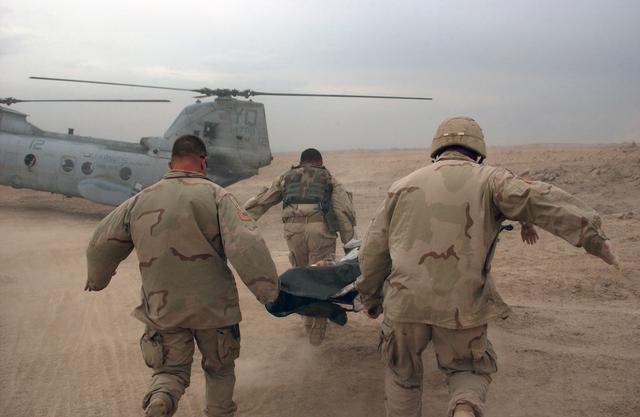
Icon of Canadian Search and Rescue For 40 years; the story of the CH-113 Labrador

Filed under: Cancon, History, Military — Tags: , , , , — Nicholas @ 02:00

Polyus
Published 3 Sept 2021

The Boeing-Vertol CH-113 Labrador was an icon of Canadian search and rescue for 40 years. It served on both the right and left coast and undertook many life saving rescues in its day. Originally ordered as two models, an army transport version and a search and rescue version, they were all converted to a common standard when the army took possession of their Chinook helicopters. As a dedicated search and rescue helicopter it excelled at its role. Its replacement is a long story for another time but involves several facepalm moments thanks to short sighted decision making. As a result it was kept in service longer than anticipated but still did the job well.

0:00 Introduction
0:27 Previous generation of search and rescue
1:18 Acquisition of the CH-46 Sea Knight
4:10 Definitive CH-113 Labrador model
5:53 Replacement and retirement
6:38 Conclusion
(more…)

October 22, 2023

QotD: The changes in Roman legionary equipment attributed to the “Marian reforms”

There only two parts of this narrative unambiguously suggested by our sources are equipment changes: that Marius introduced a new type of pilum (Plut. Mar. 25) and that he standardized legionary standards around the aquila, the eagle standard (Plin. NH 10.16).

For the pilum, Plutarch says that Marius designed it to incorporate a wooden rivet where the long metal shank met the heavy wooden shaft, replacing one of the two iron nails with a wooden rivet that would break on impact, in order to better disable the shield. The problem is that the pilum is actually archaeologically one of the best attested Roman weapons with the result that we can follow its development fairly closely. And the late, great Peter Connolly did exactly that in a series of articles in the Journal of Roman Military Equipment Studies1 and while the design of the pilum does develop over time, there’s simply no evidence for what Plutarch describes. The “broad tanged” pilum type could have been modified this way, but we’ve never found one actually so modified; instead the pila of this type we find all have rivets (two of them) in place (where rivets are preserved at all). Moreoever, most pila of that “broad tanged” type, both before and after Marius, have the edges of that broad tang bent over at the sides, which would prevent the sort of sliding action Plutarch describes even if one of the rivets broke. Meanwhile, by the first century there are three types of pila around (socketed, broad-tanged and spike-tanged) only one of which could be modified in this way (the broad-tanged type), and that type doesn’t dominate during the first century when one might expect Marius’ new-style pila to be in use. In practice then the conclusion seems to be that Plutarch made up or misunderstood this “innovation” in the pilum or, at best, the design was adopted briefly and then abandoned.

On to the aquila. Now, it is absolutely true that the aquila, the legionary eagle, became a key standard for the Roman legions. Pliny the Elder notes that before Marius it was merely the foremost of five standards, the others being the wolf, minotaur, horse and boar (Plin. HN 10.16). But even a brief glance as legionary standards into the early empire (see Keppie (1984), 205-213 for an incomplete and somewhat dated list) shows that bulls, boars and wolves remained pretty common legionary emblems (alongside the eagle) into the empire. The eagle seems to have been something of a personal totem for Marius (e.g. Plut. Mar. 36.5-6) so it is hardly surprising he’d have emphasized it, the same way that legions founded by Caesar – or which wanted to be seen as founded by Caesar – adopted the bull emblem, quite a lot. But this is a weak accomplishment, since Pliny already notes that the eagle was, even before Marius, already prima cum quattuor aliis (“first among four others”), and so it remained: first among a range of other emblems and standards. Though of all of the things we may credit Marius with instituting, this perhaps gets the closest, if we believe Pliny that Marius further elevated the eagle into its particular position.

Then there is the institution of the Roman marching pack and the furca to carry it, such that Marius’ soldiers became known as “Marius’ mules” because he made them carry all of their own kit rather than, as previous legions had supposedly done, carrying it all on mules. Surely this extremely famous element of the narrative cannot be flawed? And Plutarch sort of says this, he notes that, “Setting out on the expedition, he laboured to perfect his army as it went along, practicing the men in all kinds of running and in long marches, and compelling them to carry their own baggage and to prepare their own food. Hence, in after times, men who were fond of toil and did whatever was enjoined upon them contentedly and without a murmur, were called Marian mules” (Plut. 13.1; trans. B. Perrin). Except that doesn’t say anything about instituting the classic Roman pack that we see, for instance, depicted on Trajan’s column, does it? It just says Marius made his men carry their baggage and prepare their own food, leading to the nickname for men who did toil without complaint.

The problem is that those two things – making soldiers carry their baggage and cook their own food (along with kicking out camp followers) – are ubiquitous commonplaces of good generalship with instances that pre-date Marius. P. Cornelius Scipio Aemilianus does exactly this – getting rid of camp servants, wagons and pack animals, making soldiers cook their own food and kicking out the camp followers – according to Appian in 134 when he besieged Numantia (which fell in 133, App. Hisp. 85). And then Q. Caecilius Metellus, Marius’ own former commander, does the exact same thing in 109 when he takes command against Jugurtha in North Africa, kicking the sutlers out of the camp, getting rid of pack animals and private servants, making soldiers cook their own food, carry their own rations and their own weapons (Sall. Iug. 42.2; note that Sallust dies in in the 30s BC, 80-odd years before Plutarch is born, so Plutarch may well be getting this trope from Sallust and then attributing it to the wrong Roman). Critiques of generals who issued rations rather than making their soldiers cook or praise for generals who didn’t remained standard into the empire (e.g. Tac. Hist. 2.88; Hdn. 4.7.4-6; Dio Cass. 62.5.5). In short this trope was not new to Marius nor was it new to Plutarch’s version of Marius; it was a standard trope of generals restoring good discipline to their soldiers. Plutarch even hedges noting another story that the term “Marius’ mules” might actually have come how well Marius as a junior officer got along with animals (Plut. Mar. 13.2)!

Well, fine enough, but what about the idea that state-issued equipment is emerging in this period? Well, it might be but our evidence is not great. As noted when we discussed the dilectus, Polybius implies – and his schematic for conscription makes little sense otherwise – that the Romans are in that period buying their own equipment. He also notes that the quaestors deduct from a soldier’s pay the price of their rations (if they are Romans; socii eat for free), their clothing and any additional equipment they need (Polyb. 6.39.14). It makes sense; if a fellow forgot a sword or his breaks, you need to get that replaced, so you fine him the value of it and then issue him one from the common store.

Now Keppie (1984) assumes this system changes during the tribunate(s) of Gaius Gracchus (123-2) and you can see the temptation in this idea. If Gaius Gracchus shifts equipment to being issued at state expense, then suddenly there’s no reason not to recruit the landless proletarii (discussed below) opening the door for Marius to do so (discussed below) and fundamentally transforming the Roman army into the longer-service, professional form we see in the empire. The problem is that, well, it didn’t happen. First, we have no evidence at all that Gaius Gracchus did anything related to soldier’s arms and armor; what we have is a single line from Plutarch that soldiers should be issued clothing at state expense with nothing deducted from their pay to meet this cost (Plut. C. Gracch. 5.1). The assumption here is that this also covered arms and armor, but Plutarch doesn’t say that at all. The more fatal flaw is that we can be very, extremely sure this reform didn’t stick, because we have a bunch of Roman “pay stubs” from the imperial period (from Egypt, naturally) and regular deductions vestimentis, “for clothing” show up as standard.2 Indeed, they show up alongside deductions for food and replacement socks, boots and so on, exactly as Polybius would have us expect. Apart from the fact that this is presumably being done by a procurator instead of a quaestor (a change in the structure of administration in the provinces run directly by the emperor), this is the same system.

Now there are reasons to think that at least some equipment was state supplied or contracted (even if it may have been billed to the accounts of the soldiers who got it). Scipio creates a public armaments production center in Carthago Nova in 210, but this may be a one off. Seemingly more centralized production of arms under contract are more common in the late Republic and by the imperial period we start to see evidence of fabricae which seem to be central production sites for military equipment.3 But we have no hint in the sources of any sudden reform to this system. It may well be a gradual change as the “mix” of personal and state-ordered equipment slowly tilts in favor of the latter; the system Polybius describes could accommodate both situations, so there’s no need for a sudden big shift. Alternately, the preponderance of state-produced equipment might well be connected to the formalization of a long-service professional army under Augustus. Even then, we still find pieces of equipment in Roman imperial sites which were clearly personal; soldiers could still go and get a fancy version of standard kit, stamp their name in it and call it theirs. All I think we can say with any degree of confidence is that self-purchased equipment seems to be the norm in Polybius’ day whereas state-issued equipment seems to be the norm by the end of the first century. But Marius has nothing to do with it, as far as we can tell and no ancient source claims that he did.

Oh and by the by, if you are picking up from all of this (and our discussion of Lycurgus) that Plutarch is a difficult source that needs to be treated with a lot of caution because he never lets the facts get in the way of a good story … well, that’s true.

Bret Devereaux, “Collections: The Marian Reforms Weren’t a Thing”, A Collection of Unmitigated Pedantry, 2023-06-30.


    1. “Pilum, Gladius and Pugio in the Late Republic”, JRMES 5 (1997), then “The Reconstruction and Use of Roman Weaponry in the Second Century BC”, JRMES 11 (2000) and then “The pilum from Marius to Nero – a reconsideration of its development and function”, JRMES 12/13 (2001/2).

    2. On this, see R.O. Fink, Roman Military Records on Papyrus (1971).

    3. On all this, see Bishop and Coulston, Roman Military Equipment (2006), 233-240.

October 21, 2023

QotD: The US Army’s Korean War blooding

Filed under: Asia, China, History, Military, Quotations, USA — Tags: , , , , — Nicholas @ 01:00

There is much to military training that seems childish, stultifying, and even brutal. But one essential part of breaking men into military life is the removal of misfits — and in the service a man is a misfit who cannot obey orders, any orders, and who cannot stand immense and searing mental and physical pressure.

For his own sake and for that of those around him, a man must be prepared for the awful, shrieking moment of truth when he realizes he is all alone on a hill ten thousand miles from home, and that he may be killed in the next second.

The young men of America, from whatever strata, are raised in a permissive society. The increasing alienation of their education from the harsher realities of life makes their reorientation, once enlisted, doubly important.

Prior to 1950 they got no reorientation. They put on the uniform, but continued to get by, doing things rather more or less. They had no time for sergeants.

As discipline deteriorated, the generals themselves were hardly affected. They still had their position, their pomp and ceremonies. Surrounded by professionals of the old school, largely field rank, they still thought their rod was iron, for, seemingly, their own orders were obeyed.

But ground battle is a series of platoon actions. No longer can a field commander stand on a hill, like Lee or Grant, and oversee his formations. Orders in combat — the orders that kill men or get them killed, are not given by generals, or even by majors. They are given by lieutenants and sergeants, and sometimes by PFC’s.

When a sergeant gives a soldier an order in battle, it must have the same weight as that of a four-star general.

Such orders cannot be given by men who are some of the boys. Men willingly take orders to die only from those they are trained to regard as superior beings.

It was not until the summer of 1950, when the legions went forth, that the generals realized what they had agreed to, and what they had wrought.

The Old Army, outcast and alien and remote from the warm bosom of society, officer and man alike, ordered into Korea, would have gone without questioning. It would have died without counting. As on Bataan, it would not have listened for the angel’s trumpet or the clarion call. It would have heard the hard sound of its own bugles, and hard-bitten, cynical, wise in bitter ways, it would have kept its eyes on its sergeants.

It would have died. It would have retreated, or surrendered, only in the last extremity. In the enemy prison camps, exhausted, sick, it would have spat upon its captors, despising them to the last.

It would have died, but it might have held.

T.R. Fehrenbach, This Kind of War: A Study in Unpreparedness, 1963.

October 20, 2023

Zulu Kingdom’s Last Stand – The Anglo-Zulu War 1879

Filed under: Africa, Britain, History, Military — Tags: , , , — Nicholas @ 04:00

Real Time History
Published 18 Oct 2023

The Anglo-Zulu War in 1879 is one of the most well known colonial wars of the British Empire. And while the British ultimately won and annexed the Zulu Kingdom, at the Battle of Isandlwana they suffered one of their worst defeats.
(more…)

October 14, 2023

A Jacobite spy for Bonnie Prince Charlie

Filed under: Britain, Business, France, History, Military — Tags: , , , , — Nicholas @ 03:00

In the latest Age of Invention newsletter, Anton Howes talks about the career of John Holker of Manchester, cloth manufacturer, who joined the army of Prince Charles Edward Stewart in 1745, and eventually became an expert in industrial espionage:

Prince Charles Edward Stuart, 1720 – 1788. Eldest Son of Prince James Francis Edward Stuart.
Portrait by Allan Ramsay, National Galleries Scotland via Wikimedia Commons.

I’ve lately been reading about one of history’s greatest spies — not a James Bond-like agent with licence to kill, but a master of industrial espionage, John Holker.1

Holker was originally from Manchester, in Lancashire, where he was a skilled cloth manufacturer in the early eighteenth century, his specialty being calendering — a finishing process to give cloth a kind of sheen or glazed effect. But Holker was also a Catholic and a Jacobite — a believer in the claim of the Catholic descendants of the deposed king James II to be the rightful rulers of Great Britain, instead of the Hanoverian George I and George II who had only succeeded to the throne because they were Protestants. In 1745 James II’s grandson Charles, also known as Bonnie Prince Charlie — likely the “Bonnie” who lies over the ocean in the famous song — landed in the Scottish Highlands and raised the royal standard. Charles’s uprising defeated the British troops stationed in Scotland, captured Edinburgh, and then marched down the west coast of England, capturing Carlisle and entering Lancashire.

To Holker, who had been born in the same year as the last Jacobite rebellion in 1719, the arrival of Charles in Manchester must have seemed like a once-in-a-generation opportunity. He and his business partner instantly joined Charles’s troops and he was appointed a lieutenant. But Manchester was the last place to provide many eager volunteers for the uprising, and when Charles reached Derby he lost heart and turned around. Holker and his business partner ended up being left to garrison Carlisle as Charles and his force retreated into Scotland to hunker down, and they were soon captured by the British troops sent to quash the uprising. They were then, as officers, sent to Newgate prison in London to sit with their legs bound in irons and await trial and certain execution.

But they never made it to trial. In the first demonstration of Holker’s extraordinary talent for espionage, they escaped. Holker had been allowed visitors in prison, so had drawn on London’s crypto-Jacobite circle to smuggle in files, ropes, and information about the prison and its surroundings. They managed to file through the leg-irons and window bars, climbed up the gutters onto the prison roof, and then used planks from the cell’s tabletop to cross onto the roof of a nearby house. In the event, they disturbed a dog guarding the house, and so Holker hid in a water-butt and became separated from the others. He eventually found refuge at a crypto-Jacobite’s house, then escaped into the countryside before managing to make his way to France.

In France, Holker joined his fellow veterans of the failed uprising of ‘45, becoming a lieutenant in a Jacobite regiment of the French army. He fought for the French in the Austrian Netherlands — present-day Belgium — against the Hapsburgs, the Hanoverians, the Dutch, and the British. Even more extraordinary, however, was that when Bonnie Prince Charlie wanted to go in secret to England in 1750, it was Holker who went with him as his sole companion and guide. Although Charles failed to persuade his supporters in England to rise up in rebellion on their own, Holker managed to get the prince secretly and safely to London and back.

By the time Holker reached his early thirties he had been an industrialist, rebel, prisoner, fugitive, soldier, undercover agent, and even spy-catcher: he successfully identified a spy for the British in Charles’s circle, even if Charles failed to heed his warning. But in 1751 Holker’s career took yet another turn when he was recruited by the French government as an industrial spymaster.

Holker’s chief task was to steal British textile technologies.


    1. Unless otherwise stated, I’ve drawn much of my information on Holker and the industries that the French attempted to copy from John R. Harris, Industrial Espionage and Technology Transfer: Britain and France in the 18th Century (Taylor & Francis, 2017), particularly chapter 3.

October 12, 2023

Considering Israel’s potential courses of action in Gaza

Filed under: Middle East, Military — Tags: , , , , , — Nicholas @ 05:00

CDR Salamander puts on his Operational Planning hat and sifts through what Israel may decide to do in light of open source information from Israeli and other sources:

This isn’t going to make anyone happy. It doesn’t matter if you are on the “cease fire and de-escalate” left or the “Linebacker III” right — none of my COAs will be quite what you are looking for … though the Linebacker III crowd might be OK with COA-B and COA-C … but I’m getting ahead of myself.

Cut this ‘ole Operational Planner some slack, and a few caveats:

  1. I’ve had to rewrite 85% of this from its first draft over the weekend as we now have Commander’s Intent (CI) and higher Direction and Guidance (D&G). That had me discard two of my three Courses of Action (COA).
  2. I am quite sure the Israeli Defense Forces had appropriate draft Operational Plans (OPLANS) on the shelf with all sorts of Branch Plans and Sequels waiting to be updated and providing enough once dusted off to get things in to Phase I.
  3. I don’t have a Planning Staff or even a Core Planning Group, intel support, or even some Italian colleagues to remind me to take my 10:00 and 15:00 coffee breaks, but I’ll do my best anyway. As anyone in crisis response planning can tell you — as opposed to advanced plans types — you have to be comfortable enough to accept that you don’t have enough time, staff, or information to produce a great OPLAN, but you’ll come up with a good enough plan anyway. You’re happy to be wrong about a detail or two, and are open-minded enough, secure in your ego, and content to change what you thought was perfect — some or all of your plan — the moment you get better information, changes in CI or D&G, or the situation develops in unexpected ways … as they do.
  4. If you are looking for a detailed Tactical OPLAN or a sweeping Strategic OPLAN, you’re at the wrong substack. I’m an Operational Planner and what I am about to do is an “elevator speech” level Preliminary COA Decision Brief with the principals (J2, J3, J4, J5, and the Chief of Staff) where they get to weigh in and refine what the Planning Group I am the Chair of has produced (OK, I’m a Planning Group of one and I made myself Chair … I don’t care, it’s going on my FITREP anyway). Following the Principals’ input — especially from the Chief of Staff who has had better one on one time with the Commander and as such has the nuance no one else does — I’ll beg for a day and will be told I have two hours to make changes and then well brief the Commander.

Working from open-source information, we have CI and D&G from the Prime Minister and the Minister for Defense.

If you go to YouTube you can get the script, but we’ll use this statement from the weekend as a close approximation of POLMIL-level guidance from Prime Minister Netanyahu;

As a Planning Staff, what do I need to take away from this?

  • Israel is at war.
  • Israel will finish it.
  • We will exact a price that will be remembered by them (Hamas) and Israel’s other enemies for decades to come.

From Defense Minister Yoav Gallant we have:

  • Gaza won’t return to what it was before.
  • We started the offensive from the air, later will also from the ground, and that’s how it will end.
  • Gaza will never return to what it was.

Like I said … that had me ditch two of the my three COA from this weekend. If you wanted to know how it shifted, my most dovish COA is gone, and my most harsh COA is now the center of my Overton Window. A planner must try to align with CI and D&G as it is understood — not how he wishes it to be.

October 11, 2023

QotD: A rational army would run away …

Filed under: Economics, History, Military, Quotations — Tags: , , , , — Nicholas @ 01:00

It is a thousand years ago somewhere in Europe; you are one of a line of ten thousand men with spears. Coming at you are another ten thousand men with spears, on horseback. You do a very fast cost-benefit calculation.

    If all of us plant our spears and hold them steady, with luck we can break their charge; some of us will die but most of us will live. If we run, horses run faster than we do. I should stand.

Oops.

I made a mistake; I said “we”. I don’t control the other men. If everybody else stands and I run, I will not be the one of the ones who gets killed; with 10,000 men in the line, whether I run has very little effect on whether we stop their charge. If everybody else runs I had better run too, since otherwise I’m dead.

Everybody makes the same calculation. We all run, most of us die.

Welcome to the dark side of rationality.

This is one example of what economists call market failure — a situation where individual rationality does not lead to group rationality. Each person correctly calculates how it is in his interest to act and everyone is worse off as a result.

David D. Friedman, “Making Economics Fun: Part I”, David Friedman’s Substack, 2023-04-02.

October 6, 2023

QotD: The “Marian Reforms” to Roman legions

Filed under: Europe, History, Military, Quotations — Tags: , , , , — Nicholas @ 01:00

First off we need to establish what changes are generally understood to fall under the heading of the “Marian Reforms”, before we then try to actually locate those changes in our evidence (and then marvel at our general inability to do so). Understood broadly the Marian reforms are supposed to be a combination tactical, organizational and equipment reforms associated with Gaius Marius in the last decade of the 100s. As it turns out, Marius initiated almost none of these reforms, some of these supposed reforms didn’t happen at all at any point and some of them happened outside the time period in question.

In short, the things that are supposed to have happened here are:

  • (Tactical-Organizational) A shift in battle tactics from the two-century maniple (c. 120 men) to the six-century cohort (c. 480 men) as the primary tactical unit on the battlefield,1 as well as the primary organizational unit of the Roman army. Elements of the older Polybian legion persist in names and titles.
  • (Organizational) A shift from poorly paid conscript soldiers drawn from Rome’s propertied class (the assidui) drawn up through the dilectus to the use of volunteers drawn from Rome’s property-less poor (the proletarii or capite censi) who served as effectively professional soldiers, lacking any other means of subsistence.
  • (Organizational) The practice of granting land and/or citizenship to Roman soldiers on discharge as a regular feature of Roman service.
  • (Organizational) The end of the light infantry velites and Roman citizen cavalry (the equites) as part of the legion, as a product of the next point making such wealth distinctions unimportant.
  • (Logistical) The introduction of state-supplied equipment (in place of self-supplied equipment) which enabled the mass-recruitment of the proletarii, as they no longer needed to be able to afford their own equipment, as part of a reform ascribed by some scholars to Gaius Gracchus (trib. 123-2).
  • (Equipment) The introduction of a new design of pilum with a wooden rivet designed to break on impact with enemy shields (Plut. Mar. 25).
  • (Equipment) The prioritization of the aquila, the eagle standard, over other standards in the legion (Plin. NH 10.16), often framed as the aquila fully replacing these other standards.
  • (Equipment) The introduction of the furca, a Y-shaped pole for carrying the soldier’s pack (the sarcina), leading to better legionary logistics.

As we’re going to discuss, some of these things happened – but not because of Marius – and some of them didn’t happen at all. So how on earth did this idea of a big “Marian Reform” end up so pervasive in how we (used to) understand the Roman army of this period? The answer really has a lot to do with gaps (lacunae) in our sources. For the early second century, we have two really quite good sources on Roman military activity, Livy and Polybius. But both give out by mid-century,2 leaving us relatively blind until Julius Caesar‘s comentarii (de Bello Gallico and de Bello Civili) suddenly give us a massive infusion of information as we can see Caesar’s army functioning often in quite minute detail.

And we see what seem to be quite different armies! Caesar is using cohorts as tactical and operational units, rather than maniples. His armies don’t seem to have any citizen cavalry in them and they seem to be very loyal to him; he’s using a lot of non-citizens in auxiliary roles in a way that we know will become very standard in the imperial period (eventually making up half the army by Tiberius‘ reign). And indeed, moving forward, the legions of the early empire end up a lot more visible to us, both because of the literary evidence (Tacitus!) and also because, as they become more stationary on fixed frontiers, they leave forts and inscriptions and other evidence we can see far more clearly than the ever-moving armies of the Roman Republic.

And then into that there is Gaius Marius. Remember that our sources in this period are a bit patchier, without a strong continuous narrative (but with a lot of sources so we generally have someone for most of it). But Marius gets a lot of focus because of his roles in the civil wars and his spectacular seven consulships, and the one thing we are told quite clearly about him is that in 107 when he raised his first consular army he broke tradition by accepting volunteers from the proletarii (Sall. Iug. 86.1; Plut. Mar. 9.1). The temptation then to see that substantial change (which, to be clear, our sources are exaggerating for reasons I’ll discuss in a moment) as connected to all the other changes from the “Polybian” legion to the “Caesarian” legion and thus to assume that Marius is doing all of them, reading far too deeply into a few lines of Sallust and Plutarch (the latter not generally a particularly good guide on military affairs).

And I should note finally at the outset that this all also plays into a tendency in our sources generally: ancient authors really like narratives where one particular aristocrat can be credited with making major reforms or innovations as an expression of their particular virtue. We’ve talked about this with Lycurgus, but it shows up consistently with rulers supposedly introducing new weapons and new practices as big, top-down reforms that, on closer inspection, turn out to be gradual changes we can see signs of happening over quite some time. It’s an understandable if irritating bias of habit for authors whose purpose in writing is the education of aristocrats on how to be leaders – every big change has to be a product of the character and leadership of aristocrats (even when it wasn’t). Plutarch, especially, of all ancient authors, loves these sorts of just-so stories and guess who we are heavily reliant on for the life of Gaius Marius? But until relatively recently, historians were often far more willing to accept these sorts of just-so stories than they should have been (in part because late 19th and early 20th century historians shared some of those same assumptions about elite leadership and in part because singular reforms make for compelling stories).

Bret Devereaux, “Collections: The Marian Reforms Weren’t a Thing”, A Collection of Unmitigated Pedantry, 2023-06-30.


    1. Note that the size of the century has changed, from 60 to 80 as well.

    2. Polybius’ history, already incomplete as we have it, ends, while Livy’s continuous narrative which originally went through the first century cuts out almost completely in 167, leaving us with just summaries of his work.

October 2, 2023

The fall and rise of siege warfare

Filed under: Europe, History, Middle East, Military — Tags: , , , , — Nicholas @ 05:00

Sieges are probably about a year or so younger than the first fortified village — as soon as someone came up with the bright idea of throwing a wall around it for protection, some equally bright spark likely started coming up with ways to get inside that wall. In The Critic, Peter Caddick-Adams considers the eclipse and return of siege warfare in Europe in reviewing Iain MacGregor’s The Lighthouse of Stalingrad and Prit Buttar’s To Besiege a City: Leningrad 1941-42:

A model of the Vauban fortress at Arras in northern France. Arras is one of the Fortifications of Vauban, a UNESCO World Heritage Site.
Image via Wikimedia Commons.

The history of war is never far removed from battles for cities. Many of us, of whatever creed, were brought up on the story of the walls of Jericho tumbling after the Israelites marched around the stronghold once a day for six days, seven times on the seventh day, and then blew their trumpets. Though no archaeological evidence at Tell es-Sultan, in modern Palestine, corroborates the arresting visual image related in Joshua, Chapter 6, diggers have uncovered a range of defensive stone and brick walls dating back to 8,000 BC. It indicates that even 10,000 years ago, the ancients indulged in the odd siege when the mood took them. The biblical story also introduces us to the concept of intimidation, today fashionably called “psychological warfare”.

The much younger fortress of Troy provides insights into another city-focussed era of battles. Beneath today’s Hisarlik in northern Turkey are nine archaeological layers. Troy VIII was the alluring city of Classical and Hellenistic times, as portrayed in the Iliad, Homer’s Odyssey and Virgil’s Aeneid. The Romans took the lessons of Homeric Troy seriously and clad all their major settlements with defensive walls, as any exploration of Canterbury, Chester or York will confirm. These acted as magnets for opponents, as in Boudicca’s revolt of AD 60–61. Cities such as Colchester, London and St Albans were sacked, as much for what they represented as for their physical presence.

When the Normans arrived in their longships, they imported the concept of stone castles to control the newly conquered English. Their walled cities would be ungraded and contested scores of times over the succeeding six centuries. Henry V’s siege of Harfleur (modern Le Havre) in 1415, the beginning of the Agincourt campaign famously depicted in Shakespeare’s play, underlined the drawback of traditional sieges. They took longer and were usually far costlier than expected. Several thousand men camped in a small area with no knowledge of hygiene inevitably resulted in a high mortality rate amongst the attackers before a shot was fired.

Harfleur was also the first time an English army made use of gunpowder artillery in a siege, a technology that had trickled its way across the world from China. Powder and fuse heralded events 38 years later, when an Ottoman army shook the Christian world to its core by breaching the massive walls of Constantinople (Istanbul) after a 53-day bombardment using cannons. On Tuesday, 29 May 1453, stone finally gave way to bronze and iron, finishing the last remnant of the Roman Empire. Europe was never quite the same again. Fortress architecture started to employ breadth, using earthen ramparts and ditches, rather than height.

Strategy for urban warfare intensified during the lifetime of the French fortress engineer Vauban (1633–1707), who used landscaped terrain as well as geometrically designed defensive walls to deter would-be besiegers. When viewed from above, his fortification designs resemble starfish. So successful were his tactics that sieges, always costly and time-consuming, lessened in importance. His contemporary Marlborough recognised that on any cost-benefit analysis, Vauban had rendered sieges militarily unprofitable, restoring manoeuvre to campaigns.

Subsequent wars fought in the Napoleonic era, the Crimea, between the American North and South, and by Prussia generally reflected this return to mobility. There was the odd attritional discrepancy with the 1854–55 siege of Sevastopol, that of Petersburg in 1864–65 and Paris in 1870–71. Cities were still fought for, but usually contests were removed away from the walls, where forces could conduct wide sweeping manoeuvres, such as Leipzig in 1813 or Ypres in the Great War. As weapons grew more accurate and their munitions heavier, fortifications broadened and sank into the ground, culminating in the trenches of 1914–18. In this era, dominance of terrain became the hallmark, and it was virtually siege-free.

It was remarkable that urban warfare returned on an industrial scale during the Second World War, a time usually associated with blitzkrieg and rapid tank thrusts. This happened at Leningrad, Sevastopol and Stalingrad in the East; at Ortona and Cassino in Italy, Caen; Carentan and St Lo in Normandy; in Aachen and later assaults on Aschaffenburg and Cologne, Magdeburg, Leipzig and Berlin in 1945. Subsequent NATO doctrine for the defence of central Europe focussed on the threat of more attrition. Plans were devised to defend quite small localities, putting grit in the Soviet steamroller and making the cost of attacking Western towns and cities prohibitive.

Update: Broken URL corrected.

September 27, 2023

The British army between 1918 and 1940

Filed under: Britain, History, Military, WW1, WW2 — Tags: , , , — Nicholas @ 05:00

Richard Dannatt and Robert Lyman recently published Victory to Defeat, which chronicles the decline of the British army’s fighting capabilities in the interwar years. Robert Lyman posted a longer version of Gordon Corrigan’s review for Aspects of History (with permission):

The British Army ended the First World War well trained, well led, well equipped and capable of engaging in all arms intensive warfare. Of all the players, on both sides, this army was unquestionably the most capable of deployment against a first class enemy anywhere in the world. Twenty years later it found itself with very much the same equipment, but with very much less of it, and devoid of either the ability or the means to fight a war in Europe against an enemy which had absorbed the lessons of 1918 but which the British had forgotten. It was the British Army that had invented blitzkrieg (although of course they did not call it that, a term coined by the French press very much later) and used it during the Battle of Amiens and on into the “Hundred Days” that saw the defeat of the German Army on the battlefield, and whatever German myth later averred, it was the British Army that forced that victory on the Western Front, not the French and not the Americans. And yet, in 1939 and 1940 the British were roundly defeated in France and Belgium, in Greece, in Crete and in North Africa. In this important – and to this reviewer almost heart rending – book the authors describe how and why the victors of 1918 were allowed to become incapable of fighting intensive warfare a mere two decades later.

In the first part of the book the authors describe the build up to the First War, and their explanation of the so called “Curragh Mutiny” is much more accurate than many accounts by others (although the officers did not threaten to disobey orders, only to resign, and while Carson’s Ulster Volunteers were indeed incorporated into the British Army as the 36th Ulster Division, so were Redmond’s National Volunteers, into the 16th Irish Division). The authors then go on to show how the British government had, albeit reluctantly, accepted a continental commitment in 1914 and had despatched an expeditionary force to Belgium, described then and later as the finest body of troops ever to leave these shores. Fine they certainly were, well trained, well led and well equipped, but the British Expeditionary Force (BEF) of professional regular soldiers was pitifully small, and with experience of imperial policing and not of war against a first class enemy. With the need to expand enormously and rapidly, this army had to adapt to a theatre where massed artillery, machine guns and barbed wire made any attempt to manoeuvre almost impossible. The book shows how by trial and error, by analysis of operations and by a gradually developing doctrine the British learned to use a combination of all arms to break through German defences and eventually to defeat them. With the infantry, the artillery, the armour, the engineers and increasingly the air all working together to get inside the enemy’s decision making circle, to get him on the back foot and keep him there, these were the elements of blitzkrieg, but it was the defeated Germans who were to absorb those principles and perfect them until twenty years after their defeat they were the most competent army in Europe.

After an excellent account of the British journey from an imperial gendarmerie to a practitioner of intensive war, the next part of the book shows how and why by the time the Second World War came along the British were incapable, not only of deterring war, but of fighting it. The “ten year rule”; the reluctance of governments to spend on defence; the political refusal to contemplate another war in Europe and the reluctance of the public to contemplate another bloodletting like that of the First War; the inability to experiment or to develop tanks and armoured vehicles; the seeming impossibility of reconciling the twin requirements of imperial policing and any commitment to land operations in Europe with the assets available; the myth of the “bomber will always get through” and the absence of any consistent war fighting doctrine, all are lucidly explained. Much of the fault is shown to lie with politicians, and surely the most disgraceful example of political interference was the sacking of the Chief of the Imperial General Staff (CIGS), the professional head of the army, by the leaving of a note on his desk by the very dubious Secretary of State for War, Hore-Belisha. The generals are not spared, however. Despite restrictions on funding and refusal by governments to accept that another war was looming generals could have spoken out, although it does have to be recognised that in a democracy the civil power is paramount.

September 18, 2023

Learning lessons from the plight of the British army in 1940

Filed under: Books, Britain, History, Military, WW1, WW2 — Tags: , , — Nicholas @ 04:00

Lessons from history are only occasionally learned easily … they’re more likely brought to our attention by the Gods of the Copybook Headings after we’ve suffered some awful setback. As the latin tag would have it, Si vis pacem, para bellum: if you want peace, be prepared for war. Most western democracies refuse to believe this is true, and one of the easiest things for peacetime democratic governments to do is to short-fund the military and use the “savings” for more politically popular things that will help them get re-elected. The Canadian government has been a shining example of this since the late 1960s, with no end in sight.

A recent book on the British army, tracing its decline from the end of the First World War to the defeat in the Battle of France in 1940 shows just how quickly a world-beating army can be reduced to second-best in its next conflict. Richard Dannatt & Robert Lyman, the authors of Victory: the British Army 1918-1940 to Defeat, had an article in the Sunday Mail, illustrating the parallels between the army in their book and the British army today:

WHEN IT comes to national defence, never take your eye off the ball. That is a lesson we can and must learn from history. Because the disturbing fact is that this country did just that in the 1920s and 1930s in the aftermath of the First World War and the result very nearly cost us our freedom as Hitler’s forces threatened our shores.

Britain won the war in 1918 but then shamefully lost the peace as our army was allowed to atrophy.

It is often forgotten how professional the British Army had become by 1918, to pull off a stunning battlefield victory over the Germans in northern France in the final Hundred Days of the war.

It had been a long time coming after years of static trench warfare and no decisive breakthrough, just massive loss of life in the blood baths at Ypres, Verdun, the Somme and Passchendaele.

But finally, at the Battle of Amiens, British commanders — often wrongly caricatured as dunderheads and “donkeys” leading lions – demonstrated that they were able to understand and master the intricacies of the modern battlefield. With their sophisticated co-ordination of all elements of combat power — infantry, artillery, air power, armour — the stalemate was broken.

Modern war-fighting skills, technology and methods — learned at great cost in lives over the previous three-and-a-half years — secured victory for the British Army and its allies in 1918 as the Germans admitted defeat and sued for peace.

And yet little more than 20 years later, the boot was on the other foot as the next generation of German soldiers poured into France and defeated the Allies in a lightning campaign that ended with British troops fleeing from the beaches of Dunkirk.

How had victory in 1918 turned so quickly to defeat and humiliation in 1940?

The answer is that it had become the deliberate policy of successive British governments to downgrade the Army — a lesson we must learn today, with a new Defence Secretary who knows little about the brief.

Spending on defence was dramatically slashed amid an ill-thought-through assumption that there would not be another major war within ten years and so.

So far as the then government was concerned, the “war to end all wars” (as the Great War was dubbed) had done its job. There was no need to consider or plan for a future one, whether in policy, financial or practical terms. Everything was an issue of money as budgets were decided by Treasury civil servants with no military advice.

The principal reason why the Army was so unprepared for war in 1939 was that the British government, through faulty defence planning and financing in the previous two decades, made it so.

September 15, 2023

Learning to handle mules to accompany Chindit columns in WW2

Filed under: Asia, Britain, History, India, Japan, Military, WW2 — Tags: , , , — Nicholas @ 03:00

Robert Lyman posted some interesting details from veteran Philip Brownless of how British troops in India had to learn how to handle mules and abandon their motor transport in order to get Chindit columns into Japanese territory in Burma:

A fabulous drawing from Jungle, Jungle, Little Chindit (1944)

Soon after our return from the Arakan front in the autumn of 1943, we were in central India, and had been told that the whole division was to be handed over to General Wingate and trained to operate behind the Japanese lines. All our motor transport was to be taken away and we were to be entirely dependent upon mules for our transport.

The C.O. one evening looked round the mess and then said to me “You look more like a country bumpkin than anybody else. You will go on a veterinary course on Tuesday and when you come back you will take charge of 44 Column’s mules.”

I had never met one of these creatures before. On arriving at Ambala I reported to the Area Brigade Major who wasn’t expecting me and seemed to have no clue about anything. He said “You’d better go down to the Club and book in”. I reported to the Club, a comfortable looking establishment, and they seemed to have a vague idea that a few bodies like me might turn up on a course and were apologetic that I would have to sleep in a tent but otherwise could enjoy the full facilities of the Club. I was shown the tent, an EPIP tent or minor marquee, with a coloured red lining and golden fleur de lys all over it, (very Victorian) with a small office extension with table and chair in front and another extension at the back with bath, towel rail and a fully bricked floor. Having lived either in a tent or under the stars in both the desert and the Arakan for the last 2 years, this struck me as luxury indeed. Even better, I took on a magnificent bearer, with suitable references, whom I found later was some kind of Hindu priest. I soon got used to having my trouser legs held up for me to put my feet in, and being helped into the rest of my clothes. I had a comfortable 3 weeks learning all about mules.

I discovered all sorts of things like the veterinary term “balls”, which were massive pills which were given to the mule by – first of all grabbing his tongue and pulling it out sideways so he couldn’t shut his mouth on your arm, and then gently throwing the ball at his epiglottis and making sure it went down. Then you let go of his tongue and gave him a nice pat. One of our lecturers, an Indian warrant officer, knew his stuff well and was so pleased about it that when he asked a question he would give you the answer himself. He liked being dramatic and loved to finish a description of some fatal ailment by saying “Treatment, bullet”.

Many of the men in our battalion were East Enders; others came from all over Essex. A few were countrymen, two were Irish and knew all about horses, one sergeant had been in animal transport and one invaluable soldier had been an East End horse dealer. The large majority had had nothing to do with animals: however, the saving grace was that English soldiers seem to be naturally good with animals and soon learned to handle them well. I arranged to get some instruction from the nearby unit of Madras Sappers and Miners and we borrowed a handful of trained mules from them for the men to practise handling, tying on loads and learning to talk to them.

Then came the great day when we were to draw up our main complement of animals, about 70 mules and 12 ponies. We were dumped at a small railway station. It was all open ground and there was a team of Army Veterinary Surgeons to allocate fairly between the three battalions, the Essex, the Borders and the Duke of Wellington’s. Lieut. Jimmy Watt of the Borders was a pal of mine: he and I, with a squad of men were to march them back nearly 100 miles to our camp, sleeping each of the five nights under the stars. As soon as we arrived at the disembarkation site I got all our mule lines laid out, with shackles (used to tie mules fore and aft) and nosebags ready. I had also picked up the tip that the mules would be wild, having spent three days in the train, and almost impossible to hold, so I instructed our men to tie them together in threes before they got off the train. As all three pulled in different directions, one muleteer could hold them. Not everybody had learned this trick so the result was that wild mules were careering all over the place, impossible to catch. When our first handful of mules arrived, they were quickly secured in a straight line and fed. They were familiar with lines like this and cooled down at once, long ears relaxed and tails swishing amiably. When the wild mules careering round saw this line, they said to themselves “We’ve done this before” and came and stood in our lines. We shackled them and I picked out the moth-eaten ones and sent them back to the vets who kept sending polite messages of thanks to Mr. Brownless for catching them. We finished up with a very good set of mules. Jimmy Watt and I had a bit of a conscience about the Duke of Wellington’s so we picked them out a really good pony. We felt even worse a few weeks later when it was sent back to Remounts with a weak heart! The Brigade Transport Officer visited us the second evening so Jimmy Watt and I walked him round rather quickly, chatting hard, to approve the allocation of animals, and he agreed with our arrangement.

In a highly optimistic mood early on, I decided to practise a river crossing. We marched several miles out from camp to a typical wide sandy Indian river, 300 yards across, made our preparations, i.e. assembling the two assault boats, making floating bundles of our clothes and gear by wrapping them in groundsheets, unsaddling the animals, and assembling at the water’s edge. A good sized detachment of muleteers was posted on the opposite bank ready to catch the mules. The mules waded into the shallow water but no one could get them to move off. We tried all sorts of inducements in vain and then suddenly, one sturdy little grey animal decided to swim and the whole lot immediately followed. Calamity ensued! Mules are very short sighted and could only dimly see the opposite bank but downstream was a bright yellow sandy outcrop and they all made for this. The muleteers on the other bank, when they realised what was happening, ran through the scrub and jungle as fast as they could, but the mules arrived first and bolted off into the wilds of India. I swam my pony across with my arm across his withers and directing him by holding his head harness, the gear was ferried across and the mule platoon, with one pony, began the march back to camp. Deeply depressed, I wondered how to tell the C.O. I had lost all his mules and imagined the court martial which awaited me (or, serving under General Wingate, would I be shot out of hand?) An hour and a half later we came in sight of the camp and to my utter astonishment I could see the mules in their lines. When I arrived at the mule lines, the storeman met me and said that the whole lot had arrived at the double and had gone to their places. He had merely gone along the lines, shackling them and patted their noses. Salvation! I kept quiet for a bit but it got out and I was the butt of much merrymaking.

September 11, 2023

How the Russian Army Collapsed

Filed under: Germany, History, Military, Russia, WW1 — Tags: , , , , , , — Nicholas @ 04:00

The Great War
Published 9 Sept 2023

As 1917 began, the Russian army was larger and better-equipped than ever before. Within weeks, the Tsar and his dynasty were gone, and by the summer, the Russian army was disintegrating before the eyes of its generals — but how exactly did one of the most powerful armies in the world collapse?
(more…)

September 9, 2023

The US military’s recruiting crisis

Filed under: History, Military, Politics, USA — Tags: , , — Nicholas @ 05:00

As I joked earlier this year after one or another of the US services reported falling significantly short of their recruiting goal, “I find this hard to believe now that Uncle Sugar is not only willing to fund your gender transition, but will then guarantee that you won’t be sent into a combat zone.” Kulak has been reading some histories of the 20th century and was surprised to find that the recruiting problem faced by most military organizations in that time was having too many good recruits:

This was after WW1! Millions of young men had just died as part of regiments many little different than this. And yet there was this much demand from young men to be part of the martial world.

This is because the Military and military life was ACTUALLY a good career move, and ACTUALLY formed life long bonds in the early 20th century.

Amidst the population boom of the early 20th century and all the excess young men with little inheritance… the military and militia life was a major vehicle for social mobility and aspiration and forming social connections…

So what changed? Why is it almost completely the opposite in early 21st century America?

These attitudes survived the world wars, even the western front of WW1 …

But they were devoured by Vietnam and the Civil Rights era.

Implicit in a lot of 19th and 20th century militarism was the vision of “Every Soldier a Citizen, Every Citizen a Soldier” this ethos was first expressed during the french revolution … It was aspirational. The subjects divorced from the state and military were now armed and able to participate in civic and military life, they were now citizens … of course by the early 20th century this sounds very menacing… Soldiers must obey orders, every day … if every citizen is a soldier, and bound to obey, on pain of death, that’s Totalitarianism.

You can make a strong case that US military recruiting never fully recovered from the Vietnam era, even through the temporary boost of the post-9/11 patriotic rush.

America has gone from over 1% of the population actively serving at any one time to nearly a third of that.

The “Professionalization” of the US military to an “All Volunteer force” has in effect just been a cover for this collapse in recruiting capacity.

America’s military isn’t significantly structurally different. These aren’t really professionals.

Your average 3 year contract private isn’t making some obscene Yuppie amount of money for his ambitious professional commitment. A private makes under 30k a year. A Second Lieutenant, with a university degree and years of professional development, who may have had to plan out his career from 16 years old getting a Congressman’s letter of recommendation to attend West Point or another service academy … Makes 40-60k a year.

US GDP per capita is 72k. If that Lieutenant had gone to a second tier school and gotten a Computer Science degree he’d be making 6 figures and have vastly more control over his life.

It’s not a good career move, in the 1780s or 1900s and ambitious scion of a decayed noble family desiring to conquer the world might want to become an artillery officer… Today he wants to work on wall street or at Google.

Even if you’re starting out from a very rough place there ar almost certainly a dozen better things you could do to advance yourself faster, for better money, and with less effort than joining the Military.

The only appeal of the US military, for decades now, has been to people who really want to escape their situation, who really felt they needed to hard reboot their life, or who are really drawn to military life out of sheer love of it.

And then the Army went woke.

The long-serving senior officers of every branch of the US military are now locked in to pushing diversity in all its manifold ways, to the point of knowingly discouraging non-diverse service members out of the way to make room for this month’s gender, racial, or other quotas.

So America’s effective recruitment capacity and civic feeling will continue to collapse even as Americans hate each other and their government even more.

You think recruit capacity is bad now? Wait til they imprison Trump.

September 4, 2023

QotD: Historical rice farming versus wheat or barley farming

Filed under: Asia, China, Food, History, Quotations — Tags: , , , — Nicholas @ 01:00

Because rice is such a different crop than wheat or barley, there are a lot of differences in the way that rice cultivation shapes the countryside. […] The thing to note about rice is that it is both much more productive on a per-acre basis than wheat or barley, but also much more labor intensive; it also relies on different forms of capital to be productive. Whole-grain wheat and brown rice have similar calorie and nutritional value (brown rice is somewhat better in most categories) on a unit-weight basis (so, per pound or ton), but the yield difference is fairly large: rice is typically around (very roughly) 50% more productive per acre than wheat. Moreover, rice plants have a more favorable ratio of seeds-to-plants, meaning that the demand to put away seeds for the next harvest is easier – whereas crop-to-seed ratios on pre-modern wheat range from 3:1 to 10:1, rice can achieve figures as high as 100:1. As a result, not only is the gross yield higher (that is, more tons of seed per field) but a lower percentage of that seed has to be saved for the next planting.

At the same time, the irrigation demands for effective production of wet-rice requires a lot of labor to build and maintain. Fields need to be flooded and drained; in some cases (particularly pre-modern terrace farming) this may involve moving the water manually, in buckets, from lower fields to higher ones. Irrigation canals connecting paddies can make this job somewhat easier, as can bucket-lifts, but that still demands moving quite a lot of water. In any irrigation system, the bunds need to be maintained and the water level carefully controlled, with also involves potentially quite a lot of labor.

The consequence of all of this is that while the rice farming household seems to be roughly the same size as the wheat-farming household (that is, an extended family unit of variable size, but typically around 8 or so members), the farm is much smaller, with common household farm sizes, even in the modern period, clustering around 1 hectare (2.47 acres) in comparison to the standard household wheat farms clustered around 4-6 acres (which, you may note with the yield figures above, lands us right back at around the same subsistence standard).

Moreover, rice cultivation is less soil dependent (but more water dependent) because wet-rice farming both encourages nitrogen fixation in the soil (maintaining the fertility of it generally without expensive manure use) and because rice farming leads naturally to a process known as pozdolisation, slowly converting the underlying soil over a few years to a set of characteristics which are more favorable for more rice cultivation. So whereas with wheat cultivation, where you often have clumps of marginal land (soil that is too wet, too dry, too rocky, too acidic, too uneven, too heavily forested, and so on), rice cultivation tends to be able to make use of almost any land where there is sufficient water (although terracing may be needed to level out the land). The reliance on the rice itself to “terraform” its own fields does mean that new rice fields tended to under-produce for the first few years.

The result of this, so far as I can tell, is that in well-watered areas, like much of South China, the human landscape that is created by pre-modern rice cultivation is both more dense and more uniform in its density; large zones of very dense rice cultivation rather than pockets of villages separated by sparsely inhabited forests or pasture. Indeed, pasture in particular seems in most cases almost entirely pushed out by rice cultivation. That has very significant implications for warfare and I have to admit that in reading about rice farming for this post, I had one of those “oh!” moments of sudden understanding – in this case, how armies in pre-modern China could be so large and achieve such massive local concentrations. But as we’ve discussed, the size of an army is mainly constrained by logistics and the key factor here is the ability to forage food locally, which is in turn a product of local population density. If you effectively double (or more!) the population density, the maximum size of a local army also dramatically increases (and at the same time, a society which is even more concentrated around rivers is also likelier to allow for riverine logistics, which further improves the logistical situation for mass armies).

But it also goes to the difficulty many Chinese states experienced in maintaining large and effective cavalry arms without becoming reliant on Steppe peoples for horses. Unlike Europe or the Near East, where there are spots of good horse country here and there, often less suited to intensive wheat cultivation, most horse-pasturage in the rice-farming zone could have – and was – turned over to far more productive rice cultivation. Indeed, rice cultivation seems to have been so productive and suitable to a sufficient range of lands that it could push out a lot of other kinds of land-use, somewhat flattening the “ideal city” model that assumed wheat and barley cultivation.

Bret Devereaux, “Collections: Bread, How Did They Make It? Addendum: Rice!”, A Collection of Unmitigated Pedantry, 2020-09-04.

« Newer PostsOlder Posts »

Powered by WordPress