The first function aircraft were put to in WWI was reconnaissance. In 1914, that might mean locating the enemy in a fast-moving battlefield, but as soon as the trench stalemate set in, reconnaissance mostly meant identifying enemy buildups along the line and – still more importantly – serving as spotters for artillery. It wasn’t a huge cognitive leap to go from having aircraft which identified targets for the artillery to thinking that the aircraft could be the artillery. But as with tanks, the technical limitations of the platforms in use meant that actually meaningful close air support was still two decades away when the war ended. The rapid development of aircraft in these early days means that there is a truly bewildering array of aircraft designs in use during the war, but the Farman F.50 is a good sample for what the most advanced bombers in common use looked like towards the war’s end. It carried a maximum of eight 44kg (totalling 352kg) bombs under the wings, which were dropped unguided. With a maximum speed of less than 100mph and a service ceiling under 5000m, it was also an extremely vulnerable platform: fragile, slow and with a relatively low flight ceiling. The French mainly used bombers at night for this reason.
But how much airpower does it take to really move a division out of position? In 1944, at the start of Operation Cobra as part of the Normandy breakout, it was necessary for US forces to move the powerful armored division Panzer Lehr out of its prepared positions outside of St. Lo. Over the course of an hour and a half, the U.S. Eighth Air Force hit Panzer Lehr with approximately three thousand aircraft, including 1,800 heavy bombers (each of which might have had bomb-loads of c. 2-3,500kg; the attack would have been the equivalent of about 13,000 Farman F.50s (of which only a hundred or so were built!)). By this point, even medium bombers carried bomb loads in the thousands of pounds, like the B-25 Mitchell medium bomber, with a bomb load of 3000lbs (1360kg). This was followed by a hurricane artillery barrage! Despite this almost absurdly awesome amount of firepower (which, to be clear, inflicted tremendous damage; by the end of Operation Cobra, Panzer Lehr – the heaviest and most powerful Panzer division in the west – had effectively ceased to exist), Panzer Lehr, badly weakened was still very capable of resisting and had to be pushed out of position by ground attack over the next three days.
Needless to say, nothing on offer in 1918 or for a decade or more after, was prepared to offer that kind of offensive potential from the air. That kind of assault would have required many thousands of aircraft with capabilities far exceeding what even the best late-war WWI bombers could do. Once again, while close air support doctrine was developed with one eye on the trench stalemate and the role airpower could play in facilitating a breakthrough and restoring maneuver (either by blasting the breakthrough or – as in Soviet Deep Battle doctrine – engaging enemy rear echelon units to bog down reinforcements). But the technology wasn’t anywhere near the decisive point by 1918. Instead, the most important thing aircraft could do was spot for the artillery, which is mostly what aircraft continued to do, even in late 1918.
Bret Devereaux, “Collections: No Man’s Land, Part II: Breaking the Stalemate”, A Collection of Unmitigated Pedantry, 2021-09-24.
May 28, 2022
QotD: Breaking the trench stalemate with tactical air power
May 26, 2022
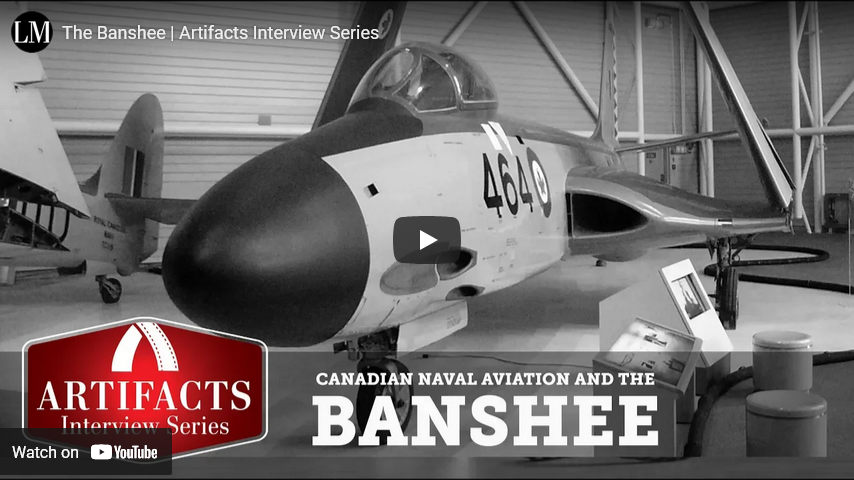
The Banshee | Artifacts Interview Series
Legion Magazine
Published 15 Mar 2019Legion Magazine‘s Stephen J. Thorne sat down with Andrew Burtch, the Post-1945 historian at the Canadian War Museum, to discuss what was the crown jewel of the Royal Canadian Navy’s air fleet – the Banshee. Video edited by Adam Tindal.
For more information, visit: www.legionmagazine.com/artifacts
May 25, 2022
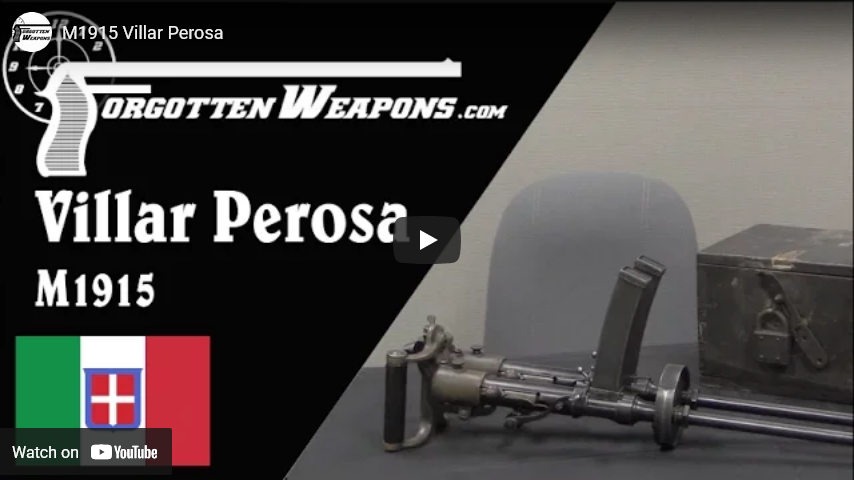
M1915 Villar Perosa
Forgotten Weapons
Published 5 Aug 2016http://www.patreon.com/ForgottenWeapons
The Villar Perosa is one of the first small machine guns developed and used by a military force. It was designed in Italy and introduced in 1915 as an aircraft weapon, to be used in a flexible mount by an airplane’s observer. The gun consists of two independent firing actions mounted together. Each fires from an open bolt as a rate of 1200-1500 rounds/minute, feeding from a 25 round magazine of 9mm Glisenti cartridges. This allowed the maximum possible volume of fire in an aerial combat situation, where in 1915 ballistic power was not particularly important.
As aircraft armaments improved and synchronized, belt-fed machine guns became practical, the Villar Perosa was quickly made obsolete in aerial use. The Italian military experimented with several applications of the weapon in ground combat, including slings and belt fittings for walking fire, tripods, mounts with integral armor shields, and bicycle mounts. None of these proved particularly successful, as the elements that made the gun well adapted to early aerial use (high rate of fire with a small cartridge) made it relatively ineffective for infantry use.
Ultimately, the best use of the Villar Perosa was to break them up and convert the actions into shoulder-fired submachine guns. Designs to do this were developed by both the Beretta company and Villar Perosa themselves, and in 1918 these guns entered service in the same approximate period as the first German MP-18 submachine guns. Because of this recycling, intact M1915 Villar Perosa guns are quite rare today.
March 31, 2022
Canada’s F-35 procurement process — “Dysfunctional, but, like, a masterpiece of dysfunction.”
In The Line, Matt Gurney reveals the embarrassing secret of his life: he has “a favourite Canadian military procurement fiasco”. He’s quite right that there’s a distressingly wide variety of procurement cock-ups to choose from since the 1960s, but in his opinion the F-35 saga is the best:
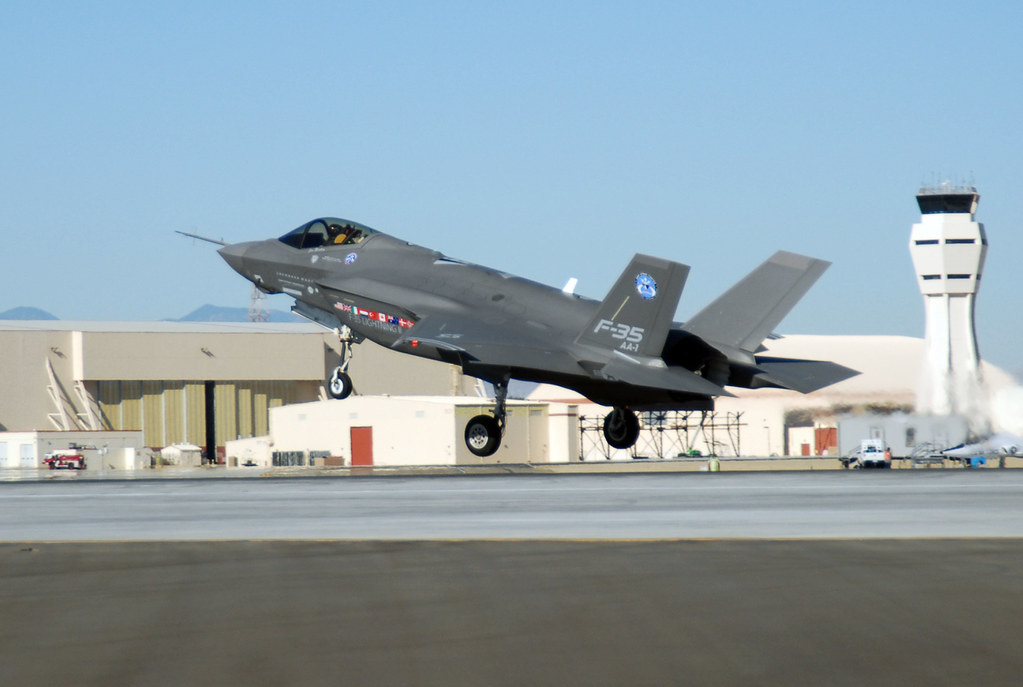
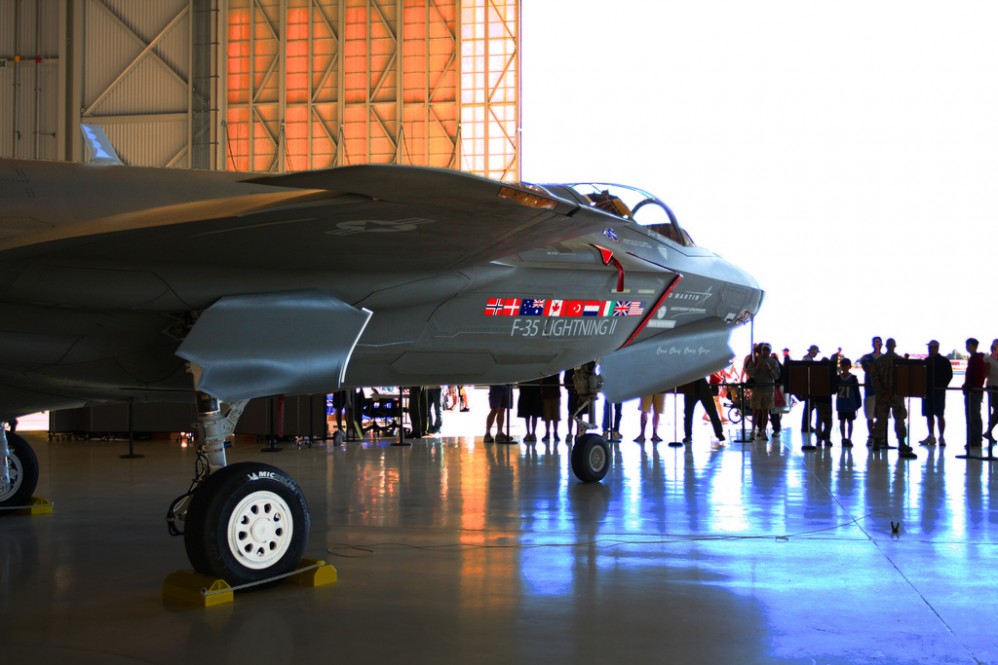
“F-35 Lightning II completes Edwards testing” by MultiplyLeadership is licensed under CC BY 2.0

Having a favourite Canadian military procurement fiasco feels perverse, in a way. It’s like having a favourite gruesome sports injury. Procurement fiascos are bad. We want fewer of them. There’s nothing to be celebrated when yet another one barfs all over the national rug. And yet I find myself indulging a bizarre fondness for a mostly overlooked low point in our long, embarrassing journey to this week’s re-decision to buy a fleet of F-35 fighter jets for the Royal Canadian Air Force. As bad as the low point was — and it was really bad — it also so perfectly summed up our utterly manifest dysfunction that I’ve come to almost admire it. It’s awful, but it’s a pure form of awful. Dysfunctional, but, like, a masterpiece of dysfunction. You couldn’t ask for a better example of what’s wrong with us.
[…]
That wasn’t the original plan; the Liberals first proposed buying 18 new F-18 SuperHornets, the more advanced American successor to the original F-18. That idea fell through due to a trade spat between Canadian darling Bombardier and Boeing, the SuperHornet manufacturer. This was the point of no return: the Boeing dispute was another opportunity for the Liberals to sigh, pop a few Tums and then just do the right thing and proceed with the full replacement as quickly as possible.
They did not. And this, dear readers, is where this embarrassing chapter of our already pathetic history of military procurement reached maximum absurdity.
With our CF-18 fleet at a state of exhaustion, and Boeing in Trudeau’s dog house, instead of actually replacing our old, exhausted jets with new jets, we just gave the air force enough old, exhausted Australian jets so that the RCAF could cobble enough workable jets and spare parts together to allow the Liberals to further delay any decision on a real replacement program.
When you write a lot about military procurement, as I certainly have, you can’t help but grow a bit (!) jaded and cynical. Even by the standards of my appallingly lowered expectations, though, this was an outrageous decision. As I said above, it’s so bad, so cynical, so crassly political, that it has perversely become something I almost admire, in a twisted way. It’s an almost too-brutal-to-be-believed example of politicians dodging accountability and leadership like Keanu bobbing and weaving out of the path of CGI bullets. Every dollar and hour of time we put into scooping up Australia’s leftover jets — they were unneeded because Australia was competent enough to procure more advanced SuperHornets and, ahem, F-35s — was money and time spent not to improve the readiness and capabilities of the Canadian Armed Forces, but to permit the Liberals to avoid acknowledging they’d made a dumb campaign promise.
Stephen Harper failed the Canadian Armed Forces and Canada generally by not getting the ball rolling on a replacement during his majority term. This was a major failure by the Conservatives that they get all awkward and squirmy about when you bring up, but we should bring it up. The CPC botched this, badly, and should feel shame. Justin Trudeau then repeated that failure, and then took it up a level. In this race to the bottom, where no one looks good, Trudeau “wins” by simple virtue of snapping up used jets — the last of which only arrived last spring! — to buy his government time to do absolutely nothing.
March 30, 2022
The RCAF’s long, sad F-35 story
In The Line, Mitch Heimpel tries (without either laughing or crying) to tell the story of how the Canadian government finally got around to admitting they should have bought the F-35 fourteen years ago (when the RCAF told them it was the best fit for our national requirements):
If you’re looking for a simple meta-explanation for all of us, it would be this: Canadian politicians refuse to tell the public one simple truth — military procurement is expensive. There isn’t an inexpensive version of this. That doesn’t mean we should accept any and all costs just because it’s going to be expensive. It does mean that politicians have to stop trying to sell us on there being an inexpensive, or perfect, version of this. There is no MacGyver version of military procurement. No amount of rubber bands and paper clips replaces jet engines and submarines, no matter how many times we pretend it will. Indeed, the longer you delay, the more it’ll cost — the weapons generally get more expensive, and you end up spending more money to wring every last bit of use out of what equipment you already have, instead of replacing it in an efficient, orderly way.
So, let’s recap: We are, in fact, so bad at procurement that we ran a process for years, and then cancelled it. And then pledged not to buy the jets we’d originally pleged to buy. We then bought seven old Australian F-18s so we could keep our elderly and dwindling CF-18 fleet from experiencing a “capability gap” caused mostly by not just buying the F-35 in the first place. Then, almost 12 years after announcing we were going to buy the F-35, after all the drama above, we’ve announced we’ll buy the F-35, after all. Eighty eight of them, in fact. So there’s that, I guess.
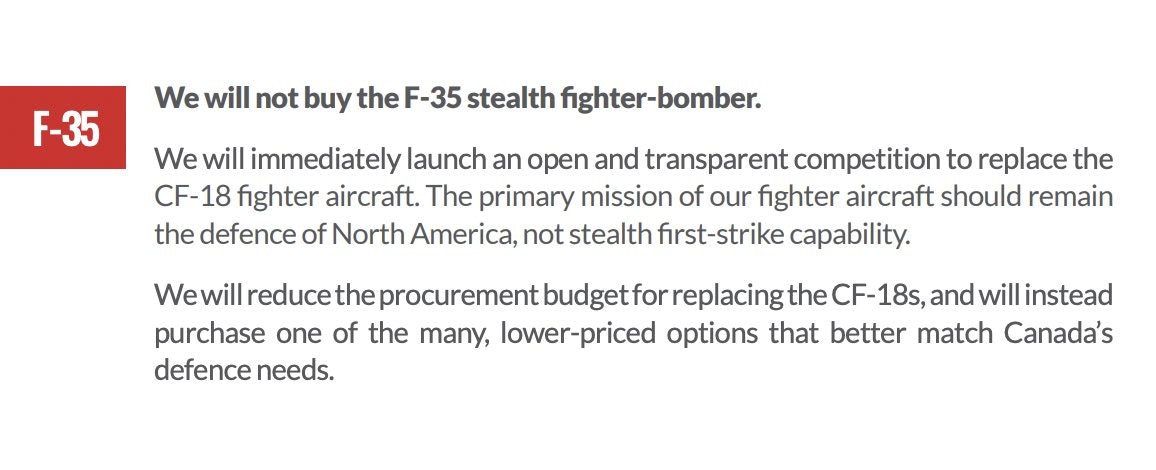
In so many ways, the F-35 saga is another symbol of seven years of Trudeau governance. In 2015, the Liberals could not have been more clear in their campaign platform, which included a whole section titled “We will not buy the F-35 stealth bomber-fighter.”
What were Ministers Anand and Tassi out saying when the F-35 announcement was made this week? “Best plane” and “best price.” Which was true in 2008 when we were first told it was the only fighter that met our needs. It was still true when the Harper government blinked in 2012, and still true when Justin Trudeau was accusing the government of “whipping out” our CF-18s while on the opposition benches in 2014. Remained true in 2015 when the Liberals campaigned against it, too, and every year since.
We have no reason to believe that what is supposed to be a $19-billion announcement for 88 planes to begin delivery in 2025 will actually end up being any of those things. Don’t be surprised if we spend more money to get fewer jets at a later date. But we are now well past the point of being able to blame anyone other than ourselves for cost overruns or late deliveries. The Canadian government failed the Royal Canadian Air Force in this procurement. That is beyond dispute. These guys need the planes. They have for years.
Let’s hope we’ve at least been sufficiently embarrassed by this experience to be more serious when we have to talk about submarines, which is now, come to think of it.
But I doubt it.
March 28, 2022
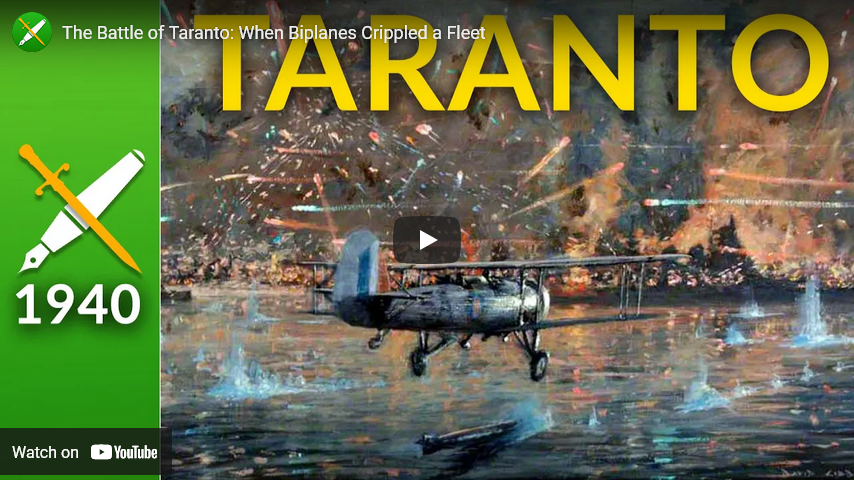
The Battle of Taranto: When Biplanes Crippled a Fleet
Historigraph
Published 23 Feb 2019If you enjoyed this video and want to see more made, consider supporting my efforts on Patreon: https://www.patreon.com/historigraph
#BattleOfTaranto #Historigraph
► Twitter: https://twitter.com/historigraph
► Instagram: https://www.instagram.com/historigraph
► My Gaming Channel: https://www.youtube.com/c/Addaway
► My Twitch: https://www.twitch.tv/addaway
March 25, 2022
Avro Canada CF-105 Arrow; Footage from its first flight
Polyus Studios
Published 7 Jul 2020Full documentary is still in development, enjoy the teaser!
(more…)
March 15, 2022
For military procurement blunders, “no nation has mastered the ability to step on every bloody rake quite as well as Canada”
Germany has announced that they will be purchasing US F-35 stealth fighters as part of their re-armament program. My favourite headline on this was over at Blazing Cat Fur: “Germany To Buy 35 Lockheed F-35 Fighter Jets From U.S. Amid Ukraine Crisis … Canada Will Buy Cool ‘Fighter Jet Stickers’ With Eco-Friendly Adhesive”
On a more serious tone — but with sadly the same basic message — Mitch Heimpel looks at the multi-generational rolling catastrophe that is Canadian military procurement since the unification of the forces in 1968:
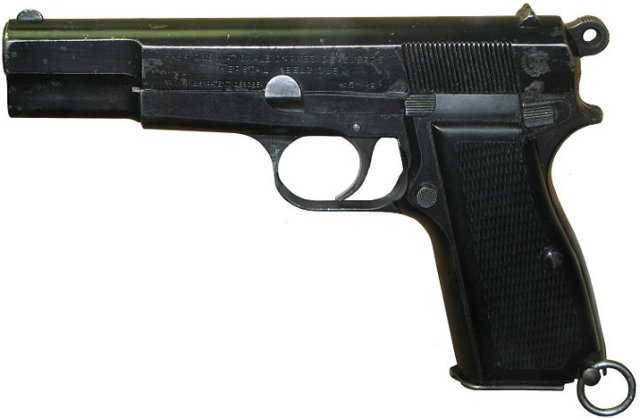
Browning High Power 9mm, the standard side-arm of the Canadian army since WW2. When I was in the reserves, we were told this was due for replacement in a few years. I was in the reserves from 1976-1980. It still hasn’t been replaced.
To say we have a checkered history with military procurement, fails to capture exactly how bad it is. Our political leadership has failed us continually over the course of half a century. No party has done it well. Some have done it better than others. But no one can claim any kind of bragging rights.
Fighter jet procurement in this country is so fraught it once caused the birth of a new political party. Trying to buy helicopters helped bring down a government. We only successfully bought those helicopters after they [the old helicopters] became a greater danger to the personnel manning them than they were to any potential adversary. We have been running a procurement for the next generation of fighter jets for an entire generation. Even Yes, Minister writers would have given up on something that absurd.
Our submarine fleet seems to be almost permanently in dry dock. Our most recent ship procurement resulted in the absolutely monstrous prosecution of one of the country’s most accomplished military leaders.
And we just issued a revised bid to finally replace our Second World War-era pistols … last week.
Just cataloguing that level of incompetence is exhausting. No leader or party looks good. The civil service, as the one constant through all these cartoonish blunders, surely has to wear some of this, too. The fact that we seem to repeat the same mistakes can, at least in part, be attributed to a significant institutional memory failure on the part of the people trusted with having the institutional memory.
Now, it is worth noting in fairness that no nation has an easy time with large scale military procurement. Ask the Americans about the development of the V-22 sometime. But, still, no nation has mastered the ability to step on every bloody rake quite as well as Canada.
I’m not a hardware expert. I can’t tell you which pistol we should buy. There’s also genuine policy questions here that need to be settled — I don’t know whether we should focus on the navy because we’re an Arctic nation, or the air force because it allows us to participate more readily in allied force projection exercises — like, say, no-fly zones? The necessary mix for Canada is no doubt some of both, and it’s fine to have disagreements between parties on what the right mix is.
But setting that aside, I want to talk about what it would take politically, to get us to start taking procurement seriously — just a few basic rules that any government would need to follow to procure anything that they chose was important for Canada to have.
March 10, 2022
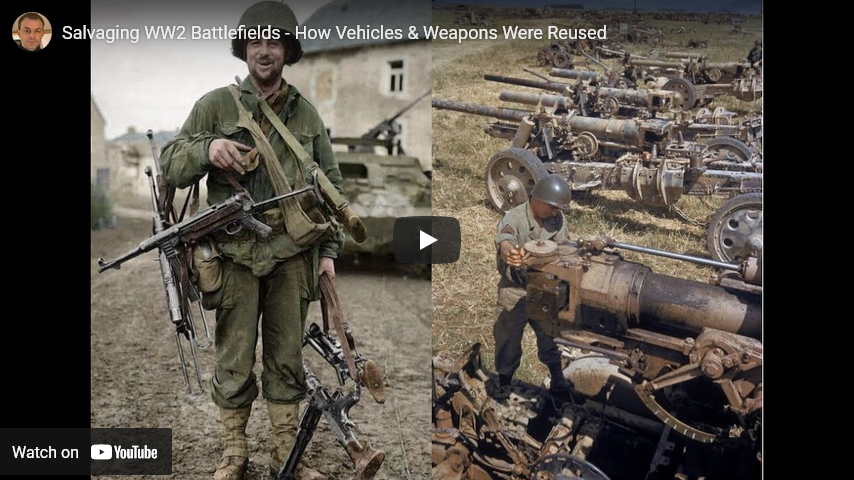
Salvaging WW2 Battlefields – How Vehicles & Weapons Were Reused
Mark Felton Productions
Published 25 Nov 2021After the wounded and dead had been removed from a battlefield, what happened to all the military vehicles and weapons left lying around? Find out here.
Dr. Mark Felton is a well-known British historian, the author of 22 non-fiction books, including bestsellers Zero Night and Castle of the Eagles, both currently being developed into movies in Hollywood. In addition to writing, Mark also appears regularly in television documentaries around the world, including on The History Channel, Netflix, National Geographic, Quest, American Heroes Channel and RMC Decouverte. His books have formed the background to several TV and radio documentaries. More information about Mark can be found at: https://en.wikipedia.org/wiki/Mark_Fe…
Help support my channel:
https://www.paypal.me/markfeltonprodu…
https://www.patreon.com/markfeltonpro…Disclaimer: All opinions and comments expressed in the ‘Comments’ section do not reflect the opinions of Mark Felton Productions. All opinions and comments should contribute to the dialogue. Mark Felton Productions does not condone written attacks, insults, racism, sexism, extremism, violence or otherwise questionable comments or material in the ‘Comments’ section, and reserves the right to delete any comment violating this rule or to block any poster from the channel.
Credits: US National Archives; Library of Congress
Thumbnail colorisation (left image) by Paul Reynolds
February 24, 2022
Got Wood? – The de Havilland Mosquito
World War Two
Published 23 Feb 2022What if there was a plane that the enemy could neither catch nor reach? One that fully relied on speed instead of defensive armaments? The de Havilland DH.98 Mosquito was the first multi-role aircraft developed during World War Two. Made mostly out of wood, the “Wooden Wonder” could be easily converted into different roles — a fighter, a fighter-bomber, a bomber, and a reconnaissance aircraft.
(more…)
February 4, 2022
Proposed Advanced Variants of the Avro Canada CF-100 Canuck
Polyus Studios
Published 20 Nov 2018Don’t forget to like the video and subscribe to my channel!
Support me on Patreon – https://www.patreon.com/polyusstudiosThis video covers some of the advanced variants that were proposed for to enhance the capabilities of the CF-100 Canuck. It covers both weapon systems and a few airframe redesigns.
0:00 Introduction
0:55 Velvet Glove and Sparrow 2 missiles
1:36 Falcon and Sidewinder missiles
2:22 Eagle missile
2:53 Genie nuclear rocket
3:18 Engine testing
3:50 Canuck Mk10
4:40 VTOL Canuck
6:03 ConclusionMusic:
Denmark – Portland Cello Project#CF100 #CanadianAerospace #PolyusStudios

December 30, 2021
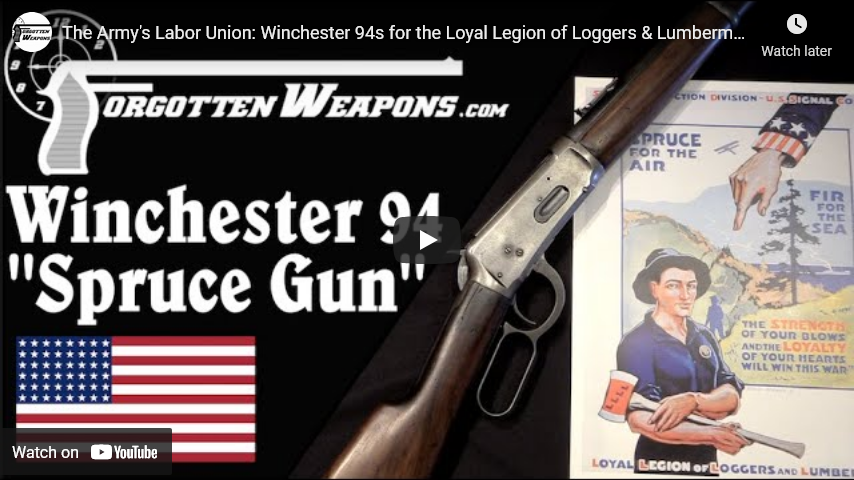
The Army’s Labor Union: Winchester 94s for the Loyal Legion of Loggers & Lumbermen
Forgotten Weapons
Published 30 Aug 2021http://www.patreon.com/ForgottenWeapons
https://www.floatplane.com/channel/Fo…
Cool Forgotten Weapons merch! http://shop.forgottenweapons.com
Today we have a rifle from a really neat forgotten corner of American military history. During World War One, the Pacific Northwest was the source of prime lumber, in particular Sitka Spruce that was ideal for aircraft production. The US military wanted that spruce for its own aircraft, and there was also massive demand from France and the UK for their production as well. As part of the American war effort, the Signal Corps (which oversaw military aviation) set about increasing spruce production severalfold.
The Corps sent a Colonel to investigate what would be necessary to do this, and he found that logging work was being significantly disrupted by labor union organizing, ranging from strikes to active sabotage. In response, the Army essentially created its own labor union, the Loyal Legion of Loggers and Lumbermen which both provided some of the labor reforms sought by groups like the IWW and also succeeded in massively increasing timber output for the war. The LLLL is a mostly-forgotten organization, and most of the documentation on it is from very left-wing organizations that paint it as a government attempt to quash labor rights. The reality appears to be far more nuanced, with several very legitimate reforms instituted in good faith. Unfortunately, the best reference on this period is completely out of print, Soldiers and Spruce: Origins of the Loyal Legions of Loggers & Lumberman by Harold Hyman (https://amzn.to/3lErrRC).
At any rate, part of the effort included the creation of the Spruce Production Division — 25,000 soldiers (mostly with backgrounds in logging and lumber) to Vancouver. They were seconded to private logging companies with Army-subsidized wages, but retained a military structure and officer corps. The Signal Corps purchased about 1,800 Winchester Model 1894 rifles in .30-30 caliber to arm a segment of the Division for security and military police type duties. Winchester 94s were in production and readily accessible, and the Division’s mission did not justify giving them Enfield or Springfield rifles needed by troops in Europe. These Winchesters were marked with a “US” property stamp and flaming bomb, and had serial numbers between 835,000 and 853,000 (specific numbers are not known because Winchester’s records form this period were destroyed). When the war ended, the guns (along with the Division’s other equipment) were sold as surplus, and they are found to this day in the Northwest. Many are in poor condition from decades of hard use, and they can be difficult to identify (and are also faked …) but they are a really neat artifact of a long-forgotten part of World War One history.
Contact:
Forgotten Weapons
6281 N. Oracle 36270
Tucson, AZ 85740
December 29, 2021
War in Numbers 1942 – WW2 Special
World War Two
Published 28 Dec 2021Quantity had a quality of its own. 1942 was the year in which the dimensions of the Second World War became truly apparent. The US and its unmatched economic power began to outproduce any other warring nation, manufacturing a fleet of ships and aircraft in record time. In the east Soviet industry began recovering itself, producing tens of thousands of tanks despite tremendous losses. All the while the German logistic system got overwhelmed by the vastness of the occupied territory.
(more…)
December 20, 2021
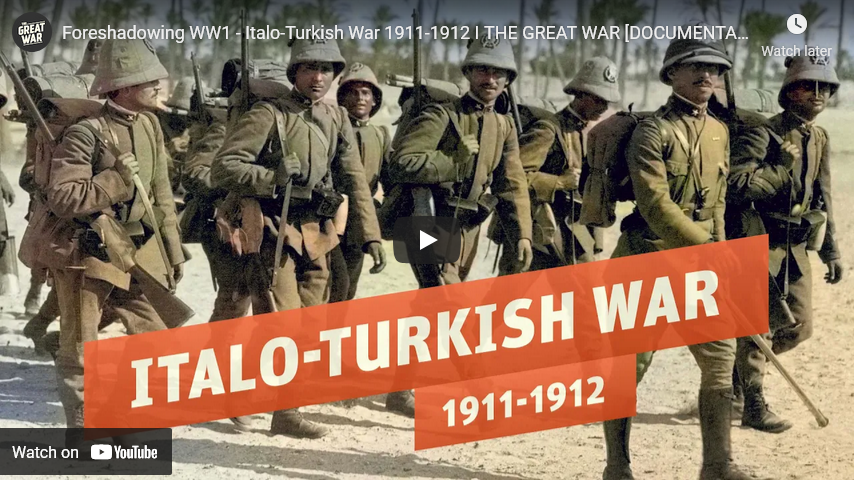
Foreshadowing WW1 – Italo-Turkish War 1911-1912 I THE GREAT WAR
The Great War
Published 17 Dec 2021Sign up for Audible and get 60% off your first three months: https://audible.com/greatwar or text
greatwarto 500-500The Italo-Turkish War 1911 was one of the last classic imperial wars over colonial processions between two great powers. But it was in many ways also a first glimpse into what would come during the First World War: trenches, artillery, combat aircraft, motorboat attacks. This war in Ottoman Libya was fought between the Italian Army and Ottoman-led local Senussi forces.
» SUPPORT THE CHANNEL
Patreon: https://www.patreon.com/thegreatwar» THANKS TO OUR CO-PRODUCERS
John Ozment, James Darcangelo, Jacob Carter Landt, Thomas Brendan, Kurt Gillies, Scott Deederly, John Belland, Adam Smith, Taylor Allen, Rustem Sharipov, Christoph Wolf, Simen Røste, Marcus Bondura, Ramon Rijkhoek, Theodore Patrick Shannon, Philip Schoffman, Avi Woolf,» SOURCES
Askew, William C., Europe and Italy’s Acquisition of Libya, 1911-1912, (Durham, NC: Duke University Press, 1942)Caccamo, Francesco, “Italy, Libya and the Balkans” in Geppert, Dominik; Mulligan, William & Rose, Andreas (eds.), The Wars before the Great War: Conflict and International Politics Before the Outbreak of the First World War, (Cambridge: Cambridge University Press, 2016)
Childs, Timothy W, Italo-Turkish Diplomacy and the War Over Libya, 1911–1912, (Leiden: Brill, 1990)
Griffin, Ernest H., Adventures in Tripoli: A Doctor in the Desert (London: Philip Allen & Co., 1924)
Hindmarsh. Albert E. & Wilson, George Grafton, “War Declared and the Use of Force”, Proceedings of the American Society of International Law at Its Annual Meeting (1921-1969) Vol. 32 (1938)
McCollum Jonathan, “Reimagining Mediterranean Spaces: Libya and the Italo-Turkish War, 1911-1912”, in Mediterraneo cosmopolita, 23 (3) 2015.
McMeekin, Sean, The Ottoman Endgame (Penguin, 2013).
Paris, Michael, “The First Air Wars – North Africa and the Balkans, 1911-13”, Journal of Contemporary History, Vol. 26, No. 1 (1991)
Stephenson, Charles, A Box of Sand: the Italo-Ottoman War 1911-1912: the First Land, Sea and Air War, (Ticehurst: Tattered Flag Press, 2014)
Tittoni, Renato, The Italo-Turkish War (1911-12). Translated and Compiled from the Reports of the Italian General Staff, (Kansas City, MO: Frank Hudson Publishing Company, 1914)
Uyar, Mesut, The Ottoman Army and the First World War, (Abingdon: Routledge, 2021)
Vandervort, Bruce, Wars of Imperial Conquest in Africa 1830-1914, (Bloomington, IN: Indiana University Press, 1998)
Wilcox, Vanda, Italy in the Era of the Great War, (Leiden: Brill, 2018)
Wilcox, Vanda, “The Italian Soldiers’ experience in Libya, 1911-12” in Geppert, Dominik; Mulligan, William & Rose, Andreas (eds.), The Wars before the Great War: Conflict and International Politics Before the Outbreak of the First World War, (Cambridge: Cambridge University Press, 2016)
»CREDITS
Presented by: Jesse Alexander
Written by: Mark Newton, Jesse Alexander
Director: Toni Steller & Florian Wittig
Director of Photography: Toni Steller
Sound: Toni Steller
Editing: Jose Gamez
Motion Design: Philipp Appelt
Mixing, Mastering & Sound Design: http://above-zero.com
Research by: Mark Newton
Fact checking: Florian WittigChannel Design: Yves Thimian
Contains licensed material by getty images
All rights reserved – Real Time History GmbH 2021
December 19, 2021
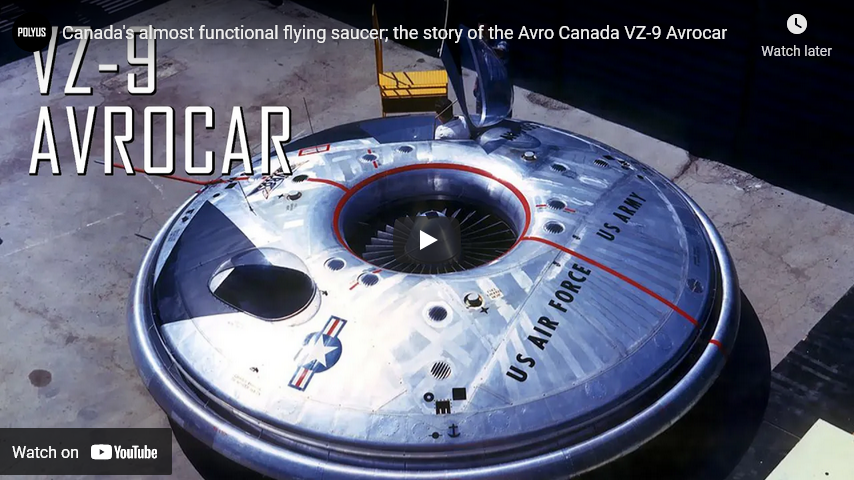
Canada’s almost functional flying saucer; the story of the Avro Canada VZ-9 Avrocar
Polyus Studios
Published 14 Jul 2018Support me on Patreon – https://www.patreon.com/polyusstudios
The Avro Canada VZ-9AV Avrocar: Canada’s first attempt at vertical take off and landing aircraft. Although the concept ultimately turned out to be a dead-end, the engineers and designers at Avro experimented with bold new ideas. Their concepts would push the limits of the imagination and reflected the extreme technological optimism of its time.
Music:
Denmark – Portland Cello ProjectResearch Sources:
“Declassified: America’s Secret Flying Saucer” – https://www.popularmechanics.com/mili…
Avro Canada VZ-9 Avrocar – https://www.aviationsmilitaires.net/v…
Avrocar: Canada’s Flying Saucer: The Story of Avro Canada’s Secret Projects by Bill Zuk (2001)
How to Build a FLYING SAUCER – https://declassification.blogs.archiv…
LaesieWorks – AVROCAR VZ-9AV – http://www.laesieworks.com/ifo/lib/AV…
The Living Moon – Project Silverbug – The Avrocar – http://www.thelivingmoon.com/49ufo_fi…Footage Sources:
Avrocar I Progress Report 01/02/1958 – 05/1959 – US National Archives (~1959)
Disc Flight Development, Avrocar I Progress Report, 05/02/1959 – 04/12/1960 – US National Archives (~1960)
Avrocar Continuation Test Program and Terrain Test Program, 06/01/1960 – 06/14/1961 – US National Archives (~1959)
Tiltwing Versatility – San Diego Air and Space Museum (~1971)Aircraft mentioned:
Project Y
Project Y-2
Project PV 704
Project 1794
Project Silverbug
Weapon System 606A
VZ-9AV Avrocar
CL-84 Dynavert#Avrocar #CanadianAerospace #Polyus