
World War Two
Published 10 Nov 2022Hitler commemorates the twentieth anniversary of the failed Beer Hall Putsch, in Auschwitz 50 men are shot in celebration, and Arthur Liebehenschel replaces Rudolf Höss as commandant.
(more…)
November 14, 2022
The Auschwitz Business Model – War Against Humanity 086
Comments Off on The Auschwitz Business Model – War Against Humanity 086
November 13, 2022
Kiev Liberated! Celebrations in Moscow! – WW2 – 220 – November 12, 1943
World War Two
Published 12 Nov 2022The Red Army has driven the Axis forces out of Kiev, the third largest city in the USSR. The Allies are also advancing, albeit slowly and at great cost, in Italy, but in the South Pacific, they launch a massive air strike against Rabaul … and what is the result?
(more…)
Comments Off on Kiev Liberated! Celebrations in Moscow! – WW2 – 220 – November 12, 1943
November 12, 2022
The Final Bloody Chapter of Operation Reinhard – War Against Humanity 085
World War Two
Published 9 Nov 2022The genocide of the Jews of Eastern Europe concludes with Operation Harvest Festival — Aktion Erntefest when 42,000 are murdered in the Lublin district.
(more…)
Comments Off on The Final Bloody Chapter of Operation Reinhard – War Against Humanity 085
November 11, 2022
Mark Knopfler – “Remembrance Day”
Bob Oldfield
Published on 3 Nov 2011A Remembrance Day slideshow using Mark Knopfler’s wonderful “Remembrance Day” song from the album Get Lucky (2009). The early part of the song conveys many British images, but I have added some very Canadian images also which fit with many of the lyrics. The theme and message is universal… “we will remember them”.
Comments Off on Mark Knopfler – “Remembrance Day”
In memoriam
A simple recognition of some of our family members who served in the First and Second World Wars:
The Great War
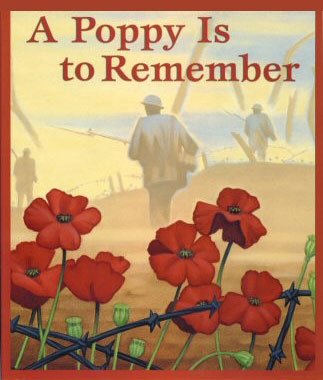 Private William Penman, Scots Guards, died 16 May, 1915 at Le Touret, age 25
(Elizabeth’s great uncle)- Private Archibald Turner Mulholland, Argyll & Sutherland Highlanders, mortally wounded 25 September, 1915 at Loos, age 27
(Elizabeth’s great uncle) - Private David Buller, Highland Light Infantry, died 21 October, 1915 at Loos, age 35
(Elizabeth’s great grandfather) - Private Harold Edgar Brand, East Yorkshire Regiment. died 4 June, 1917 at Tournai.
(My first cousin, three times removed) - Private Walter Porteous, Durham Light Infantry, died 4 October, 1917 at Passchendaele, age 18
(my great uncle) - Corporal John Mulholland, Argyll & Sutherland Highlanders, wounded 2 September, 1914 (shortly before the First Battle of the Aisne), wounded again 29 June, 1918, lived through the war.
(Elizabeth’s great uncle)
The Second World War
- Flying Officer Richard Porteous, Royal Air Force, survived the defeat in Malaya, was evacuated to India and lived through the war
(my great uncle) - Able Seaman John Penman, Royal Navy, served in the Defensively Equipped Merchant fleet on the Atlantic convoys, the Murmansk Run (he may have been on a ship in convoy PQ-17, as we know he spent a winter in Russia) and other convoy routes, was involved in firefighting and rescue efforts during the Bombay Docks explosion in 1944, lived through the war
(Elizabeth’s father) - Private Archie Black (commissioned after the war and retired as a Major), Gordon Highlanders, captured during the fall of Singapore (aged 15) and survived a Japanese POW camp (he had begun to write an autobiography shortly before he died)
(Elizabeth’s uncle) - Elizabeth Buller, “Lumberjill” in the Women’s Timber Corps, an offshoot of the Women’s Land Army in Scotland through the war.
(Elizabeth’s mother) - Trooper Leslie Taplan Russon, 3rd Royal Tank Regiment, died at Tobruk, 19 December, 1942 (aged 23).
Leslie was my father’s first cousin, once removed (and therefore my first cousin, twice removed).
My maternal grandfather, Matthew Kendrew Thornton, was in a reserved occupation during the war as a plater working at Smith’s Docks in Middlesbrough. The original design for the famous Flower-class corvettes came from Smith’s Docks and 16 (including four intended for the French Marine National) of the 196 built in the UK during the war (more were built in Canada).
For the curious, the Commonwealth War Graves Commission the Royal British Legion, and the Library and Archives Canada WW1 and WW2 records site provide search engines you can use to look up your family name. The RBL’s Every One Remembered site shows you everyone who died in the Great War in British or Empire service (Canadians, Australians, New Zealanders, South Africans and other Imperial countries). The CWGC site also includes those who died in the Second World War. Library and Archives Canada allows searches of the Canadian Expeditionary Force and the Royal Newfoundland Regiment for all who served during WW1, and including those who volunteered for the CEF but were not accepted.
In Flanders fields the poppies blow
Between the crosses row on row,
That mark our place; and in the sky
The larks, still bravely singing, fly
Scarce heard amid the guns below.We are the Dead. Short days ago
We lived, felt dawn, saw sunset glow,
Loved and were loved, and now we lie
In Flanders fields.Take up our quarrel with the foe:
To you from failing hands we throw
The torch; be yours to hold it high.
If ye break faith with us who die
We shall not sleep, though poppies grow
In Flanders fields.Lieutenant Colonel John McCrae, MD Canadian Army Medical Corps (1872-1918)
Comments Off on In memoriam
November 8, 2022
Look at Life — Underwater Menace (1969)
PauliosVids
Published 20 Nov 2018Dealing with the hazardous legacy of World War II.
Comments Off on Look at Life — Underwater Menace (1969)
November 7, 2022
Inside the Gulag System – WW2 Special
World War Two
Published 4 Nov 2022Even as the Allied powers condemn the German crimes against humanity, their recent victories are in part thanks to the massive system of forced labour built by Joseph Stalin’s Soviet Union. Over one million prisoners work in the Gulag to power the Soviet war economy.
(more…)
Comments Off on Inside the Gulag System – WW2 Special
November 6, 2022
Allies Launch New Phase in Pacific War – WW2 – 219 – November 5, 1943
World War Two
Published 5 Nov 2022The Allies hit the beaches of Bougainville, largest and last of the Solomon Islands. They create and expand a beachhead there and also win battles there at sea and in the skies. In the USSSR, the Soviets are closing in on Kiev and in the south have isolated the Crimea, but in spite of that, Adolf Hitler issues a new directive that Germany’s focus for the future should be in the west and the threat of an Allied invasion there.
(more…)
Comments Off on Allies Launch New Phase in Pacific War – WW2 – 219 – November 5, 1943
November 5, 2022
A working flight simulator, no computers necessary
Tom Scott
Published 4 Jul 2022There are only a few working Link Trainers left in the world: but before microprocessors, before display screnes, half a million pilots learned the basics of instrument flying inside one. More: https://www.most.org/explore/link-fli…
(more…)
Comments Off on A working flight simulator, no computers necessary
October 31, 2022
Executed for Telling a Joke – October 30, 1943 – WAH 084
World War Two
Published 30 Oct 2022From a conference in Moscow the United Nations Alliance issues a warning to Nazi Germany about their atrocities, while those atrocities continue unabated.
(more…)
Comments Off on Executed for Telling a Joke – October 30, 1943 – WAH 084
October 30, 2022
Fresh German Armor in the USSR! – WW2 – 218 – October 29, 1943
World War Two
Published 29 Oct 2022Erich von Manstein finally gets the reserve armor he’s been begging Hitler for, so he can carry out his counteroffensive in Ukraine. The Soviets are still on the move themselves though. In Italy, though, the Allies are moving at a crawl since the Germans have mined and booby trapped everything. There’s also new action in the Solomons and a celebration in Japan.
(more…)
Comments Off on Fresh German Armor in the USSR! – WW2 – 218 – October 29, 1943
“The Economist is the most over-rated publication in the English language”
I started reading The Economist when I was in college, and became a subscriber for nearly 20 years. Over the last few years, the tone of the articles shifted away from classical liberal toward communitarian or even full-blown socialist cheerleading, so I sadly ended my subscription and haven’t picked up a copy in at least 15 years. According to Ken Whyte in the SHuSH newsletter, things haven’t improved since I stopped paying attention:
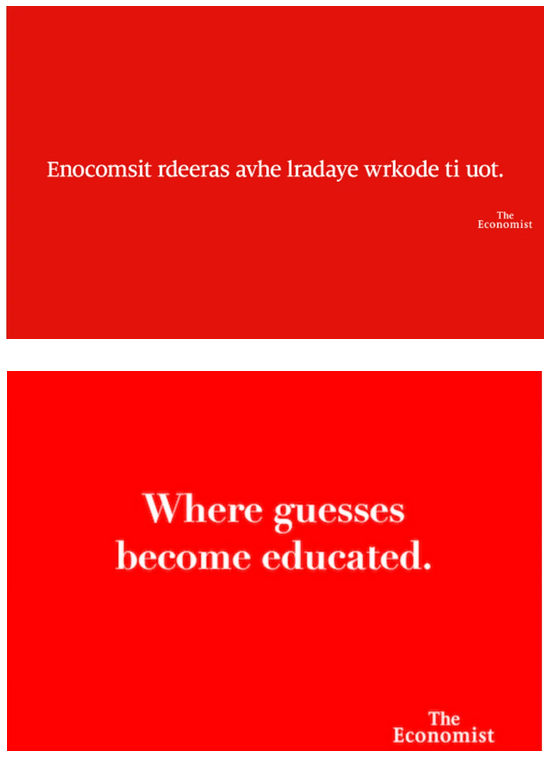
The Economist recently said that book publishing in today’s economy resembles book publishing during the Second World War when “paper imports collapsed” and “publishers printed only sure-fire hits”.
The Economist is the most over-rated publication in the English language, especially by itself. I give it marks for its broad range of interests, ability to cover a lot of ground in relatively tight articles, and occasionally solid reporting, but if you’re going to boast incessantly about how smart you are …
… you’d better back it up. The Economist seldom does. It tends to glib, obvious, and sloppy. Most of its articles are written by anonymous b-level freelancers whose best stuff goes to outlets that afford bylines. Their work is edited to a stultifying homogeneity by a haughty grad student with a Financial Times subscription. Or so it reads.
This piece — “Books are Physically Changing Because of Inflation” — is a case in point. Paper imports to the UK were reduced during WW2 but they did not collapse. The problem for the book trade was rationing. The government restricted publishers to 60 percent of their pre-war paper volumes (later falling to 35 percent) and itself used far more tonnage for propaganda than the book industry normally required. Manpower shortages were another factor limiting the production of new titles.
Nor is it true that publishers released “only sure-fire hits”. While much of their paper allotment went to keeping hot-selling books in stock, many bets were placed on new titles and most of them paid. It was wartime and leisure activities were limited. “British publishers found that they could sell virtually any title,” writes Zoe Thomson in The Journal of Publishing Culture.
The article isn’t all bad. It reports that British book publishers are paying 70% more for paper than they were a year ago: “Supplies are erratic as well as expensive: paper mills have taken to switching off on days when electricity is too pricey. The card used in hardback covers has at times been all but unobtainable.”
To cope with the price increases, publishers are printing smaller books on cheaper paper and jamming more words onto the page. Writers are being asked to write shorter and are being held to their word limits.
That reflects the current state of the industry. It’s hardly news, though. SHuSH readers are probably sick of hearing me on rising paper and printing costs, and I’ve just been following what others have written. The cost of printing has more or less doubled since before COVID. Many smaller publishers are already releasing fewer and slimmer titles. If we are headed into a recession, the trend will continue.
Comments Off on “The Economist is the most over-rated publication in the English language”
October 29, 2022
Your Thoughts on Our D-Day Coverage So Far – WW2 – Reading Comments
Updated with re-uploaded video, 3 Nov 2022. The original video was taken down within a few hours. This is the same video less one short rant that Indy reconsidered and has chosen to omit.
World War Two
Published 28 Oct 2022Indy and Sparty pick out some of the best, most interesting, and even controversial comments by you under our videos. Stay for the PJs.
(more…)
Comments Off on Your Thoughts on Our D-Day Coverage So Far – WW2 – Reading Comments
October 24, 2022
Another bombed city – war still not ended – October 23, 1943 – WAH 083
World War Two
Published 23 Oct 2022Trainload after trainload arrives at the slave and murder factories in Auschwitz, and a Fürstin is created in Kassel, while the United Nations War Crimes Committee UNWCC is formed.
(more…)
Comments Off on Another bombed city – war still not ended – October 23, 1943 – WAH 083
October 23, 2022
Stalin Agrees to the United Nations – WW2 – 217 – October 22, 1943
World War Two
Published 22 Oct 2022A conference in Moscow lays out some postwar plans of the Allies, but the war has to be won first. The Allies fight their way across both the Dnieper and Volturno Rivers, but the going looks like it’s going to be tougher after the crossings. Meanwhile, in the South Seas the Japanese change plans in the face of Allied advances over there.
(more…)
Comments Off on Stalin Agrees to the United Nations – WW2 – 217 – October 22, 1943


