
Published on 5 Apr 2016
*Sponsored* Hearts of Iron IV comes out on June 6! Check out the game: http://pdxint.at/hoi4_coming_soon
To understand nations at war, you have to look at how their economies function. With World War II on the horizon, Europe and Asia dug themselves in for a fight – and a look at each other’s resources told them what to expect.
____________European economies were so closely connected that some people expected they have to avoid another world war or destroy their finances, but in fact World War I had taught them how to prepare for just such a scenario. Germany, France, and Great Britain all invested in their military before war broke out. When evaluating these economies to see how war would affect them, we look at four main factors: GDP, population, territorial extent, and per capita income. Broadly, this helps us determine how resilient, expansive, self-sufficient, and developed a nation is. All of those factors determine how a nation must conduct its war. For example, the vast territorial holdings of the British Empire meant that they had vast resources to draw upon but needed a long time to mobilize them, which helped Germany determine that they needed to strike fast and win big if they hoped to win the war before Britain’s full resources came into play. Japan also estimated that they could win a war in the Pacific if they managed to win before the US had been involved for more than 6 months. These calculations drove the early strategies of the Axis powers, but the participation of the US would later prove to be a crucial factor.
____________BONUS! Economies of Japan and China before WWII:
GDP (Bn USD-1990)
Japan – 169.4
Japanese Colonies – 62.9
China (exc. Manchuria): 320.5POPULATION (mil)
Japan – 71.9
Japanese Colonies: 59.8
China (exc. Manchuria): 411.7TERRITORY (thous sq.km)
Japan – 382
Japanese Colonies – 1602
China (exc. Manchuria): 9800AVG ANNUAL WAGE (USD-1990)
Japan – 2,356
Japanese Colonies – 1,052
China (exc. Manchuria) – 778From: The Economics of World War II: Six Great Powers in International Comparison by Mark Harrison
May 25, 2016
WW2: The Resource War – I: Arsenal of Democracy – Extra History
May 17, 2016
Charles Stross updates a classic WW2 field guide – a dot-com sabotage manual
Many people have noted that the sabotage techniques listed in a Second World War espionage manual seem to have somehow migrated into a lot of management texts in the last few decades. Here he imagines what an updated version of the manual might look like:
In 1944, the Office of Strategic Services — the predecessor of the post-war CIA — was concerned with sabotage directed against enemies of the US military. Among their ephemera, declassified and published today by the CIA, is a fascinating document called the Simple Sabotage Field Manual (PDF). It’s not just about blowing things up; a lot of its tips are concerned with how sympathizers with the allied cause can impair enemy material production and morale […]
So it occurred to me a week or two ago to ask (on twitter) the question, “what would a modern-day version of this manual look like if it was intended to sabotage a rival dot-com or high tech startup company”? And the obvious answer is “send your best bad managers over to join in admin roles and run their hapless enemy into the ground”. But what actual policies should they impose for best effect?
- Obviously, engineers and software developers (who require deep focus time) need to be kept in touch with the beating heart of the enterprise. So open-plan offices are mandatory for all.
- Teams are better than individuals and everyone has to be aware of the valuable contributions of employees in other roles. So let’s team every programmer with a sales person — preferably working the phones at the same desk — and stack-rank them on the basis of each pair’s combined quarterly contribution to the corporate bottom line.
- It is the job of Human Resources to ensure that nobody rocks the boat. Anyone attempting to blow whistles or complain of harassment is a boat-rocker. You know what needs to be done.
- Senior managers should all be “A” Players (per Jack Welch’s vitality model — see “stack ranking” above) so we should promote managers who are energetic, inspirational, and charismatic risk-takers.
- The company must have a strong sense of intense focus. So we must have a clean desk policy — any personal possessions left on the desk or cubicle walls at the end of the day go in the trash. In fact, we can go a step further and institute hot desking — we will establish an average developer’s workstation requirements and provide it for everyone at every desk.
This would explain some of the management policies at a few places I’ve worked at over the years…including the software company where I first met Charlie.
May 7, 2016
Tiger Day 2016 at The Bovington Tank Museum
Published on 4 May 2016
This weekend we popped down to the Tank Museum for a spot of big game hunting. Tigers, Leopards, Comets…. okay the analogy starts to break down a bit now…
April 19, 2016
The Greatest Raid of All
Published on 27 Jan 2013
THE GREATEST RAID OF ALL “What a story it is, straight out of a Commando comic book.” (The Guardian) Jeremy Clarkson tells the story of one of the most daring operations of World War II — the Commando raid on the German occupied dry dock at St. Nazaire in France on 28th March 1942. It was an operation so successful and so heroic that it resulted in the award of five Victoria Crosses and 80 other decorations for gallantry.
April 14, 2016
World of Warships – HMS Campbeltown
Published on 12 Apr 2016
After numerous delays I’m finally able to show you HMS Campbeltown, the premium tier 3 Destroyer that led the raid on Saint Nazaire and sealed the fate of the Tirpitz.
April 7, 2016
The Battle of Kursk – IV: Control of the Eastern Front – Extra History
Published on 28 Mar 2016
German divisions had not expected the level of resistance they met from the Soviets, and their planned advance was behind schedule. At the same time, the Soviets were concerned by the breaches in their first level of defense and by the Tiger tanks which so decisively outgunned their T-34. Fighting on the north side of the Kursk salient came to focus on the small Russian town of Ponyri, where the Germans saw an opportunity to break through and encircle the Soviet defenders. But every time they took control, the Soviets countered and took it back, until finally it became clear that they would never hold Ponyri and could only hope to divert troops from reinforcing the Soviet line elsewhere. But in the south, General Vatutin of the USSR had come up with a clever strategy: he literally buried his T-34 tanks up to the turrets, making them fortified anti-tank guns whose small profile negated the range advantage of the Tiger. His methods were extremely effective, but the Germans continued to fight forward inch by bloody inch. The Soviets needed to hold until reinforcements arrived. An attempted counterattack failed, but managed to slow the Germans, as did the sudden arrival of rainy weather that bogged down their materiel. In the midst of this, the brutal war criminals in the SS Division fought on with a ferocity best exemplified by Joachim Krüger, who once ripped off his pants to escape a smoke grenade and charged bare-assed at a Russian tank. But this wild back and forth could not continue. On July 12, 1943, the Germans sought a decisive outcome through a hard push at Prokhorovka. They did not get it, and the tides quickly turned against them. The Allies invaded Sicily, pressuring Hitler. He gave the command to withdraw the troops at Kursk, over his commanders’ objections. His general, Erich von Manstein, attempted one final assault just as Stalin’s long-planned counterattack rolled out in full force. The Soviets routed the Germans and collapsed their Eastern Front. Over the course of the war, they continued to push the German forces back – all the way to Berlin in 1945.
April 2, 2016
QotD: The Anglo-Saxon encirclement strategy
In retrospect the fight against Napoleon seems to have engendered a new strategic method, later employed against Germany in two world wars and against the Soviet Union thereafter. The French might call it the Anglo-Saxon encirclement strategy. Its essential aim was to avoid direct combat with a formidable enemy, or at least to limit engagement to a minimum. Instead of confronting one vast army with another – at Waterloo there were only 25,000 British troops – the Anglo-Saxon approach was to take on the big beast by assembling as many neighbourhood dogs and cats as possible, with a few squirrels and mice thrown in. With the obvious exception of the Western Front in the First World War, that is how the two world wars were fought, with an ever longer list of allies large, small and trivial (e.g. Guatemala, whose rulers could thereby expropriate the coffee plantations of German settlers), and that is how the Soviet Union was resisted after 1945, with what eventually became the North Atlantic Alliance. Like the anti-Napoleon coalition, Nato was – and remains – a ragbag of member states large and small, of vastly different capacity for war or deterrence, not all of them loyal all the time, though loyal and strong enough. Like the challenge to British diplomacy in the struggle against Napoleon, the great challenge to which American diplomacy successfully rose was to keep the alliance going by tending to the various political needs of its member governments, even those of countries as small as Luxembourg, whose rulers sat on all committees as equals, even though they could never field more than a single battalion of troops.
Now it is the turn of the Chinese, whose strength is still modest yet growing too rapidly for comfort, and who are inevitably provoking the emergence of a coalition against them; the members range in magnitude from India and Japan down to the Sultanate of Brunei, in addition of course to the US. Should they become powerful enough, the Chinese will force even the Russian Federation into the coalition regardless of the innate preferences of its rulers, for strategy is always stronger than politics, as it was for the anti-communist Nixon and the anti-American Mao in 1972. China cannot therefore overcome its inferiority to the American-led coalition by converting its economic strength into aircraft carriers and such, any more than Napoleon could have overcome strategic encirclement by winning one more battle. The exact repetition of Napoleon’s fatal error by imperial and Nazi Germany is easily explained: history teaches no lesson except that there is a persistent failure to learn its lessons. It remains to be seen whether the Chinese will do any better.
Edward Luttwak, “A Damned Nice Thing”, London Review of Books, 2014-12-18.
March 31, 2016
The Battle of Kursk- III: Day One – Extra History
Published on 21 Mar 2016
The Germans planned their assault for July 5, 1943 but a defector warned the Soviets and denied them the element of surprise. Even without the warning, General Zhukov had found plenty of time to fortify Kursk with layer upon layer of pillboxes, minefields, and more. He planned to bloody the Germans with this staunch defense and weaken them for later. The new German tanks, such as the Tiger, arrived only to find themselves outnumbered by numerous Soviet T-34s and ill-supported by maintenance crews who were stretched too thin by the number and variety of new tanks being deployed. General Manstein ordered his strongest tank unit to push through, targeting the small town of Oboyan, but although he made the most progress along the line of the assault, even he had not expected resistance on this scale. By the next day, the Germans had barely reached the second line of Soviet defenses, and while they hadn’t been forced to retreat anywhere, they were distinctly behind schedule. Hitler needed them to win. It wouldn’t win the war, but he hoped that it would force the Soviets to withdraw, leaving him free to concentrate on the Western front and the threats from the United Kingdom and the United States.
March 23, 2016
World War II: The Battle of Kursk – II: Preparations – Extra History
Published on 29 Feb 2016
Richard “the Challenger” Cutland, ex British tankie and military specialist at Wargaming, stops by to talk about the types of tanks involved in the Battle of Kursk! Early in Operation Barbarossa, the Germans didn’t expect much from their opponents. They did not know about the T-34 and KV-1 tanks, which turned out to be superior designs. The Germans deployed a special commission to study Soviet tank designs and soon introduced the Tiger, Panther, and Ferdinand tanks which Hitler believed were key to victory. The Panther in particular was now outclassing Soviet tanks, but it had giant mechanical issues and broke down frequently. The Soviets had produced a new T-43 model tank, but it was designed to tackle the old German Panzer IV and didn’t measure up well to the new German tanks. So they preferred to focus on the trusty T-34 tanks, which made up in speed and numbers what they lacked in range and firepower. The Kursk region also played to the Soviets’ advantage in Russia: the dust storms and mudfields hindered air support from the Luftwaffe and the advance of the Wermacht. Erich von Manstein, the German commander, decided not to advance. Instead he yielded ground to the Soviets in an attempt to lure them into overextending. He successfully caught them out at the First Battle of Kharkov, but even though the Soviets suffered heavy casualties there, it wasn’t enough to make a dent in their huge army. Manstein needed to do something more drastic. Both he and the Soviets recognized that the Soviet line had a weakness where it bulged out to defend the city of Kursk, making it an obvious target for the next stage of operations.
March 21, 2016
World War II: The Battle of Kursk – I: Operation Barbarossa – Extra History
Published on 15 Feb 2016
In June 1941, Nazi Germany launched an attack upon the Soviet Union. The German Reich had been building up forces along the Eastern Front for a long time, but the sudden aggression caught Soviet forces unprepared. Many troops were captured and the Germans quickly conquered territory from the Soviet states. But the Soviets reorganized, improved their communication structure, and pulled together a defense at Smolensk. Although they lost again, they critically slowed the German advance and halted their race towards Moscow. Instead, the Germans tried to lay siege at Leningrad, only to be struck themselves by insufficient supply lines and a brutal winter that claimed the lives of many soldiers. With that, the Wehrmacht withdrew and redirected its efforts towards Stalingrad. Josef Stalin refused to let them take any land “further than the Volga” in Russia, and mounted a stiff defense. Even when the Luftwaffe, the German air force, reduced the city to rubble, Soviet soldiers continued to wage war from the debris. Meanwhile, the Germans were so focused on their offensive that they let their defensive lines collapse, and in October 1942 the Soviets managed to surround and pin down the German 6th Army. Their commander refused surrender terms because he didn’t want to displease Adolf Hitler, but the 6th Army’s resistance inevitably collapsed in February 1943.
January 17, 2016
WW2 anti-aircraft towers to be re-purposed as luxury resort
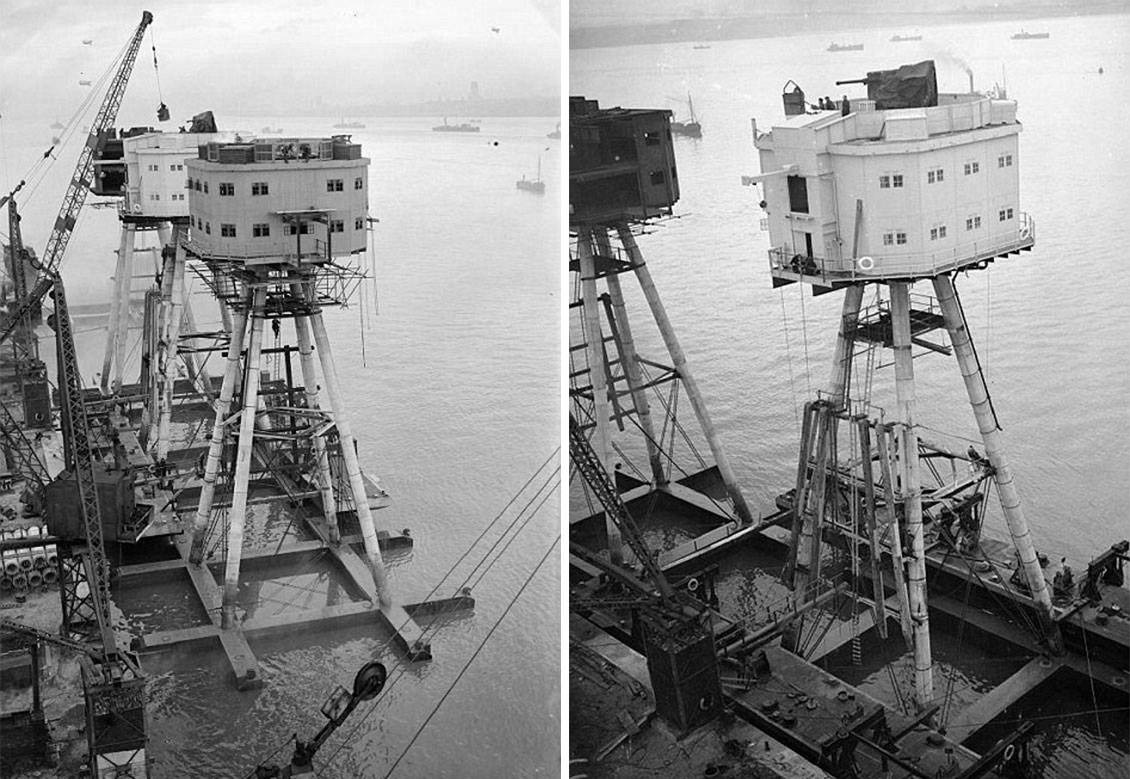
During the Second World War, the British government constructed offshore anti-aircraft installations to extend protection beyond the range of land-based guns and radar. One of these forts is reportedly going to be converted into a luxury resort:
The Maunsell Forts built to defend the British Isles from Nazi invasion are in line for an upmarket make-over.
Billed as the next top-notch luxury resort, the forts will come complete with executive apartments, a helipad and even a spa at sea.
The Second World War era forts off the coast of Kent were constructed in 1943, and operated by both Army and Navy personnel.
The huge metal Maunsell gun towers, also known as Red Sands, were constructed in 1943 during the Second World War
December 31, 2015
December 12, 2015
The cargo cult of modern art
Richard Bledsoe on the similarities between the cargo cults of Pacific Islanders during and after the Second World War and the modern art scene:
Much of establishment contemporary art has become an inverted cargo cult.
The phenomenon of the cargo cult originally was observed when the primitive tribal societies of the South Pacific encountered the advanced cultures of the West. It reached a pitch of religious fervor after World War II.
The industrial manufactured items of the newcomers amazed the remote villagers of islands like New Guinea and Tanna. The strangers from over the sea brought with them riches in the form of machines and goods — airplanes, tools, medicines, canned food, radios and the like — made from materials incomprehensible to what were practically Stone Age people. The tribes decided surely such wonderful items must be made by the gods.
As battles raged in the Pacific, the indigenous populations observed the soldiers at work: marching around in uniforms, clearing runways, talking on radios. In response the planes arrived, seemingly from heaven, bringing to the islands the massive quantities of materials needed for the war effort. To the natives who got to share some of the magical items, this treasure — the technological output of developed nations — came to be referred to collectively by the pidgin word cargo.
But when the war ended, the soldiers left. The flow of magic cargo ceased. The tribesmen had lost access to the gifts from the gods.
The abandoned natives developed a plan to get back into divine favor. Having no frame of reference for the ways of the modern world, they interpreted the activities of construction and communications the visitors performed as forms of ritual. The tribesmen would reenact the rites they had seen the foreigners perform, recreate their ceremonial objects. This would please the gods, who would start delivering the cargo again — but this time, to the natives.
The islanders designed outfits based on military uniforms. They drilled in cadence, carrying rifles of bamboo. They built wooden aerials, constructed mock radios, clearing landing strips in the jungle, placed decoy planes of straw on them. And waited.
[…]
To our rational minds this is preposterous. We understand the uselessness of evoking the facade of a machine without the necessary functionalities being incorporated into it. What matters is the inner workings, not the appearance.
And yet, a form of this magical thinking has infected contemporary art. The subservience of art to political issues derails the purpose of the artist. The prevalent dogma interferes with the discovery of a personal artistic vision. So contemporary artists attempt to imitate their way into a valid artistic experience.
In a stunning reversal, in our advanced technological society, artists uncomprehendingly recreate inferior approximations, parodying the objects and gestures of the past and the primitive, trying in vain to summon the sense of awe and wholeness present in the art of bygone ages. By mimicking and mocking the outer forms of the originators, the artists hope the gods will arrive bearing their eternal gifts — that these snotty knock offs will also rise to the level of art.
November 23, 2015
QotD: Bashing the drill square … it’s not actually useless
In September 1941, William McNeill was drafted in the US Army. He spent several months in basic training, which consisted mostly of marching around the drill field in close formation with a few dozen other men. At first McNeill thought the marching was just a way to pass the time, because his base had no weapons with which to train. But after a few weeks, when his unit began to synchronize well, he began to experience an altered state of consciousness. “Words are inadequate to describe the emotion aroused by the prolonged movement in unison that drilling involved. A sense of pervasive well-being is what I recall; more specifically, a strange sense of personal enlargement; a sort of swelling out, becoming bigger than life, thanks to participation in collective ritual.” McNeill fought in World War II and later became a distinguished historian. His research led him to the conclusion that the key innovation of Greek, Roman, and later European armies was the sort of synchronous drilling and marching the army had forced him to do years before.
Jonathan Haidt, quoted by Scott Alexander in “List Of The Passages I Highlighted In My Copy Of Jonathan Haidt’s The Righteous Mind“, Slate Star Codex, 2014-06-12.
November 11, 2015
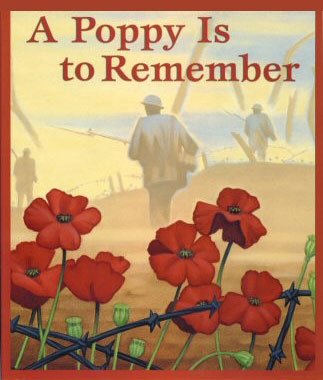
In memoriam
A simple recognition of some of our family members who served in the First and Second World Wars:
The Great War
 Private William Penman, Scots Guards, died 1915 at Le Touret, age 25
(Elizabeth’s great uncle)- Private David Buller, Highland Light Infantry, died 1915 at Loos, age 35
(Elizabeth’s great grandfather) - Private Walter Porteous, Northumberland Fusiliers, died 1917 at Passchendaele, age 18
(my great uncle) - Corporal John Mulholland, Royal Tank Corps, died 1918 at Harbonnieres, age 24
(Elizabeth’s great uncle)
The Second World War
- Flying Officer Richard Porteous, RAF, survived the defeat in Malaya and lived through the war
(my great uncle) - Able Seaman John Penman, RN, served in the Defensively Equipped Merchant fleet on the Murmansk Run (and other convoy routes), lived through the war
(Elizabeth’s father) - Private Archie Black (commissioned after the war and retired as a Major), Gordon Highlanders, captured at Singapore (aged 15) and survived a Japanese POW camp
(Elizabeth’s uncle) - Elizabeth Buller, “Lumberjill” in the Women’s Land Army in Scotland through the war.
(Elizabeth’s mother) - Trooper Leslie Taplan Russon, 3rd Royal Tank Regiment, died at Tobruk, 19 December, 1942 (aged 23).
A recently discovered relative. Leslie was my father’s first cousin, once removed (and therefore my first cousin, twice removed).
In Flanders fields the poppies blow
Between the crosses row on row,
That mark our place; and in the sky
The larks, still bravely singing, fly
Scarce heard amid the guns below.We are the Dead. Short days ago
We lived, felt dawn, saw sunset glow,
Loved and were loved, and now we lie
In Flanders fields.Take up our quarrel with the foe:
To you from failing hands we throw
The torch; be yours to hold it high.
If ye break faith with us who die
We shall not sleep, though poppies grow
In Flanders fields.Lieutenant Colonel John McCrae, MD Canadian Army Medical Corps (1872-1918)


