Quotulatiousness

July 31, 2024

“You really can’t hate them enough”

Filed under: Books, Media, Politics, USA — Tags: , , , , , , , — Nicholas @ 03:00

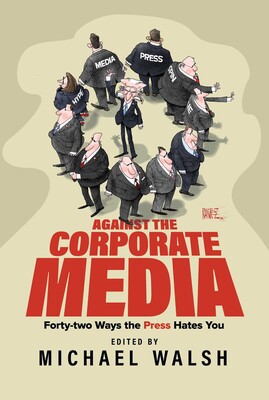
Elizabeth Nickson links to a short excerpt from Michael Walsh’s introduction to his upcoming Against the Corporate Media:

Today’s journalists now openly celebrate the death of objectivity, arguing that reporters have biases like everybody else, so why pretend that they don’t? In clear violation of their own — and now very much outmoded — Society of Professional Journalists’ Code of Ethics, they happily ignore such tenets as:

  • Identify sources clearly.
  • Consider sources’ motives before promising anonymity.
  • Avoid conflicts of interest, real or perceived.
  • Expose unethical conduct in journalism, including within their organizations.

Thus, after nearly a century’s consensus about journalistic best practices, we have come full circle to the days of naked partisanship that marked the earliest American newspapers. Gossip has become news, journalistic crusades are fabricated out of whole cloth and attributed to anonymous sources as justification. It’s noteworthy that the word “objectivity” nowhere appears in the current SPJ code, which was revised in 2014. Why would it? Objectivity has become the mortal enemy of the current vogue for “explanatory” or “advocacy” journalism — otherwise generally known as propaganda.

The transformation of journalism from rank advocacy to lukewarm “objectivity” and back to even ranker political propaganda (nearly all news stories today are couched in political terms, including those about pop music and sports) is one of the principal subjects of this book. Accordingly we have assembled a corps of forty-two journalists — some grizzled veterans, some newcomers, some of whose primary occupations lie in the wider fields of book publishing, fiction, non-fiction, television, and even Hollywood — to analyze the startling changes that have come over the profession in our lifetimes.

You really can’t hate them enough.

Even greater than the abandonment of “objectivity” as a pernicious influence on journalism is the internet, the great destroyer of printed periodicals, which has laid waste to the newspaper and magazine industry and has fallen under the control of the social-media giants, such as X (formerly Twitter) and Facebook, and is now subject to favoritism and even censorship by near-monopolies like Google, a search engine that also now controls visual media via its ownership of YouTube. Whether the patrician Walter Lippmann would have admired his wishful handiwork now that it is a reality is open to question, but surely he would celebrate the intrusion of the American federal government, along with governments around the world, into both de facto and de jure informational control of cyberspace. In many countries around the world, the press and attendant broadcast media are now directly and unabashedly controlled by government entities which, in many cases, openly fund and censor them.

Even in a work of this length, it is of course impossible to touch upon every aspect of the current state of the media. From the point of view of one who has labored in it, off and on, for more than half a century, it is parlous and getting worse. Ask someone with less than ten years’ experience in the field and you may well — very likely will — get a different answer: that it’s liberated, responsive, unfettered. Still, my work as a historian has convinced me of the truth of Jean-Baptiste Alphonse Karr’s famous axiom, plus ça change, plus c’est la même chose. (The Paris-born Karr, who lived from 1808 to 1890, was, of course, a journalist himself, in addition to being a critic, novelist, and flora-culturalist. But that was back in the day when “journalists” were men of accomplishment in other fields.) That is to say, the fundamental things apply in all walks of human endeavor, and among these things is mankind’s innate desire to convince others of the rightness of his position on any given subject. The question always has been: What’s the best way to go about it?

QotD: Train nostalgia

Filed under: Quotations, Railways, USA — Tags: , , , — Nicholas @ 01:00

Nothing compares to arriving by train; you’re not dropped off in a climate-controlled center on the edge of town, but dropped in the humid middle, surrounded by machinery and steam and shouts and clangs. You don’t slide up the jetway — you schlep yourself along the platform to the stairs, you jostle and maneuver and find your place in the throng; you thread through the station, head outside — and oh, my, GOD, there it is, loud and wide and high and alive, the city.

When you leave you leave with the nudge. Planes waddle to the runway then throw themselves in the air with theatrical fury. Trains nudge you out. You’re sitting in your seat; you’re still. The strange orange subterranean light fills the car; again the shouts, the clangs, the whistles, the whirr of electric carts. The doors huff shut. Conductors walk around listening to crackly voices on the walkie-talkie. You wait. Then the nudge. The train lurches forward, the wheels clank, the rhythm begins, and you’re on your way. In a few minutes you’ll clear the tunnels and see the city from below, indifferent to your departure. Clank clank clank clank clank clank clank clank. On the plane you seem to approach New York like a nest of hornets — you’re wary, circling, then you bore in. When you leave by train you simply move along, move down, move out. Old tunnels, old concrete, rusted remains, barrels, trash, then light. Then the tunnel that takes you away. Standing in Times Square it seems a hard place to leave; it seems like you’d have to fight your way past the lights and noise and commotion and crowds. You’re almost surprised when you leave with such ease, such lack of contention. There should have been a brass band, or a mob.

Manhattan seems like a dream by the time you’re 30 minute down the rails. Maybe that’s why I keep going back. You’re kidding me. This is real? Gowan.

James Lileks, The Bleat, 2005-07-20.

July 30, 2024

The new and improved malaise for the 21st century

Filed under: Cancon, Economics, Government, Politics, USA — Tags: , , , — Nicholas @ 03:00

Back in the 1970s, US President Jimmy Carter identified the theme of the decade as “malaise”, and now, thanks to generations of feckless politicians, burgeoning bureaucratic empires, and economic stagnation, it’s back in an even malaisier form for the Current Year:

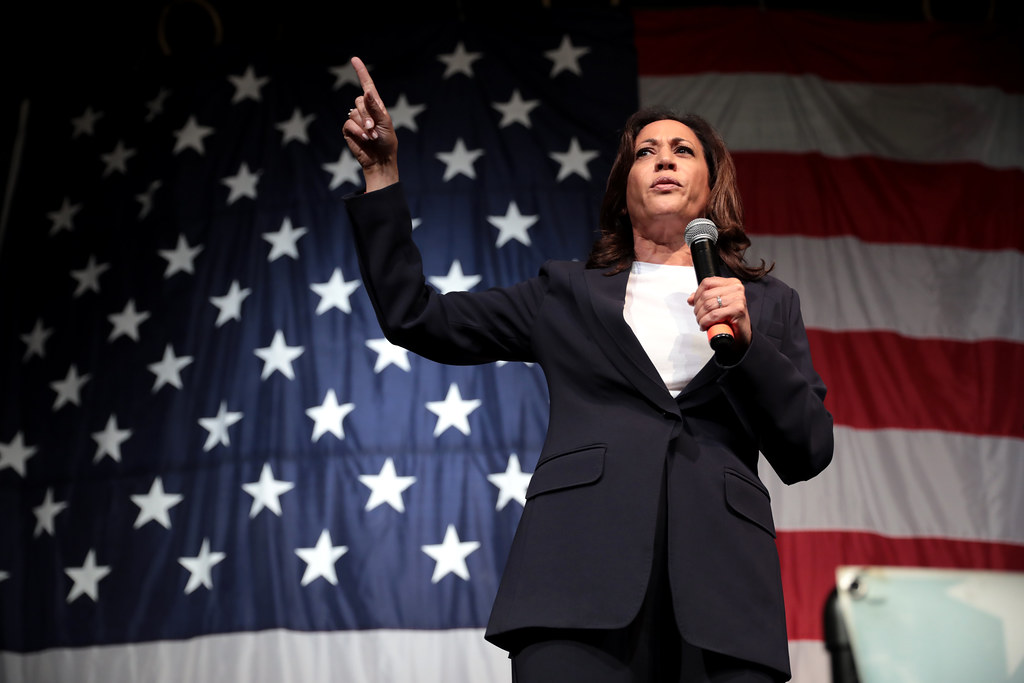
“Kamala Harris” by Gage Skidmore is licensed under CC BY-SA 2.0 .

Some time ago, I noticed that a general fatigue had taken a place alongside the malaise that was already being felt by many Americans and Canadians. The malaise stemmed from the overdue recognition that their lives were not going to get any better, and that they would have to work harder to just maintain a standard of living that they were already used to.

The fatigue came from a different, but not too distant place; the politicization of everything these past one and a half decades meant that there was no escape [from] the political. Whether sports, video gaming, or even fashion, everything had to be run by the cultural police before it could be deemed “not problematic”. The problem was (and still is) that everything to this type is “problematic”. This would not be a problem at all if this type were not empowered by the powers-that-be, but for some strange reason the cultural police quickly became ubiquitous, and their constant hectoring and lecturing ground most people down to the point where fatigue set in.

Everything became political, so therefore there was nothing that was not political. The fact that sanctions began to be placed against those who dared to buck the new trends in social mores meant that this was a totalizing form of politics. It wasn’t fascism, nor was it communism … but it was (and is) totalitarianism in a new form all its own. The rise of populism on the right in the West (as this trend is also present in Europe, but is not as thoroughly embedded there as it is in North America) is almost entirely a reaction to this. Freedom and liberty, as traditionally understood in the Anglosphere (i.e. “as long as I don’t harm others, I can do or say what I want”) took a back seat to what they call “equality”, a first step towards the more extreme demand known as “equity”.

Economic precariousness combined with the permanent presence of the Sword of Damocles above your head is a brilliant way to get people to shut up and get with the program. It is very coercive, but it is for the “greater good”, they tell us. What we already see is that it does not convince all, and that it has a negative effect on trust in governing institutions and national elites. The level of control by the managerial elite over the daily lives of its citizens is now at a micro-management one. Everyday, most people have to think carefully before speaking for fear of committing some aggression that could lead to the termination of their employment. They must mouth elite-approved social mores just in order to be able to tread water, as boat rocking is a secular sin. Why would the powers-that-be want to ever give up such a tool of mass control? The people are not to be trusted, which is why this totalizing system must remain in place. Just imagine if it were removed: the dreaded 1990s would return … or something.

Jacob Siegel has written an interesting essay on the concept known as “Whole of Society”, and how it has become a totalizing system:

    To make sense of today’s form of American politics, it is necessary to understand a key term. It is not found in standard U.S. civics textbooks, but it is central to the new playbook of power: “whole of society“.

    The term was popularized roughly a decade ago by the Obama administration, which liked that its bland, technocratic appearance could be used as cover to erect a mechanism for the government to control public life that can, at best, be called “Soviet-style”. Here’s the simplest definition: “Individuals, civil society and companies shape interactions in society, and their actions can harm or foster integrity in their communities. A whole-of-society approach asserts that as these actors interact with public officials and play a critical role in setting the public agenda and influencing public decisions, they also have a responsibility to promote public integrity.

    In other words, the government enacts policies and then “enlists” corporations, NGOs and even individual citizens to enforce them — creating a 360-degree police force made up of the companies you do business with, the civic organizations that you think make up your communal safety net, even your neighbors. What this looks like in practice is a small group of powerful people using public-private partnerships to silence the Constitution, censor ideas they don’t like, deny their opponents access to banking, credit, the internet, and other public accommodations in a process of continuous surveillance, constantly threatened cancellation, and social control.

The catch:

    “The government” — meaning the elected officials visible to the American public who appear to enact the policies that are carried out across the whole of society — is not the ultimate boss. Joe Biden may be the president but, as is now clear, that doesn’t mean he’s in charge of the party.

Siegel writes that the “whole of society” approach arose during Obama’s shift away from the War on Terror to something called “CVE” (Countering Violent Extremism) i.e. the shift away from focusing on Islamist terror towards fighting America’s own citizens who are not with the new political, social, and cultural programs:

    But the true lasting legacy of the CVE model was that it justified mass surveillance of the internet and social media platforms as a means to detect and de-radicalize potential extremists. Inherent in the very concept of the “violent extremist”, was a weaponized vagueness. A decade after 9/11, as Americans wearied of the war on terror, it became passé and politically suspicious to talk about jihadism or Islamic terrorism. Instead, the Obama national security establishment insisted that extremist violence was not the result of particular ideologies and therefore more prevalent in certain cultures than in others, but rather its own free-floating ideological contagion. Given these criticisms Obama could have tried to end the war on terror, but he chose not to. Instead, Obama’s nascent party state turned counterterrorism into a whole-of-society progressive cause by redirecting its instruments — most notably mass surveillance — against American citizens and the domestic extremists supposedly lurking in their midst.

    A reflection on the 20-year anniversary of Sept. 11 written in 2021 by Nicholas Rasmussen, the former director of the U.S. National Counterterrorism Center, captures this view. “Particularly with the growing threat to public safety and security posed by domestic violent extremism, it is essential that we move beyond the post-9/11 counterterrorism strategy paradigm that placed the government at the center of most counterterrorism work.” Instead of expecting the government to deal with terrorist threats, Rasmussen advocated for “a much wider, more expansive and inclusive ‘whole-of-society’ approach” that he said should encompass “state and local governments, but also the private sector (to include technology companies), civil society in the form of both individual voices and non-governmental organizations (NGOs), and academia.”

July 29, 2024

“… those who aren’t on board with your side are assumed to simply be deficient human beings”

Filed under: Media, Politics, USA — Tags: , , , — Nicholas @ 03:00

Elizabeth Nolan Brown on the increasing, conscious racial segregation of supporters of Kamala Harris, in this case the “Karens for Kamala” Zoom call for white women:

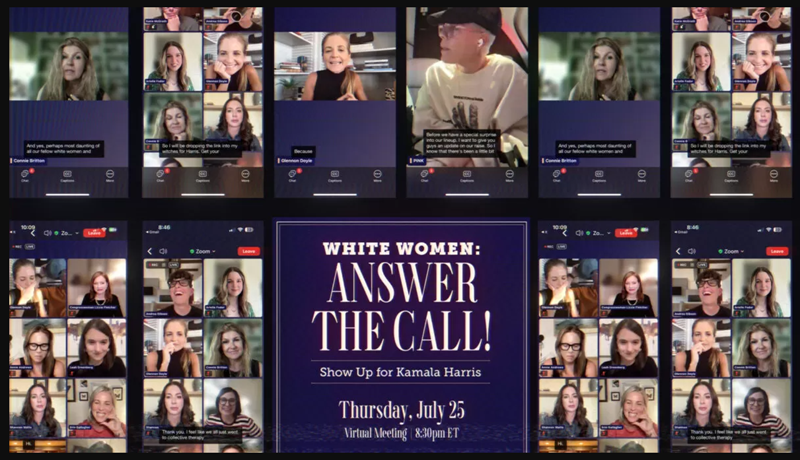
Screencaps from the Zoom call.
Reason magazine.

“Karens for Kamala?” actress Connie Britton joked.

Britton was one of two celebrities, several politicians, and, reportedly, more than 100,000 others on a Zoom call advertised as a way for white women to “show up for Kamala Harris”. What transpired echoed advocacy around Hillary Clinton eight years ago. It was also oddly reminiscent in tone, if not substance, of missteps we’ve seen from conservatives like Sen. J.D. Vance (R–Ohio), in which those who aren’t on board with your side are assumed to simply be deficient human beings.

Also, pop star Pink was there. And Sen. Kirsten Gillibrand (D–N.Y.) told a story about her and Britton having to drink toad venom after eating bad seafood.

The virtual gathering was organized by gun control activist and Moms Demand Action founder Shannon Watts, who modeled the meeting after recent calls set up by and for black women and black men who want Harris for president.

According to Elizabeth Minnella, who served as a sort of master of ceremonies of the call, more than $1.8 million was raised last night. Urging viewers to group chat their friends with a fundraising link, Minnella said she would be dropping it into her favorite group chat, titled “Witches for Harris”.

“I am here tonight, embracing myself in your incredible, profound white women midst, because we’ve got a fucking job to do, y’all,” said Britton, who has starred in shows like Nashville, American Horror Story, and The White Lotus. She went on to suggest that because Vice President Kamala Harris is a woman, she will “listen. And lead with empathy, integrity, and the power of the truth”. When President Joe Biden stepped down as the Democratic Party’s 2024 presidential nominee and endorsed Harris to take his place, “the world blew up. Did you feel it?” asked Britton. “It was seismic. Cosmic, even. And since then — have you seen it? Have you seen Kamala glisten in the brilliance and shine of her true power and leadership? And what does that feel like? Feels like self-love.”

“Women, when we are capable of opening up to our own voices and gifts, can access a love of self that is reflective … and can shine outward to unknown depths,” Britton continued. “Which brings me back to us. Beautiful, beautiful white women. Here we are gathered together.”

If Britton sounds a bit gender essentialist, a bit patronizing, a bit woo-woo — well, that was just in keeping with the overall vibes of the call. At least Britton’s “Karens for Kamala” joke was one of the few moments in which speakers weren’t positively radiating self-seriousness.

If there was an underlying theme, it was that white women needed to use their privilege to elect Harris — or else.

“White women, we have 100 days to help save the world!” Watts said.

July 28, 2024

The “Michelangelo of fake news”

Filed under: Media, Politics, USA — Tags: , , , — Nicholas @ 05:00

The latest anonymous reviewer in Astral Codex Ten‘s “Your Book Review” series considers the work of Michael Baxter and his Real Raw News site, your go-to source of unfiltered unfake news about America:

If you’re a follower of U.S. news outlets, you’ve seen some big stories unfolding over the past year: The unprecedented four criminal indictments lodged against former President Trump. The ongoing AI explosion. The backlash against “DEI”, “woke”, and “cancel culture” as exemplified by Elon Musk’s purchase and rebranding of Twitter to “X”.

Visit a hundred different news sites, and you’ll get varying takes on these stories. Some will be liberal, some centrist, some conservative, some libertarian or neoreactionary or third-way or whatever. Most will attempt or feign objectivity (most badly). But all will largely be discussing the same stories.

And then there is one site where a very different narrative is unfolding:

    The admiral and several other officers were already in position when guards delivered [Merrick] Garland to the gallows at 10:05 a.m. He was led to the platform where the hangman and a rabbi awaited his arrival, one lowering the circle of rope and the other asking whether Garland wanted prayers recited as he transitioned to the afterlife.

    “Go f*** yourself,” Garland told the rabbi.

    Admiral Crandall asked Garland if he had any last words—besides insulting the rabbi.

    “I do, Crandall,” Garland said.

    A lengthy silence followed.

    “We don’t have all day,” the admiral said.

    Garland sneered. “You’re so far up Trump’s ass I can see the soles of your shoes.”

    “Clever,” the admiral said.

    The hangman put the noose around Garland’s neck and a cloth sack over his head.

    “Let’s do it,” the admiral said.

    The floor beneath Garland’s feet fell away, and he dropped. His neck snapped, ending his miserable life.

Ladies and gentlemen, welcome to Real Raw News.1

The World According to Michael Baxter

Some people write fanfics about Harry Potter. Some people write fanfics about Buffy the Vampire Slayer. And then, well, some people write fanfics about Donald Trump.

Spewing forth from a single WordPress site that doesn’t even display properly in mobile, Real Raw News presents itself as the lone bastion telling the real story of what is going on in America, for everyone who isn’t fooled by the fake news of all the other media outlets.

The articles of RRN are all the work of one Michael Baxter, and after enough time spent reading the site, one realizes that Baxter is no crank – he is instead a creative genius, the Michelangelo of fake news. Just as Michelangelo took four years to paint the Sistine Chapel ceiling, Baxter has spent three and a half building his own elaborate world of plots, counterplots, and bloody, implacable justice.

At Real Raw News, Donald Trump is still president – just a temporarily embarrassed one, who has had to abandon the public-facing side of his job in order to lure the “Deep State” out of hiding into its own annihilation.

In the world of Real Raw News, at least, it’s working. In this corner of the World Wide Web, America is going through a revolutionary purge rivaled only by the worst excesses of Joseph Stalin’s government – with the important difference that this time, the perpetrators thankfully all deserve it.

The basic summary of the past four years of world history, according to RRN, are as follows:

  • Following widespread and blatant fraud in the 2020 election, endorsed as legitimate by the media, Donald Trump pretended to surrender power to Joe Biden. In reality, though, he retained the support of the U.S. military, and continues to exercise presidential power from a secret bunker at Mar-a-Lago.
  • Military forces loyal to Trump, empowered by the Insurrection Act and other executive orders secretly placing the country under martial law, have been conducting special forces operations to hunt down and secretly arrest various high-profile Americans on charges of treason.
  • Joe Biden, who is not really president and perhaps not really Joe Biden either, is somehow still exerting dictatorial powers over much of America, assisted by Deep State-aligned government agencies like the IRS, the FBI, and of course, FEMA. Any time there is a natural disaster, Trump-loyal military forces do battle with FEMA operatives. These battles have killed hundreds.
  • A chief goal of Biden’s not-really-in-power dictatorship is spreading Covid-19 vaccines, which are an evil plot to do … something. They contain ingredients like the “zombie drug” scopolamine, pesticides, HIV, and wasp venom. Vaccines variously cause heart attacks, mass sudden death, or berserker rage.
  • Vladimir Putin launched the war in Ukraine to hunt down a network of child-trafficking pedophiles. The Deep State has some kind of weird plan to merge America with Ukraine.
  • The lack of evidence that all this is happening is entirely explained through coordinated media silence as well as the widespread use of body doubles and clones.

The heart of Real Raw News, and the source of most of its entertainment value, is its accounts of the supposed secret military tribunals occurring at America’s Guantanamo Bay Naval Base in Cuba, better known as Gitmo2. For more than three years, the site has produced one article after another describing the arrest, trial, and execution of dozens of major and not-so-major figures in American life.


    1. “Wait a minute, this is about a fake news website? Why is it in this contest?”

    Excellent question! To that, I offer several answers:

    1. A collection of fake news blog posts may as well be considered a long-running series of short stories, and I hope that we’d be allowed to review the collected short stories of an author even if they were never technically compiled into a book.
    2. Scott told us to be less conventional in our choices.
    3. I am a liberal arts graduate and I’m definitely not going to make the finals reviewing some nerdy non-fiction book.

    2. Baxter also places a few tribunals in Guam.

Allies Issue Potsdam Declaration – WW2 – Week 309 – July 27, 1945

World War Two
Published 27 Jul 2024

China, Britain, and the US issue a Declaration demanding Japan’s unconditional surrender, and promising complete destruction if this does not happen and happen soon. The plan is to for the Americans to use their atomic bombs on Japan if she does not comply, but by the end of the week the Japanese have not replied. They still have hopes for the Soviets to mediate some sort sort of peace. What they don’t have is a navy, as its final destruction comes this week.

00:00 Intro
00:50 Recap
01:32 The Potsdam Conference
04:41 Japanese Hopes
05:56 The Potsdam Declaration
10:53 The Initial Reaction
14:48 The End Of The Japanese Navy
15:05 The War On Land
19:10 Summary
19:30 Conclusion
(more…)

J.D. Vance is an ideological extremist who has pushed an idea also supported by … Canadian deputy PM Chrystia Freeland

Filed under: Cancon, Media, Politics, USA — Tags: , , , , , — Nicholas @ 03:00

There’s much viewing-with-alarm and pearl-clutching going on over some of J.D. Vance’s more outré notions floated before he became Trump’s running mate:

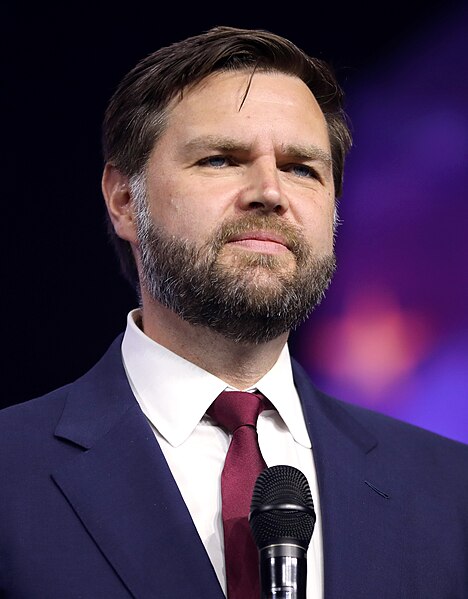
U.S. Senator J.D. Vance speaking with attendees at The People’s Convention at Huntington Place in Detroit, Michigan, 16 June, 2024.
Detail of a photo by Gage Skidmore via Wikimedia Commons.

One of the amusing features of this week’s U.S. election turbulence has been sudden media scrutiny of Ohio Republican Senator J.D. Vance, a former author and pundit newly named as Donald Trump’s running mate. Readers will know I’m a sadistic student of electoral reform crusades, and in 2021 Vance advocated for one of the myriad of utopian ideas that has never quite reached prime time: parents should be given extra votes that they can exercise on behalf of their minor children.

[…]

Critics of Vance are screaming about the sacred principle of “one person, one vote” — but of course the centrists and liberals who have toyed with the same idea support it precisely because children are persons who deserve political representation. (They would be represented second-hand by their parents until the age of majority, but us adults are all represented that way in democratic decision-making now, right?) Earlier this week Reason magazine published a short excerpt from a pro-Demeny paper by two American law professors with strong conservative, originalist credentials: there isn’t all that much daylight between their arguments and Corak’s.

Are the arguments actually any good? Some of them seem circumstantial or even aesthetic. We’re in a transitory era of gerontocracy because of a baby boom that happened eighty years ago, and nobody under 70, whatever their ideology, likes this universal predicament much. But on the grounds of revealed preference, the lack of actual real-world Demeny experiments is a big problem.

If we want the proxy votes to go to custodial parents who are involved with a real child and conscious of its particular interests, you’re suddenly talking about integrating election systems with family law. I.e., an unfathomable technical nightmare. But assigning control of the extra child votes automatically to biological parents, including deadbeats and those who have surrendered children to adoptees or foster families, seems like a non-starter. (And would also be an unfathomable technical nightmare.)

You can say that the democratic principle is more important than the mere design details of a child-voting system, and this is the kind of thing election reformers say all the time — but would you book a seat on an airplane that was built on aerodynamic principles with no attention to detail?

How America RUINED the world’s screws! (Robertson vs. Phillips)

Filed under: Business, Cancon, History, Humour, Tools, USA, WW1, WW2 — Tags: , , , , — Nicholas @ 02:00

Stumpy Nubs
Published Apr 17, 2024

July 27, 2024

More Kamalamentum

At Spiked, Fraser Myers examines what he calls “Kamala’s Ministry of Truth”:

“Kamala Harris” by Gage Skidmore is licensed under CC BY-SA 2.0 .

Did I just fall out of a coconut tree? How else to explain the dizziness so many of us are feeling at the speed of Kamala Harris’s coronation – and at the contortions now being performed to present her as the saviour of the beleaguered Democrats, if not of American democracy itself.

Within 48 hours of Joe Biden’s withdrawal from the US presidential race on Sunday, Vice-President Harris had clinched enough delegates, donors and Democratic power-brokers to ensure her an unchallenged, uncontested path to becoming the Democratic nominee to face Donald Trump this autumn. The last dominos to fall, Barack and Michelle Obama, today offered a full-throated endorsement of Harris, claiming she has the “vision, the character, and the strength that this critical moment demands”.

Since Harris emerged as the frontrunner, the Democrats’ media cheerleaders appear to have been gripped by a nasty bout of Kamalamania. “Kamala Harris will be the 47th President of the United States. Democracy will survive”, declared one Hollywood celeb. She brings the “political power of joy” and “effervescent vibes” to US politics, according to a New York Times columnist. CNN reporters have been gushing over her choice of hoodie and sneakers. As Jenny Holland wrote on spiked earlier this week, the media are eager to present Harris as “Martin Luther King, Ruth Bader Ginsburg, Taylor Swift and Beyoncé, all rolled into one”.

We need to remember who we’re talking about here. The newly anointed Democratic nominee was someone few believed could win the presidency, only a few weeks ago. Indeed, this is widely understood to be behind the Obamas’ hesitancy to back her – and Biden’s own reluctance to hand over the baton to his veep.

It’s not hard to see why. Harris is a politician who exudes negative charisma. She speaks like a cross between a Calfornian self-help guru – her favoured aphorism is “What can be, unburdened by what has been” – and a primary-school teacher who enjoys a few too many glasses of wine at lunchtime. She laughs and cackles at inopportune moments, often to herself. At times, her speech is as incoherent as the mentally frail Joe Biden’s. Who could forget her nonsensical remarks last year at a White House function in which she asked: “You think you just fell out of a coconut tree? You exist in the context of all in which you live and what came before you.” Good luck translating that into English for swing voters in Pennsylvania.

We know that Harris is unpopular with the public, because she has been tested before. Her campaign for the Democratic nomination in 2020 had to be suspended two months before the first primary vote in order to avoid total humiliation at the ballot box. Nationally, Harris was polling at just three per cent. Even in her home state of California, she could only muster eight per cent. Yet now she is about to become the Democratic contender for the White House, with zero input from the public or the party grassroots.

At Founding Questions, Severian responds to a few questions from readers about the Kamala Harris candidacy and what it might indicate about what is happening behind the scenes among the Democratic movers and shakers:

My read is that 2024 is going to be Fortified to hell and back — that’s a certainty — but the extent of the Fortification, and probably its eventual outcome, is tied to the Robber Barons. I agree with William Briggs or whoever it is who suggests a “Thermidorian faction” (I prefer “competent fraction”) of Juggs within the Apparat who are trying desperately to slam on the brakes. IF they can do it — and I’m honestly not sure they can, not at this late date — it’ll be because the Robber Barons put the resources behind it.

I get a sense that there are more than a few Robber Barons making their peace with the BOM. There are, of course, a lot more Robber Barons who hate him and will never reconcile themselves to him … but that doesn’t mean they want Kamala Harris as President. As I wrote in the comments yesterday, if they’d wanted Harris as President, she’d be President by now. Pretty much all the Uniparty’s current problems go away if Biden resigns the Presidency, and if they can force him to drop his reelection bid, they can certainly force his resignation — he’s out in five months no matter what, so why not pass the reins to Harris? She’d be in a far, far stronger position going into 2024 as the incumbent.

No, really. I know that sounds badly wrong to people in contact with Reality, but look at it from the dumbass perspective. The Media has been telling us for four years that the Biden Administration is the greatest ever. Despite your lying eyes, there’s no inflation, no border crisis, no crime problem, and so forth. Harris is going to try to take credit for that on the campaign trail, of course, but it rings a weensy bit hollow coming from a Vice-President. From Madam President xzyrzelf, though? Different story. At least, that’s how the dumbfucks out there in Normie-land would see it, and those are the stupid bastards who will be voting in the fall.

As Vice-President, she gets no credit for the Biden Administration’s accomplishments (I know, I know, stop laughing) … but she gets tarred with all their failures, plus her fuckups as “border czar” (that’s gonna be fun), plus her role in the very obvious and ongoing coverup of Dementia Joe’s galloping dementia.

Make her President, and all that shit goes away. For her first official act, she appoints someone, anyone, as the new “border czar”, and tells that persyn to fall on xzheyr sword. Or, better yet, just never mention the border again. Tell the Media to blast nothing but Historic First Female President!! shit from now until Fortification Day. They will be happy to comply, and it’ll drive most of the bad news off the front page.

This is such a no-brainer that there are only two possible explanations for why they haven’t done it: Either they’re even more terrifyingly stupid than they seem, and so it never occurred to them; or it did occur to them, but Kamala Harris is such a repulsive retard that they can’t risk it — despite it all, Chomo Joe and his galloping dementia are still, somehow, the safer bet.

My guess is that, as Pickle Rick posited the other day, they all give her a pro-forma endorsement, then quietly pull the funding plug. They all pretty much have to endorse her at this point, if for no other reason than the Spiteful Mutants are already going to go apeshit in Chicago; an actual primary fight might burn the city to the ground.

But who knows? These are Juggs. Plus, as I’ve written, this is their moment — every grievance group in AINO will be going for it, as the Uniparty in general, and Harris in particular, will have to promise them the earth and stars to keep them onside. Consider that she has to get both the Bagels and their shekels, and the Pali-bros, in order to make the whole thing go. That would test the political skill of a Metternich, to say nothing of a woman who literally slept her way to the top. She can’t blow ’em all, so she’s going to have to deliver the goods in some other way.

It’ll be a hoot, that’s for sure. Keeping an eye on the funding is probably the best indicator we have.

And in an answer to a different reader:

Welcome to Late Soviet America. Expect a lot more of this, as obvious, ham-handed repression is SOP for flailing, collapsing regimes. We’ve entered the Andropov / Chernenko phase of the festivities, when the phrase “decrepit old man” refers to both the “leader” and his nation. And yeah, I realize that makes Kamala Harris the fake and gay Gorbachev, but that’s actually pretty close — Gorby, too, destroyed what was left of his country because he really believed in all that “openness” and “democracy” bullshit they taught him at the Higher Party Academies. Harris is a far worse moonbat race-baiter than even Bathhouse Barry ever dreamed of being; we’ll get the whole Gorby-Yeltsin-we’re fucked decade in about six weeks once she’s Fortified into office.

And on the power politics uncertainties for both America’s allies and adversaries when it’s not clear exactly who is in charge in Washington DC, the temptation to press a temporary advantage may become overwhelming:

Had Brandon resigned, it wouldn’t be ideal for the Juggs — Harris is still largely holding the bag for Chomo’s failures — but it’d be a hell of a lot better than this, because at least there is someone nominally in charge. Putin or Xi or whoever can pick up the phone and demand to speak to President Harris, and at the very least, he can be assured that President Harris will remember their discussion a few hours later. She might decide to do some incredibly stupid shit, of course — in fact that’s almost guaranteed — but at least Xi, Putin, whoever will know that it’s a bad decision …

… and not just some random drooling lunacy by a guy who thinks it’s 1971 and he’s sticking it to Corn Pop. If anything, the problem just got worse, because they’ve all but openly admitted what everybody already knew: We’re under the Do Long Bridge. There ain’t no fuckin’ CO. But now, instead of just ignoring Harris as per usual when decisions have to be made by … well, by whomever, now they pretty much have to loop her stupid ass in, even though she has no official power to make anything happen. They’ve added yet another layer of retarded dysfunction to an already FUBAR process.

And at The Free Press, Suzy Weiss explains a few Kamalamemes that her campaign has decided to “lean into” (note that the rest is behind a paywall):

Kamala is brat, Biden is boots, please God send the asteroid today: I’ve learned the hard way — and by that I mean my parents once asked me what “WAP” meant — that certain things should never be explained with words. It’s not that it’s impossible, it’s just that it embarrasses everyone.

That’s how I feel about the whole Kamala-is-brat thing. Brat is a good album about partying and getting older and having anxiety that was released earlier this summer by Charli XCX. But it’s since been adopted by too-online and very young people as a personality, and by Kamala Harris’s campaign as a mode to relate to those very young people. Her campaign is leaning into the whole green look of the album to try and win over Gen Z, and generally recasting her many viral moments—”You think you just fell out of a coconut tree?” “I love Venn diagrams” “What can be, unburdened by what has been” — as calling cards. It’s like when Hillary went on Broad City, only this time more cringe.

And now we have Jake Tapper and Greg Gutfeld grappling with the “essence” and the “aesthetic” and overall vibe of brat girl summer. We used to be a serious country. We used to make things.

Here’s the thing about Kamla: she is hilarious and campy, but unintentionally so. Any goodwill that her goofy dances or weird turns of phrase garner should be considered bonus points, not game play. Was there ever any doubt that Fire Island would go blue? We’ve been debating whether Kamala’s meme campaign is a good move for her prospects in the Free Press Slack, and here I’ll borrow from my older and wiser colleague Peter Savodnik: “There is nothing more pathetic than an older person who cares what a younger person thinks is cool”.

Boomer behavior: While Kamala’s campaign is being run by a 24-year-old twink with an Adderall prescription, J.D. Vance’s speechwriter seems to be a drunk boomer who just got kicked out of a 7-Eleven. Vance, appearing this week at a rally in Middletown, Ohio, riffed, “Democrats say that it is racist to believe … well, they say it’s racist to do anything. I had a Diet Mountain Dew yesterday and one today, and I’m sure they’re going to call that racist too.” Crickets. Horror. Major “Thanks, Obama” energy. There was also a bit on fried bologna sandwiches and a lot of “lemme tell you another story”. The guy is 39 but sounds older than Biden.

Fresher, 35-to-60-year-old blood is exactly what we’ve been begging for. Let the boomers boom, let the Zoomers zoom. Kamala and J.D.: act your age.

July 26, 2024

Getting meta on “cancelling the cancellers”

Filed under: Media, Politics, USA — Tags: , , , , , — Nicholas @ 05:00

Nearly a week ago, I posted an excerpt from John Carter’s essay at Postcards From Barsoom called “Right Wing Cancel Squads“. As sometimes happens, this particular essay caught the attention of a lot of folks online and triggered much discussion pro and con. John did his best to summarize and respond here, and (as I post links to Scott Alexander’s Astral Codex Ten now and again), I thought John’s response to Scott’s criticism was worth highlighting:

Somehow, Scott Alexander took interest in my essay, and addressed it at length. I’m not deeply familiar with Alexander, aside from a vague awareness that he’s a big deal in the rationalist community, to say nothing of being a much bigger deal than I am, and that he’s dealt with lying journalists and hysterical wokoids enough himself to have a healthy distaste for them. Alexander is characteristically calm and thorough, starting with a selection of screenshotted posts on Notes from various writers and commenters who take the pro-fight-the-enemy side, before presenting an extensive set of excerpts from my own essay.

Scott sidesteps the ethical question, to focus instead on the practical considerations, on the grounds of which he comes down (as expected, given his ideological niche) on the don’t-cancel side. He enumerates a series of objections, which can be approximately summarized as1:

    1) cancellation will not, in fact, teach anyone anything – after all, just look at how eager the right is to cancel;

    2) this has been going on forever, e.g. the Red Scare, so one more whirl ‘bout the merry-go-round isn’t likely to stop the wheel a turnin’;

    3) If you act like the woke, you are the woke;

    4) Most cancellations have been of liberals, by liberals, so if the right starts doing this it is likely to turn on itself;

    5) cancellation destroys competence, because avoiding cancellation takes on a higher salience to people than doing their damn jobs;

    6) embracing cancel culture has ruined the left’s name, which is why it is struggling despite holding all of the institutional power;

    7) going mad with power before you actually have power is probably stupid;

And finally

    8) there are better options.

The better options Alexander describes are mostly at the policy and tech level, such as better moderation tools that take the personal politics of platform moderators out of the equation, or dismantling those aspects of the regulatory state, such as the sillier and more self-contradictory elements of Civil Rights law, which nourish cancel culture in the first place. Alexander’s policy proposals are all great, and I completely agree that the most effective long-term solution is to tear the legal basis of cancel culture up by the roots, set those roots on fire, and salt the earth in which they were planted.

Regarding power, and the simple fact that the right does not have it in any formal sense, Charles Haywood and Bennett’s Phylactery made the same very cogent point. I don’t think any sane person could disagree.

I’m not convinced by some of Alexander’s other points. For instance, the right is an extremely contentious place, with the modal rightist being pretty low in agreeableness, which probably makes it hard for circular firing squads to be terribly effective. That isn’t to say that rightists don’t have strong beliefs – there are fanatics all over the place – but those beliefs are so contradictory between the various factions that the ideology of the right is infamously difficult to describe. Just look at the perennial holy war between Christians and pagans/Nietzscheans/vitalists.

As to the Red Scare, it’s probably worth pointing out that McCarthy was actually right: there really were communists trying to infiltrate the Western social order; tragically for us, the communists succeeded, which is a large part of the reason why we are where we are now.

As to the unpopularity of the left, I do not think this is only because of their po-faced censoriousness, although there is no question that that contributes. It probably also has something to do with their vicious racial and sexual hatred, their contemptuous hostility towards Western civilization, and their propensity to emotionally abuse children to the point that those children demand that they be allowed to mutilate their genitalia, amongst a great number of other horrors.

Finally, as to Alexander’s first point, that cancellation does not teach anyone anything. Au contraire. Look around at how society has changed in just the last decade. Sure, if you’re an autistic rationalist, a contrarian ideologue, or a Bohemian free spirit, cancel culture has only made you hate the left more. But this is a fairly small fraction of the population. What about the normies? In a remarkably short period of time, they went from opposing gay marriage, to supporting it. Why? Because examples were made of a few people who opposed it, and the rest got into line. Most people are basically NPCs: they don’t follow a praxis emerging from carefully thought out philosophical systems, but simply go along with whatever they perceive the prevailing morality to be. They are not rational, nor are they principled. They simply respond to incentives, which is to say, to rewards and to punishments. Put a few heads on pikes to demarcate new social boundaries, and the normies will in general respect them.2

There are limits to the ability to enact social change via incentive structure manipulation, because if the social boundaries you establish don’t map to the eternal verities of human nature, the resulting social order will generate a lot of friction and consequently destabilize … as our society observably is. However, the social boundaries the right intends to enforce do, in fact, map to human nature. The left has been figuratively beheading the people who object to the surgical genital mutilation and chemical sterilization of children; the right intends to metaphorically behead the people who have been advocating and carrying out that child abuse in the first place. There’s a profound moral asymmetry there, but I think there’s also a practical asymmetry, because the right isn’t demanding that everyone publicly agree sadomasochistic psychosis is healthy.


    1. I skipped one in the middle because it looked redundant.

    2. [NR] Sarah Hoyt is one of the folks most likely to describe herself as being on Team Heads-On-Pikes, and I suspect she has a non-trivial following who share in that inclination.

Vance, the harbinger

Filed under: Media, Politics, USA — Tags: , , , , — Nicholas @ 04:00

In City Journal, Christopher Rufo explains why Trump selected a VP candidate that goes against the “usual” ticket balance criteria for a presidential team:

U.S. Senator J.D. Vance speaking with attendees at The People’s Convention at Huntington Place in Detroit, Michigan, 16 June, 2024.
Detail of a photo by Gage Skidmore via Wikimedia Commons.

The Vance selection is not a gambit to secure a particular demographic or region — white men are Trump’s base; Ohio is a safe red state — but an effort to cultivate an emerging counter-elite that could make the second Trump administration substantially more effective than the first.

This story is built into J. D. Vance’s biographical arc. He was the all-American kid who rose from humble beginnings to make his way in the world: the Marines; Yale Law; venture capital; a best-selling book. He learned the language of the prestige institutions, cultivated powerful patrons, and quickly climbed the ladder in academia, finance, and business. He had made it.

Then, his story takes a turn. Having entered the ranks of America’s elite, Vance became disillusioned and disenchanted with it, correctly identifying it as a force of hypocrisy and corruption. He defected — first, by parting ways with the respectable conservatism of the Beltway, and then by embracing Donald Trump.

Some have criticized this as a cynical move, but my sense is that it is the opposite. A cynic would have continued to build an elite résumé; Vance sacrificed his respectability within a certain stratum, assumed considerable risk by moving toward Trump, and, in my view, was genuinely convinced that the establishment, both Left and Right, had exhausted itself and had to be opposed.

Now, not only has Vance been selected as a vice-presidential nominee; more significantly, he has charted the path for an emerging new conservative counter-elite.

The political balance is beginning to shift. A significant cohort of power brokers in Silicon Valley and on Wall Street have publicly moved toward Trump in this election cycle. Some of the names are familiar: Elon Musk, Marc Andreessen, David Sacks, Bill Ackman. But hundreds of other influential figures are assembling behind the scenes to support Trump’s campaign. Even some of Trump’s former adversaries, such as Mark Zuckerberg, have expressed cautious admiration for the former president.

Vance can now position himself at the center of this counter-elite. He has been in the boardrooms, made the pitches, and built the relationships. He speaks their language. They can do business together.

This could represent a sea-change. During the first Trump administration, especially following the death of George Floyd, institutional elites could neither express admiration for nor devote public support to Trump without paying a significant political price. Now the market has shifted, with a dissident elite moving along a similar path as Vance.

The ABC Of Hand Tools (1945) – Tool Care & Handling

Filed under: History, Humour, Tools, USA — Tags: , , — Nicholas @ 02:00

PeriscopeFilm
Published Apr 16, 2024

The ABC of Hand Tools (1945) is a Walt Disney Co. produced training and educational film for General Motors (GM) about proper use of hand tools. The film, which is in Technicolor, is fully animated and opens with a caveman character “Primitive Pete” seen inventing the first hand tool: an early model hammer made from stone with a stick handle. The film then goes on to elegantly show different types of basic hand tools such as the hammer, screwdriver, wrench, and pliers and show their proper uses, design elements and proper care.

Opening credits and title page, General Motors (GM) logo (0:07). Animation of various hand tools on blue background: wrench, hammer, saw, screwdriver (0:28). Various human innovations built using hand tools stretch out from globe: Golden Gate Bridge, radio towers, train (0:35). Stone Age: cartoon character caveman “Primitive Pete” uses earliest form of hand tool, stone tied to stick “Stone Age hammer” (0:58 – 2:12). Various modern day hand tools derived from Primitive Pete’s invention and shots of Primitive Pete misusing these tools: Ball-Peen Hammer design and proper uses of peen vs. face (2:24). Brass or copper hammer, raw-hide face hammer, plastic tip hammer, claw hammer (3:38). Details of design, uses of claw hammer (how to tighten hammer head, how to insert or remove nail using hammer head and claw) and Primitive Pete demonstrating how NOT to use the hammer (3:56 – 5:32). Ordinary screwdriver: Primitive Pete struggles to open window using screwdriver, however, he fails and only ends up ruining the tool (5:35). More information on the screwdriver which is made up of three principal parts: handle, shank, blade (6:00). Various size screws screwed into wood plank, demo on how to find proper blade for screw head size; Consequences of not choosing proper blade (6:44). Repairing blade head on shank if damaged; Front and side view of properly ground screw driver (7:37). Special heavy duty model screwdriver with extra large square shank; Primitive Pete damages screw driver by using wrench (8:19). Pliers: combination pliers, diagonal cutting pliers, long round-nose pliers, side-cutting pliers (8:50). Details of side cutting pliers design and uses: detailed how-to steps for using these pliers to make an electrical connection (9:09). Use of long round-nose pliers to make loop to fit a terminal (9:43). Use of diagonal cutting pliers for removing and installing cotter pins (10:01). Use of combination pliers: design elements (slip joint, shear) and uses (10:26). Wrenches and size range of wrench head (measurements refer to distance between jaws) (11:09). Primitive Pete demos bad wrench use followed by demo of proper usage (11:34). Open end wrench: adjustable jaw; Correct use of wrench; Proper care – keep tool well oiled (12:38). Medium sized monkey wrench: adjustable jaw for tight fit against nut; Proper use (13:35). Primitive Pete shown destroying tool by trying to force stubborn nut by hammering on wrench handle (14:11). Pipe wrench: how to use on pipes and other round objects, protective measures to prevent teeth marks (14:43). Box wrench: 12 notches in its head for good fit over nuts; head and handle offset at 15-degree angle (15:25). Combination box and open end wrench “half and half” (16:02). Boxes of socket wrenches: normal box set and one ideal for mechanic workshops which includes hinged offset handle, T handle, ratchet handle (16:23). Primitive Pete uses early model hammer against rock before film cuts to closing credits (17:40).
(more…)

July 25, 2024

David Friedman on the economics of trade

Filed under: China, Economics, USA — Tags: , , , , , , — Nicholas @ 04:00

David Friedman discusses how, for example, the US and China manage their trading relationship:

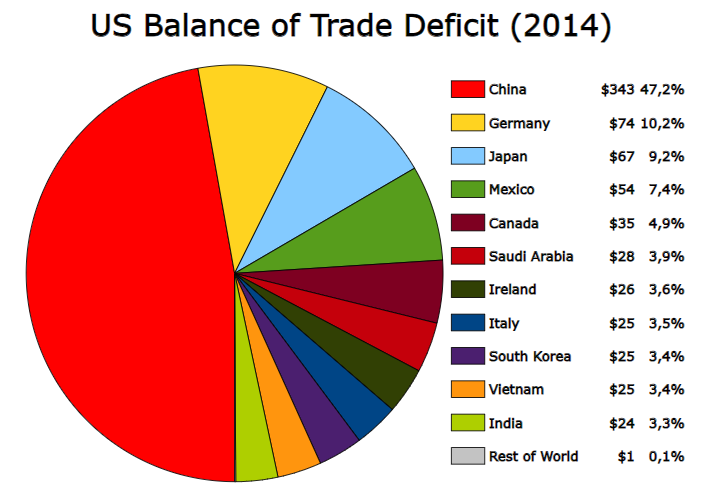
“United States Balance of Trade Deficit-pie chart” by Shirishag75 is marked with CC0 1.0 .

I recently read a thread about US/China trade on a forum occupied mostly by intelligent people. As best I could tell, all participants were taking it for granted that things that make it more expensive to produce in the US, such as regulations or minimum wage laws, make the US “less competitive”, increase the trade deficit, give the Chinese an advantage. Reading Project 2025, the Heritage Foundation’s battle plan for a future conservative president, I observed the same pattern, with only one exception.

It did not seem to have occurred to any of the forum posters that US costs are in dollars, Chinese costs in Yuan, and what determines the exchange rate between them is the cost of producing things. Discussing trade policy in terms of absolute advantage, pre-Ricardian economics, isn’t quite as bad as discussing the space program on the assumption that the Earth is at the center of the universe with sun, moon and planets embedded in a set of nested crystalline spheres surrounding it — Copernicus was about three centuries earlier than Ricardo — but it is close. It is a point that I made here about a year ago, but since the question came up in my most recent post and in a thread on my favorite forum, it is probably worth making again.

The Economics of Trade

It is easiest to start with the simple case of two countries and no capital flows. The only reason Americans want to buy yuan with dollars is to buy Chinese goods, the only reason Chinese want to sell yuan for dollars is to buy American goods. If Americans try to buy more yuan than Chinese want to sell, the price of yuan in dollars goes up, if Chinese want to sell more yuan than Americans want to buy, the price goes down, just as in other markets. The price of yuan in dollars, the exchange rate, ends up at the price at which supply equals demand, which means that Americans are importing the same dollar (and yuan) value of goods that they are exporting.

Suppose the US government, inspired by the mercantilist view that countries get rich by exporting more than they import, tries to produce a “favorable” balance of trade by imposing a tariff on Chinese imports. Chinese goods are now more expensive to Americans. Since they want to buy less from China they don’t need as many yuan so the demand for yuan goes down, the price of yuan in dollars goes down, which reduces the cost of Chinese goods to Americans. Just as before, the exchange rate ends up at a level at which the dollar value of US exports equals the dollar value of US imports. Both imports and exports are now less, since trade is being taxed, but the balance of trade is exactly what it would be without the tariff.

Suppose the US becomes less good at making things due to an increase in government regulation or some other cause. Dollar prices of US goods in the US go up. That makes US goods more expensive to Chinese purchasers so they buy fewer of them, decreasing the demand for dollars on the dollar/yuan market. The exchange rate shifts — dollars are now less valuable so their price falls. Trade still balances. The US is not “less competitive”, merely poorer.

Now add in more countries. One reason Chinese want to buy dollars is to sell them to Germans who want dollars with which to buy American goods. We end up with a trade deficit with China, since some of the dollars they get for their exports are being used to import goods from Germany instead of the US, but a matching trade surplus with Germany, since they are using both the dollars they get by selling things to us and the dollars they get from China to buy goods from us. The same logic applies with more countries.

To explain how it is possible for the US to have a trade deficit we now drop the assumption of no capital movements. One reason Chinese want dollars is to buy goods and ship them to China but another is to buy assets in America — government bonds, shares of stock, real estate. Dollars bought and dollars sold are still equal but exports of goods no longer equal imports of goods. Part of what the US is “exporting”, selling to foreigners, is assets located in the US.

Suppose the US government wants to reduce the trade deficit. One way would be to reduce the budget deficit, since if the US is borrowing less it will not have to pay lenders as high an interest rate, which will make US bonds less attractive to Chinese buyers. Another way would be to block capital movements, make it illegal for foreign buyers to buy US assets. Doing that, however, means less capital investment in the US, hence higher interest rates. With fewer lenders to buy US bonds, the government will have to offer a higher interest rate to sell them.

One argument sometimes offered for restricting foreign investment is that if the Chinese own a lot of US assets that gives them power over us. The same argument was offered in the early 19th century when European investors were paying to build railroads and dig canals in the US. Daniel Webster pointed out that, if there was a conflict with European powers, their assets were sitting on our territory under our control. It wasn’t like they could repossess the Erie canal.

What about imposing a tariff in order to reduce imports? The logic of the previous argument still applies — the exchange rate will shift to make imports more attractive, exports less. Any effect on the deficit will depend on what happens to the attractiveness of US assets to Chinese investors. Figuring out the net effect is complicated, depending in part on what people expect trade policy and exchange rates to be when they collect on their capital investments.

Poptimism?

Filed under: Media, Technology, USA — Tags: , , , — Nicholas @ 03:00

Freddie deBoer has a few things to say about “poptimism” (whatever the heck that might be):

this piece is by a literature professor btw

I mean, honestly, what are we doing here? Where does this go? When does the madness end? What degree of all-swallowing society-wide celebration of pop music might be considered sufficient, for pop fans? How much more slavish devotion can Taylor Swift engender before they stop calling her an underdog? What is the endgame? What level of delusion is yet to be achieved, in the space of pretending that pop music is somehow marginalized or disrespected? This is, I’m told, “pop girl summer“, and it is genuinely difficult to find new music that gets any burn that isn’t some 18 to 28 year old photogenic woman, autotuning over shlocky overproduced midtempo backing tracks complete with beats stolen from mid-2010s EDM and muddy indistinct synth lines that all sound exactly the same. (Jack Antonoff should be put to death for his crimes.) My friends: you get all the streams, you get all the good reviews, you get all the Grammys, you get all the magazine covers. There exist almost no mainstream publications that regularly cover any music other than the kind you like. If anyone uses words like “authenticity” in music criticism, they will be sent to the gulag; if anyone suggests that musicians who write their own songs possess some sort of intimate connection to them, that person receives the digital equivalent of being pressed to death like Giles Corey. What more adulation do you want for your stars? What additional level of respect is there for them to secure? What do you want?

NPR says “This summer’s music charts are dominated by pop girl underdogs”. Underdogs cannot dominate! Definitionally! If they are dominating, they are not underdogs! This is the modern hell of crybullying, the person who tells you that you’re oppressing them while they’re busy mashing your face into the asphalt.

And, of course, it’s mostly all a negotiation with aging. As one of the oldest Millennials, I’m watching as my generation reaches middle age and reacts to that transition, and I can give you an initial verdict on how it’s going: not well, at all. We’re mostly adjusting to it by not adjusting to it. So, so many Millennials are confronting the end of their youth by performatively embracing youth culture, loudly declaring that the only music that matters is that which you discover on TikTok. They need everyone to know that they’ve spent the cost of a new Toyota on tickets to the Eras Tour. (Which soaks up seats that might otherwise be available to actual young people, not wine moms with too much money, but nevertheless.) They might like music. But in a much deeper way, they need it. They need what they think it represents.

Of course, this is all made a little bleaker by the fact that elder Millennials were once defined as the “hipster” generation, Williamsburg residents swilling PBR at backyard parties where they listened to the latest indie darling. In other words, they — we — have gone from being ostentatiously countercultural to ostentatiously mainstream, in the span of twenty years, which makes it hard not to conclude that they — we — never actually had aesthetic tastes at all and have instead lived like little reeds in the wind, terrified of ever appearing to not be The Right Kind of Person, which can only ever be defined through our capitalist consumption, since we think that all we are is our capitalist consumption.

M14: America’s Worst Service Rifle – What Went Wrong?

Filed under: History, Military, USA, Weapons — Tags: , , , , , , — Nicholas @ 02:00

Forgotten Weapons
Published Apr 15, 2024

While the US never adopted a significant variation of the M1 Garand (excluding sniper models), testing continued on new iterations and features throughout the war. By the time the war ended, the US military had some specific ideas about what it wanted in a new service rifle. That being, something lighter, capable of automatic fire, and to have one single platform replace the M1 Carbine, M3A1 Grease Gun, M1 Garand, and M1918A2 BAR. New rifles to meet these requirements were developed by Springfield, Remington, and Winchester, ultimately competing against the FN FAL for US service use. The Springfield T44E4 won out (barely) and was adopted on May 1, 1957 as the M14 rifle.

Production of the M14 was plagued by problems, largely due to quality control lapses. Early in production there were heat treatment problems that led to sheared looking lugs and broken receivers. Once those were addressed, the main problem became one of accuracy, with a shocking number of M14s failing to meet the 5.6 MOA minimum accuracy standard. Ultimately production ended in 1963 with 1.38 million M14s produced, and the M16 took over as the new American service rifle.
(more…)

« Newer PostsOlder Posts »

Powered by WordPress