Quotulatiousness

May 10, 2016

The US Army makes provision for modern-day recruits

Filed under: Humour, Military, USA — Tags: , — Nicholas @ 02:00

If you want to know what’s happening in the American military, you need to check in with Duffelblog for the straight dope:

The US Army’s ongoing efforts to be more open and accepting has expanded this week to include another historically marginalized group: Furries. According to sources close to acting Army Secretary John McHugh, the Army will soon announce a set of uniform accommodations for these soldiers, who fetishize animal costumes.

“We are committed to allowing these people to follow their religion or their hearts or the voices in their fillings, or whatever the hell it is that drives them to dress and act this way,” said the source, who requested anonymity on the grounds that he didn’t want his name to show up in Google searches for Furries. “I mean, where the hell does it end?”

[…]

Sgt. Maj. of the Army Dan Dailey says changes won’t stop with Furries.

“We are considering rules to allow female soldiers who are dominatrixes in their off hours to carry riding crops on duty,” Dailey said. “Shoe fetishists could actually get a new MOS, polishing shoes for other soldiers, as well as super high heeled, platform combat boots.”

“And we’ve already decided uniform tunics for MILFs will now come without top buttons.”

Dailey denied however that Bronies will soon be able to serve openly.

“You have to draw a line somewhere,” he said.

QotD: A misleading half-truth in the movie Glory

Filed under: Cancon, History, Media, Quotations, USA — Tags: , , , — Nicholas @ 01:00

[The movie] Glory, concerning the raising, training, and early combat actions of the 54th Massachusetts Volunteer Infantry Regiment, one of the state’s two free – that’s important – black regiments raised for the Civil War. It’s a good movie, in most respects. But it fosters a couple of half truths which, like most half truths, are wholly misleading.

In the first place, the 54th was not a regiment of runaway slaves. Oh, there are some; men who escaped – self-selecting, like William Carney, as they did – at a time when escape was quite difficult and very dangerous. Most of the men of the 54th, however, were born free. Some, indeed, were born free in Canada. Company G, for example, was recruited in Toronto and came south to fight.

What difference does that make? It makes a vast difference. If one were to peruse the accomplishments of the black regiments in the Civil War, one wouldn’t find much to commend or condemn among the regiments composed of freedmen. Oh, they were important to the war effort, but not for fighting so much as for labor, and to guard behind the lines. The couple of occasions they were given the chance to shine, notably at the Petersburg Crater, circumstances, to include some incredibly stupid decisions, tended to screw them.

So the best we can say of the freedmen regiments is that we don’t know. That said, it would be a very surprising thing – an unconscionable defense of slavery, really – to suggest that having been enslaved didn’t do bad things to one’s character, didn’t set one in the mind of being inferior, didn’t strike at one’s self confidence and morale at the very core.

The good regiments, conversely, 54th and 55th Massachusetts, 1st, 2nd, and 3rd Louisiana Native Guard, 1st and 2nd Kansas Colored, 20th USCT … some few others … were by and large free born. They did well, fought well, and, in disproportionately large numbers, died well. But they had never, in the main, been subjected to the literal degradation and decay of slavery while, for that fraction which had, they had either self-selected for sheer obstinate courage or could draw considerable moral support from those who had or who had been born free.

And then there’s the other thing that annoyed me about the movie, that scene where the men of the 54th – explicitly, if wrongly, portrayed as runaway slaves – are issued their first uniforms and everything changes in an instant from disorder, indiscipline, and general raggedness to precision, as if the mere symbol could change the reality.

The very idea is nonsense. One doesn’t overcome a lifetime’s conditioning with a symbol. No, not even if you desperately want to. No, not even if you can convince a court and legislature that your fantasy must be given wing. It just doesn’t work like that.

Tom Kratman, “The Amazon’s Right Breast”, Baen Books, 2011.

May 8, 2016

QotD: The endgame of postmodern nihilism

Filed under: History, Politics, Quotations, Religion, USA — Tags: , , , , — Nicholas @ 01:00

Lenin and Stalin wanted classical-liberal individualism replaced with something less able to resist totalitarianism, not more. Volk-Marxist fantasy and postmodern nihilism served their purposes; the emergence of an adhesive counter-ideology would not have. Thus, the Chomskys and Moores and Fisks are running a program carefully designed to dead-end at nothing.

Religions are good at filling that kind of nothing. Accordingly, if transnational progressivism actually succeeds in smothering liberal individualism, its reward will be to be put to the sword by some flavor of jihadi. Whether the eventual winners are Muslims or Mormons, the future is not going to look like the fuzzy multicultural ecotopia of modern left fantasy. The death of that dream is being written in European banlieus by angry Muslim youths under the light of burning cars.

In the banlieus and elsewhere, Islamist pressure makes it certain that sooner or later the West is going to vomit Stalin’s memes out of its body politic. The worst way would be through a reflex development of Western absolutism — Christian chauvinism, nativism and militarism melding into something like Francoite fascism. The self-panicking leftists who think they see that in today’s Republicans are comically wrong (as witnessed by the fact that they aren’t being systematically jailed and executed), but it is quite a plausible future for the demographically-collapsing nations of Europe.

The U.S., fortunately, is still on a demographic expansion wave and will be till at least 2050. But if the Islamists achieve their dream of nuking “crusader” cities, they’ll make crusaders out of the U.S., too. And this time, a West with a chauvinized America at its head would smite the Saracen with weapons that would destroy entire populations and fuse Mecca into glass. The horror of our victory would echo for a thousand years.

I remain more optimistic than this. I think there is still an excellent chance that the West can recover from suicidalism without going through a fevered fascist episode and waging a genocidal war. But to do so, we have to do more than recognize Stalin’s memes; we have to reject them. We have to eject postmodern leftism from our universities, transnational progressivism from our politics, and volk-Marxism from our media.

The process won’t be pretty. But I fear that if the rest of us don’t hound the po-mo Left and its useful idiots out of public life with attack and ridicule and shunning, the hard Right will sooner or later get the power to do it by means that include a lot of killing. I don’t want to live in that future, and I don’t think any of my readers do, either. If we want to save a liberal, tolerant civilization for our children, we’d better get to work.

Eric S. Raymond, “Gramscian damage”, Armed and Dangerous, 2006-02-11.

May 7, 2016

QotD: The Borderers (aka the “Scots-Irish”)

Filed under: Britain, History, Quotations, USA — Tags: , , , , , — Nicholas @ 01:00

The Borderers are usually called “the Scots-Irish”, but Fischer dislikes the term because they are neither Scots (as we usually think of Scots) nor Irish (as we usually think of Irish). Instead, they’re a bunch of people who lived on (both sides of) the Scottish-English border in the late 1600s.

None of this makes sense without realizing that the Scottish-English border was terrible. Every couple of years the King of England would invade Scotland or vice versa; “from the year 1040 to 1745, every English monarch but three suffered a Scottish invasion, or became an invader in his turn”. These “invasions” generally involved burning down all the border towns and killing a bunch of people there. Eventually the two sides started getting pissed with each other and would also torture-murder all of the enemy’s citizens they could get their hands on, ie any who were close enough to the border to reach before the enemy could send in their armies. As if this weren’t bad enough, outlaws quickly learned they could plunder one side of the border, then escape to the other before anyone brought them to justice, so the whole area basically became one giant cesspool of robbery and murder.

In response to these pressures, the border people militarized and stayed feudal long past the point where the rest of the island had started modernizing. Life consisted of farming the lands of whichever brutal warlord had the top hand today, followed by being called to fight for him on short notice, followed by a grisly death. The border people dealt with it as best they could, and developed a culture marked by extreme levels of clannishness, xenophobia, drunkenness, stubbornness, and violence.

By the end of the 1600s, the Scottish and English royal bloodlines had intermingled and the two countries were drifting closer and closer to Union. The English kings finally got some breathing room and noticed – holy frick, everything about the border is terrible. They decided to make the region economically productive, which meant “squeeze every cent out of the poor Borderers, in the hopes of either getting lots of money from them or else forcing them to go elsewhere and become somebody else’s problem”. Sometimes absentee landlords would just evict everyone who lived in an entire region, en masse, replacing them with people they expected to be easier to control.

Many of the Borderers fled to Ulster in Ireland, which England was working on colonizing as a Protestant bulwark against the Irish Catholics, and where the Crown welcomed violent warlike people as a useful addition to their Irish-Catholic-fighting project. But Ulster had some of the same problems as the Border, and also the Ulsterites started worrying that the Borderer cure was worse than the Irish Catholic disease. So the Borderers started getting kicked out of Ulster too, one thing led to another, and eventually 250,000 of these people ended up in America.

250,000 people is a lot of Borderers. By contrast, the great Puritan emigration wave was only 20,000 or so people; even the mighty colony of Virginia only had about 50,000 original settlers. So these people showed up on the door of the American colonies, and the American colonies collectively took one look at them and said “nope”.

Except, of course, the Quakers. The Quakers talked among themselves and decided that these people were also Children Of God, and so they should demonstrate Brotherly Love by taking them in. They tried that for a couple of years, and then they questioned their life choices and also said “nope”, and they told the Borderers that Philadelphia and the Delaware Valley were actually kind of full right now but there was lots of unoccupied land in Western Pennsylvania, and the Appalachian Mountains were very pretty at this time of year, so why didn’t they head out that way as fast as it was physically possible to go?

At the time, the Appalachians were kind of the booby prize of American colonization: hard to farm, hard to travel through, and exposed to hostile Indians. The Borderers fell in love with them. They came from a pretty marginal and unproductive territory themselves, and the Appalachians were far away from everybody and full of fun Indians to fight. Soon the Appalachian strategy became the accepted response to Borderer immigration and was taken up from Pennsylvania in the north to the Carolinas in the South (a few New Englanders hit on a similar idea and sent their own Borderers to colonize the mountains of New Hampshire).

So the Borderers all went to Appalachia and established their own little rural clans there and nothing at all went wrong except for the entire rest of American history.

Scott Alexander, “Book Review: Albion’s Seed“, Slate Star Codex, 2016-04-27.

May 6, 2016

QotD: The Quakers

Filed under: Britain, History, Quotations, Religion, USA — Tags: , , — Nicholas @ 01:00

Fischer warns against the temptation to think of the Quakers as normal modern people, but he has to warn us precisely because it’s so tempting. Where the Puritans seem like a dystopian caricature of virtue and the Cavaliers like a dystopian caricature of vice, the Quakers just seem ordinary. Yes, they’re kind of a religious cult, but they’re the kind of religious cult any of us might found if we were thrown back to the seventeenth century.

Instead they were founded by a weaver’s son named George Fox. He believed people were basically good and had an Inner Light that connected them directly to God without a need for priesthood, ritual, Bible study, or self-denial; mostly people just needed to listen to their consciences and be nice. Since everyone was equal before God, there was no point in holding up distinctions between lords and commoners: Quakers would just address everybody as “Friend”. And since the Quakers were among the most persecuted sects at the time, they developed an insistence on tolerance and freedom of religion which (unlike the Puritans) they stuck to even when shifting fortunes put them on top. They believed in pacificism, equality of the sexes, racial harmony, and a bunch of other things which seem pretty hippy-ish even today let alone in 1650.

England’s top Quaker in the late 1600s was William Penn. Penn is universally known to Americans as “that guy Pennsylvania is named after” but actually was a larger-than-life 17th century superman. Born to the nobility, Penn distinguished himself early on as a military officer; he was known for beating legendary duelists in single combat and then sparing their lives with sermons about how murder was wrong. He gradually started having mystical visions, quit the military, and converted to Quakerism. Like many Quakers he was arrested for blasphemy; unlike many Quakers, they couldn’t make the conviction stick; in his trial he “conducted his defense so brilliantly that the jurors refused to convict him even when threatened with prison themselves, [and] the case became a landmark in the history of trial by jury.” When the state finally found a pretext on which to throw him in prison, he spent his incarceration composing “one of the noblest defenses of religious liberty ever written”, conducting a successful mail-based courtship with England’s most eligible noblewoman, and somehow gaining the personal friendship and admiration of King Charles II. Upon his release the King liked him so much that he gave him a large chunk of the Eastern United States on a flimsy pretext of repaying a family debt. Penn didn’t want to name his new territory Pennsylvania – he recommended just “Sylvania” – but everybody else overruled him and Pennyslvania it was. The grant wasn’t quite the same as the modern state, but a chunk of land around the Delaware River Valley – what today we would call eastern Pennsylvania, northern Delaware, southern New Jersey, and bits of Maryland – centered on the obviously-named-by-Quakers city of Philadelphia.

Penn decided his new territory would be a Quaker refuge – his exact wording was “a colony of Heaven [for] the children of the Light”. He mandated universal religious toleration, a total ban on military activity, and a government based on checks and balances that would “leave myself and successors no power of doing mischief, that the will of one man may not hinder the good of a whole country”.

His recruits – about 20,000 people in total – were Quakers from the north of England, many of them minor merchants and traders. They disproportionately included the Britons of Norse descent common in that region, who formed a separate stratum and had never really gotten along with the rest of the British population. They were joined by several German sects close enough to Quakers that they felt at home there; these became the ancestors of (among other groups) the Pennsylvania Dutch, Amish, and Mennonites.

Scott Alexander, “Book Review: Albion’s Seed“, Slate Star Codex, 2016-04-27.
May 5, 2016

All regulations have obvious costs and hidden costs

Filed under: Bureaucracy, Environment, Government, USA — Tags: — Nicholas @ 02:00

J.C. Carlton explains why the US government’s latest regulatory intervention in the dishwasher market is pretty much guaranteed to make dishwashers more expensive and less capable:

… it’s amazing how much doesn’t work, or works poorly because of the rules that bureaucrats come up with. Yet time and again the bureaucrat’s solution is always more cowbell. For some reason they think that because something may have worked before, it will always work as long as you just do it more. The fact is that no matter what you do, that 24% energy “savings” and 38% less water use are going to have to come from somewhere. My guess is that it will come from making dishwashers that do a very lousy job of actually washing dishes or are terribly expensive.

There’s only so much you can do. 24% less electricity means that you will have to use a smaller motor, a smaller heating element, or both. You might have to use different heating elements or motors that work at different times during the cycle. More than likely you will have to use complicated electronics to run it all. Even when you are all done with meeting the mandate, you will end up with a machine that just doesn’t work very well. Which also costs more and has to be serviced more often to boot. How much savings to you get it the reliability is halved and the truck has to keep coming out for service calls. That’s the problem with those one-dimensional rules. They tend to cost more in compliance than they actually save.

[…]

Of course the endless quest for false efficiencies does have its costs. Somehow the bureaucrats never seem to have to pay those costs in their lives, or at least aren’t effected enough by the pain to notice. I have to wonder if whoever came up with the 1 gallon toilet ever flushes. Does the Energy Star guy never have to go shopping for appliances and when he gets home finds out that it barely works?

QotD: The Cavaliers

Filed under: Britain, History, Quotations, USA — Tags: , , — Nicholas @ 01:00

Virginia had been kind of a wreck ever since most of the original Jamestown settlers had mostly died of disease. Governor William Berkeley, a noble himself, decided the colony could reinvent itself as a destination for refugee nobles, and told them it would do everything possible to help them maintain the position of oppressive supremacy to which they were accustomed. The British nobility was sold. The Cavaliers – the nobles who had fought and lost the English Civil War – fled to Virginia. Historians who cross-checking Virginian immigrant lists against English records find that of Virginians whose opinions on the War were known, 98% were royalists. They were overwhelming Anglican, mostly from agrarian southern England, and all related to each other in the incestuous way of nobility everywhere: “it is difficult to think of any ruling elite that has been more closely interrelated since the Ptolemies”. There were twelve members of Virginia’s royal council; in 1724 “all without exception were related to one another by blood or marriage…as late as 1775, every member of that august body was descended from a councilor who had served in 1660”.

These aristocrats didn’t want to do their own work, so they brought with them tens of thousands of indentured servants; more than 75% of all Virginian immigrants arrived in this position. Some of these people came willingly on a system where their master paid their passage over and they would be free after a certain number of years; others were sent by the courts as punishments; still others were just plain kidnapped. The gender ratio was 4:1 in favor of men, and there were entire English gangs dedicated to kidnapping women and sending them to Virginia, where they fetched a high price. Needless to say, these people came from a very different stratum than their masters or the Puritans.

People who came to Virginia mostly died. They died of malaria, typhoid fever, amoebiasis, and dysentery. Unlike in New England, where Europeans were better adapted to the cold climate than Africans, in Virginia it was Europeans who had the higher disease-related mortality rate. The whites who survived tended to become “sluggish and indolent”, according to the universal report of travellers and chroniclers, although I might be sluggish and indolent too if I had been kidnapped to go work on some rich person’s farm and sluggishness/indolence was an option.

The Virginians tried their best to oppress white people. Really, they did. The depths to which they sank in trying to oppress white people almost boggle the imagination. There was a rule that if a female indentured servant became pregnant, a few extra years were added on to their indenture, supposedly because they would be working less hard during their pregnancy and child-rearing so it wasn’t fair to the master. Virginian aristocrats would rape their own female servants, then add a penalty term on to their indenture for becoming pregnant. That is an impressive level of chutzpah. But despite these efforts, eventually all the white people either died, or became too sluggish to be useful, or worst of all just finished up their indentures and became legally free. The aristocrats started importing black slaves as per the model that had sprung up in the Caribbean, and so the stage was set for the antebellum South we read about in history classes.

Scott Alexander, “Book Review: Albion’s Seed“, Slate Star Codex, 2016-04-27.

May 4, 2016

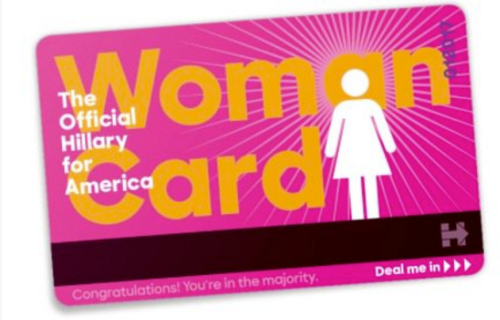
Scott Adams on Clinton’s literal “Woman Card”

Filed under: Politics, USA — Tags: , , — Nicholas @ 02:00

Scott Adams has been much more right than wrong in his analysis of Trump’s election campaign so far, and he says that Hillary Clinton’s advisors have badly messed up their latest anti-Trump attack:

Now let’s look at the “woman card” issue. Trump took the risky (but strategically solid) approach of taking the fight to Clinton’s strength – her appeal among women voters and among men who think it is time for a woman to be president. Trump branded her as a sexist who is hiding behind political correctness. It was a strong persuasion play and it put Clinton on the defensive.

Clinton responded by embracing and magnifying the accusation. She said that if fighting to make the world better for women is playing the “woman card” then you can “Deal me in!” The response was quick, clever, and catnip for her base.

You might remember Trump using a similar persuasion trick. Months ago, when Chris Cuomo asked Trump about the criticisms that he was a whiner, Trump embraced the whiner label, then amplified it by saying he was indeed the strongest voice for change. That’s exactly the right response. Clinton made the same play with “Deal me in!” So far, so good.

Then came the image of an actual “woman card” designed to capitalize on Clinton’s successful counterpunch. When something is working, you do more of it. But…maybe you should not do it…this way.

Clinton's Woman Card

Let’s start with the fact that the design features a symbol from a restroom door. Just as the Clinton slogan unintentionally linked LOVE and TRUMP, the restroom symbol literally makes your brain associate Clinton with…a toilet.

You can’t make this up. When you saw that symbol, you thought of a restroom. it is automatic.

But the biggest mistake was putting a magnetic strip on the Woman Card. That makes you think of a credit card. And that makes you think of debt. Or perhaps it makes you think of a transit card that Clinton had trouble using at the subway in New York. All bad.

You might ask yourself why the campaign did not go with a playing card model instead of a credit card. After all, “deal me in” is not typically associated with a magnetic strip.

QotD: The Puritans

Filed under: Britain, History, Quotations, USA — Tags: , , , , , — Nicholas @ 01:00

I hear about these people every Thanksgiving, then never think about them again for the next 364 days. They were a Calvinist sect that dissented against the Church of England and followed their own brand of dour, industrious, fun-hating Christianity. Most of them were from East Anglia, the part of England just northeast of London. They came to America partly because they felt persecuted, but mostly because they thought England was full of sin and they were at risk of absorbing the sin by osmosis if they didn’t get away quick and build something better. They really liked “city on a hill” metaphors.

I knew about the Mayflower, I knew about the black hats and silly shoes, I even knew about the time Squanto threatened to release a bioweapon buried under Plymouth Rock that would bring about the apocalypse. But I didn’t know that the Puritan migration to America was basically a eugenicist’s wet dream.

Much like eg Unitarians today, the Puritans were a religious group that drew disproportionately from the most educated and education-obsessed parts of the English populace. Literacy among immigrants to Massachusetts was twice as high as the English average, and in an age when the vast majority of Europeans were farmers most immigrants to Massachusetts were skilled craftsmen or scholars. And the Puritan “homeland” of East Anglia was a an unusually intellectual place, with strong influences from Dutch and Continental trade; historian Havelock Ellis finds that it “accounts for a much larger proportion of literary, scientific, and intellectual achievement than any other part of England.”

Furthermore, only the best Puritans were allowed to go to Massachusetts; Fischer writes that “it may have been the only English colony that required some of its immigrants to submit letters of recommendation” and that “those who did not fit in were banished to other colonies and sent back to England”. Puritan “headhunters” went back to England to recruit “godly men” and “honest men” who “must not be of the poorer sort”.

Scott Alexander, “Book Review: Albion’s Seed“, Slate Star Codex, 2016-04-27.

April 29, 2016

QotD: American liberty

The American of today, in fact, probably enjoys less personal liberty than any other man of Christendom, and even his political liberty is fast succumbing to the new dogma that certain theories of government are virtuous and lawful, and others abhorrent and felonious. Laws limiting the radius of his free activity multiply year by year: It is now practically impossible for him to exhibit anything describable as genuine individuality, either in action or in thought, without running afoul of some harsh and unintelligible penalty. It would surprise no impartial observer if the motto “In God we trust” were one day expunged from the coins of the republic by the Junkers at Washington, and the far more appropriate word, “verboten,” substituted. Nor would it astound any save the most romantic if, at the same time, the goddess of liberty were taken off the silver dollars to make room for a bas-relief of a policeman in a spiked helmet. Moreover, this gradual (and, of late, rapidly progressive) decay of freedom goes almost without challenge; the American has grown so accustomed to the denial of his constitutional rights and to the minute regulation of his conduct by swarms of spies, letter-openers, informers and agents provocateurs that he no longer makes any serious protest.

H.L. Mencken, The American Credo: A Contribution toward the Interpretation of the National Mind, 1920.

April 28, 2016

Wargaming at the Marine Corps War College

Filed under: Gaming, Military, USA — Tags: , , , — Nicholas @ 02:00

Professor James Lacey explains why he introduced commercial wargames into his curriculum for USMC officers at the war college:

As every team plotted their strategic “ends,” students soon realized that neither side had the resources — “means” — to do everything they wanted. Strategic decisions quickly became a matter of tradeoffs, as the competitors struggled to find the “ways” to secure sufficient “means” to achieve their objectives (“ends”). For the first time, students were able to examine the strategic options of the Peloponnesian War within the strictures that limited the actual participants in that struggle.

Remarkably, four of the five Athenian teams actually attacked Syracuse on Sicily’s east coast! As they were all aware that such a course had led to an Athenian disaster 2,500 years before, I queried them about their decision. Their replies were the same: Each had noted that the Persians were stirring, which meant there was a growing threat to Athens’ supply of wheat from the Black Sea. As there was an abundance of wheat near Syracuse, each Athenian team decided to secure it as a second food source (and simultaneously deny it to Sparta and its allies) in the event the wheat from the Black Sea was lost to them. Along the way, two of the teams secured Pylos so as to raise helot revolts that would damage the Spartan breadbasket. Two of the teams also ended revolts in Corcyra, which secured that island’s fleet for Athenian purposes, and had the practical effect of blockading Corinth. So, it turns out there were a number of good strategic reasons for Athens to attack Syracuse. Who knew? Certainly not any War College graduate over the past few decades.

All of these courses of action were thoroughly discussed by each team, as were Spartan counter moves. For the first time in my six years at the Marine Corps War College, I was convinced that the students actually understood the range of strategies and options Thucydides wrote about. In the following days, I was stopped dozens of times by students who wanted discuss other options they might have employed, and, even better, to compare their decisions to what actually happened. A number of students told me they were still thinking about various options and decisions weeks later. I assure you that no one even spent even a car ride home thinking about my Thucydides lectures.

[…]

At the end of each wargame, students walked away with a new appreciation of the historical circumstances of the period and the events they had read about and discussed in class. And even though all wargames are an abstract of actual events, I am sure that no student exposed to historical gaming will ever again read about the Peloponnesian War without thinking about Sicily’s wheat, the crucial importance of holding the Isthmus of Corinth, or what could have been done with a bit more Persian silver in the coffers of one side or the other’s treasury. Similarly, the next time one of this year’s students reads about Lee and Grant in 1864, they will also be thinking about how the truly decisive actions took place out west. For, as it was during the actual conflict, in every game the students played, Grant’s role was to pin down the Army of Northern Virginia, while the western armies ripped out the economic heart of the Confederacy.

In fact, I was astounded at the number of students who approached me after the Civil War exercise to mention that despite having studied the Civil War before, this was the first time they realized that the war was won in the west. I could go on for another few thousand words discussing other revelations students experienced through gaming and simulations, but the key point is that these experiential learning experiences linger in students’ minds for a very long time. I once asked my seminars how many of them had discussed the games and their results with their spouses. Every hand went up. I am quite sure that very few of them ever discussed one of my lectures with their spouses.

April 27, 2016

QotD: The essentially bipolar nature of progressive ideology

Filed under: Politics, Quotations, USA — Tags: , — Nicholas @ 01:00

Historians and political theorists have long puzzled over how to resolve the glaring contradiction of Progressive ideology — namely, that Progressive “reform” emphasizes greater “democracy,” and championed innovations like the direct election of Senators, the initiative and referendum, etc. Give the people what they want! Up with democracy! At the same time, Progressives also advanced the theory of government administration deliberately remote from politics and popular accountability — the Administrative State staffed by elite “experts.” We can’t have those grubby people telling the government what to do! Down with democracy!

Steven Hayward, “Resolving the Contradiction of ‘Progressivism'”, Power Line, 2016-04-18.

April 23, 2016

Politics, your social bubble, and you

Filed under: Politics, USA — Tags: , , , — Nicholas @ 02:00

Last week, Megan McArdle looked at the Hindenburg-crashing-into-the-Titanic-during-a-volcanic-eruption how so many people’s assessment of the US general election is so at variance with reality:

Call it “the big sort” or “demographic clusters” or whatever you like, it all comes down to the same thing: Even as Americans talk more and more about diversity, they are increasingly dividing themselves into like-minded bubbles where other people, with other experiences and viewpoints, almost never penetrate. This is the message of books by Charles Murray and Robert Frank, and indeed of our own social media feeds.

All of those articles on “how to talk to your family about politics this Thanksgiving” might as well be called “how to discuss politics on the one day a year when you find yourself in a group that has not been hand-curated to remove dissenting viewpoints.”

I don’t exclude myself from this. I live in one of the most rarefied bubbles on the planet, a community of policy-focused knowledge workers in which I practically qualify as a proletarian because I have spent years in jobs that did not involve writing about what other people have done or ought to do.

Even the socialists here in Washington are often notable for their lack of personal familiarity with their side in the class war. Outside of family circles, I almost never meet anyone who does not have a college degree and a 401(k), unless I’m buying something from them, or giving a talk at a university to people who are on their way to having a college degree and a 401(k).

Social media, of course, makes this problem worse. Even if we are not deliberately blocking people who disagree with us, Facebook curates our feeds so that we get more of the stuff we “like.” What do we “like”? People and posts that agree with us. Given that Facebook seems to be the top news source for millennials, and an increasingly important one even for folks who grew up skimming dead trees for information, that matters quite a lot.

April 22, 2016

QotD: Ideological warfare

Filed under: History, Politics, Quotations, Religion, USA — Tags: , , , , , , — Nicholas @ 01:00

Americans have never really understood ideological warfare. Our gut-level assumption is that everybody in the world really wants the same comfortable material success we have. We use “extremist” as a negative epithet. Even the few fanatics and revolutionary idealists we have, whatever their political flavor, expect everybody else to behave like a bourgeois.

We don’t expect ideas to matter — or, when they do, we expect them to matter only because people have been flipped into a vulnerable mode by repression or poverty. Thus all our divagation about the “root causes” of Islamic terrorism, as if the terrorists’ very clear and very ideological account of their own theory and motivations is somehow not to be believed.

By contrast, ideological and memetic warfare has been a favored tactic for all of America’s three great adversaries of the last hundred years — Nazis, Communists, and Islamists. All three put substantial effort into cultivating American proxies to influence U.S. domestic policy and foreign policy in favorable directions. Yes, the Nazis did this, through organizations like the “German-American Bund” that was outlawed when World War II went hot. Today, the Islamists are having some success at manipulating our politics through fairly transparent front organizations like the Council on American-Islamic Relations.

But it was the Soviet Union, in its day, that was the master of this game. They made dezinformatsiya (disinformation) a central weapon of their war against “the main adversary”, the U.S. They conducted memetic subversion against the U.S. on many levels at a scale that is only now becoming clear as historians burrow through their archives and ex-KGB officers sell their memoirs.

The Soviets had an entire “active measures” department devoted to churning out anti-American dezinformatsiya. A classic example is the rumor that AIDS was the result of research aimed at building a ‘race bomb’ that would selectively kill black people.

On a different level, in the 1930s members of CPUSA (the Communist Party of the USA) got instructions from Moscow to promote non-representational art so that the US’s public spaces would become arid and ugly.

Americans hearing that last one tend to laugh. But the Soviets, following the lead of Marxist theoreticians like Antonio Gramsci, took very seriously the idea that by blighting the U.S.’s intellectual and esthetic life, they could sap Americans’ will to resist Communist ideology and an eventual Communist takeover. The explicit goal was to erode the confidence of America’s ruling class and create an ideological vacuum to be filled by Marxism-Leninism.

Accordingly, the Soviet espionage apparat actually ran two different kinds of network: one of spies, and one of agents of influence. The agents of influence had the minor function of recruiting spies (as, for example, when Kim Philby was brought in by one of his tutors at Cambridge), but their major function was to spread dezinformatsiya, to launch memetic weapons that would damage and weaken the West.

Eric S. Raymond, “Gramscian damage”, Armed and Dangerous, 2006-02-11.

April 19, 2016

QotD: An appropriate epitaph

Filed under: Politics, Quotations, USA — Tags: , , , — Nicholas @ 01:00

When the epitaph for America’s political class is written, it may read something like this:

“Real unemployment was above 10%, barbarians were reintroducing slavery and public beheadings in the Middle East, the national infrastructure was crumbling, the Presidential elections were convulsed by large-scale populist revolts in both parties, and what was the elite cause du jour? Unisex restrooms.”

Eric S. Raymond, posting to Google+, 2016-04-10.

« Newer PostsOlder Posts »

Powered by WordPress
