Quotulatiousness

July 17, 2013

World’s largest cartography class commences

Filed under: Education, Media, Science — Tags: , — Nicholas @ 07:55

Greg Miller interviews the instructor of the biggest single cartography class … a vast online class of nearly 30,000 people:

Wired: How did you get interested in geography?

Anthony Robinson: I started my undergraduate education as an electrical engineering major. Then I just randomly took a human geography class, and it completely woke me up. Right away I knew I wanted to be a geographer.

[…]

Wired: What was the motivation for the MOOC?

Robinson: Here at Penn State I direct our online geospatial education programs. I was able to make the argument that this is needed. There isn’t one yet, and I’m sure there’s a lot of untapped interest in this stuff. When I meet someone on a plane and tell them I’m a geographer, they’re like “What?” They don’t even realize that’s a thing. Something like a MOOC, that’s free and has a high profile, might get more people interested in what we do.

Wired: Why is it just happening now?

Robinson: One thing that really helps right now is we’re past the age of having mapping software that takes you weeks and weeks to have the basics. The software I’m using in the course, ArcGIS Online, works in a browser. It’s very usable. It’s not perfect but it’s quite good. Also, there are tons of datasets that are available now and searchable. Those are things we spent weeks and weeks on even when I was an undergrad, and that wasn’t that long ago. The technology threshold that it takes to make a map and do some spatial analysis has now ratcheted down to the point where it’s possible to do this with people all over the world working on different technology platforms. I don’t think I could teach this class even two years ago.

July 13, 2013

The state’s constant interest in what’s in your kid’s lunchbag

Filed under: Britain, Education, Health — Tags: , , — Nicholas @ 09:13

James Delingpole on the most recent “Nanny knows best” appointee hoping to dictate what the kids are going to eat for lunch:

“Mr Dimbleby”, it seems to me, is coming perilously close to suggesting that the decision as to what children eat at school should be a matter for the State rather than parents. Can he really believe this? Is there nothing about saying this sort of thing that makes him uneasy?

I mean sure, I agree with him on the principle that a good, well-prepared hot meal at lunchtime is probably more filling and nourishing than a packet-bread sandwich and a packet of crisps. Problem is, not all school canteens offer quite the same range and quality you might find in — oh, I don’t know, let’s pluck a random example from the air, shall we? — Bekynton.

Having put children through the state system myself I know whereof I speak. A new caterer arrived at my daughter’s primary school to much fanfare and for a while the food was great and most parents gratefully abandoned packed lunches (which, let me tell you, are a real hassle for a parent to prepare because they have to be done fresh in the morning when you’re already in a rush having breakfast and getting ready for the school run) and welcomed the new regime. But then standards began slipping to the point where my daughter (who, like a lot of children whose staple diet is gastro-porn TV programmes from the Great British Bake Off to Masterchef, genuinely cares about food) couldn’t eat the stuff any more. Again: is “Mr Dimbleby” seriously suggesting that schools should force children to go on eating in the canteen regardless of how disgusting they find the food?

You hear similar arguments from well-heeled progressive types on the school system generally. “If only public schools were abolished and all those pushy middle-class strivers were forced to put their children through the state system, standards would rise across the board.” Well, possibly. What would more likely happen is that all those scrubbed, diligent, nicely spoken, polite young poshos would be dragged down to the level of the lowest common denominator. And in any case it’s not an experiment which has any right being attempted anywhere in a Western notionally free-market economy. Why not? Because it’s illiberal bordering on the totalitarian, is why.

This is hardly a new topic … last year I said:

I remember what kind of crap my middle and high school cafeterias offered … and if I’d forgotten to bring a sandwich with me that day, going hungry always seemed like the better choice. The food on offer always seemed to manage the difficult stunt of being visually unappealing (sometimes being actually disgusting to look at), nutritionally inadequate, and either utterly flavourless (the better choice) or actively nasty. No wonder the best sellers in the cafeteria were the milk cartons (especially the chocolate milk), pop cans, potato chips, chocolate bars, and Vachon cakes (all of which were pre-packaged and relatively invulnerable to further processing).

July 10, 2013

Next up on our agenda of things to panic about is “peak water”

Filed under: Economics, Environment, Technology — Tags: , , , , — Nicholas @ 00:02

sp!ked editor Rob Lyons explains that “peak water” just isn’t something to worry too much about:

Disappointed by the failure of the peak-oil disaster to come to fruition, our doom-mongering, Malthusian friends have alighted on other scary narratives to confirm their suspicions of humanity as a rapacious blight on the planet. Their latest is ‘peak water’.

On the face of it, peak water is a boneheaded concept on a planet where two thirds of the surface is covered in, er, water. According to the US Geological Survey, there are 332 million cubic miles of water on Earth. What we tend to need, however, is not sea water but fresh water, of which there is much less: nearer 2.5 million cubic miles. And much of that is too deep underground to be accessed. Surface water in rivers and lakes is a small fraction of overall fresh water: 22,339 cubic miles. Handily, though, natural processes cause sea water to evaporate and form clouds, which then dump their contents on to land — so in most populated parts of the world there is currently sufficient water to supply our needs in an endlessly renewable way. As for the future, it is clear there is no shortage of H2O on the planet. What we really have is a shortage of cheap energy and the necessary technology to take advantage of the salinated stuff.

The ‘peak water’ theorists focus on groundwater supplies that are either being used faster than they are replenished, or supplies that are not replenished at all: so-called ‘fossil water’. According to leading environmentalist Lester Brown, writing in the Guardian last weekend, the rapid exhaustion of these supplies in some parts of the world is leading to the decline of food production. And at a time of fast-growing populations, this apparently promises disaster for these countries.

But often, the problem is a political rather than a practical one. [. . .]

In reality, all of the fixes that apply to peak oil also apply to peak water. New technology may make water desalination far cheaper than it is now, a claim being made for new water filtration methods based on nanotechnology. Better use of water in irrigation, through careful management of when and how water is applied to crops, could cut usage dramatically — something that is already happening in dry countries such as Israel and Australia and in parts of the US. Current uses of water, like flush toilets, may be superseded in places where water is in high demand. Through civil engineering projects, water can be shifted from places where it is plentiful to places where it is needed most, something societies have been doing for thousands of years.

July 8, 2013

The return of the fickle finger of fate (non-humour category)

Filed under: Media, Science — Tags: , , , — Nicholas @ 10:54

In sp!ked, Brendan O’Neill discusses the unlikely comeback of “fate”:

Fate is making a comeback. The idea that a human being’s fortunes are shaped by forces beyond his control is returning, zombie-like, from the graveyard of bad historical ideas. The notion that a man’s character and destiny are determined for him rather than by him is back in fashion, after 500-odd years of having been criticised and ridiculed by humanist thinkers.

Of course, we’re far too sophisticated these days actually to use the f-word, fate. We don’t talk about a god called Fortuna, as the Romans did, believing that this blind, mysterious creature decided people’s fates with the spin of a wheel. Unlike long-gone Norse communities we don’t believe in goddesses called Norns, who would attend the birth of every child to determine his or her future. No, today we use scientific terms to argue that people’s fortunes are determined by higher powers than their little, insignificant selves.

We use and abuse neuroscience to claim certain people are ‘born this way’. We claim evolutionary psychology explains why people behave and think the way they do. We use phrases like ‘weather of mass destruction’, in place of ‘gods’, to push the idea that mankind is a little thing battered by awesome, destiny-determining forces. Fate has been brought back from the dead and she’s been dolled up in pseudoscientific rags.

[. . .]

It’s hard to overstate what a radical idea this was at the tailend of the Dark Ages. It’s this idea that gives rise to the concept of free will, to the concept of personality even. And it was an idea carried through to the Enlightenment and on to the humanist liberalism of the nineteenth and early twentieth centuries. In the words of the greatest liberal, John Stuart Mill, it is incumbent upon the individual to never ‘let the world, or his portion of it, choose his plan of life for him’.

But today, in our downbeat era that bears a bit of a passing resemblance to the Dark Ages, we’re turning the clock back on this idea. We’re rewinding the historic breakthroughs of the Renaissance and Enlightenment, and we’re breathing life back into the fantasy of fate. Ours is an era jampacked with deterministic theories, claims that human beings are like amoeba in a Petri dish being prodded and shaped by various forces. But the new determinism isn’t religious or supernatural, as it was in the pre-Enlightened era — it’s scientific determinism, or rather pseudo-scientific determinism.

Restore Pluto!

Filed under: Science, Space — Tags: , , , — Nicholas @ 08:01

A letter from L. Neil Smith to this week’s Libertarian Enterprise:

Here’s a matter that may reveal more about psychology or politics than it does about astronomy. You’ll recall, a couple of years ago, the flap over the “demotion” of Pluto, theretofore the tenth planet of the Solar System, to the mean and niggardly status of “dwarf planet”.

I have always believed that an international conspiracy, possibly composed of those who hate our freedom, carried out this astronomical assassination because Pluto is the only planet discovered by an American, Clyde Tombaugh.

However, given the fact that Pluto, whatever its size, is an independent body circling the same primary we do (unlike the Asteroids of the Belt or those found at various Trojan positions around the System, or parked in orbit around Mars) and the pathetic and petty way this demotion was carried out, many people, including yours truly, objected to it as unnecessary, inaccurate, and stupid.

Now we learn (because we don’t always keep up on these things) that in addition to the moon Charon, which we’ve known about for a long while, Pluto possesses four other moons, Nix, Hydra, and more recently, Styx and Kerberos, all named for various underworld-related entities in Greek mythology.

The System’s “gas giants”, Jupiter, Saturn, Neptune, and the one whose pronunciation mysteriously changes whenever it’s mentioned on TV, all have more moons than we can properly keep track of. Mars, Earth, and Venus, which are also full-blown planets in good standing, possess, respectively, two, one, and zero moons.

And yet Pluto, the little world that has been ignominiously stripped of its rank, and its sword ceremonially broken, has five moons. Count ’em: five whole moons! I maintain that this confirms its proper dignity as a first-class planet, and to the list of historic phrases like “Carthage must be destroyed!” “Remember the Alamo”, and “Hillary wears army boots!”, we should now add “Restore Pluto!”

Scientifically yours,

L. Neil Smith

July 5, 2013

And now, a five-minute sales pitch for Thorium nuclear reactors

Filed under: Science, Technology — Tags: , , , — Nicholas @ 09:13

A short video of Kirk Sorensen taking us through the benefits of Liquid Fluoride Thorium Reactors, a revolutionary liquid reactor that runs not on uranium, but thorium. These work and have been built before. Search for either LFTRs or Molten Salt Reactors (MSR).

FAQ
The main downsides/negatives to this technology, politics, corrosion and being scared of nuclear radiation. Liquid Fluoride Thorium Reactors were created 50 years ago by an American chap named Alvin Weinberg, but the American Government realised you can’t weaponise the by-products and so they weren’t interested.

Another point, yes it WAS corrosive, but these tests of this reactor were 50 years ago, our technology has definitely improved since then so a leap to create this reactor shouldn’t be too hard.

And nuclear fear is extremely common in the average person, rather irrational though it may be. More people have died from fossil fuels and even hydroelectric power than nuclear power. I added this video for a project regarding Liquid Fluoride Thorium Reactors, watch and enjoy.

No, it would not collapse the economy… just like the use of uranium reactors didn’t… neither did coal… This is because you wouldn’t have an instant transition from coal… oil… everything else to thorium. We could not do that. Simply due to the engineering. Give it 50 years we might be using thorium instead of coal/oil (too late in terms of global warming, but that’s another debate completely), but we certainly won’t destroy the earths economy. Duh.

And yes he said we’d never run out. Not strictly true… bloody skeptics … LFTRs can harness 3.5 million Kwh per Kg of thorium! 70 times greater than uranium, 10,000 greater than oil… and there is over 2.6 million tonnes of it on earth… Anyone with a calculator, or a brain, will understand that is a lot of energy!!

H/T to Rob Fisher for the link.

July 3, 2013

US public opinion on abortion has been stable for decades

Filed under: Health, Law, Media, Politics, USA — Tags: , , , , — Nicholas @ 10:31

Nick Gillespie says the stability of beliefs on the topic of abortion is one of the most striking things about the whole debate:

So despite decades of polling data showing that large majorities of Americans believe abortion should be legal under some circumstances, you could be excused for thinking there are only two possible positions when it comes to terminating pregnancies: either all abortions should be allowed, or none should be.

Yet the most striking thing about attitudes toward abortion is how stable they’ve been over the 40 years since Roe v. Wade. Gallup has been tracking public sentiment on the matter since 1975, when 22 percent of Americans agreed that abortion should be illegal under any circumstances and 21 percent believed it should be legal under any circumstances. Those numbers are now 18 percent and 28 percent respectively. In 1975 54 percent believed abortion “should be legal only under certain circumstances.” The number is now 52 percent and has never gone above 61 percent or below 48 percent. Over the past 15 years, the number of Americans calling themselves “pro-life” and “pro-choice” has narrowed to a few points, with 48 percent identifying as pro-choice and 44 percent as pro-life (in 2011, those figures were basically flipped).

Official political stances on abortion are absolutely Manichaean, however, with the Republican Party and most of its leading figures stressing that life begins at conception, a belief that would outlaw virtually all abortions except those necessary to protect the health of the mother. The Democratic Party platform — and most of its highest-profile members, including President Barack Obama — “strongly and unequivocally supports” abortion at any time and for any reason during a pregnancy.

Most Americans reject such categorical, extreme views and instead offer conditional support for abortion depending on when it’s performed. Gallup found that while 61 percent of Americans think abortion for should mostly be legal in the first three months of pregnancy and 27 percent felt it should be legal in the second trimester, just 14 percent agreed it should be allowed on demand in the final three months.

Unlike their political representatives, then, Americans hold a far more nuanced view of abortion, and one that comports with the reality of the procedure. Of the roughly 1 million abortions performed a year in America, about 90 percent take place within the first 12 weeks of pregnancy and only 1 percent take place after 20 weeks (in fact, over the past decade, there has been a marked trend toward earlier abortions). That helps explain why 62 percent of Texans supported S.B. 5, the bill that Wendy Davis filibustered.

Update: You went full Satanist. Never go full Satanist:

Not that invoking Satan isn’t serious, but the response on Twitter included some great humor. A few of my favorites:


The Blaze noted:

Obviously, it is much more likely that the abortion supporters were chanting “Hail Satan!” to mock pro-lifers rather than actually hailing Lucifer, but anything is possible.

Ed Morrissey responded:

I’m certain that the intent was mockery. The overall effect of chanting “Hail Satan”? That’s another story, but one of those effects is surely clarity.

Right. Having been to Texas, I can assure you that the defense of “We were mocking Christians by invoking Satan,” might actually make things worse.

We’re just trying to raise your awareness…

Filed under: Health, Media, Politics — Tags: , , , , — Nicholas @ 09:44

… because we’re morally and ethically superior to you unwashed plebs:

Last Thursday was Post-Traumatic Stress Disorder Awareness Day. If you missed it, that’s probably because every week there are awareness days. We’re swamped by them. There are literally thousands of organisations whose mission is to raise our awareness. There is also a vast number of politicians, policymakers, experts, professionals, academics and earnest volunteers who are all devoted to the cause of raising awareness.

Those who set themselves up to raise the public’s awareness are not just providing information; they’re also making a statement about themselves, about who they are. They, unlike those who require their support, are aware. Awareness is presented as a state of being all of us should aspire to attain. In its common usage today, the term awareness resists any clear definitions. It is not simply about knowing or understanding. [. . .]

Campaigns designed to raise awareness are as much about advertising the status of the campaigners as they are about changing the outlook of a target audience. For example, advocates of breastfeeding produce literature that affirms the virtuous nature of their own lifestyles while also inviting those who have not seen the light to become aware. The very term ‘raising awareness’ involves drawing a distinction between those who are enlightened, who are aware of something, and those who are not. It draws attention to the fundamental contrast between those who know and those who are ignorant, between the morally superior and the morally inferior. So someone who allows his children to eat junk food is not only unaware and ignorant; he’s also morally questionable.

Awareness-raising campaigns impute to their advocates the values of intelligence, sensitivity, broadmindedness, sophistication and enlightenment. For that reason, the mission of raising awareness has become a key cultural resource for those who want to distinguish themselves from others. Awareness-raisers are invariably drawn towards inflating the behavioural and cultural distinctions between themselves and the rest of society; they are preoccupied with constructing a lifestyle that contrasts as sharply as possible to the lifestyles of their moral inferiors. What is really important about their lifestyles is not so much the values they exhort, but that they are different, in every detail, from the lives led by obese, junk-food eating, gas-guzzling, xenophobic and fundamentalist consumers of the tabloid press and junk culture.

Sociologically speaking, the act of raising awareness is really a claim for moral respect, and more importantly moral authority. The possession of awareness is a marker of superiority — and the absence of awareness is taken as a sign of inferiority. Those who refuse to ‘be aware’ are frequently morally condemned

June 27, 2013

Progress and regress in the pursuit of care for the mentally ill

Filed under: Government, Health, History, USA — Tags: , , — Nicholas @ 13:32

In City Journal, James Panero looks at the history of treatment of the mentally ill in America:

If it’s true that “men moralise among ruins,” as Benjamin Disraeli wrote, the ruins of America’s nineteenth-century mental institutions should invite some serious reflection. Built between 1850 and 1900, these crumbling edifices speak to our onetime dedication to caring for the mentally ill. Almost all were designed on the Kirkbride Plan, named for Pennsylvania physician Thomas Story Kirkbride, author of an influential treatise on the role of architecture and landscape in treating mental disorders. Even in their dilapidated state, it’s possible to see how the buildings, which followed a method of care called the “moral treatment,” gave the mentally ill a calming refuge from the gutters, jails, and almshouses that had been the default custodians of society’s “lunatics.”

Unfortunately, in the middle of the twentieth century, as asylums became grossly overcrowded and invasive treatments aroused public concern, the moral treatment came to seem immoral. The eventual result was the process known as deinstitutionalization, which steadily ejected patients from the asylums. Instead of liberating the mentally ill, however, deinstitutionalization left them — like the asylums that once sheltered them — in ruins. Many of today’s mentally ill have returned to pre-Kirkbride conditions and live on society’s margins, either sleeping on the streets or drifting among prisons, jails, welfare hotels, and outpatient facilities. As their diseases go untreated, they do significant harm to themselves and their families. Some go further, terrorizing communities with disorder and violence. Our failure to care for them recalls the inhumane era that preceded the rise of the state institutions. The time has come for new facilities and a new moral treatment.

[. . .]

At a time when the medical science of mental illness was in its infancy, the Kirkbride Plan created alternative, protected worlds for patients. It echoed many of today’s more holistic approaches to treatment by encouraging patients to participate in social activities, games, and crafts. Kirkbride institutions often sported their own baseball diamonds, golf courses, bakeries, bowling alleys, ice cream shops, dairy farms, gardens, and stages for plays and other performances.

But in the twentieth century, a shadow fell over the Kirkbride asylums, as doctors there began using more invasive procedures. The Austrian psychiatrist Manfred Sakel introduced insulin shock therapy, now known as insulin coma therapy, in the 1930s. Electroshock therapy arrived from Italy soon after. Both treatments induced seizures to alter brain chemistry in patients with depression and schizophrenia. In 1949, the Portuguese neuropsychiatrist Egas Moniz won a Nobel Prize for developing the frontal lobotomy, which he had invented in 1935. Walter Freeman, a clinical neurologist in Washington, D.C., further popularized the treatment through his own outpatient procedure, which came to be known as the transorbital, or “ice-pick,” lobotomy.

How many “environmental” groups are actually harming the environment

Filed under: Economics, Environment, Media — Tags: , , , — Nicholas @ 00:01

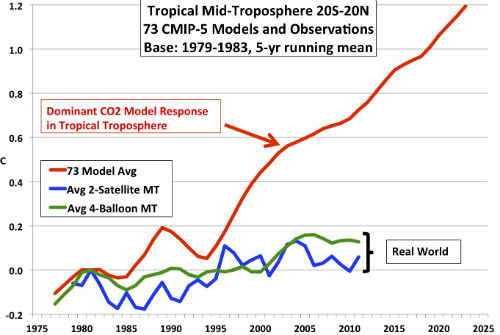
Willis Eschenbach at Watts Up With That:

Now, given that poverty is the greatest threat to the global environment, the inescapable conclusion is that the only way the global environment stands a chance is if poor countries can develop economically.

And that is why the anti-development, pro-expensive energy stance of the large environmental NGOs is one of the great environmental tragedies of our times.

Here’s the chain of causality:

1. Climate alarmists, with the strong support of the major environmental NGOs like Greenpeace and WWF, declared war on CO2.

2. The method that they chose to fight CO2 was to discourage fossil fuel use by making energy more expensive, using a combination of taxation, legislation, international pressure, and expensive subsidies to achieve that end. Obama’s War on Coal, announced today, is just one of hundreds of examples of the wealthy NGOs and the rich governments working to increase the price of energy.

3. Since energy is development, expensive energy keeps poor countries in poverty. When the World Bank denies loans for coal fired plants in India, the poor suffer … but the environment suffers more. Until they can afford to use coal and gas, they’ll run the country on wood … I refer you back to Figure 1 for how well that works out.

4. Expensive energy slows a country’s economic development, and as President Obama pointed out, people worried about money don’t pay attention to the environment.

This ends up in a bizarre position—the actions of the major environmental NGOs are ensuring continued environmental destruction in the developing world.

June 25, 2013

Portugal’s experience with drug decriminalization

Filed under: Europe, Health, Law, Liberty — Tags: , , , — Nicholas @ 14:38

The Cato Institute sent out a Twitter update, reminding everyone about the 2009 White Paper by Glenn Greenwald on how the Portuguese drug experiment played out after 2001:

On July 1, 2001, a nationwide law in Portugal took effect that decriminalized all drugs, including cocaine and heroin. Under the new legal framework, all drugs were “decriminalized,” not “legalized.” Thus, drug possession for personal use and drug usage itself are still legally prohibited, but violations of those prohibitions are deemed to be exclusively administrative violations and are removed completely from the criminal realm. Drug trafficking continues to be prosecuted as a criminal offense.

While other states in the European Union have developed various forms of de facto decriminalization — whereby substances perceived to be less serious (such as cannabis) rarely lead to criminal prosecution — Portugal remains the only EU member state with a law explicitly declaring drugs to be “decriminalized.” Because more than seven years have now elapsed since enactment of Portugal’s decriminalization system, there are ample data enabling its effects to be assessed.

Notably, decriminalization has become increasingly popular in Portugal since 2001. Except for some far-right politicians, very few domestic political factions are agitating for a repeal of the 2001 law. And while there is a widespread perception that bureaucratic changes need to be made to Portugal’s decriminalization framework to make it more efficient and effective, there is no real debate about whether drugs should once again be criminalized. More significantly, none of the nightmare scenarios touted by preenactment decriminalization opponents — from rampant increases in drug usage among the young to the transformation of Lisbon into a haven for “drug tourists” — has occurred.

The political consensus in favor of decriminalization is unsurprising in light of the relevant empirical data. Those data indicate that decriminalization has had no adverse effect on drug usage rates in Portugal, which, in numerous categories, are now among the lowest in the EU, particularly when compared with states with stringent criminalization regimes. Although postdecriminalization usage rates have remained roughly the same or even decreased slightly when compared with other EU states, drug-related pathologies — such as sexually transmitted diseases and deaths due to drug usage — have decreased dramatically. Drug policy experts attribute those positive trends to the enhanced ability of the Portuguese government to offer treatment programs to its citizens — enhancements made possible, for numerous reasons, by decriminalization.

June 24, 2013

Finally, a semi-rational explanation for the slow adoption of deodorant in Britain

Filed under: Britain, Health, History, Media — Tags: , , — Nicholas @ 11:57

Richard Smith talks about the British Medical Association’s “official” stance on heterosexual and homosexual “indulgences” from the 1950s on, and also explains why British use of deodorant always lagged the rest of the western world:

I was once responsible for Family Doctor Publications, which were a series of booklets owned by the BMA, had titles like You and Your Bowels, and sold in huge numbers in the 1950s because they were almost the only information on health available to the public. I was much amused that in the 50s the BMA agreed that the booklets could include advertising for cigarettes and alcohol, but under no circumstances could they advertise contraceptives. And at about the same time thousands of copies of one booklet had to be pulped because it seemed to accept the possibility of sex before marriage. Now I’ve learnt more about the prudishness and “severe, restrictive morality” of the BMA.

[. . .]

The BMA was also happy to ignore science and evidence when it launched into explanations of what at the time was perceived as “an epidemic of homosexuality.” “Many men see in homosexual practices as a way of satisfying their sexual desires without running the risks of sequelae of heterosexual intercourse. They believe, for example, that there is no danger of contracting venereal disease in homosexual activity. Other men adopt homosexual practices as a substitute for extramarital heterosexual intercourse because there is no fear of causing pregnancy or emotional complications as in the life of a woman.” The idea that “women” equals “emotional complications” was a very 50s idea.

It was unsurprising, thought the BMA, that the public would be hostile to homosexuals because of the propensity of its practitioners in “positions of authority to give preferential treatment to homosexuals or to require homosexual subjection as an expedient for promotion. The existence of practising homosexuals in the Church, Parliament, Civil Service, Armed Forces, Press, radio, stage and other institutions constitutes a special problem.” Medicine is conspicuously absent from that list. God (heterosexual, of course, even though capable of insemination without intercourse) forbid that the BMA would have homosexuals in its membership.

The BMA found sexual acts between men “repulsive” and that “homosexuals congregating blatantly in public houses, streets, and restaurants are an outrage to public decency. Effeminate men wearing make-up and using scent are objectionable to everybody.” Born in 1952 I was infused with this kind of thinking and didn’t use a deodorant until I was 45 for fear of what people might think. My father, born in 1922, didn’t like me to buy half a pint rather than a pint of beer in case I be thought homosexual.

Having made its position clear, the BMA concluded that “if degenerate sodomists” persist then “it would be in the public interest to deal with them in the same way as mentally deranged offenders.” In other words, commit them to state lunatic asylums.

June 23, 2013

Wine tasting scores are bullshit

Filed under: Business, Media, Science, Wine — Tags: , , — Nicholas @ 11:49

In the Guardian, David Derbyshire takes the modern “science” of wine tasting to the woodshed:

… drawing on his background in statistics, Hodgson approached the organisers of the California State Fair wine competition, the oldest contest of its kind in North America, and proposed an experiment for their annual June tasting sessions.

Each panel of four judges would be presented with their usual “flight” of samples to sniff, sip and slurp. But some wines would be presented to the panel three times, poured from the same bottle each time. The results would be compiled and analysed to see whether wine testing really is scientific.

The first experiment took place in 2005. The last was in Sacramento earlier this month. Hodgson’s findings have stunned the wine industry. Over the years he has shown again and again that even trained, professional palates are terrible at judging wine.

“The results are disturbing,” says Hodgson from the Fieldbrook Winery in Humboldt County, described by its owner as a rural paradise. “Only about 10% of judges are consistent and those judges who were consistent one year were ordinary the next year.

“Chance has a great deal to do with the awards that wines win.”

These judges are not amateurs either. They read like a who’s who of the American wine industry from winemakers, sommeliers, critics and buyers to wine consultants and academics. In Hodgson’s tests, judges rated wines on a scale running from 50 to 100. In practice, most wines scored in the 70s, 80s and low 90s.

Results from the first four years of the experiment, published in the Journal of Wine Economics, showed a typical judge’s scores varied by plus or minus four points over the three blind tastings. A wine deemed to be a good 90 would be rated as an acceptable 86 by the same judge minutes later and then an excellent 94.

Today’s headline is a slightly stronger version of one I ran in May: Is wine tasting bullshit? with this rather amusing caption:

A real wine review

Although that “real” wine “review” illustrates the verbal bullshit side of wine reviewing, the statistical analysis in Robert Hodgson’s tests rather undermines the claims to any kind of actual analysis in most or all wine reviewing.

I’ve said for years that for most people there is a range of wine prices that will satisfy their tastes without emptying their wallets — in Ontario, the range for most people seems to be in the $14-$40 price spectrum. Pay less than that, and you risk buying wine that really isn’t very good (although there are some underpriced gems even there), and pay over $40 and you’re just paying extra for the “prestige” and most of us wouldn’t really be able to detect any flavour differences.

It’s interesting to see what kind of immediate environmental changes seem to be able to directly influence the scores given by reviewers:

More evidence that wine-tasting is influenced by context was provided by a 2008 study from Heriot-Watt University in Edinburgh. The team found that different music could boost tasters’ wine scores by 60%. Researchers discovered that a blast of Jimi Hendrix enhanced cabernet sauvignon while Kylie Minogue went well with chardonnay.

June 22, 2013

Three deaths reported in Calgary flooding

Filed under: Cancon, Environment — Tags: , , , — Nicholas @ 10:13

680News rounds up the reports from Calgary, where the Bow River flooded significant portions of the city yesterday:

Officials are now blaming the devastating flooding in southern Alberta for at least three deaths in the province.

An estimated 100,000 people have been evacuated from their homes, with little information available on when they’ll be able to return.

“I’m not in a position right now to be able to give you timings on neighbourhoods that are along the Bow River and when people may be able to return to those homes, but we are slowly getting there,” said Calgary Mayor Naheed Nenshi.

Many also have no idea whether they’ll have a livable home to return to once the floodwaters finally recede.

Experts say that in some areas, that could still be days.

‘Stunning’ is how Prime Minister Stephen Harper described the flooding in southern Alberta, after he boarded a military helicopter in Calgary to get an aerial view.

Calgary has been one of the hardest hit areas in the western province, and the city was something of a ghost-town Saturday.

There was some positive news for those who have been evacuated, with people in at least one Calgary neighbourhood being allowed to return home Saturday.

During the intial reporting, several Edmontonians were poking fun at Calgary’s plight, but the tone changed quickly once the seriousness of the situation became clear:

The traditional Edmonton-Calgary rivalry went by the wayside, with the provincial capital city promising to send 100 of its police officers to help out where needed.

A total of 1,200 Canadian troops and eight military helicopters have been sent to the city to help local emergency crews with evacuations and sandbagging.

Emergency crews from Ontario, meanwhile, were planning to head out as soon as possible.

“The Ontario Red Cross is at this time mobilizing supplies to help shelter thousands of people in Calgary,” the agency’s Mike Morton said.

The power is off in much of the downtown core in Calgary still, with some of the outages done as a precaution, while others as a direct result of the flooding.

Officials say it could be the middle of next week before all of the lights are back on.

The Calgary Sun‘s front page:

Calgary Sun front page flooding

Generating electricity from “biomass” – bad economics and bad for the environment

Filed under: Britain, Economics, Environment — Tags: , , , , — Nicholas @ 09:57

Matt Ridley explains why replacing natural gas (or even coal) electrical generation with biomass is an absurd “solution”:

Under the Government’s plan, biomass power stations will soon be burning much more wood than the country can possibly produce. There is a comforting myth out there that biomass imports are mainly waste that would otherwise decompose: peanut husks, olive pips, bark trimmings and the like. Actually, the bulk of the imports are already and will continue to be of wood pellets.

It is instructive to trace these back to their origin. Reporters for The Wall Street Journal recently found that the two pelleting plants established in the southern US specifically to supply Drax are not just taking waste or logs from thinned forest, but also taking logs from cleared forest, including swamp woodlands in North Carolina cleared by “shovel-logging” with giant bulldozers (running on diesel). Local environmentalists are up in arms.

The logs are taken to the pelleting plants where they are dried, chopped and pelleted, in an industrial process that emits lots of carbon dioxide and pollutants. They are then trucked (more diesel) to ports, loaded on ships (diesel again), offloaded at the Humber on to (yet more diesel) trains, 40 of which arrive at Drax each day.

[. . .]

Over 20 or 40 years, study after study shows that wood burning is far worse than gas, and worse even than coal, in terms of its greenhouse gas emissions. The effect on forest soil, especially if it is peaty, only exacerbates the disparity. The peat dries out and oxidises.

Yet the Government persists in regarding biomass burning as zero-carbon and therefore deserving of subsidy. It does so by the Orwellian feat of defining sustainability as a 60 per cent reduction in emissions from fossil fuels. As Calor Gas puts it: “This is a logical somersault too far, conveniently — for the sake of cherry-picking the technology — equating 40 per cent to 0 per cent.” (Calor Gas supplies rural gas and is understandably miffed at being punitively treated while a higher- carbon rival industry is subsidised. […]) Moreover, unlike gas or coal, you are pinching nature’s lunch when you cut down trees. Unfelled, the trees would feed beetles, woodpeckers, fungi and all sorts of other wildlife when they died, let alone when they lived. Nothing eats coal.

So, compared with gas, the biomass dash is bad for the climate, bad for energy security and dependence on imports, bad for human health, bad for wildlife and very bad for the economy. Apart from that, what’s not to like?

« Newer PostsOlder Posts »

Powered by WordPress