
Since Lloyd George’s admirers are usually found at the liberal end of the spectrum, I imagine many of them will be displeased by the comparison. It’s true that Lloyd George — born in 1863, brought up speaking Welsh, steeped in the Baptist faith of his native land — came from a relatively humble background, never went to Eton, was a brilliantly fluent speaker and had an extraordinary appetite for hard work. And in his early days he exhibited an admirable commitment to all kinds of unfashionable causes — that is, until he sold out.
But more than any other twentieth-century PM, the last Liberal premier embodied the ambition, promiscuity and shameless indifference to rules and conventions that have driven Boris Johnson’s critics mad. Boris might be a mountebank, but Lloyd George was the mountebank’s mountebank.
Had he been prime minister during the Covid pandemic, would he have held parties at Number 10? The answer is obvious. He wouldn’t just have invited you to a party, he’d have sold you a peerage and made a move on your wife while you were still hanging up your coat.
Lloyd George was brilliantly funny. He was patriotic. He had the common touch. He was also, to quote Max Hastings on his modern-day successor, a “cavorting charlatan”, a “bully”, a “rogue” and a “scoundrel”, who “would not recognise truth, whether about his private or political life, if confronted by it in an identity parade”. And like Boris, he never hid it; quite the reverse. “My supreme idea is to get on,” he wrote to his future wife, Maggie Owen, during their courtship. “I am prepared to thrust even love itself under the wheels of my Juggernaut if it obstructs the way.” He meant every word.
According to one of his own aides, Lloyd George was “mental on matters of sex. In his view, a man and a woman could not possibly be friends without sexual intercourse.” That sounds familiar. Like Boris, he could never be entirely sure how many children he had. Within months of his marriage to the stolid and long-suffering Maggie, he had already strayed, impregnating a Liberal activist known only as Mrs J.
Not content with also impregnating his wife’s cousin Kitty, he also had affairs with “Mrs Tim” who was married to his friend Timothy Davies, as well as Julia Henry, another Liberal MP’s wife. He also carried on for decades with his secretary, Frances Stevenson, whom he forced to have at least two abortions. And there were many more — so many that nobody has ever produced a definitive count.
At the time, people joked that Lloyd George had a child in every town in Britain. The story goes that one day his son Dick went into a pub and fell into conversation with a stranger who looked just like him. The stranger eventually confessed that Lloyd George was indeed his father, and was secretly paying him £400 a year. To cap it all, some biographers suggest that Lloyd George also slept with Dick’s troubled wife, Roberta — and this when he was well into his sixties! By these standards, even Boris seems a paragon of fidelity.
Dominic Sandbrook, “How to bring down a Prime Minister”, UnHerd, 2022-01-14.
April 26, 2022
QotD: “Boris Lloyd George”
April 25, 2022
“We live in such a degraded information environment that we can’t get to discussions of principle”
Chris Bray on the increasing inability or deliberate choice of most legacy media outlets to avoid presenting basic facts in favour of pitching a scenario with the preferred outcome prepackaged and largely predigested for the consumer to accept uncritically:
Over and over again, journalism doesn’t begin to accurately describe; consuming it, we don’t get to the starting line of a functioning political discourse, which is just knowing what’s happening, more or less. We’re buried in fakery, in representations of reality that have no connection to reality. […]
I wrote last week about the disappearance of basic information on the criminal justice system in Los Angeles County, where I live. We have an ongoing debate over our Woke DA’s policy choices — but the more I look at the debate, the more I’m sure it’s a debate about nothing, because the slogans used to represent the DA’s policy choices really don’t seem to begin to reflect the reality of the DA’s actual policy choices. The slogans look from here like cover words, chaff fired as a rhetorical countermeasure to cloud the air. I’ve been trying to get clear information from people in Los Angeles County government, which has been … interesting, so stay tuned on that question. But what are we debating if we’re exchanging our thoughts on the empty fakery the DA is deploying to prevent us from noticing what he’s doing?
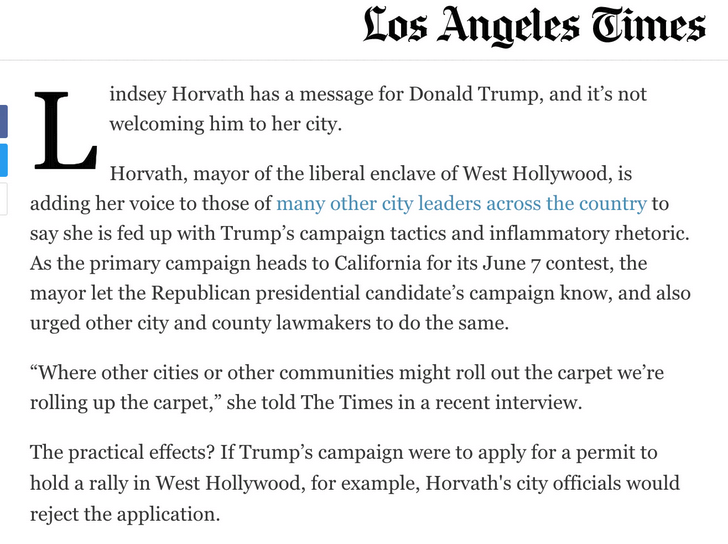
Back in 2016, the vapid mayor of a tiny city in Los Angeles County boldly announced that she had banned Donald Trump from her community, ordering city staff to burn the witch. Journalists reported it straight: TRUMP BANNED FROM LOCAL CITY.
It was left to lawyers with a media presence to seriously examine all of the problems with the remarkable claim that a part-time small-town mayor owns a personal fiefdom and can ban people from it. A not-especially-gifted politician with ambitions for higher office made up some nonsense to get herself in the news, and it worked. But the news was about nothing, because she had no authority to do the thing she announced in the press release.
This is more than half of the news: Noise with nothing it, a press release from an idiot typed up by idiots. What debate over questions of principle can proceed on the foundation of an informational void? (“I’m for empty hole!” “Oh yeah, well I’m against empty hole!”)
We’re beginning to solve some big pieces of that problem with alternative media, which is why you’re hearing so much complaining about misinformation. “Our democracy,” that hilarious phrase that doesn’t mean what it says, relies on the screen of fakery. Nothing happens until we punch enough holes in that screen.
April 22, 2022
Pierre Poilievre’s social media campaign is going well
In The Line, Rahim Mohamed wonders if Poilievre’s campaign for the leadership of the federal Conservatives might follow a similar path to the flash-in-the-pan that was the Andrew Yang campaign:

Conservative MP Pierre Poilievre at a Manning Centre event, 1 March 2014.
Manning Centre photo via Wikimedia Commons.
It may be hard to believe, but the race to crown the next leader of the Conservative Party of Canada is now well into its third month. If there is one clear takeaway that can be drawn from the campaign so far, it’s that one candidate, frontrunner Pierre Poilievre, has dominated social media.
By any metric, Poilievre’s social media presence dwarfs that of the other candidates in the race. He boasts nearly 340,000 followers on Twitter and more than half-a-million on Facebook. By comparison, none of his opponents has cracked six-figures on either platform. Poilievre’s personal YouTube page, which houses a growing library of hundreds of videos, has garnered over 39 million views since it was launched in 2011. As digital advocacy guru Cole Hogan tweeted earlier this month, “if you’ve watched Canadian political content on YouTube, you’ve seen Pierre Poilievre”.
And Poilievre has not just lapped his opponents in terms of quantity. The contrast between the polished, professional content that his digital team consistently puts out and the amateurish social media fare offered by the other candidates could not be more stark. Earlier this week, the Poilievre campaign released this excellent five-minute video targeting housing affordability, filmed on-location in Vancouver (the world’s third most unaffordable housing market). The video drew praise from unlikely corners of the Twittersphere. For instance, left-leaning Washington Post Canadian politics correspondent David Moscrop quote-tweeted the video, adding; “God I hope you lose but you’re onto something here.”
Poilievre has strategically highlighted issues that appeal disproportionately to the “very online”. For instance, housing policy is a preferred topic of conversation among the aging millennials who dominate YIMBY Twitter — many, ironically, tweeting from their parents’ basements. He has also embraced cryptocurrency; promising to make Canada the “blockchain capital of the world” and purchasing a shawarma with Bitcoin at a recent campaign stop in London, Ontario.
But before he uncorks the champagne, Poilievre would be prudent to take heed of lessons learned the hard way by another social media darling: failed New York City mayoral candidate Andrew Yang.
April 21, 2022
EU accuses Le Pen of financial skulduggery, in what I’m sure must be purely co-incidental timing
Theodore Dalrymple on the surprisingly frequent “charges made against anti-EU politician late in election campaign” phenomenon that seems to have become standard practice in France:
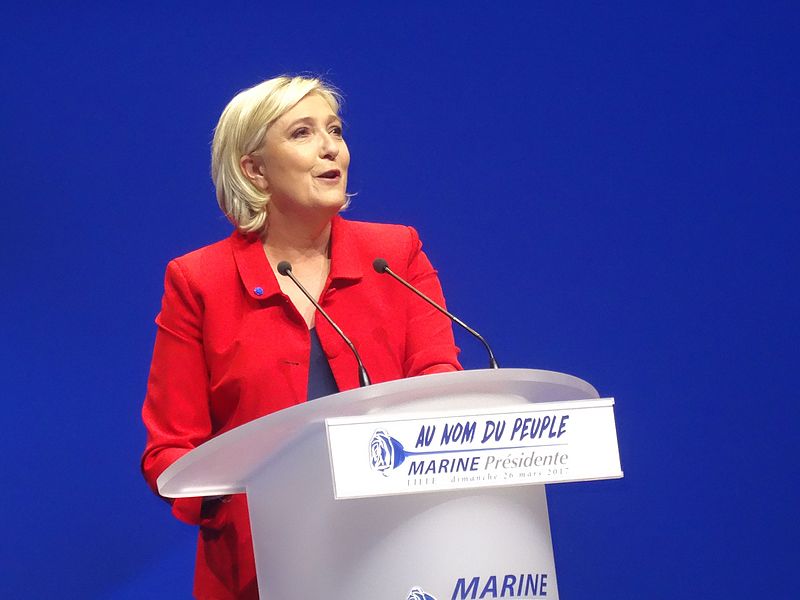
Marine Le Pen speaking in Lille during the 2017 French presidential election
Photo by Jérémy-Günther-Heinz Jähnick via Wikimedia Commons
A disturbing pattern has emerged in French presidential elections: A credible candidate is found almost at the last minute to have committed an illegal act, the revelation of which is intended to spoil or destroy altogether the candidate’s electoral chances.
The latest “victim” of this pattern is Marine Le Pen, who is facing the incumbent president, Emmanuel Macron, in the forthcoming second round of the French presidential election, a repeat of the contest of 2017. The main difference between the two contests is that, this time round, the polls give Le Pen at least some slight chance of victory, while last time Macron gained not only an overwhelming victory, but from the first had also appeared likely to do so. The outcome was never in any kind of doubt, as it is now.
Le Pen is usually described as being of the far right, though in fact her economic ideas are in some respects not very different from those of the candidate of the far left, Jean-Luc Mélanchon, who came not very far behind her in the first round of the election, in which the two candidates who receive the most votes go forward to the second, and decisive, round.
Perhaps economic affinity helps to explain why almost as many voters for the far-left candidate say they will vote for the candidate of the far right as say they will vote for the centrist candidate, Macron. Mélanchon himself has expressed the wish that not a single one of his voters should vote for Le Pen, without, however, having asked them to vote for Macron. He seems, then, to be hoping for a high rate of abstention, which would strengthen his argument that the current French political system is undemocratic and illegitimate, and that the country needs yet another new constitution.
Le Pen has just been accused by the European Union’s antifraud office of malversation of funds, 136,993.99 euros (about $148,000) of the Union’s money to be precise, while she was a member of the European Parliament between 2004 and 2017. For example, she is accused of having claimed 23,100 euros (about $25,000) for the purchase of little objects such as pens and bags to be given out at her political party’s annual conference in 2014, which is not allowed under the rules.
It might be a coincidence that the accusation of something that was allegedly done eight years ago has emerged in the week before the election, but I do not think many people will be found to believe it. After all, Le Pen is decidedly hostile to the European Union, while Macron is almost a religious devotee of it. There are no prizes for guessing, then, which of the two candidates the Union would prefer to win.
The fight for freedom of speech must continue
Chris Bray on the foundation of the US Republican Party (aka the “GOP”) and the fight for freedom of speech then and now:
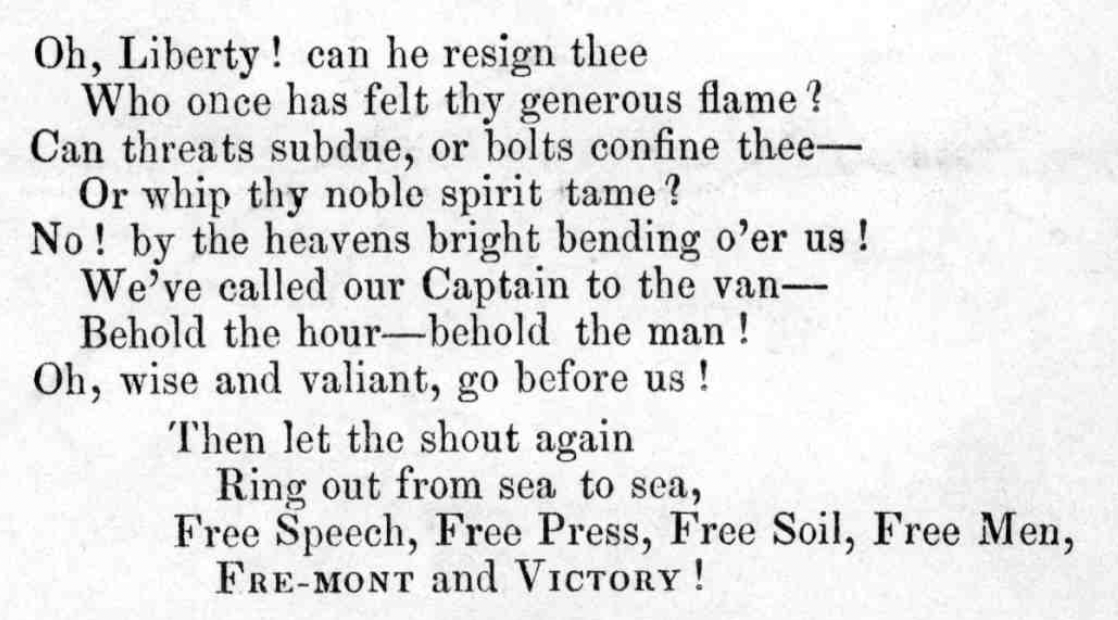
In 1854, Whig Party members disgusted by their party’s weak opposition to the westward expansion of slavery founded the Republican Party. Two years later, the new party ran its first presidential candidate, John C. Fremont, behind the slogan that appears at the bottom of these campaign rally-song lyrics:
Free Speech, Free Press, Free Soil, Free Men, Fremont!
The reason free speech and a free press were in there as political premises in 1856, as contested values a new political party was fighting for …
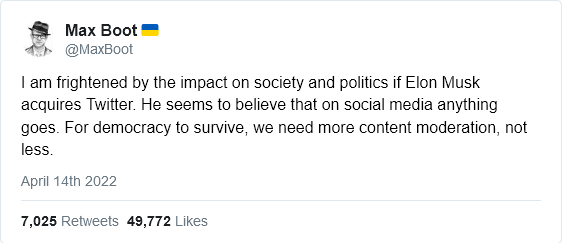
Okay, hold on a minute. In 2022, we’re a little baffled that we’re fighting for free speech. An army of sniveling shitweasels insists that we need guardrails around our discourse to prevent extremism, and Twitter employees gasp and sob as some horrible monster threatens to use their platform to let people just say stuff.
Stop trying to let people speak freely, you Nazis!
The whole thing is so baffling because we feel like the other side is trying to win the game as we amble out of the locker room and get on the team bus to head back to the hotel, like, game’s over, folks, we won an hour ago. Aren’t these long-settled questions? How is it that people are trying to drive us back against the powerful course of the American free speech tradition?
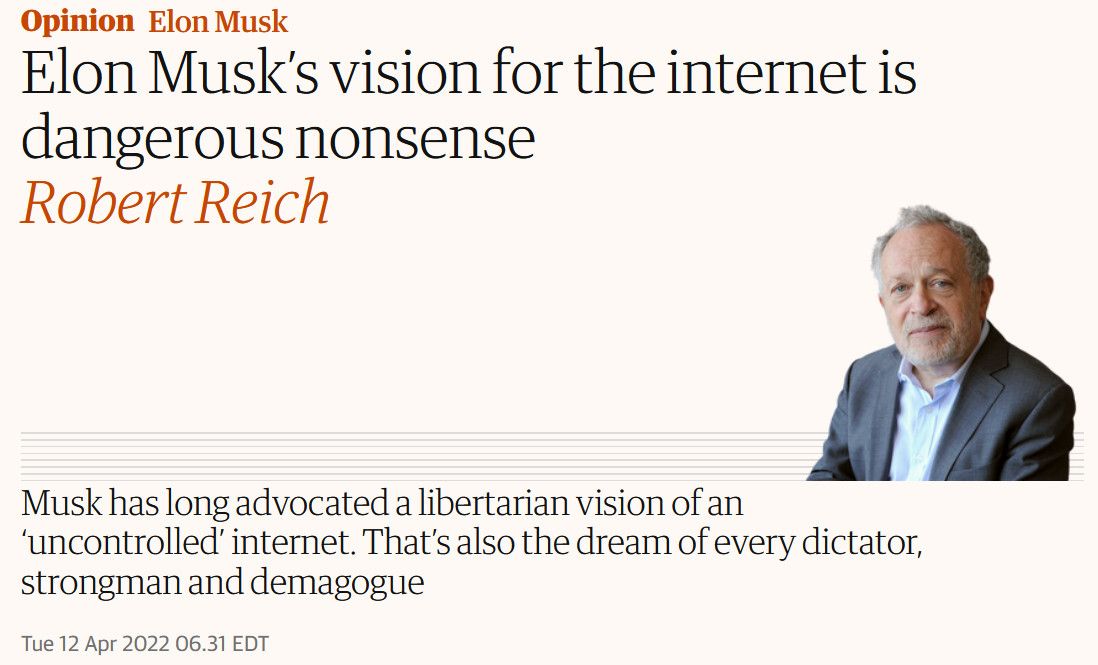
And one argument I’d like to offer, if Robert Reich will allow me to make it HITLER HITLER HITLER this content should me moderated out of existence to protect democracy, is that the argument we’re hearing right now is very much one of the American traditions regarding political speech. We buried it for a long time, but it’s real, it has been quite powerful, and it’s back.
Max Fucking Boot, my God.
April 20, 2022
De Tocqueville once called it “sleeping on a volcano”
Joel Kotkin looks at the first round results of the French Presidential election and wonders how long the working classes are going to put up with everything the elites dish out:
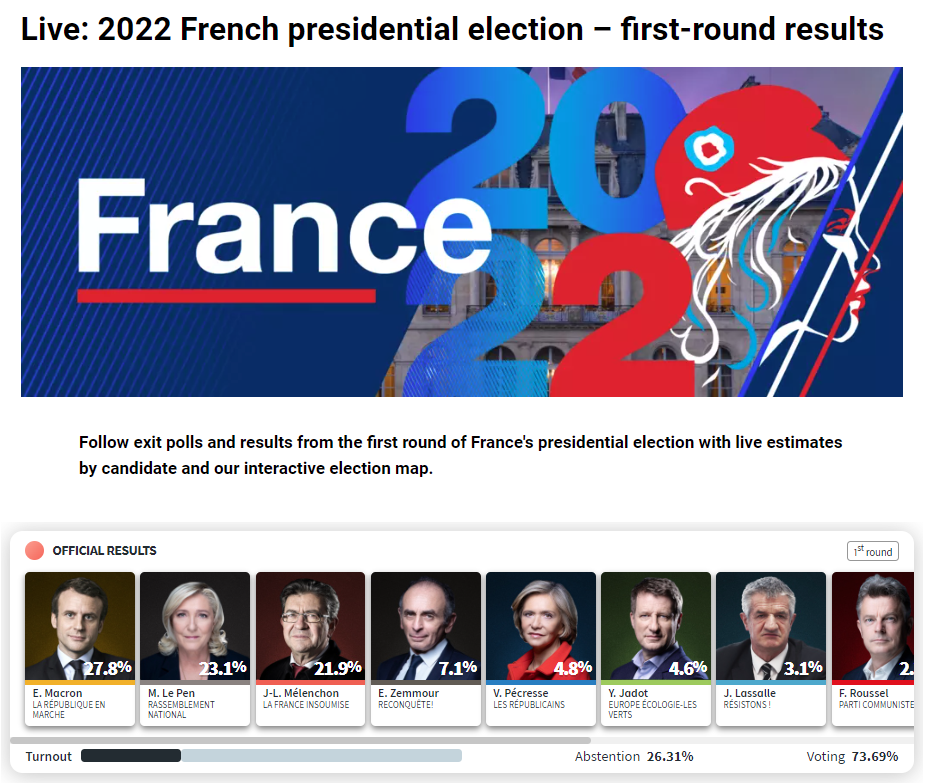
Whatever the final outcome, the recent French elections have already revealed the comparative irrelevance of many elite concerns, from genderfluidity and racial injustice to the ever-present “climate catastrophe”. Instead, most voters in France and elsewhere are more concerned about soaring energy, food and housing costs. Many suspect that the cognitive elites, epitomised by President Emmanuel Macron, lack even the ambition to improve their living conditions.
The French elections reflect the essential political conflict of our time. On one side, there is a powerful alliance between the corporate oligarchy and the regulatory clerisy. On the other, there are two beleaguered and angry classes – the small-business owners and artisans, and the vast, largely unorganised service class. The small-business class generally tends to favour the populist right, whether in America, Australia or Europe. These people want the government out of their business and to be left alone. Meanwhile, workers tend towards the populist left, which promises to relieve their economic pain.
The common feature is the politics of anger and resentment. In the first round of the French elections, a majority voted either for Marine Le Pen and other rightist candidates, or for the old Trotskyist warhorse Jean-Luc Mélenchon and other candidates of the hard left. The establishment parties, like the centre-left Parti Socialiste and the Gaullist Républicains, were left way behind. The ultra-green Parti Socialiste mayor of Paris, Anne Hidalgo, won less than two per cent – a pathetic performance from the onetime ruling party. Intriguingly, voters under 35 went first for Mélenchon and then Le Pen, leaving the technocrat Macron in dismal third place among the young. Macron only won decisively among voters over 60.
We may, as de Tocqueville put it during the early stages of the Industrial Revolution, be “sleeping on a volcano”. A still inchoate rebellion from below against the concentration of wealth and power above seems to be gathering momentum. Across the 36 wealthier countries of the Organisation for Economic Cooperation and Development (OECD), the richest citizens have taken an ever-greater share of national GDP in recent years as the middle class has become smaller. Heavily in debt, mainly because of high housing costs, the middle class “looks increasingly like a boat in rocky waters”, suggests the OECD.
One key indicator of the declining middle class is rates of home ownership, which are stagnant or plummeting, particularly among the young, in the United States, the United Kingdom and Australia. In the United States, the chance of middle-class earners moving up to the top rungs of the earnings ladder has dropped by approximately 20 per cent since the early 1980s. Life expectancy in the US has dropped to the lowest levels in a quarter of a century.
April 18, 2022
Jen Gerson raises the banner of revolution against the Boomergeoisie
In the free-to-read portion of last week’s weekend post from The Line, Jen Gerson channels the anger and frustration of the Millennial sans-culottes (or should that be the sans-maisons?) who are being systematically locked out of the housing market in Canada to protect the paper investments of the Boomer generation:

“Green suburbs” by Pierre Metivier is licensed under CC BY-NC 2.0


It’s come to the attention of several of the editors at The Line that some of you Boomers are mad at us. Or, more specifically, you’re mad at co-founder Jen Gerson who popped up a particularly scathing screed about the housing market earlier this week.
To wit:
Our Boomer got his and that’s what matters. We have an entire government apparatus set up to protect that guy. The guy with the money and the guy who votes. The rich-on-paper people are happy, and as long as everybody gets a seat somewhere on this pyramid, then everybody else should be happy too.
We will admit that Gerson didn’t intend this column to come across as an anti-Boomer harangue. She intended it as an anti-government-housing-policy-that-favours-boomers-over-young-people rant, but we can understand why some of our more mature readers took umbrage. We would say we were sorry but … we’re mostly not. A few points:
Firstly, when we talk about macroeconomics and intergenerational equity issues, we are emphatically not talking about individuals. Nobody born between the years 1946 and 1964 is personally, individually morally culpable for the state of the housing market, or the economy, or climate change or any other tragedy of the commons.
[Otherwise, we’d be adopting the tactics of the CRT movement and talking about “Boomer Fragility” and other similar kafkatraps where denial is proof of guilt.]
If you bought a $40,000 house in the ’80s, you couldn’t possibly have known that that purchase would eventually lead to a six-figure real estate portfolio by 2020: you took a risk on the economy as it existed at the time, even struggling through a rough patch of high interest rates, and that risk paid off. No Millennial would have done any differently had we been in your position.
But, let’s be honest, if you are a Canadian Boomer, you were probably born in a country that hadn’t been bombed to the ground just before an historic economic boom so grand that it allowed unprecedented investment in your health, education, development and well being.
That doesn’t mean you didn’t also work hard, and suffer setbacks, as all humans must do over the course of a lifetime. Some of you made bad decisions, and some of you were unlucky, certainly. The bell curve tolls for us all. But you did get to play the game of life during a particularly fortuitous period of history. That period is now ending and the currents of history aren’t going to be as kind to your kids as they were to you (although let’s not kid ourselves. Canadian Millennials and Zers don’t have it so bad in the greater scheme of things, either.) Recognizing this — let’s call it Boomer privilege — doesn’t cost you anything. It doesn’t hurt you. It’s not a personal attack.
What we do find fascinating is the Boomers among our readership who take discussions about intergenerational equity and demographic advantage very, very personally. Forgive us for playing pop psychologist, but it almost feels like some of you park so much of your worth as human beings into your ability to earn wealth that to have someone point out that this wealth accumulation was helped by macroeconomic factors over which you had no control — luck, essentially — seems to be read as an attack on your sense of self, purpose, and identity. (Is this why so many of you struggle to retire? Is there a frisson of guilty conscience at play?)
That is … your issue. Being lucky isn’t an indictment of your character. We assume all of our Line subscribers are genuinely good people who knit little paw mittens for orphaned cats, okay? Otherwise, why else would you be here?
April 14, 2022
“This might just be the dumbest, most ill-advised and lethally consequential thing Biden has said since taking office”
Brendan O’Neill on Joe Biden’s most recent maybe official/maybe “Joe being Joe” moment on the Russia-Ukraine conflict:

Once considered a gaffe, Biden doing this again might have been a good move.
Bumbling Joe Biden isn’t funny anymore. It might be amusing when your crazy uncle blurts out something unexpected at a family dinner. But when the most powerful man on Earth does it? Not so much. Yesterday, “in passing”, as the Guardian put it, President Biden referred to Russia’s war in Ukraine as a “genocide”. This might just be the dumbest, most ill-advised and lethally consequential thing Biden has said since taking office.
The circumstances in which he uttered the g-word, in which he made the most serious accusation you can make against a nation state, were bizarre. He was in Iowa, at a public discussion on the use of ethanol in petrol, of all things. Then – “in passing” – he said: “Your family budget, your ability to fill up your tank, none of it should hinge on whether a dictator declares war and commits genocide half a world away.” And so did an announcement about the lifting of restrictions on ethanol use in order to reduce the price of fuel turn – “in passing” – into the United States of America accusing the Russian Federation of committing the most heinous crime known to man.
It is unclear whether accusing Putin of genocide is White House policy now, or if Biden was just running his mumbling mouth, as is his wont. Pressed by reporters as to whether he really meant to say “genocide”, Biden said: “Yes, I called it genocide because it’s become clearer and clearer that Putin is just trying to wipe out the idea of even being Ukrainian.” Not surprisingly, other world leaders were a tad alarmed. French president Emmanuel Macron rebuked Biden for his “verbal escalations”. We need to be “careful” with our terminology, he said, rightly.
It remains to be seen whether this is the White House consciously upping the ante or just Biden having another senior moment. He has form, after all. At the end of March – again in passing – he called for regime change in Russia. “This man cannot remain in power”, he said about Putin in an “off the cuff” remark at the end of March. Most of us make jokes off the cuff or express exasperation off the cuff – Biden expands America’s war aims off the cuff. The White House swiftly walked back this unscripted declaration of regime-change hostilities. Before that, Biden made a blunder that suggested US troops had been deployed to Ukraine. The White House walked that back, too. “[We] are not sending US troops to Ukraine”, a spokesman clarified.
Maybe the White House will walk back the “genocide” thing as well. Though it might be too late. The word’s out there now. And not just from the mouths of those irritating liberal commentators and laptop bombardiers who think every war is a genocide (except the ones they support, of course, like Iraq, Afghanistan, Libya), but from the mouth of the American president himself. Make no mistake – this is incredibly dangerous war talk. It transforms Ukraine from an undoubtedly bloody conflict that has global implications into a possible site of further external intervention and fighting. Indeed, the United Nations’ policy on “The Responsibility to Protect” expressly obliges the Security Council to take action – ideally diplomatic action, but if that fails, then military action – in order to “protect populations from genocide”. If Russia is committing genocide, then the US and its allies have a responsibility to stop it somehow. This is the dire, destabilising situation Biden has either blunderingly or consciously pushed the world towards.
Chris Bray contra Jonathan Haidt’s belief in a former, more unified body politic
Jonathan Haidt wrote at some length about what Chris Bray contends was an imaginary period of American history when people were less divided:
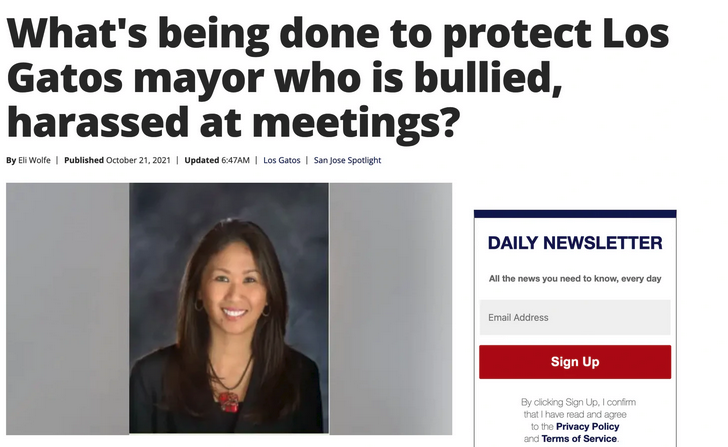
First, I think that this maneuver is the political strategy of a mediocre elite, with varying degrees of consciousness. The limit to which this may be true has to do with the spectacular loss of historical knowledge, which leaves a big part of the population feeling pretty sure that they’re the first people in the history of the universe who have ever encountered meanness. But the constant recourse to the language of “bullying” in the face of ordinary disagreement is a tell:
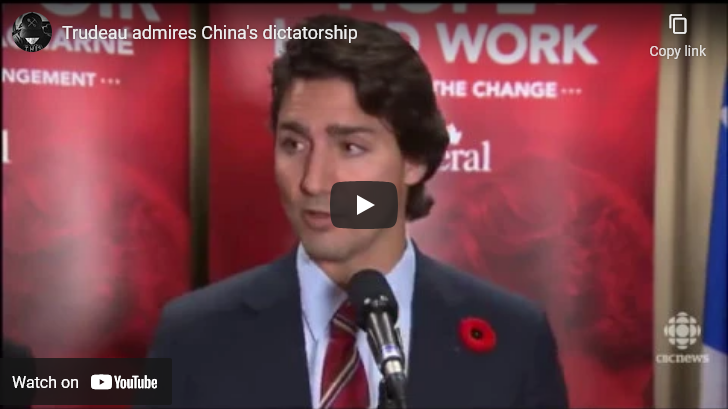
If you disagree with someone and only get the response that you’re vicious and a bully, you’re talking to an asshole; currently, it’s close to being the whole argument of the American governing class. The point of this kind of rhetoric is to win an argument by not allowing the other side to have it, and this seems like not really a mystery. See Jonathan Haidt’s reference to the high levels of trust in countries run by a “stable, competent autocracy”. Political elites all over the free world keep panting and sighing about how much they admire China’s dictatorship, and get a room, man.
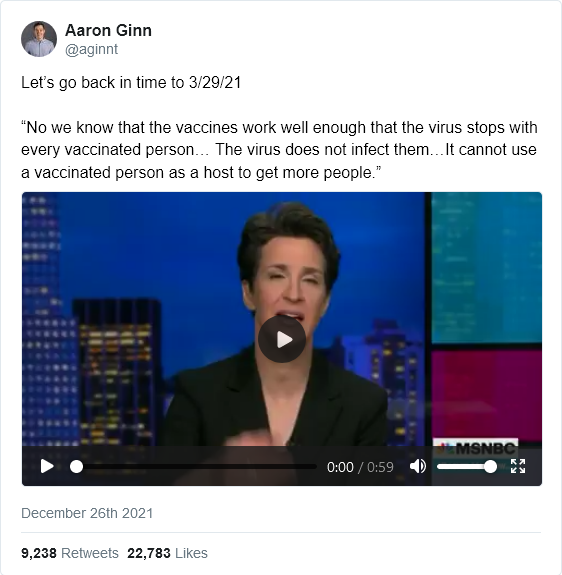
A related diversionary strategy is the constant recourse to the argument that people who disagree are victims of disinformation, the pivot in which “I disagree with this policy” is met with horror that the peasants have been tricked by the Internet. For example, did you know that some people have fallen for the lie, spread by Russian bots, that the Covid-19 vaccines aren’t as safe and effective as Pfizer and Dr. Fauci said? It’s hard to believe how far we’ve fallen.
But the biggest problem in Haidt’s essay is a giant omission: While Haidt writes at length about what the psychology of social media has done to the public — how it’s eroded our trust, how it’s fomented tribalism and point-scoring behavior, how it’s trapped us in the pattern of confirmation bias, “making it far easier for people to find evidence for absurd beliefs and conspiracy theories,” and so on — he never mentions the possibility that the psychology of social media has had the same effect on our institutions and the people who run them.
April 13, 2022
Theodore Dalrymple visits the barber to find out what happened in the French elections
Rather than depend on the untrustworthy political analysis available in the legacy media, Theodore Dalrymple prefers to get the straight story from his Paris barber:

“barber pole” by triviaqueen is licensed under CC BY 2.0
My barber is highly intelligent and from the way he talks, I should guess that he received a decent education in Morocco. I mean no disrespect either to him or to barbers when I say that, in other circumstances, he might have occupied a more elevated position in society. The last time I went to him, we discussed French politics over the snip-snip of the scissors.
“Since I arrived in this country,” he said, “I have heard the same discussions on the same subjects by the same people.”
“France,” he continued, “is like a man who has complained of toothache for 25 years but hasn’t found the time to go to the dentist.”
I suppose, when you come to think of it, that captures the situation in more than one Western country. Naturally, I was eager to hear what he had to say about the election results, which would be as penetrating as that of any professional commentator.
Another customer, in his late sixties I should guess, entered the shop immediately after me. I was worried that his presence might inhibit the discussion, but once in the barber’s chair, my bib around me, I asked the barber, “Did the election results please you?”
I needn’t have worried about inhibition. No sooner were the words out of my mouth than the other customer exploded with anger. He almost trembled with rage, all of it directed against the incumbent (and winner so far), Emmanuel Macron. I don’t recall ever having witnessed a reaction like it.
I knew that those who didn’t like or approve of Macron were said to hate him: Few people, it seems, are merely indifferent to him. I’m no great admirer of him myself, and I think in his own way he’s potentially dangerous: He’s determined to push ahead with European integration that will, sooner or later, lead to an explosion. But to witness the visceral hatred toward him nevertheless shocked me.
He has long been accused of being the president of, or for, the rich. That he once worked for the Rothschild bank only encourages this view. There is in the accusation the larger assumption that the interests of the rich and those of everyone else are diametrically opposed and necessarily irreconcilable.
Few people can escape entirely or for very long thinking of an economy as a cake, such that a larger slice for you is necessarily a smaller one for me and vice versa. And since the slices of the supposed cake that most of us have are distinctly modest by comparison with those of the rich (the rich being those with at least five times as much as we), the room in our minds for resentment is ample. And even though I know that the metaphor of an economy as a cake is a dangerous one — how many millions were killed in the name of economic egalitarianism in the 20th century! — still I catch myself occasionally feeling resentful at the pharaonic incomes of people who seem to me not to deserve them, though I’m not myself yet on the breadline and have no desire either for great wealth.
April 12, 2022
Mark Steyn on the first round of the French Presidential election
It must seem uncanny to Americans that the French can hold a vote, count all the votes, and announce the results all within the same 24-hour window …
Say what you will about la République française but, unlike America, its election operations are not a rusted malodorous sewer of brazenly corrupt practices. So the election was held, the votes were counted in hours, and the official result was known by 1am Paris time. There are no unmarked vans motoring the Dordogne or the Pas de Calais in the dead of night bearing additional votes sufficient to the need.
That speaks well for any nation. Alas, not much else about yesterday does. The Top Three is as follows:
Emmanuel Macron 27.6 per cent; Marine Le Pen 23.41 per cent;
Jean-Luc Mélenchon 21.95 per cent.Mme Le Pen is designated by the BBC “far right” and M Mélenchon “hard left”. I am unclear whether, in Beeb parlance, it is worse to be “hard” than “far. But, be that as it may, they could at least cease applying the label “mainstream” to candidates who can’t crack five per cent, which is the threshold below which your election expenses are not covered by the French state.
On Friday’s Clubland Q&A I mentioned en passant that I’m all about the urgency: The west will die unless we change what we’re doing very fast. Yesterday was yet another of those election nights when the people turn but passing slow. Especially after the buzz about a Le Pen surge and a looming Macron humiliation, last night she didn’t have a spectacular breakthrough and he survived.
There will now be a fortnight to the run-off in which the forty per cent of French voters who cast their ballots for “hard left”, soft left, Green left and nutso left will be told that a vote for other than Macron is a vote against democracy itself. Mme Le Pen ran the blandest, most inoffensive campaign she has ever run, leaving it to the “even farther right” Éric Zemmour to do all the heavy lifting on la fenêtre d’Overton. And in the end all that got her was a couple of extra points in the first round.
We will see how well that approach withstands the onslaught already under way. The one man who could make a difference is the soi-disant “hard leftie”, M Mélenchon. His own surge attracted less attention in the last week or two, but it’s likely that, had not M Zemmour bungled his response to the war, the even-more-far rightist would have drawn enough votes from Mme Le Pen to enable Mélenchon to come through the middle and give France a run-off between a bloodless globalist and a full-bore Marxist.
In pocketbook terms, the gap between “hard left” and “far right” is now barely detectable: Mme Le Pen is pledging that no one under thirty will pay tax. There is surely plenty of overlap between the Mélenchon and Le Pen voters. Yet his priority was plain at last night’s speech, because he said it four times:
Il ne faut pas donner une seule voix à Mme Le Pen.
Not a single vote for Marine!
So even the hardcore class-warrior shrugs: Better the globalist you know …
April 11, 2022
Ours is a fundamentally unserious culture, two examples
Chris Bray provides some examples of just how decayed western culture has become in our headlong flight toward total unseriousness:
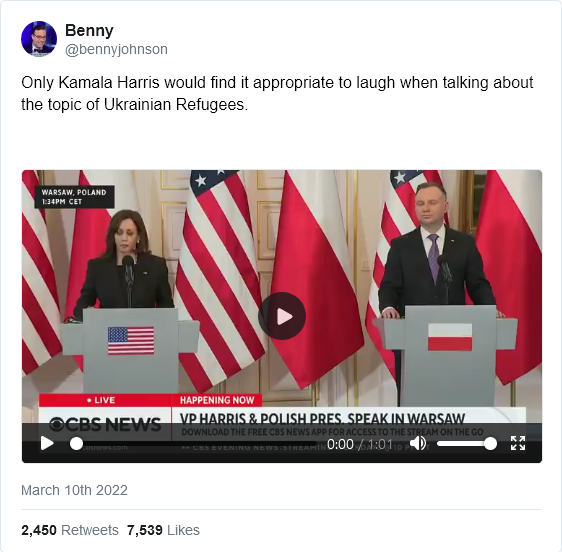
In Europe this month to lead the diplomatic response to a war, the Vice-President of the United States responded to a question about refugees by giggling and cackling and babbling in typical form:
And then the “fact-checkers” at Reuters explained that she actually didn’t giggle and cackle and babble, because, okay, she did cackle and giggle and babble, but she didn’t cackle and giggle and babble specifically about the refugees, so it doesn’t count: “It is clear from viewing the longer video in context that Harris and Duda laughed at the awkwardness of not knowing who should speak first. There is no evidence that Harris was laughing at the refugees or the crisis in Ukraine.” The question was about refugees, and she laughed — she laughed a lot — right after the question, but Reuters apparently called no tagbacks before the play, so no points accrue.
So we have an awkward and ineffective playactor who occupies the position of a political leader, but lacks the stature or ability to go along with it, and we have journalists who labor to protect people in powerful political positions from the possibility that people will notice who they really are and what they really do. We have political leaders who aren’t political leaders, and journalists who aren’t journalists: the form without the substance.
Meanwhile, a recent debate on the topic of free speech at Yale Law School — the nation’s top-ranked law school, which produces presidents and Supreme Court justices — began with law students screaming abuse (“I’ll fight you, bitch”) at one of the panelists, before walking out as a group and continuing to shout and pound on the walls of the adjacent hallway.
Now: The students were angry at the panelist, the bitch they wanted to fight, because she’s an anti-trans social conservative, and couldn’t you just die? But the thing that law students are learning to do is be lawyers — advocates for a position in a formalized exchange of competing views, in controversies that play out in open court. They’re training at the profession of making an argument. The point of sitting through an argument made by a person whose views you despise is that you can learn about something you want to fight against; you can see what the enemy says, and how she says it, and so do a part of the work of preparing yourself to advance a different position. So we have law students, people training for a debate-and-exchange-centered profession, who don’t want to hear things they don’t agree with. It’s like a minor league baseball player saying he refuses to touch a baseball, because baseballs offend him, but anyway, when are you assholes sending me up to the major leagues? We have people who want to occupy the profession of the law without preparing for the substance of professional engagement with competing positions: the form without the substance.
(Doing what journalists do, now, the fact-checkers explain that none of this puts points on the anti-free-speech scoreboard: “The students made their point at the very start of the event and walked out before the conversation began.” It is precisely the point that 1.) law students 2.) walked out before the conversation began. In ten years, oral argument before the Supreme Court will be that Woke lawyers stand up and scream I’M NOT GONNA LISTEN TO THIS SHIT, YOU ASSHOLES at the justices, then storm out and descend into a long round of day-drinking while waiting for the court to rule in their favor, because oh my god they CAN’T EVEN.)
April 9, 2022
“Woke Disney” is far from a new thing
Geoff Shullenberger points out that Disney’s reputation for family-friendly media rests rather uneasily on the corporation’s actual products:

“Disney is the worst enemy of family harmony.” You’d be forgiven for thinking those words were uttered yesterday, given the number of conservative politicians and pundits castigating Disney for “grooming children” following its criticism of the “Don’t say gay” bill.
In fact, the statement appeared just over 50 years ago, in a polemical analysis of Disney cartoons written by two Marxist militants, the Chilean writer Ariel Dorfman and the Belgian sociologist Armand Mattelart. How to Read Donald Duck: Imperialist Ideology in the Disney Comic was published in Chile during the brief rule of Salvador Allende as part of an attempt by Allende’s leftist allies to push back against American cultural influence. The book became a bestseller, but after Augusto Pinochet’s 1973 coup, it was banned and publicly burned.
The Right’s current lament for the betrayal of “traditional families who want to hold onto innocent entertainment for their kids” proceeds from the premise that this “woke Disney” is a deviation from the company’s benevolent past. But Dorfman and Mattelart, all the way back in 1971, contested this assumption of innocence. Although their methodology is Marxian and their aims overtly anti-capitalist, their allegations foreshadow the American Right’s current concerns in surprising ways.
[…]
How to Read Donald Duck contains many of the expected Left-wing criticisms of patriarchy and gender roles, but it also includes observations that might be surprising to ideologues today. Notably, as one illustration of the propaganda functions taken on by Disney in the Global South, the authors remark that the US Agency for International Development has circulated films featuring Disney characters promoting contraception. They reinforce this association with the title of their chapter on Disney family dynamics: “Uncle, buy me a contraceptive …”
Like many radicals at the time, Dorfman and Mattelart saw the US state’s growing interest in controlling fertility in the developing world as consistent with a broader campaign to suppress the value placed on family in the subject nations of its economic empire; this was deemed to be in tension with values such as efficiency, productivity, individualism, and competition. Disney’s exclusion of references to reproductive sexuality, in this light, looks less like an attempt to protect childhood innocence, than part and parcel of the larger modern decoupling of sex from reproduction.
It all suggests that the supposed sexual innocence of Disney’s dreamscapes was never aligned with “family values” in the first place and the Right’s current war on Disney isn’t about family — it is simply the latest phase of its realisation that corporate America has now largely aligned itself with the values of the cultural Left.
For, in fact, Disney’s vast influence on the imaginations of children has been enabled by market society’s weakening of the authority of the family. With parents overburdened by the demands of work, important aspects of child-rearing are entrusted to the entertainment industry. Disney has capitalised on this exploding demand more than any other company. If we take “grooming” to simply mean instilling values alien to the family into children, Dorfman and Mattelart would suggest that Disney has never been innocent of this charge.
April 7, 2022
The EU only cares about democracy as long as the voters make the “correct” choice
In Spiked, Tom Slater points out the most recent proof that the EU’s principled defence of democracy fades out quickly when the voters don’t vote the way they’re “supposed to”:
Remember the other day when the European Union was pretending to care about sovereignty and democracy? When Russia’s imperialist invasion of Ukraine had supposedly united European elites in their staunch, unflinching belief in a people’s right to determine their own destiny and shape their nation? You’ll be shocked to learn that they didn’t really mean it, at least if their reaction to the Hungarian election is anything to go by.
On Sunday, Viktor Orbán and his ruling Fidesz party won a landslide victory. Already the longest-serving EU leader, Orbán is now heading into a fourth consecutive term, with a two-thirds majority in parliament and an increased mandate. United for Hungary – an opposition coalition stretching from ex-communists to ex-fascists – defied the raised expectations of Euro elites and put in a dreadful showing, capped by gaffe-prone leader Péter Márki-Zay failing to win his own constituency race.
In the election, Orbán presented himself as a doughty defender of Hungarian national identity and interests against a meddlesome European Union and international set. Budapest and Brussels have been locked in a years-long battle over alleged “rule of law” breaches and LGBT rights. The EU is currently withholding €7 billion of coronavirus recovery funds from Hungary as part of a bitter legal standoff. In this, Márki-Zay was an all-too-willing foil, arguing that his government would be a “grand prize” for the EU.
In February, the European Court of Justice rejected a challenge by Hungary and Poland, upholding the legality of withholding funds from member states if they fail to adhere to “core values”. It sent a clear message to the Hungarian electorate in the run-up to the election: reject – or at least humble – this troublesome government or else. Now that Hungarians have politely refused to be pushed around, the European Commission has said it will press ahead with the formal mechanism that will deprive Hungary of the funds indefinitely.
Meanwhile, the European liberal media took a break from piously intoning about the defence of democracy in Ukraine to decry the election result in Hungary. Timothy Garton Ash even linked the ballot-box revolt to the barbarism in Bucha. “The Ukrainian horrors are clearly far worse than the Hungarian miseries, but the two are fatefully connected”, he wrote in the Guardian, accusing Orbán of being a Putin stooge. “Europe should now get tough on both the Russian enemy without and the Hungarian enemy within.” A Guardian editorial similarly called for swift EU action against this pesky central European state.
Alberta’s recall law
Recall laws are not common in Canada, with Alberta’s new law being only the second example:
The Recall Act, which was part of a 2019 UCP platform pledge to “strengthen democracy and accountability in Alberta” mirrors the terms of the recall law enacted in B.C. after the 1991 election that swept a scandal-plagued Social Credit party out of power (and, a few years later, out of existence). Like Alberta’s law, the B.C. law requires the signatures of 40 per cent of eligible voters in a constituency gathered within a 60-day period to trigger a by-election. In B.C., this barrier has not yet been cleared despite 26 recall initiatives (although, in a few cases, politicians have resigned rather than fight).
Recall laws are not unique to Canada. The United Kingdom has had recall legislation since 2015, but it differs from the Alberta and B.C. laws in that it is triggered not by disgruntled voters but by MP wrongdoing, including being convicted of expense fraud, suspended from the House of Commons or sentenced to prison. Despite this extra requirement, the apparent criminal propensity of U.K. politicians plus a low threshold of 10 per cent of voters to trigger a by-election mean that the law has already been used successfully twice.
You may also remember the California vote last summer, in which the oleaginous Governor Gavin Newsom comfortably survived a state-wide recall. After some early uncertainty, California’s fit of popular pique ended in exactly the same place as the gubernatorial election three years earlier — literally, to the decimal place — with 61.9 per cent support for Newsom. After 18 months and half a billion dollars, all the process proved was that the period of appointed military governors from 1847-1850 remains the high-water mark for good governance in California.
The argument against recalls starts with the fact that they bear the same relationship to democracy that a mulligan does to the rules of golf. We already have regular elections to vote out unpopular politicians. A recall is for people who can’t wait four years to admit their own mistake. It is an impetuous power for impatient people. Besides, voting the bums out is the chief joy of democracy — surely we can wait a few years to savour the moment.
Some elected politicians are unworthy of the trust placed in them. But that is our fault as voters. Venting our frustrations at the people we elected is a cop out. Mencken infamously wrote that “Democracy is the theory that the common people know what they want, and deserve to get it good and hard.” He was right. In an hereditary aristocracy, you can blame the bad luck of the genetic lottery, and in an autocracy you can fume about the injustice of might making right. But in a democracy, we have no one to blame but ourselves. We voted ’em in, and now we deserve to get it good and hard … for four years at least.


