Quotulatiousness

July 24, 2017

Great Blunders of WWII: The German Blunder At Dunkirk 1

Filed under: Britain, Europe, France, Germany, History, Military, WW2 — Tags: , , — Nicholas @ 04:00

Published on 4 Nov 2016

From the History Channel DVD series “Great Blunders of WWII”

July 23, 2017

In military training, “similar” is not the same as “identical”

Filed under: Cancon, Education, History, Military — Tags: , , , — Nicholas @ 05:00

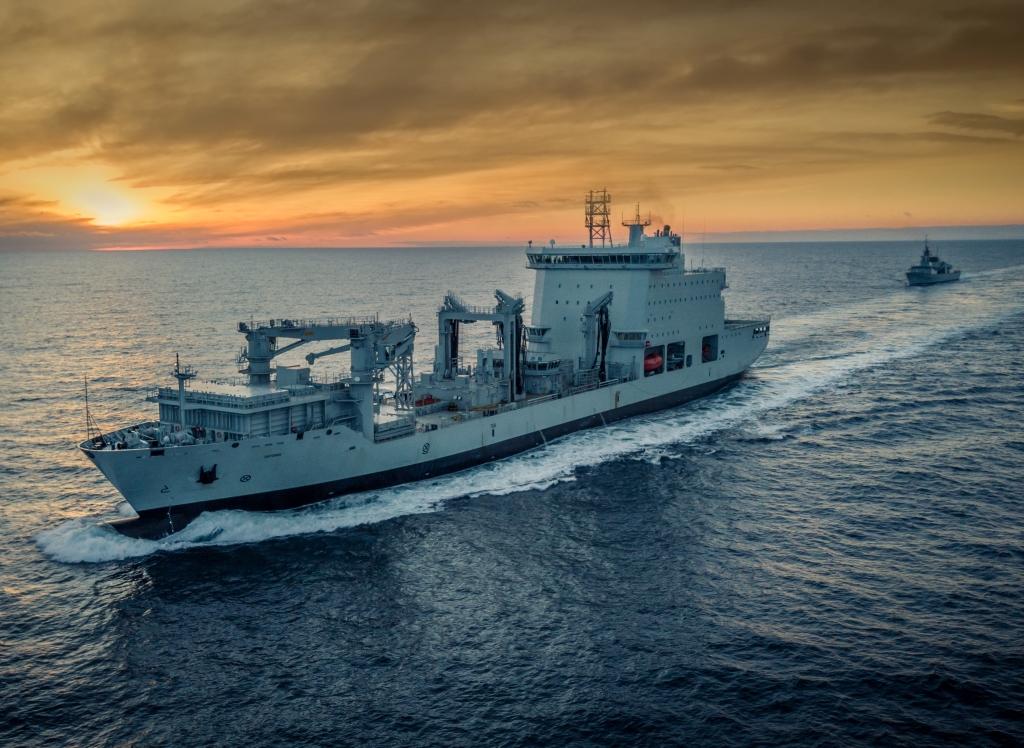
Ted Campbell looks at one of the legacies of the 1968 integration of the Canadian Army, Royal Canadian Navy, and Royal Canadian Airforce as the unified Canadian Armed Forces:

Our problem, in Canada, goes back to a fairly simple mistake that former Defence Minister Paul Hellyer and his minions made in the mid 1960s. First I must declare that a lot of what Mr Hellyer proposed was good ~ the unification of the armed forces, creating proper joint commands in which Navy, Army and Air Force units and formations served together, under one single commander, just as history taught they they would fight together in war, made excellent sense. Some of what he introduced ~ like the integration of the military into a single service and introducing common occupation and training systems ~ made less, little or no sense at all.

The logical trap into which Mr Hellyer and his team fell and the consequential problem which still infects the Canadian Armed Forces today is that they failed to grasp that similar ≠ identical. Consider, for example, a Navy helicopter pilot and an Army attack helicopter pilot ~ both must fly rotary wing aircraft at a basic level, in that they are almost certainly identical, but, after that, the differences between landing a very big helicopter on the heaving deck of a very small warship and flying a small helicopter at high speeds at near treetop level are very large and the two pilots are very, very dissimilar. Does it make sense to train them together at the primary flying school level? Yes! Does it make sense to mix them together into one pool of “pilots” on the grounds that they are very much the same? No! The same applies to cooks and radar technicians and pay clerks and, and, and … they are, very often, similar but rarely nearly enough identical to merit having them in a single “trade” or group. But, Mr Hellyer was, valiantly, trying to solve a funding crisis and savings in personnel and training were seen as the equivalent of the brass ring on the old fashioned carnival carousel. For almost fifty years Mr Hellyer’s deeply flawed notion of integration has been sacrosanct even as his very good ideas about unification were pushed aside by empire building careerists in the most senior ranks of the Canadian Forces and by lazy superiors, including disengaged ministers and bureaucrats.

We can start the fix by recognizing that some things do work: there should be, just as an example, one, single, integrated primary flying school, where all helicopter pilots learn to fly a basic rotary wing aircraft. But Navy, Army and RCAF pilots (and, yes, each service should have its own) should, then, be trained in their specific specialities by their own service specialists. Similar things should apply to many skills ~ integrate the education and training when the similarities outweigh the differences, but train, usually, in single service, specialist centres, when the differences are dominant. Some training ~ staff training, for example, to produce officers who can serve in joint HQs ~ must be integrated, however, if we ever want to have a proper unified force.

Will it cost more? Yes … superficially. But the savings for which Mr Hellyer so fervently hoped, in 1968, never really materialized; instead the training system used, as it was directed to do, minimum common standards to achieve economies and, thereby, financially “burdened” the other commands with special to function training: teaching Army cooks to drive trucks and use field (gas) stoves, for example, and teaching Navy supply people how to work in a ship. It is possible, even likely, in my opinion, that Canadian military education and training could be reformed at low cost. Some education and training can be contracted out or done, as is the case now, using a kind of public-private partnership (P3) arrangement. I will return to this later with a thought on the the Royal Military College, the Staff Colleges and so on.

Fake Paris – Female Soldiers – Naval Warfare I OUT OF THE TRENCHES

Filed under: Europe, France, History, Military, WW1 — Tags: , , , , — Nicholas @ 04:00

Published on 22 Jul 2017

It’s time for the Chair of Wisdom again and this week Indy talks about fake Paris, female soldiers and the rules of naval warfare.

July 22, 2017

Dunkirk Myth vs. Reality – Operation Dynamo

Filed under: Britain, Europe, France, Germany, History, Military, WW2 — Tags: , , , , — Nicholas @ 04:00

Published on 7 Jul 2017

The evacuation of British, Belgian, and French troops at Dunkirk – Operation Dynamo – was a crucial event in the early stages of the Second World War. Although the Allies were ultimately severely beaten in the Battle of France, the events at Dunkirk were mostly portrayed and perceived as a victory for the British. Quite naturally various myths surround this event.

» SOURCES «

Palmer, Alice: Dunkirk: The Defeat That Inspired a Nation
http://repository.wellesley.edu/cgi/viewcontent.cgi?article=1014&context=library_awards

Alexander, Martin S.: French grand strategy and defence preparations. In: Cambridge History of the Second World War, Volume I
Frieser, Karl-Heinz: The war in the West, 1939-1940: an unplanned Blitzkrieg. In: Cambridge History of the Second World War, Volume I
Amazon.com link (affiliate): http://amzn.to/2tuFtuM

Gardner, W.J.R. Gardner: The Evacuation from Dunkirk: ‘Operation Dynamo’, 26 May-June 1940 (Naval Staff Histories)
Amazon.com link (affiliate): http://amzn.to/2uoqMFV

History of The Association of Dunkirk Little Ships
http://www.adls.org.uk/t1/content/history-association-dunkirk-little-ships

Mrs. Miniver
https://en.wikipedia.org/wiki/Mrs._Miniver

July 21, 2017

July Days In Petrograd – Blood On The Nevsky Prospect I THE GREAT WAR Week 156

Filed under: Europe, History, Military, Russia, WW1 — Tags: , , , , , — Nicholas @ 06:00

Published on 20 Jul 2017

The tensions between the Russian Provisional Government, between the civilians and the Bolsheviks turn violent this week 100 years ago. Machine Guns fire into the demonstrations on the Nevsky Prospect and arrest warrants are issued for Lenin and Trosky. At the same time the preliminary bombardment for the Battle of Passchendaele begins on the Western Front.

Dunkirk

Filed under: History, Media, Military, WW2 — Tags: , — Nicholas @ 05:00

Megan McArdle was very impressed with the new Christopher Nolan movie on the evacuation of Dunkirk in 1940:

I was perhaps unreasonably excited to see Dunkirk, Christopher Nolan’s new movie about the evacuation of British forces from a French beach during World War II. The historical event on which it is based is astonishing: unable to get enough warships close to the beach to load their fleeing troops, the British government mobilized a flotilla of small private craft, which ultimately helped evacuate more than 330,000 soldiers ahead of the German army. I was eager to see what one of my favorite directors would do with the story.

He did not disappoint. This nearly flawless film put me on the edge of my seat for two hours. It is the best thing I’ve seen about war since the stunning opening of Saving Private Ryan — and Nolan, bless him, is not prey to Steven Spielberg’s compulsion to mar his creations by slopping them over with speechy goo.

As with all of Nolan’s films, it’s emotionally distant from its characters. Cillian Murphy plays an officer credited only as “Shivering Soldier,” and none of the characters have much in the way of backstory or goals, other than survival. Matt Zoller Seitz calls it an “Ant Farm Picture,” a portrait of society in which individuals are almost incidental. That’s rather the point.

A lesser director would have given in to the temptation to make this a story about the righteous crusade against the Germans, men fighting other men, but Nolan shows us a world in which the enemy is a plane, a torpedo, the water and the flying bullets, and men are reduced to little more than their rage to live.

The result is less a war film than a disaster movie. An exquisite disaster movie. I didn’t expect such a vivid and visceral illustration of how quickly a ship can sink, or just how difficult it is to hit a target in the sky. I left the theater almost too overwhelmed to talk.

Having recovered, I began to wonder why we can’t have more pictures like Dunkirk. The easy answer is, of course, that there is only one Christopher Nolan, and only so many people willing to give him $150 million to spend putting thousands of extras and some World War II-era ordnance onto a French beach. But the easy answer is incomplete.

I haven’t seen the movie, but I’ve been impressed with the reviews I’ve seen so far (except the ludicrous “it doesn’t have any women or POC characters in lead roles” criticism from historical illiterates).

Behind the Scenes of Naval Legends – HMCS Haida

Filed under: Cancon, Gaming, History, Military, WW2 — Tags: , , , — Nicholas @ 04:00

Published on 19 Jul 2017

Curious about how the Naval Legends episodes are made? Want to know how the beauty shots are made? Then let me take you behind the scenes of Naval Legends HMCS Haida.

Filmed with the permission of Parks Canada, at HMCS Haida National Historic Site.

Special thanks to Nicholas Moran, WarGaming America.

HMS Frigatey McFrigateface gets a new name

Filed under: Britain, Military — Tags: , , — Nicholas @ 03:00

At The Register, Gareth Corfield reports that the first Type 26 frigate has been given the name HMS Glasgow:

Type 26 Global Combat Ship – DSEi 2013 2
BAE Systems has unveiled the latest imagery of the Type 26 Global Combat Ship, which shows the maturity of the design and provides an insight into how it will look.
(BAE Systems, via Flickr)

The first of the Royal Navy’s new Type 26 frigates has been named HMS Glasgow, recycling the name for the fourth time in the last 100 years.

“The name Glasgow brings with it a string of battle honours. As one of the world’s most capable anti-submarine frigates, the Type 26 will carry the Royal Navy’s tradition of victory far into the future,” said the First Sea Lord, Admiral Lord Philip Jones, naming the as-yet-unbuilt warship this morning.

All future Type 26s will be named after cities, making them the City class – a step up from when the names were previously used as part of the Town class of yore. Numerous wags on Twitter suggested that the ship would be named HMS Frigatey McFrigateface, in a nod to the Natural Environment Research Council’s epic public naming contest blunder.

“This is great news for the workers on the Clyde: first-in-class builds are always special, but I know from visiting BAE Systems earlier this year that they are raring to go on a world-class project that will showcase their skills and the ‘Clyde built’ brand for a new generation,” Martin Docherty-Hughes, the Scottish Nationalist Party MP for West Dumbartonshire, told The Register.

The Type 26s are the future of British sea power, being intended to replace the venerable old Type 23 frigates that make up the backbone of the Navy’s warfighting fleet. In British service, frigates are broadly equipped to fight other surface warships and as anti-submarine vessels, a particular British speciality.

[…]

Naming warships is an inherently political process. The Royal Navy has, particularly in the latter part of the 20th century, tried to pick names that guarantee it support from the important parts of society – see the Hunt-class mine countermeasure vessels, named after the packs of well-off Hooray Henrys who spend their free time galloping around Blighty’s fields in search of foxes. More recently, a Cold War-era frigate was named HMS London, which worked well until she was flogged off to Romania in 2002, complete with a few crates of unwanted L85A1 rifles. Type 23 frigate HMS Westminster continues flying the flag for the RN near the corridors of power, courtesy of a feature wall in Westminster Tube station.

The name Glasgow was officially bestowed to recognise the shipbuilding heritage of the Clyde area. In reality, it’s more of a sop to try and damp down the fires of Scottish nationalism; apparently, patriotic names are all that now stands between the United Kingdom and its breakup.

July 18, 2017

Tunnel Warfare During World War 1 I THE GREAT WAR Special

Filed under: Britain, Europe, Germany, History, Military, WW1 — Tags: , , , — Nicholas @ 05:00

Published on 17 Jul 2017

Check out the WW1 Centennial Podcast: http://bit.ly/WW1CCPodcast

Tunnel and mining warfare was an important part of World War 1, especially on the Western Front and to a lesser, but still deadly, degree on the Italian Front. The dangers for the tunnelers were immense. And the destruction they caused with explosions was too.

The upcoming Ken Burns documentary on the Vietnam War

Filed under: Asia, History, Military, Politics — Tags: , , , , — Nicholas @ 04:00

Stephen Sherman discusses some of the things that may or may not be given appropriate treatment in the new PBS documentary series to air this fall, covering American involvement in the former French colonies:

Indochina in 1954. Map prepared for the US Military Acadamy’s military atlas series. (Via Wikimedia).

Ken Burns correctly identifies the Vietnam War as being the point at which our society split into two diametrically opposed camps. He is also correct in identifying a need for us to discuss this aspect of our history in a civil and reflective manner. The problem is that the radical political and cultural divisions of that war have created alternate perceptions of reality, if not alternate universes of discourse. The myths and propaganda of each side make rational discourse based on intellectual honesty and goodwill difficult or impossible. The smoothly impressive visual story Burns will undoubtedly deliver will likely increase that difficulty. He has done many popular works in the past, some of which have been seriously criticized for inaccuracies and significant omissions, but we welcome the chance of a balanced treatment of the full history of that conflict. We can only wait and watch closely when it goes public.

The term “Vietnam War” itself, although accepted in common parlance, would more accurately be called “The American Phase of the Second Indochina War” (1965 to 1973). The U.S. strategic objectives in Vietnam must also be accurately defined. There were two inter-related goals: 1) to counter the Soviet and Red Chinese strategy of fostering and supporting “Wars of National Liberation” (i.e., violent Communist takeovers) in third-world nations, and 2) to defend the government of the Republic of (South) Vietnam from the military aggression directed by its Communist neighbor, the Democratic Republic of (North) Vietnam.

Arguments offered by the so-called “anti-war” movement in the United States were predominantly derived from Communist propaganda. Most of them have been discredited by subsequent information, but they still influence the debate. They include the nonfactual claims that:

1) the war in South Vietnam was an indigenous civil war,

2) the U.S. effort in South Vietnam was a form of neo-colonialism, and

3) the real U.S. objective in South Vietnam was the economic exploitation of the region.

The antiwar movement was not at all monolithic. Supporters covered a wide range, from total pacifist Quakers at one end to passionate supporters of Communism at the other. There were many idealists in it who thought the war was unjust and our conduct of it objectionable, as well as students who were terrified of the draft, and some who just found it the cause of the day. But some of the primary figures leading the movement were not so much opposed to the war as they were in favor of Hanoi succeeding in the war it had started.

The key question is whether the U.S. opposition to Communism during the Cold War (1947 to 1989) was justifiable. The answer is that Communism (Marxism) on a national level is a utopian ideal that can function only with the enforcement of a police state (Leninism) or a genocidal criminal regime (Stalinism). It always requires an external enemy to justify the continuous hardships and repression of its population and always claims that its international duty is to spread Communism. When Ho Chi Minh established the Vietnam Communist Party in 1930, there was no intention of limiting its expansionist ambitions to Vietnam, and he subsequently changed the name to the Indochinese Communist Party at the request of the Comintern in Moscow.

From George L. MacGarrigle, The United States Army in Vietnam: Combat Operations, Taking the Offensive, October 1966-October 1967. Washington DC: Center of Military History, 1998. (Via Wikimedia)

July 16, 2017

Royal Marines – Anonymous Warfare – Latvian Riflemen I OUT OF THE TRENCHES

Filed under: Britain, Europe, History, Military, WW1 — Tags: , , — Nicholas @ 04:00

Published on 15 Jul 2017

Time for another exiting episode of Out Of The Trenches where Indy (and this time also Flo) answer your questions about the First World War.

Tank Chats #13 Praying Mantis

Filed under: Britain, History, Military, WW2 — Tags: , — Nicholas @ 02:00

Published on 8 Jan 2016

Number 13 in the series of David Fletcher’s Tank Chats, the Praying Mantis is an experimental machine-gun carrier manufactured in 1943 based on the Universal Carrier.

Praying Mantis was designed by Mr E.J. Tapp of County Commercial Cars and the original patent dates from 1937. Two prototypes were built of which this is the second. The idea was to create a low profile weapon carrier which could take advantage of natural cover but raise itself up, as necessary, to shoot over walls or other obstacles.

http://tankmuseum.org/museum-online/vehicles/object-e1951-47

July 14, 2017

Operation Beach Party – Mustard Gas Unleashed I THE GREAT WAR Week 155

Filed under: Europe, Germany, History, Military, WW1 — Tags: , , — Nicholas @ 06:00

Published on 13 Jul 2017

British Commander Sir Douglas Haig is still convinced of his coming offensive in Flanders. But the Germans now that something is afoot and launch a spoiling attack at the Yser River – the name of the operation is Strandfest or Beach Party. They use blue cross gas for the first time there and two days later also use another new chemical agent which will be known as mustard gas.

Canadian Experimental Lightweight No4 Enfield

Filed under: Cancon, History, Military, Weapons, WW2 — Tags: , , — Nicholas @ 02:00

Published on 20 Mar 2017

Sold for $25,300 – http://jamesdjulia.com/item/1659-396/

In 1943 the need for a lighter and handier version of the Lee Enfield rifle became clear throughout the British Commonwealth, and experimentation began in Canada, Britain, and Australia. The work in Britain would culminate in the No5 Mk1 rifle, but the Canadian arsenal at Long Branch would try some different ideas first. Several different experimental prototypes were made with varying features, but they all shared the idea of substantially lightening the rifle without shortening it very much. This was done by removing metal anywhere possible, most obviously including the elimination of the stock socket and the use of a single piece stock in place of the traditional two piece Enfield stock.

These modifications, also including an aluminum alloy trigger guard, were able to cut 25% of the weight from the rifle, and do so without a significant loss in accuracy. However, I suspect the resulting rifle would have proven far too fragile for combat use had it been adopted. The stock is surprisingly light and thin at the wrist, and it feels like it would not take much force to crack it. In addition, lightening cuts down the length of the hand guard made it quite susceptible to warping with heat and humidity changes.

Ultimately the Long Branch Lee Enfield carbine experiments would be abandoned as the No5 “Jungle Carbine” was adopted instead.

QotD: Did the Holocaust Undermine the German War Effort?

Filed under: Economics, Europe, Germany, History, Military, Quotations, WW2 — Tags: , — Nicholas @ 01:00

One of the great paradoxes of the Second World War is that while German troops on the Eastern Front were starving and freezing to death for lack of supplies, the rail transport of Jews to the death camps proceeded with uninterrupted Teutonic efficiency. The explanation is found in a profound insight by the historian Gerhard Weinberg (born 1928); that for the Nazis the extermination of Europe’s Jews was the purpose of the war, not a distraction or a side show. A complication was that this “Final Solution to the Jewish Question” was a state secret, even though it might have been the worst-kept secret in history.

Yaron Pasher is a young Israeli historian who studied under Weinberg. In this book he sets out to explore how the implementation of the Holocaust fatally undermined the German war effort between 1941 and the final collapse in May 1945. Unfortunately Pasher is simply out of his depth trying to write military history from the perspective of logistics (admittedly, one of the hardest things that any historian can attempt!).

Much of the text is a mish-mash of rehashed secondary sources about the course of operations on the Eastern and Western fronts. The reader bogs down, like a Panzer division in the Spring thaw, in a welter of inconsistently transliterated Slavic place names. The narrative is interspersed with glimpses of the progress of the Final Solution repeatedly hammering home the same assertion: if all those trains that carried Jews to the death camps had been used to carry supplies and reinforcements to the Front, the Wehrmacht might have performed better against the Russians.

Yaron Pasher, “Holocaust versus Wehrmacht: How Hitler’s “Final Solution” Undermined the German War Effort”, Strategy Page, 2015-09-02.

« Newer PostsOlder Posts »

Powered by WordPress