
Extra Credits
Published on 26 Jan 2019Sun’s attempts to found democracy in China were thwarted by the chaos of the authoritarian warlords who still stayed around. But, inspired by the youth of the New Culture Movement, and (surprisingly) Soviet Russia’s aid, he pressed on, and history would remember him as “the Forerunner of the Democratic Revolution.”
Join us on Patreon! http://bit.ly/EHPatreon
January 30, 2019
Sun Yat-sen – A Dream of China – Extra History – #5
Comments Off on Sun Yat-sen – A Dream of China – Extra History – #5
WW2 from German perspective
FootageArchive – Videos From The Past
Published on 18 Dec 2012Welcome to FootageArchive! On this channel you’ll find historic and educational videos from the 1900s. Watch, learn, and take a trip back in time as we gain insight into a previous time. Subscribe for more.
Note: this video contains archived public domain/licensed footage. This footage serves documentary purposes on world history and is to be viewed as educational.
Comments Off on WW2 from German perspective
January 29, 2019
The T-26 and Tank Warfare in Finland and China – WORLD WAR TWO Special
World War Two
Published on 28 Jan 2019The T-26 tank was one of the most frequently used tanks during the first battles of World War Two. It saw action in the Soviet Union, Finland and China. In our first collaborative video with the Tank Museum in Bovington, UK, David Willey and David Fletcher talk about the development, production and action of the this tank.
Check out the Tank Talk about the T-26 to hear David Fletcher explain some more about the T-26 on The Tank Museum YouTube Channel: https://youtu.be/EaBlg5pxe-4
Join us on Patreon: https://www.patreon.com/TimeGhostHistory
Or join The TimeGhost Army directly at: https://timeghost.tvFollow WW2 day by day on Instagram @World_war_two_realtime https://www.instagram.com/world_war_t…
Between 2 Wars: https://www.youtube.com/playlist?list…
Written and Hosted by: David Willey and David Fletcher
Produced by: Spartacus Olsson and Astrid Deinhard
Executive Producers: Bodo Rittenauer, Astrid Deinhard, Indy Neidell, Spartacus Olsson
Creative Producer: Joram Appel
Research by: The Tank Museum
Edited by: Joram Appel and Wieke KapteijnsPhotos of the Winter War are mostly from the Finnish Wartime Photograph Archive (SA-Kuva).
Archive by Screenocean/Reuters: https://www.screenocean.comA TimeGhost chronological documentary produced by OnLion Entertainment GmbH
Comments Off on The T-26 and Tank Warfare in Finland and China – WORLD WAR TWO Special
January 28, 2019
The Cold War – OverSimplified (Part 2)
OverSimplified
Published on 24 Jan 2019
Comments Off on The Cold War – OverSimplified (Part 2)
January 27, 2019
The Enigma of Germany’s Wartime Economy – WW2 – 022 – January 26 1940
World War Two
Published on 26 Jan 2019This week shows the Allies first attempts to break the German Enigma code. Meanwhile, the German war economy shows some flaws and the Soviets are massing artillery in an effort to break the Finnish defences.
As the Winter War rolls on the only help the Finns are getting are from volunteers. The Western Allies still have their thoughts on Norway, little do they know that the Phoney War almost ends this week…
Follow WW2 day by day on Instagram @World_war_two_realtime https://www.instagram.com/world_war_t…
Join us on Patreon: https://www.patreon.com/TimeGhostHistory
Or join The TimeGhost Army directly at: https://timeghost.tvBetween 2 Wars: https://www.youtube.com/playlist?list…
Written and Hosted by: Indy Neidell
Produced and Directed by: Spartacus Olsson and Astrid Deinhard
Executive Producers: Bodo Rittenauer, Astrid Deinhard, Indy Neidell, Spartacus Olsson
Creative Producer: Joram Appel
Research by: Indy Neidell
Edited by: Iryna Dulka
Map animations: EastoryColorizations by Norman Stewart.
Photos of the Winter War are mostly from the Finnish Wartime Photograph Archive (SA-Kuva).
Eastory’s channel: https://www.youtube.com/channel/UCEly…
Archive by Screenocean/Reuters https://www.screenocean.comA TimeGhost chronological documentary produced by OnLion Entertainment GmbH.
Comments Off on The Enigma of Germany’s Wartime Economy – WW2 – 022 – January 26 1940
Churchill Tank vs German 88 – Tunisia 1943
Mark Felton Productions
Published on 19 Dec 2018The Battle of Steamroller Farm in Tunisia in 1943 is notable for how much damage a pair of British Churchill tanks managed to inflict on the Germans, whom they surprised after climbing a ‘tank-proof’ ridge. Find out the full thrilling story of the tough Churchill in action.
Help support Mark’s channel:
https://www.paypal.me/markfeltonprodu…
https://www.patreon.com/markfeltonpro…
Comments Off on Churchill Tank vs German 88 – Tunisia 1943
January 26, 2019
The Cold War – OverSimplified (Part 1)
OverSimplified
Published on 24 Jan 2019
Comments Off on The Cold War – OverSimplified (Part 1)
The US Army’s tank development and “The Emergency” in Eire
A discussion on the TimeGhost forums the other day included a link to this fascinating article by World of Tanks writer The Chieftain:
Wouldn’t it have been a terrible thing if, in the middle of WW2, the people responsible for training and equipping the US Army’s armored force were taken prisoner? Well, they were.
Wait, what? I’m sure we’d have heard all about this if it had really happened, and it’s certainly news to me, so he’s just pulling the long bow here, right? Well, no, he’s not. It really did happen, but there were several reasons why it didn’t become even a nine-day wonder in 1942, because it happened in what had been the Irish Free State but known after 1937 as Éire. Ireland was neutral in WW2, and had a policy of interning combatant personnel who found themselves in Ireland during the war. Keep this in mind, as it’s the key point of the story.
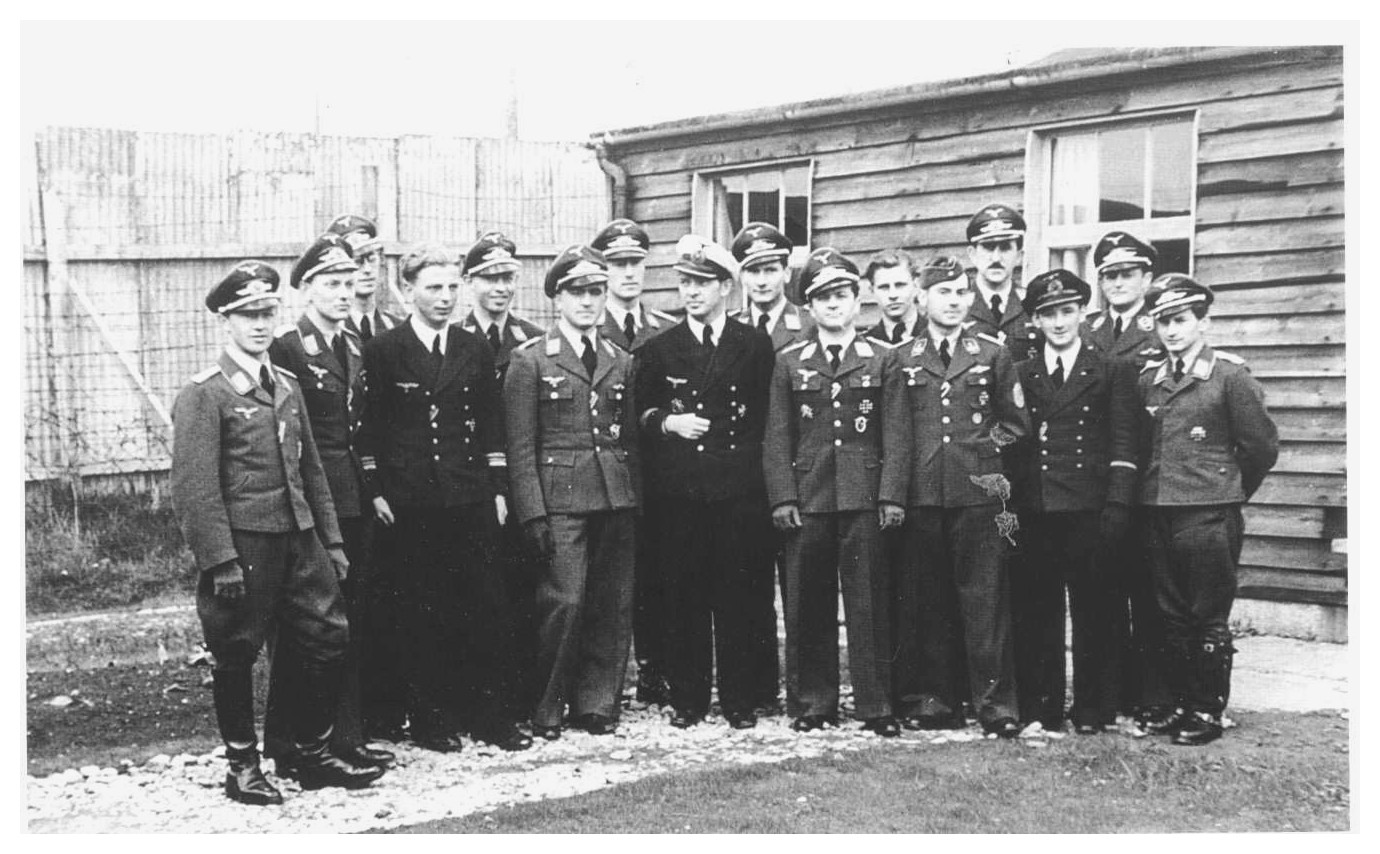
Interned German military personnel at the K-Lines Internment Camp in the Curragh.
Going on another brief tangent, you may be aware of the fact that what we know as “World War II” […] is not known by that name universally. Over on the former Soviet side of the house, it’s “The Great Patriotic War”. (Well, OK, they do distinguish between WWII and TGPW, but not in everyday conversation). The Soviet Union wasn’t the only country to give the conflict a less common name: In Eire, (Ireland), it was known as “The Emergency”
The background to this is that the Irish government wanted to enact emergency powers due to the unusual state of affairs which obtained in Europe in September 1939. The Irish Constitution granted the government such emergency powers in case of war, but it wasn’t entirely sure if the war in Europe counted. So the First Amendment to the Irish Constitution was approved, to add, in effect, that “state of war” could include “wars of which Ireland is not a part if the government thinks it’s important enough.” Once that little clarification was made, the Oireachtas (Parliament) passed its declaration of a state of emergency with the Emergency Powers Act. As a general rule, the Irish ruling bodies were not fans of the concept of acknowledging that there was a war going on which they had chosen not to be a part of. It went so far that when the son of a notable member of the Irish gentry in Malahide was killed when HMS Hood was sunk, his death was noted in the Irish Times as being due to a boating incident. As a result, the entire period 1939-1946 is known as “The Emergency.”
In this, as in so many other things, Ireland is a weird place. But we digress.
In December of 1942, Lieutenant General Jacob Devers, head of the Armored Force, decided to go on a fact-finding mission to the European Theatre of Operations to see how the tank units were holding up. Well, actually, it was mainly the North African Theatre of Operations, as European tank combat hadn’t really gotten off the ground. So he took with him a couple of colleagues, including one Major General Edward Brook, two Brigadier Generals named Gladeon Barnes and William Palmer, a Colonel William Thaddeus Sexton, and to carry the baggage, a Major Earl Hormell. They set off on December 14th, going south to Brazil, Ascension, The Gold Coast, Nigeria and Sudan, arriving Cairo five days later after a distance of 11,140 miles. After spending a little time with the British, they hopped over to Algeria, Tunisia and Morocco. At the end of trip, they went to Gibraltar for a week to consolidate their findings 7-14 January. The result of all this flying around and taking people away from their jobs for a month was one page and a quarter of conclusions, and one half-page of recommendations (the other half is six signature blocks).
[…]
Their duty from their trip being completed, they took advantage of the fact that they were already on the other side of the Atlantic to go to the UK to check in with the goings-on there.
So they boarded their aircraft, a B-17 converted to a VIP transport role, departed Gibraltar, and set off North up the Atlantic’s Eastern edge, looping around to the West of France to avoid German interception. Their B-17 was named “Stinky”.
You can probably guess where this is going.
The daily diary of the Devers mission reads as follows:
“At 2:00pm, January 15th, departed from Gibraltar, weather splendid. At approximately 10:00am, just after daylight, sighted land which navigator described as Lundy Island. From the map, this island appeared to be 100 miles north of the point at which the plane should have turned east towards Port Reath. Retracing south, the contour of the coastline did not correspond to that on available maps. Searched for approximately two hours without finding a familiar landmark. The radio operator was unable to contact any stations. The navigator admitted that he was lost. The ground consisted of small grass fields traversed by stone walls. With the gasoline supply nearly exhausted, a crash landing was made near Athenry at 11:50am. The size of the field was such that after hitting the ground, the plane crashed through a stone wall at approximately 70 miles per hour. Although the plane was wrecked, the members of the party were uninjured. The plane was immediately surrounded by Irish civilians and members of the Home Guard. The local inhabitants were very friendly, offered food and any medical assistance necessary. Shortly thereafter, representatives of the Eire Army arrived and took charge of the situation”
Er, oops? Read the whole thing for the full story.
Comments Off on The US Army’s tank development and “The Emergency” in Eire
January 25, 2019
The Greco-Turkish War and Legalisation of Ethnic Cleaning | Between 2 Wars | 1922 Part 2 of 2
TimeGhost History
Published on 24 Jan 2019When the Ottoman empire is torn apart by the Treaty of Sevres, ethnic conflicts in the old empire that have been boiling for almost a century lead to war between Greece and the parts of the Empire that will soon become the Republic of Turkey. A war that will have lasting effect on the world as both sides proceed to carry out stunning actions of ethnic violence, which is shockingly also sanctioned by international treaty after the fact.
Special thanks to Jonas Yazo Srouji and Valantis Athanasiou, who helped us with the research and image research for this episode. This behemoth of an episode is with 27 minutes the longest Between Two Wars episode yet. We really wanted to do the events justice. To deliver an unbiased, full telling of this eventful and controversial part of history, we couldn’t and didn’t want to make it any shorter.
An important note about the difference between ‘nationality’ and ‘ethnicity’: While ‘nationality’ is merely the relationship between an individual person and a state, someones ‘ethnicity’ depends on the racial, cultural, or religious group that a person is part of or identifies with. While these can overlap, they don’t necessarily have to.
Extra note: we recorded this way back in 2018, when our sound was not optimized. We apologise for the varying audio quality.
Cheers, Joram.
Join us on Patreon: https://www.patreon.com/TimeGhostHistory
Hosted by: Indy Neidell
Directed by: Spartacus Olsson
Written by: Spartacus Olsson
Produced by: Astrid Deinhard
Executive Producers: Bodo Rittenauer, Astrid Deinhard, Indy Neidell, Spartacus Olsson
Creative Producer: Joram Appel
Edited by: Wieke Kapteijns
Research by: Spartacus Olsson and Jonas Yazo Srouji and Valantis Athanasiou.Thumbnail depicts Ataturk colorised by Olga Shirnina aka Klimbim.
Colorized Pictures by Olga Shirnina and Norman Stewart
Olga’s pictures: https://klimbim2014.wordpress.com
Norman’s pictures https://oldtimesincolor.blogspot.com/Video Archive by Screenocean/Reuters http://www.screenocean.com
A TimeGhost chronological documentary produced by OnLion Entertainment GmbH
Comments Off on The Greco-Turkish War and Legalisation of Ethnic Cleaning | Between 2 Wars | 1922 Part 2 of 2
The Royal Canadian Regiment and The Battle of Paardeberg
The History Guy: History Deserves to Be Remembered
Published on 1 Jan 2019The forgotten history of a storied regiment. This is the second episode of a special holiday series featuring the History Guy’s hat collection. It was originally made as exclusive content for the channel’s patrons on Patreon. You can get exclusive content too by giving as little as one dollar a month to The History Guy at https://www.patreon.com/TheHistoryGuy.
This is original content based on research by The History Guy. Images in the Public Domain are carefully selected and provide illustration. As images of actual events are sometimes not available, images of similar objects and events are used for illustration.
All events are portrayed in historical context and for educational purposes. Those who do not learn from history are doomed to repeat it.
he History Guy: History Deserves to Be Remembered is the place to find short snippets of forgotten history from five to fifteen minutes long. If you like history too, this is the channel for you.
Comments Off on The Royal Canadian Regiment and The Battle of Paardeberg
January 24, 2019
The Sinking of HMS Glorious: An Avoidable Tragedy?
Historigraph
Published on 27 Aug 2018The Sinking of HMS Glorious, on June 8 1940, was one of the worst British naval disasters of the Second World War. Over 1500 losing their lives as two German battleships sunk three British ships. In this video, we will recount the events and the heroism of Glorious’ two escorts (HMS Ardent and HMS Acasta), before looking at the post-war controversy over whether the disaster was ‘covered up’ by the Admiralty.
If you enjoyed this video and want to see more made, consider supporting my efforts on Patreon: https://www.patreon.com/historigraph
► Twitter: https://twitter.com/historigraph
►Patreon: https://www.patreon.com/historigraph
►Discord: https://discord.gg/f8JZw93
►My Gaming Channel: https://www.youtube.com/c/AddawaySources:
John Winton, Carrier Glorious (Cassell: 1986)
Stephen Roskill, Churchill and the Admirals (Pen and Sword, 1977)
Corelli Barnett, Engage The Enemy More Closely: The Royal Navy in the Second World War (Penguin, 1991)
Henrik Lunde, Hitler’s Preemptive War: The Battle for Norway, 1940. (kindle edition)
Earl Ziemke, German Northern Theater of Operations 1940-1945. (kindle edition)
Record of the Hansard Debate from 1999: https://api.parliament.uk/historic-ha…
Full Casualty List for HMS Glorious can be found here: http://www.naval-history.net/xDKCas19…
From the comments:
1. Unlike the Battle of the River Plate from my last video, we do not know the precise movements of the ships, particularly the British ones, during the battle. The movements in this video should thus be taken as purely illustrative.
2. As you might be able to tell there is still a pretty intense debate over the reasons for Glorious’ sinking, particularly over what knowledge the officers on board Devonshire had or didn’t have about Glorious’ trouble. In particular there is testimony from one midshipman that the ship’s captain and Admiral Cunningham (who was on board) knew what was happening and took no action. It is only his word, so many of the historians I have read do not seem to have bought much into it, but it appears in this documentary from 1997: https://www.youtube.com/watch?v=1yAahSUiXt4
Comments Off on The Sinking of HMS Glorious: An Avoidable Tragedy?
January 21, 2019
Sun Yat-sen – A Bombing in Wuchang – Extra History – #4
Extra Credits
Published on 19 Jan 2019Another group of revolutionaries in China, the Wuchang Uprising, accidentally kicked off their own plans earlier than expected, which lead to Sun starting an international diplomatic mission and then being appointed the head of the new republic. But Yuan Shikai, the current Prime Minister, had plans of his own…
Join us on Patreon! http://bit.ly/EHPatreon
Comments Off on Sun Yat-sen – A Bombing in Wuchang – Extra History – #4
M551 “Sheridan” AR/AAV | DESIGN DISASTER!
Matsimus
Published on 24 Dec 2018The M551 Sheridan was a light reconnaissance tank developed by the American company General Motors in May 1960 under the designation XM551. In November 1965 approval was given for the type classification of the XM551 as Limited Production and a four-year production contract was awarded to the Allison Motor Car Division of General Motors Corporation. In May 1966 the Sheridan was classified as Standard A and by this time production was well under way with the first production vehicle being completed in June 1966. Production continued until 1970 by when 1700 M551S (or General Sheridans) had been built, of which 1570 were still in service with the US Army in 1970. The role of the M551. as originally conceived, is to function as the main reconnaissance vehicle for armour, infantry and airborne operations and arms teams not employing main battle tanks. Late in 1978, it was announced that the M551 would be phased out of service and replaced by the M60A1 MBT, apart from those vehicles allocated to the 82nd Airborne Division (57) and Arkansas National Guard (12), 330 have been assigned to the National training Center at Fort Irwin, California. These are essentially basic M551s but with visual modifications to the outside to disguise them as “OPFOR force” vehicles such as BMP-1 and ZSU-23-4.
Hope you enjoy!!
💰 Want to support my channel? Check out my Patreon Donation page! https://www.patreon.com/user?u=3081754
My PO Box: Matthew James 210A – 12A Street N Suite #135 Lethbridge Alberta Canada T1H2J
DISCORD: https://discord.gg/B7cbXgy
🐦Twitter: https://twitter.com/MatsimusGaming(DISCLAIMER: This video is for entertainment purposes only. The views and opinion come from personal experience or information from public accessible sources.)
Comments Off on M551 “Sheridan” AR/AAV | DESIGN DISASTER!
January 20, 2019
Swedes not Sweden to Finland’s Rescue – WW2 – 021 – January 19 1940
World War Two
Published on 19 Jan 2019As the Winter War rolls on the only help the Finns are getting are from volunteers. The Western Allies still have their thoughts on Norway, little do they know that the Phony War almost ends this week…
Follow WW2 day by day on Instagram @World_war_two_realtime https://www.instagram.com/world_war_t…
Between 2 Wars: https://www.youtube.com/playlist?list…
Join us on Patreon: https://www.patreon.com/TimeGhostHistory
Or join The TimeGhost Army directly at: https://timeghost.tvWritten and Hosted by: Indy Neidell
Produced and Directed by: Spartacus Olsson and Astrid Deinhard
Executive Producers: Bodo Rittenauer, Astrid Deinhard, Indy Neidell, Spartacus Olsson
Research by: Indy Neidell
Edited by: Iryna Dulka
Map animations by: Eastory
Community Manager: Joram AppelColorizations by Spartacus Olsson and Norman Stewart.
Photos of the Winter War are mostly from the Finnish Wartime Photograph Archive (SA-Kuva).
Eastory’s channel: https://www.youtube.com/channel/UCEly…
Archive by Screenocean/Reuters https://www.screenocean.comA TimeGhost chronological documentary produced by OnLion Entertainment GmbH
Thumbnail depicts First Sergeant John Horseholm and Åke Ek of the Swedish Volunteer Battalion in 1944
https://www.flickr.com/photos/jenosco…
Colorised by Jared Enos https://www.flickr.com/people/jenosco…
Comments Off on Swedes not Sweden to Finland’s Rescue – WW2 – 021 – January 19 1940
January 18, 2019
Tank Chats #41 Sherman Firefly | The Tank Museum
The Tank Museum
Published on 28 Jul 2017A Tank Chat from David Fletcher on an inspired British modification. As an all-round, general purpose tank the Sherman was one of the best of World War II, but by 1943 it was getting past its prime. An officer at Lulworth Camp, near Bovington, came up with the idea of fitting a better gun, the British 76.2mm, known as the 17 pounder. The new design would be known as the Sherman Firefly.
Support the work of The Tank Museum on Patreon: ► https://www.patreon.com/tankmuseum
Or donate http://tankmuseum.org/support-us/donateSUBSCRIBE to The Tank Museum YouTube channel: ► http://www.youtube.com/channel/UChl-X…
Press the little bell above to enable NOTIFICATIONS so you don’t miss the latest Tank Museum videos.
Twitter: ► https://twitter.com/TankMuseum
Tiger Tank Blog: ► http://blog.tiger-tank.com/
Tank 100 First World War Centenary Blog: ► http://tank100.com/ #tankmuseum #tanks
Comments Off on Tank Chats #41 Sherman Firefly | The Tank Museum


